S&C Desiro Tracker
Sunday 19th April 2015
Many familiar, and some new, faces congregated at Manchester Piccadilly for our third TPE railtour; our 50th fixture since the 2014 AGM. With those joining at Wigan NW there were 217 participants (and various train staff) so two 3-car class 185 sets (120 & 151) were kindly provided, each with separate refreshment trolleys. This allowed a very comfortable day with plenty of space and window seats for the scenic ride with no one turned away. Departure from P9 was slightly delayed waiting a York connection with a few participants, including most importantly the very pleasant and keen young DBS Driver (an enthusiast too) who was later route conducting our tour! Taking the Down Fast out of Piccadilly, the train crossed briefly to the Down East* line at Ardwick Jct. then reversed in the Up & Down Goods outside Longsight Depot, crossing immediately to the Down Fast, then through P13 on the reversible Up Oxford Road line in the unusual direction before returning to the Down at 189m 14ch and through P2 at Oxford Road station.
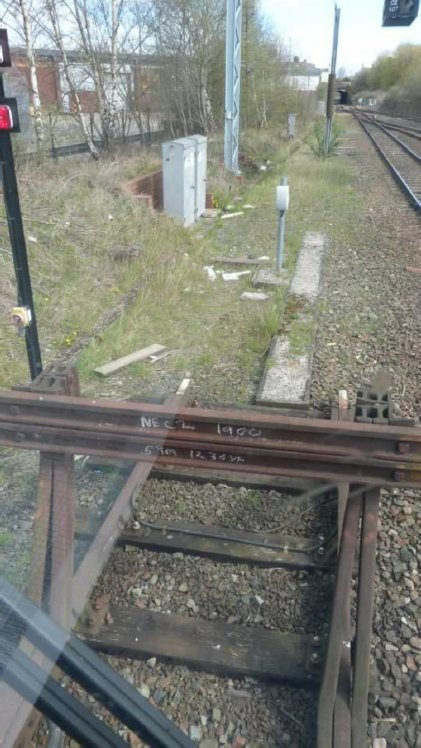
At Ordsall Lane Jct. the soon to be closed trailing connection from MOSI (the former Manchester Liverpool Road station), used by our 'Powerhall Tracker' on 3 November 2013, was very rusty indeed with a sleeper chained across. Completed overhead line electrification towards Salford Crescent and Manchester Victoria was noted. After Chat Moss the Down Slow WCML was taken at Golborne Jct., then the Down Goods dive-under below the WCML beyond Bamfurlong Jct. to emerge alongside Springs Branch before switching to the Up Goods at Wigan South Jct. Next the Up Passenger Loop for a passenger pick up and leg stretch at Wigan NW P1. See BLN Pictorial 1231 for a nice view of this leg of the journey. *For complete clarity, the Down and Up East run east (geographically it is more nearly north) of the Down and Up Fast to Ardwick Jct., then continue eastwards to Ashburys!
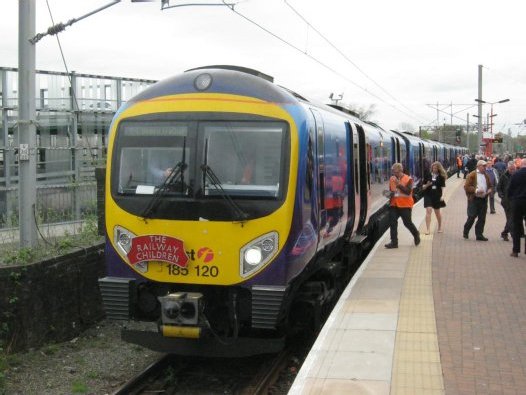
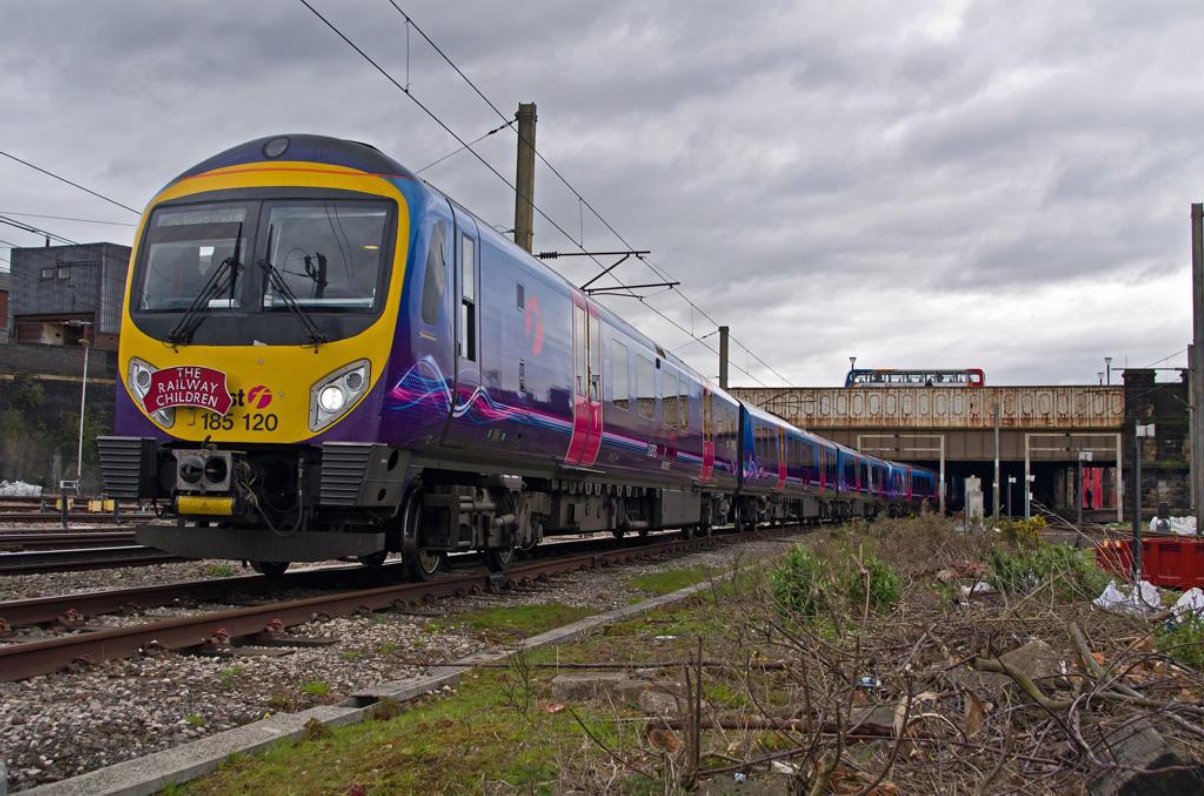
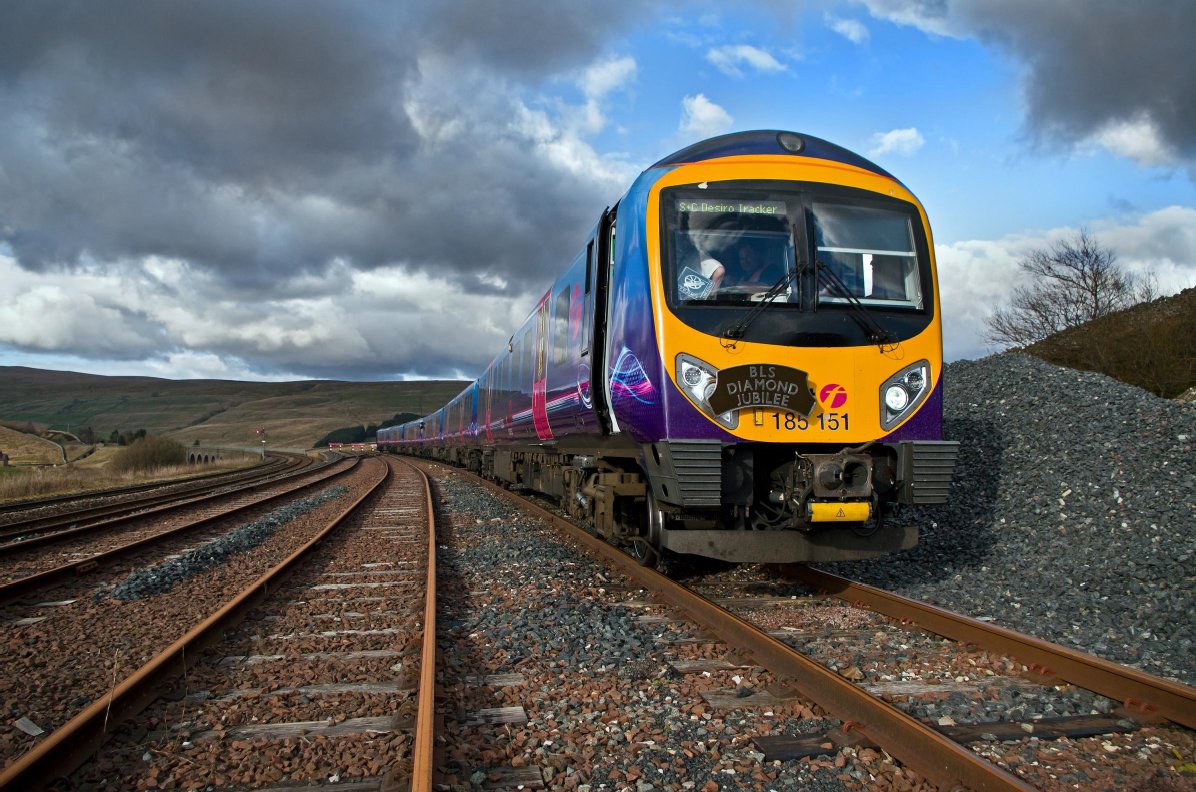
Mind the gap! The headboard adorning the front of 185 120 shows the
serious side of many of our events in helping to raise money for charities.
It is perhaps particularly appropriate that the Society should be helping
to support The Railway Children.
[© Patrick Chandler 2015]
|
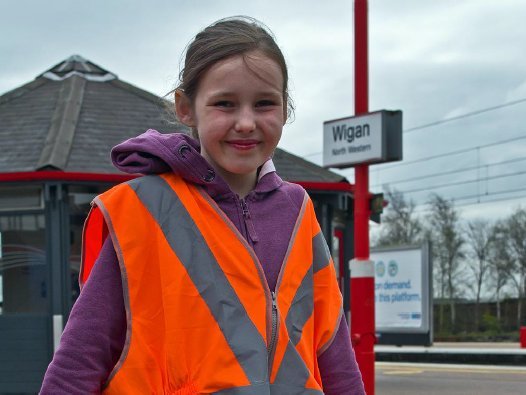
The Committee, and the Fixtures and BLN teams in particular, have been
working hard at adding value to Society membership and making it more
appealing to families and younger people. With that in mind it was pleasing
to welcome a number of younger participants on the S&C Tracker,
including Ruby, seen here making herself ‘hi-vis’ at Wigan North Western.
[© Geoff Plumb 2015]
|
With longer legs, it was the Slow Line at Balshaw Lane for our mystery tour at Preston. This included the Down Goods, the entire Down & Up Goods Loop (serving the former RES parcels platform) in both directions, the Shunting Line in front of the PSB, and the pièce de résistance '2 Loco' or 'Bakehouse Siding', a locomotive stabling siding at the station's north end behind P4a hidden under the station approach ramp. A reversal on the Up Fylde increased the collection of Switches and Crossings proving that S&C didn't just stand for Settle and Carlisle! The final move south was past the 'RES' platform to the Up Goods to reverse south of Ribble Jct at 21m 39ch. Heading north, our DMU used the ladder to the Up & Down Goods Loop (P7) then, north of the platforms, back across via the Down Through to the Down Main. We must have done well as a notable pair of local members and a VT driver scored track!
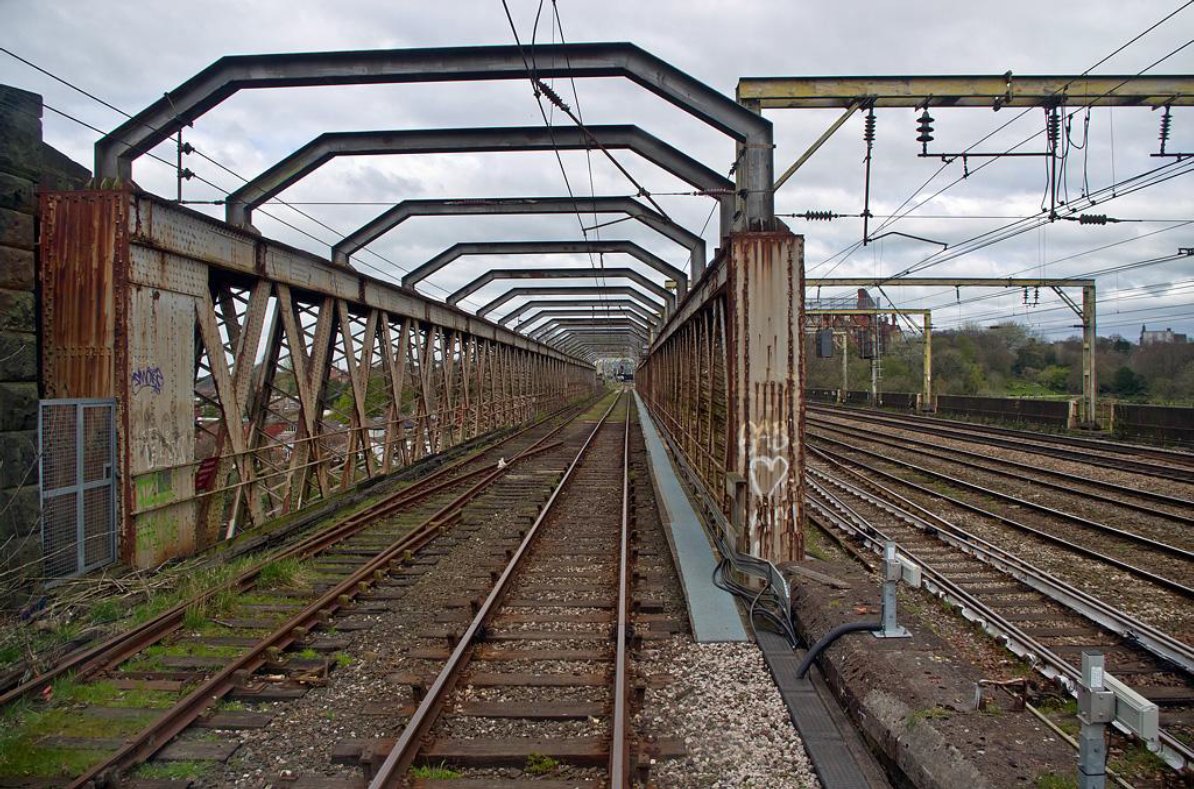
The Ribble Viaduct looks a little in need of a coat of paint, as the tour train approaches Preston on the Down Goods lines having left the main line at Skew Bridge Jct.
[© Geoff Plumb 2015]
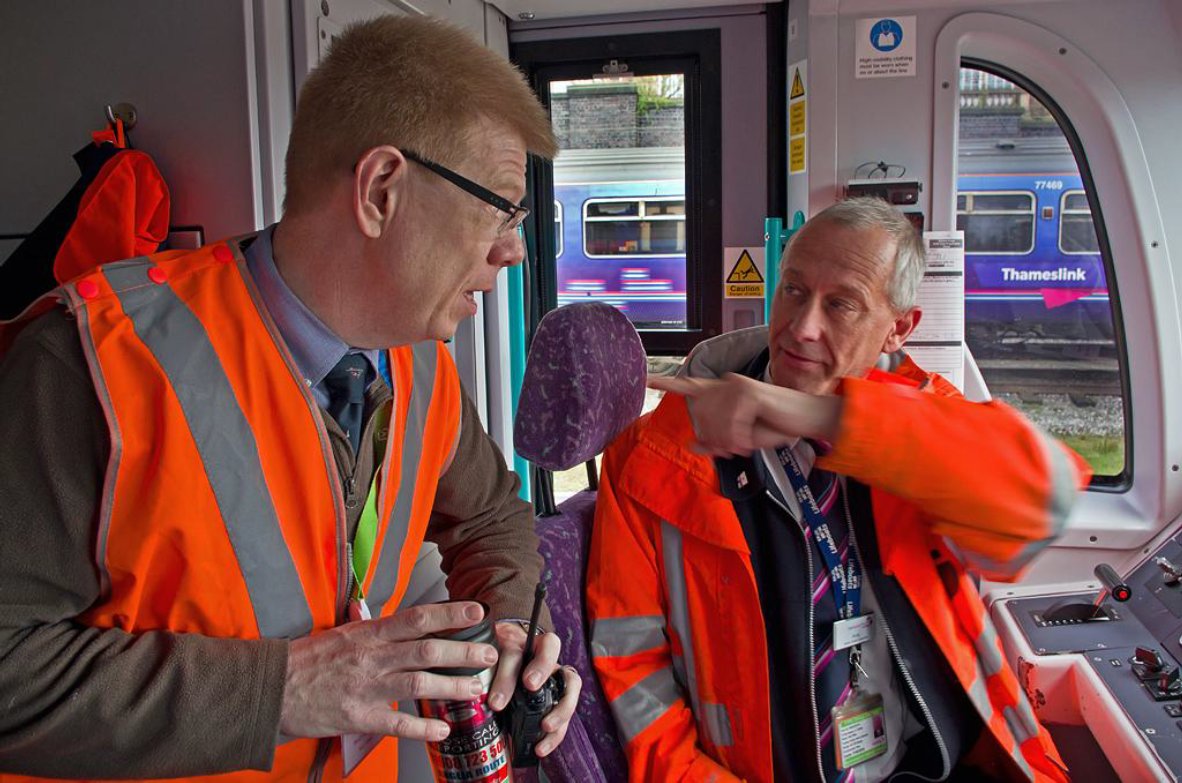
‘Let’s make sure we all know where we’re going’. Fixtures Secretary Kev Adlam discusses the next move with TPE driver Andy at Preston to make sure he’s happy that we really want to go in there! A certain amount of clarification might well have been needed as we’re sure neither of them thought that Thameslink had been extended to Blackpool ... On a more serious note, Geoff Plumb’s photo typifies the attention to detail that’s being given to our tours nowadays by railway staff always ready to go the extra mile for us – literally or figuratively!
[© Geoff Plumb 2015]
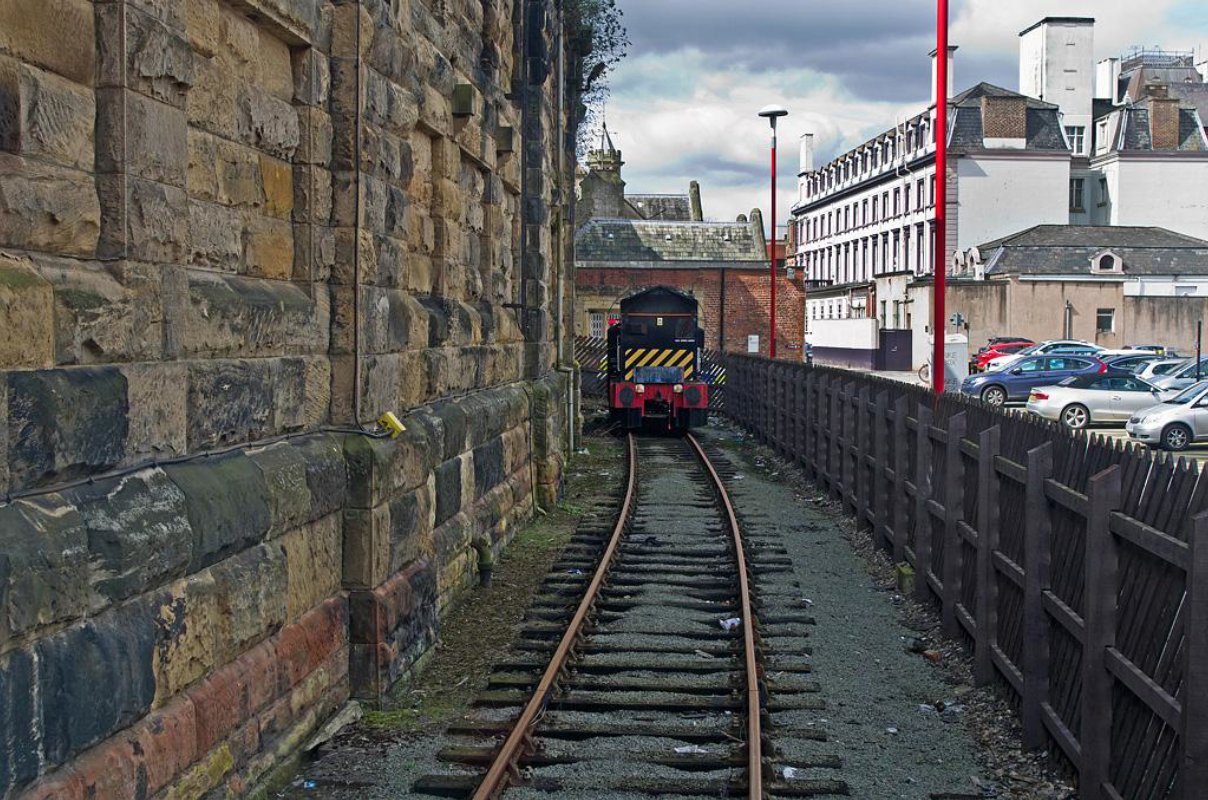
‘There’ was the Bakehouse siding, just beyond the Fishergate bridge at the north end of Preston station and in front of the Power Box on the Down side of the Blackpool Line (shown as 'Shunting Line' in TRACKmaps).
[© Geoff Plumb 2015]
The tour then looped the loops at Barton & Broughton, Carnforth (No1), Oxenholme (Down), Grayrigg, Tebay, Shap Summit (unusually not electrified) and Harrisons. Oxenholme was particularly choice for our former Chairman and Editor who lives a stone's throw away and has done the former second connection onto the Windermere line north of the station and all 4 platforms (see NW section) that used to be at the branch terminus! At Penrith the recently altered Down Slow was taken through P3, once for Keswick and Workington, now NRU by passenger trains. Approaching Carlisle it was across to the Down Through Goods at Upperby Bridge Jct. and back to the Down Main at Upperby Jct. followed by a call at P1 to reverse. Cutting across the whole layout, the 6-car unit reversed in the NE Shunt Neck before possibly the unexpected highlight of the day, the non-electrified Collier Lane Siding behind the P6 wall adjacent to the station car parking, reaching in the FS's words 'one snow plough length short of the buffers' (literally!). Mr Adlam came on the PA to apologise for this claimed 'misrouting' not in the itinerary but very few passengers believed him! Then the NE shunting neck (once the Up Newcastle line before singling here in BR days) to the buffers - it is intended to eventually redouble this line.
So that's where we left that snowplough! In the Fixtures Secretary's words, we ended up "one snow plough short of the buffer stops." The tour train approaches the end of the very rare non-electrified Colliers Lane siding at Carlisle, outside the station’s main train shed on the east side, behind the P6 wall and often occupied by empty stock. It was reached by reversal in the N. E. Shunt Neck (which was then traversed to its buffer stops). The station car park is on the right.
[© Geoff Plumb 2015]
Returning toward P1 the train covered No1 Through (it was too) Carriage Siding much to the surprise of the 'normal' passengers on nearby P1. At Caldew Jct. the Down Goods was taken to Kingmoor Jct. The next treats made this our first 2015 visit to Scotland, Quintinshill and Lockerbie Down Loops followed by a reversal in Beattock Down Loop behind the former station platform (BLN Pictorial 1232). Then taking the trailing crossover at 39m 35ch to run through Lockerbie Up Loop, behind P2, although missing the booked Quintinshill Up Loop. The route was incorrectly set for the Up Main and, due to the position where we stopped, the late running and a following VT, it was not possible for Carlisle PSB to reset the routing. However, this was more than compensated for by other Kev Adlam trademark 'on the day bonuses'. Next was the Up Through Siding (particularly choice) from Kingmoor Jct. and at Caldew Jct. the train crossed to the Down Main and ran into Carlisle P1 for a curtailed stop.
|
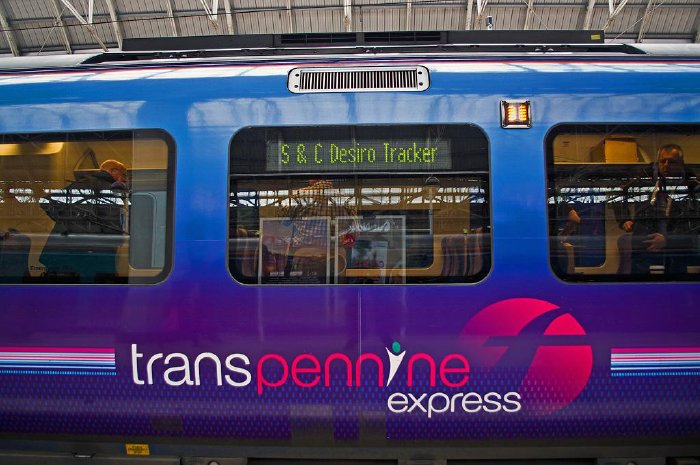
[Above] That same attention to detail by the fixtures team and the TOC, in this case TransPennine Express, which was shown at Preston is also evident in the reprogramming of the digital destination displays on the 185s. Rather than just ‘Special Train’ or ‘Not in Service’, the full name of the railtour is seen here on the side display at Manchester Piccadilly. Not all the participants may have realised that 'S&C' stands for 'Switches and Crossings' as well as the more obvious 'Settle and Carlisle.'
[© Geoff Plumb 2015]
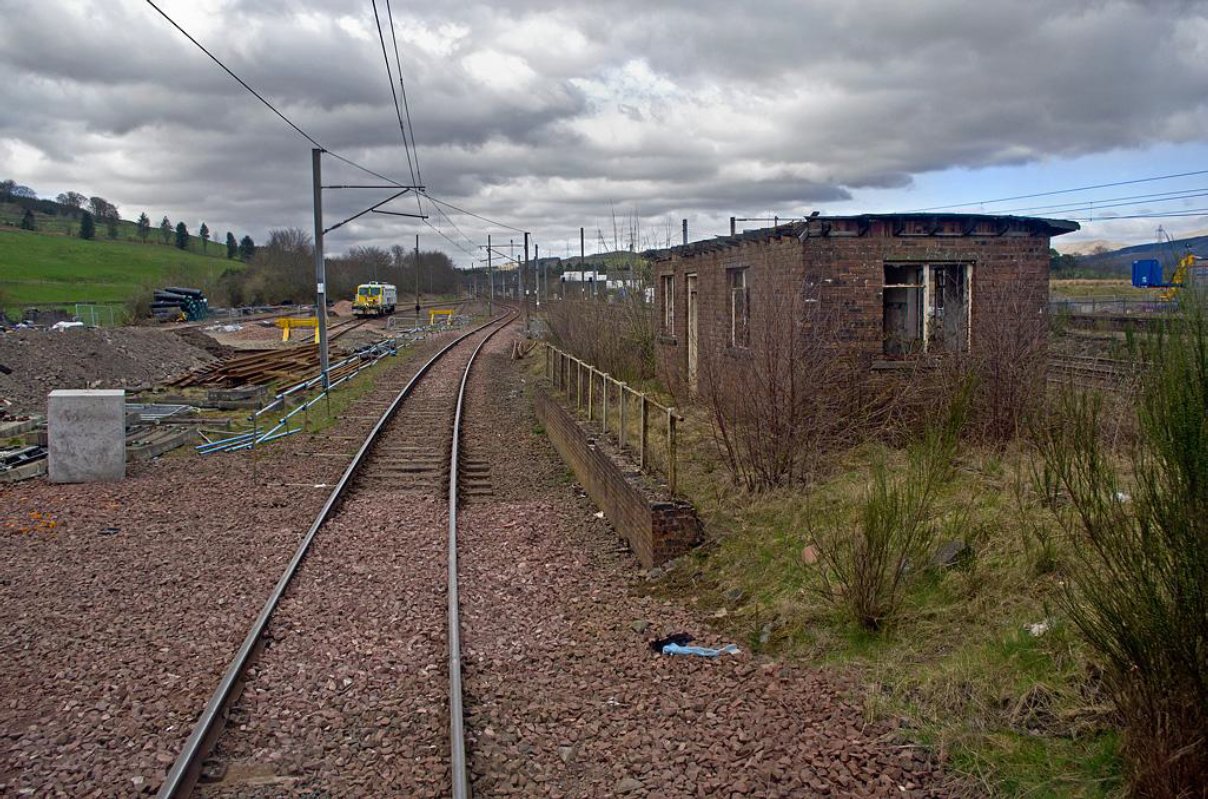
[Left] The view looking east from the tour train at the end of the electrified ‘North East Shunt Neck’ in Carlisle. The line in the distance under the A6 'London Road' bridge to the right leads to Petteril Bridge Jct., where the Settle and Carlisle and Newcastle lines diverge. The North East Shunt Neck is the former Up Newcastle line singled in BR days when the railways were much quieter. It has now become a bottle neck (that can be seen top right of the picture) that is due to be redoubled. The two lines joining into it on the right are the very little used ‘Newcastle Goods Lines’ from Bog Jct, part of the once extensive 'Carlisle Goods Lines' that avoided the station; in this case directly from the Maryport line at Currock Jct.
[© Kev Adlam 2015]
|
The Tracker ventured beyond the border, our first Scottish fixture in 2015, reaching its northernmost point at Beattock station on the former Caledonian Railway
route from Carlisle to Glasgow. To the right was the back of the Down platform platform where the train reversed in the Down Passenger Loop before taking the
trailing crossover at 39m 35ch. Beattock was the junction for the short CR branch north-eastwards to Moffat, opened on 2 April 1883 and closed to passengers
on 6 December 1954 and freight on 6 April 1964 – little trace remains of this branch except a short siding headshunt on the Up side at Beattock itself where A74
road improvements have obliterated the branch beyond. In later years Beattock was probably better known as the home for the banking locos used to assist northbound trains, both passenger and freight, up the eponymous bank towards Carstairs. Currently there is a campaign to reopen Beattock station, closed on
3 January 1972, as it is located on the longest stationless stretch of passenger railway in Great Britain.
[© Geoff Plumb 2015]
The tour is believed to have been the first passenger carrying Class 185 DMU southbound on the S&C (a few diversions have run northbound). It was now a glorious sunny clear day, before the leaves had grown back on the trees, resulting in a very scenic run enhanced by the appropriate and interesting commentary of the Friends of the S&C Line (FoSCL) Chairman Mark Rand who had joined at Carlisle the first time with his wife Pat. The closed Long Marton station, just before Appleby, is now a holiday let recommended by our BLN Northern Sub-Editor. There was a brief photo stop at Appleby, whilst at Kirkby Stephen the tour set back into the Up Refuge Siding alongside the signalbox, stopping at the platform end just 17yds short of the blocks due to insufficient clearance. Garsdale No3 Up Recess Siding, the furthest from the main line, was a definite highlight with a good view of the former line to Northallerton via Hawes to the east and the famous (wind powered?) turntable pit recently cleared of vegetation by FoSCL, on the west side. [Some participants had previously wrongly assumed it was on the junction side for the Hawes branch.] These valuable manoeuvres took longer than anticipated and the tour was now some 70 minutes late; the London contingent was understandably nervous about their last connection. In the event TPE, to their great credit, not only kept to the full subsequent route but also kindly arranged (thanks to Virgin Trains) for tickets from Manchester to be valid on a direct service from Wigan NW. The booked Euston arrival of 22.55 was almost an hour earlier than the last train from Piccadilly would have been!
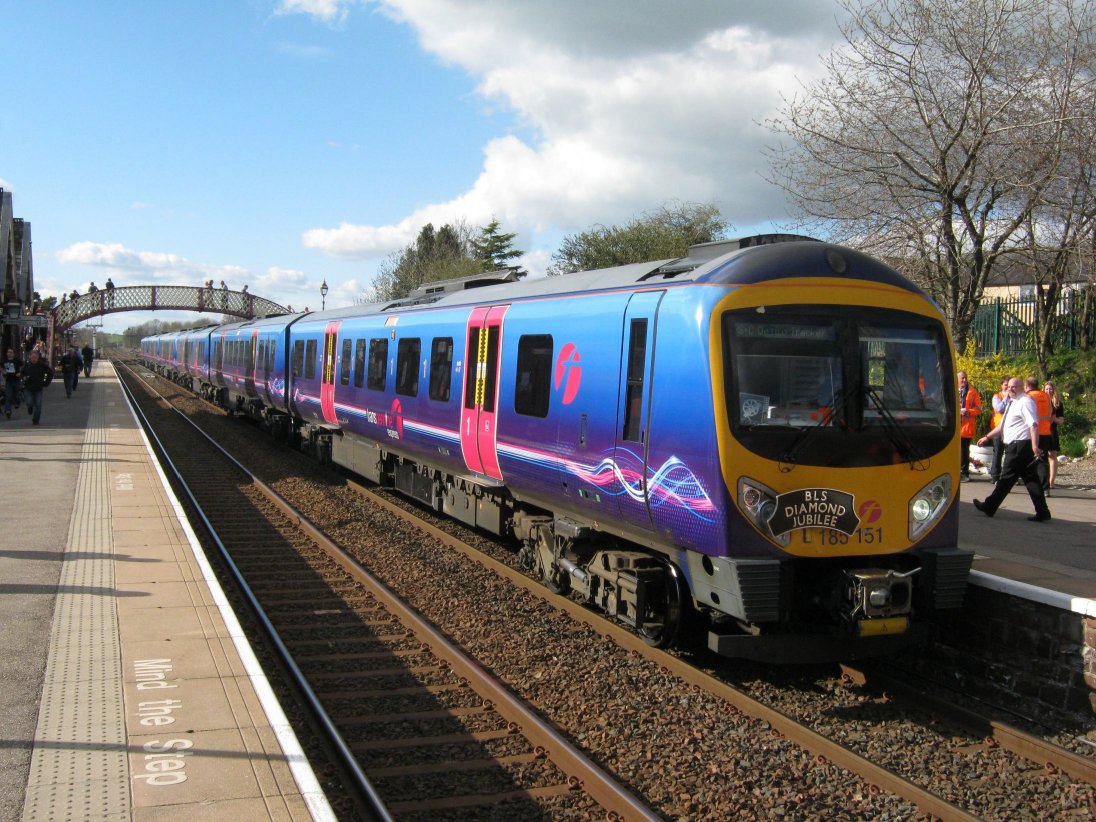
The photographer is looking north as the tour train stands in bright sunshine at the up platform at Appleby station on the return journey from Carlisle over the former Midland Railway’s Settle and Carlisle line. From 1 September 1952 to 6 May 1968 the station was named Appleby West to distinguish it from the nearby former North Eastern Railway station (Appleby East) on the Penrith-Kirkby Stephen line. The North Eastern line is now the subject of a preservation project by the Eden Valley Railway which is based at Warcop, south east of Appleby. Their running line currently extends some 2m 28ch , over half the distance to Appleby East. The crossover at the rear of the train still leads to the 'North East Sidings' and a run rounds loop and formerly was part of a link to the North Eastern Line itself.
[© Patrick Chandler 2015]
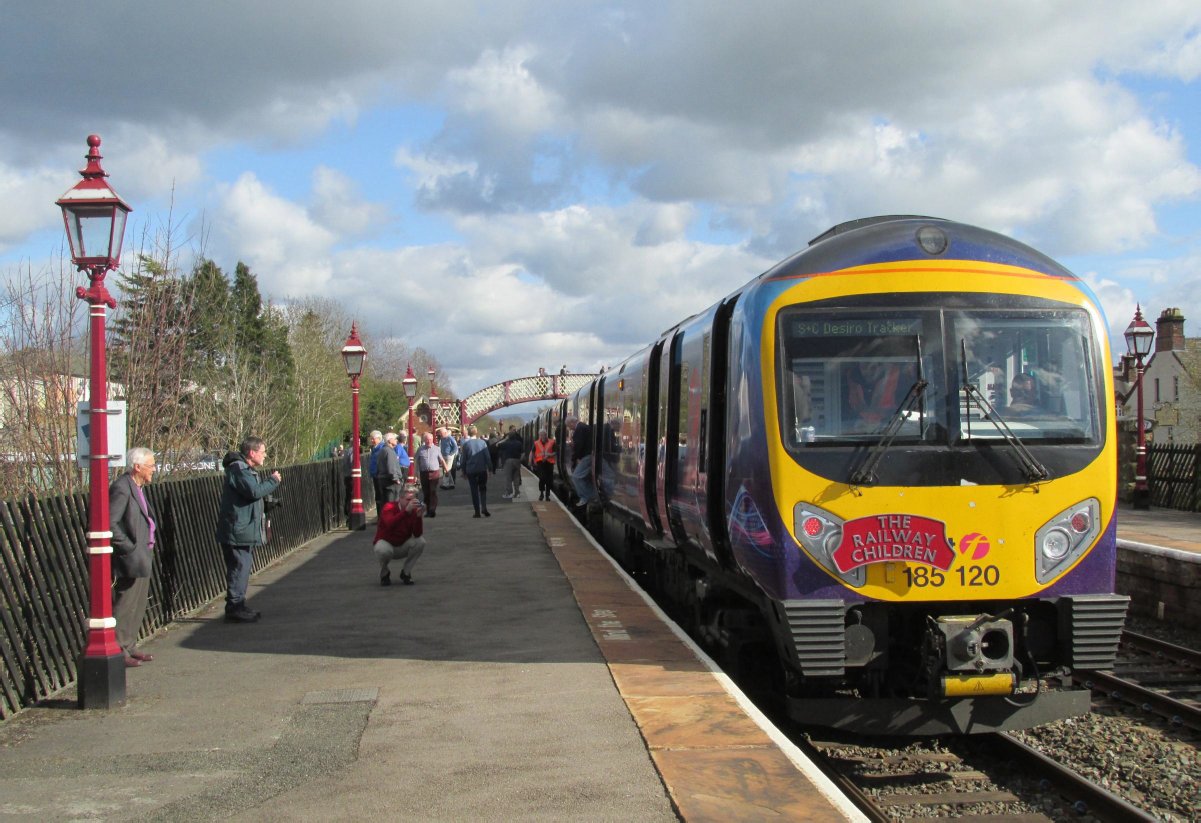
Another view of the tour standing at Appleby, this time facing south, where the curved lattice footbridge, platform lights and diagonally braced fencing all point to the station’s Midland origins.
[© Simon Mortimer 2015]
Progressing southwards the tour took the very remote Blea Moor Loop and called at Settle to set down FoSCL's Mark and Pat Rand. They had a very short walk home as they live in the converted water tower at the station as featured on Channel 4's Restoration Man. Then through Hellifield Up Loop and its connection to the Clitheroe line. After Daisyfield Jct. the tour crossed very briefly to the Up East Lancs and back before the tunnel to the Down to run through Blackburn reversible P1 in the unusual direction (the Up & Down Passenger Loop). At Lostock Hall Jct. the curve to Farington Jct. was taken and, once out on the WCML, participants knew that the London connection was behind us. At Wigan North Jct. the crossover to P6 at was used to set down, returning to the Up Main at Wigan South Jct. followed by a detour onto the Up Slow at Springs Branch (Slow Line) Jct. then then back at Bamfurlong Jct. At Eccles the Up Loop was traversed noting the very rusty Weaste branch (CA in 2010; a final railtour run by the Society traversed it on 12 June that year). The tour terminated in Manchetser Piccadilly P13 to allow the ECS to run directly to Ardwick Depot.
The tour’s next call was at Garsdale, where there are three refuge sidings on the up side. Geoff Plumb’s picture shows the tour train standing in No. 3 siding, furthest away from the running lines. The other two sidings are clipped out of use.
[© Geoff Plumb 2015]
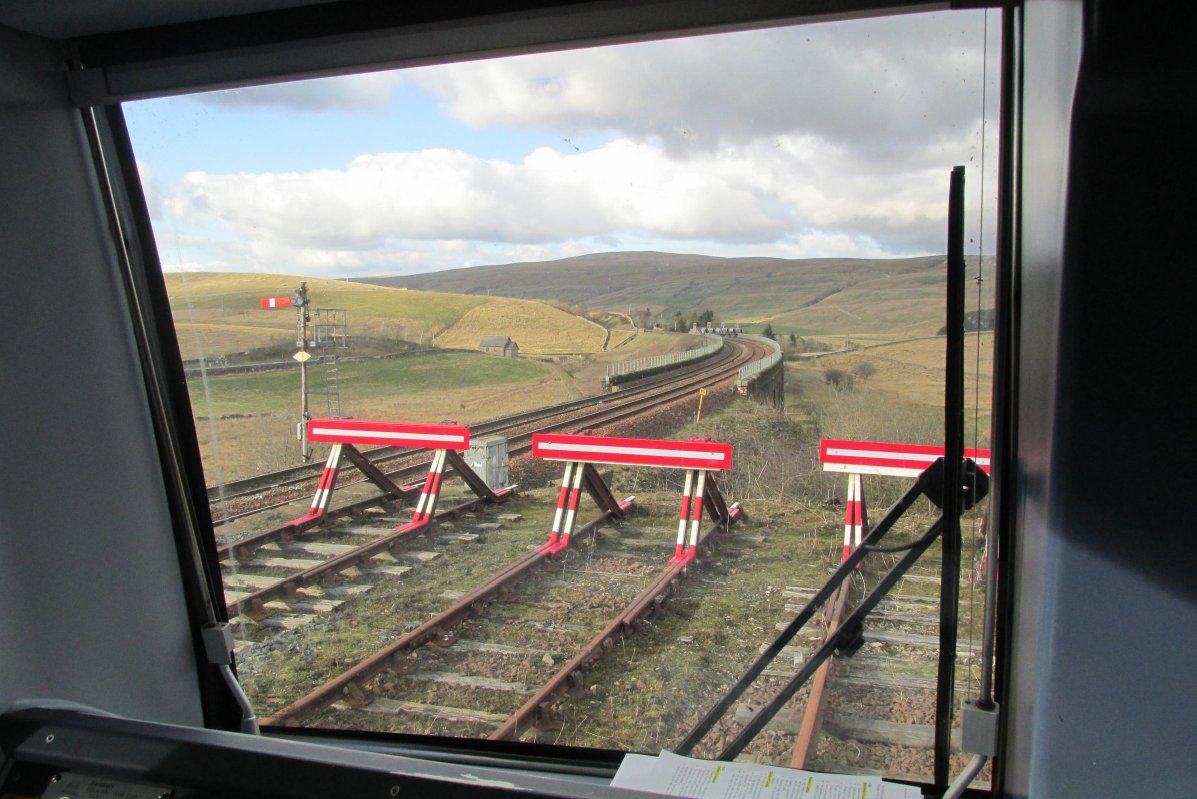
This view from the north end of 185 120 shows the running lines curving away to the north across Dandrymire (also known as Garsdale) Viaduct. Garsdale was the junction for the Midland Railway branch to Hawes where it met end on with the North Eastern Railway’s line to Redmire and Northallerton. This branch diverged northwards to the right (east) of where the train is standing. Garsdale, then known as Hawes Junction, was well-known for having a ‘stockaded’ turntable with a high wooden fence round it, intended to prevent locomotives being caught by the strong winds prevalent in this bleak location. The turntable was situated on the west side of the line, approximately opposite the front of the train in the picture and beyond an additional siding which used to exist on the down side. Its circular pit was clearly visible from the train.
[© Simon Mortimer 2015]
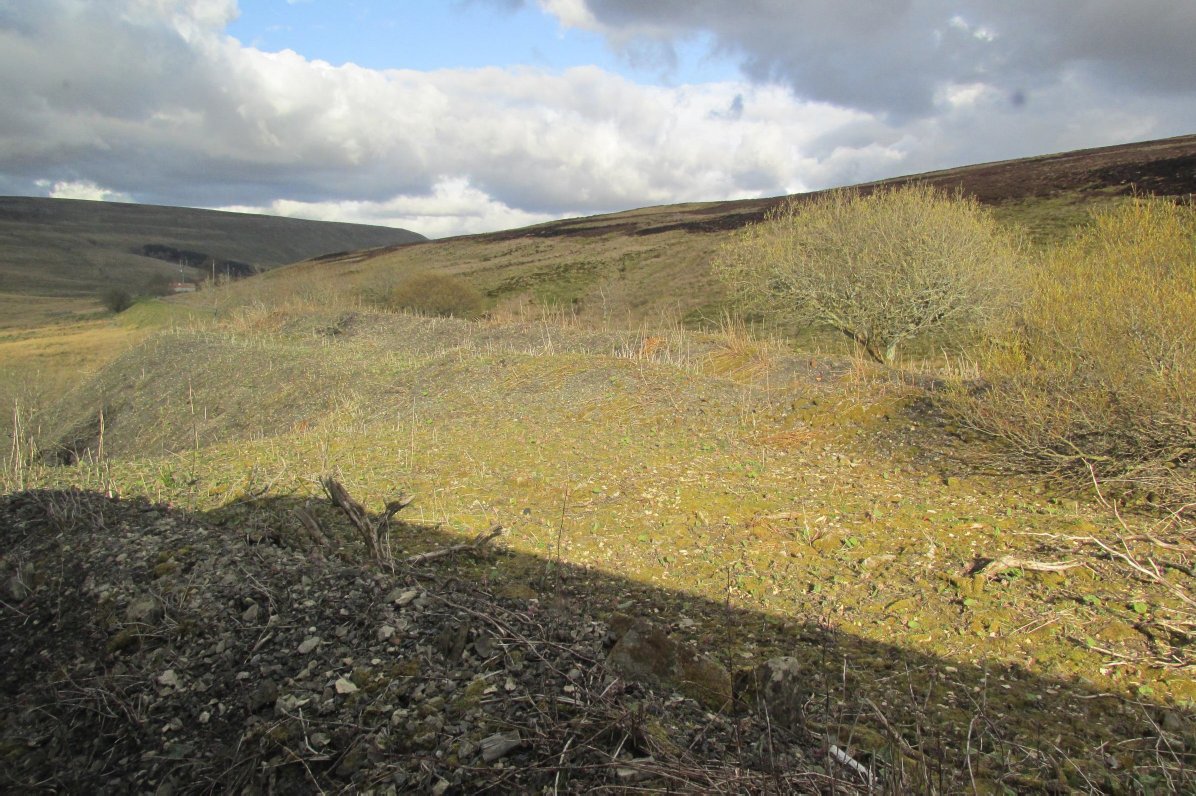
Beyond the train’s shadow can be seen the embankment of the Hawes branch curving away to the right. Garsdale was opened on 1 August 1876 as Hawes Junction and renamed Hawes Junction and Garsdale on 20 January 1900. On 1 September 1932 it acquired its present name of Garsdale. In the dark (for railways in Great Britain) days of the post-Beeching era, it was closed on 4 May 1970. Remarkably, while the S&C itself was under threat of closure, Garsdale was reopened on 14 July 1986. The MR Hawes branch, opened for goods on 1 August 1878 and passengers on 1 October 1878 following resolution of disagreements with the NER about the joint station at Hawes, was closed on 16 March 1959. Hawes to Redmire remained open until 27 April 1964. Beyond Redmire, the line remains open under the auspices of the heritage Wensleydale Railway, who have very long term ambitions to extend to Hawes and Garsdale.
[© Simon Mortimer 2015]
Grateful thanks to all involved at TPE (especially to Tim Brawn and Luke Gardner for all their time and hard work), NR and within the Society, particularly Kev Adlam, for making this unusual, interesting and above all friendly charity tour in aid of Railway Children happen with such a great and convivial atmosphere on board all day. The total income from fares, sales of refreshments, raffle etc of £18,215 was £1,584 per hour or £51 per mile, averaging £84 per passenger - a very impressive result thanks to all the participants too!
Back to top