This was the sixth visit led by Adam that I have been on in the last twelve months. The 31 mile line is claimed to be the first inter-city railway in the world, opening on 15 Sep 1830 between Liverpool and Manchester. It needs to be said that Manchester did not become a city until 29 Mar 1853 and Liverpool until 11 May 1880! However, it was the first railway to rely exclusively on steam powered locomotives, no horse-drawn traffic was permitted, the first to be entirely double track throughout its length, the first to have a true signalling system, the first to be fully timetabled and the first to carry mail.
Fifteen members met at the Liverpool Anglican Cathedral at 10.00. Additionally, members of the Liverpool & Manchester Railway Trust (Eric, Chris and Paul) plus Paul Wright, a local railway historian, were present, adding to what Adam told us. Our first call was at the Huskisson Memorial in the Cathedral grounds. As is well known, William Huskisson MP was killed in an accident with the original Rocket on the grand opening day. He is buried under the memorial. From here, we passed the house where George Stephenson lived during construction of the L&MR and then on to one of the massive ventilation towers above the Wapping Tunnel in Blackburn Place. Wapping Tunnel gave railway access to the south end of Liverpool Docks in 1830. After a quick look at Liverpool Lime Street station, where there is very little left of the original terminus, our party travelled 1m 31ch by train to Edge Hill station. Lime Street opened in 1836 because, in 1830, Liverpool would not allow the L&MR into the centre of the town. It terminated at Crown Street, using a newly constructed tunnel which I had visited on Adam's 14 Jul 2025 BLS tour (view report).
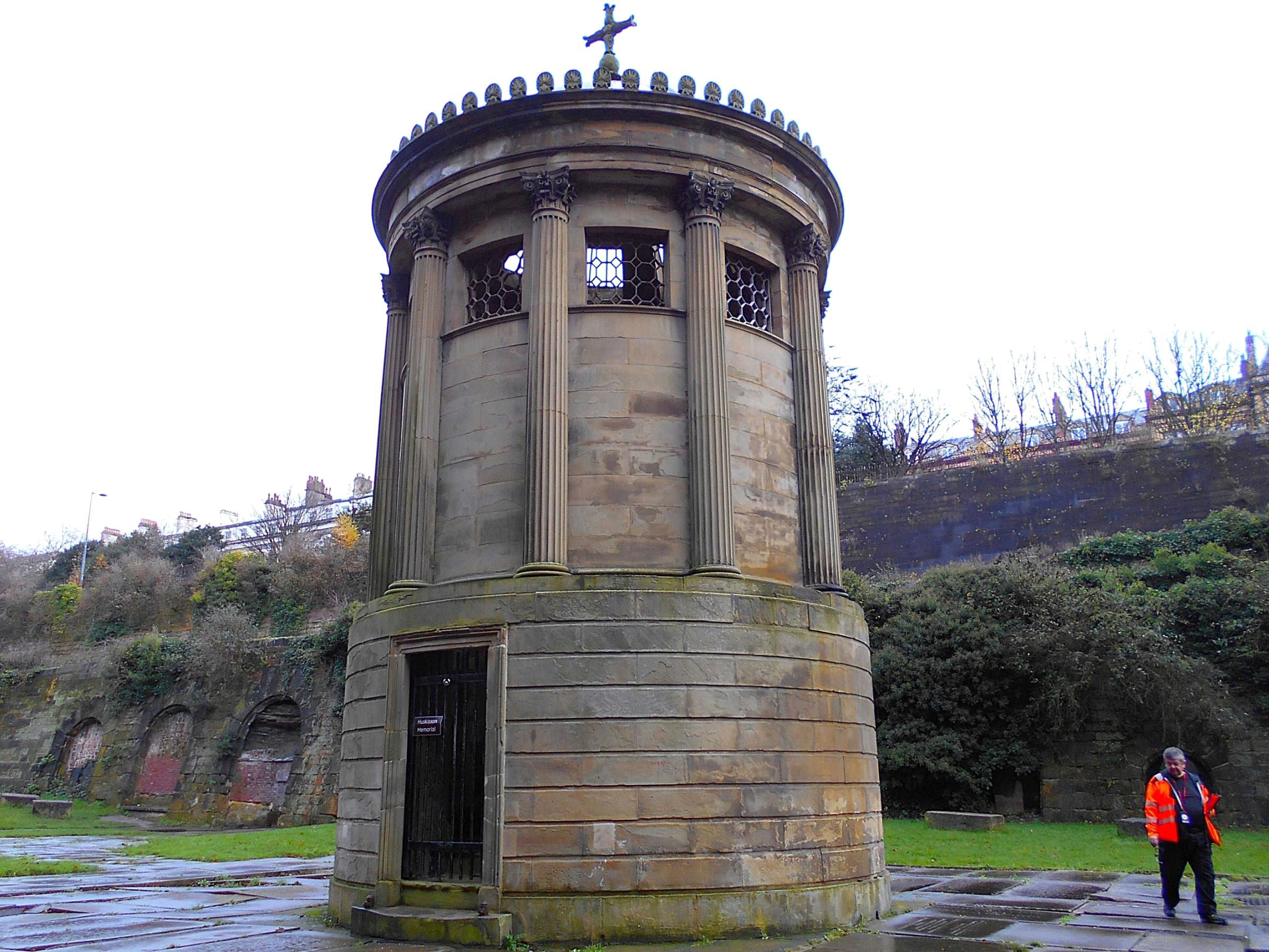
The Huskisson Memorial grave at St James Gardens.
[© Liz Moralee 2025]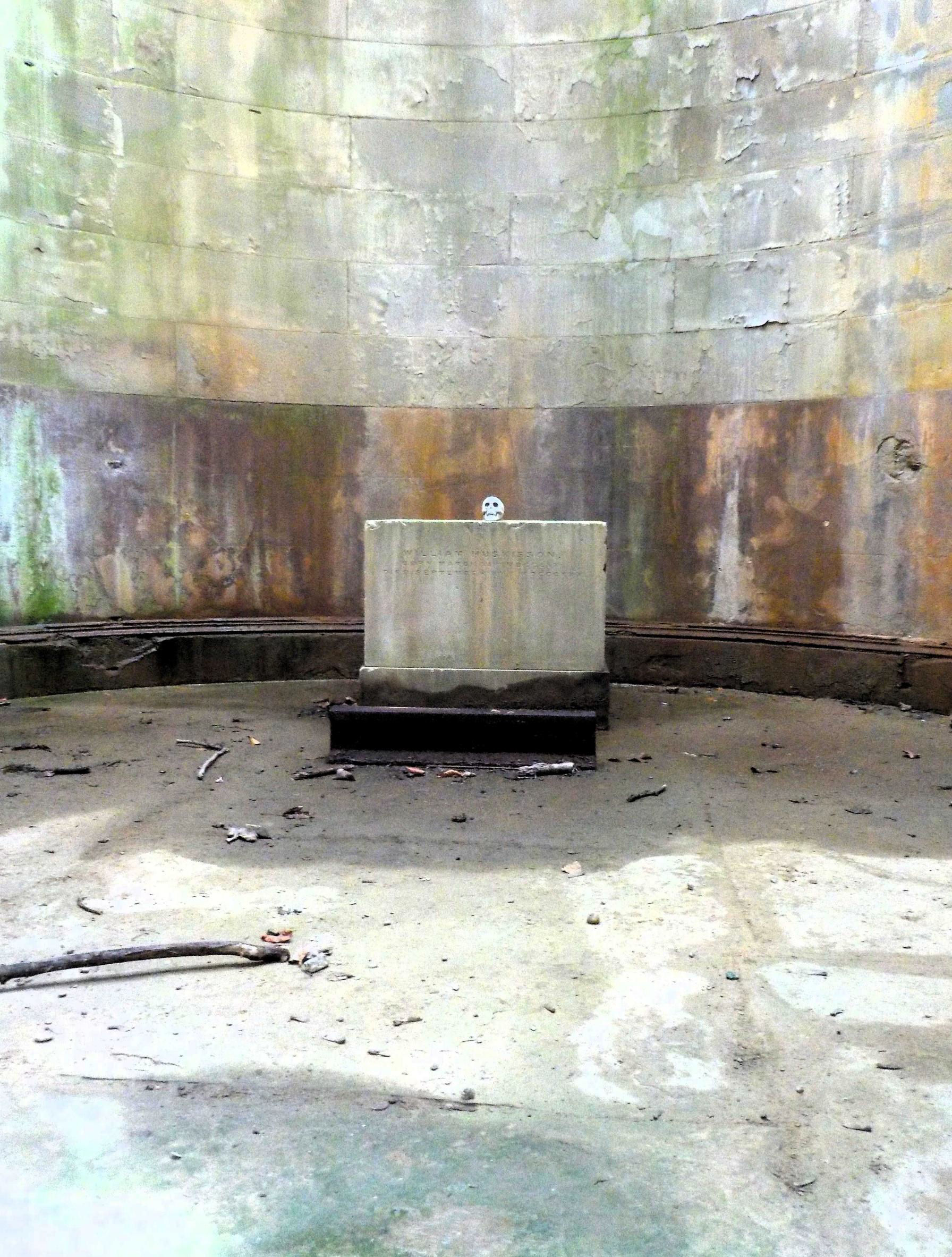
William Huskisson's grave within his memorial. "Alas, poor Yorick William! I knew him, Horatio."
[© Tim Hall-Smith 2025]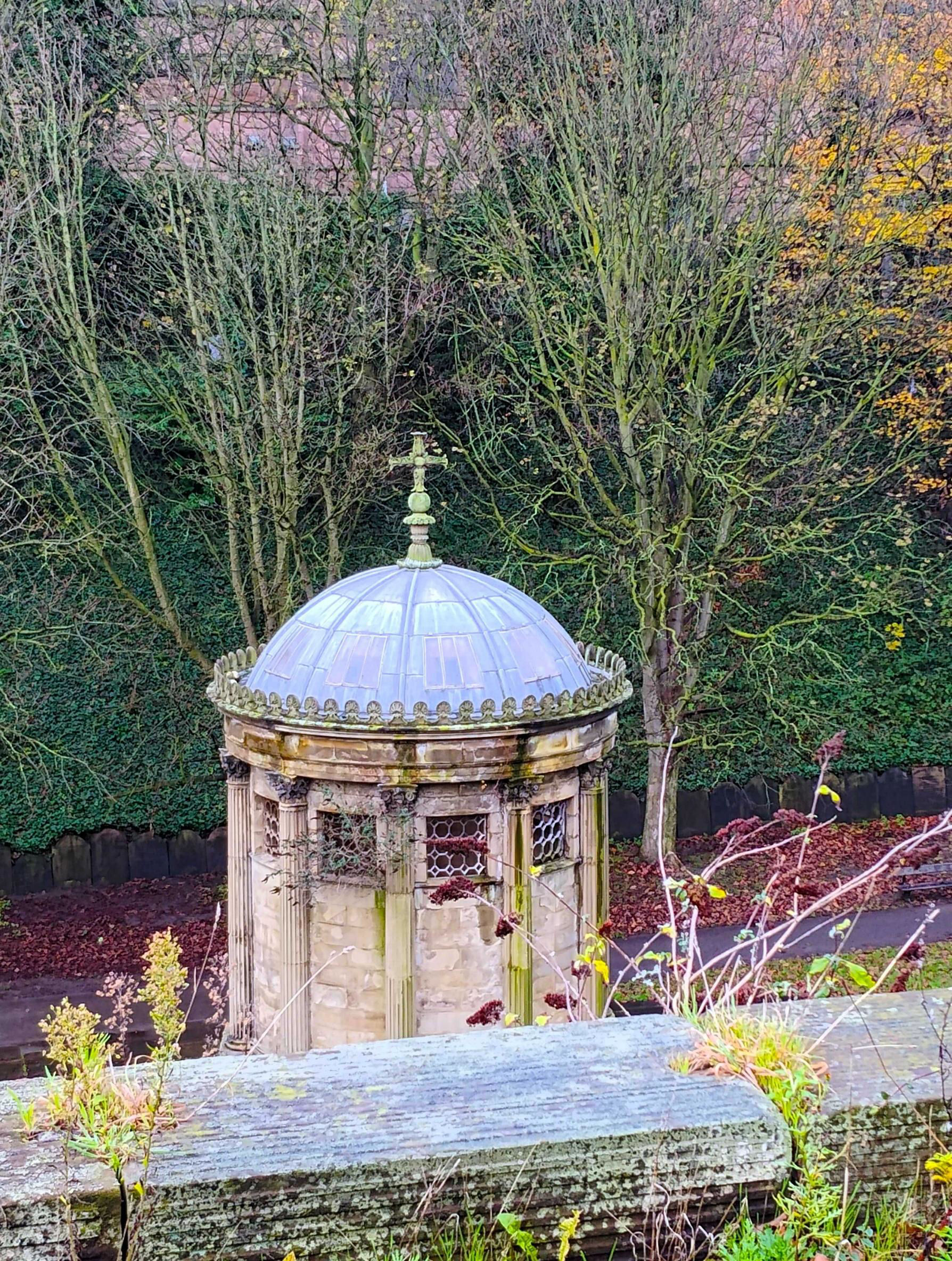
The top of the memorial from Hope Street. The base of Liverpool Cathedral (Church of England) is in the upper background.
[© Tim Hall-Smith 2025]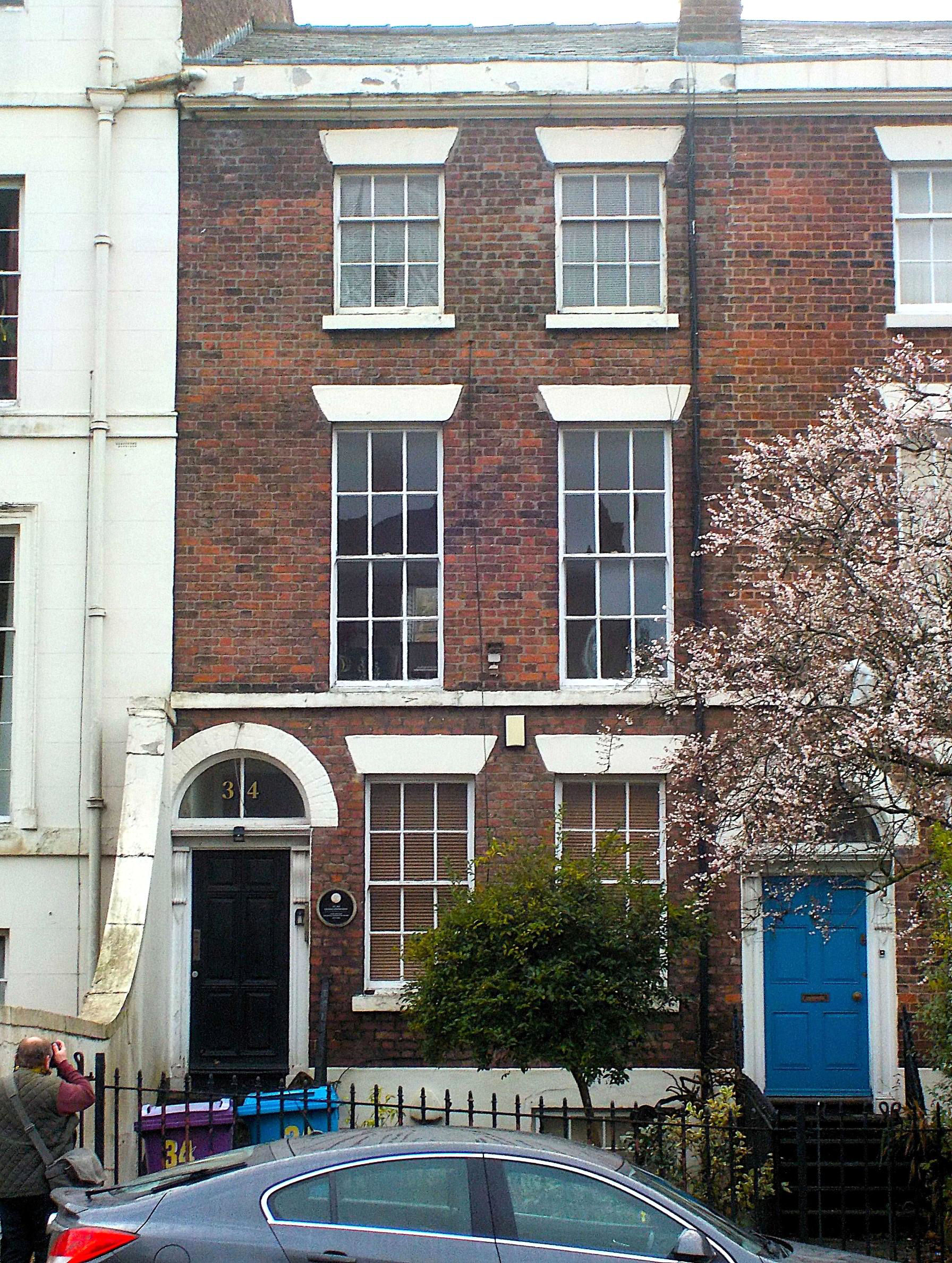
George Stephenson's House at 34 Upper Parliament Street with plaque.
[© Tim Hall-Smith 2025]Edge Hill is one of the oldest stations in the world in continuous use. After a history of the station buildings, we continued by train to Rainhill, in particular to look at the skew bridge at the western end of eastbound (Down) P2. This is where the Rainhill Trials commenced on the down grade to the actual trial distance. It is well known that 'Rocket' won easily. The stop here also left time for some refreshment before we set off for the next short journey to Newton-le-Willows (famously where all our Society BLN etc printing is carried out). Across from the station entrance, is the aptly named Railway Café and many of the 'specials' listed on the wall were fittingly named after notable trains. We walked down the slope to see a surviving L&NWR boundary marker, before walking under the 1830 Newton Viaduct, designed by Jesse Hartley and Grade II listed. At the station entrance, on the south side, is a replica of the tablet on the trackside Huskisson Memorial. However, Adam had arranged a treat for us, a preserved bus from the North West Museum of Road Transport at St Helens, to take us to Sankey Viaduct (TRACKmaps 4 p41B 2022). The bus No31, a Leyland PD2, registration 562 RTF, was built in 1961 for Widnes Corporation by Leyland. I occasionally used Widnes buses in 1970 when I worked and may well have travelled on it.
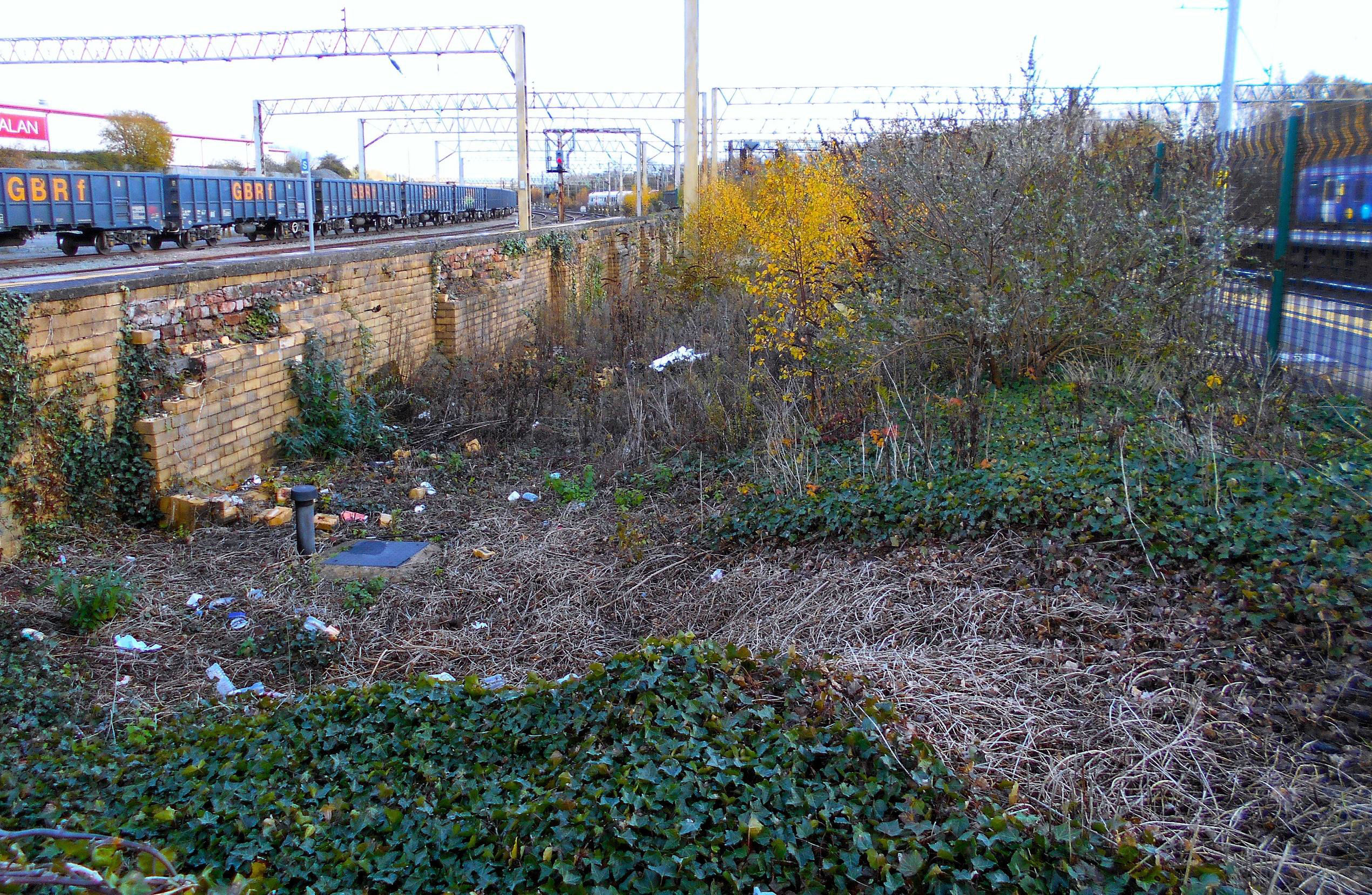
Site of the London end Up bay platform at Edge Hill station (Liverpool & Manchester Railway Atlas, Joe Brown, p33 A3 & p116 D4, 2021). Liverpool Lime Street is behind the photographer.
[© Liz Moralee 2025]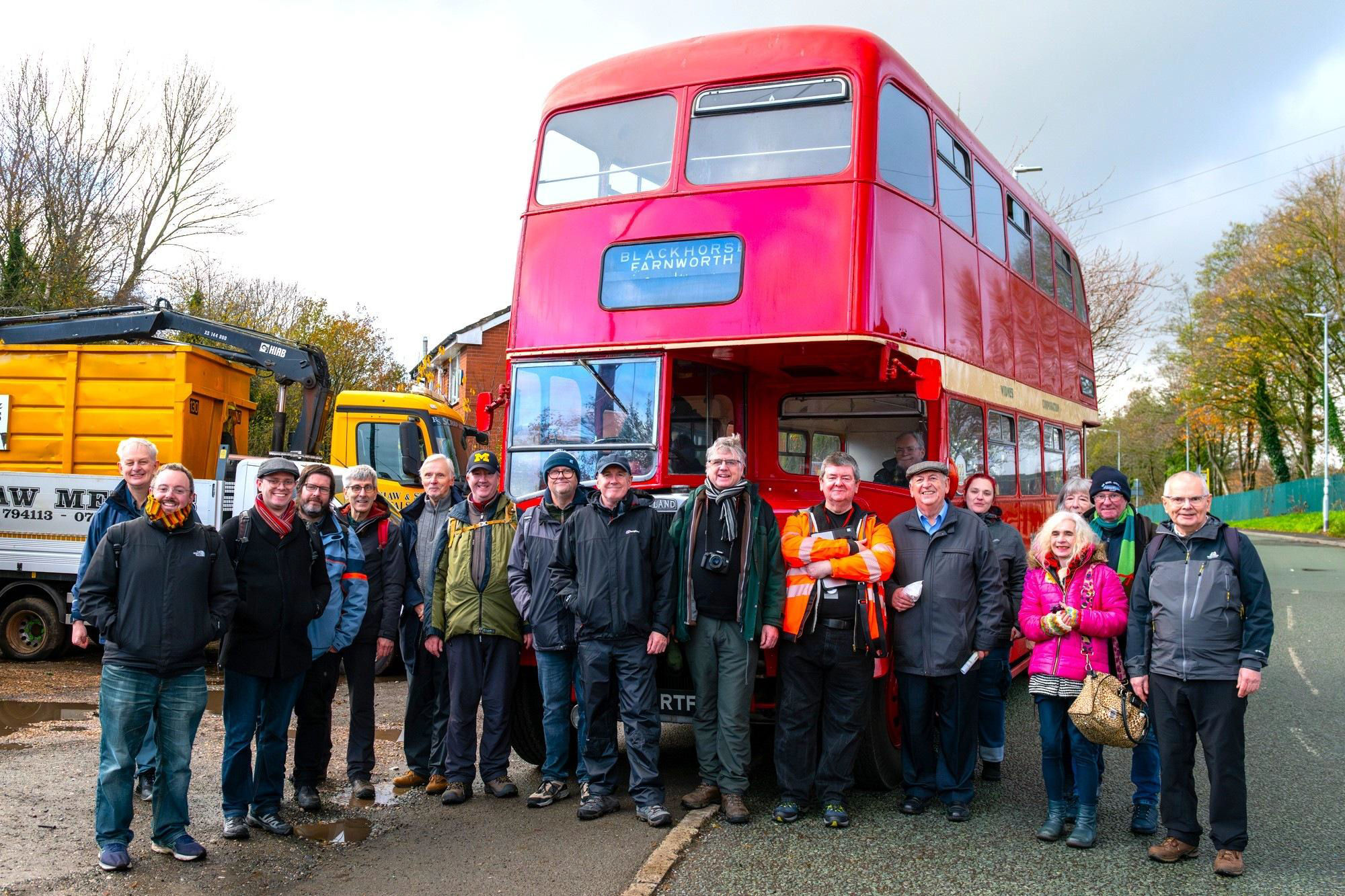
Happy members on the tour with '562 RTF', No31, a Leyland PD2 built for Widnes Corporation in 1961. Adam Turner is second from the left.
[© Chris Isles 2025]The 150yd Sankey Viaduct, just west of Sankey Jn, is locally known as the Nine Arches. Built between 1828 and 1830, part is in the Borough of St Helens and part in Warrington. Given the extent to which rivers delineate local authority boundaries, quite a few viaducts cross various boundaries. Others include Ribblehead (Cumbria / North Yorkshire), Welland (Leicestershire / Northamptonshire) Bennerley (Derbyshire / Nottinghamshire), Torksey (Nottinghamshire / Lincolnshire), Alston Arches (Cumbria / Northumberland), Almond Valley (Edinburgh / West Lothian) and Riddings (England / Scotland)!
Sankey Viaduct is Grade I listed and has been described as being the earliest large railway viaduct in the world. Sankey Valley with its canal and 'brook' was a major obstacle on the selected route of the L&MR. The company's principal engineer, George Stephenson, designed the Viaduct for the double track railway to traverse the valley and the Sankey Canal with clearance for the masts and sails of the Mersey Flats, some of the boats that used the canal. I had travelled over the viaduct many times but had never been under it before - railway viaducts are always more impressive from ground level than from a train.
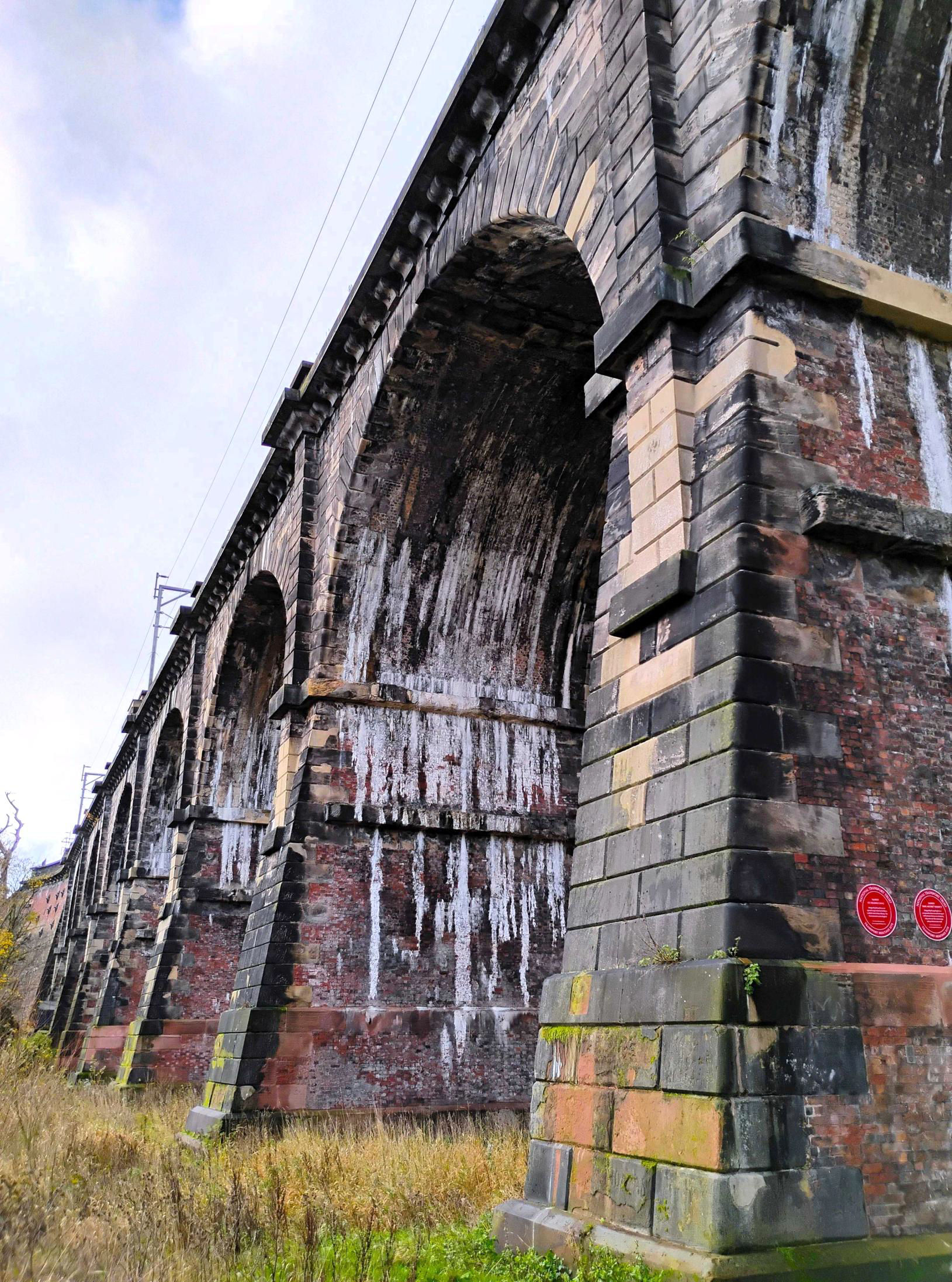
Sankey Viaduct, looking towards Liverpool with red wheels lower far right.
[© Tim Hall-Smith 2025]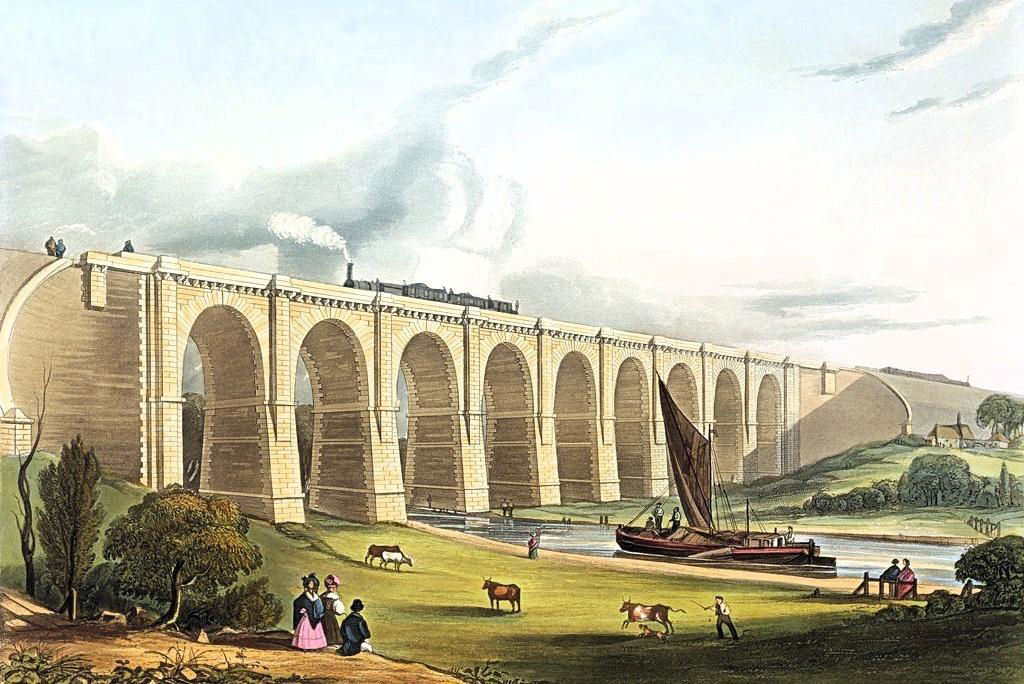
ome of our oldest members might remember this - Sankey Viaduct when built, the height was to clear the tallest 'Mersey Flat' sailing ships.We arrived back at Newton-le-Willows in good time for our Manchester train but it had been cancelled. As my wife had come there to ride on the bus and it had started raining, we chose to leave as we were off to Southport for the evening. I had visited some of the places in Manchester with Adam previously.
On Newton-le Willows platform, Paul Wright gave a history of the station and the line. The next service train arrived to take us on to Manchester and it was heaving! We decided to go to Deansgate instead of Victoria for Salford Central. This was handy, as it reduced the walking given a dark evening with rain setting in. We walked to Liverpool Road to see the former L&MR station façade, OP 17 Sep 1830, which some regard as the world's oldest railway station. The case for Heighington (1826) is at BLN 1477.1707!
We also saw the station agent's house next door. From under an arch of the Ordsall Chord, photos were shared of Liverpool Road station back through time with help from the L&MR Trust members. [The final passenger train to run into the site was our Society's 'Power Hall Tracker' tour on 3 Nov 2014.] We then went on to see the steel bridge over Water Street (1908) and the iron bridge from the 1860s, built by L&NWR to access warehousing within the Liverpool Road station complex. We finished the tour around the corner on the relatively new Prince's Bridge (2017) to take a splendid view of George Stephenson's twin-span segmental-arched sandstone skew bridge over the River Irwell, well-lit with floodlighting.
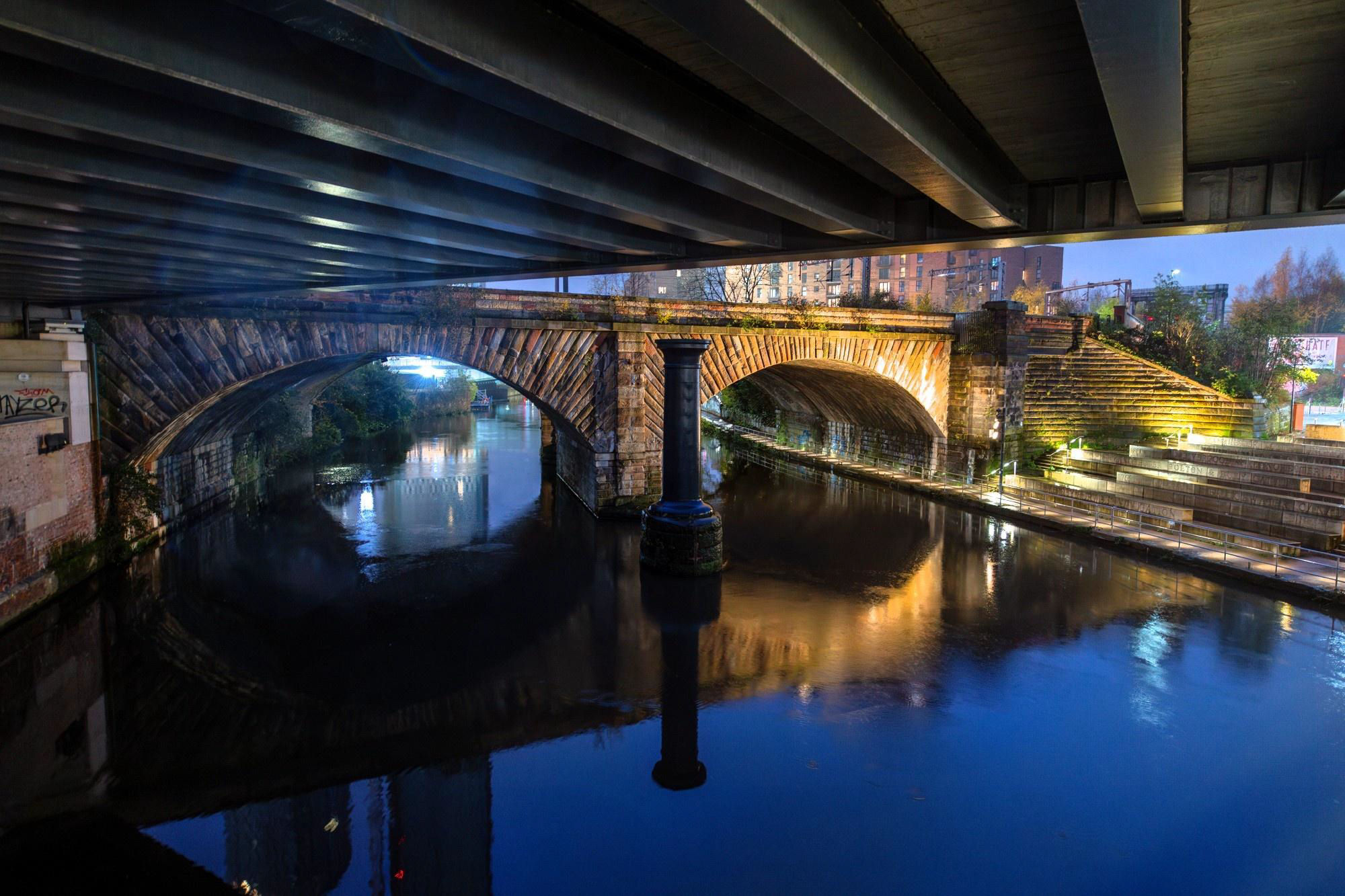
Manchester / Salford George Stephenson's twin-span segmental-arched sandstone skew River Irwell bridge with Prince's Bridge above.
[© Chris Isles 2025]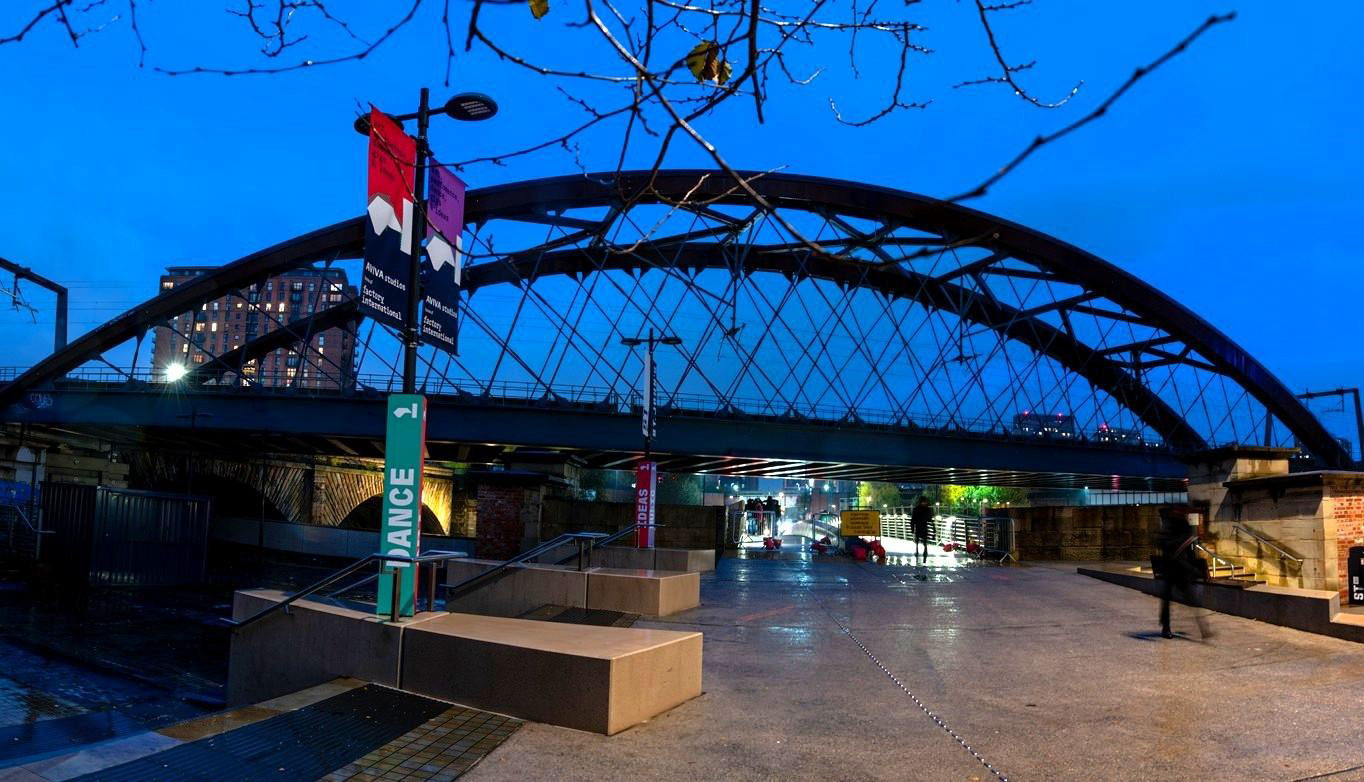
Ordsall Lane Chord which only has one train an hour each way (between Manchester Airport and Redcar).
[© Chris Isles 2025]The day was another success for Adam. It is an area steeped in the Industrial Revolution of the Victorian Age. The railways played a large part in this; started by the L&MR. Hopefully, Adam will arrange other visits in this area leading up to the 200-year anniversary of the L&MR in 2030. Huge thanks to Eric Shenton (L&MRT), Chris Lewis (BLS), Paul Wright (NW railway historian), Paul O'Donnell (LMRT) and Chris Isles (L&MRT) for making the day possible. It raised £330 for the North West Museum of Road Transport.