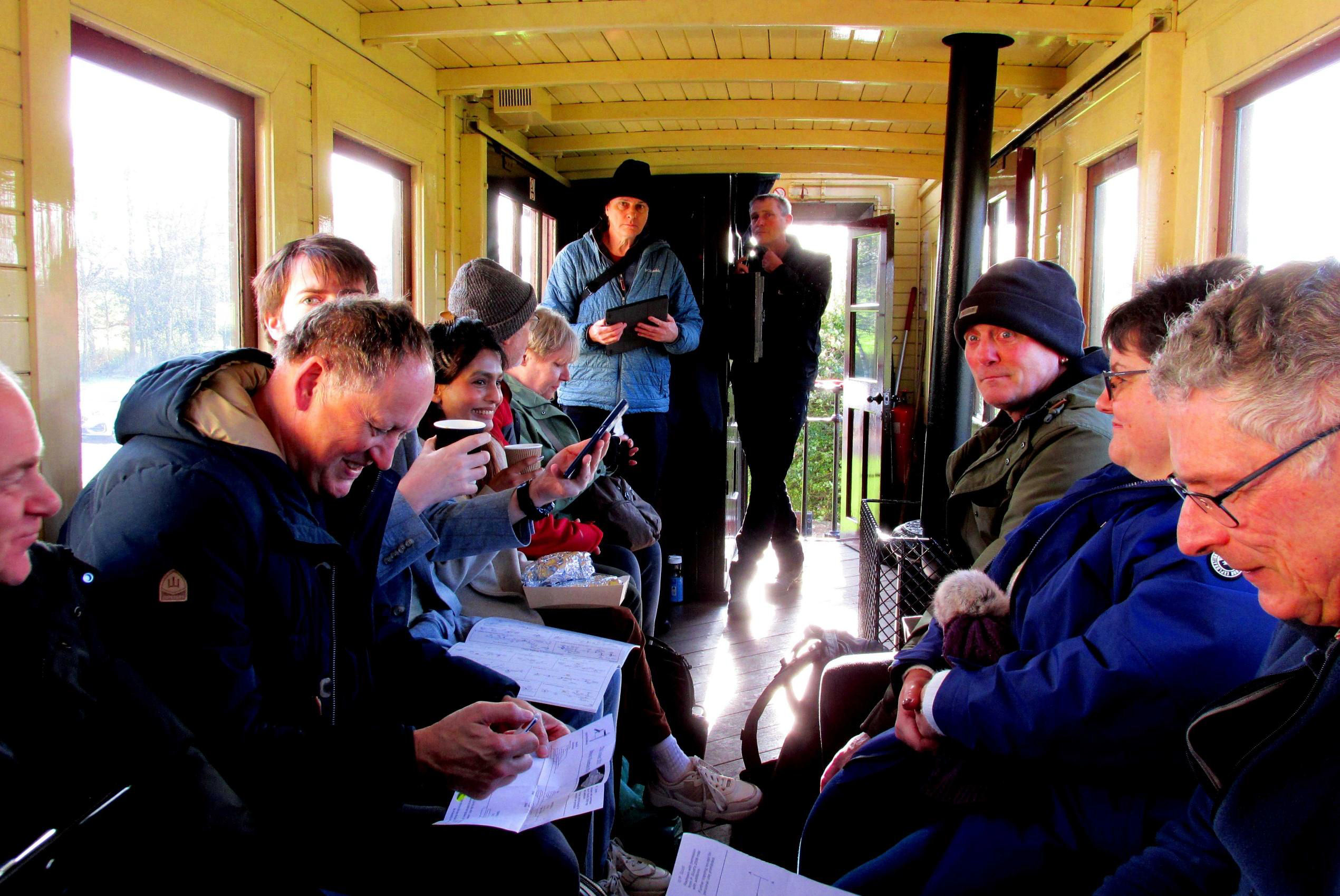
A car full of us arrived at Pant station just after 9.30 and couldn't help but notice the Caboose stabled at the southernmost extremity of the siding that runs down the west side of the shed and workshop almost into the car park. Despite it being nearly an hour until the train was due to depart, several members had already bagged a seat in the caboose for maximum track coverage. We left them out there and headed into the station buildings, and more specifically the café, to register our arrival and avail ourselves of the complimentary breakfast roll and hot drink kindly provided by the catering staff. Remarkably, after four days of heavy rain in the area, it was sunny and dry all day with lovely autumn colours which made all the difference.
This was the first ever trip of this type on this railway. There were 57 members registered on the day's charter, with a warning that it could be a bit snug on the tour. I went out at about 10 o'clock to photograph our train in its starting position and bag my seat. (Five keen participants had travelled nearly 400 miles from our Ayton Castle Railway visit in Scotland the afternoon before - BLN 1483.2414!)
It was good to see five wives / girlfriends in attendance at this very scenic railway. The train was made up of two carriages; the caboose was Coach 'E', coupled to Coach 'D' and diesel locomotive Ty7 1698.
Ty7 1968 is a 400 hp, diesel hydraulic locomotive built by Kambarka Engineering in Russia in 1981 as a 750mm gauge locomotive. The locomotive was used on a peat railway in Latvia before being imported by the Brecon Mountain Railway in 2010 and regauged to 600mm. I chose to travel on Coach 'D'. There seems to be two types of 'track basher', those that record track coverage based on where their bodies are and those that record track based on what the train covers. There was no need to guess which category those members that were already on the train were in, as most of the seats in the Caboose and at the southern end of Coach 'D' were taken. Being in the latter category, I made my way to the north end of Coach 'D', which remained empty! The remainder of Coach 'D' did fill up by our departure time and our Fixtures Secretary, together with today’s fixture organiser, Gary Lonsdale took up their positions on the locomotive to direct the day's activities and liaise with the Brecon Mountain Railway (BMR) staff.
http://www.minorrailways.co.uk/trackplans/breconmountain.pdf is the 11 May 2025 trackplan.
The rear of the caboose looking towards the end of line before departure.
[© Simon Mortimer 2025]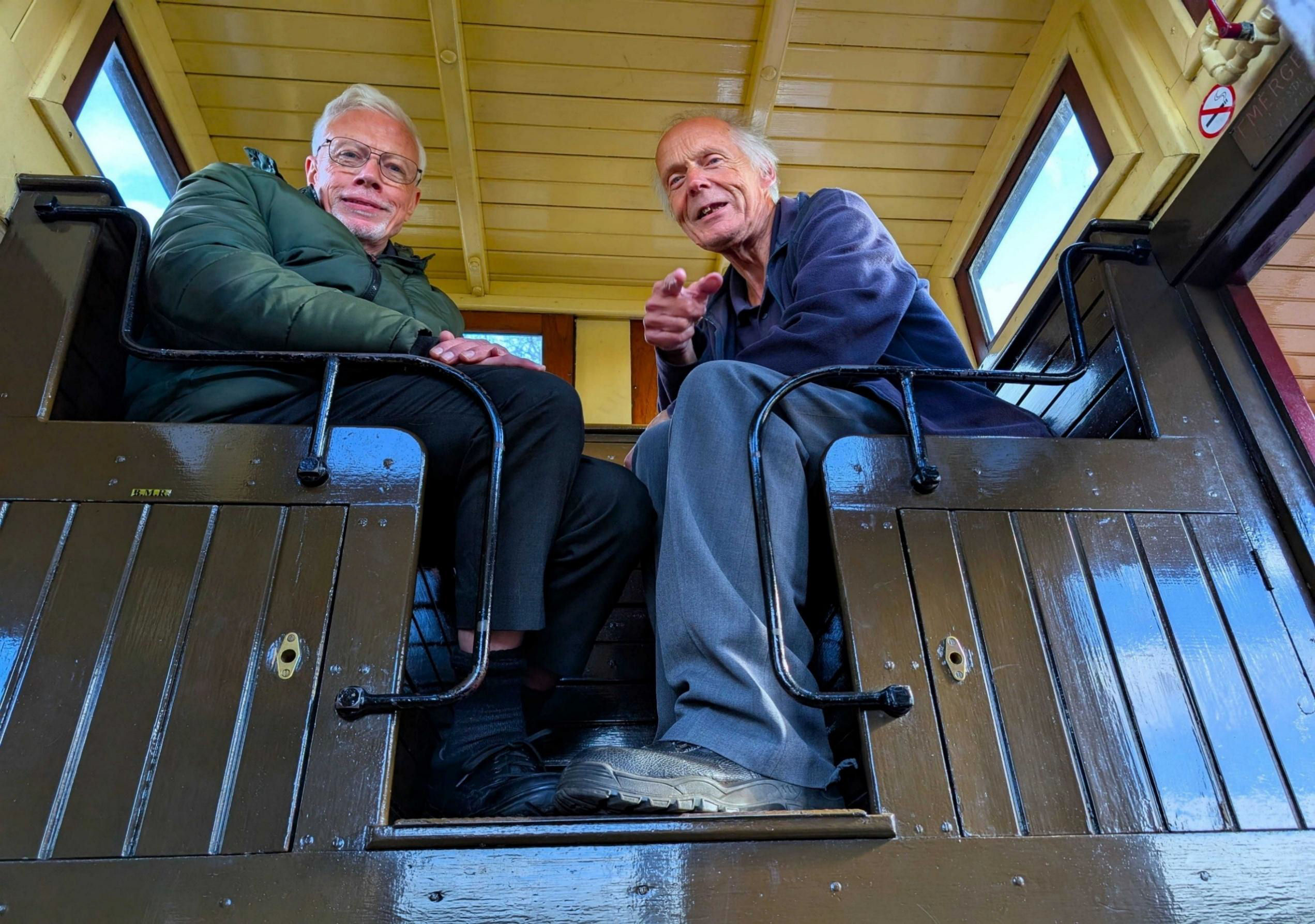
The 'high level' seats in the caboose give a great view and the public can use them,
[© John Hampson 2025]With everybody on board, our tour departed on time at 10.30. The train having already been at the southern end of the siding we boarded on, departed north bound to the far end of the headshunt; a sign from our Fixtures Secretary confirmed that we had reached end of line. We reversed and were propelled to the shed doors on Line 3. Reversing again, we travelled north to clear the points and then propelled to the shed doors of Line 2; we then repeated this exercise to cover Line 1 to the doors. Shunting up and down the shed roads, it was noted that BMR's other operational diesel locomotive was stabled with various wagons on the Coal Road. This 0-6-0 diesel hydraulic locomotive was built by Brecon Mountain Railway in 1987 from parts supplied by Baguley Drewry and given Works Number 001.
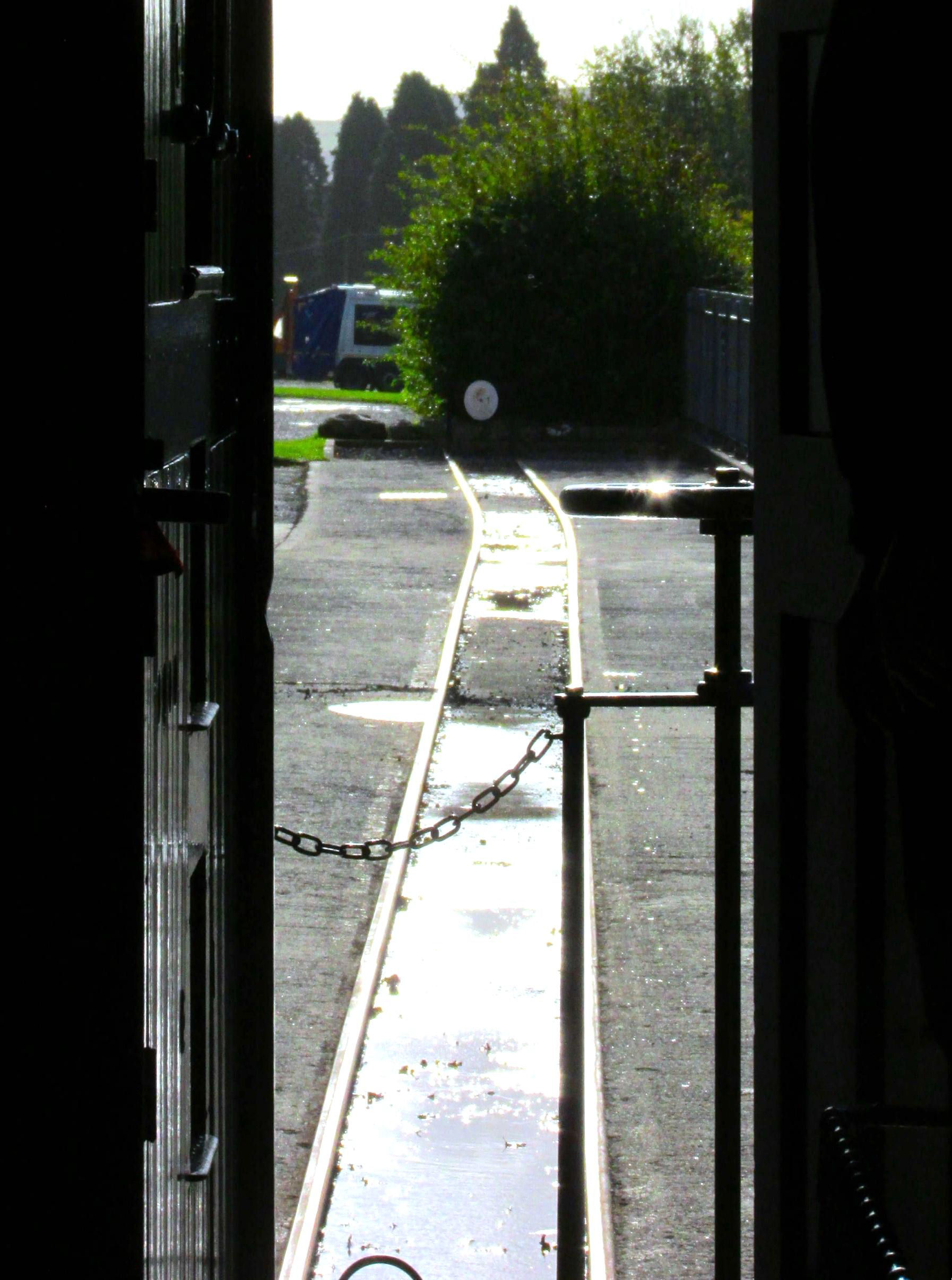
Rear view from Caboose leaving Pant first thing (it started from the very end of line, of course).
[© Simon Mortimer 2025]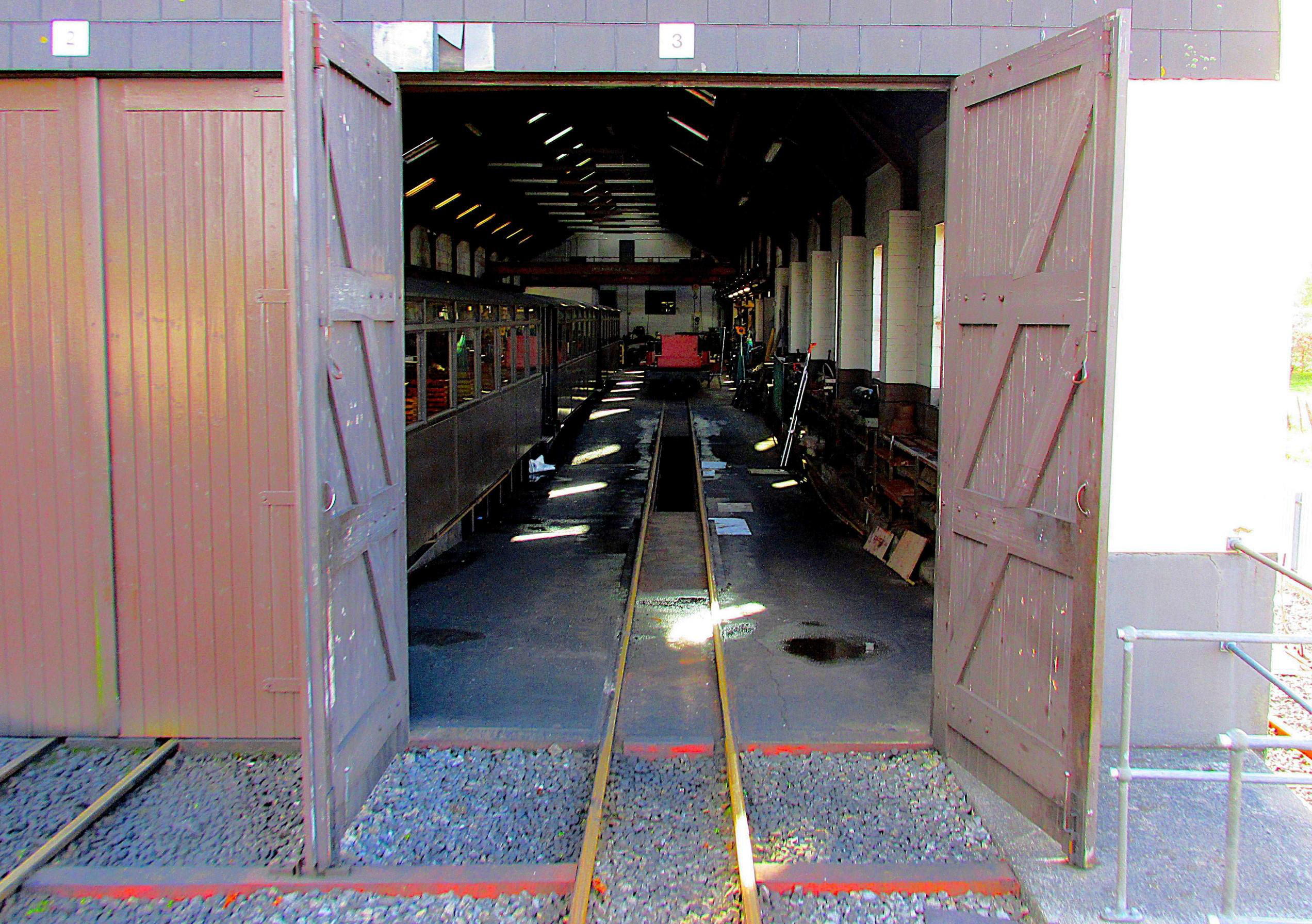
The tour is propelled to the doors of of (unsurprisingly) shed Line 3.
[© Simon Mortimer 2025]With the Coal Road occupied, we left the shed area and made our way up to the station area. First, we traversed the runround loop to the buffer stops, then reversed back through the loop to clear the points before running along the platform line to the headshunt points. As these points are sprung, our tour was unable to cover the full platform line over them for overlap at this stage (but see later…)
After covering Pant, we headed north to Torpantau. Of note was the deviation slightly to the east past the landslip caused by a storm that briefly closed the line last November. Then it was via Pontsticill platform line and right hand running at Dolygaer (the loop is the other non-preferred line). At Torpantau our tour ran through the platform (left) line to the buffer stops at the end of the headshunt. Here we could alight to stretch our legs and take photos. Of note, old photos and 25" maps reveal that the BMR platforms are at a lower level (and on level track), slightly east of the original standard gauge line here which was on an embankment approaching the 'other' Torpantau station, of which nothing remains.
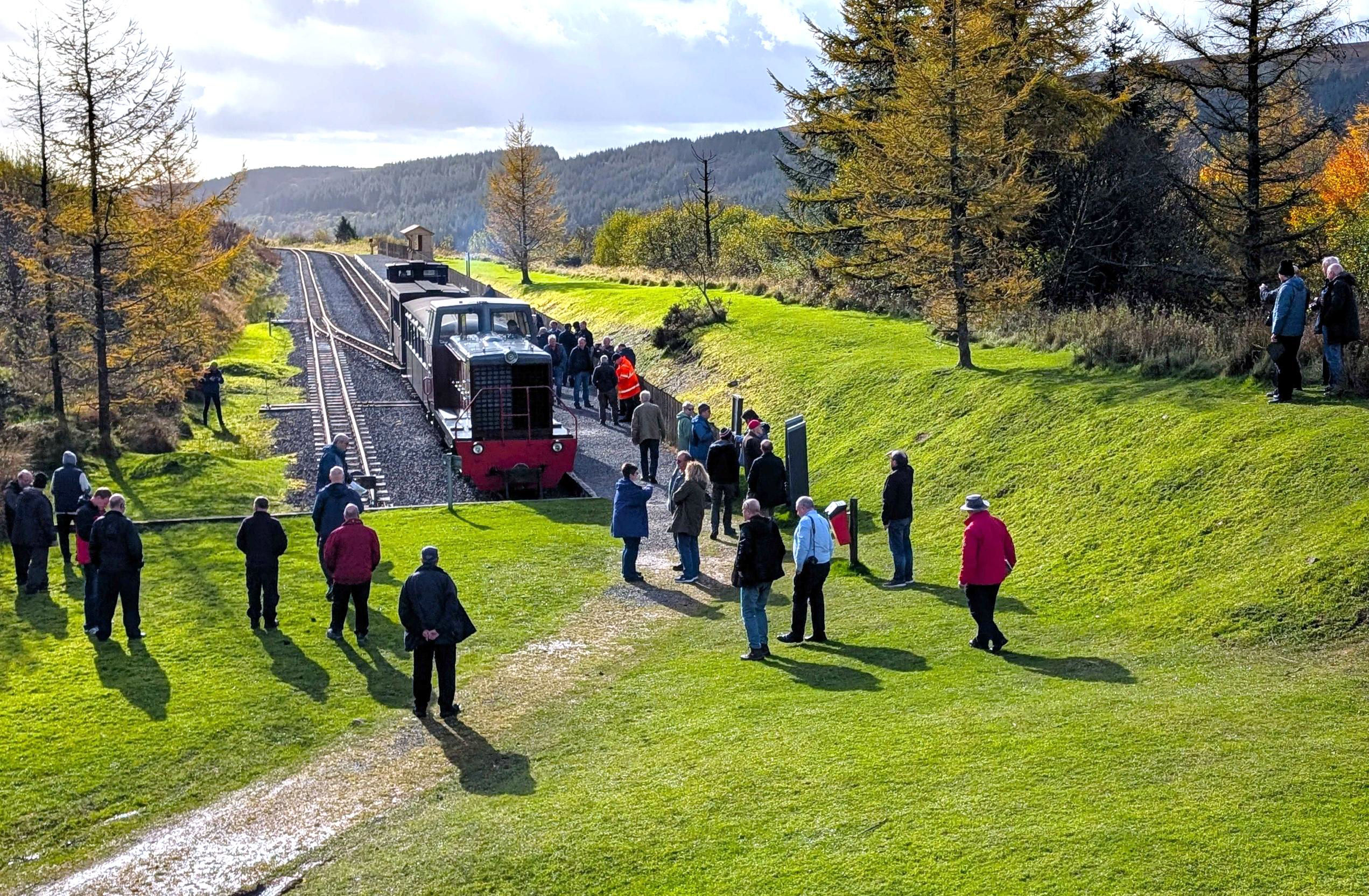
Torpantau (the loco did later run round and propel the coaches back). The curve ahead is where the Brecon Mountain Railway deviates off the standard gauge alignment to Brecon (right) for the track to be level in this station. The standard gauge was to the right here on a rising gradient
[© John Hampson 2025]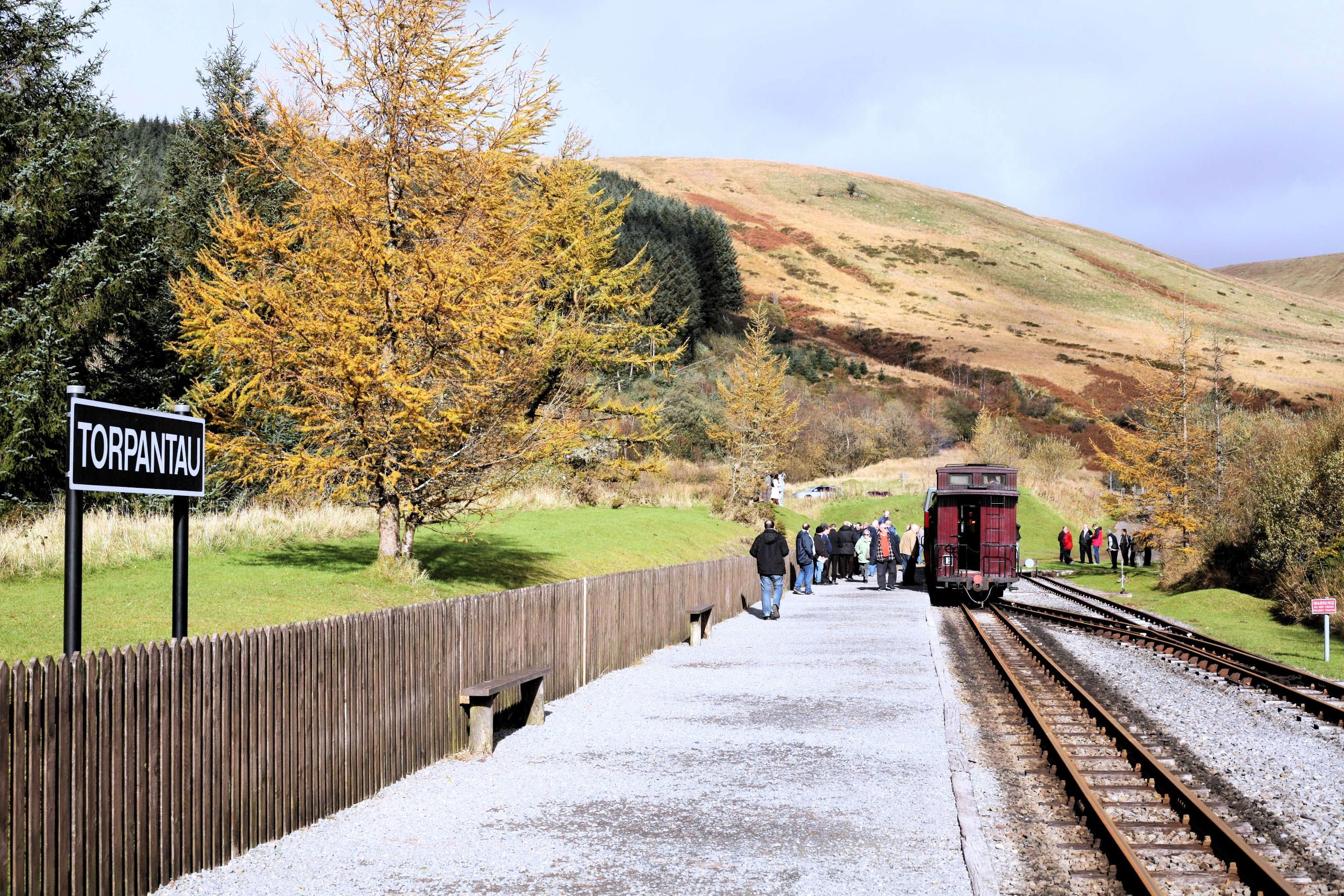
In the other direction, Torpantau looking north to the end of line, the standard gauge line was to the left here on a rising gradient
[© Justin Edwards 2025]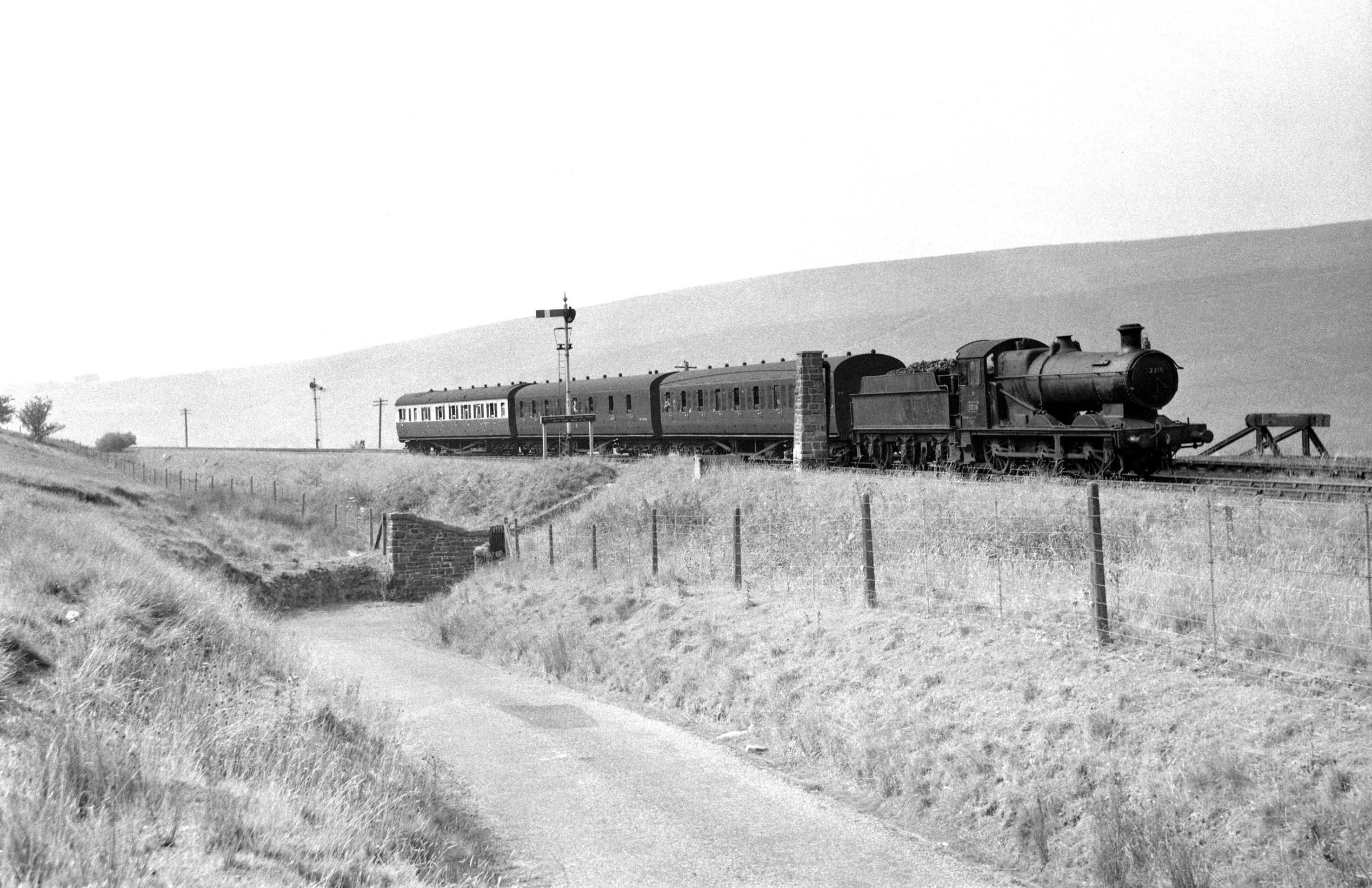
2218 on the 8.03am Newport to Brecon service approaching Torpantau on 25 Jul 1959. The Brecon Mountain Railway station is to the left, at a lower level just after this minor road goes under the railway (Pant left, Brecon right).
[© Peter Waylett (Collection of Justin Edwards) 1959]Once everyone was back on, we were propelled south down the platform line to clear the north end points, allowing the loco to runround. With it now on the southern end of the train, we headed south to clear the south end points, reversed here and propelled back north through the runround loop and back into the headshunt. No one was left in any doubt that we reached as far as possible on this line!
After the headshunt, we headed back south onto the runround loop to clear the points and then were propelled onto the siding to touch the buffer stops again. Every inch of track covered at Torpantau, we were hauled south through the runround loop towards Dolygaer. This was the BMR northern extremity from 2 Apr 1995 until 1 Apr 2014; we traversed the rare right hand loop (once for locos running round), requiring operation of the ground frame each end, before continuing to Pontsticill. Our tour arrived on the loop line, where participants could detain for a leg stretch and take advantage of the facilities.
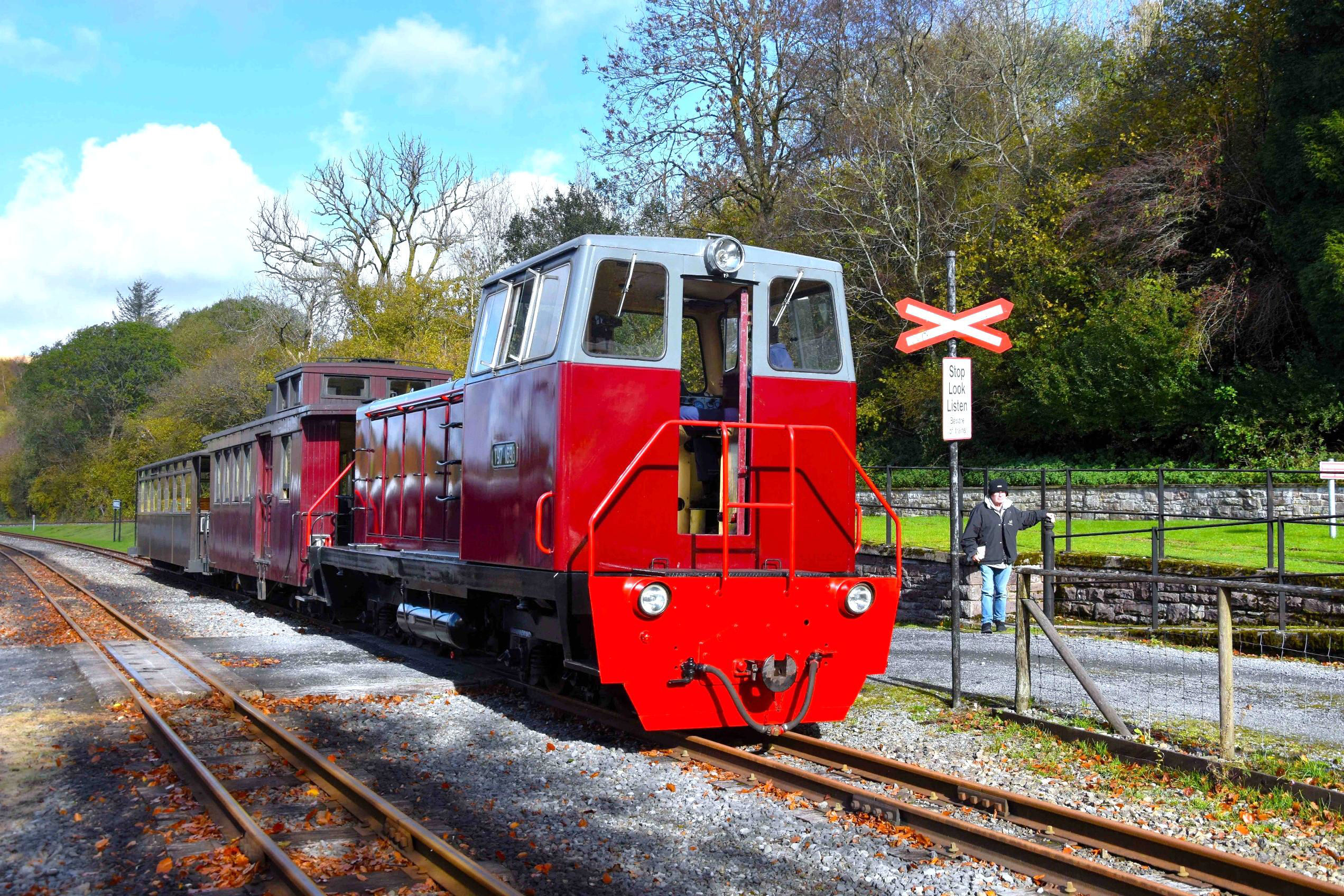
TU7 1698 a Kambarka diesel hydraulic locomotive in the loop at Pontsticill
[© Phil Logie 2025]Pontsticill to Pant was the initial section of the BMR, opened on 8 Jun 1980. Other than at Torpantau station and the last 500yd at Pant this 4½ mile, 1' 11¾" gauge line is on the trackbed of the Brecon & Merthyr Railway, CP 31 Dec 1962, CG/CA 4 May 1964. At Pant, it deviates southwest of the old line.
Once everyone had been ushered back on again, we were propelled north to clear the points with the platform line, before returning south into the platform. Here, the loco ran round to the north end of the train. Once coupled, the loco propelled us south to the sheds and we traversed Line 5 to the doors.
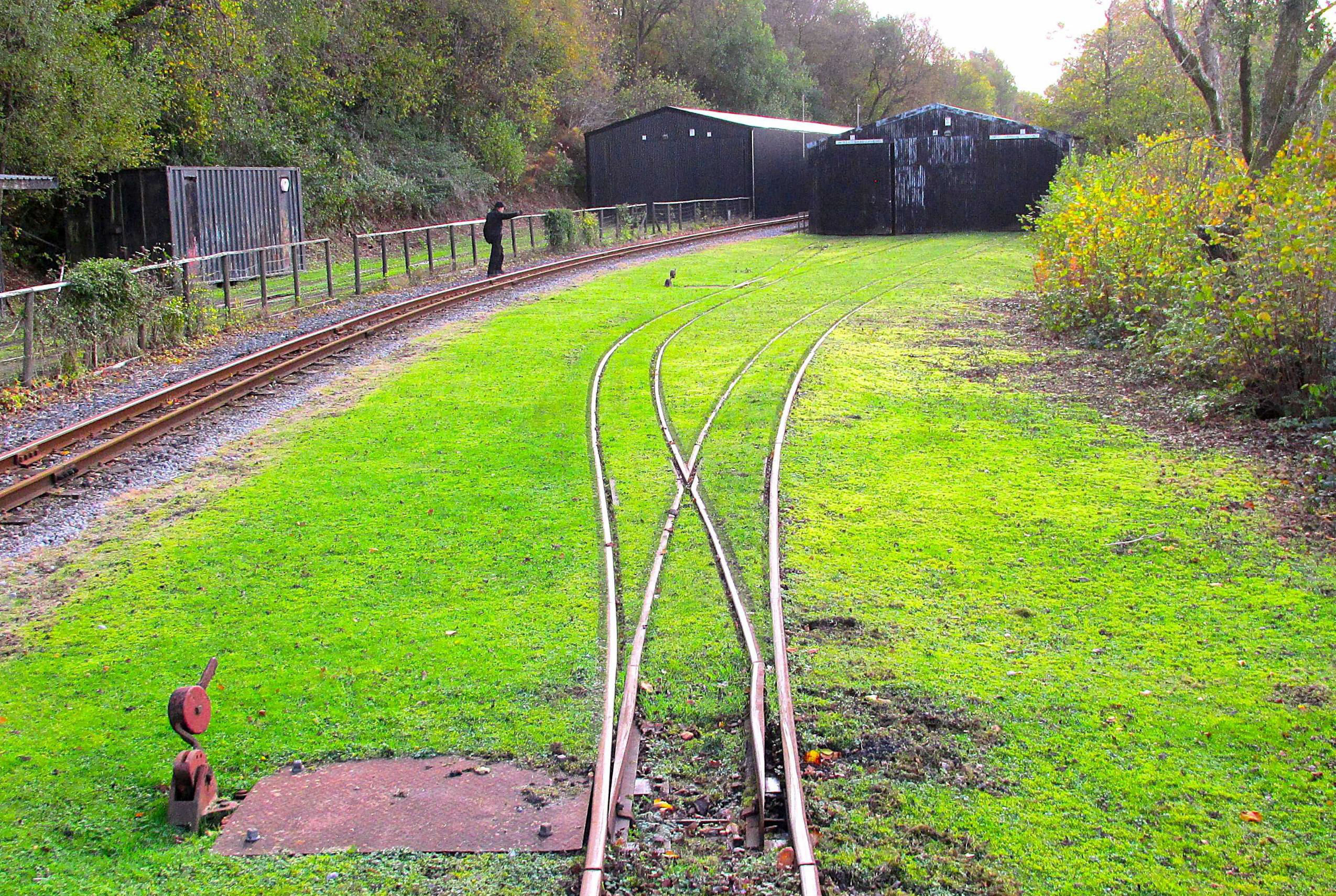
View forward propelling towards Pontsticill Shed No5 Road, far right - the passenger line runs between the two sheds. Looking south towards Pant.
[© Simon Mortimer 2025]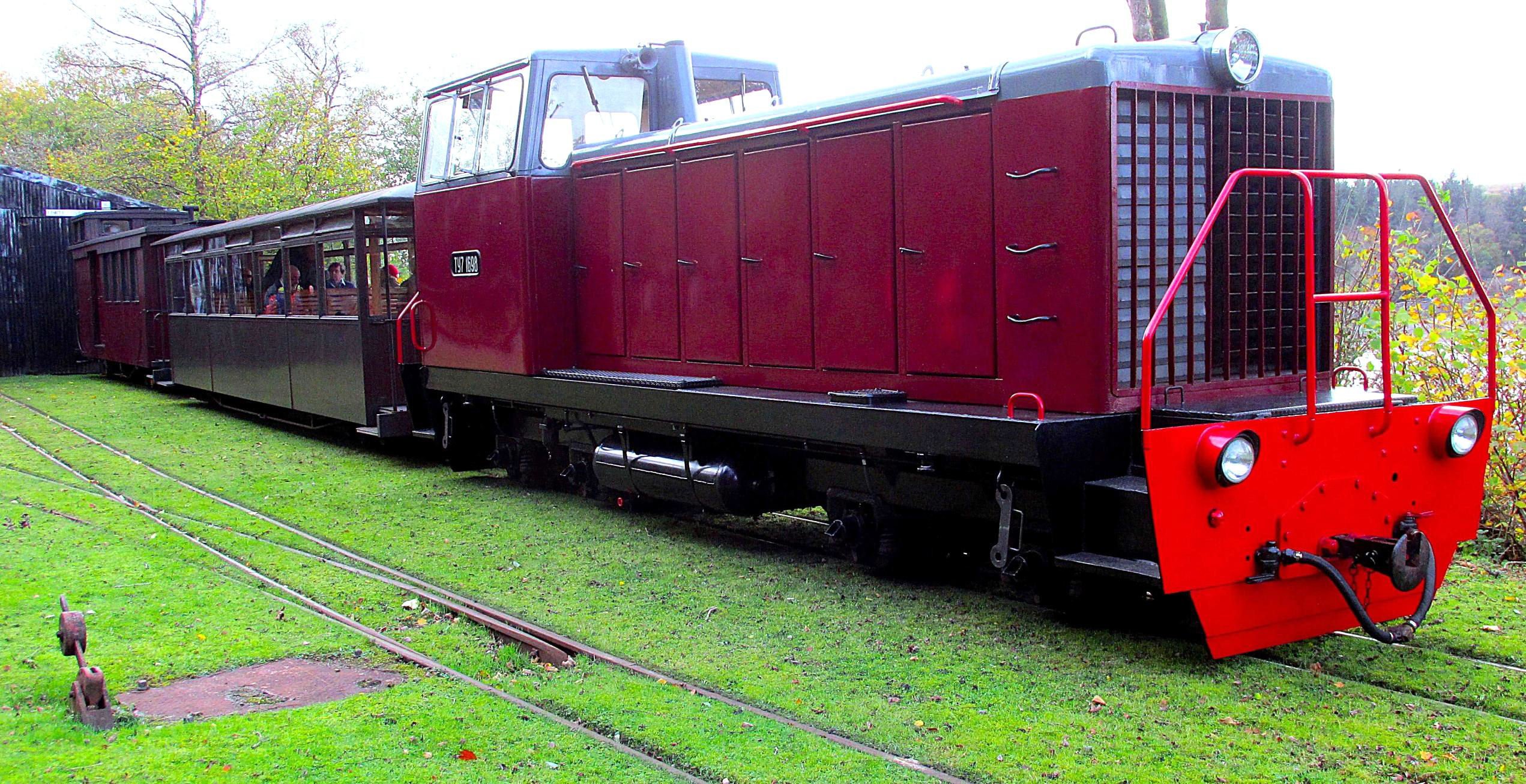
The caboose has reached the doors of Pontsticill Shed Road 5 but is too tall to go inside, even if there had been any room.
[© Simon Mortimer 2025]Here, again, we were allowed off the train, this time to explore the two sheds which had been opened up for us. Stored at the rear of the three-road shed was BMR's second Kambarka locomotive, number TU46 001; also in here was their Plasser & Theurer 4-wheel tamper, among other rolling stock.
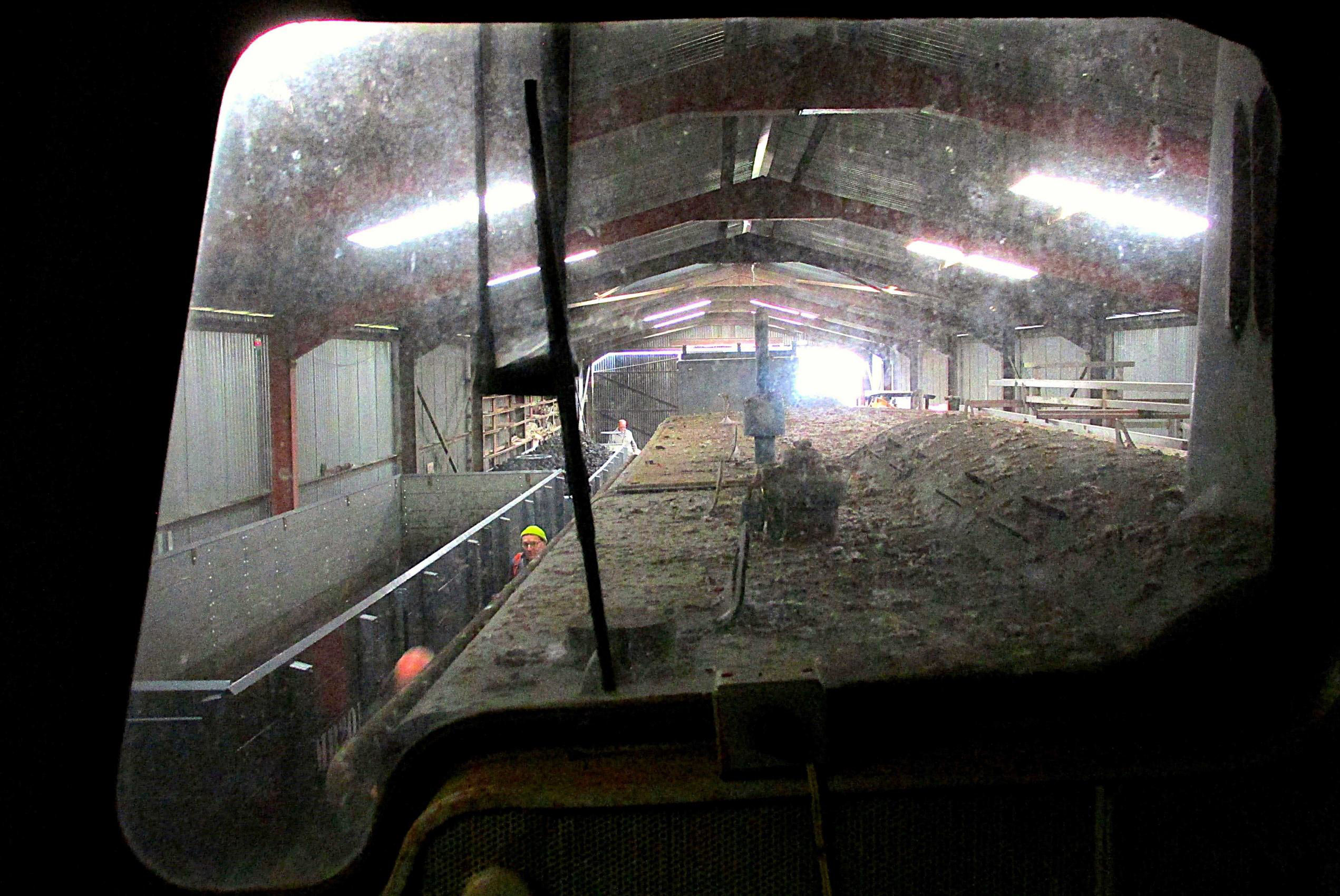
Pontsticill shed; view forward from inside the cab of TU 46 001 the bodywork is covered with many years of accumulated detritus.
[© Simon Mortimer 2025]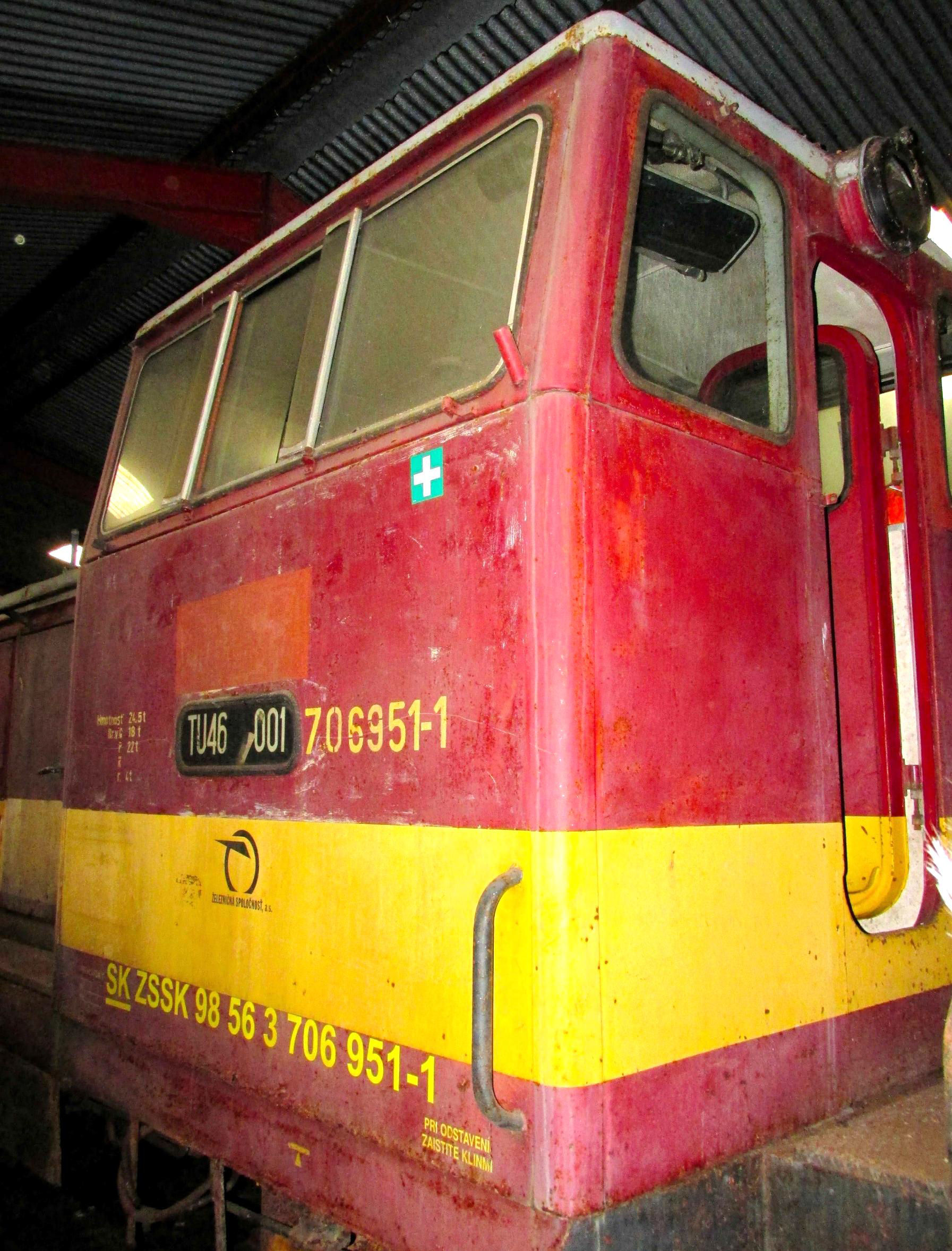
Slovakian Railways TU 46 001 at the back of Pontsticill shed acting as a Christmas Tree
for its sister loco operating our all liner railtour meaning it was being cannibalised for spare parts.
[© Simon Mortimer 2025]The sheds explored, we were all on board for further coverage of the track at Pontsticill. First shed lines 4 and 3 to the doors respectively, before heading back northwards through the station on the loop line to clear the north end points. We were then propelled back south around the back of the station and down to the two road shed, where we covered Line 2 to the doors. After returning to the north end points, we propelled onto the platform line again, where the Kambarka ran round our train. Some of the lines here run through grass and they had all been devegetated recently for our tour. Pontsticill now done, we were hauled back south and into the platform at Pant where we disembarked again.
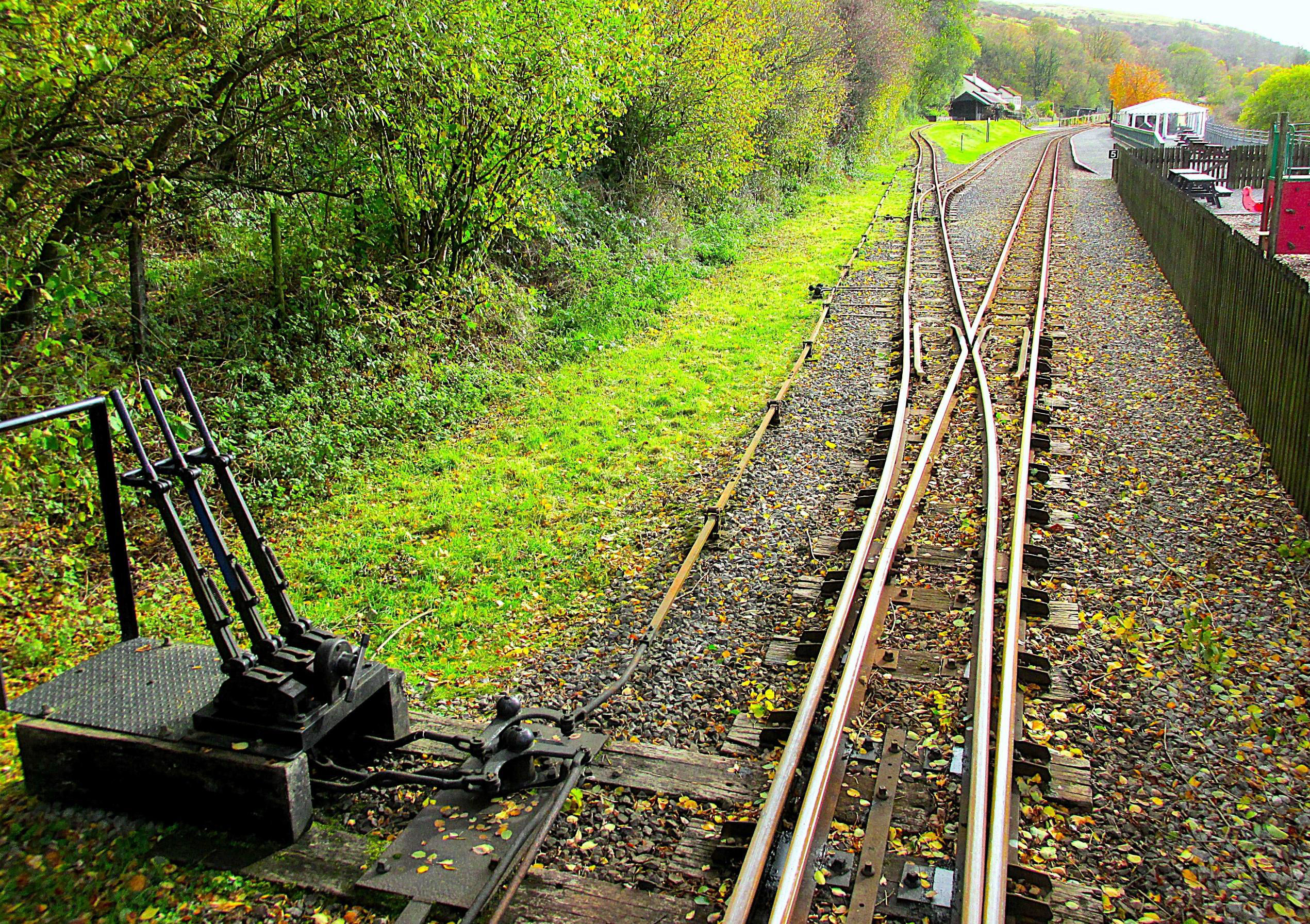
Pontsticill looking south, with the BMR station and loop right. Our tour is about to be propelled far left to Pontsticill Shed Road 2, past the former station (CP 31 Dec 1962).
[© Simon Mortimer 2025]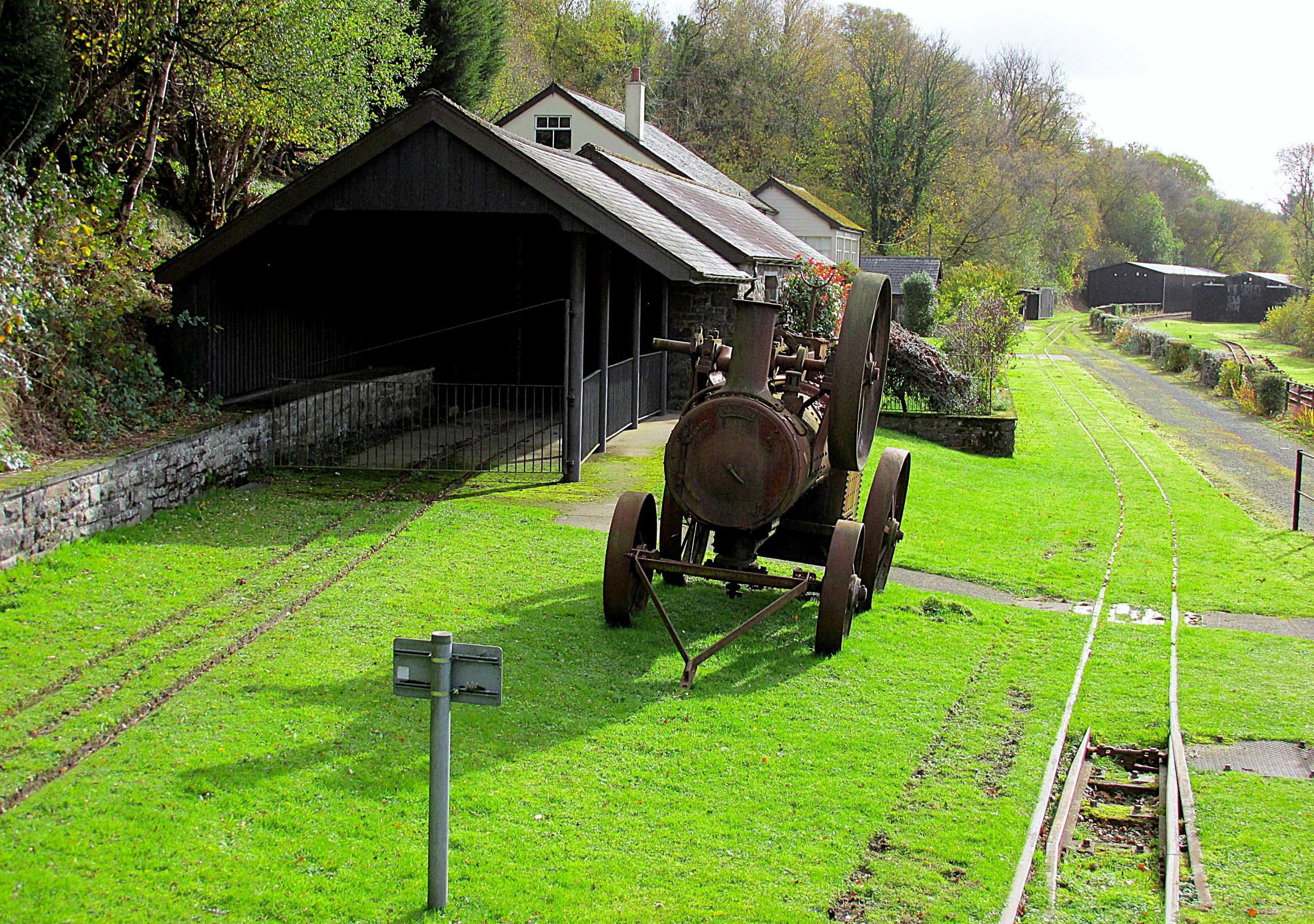
Further along this line is Pontsticill Junction station (left) with its intact Down platform.
[© Simon Mortimer 2025]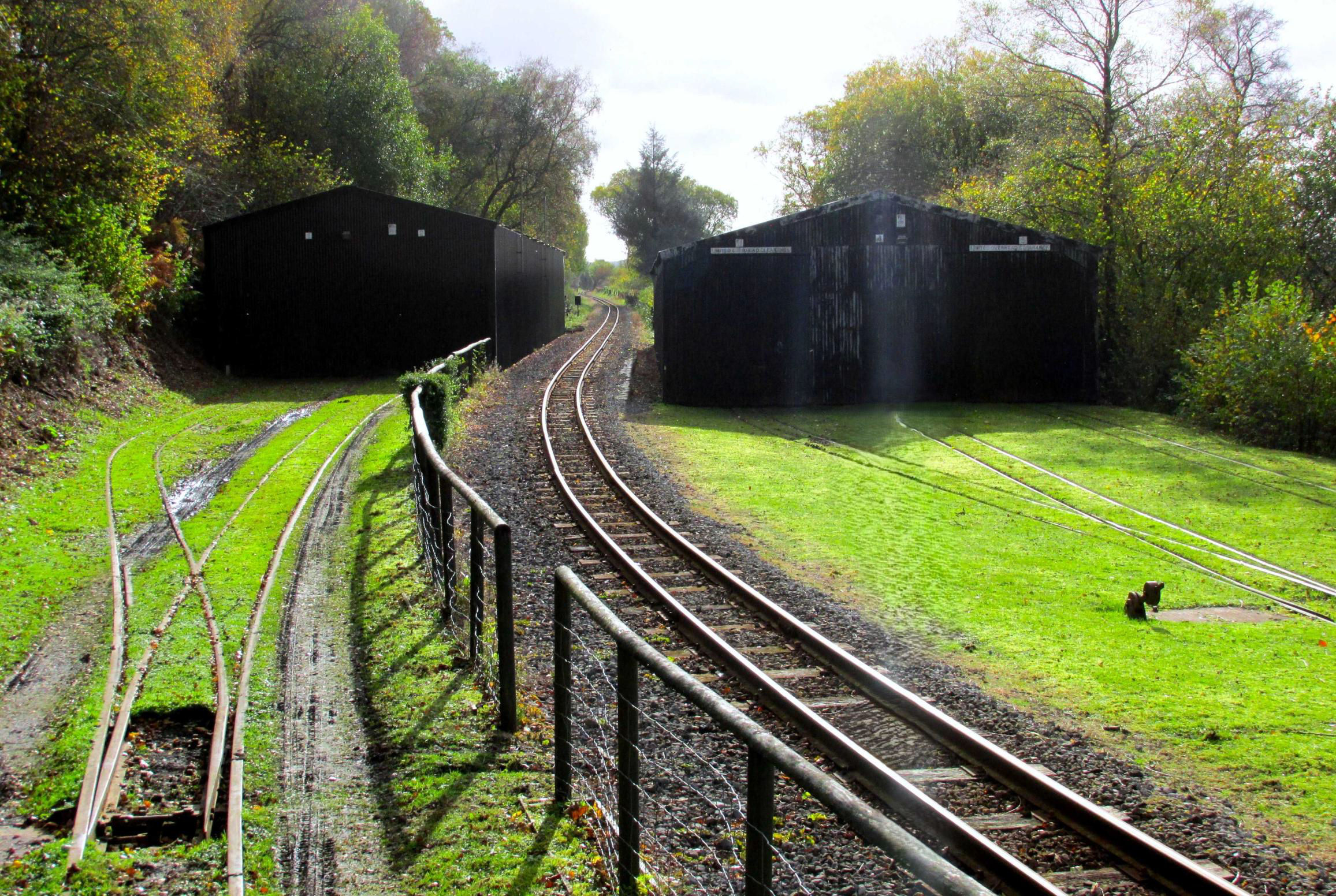
The doors were reached on Shed Road 2 (ahead right hand line), between the shed is the passenger line to Pant.
[© Simon Mortimer 2025]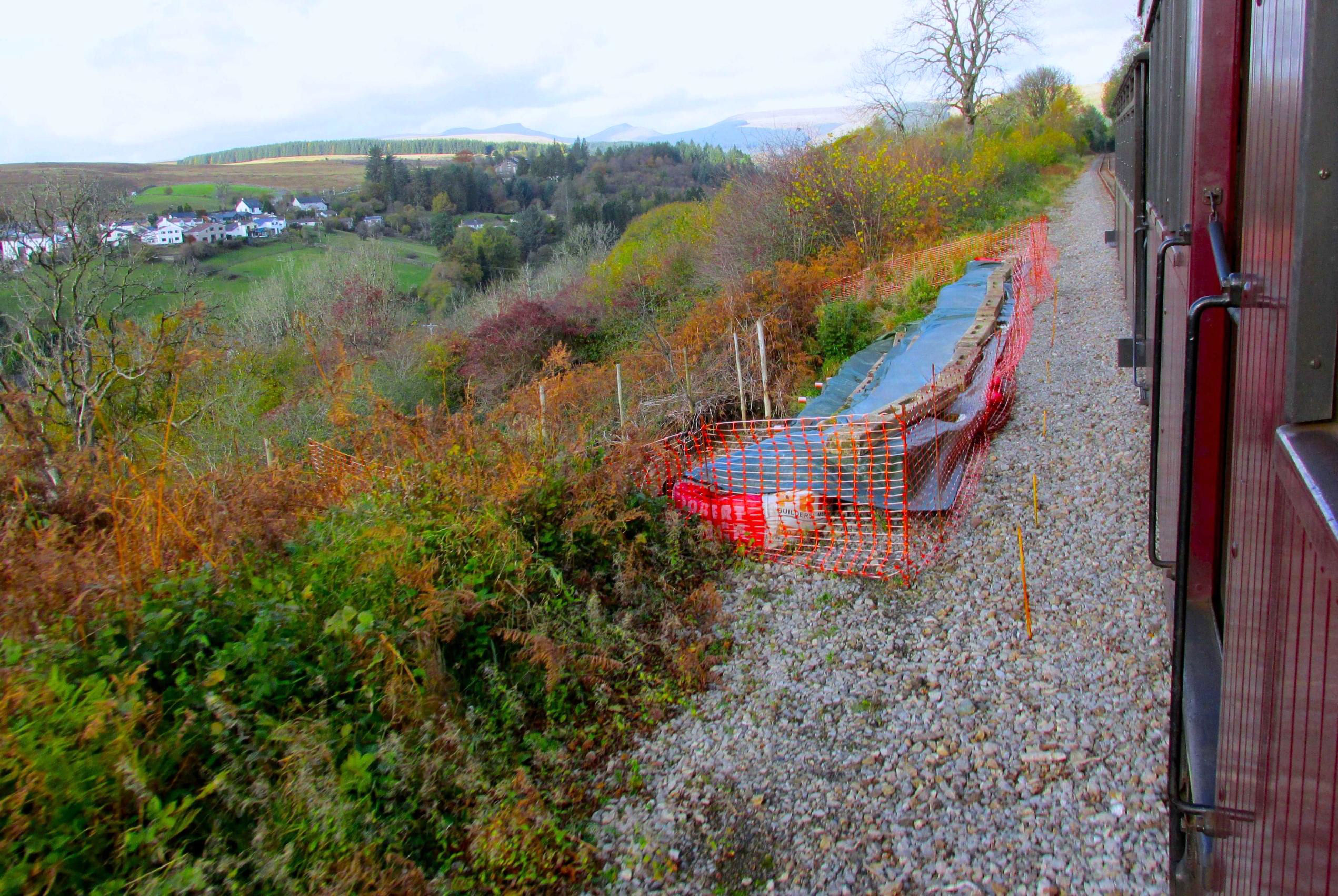
Site of the Nov 2024 landslip, looking north towards Pontsticill the line deviates off its original alignment here now.
[© Simon Mortimer 2025]With everyone off, the two coaches were propelled out of the station and deposited on the running line by the shed headshunt. The loco then returned to the platform light engine. Members were invited to board it to traverse the platform line through the sprung points (which could not be done in the coaches) to the end of line. The runround loop was then taken to clear of the points at the north end, to reverse and return to the platform. Some had left, perhaps now wishing they hadn't, so it only took four trips for everyone left to do it. On the fourth trip. the loco coupled up to the coaches before returning to the platform. With the coaches at the platform, the loco ran round again, putting it back on the north end.
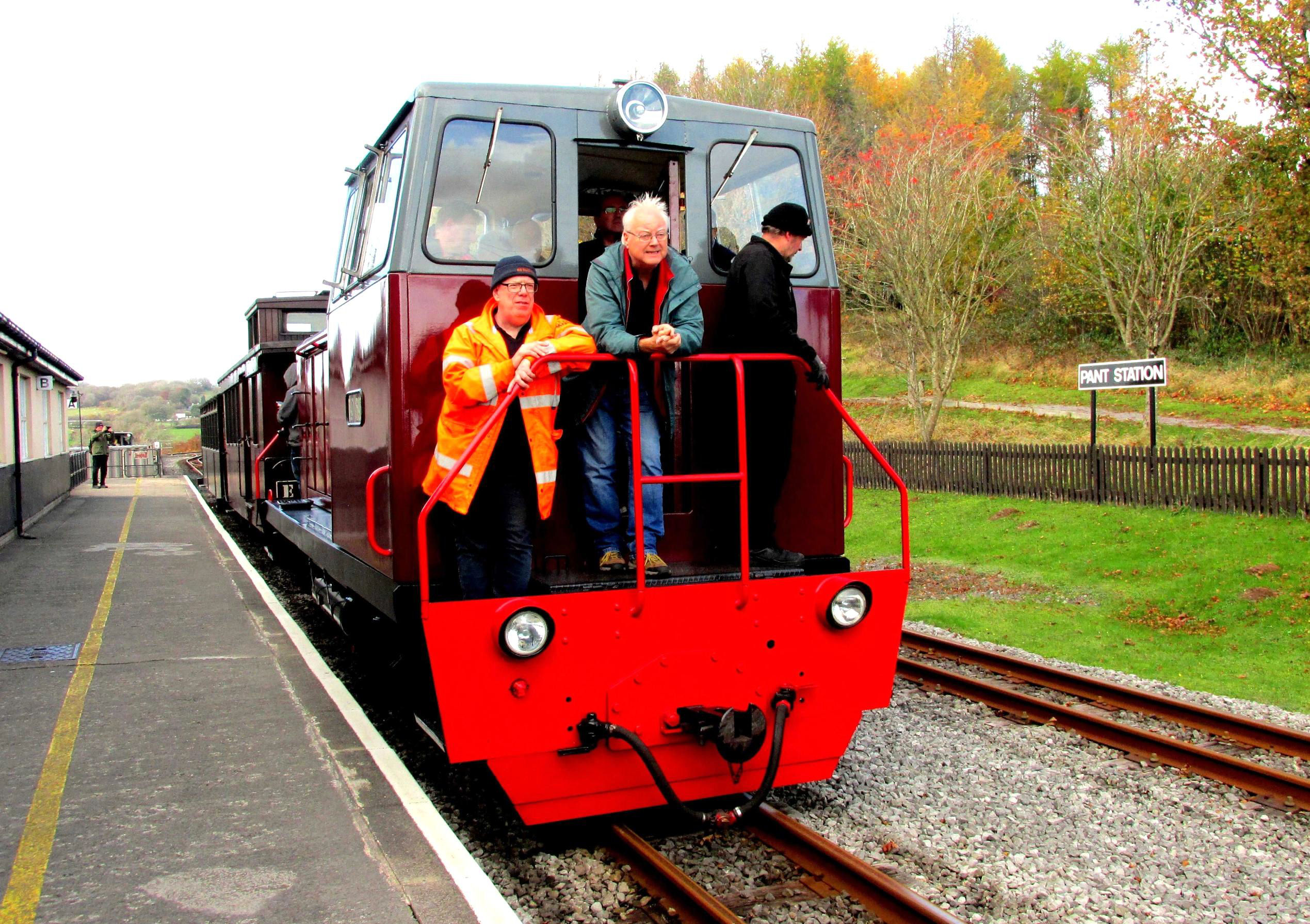
TU7 1698 has just returned from the fourth trip traversing the platform line through the sprung points, having coupled up to the coaches before returning to the platform.
[© Simon Mortimer 2025]The 0-6-0 diesel loco was fired up, moving itself and all but one of the wagons stabled on the Coal Road out to an adjacent siding. All those participants still at Pant saw this and knew what it meant.
Indeed, we were called back onto the train which ran back down to the shed area and propelled onto the Coal Road. We didn't quite reach the buffer stops here, as a wagon with a skip on it prevented this.
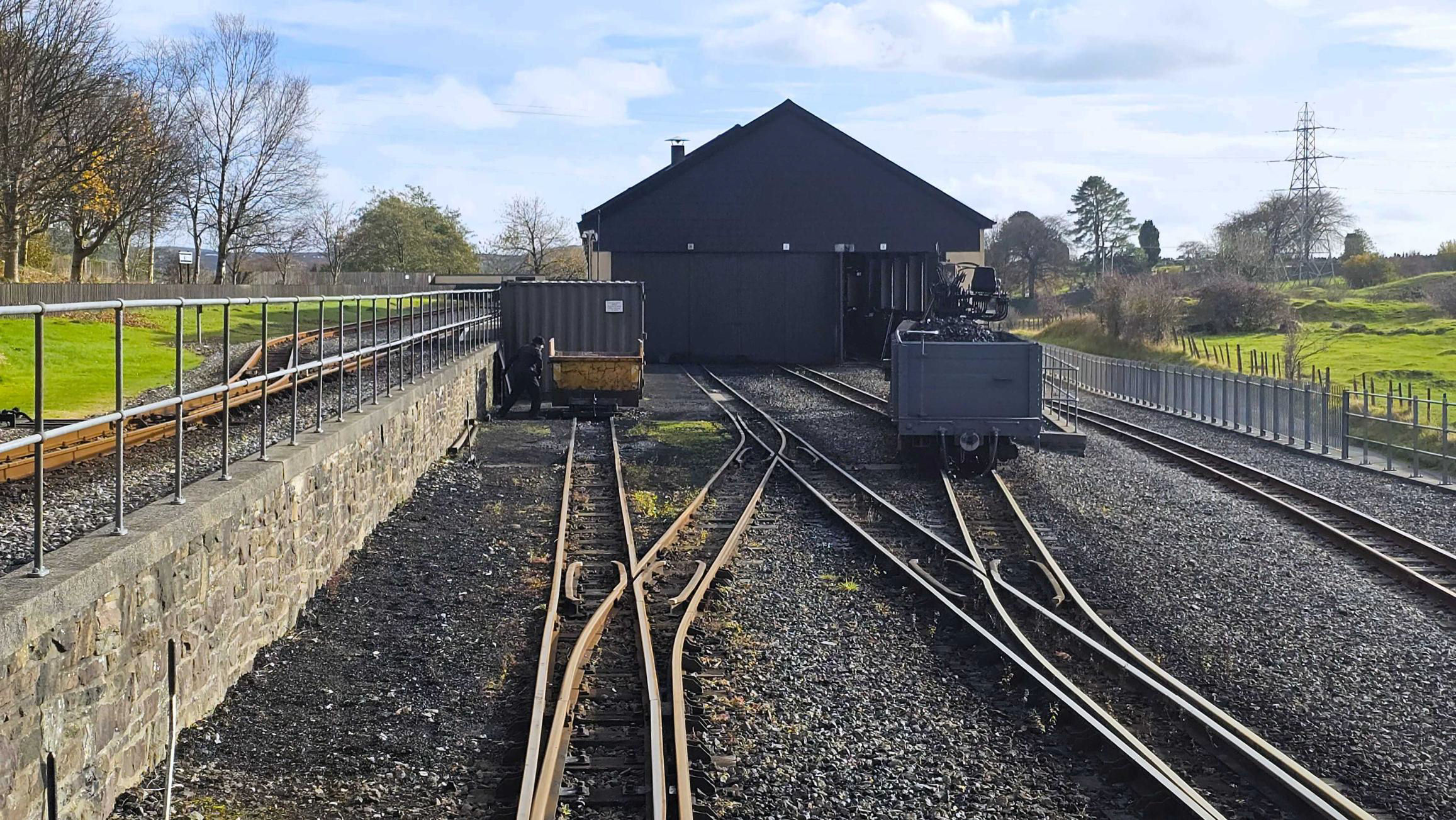
Pant looking south, at a higher level left, is the passenger station with the run round loop far left. Ahead is the Coal Road with one wagon then the rest of it is blocked by a container. Next right are Shed Roads 1-3, far right is the outside line where the railtour had started from around four hours earlier.
This tour certainly wasn't pants…
[© Alan Sheppard 2025]At this point our Fixtures Secretary and Gary Lonsdale quickly climbed down from the cab of the Kambarka and scurried over to the 0-6-0 diesel. The Kambarka was uncoupled and moved off into the headshunt and then disappeared into the shed, being quickly replaced by the 0-6-0. With the 0-6-0 at the front, we pulled forward to clear the crossover with Line 1, reversed and were propelled over the crossover and onto Line 1 to the shed door. Once this move had been completed, we were hauled back to the headshunt to clear the points and propelled into the platform. It was our last move of the day.
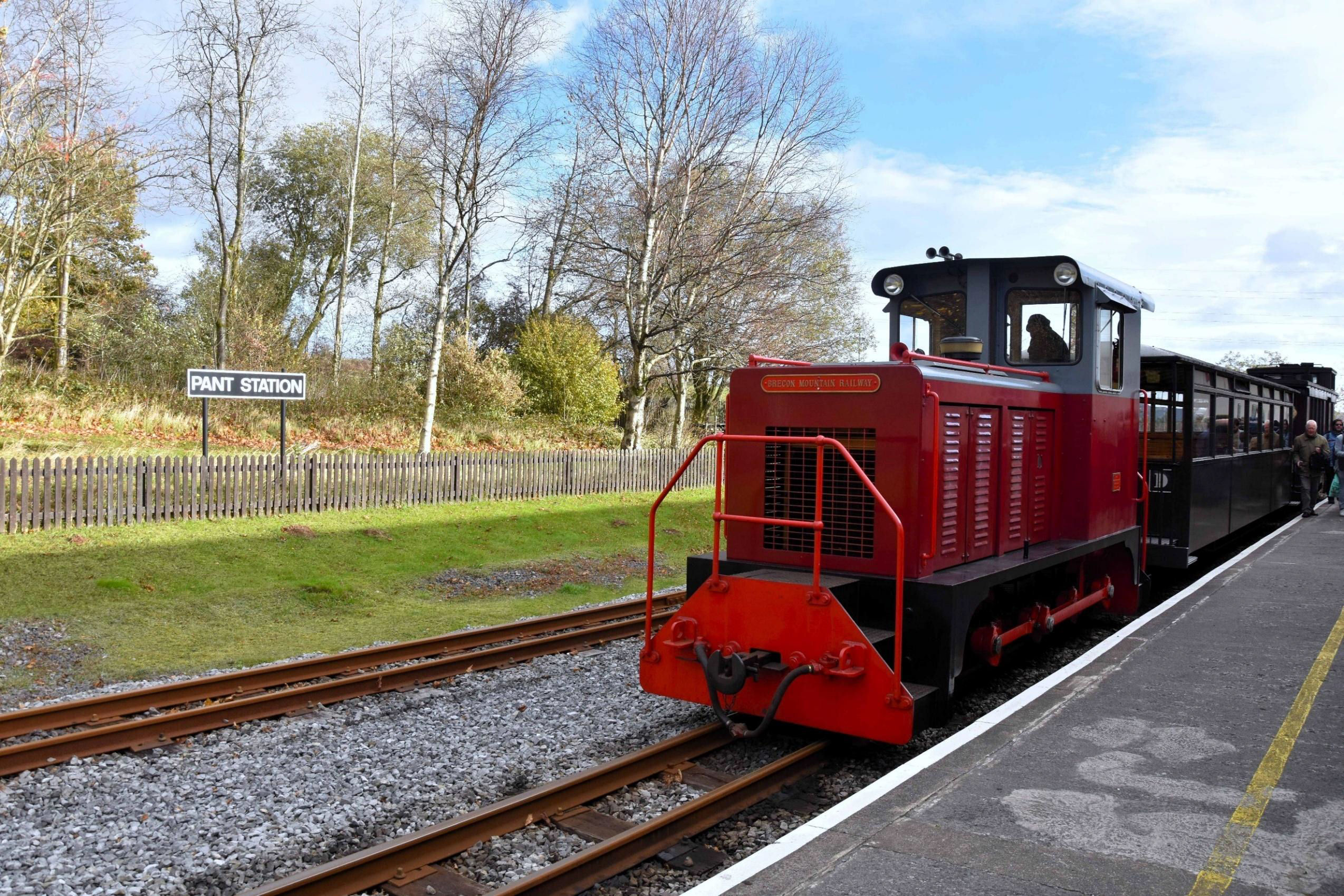
Baguley Drewry 0-6-0 diesel built in 1987 on the tour train at Pant station - the end of line is to the right
[© Phil Logie 2025]Before the long drive home, I visited the workshops which held the two operational steam locos. These were both built by Baldwin in Philadelphia. No1 was built as works number 15511 in 1897 and was originally a 2-6-0 locomotive, rebuilt as a 2-6-2 by the BMR, returning to service in 2019. No2 was built by Baldwin in 1930 as works number 61269 and is a 4-6-2. Also in the workshops was the railway's new build replica 2-4-4 tank locomotive, which will become their No3.
Our thanks to the BMR for an excellent, comprehensive tour, to Gary Lonsdale for the arrangements and stock list also Peter Scott for the track plan and Martyn Brailsford who customised and marked it up.