BLS Crewe Independent & Basford Hall Signal Box Visits - Part 1
Tuesday 15th October 2024
Report by John Cowburn
The Branch Line Society (Test)
Guest

Introduction: Many members of our Society will have glimpsed an elderly signal box nestling in the cutting adjacent to the elusive 'Independent Lines' that avoid Crewe station and another somewhat more modern box lurking in what looks like the middle of Basford Hall Yard to the south. The yards are said to take their name from a timber framed manor house which was destroyed by fire about 1700AD. It appears that the ruins of the building survived until they were mostly swept away by the coming of the railway to the area in the second half of the 1830s. By the late 1800s, Crewe and its associated junctions seem to have been struggling to cope with the level of traffic on offer. The solution was for the London & North Western Railway (L&NWR) to construct a four-track freight railway passing west of the station, at a lower level so that tunnels could take the freight trains underneath Crewe North Jn, with what would now be known as grade separated access at the north end to both the West Coast Main Line (WCML) and the Manchester line. Basford Hall Yard came about as part of the same development.
Some overnight Motorail trains ran via the Crewe Independent Lines. Your Editor recalls doing the Up Liverpool Independent on the 1 May 1977 Stirling to Brockenhurst Motorail (without a car but with a 2-week All Line Rover). They were in PSUL until 1981 but the last scheduled passenger use (other than diversions and tours) was by the summer-only 21.30 Euston to Holyhead, which last ran on 24 Sep 1982.
There has been piecemeal resignalling over the years, including within Basford Hall Yard, where the London Midland Region of BR commissioned some new boxes of their own design in the mid-1960s.
It was only in 1985 that the Crewe station area and the immediately adjacent junctions were extensively remodelled and resignalled with the commissioning of Crewe Power Signal Box (PSB) at 158m 21ch, now known as Crewe Signalling Control Centre (SCC). Gresty Lane SCC has shared the same building since 2015. Crewe SCC still fringed with traditional boxes at most of the edges of its limited control area.
The Independent Lines survived this resignalling broadly unscathed and were used for diversions during the works. 40 years later, the restricted capacity of the main lines through the station has ensured that the Independent Lines remain the normal route for freight traffic. While now colour-light lit throughout, the Independent Lines were still, at the time of our visit (15 Oct 2024), largely worked on the Absolute Block system with sections of Permissive Working.
Ten members assembled on Nantwich Road in front of Crewe station at 09.15 and walked to Crewe SCC. This is the building which looks like a semaphore stop signal arm when viewed using satellite imagery. Here we met up with our host for the day, Natalie Thomas, Local Operations Manager for the Crewe boxes. Today's agenda did not include the SCC; instead, we were focusing on the three signal boxes which were due to be closed and demolished later in the year, with their signalling recontrolled. We donned Hi-Viz jackets and made our way to the first one, Salop Goods Junction box (157m 71ch).
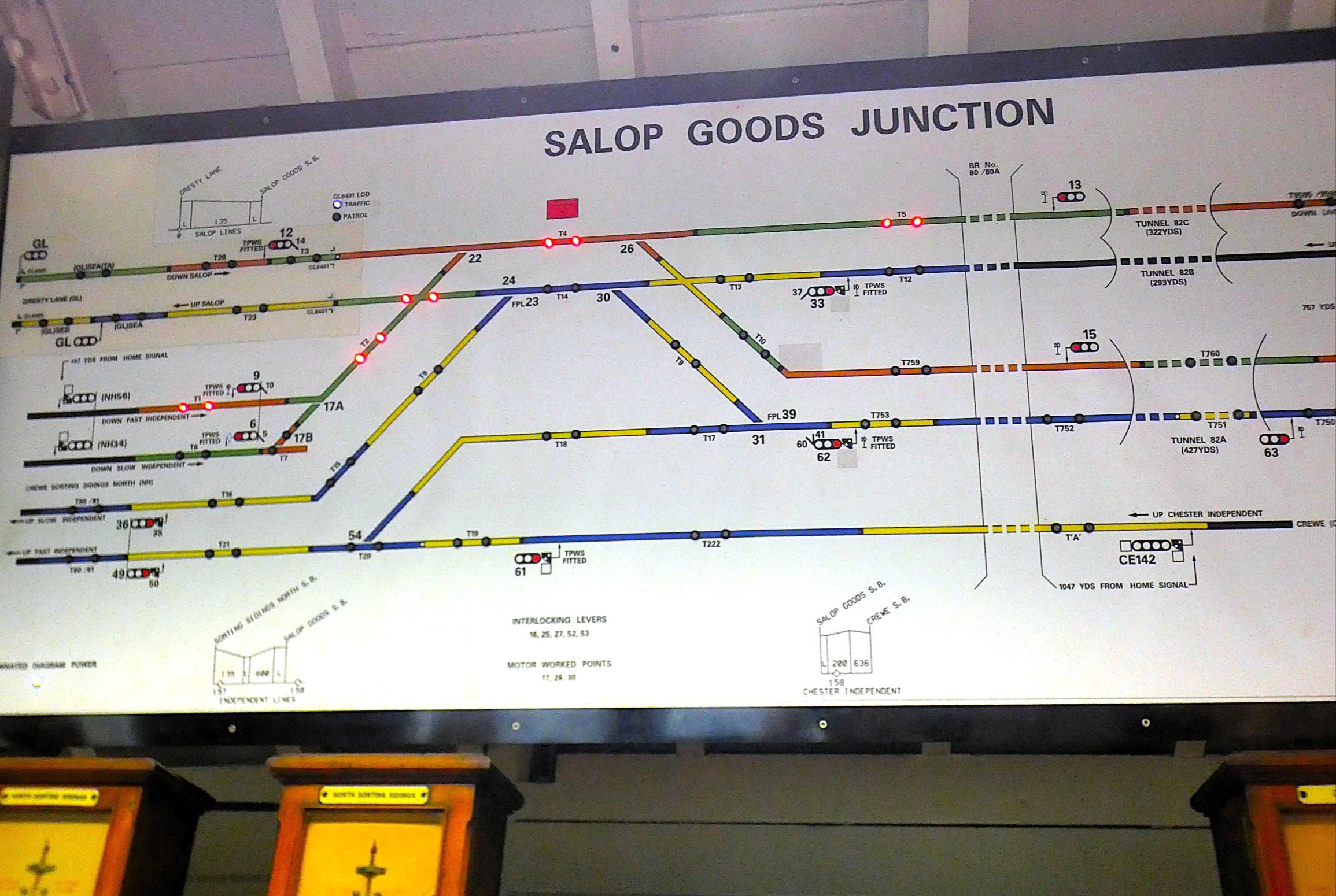
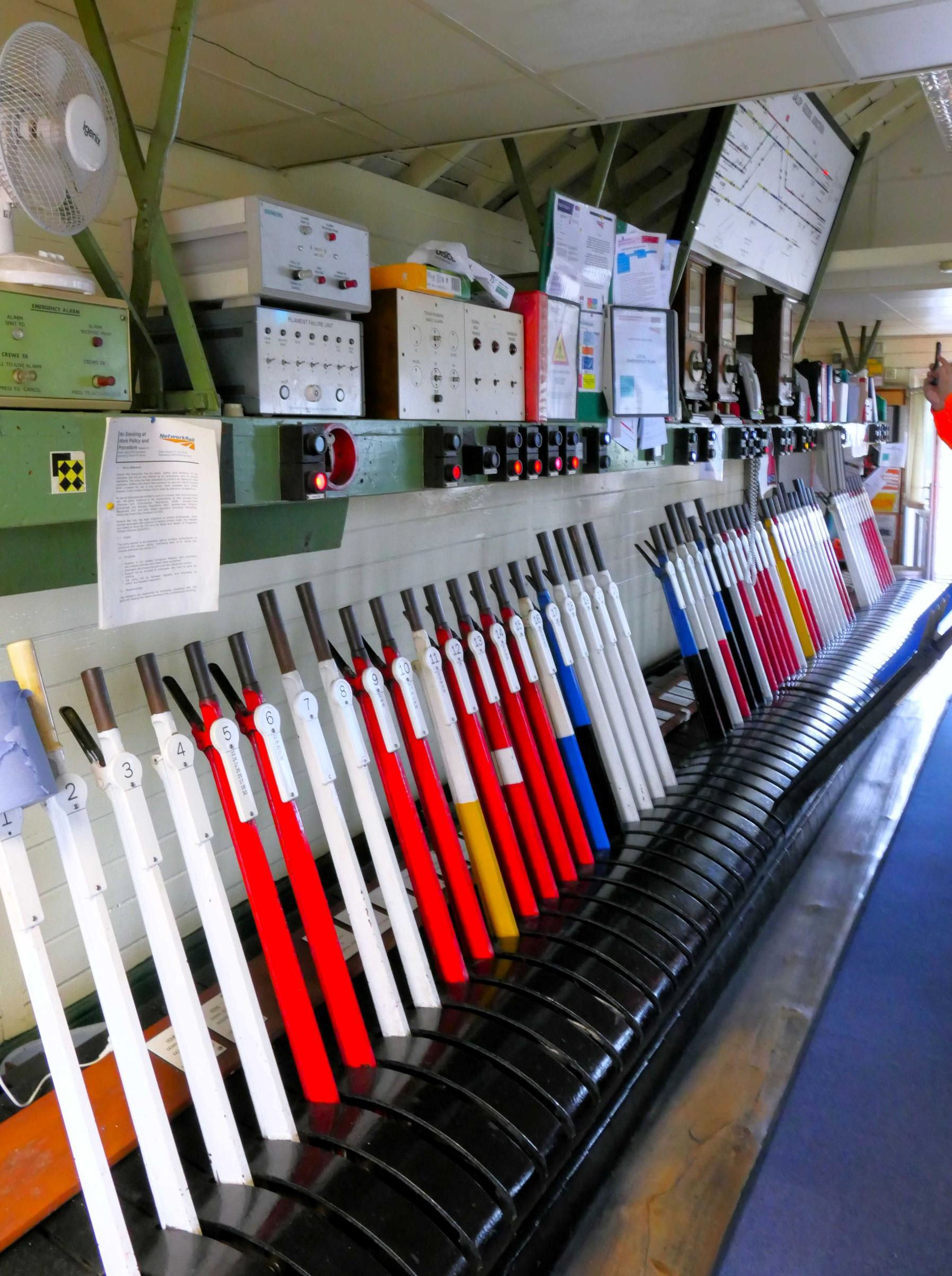
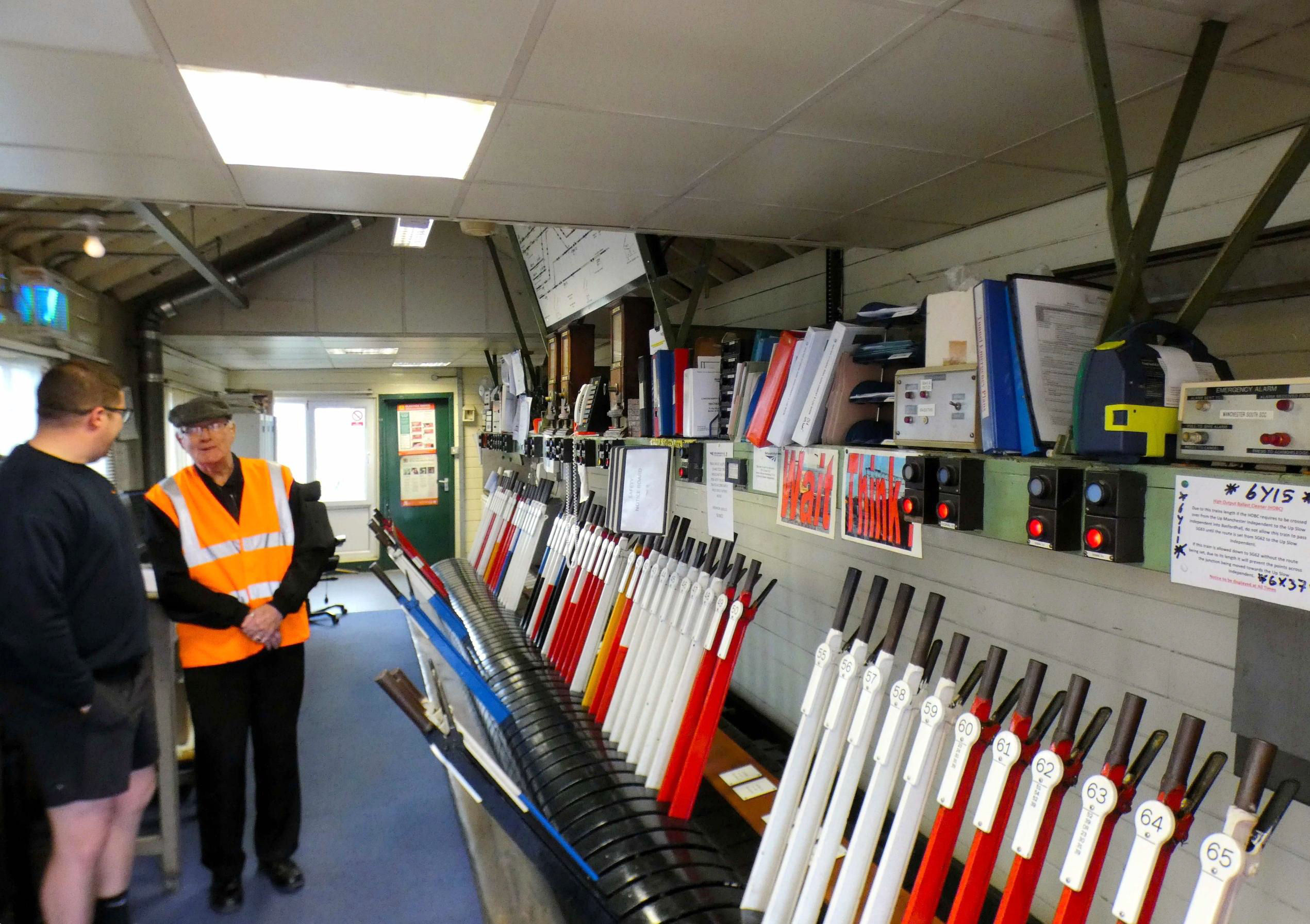
Salop Goods Junction: The box sat in the bottom of the cutting on the Independent Lines, roughly level with the south end of the station to its east. This was a L&NWR box dating back to the opening of the lines in 1901. It retained a 65 lever frame, although 25 of these were white painted and no longer in use. Lever 51 had been removed and there were another five interlocking levers, which no longer worked signalling equipment but had to be retained and operated to maintain the integrity of the interlocking. An oddball was Lever 11, the Down Salop Line Distant, painted white on top and yellow at the bottom with the catch-handle having been removed; it became redundant and non-working when Gresty Lane was resignalled. Half and half painting like this indicates a lever which is OOU but not disconnected from the interlocking.
All signals were colour lights and three of the six points were power worked; the two mechanically operated facing points had facing point locks. All running lines were track-circuited.
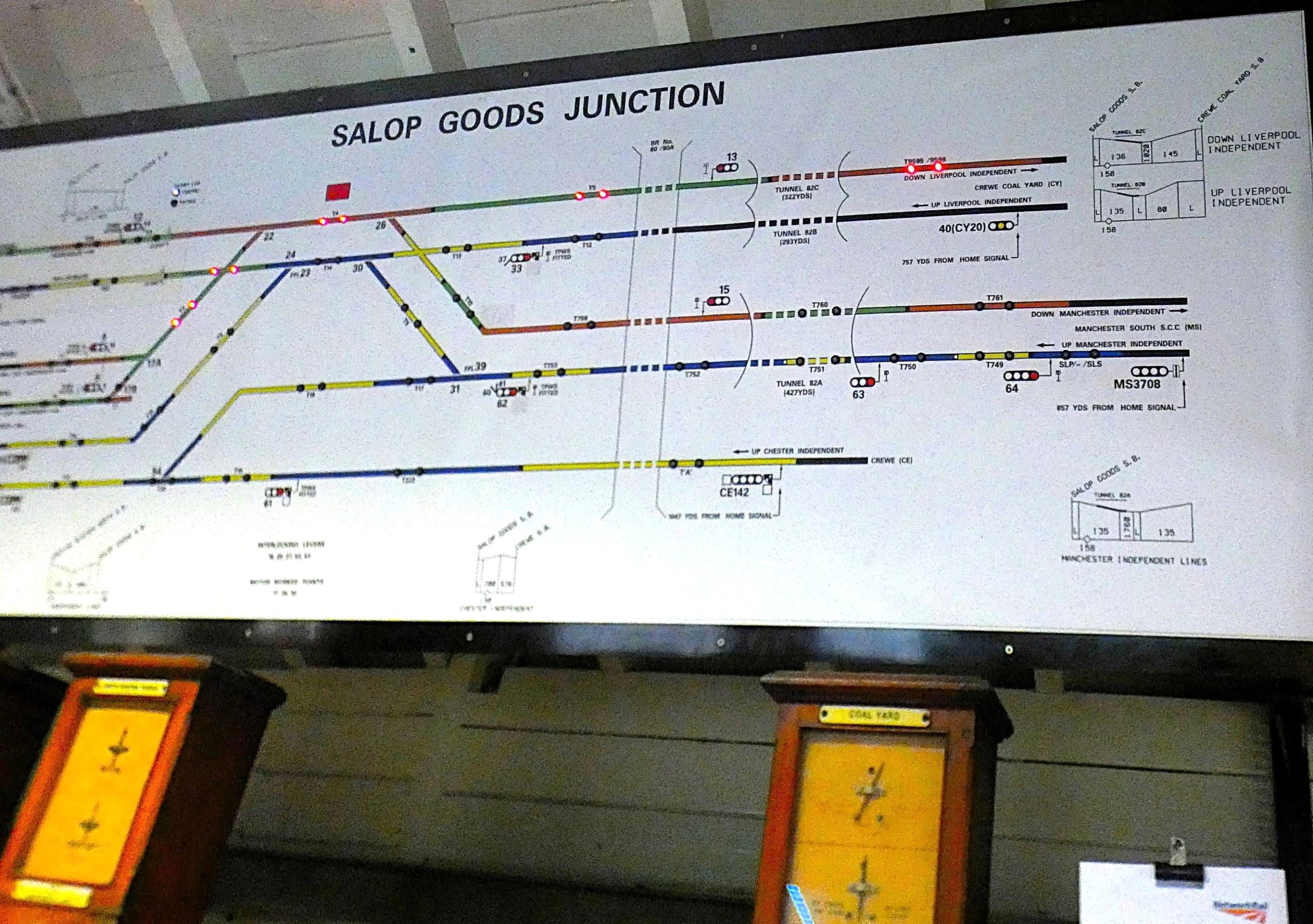
The box controlled routing of all traffic through the Independent Lines (TRACKmaps 4 p7A 2022). To the south, routes were available towards Gresty Lane Jn on the Shrewsbury line and Basford Hall Yard. To the north, the Liverpool Independents join the WCML to the north and the Manchester Independents join the line to that city, both burrowing under Crewe North Jn. There is no longer a Chester Down Independent but a unidirectional Up Chester Independent leads down into the cutting from the north end of Crewe station, only accessible from the Chester line at 158m 24ch. All lines are electrified at 25kV.
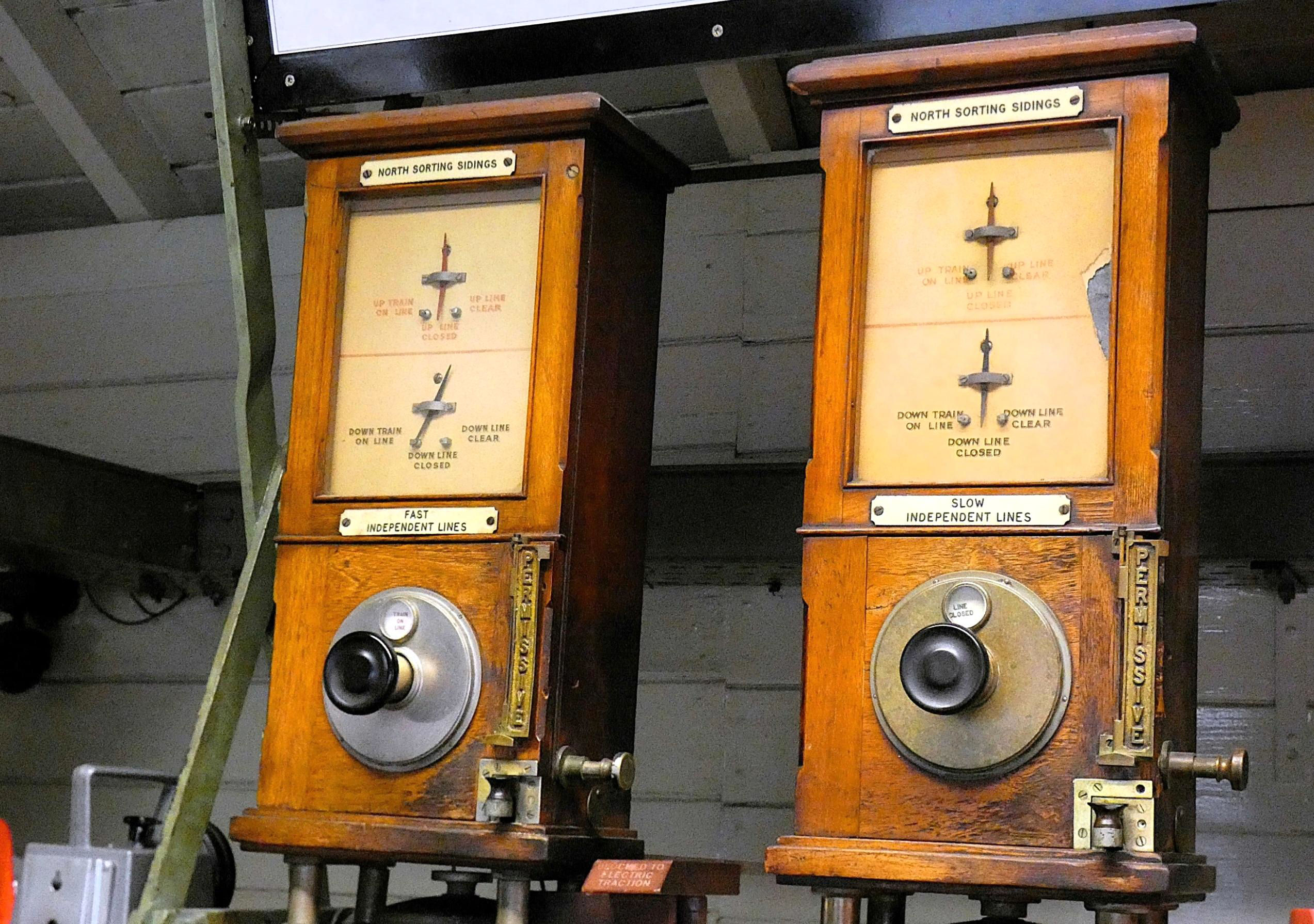
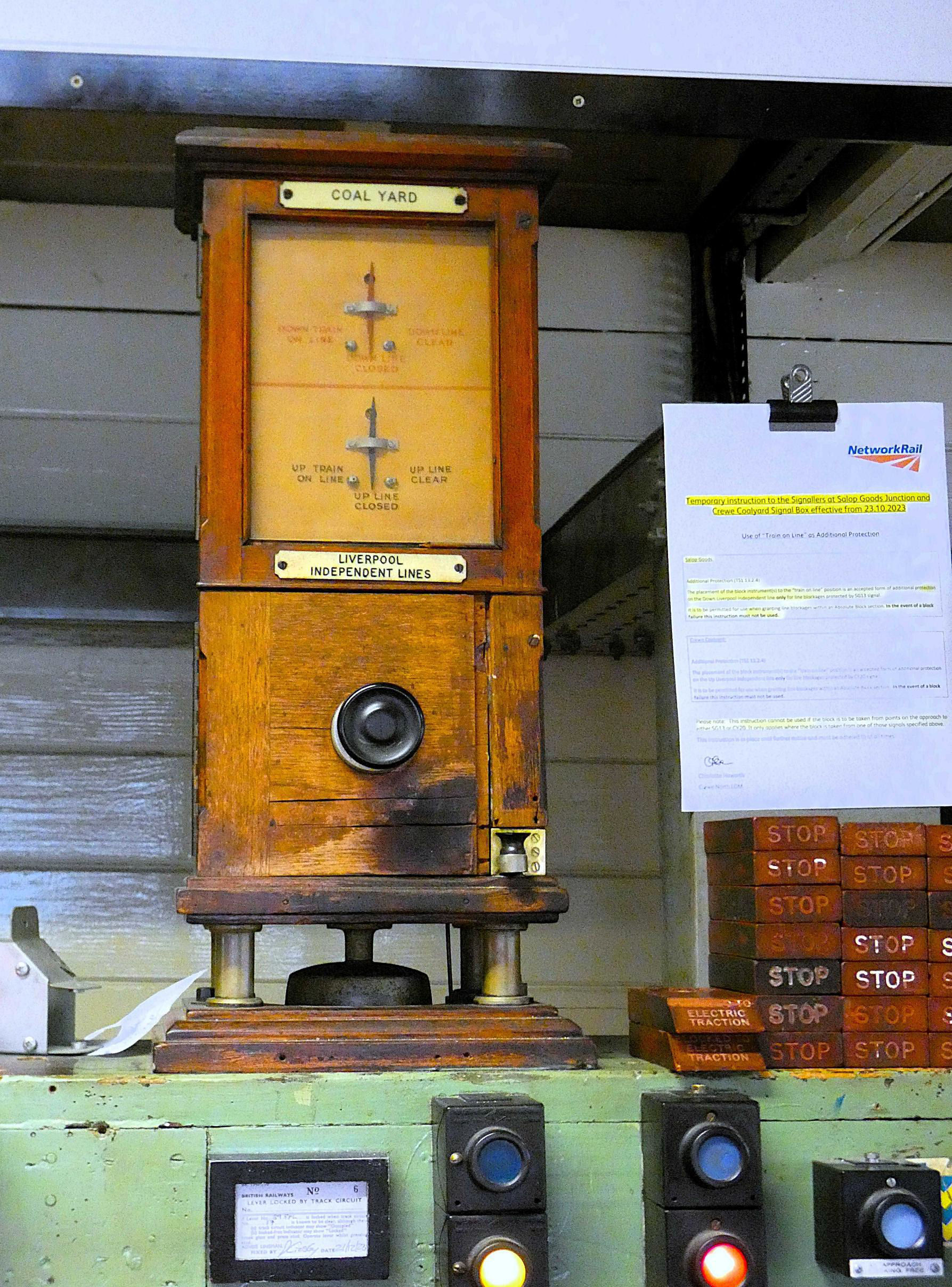
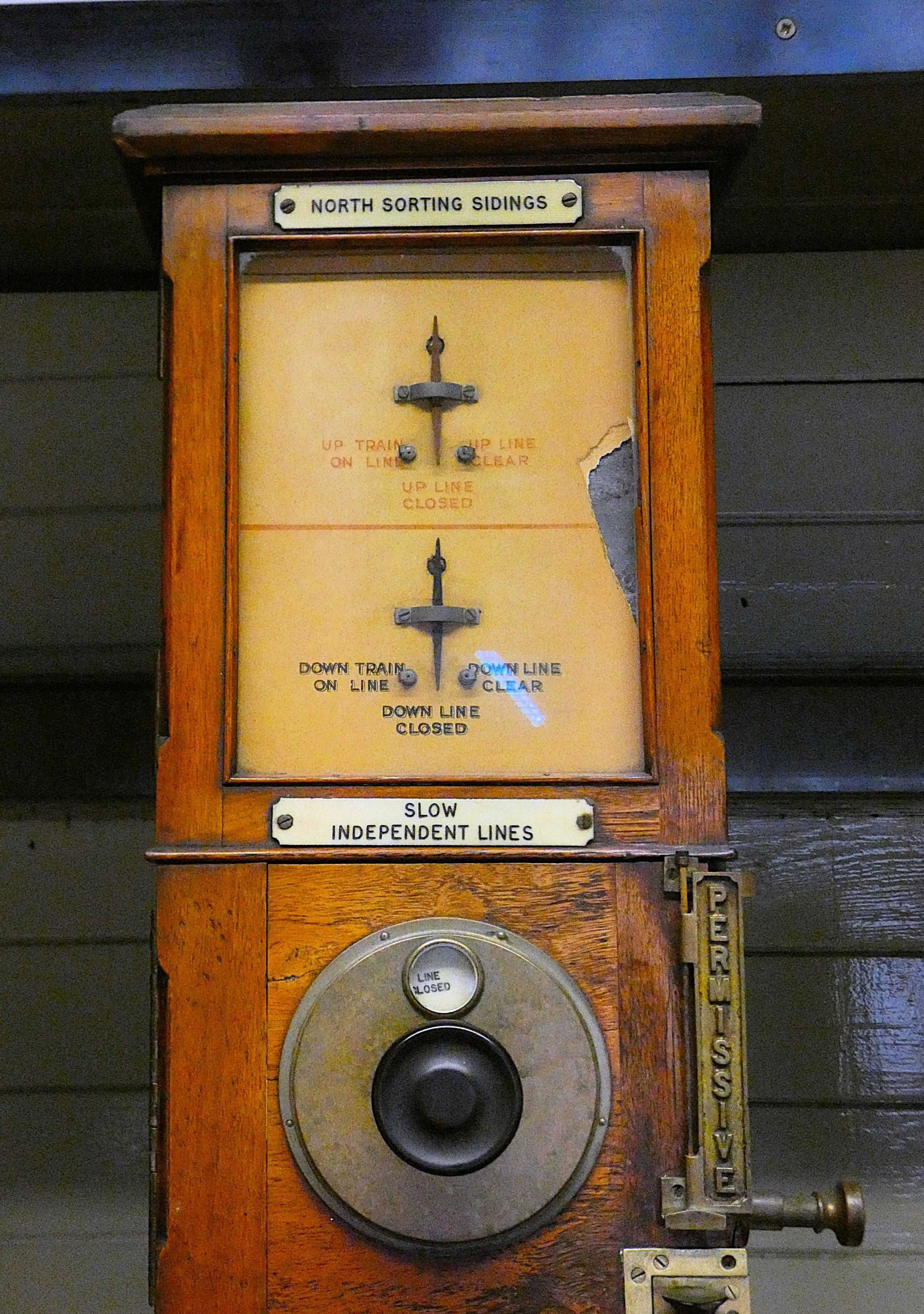
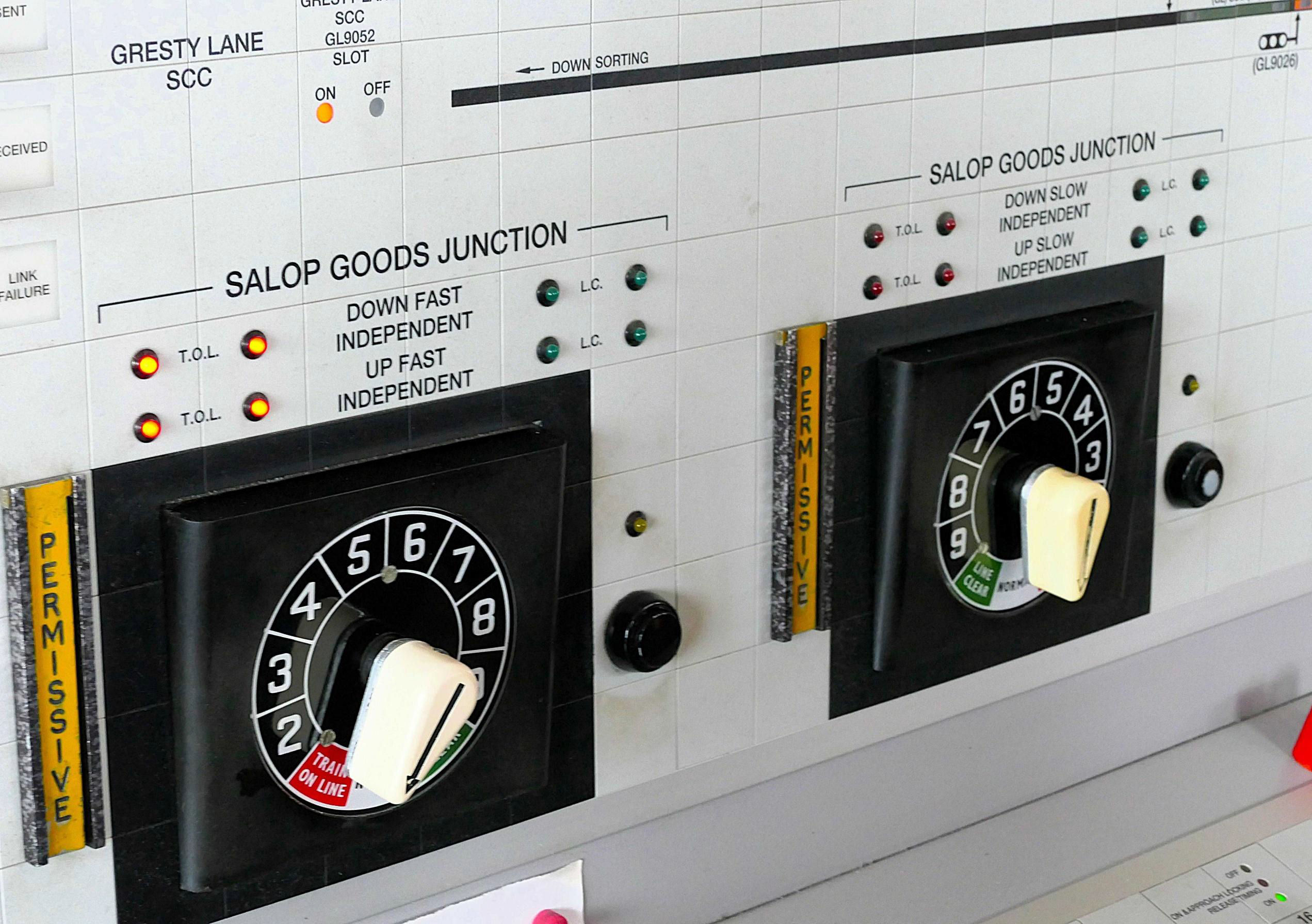
Salop Goods Junction box worked to five other signal boxes. The Liverpool Independents were worked Absolute Block (AB), using very elderly L&NWR block instruments, with Crewe Coal Yard box on the Up side of the WCML north of the station. The Manchester Independents interfaced with Manchester South Signalling SCC located in Stockport using Track Circuit Block (TCB). The Up Chester Independent was also worked by TCB, with Crewe SCC sending trains. Towards Shrewsbury, the box worked TCB to Gresty Lane SCC, a 2015 NX panel which replaced the ex-L&NWR Gresty Lane box and operates as a separate signal box within the Crewe SCC building. All of these routes were covered by a single train describer which identified and indicated the position of trains on these lines.
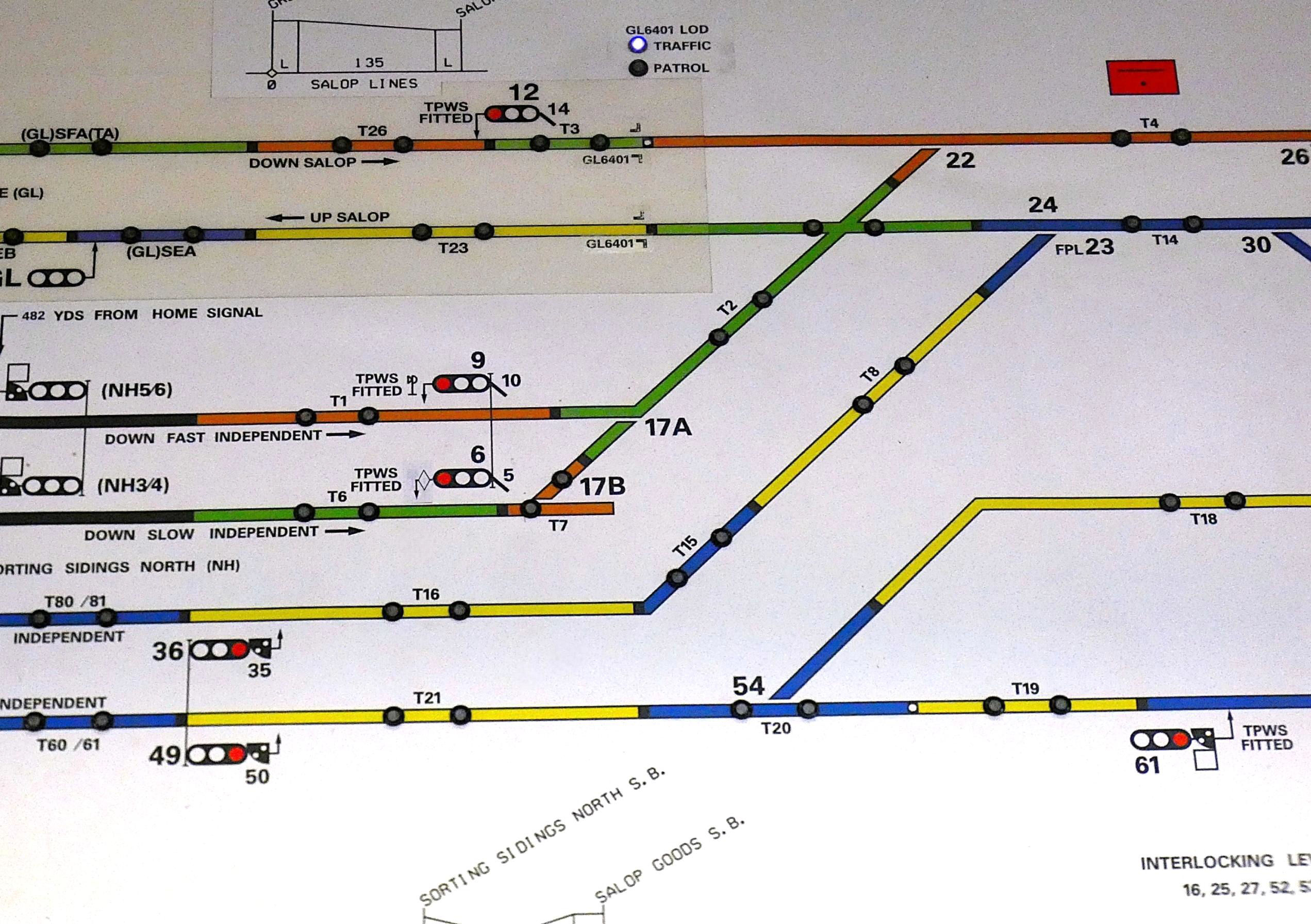
The most interesting section was the last, towards Crewe Sorting Sidings North box for trains to / from Basford Hall. This was, and still is, a four-track railway with Fast lines and Slow lines in each direction, despite the highest permissible speed being 10 mph!! All four lines were worked under Absolute Block regulations but with permissive working (passenger lines) authorised in the Signal Box Special Instructions (SBSIs). Although not explicitly stated in either the Rule Book or the SBSIs, it might be expected that permissive working would only apply to non-passenger services. Logic would suggest that the permissive sections would have to be operated under Absolute Block rules to allow passenger trains to pass. [That happens with railtours - Ed.] There were special instructions around clearing protecting signals for passenger trains heading into the otherwise permissively worked section to maintain train separation. The lines are physically paired by direction; the outer are Fast lines and the inners the Slows.
| Branch Line Society. A Company Limited by Guarantee - Company No 16743754. Registered in England and Wales. Registered address: 6th Floor, Derwent House, 150 Arundel Gate, SHEFFIELD S1 2FN |