The Vienna Explorer - Part 1
Saturday 13th September 2025
Report by Paul Griffin:& Simon Mortime
The Branch Line Society (Test)
Guest

The Prologue (By Paul Griffin)
This was not an easy tour to organise, in marked contrast to the Carinthia Explorer, which was a doddle in comparison. All the organisation at the Wien [= Vienna] end was done by Peter Lehnhart, a well-known Austrian track basher who lives near the city and works for the Austrian state railway company ÖBB. [Österreichische Bundesbahnen = Austrian Federal Railways.] The original plan was to use NÖVOG [Niederösterreichische Verkehrsorganisationsgesellschaft = Lower Austrian Transport Organisation Company], a public transport operator owned by the provincial government of Lower Austria, which operates heritage railways and has organised railtours in the past. They have several Class 5047 one-car DMUs and we planned to use two of them. As they were based near Krems, we would have to either start in that area or pick up in the outskirts of Vienna at Nussdorf. The first I knew of a show-stopping problem was when Peter told me that we were unable to use the Class 5047s. Apparently, they had been promised to provide extra services for the Vienna Marathon and the organisers had just changed the date to coincide with our tour!
Before I could expire from shock, Peter told me not worry as, by devious means, he had contacted another local railway company, Neue Landesbahn [= the New State Railway], and they had agreed to provide two Class 2143 locomotives and two Schlieren coaches - comfortable and with fully opening windows. As they were based at Ernstbrunn, the stock would run from there to pick up at Korneuburg on the outskirts of the Vienna conurbation. That fitted nicely with our first required branch of the day.
The price, however, was several thousand euros more than the Class 5047s. Still, the locos themselves were an attraction which would bring more people to the tour, so we agreed to move forward with this option, especially since the Class 5047s DMUs were banned from some lines but, surprisingly, the much heavier 2143s were not. Permission to visit some of these lines was promptly sought. Finally, we obtained approval to go to Breitenlee and were told that the search was on for a dispatcher so that we could reach Lobau Hafen (oil port), which was to be destaffed from the start of Sep. What timing (!) and an extra cost we hadn't budgeted for but by then we had enough bookings to absorb this; 78 booked in the end.
Meanwhile, another potential disaster loomed. The 'much sought after' (sorry Kev, couldn't resist) connecting line through the Vienna Docks which gives access to the Albern Hafen (Albern Harbour) branch is crossed by a large motorway bridge.
A routine inspection had found structural problems which required urgent attention and scaffolding would be erected from the railway up to the bridge for this over the weekend of our tour. We had planned to approach from the south, so maybe we could gain access to the Hafen branch from the north? Apparently not. The line would be completely closed and access to Albern Hafen was not possible.
After consulting with NÖVOG, we decided that our visit to the area east of Vienna would include the Mannersdorf branch, the stub of the Bruck an der Leitha to Petronell-Carnuntum branch and the short open section at the south of the Götzendorf to Klein-Neusiedl and Vienna Airport line. We were waiting for a timetable from ÖBB infrastructure still and, until they supplied one, NÖVOG couldn't order the train. We applied pressure but they were short staffed and diverted by other tasks. Time ticked by, when I wrote an itinerary for the route and prepared the e-tickets as much as I could without any firm timings.
Much earlier, Peter and Johannes had put their heads together to devise a route for the Day 2 Vienna tram tour. We were hiring a vintage tram from Rent a Bim ('Bim' apparently relates to the sound made by the tram signal bell) and the quote then formed the basis of our calculations for the Day 2 fare. Imagine our horror when, after we had started taking bookings, Rent a Bim told us that they had made an error on the quote and not included the trailer. Over a thousand euros extra! It was decided to take a firm stance. We had priced based on the quote, so they couldn't really expect us to make a possible thousand euro loss (over £870) due to their mistake. To our great relief, they reluctantly accepted this.
Then, another hammer blow to our carefully laid plans! The driver who would take us to Mannersdorf and the stub of the Petronell-Carnuntum branch had gone off sick. The only other person who could replace him was committed to passenger train duties. We were running low on options now but Peter set about negotiating for the northern end of the Vienna Airport to Götzendorf branch, as well as extra rare curves in the area south and west of the huge Wien Zvbf (Zentralverschiebebahnhof) Marshalling Yards, the largest in Austria. This meant taking diesels through Vienna Airport station - something we were not at all sure would be approved. It was! ÖBB Infrastructure finally got their act together and, with a few days to go, all systems were go, even if the itinerary sent out didn't reflect the most recent changes. Peter had sent over a thousand emails and put a huge amount of work into the tour. My part was easy, if not exactly stress free. All we needed was no problems on the day. And on that note, read on…
The Main Event: (By Simon Mortimer, who else?)
Field Marshal Helmuth Karl Bernhard Graf von Moltke (Chief of the Prussian General Staff from 1857 to 1871 and Great General Staff from 1871 to 1888) is famous for his expression that paraphrases … no plan survives first contact with the enemy. Less famous but more immediately related to this tour was the (tongue in cheek) comment by our own commander in the field Peter Lehnhart … next time we won't involve ÖBB infrastructure! The reason both wisdoms reflect the planning and execution of this tour is that the plans (note plural) never made it to the day itself and the plan that was there on paper on the morning of the tour did not make it through the day either! In fact, there was a briefing in the field at the old Schwechat station where Peter stood on a bench, holding a Schweers & Wall ÖBB Atlas and traced out the route for the next hour or so that needed amending due to a points failure trapping a freight train and even this changed … it got better! So, this is not a criticism, in fact one can only heap praise on the operating team for being able to take on so many difficulties and still produce an excellent tour. As Helmuth would have said (and did say) … the tactical result of an engagement forms the base for new strategic decisions. So, in that spirit, here is a dialogue about the day, before the tour, the tour and indeed after the official tour, think of a three course meal!
The Starter:
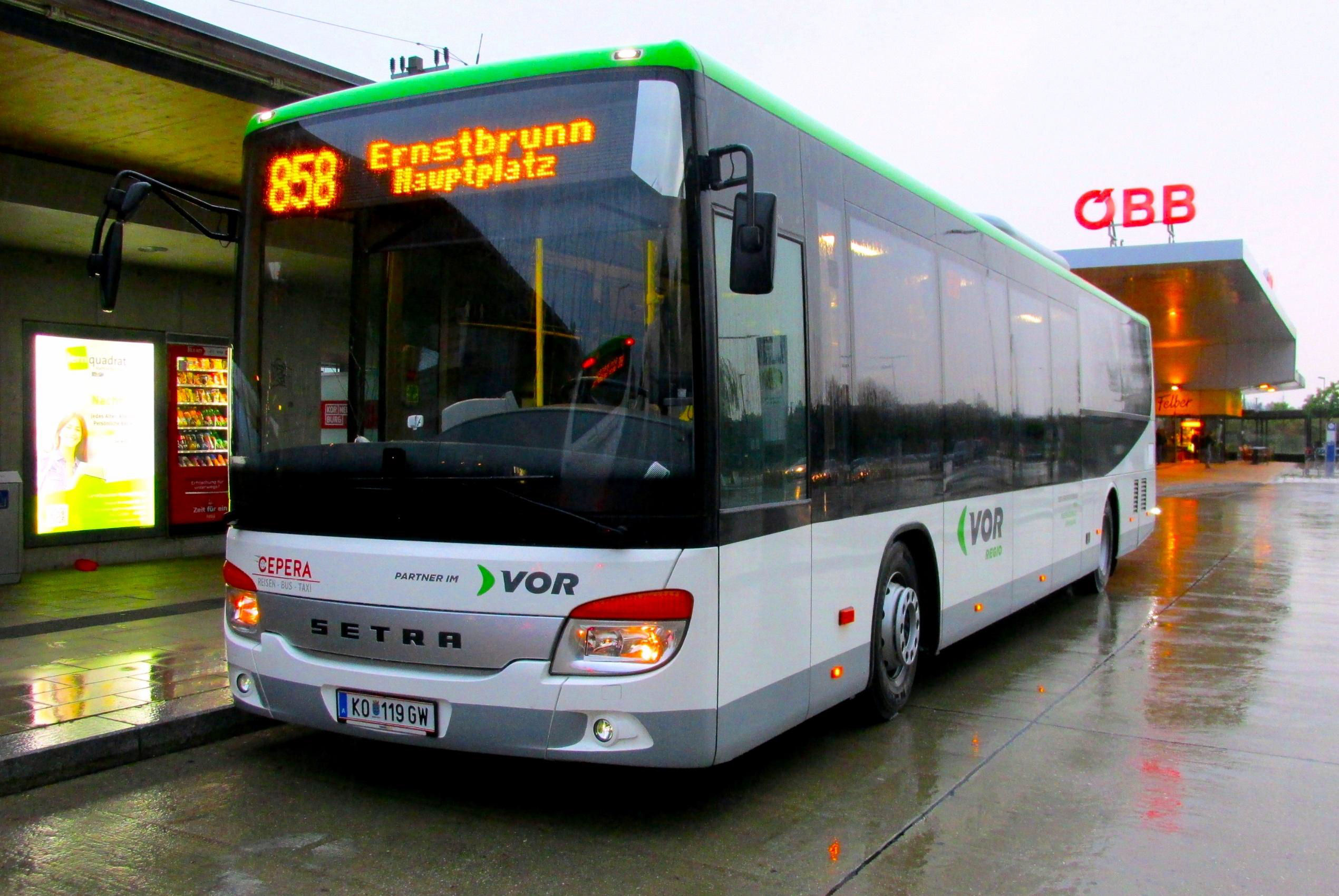
On arrival off the U-Bahn at Praterstern station in Vienna around 06.30, the intended service to Korneuburg (ultimately Znojmo) was on the Passenger Information System at 07.01 and, wandering around in the forlorn hope of a coffee, your reporter met a couple of other UK participants. We went up the escalators and, right on time, the double deck train swept into the platform (notably far less defensive driving here). On boarding, we joined the BLS section on the lower deck, made up of many familiar faces who had joined at Wien Hbf (Vienna Hauptbahnhof = main station) and other central Wien stations en route. As we made our way to Korneuburg, which only took 23 minutes (4 late), the sun came up, allegedly, as the black clouds and incessant rain largely negated the effect. Arrival saw us all move, as swiftly as the stairs and underpass would allow, to the front of the station where the 858 bus to Ernstbrunn Hauptplatz dutifully awaited our arrival, its driver primed for the unusual level of patronage!
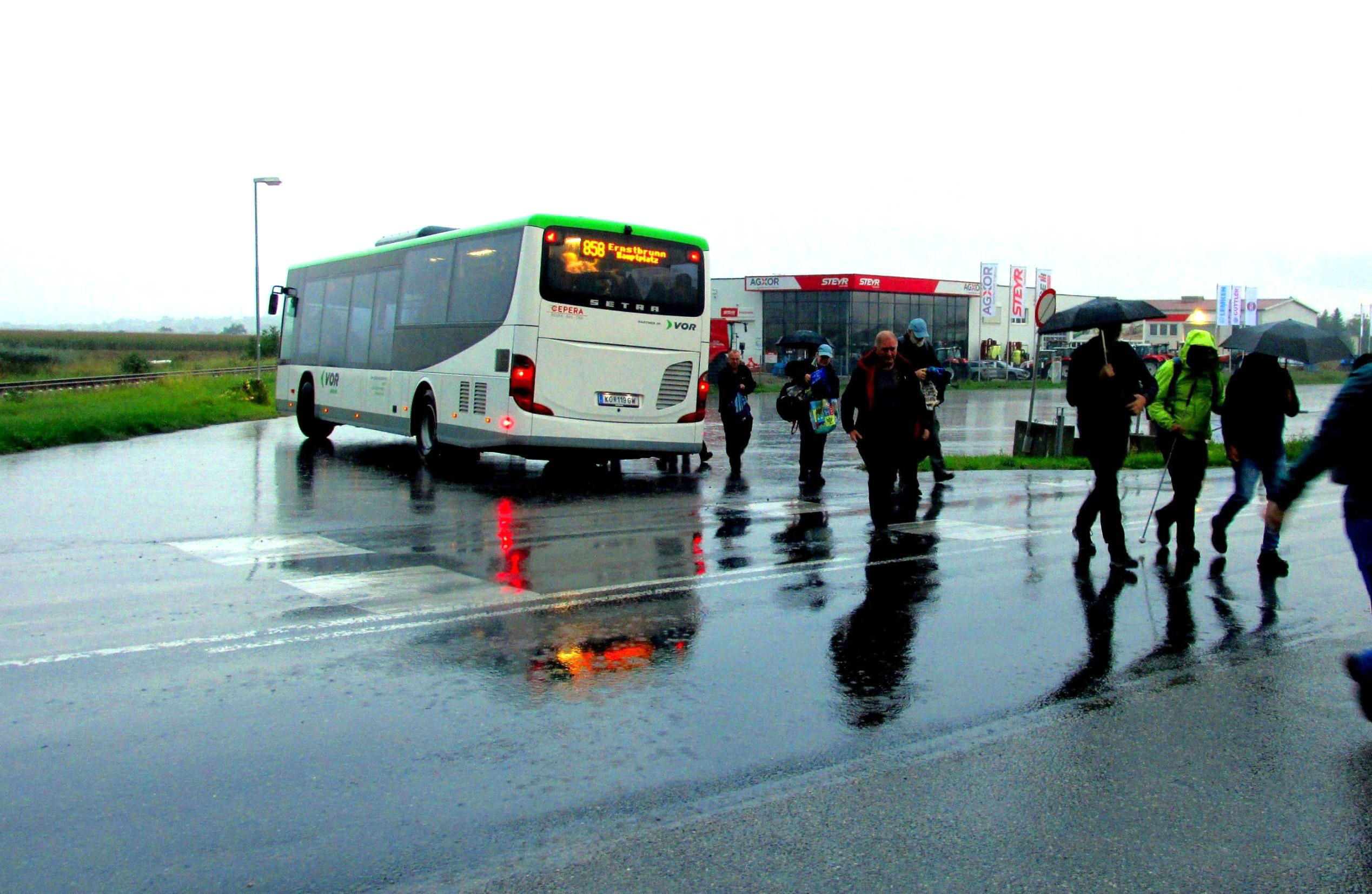
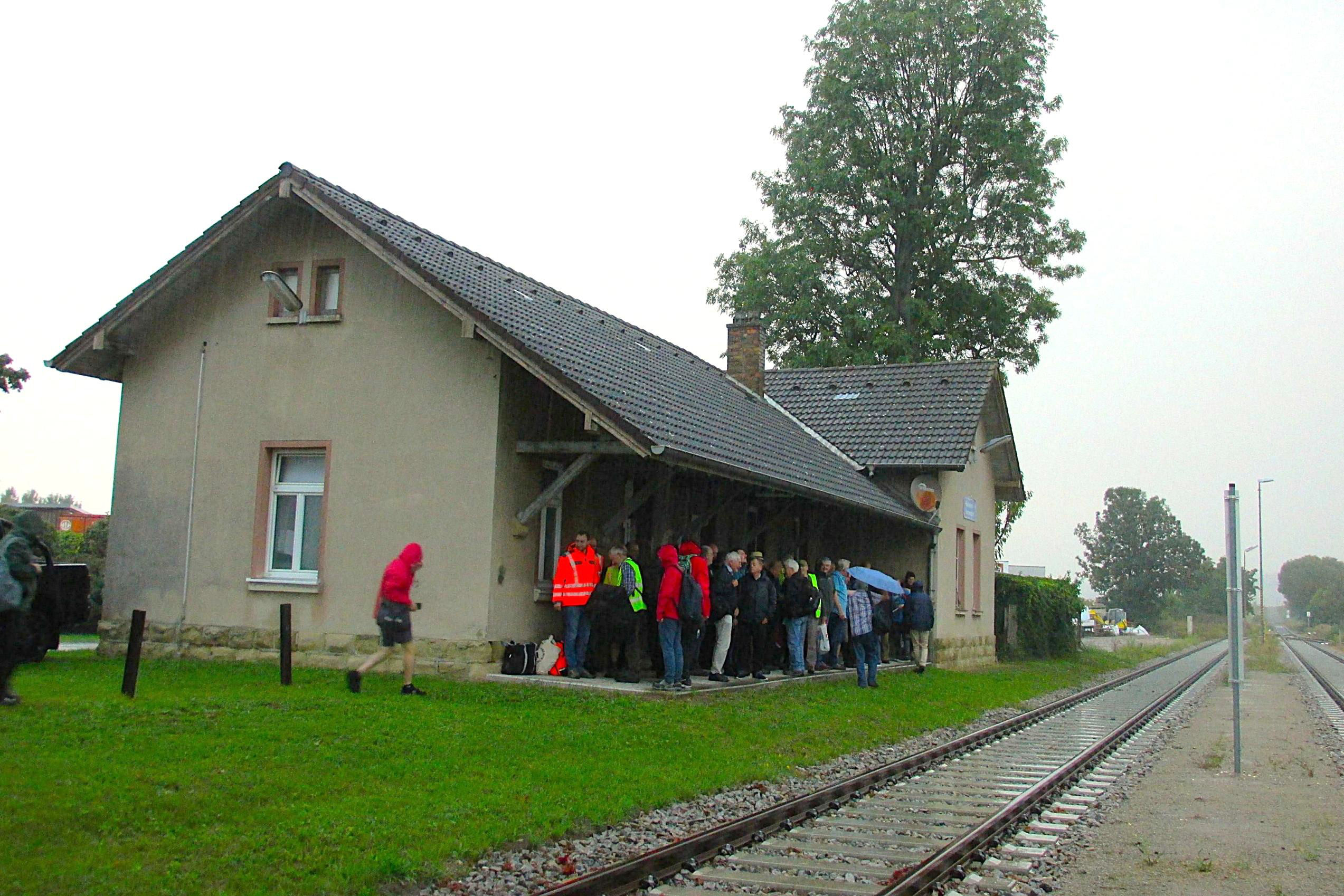
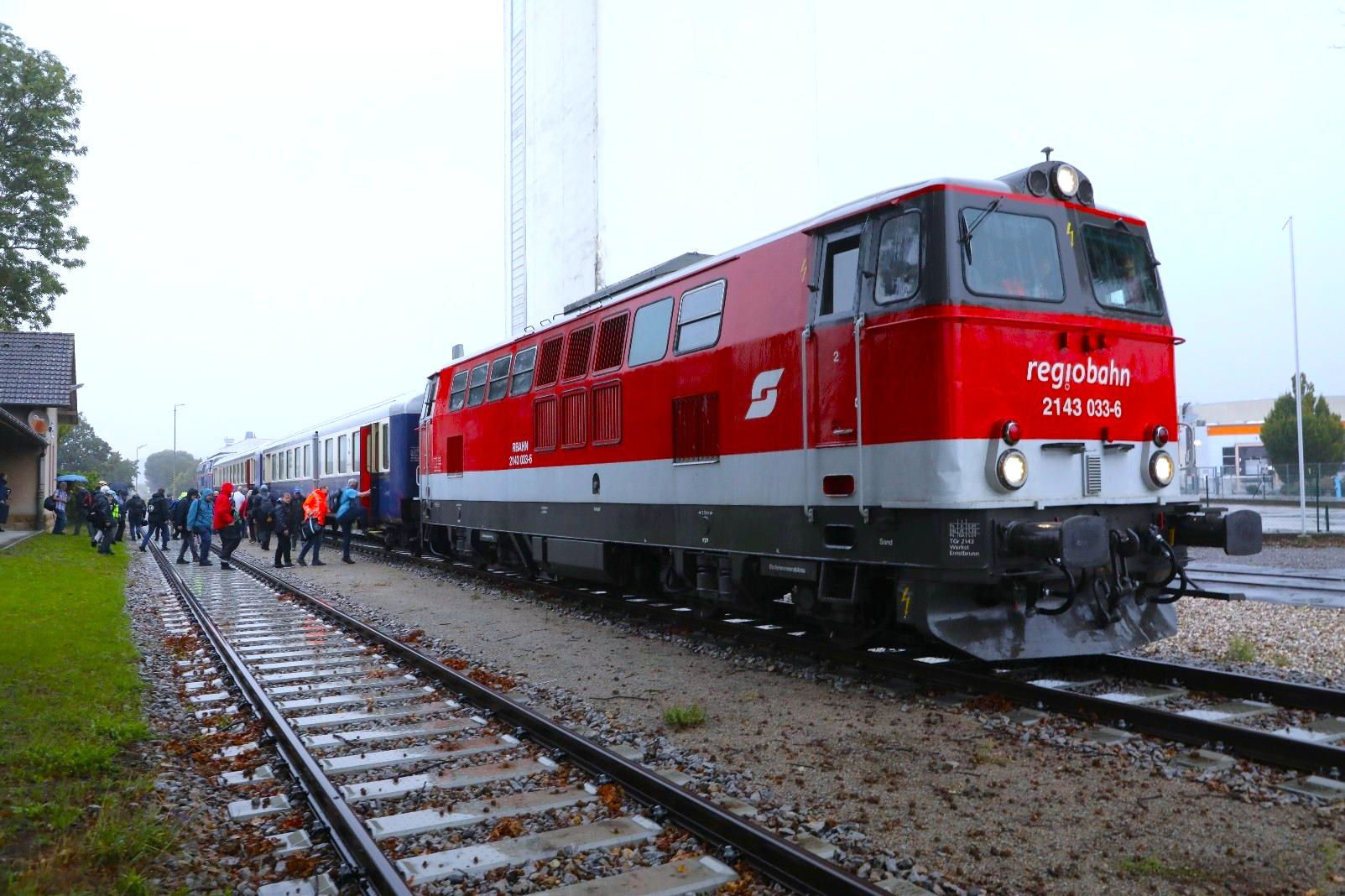
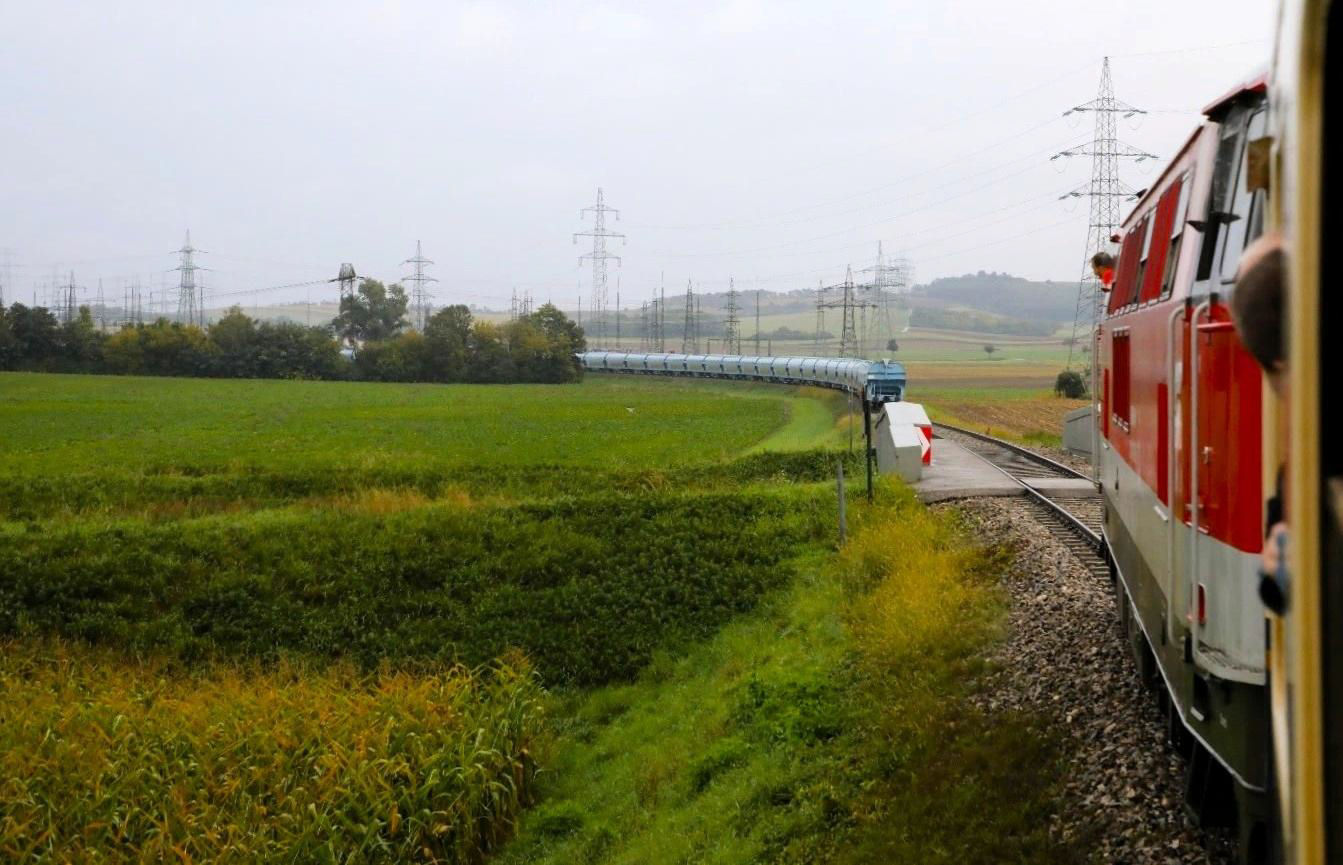
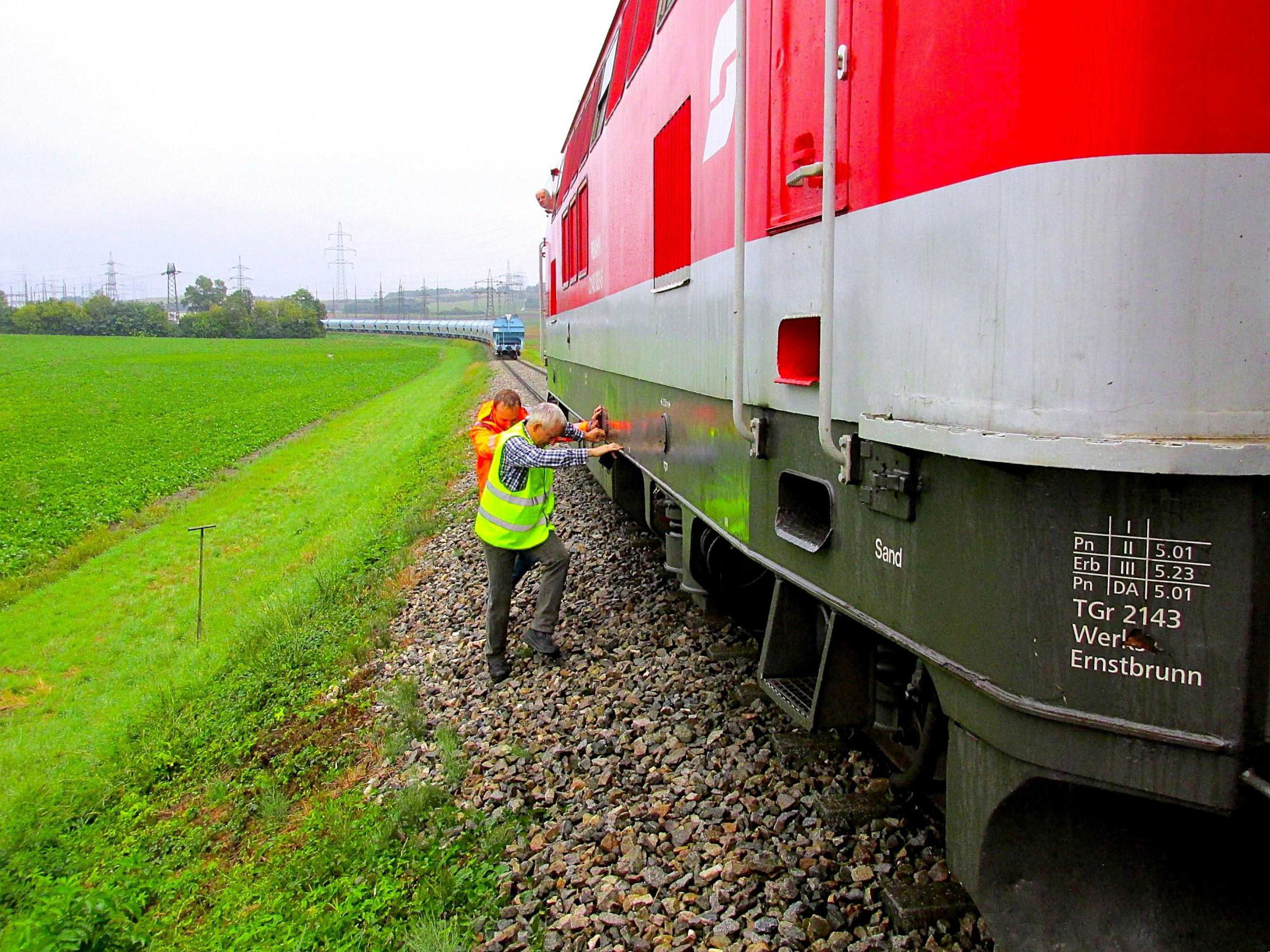
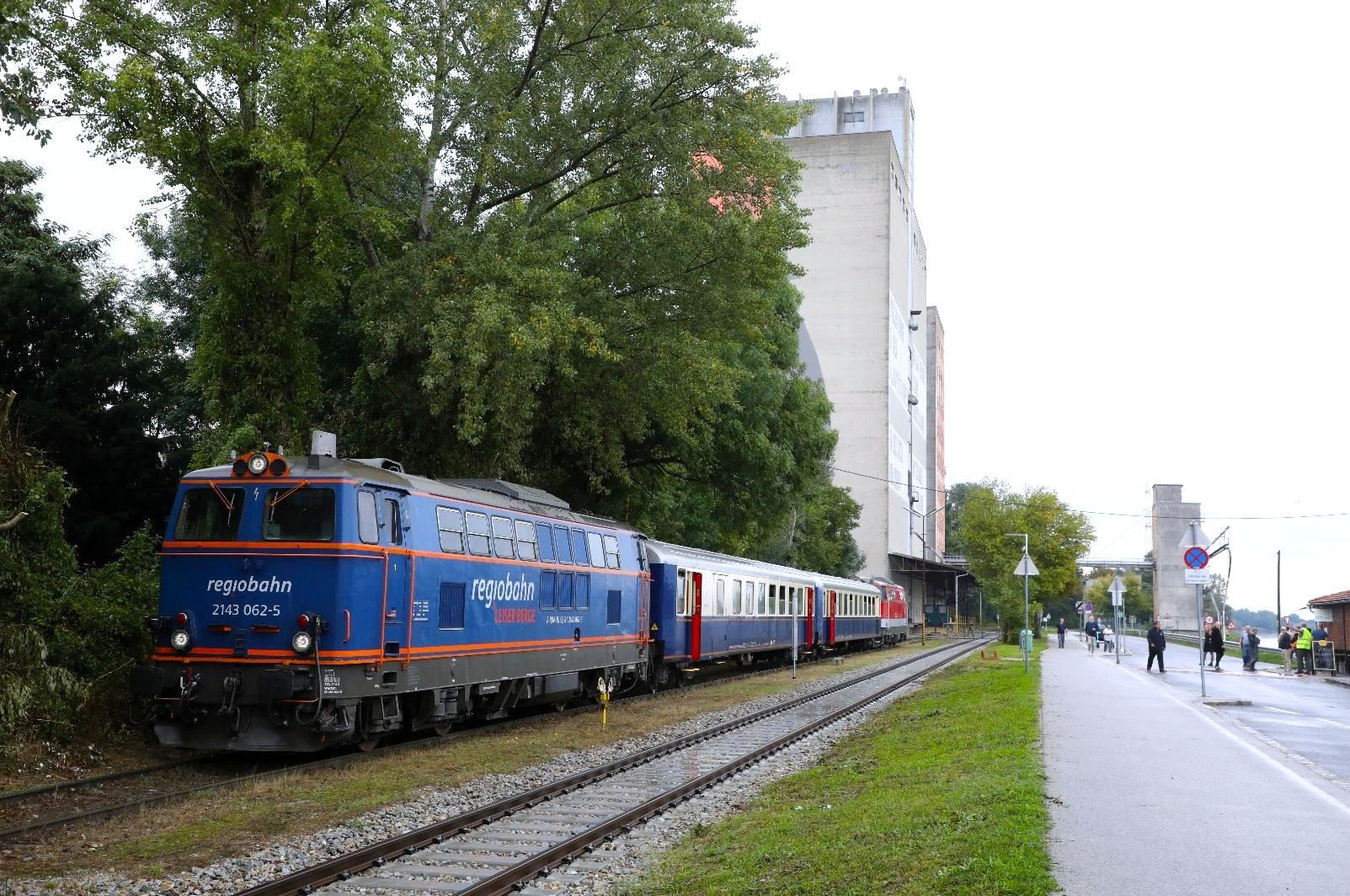
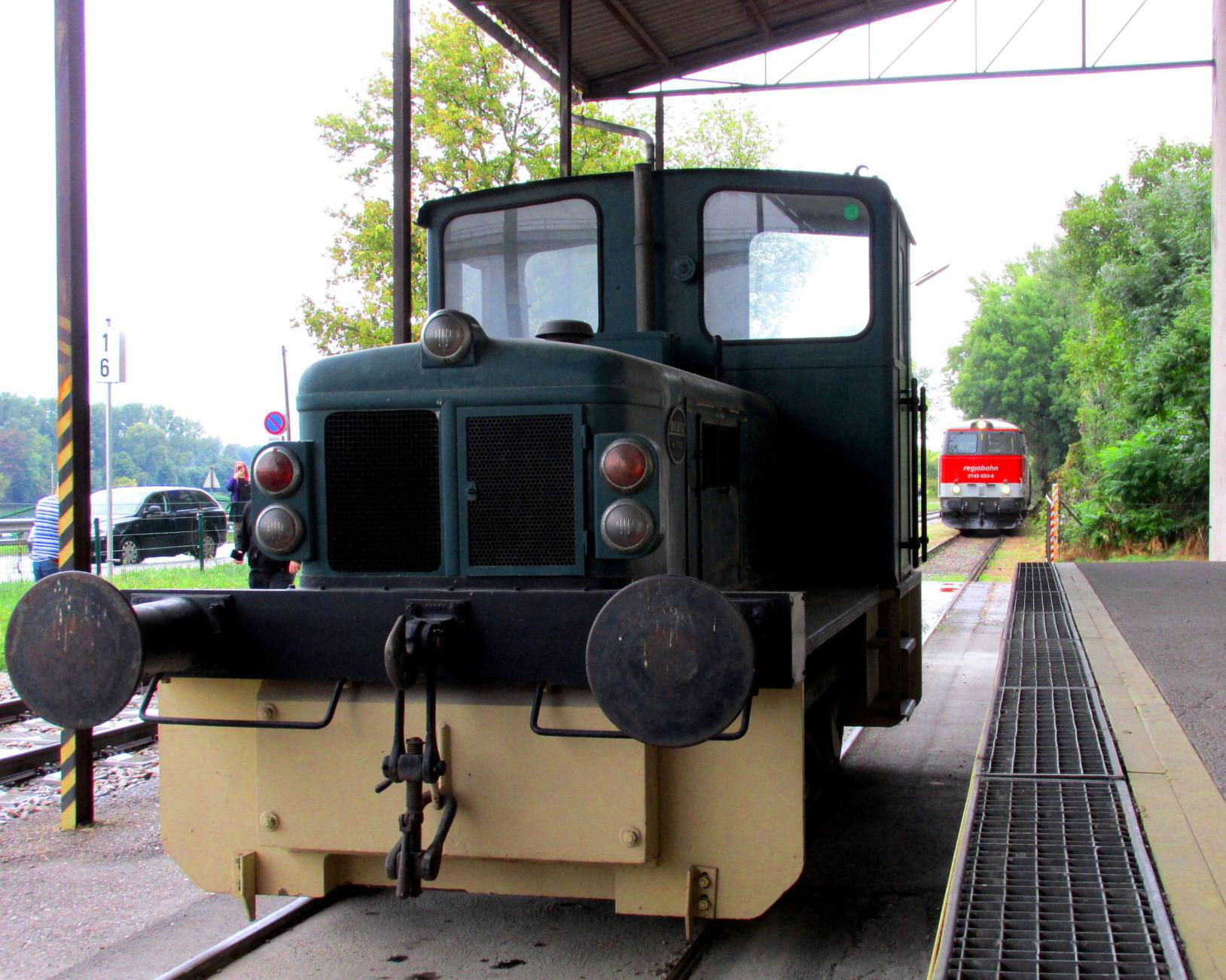
Once all were aboard, the bus left with every seat full and many standing, no doubt to the bemusement of the few locals unaware of our mission. I sat beside our UK tour organiser / co-ordinator Paul Griffin, who monitored progress on his phone as we had to bail out at a specific point on the main road and walk around 800m to the closed Rückersdorf-Harmannsdorf station, where we would board the ECS from Ernstbrunn. So, imagine our surprise and possibly for the normals' bewilderment, when we suddenly swung right off the main road (off the advertised bus route) and headed directly there. The bus turned around in the petrol station forecourt opposite the former station, where it then practically emptied. Peter had prevailed upon the driver to take us there to save a walk in the rain! It was still raining heavily, so the whole company took shelter under the small station awning, which probably never saw such numbers when the line was open for regular passenger traffic. Only a few minutes later, our short train formed of diesel hydraulic locos 2143-033 and 2143-062 'top & tail' on two open coaches, built in the early 1970s, trundled down the grade into the station and rapidly filled. We were away around 07.50. Some hardy souls had taken taxis to where the ECS had come from at Ernstbrunn and were already seated. As long as they had a valid ticket for the day, there was no objection to this (and see later…).
| Branch Line Society. A Company Limited by Guarantee - Company No 16743754. Registered in England and Wales. Registered address: 6th Floor, Derwent House, 150 Arundel Gate, SHEFFIELD S1 2FN |