This was my second railway visit of the week to Sussex after visiting the Bluebell Railway and riding on the movement of the preserved Hastings unit on its return to St Leonards following the weekend gala event there.
An afternoon trip was made to Polegate, the first time I have used this station. Leaving the station from the Down side, one of the first shops was St Wilfrid's Hospice (Eastbourne) charity shop, which charity would benefit from this fixture. The railway is about a mile from the station in the general direction of Willingdon and I set off for a pleasant stroll. Some 25 mins later, I approached my destination to see our host Adrian waiting by the front of his house. A high visibility jacket hanging on the gate post was a giveaway that I had reached the correct location. He greeted me with 'You look like a railway enthusiast' and showed me through to the back garden (where there was a shed with some railway signage) past numerous conductor rail insulating pots - a change from plant pots - to the railway behind the shed.
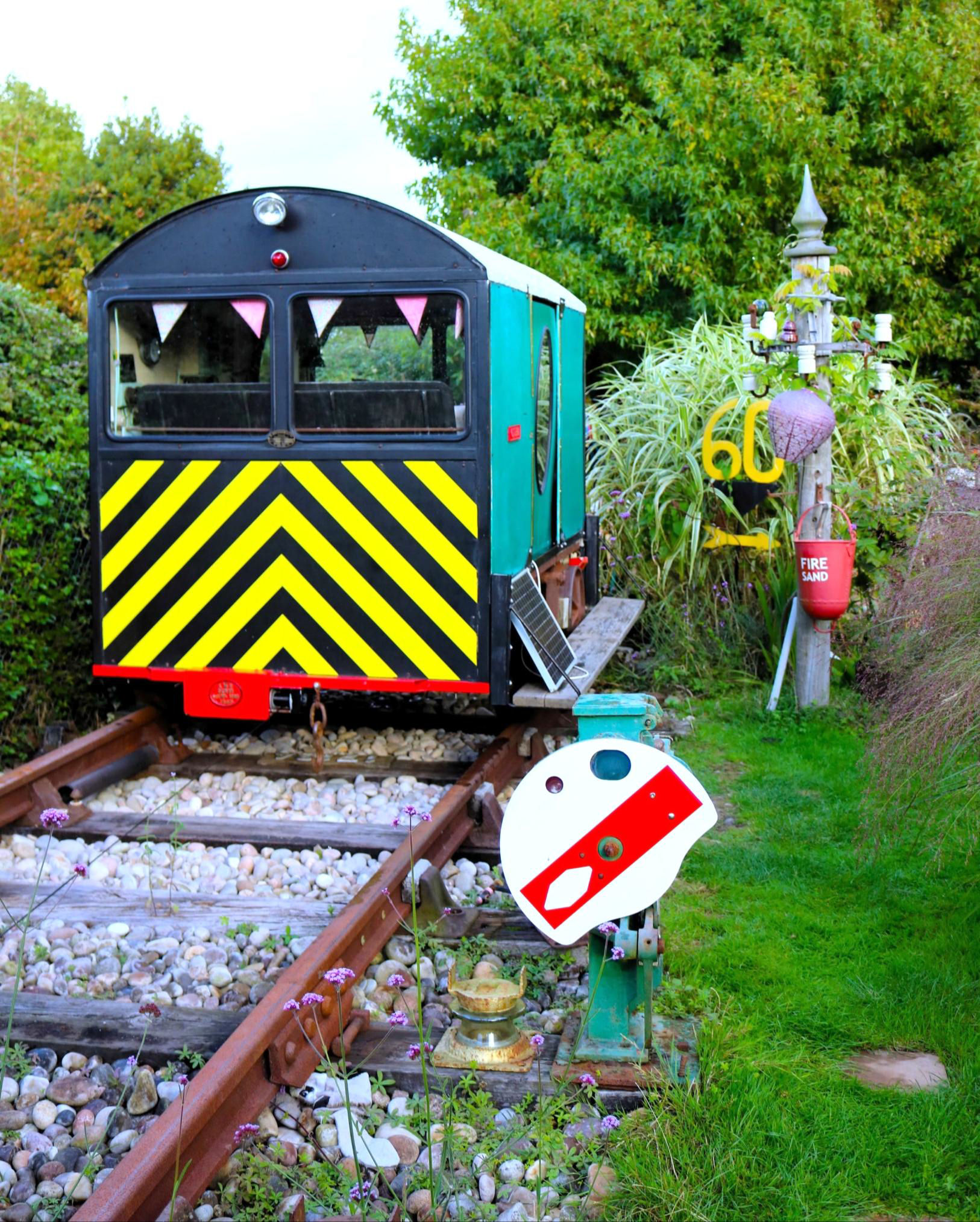
The Willingdon Wickham.
[© Geoff Noakes 2025]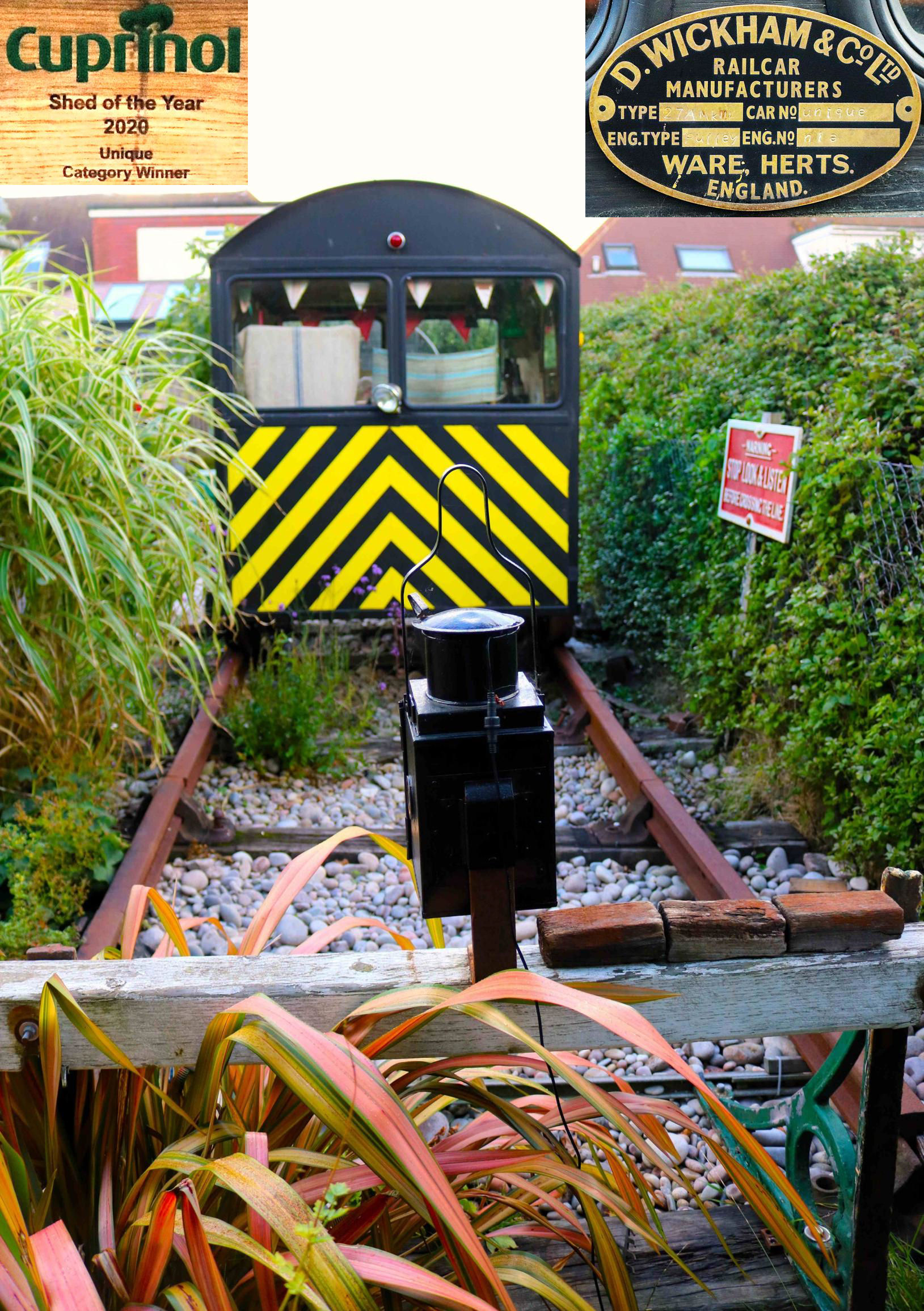
The Willingdon Wickham at the other end of the line. Inset Cuprinol shed of the year plaque and the Wickham-style works plate.
[© Geoff Noakes 2025]The standard gauge railway was initially suggested by Adrian's wife, Ruth, as a home for his platelayer's trolley when they moved to the house a few years ago. The flat trolley had been previously rescued from the Brighton Yard. The railway was started before Covid, originally about 30ft long and powered by winding a rope to haul the trolley along. During Lockdown, assisted by friends constructing various parts, a 'Wickham' style body was added to the trolley and has been fitted out to provide a comfortable room with plenty of amenities. A pair of chairs at one end and a bench the other end conceals the 12 volt car battery which now powers a winch as well as lighting inside and outside the vehicle. It also powers some electrical souvenirs from Adrian's previous employment with the electrical traction supply side of the mainline railway. A stove has been constructed to provide heat and cooking facilities. Adrian has slept out inside by placing planks between the seating areas to provide a level base on which to lie down.
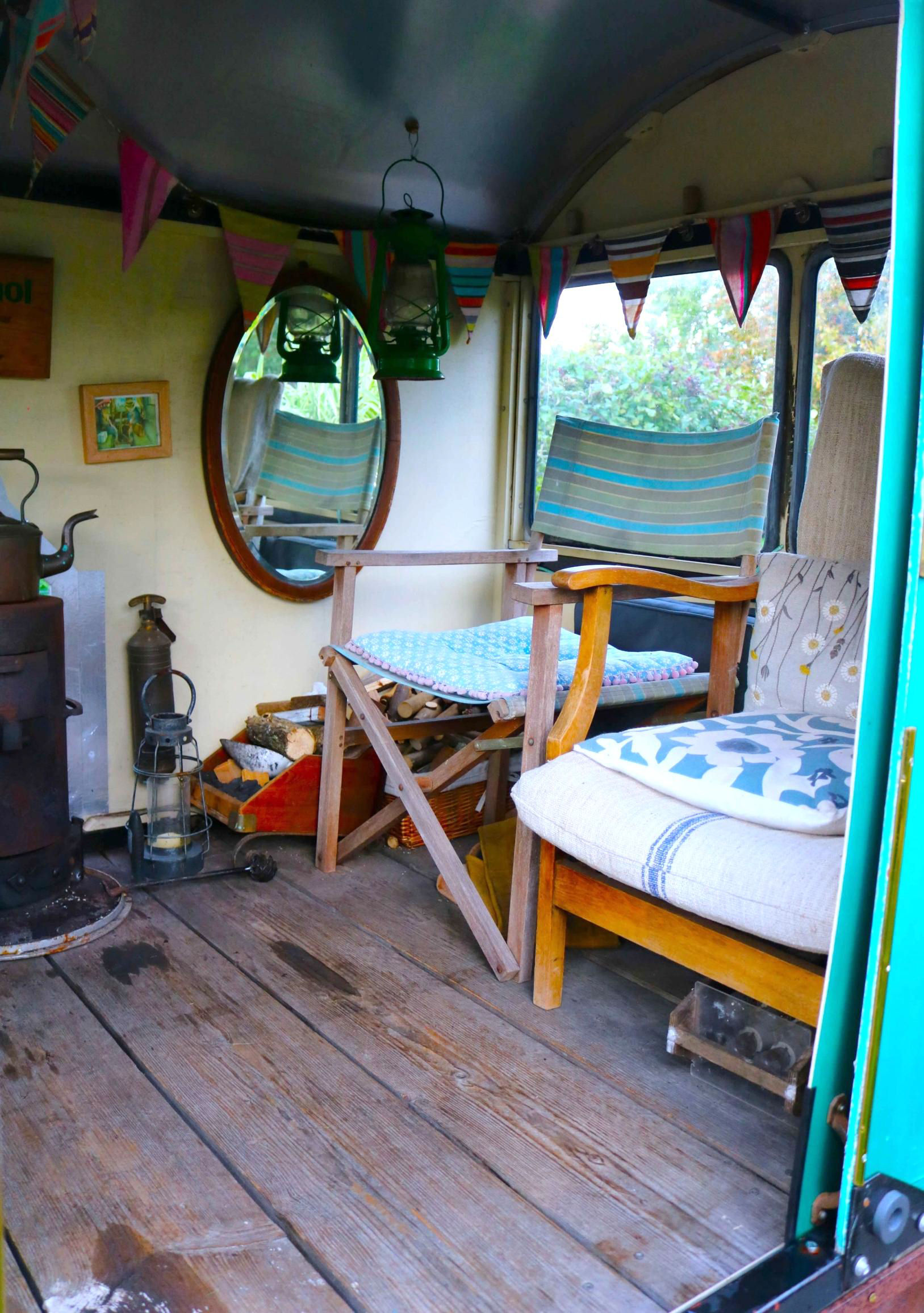
Home comforts with a pair of chairs at one end.
[© Geoff Noakes 2025]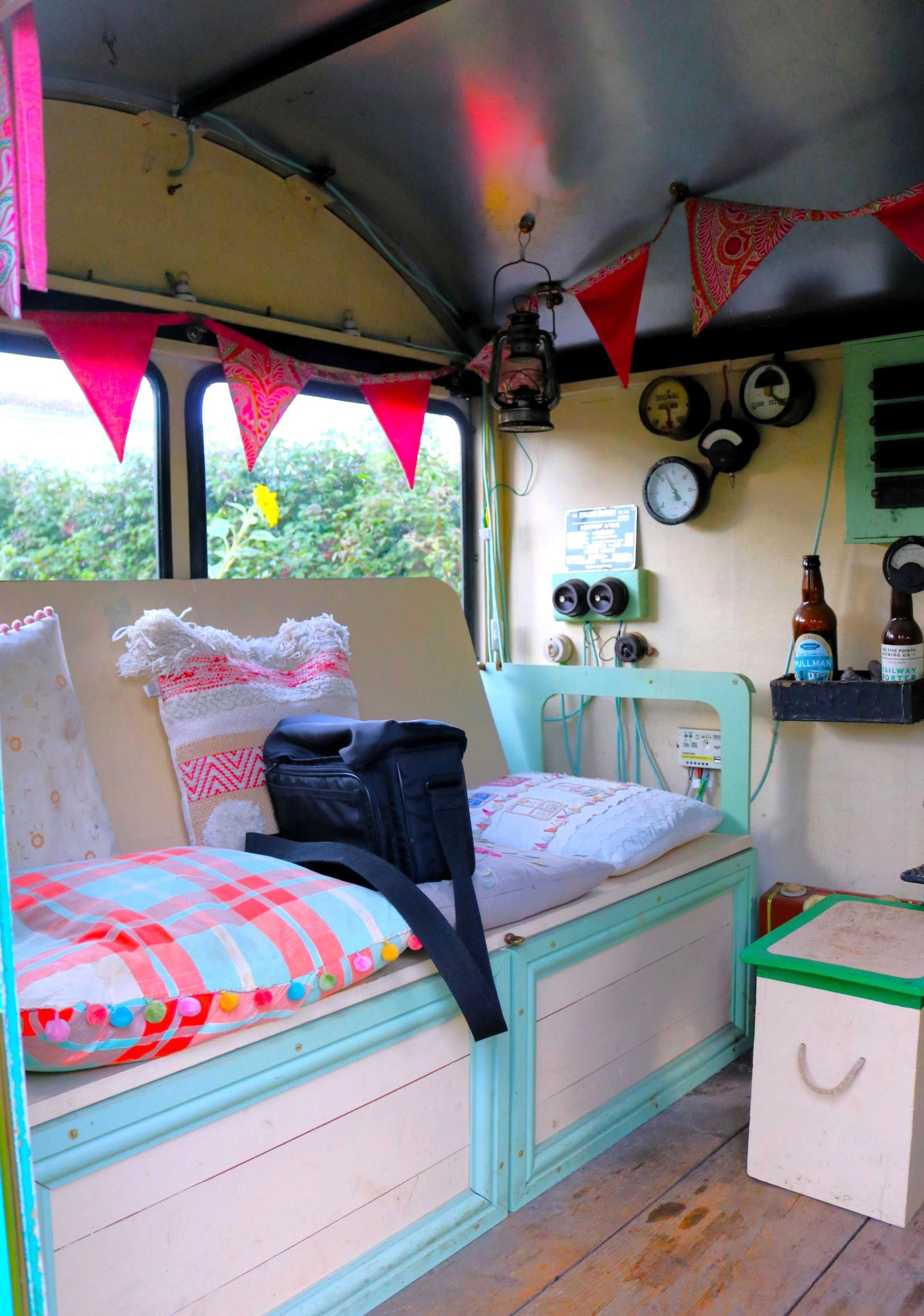
The bench at the other end which conceals the 12 volt car battery.
[© Geoff Noakes 2025]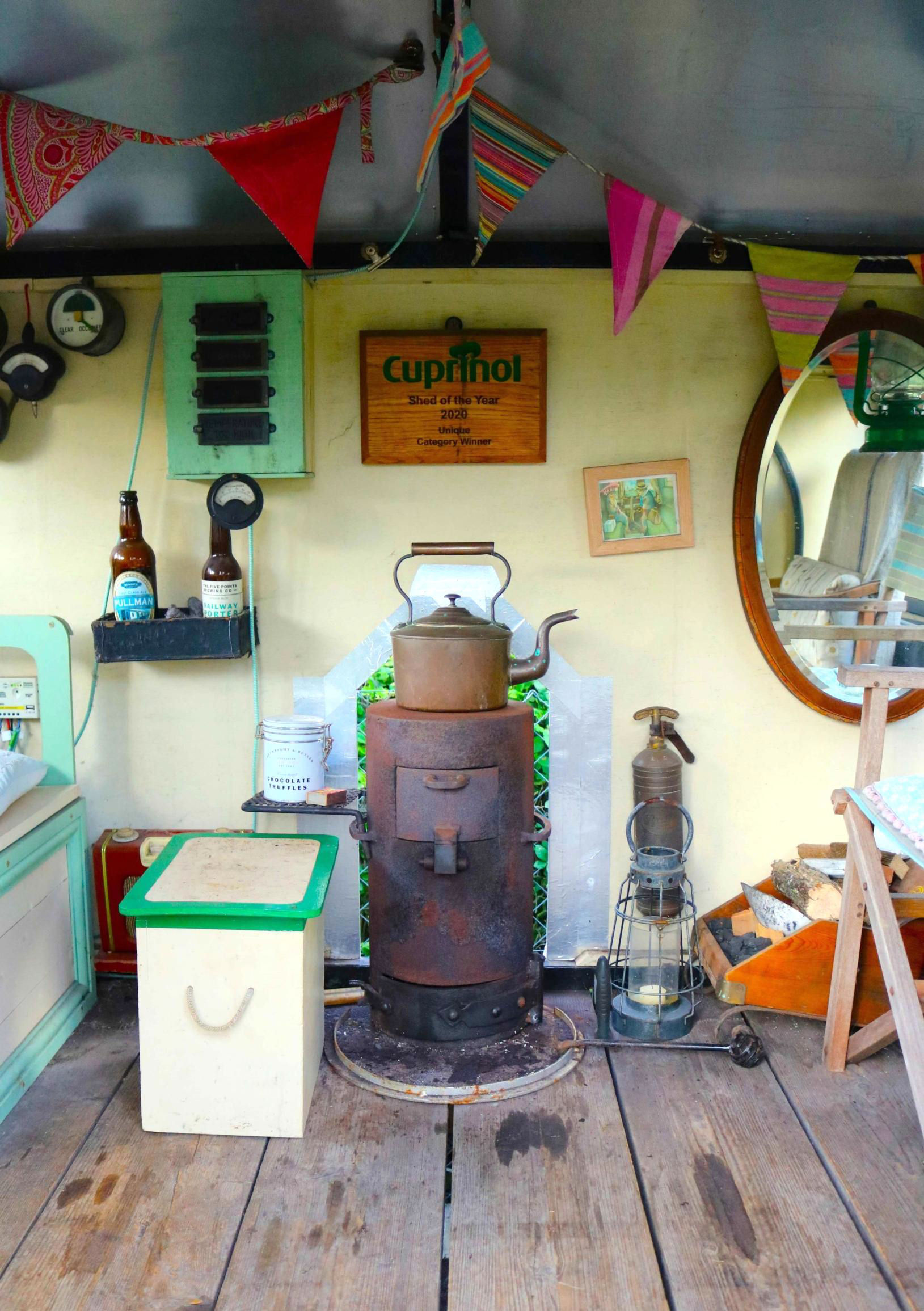
A stove has been constructed to provide heat and cooking facilities.
[© Geoff Noakes 2025]Other items were a Pullman-style oval window in the sliding door and a Wickham-style works plate which describes the vehicle as unique. (It certainly is that!) A small nameplate 'OLD BILL', the nickname of a former work colleague, is carried externally. The finished vehicle won Cuprinol shed of the year back in 2020 in the Unique category; the resultant plaque is displayed above the stove. A few rides were taken with participants driving (by depressing the directional rocker switch) to operate the winch powered from the on board battery, which is charged from a solar panel so perhaps more advanced than many mainline trains! The railway has been extended a couple of times and is now around 50ft long, the full length is covered at a sedate pace. Top speed has been calculated as ⅓ mile per hour but it is not certain whether this dizzy height was achieved during our visit. The winch provides power for the uphill direction of what is quite likely the shortest, shallowest, standard gauge funicular in the UK if not the universe.
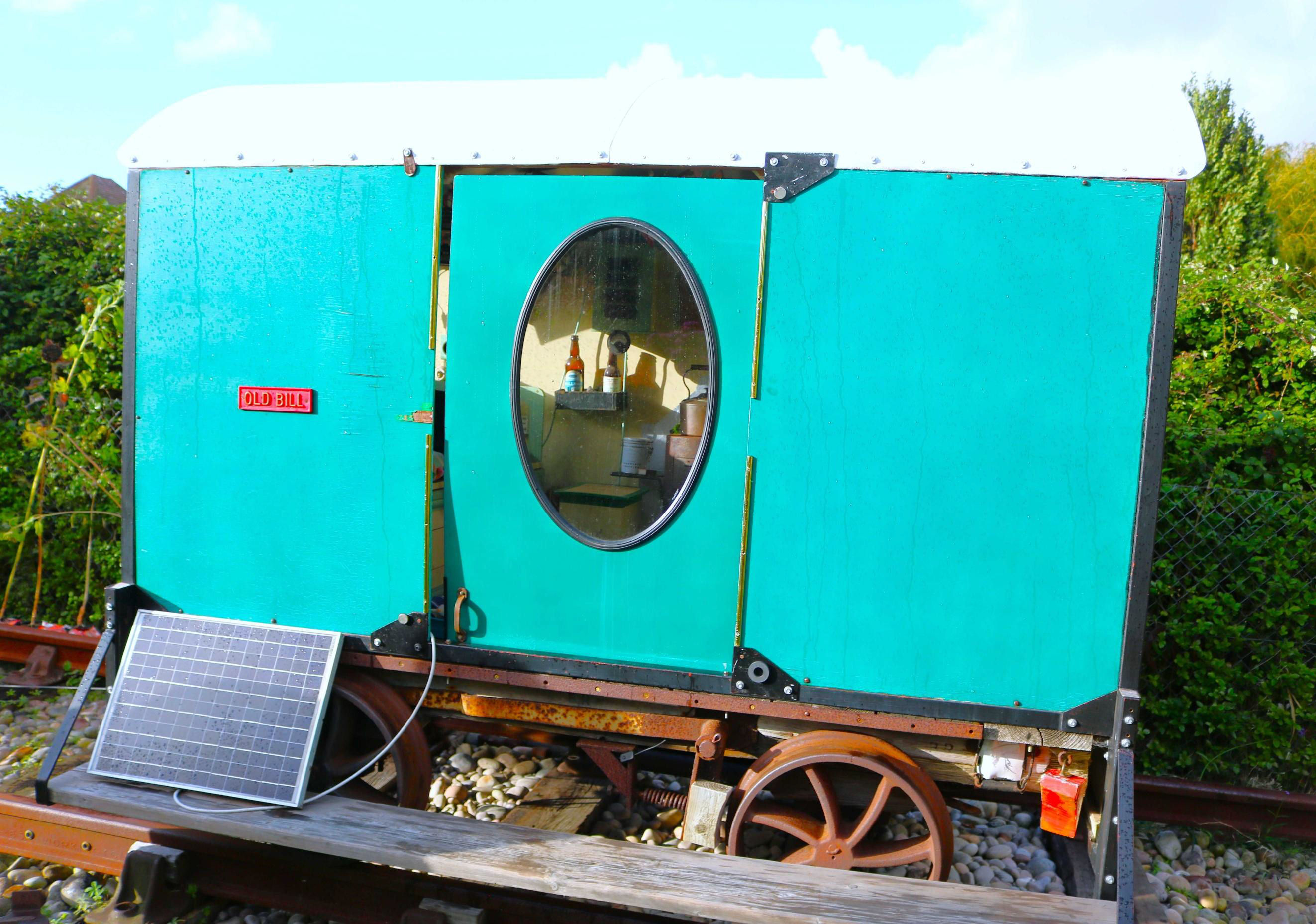
The Pullman-style oval window in the sliding door and the small nameplate 'OLD BILL',
[© Geoff Noakes 2025]The fall towards the rear of the garden is estimated to be about 6 inches allowing
Isaac Newton gravity to power in that direction. Alongside the railway a short section of conductor rail, from Hove Yard, rests on glass insulating pots manufactured by Pilkington. Rides completed, we were then shown into the shed with various electrical souvenirs and artefacts including a belt driven lathe and drill as well as various tools from many years ago. A veritable treasure trove of museum pieces. Thanks to Adrian and his wife for refreshments of tea and chocolate brownies. Hot butter crumpets cooked on the stove were also suggested but time constraints did not allow this to happen. Overall, a railway well worth a visit if the opportunity arises. It is planned for future open days to be held and no doubt will be advertised locally.
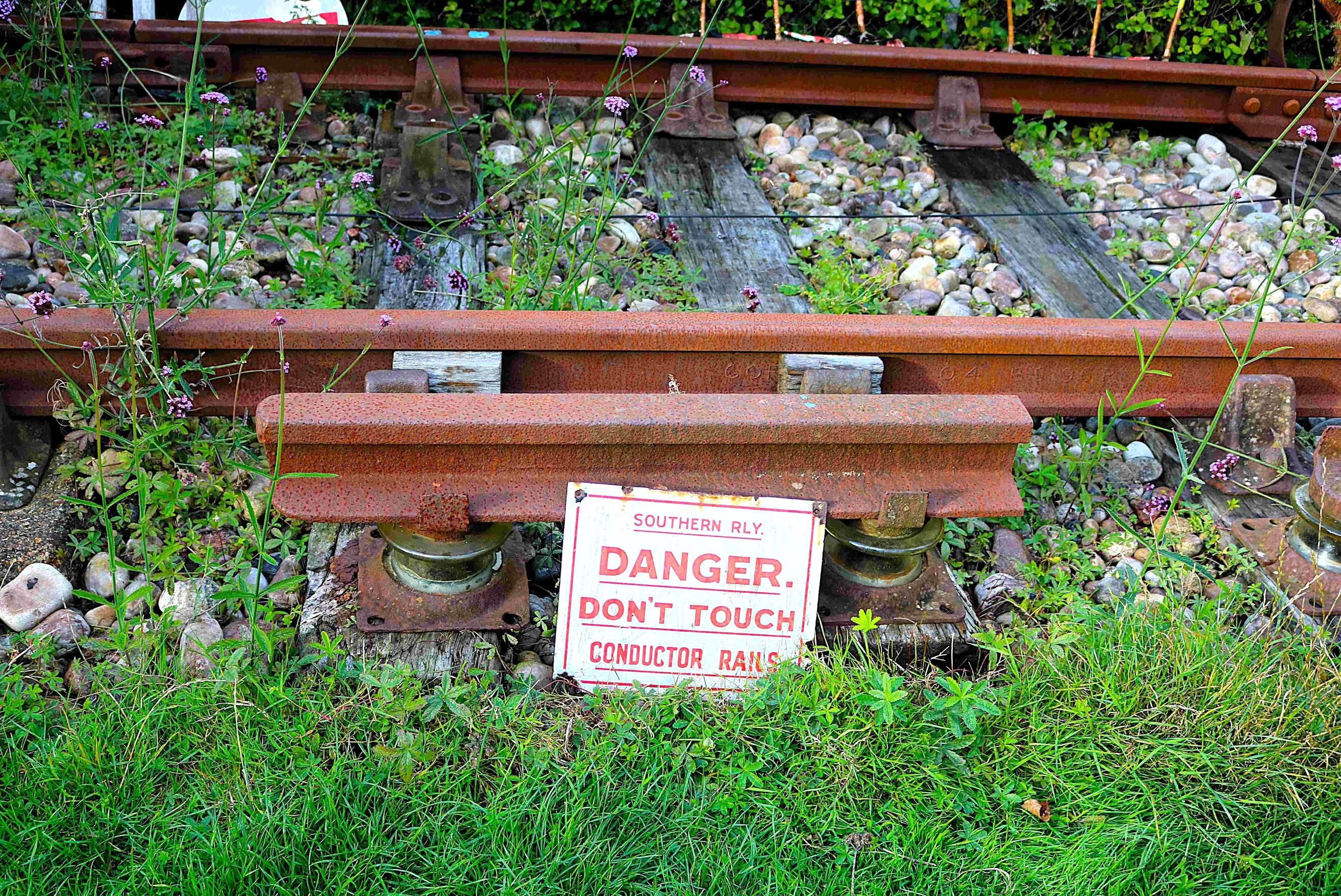
The short section of conductor rail, from Hove Yard, on the glass insulating pots. Note how thin the 'funicular' haulage wire is.
[© Geoff Noakes 2025]A local journalist joined our visit;
https://tinyurl.com/4nfv7hza is the illustrated report with a video.