Our member, Adam Turner's guided tours seem to be very worthwhile judging by the BLN reports, so I thought I'd give this one a try.
Engineering work at Market Harborough resulting in diversions via Corby, a revised timetable and the threat of bus replacements, suggesting an early journey was advisable. There were not many takers for the 04.49 from East Midlands Parkway - in fact only me. A bonus was Harringworth Viaduct. No alarms and we arrived St Pancras only about five late. Time for Battersea Power Station branch, new to me.
A fully booked group of 26 members assembled at South Harrow station, the one before Rayners Lane on the Piccadilly line from Acton Town to Uxbridge and were duly booked in by Adam. He outlined the day's itinerary and introduced his co-host Joe Brown, of Railway Atlas fame. This was followed by a brief history of the station, accompanied by photos, a format repeated at each station as the tour progressed.
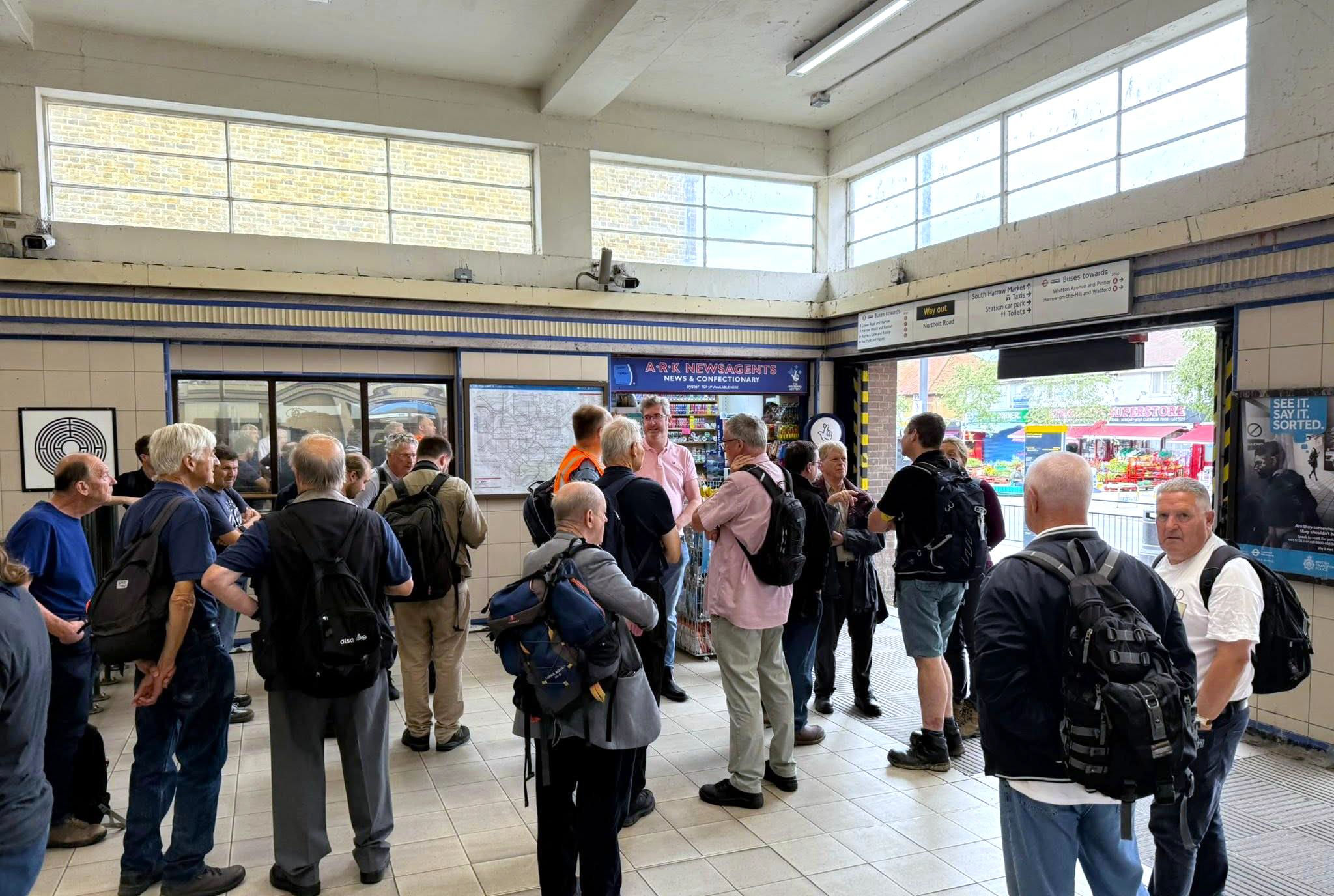
Members at South Harrow station for our 'Piccadilly Explorer'.
[© Joe Brown 2025]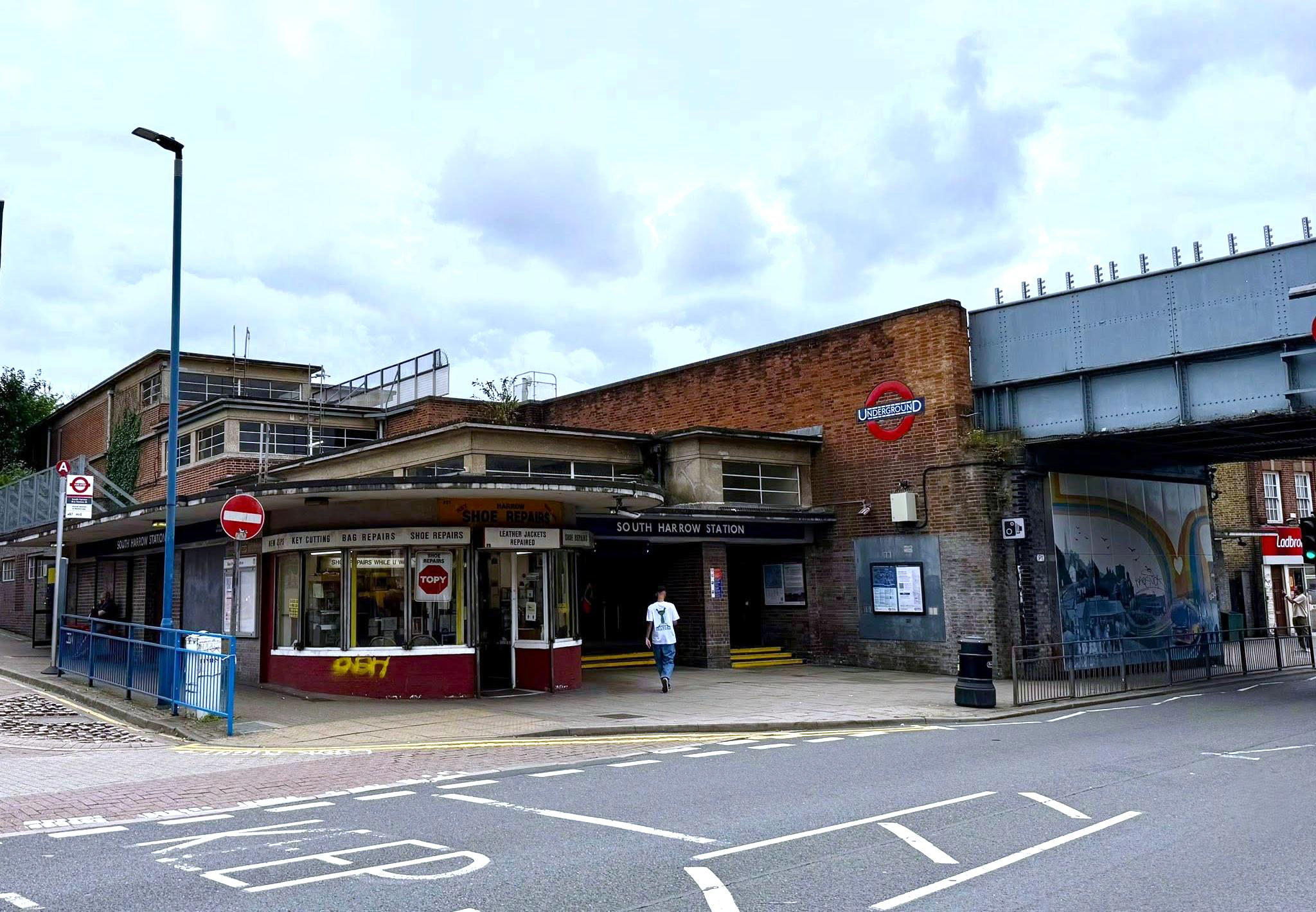
South Harrow station
[© Joe Brown 2025]A five-minute walk took us to the day's first feature, the stub of the viaduct which carried a branch, closed in 1954, to South Harrow Gas Works. Notable was the fact that, although opened in 1910, its style of construction looks far more recent. A further short walk took us to Roxeth Green Avenue from where we could see a somewhat dilapidated structure precariously perched above the arches adjacent to the viaduct carrying the Piccadilly line. This turned out to be the relay room from when the signalling for the gas works branch was upgraded. Previously, traincrew had to alight to operate a ground frame here.
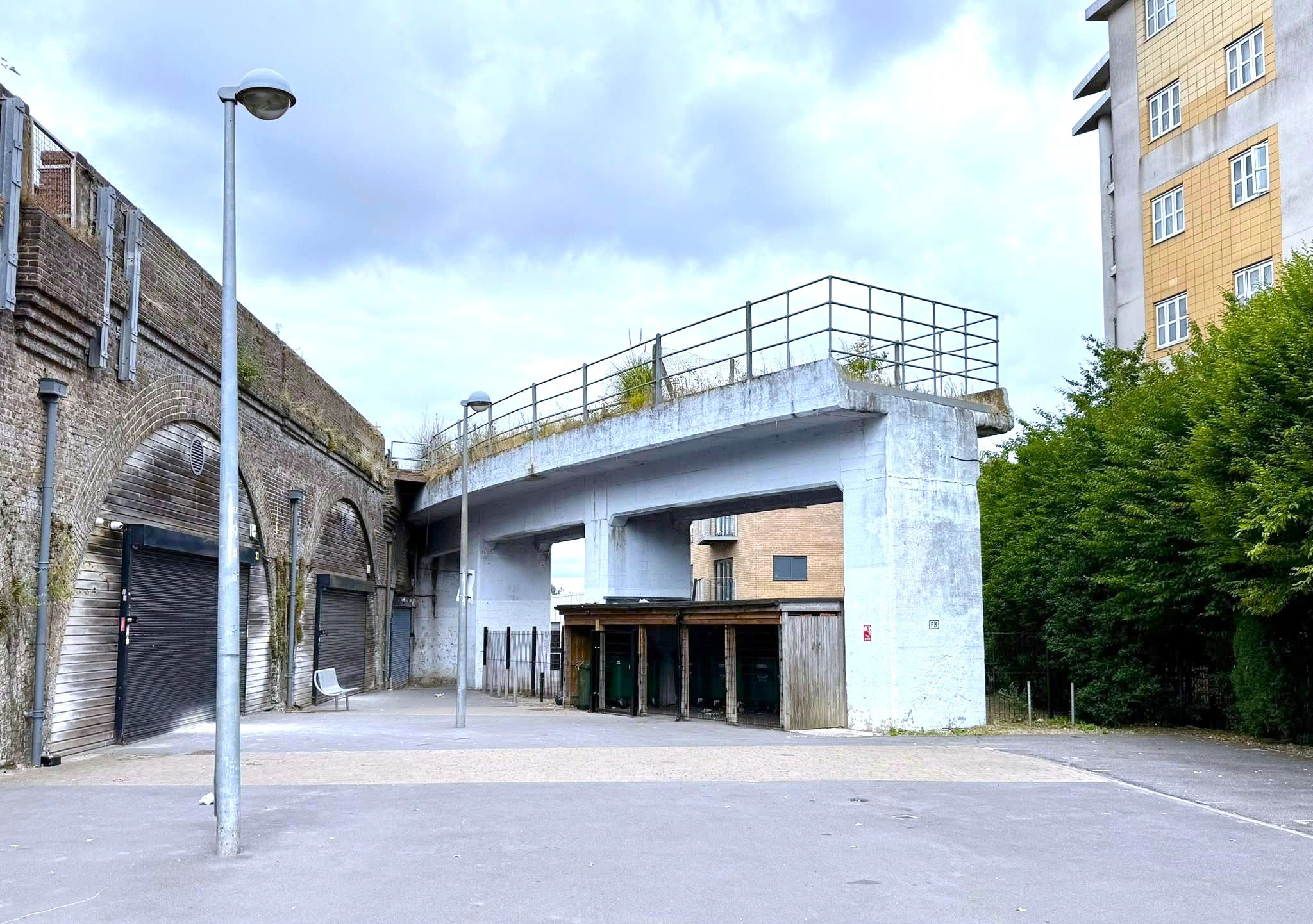
The stub of the viaduct which carried the branch to South Harrow Gas Works.
[© Joe Brown 2025]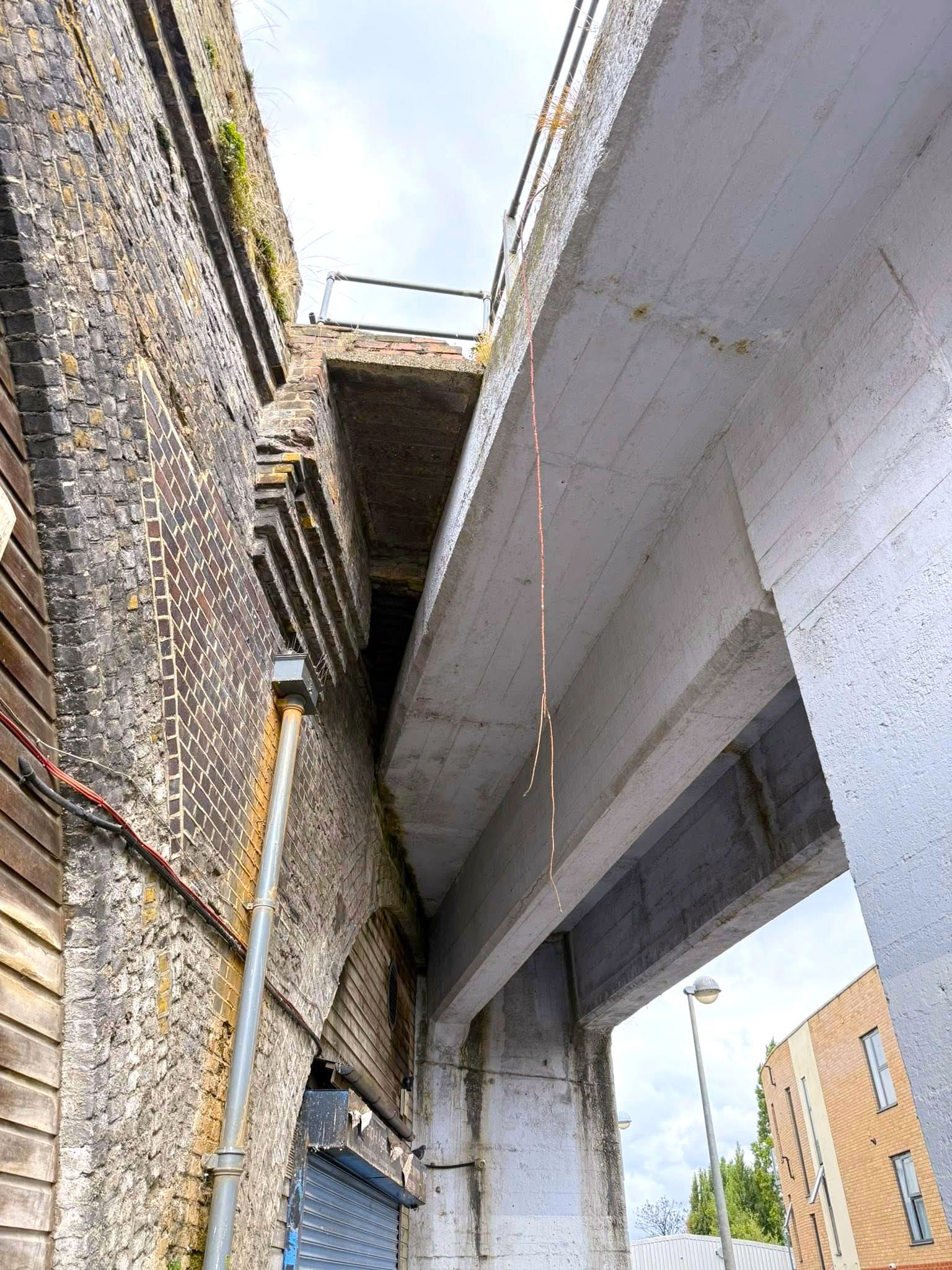
A close up of the junction with the stub of the viaduct which carried the branch to South Harrow Gas Works.
[© Joe Brown 2025]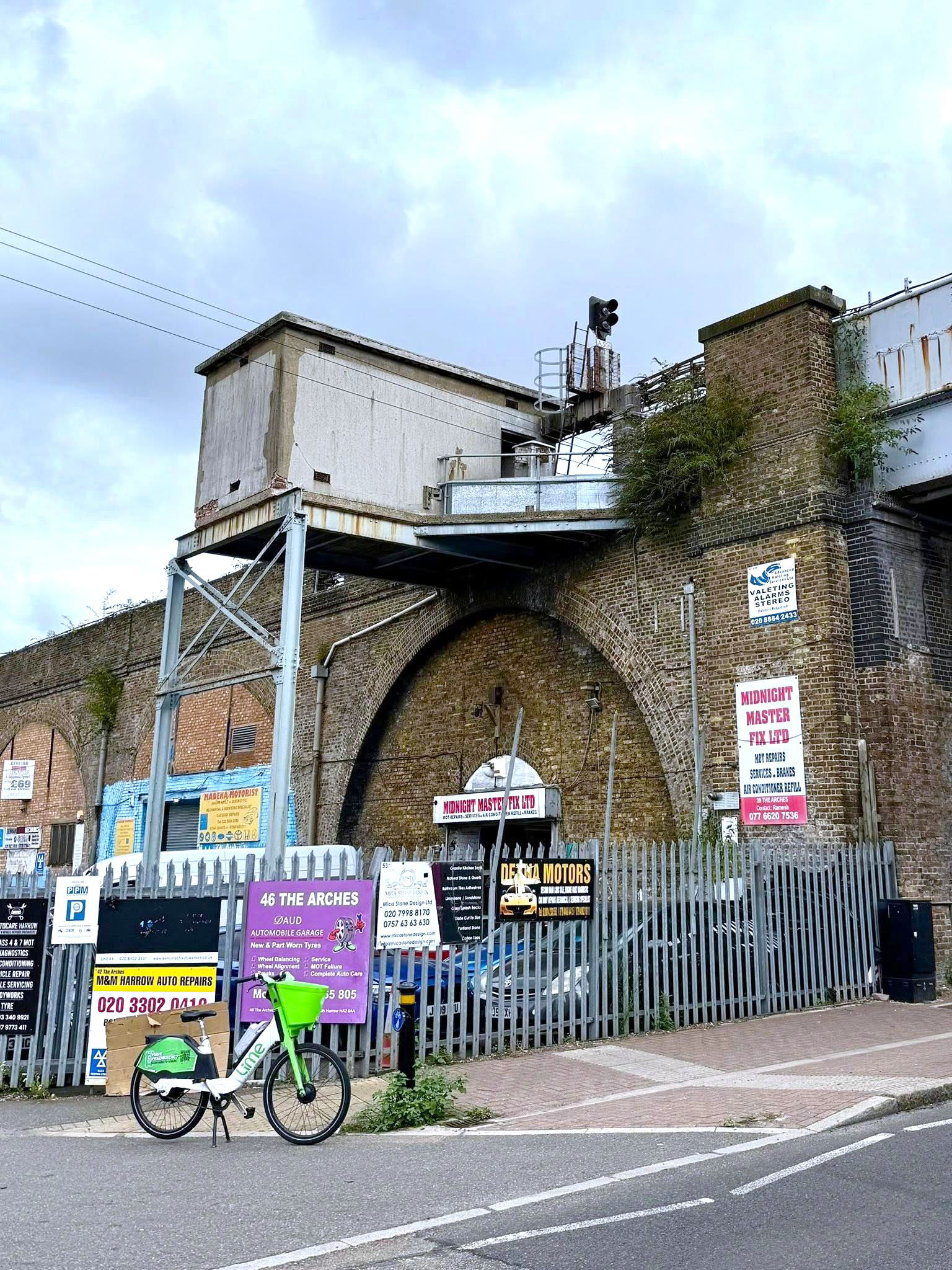
The somewhat dilapidated relay room from when the signalling for the gas works branch was upgraded.
[© Joe Brown 2025]Back at South Harrow, climbing the stairs, we noted a curious recess with a bench halfway at a landing, halfway up the stairs. Although a welcome rest for some, the staircase was not that high! We were told that this is said to be the only London Underground station where you can rest mid-climb. At the end of the platform, we found the original station building, now staff accommodation, and noted how it is very similar to North Ealing station. We then took a short hop two stops along the line to Sudbury Town.
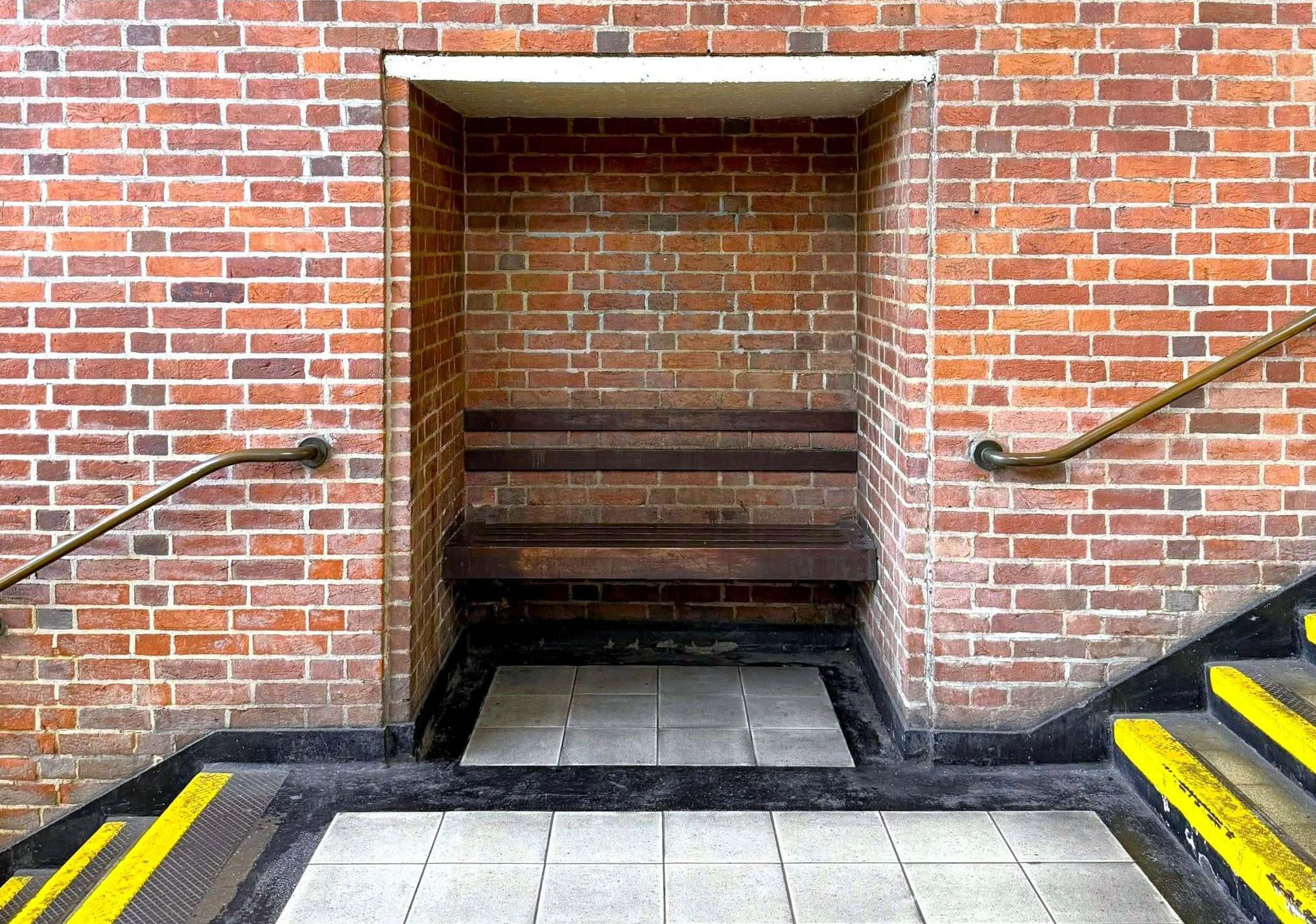
The curious recess with a bench halfway up the stairs.
[© Joe Brown 2025]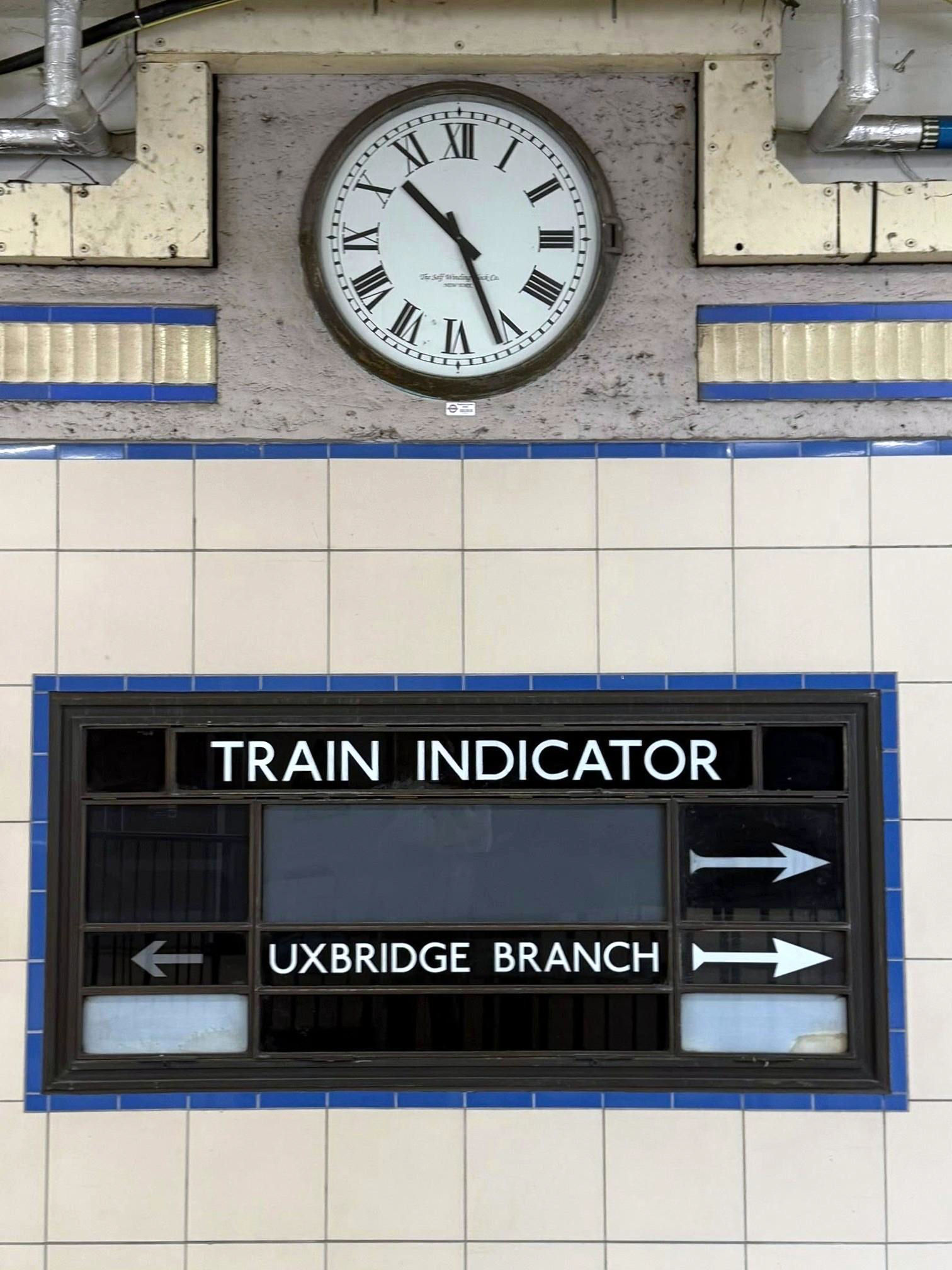
A historic train indicator at South Harrow station.
[© Joe Brown 2025]This station's roundels are thought to be unique in that the font used is not found anywhere else on the LUL network, using a variant commissioned by Frank Pick being a wedge-serif variation of the standard sans-serif Johnston face designed by Percy Delf Smith (a former pupil of Edward Johnston). Here Joe's colleagues, Rob and Sanjay, had arranged for us to access a World War II bunker. It was for staff use and had walls and ceiling which are 18 inches thick but now stores tools. Rob gave details of its construction which, although robust, probably wouldn't have survived a direct hit. To enter, we split into two groups.
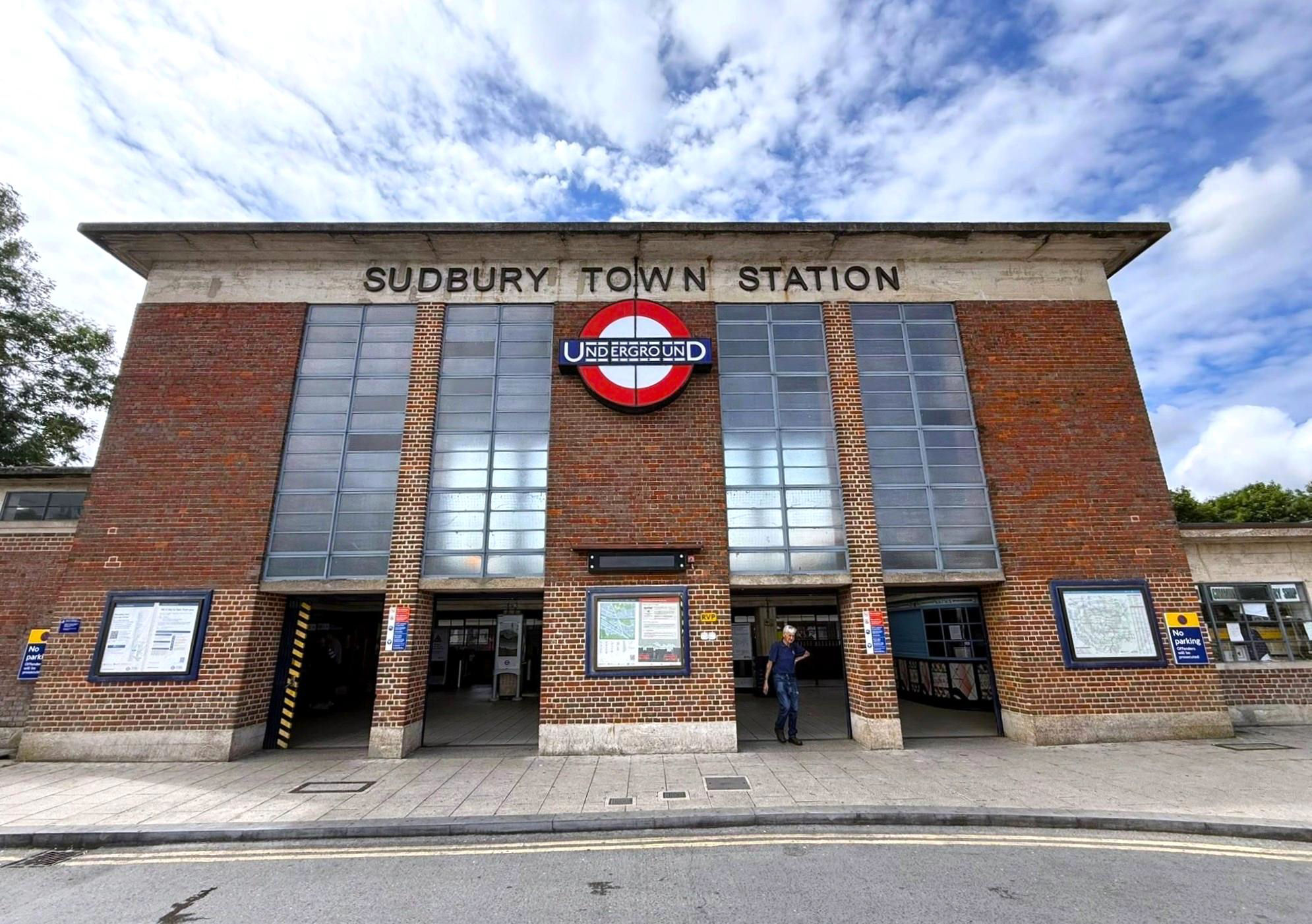
Sudbury Town station.
[© Joe Brown 2025]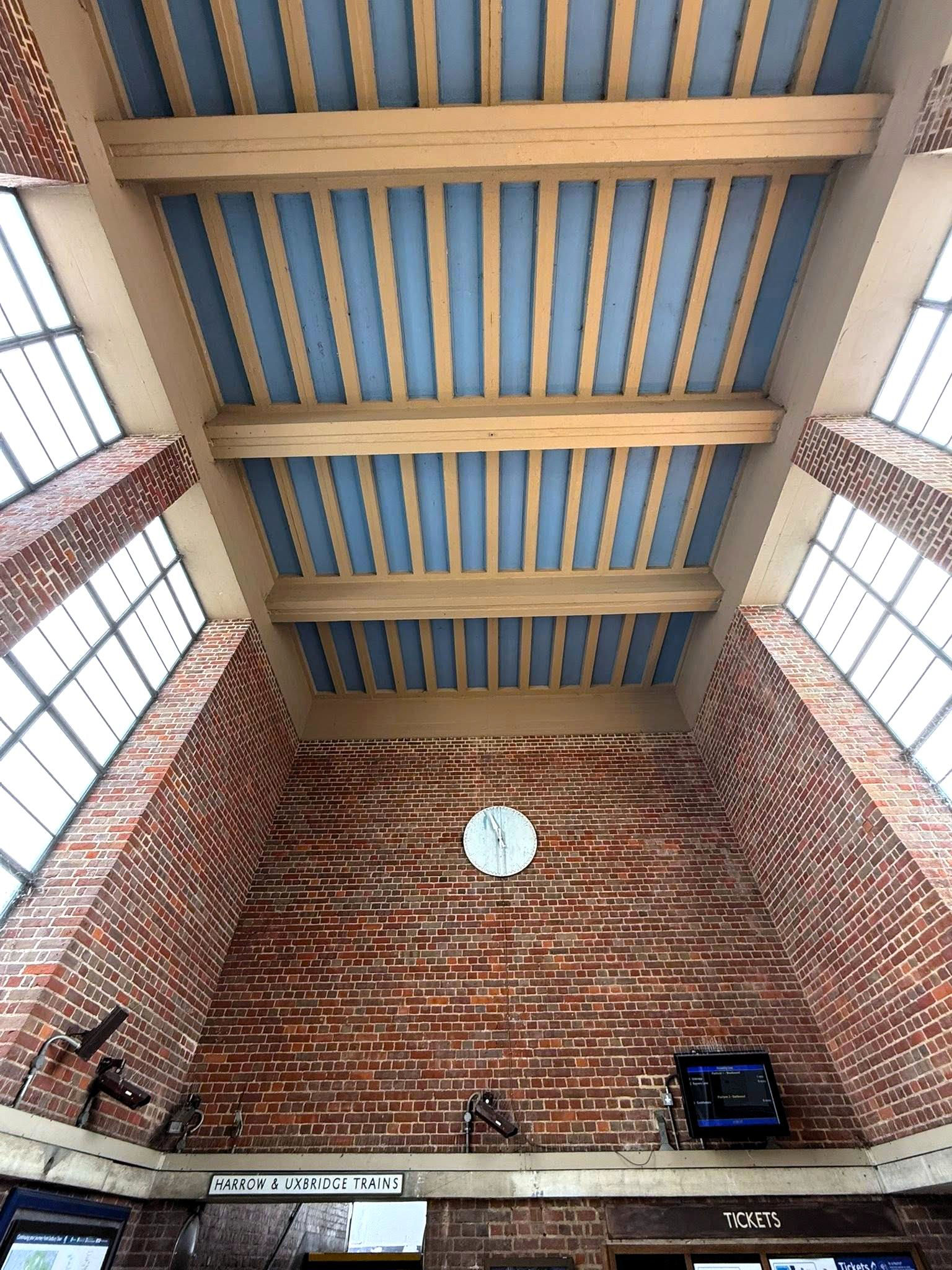
The ceiling in the entrance hall of Sudbury Town station.
[© Joe Brown 2025]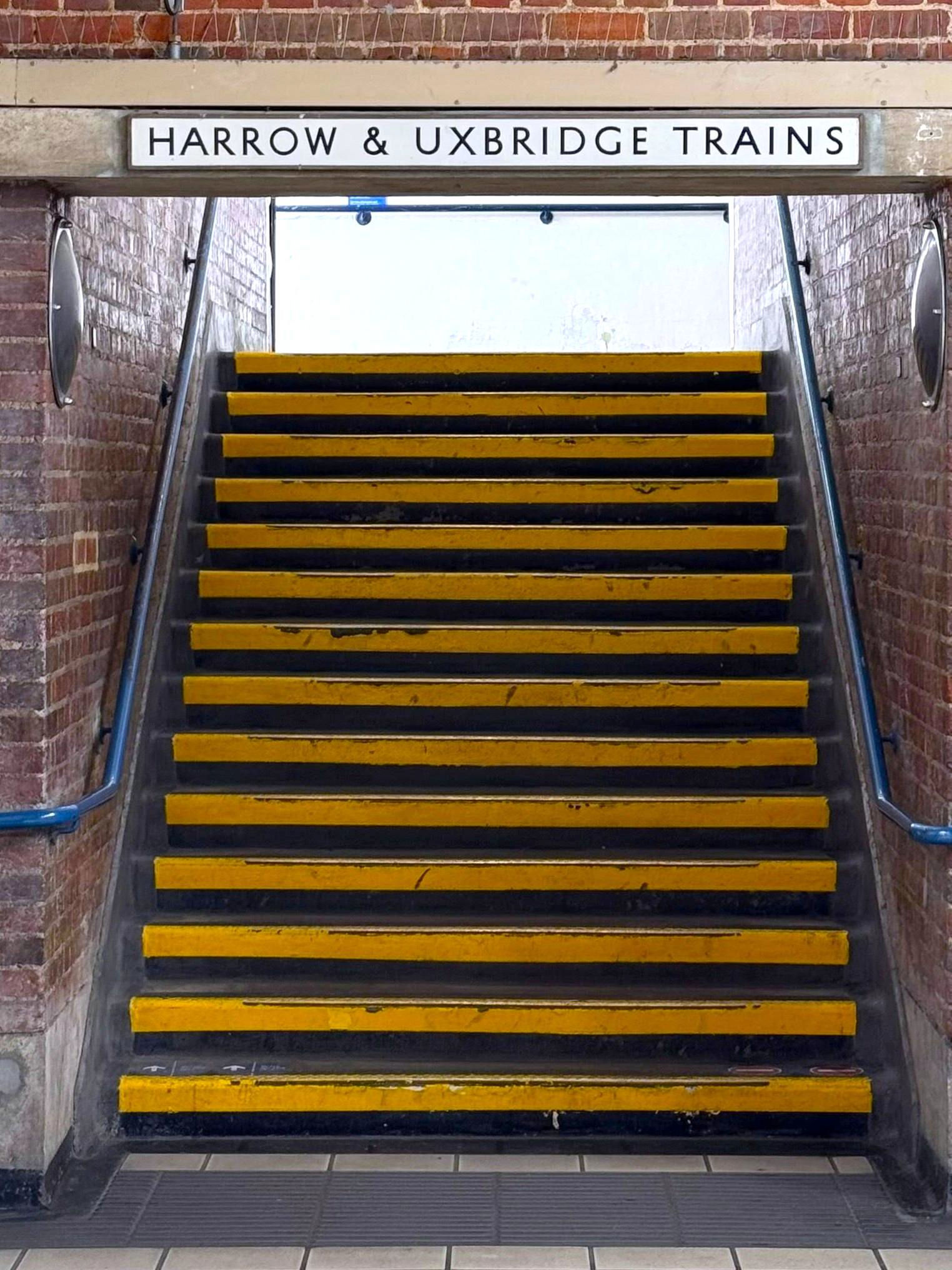
Steps to the Harrow & Uxbridge trains.
[© Joe Brown 2025]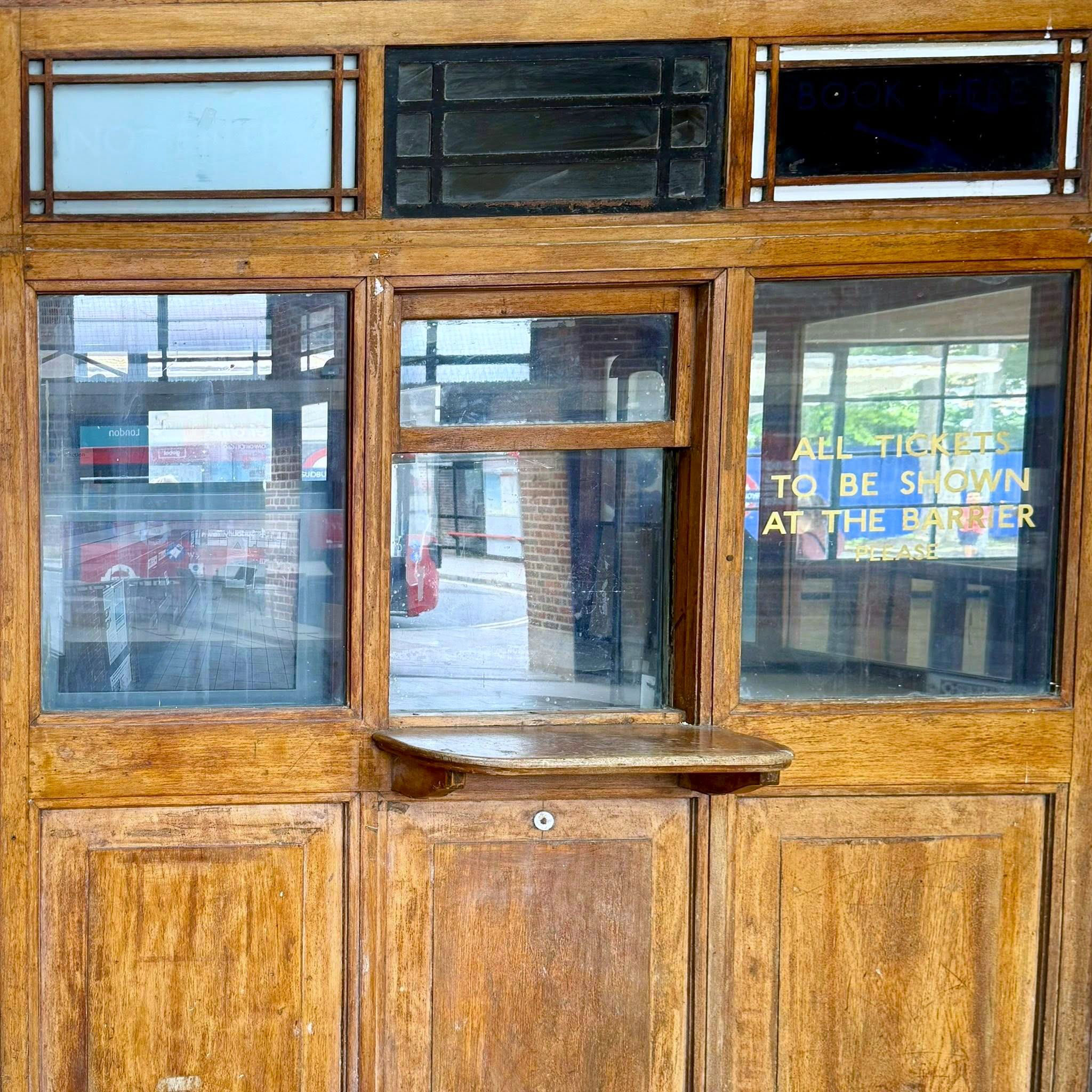
The ticket kiosk.
[© Joe Brown 2025]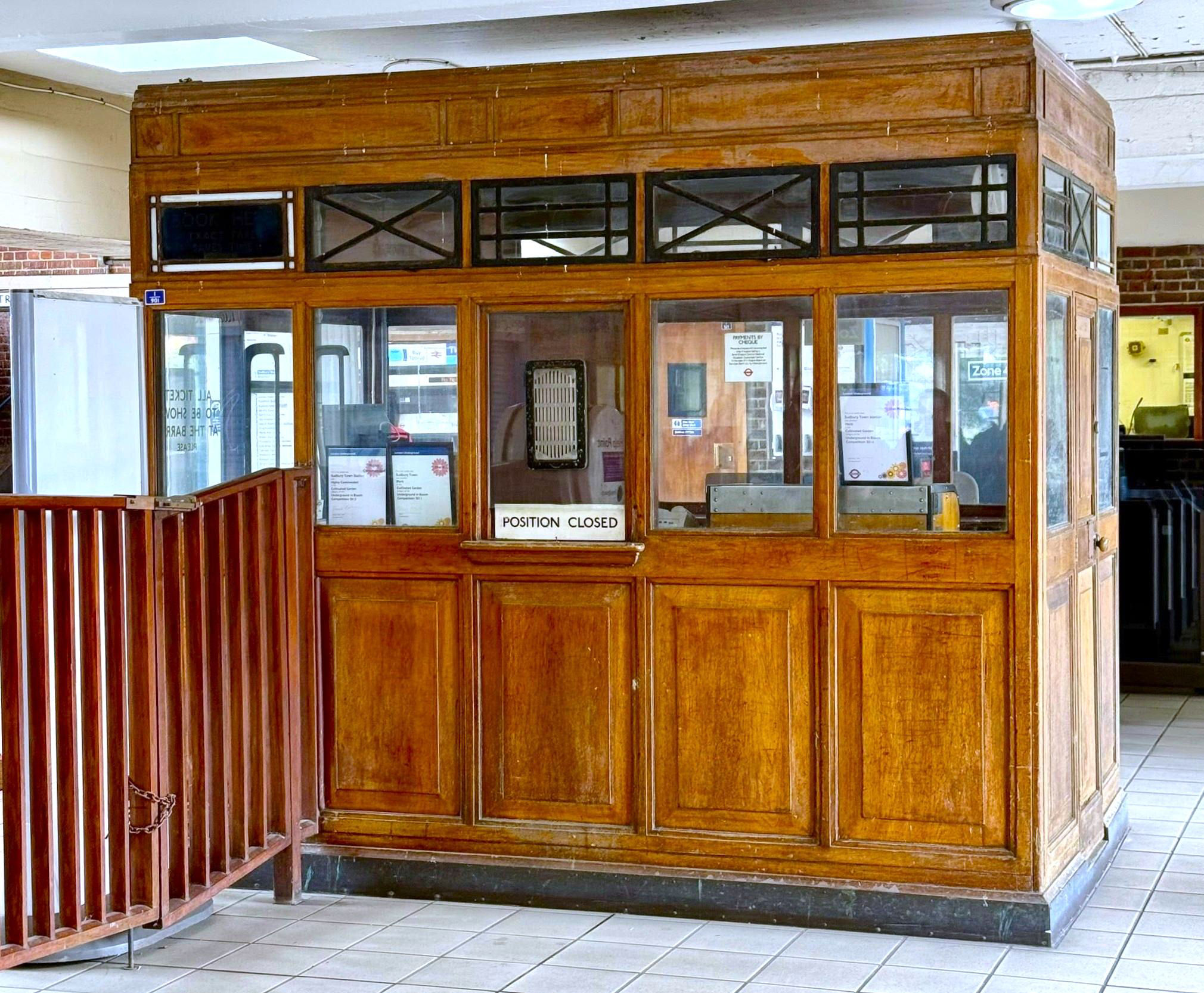
Another view of the ticket kiosk.
[© Joe Brown 2025]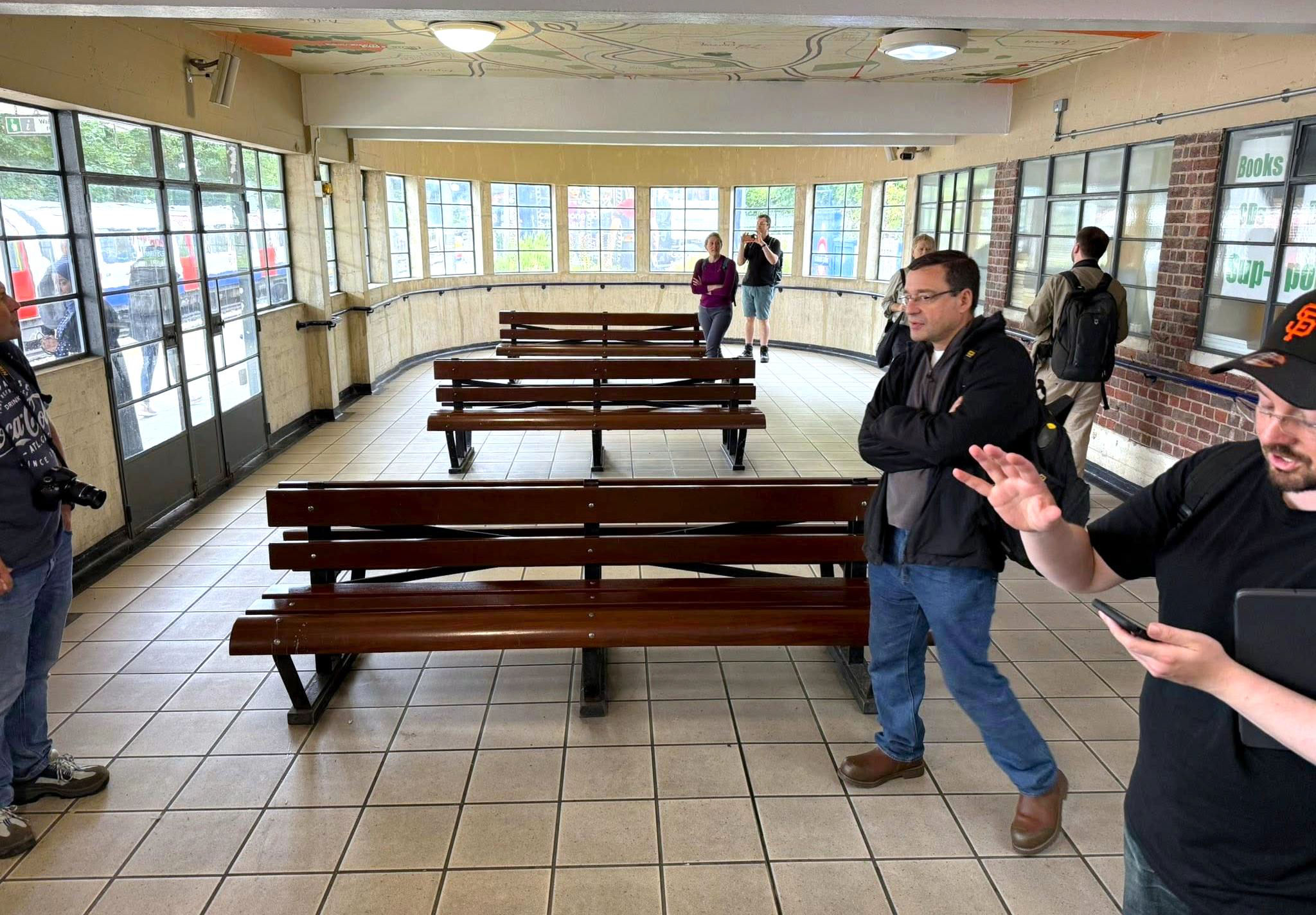
The waiting room.
[© Joe Brown 2025]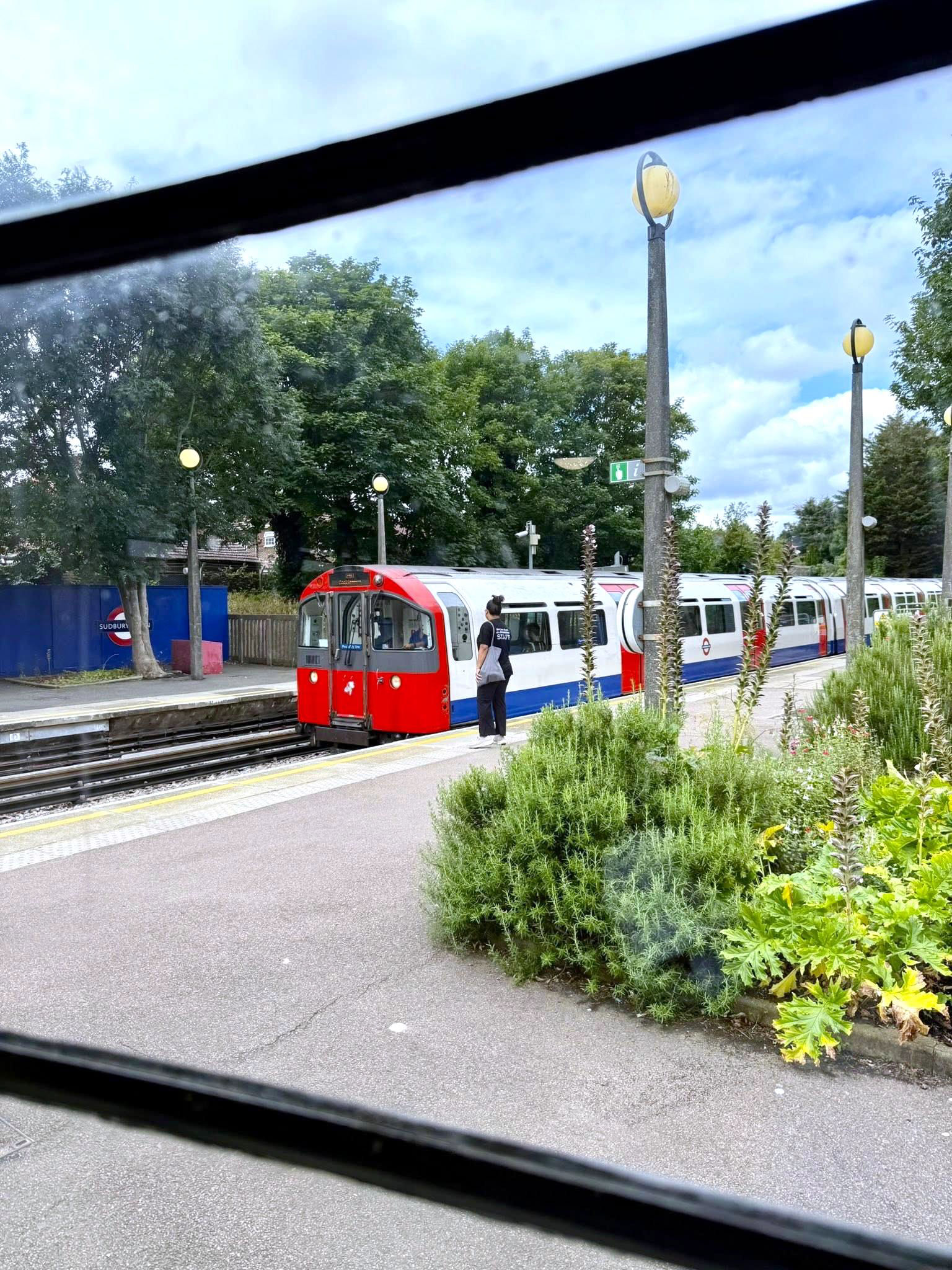
A view of a tube train from the waiting room.
[© Joe Brown 2025]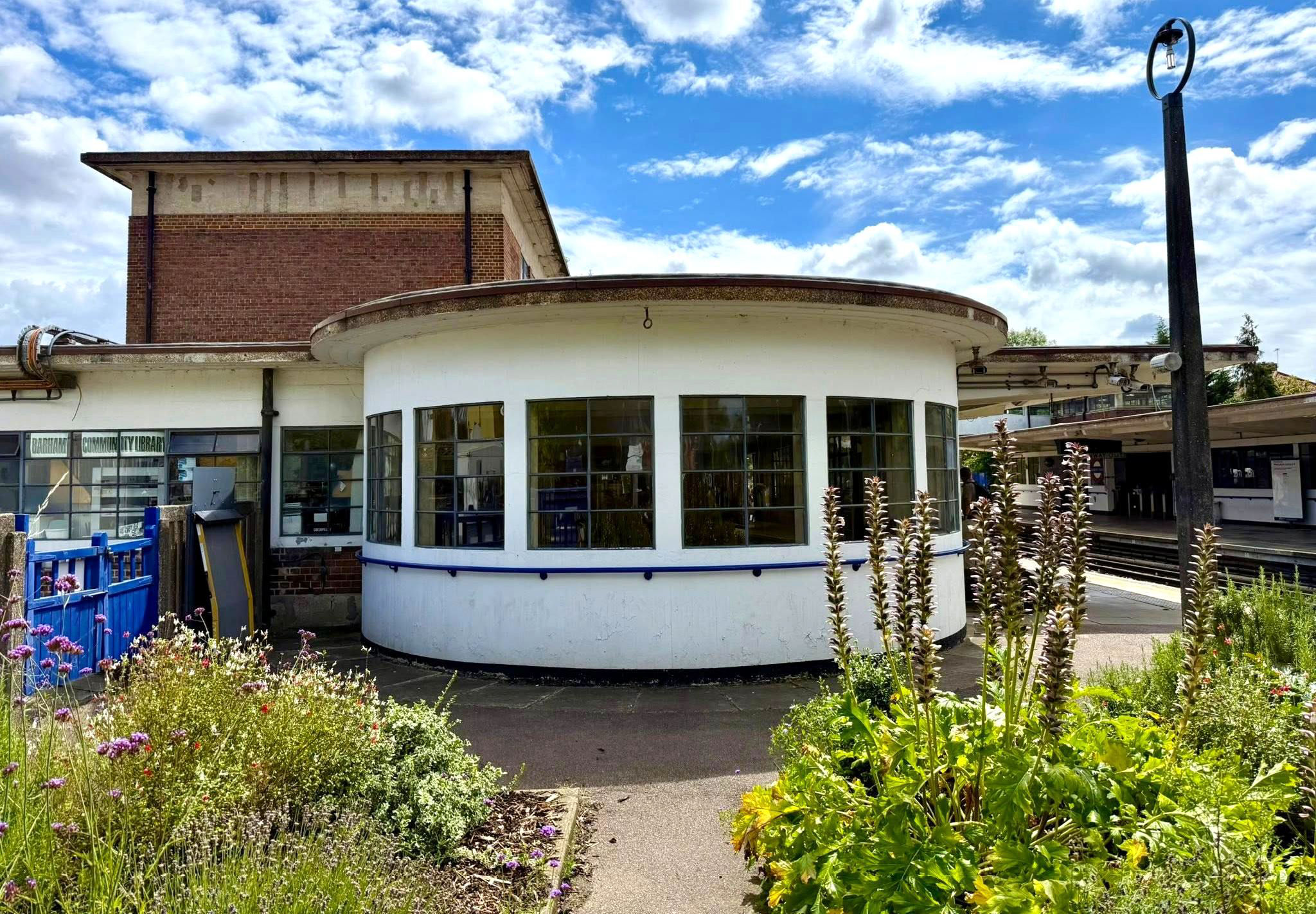
The outside of the waiting room.
[© Joe Brown 2025]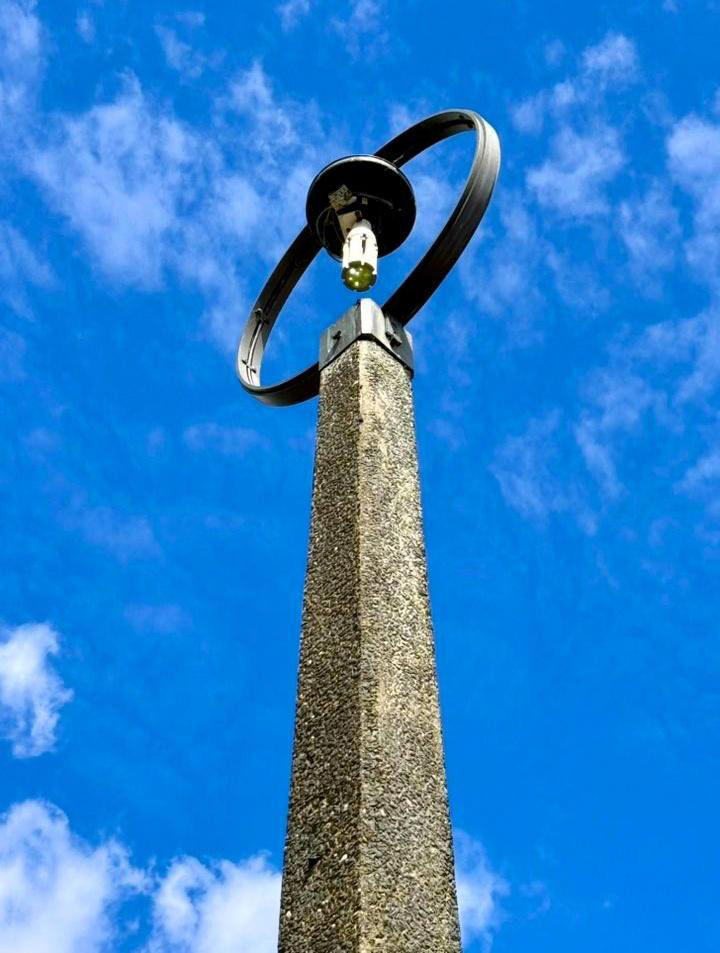
A close up of the lamp outside the waiting room.
[© Joe Brown 2025]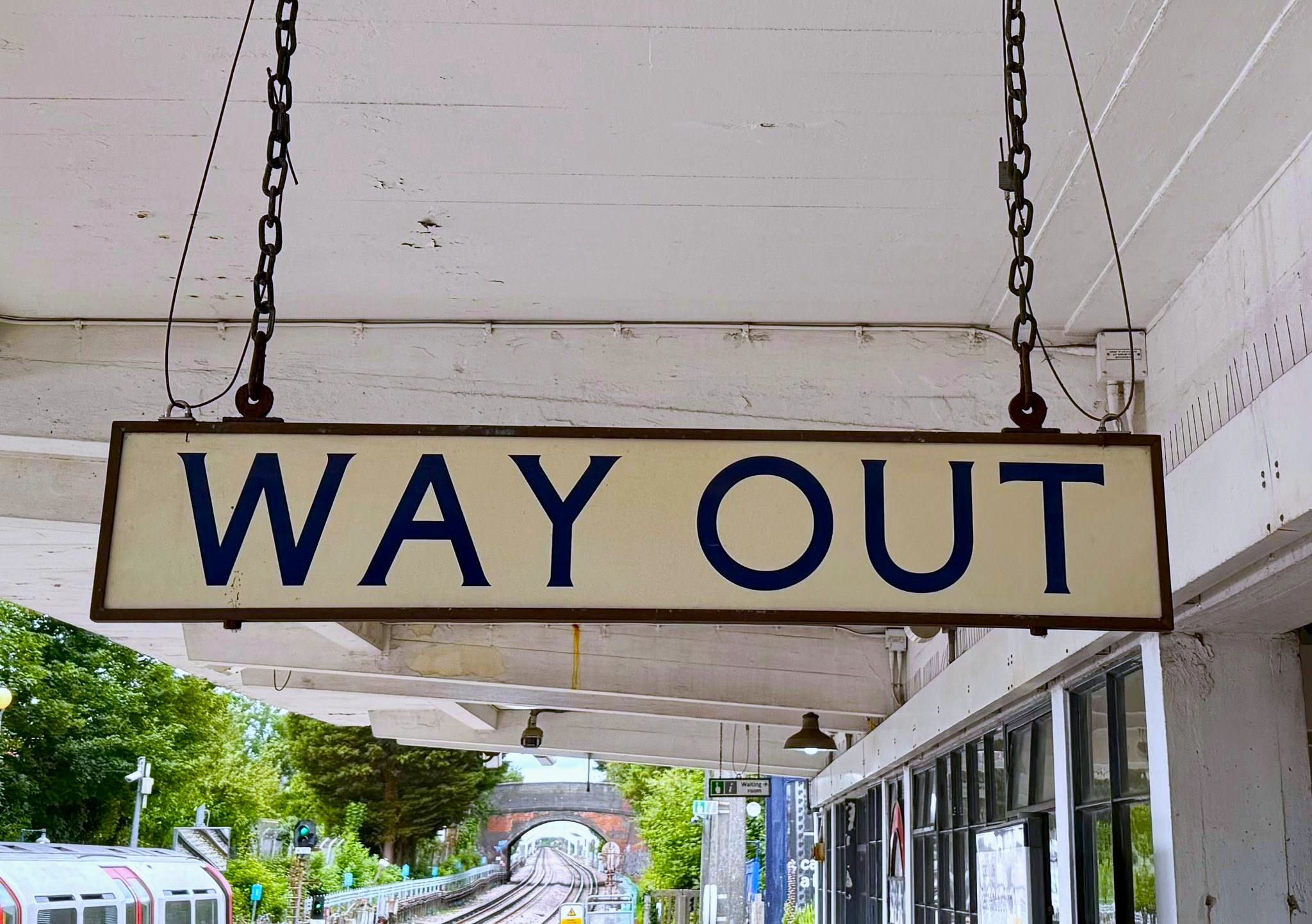
A way-out image.
[© Joe Brown 2025]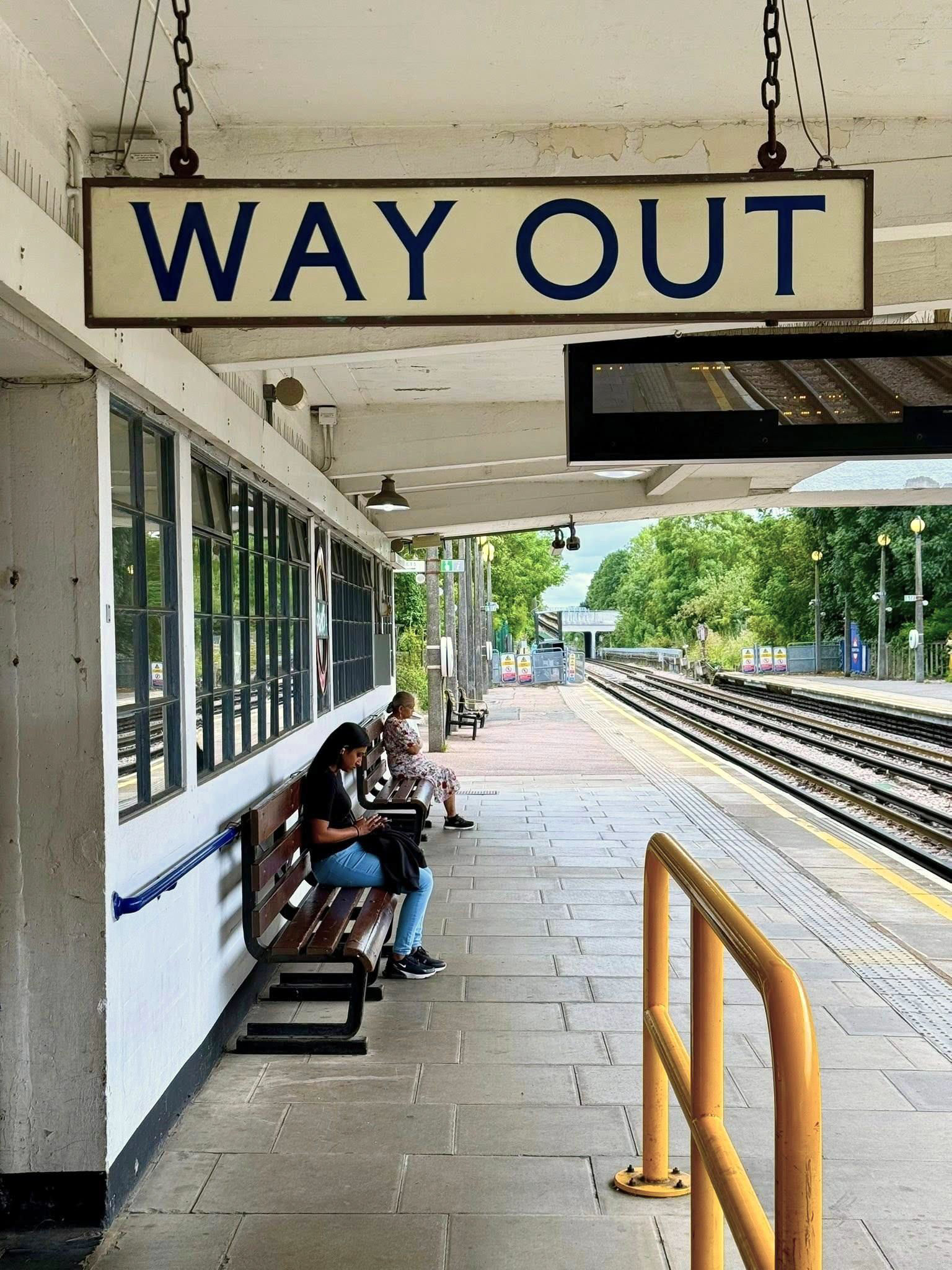
Another way out image.
[© Joe Brown 2025]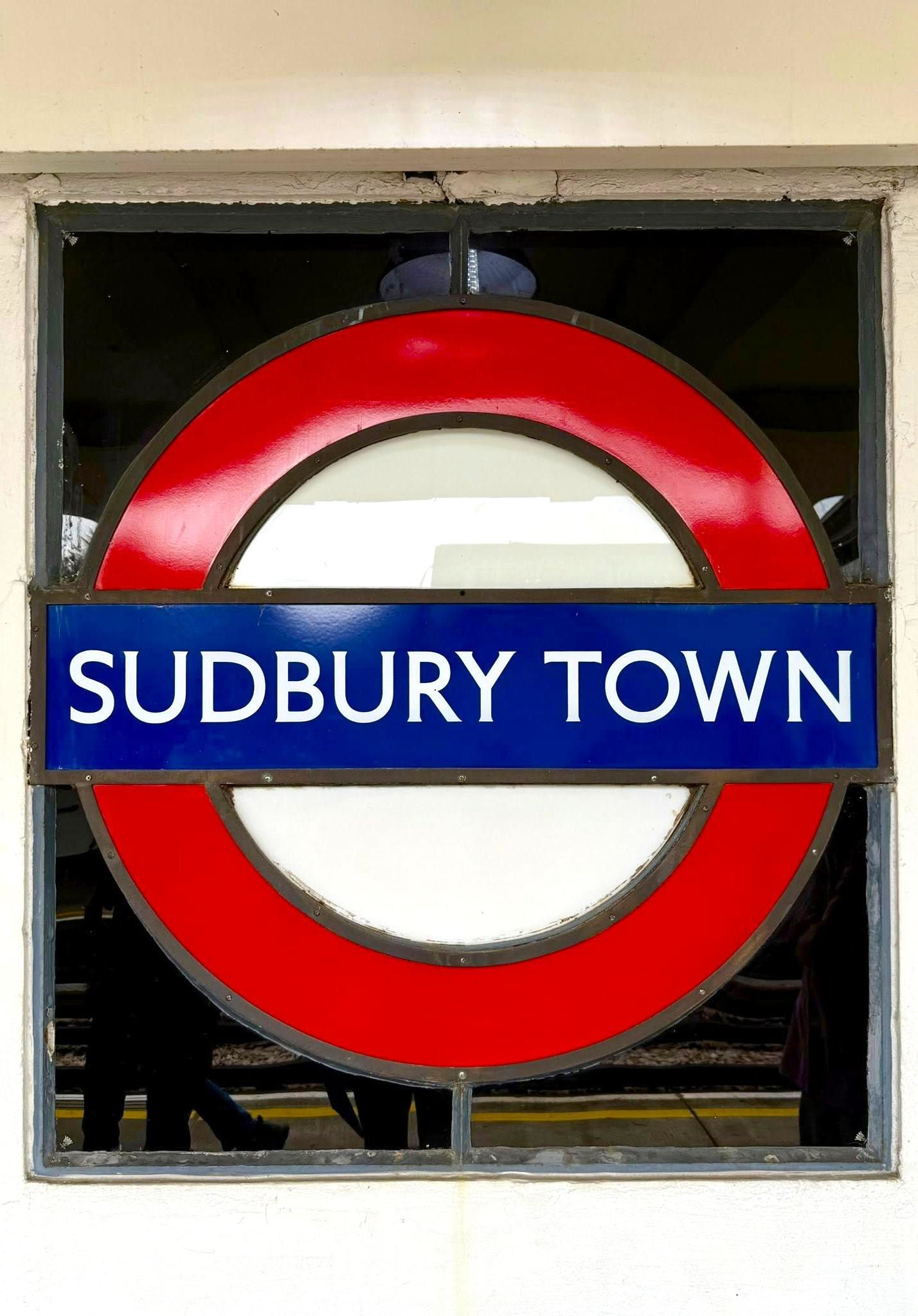
A Sudbury Town roundel with its unique font.
[© Joe Brown 2025]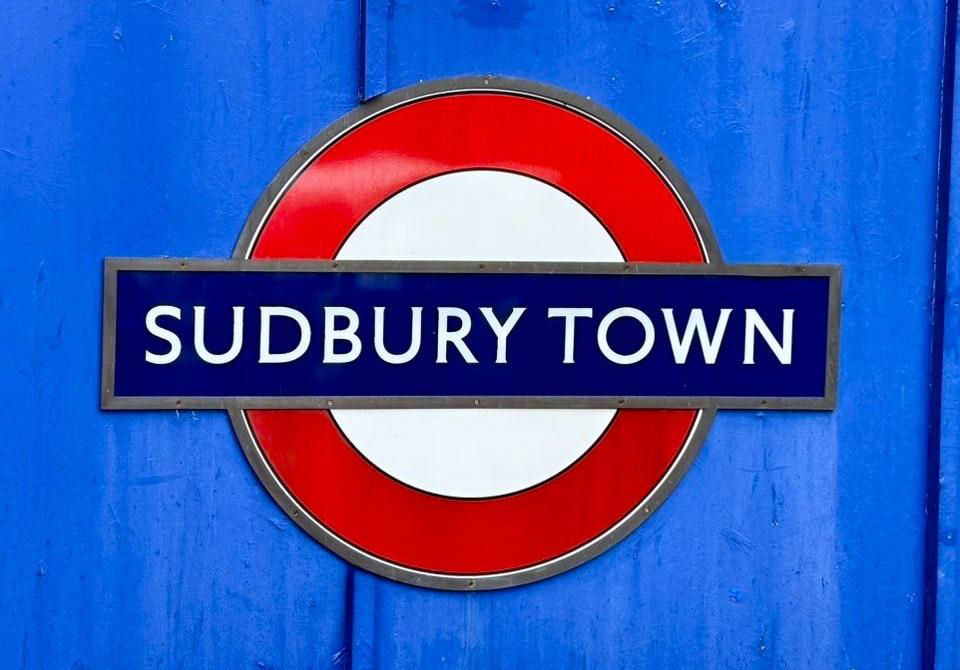
Another example of a Sudbury Town roundel with its unique font.
[© Joe Brown 2025]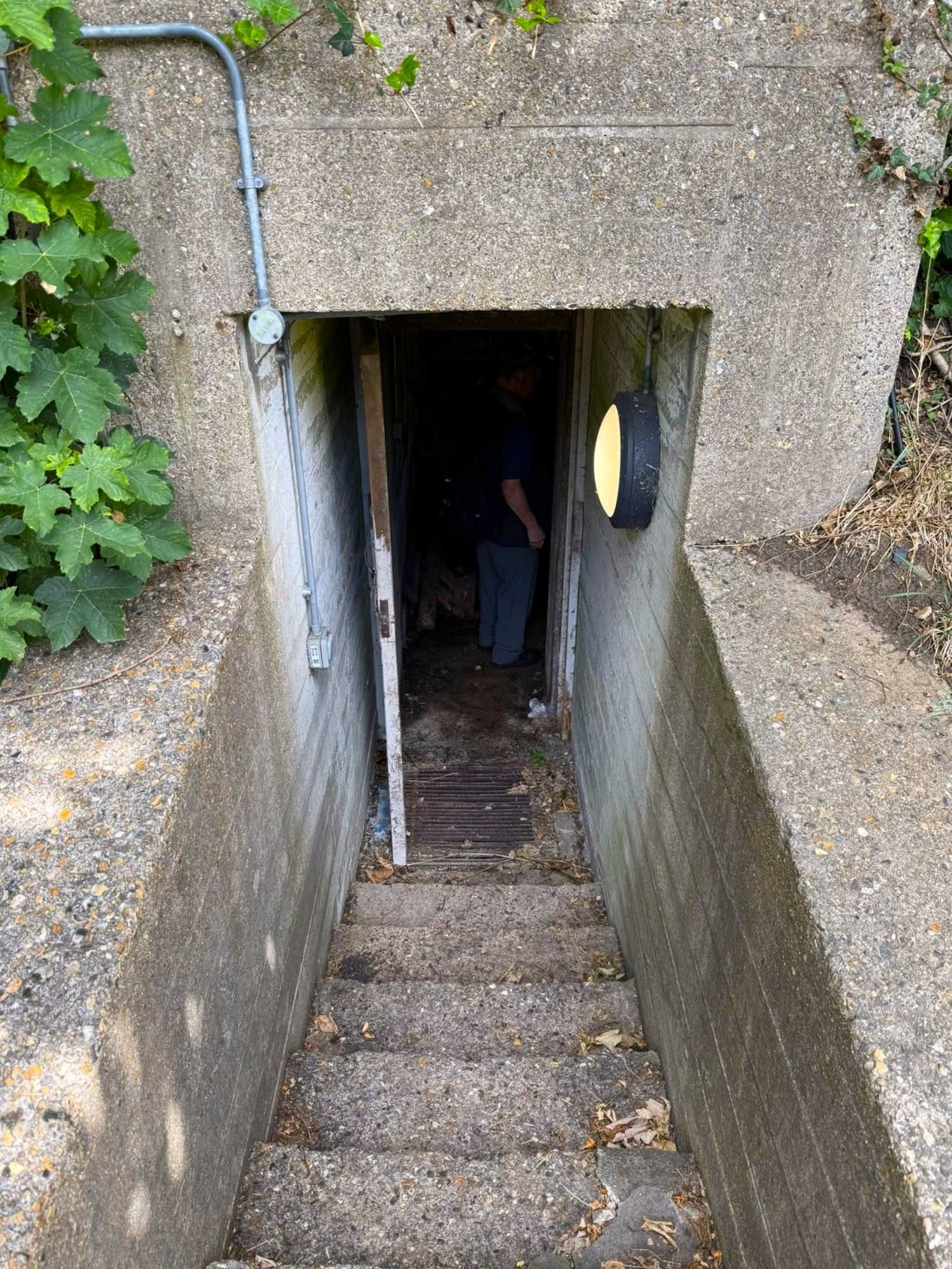
The World War II bunker.
[© Joe Brown 2025]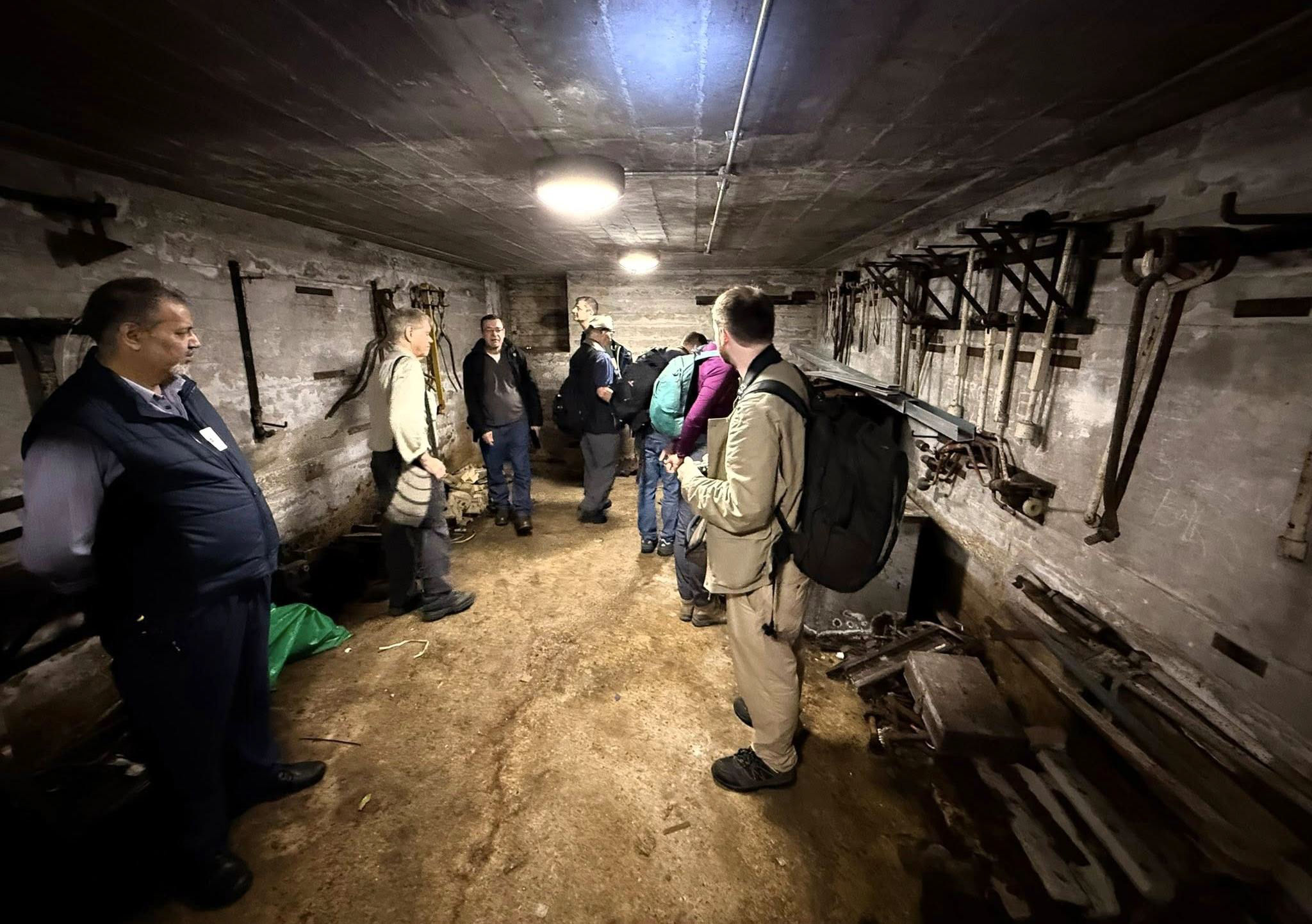
The inside of the bunker which is now used as a tool store.
[© Joe Brown 2025]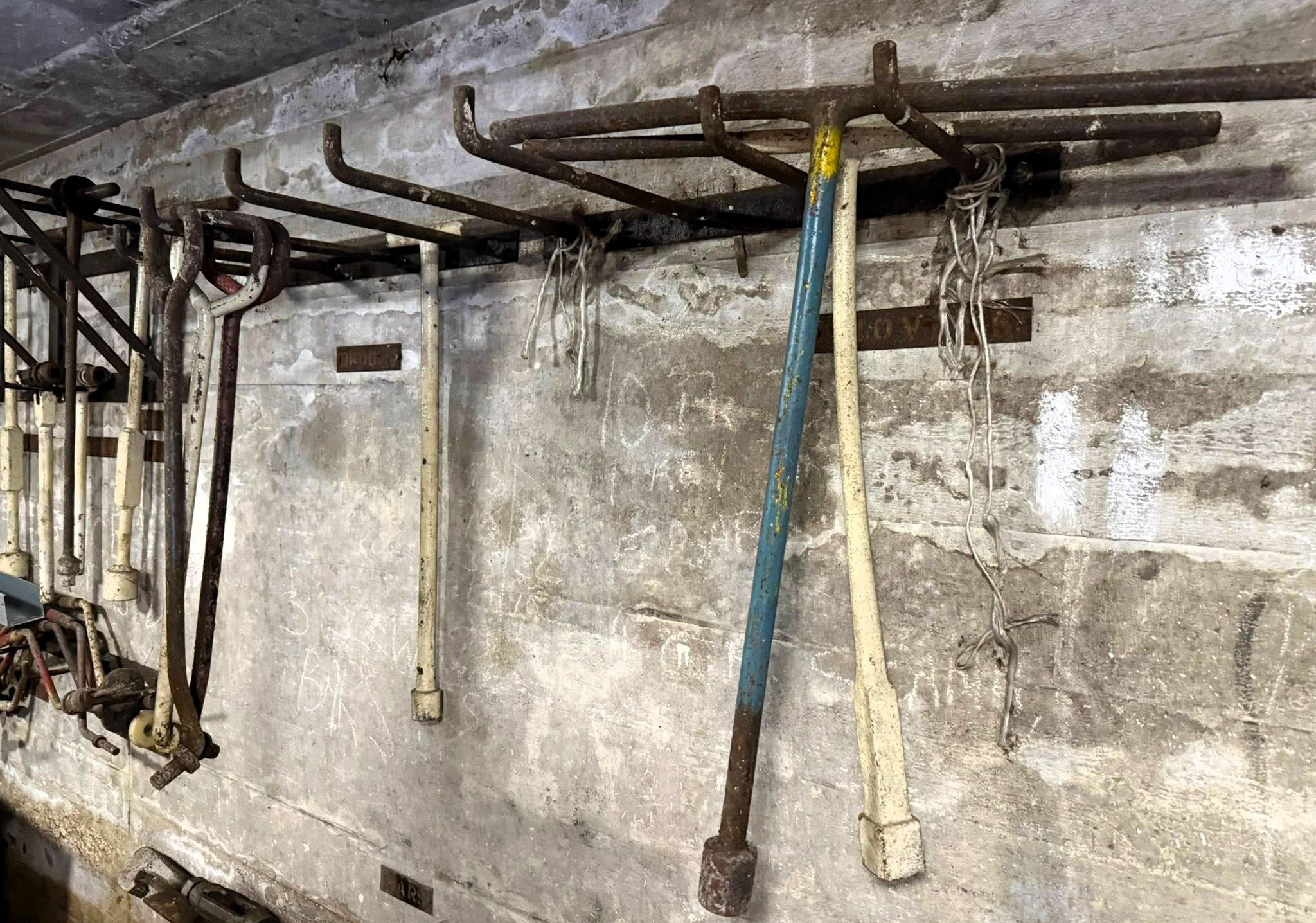
Some of the tools stored in the bunker.
[© Joe Brown 2025]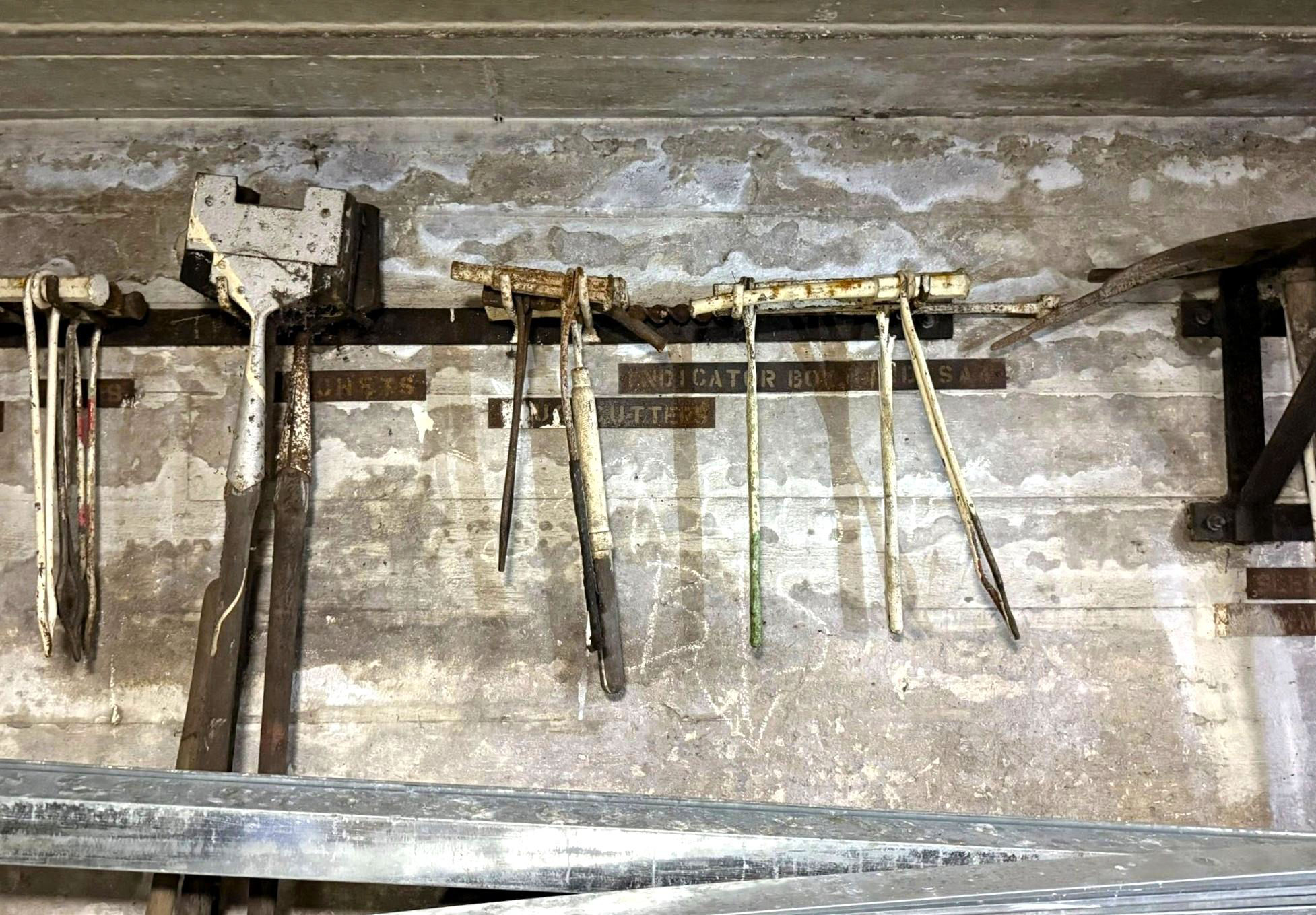
Some further tools stored in the bunker.
[© Joe Brown 2025]An even shorter hop took us one stop to Alperton station. Here we were able to view the final wooden escalator on the network (see BLN 1476.1691), also being the last of two that used to take passengers up to trains (the other was at Greenford) rather than down. Rob explained that it was originally installed in the Dome of Discovery at the South Bank Exhibition during the 1951 Festival of Britain. It was later purchased by the London Transport Executive (as then) and installed at Alperton in late 1955. Again, the two-group system was used. Firstly, we saw the escalator itself, complete with adverts dating from 1988 when it was taken out of service. Then we glimpsed below at the cogs and wheels, usually out of sight.
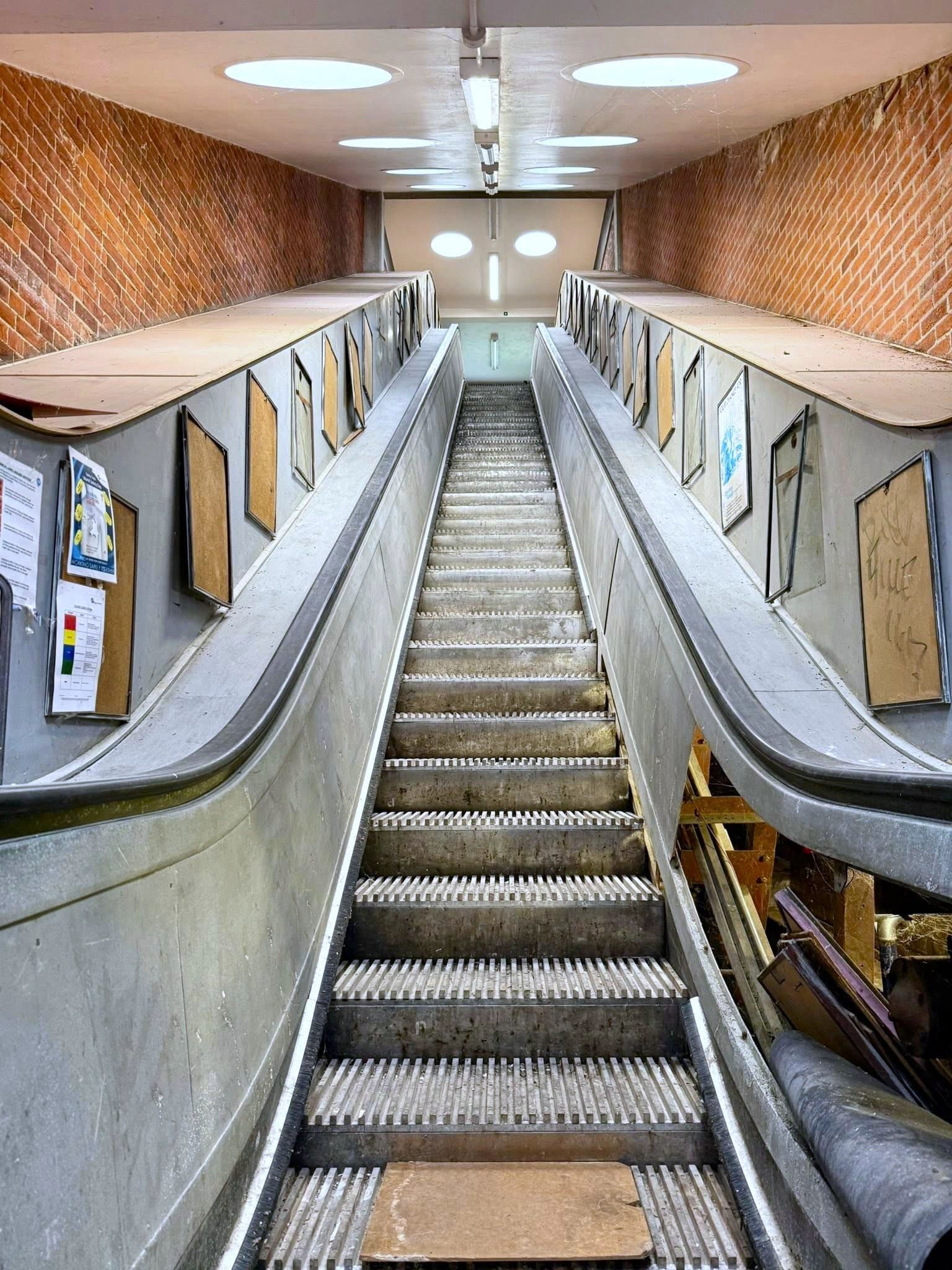
The final wooden escalator on the network at Alperton station.
[© Joe Brown 2025]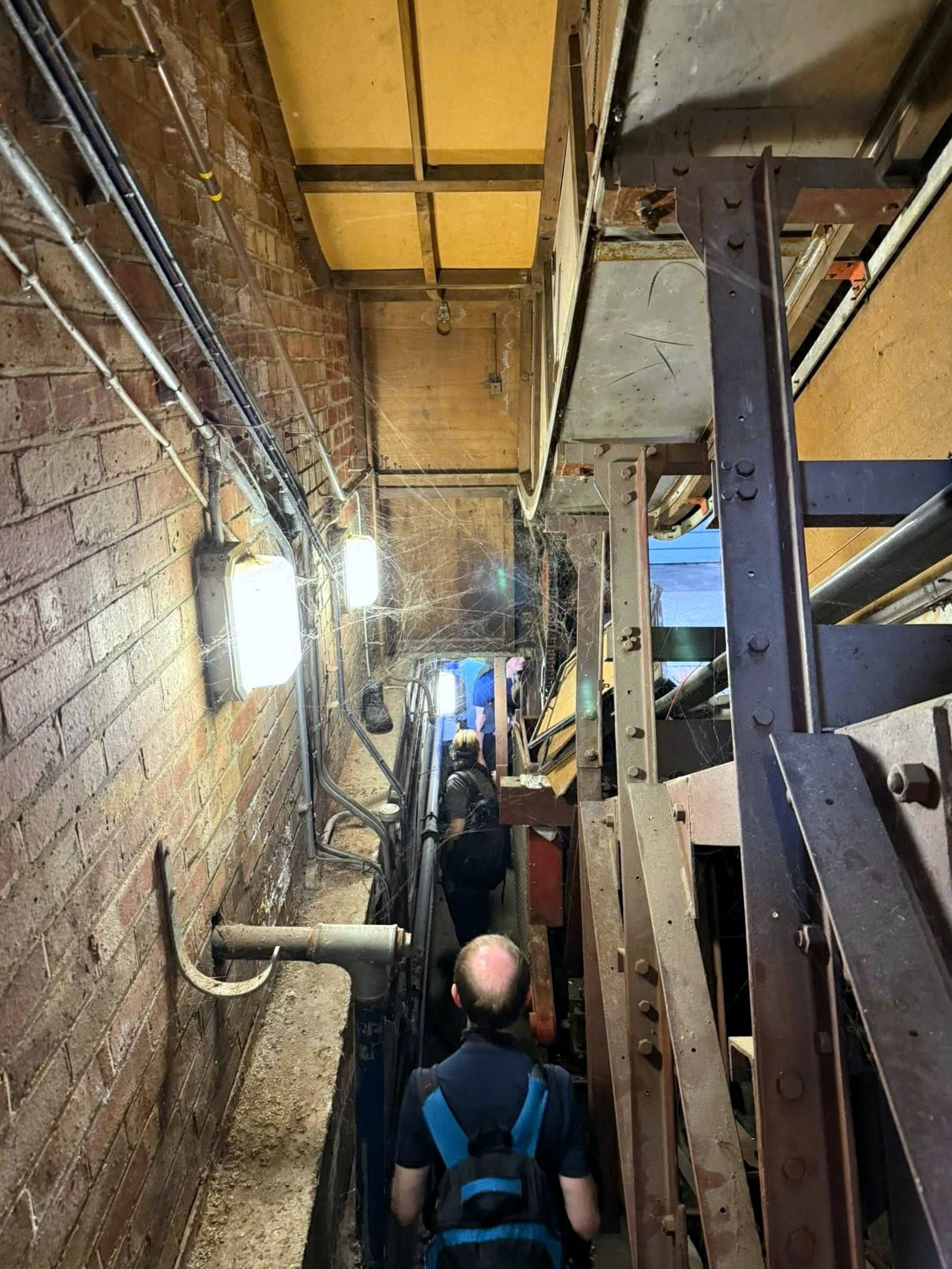
Exploring behind the final wooden escalator on the network.
[© Joe Brown 2025]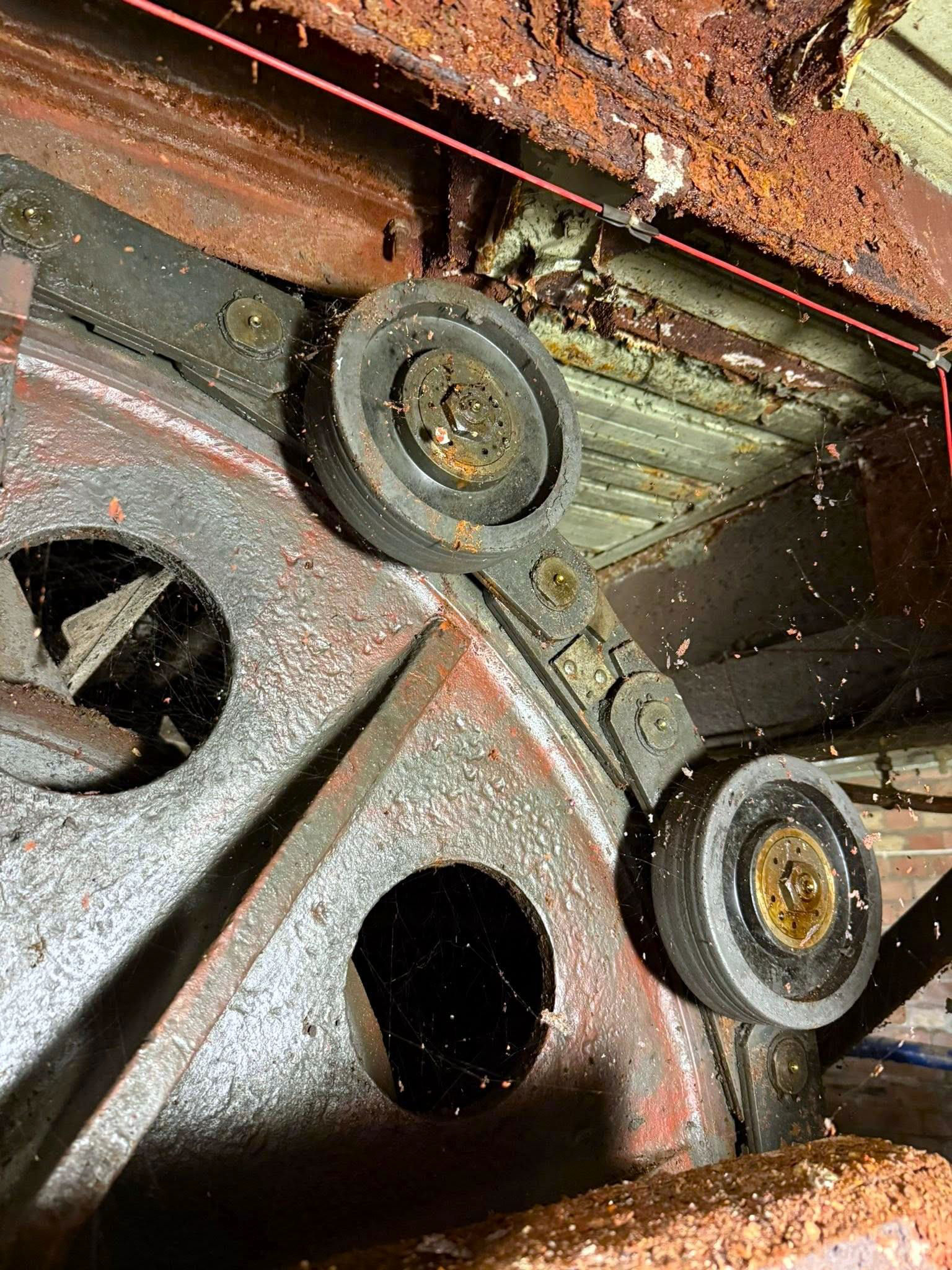
Part of the escalator mechanism.
[© Joe Brown 2025]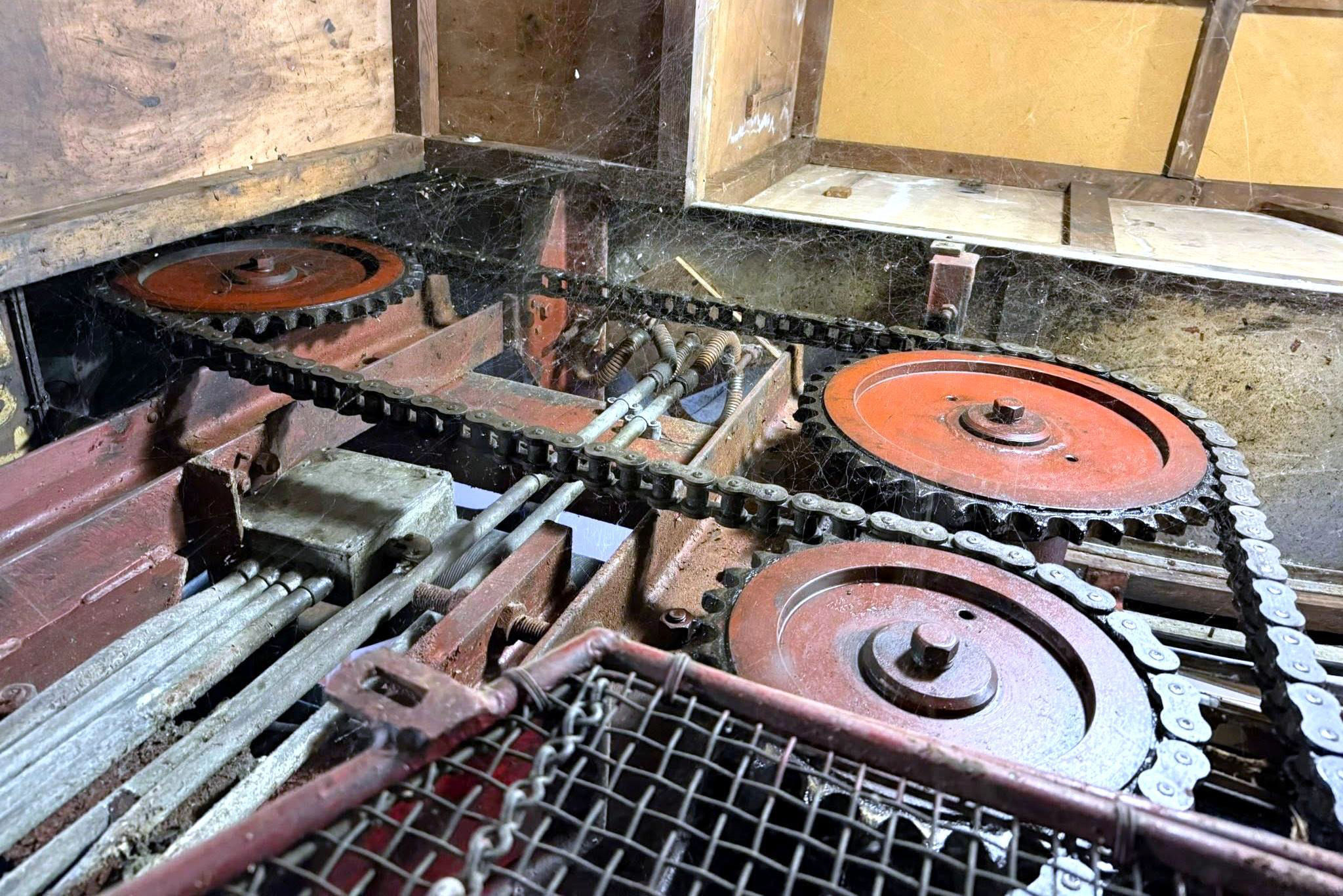
More of the escalator mechanism.
[© Joe Brown 2025]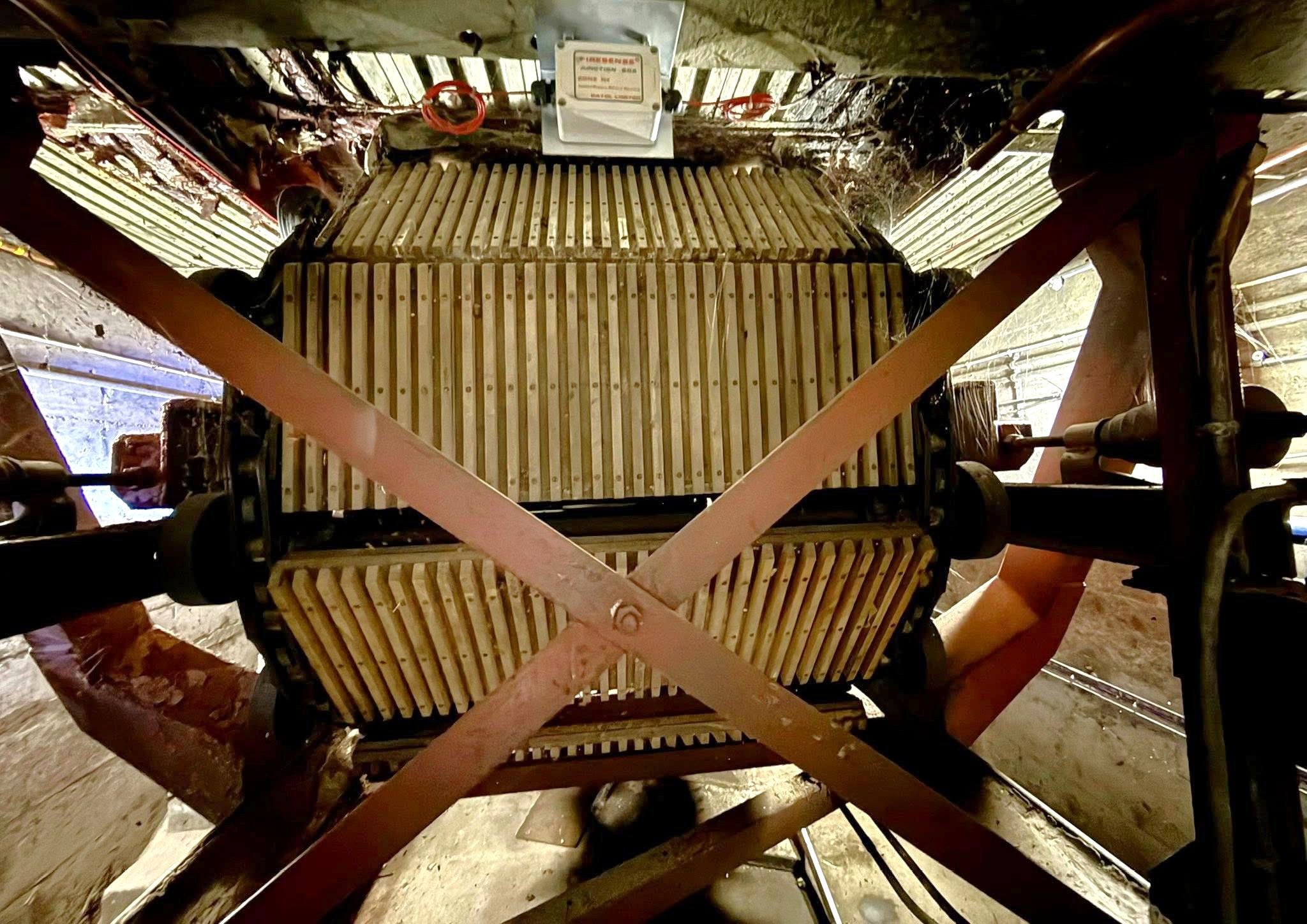
An unusual view of the steps on the escalator.
[© Joe Brown 2025]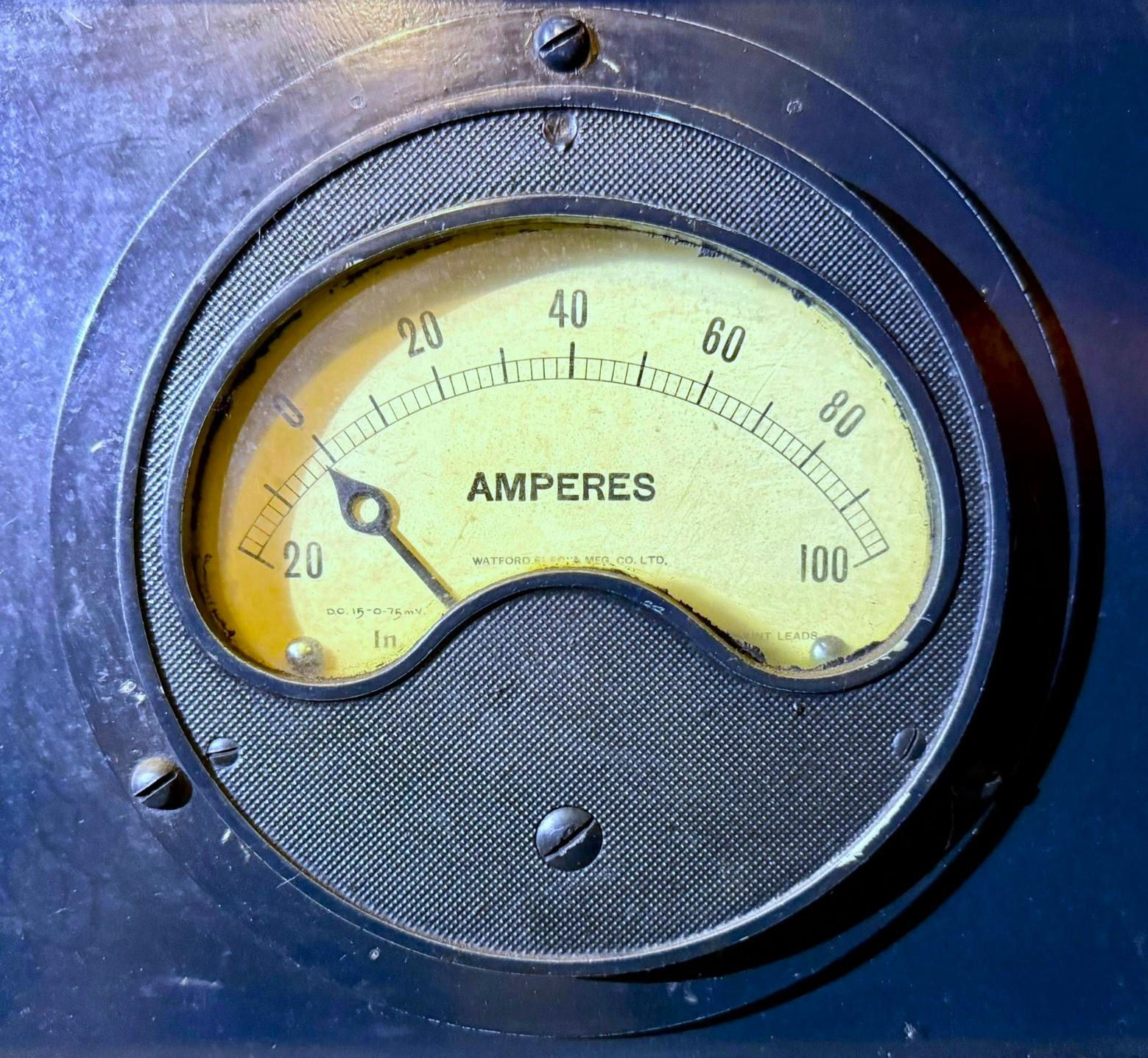
Amp meter for the escalator.
[© Joe Brown 2025]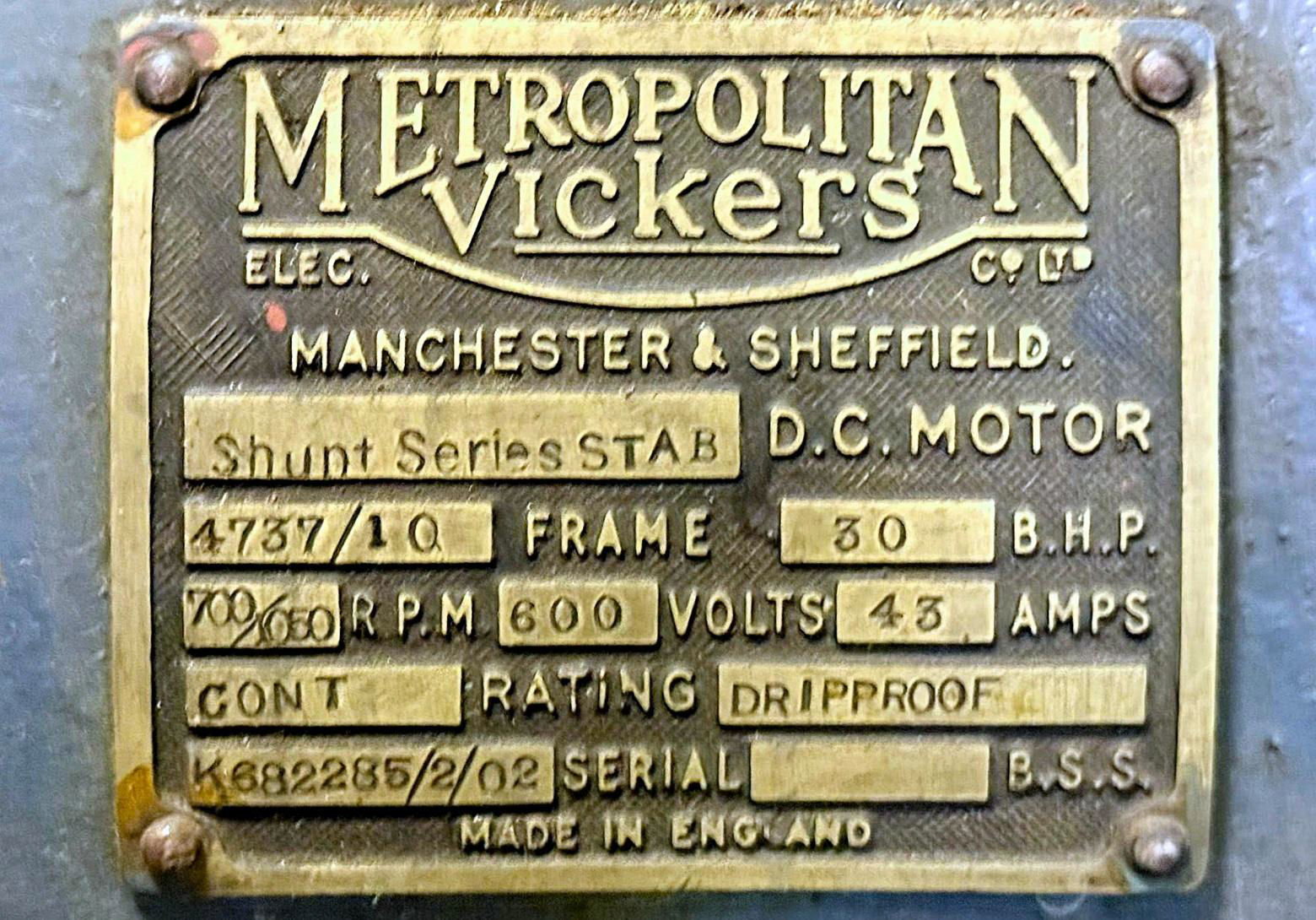
The Metropolitan Vickers works plate.
[© Joe Brown 2025]Continuing in the same direction, our next port of call was Ealing Common, the stop before Acton Town to see another WWII bunker, this well hidden one was not being used as a tool shed!
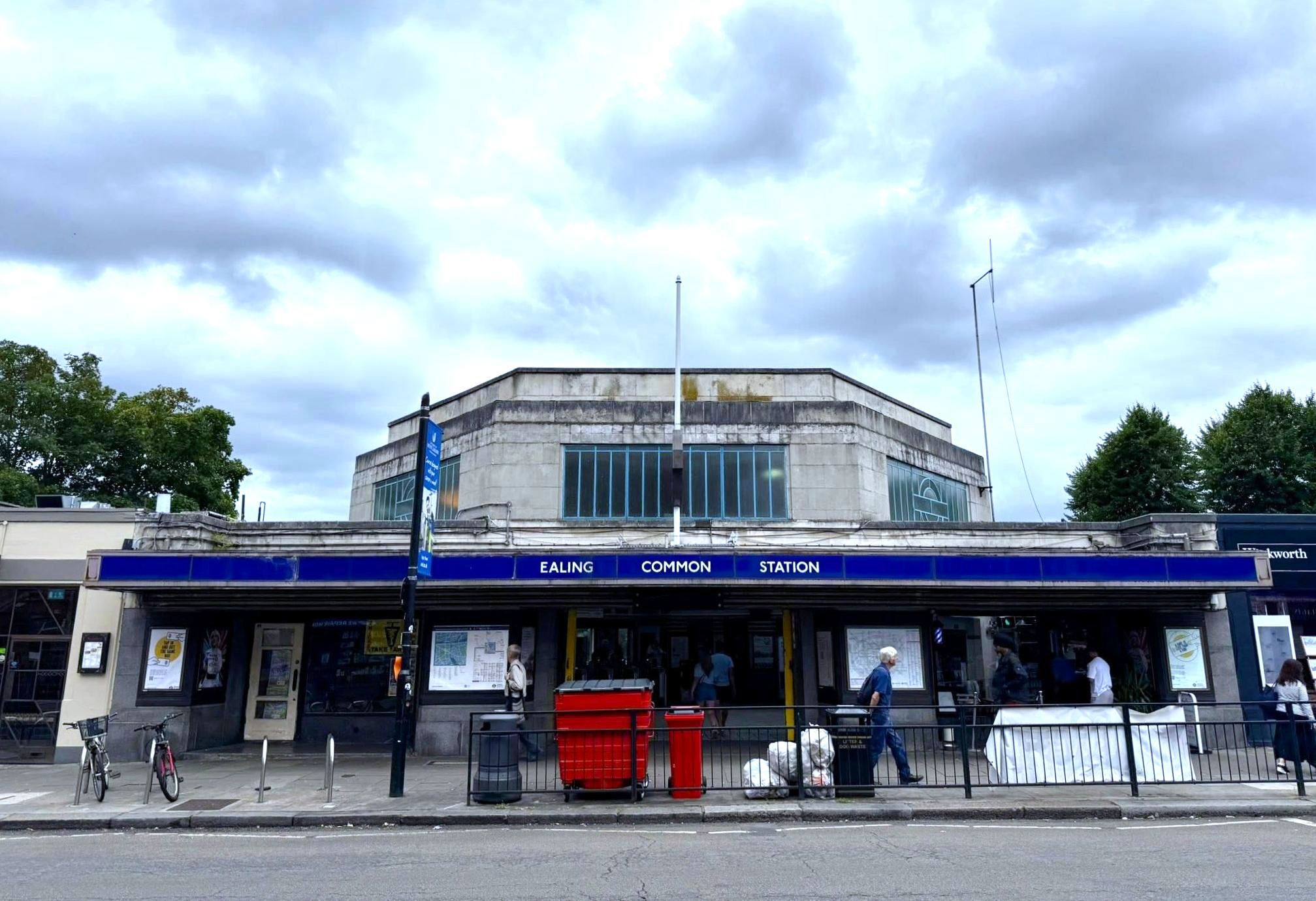
Ealing Common station.
[© Joe Brown 2025]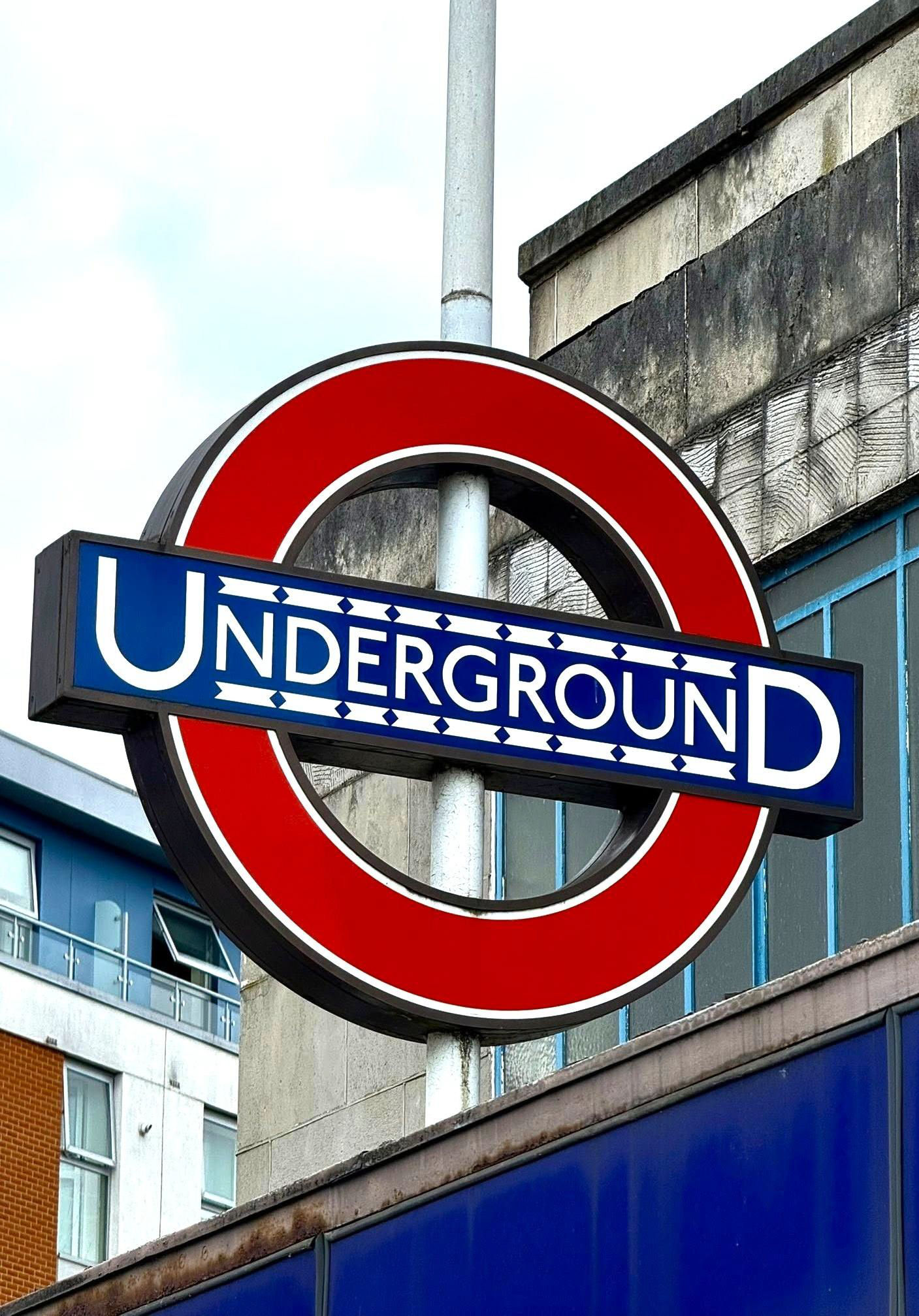
The Underground roundel at Ealing Common station.
[© Joe Brown 2025]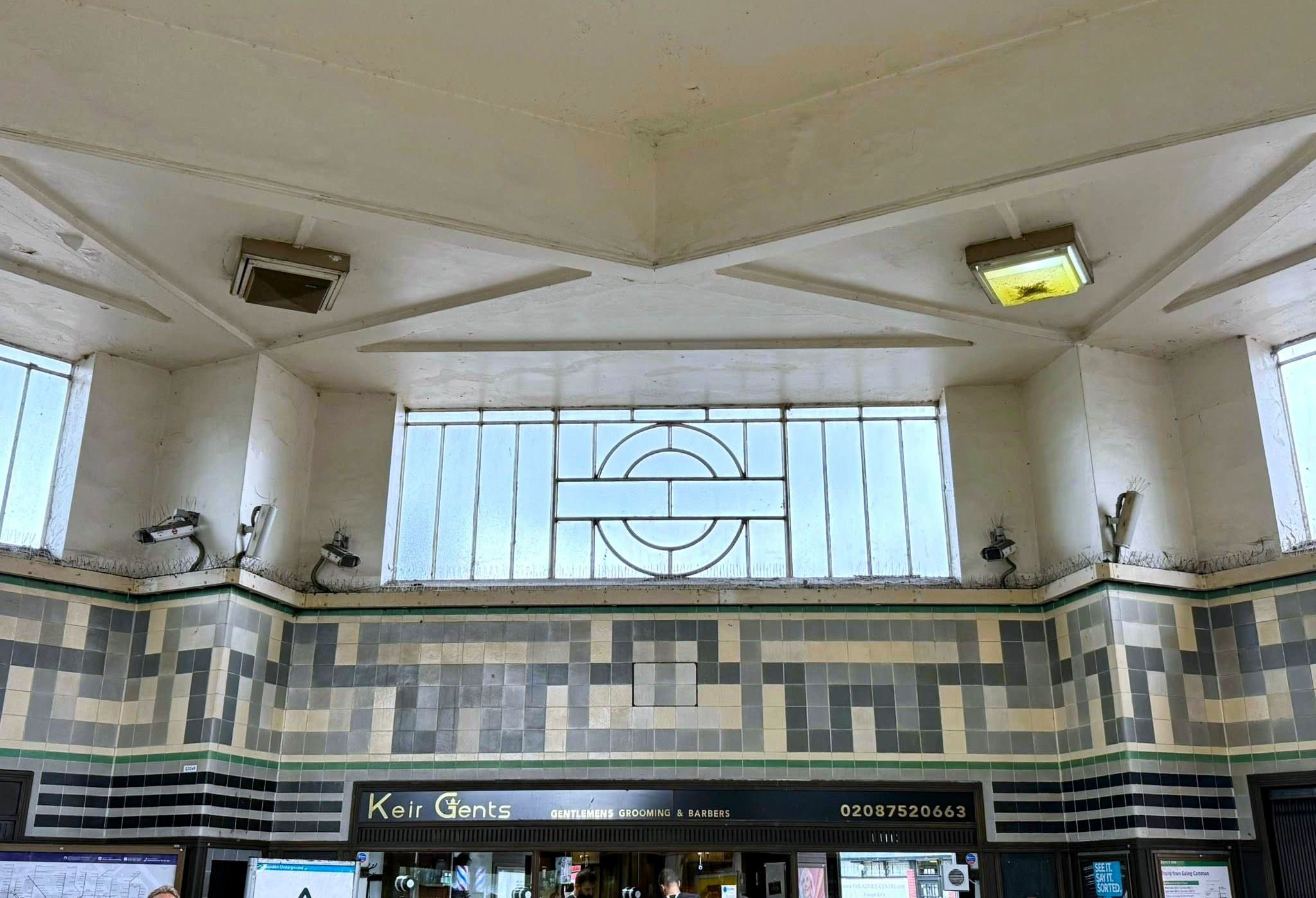
The ceiling of the entrance hall at Ealing Common station.
[© Joe Brown 2025]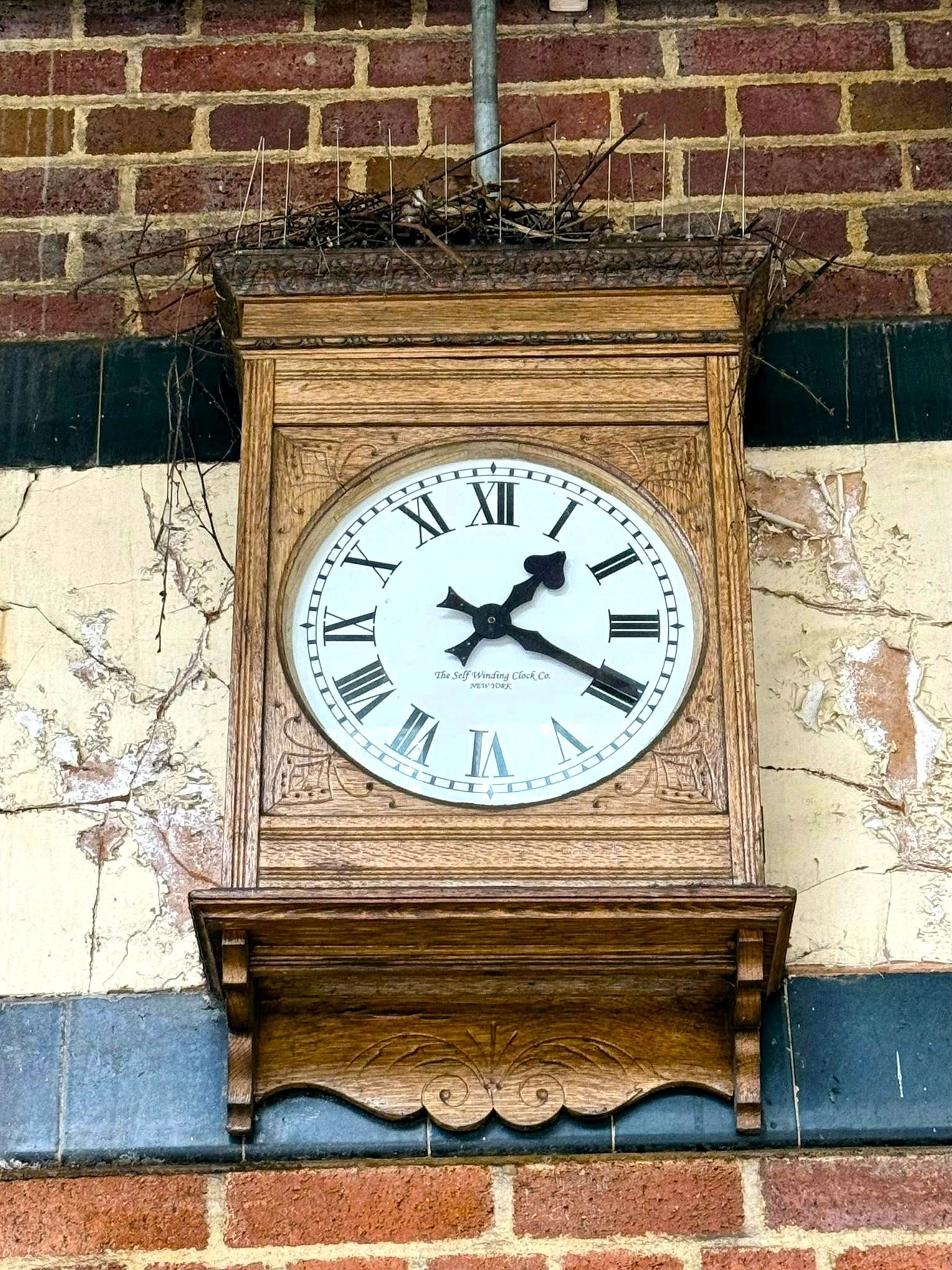
One of the ornate clocks.
[© Joe Brown 2025]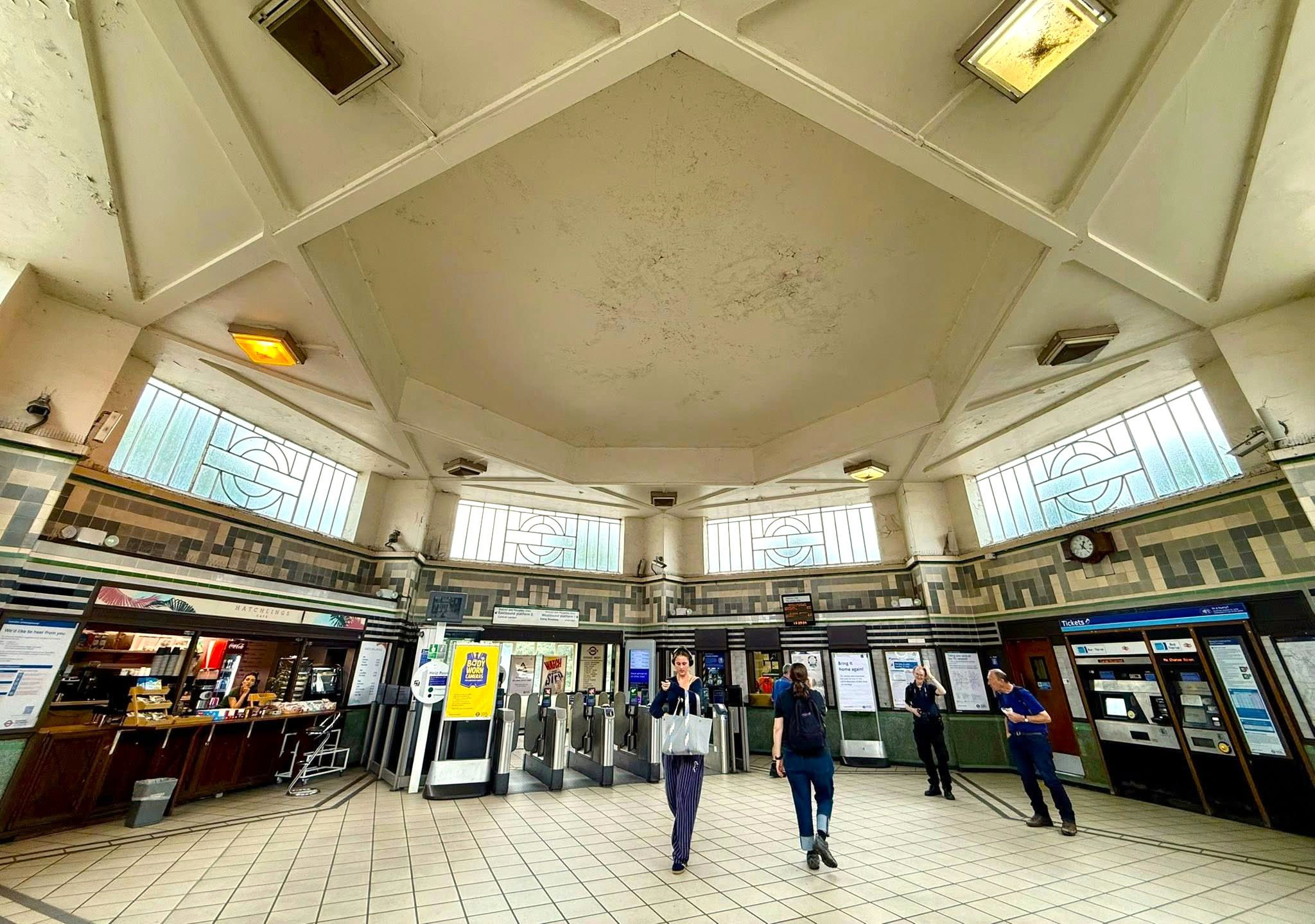
Another view of the entrance hall.
[© Joe Brown 2025]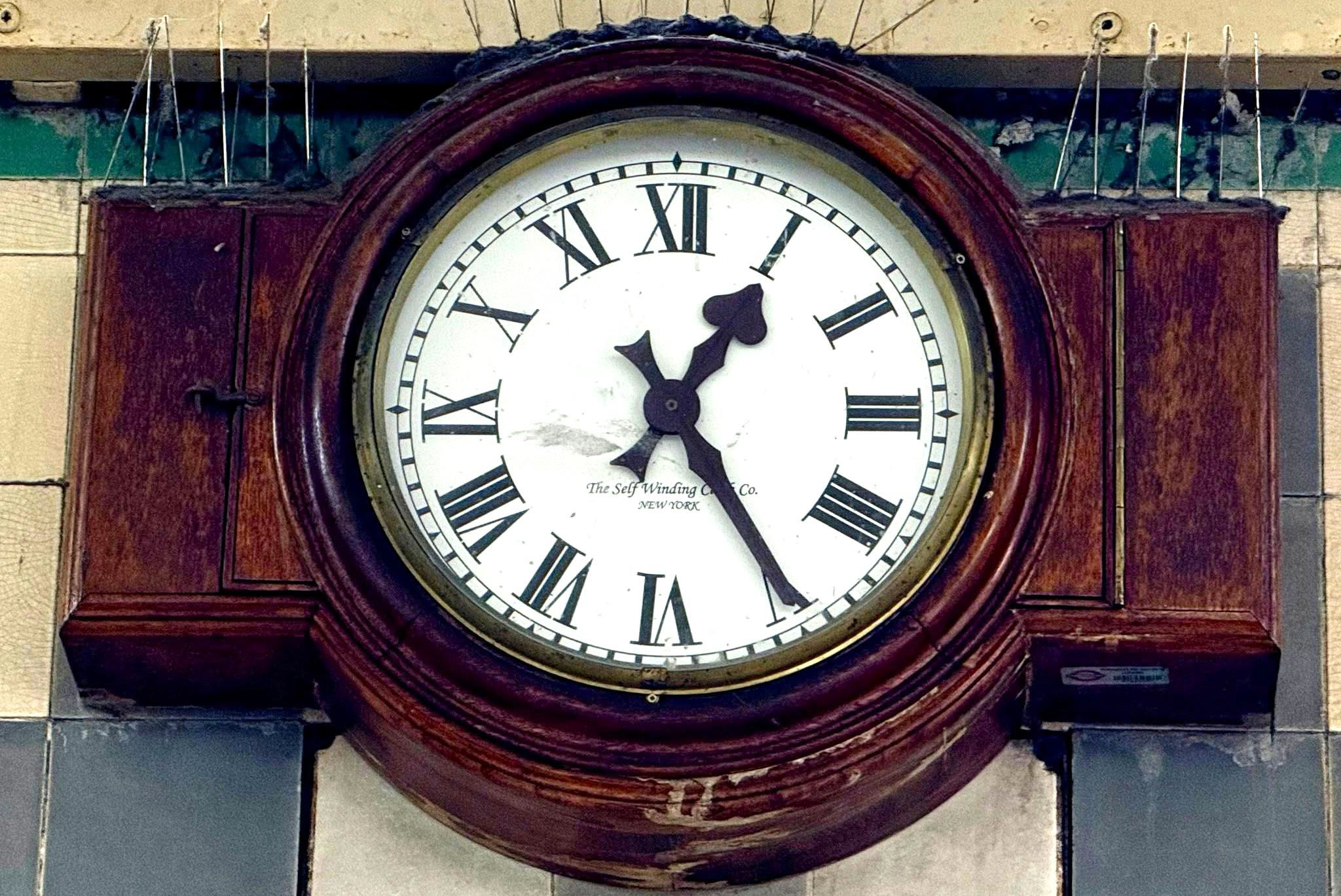
Another one of the ornamental clocks.
[© Joe Brown 2025]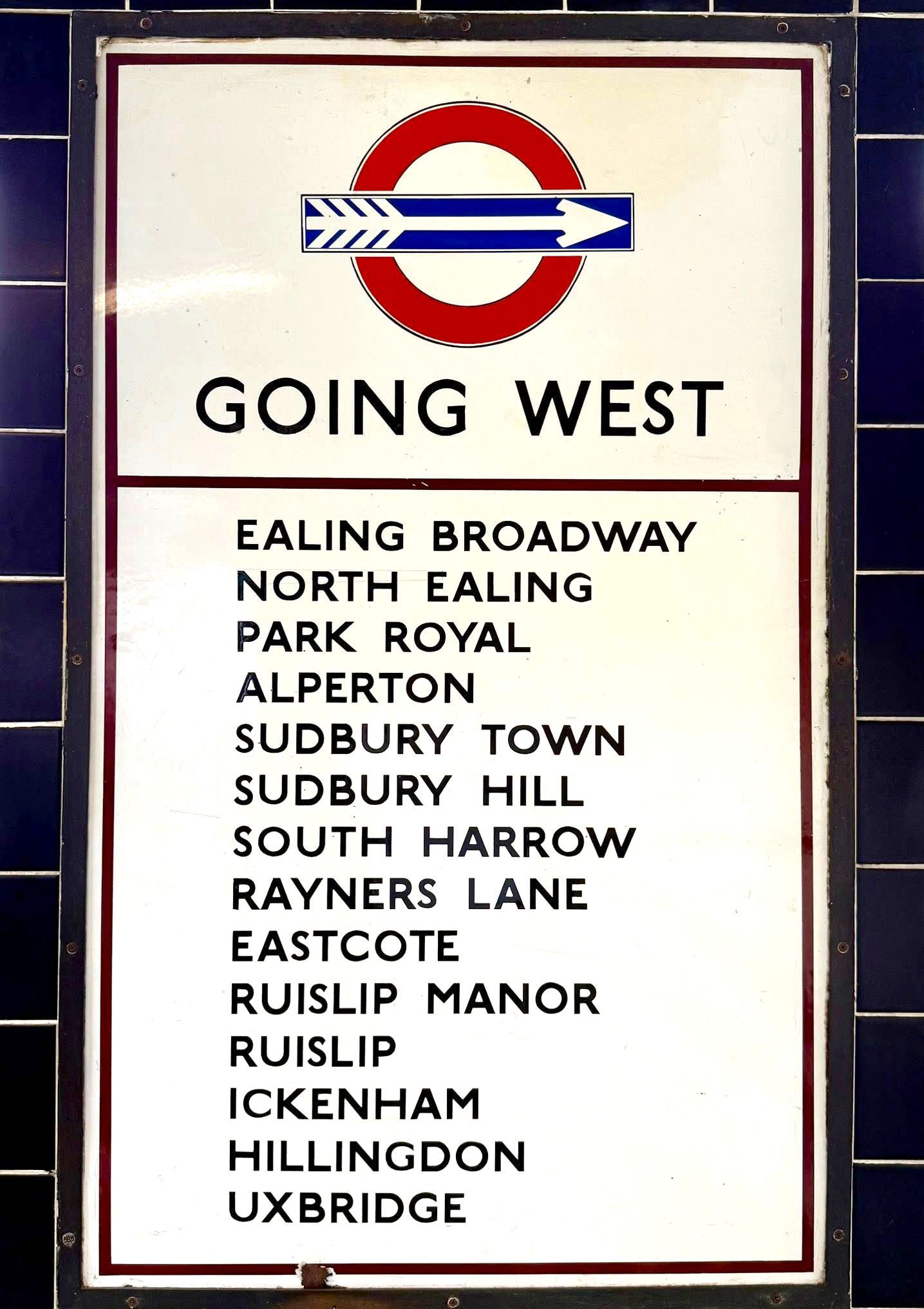
Destinations going West.
[© Joe Brown 2025]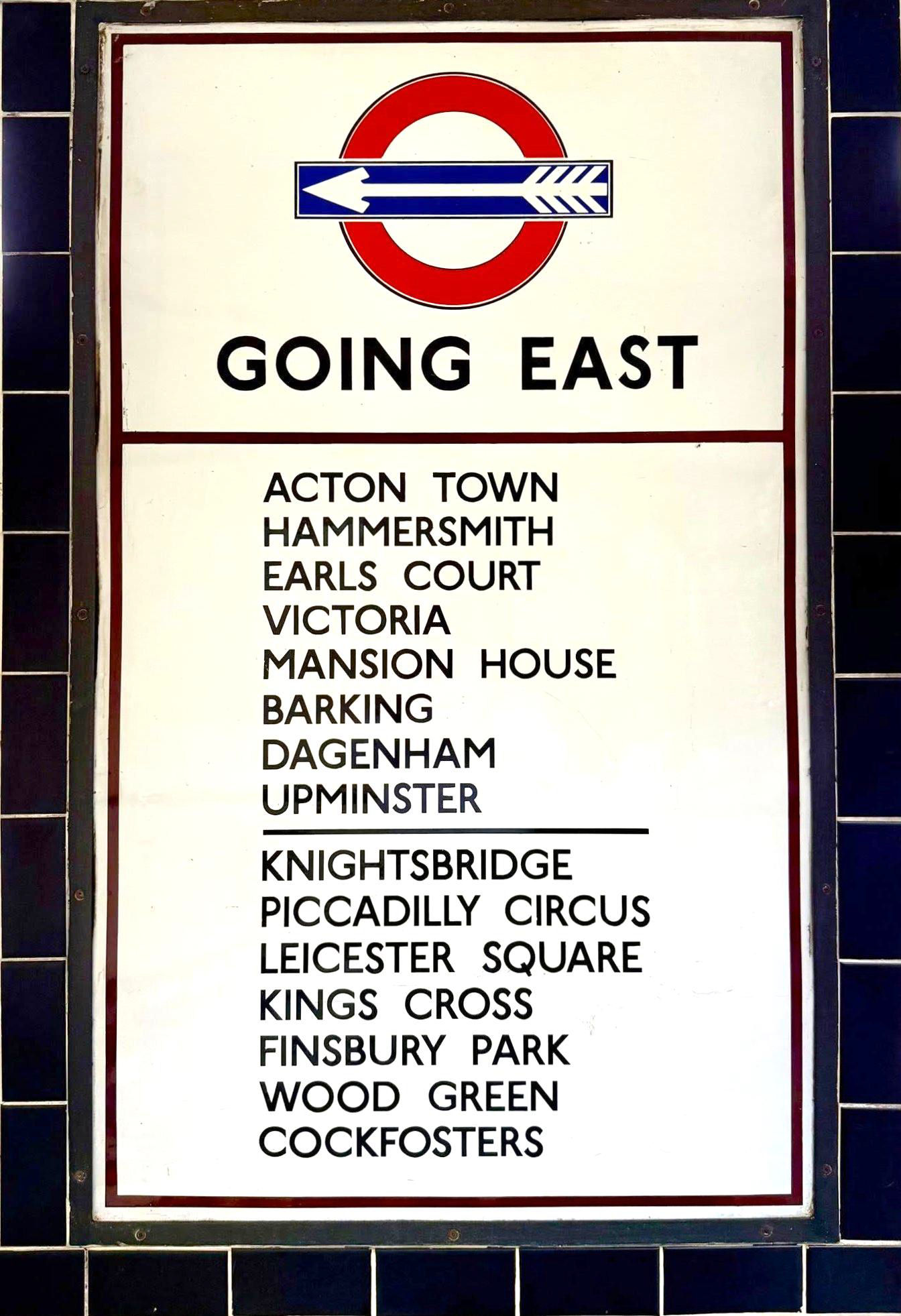
Destinations going East.
[© Joe Brown 2025]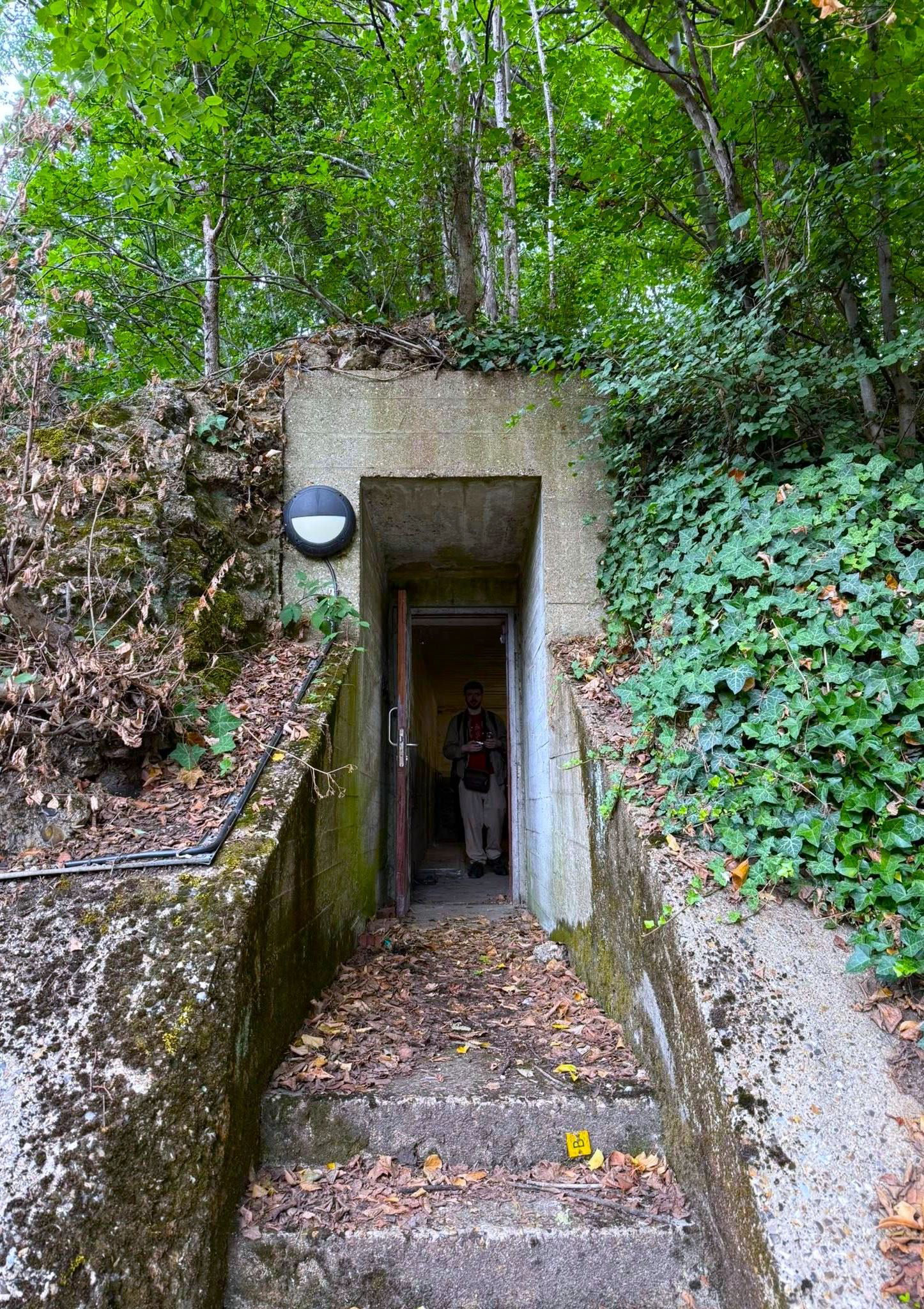
A well hidden WWII bunker.
[© Joe Brown 2025]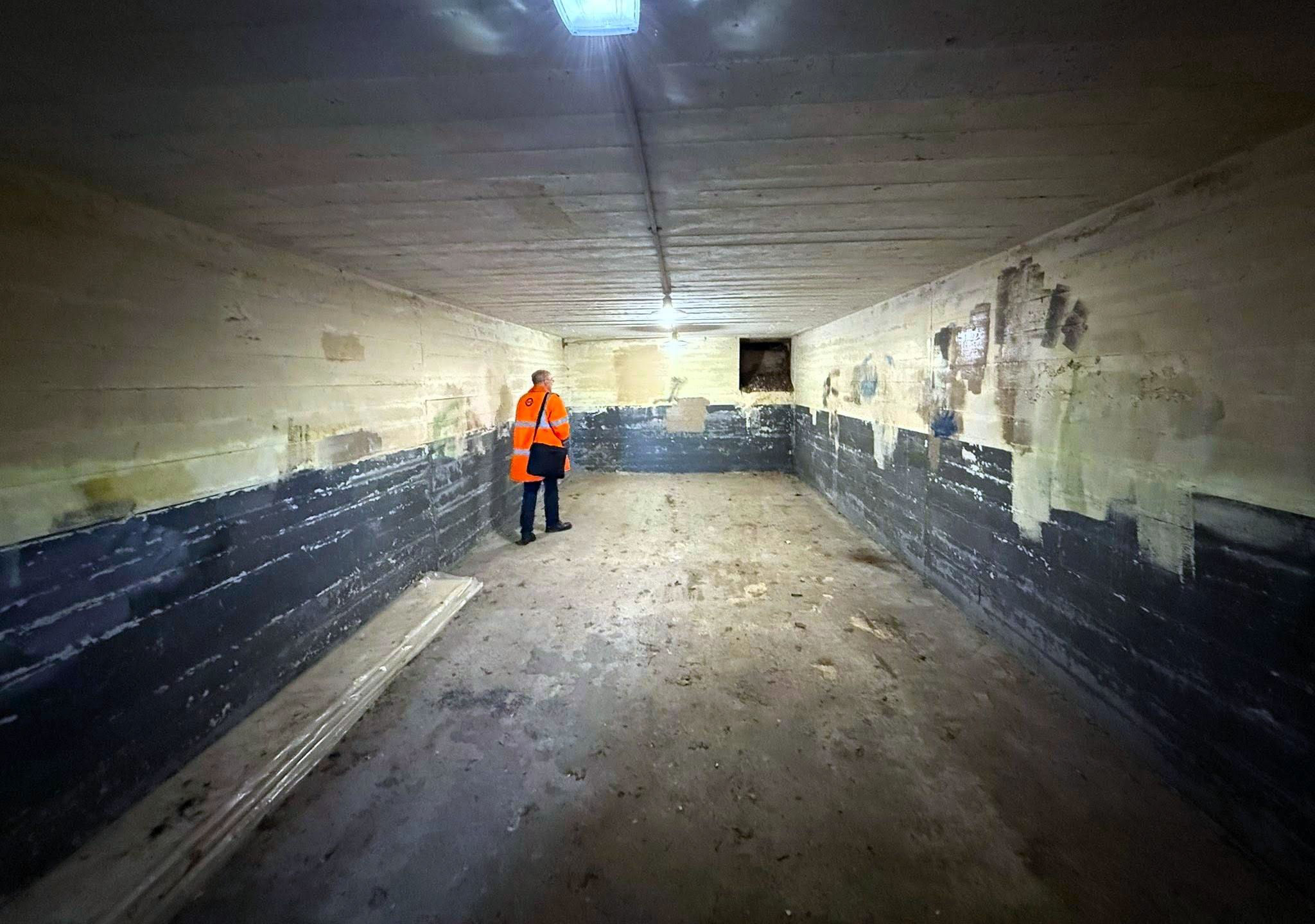
Inside the bunker.
[© Joe Brown 2025]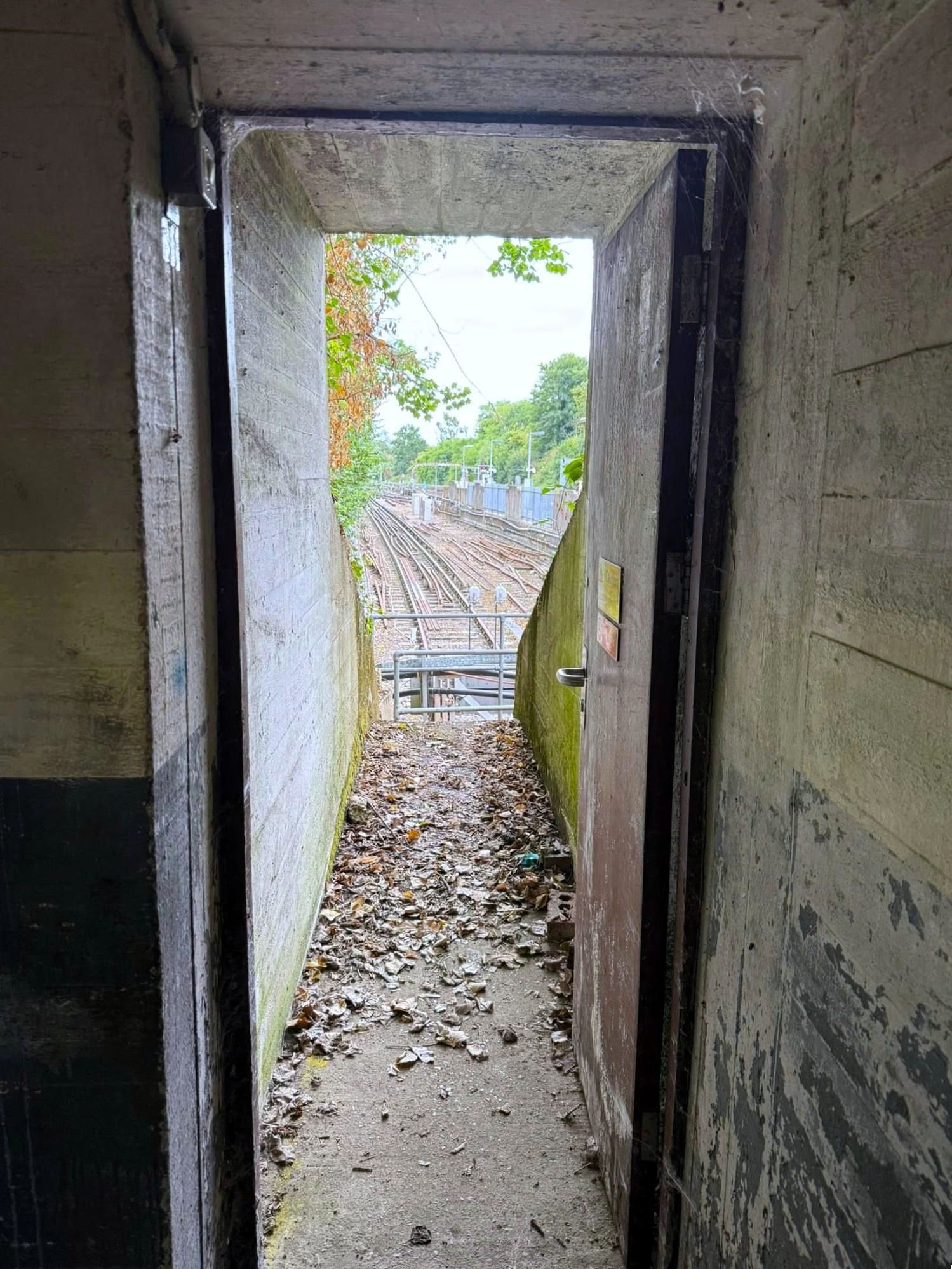
The view from the bunker.
[© Joe Brown 2025]Finally, it was on to Acton Town. Access was granted to the former Platform 5, used by the shuttle to South Acton, all of 1,232yds, (withdrawn from 2 Mar 1959). Platform 5 now has a splendid floral display, tended by staff members. I don't know if there is a station of the year award on LUL but, if there is, this would be a contender. (The In Bloom competition was first started in 1910 by the District Railway. TfL and its staff, often working with local residents and businesses, have kept this century-old tradition alive.)
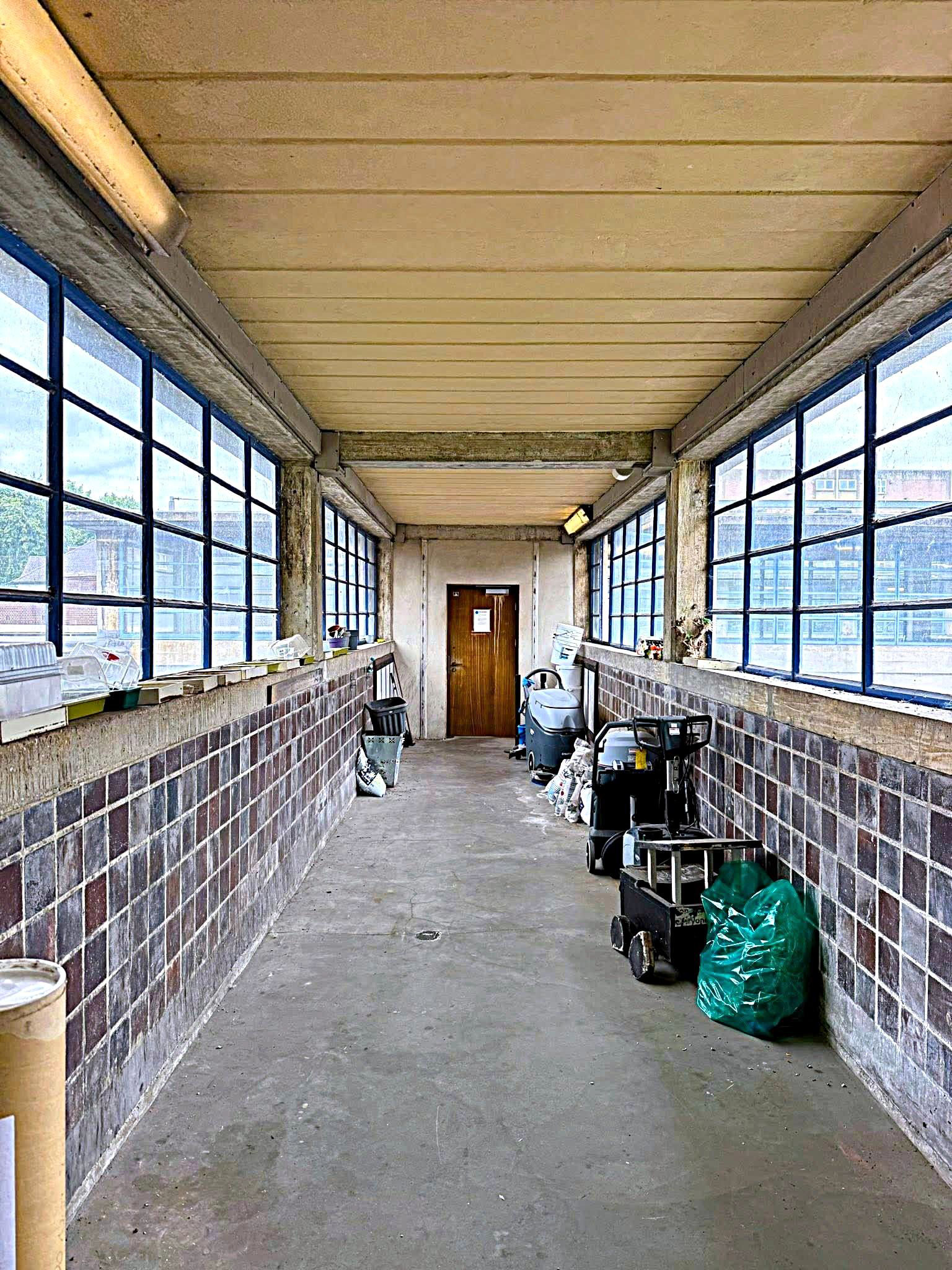
The bridge to access the former Platform 5 at Acton Town.
[© Joe Brown 2025]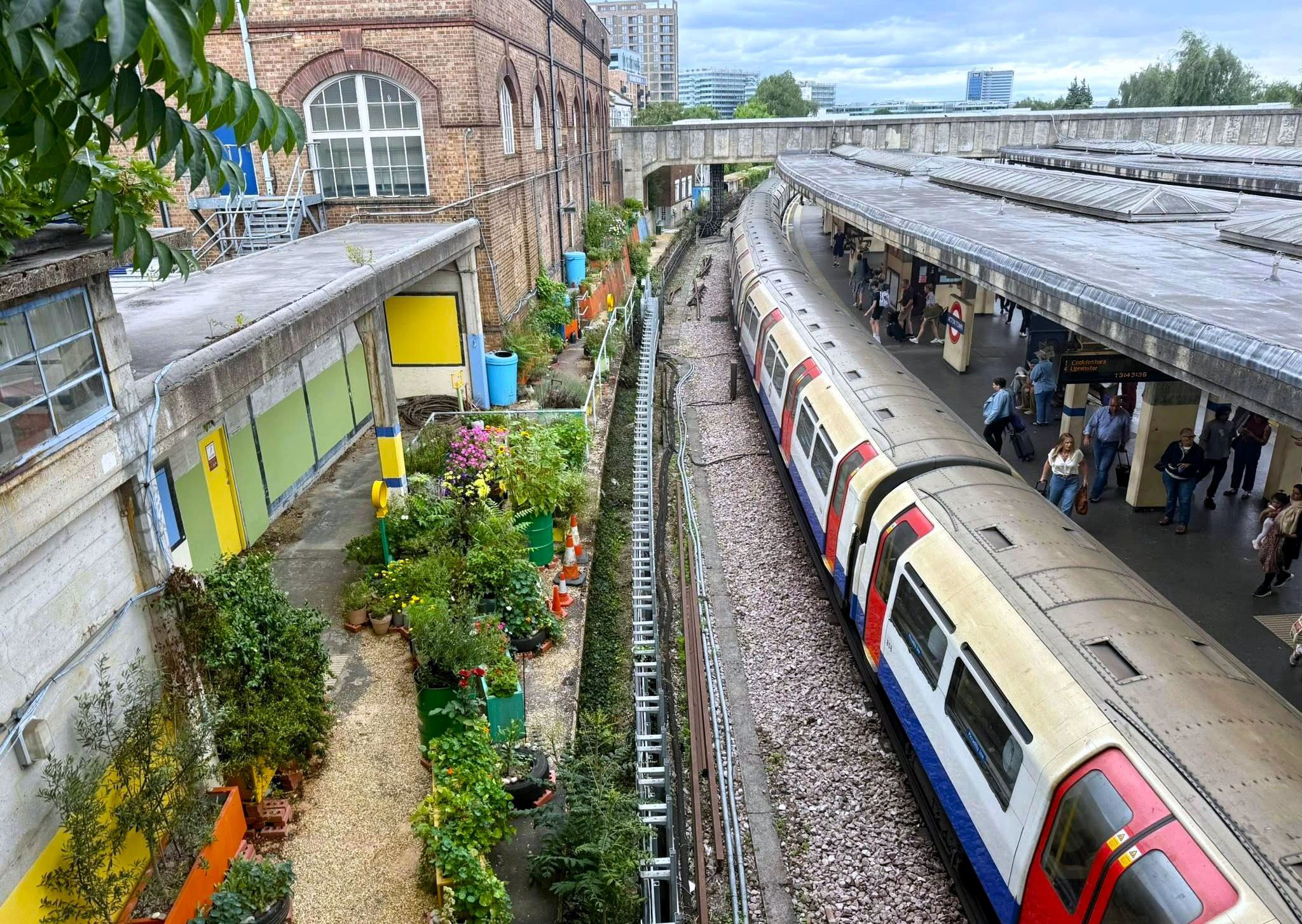
The splendid floral display on Platform 5.
[© Joe Brown 2025]The last leg of the tour involved leaving Acton Town station and walking down Bollo Lane to see the abutment where the aforementioned shuttle crossed over. It seems this won't survive much longer as demolition to make way for housing is imminent. Heading now for Chiswick Park, we passed a modern office block built on the site of Chiswick Bus Works. Part of the original works signage is incorporated onto the frontage. There are two level crossings at this location. The first on the original North & South Western Junction Railway 15 February 1853 route between Willesden Junction and Old Kew Junction. It currently has no regular passenger service. Bollo Lane Junction signal box (closed 4 June 2012) still stands (but is boarded up and somewhat overgrown) at the second crossing on the line now hosting the Mildmay line (Stratford to Richmond in meaningful terms or, going further back, the Crosstown Line once to Broad Street). With a 15-min frequency, the barriers spend almost as much time down as up.
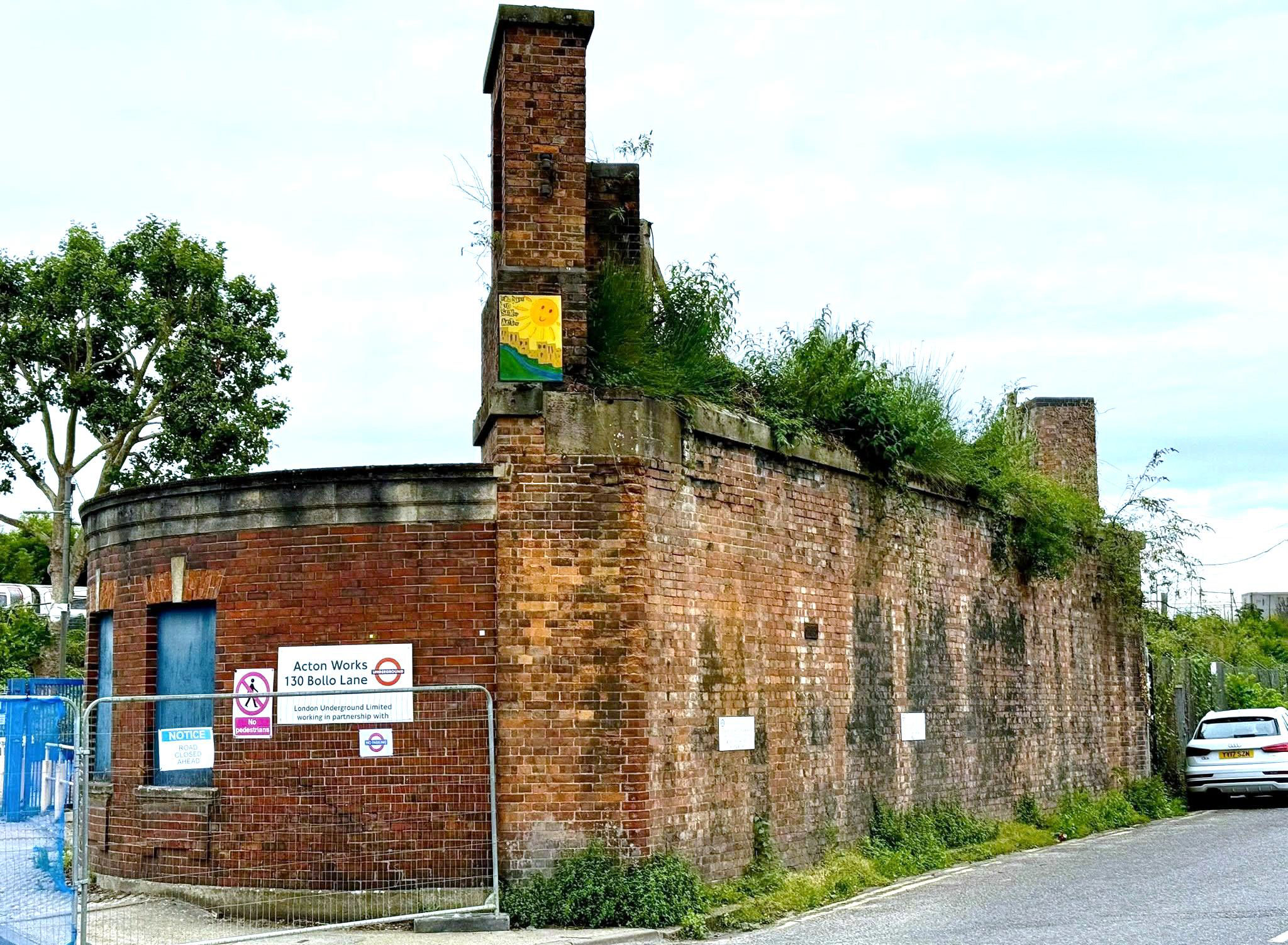
The abutment where the shuttle to South Acton crossed over.
[© Joe Brown 2025]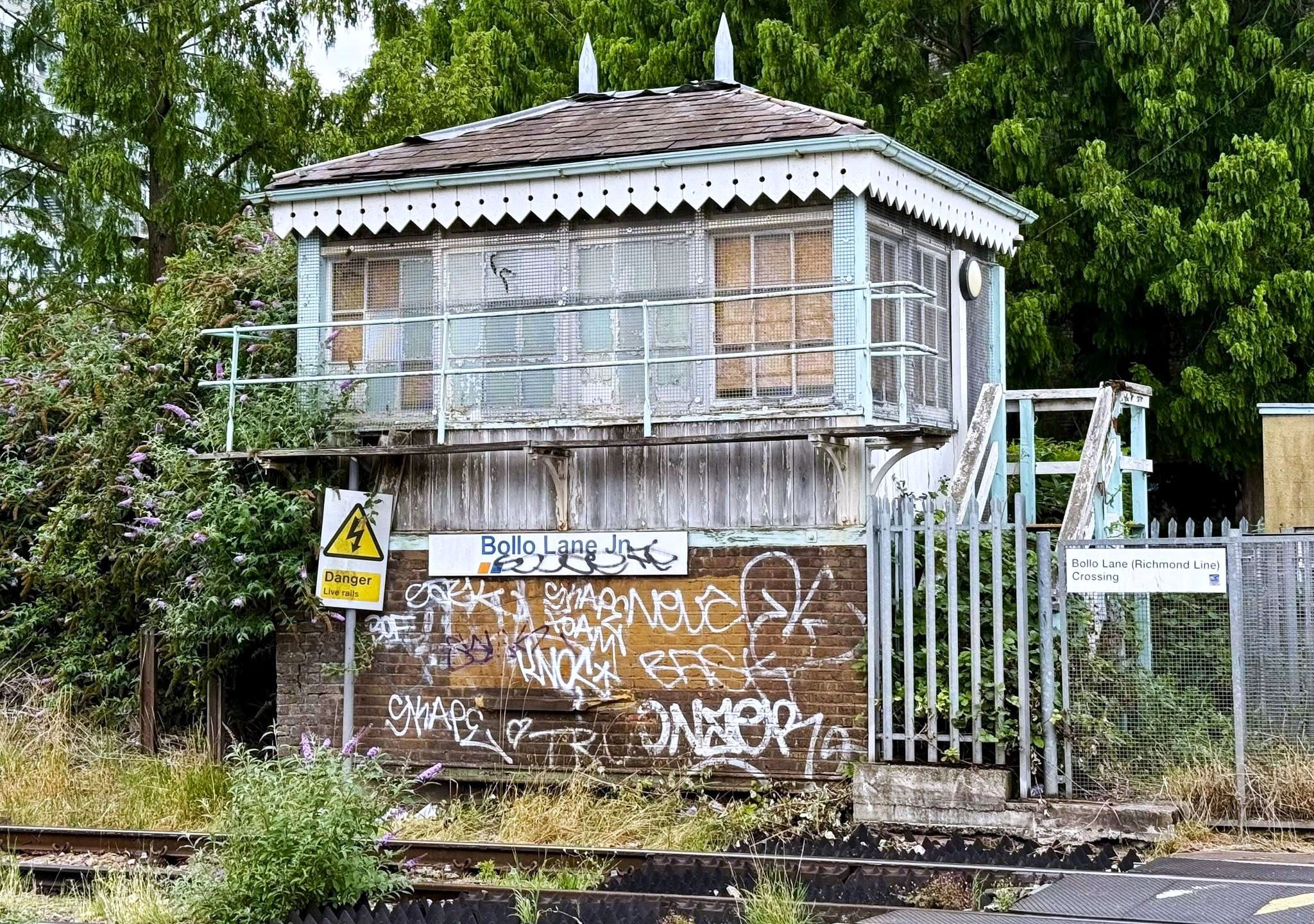
The closed Bollo Lane Junction signal box.
[© Joe Brown 2025]Journey's end was Chiswick Park station. On Acton Lane bridge, Adam and Joe explained how the unusual Acton Lane Jn layout has evolved over time (see Joe Brown's London Railway Atlas sixth edition p51 B2).
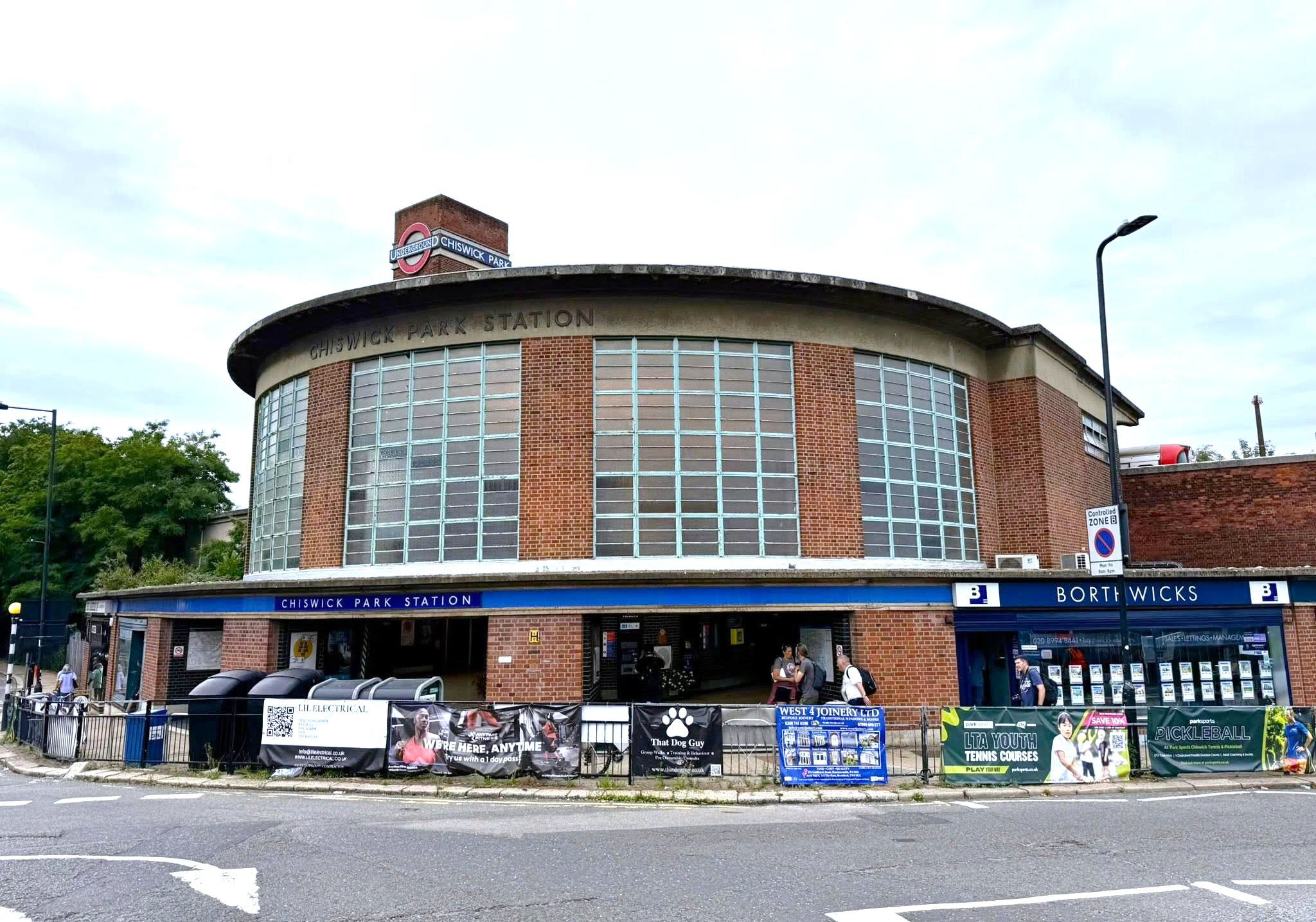
Chiswick Park station.
[© Joe Brown 2025]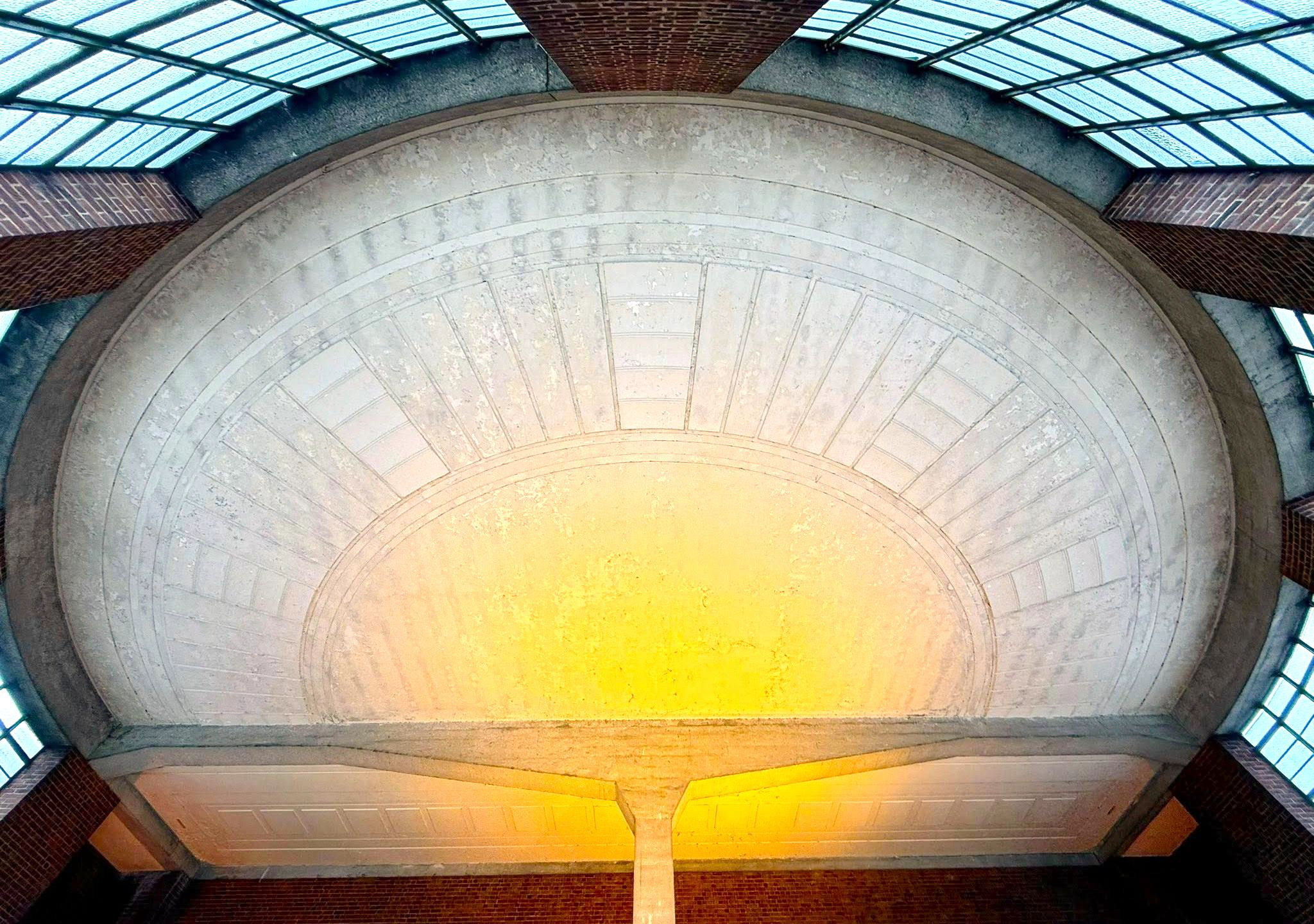
The ceiling in the entrance hall of Chiswick Park station.
[© Joe Brown 2025]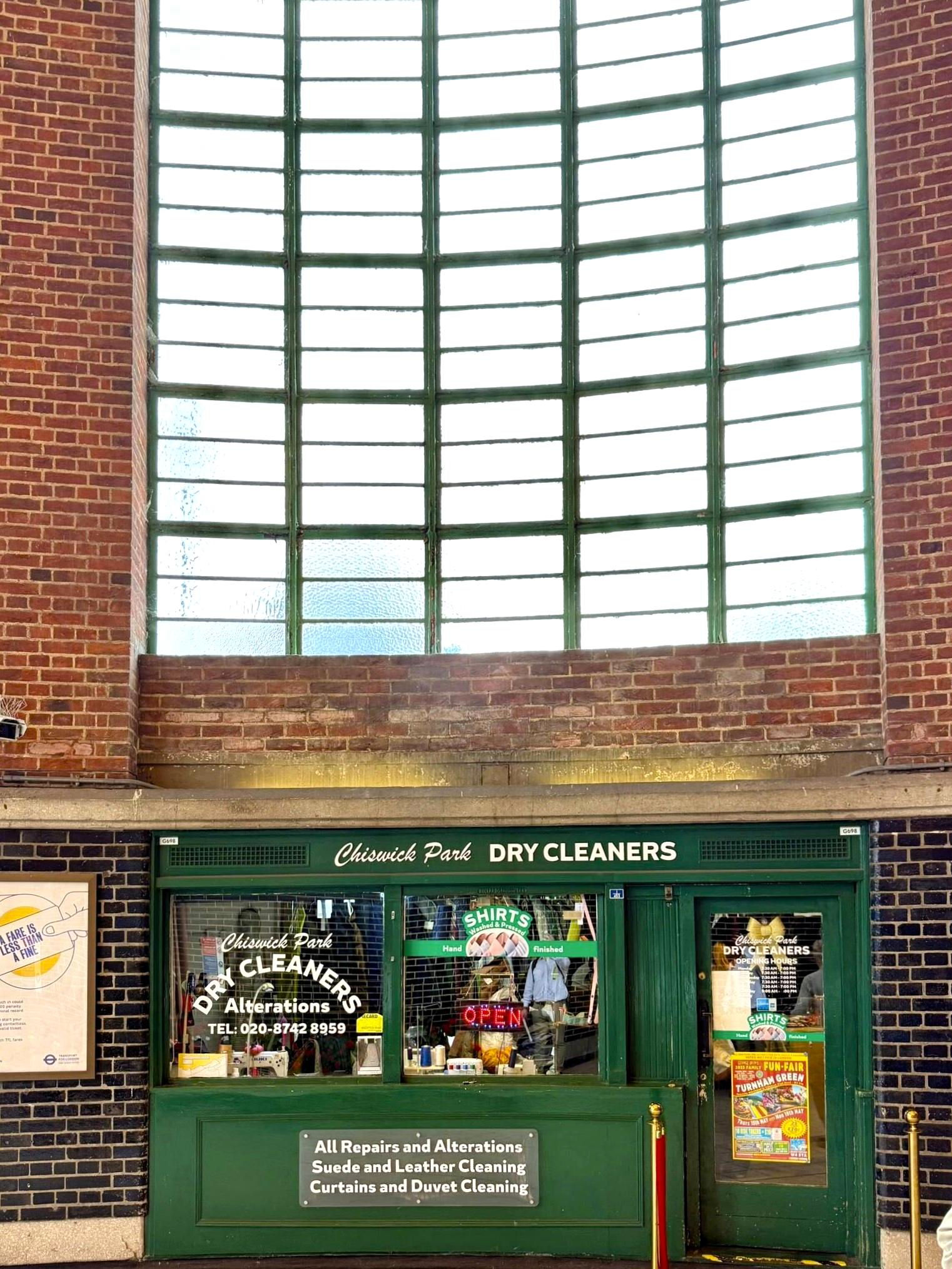
The entrance hall.
[© Joe Brown 2025]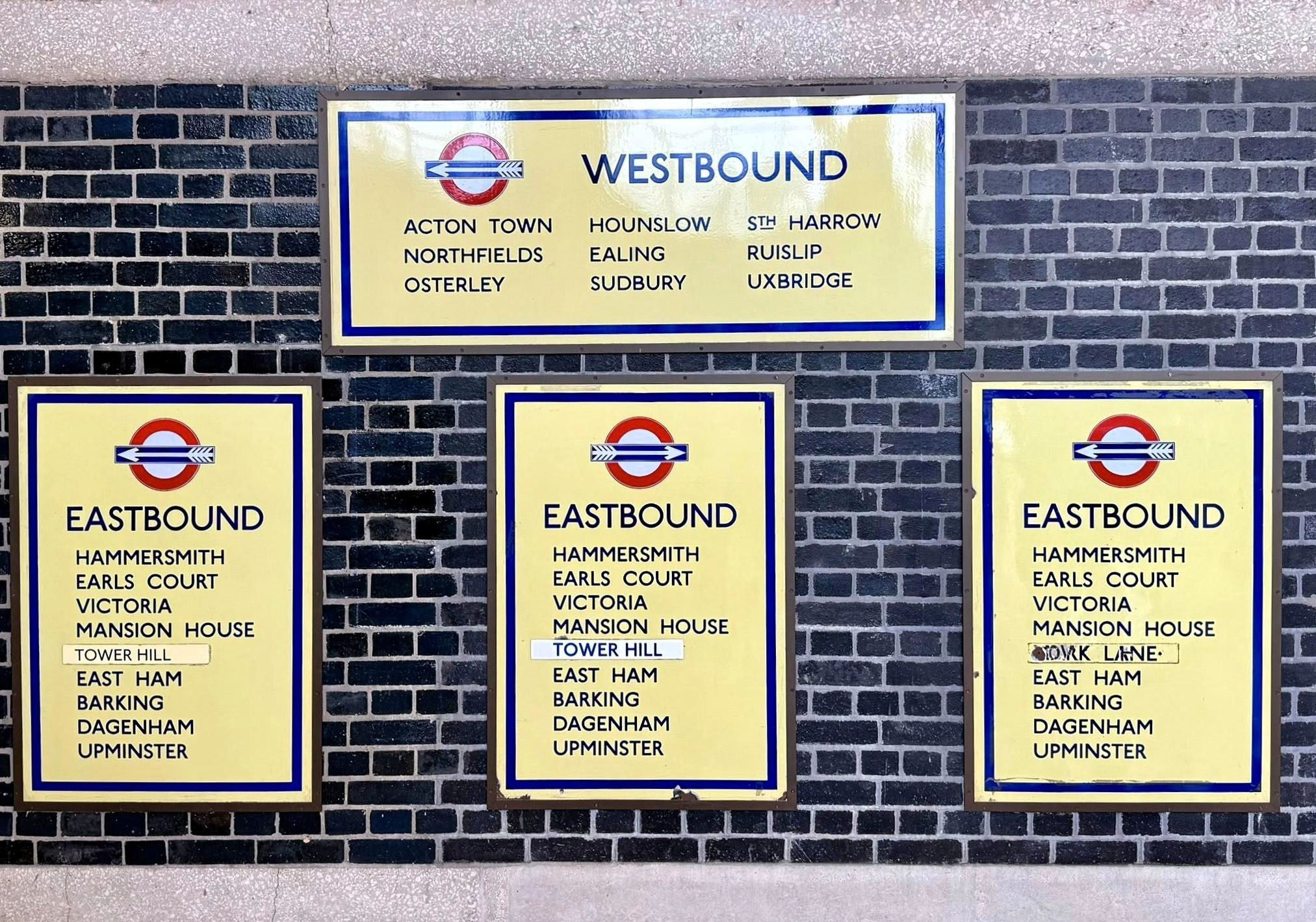
Westbound and Eastbound destinations.
[© Joe Brown 2025]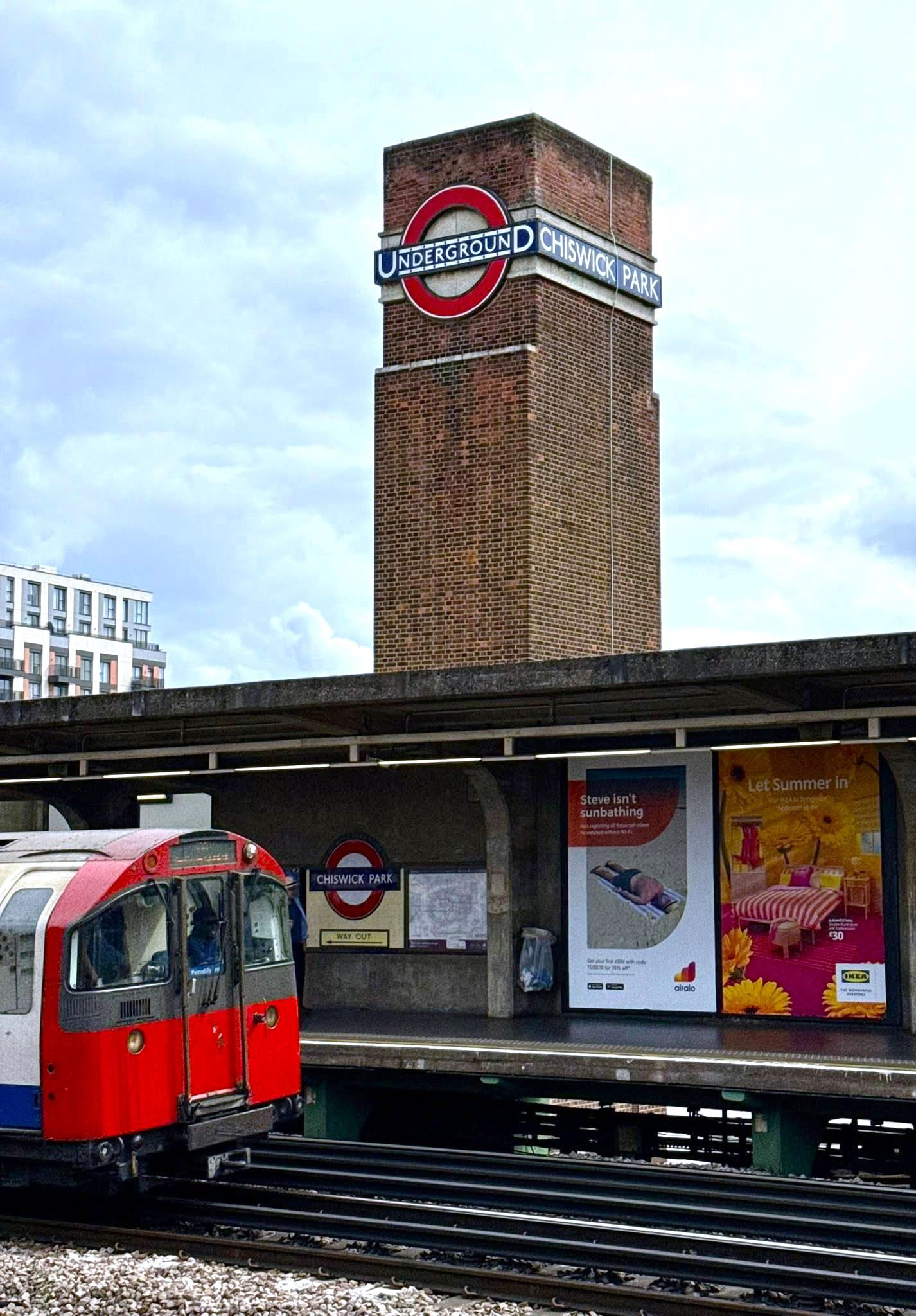
Chiswick Park station.
[© Joe Brown 2025]In summary, a most enjoyable event. The architecture (often by Charles Holden) of the stations we visited was fascinating and we had ample time to wander around, photograph and take it all in. Adam and Joe were most knowledgeable hosts, backing up their explanations with photos and maps. It sounds as though Adam has a few more tours in the pipeline. I would definitely attend more. As a result of this fixture, an impressive £1,175 was raised for The League of Friends of Northwick Park Hospital charity.