The Branch Line Society (Test)

Guest


Visit to the Crown Street Tunnel
Monday 14th July 2025

Report by Chris Lewis

This was my fifth visit in just over a year led by Adam Turner. Despite his youngish age compared with most, Adam is interested in my recollections of visits to the north with my father in the late 1950s when much steam reigned. They were very different locos, of course, to my beloved Bulleid Pacifics of Southern England. In 1962, I remember seeing 'The Red Rose' (introduced between Euston and Liverpool in 1951 by British Railways for the Festival of Britain) pass nonstop through Crewe behind a 'Coronation' 4-6-2 loco. We then caught an electric train to Liverpool and saw 'The Red Rose' again at Lime Street.

A group of 23 assembled at Edge Hill station for a 10.00 start. Apart from Adam, there were three from NR, three from the Liverpool & Manchester Railway Trust, with everyone else from the Branch Line Society. Alan from NR gave a comprehensive safety briefing. We obviously had to wear appropriate safety gear including a helmet, orange safety jacket and boots. A torch was needed too.

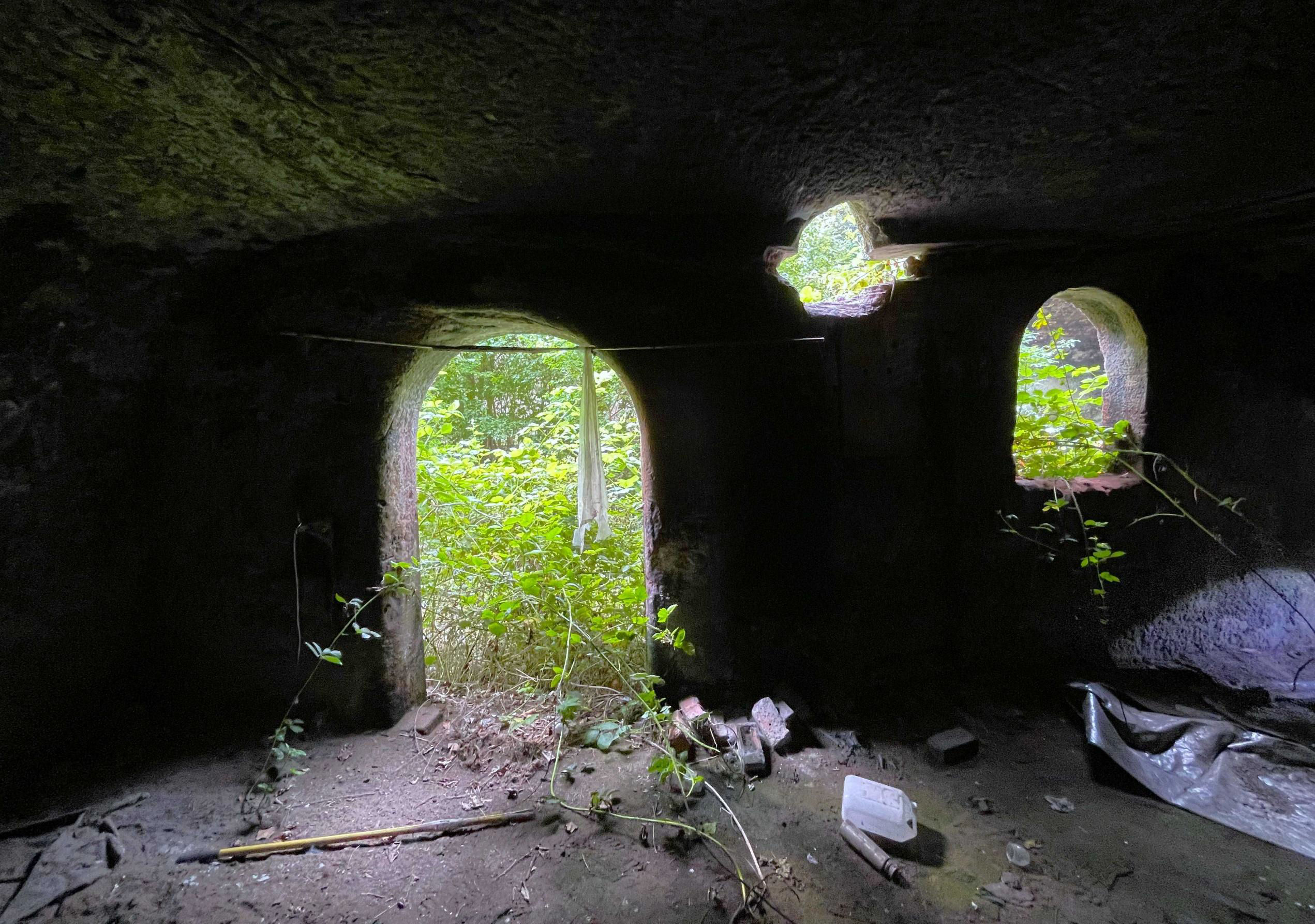
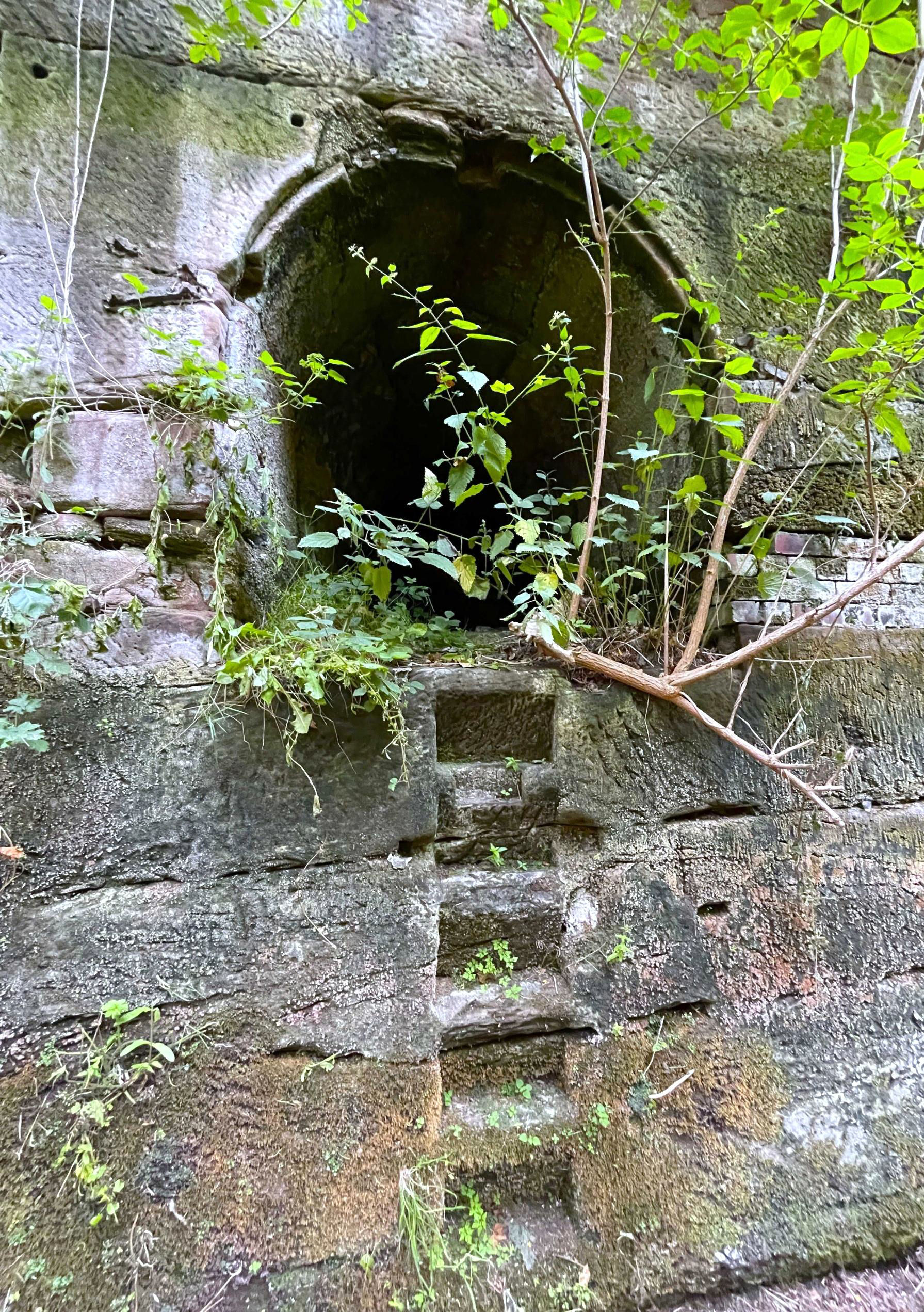
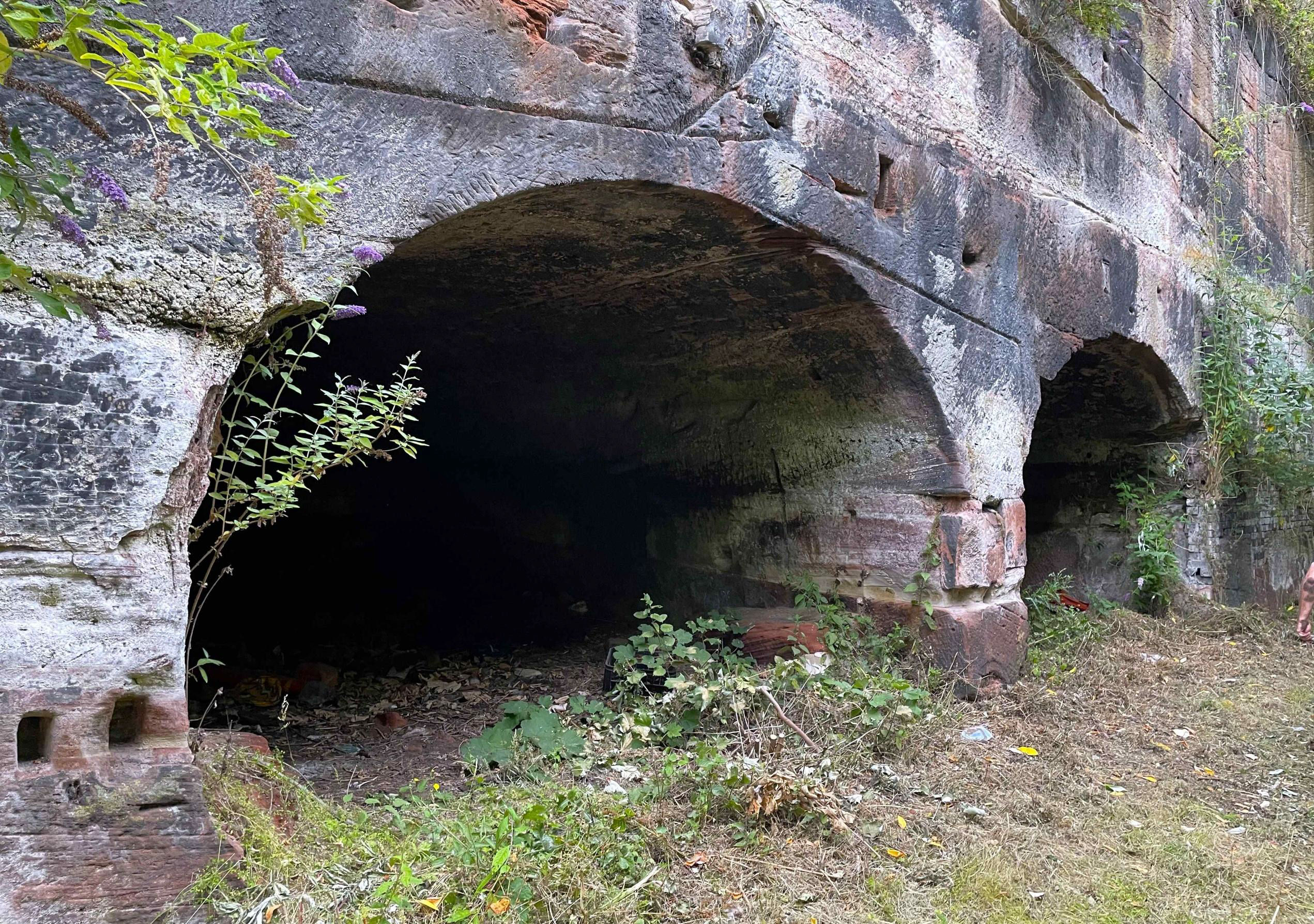
From the entrance to Edge Hill station, we walked a short distance along Tunnel Road (clue) to a metal door which led to a ramp with steps down to the railway below. It was obvious that the undergrowth had been cleared especially to provide a walking route. We walked in single file along the cutting. The remaining operational line ran parallel to our path (TRACKmaps 4 p38A 2022). Now a reversing siding for freight trains, it was obscured by a dense screen of undergrowth. We came to the original Edge Hill engine station location. The entrance to this area was identified by the visible remains of the Moorish Arch structure, which originally consisted of two towers with a connecting arched bridge over the tracks. Unfortunately, this had all been demolished in 1864 when additional tracks were needed through the cutting. The only remaining evidence was the back and side wall of one of the towers which were cut into the sandstone wall, as well as the remains of a set of steps up to ground level. Also cut into the wall were two stables, three boiler houses and arched recesses for storing coke. Connecting these was a small tunnel that carried steam pipes across to the current Edge Hill station area to operate the static engines driving the winding ropes to pull the trains up the incline from Liverpool Lime Street (used until a separate dedicated power source was established at the Edge Hill station site).
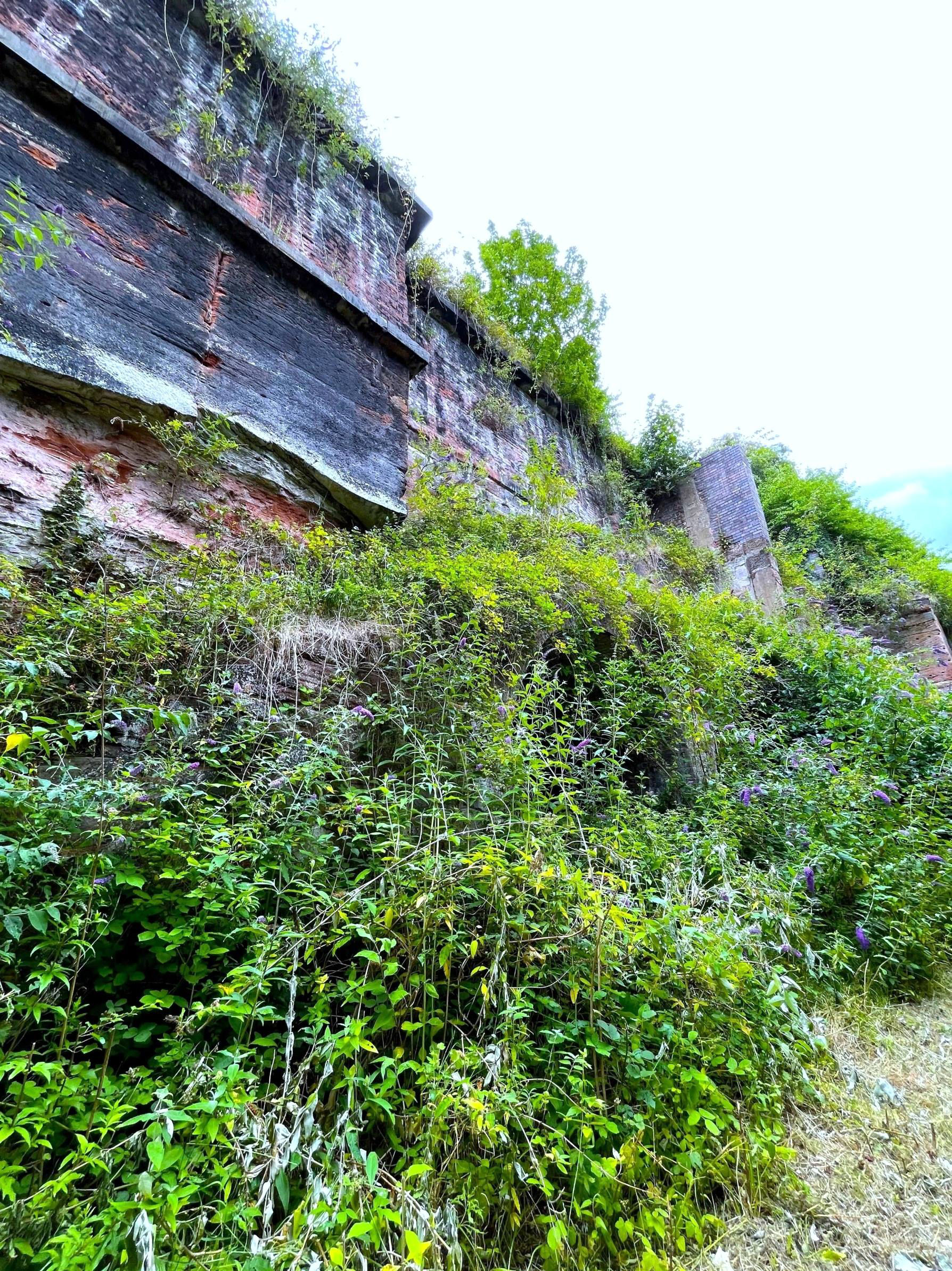
Remains of the back and side wall of one of the towers along with a set of steps up to ground level.
[© Adam Turner 2025]


One of the boiler houses.
[© Adam Turner 2025]


Arched recesses for storing coke
[© Adam Turner 2025]


The view from one of the chambers carved from the sandstone of the cutting’s North wall,
[© Adam Turner 2025]


The tunnel used for carrying the steam pipes and the access steps.
[© Adam Turner 2025]


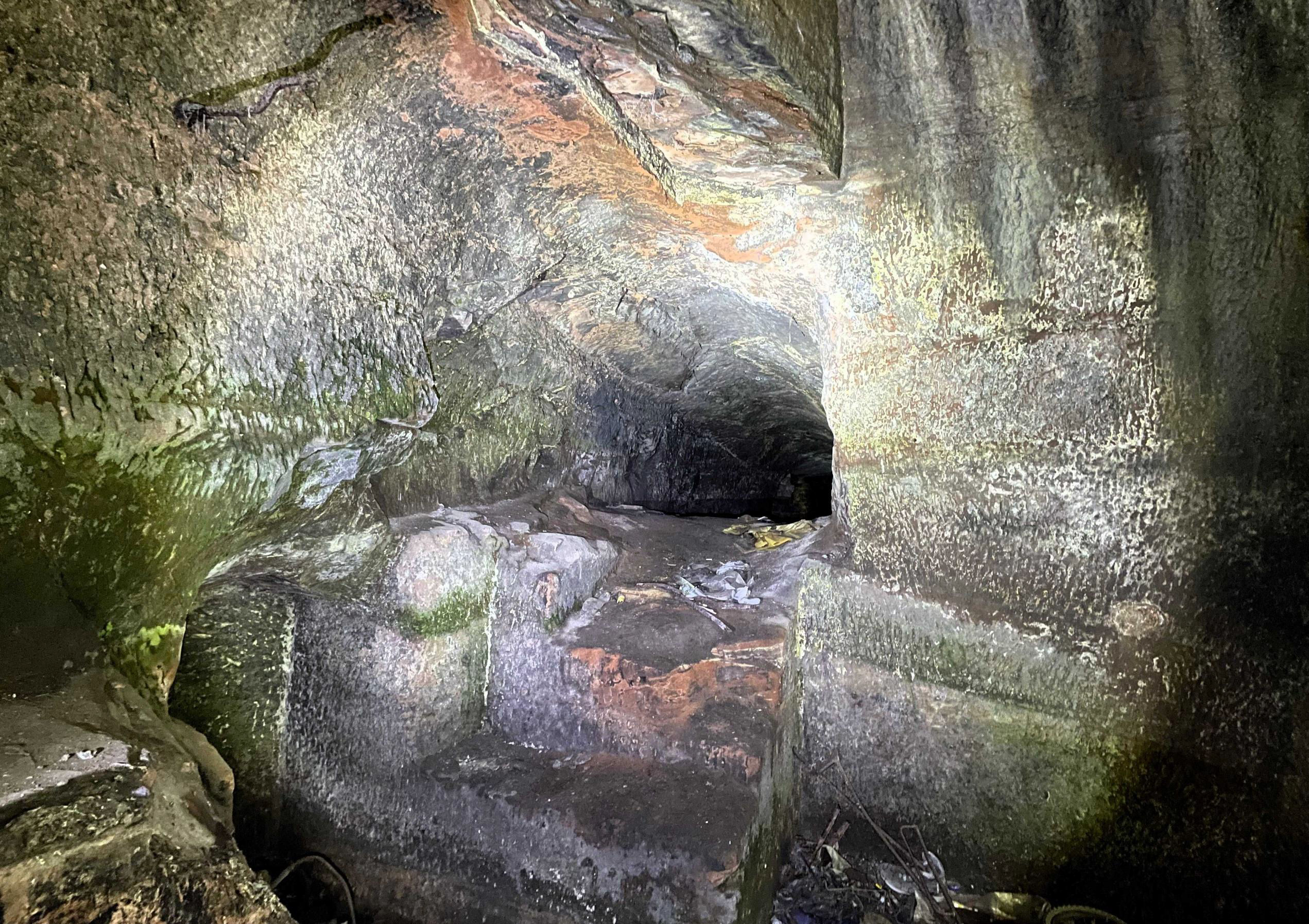
Inside the tunnel.
[© Adam Turner 2025]


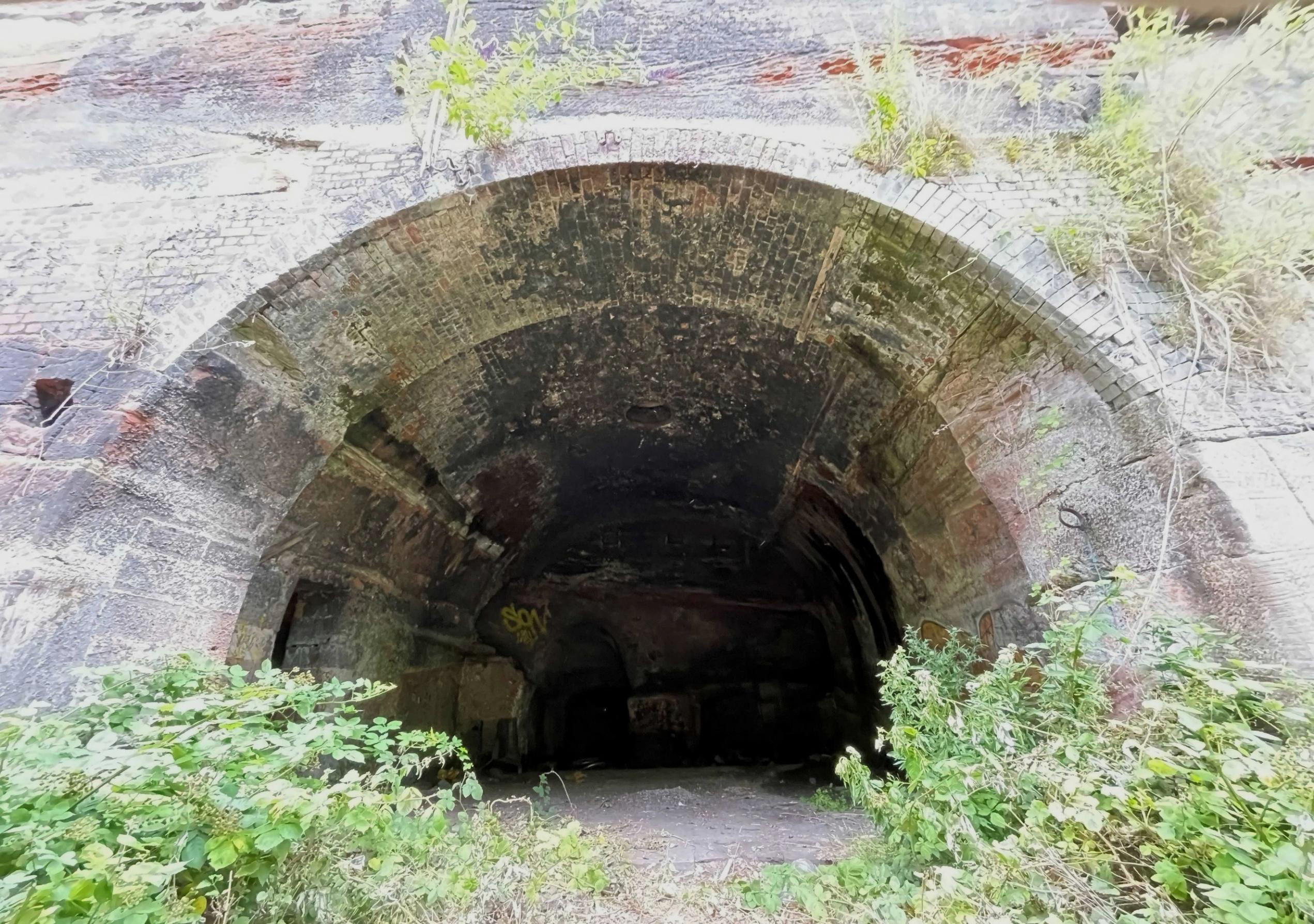
There are three tunnel portals visible, the right hand one that led to Crown Street station, the middle one, Wapping Tunnel (closed to freight traffic in 1965), that led to the docks south of the Pier Head and was large enough for double track and the third tunnel that became double track and led to Crown Street freight yard. The entrance to the right hand Crown Street Tunnel was unlocked for us to enter.

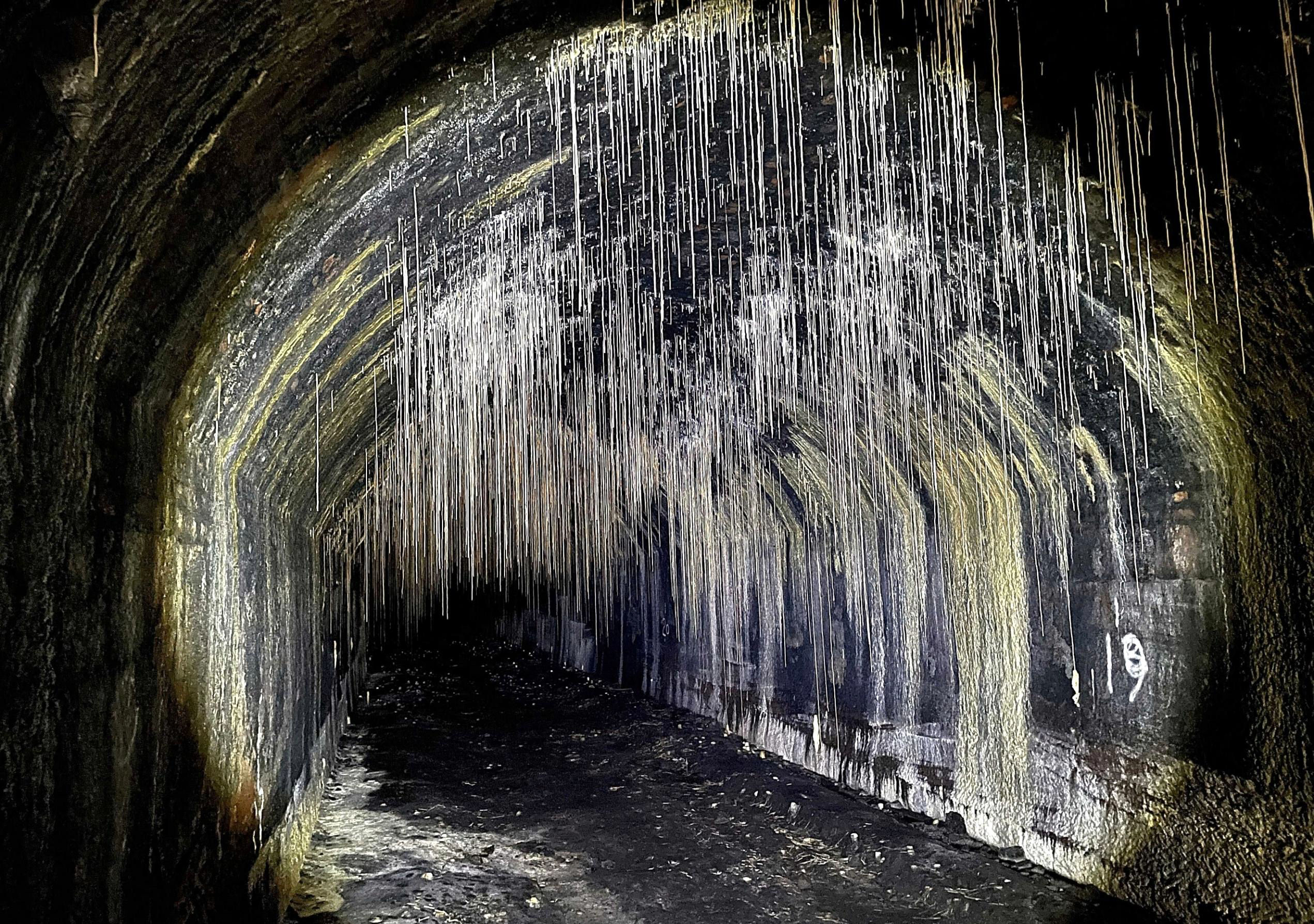
It was completed in 1829, a year before the railway opened. This happened on 15 Sep 1830. It is one of the oldest railway passenger tunnels in the world but other tunnels such as on the Canterbury & Whitstable Railway were in use before the Liverpool & Manchester Railway opened. The Tunnel is 291 yards long, 15ft wide and 12ft high. There is no way out at the other end, so we could only go up to where it has been sealed. In the Tunnel was a small horse water trough and spectacular displays of stalactites. NR had installed temporary lighting at regular intervals to help us see along with our torches. Past here was the former site of Crown Street station, the end of the Liverpool & Manchester Railway.


The spectacular display of stalactites.
[© Adam Turner 2025]


It was the oldest purpose designed passenger terminus station in the world when built, along with the Manchester Liverpool Road terminal [but see item 1707]. The location was chosen because locos were not allowed to enter Liverpool. However, the success of the railway meant that by 1836 a more convenient station location was needed, so Lime Street opened. Crown Street closed to passengers but remained open for freight until 1972. There is now no evidence that this station ever existed (except the lithographs drawn by contemporary artists such as TT Bury's Ackermann prints and Isaac Shaw's lithos).

I had an appointment in London, so left the trip when we returned to Tunnel Road. Most of the party went with Adam to view the top of the ventilation shaft of the Wapping Tunnel nearby and the remnants of the Crown Street tunnel portal. Thanks are given to Adam for organising the trip and for the other NR people who made it possible. £500 was donated to Clatterbridge Cancer Centre as a result of our fixture.


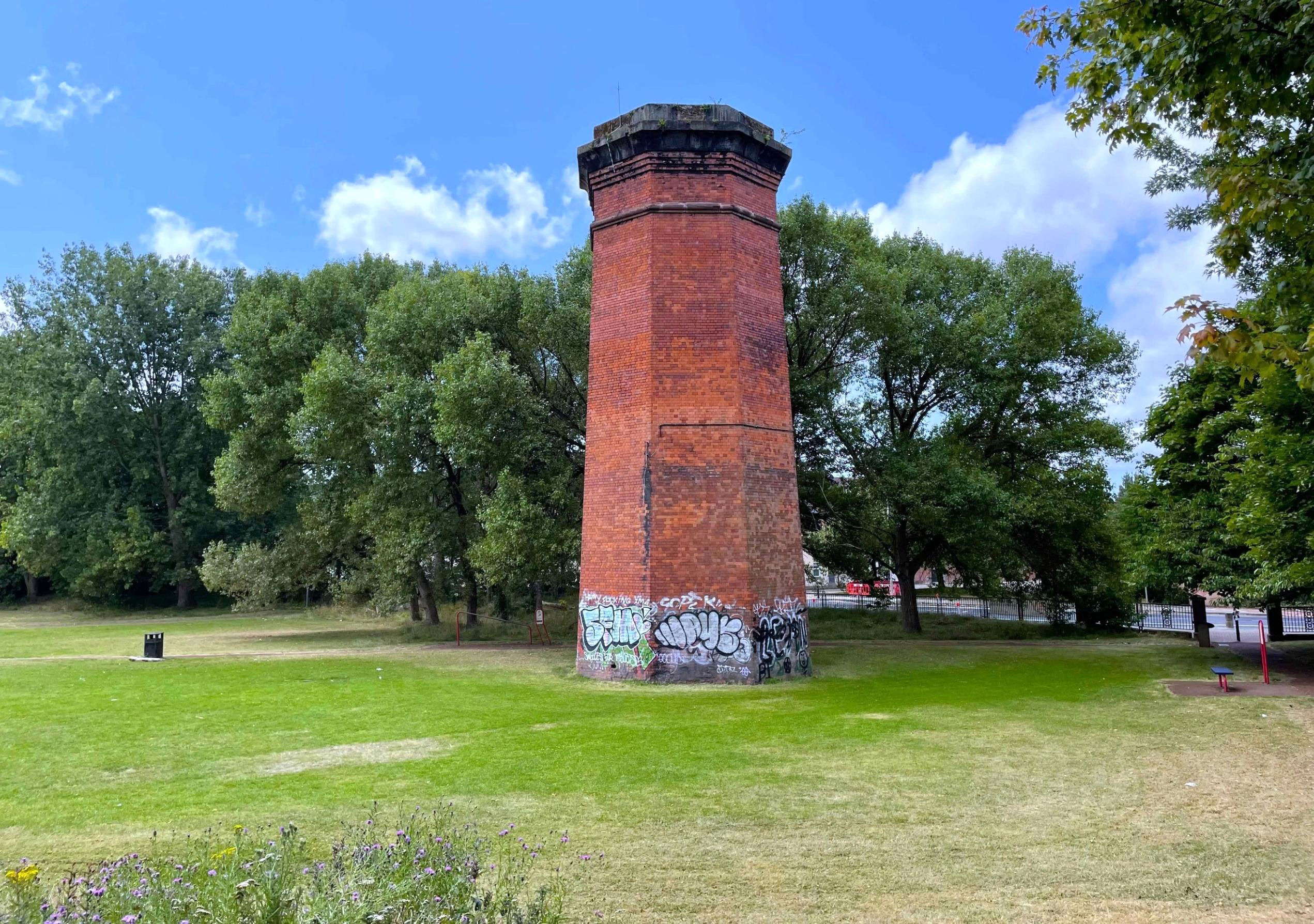
The top of the ventilation shaft of Wapping Tunnel.
[© Adam Turner 2025]

Back To Top
Branch Line Society.  A Company Limited by Guarantee - Company No 16743754.  Registered in England and Wales.
Registered address: 6th Floor, Derwent House, 150 Arundel Gate, SHEFFIELD S1 2FN