Day 3, Sun 27 Apr 2025:
Alarm 05.30; breakfast was at 06.30 but had clearly started earlier as walking into the restaurant only minutes later clearly it was in full swing. We were leaving at 07.12, so it was a bags down from my room to allow a swift exit. I enjoyed an extensive cooked breakfast, generally picking the identifiable items and eschewing the less identifiable, while consuming a couple of coffees with pastries to postpone the slightest twinge of hunger until well into the day. We headed out into the quiet Sunday streets of Gorzów Wielkopolski. It was all downhill to the station, so we were installed by 07.00 with plenty of time for photographs in the bright clear morning sun before our tour headed over the wide River Warta south towards Skwierzyna. Almost simultaneously, the service train hauled by a rebuilt SU42 on load three departed the other side and could be seen scuttling along the north bank towards Krzyz, which might have created a photographic dilemma to anyone standing between the two lines on the south bank.
At Skwierzyna, we turned left onto freight Line 364 that once ran to Międzychód about 20km further and even onto Szamotuły (some 56km further) on the main Poznań to Krzyż line but that has long gone! Our amble was to Rokitno where the station is intact, now two separate dwellings, but the line persists a short way beyond to serve the Shell Gas Polska Terminal, so the track is immaculate. With 11km covered, during the runround we made a standard dispersal to explore and photograph the train in the cool clear morning light. Returning to Skwierzyna, we ran round again in the typically extensive junction station, before continuing south to the major junction of Międzyrzecz. (Its German name of Meseritz is still visible on the water tower in MUCH bigger letters!) Here we had to initially propel out of the station to obtain a route towards Trzemesno Lubuskie about 25km down Line 364 towards Rzepin another 40km on but that is closed. A few kilometres further along the line appears to serve a military location.
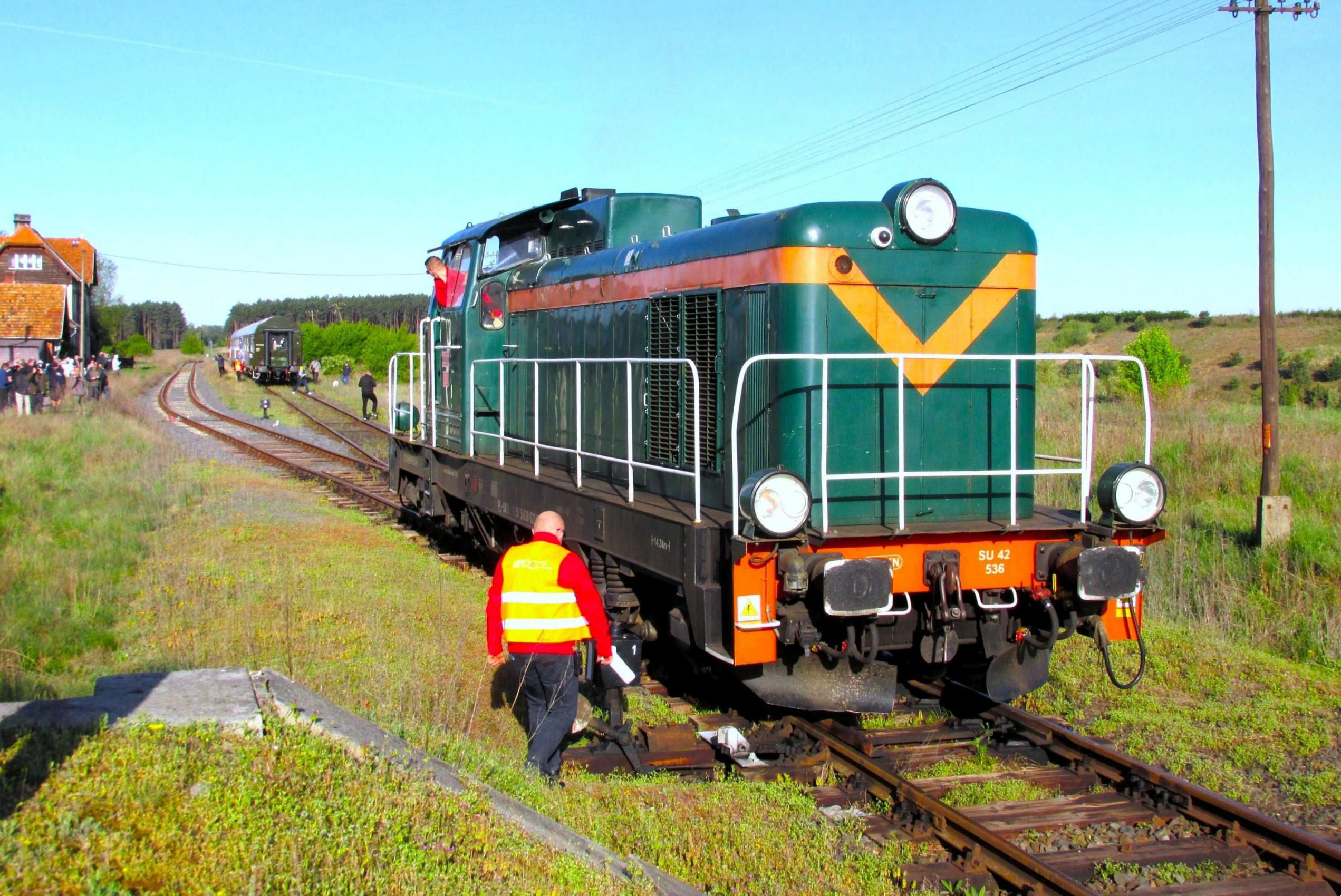
Run round at Rokitno, former station left, the pointsman has just thrown the points. The Gas Terminal is behind photographer.
[© Simon Mortimer 2025]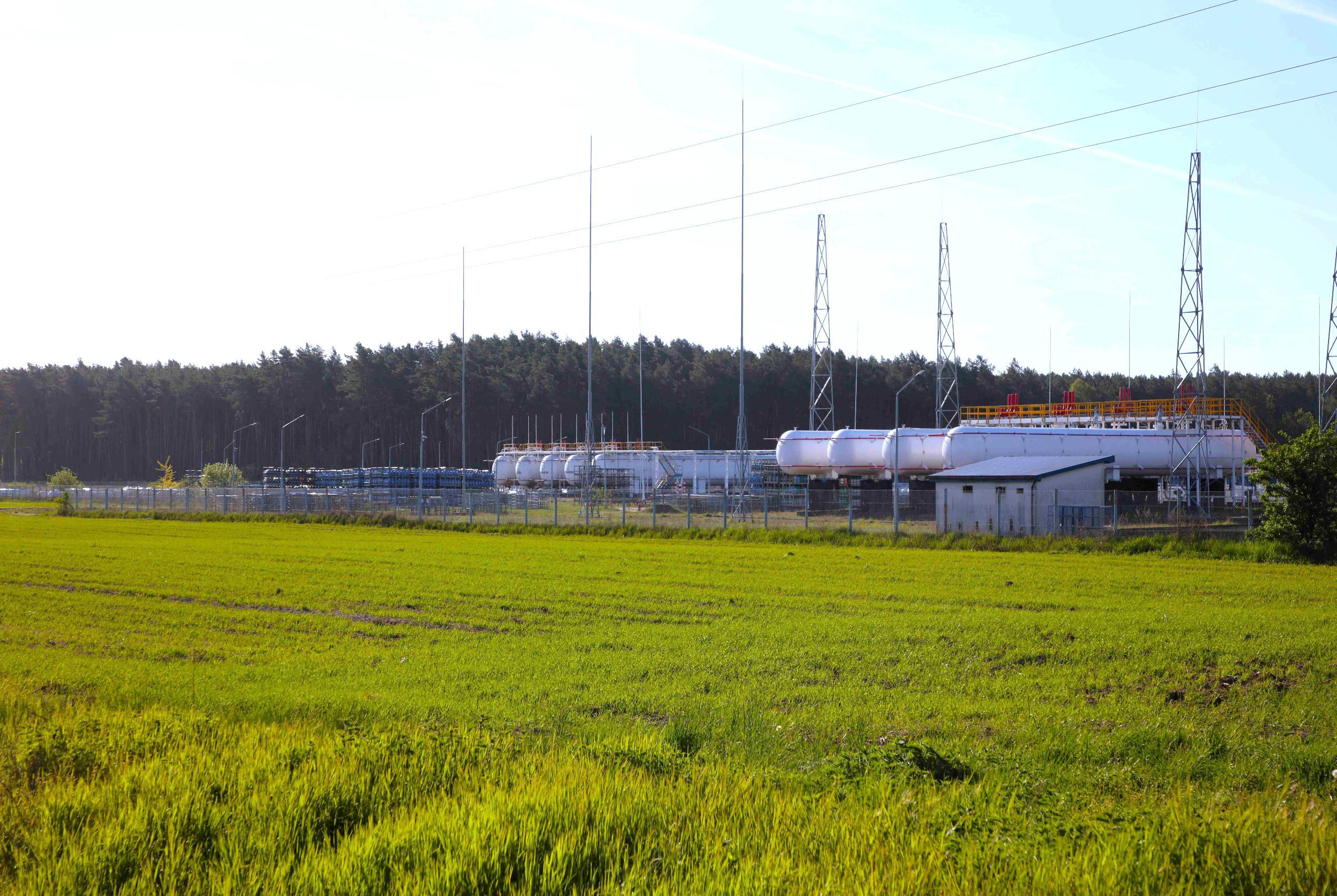
In the other direction, the rail-served gas terminal at Rokitno, note the lightning conductors.
[© Iain Scotchman 2025]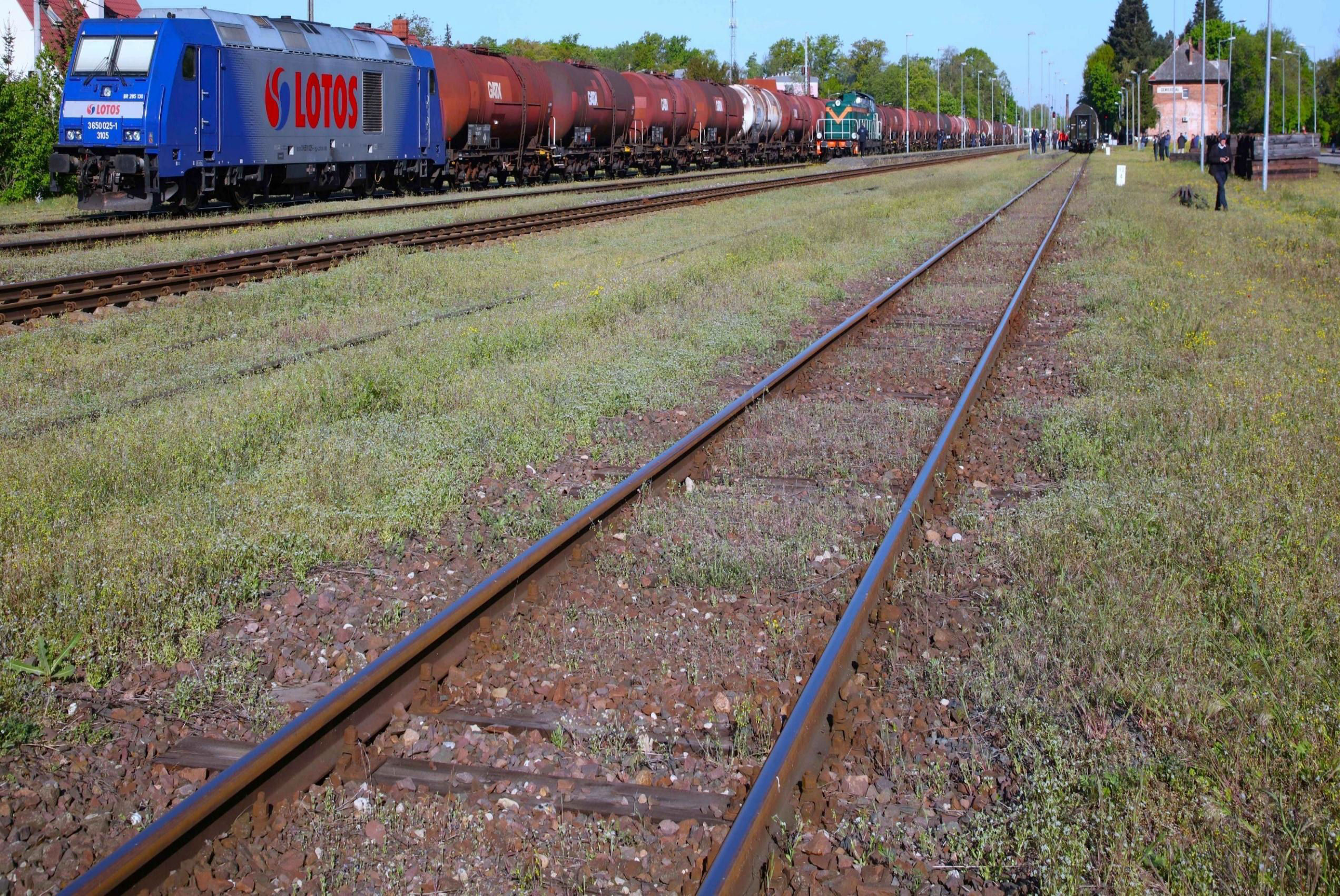
A distant view of Skwierzyna station (closed to passengers) as the tour locomotive runs round.
[© Iain Scotchman 2025]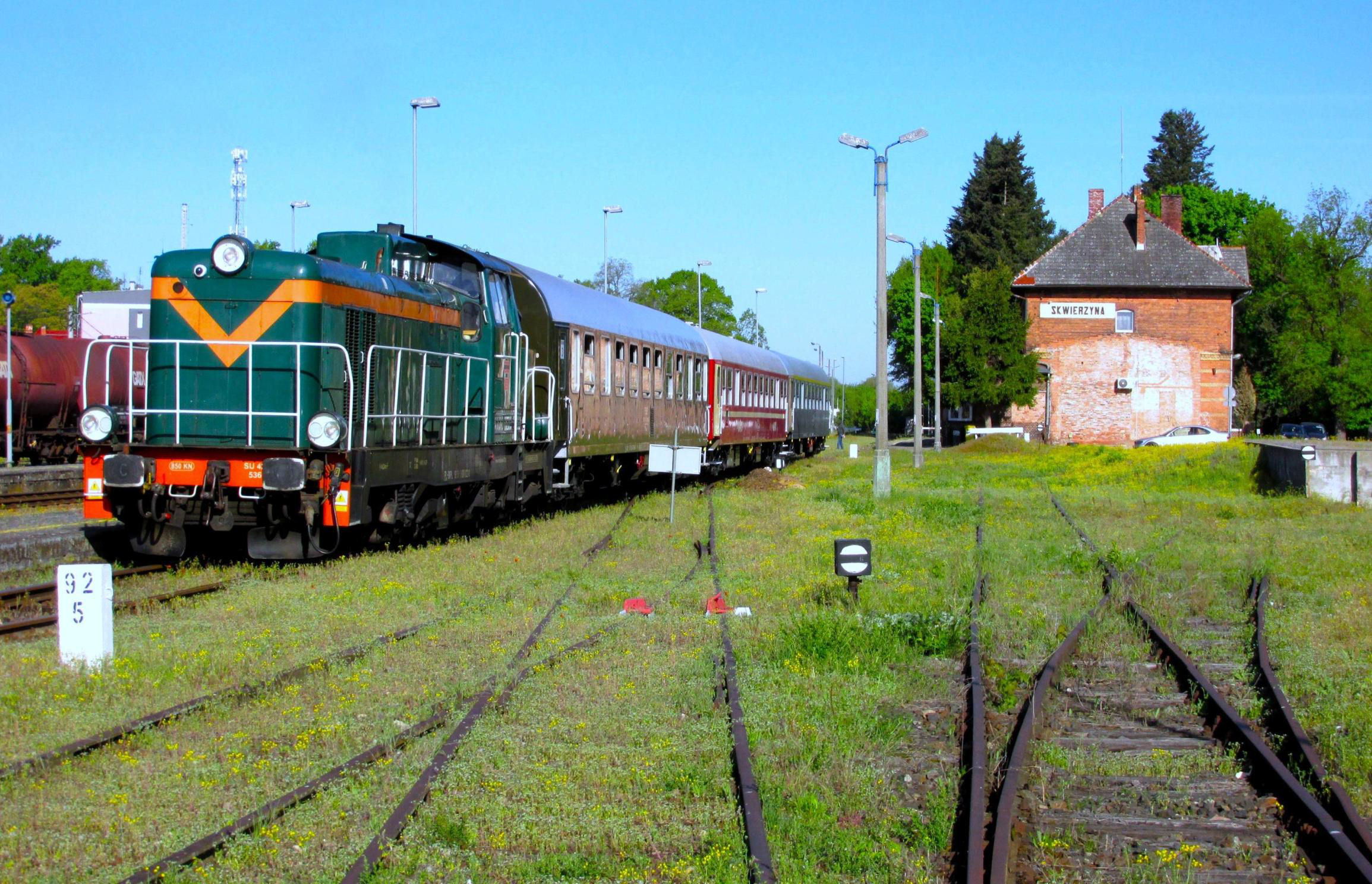
Our BLS Wielkopolski Explorer railtour after running round at Skwierzyna.
[© Simon Mortimer 2025]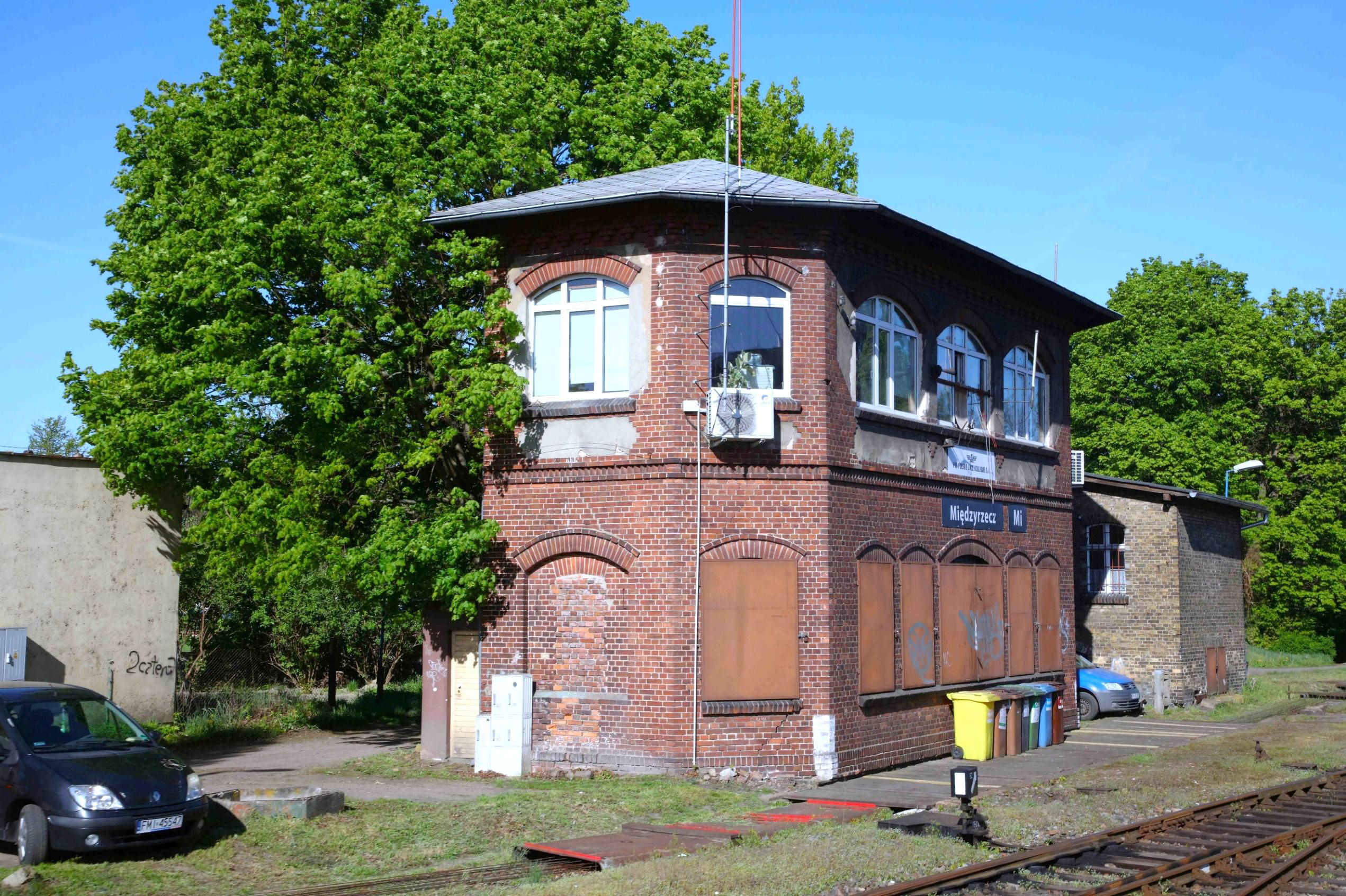
Międzyrzecz signal cabin (code Mi).
[© Iain Scotchman 2025]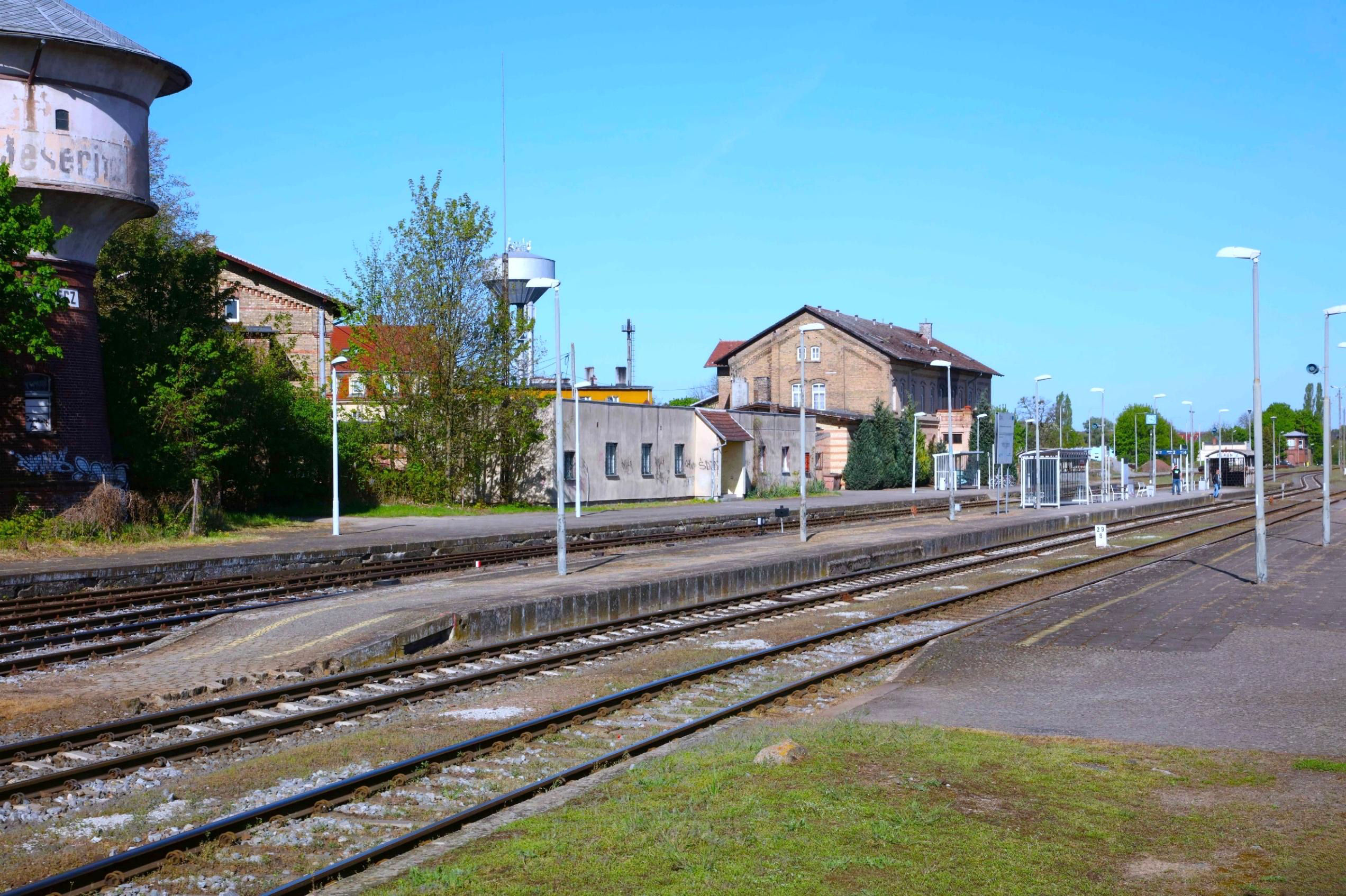
Międzyrzecz - the signal cabin is extreme right on the far side of the line and that bilingual water tank is far left.
[© Iain Scotchman 2025]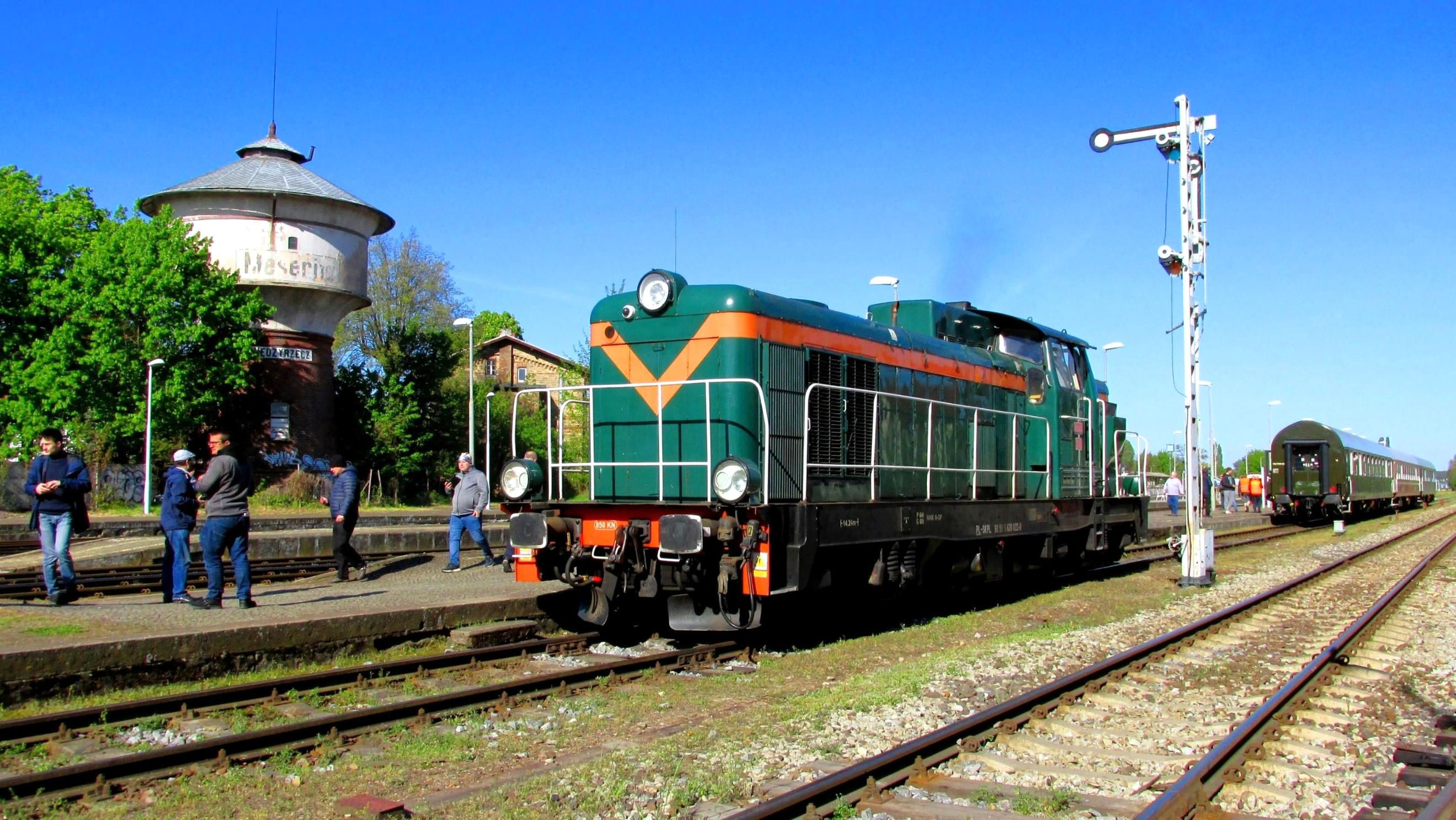
Międzyrzecz - the German name 'Meseritz' on the water tower is in much bigger letters which, surprisingly in 80 years, has not been painted.
[© Simon Mortimer 2025]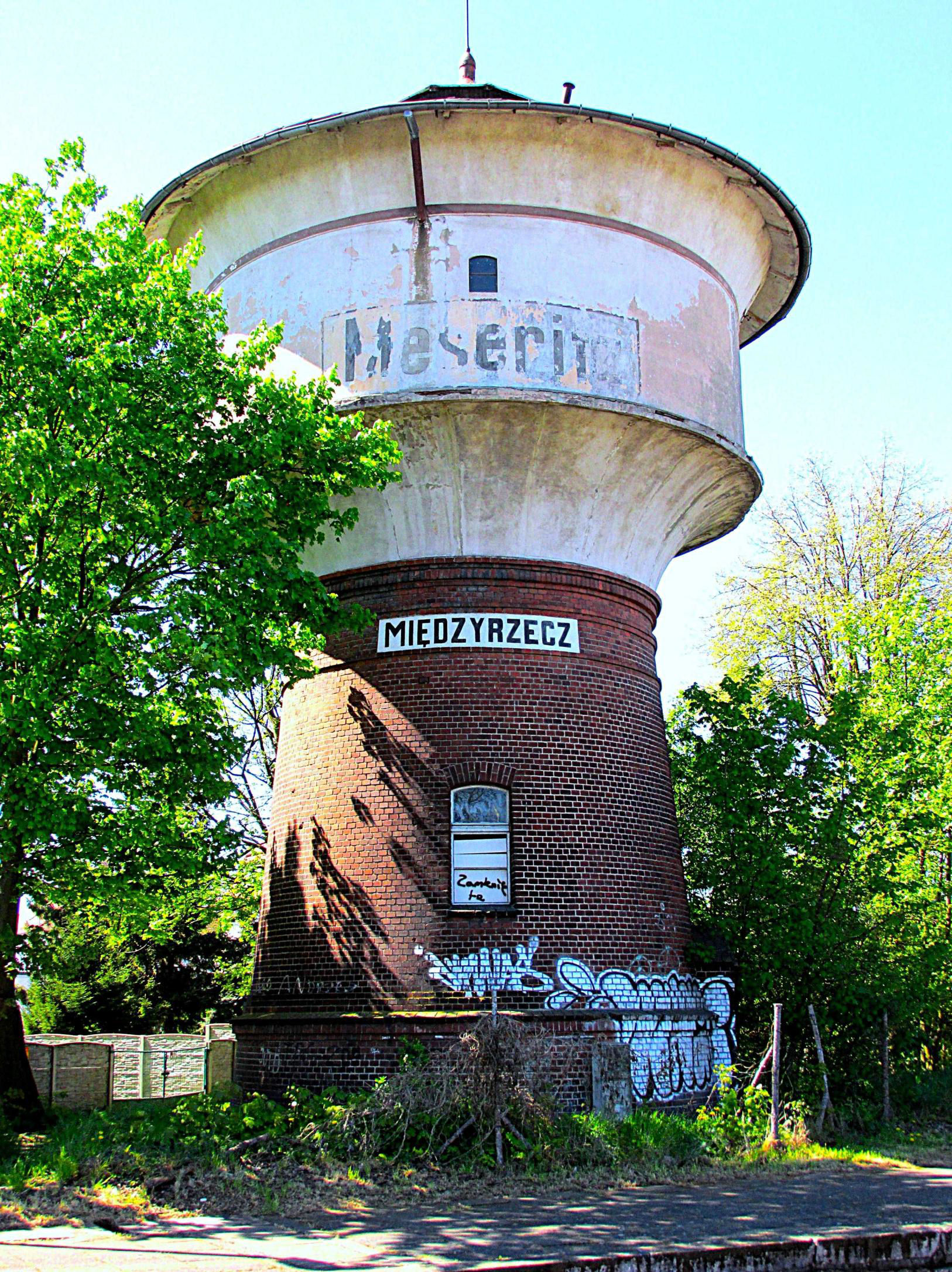
The bilingual water tower at Międzyrzecz (German 'Meseritz').
[© Simon Mortimer 2025]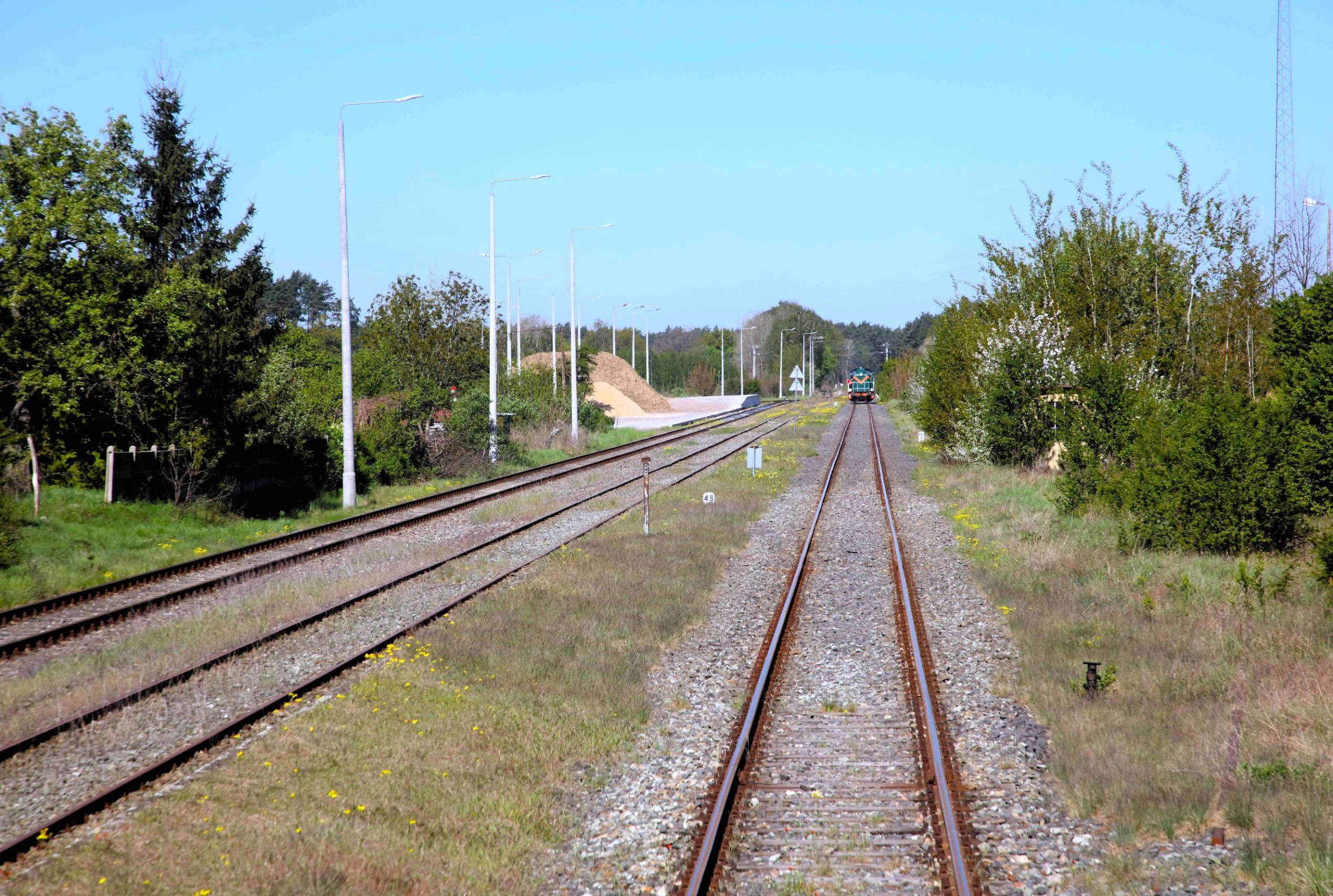
Trzemesno Lubuskie.
[© Iain Scotchman 2025]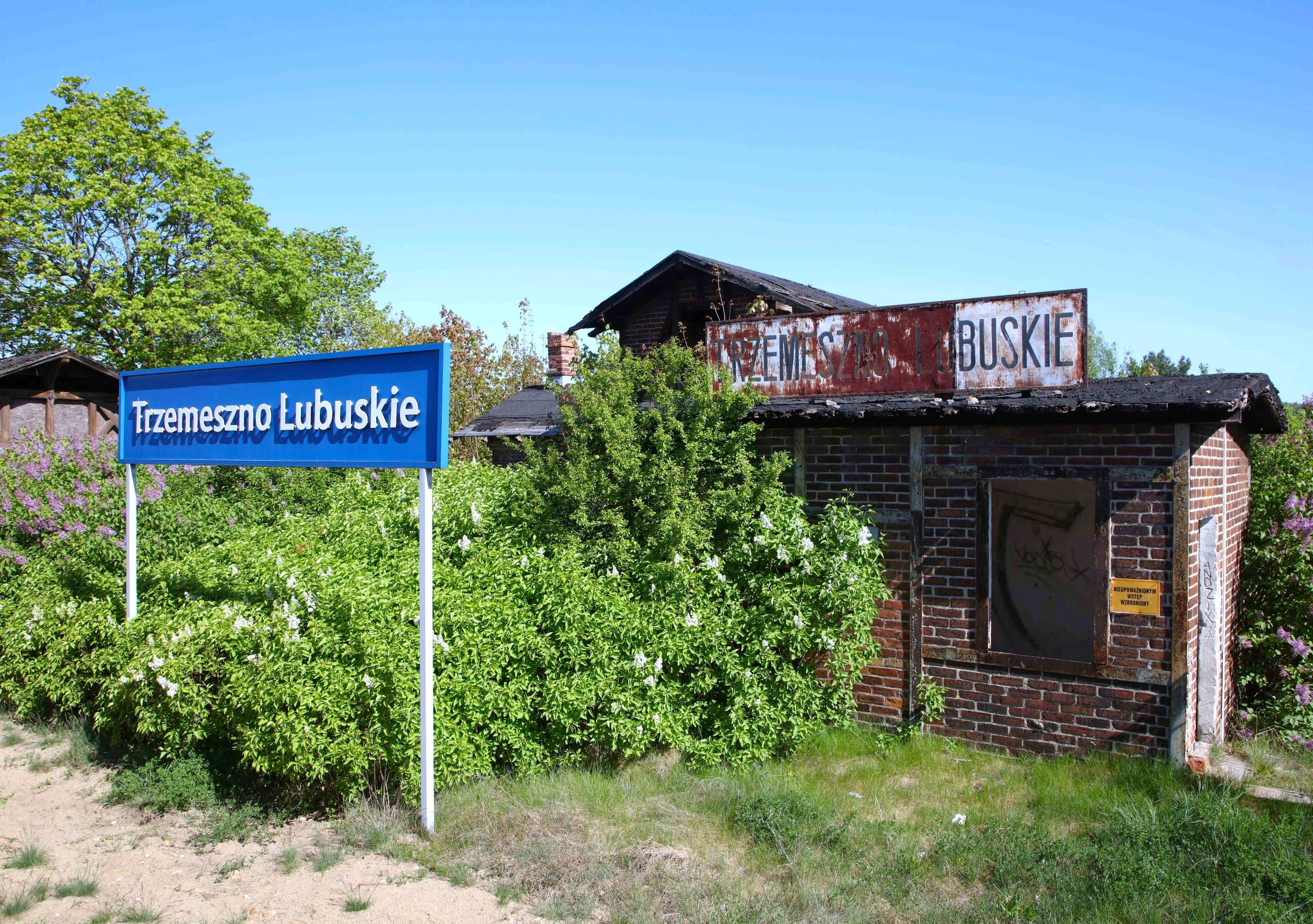
Trzemesno Lubuskie Station.
[© Iain Scotchman 2025]Oddly here, despite a station, a platform, even a nice new nameboard and timetable holder we weren't allowed off; locals were even walking on the platform with their dogs! So, we ran round (keep counting!) and returned to Międzyrzecz. Here there was another shunt propel to obtain the line to Nietoperek, about 7km along the line that once ran through to Toporów via Sieniawa Lubuska, (reached on Day 2). Thus, participants were then left with a gap of around 20km. In Poland, I would hardly discount anything reopening, I am sure it's all still there, even if in a small forest! This went in a fairly regulation manner until, a few hundred metres before Nietoperek station, we stopped with almost nothing other than a (wood chippings?) timber terminal and a runround loop. We ran round and returned to Międzyrzecz.
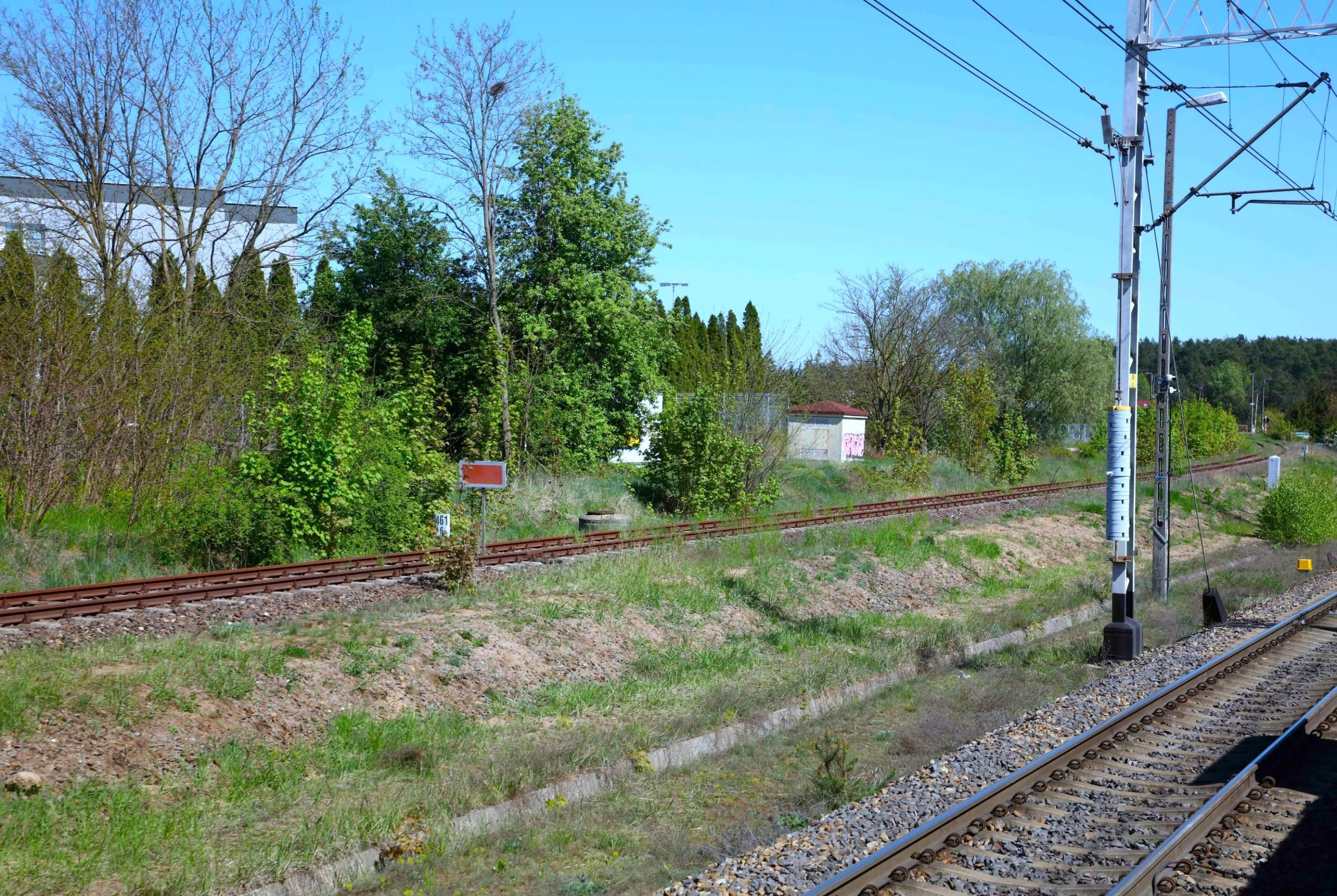
The closed section to Nietoperek at the 'other' junction end from when it was a through line, taken on Day 2.
[© Iain Scotchman 2025]Next on the agenda was the remaining 23km of line to Wierzbno. It enjoys a typically Polish summer weekend service, running nowadays in the guise of a railbus, more a rail minibus, a Class 105 unit that trundles up and down offering opportunities to ramble and enjoy fish lunches at the restaurant which is part of the station at Wierzbno itself. On the approach, the remains and closed section of the Line 363 to Rokitno, some 12km away, trailed in on the left. Our near hour layover here afforded the chance for a railway ramble, initially over the very busy main road and then into the peaceful calm of the line beyond. It serves the large Orlen crude oil terminal, clearly the reason for the line's retention.
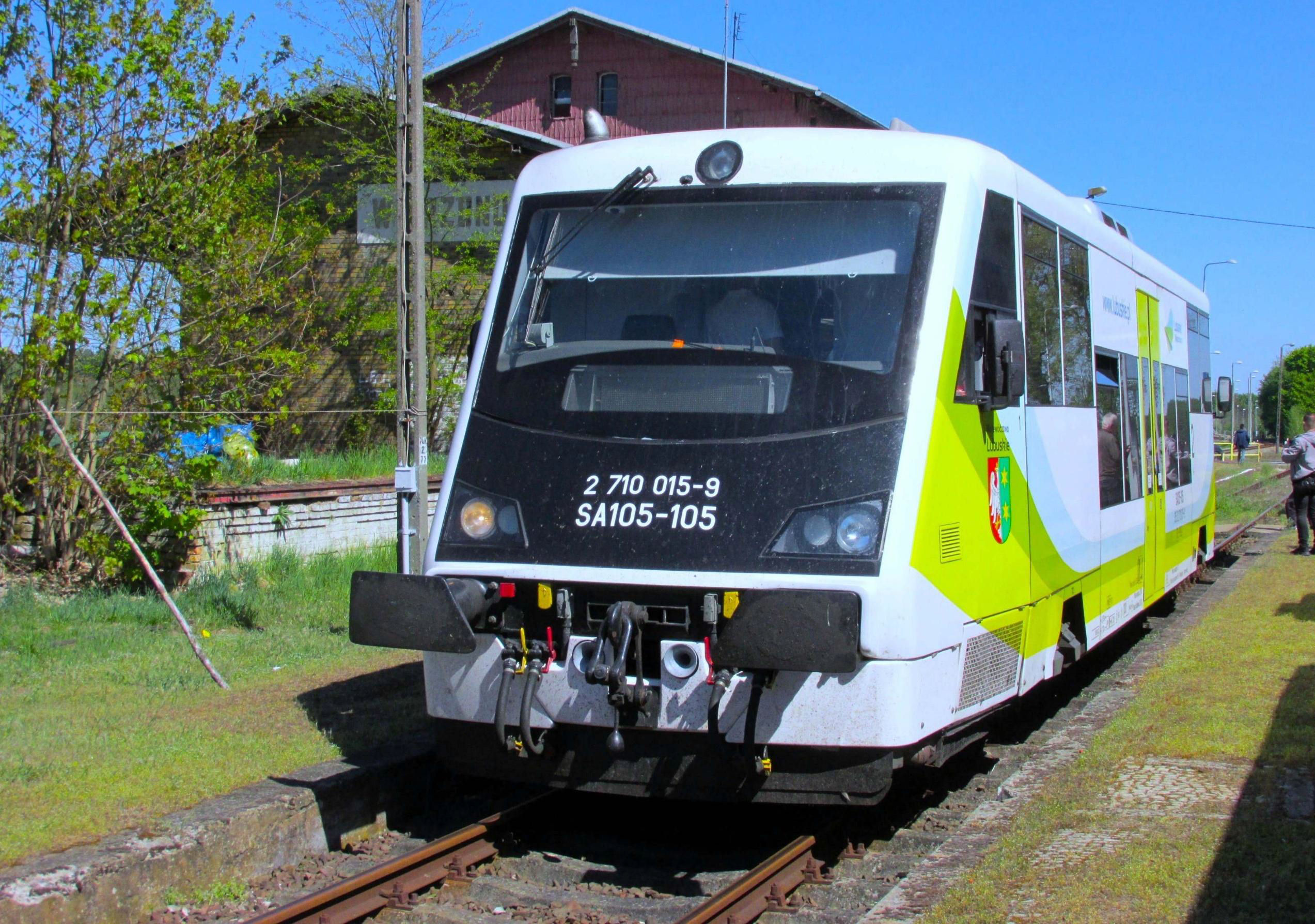
33.SA105-105 stands at Wierzbno on a weekend ramblers' shuttle (rambling not compulsory) - from Międzyrzecz.
[© Simon Mortimer 2025]Then the railway changes from weed free, well fettled track, to weed choked dereliction, punctuated by collapsed telegraph poles complete with wires, one of which had ironically, in blocking the line, knocked over the official red (stop) marker in the 4ft indicating the blocking of the line. Beyond the trees, the landscape opened up to fields on either side while the line stretched away clearly similarly abandoned, which might make a pleasant sunny walk on such a day but time was against any such idea.
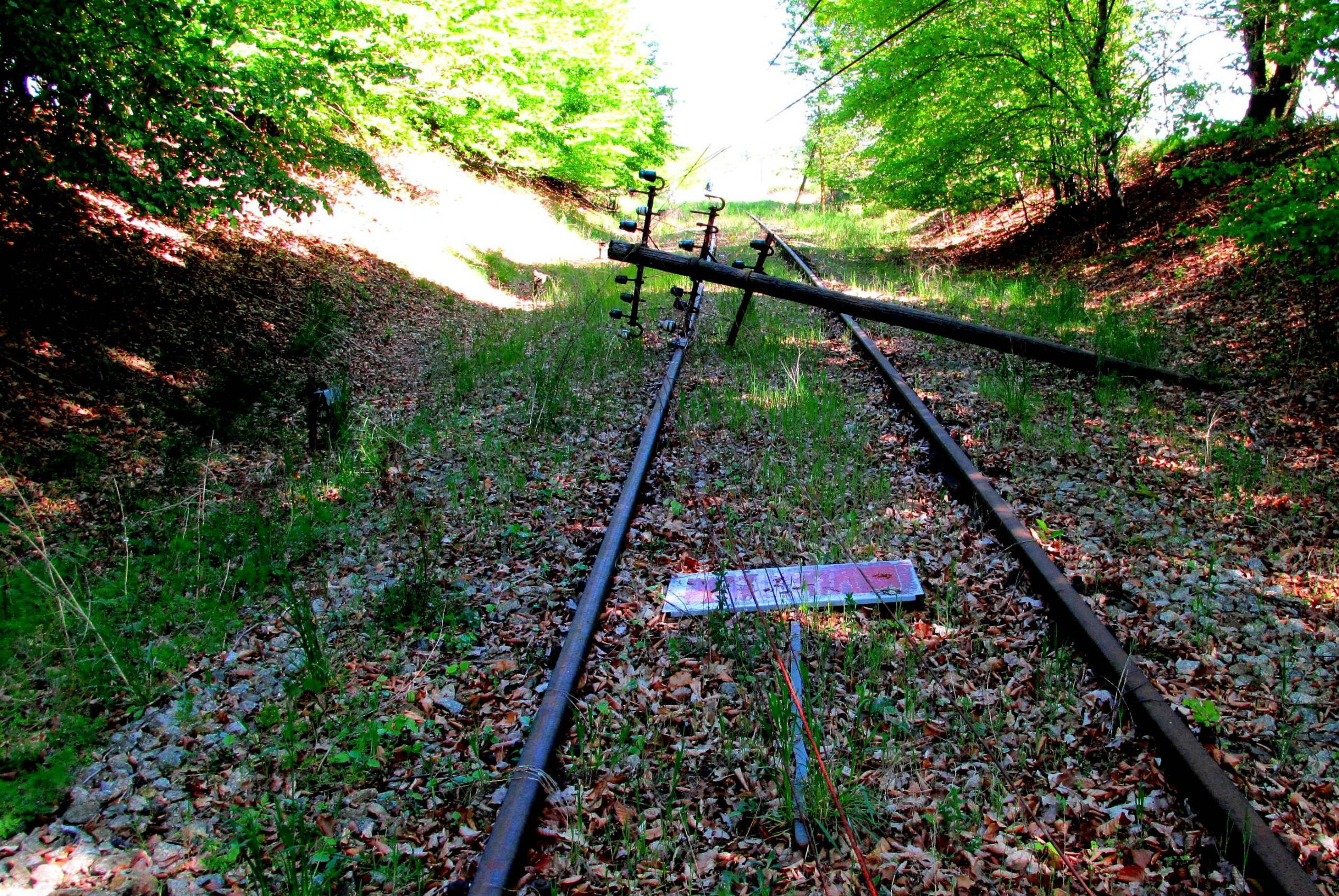
In the other direction into the sun, the derelict line past Wierzbno, collapsed telegraph pole wires have knocked over the 'railway closed' sign.
[© Simon Mortimer 2025]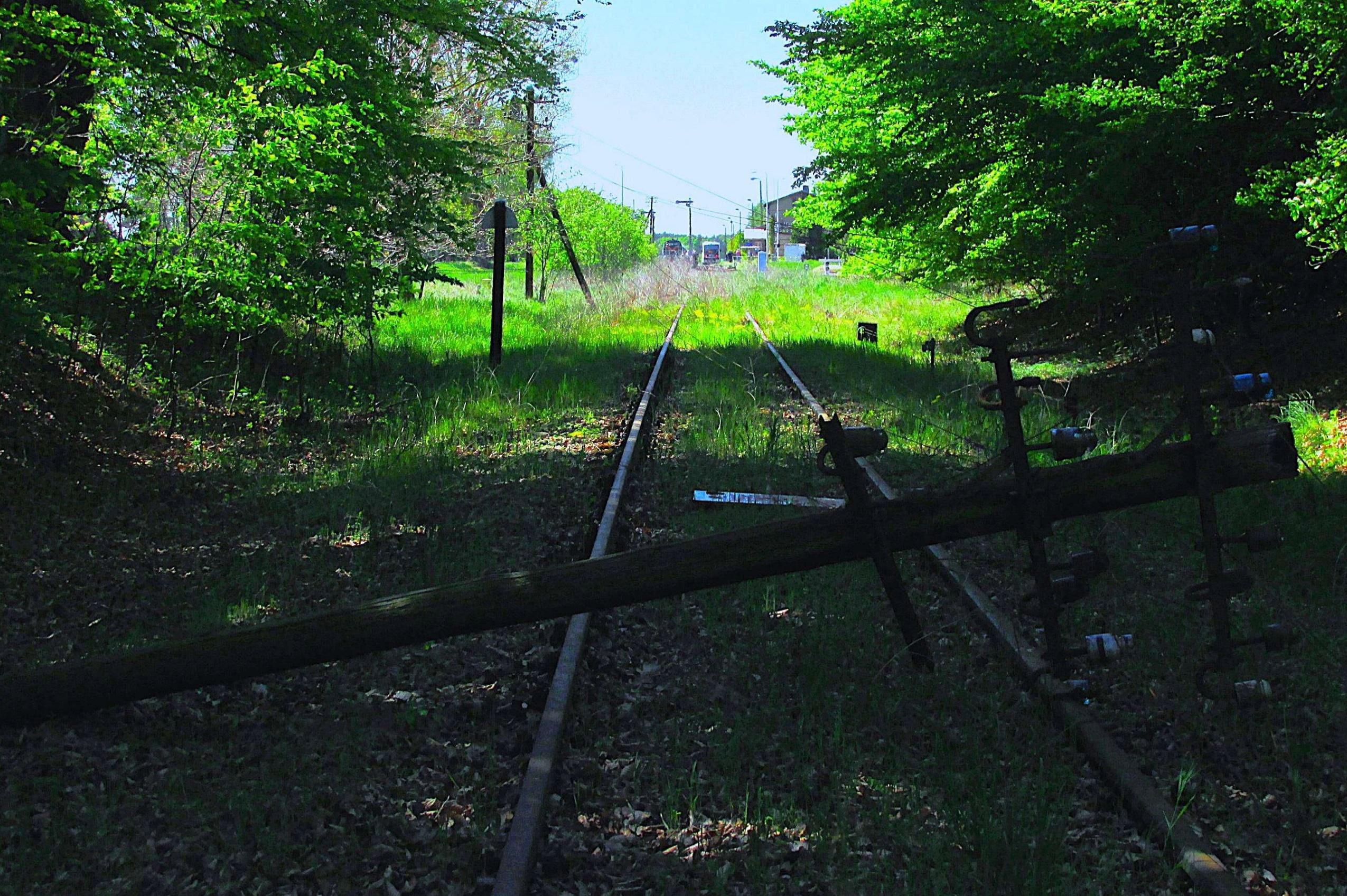
Looking back to Wierzbno from the derelict line beyond with that telegraph pole. The SU42 and Class 105 railbus are distant in the station.
[© Simon Mortimer 2025]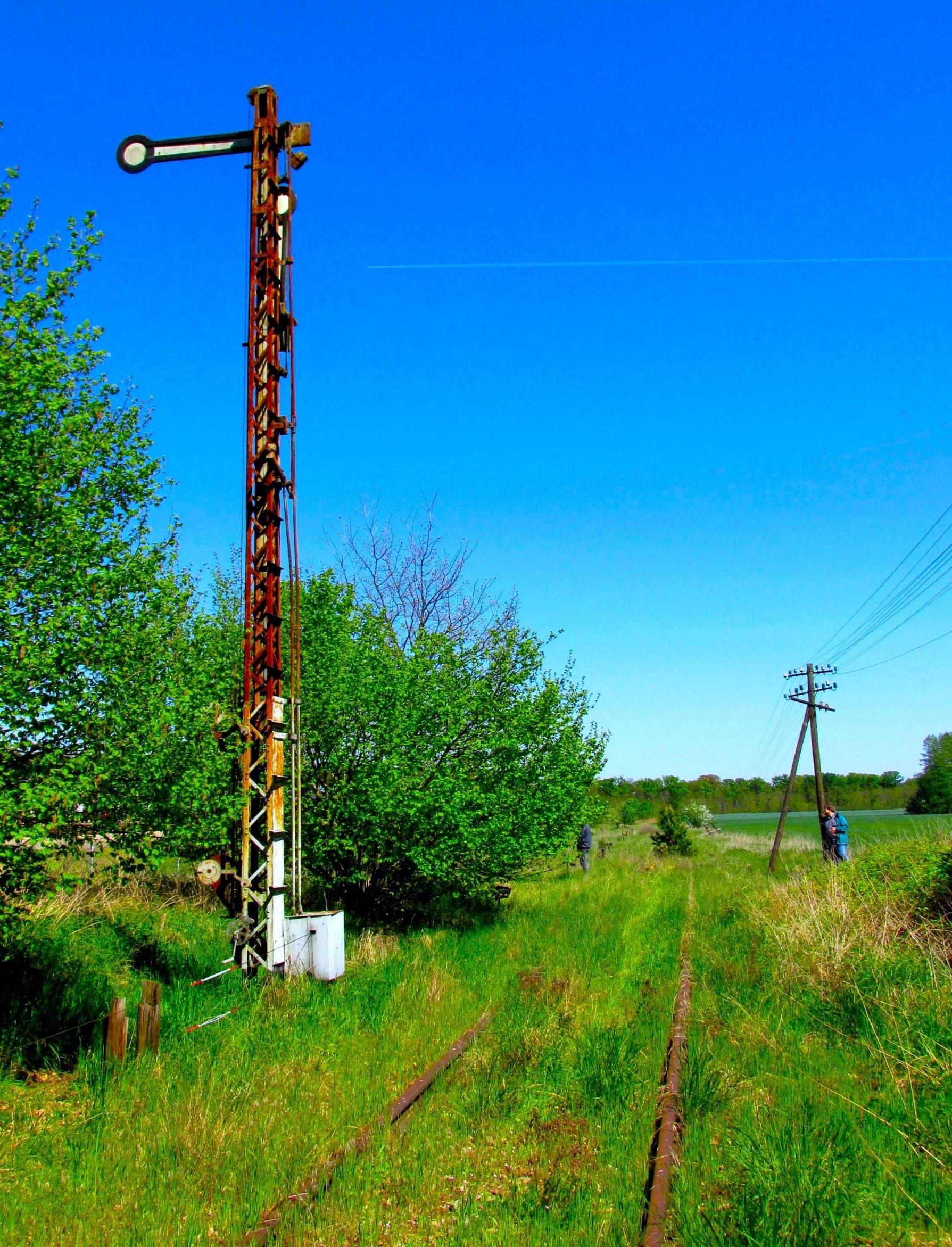
Looking away from Wierzbno station into open countryside, the rusty, overgrown
rails stretch into the distance, disused for probably 56Km west to Szamotuły.
[© Simon Mortimer 2025]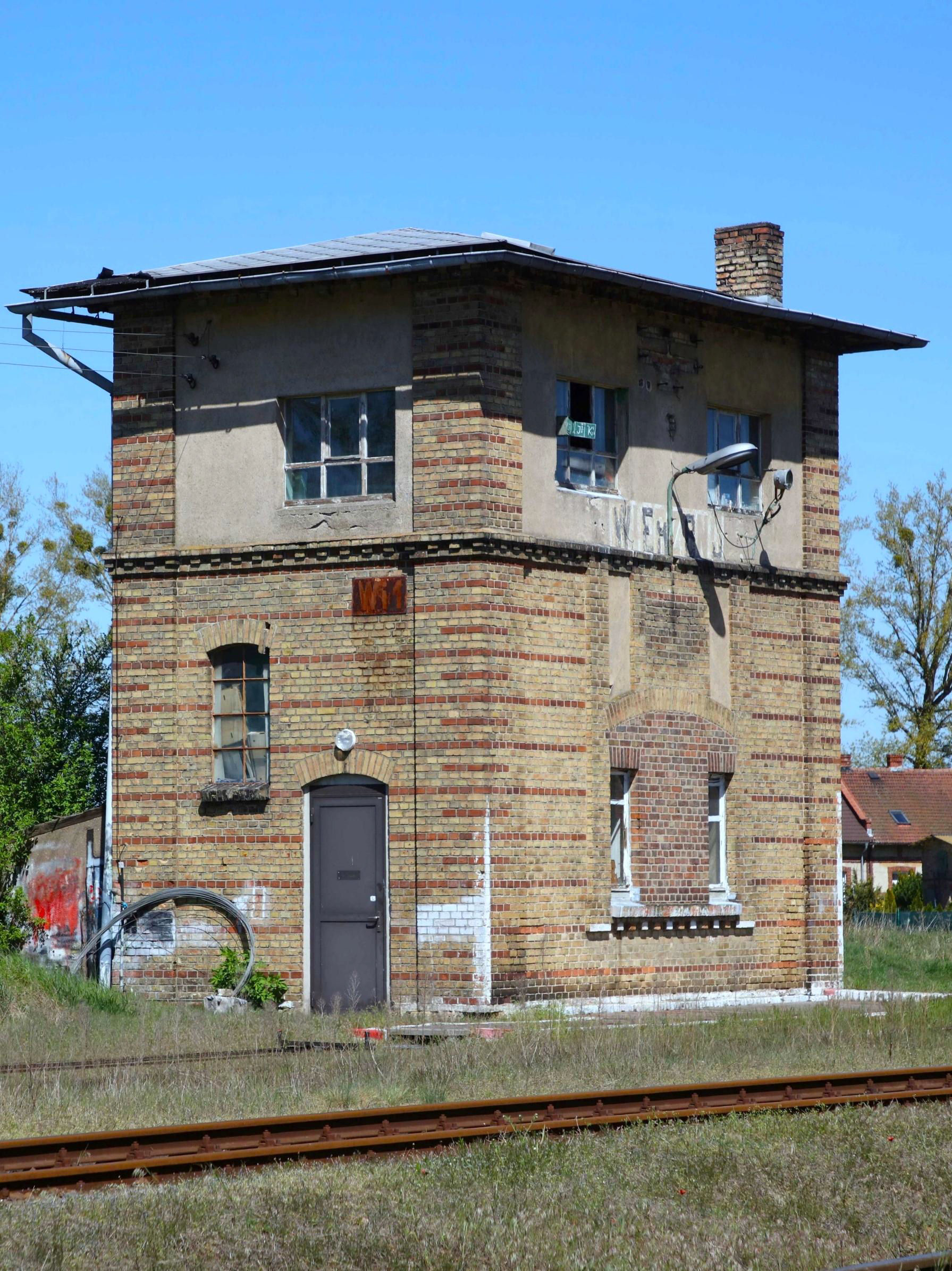
A disused signal cabin at Wierzbno.
[© Iain Scotchman 2025]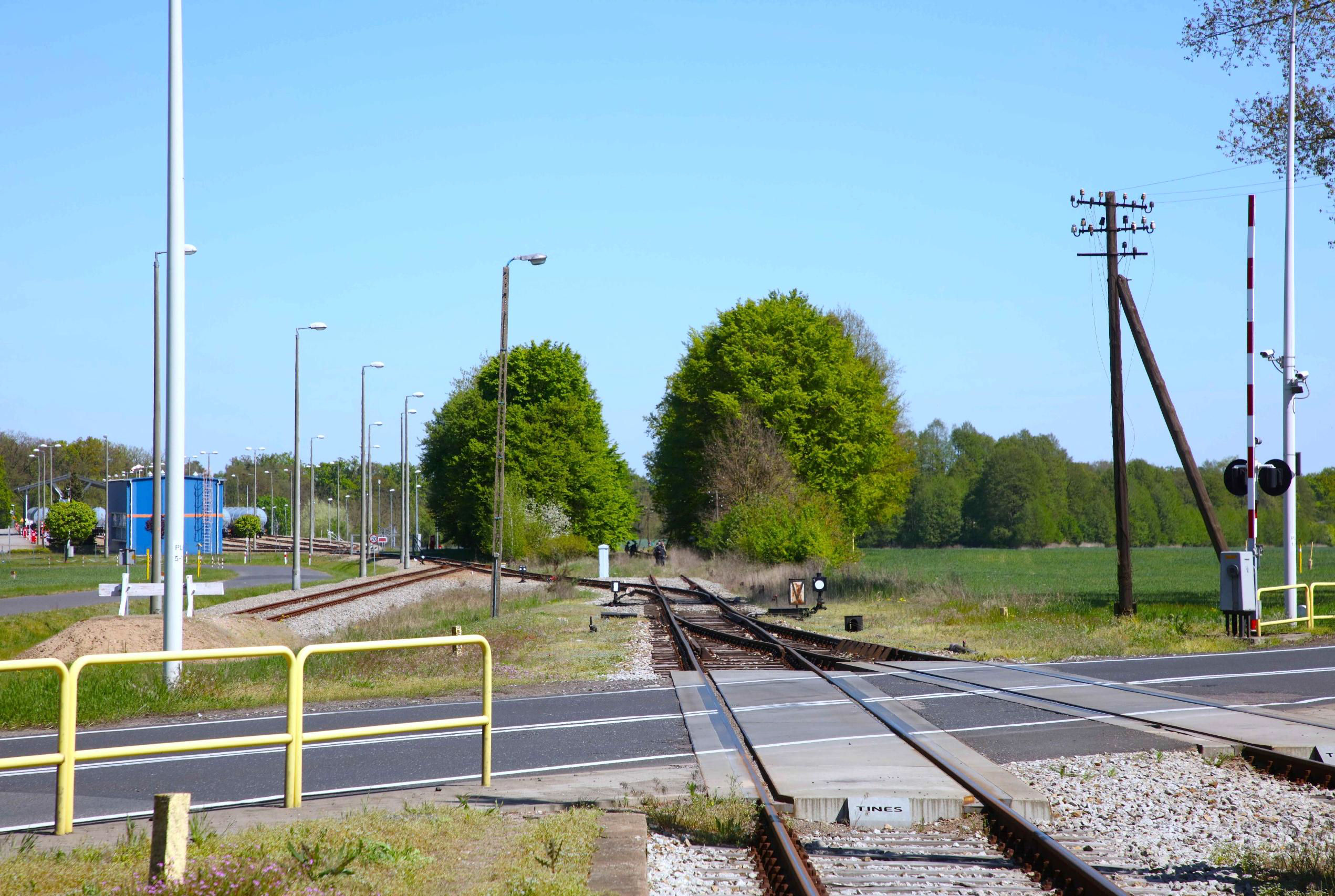
Beyond Wierzbno the oil terminal is off to the left and the disused line is straight ahead for 56km; other tour participants are exploring it.
[© Iain Scotchman 2025]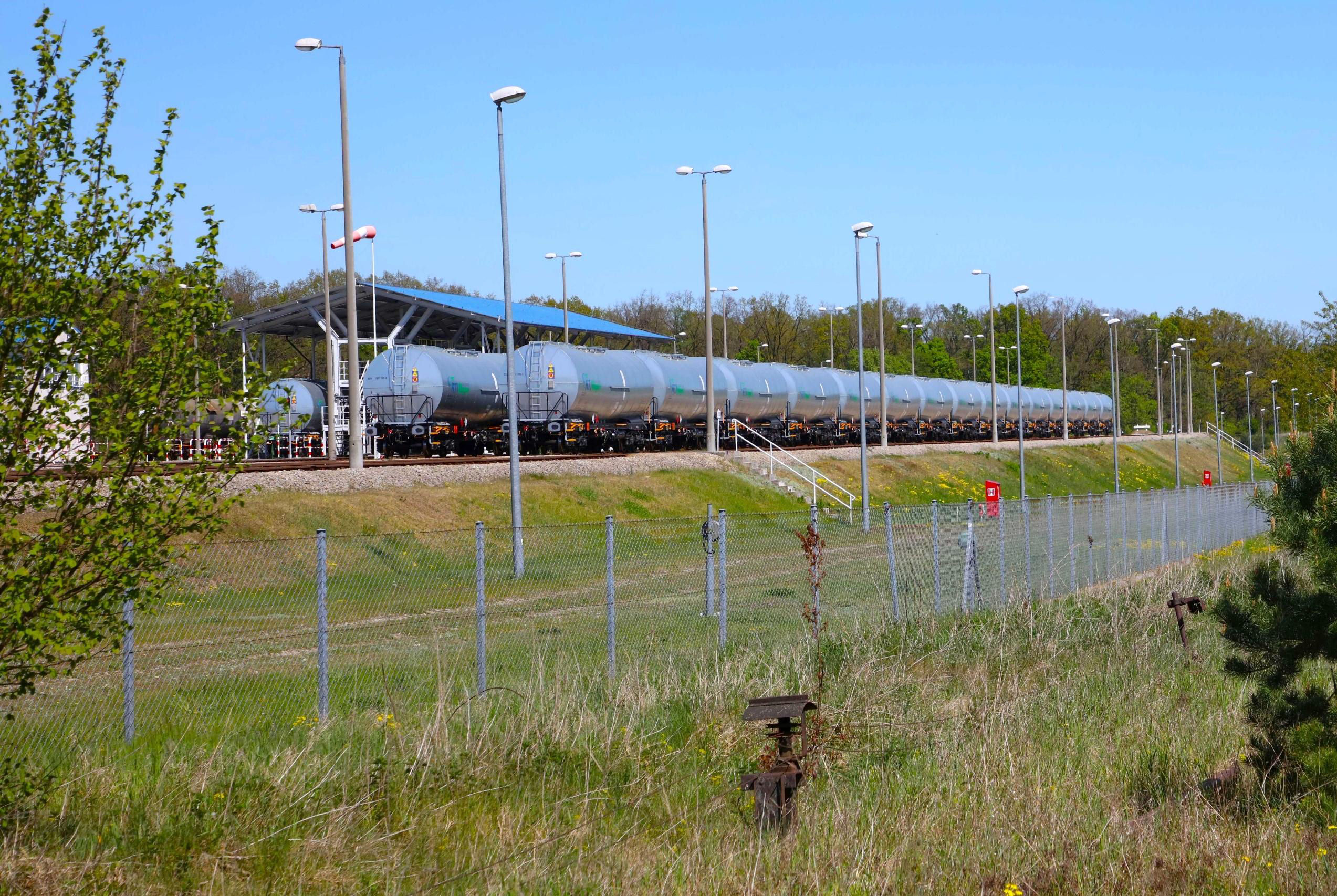
The Wierzbno Orlen crude oil terminal https://tinyurl.com/5yk68zws (the disused line is right, rusty disconnected signal wires can be seen
[© Iain Scotchman 2025]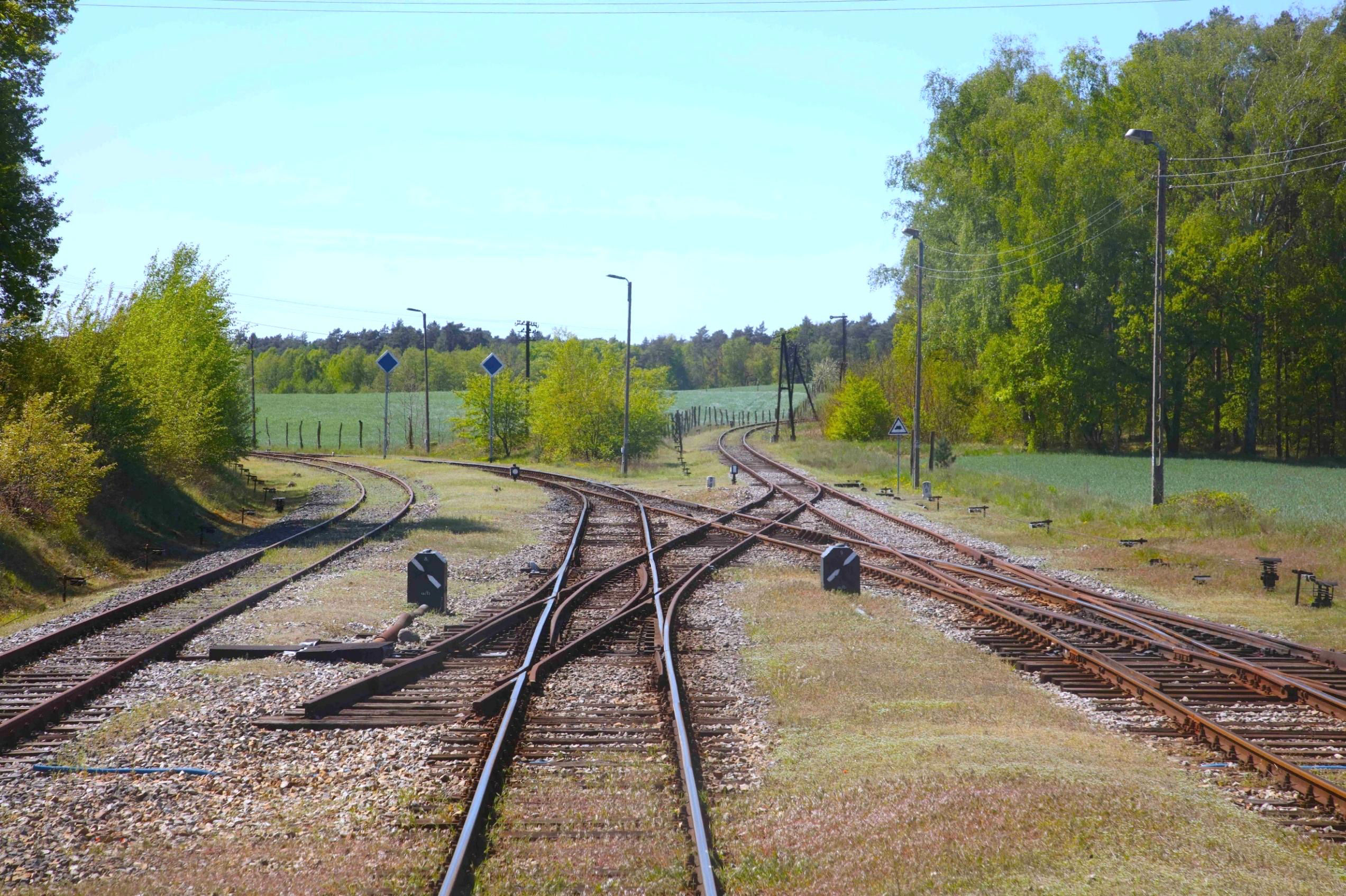
The line from Rokitno at Wierzbno.
[© Iain Scotchman 2025]We returned to Międzyrzecz for a run round, so we could leave for the last time on the fifth and final route we hadn't covered yet out of this junction, towards Zbąszynek. The crew had another chance to run round in the extensive main line junction station with sprawling yards beyond. Our tour set off down the main line towards Poznań but we weren't going to just breeze into Poznań Główny (main station) for an early pivo (beer)! On approaching Poznań Górczyn, we veered left and took part of the Poznań Freight Ring, Line 801 to Poznań Dębina. Our tour went along the main line towards Poznań Krzesiny for a run round, returning around the freight curve through Poznań Franowo Yard on Line 394, then to Kobylnica along the main line towards Gniezno. Next, we reversed again, returning to Poznań Franowo Yard to reverse again (keep up at the back!) in former Peron (Platform) 6. This platform once appeared to serve thousands of commuters with railway jobs back in the days of the great communist miasma.
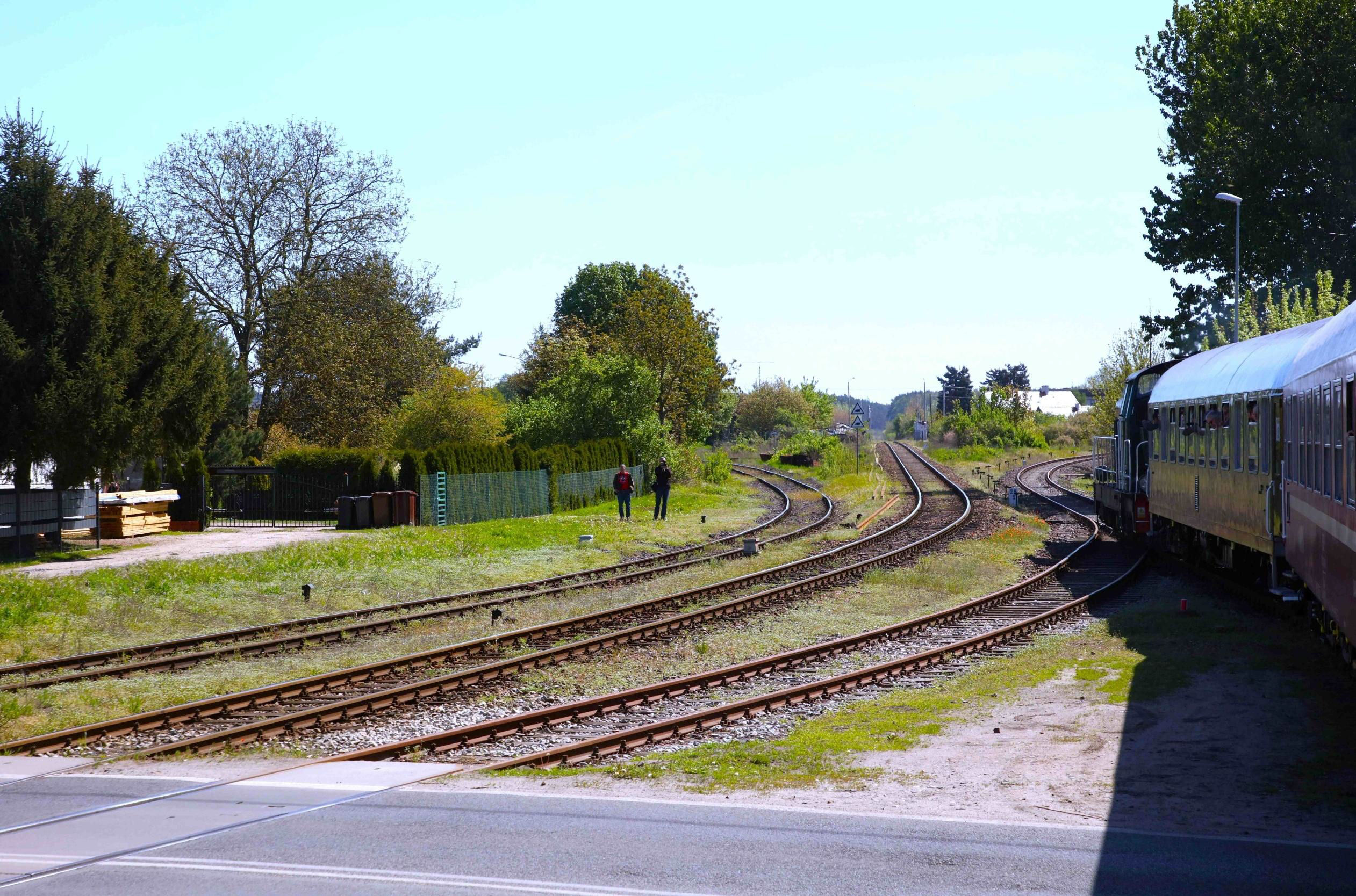
The three-way junction at the eastern end of Międzyrzecz.
[© Iain Scotchman 2025]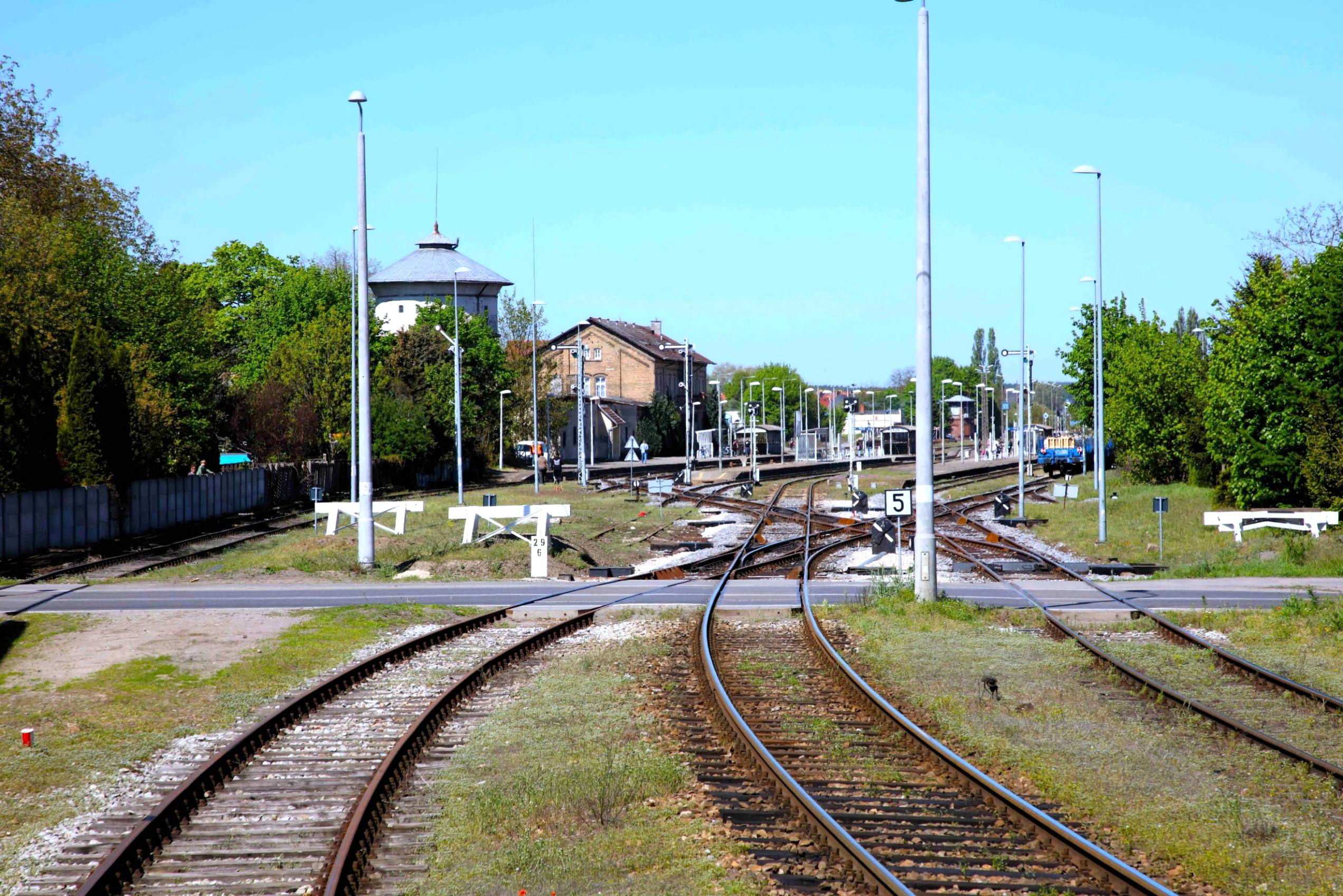
In the other direction (the level crossing is common to this and previous photo), a final photo of Międzyrzecz station.
[© Iain Scotchman 2025]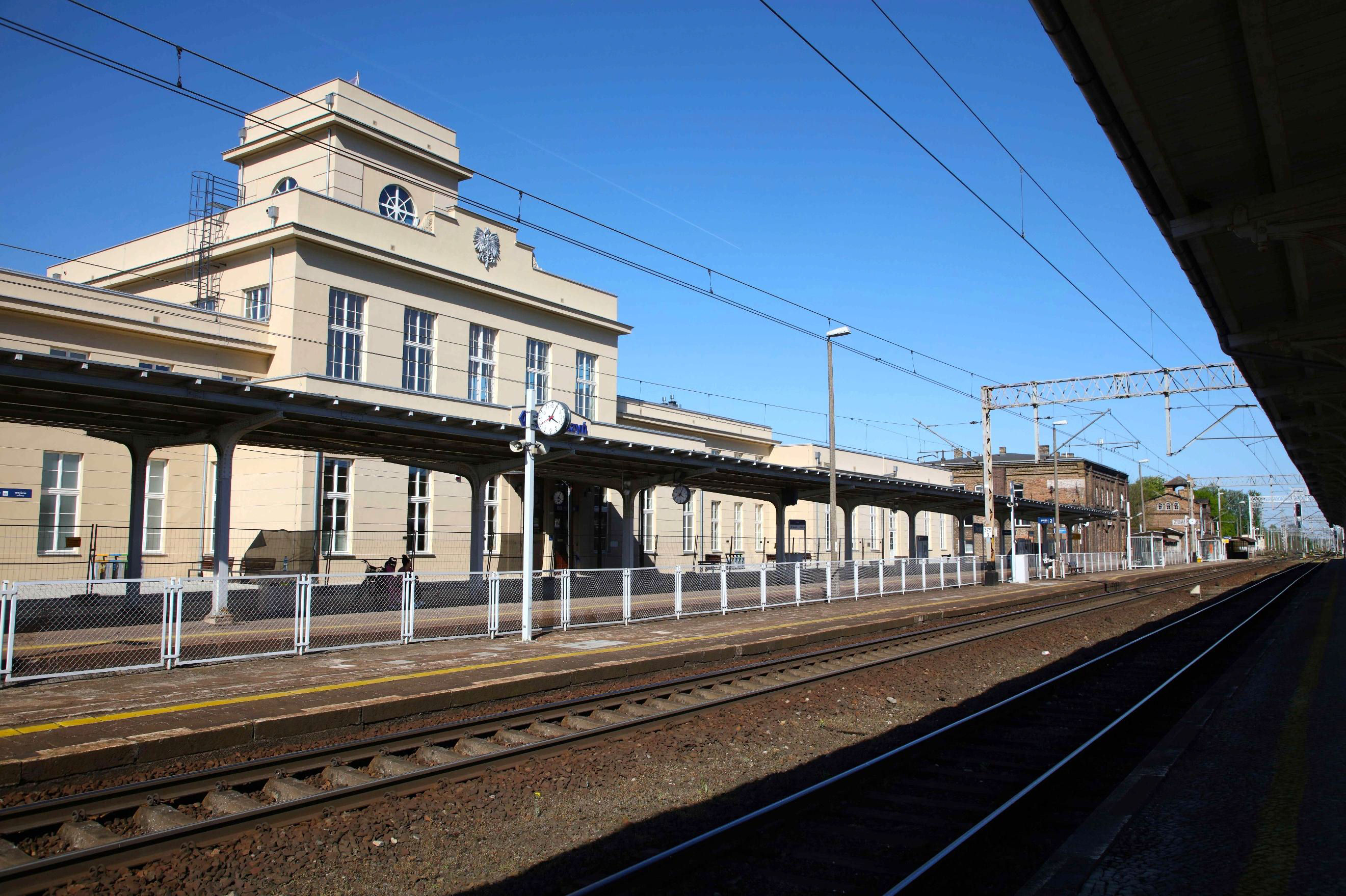
Zbąszynek showing the succession of station buildings, the oldest is on the far right end distant and the current, longest one, is this end.
[© Iain Scotchman 2025]We headed to Swarzędz on Line 352 for yet another reversal (in the station P1) but 22 mins early! This was an error as it put a freight on Line 806 as we were out of path, Therefore we returned via Line 352 (not to the south side of the yard) past 'PFD' but the north side past 'PFC', 'PFB' and 'PFA', essentially repeating our outward route. [These are signal cabins. 'PF' is Poznań and the letters are individual box designations - generally these countries don't do fancy names unlike the UK, even schools and hospitals can just be given numbers.] This meant that, after successfully rounding the curve towards Poznań Starołęka (Line 352), our train sat for 20 minutes to regain our path and platform allocation. The tour finally traversed multiple crossovers on approach to Poznań Główny to terminate in P10 Tor (Track) 54.
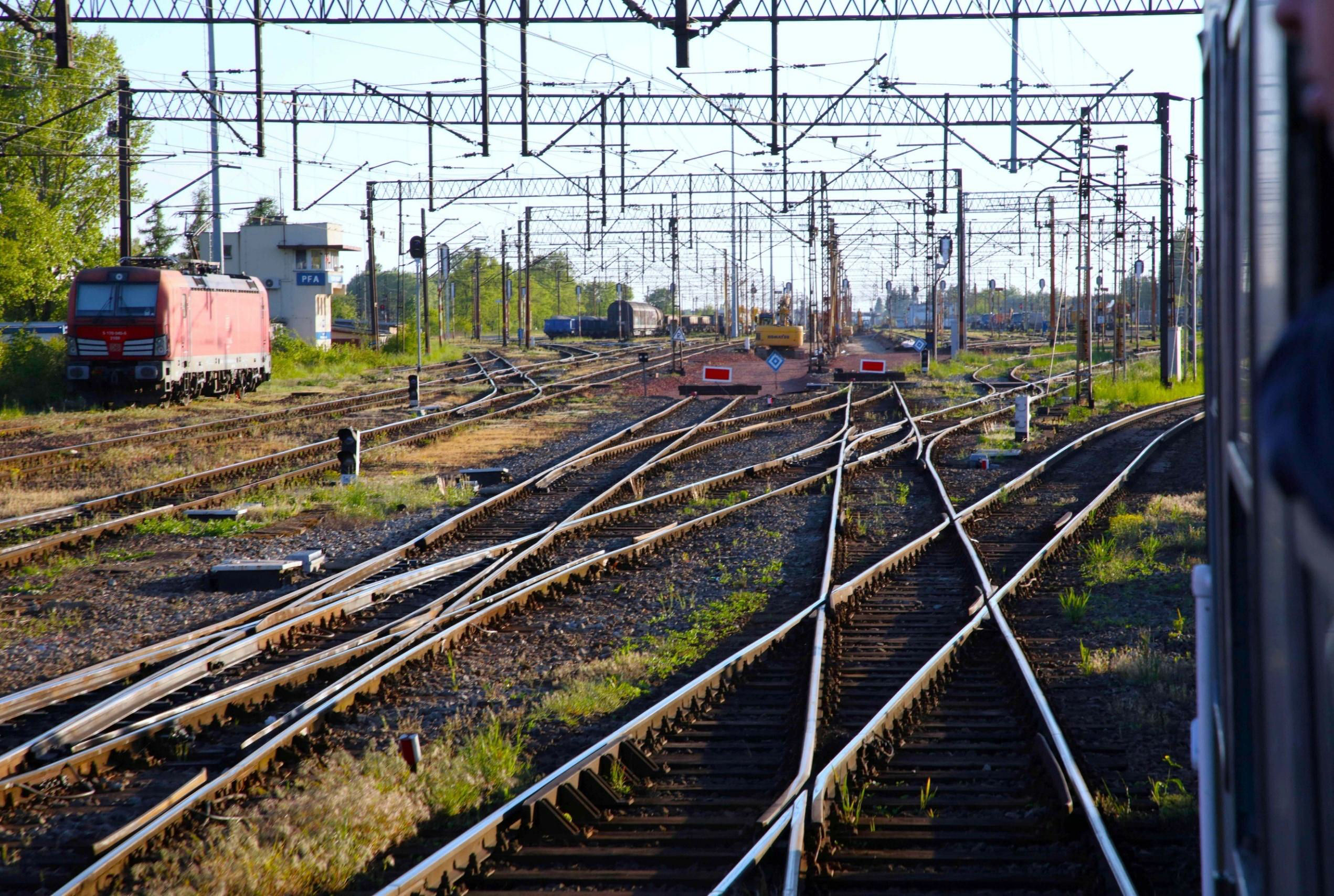
Poznań (symbol PF) with Signal Cabin PFA to the left.
[© Iain Scotchman 2025]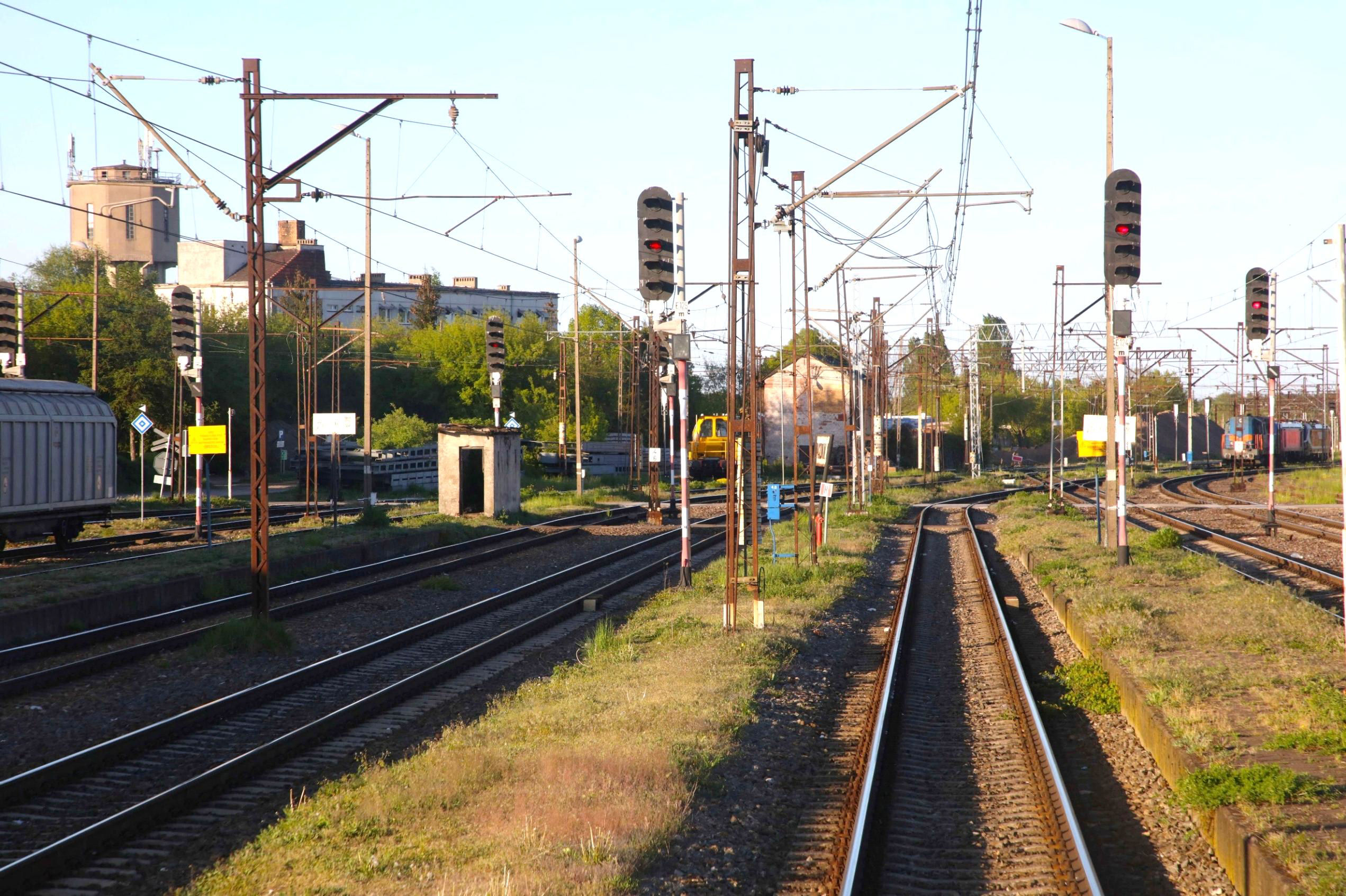
oznań Franowo (closed to passengers) former Peron (Platform) 6 looks as though it has seen better days - it has!
[© Iain Scotchman 2025]At this point, the Editor in Chief (Peter Green) and self, carried out a reconnaissance to find (as its location is not easy to determine, particularly at night) the Kaiserbahnhof im Posen, which today is more typically referred to as Poznań Główny Peron 9 abc, not the Polish answer to Harry Potter Platform 9¾ at King's Cross but an obscure platform, almost a station within a station opened for der Kaiser in 1913!
Its rôle as an imperial platform was short lived, the defeat of Germany in WWI eclipsed Willhelm II after 30 years, along with the Hohenzollern dynasty which had presided over Prussia for 300 years. Then it hosted Polish dignitaries, even the famous Polish pianist and composer Ignacy Jan Paderewski (no, never heard of him either). Latterly, it was a station for summer specials to the lakes, which provided a more accessible alternative to the genuine seaside, hence its rather jolly name of Poznań Dworzec Letni 'Summer Station'. Nowadays, to sample the station, you don't have to be part of a centuries old Teutonic dynasty, a Polish bigwig or even be able to tickle the ivories, you just need to check the train times assiduously (as there are just a few) and a 5.70 złoty (= £1.16p) day return to Poznań Wola!
I dropped my bags off at the Hotel Traffic (which it transpired was the Gestapo Headquarters in WWII - really!). It appeared that almost everyone was staying here, including the Ed in Chief, who even enquired of the receptionist if they did cellar tours (his acerbic wit thankfully passed her by). We dropped into a delightful Italian restaurant opposite my very small apartment but it shut at 21.00 and it was 21.04! The place opposite was the same; so, back at the Ibis Hotel we selected fish and chips; the fish even had batter! [Your Editor doesn't like his fish battered - he likes it humanely killed.] After a couple of beers, it was time to get some ZZZZ before the final day but we did have a lie in. Day 4 didn't start till the shockingly late hour of 08.11 - we had completed three hours of gricing by then on Day 1!
Continued in Part 4