I already have a local interest in railways around Southampton and Portsmouth, so jumped at the opportunity to visit South Western House, to see and learn more. It turned out to be the hottest day of the year to date, so I opted to drive rather than use the train, allowing more flexibility and avoid any potential delays or interruptions to rail services due to the heat.
I drove in to Southampton over the Itchen Bridge, affording a glimpse of the top of South Western House. Formerly one of the tallest buildings in Southampton, it is now almost obscured by more recent high-rise developments of apartments and student accommodation. This gave me extra time before the start of the visit, so I sat in Oxford St in a shaded area, with a view of William Tite's 1840 Italianate style former 'Southampton' station. This was the name when it opened on 11 May 1840, at the end of the London & Southampton Railway - latterly the London & South Western Railway (LSWR). This station was renamed several times: Southampton Docks in Jul 1858, Southampton Town & Docks in Sep 1896, Southampton Town for Docks in Nov 1912 and then, on 9 Jul 1923, Southampton Terminus. It closed to passengers from 5 Sep 1966 and had six platforms. Passenger services (which included hourly through trains to Alton) transferred to Central station. Mail and parcels rail traffic continued until Dec 1967.
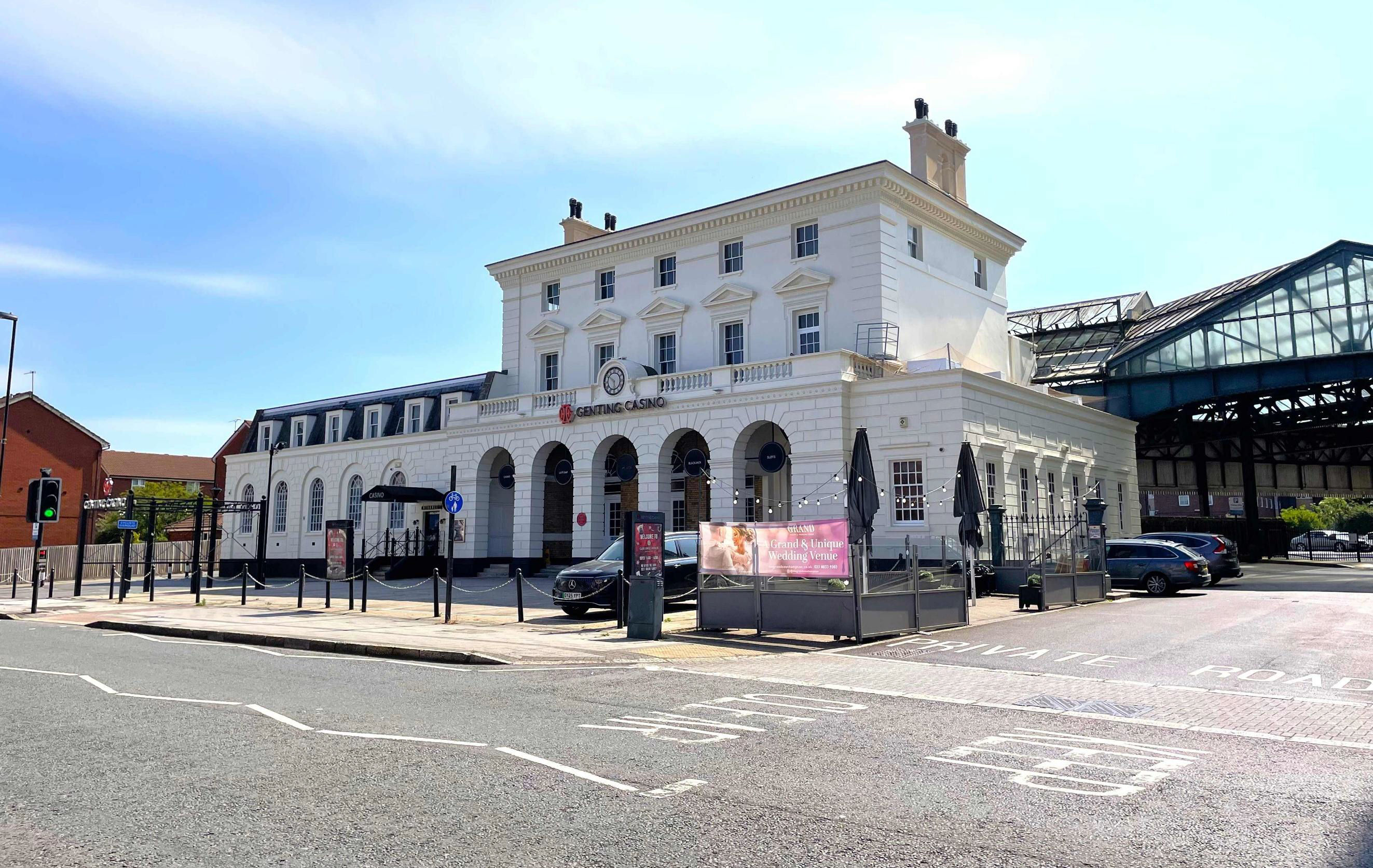
Terminus House, the original station entrance, is now a casino. We bet that our members didn't go inside. (South Western House is off right.)
[© Adam Turner 2025]We met in front of the old Southampton Terminus station and walked around to a parking area for South Western House, under what remains of the glazed areas at the end of the platforms. Here our guide, Adam Turner, gave details about the building and showed images of the buildings over the years.
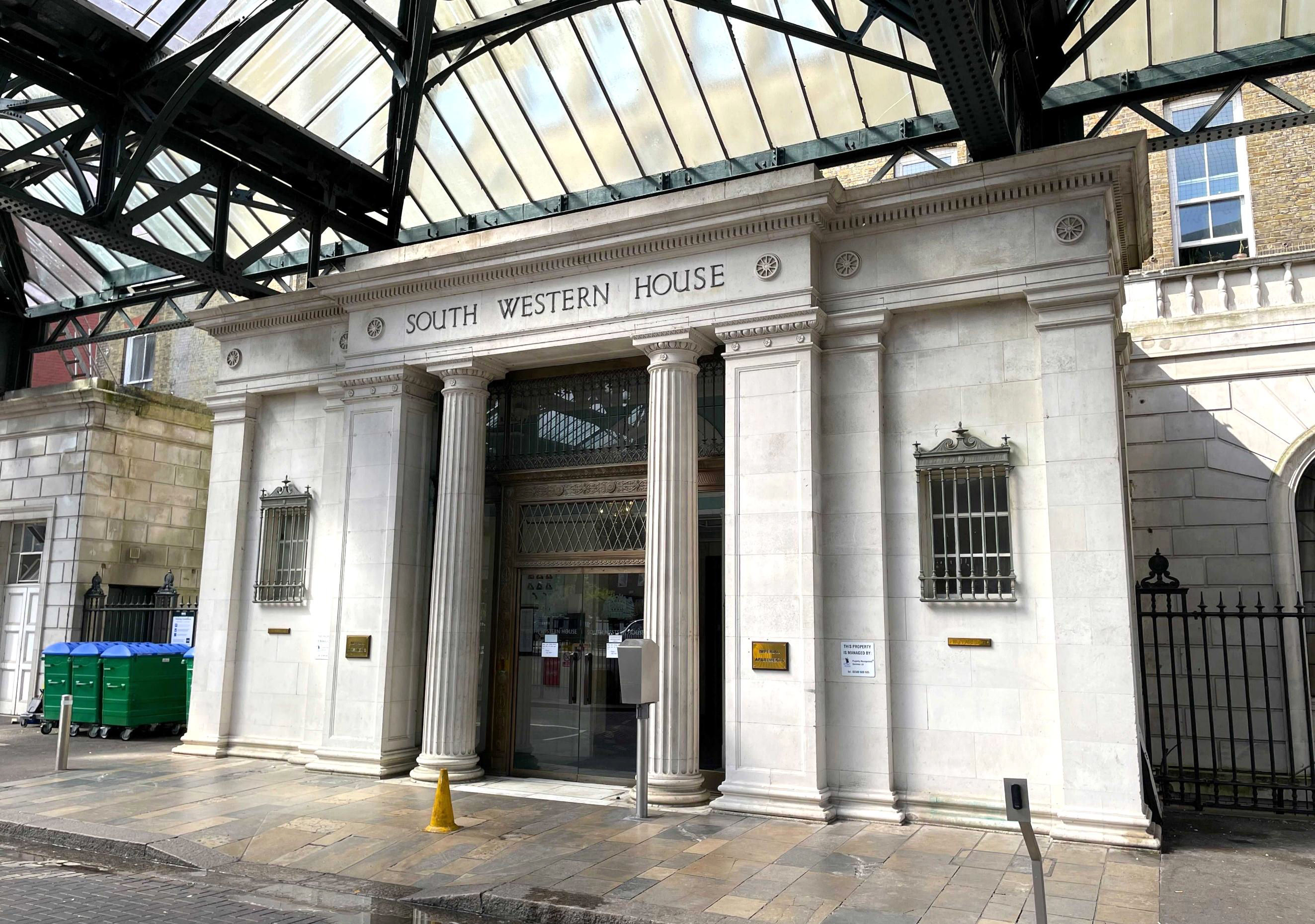
The platform entrance to south Western House The glass roof was over Southampton Terminus concourse.
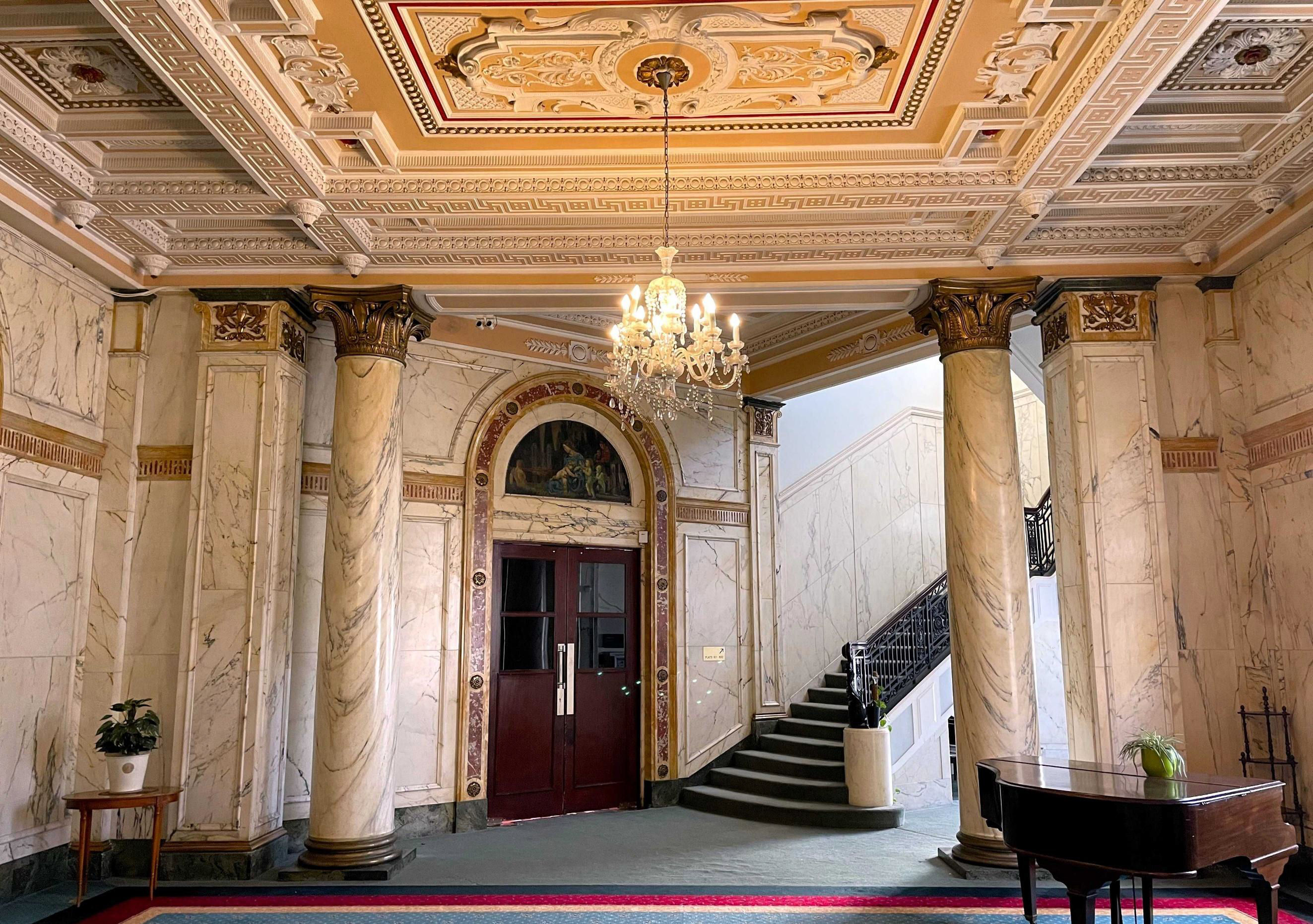
[© Adam Turner 2025]The Grade II listed South Western House started its life in 1867, opening as the Southampton Imperial Hotel. It was designed by John Norton with a French Renaissance façade. At opening, the hotel was described as a testament to architectural splendour. As part of a grand plan to take the transatlantic trade away from Liverpool, the LSWR acquired the hotel in 1882, renaming it the South Western. Direct management came in 1899. The hotel was extended in 1927 and the sumptuous entrance lounge dates from this period, it still has gilded marble walls and columns and richly panelled ceilings with chandeliers.
The caretaker, Dave, one of a small team maintaining South Western House today, was on hand to meet us, allow access into the building and explain some of its history.
Our 10 members entered through the entrance lounge that passengers would have used straight from the Southampton Terminus platforms, allowing us time to see its opulent decoration. From here, we went to the grand main staircases and were permitted to visit the first-floor area lounge. We were told that Winston Churchill and Dwight D Eisenhower met to discuss plans for the D-Day invasion here. During the later years of WWII, part of South Western House became HMS Shrapnel, a navy shore base.
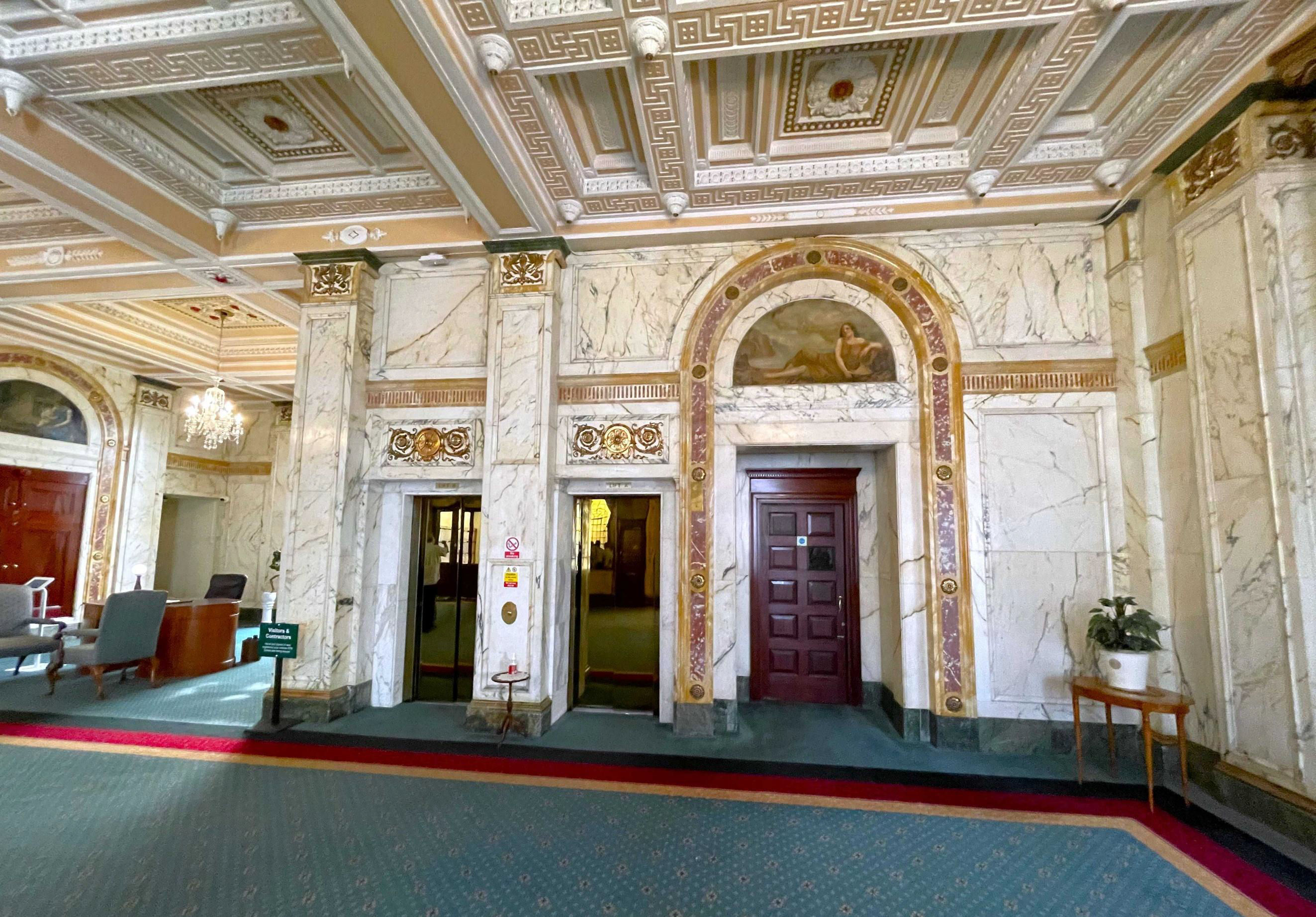
The entrance lounge that passengers would have used straight from the Southampton Terminus platforms.
[© Adam Turner 2025]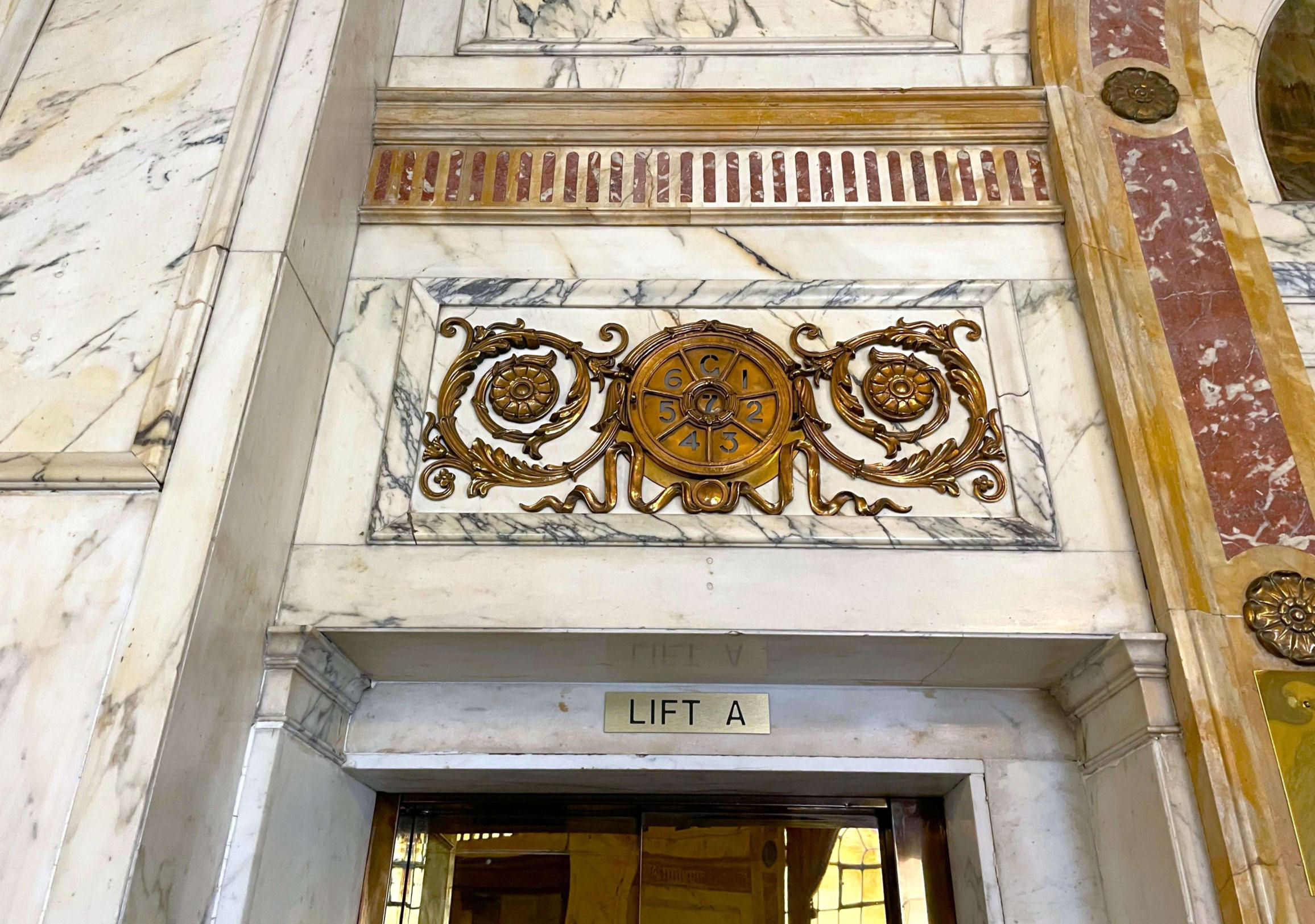
The ornate lift floor indicator.
[© Adam Turner 2025]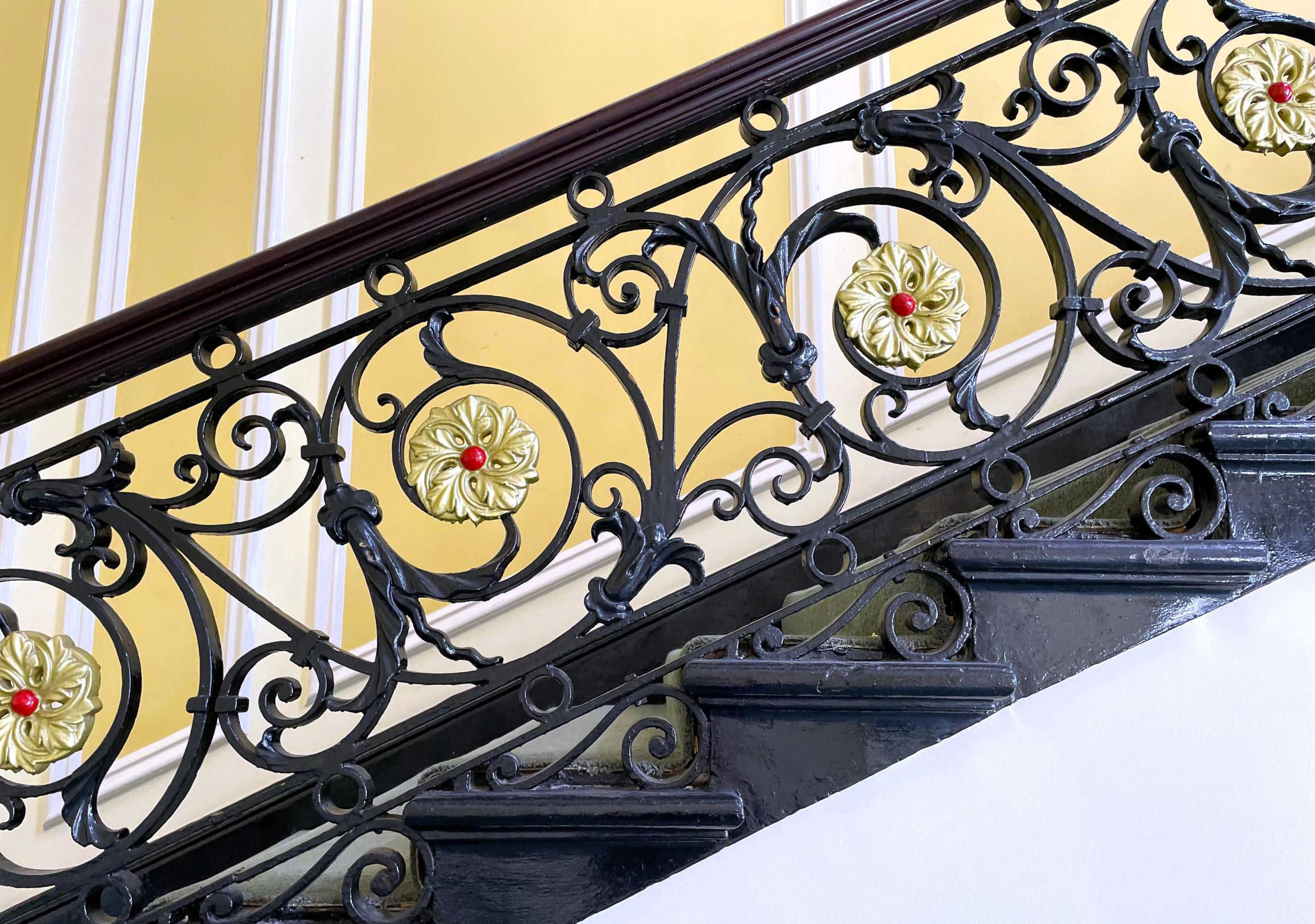
Detail on the grand main staircase.
[© Adam Turner 2025]We then went back to the grand staircase. At the top, one of the doors to an apartment has a 'Titanic bell' mounted next to it, a nod to the fact that many passengers of the Titanic had stayed at the hotel before its ill-fated voyage. At this level, there was a fabulous view out over Southampton Docks to where the Titanic departed Southampton on its maiden (also its last voyage) heading for New York. Adam showed us an image of the Titanic at Southampton Dock with the hotel in the background. The group was then taken through the building to a spiral staircase with a glazed roof light, containing an early 20th Century hand wound lift (no longer in use). The passenger compartment survives on the ground floor.
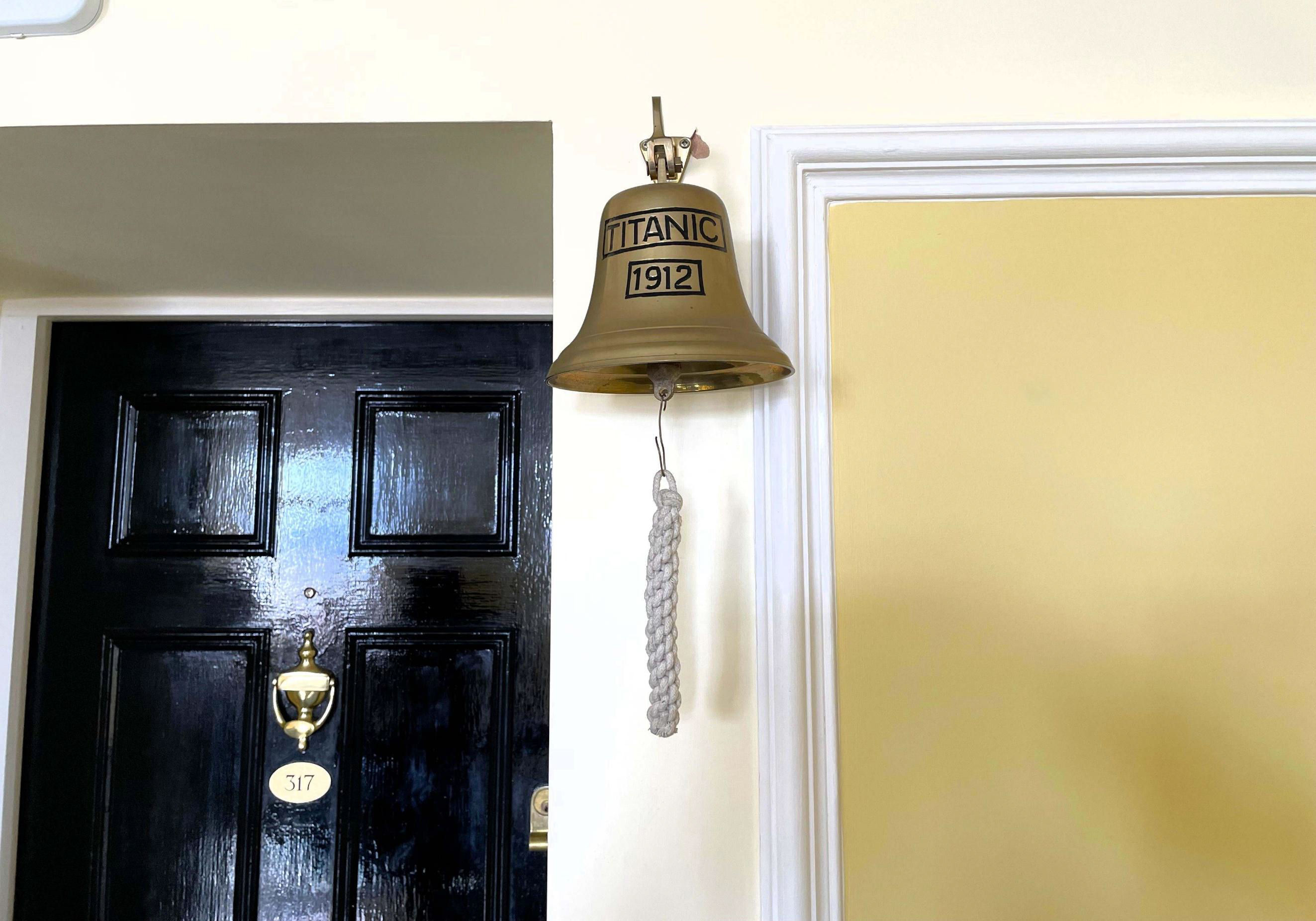
A 'Titanic bell' mounted next to one of the doors to an apartment.
[© Adam Turner 2025]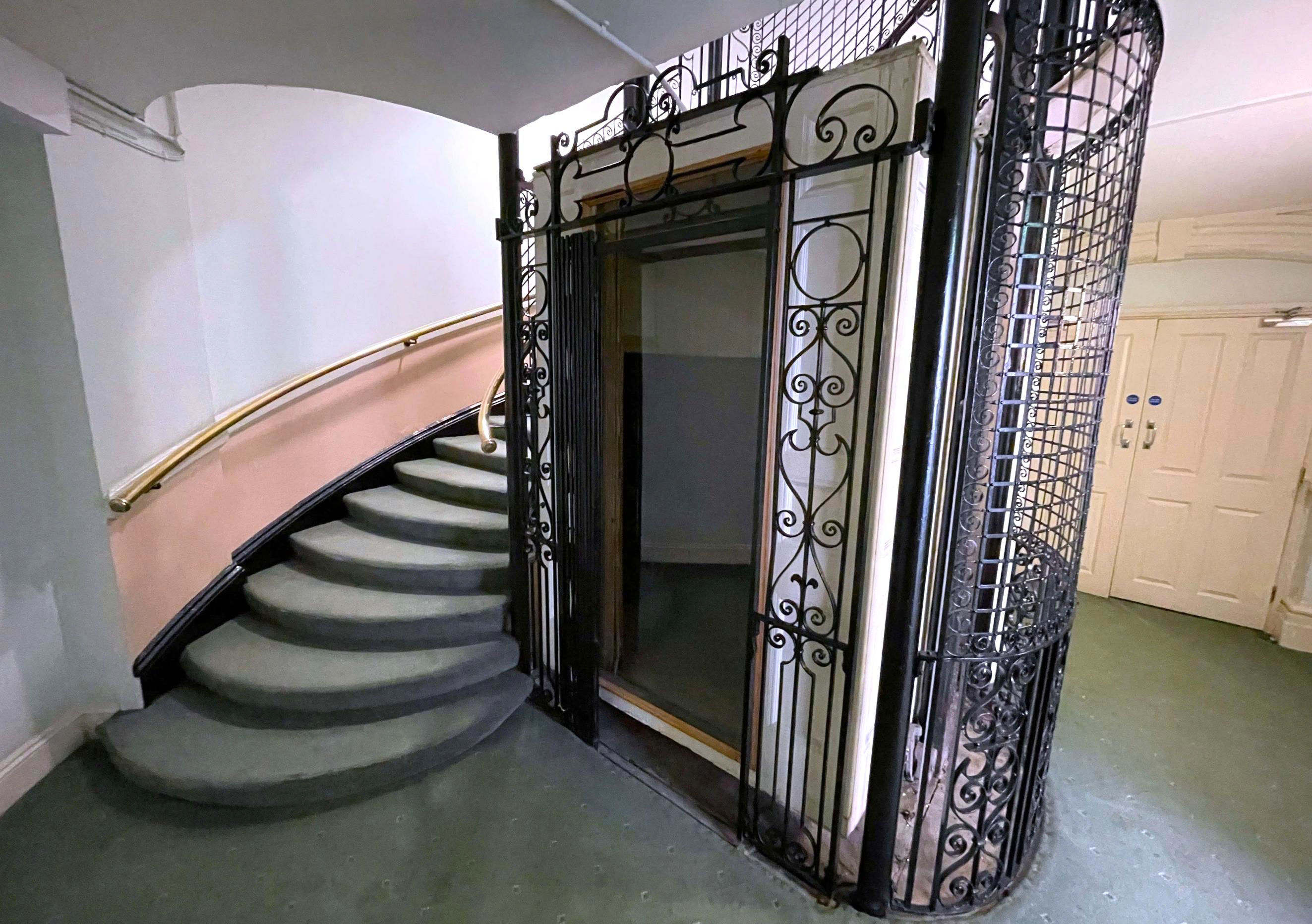
The spiral staircase with the early 20th Century hand wound lift passenger compartment.
[© Adam Turner 2025]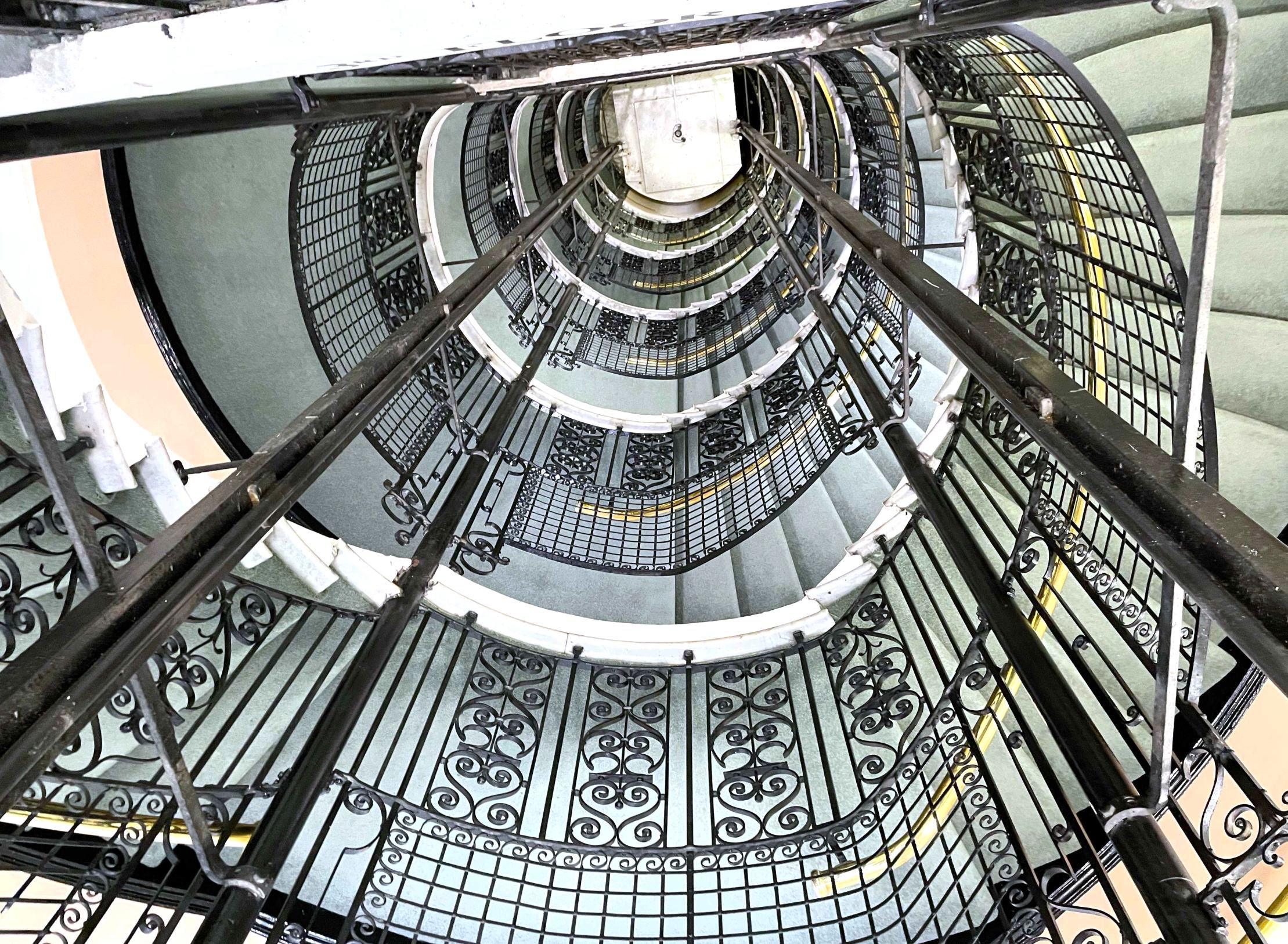
The lift shaft.
[© Adam Turner 2025]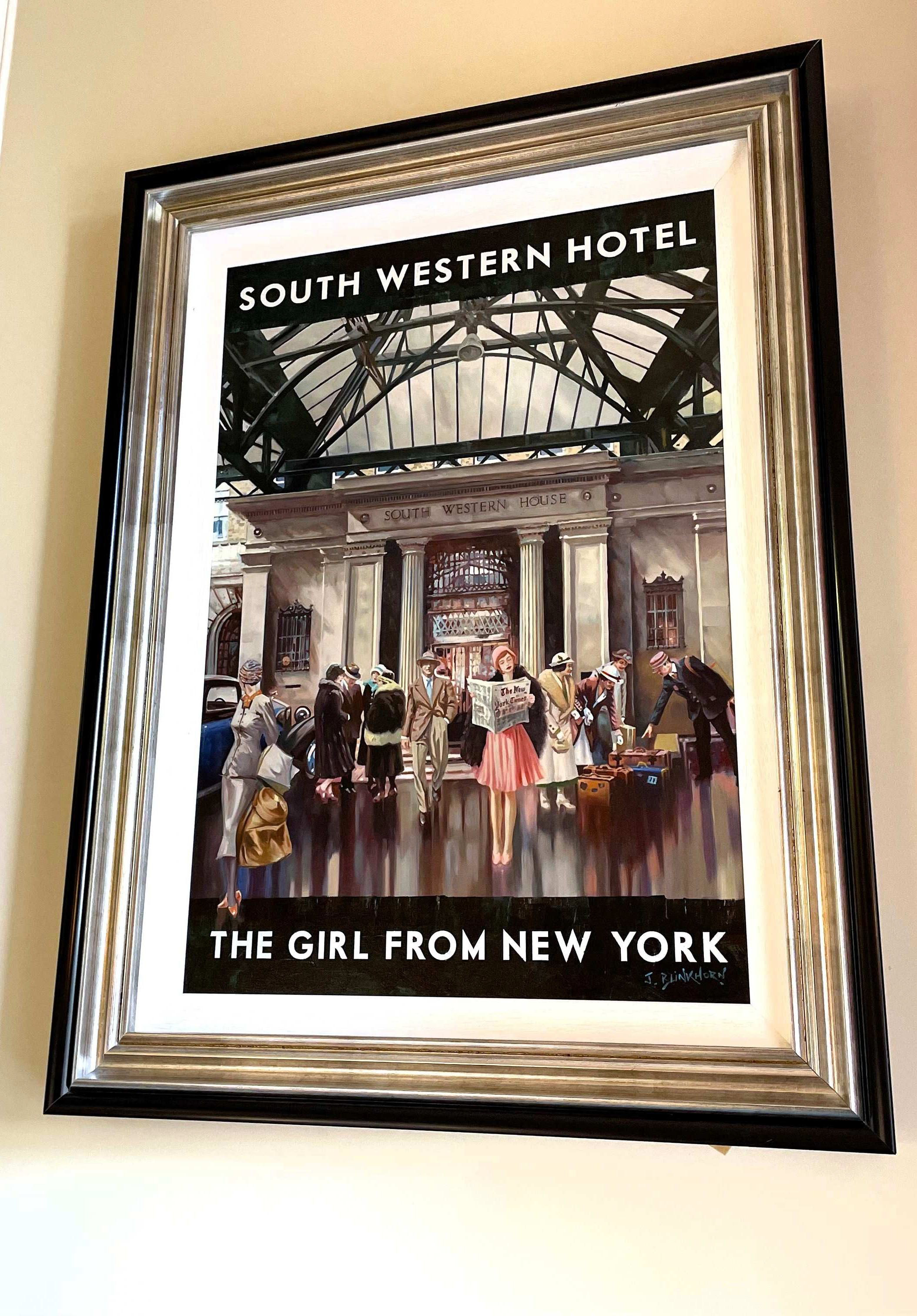
The girl from New York.
[© Adam Turner 2025]With the outbreak of war in 1939, ocean-going passenger business ceased abruptly and the hotel closed. After the war, the building never returned to being a hotel and was used for various purposes, including offices for BR, Cunard, and BBC South - the latter until 1991. After this, the building fell into disrepair. Just before the millennium, it was restored and converted into several apartments by Berkeley Homes.
We returned to the entrance lounge and went through into 'The Grand', originally the Wedgewood Ballroom within the hotel. Jonny Gettings, the Group Operations Director of the Mustang Group (of hospitality venues), greeted us and provided gratefully received refreshments and a sit down in delightful airconditioned surroundings. Jonny gave us the history of this part of the building and told us about the many famous visitors including Charlie Chaplin, Laurel and Hardy, Rex Harrison, Amelia Earhart, Elizabeth II and the Queen Mother. Jonny also explained how in the years (following Covid) and the changes in how we socialise, it has rebranded as 'The Grand', with a smaller basement venue called 'Rubys At The Grand' (also visited). Both can be hired as venues for private parties and live events.
'The Grand', originally the Wedgewood Ballroom
[© Adam Turner 2025]One of our group had worked for British Rail at Eastleigh with responsibility for maintenance of the steam boilers which heated South Western House in the 1960s and 1970s. He handed over several paper plans for the building as a gift to our Society, which were gratefully received (they are being scanned).
After our refreshments and the pleasantly air-conditioned visit, we left South Western House through the main entrance lounge and walked around the building with Adam providing further details, pointing out areas of interest and showing earlier images of the building. The exterior appeared to be needing a little attention in places. Dave the caretaker had told us work was due to start in the coming weeks and scaffolding would be going up to allow renewal of windows on the south side of the building. We took in the main entrance façade at the east end, hosting the arms of the London & Southampton Railway on either side of a balconied doorway, with a pediment containing the head of Queen Victoria in a crowned roundel; surrounded by railway and maritime motifs. What was remarkable about the building is quite how much was still largely original, retaining much of its splendour and originality after 158 years.
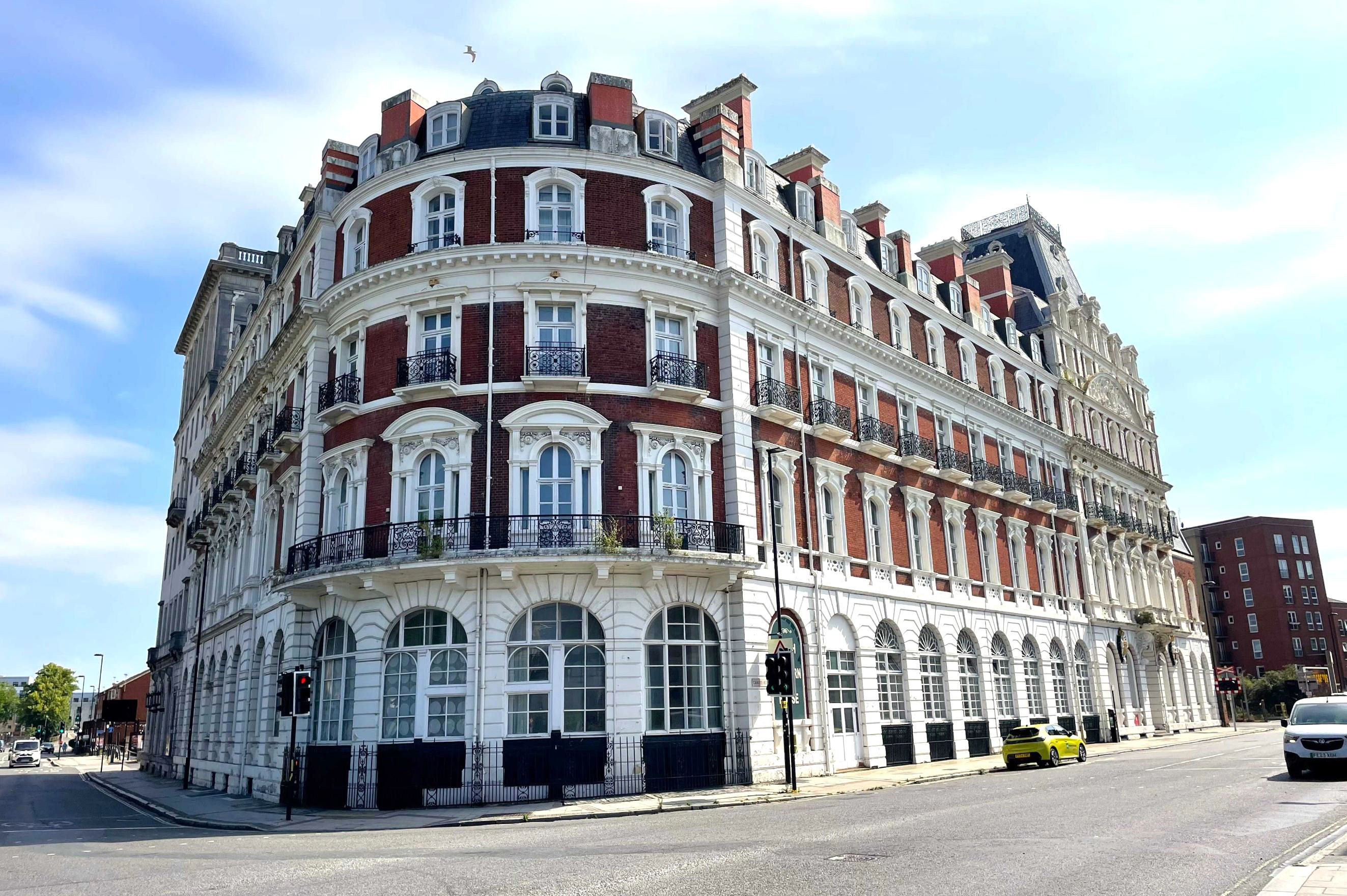
The apex of the 'V' shaped South Western House; Southampton Terminus station was to the rear, Canute Road Level Crossing is far right.
[© Adam Turner 2025]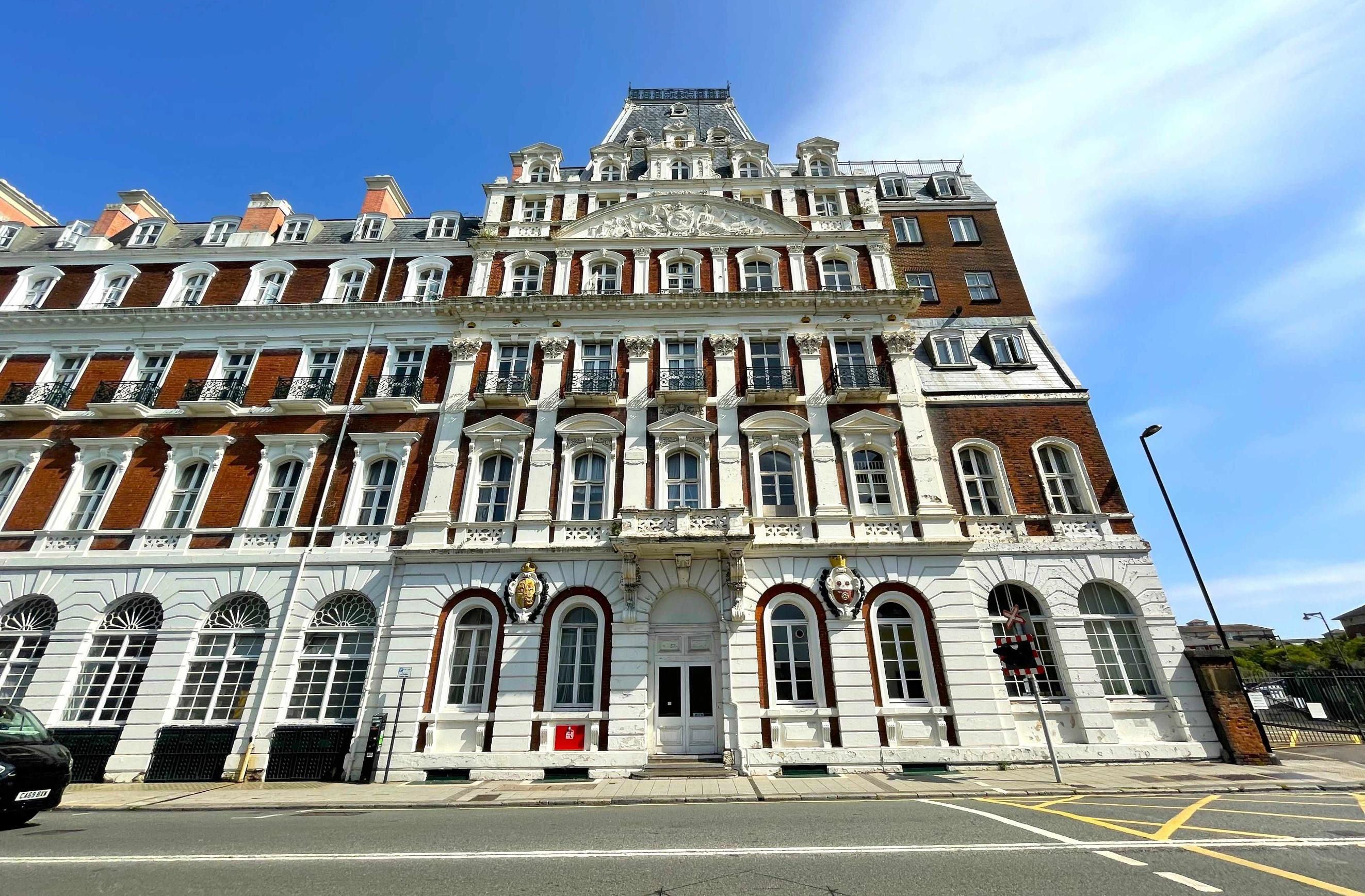
The Canute Road aspect of South Western House - that level crossing is off right.
[© Adam Turner 2025]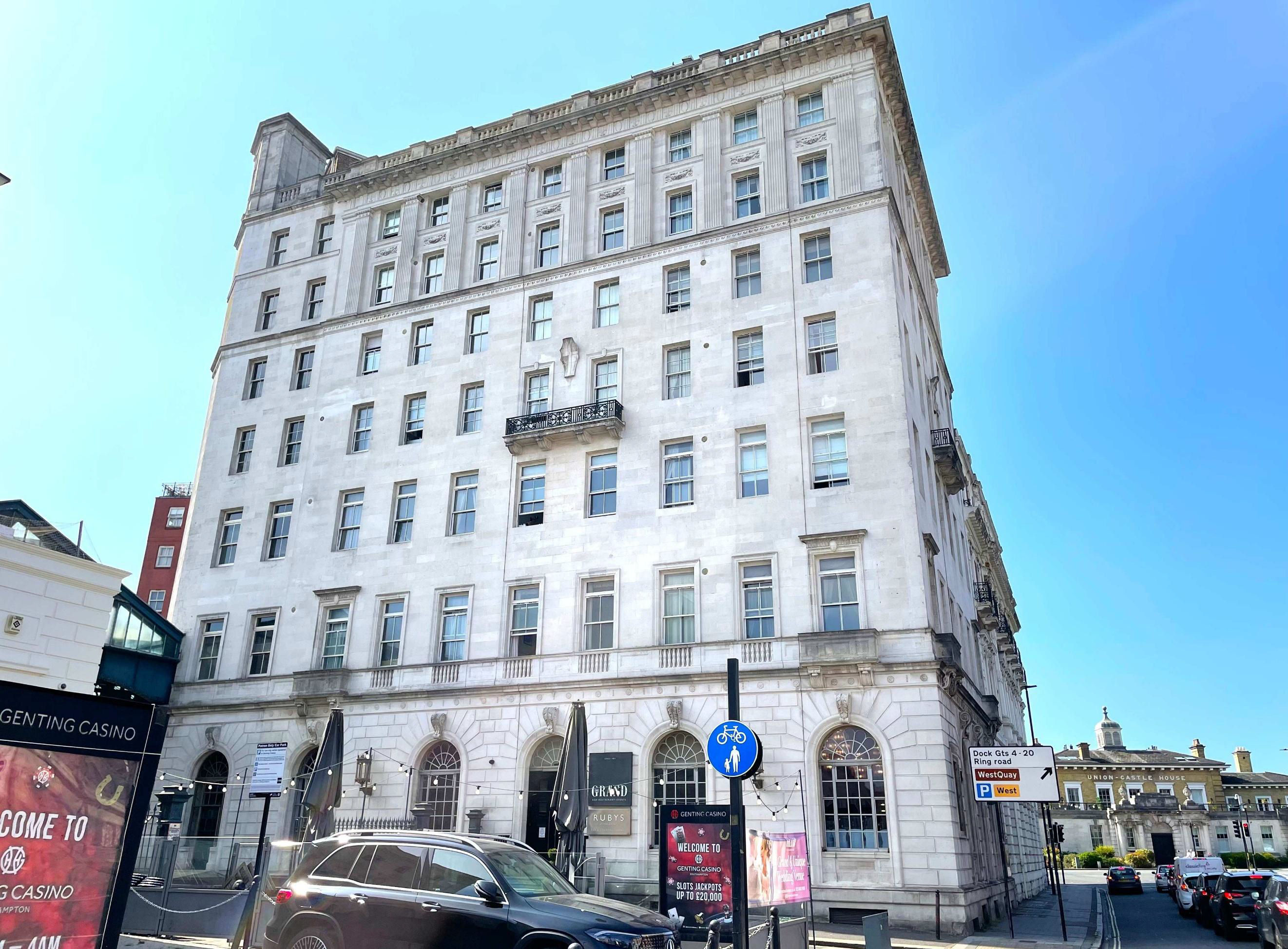
The entrance to the station was left. This is the north face of South Western House.
[© Adam Turner 2025]We then crossed over Canute Road Level Crossing, still used several times a week with rail traffic taking vehicles into the docks for export. Passenger trains for Cunard sailing last ran in 2004 and special trains for passengers to arrive in style to the current generation of liners / cruisers seem to have ended by 2020. We also saw a large building with a stone LSWR pediment on the other side of Canute Road, before turning into what is now a student accommodation area. Here we saw the restored Grade II listed LSWR Southampton goods shed dating from the late 1880s, now a car park for the student accommodation.
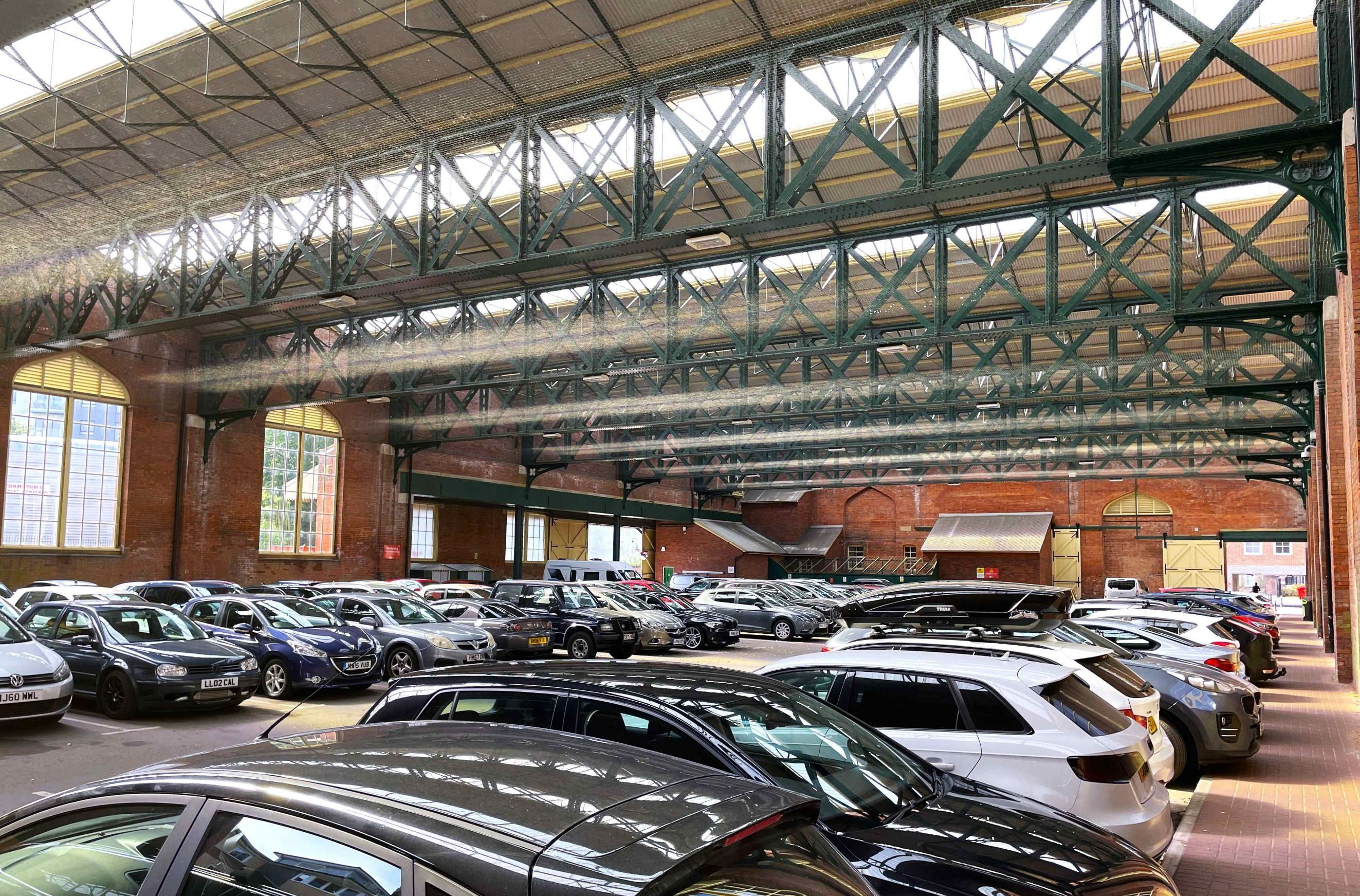
Inside the restored Grade II listed LSWR Southampton goods shed dating from the late 1880s which is now a car park for student accommodation.
[© Adam Turner 2025]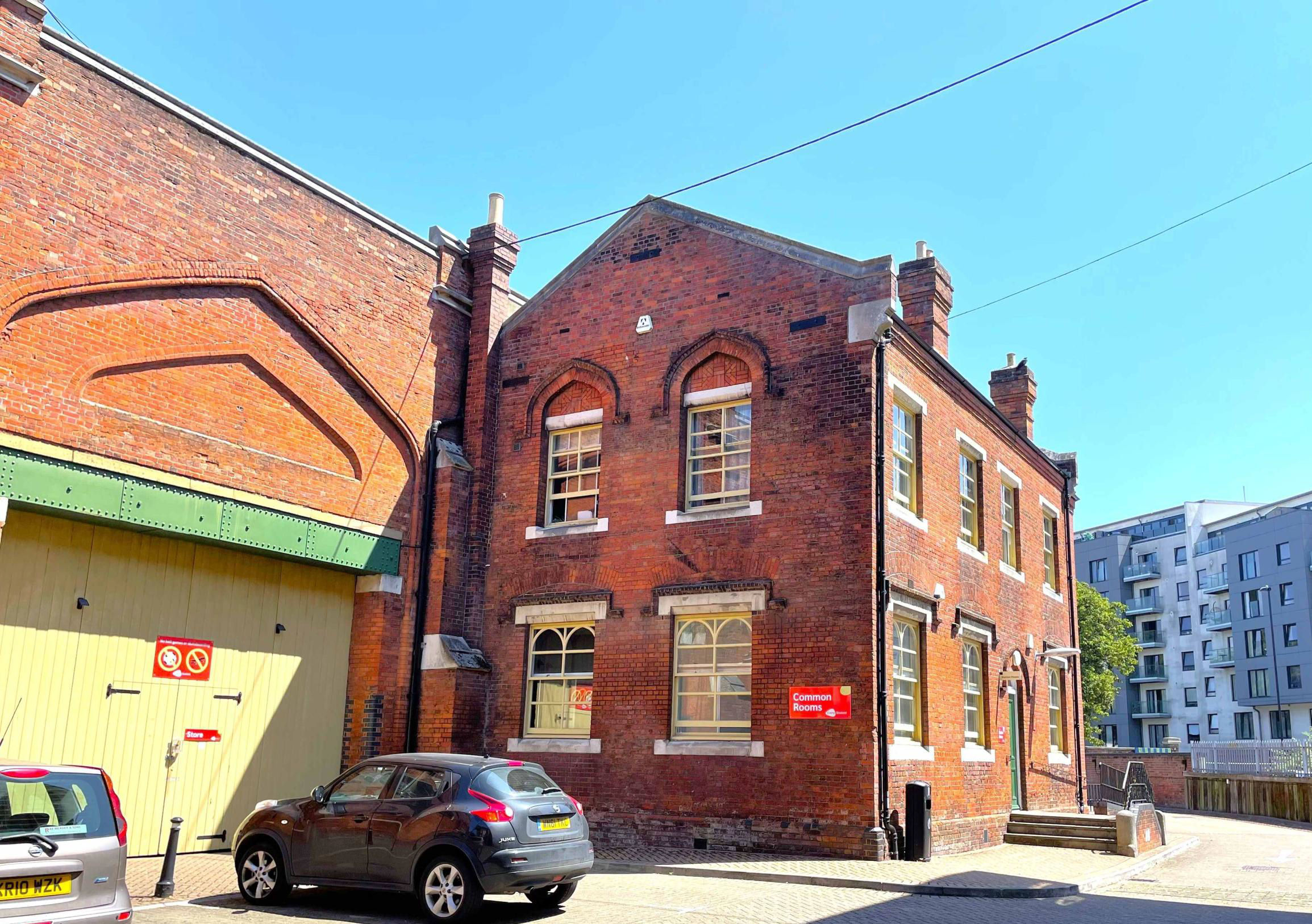
The restored Grade II listed LSWR Southampton goods shed.
[© Adam Turner 2025]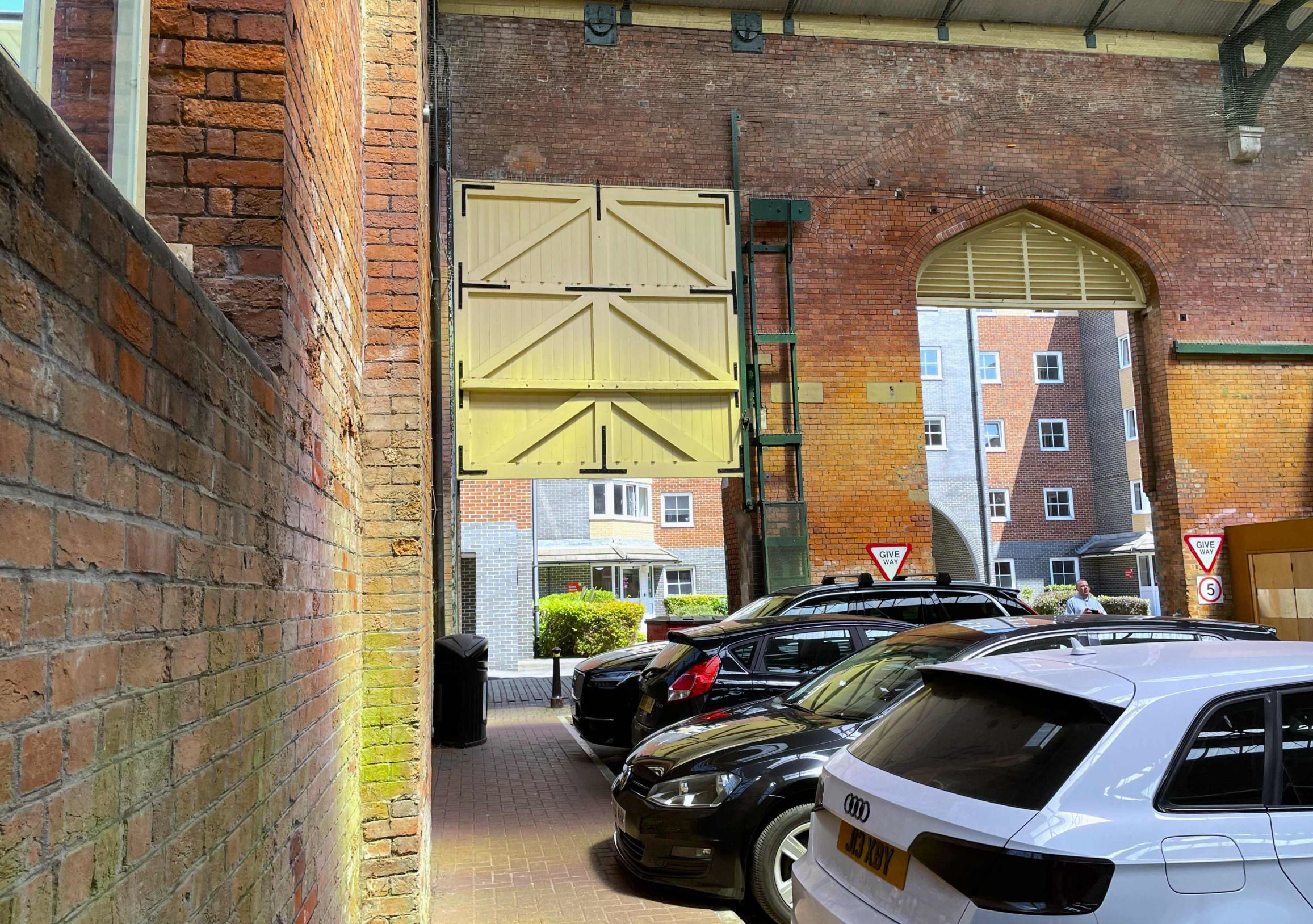
Another internal view of the restored Grade II listed LSWR Southampton goods shed.
[© Adam Turner 2025]From here, it was a very short walk to view Central Bridge (LSWR 1882), carrying the A3025 over what is now just a single railway line into the Docks which once also served Southampton Terminus. The 1916 OS 25" map shows 16 tracks under this bridge. We noted the brick jack arches and riveted iron piers.
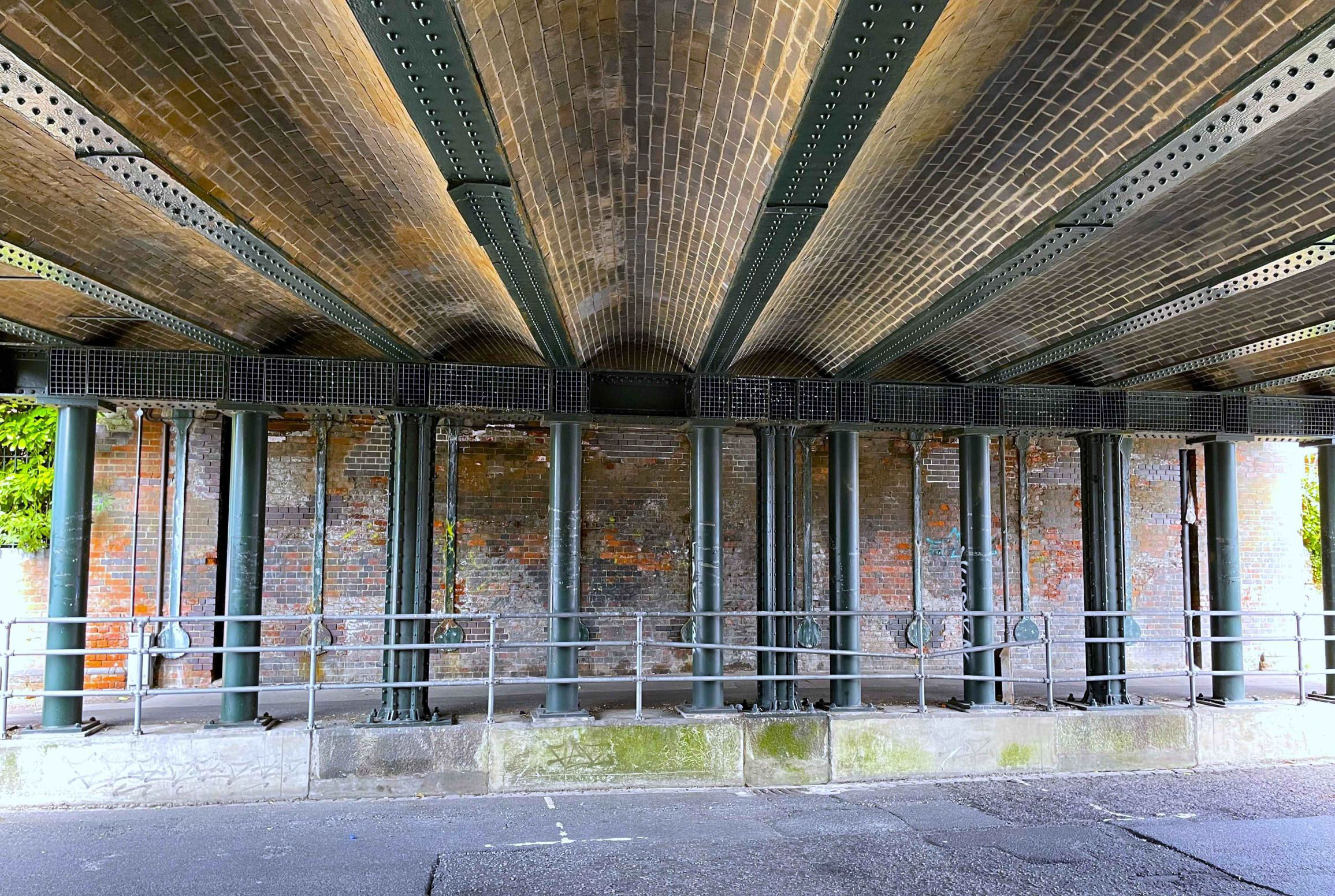
Central Bridge (which once had tram tracks over it) where it passes over Royal Crescent Rd, the section above the railway is the same design.
[© Adam Turner 2025]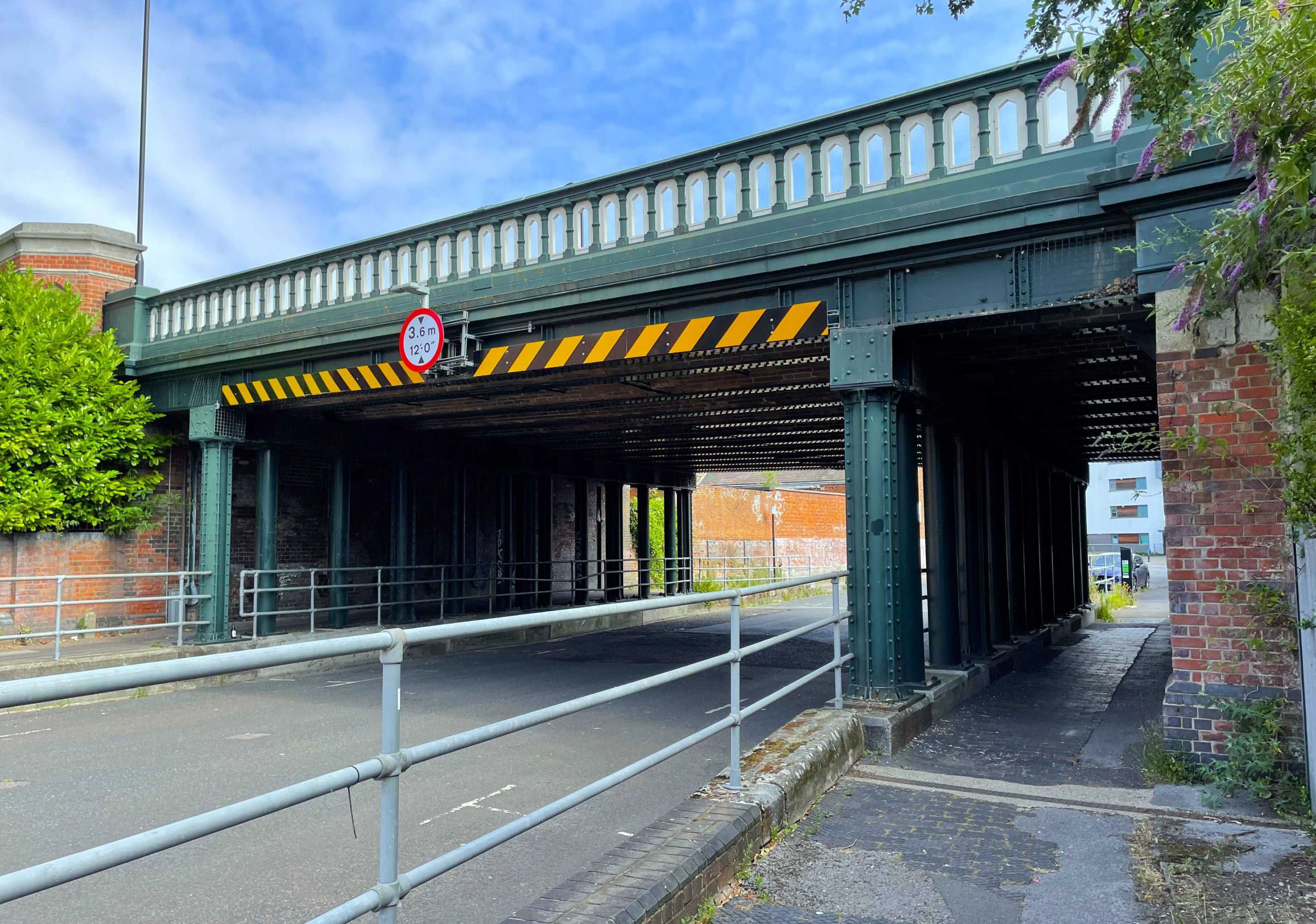
Central Bridge over Royal Crescent Rd.
[© Adam Turner 2025]We did have the option to then visit Southampton Town Quay on foot but, due to the high temperatures and the time, it was decided to disband, take shelter from the sun and for most return to Southampton Central to begin their return journeys. Many thanks to the indefatigable Adam Turner for another excellent and most interesting visit. We raised £210 for Maggie's Southampton, a facility at University Hospital Southampton providing extra support services for cancer care patients and their families.