My journey started on the 07.00 Sheffield to St Pancras International. I made my way to Liverpool Street station to meet my friend Steve off a train from Cambridge; then we walked the short distance to the tour start point of Sclater Street E1, just a few yards from Brick Lane and Shoreditch High Street on the London Overground Windrush line (the East London Line in old money).
There were 18 members on this fully booked fixture, as usual from far and wide. We were met by Adam Turner, our Society tour guide and organiser, Paul Ballantine from Murphy and Gareth Yeates from Ballymore, our hosts for the day. After a brief rundown of the itinerary and a chance to ensure we were properly dressed in the necessary PPE (Hi-Viz jackets, sturdy footwear and hard hats), we set off at 11.00 for the adjacent Bishopsgate Goods Yard site. The nearly three hour walk was mainly over rough terrain in gloomy conditions, under the arches of the site, adjacent to the main line into Liverpool Street station.
The goods yard was originally the passenger terminus of the Eastern Counties Railway (opened 1840) but it soon became apparent that the railway terminus needed to be closer to the City. Liverpool Street superseded it in 1875. A low level station at Bishopsgate opened in 1872 and closed in 1916.
The passenger station at Bishopsgate was then rebuilt and extended to become a goods station, opening in 1881. Ultimately, it covered three floors - warehousing on the top (first) floor, the ground floor with the connection to the main line and an undercroft with loading areas accessed by hoists. A disastrous fire in 1964 destroyed the top two floors and all that remains is the almost untouched undercroft. The remnants of the fire were left until 2000 when they were cleared to leave an open 'ground floor'. Works are now underway to finally enable redevelopment of the site by Ballymore.
The Victorian brickwork has stood the test of time well and is as strong and watertight today as when built. Photos (as usual produced by Adam on his tablet) show the exquisite attention to detail of the site. The oldest arches, designed by the engineer of the East Counties Railway, John Braithwaite, are the most ornate and Grade II listed. Our guide commented that it would be very difficult to replicate the standard of workmanship in the brickwork now. The plan is to redevelop the entire area into shops, retail space and a hotel above. It is a testament to the quality of the workmanship that the developers are confident that, in places, the brick arches of the undercroft will hold up a six-story building with no additional reinforcement. The timescale for completion of the entire project is around ten years from now!
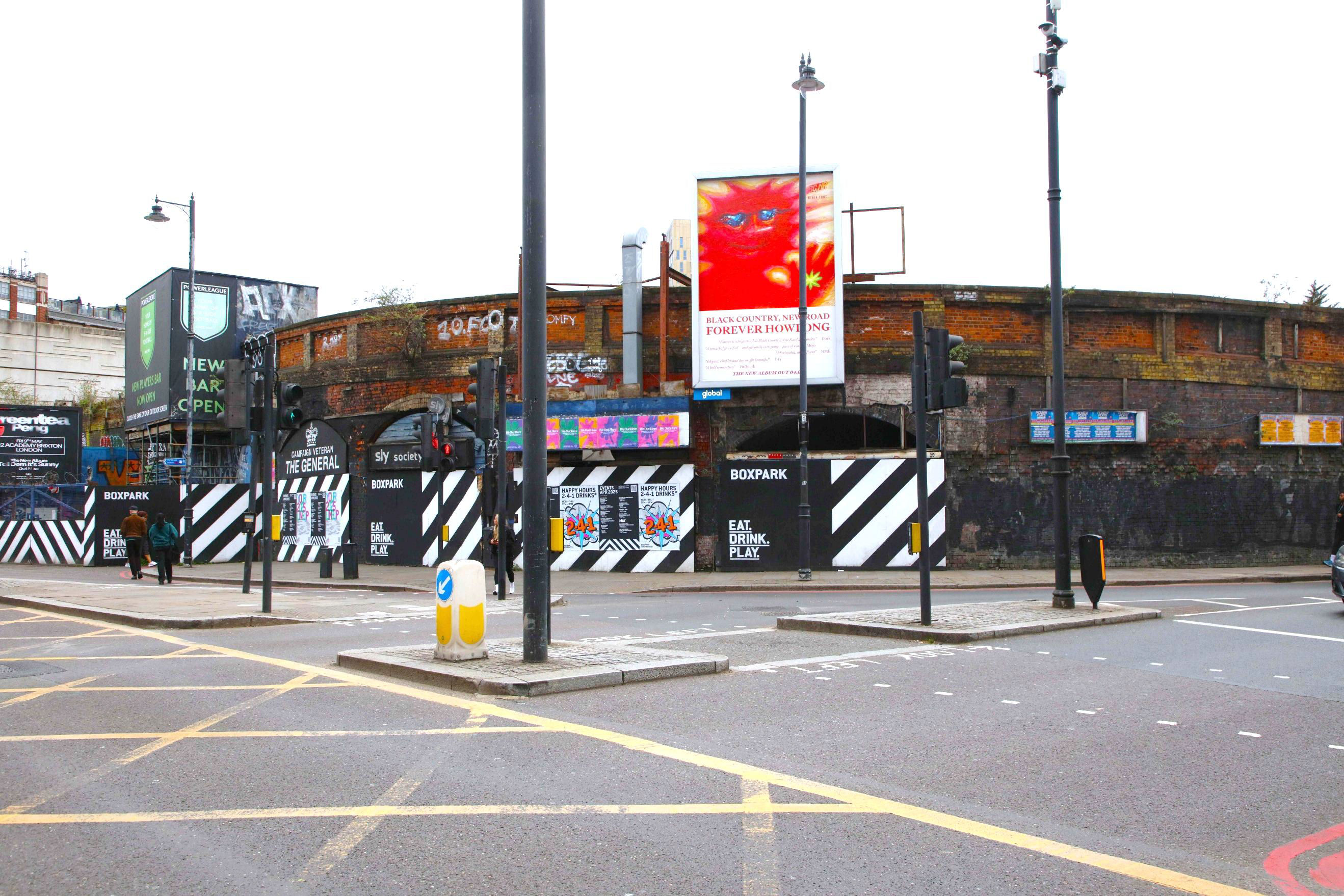
Bishopsgate site viewed from the A10 junction with Commercial Street.
[© Iain Scotchman 2025]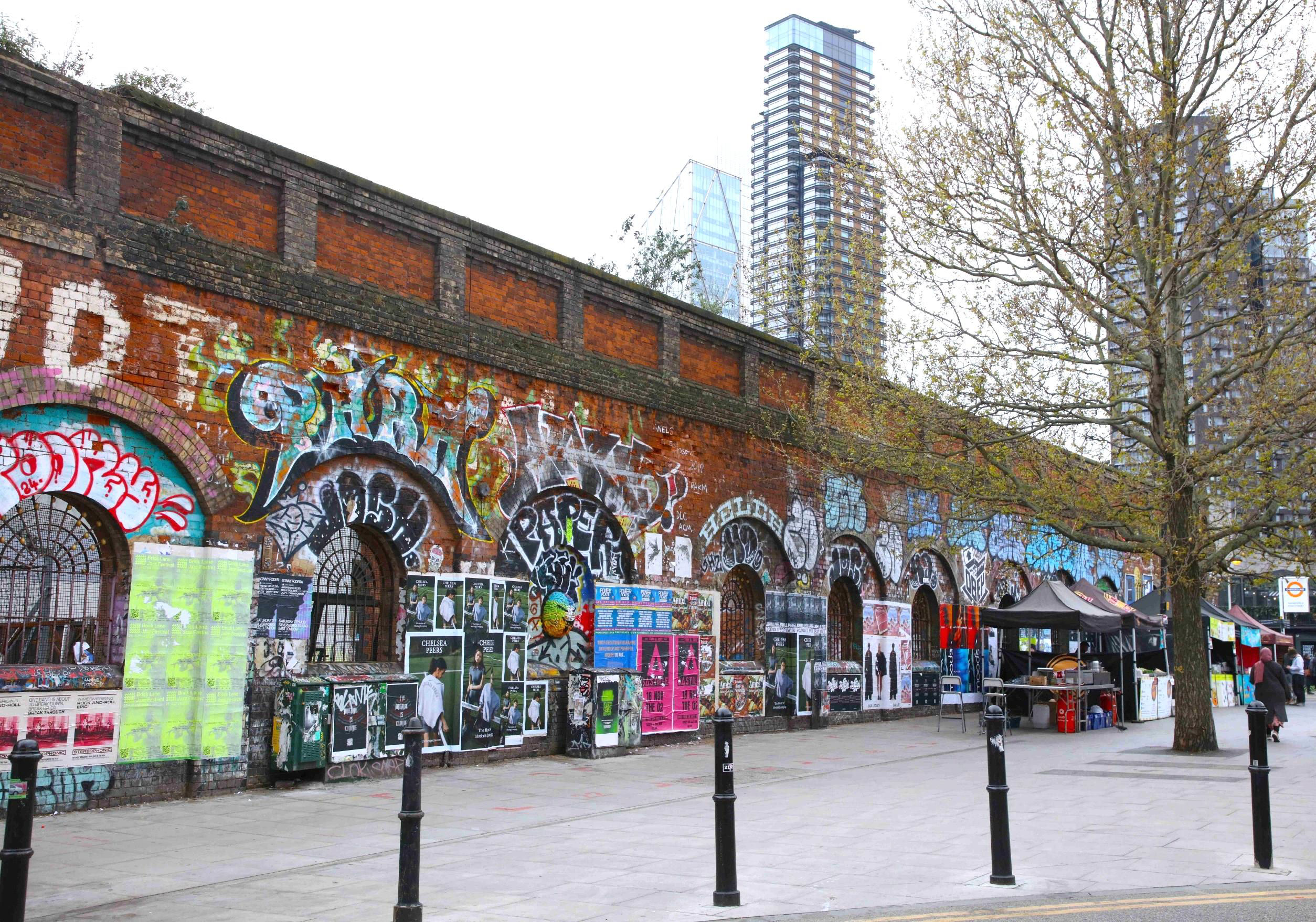
Bishopsgate site viewed from Bethnal Green Road.<
[© Iain Scotchman 2025]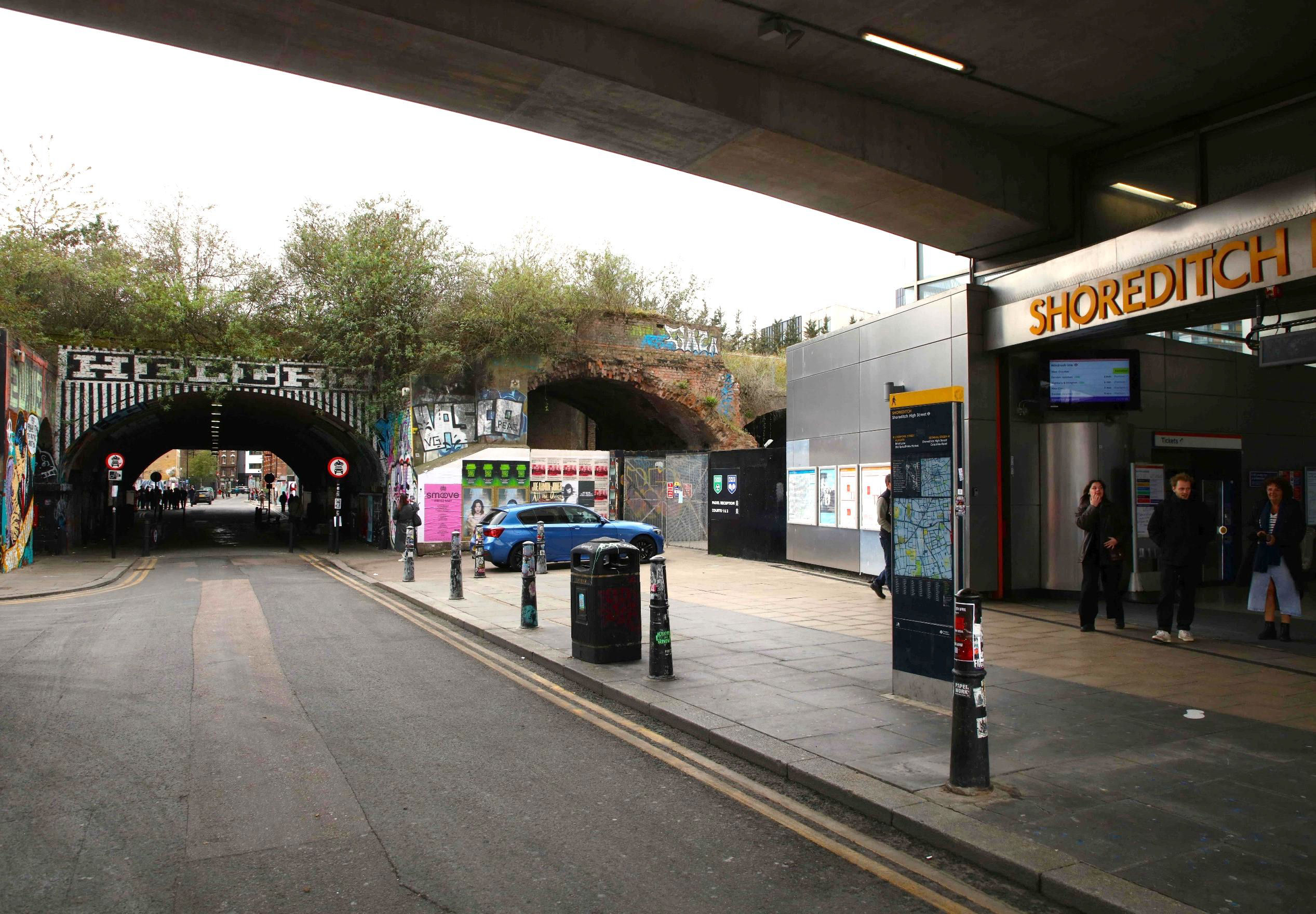
Braithwaite Street looking towards Bishopsgate site. Shoreditch High Street station entrance is right (London Overground).
[© Iain Scotchman 2025]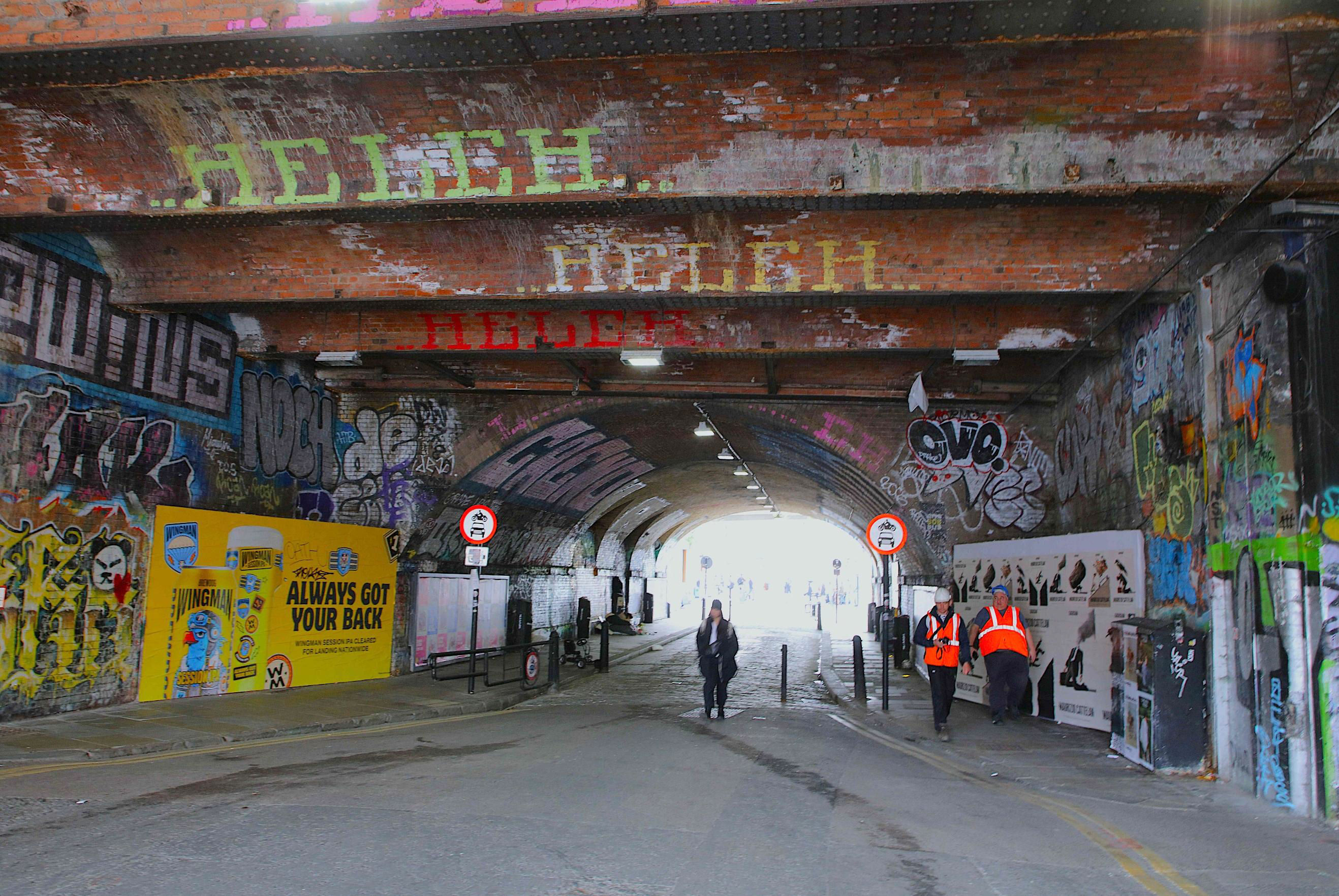
Braithwaite Street with the Bishopsgate site above the tunnel.
[© Iain Scotchman 2025]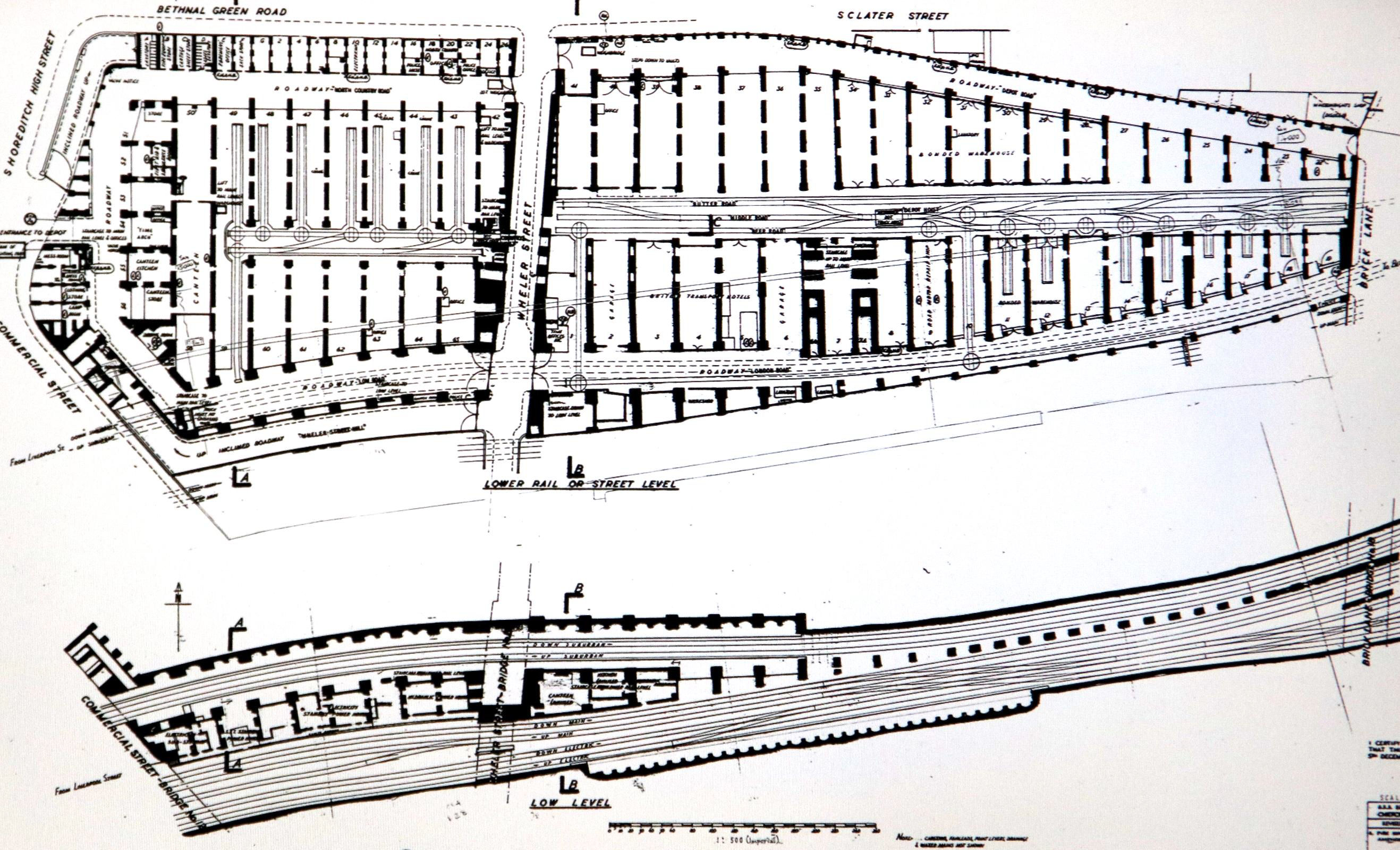
Plan of Bishopsgate site. The part of Wheler Street on the plan was renamed Braithwaite Street in honour of one of the most influential men in British railway history, John Braithwaite see https://tinyurl.com/ysns9vd6
[© Iain Scotchman 2025]Our group then proceeded to tour the entire undercroft site in detail. The remains of the leisure swimming pool were interesting to see. It closed for construction of the Overground line in 2002 from Dalston Jn to Shoreditch. There are still remains of some running lines and areas where turntables had been situated were clear to see, along with the remains of a hydraulic power assembly which will be preserved for future generations to view. A wall runs alongside, above the running lines into Liverpool Street, and we could see trains speeding along this stretch. Great care had to be taken not to lean over and lose our hard hats, dropping down to the line below! A 'mini-tour' this certainly was not!
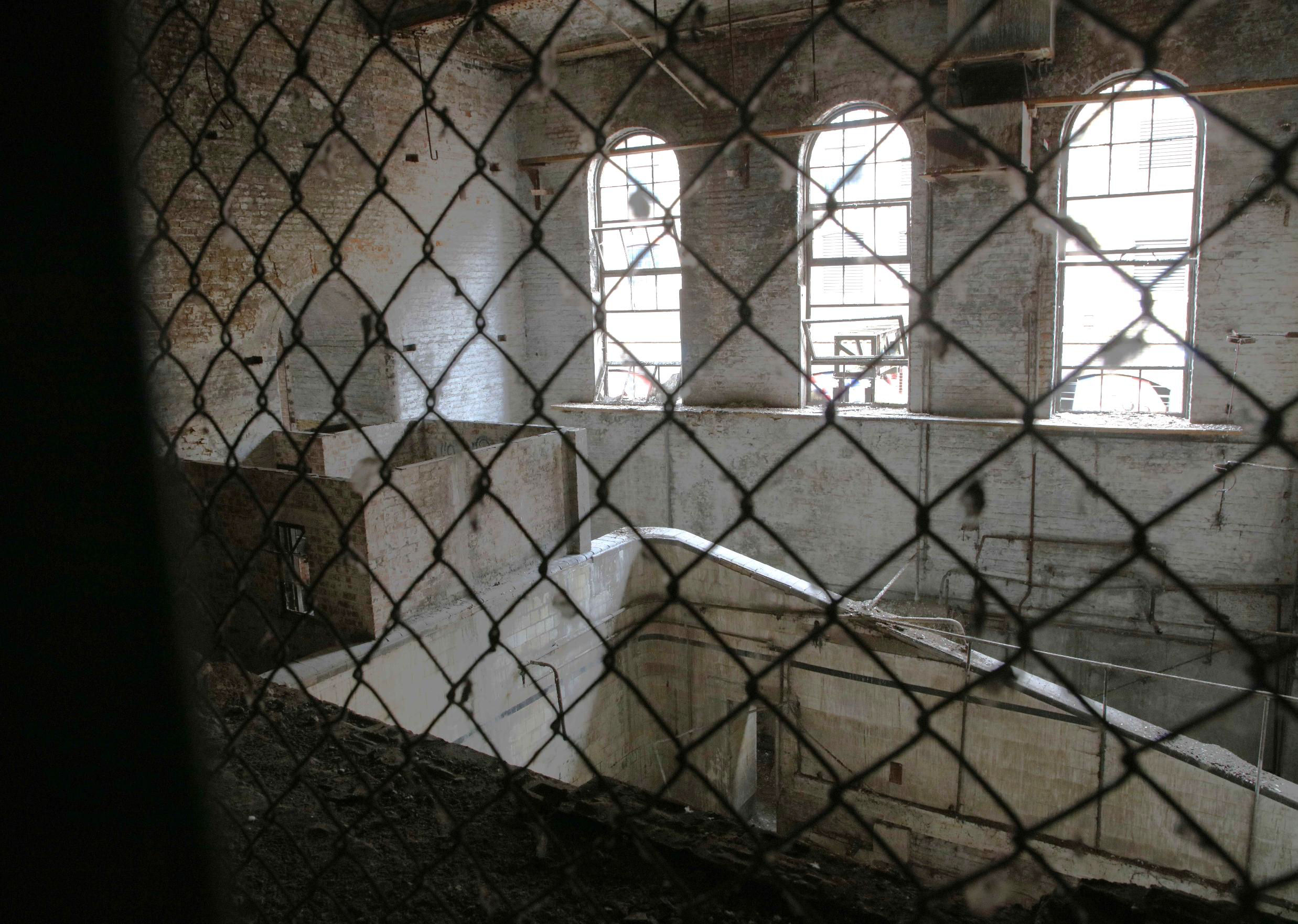
Part of the undercroft.
[© Iain Scotchman 2025]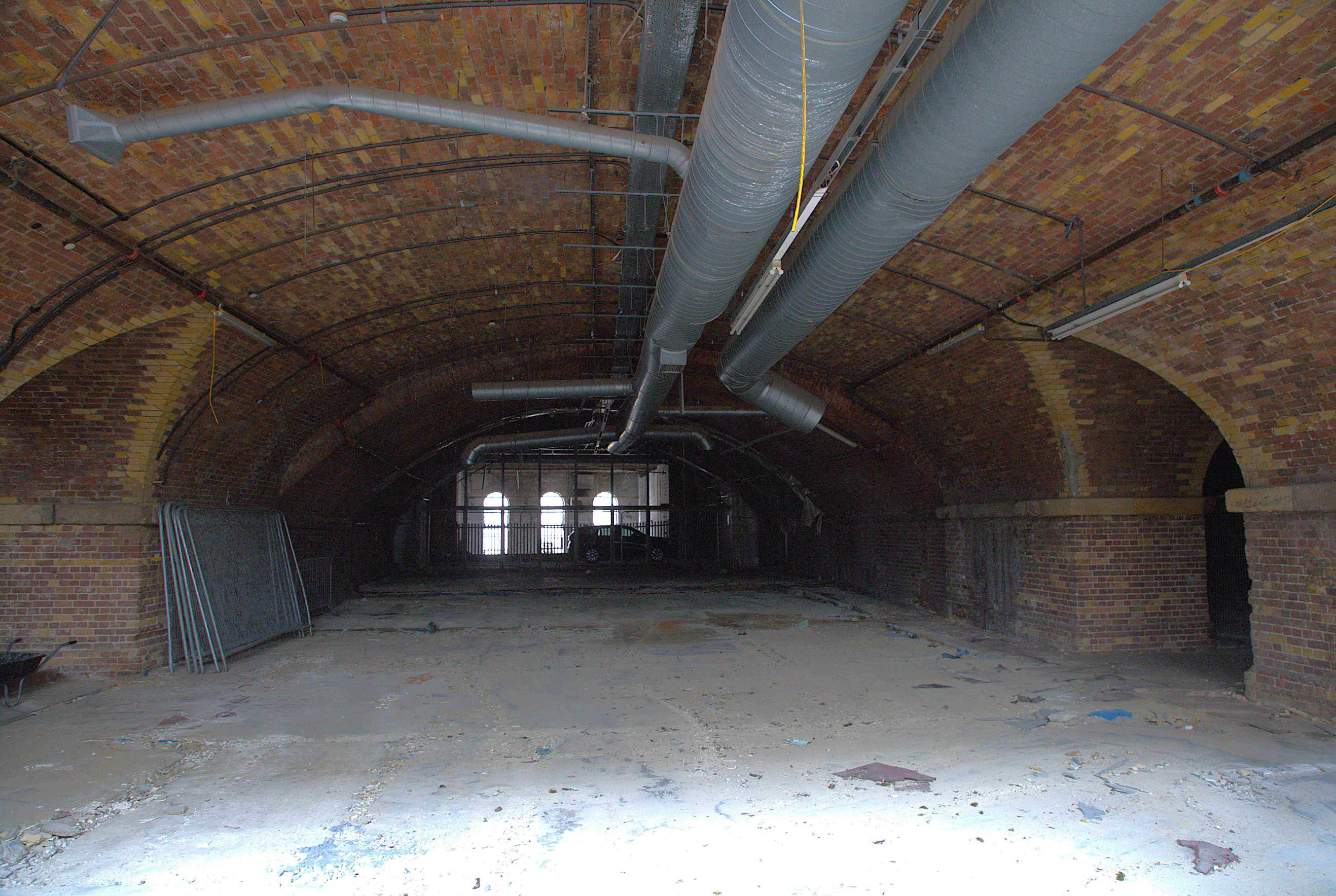
Part of the undercroft
[© Iain Scotchman 2025]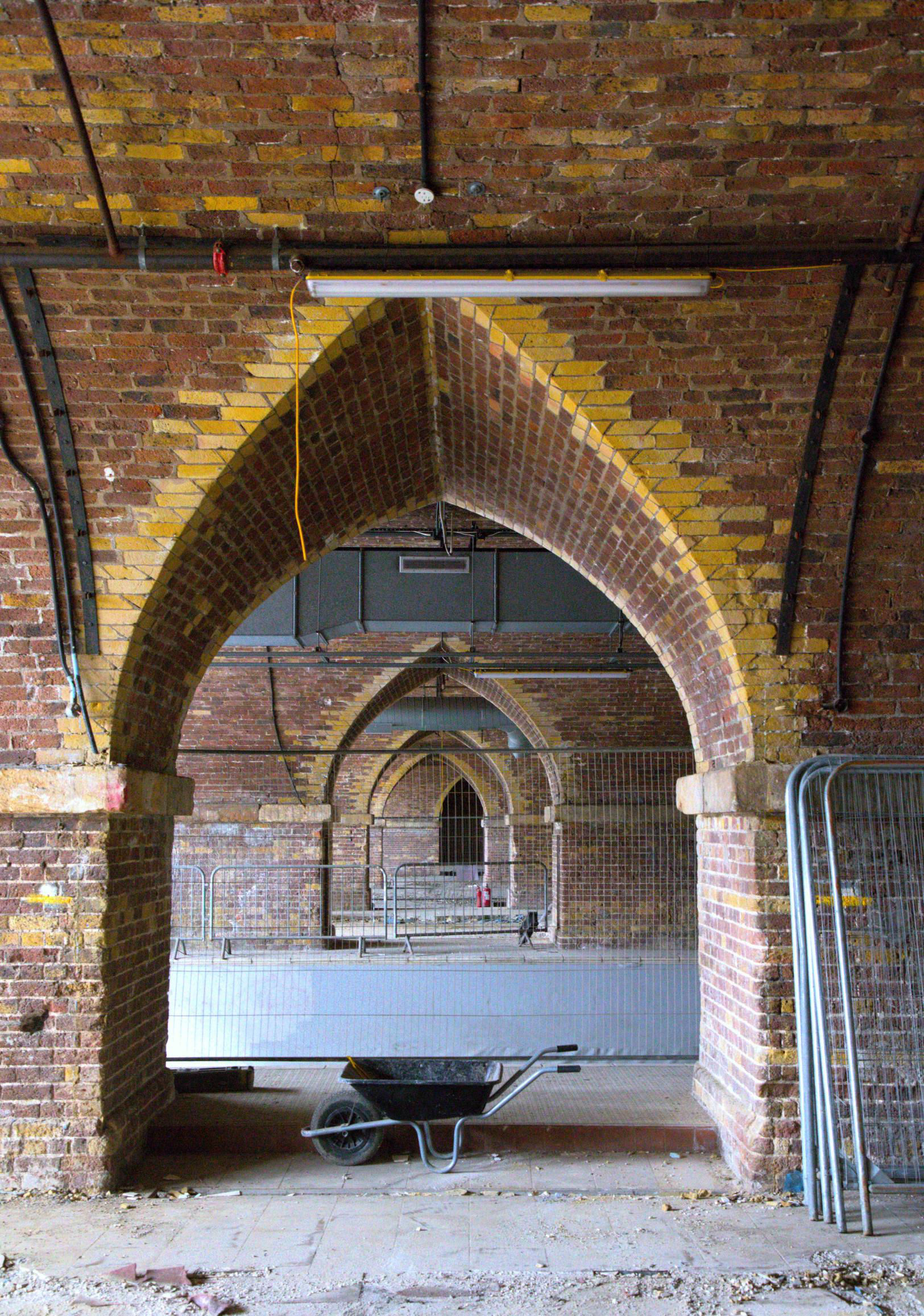
Part of the undercroft.
[© Iain Scotchman 2025]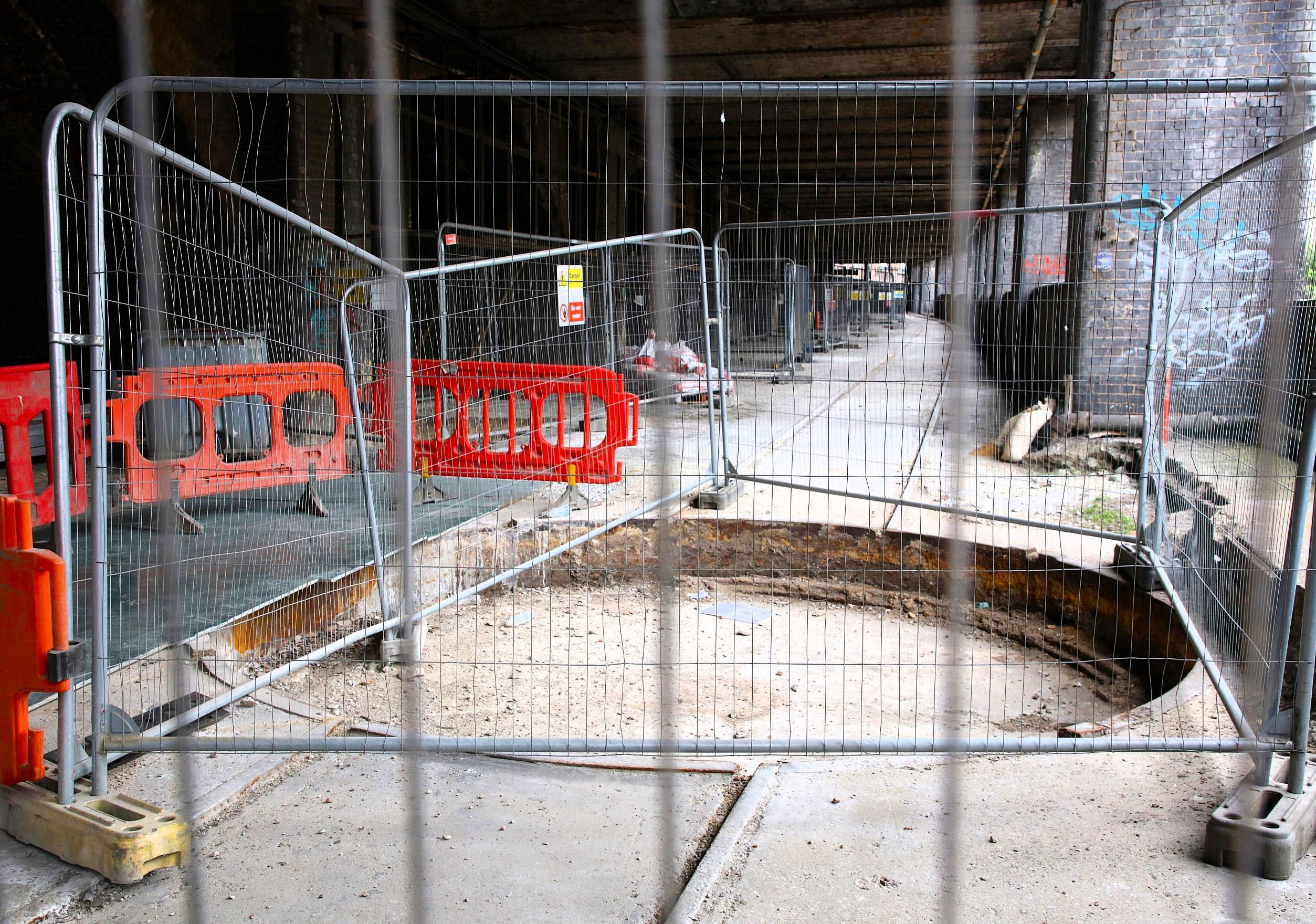
Part of the undercroft where a turntable had been situated.
[© Iain Scotchman 2025]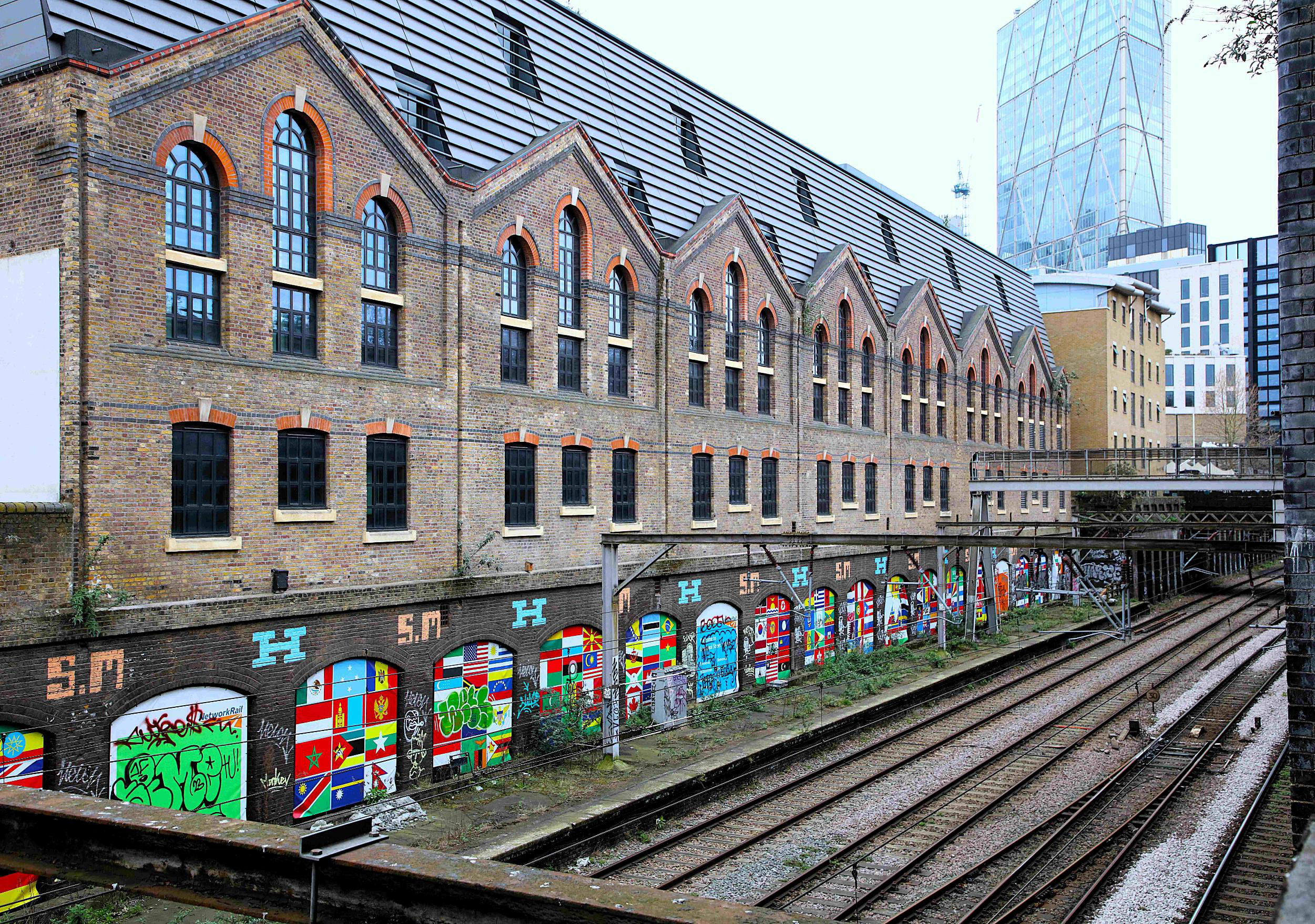
The view over the wall above the running lines into Liverpool Street,
[© Iain Scotchman 2025]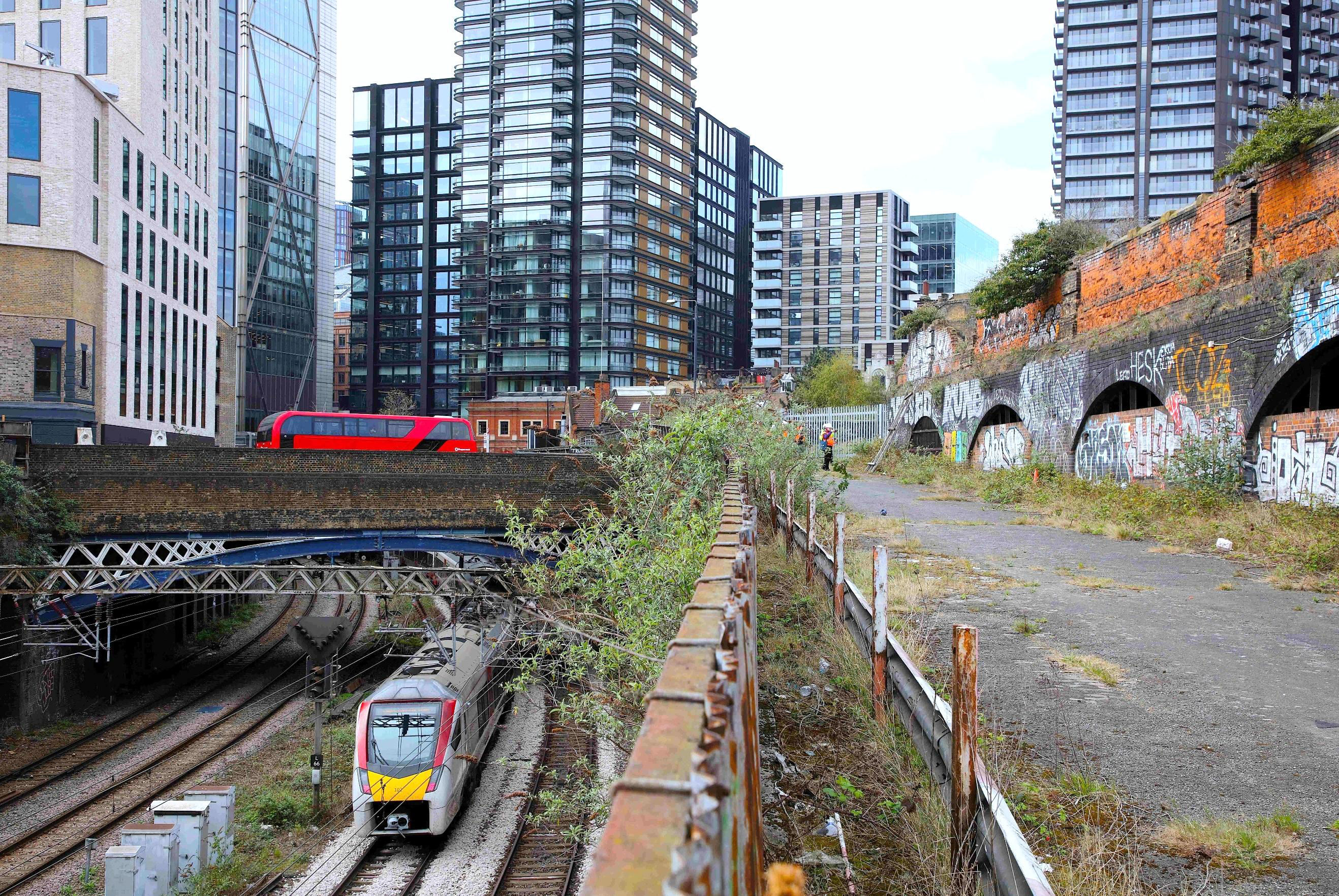
The view over the wall above the running lines into Liverpool Street with Greater Anglia Stadler class 745102 passing,
[© Iain Scotchman 2025]The remains of the Bishopsgate Low Level Up platform and the site of East London Jn (taken out of use in 1966) could also be seen. After the exhaustive tour of this part of the undercroft, we crossed the road (Braithwaite St) dividing the undercroft in two and entered the other section; it was rougher underfoot. This still has various open air leisure facilities in use. There was a good view of the bridge and viaduct which carries the Windrush line through the north part of the Bishopsgate site. The viaduct section through the site is fully enclosed, including Shoreditch High Street station, to allow the space above to be built over without disturbing the operation of the railway. Thus, for the purposes of safety, Shoreditch High Street station is classified as underground, despite now being at least 10 metres up in the open air!
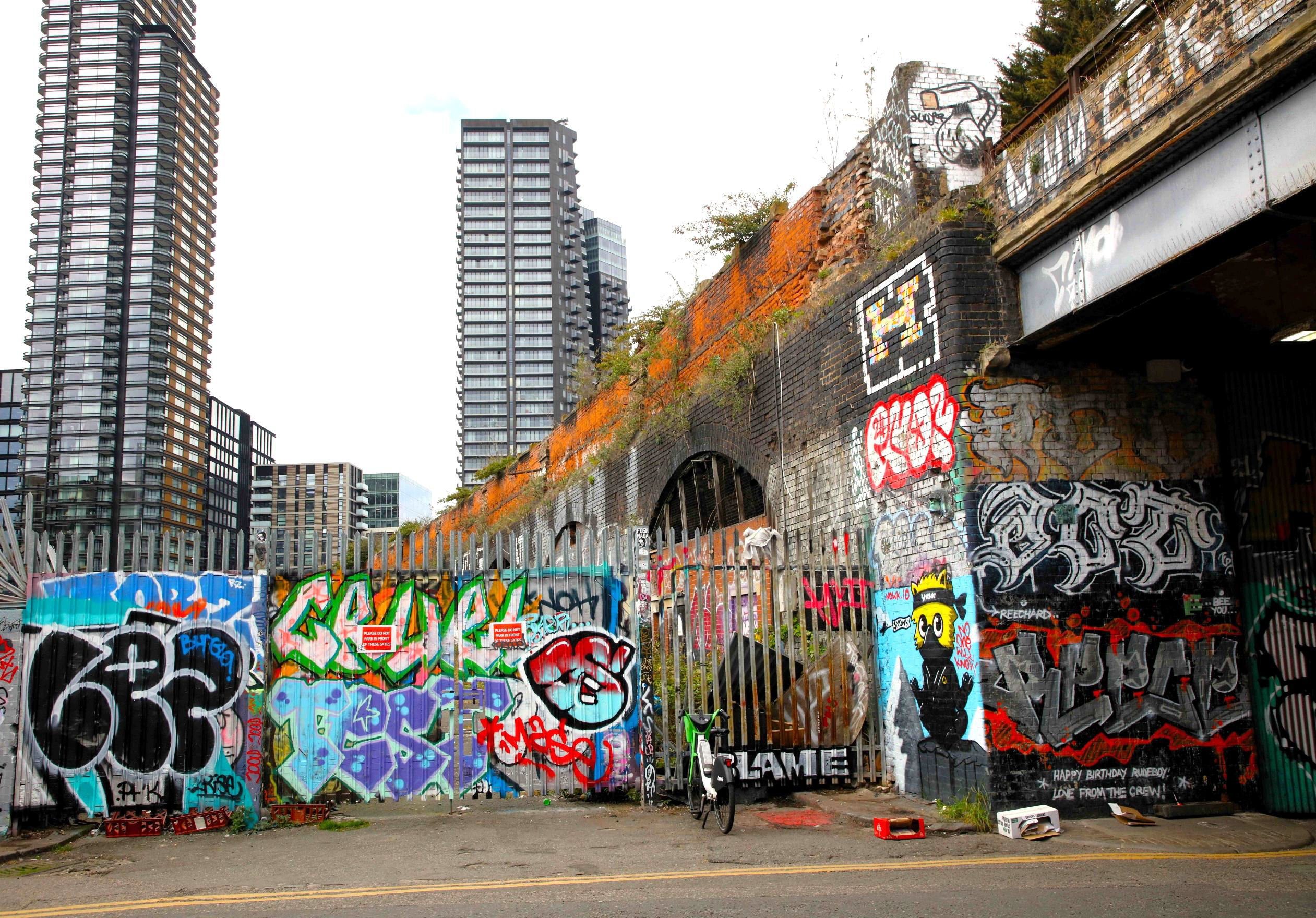
The entrance to the other section of the undercroft in Braithwaite street.
[© Iain Scotchman 2025]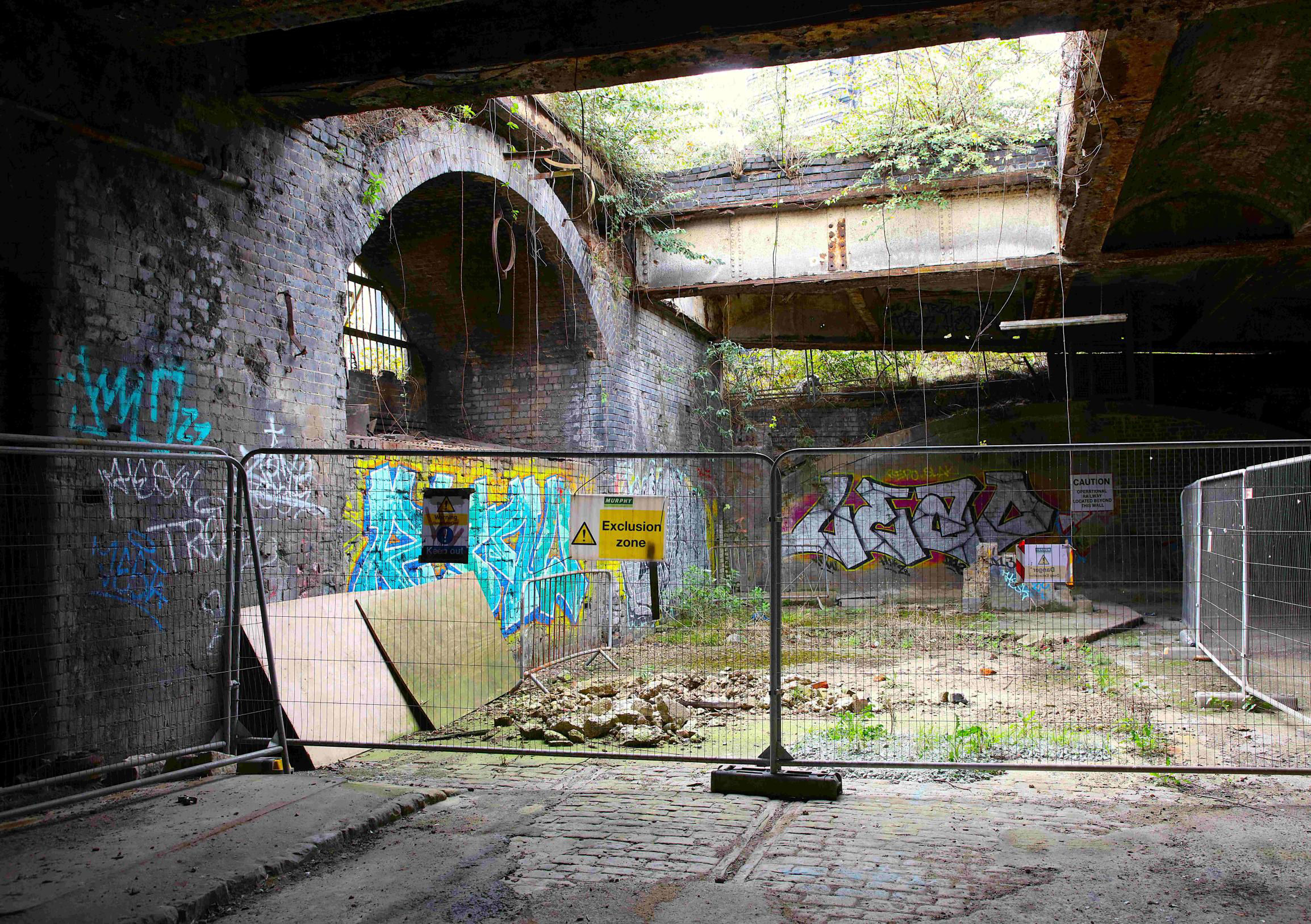
Part of the other section of the undercroft.
[© Iain Scotchman 2025]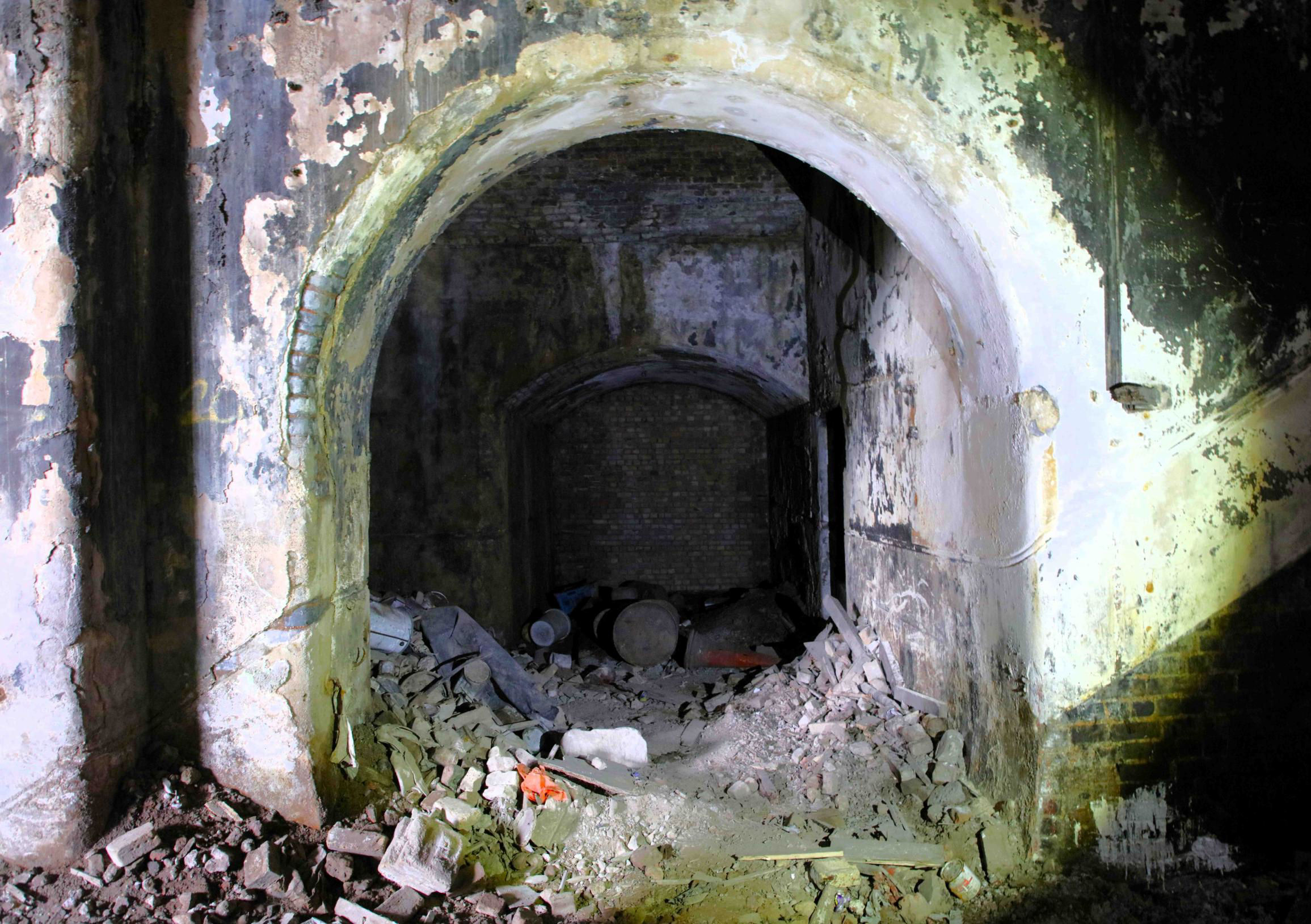
Part of the other section of the undercroft.
[© Iain Scotchman 2025]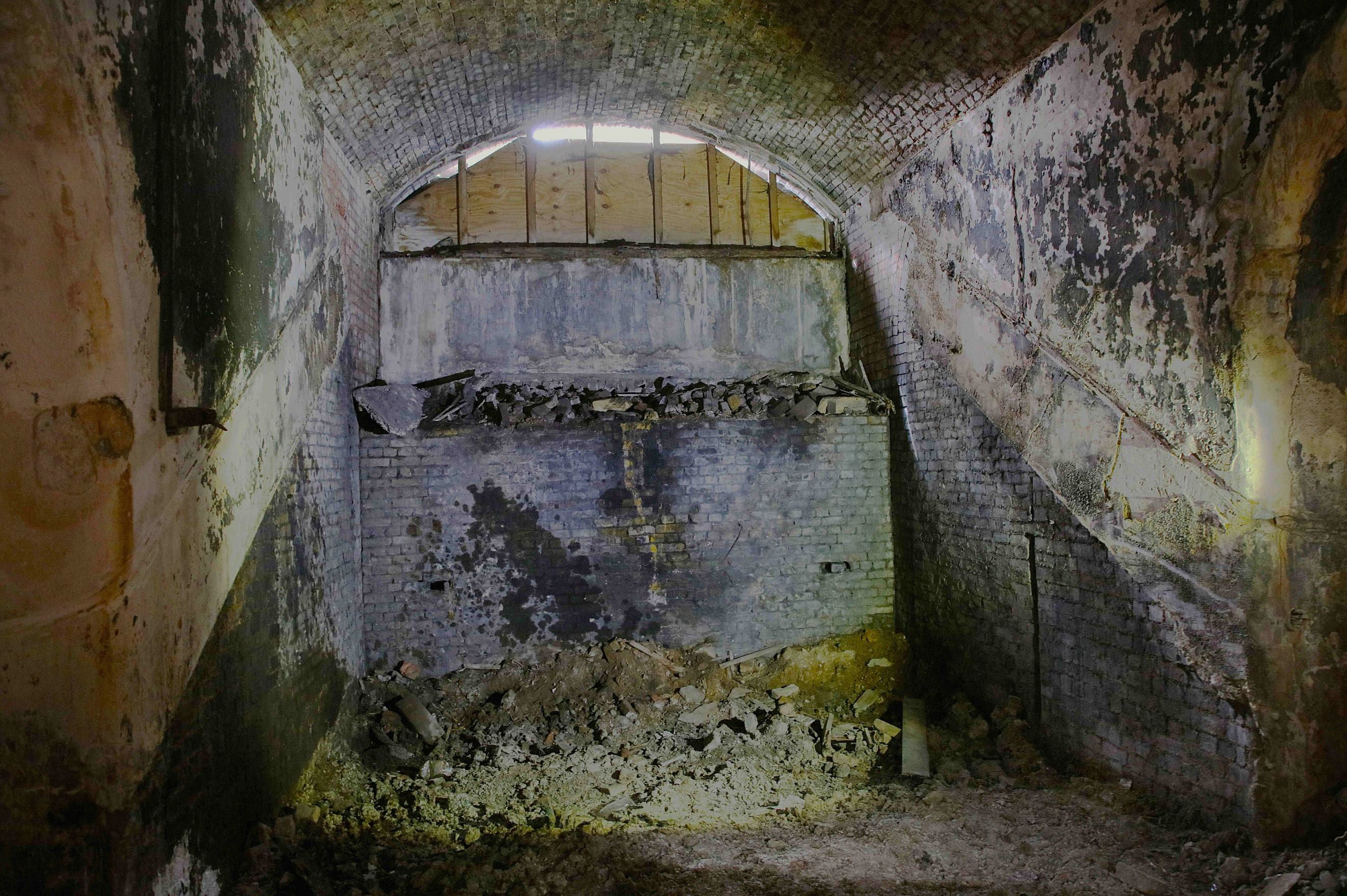
Part of the other section of the undercroft.
[© Iain Scotchman 2025]After this, we made our way around to the old original ornate entrance with its stunning cast iron gates. These were known as the Oriel Gates. Sadly, they were covered with protective netting and the view was not clear but the plan is to restore them as the main entrance to the retail area. They will be a sight to behold. We then made our way back to the office to hand back our hard hats.
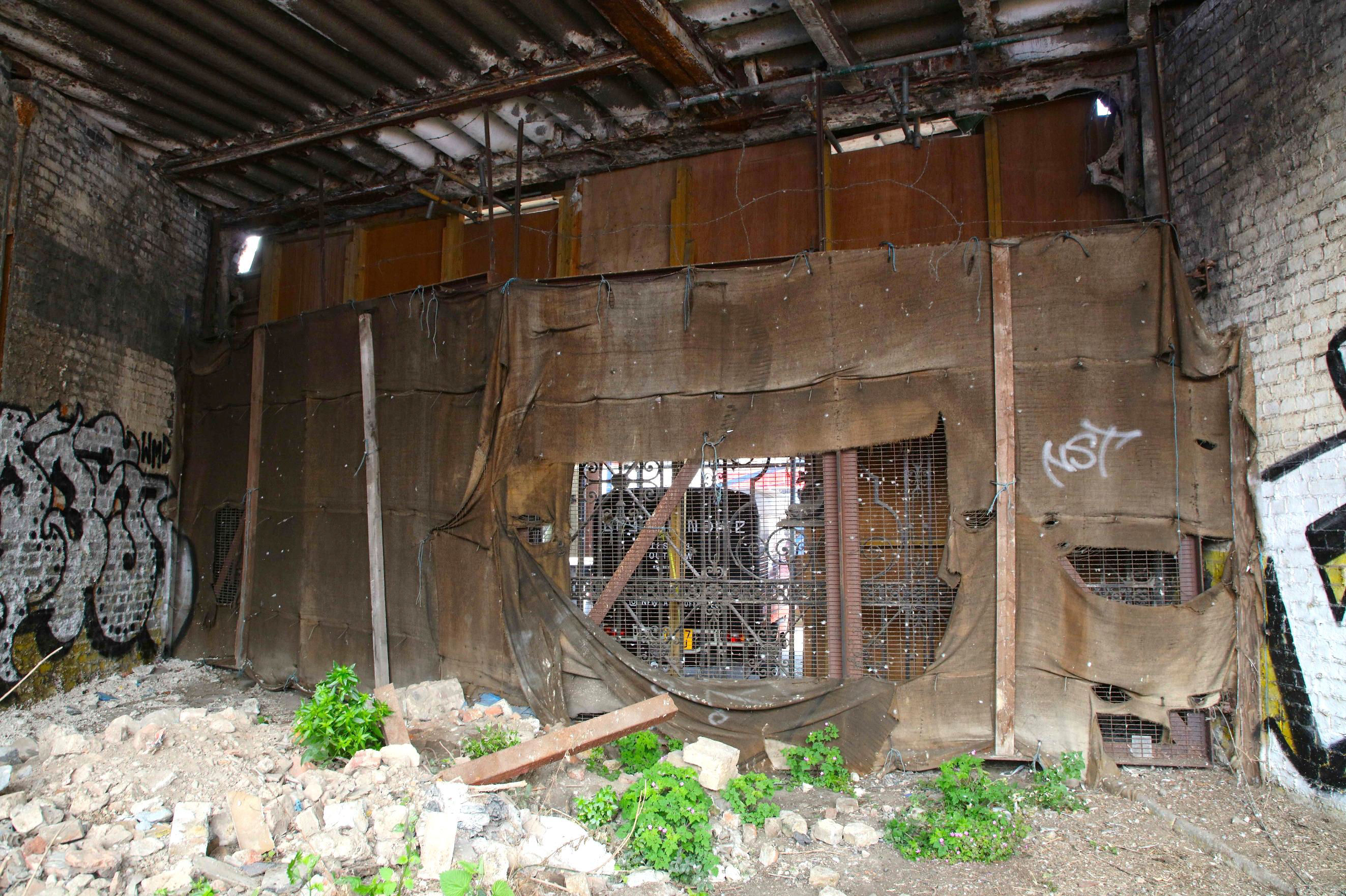
The stunning cast iron gates on the old original ornate entrance,
[© Iain Scotchman 2025]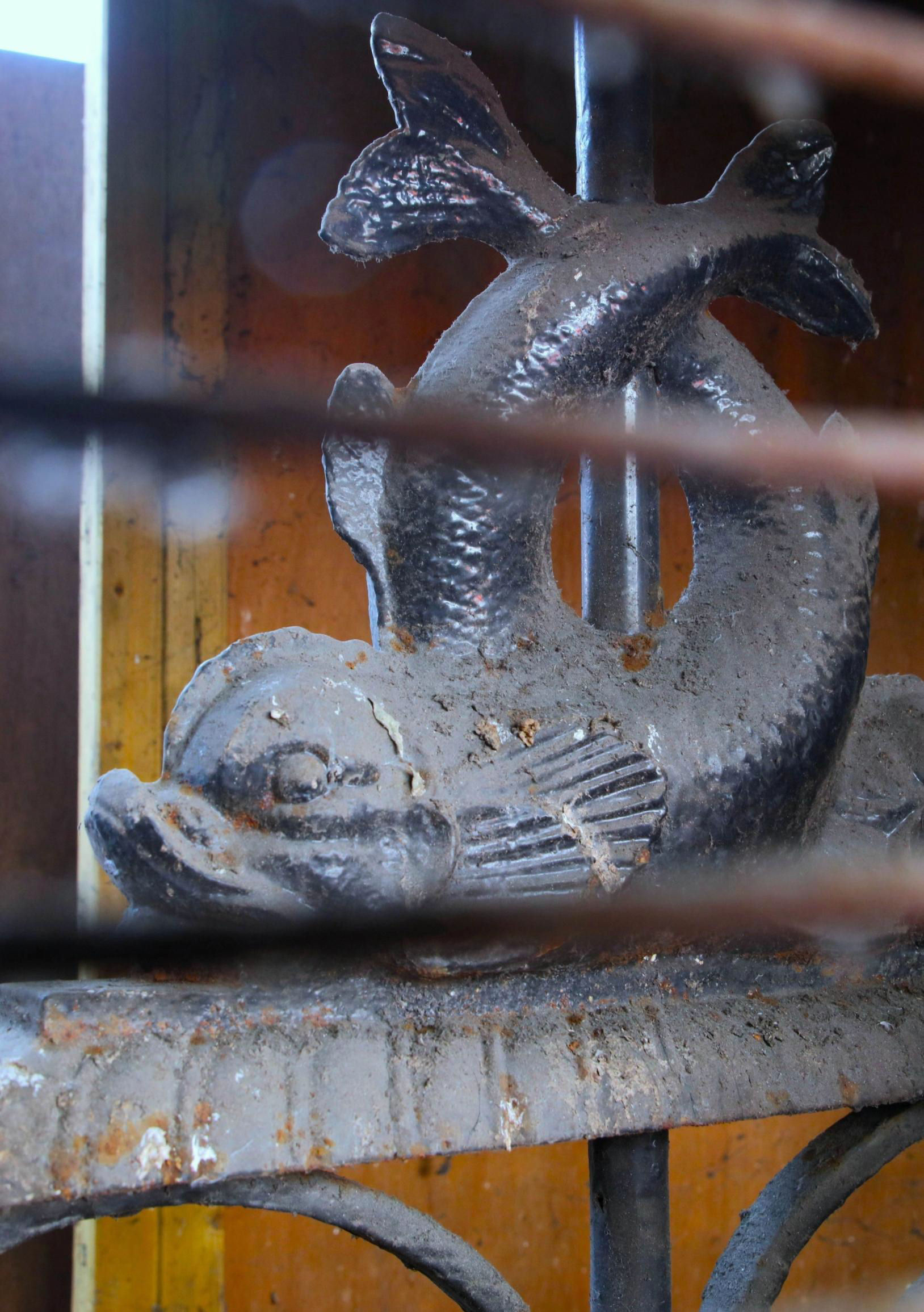
Detail from the gates seen ahead in the previous photo.
[© Iain Scotchman 2025]The next part of the tour began with a short walk via Brick Lane to Pedley Street Depot, courtesy of NR. This is on the original approach viaduct to Bishopsgate passenger and goods depot. The view from the top, where the viaduct had been demolished, gave a very good perspective of the original route, alongside the present day mainline into Liverpool Street and the Overground Windrush line.
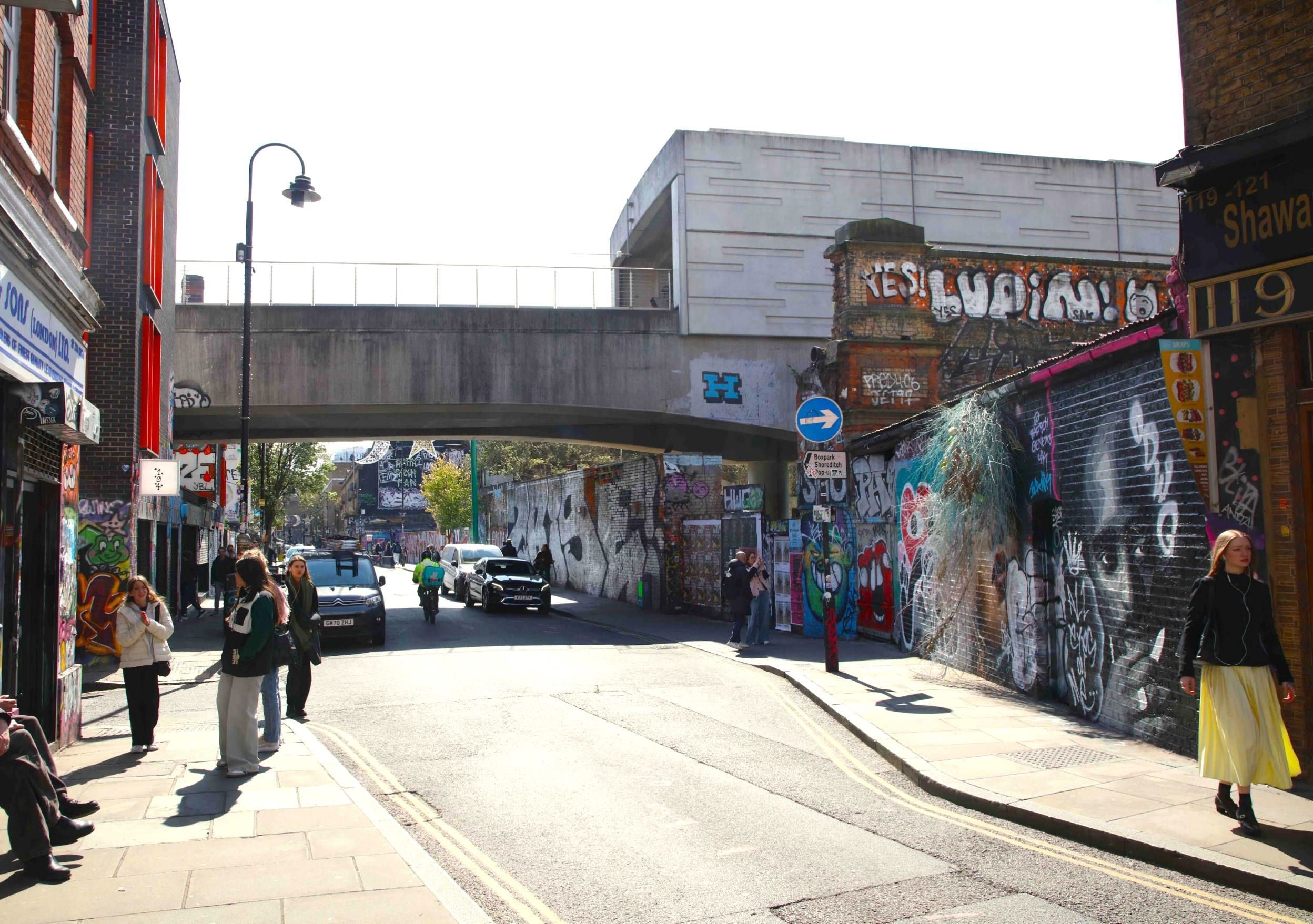
The end of the fully enclosed viaduct section of the Windrush line viewed from Brick Lane.
[© Iain Scotchman 2025]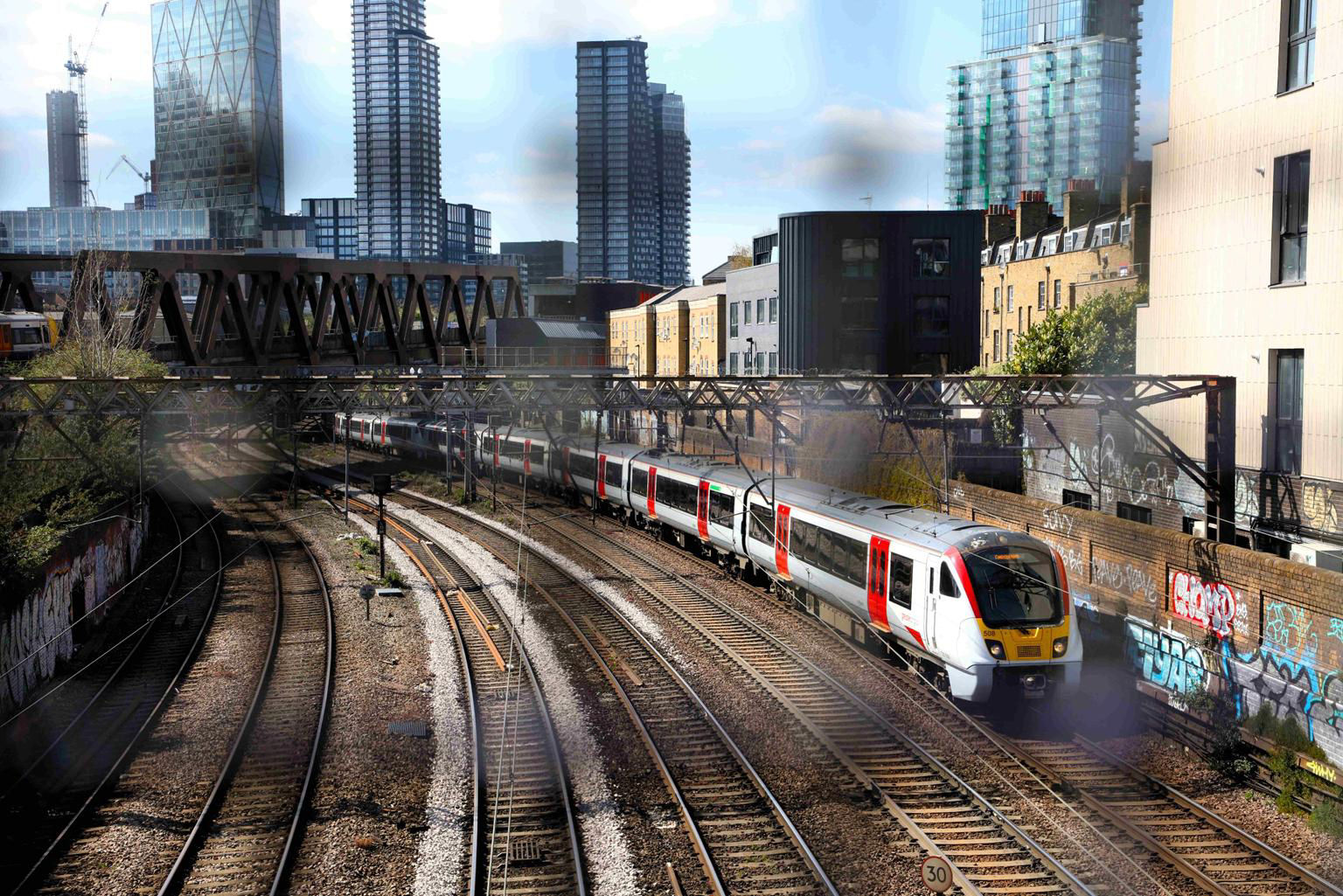
Through wire netting (ignore the black blobs where they cross) towards Liverpool Street, the Overground line is above (Shoreditch High Street ahead).
[© Iain Scotchman 2025]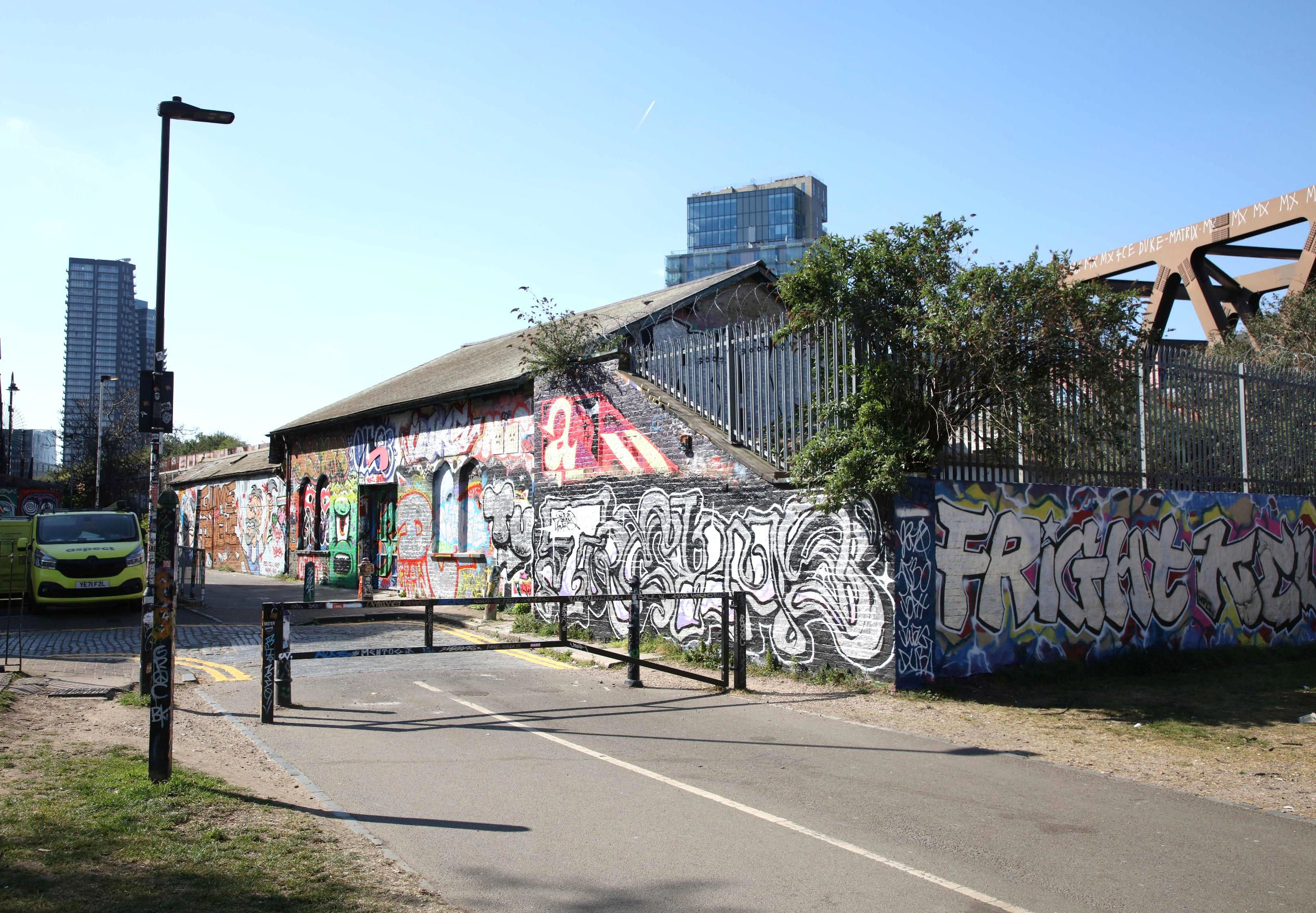
The former Shoreditch London Underground station.
[© Iain Scotchman 2025]After this, Adam had an additional treat in store with access to the Pedley Street Compound. [Like Kev Adlam on railtours and fixtures, Adam is noted for 'on the day extras' - amusingly the fixture details said NB. this tour does not include the Pedley Street compound so, well done Adam!] This is a small area between the running lines into Liverpool Street and the viaduct, where some splendid artifacts are stored. There are stone items from old buildings in and around Liverpool Street station when it was remodelled, including the now demolished Harwich House. Sadly, these stone curiosities are victim to the weather and the aspiration is to seek to protect them by moving them to a better and more preserved environment. We were joined by Tim and Anna from the Railway Heritage Trust whose input was most enlightening. If anyone can help save these historic items, we hope the RHT may be able to assist them. An interesting find in the Pedley Street compound was the remnant of an original signal post.
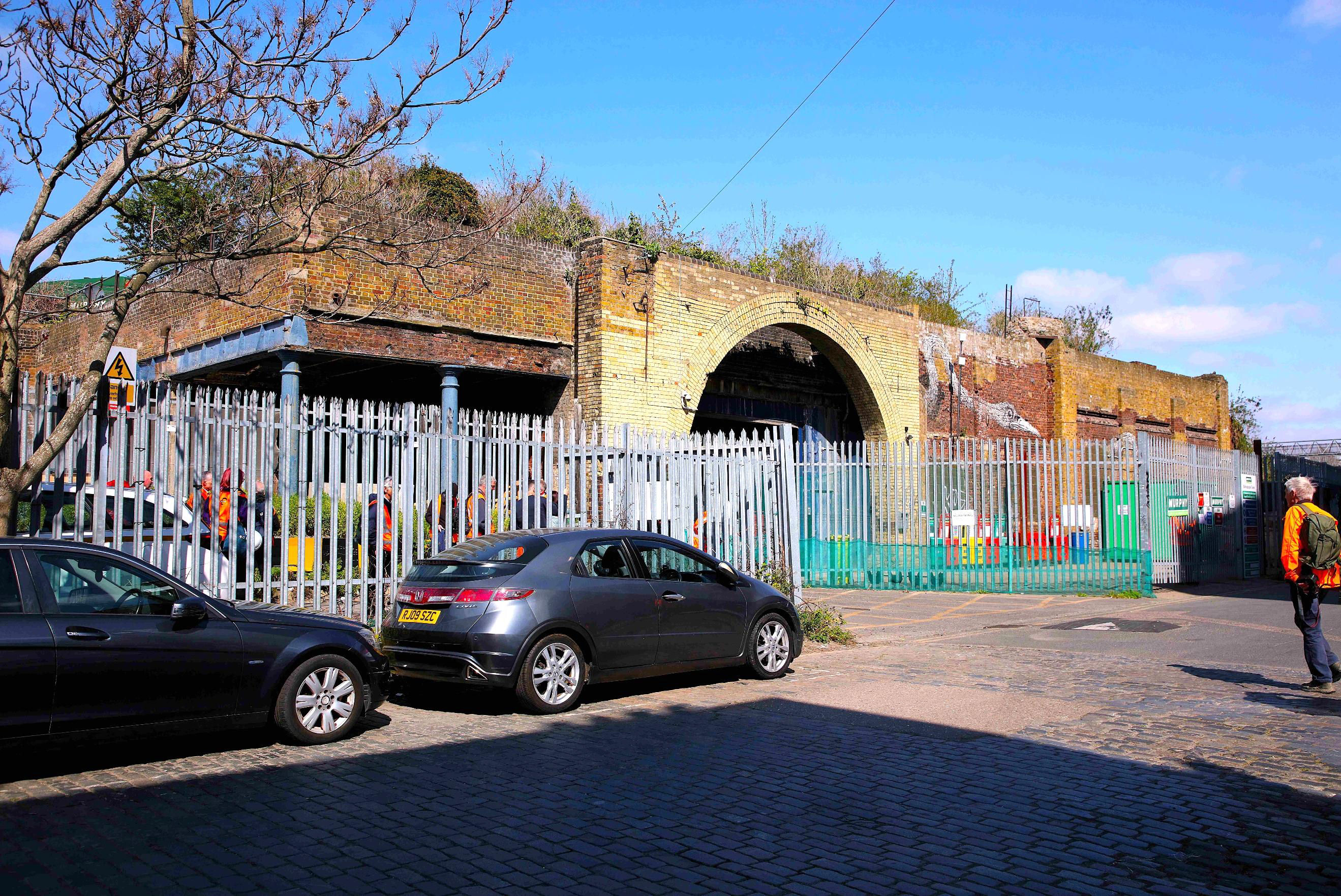
Pedley Street Network Rail Compound (more correctly, 'Structures Depot - Building & Civil Engineering') with some interesting artefacts.
[© Iain Scotchman 2025]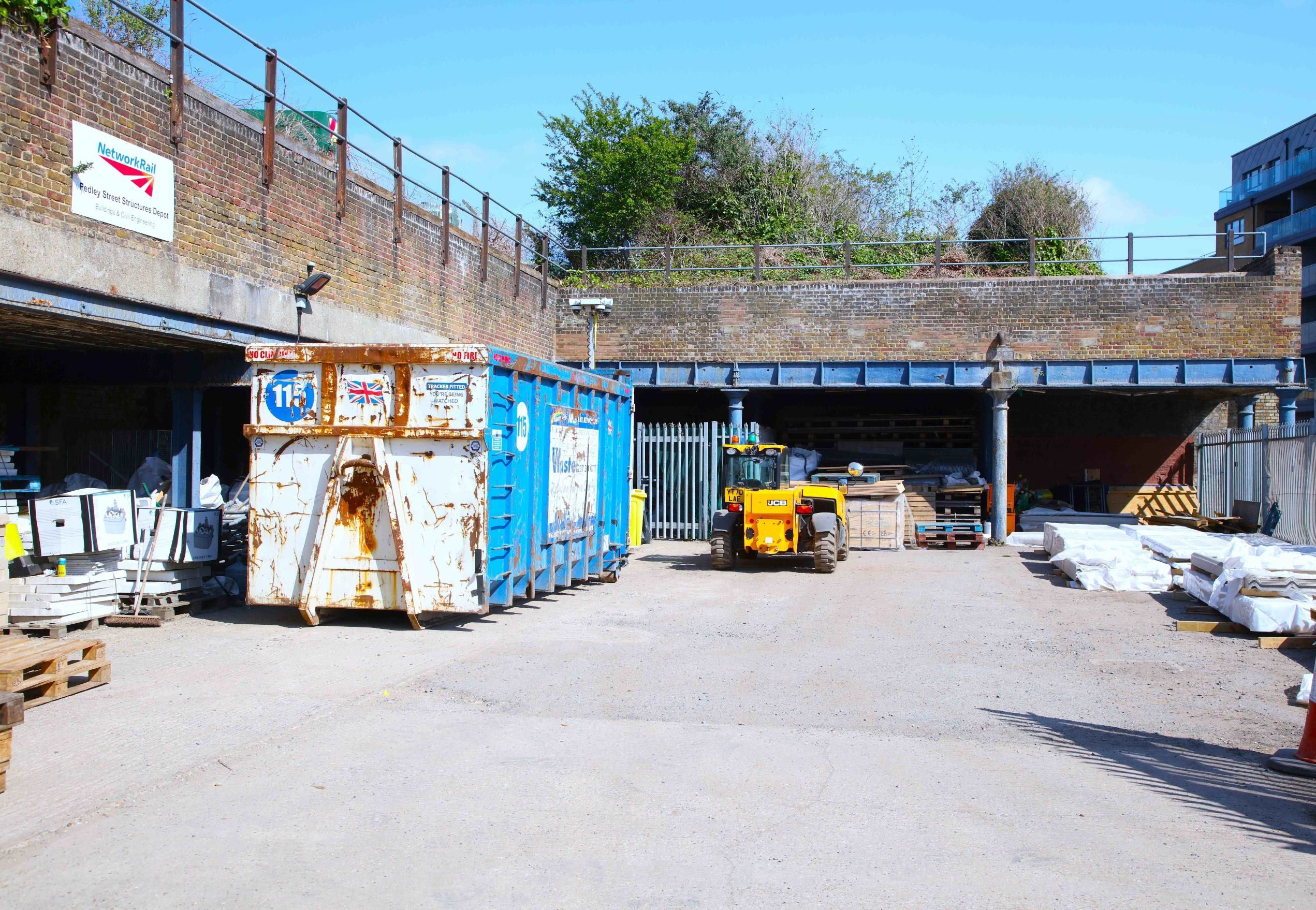
Pedley Street Structures Depot
[© Iain Scotchman 2025]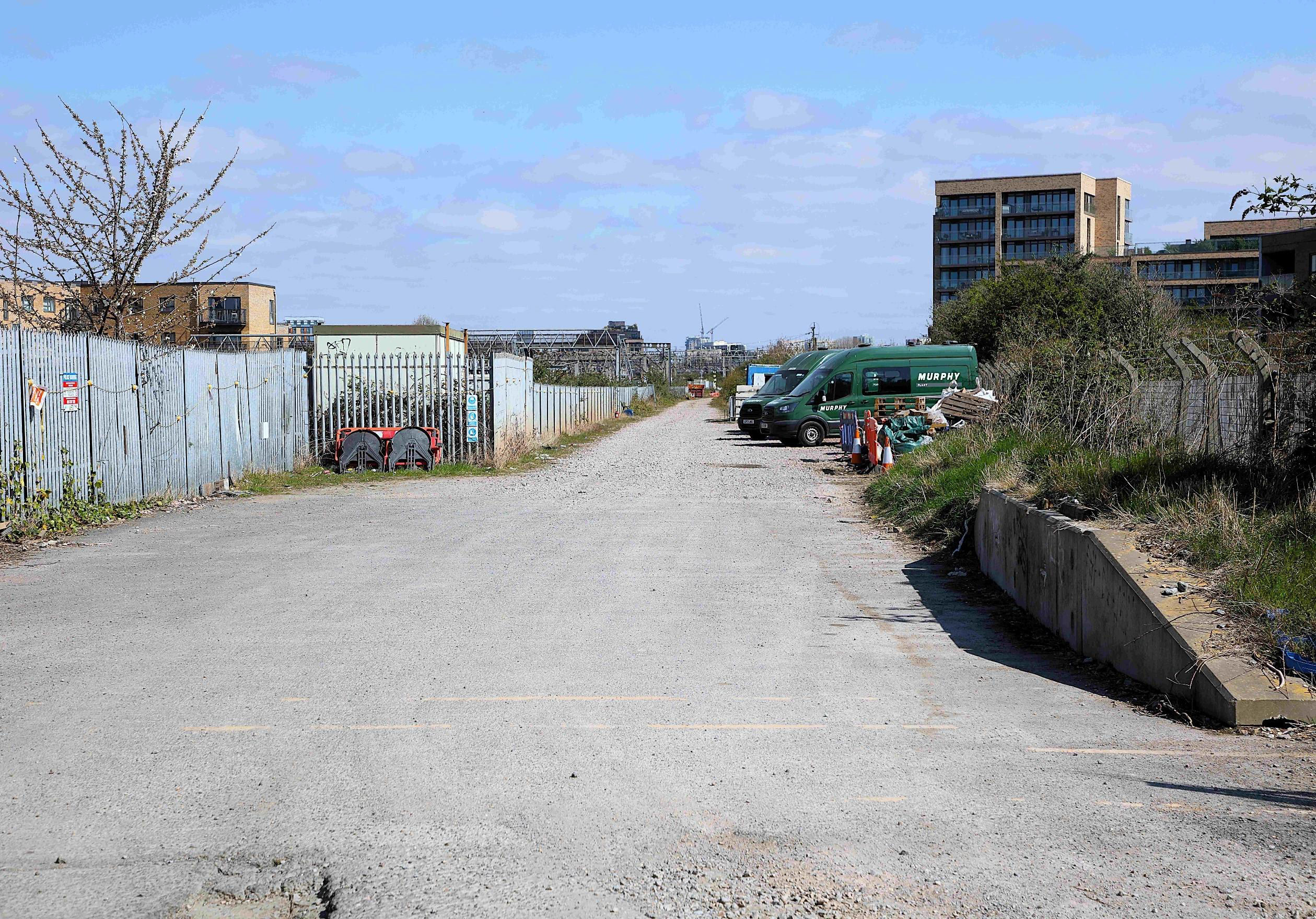
Pedley Street Structures Depot.
[© Iain Scotchman 2025]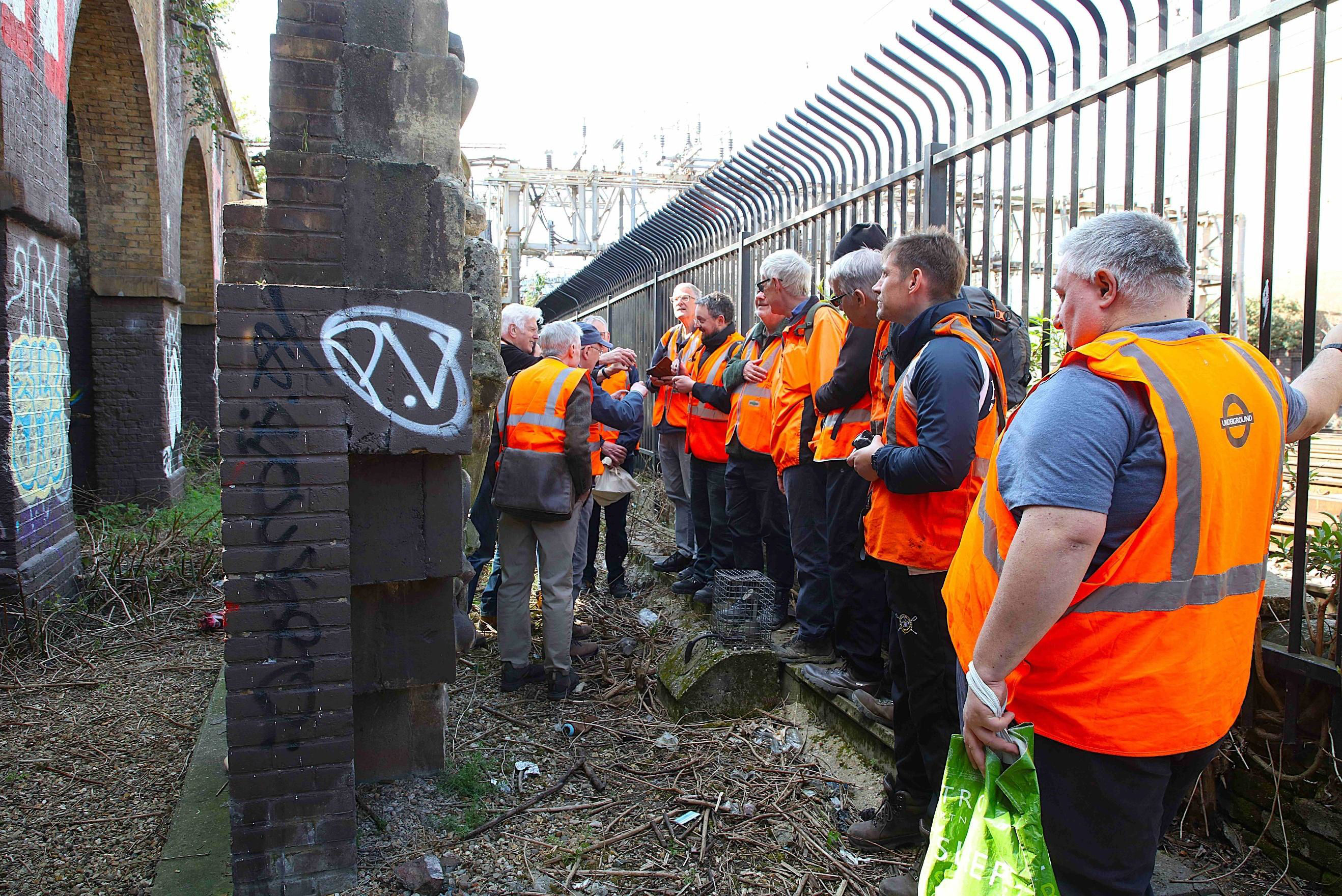
About as close as our members came to a group photo but what were they admiring? (See the first photo in this set.) The Liverpool Street lines are right.
[© Iain Scotchman 2025]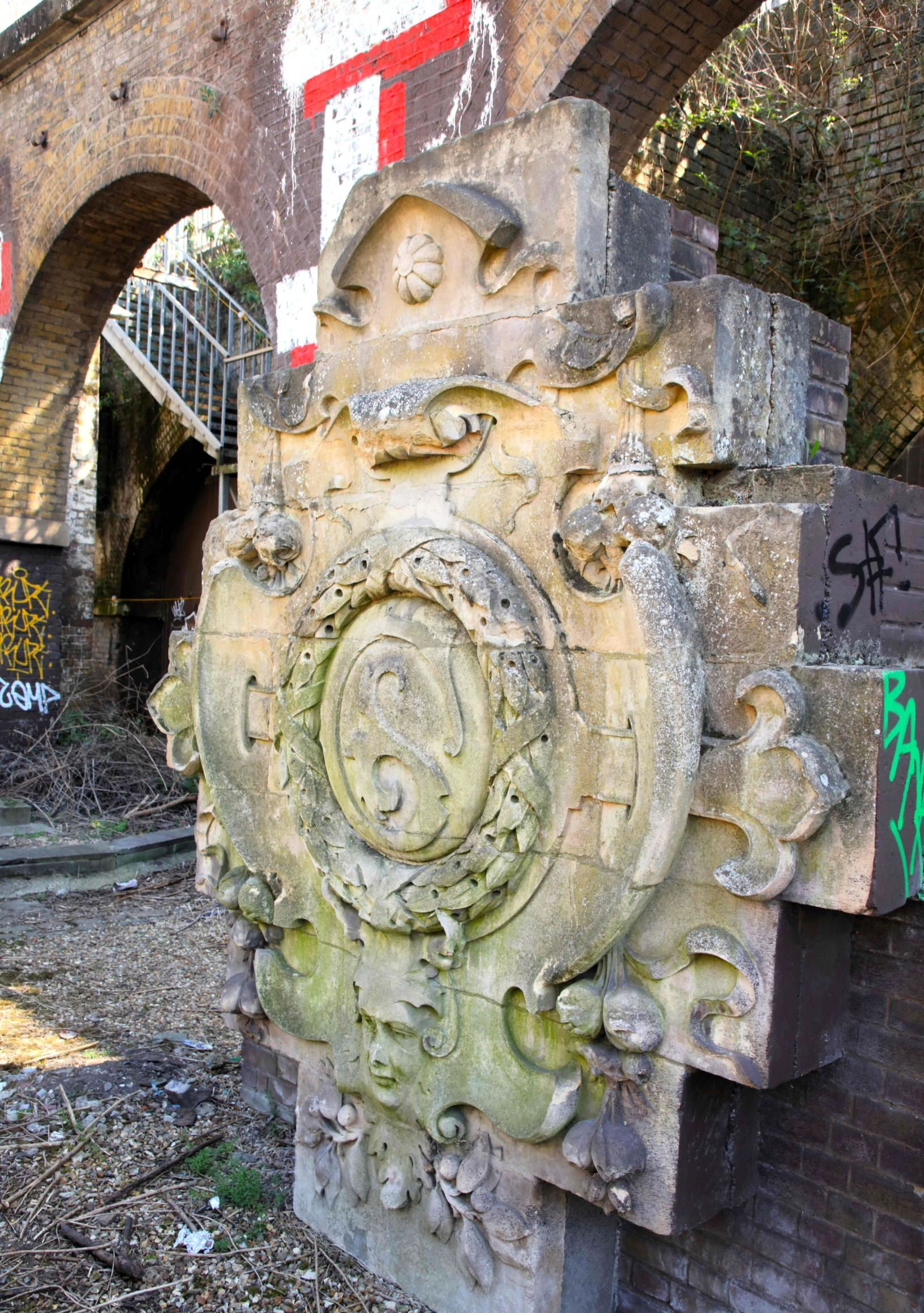
One of the splendid artifacts stored in Pedley Street Structures Depot.
[© Iain Scotchman 2025]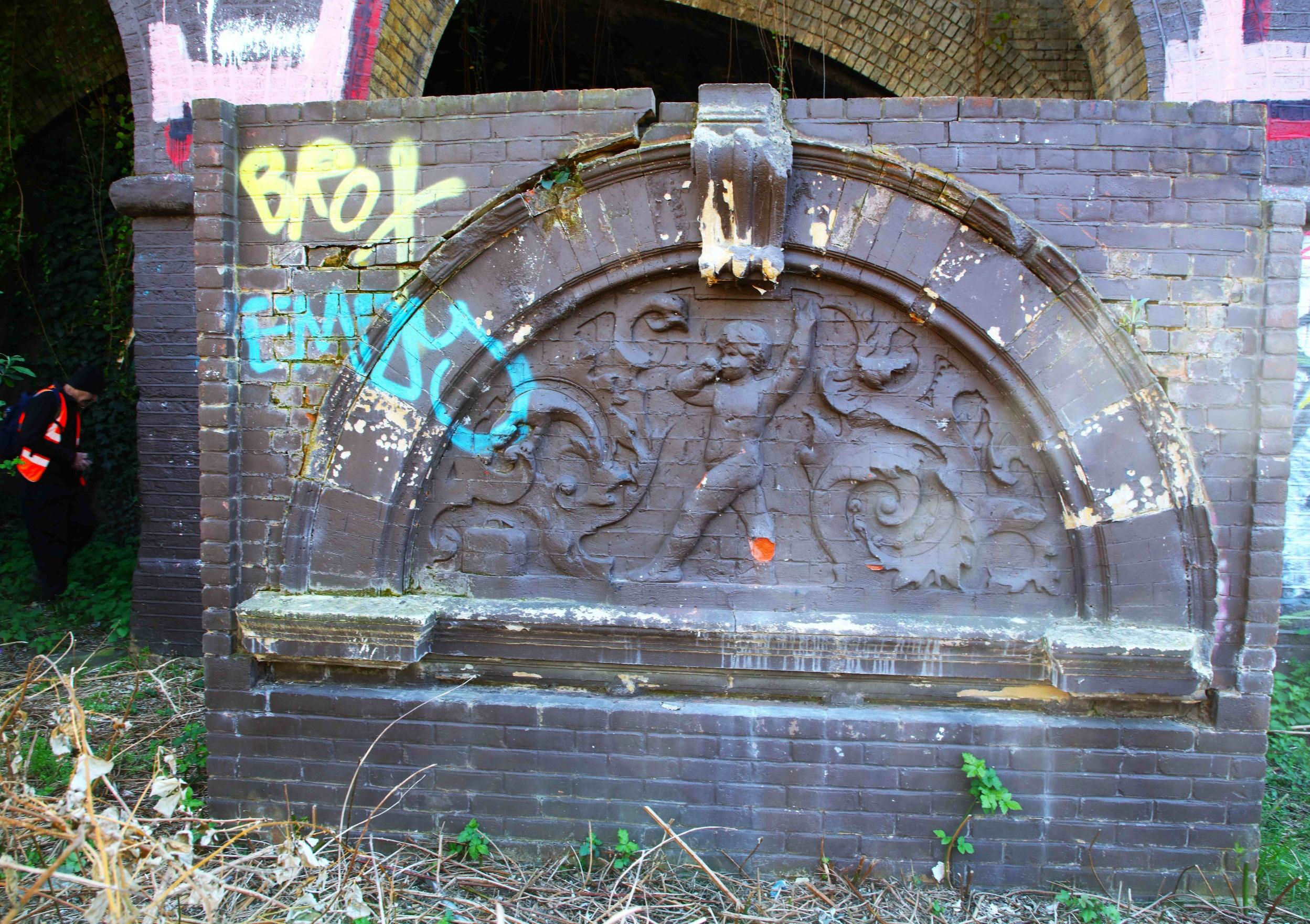
One of the splendid artifacts stored in Pedley Street Structures Depot.
[© Iain Scotchman 2025]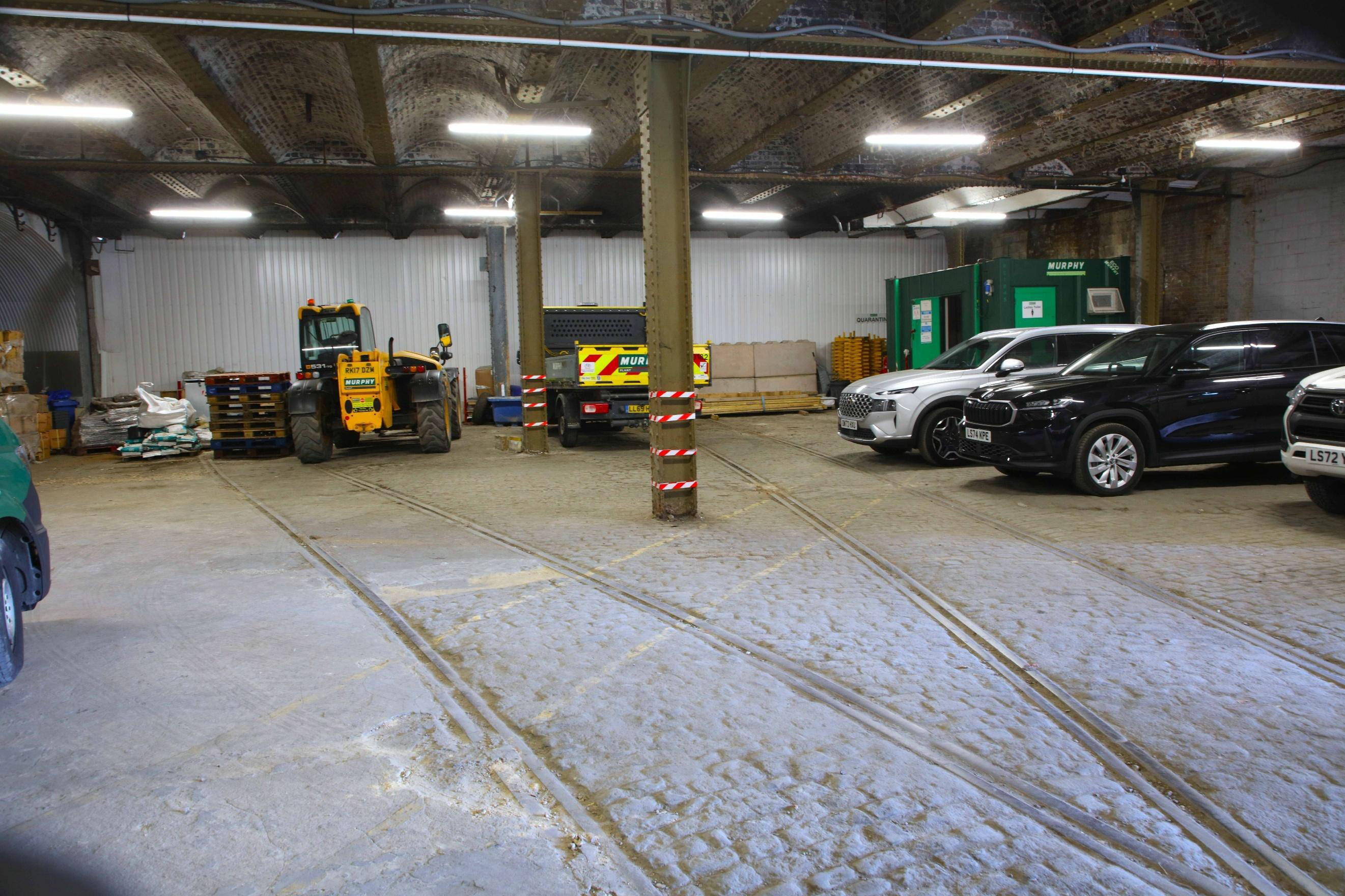
Pedley Street Structures Depot.
[© Iain Scotchman 2025]Massive thanks to all involved in the arranging of this fascinating day out, which concluded at around 15.00. It is good to document that £700 was donated to Shoreditch Trust as a result of the fixture.
Further information:
http://www.disused-stations.org.uk/b/bishopsgate/ (E&OE).
.
https://www.subbrit.org.uk/sites/bishopsgate-goods-station/ (many photos).
.
http://www.disused-stations.org.uk/b/bishopsgate_low_level/index.shtml