BWC 3 Day 2 - First Report
Saturday 22nd March 2025
Report by Tom Gilby
The Branch Line Society (Test)
Guest

Everyone who calls themselves a Railway Enthusiast will have their own personal 'rules', for example 'I only do to Baker level', 'I need only two 66s', 'I do loco-hauled on otherwise unit operated lines, or search out obscure crossovers and visit every station'. I am guilty of some of this and, following the BWC 3 trip to Wick, have invented another rule - optional, of course. I had not travelled north of Dingwall since 1977 (solid Class 26s locomotives back then) and had no memory of the line. So, my rule - feel free to follow it - is any line not done in the last 30 years lapses and becomes new track again! [No need to worry if you are lucky enough to be aged under 30 then.] From conversations on this excellent railtour, many others hadn't travelled on the Far North Line since the Class 37s left too, remarking it was like doing 'new track' again!
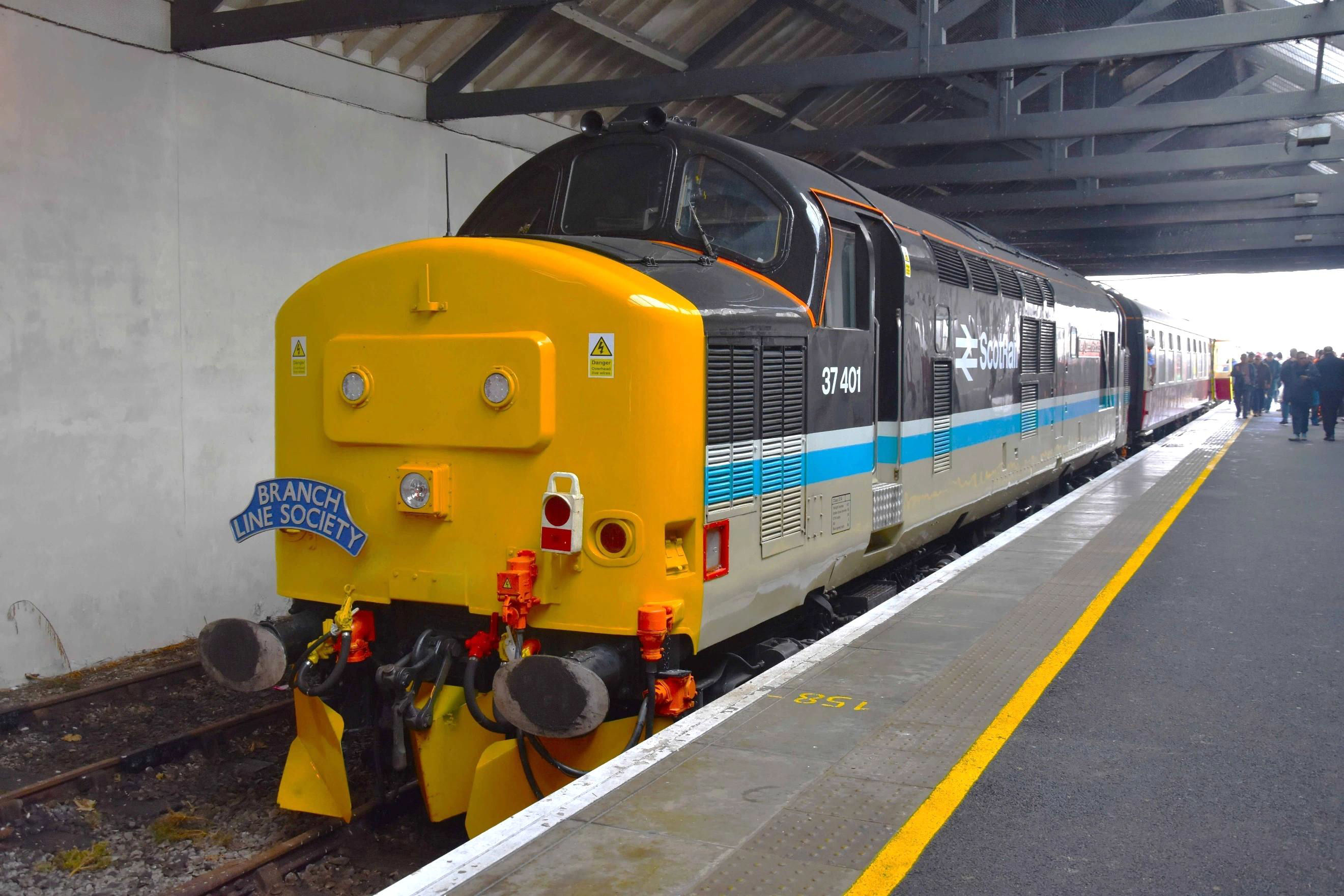
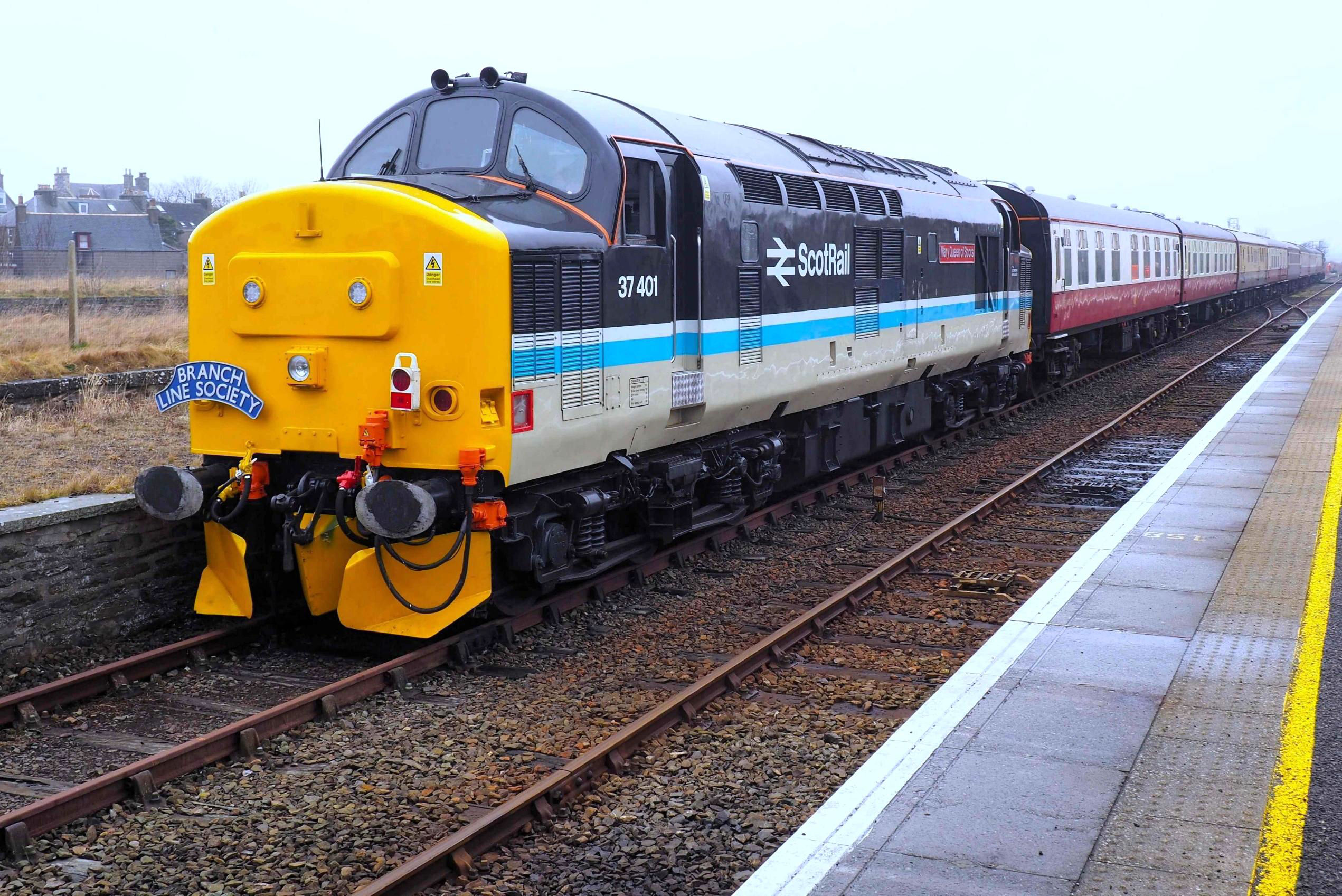
Inverness at 04.45 on the Saturday morning was certainly quieter than a few hours earlier, it was raining and dark with mysterious figures shuffling towards the station, itself open and well lit. Most platforms held DMUs as we gathered at the rare Platform 7 and patiently waited for our train. This gave a good view of Rose Street Level Crossing (on the curve avoiding Inverness) which warbled into life when 37401 'top & tail' with 37403 passed by, then set back for us to board. We left slightly late over the rebuilt Ness Viaduct, then with the distinctive slowing and a 'clunk' over the rail joints on and off Clachnaharry Swing Bridge above the Caledonian Canal. It was off north in darkness, although the tiny platform at Beauly where, like at Conon Bridge, just one door is opened on DMUs, was spotted. At Muir of Ord, our tour ran through P2; the unusual right hand running is due to the former siding configuration. The bay for the 13½ mile long Fortrose branch (CP 1 Oct 1951) was just about visible. Much of its trackbed is walkable.
It was light by Dingwall and we were joined by a representative of The Friends of the Far North Line, who distributed copies of a 'window gazers guide' and an excellent, 35 page, 'Far North Express' newsletter. (I am still reading it!) Saturday was not a good day for 'Normals'; the 07.00 Inverness to Wick terminated at Dingwall and the 06.18 Wick to Inverness only reached Lairg, on top of crossing delays.
At Tain, we crossed the first southbound train, the 06.26 from Lairg with few passengers (it had left Inverness at 04.40 as ECS) and, during a brief pause, attracted the curiosity of a couple in an adjacent house enjoying the sunny morning, still in their dressing gowns. Passing the Glenmorangie Distillery, the Dornoch Bridge could be seen sweeping across Dornoch Firth. The A9 is 20 miles from Tain to Golspie, half of our rail route via Lairg. This and its coastal route mean that the X99 Coach service takes only three hours from Inverness to Wick. Trains typically take 4½ hours via Thurso, of course. Before the A9 Dornoch Firth Bridge cut off was built (work started in late 1989 and it opened in 1991), there was a plan to include a railway with a new station at the significant town of Dornoch. British Rail was in favour of the scheme but the Conservative Government was not. The Scottish Secretary then, Malcolm Rifkind, said the substantial cost of the scheme could not be justified in terms of the social benefit such a link would provide. Saving 45 mins on the overall journey, the inland route via Lairg would have closed.
Our train began climbing inland alongside the narrowing glen through Ardgay station (Bonar Bridge before 2 May 1977), past Culrain Castle and high above the Falls of Shin. Culrain and Invershin are only 34ch apart, either side of the Kyle of Sutherland. The footbridge between the two was installed in 2000. Of course, it is illegal to walk across the rail bridge between them and, before the year 2000, the alternative road was (and still is) nearly 9 miles via Bonar Bridge. The current train fare is £2.10 or £3.30 return (without Railcards) and it takes less than a minute. Both stations are request stops, so the conductor / passenger needs to be quick! Has any member managed to do this journey, perhaps visiting stations on the line? Next, it was up to Lairg summit then, descending Strath Fleet, to the coast at Golspie.
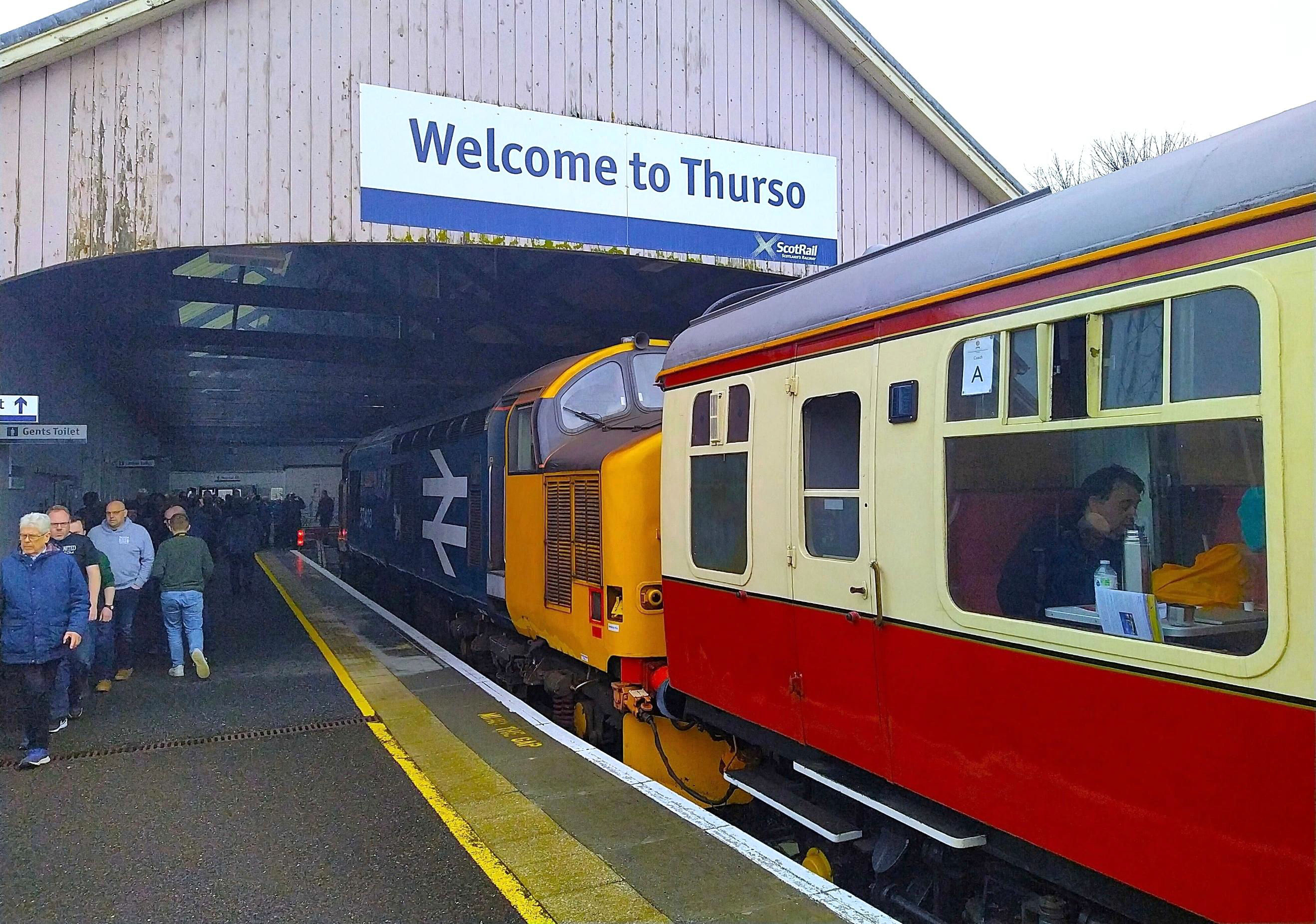
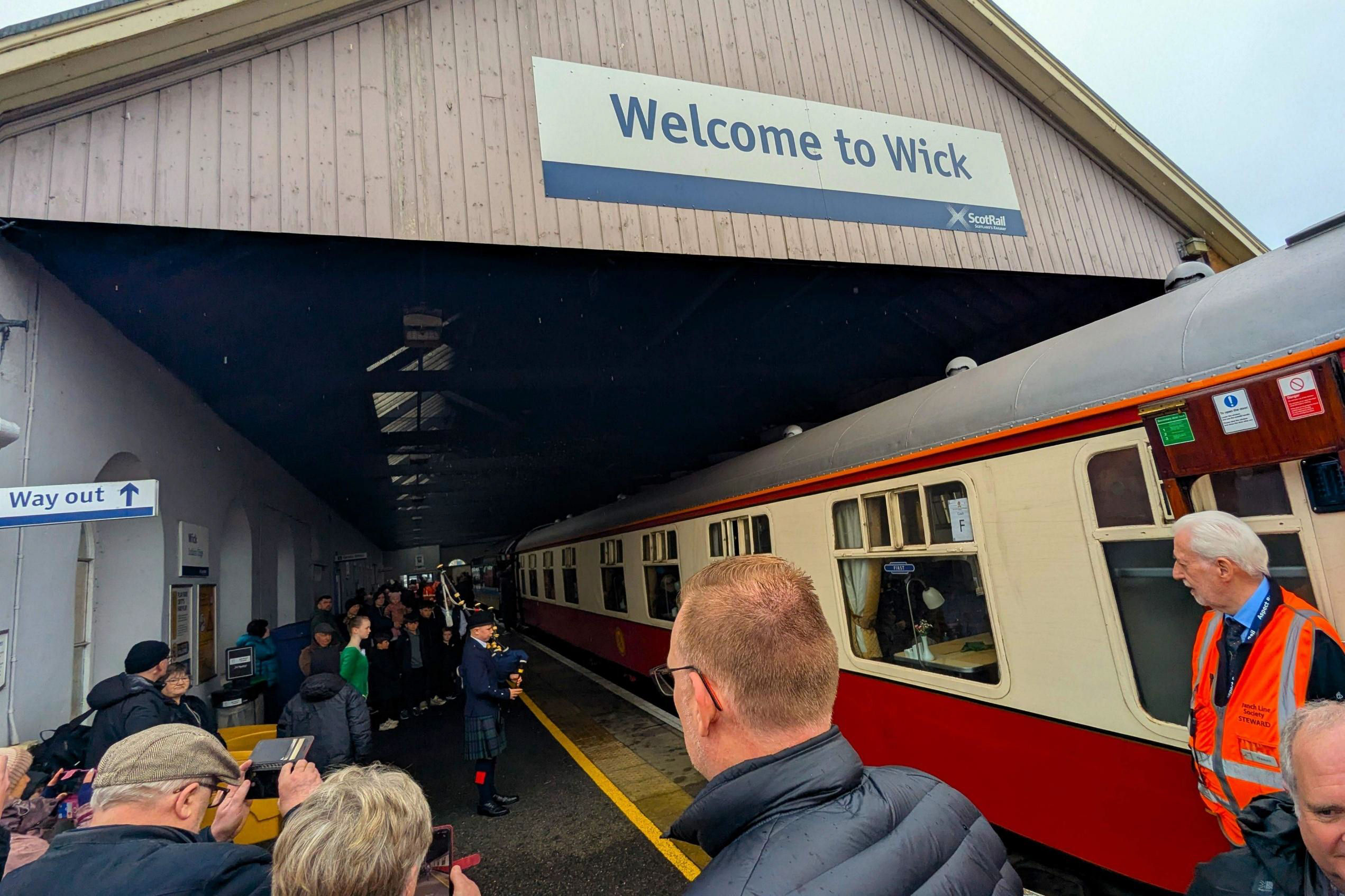
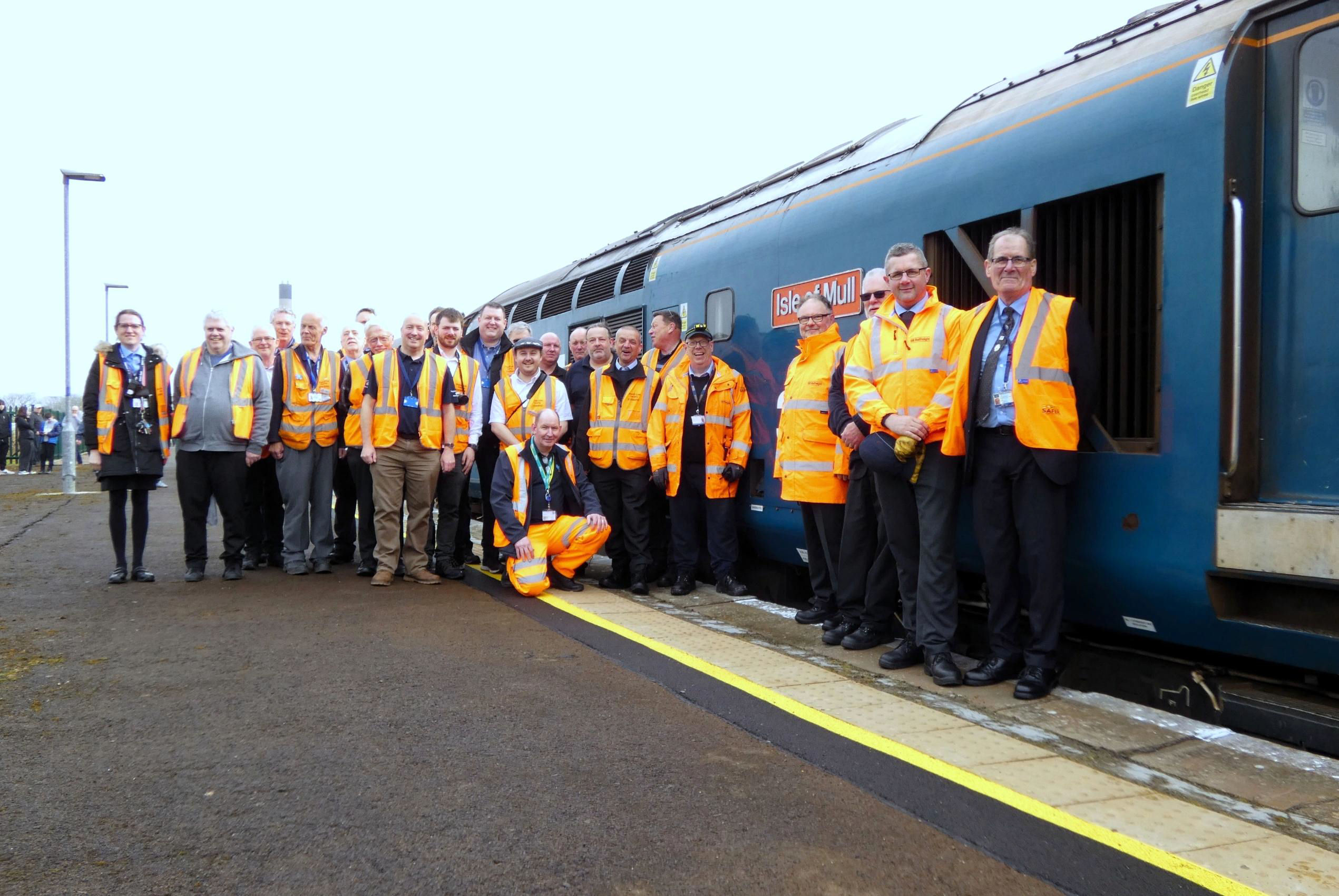
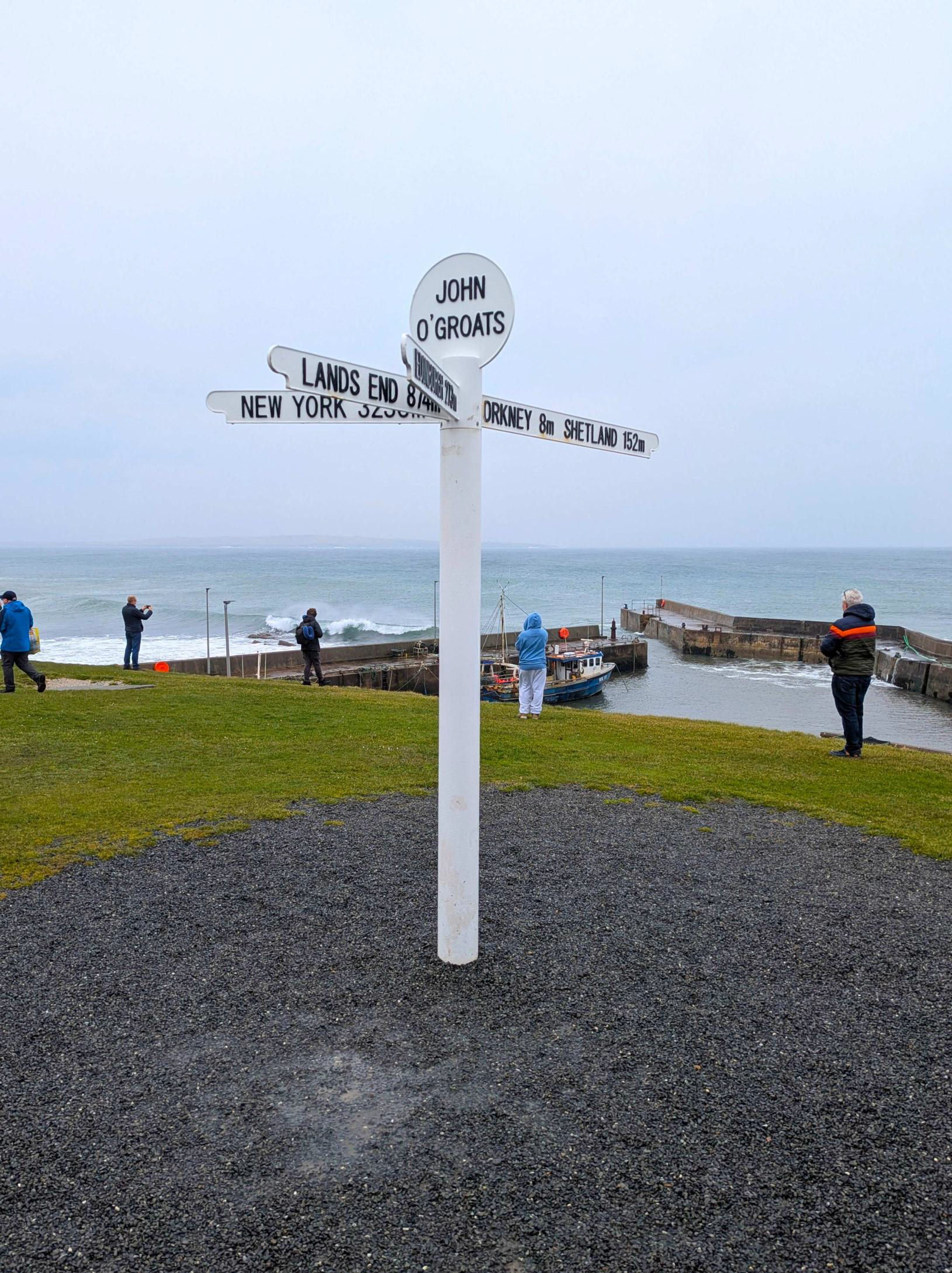
Overlooking us now from a nearby summit is the Duke of Sutherland Statue; next the once private station of Dunrobin Castle near his Castle. DMUs stop on request in the summer only - this year between 19 May and 25 Oct. The 20 mile coastal section here alongside the North Sea to Brora and Helmsdale is spectacular, although increasingly prone to damage from rising sea levels and climate change. It seemed to be too remote for photographers. Once again, our tour parted with the A9 and headed north up the Strath of Kildonan and the increasingly wild Flow Country (460,000 acres of bog peatland), to the remote Forsinard where we crossed the 08.02 from Wick. We then headed northeast in equally wild country, past the controversial Altnabreac station (closed at the time since 12 Nov 2023 but ROP 6 Apr 2025) and on to more civilized surroundings at Scotscalder. Reversing at Georgemas Junction, we reached Thurso then continued on to Wick, reached at 11.02. There were photographers out at Georgemas Junction.
| Branch Line Society. A Company Limited by Guarantee - Company No 16743754. Registered in England and Wales. Registered address: 6th Floor, Derwent House, 150 Arundel Gate, SHEFFIELD S1 2FN |