Our fully booked party of 28 members (from far and wide, one from Dublin even) was greeted at the north end of Blackfriars P2 by Adam Turner and Russell from NR. We descended the escalator to the northern ticket hall and passed by the Blackfriars destination stones, part of the original station which opened 10 May 1886 as St Pauls becoming Blackfriars from 1 Feb 1937. The stones were restored and repositioned in the rebuilt station during 2012 as part of the Thameslink project. Those 54 destinations once served from the station by the London, Chatham & Dover Railway and via steamers across The Channel (in the order they appear) were: Antwerp, Ashford, Gravesend, Darmstadt, Bale, Baden-Baden, Beckenham, Herne Bay, Florence, Nice, Berlin, Bickley, Maidstone, Frankfort, Genoa, Boulogne, Broadstairs, Margate, Geneva, Paris, Bremen, Bromley, Ramsgate, Lausanne, Milan, Brindisi, Canterbury, Rochester, Leipsic, Rome, Brussels, Chatham, Sevenoaks, Lucerne, Lyons, Calais, Crystal Palace, Sittingbourne, Marseilles, Turin, Cannes, Deal, Sheerness, Vienna, Naples, Cologne, Dover, Westgate-on-Sea, St Petersburg, Venice, Dresden, Faversham, Walmer and Wiesbaden!
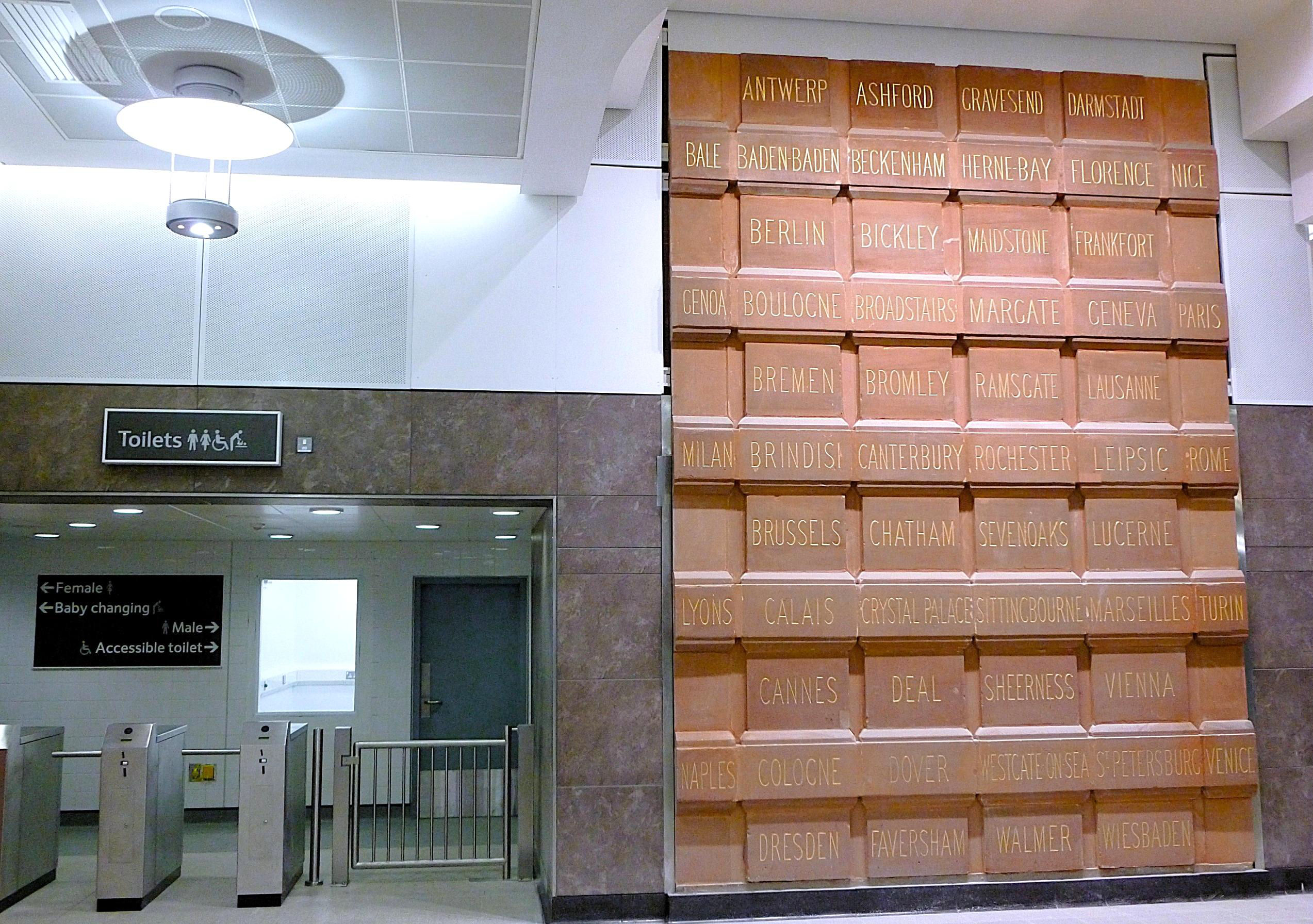
The Blackfriars destination stones.
[© Network Rail 2012]Members travelled up the escalator to P1. Then, with the kind assistance and permission of Thameslink, we proceeded onto the outside terrace adjacent to P1. The group heard how there was a plan for a Jamie Oliver restaurant on the terrace when the station opened but complications led to this proposal being scrapped. Thameslink has installed a single room pod office on the terrace, with panoramic views of the River Thames towards the Millenium Bridge, the City of London and St. Paul's Cathedral.
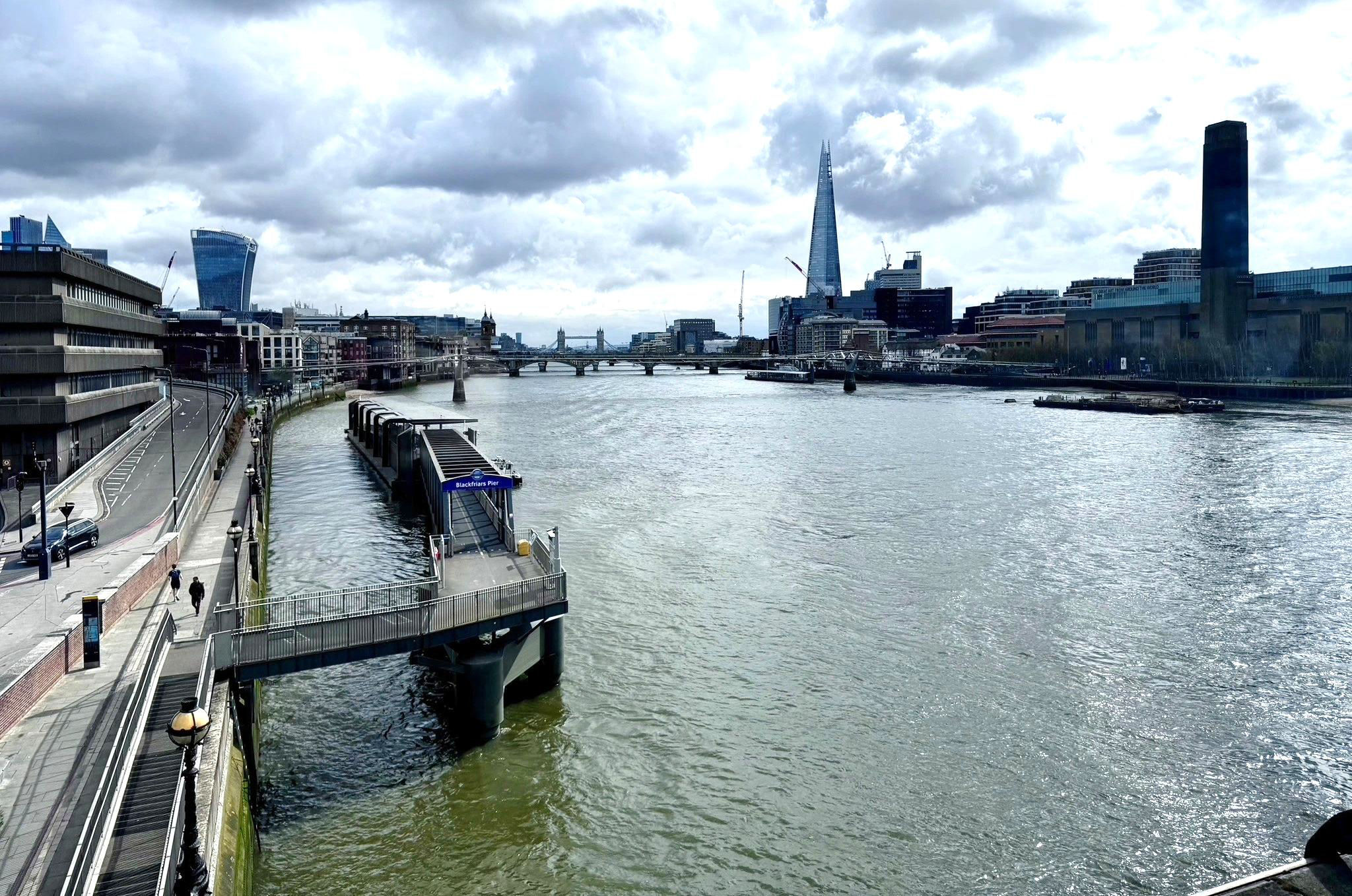
Panoramic views of the River Thames towards the Millenium Bridge.
[© Mae Bruckbauer 2025]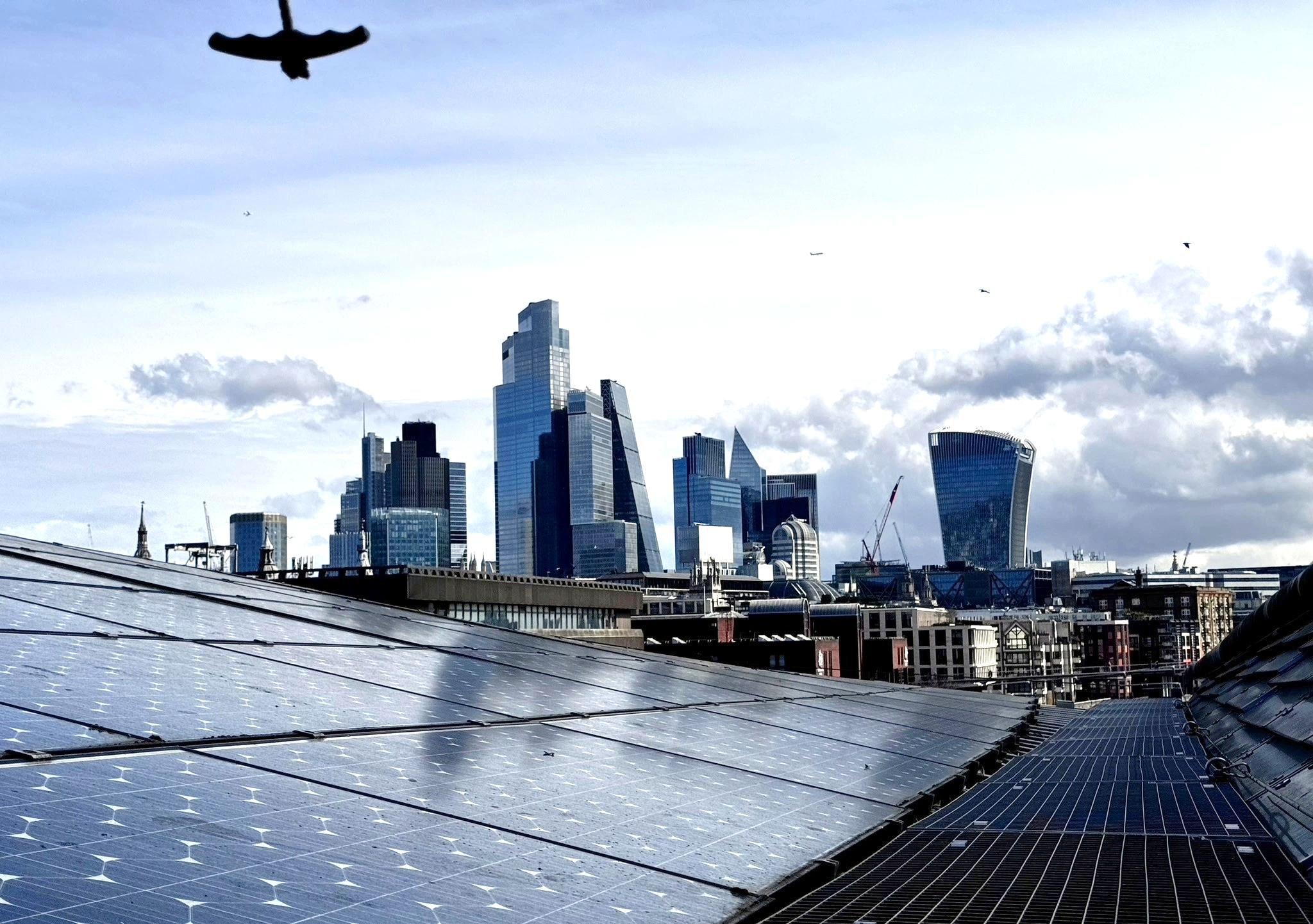
The view towards the City of London.
[© Mae Bruckbauer 2025]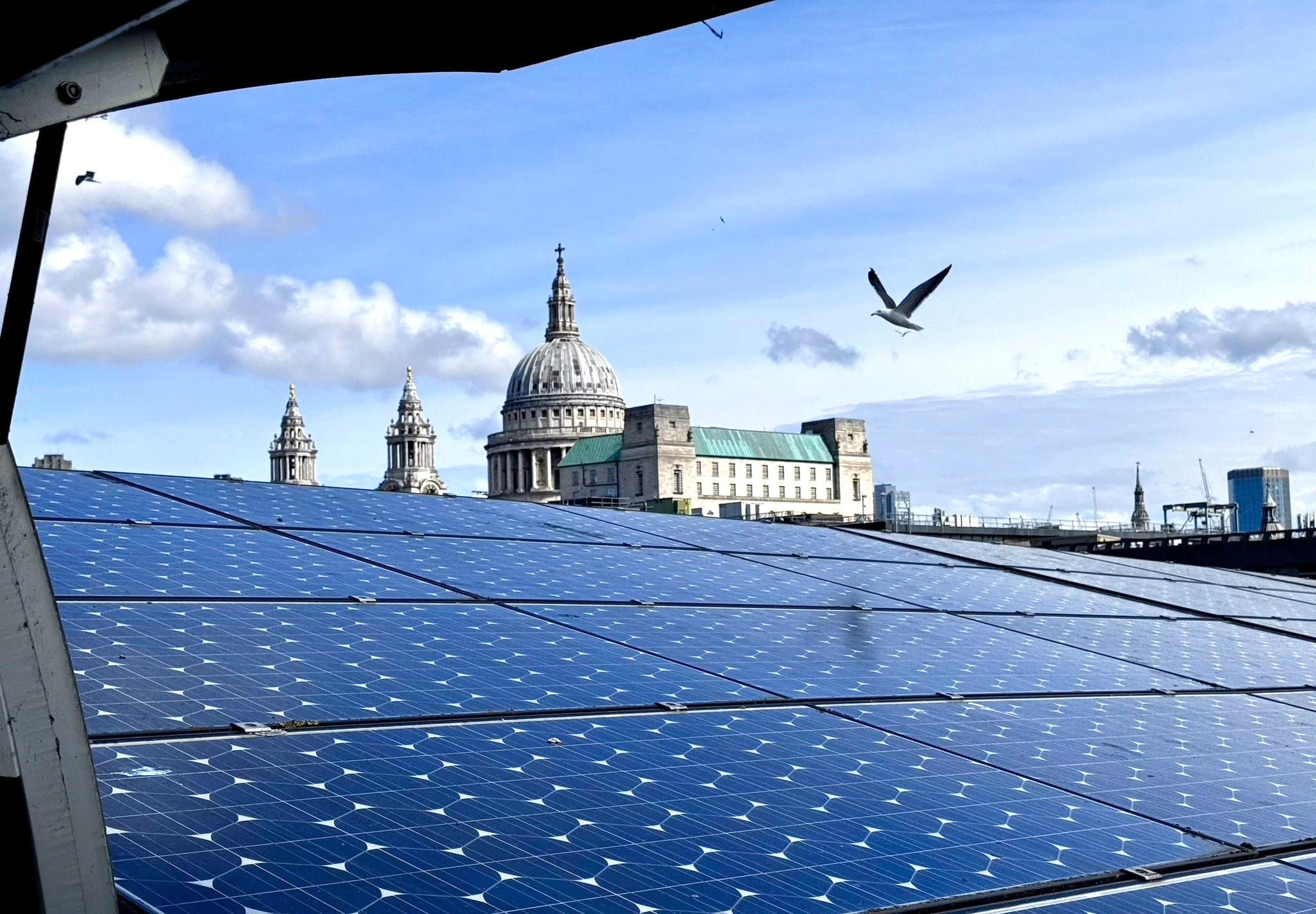
The view towards St. Paul's Cathedral.
[© Mae Bruckbauer 2025]From the start, we heard a little about the history of the station, as well as the previous station at Holborn Viaduct terminus (last train 26 Jan 1990), that both existed in this area to feed commuters into the City of London. After receiving a safety briefing in the pod office, participants proceeded from platform level up to roof level and its central access spine nestled above the station platforms (and for a few metres, above the Thameslink Core running lines). The spine itself is around 500m long and is extremely straight - the engineering tolerances for it were less than 2mm when constructed.
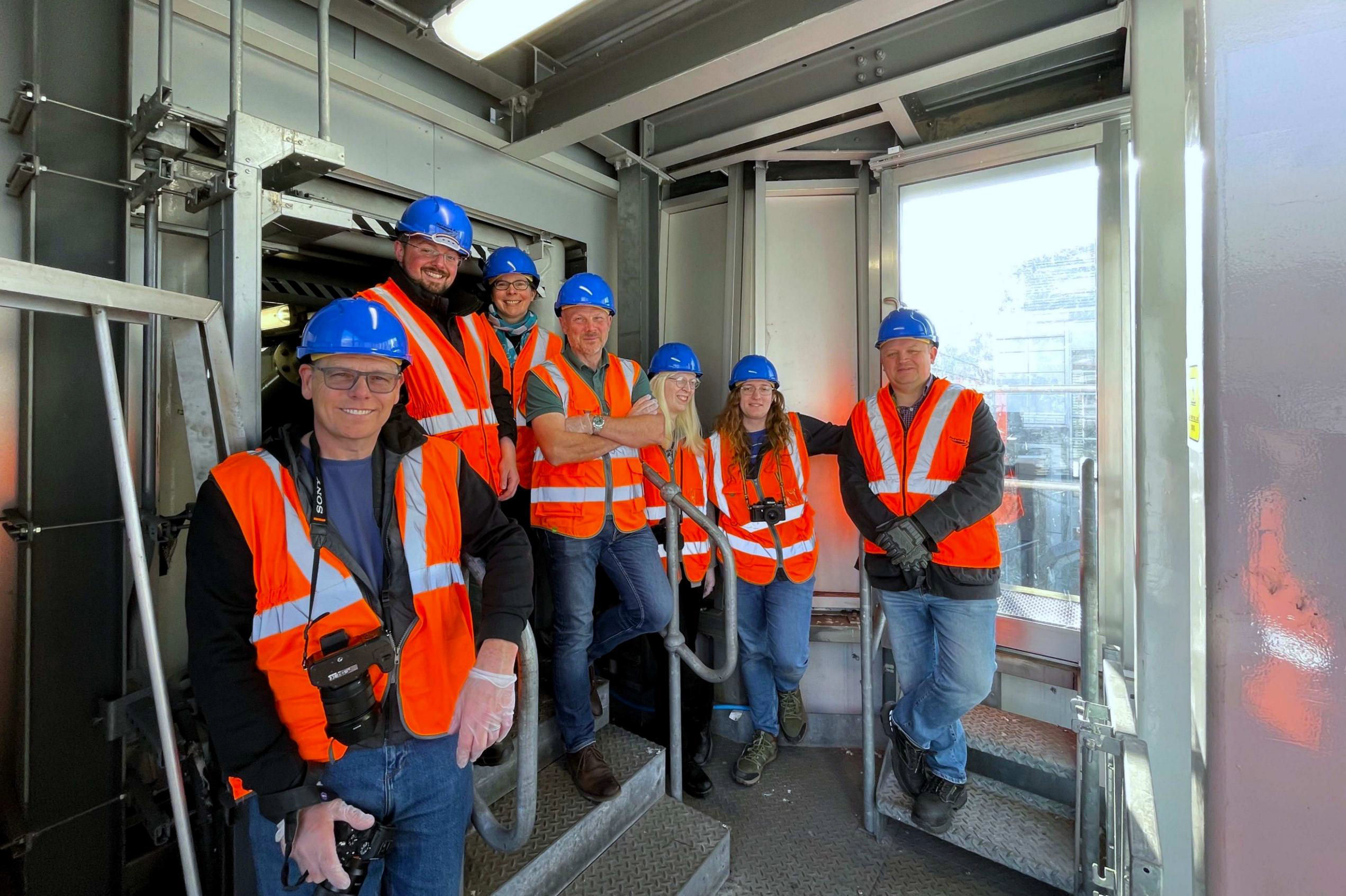
Participants were split into groups for the tour, this is one of the groups.
[© From Adam Turner 2025]The spine allows for access to the roof of the station through several hatches with peepholes - ideal vantage points for photos of the London skyline. Access to the roof is required for general maintenance and to access the numerous photovoltaic panels spread across the roof. As the station spans the River Thames, there aren't many shadows on the roof, creating an ideal environment for the panels. The array has a designed generation capability of 1.2 MW - on bright days, the supply from the PV panels renders the station fully self-sufficient and makes it the world's largest solar-powered station bridge (traction supply is from a different source). Any surplus generated electricity is exported to the National Grid.
The spine itself hosts some communications equipment, as well as infrastructure, such as inverters, for the solar panels outside. Given the length of the spine, it is equipped with emergency egress hatches onto the platforms, one of which we could inspect from above on the tour. However, most famously, the top of the spine beam, was featured in the film 'Mission Impossible 6', where Tom Cruise runs along the top of the central spine beam. Unfortunately, we were not allowed to recreate the shots from the movie during the visit! Thank you to Adam and all who made this spectacular visit possible - this mission was certainly successful. £615 was raised for Chartwell Cancer Trust as a result of this fixture.
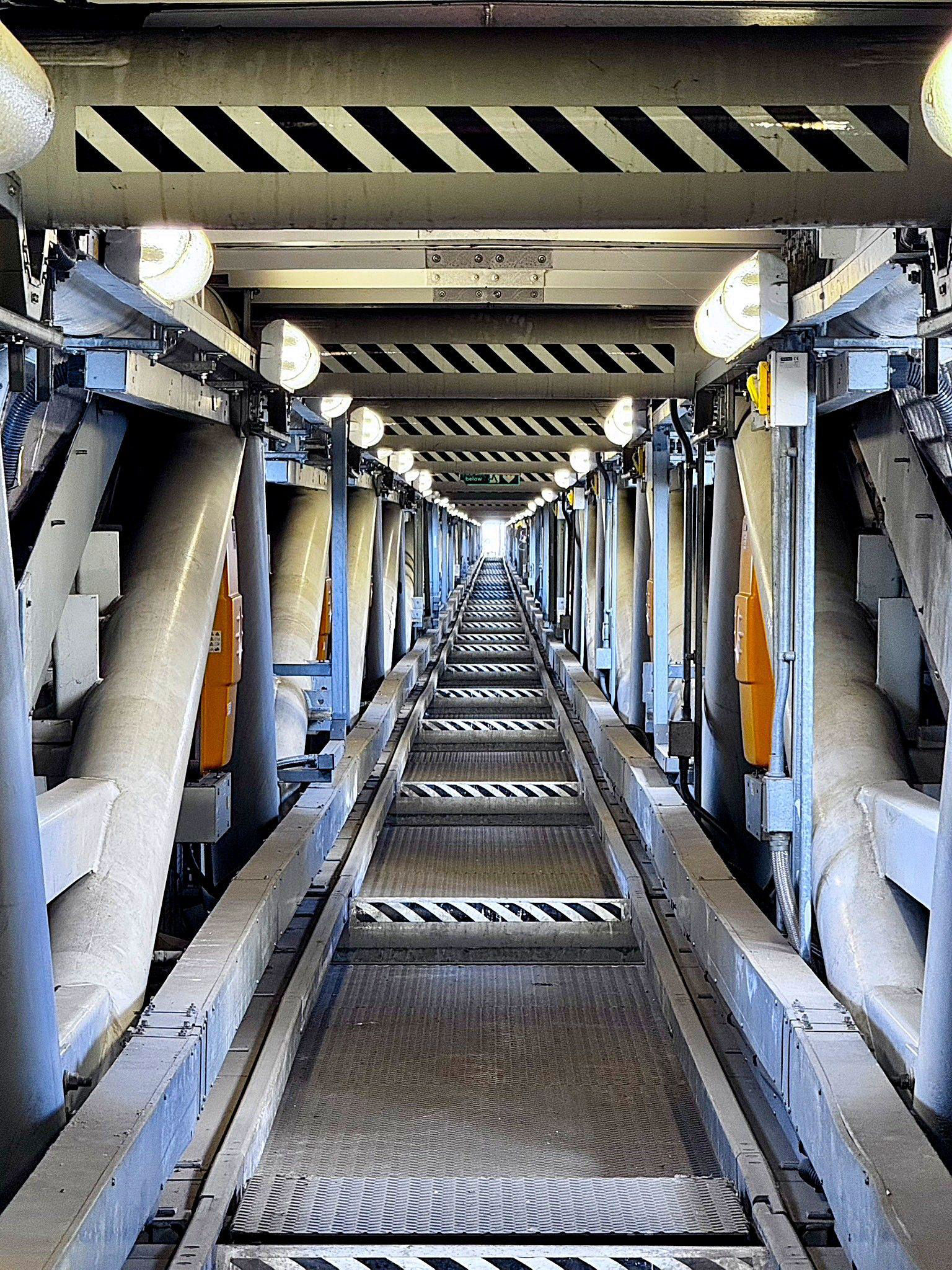
Blackfriars station roof central access spine walkway.
[© Mae Bruckbauer 2025]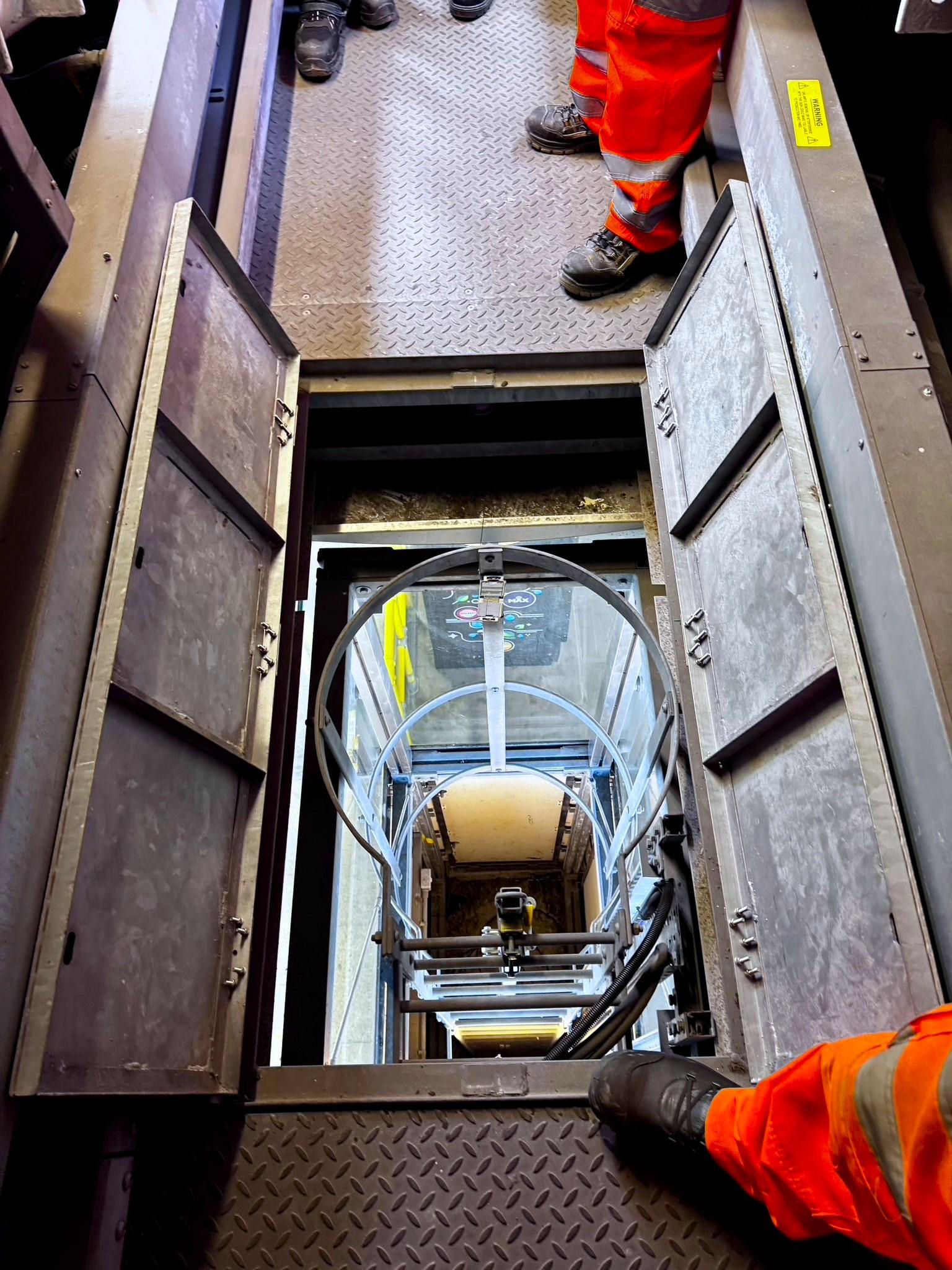
An emergency egress hatches onto the platforms.
[© Mae Bruckbauer 2025]