A full party of 15 members met tour organiser, Adam Turner, at the traditional Waterloo station meeting point - under the clock outside the entrance to P12 (formerly the cab road). All were present by 17.45, allowing us to start slightly earlier than the advertised 18.00 - lucky as a two hour visit would ensue (compared with the 90 minutes advertised) - no complaints about that! We met our host Barry Kitchener, who was wearing a NR London Bridge jacket, slightly surprisingly but see later.
Barry explained that he is a NR Southern Region Facilities Manager*; his boss, Glen Murray, Head of Stations Kent & Sussex, accompanied us on the visit. Barry started on the railway at Waterloo in 1992 and in his spare time is a researcher and tour guide for trips to Great War (WWI) sites. The research which he enjoys most involves searching for military service records, which he writes up, He sometimes gives talks for relatives or very occasionally leads them on a battlefield tour. [*A Facilities Manager manages the essential functions of the station building services and operations at NR managed stations.]
Barry cautioned us that some areas we were to visit could be dark with poor underfloor conditions. Most of the visit was broadly under the concourse or beneath the adjacent buffers. Our member Geoff Noakes, also on the visit, who used to work in Waterloo Control, said that he found it rather difficult to work out where we might be when we were in the arches. It was around 47 years ago when he was last taken round some of them. The clothing and lost property office was still in use then but he recalls that most other arches were just empty and dusty. Better use is made of them nowadays with some concrete walkways, various areas are sub-divided by new walls etc and other equipment has been installed.
We descended a public flight of steps towards the Underground and went through a normally locked door to a passage that used to be open to the public. Closed around 2002-03 along with another flight of stairs, it also once provided access to the corridor to the Underground. A door off this corridor led to an air raid shelter and, in WWI, a first aid post for troops returning from active combat via Southampton.
Here, Barry told us more about his interest in the forces and showed two relevant medals, one was a Waterloo medal (commemorating the 1815 victory at the Battle of Waterloo), and the other, a British War Medal awarded to all those who fought in WWI. He also told us that the station name originated from Waterloo Bridge, across the Thames (named after the battle of Waterloo) then Waterloo Road which gave its name to the station in 1848. What a name for French Eurostar passengers to arrive to!
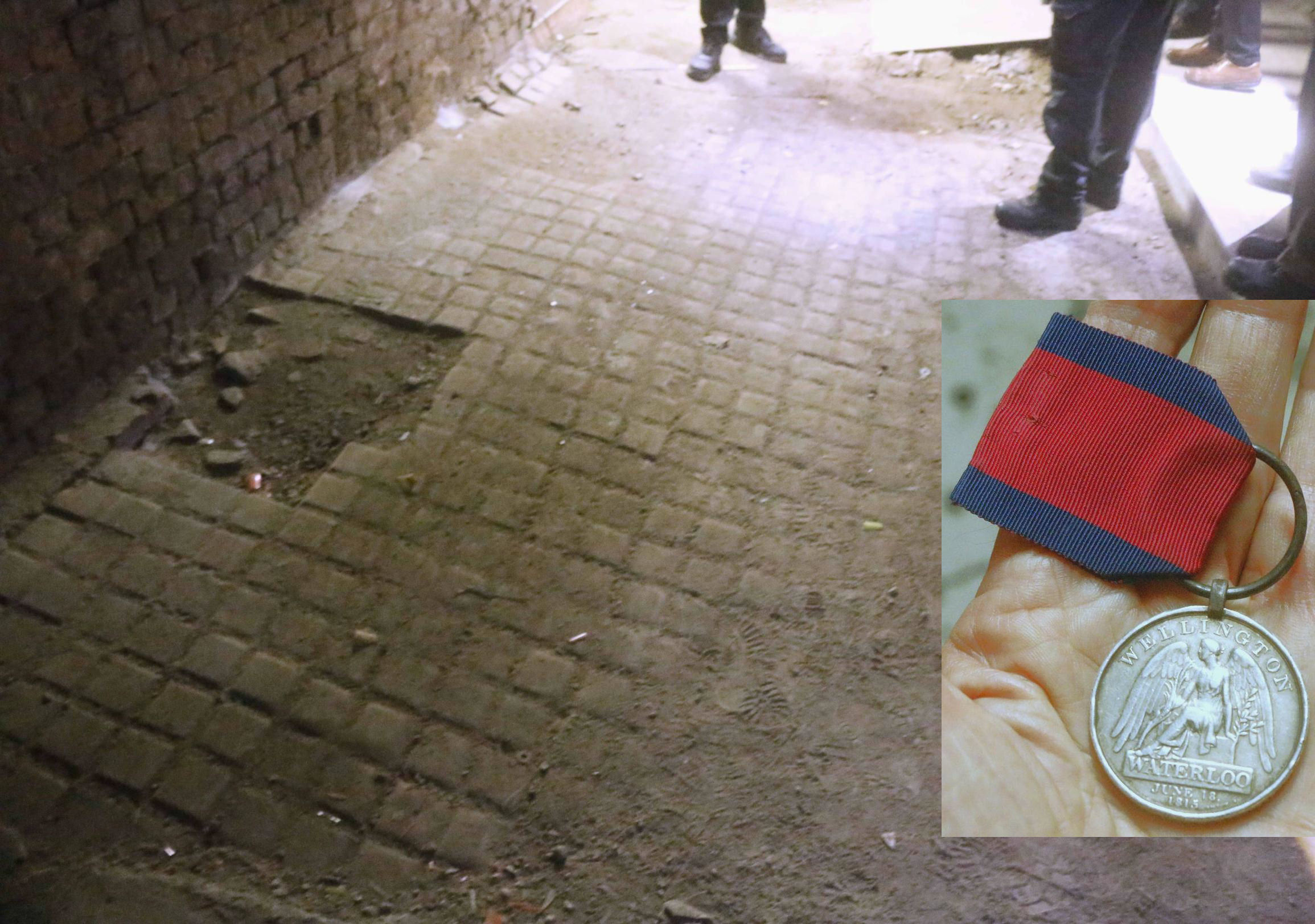
One of the corridors and (inset) the Waterloo medal (commemorating the 1815 victory at the Battle of Waterloo).
[© Stuart Hicks 2025]Waterloo Bridge was originally Strand Bridge and was renamed when officially opened on the second anniversary of the battle in 1817. Apparently, in early documentation the station is also referred to as York Road or Waterloo Bridge station. It is interesting that, when the station was extended on the south side, the extension was apparently called 'Cyprus' by staff as it was built at the time Cyprus was ceded to Great Britain. Similarly, the Windsor side extension was called 'Khartoum' by staff, as that coincided with the death of General Gordon in Khartoum. On this basis, perhaps it is just a quirk of history that it became simply Waterloo. The other names probably went out of use when the station was rebuilt in the 1920s, as Geoff never heard any of those names used when he worked there or otherwise.
However, the 'Village' name for the office block between the Main and Windsor lines was used until its demolition in 1980s. The only other term from olden days heard in use was 'The Bench', which was where a wide flight of a few steps (long since disappeared) from the old station to around where the taxi pickup area is now emerged - they fell out of use after the newspaper traffic ceased. It was where newspaper lorries were unloaded in the early hours every night and, as long as the lorry was 'on the bench', by the cut off time for unloading it would make the train.
Our first port of call was the British Transport Police Club; up a flight of stairs from the main area was their darts and snooker room. Originally this was the Indian mess room, a separate mess room for Indian staff to cook food and eat, later converted into a large darts room, with six boards.
Further along (towards the Windsor side) was the Typing Pool room, with the manager's desk upon high, which later become a staff canteen. Off to one side, was a room once used as the station morgue. That room was full of rubbish cleared out of other rooms; some rooms may be reused. We visited another arch with a WWII latrine for members of the Services, with a Chad drawing nearby. Moving on, was a former store area. Beyond was LU property. We ventured past a room nearby with the automated station announcing equipment; the announcement voice could be faintly heard coming from inside it.
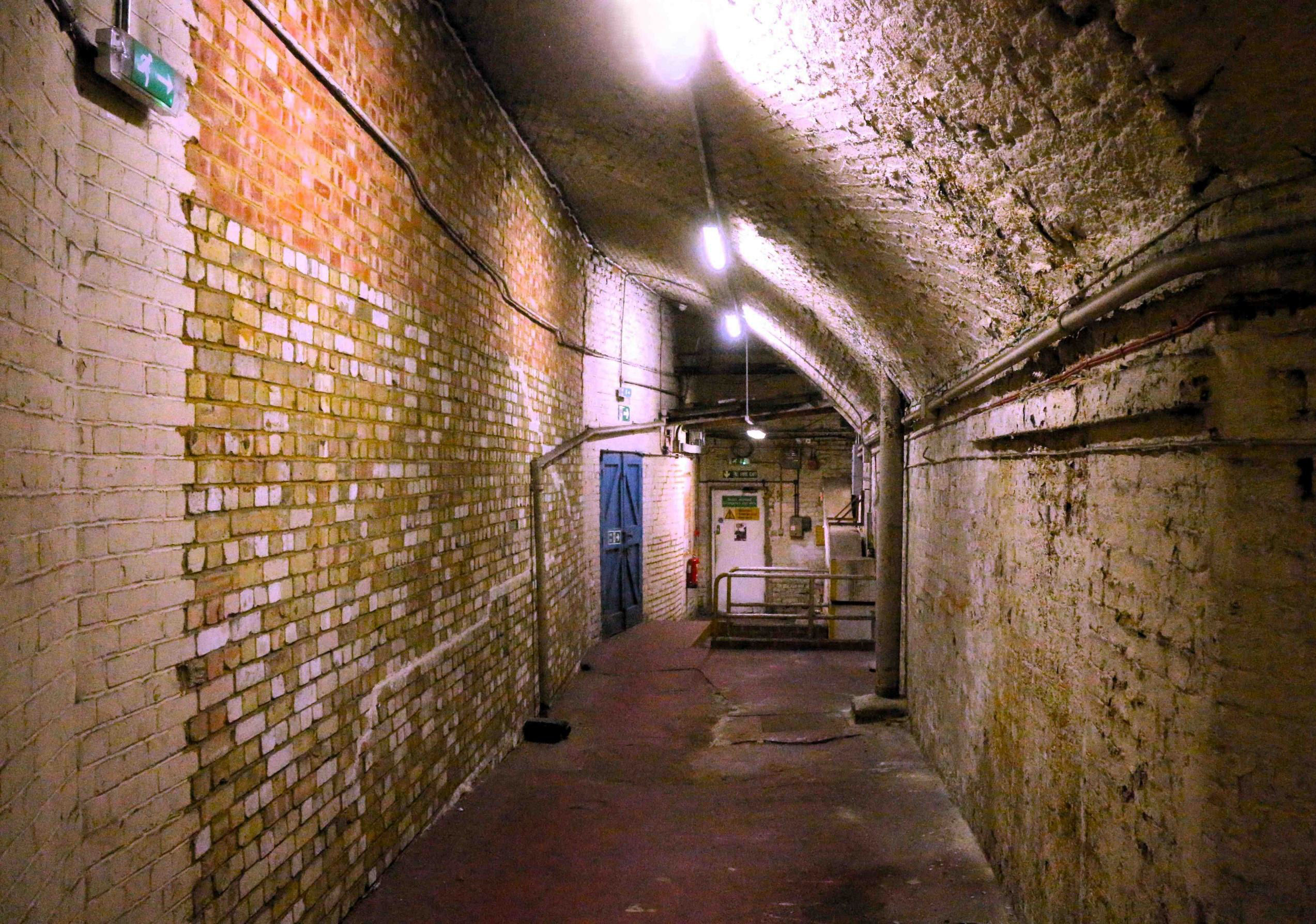
Another of the corridors.
[© Stuart Hicks 2025]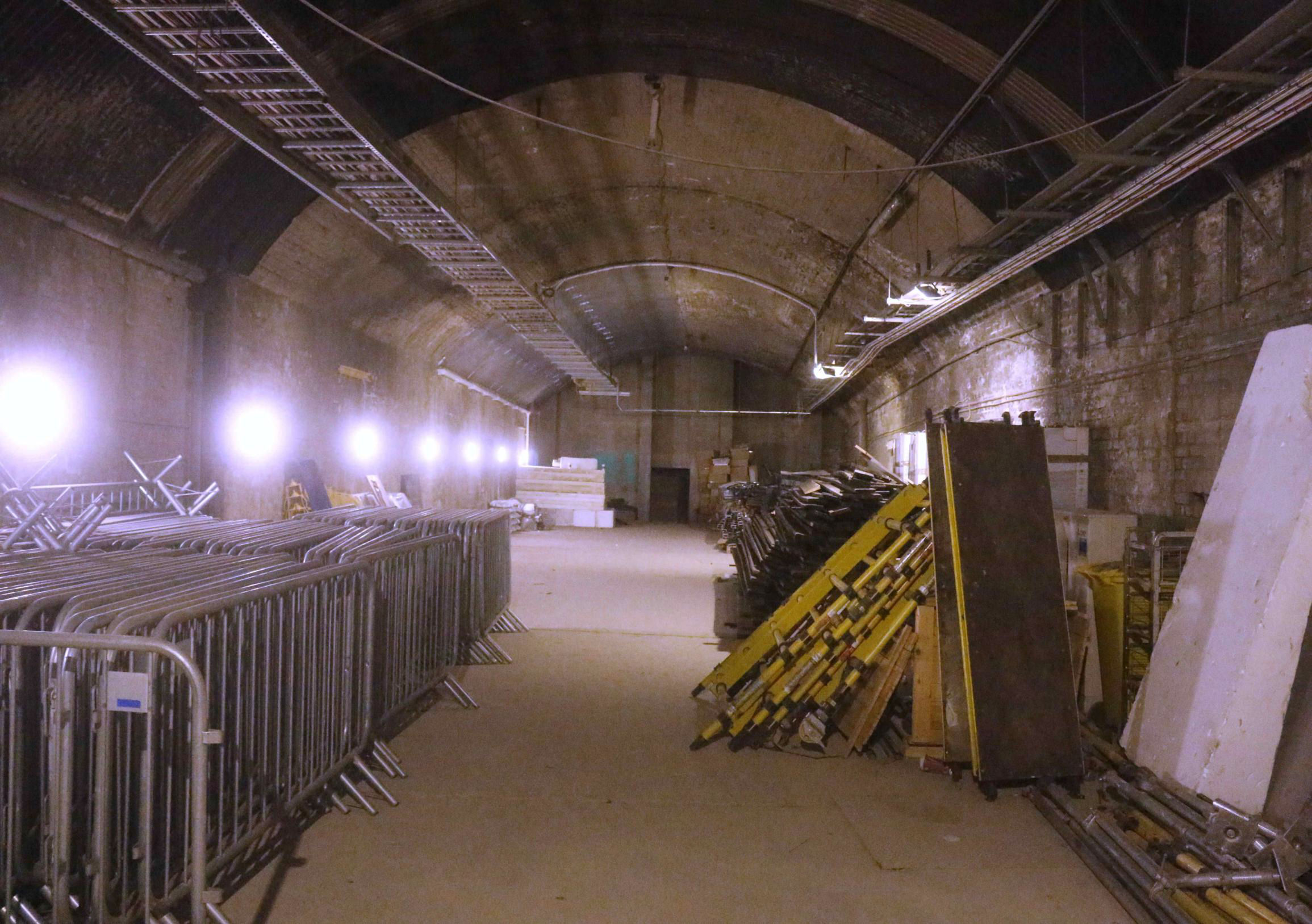
One the arches used to store barriers etc.
[© Stuart Hicks 2025]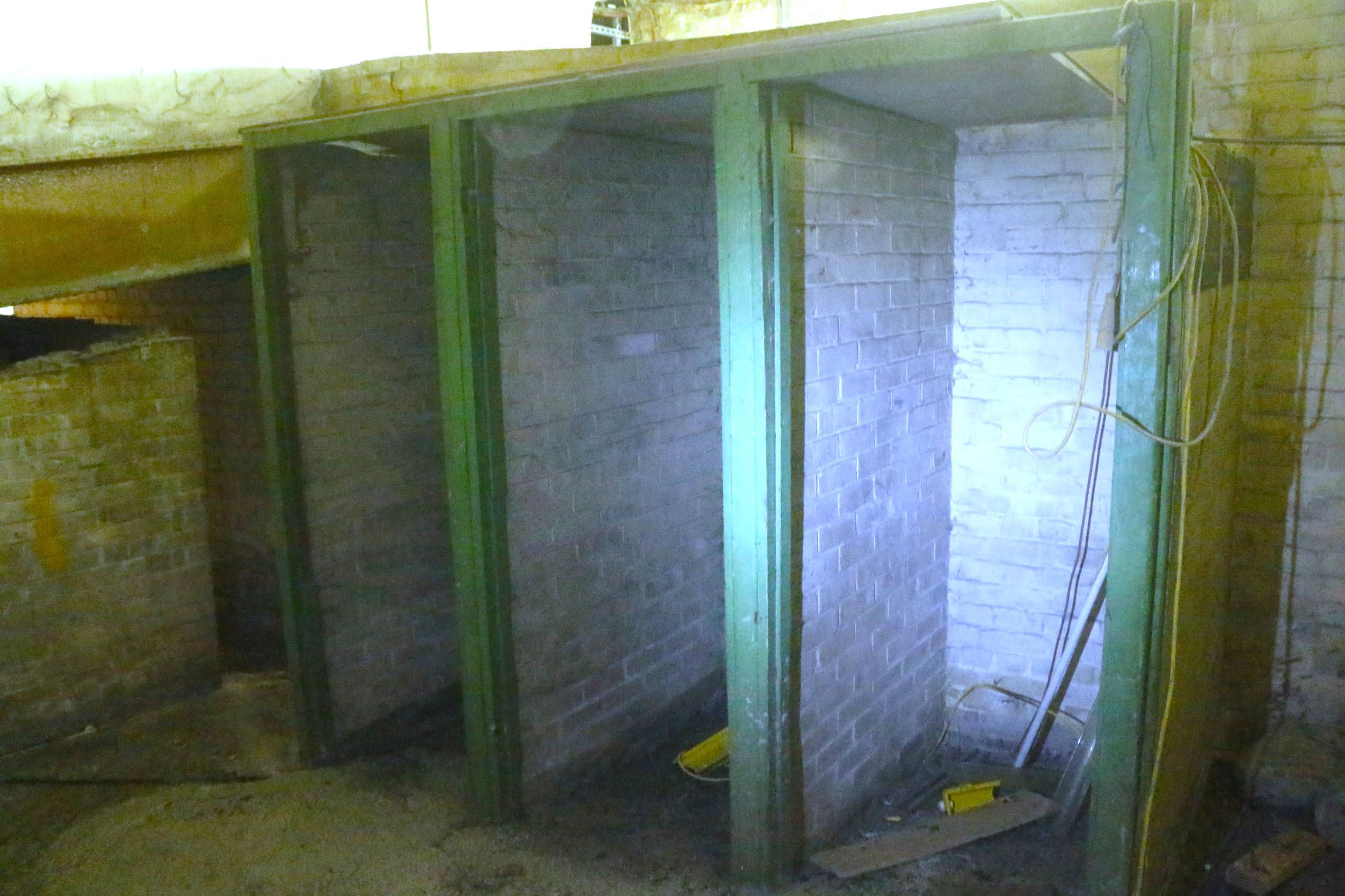
Putting the loo in Waterloo, some subterranean former gent's cubicles.
[© Stuart Hicks 2025]Our tour returned the way we had come and headed down a passenger passageway towards the Waterloo & City line. Passing through a door into a disused corridor, the group paused briefly to see the remnants of a punch bag from the British Railways Staff Association boxing club (was it an effigy of Dr Beeching perhaps?). Next, was the former rifle range - still with target pulley wires suspended from the ceiling (Dr Beeching branded targets?). In this area was an elderly full size snooker table and old staff lockers. Returning to the active corridor to pass through another door, there was a flight of stairs to nowhere. It originally enabled staff out of uniform to go over the top of the corridor down to the other side unseen by the public. Staff were expected to be in uniform when on duty and visible to passengers.
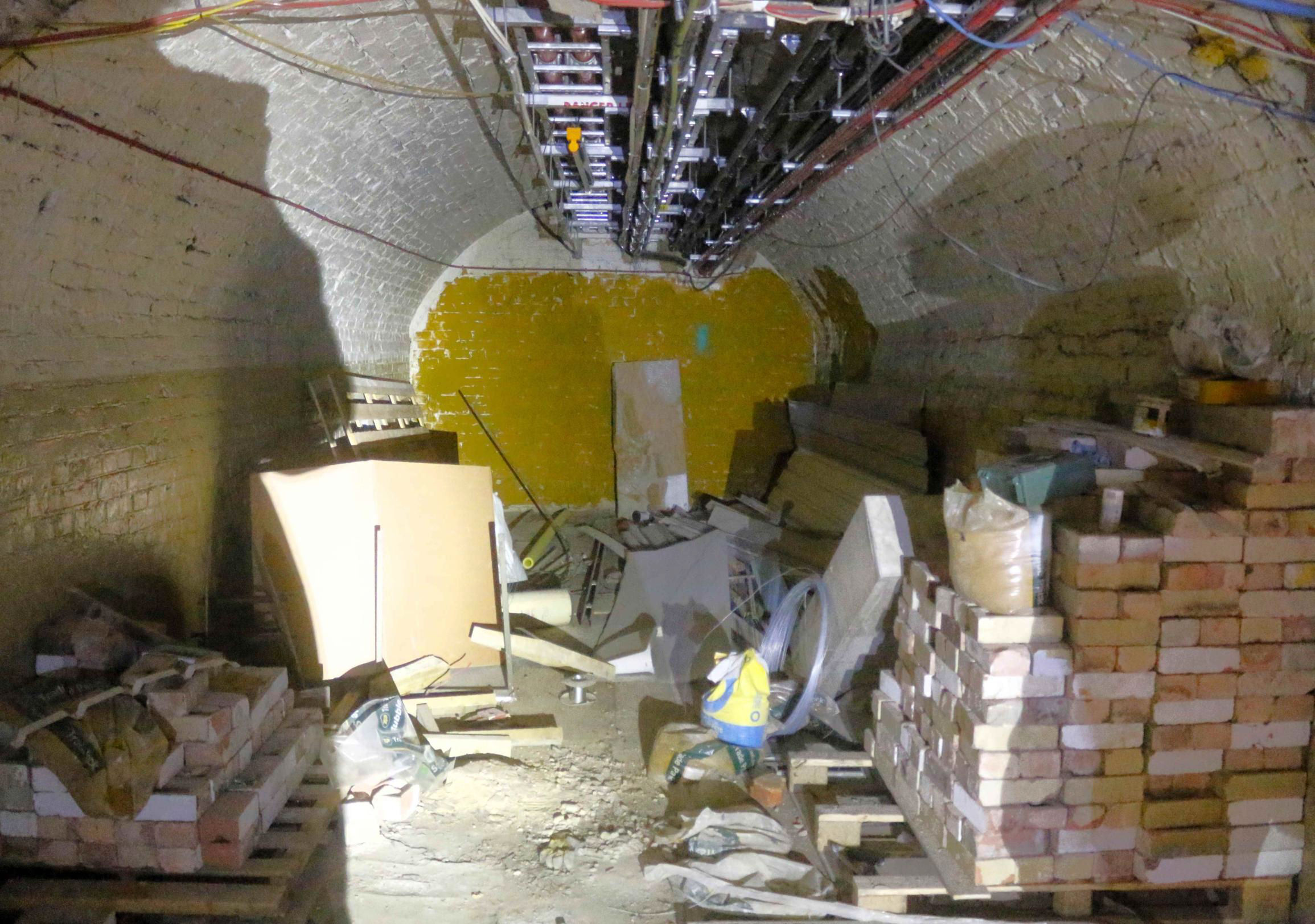
Another arch used for storage.
[© Stuart Hicks 2025]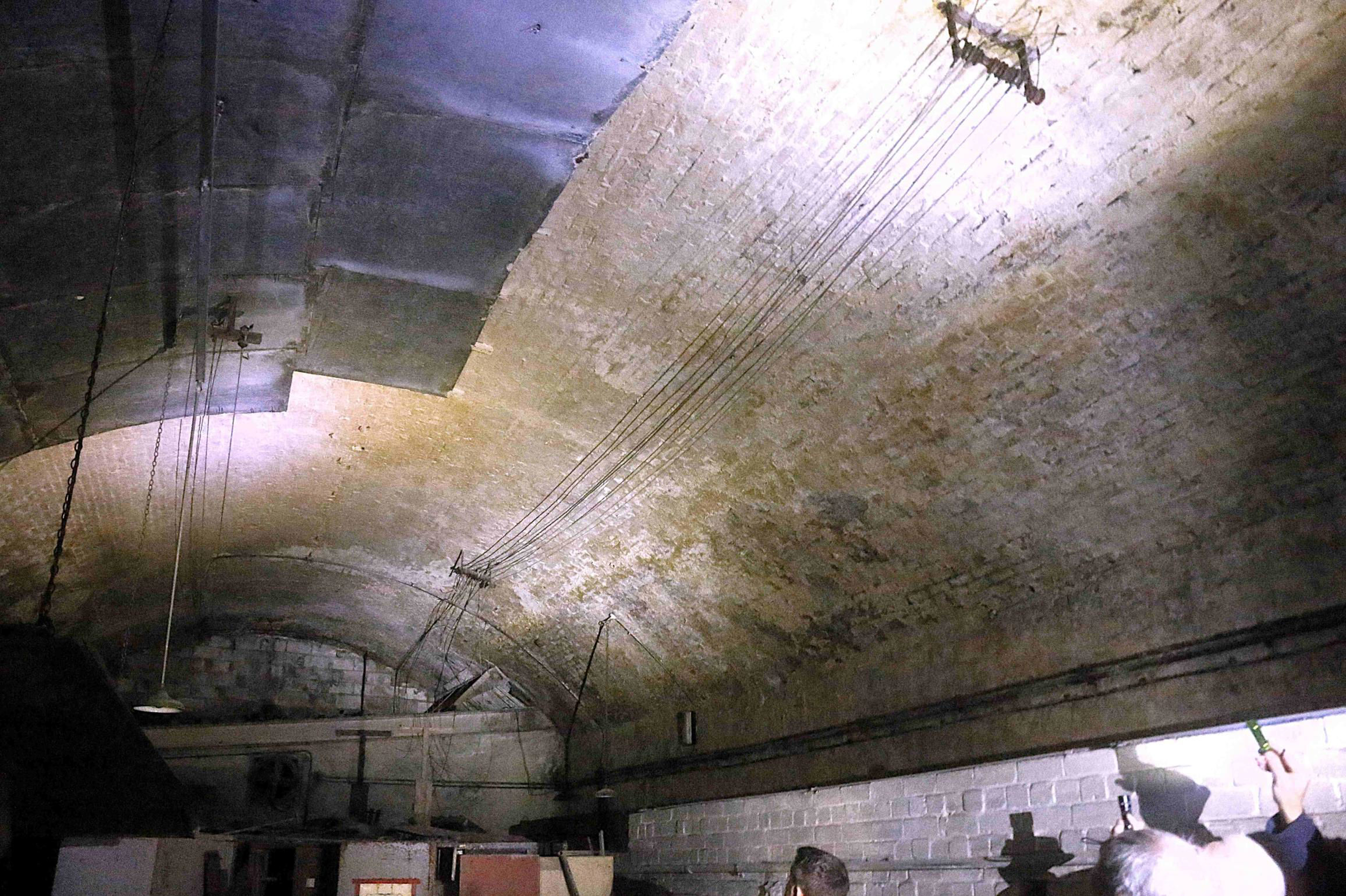
The former rifle range - still with pulley wires (for the targets) suspended from the ceiling.
[© Stuart Hicks 2025]The next set of rooms were connected by a line of zig-zag like shaped corridors with a secure door which took participants past various storerooms for some of the station retailers, emerging out of arch 258. (The arches are numbered from 1 at Nine Elms the original railway terminus, up to Arch 285 at the station end of Waterloo Viaduct - the numbers are on TRACKmaps). Here, we emerged into the daylight (well, sort of). The group continued walking on along the station undercroft (a roadway roughly under the current cab road outside the station alongside P1) past the (un)loading bays for retail outlets on the station - as well as (sadly behind a secured door) access to the Waterloo & City line Depot at Waterloo. Our final destination of the day was the former Southern Region NR records store. The roadway can no longer normally be publicly accessed but can be used by approved delivery lorries or to visit the Theatre.
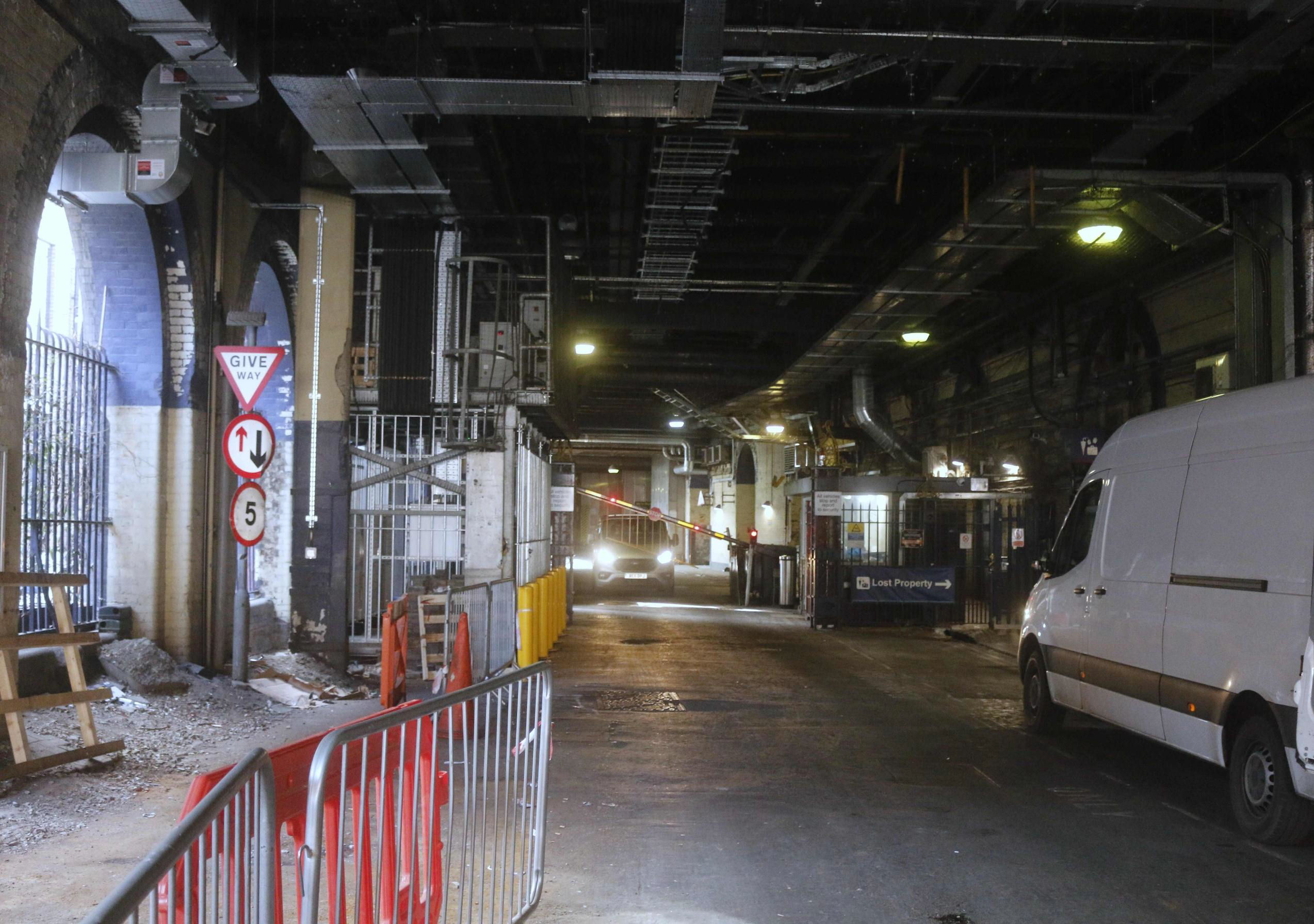
The station undercroft.
[© Stuart Hicks 2025]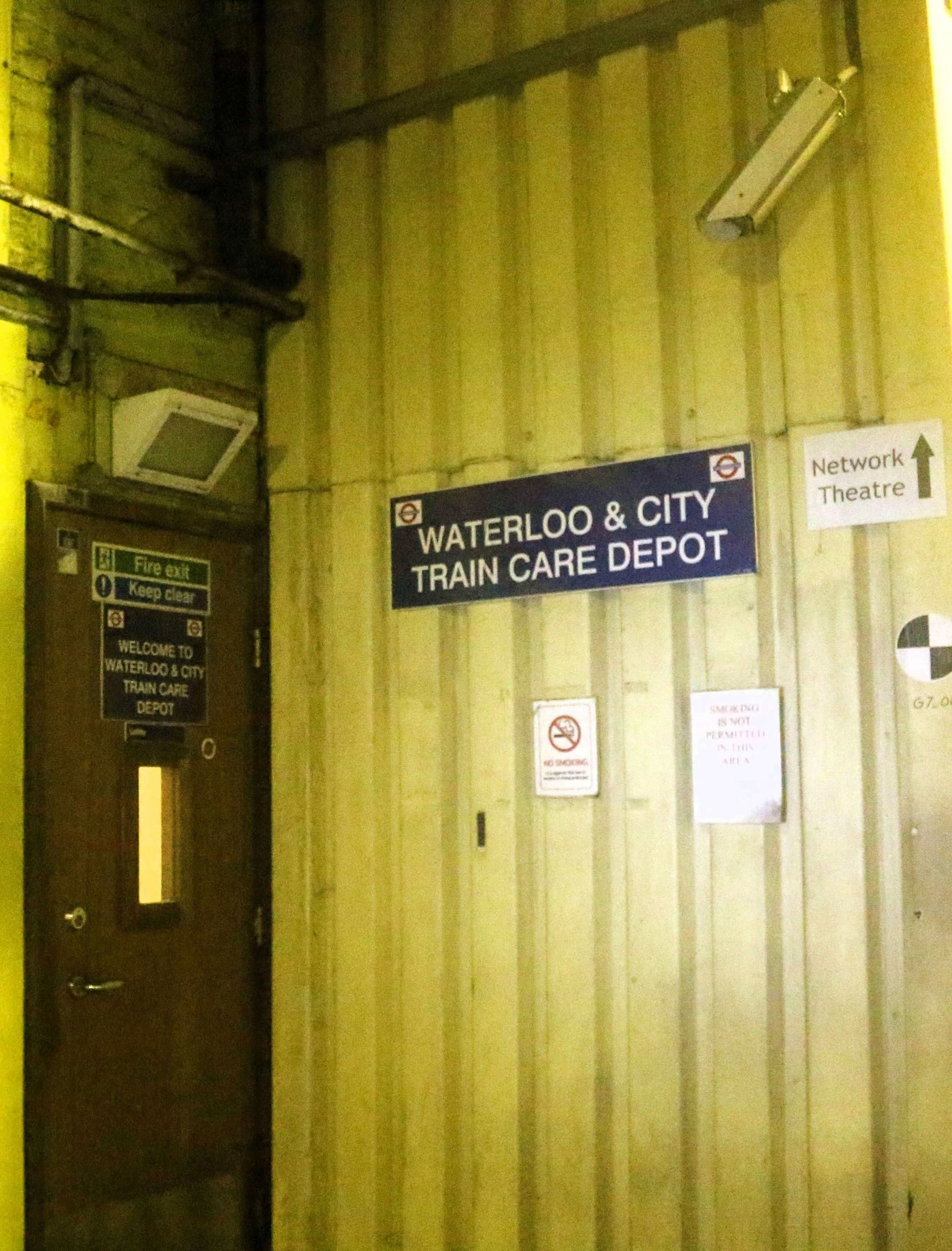
Access to the Waterloo & City line Depot at Waterloo.
[© Stuart Hicks 2025]The Records Store is in Arch 242C, near the bend in the undercroft road round to Lower Marsh and the small Network Theatre Network Theatre and Find Us - Network Theatre at Arch 246A Lower Road. The store has a huge archive of paper records currently being catalogued and scanned, before the paper copies are transferred to the NRM in York. There were heaps of material, not quite random but requiring much work just to catalogue them sensibly. Gems includes pre-grouping bound volumes and details of bridges, land ownership etc for the Southern and Anglia areas. They are kept at the correct temperature in humidity-controlled conditions. Fascinating but we eventually had to drag ourselves away and take our leave of our host as he led us out to the gate into Waterloo Road, where we could disperse home.
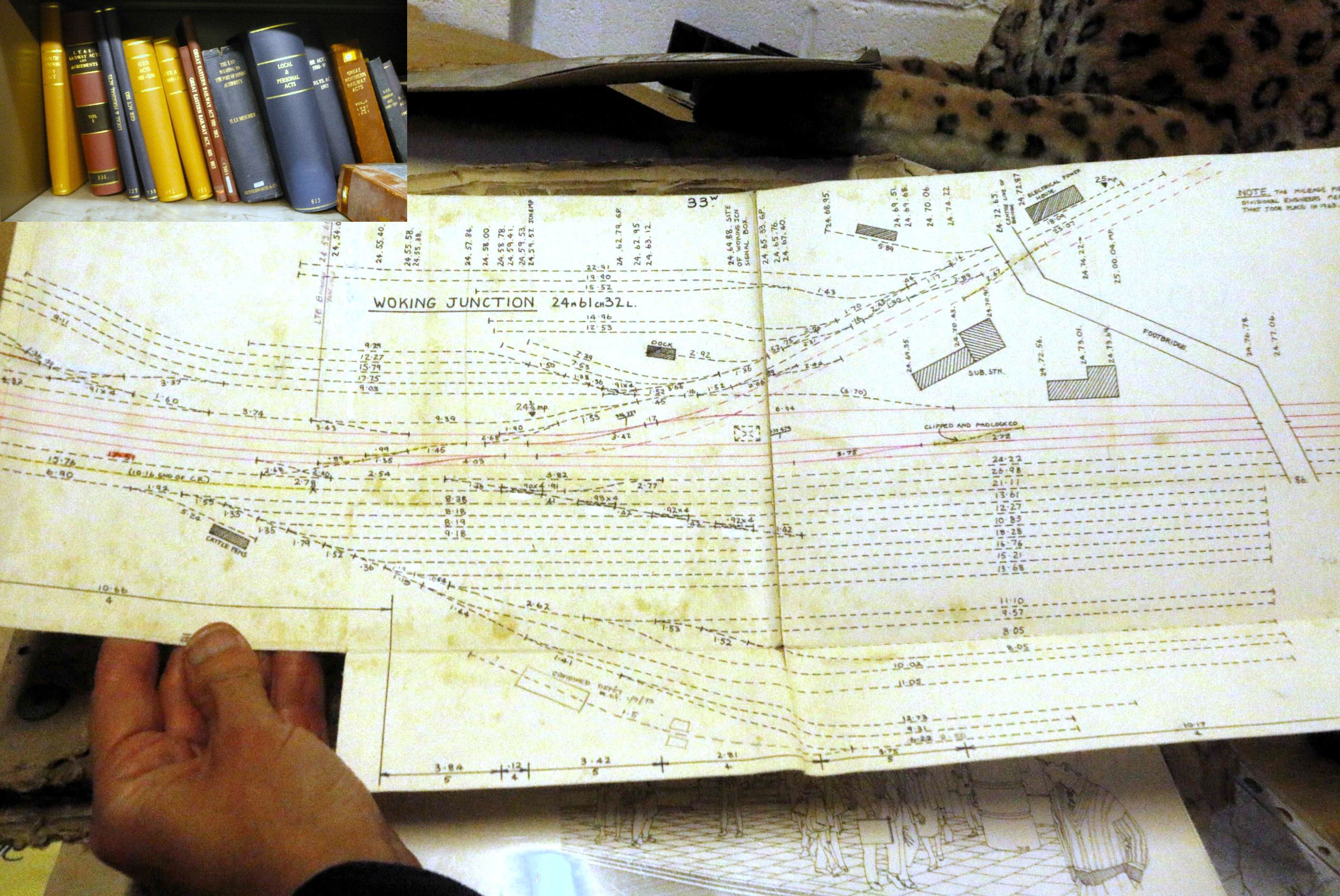
Map of Woking Junction and (inset) a few documents from the large archive at Waterloo
[© Stuart Hicks 2025]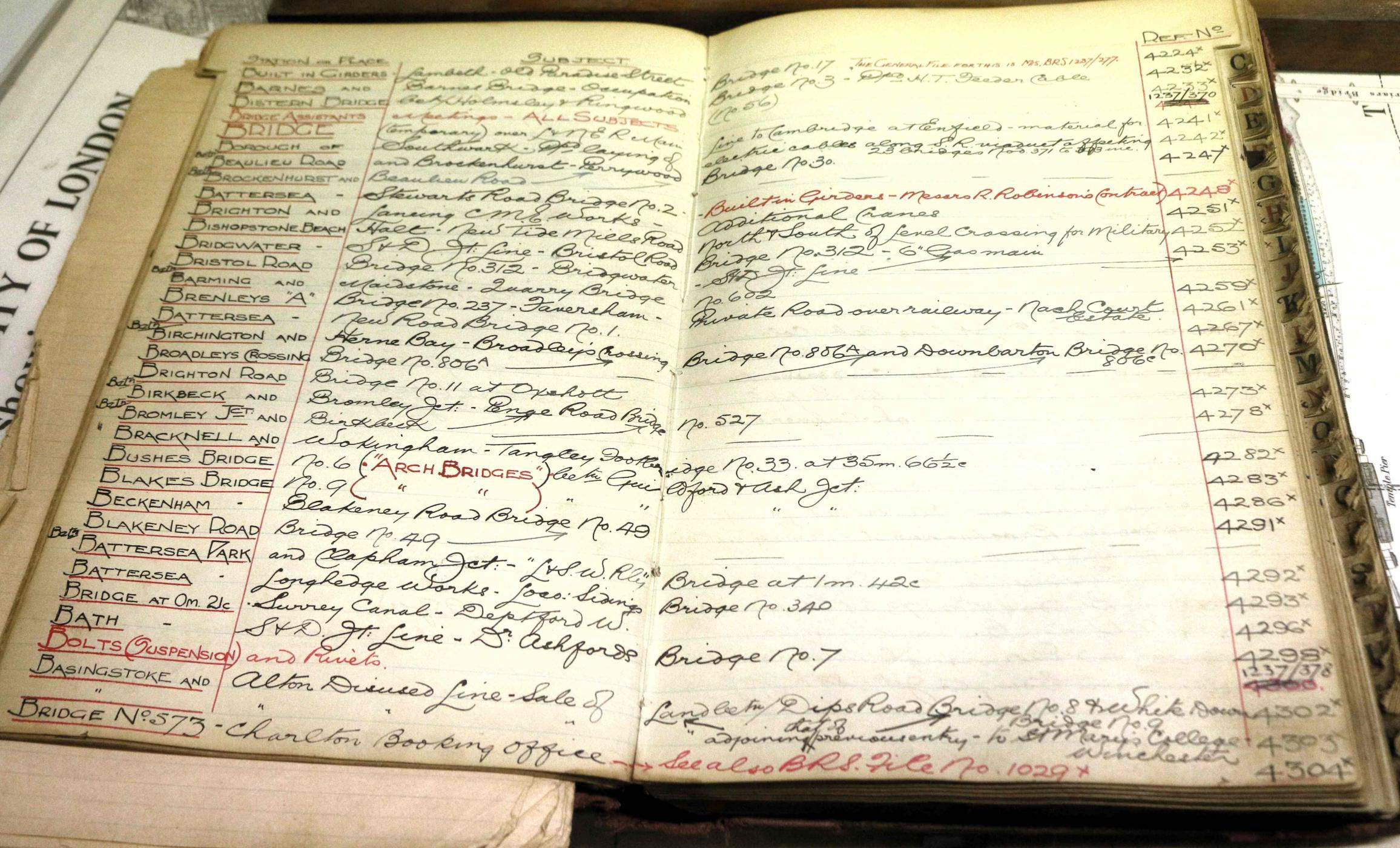
Asset Register.
[© Stuart Hicks 2025]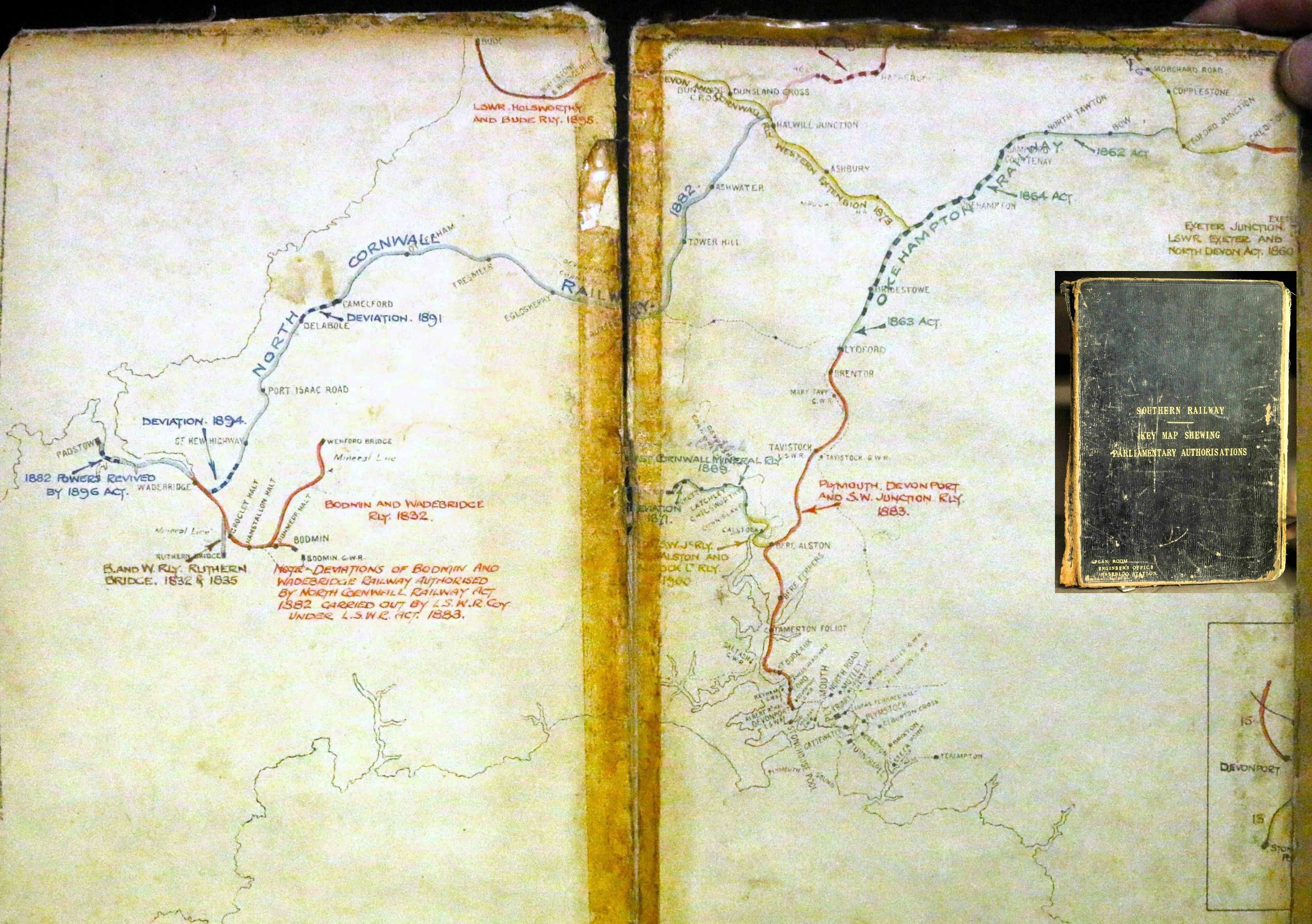
Southern Railway key map showing parliamentary authorisations.
[© Stuart Hicks 2025]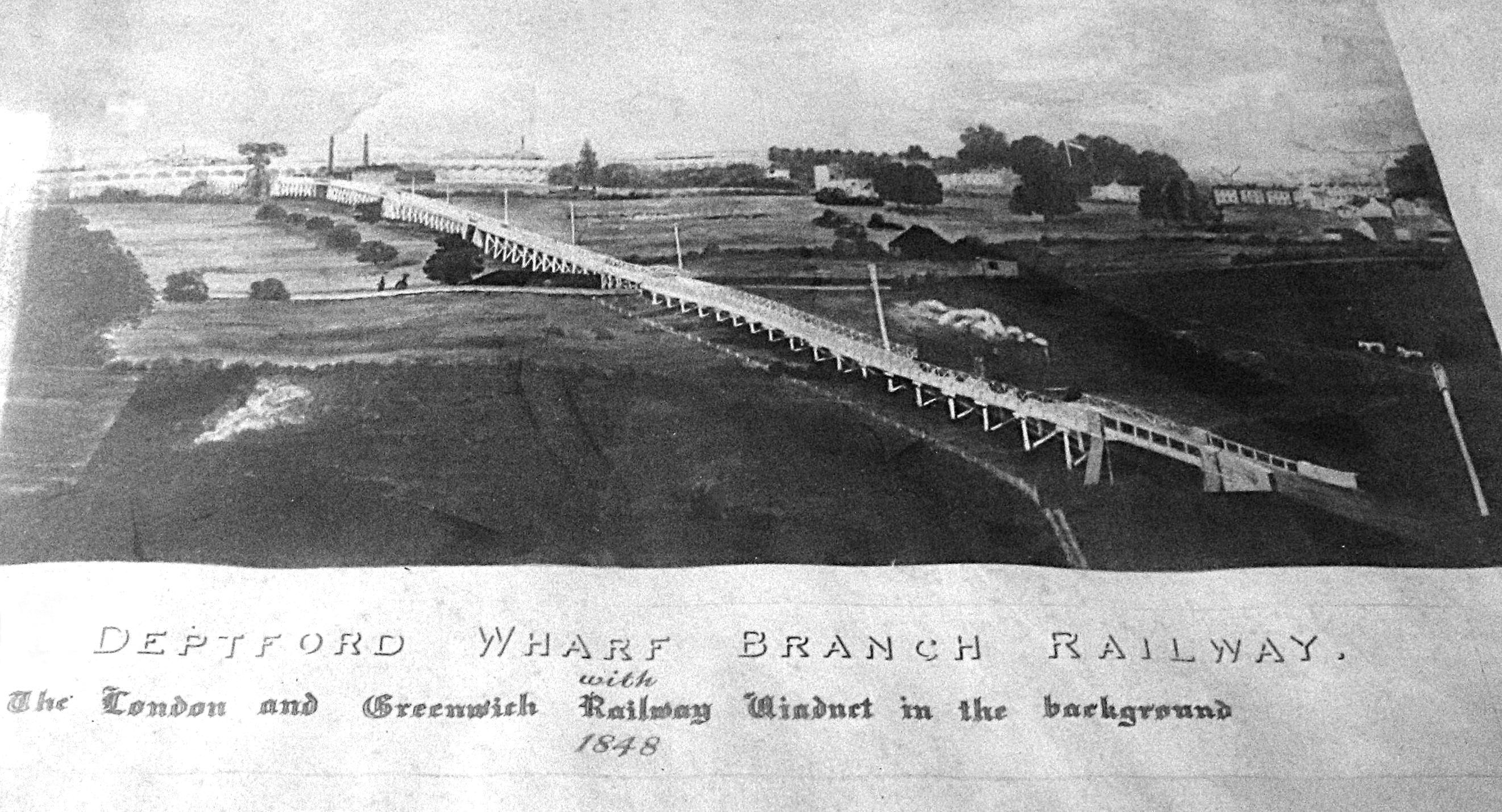
Deptford Wharf branch railway.
[© Stuart Hicks 2025]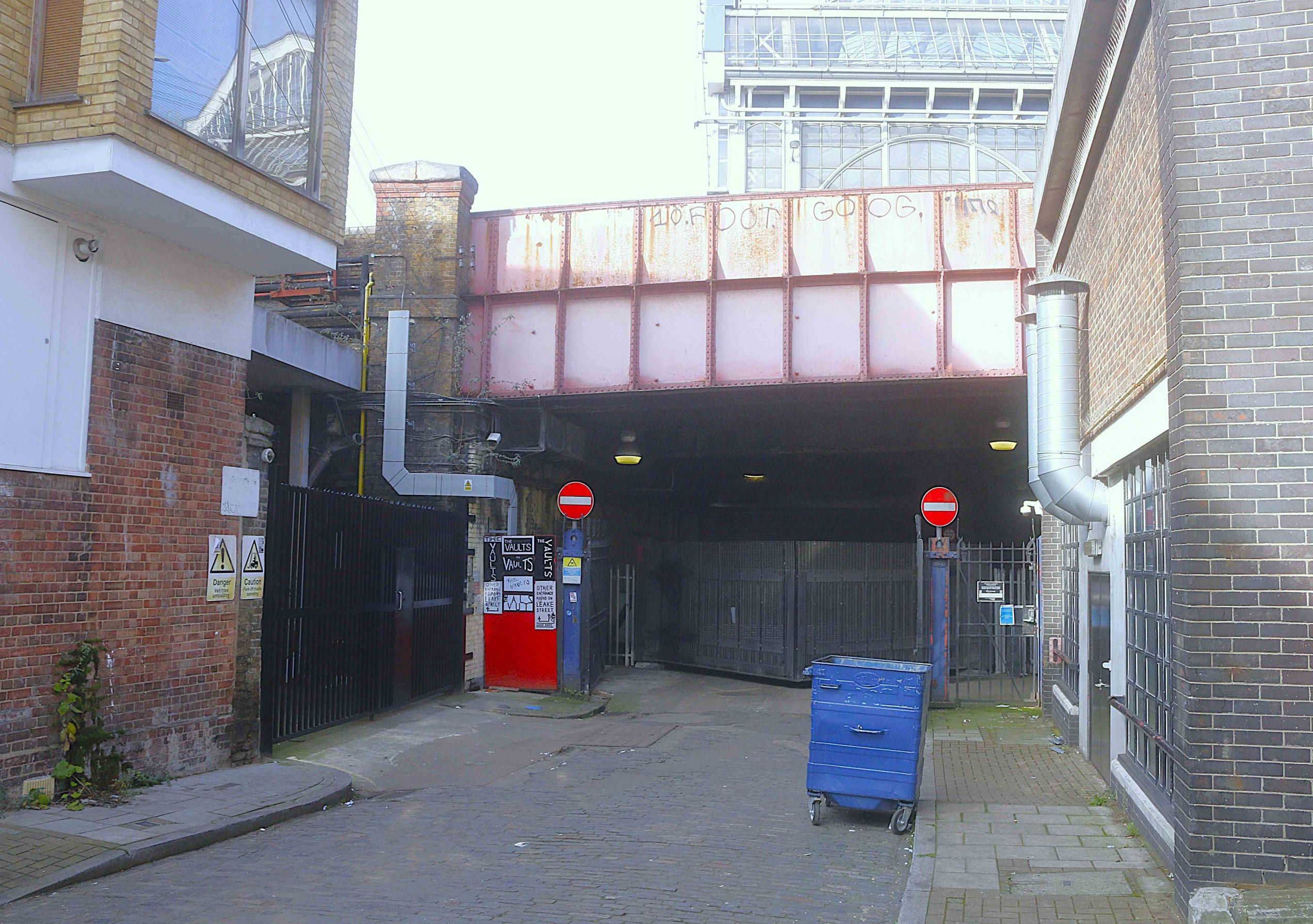
The gate into Waterloo Road.
[© Stuart Hicks 2025]Thanks very much to Adam Turner and all concerned for the arrangements. As a result of the visit, a generous donation (£465) was made to the Railway Benefit Fund and the Society 'benefitted' from publicity
https://tinyurl.com/3rzktb89 on the RBF website. 'Secrets of the London Underground' Series 4 Episode 3 'Waterloo' (U & Yesterday TV Channel) shows some of the areas our members visited.
Another member points out that Eurostar occupied a considerable part of the arches under the domestic platforms. Quite a large area was used as their catering depot, which (as explained in BLN 1444.698 of 16 Mar 2024) remained in use for some time after Eurostar relocated to St Pancras. Significant areas were refurbished as offices and other facilities for organisations involved in managing the UK Border, including HM Customs, Home Office (Border Force), Department of Health, Ministry of Agriculture Fisheries & Food, Office of Population Censuses and Surveys, British Transport and Metropolitan Police.
Among the more specialised facilities were holding rooms for people detained by Border Force and Customs. (The Eurostar trains - or at least the original ones - also have a space in which people can be securely detained.) Eurostar operated almost entirely separately from Railtrack / NR within the terminus even having its own plant rooms. It is 12 years since our member had any professional involvement with Waterloo. He doesn't know the status of the former Eurostar arches now but the Waterloo Station Vision recently produced by Grimshaw
https://tinyurl.com/2w5jsjwk suggests that little has changed.