Five days before Christmas, 20 members, including our tour organiser, Adam Turner, assembled at 11.45 beneath the station clock at the 'Meeting Place'. This is a 9m tall bronze statue of a couple in an amorous embrace, designed by Paul Day, near the Eurostar buffer stops, on the chilly St Pancras station concourse.
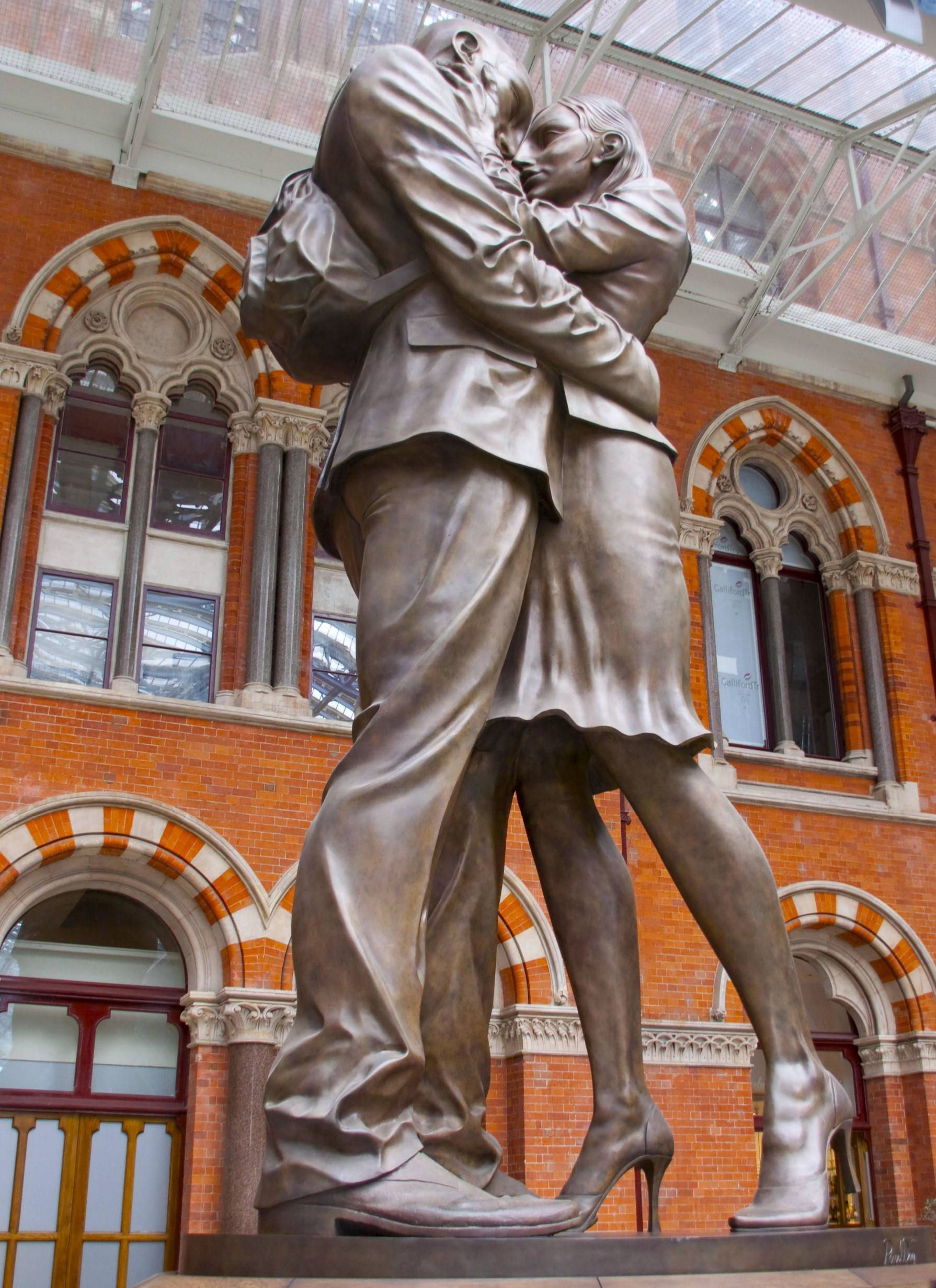
The 9m tall bronze 'brief encounter' statue at the 'meeting place' where our party met.
[© Tony Hisgett 2024]Our final destination that lunchtime would be the station clock tower apartment. Its owner, Peter Tompkins, would be our guide to George Gilbert Scott's masterpiece building that stands in between Euston Road and the Barlow train shed. Our tour supported 'Scene and Heard', a Somers Town based charity using theatre and stage to help boost children's confidence and raise their aspirations.
https://www.stpancrasclocktower.london/ is the clock tower website, with an interesting 1¾ minute tour of the property (it was on the market in 2021 for £4.6M). After introductions, Peter started our tour on the station forecourt, where we could see that St Pancras is well above the level of King's Cross. This is because the Midland Railway decided to go over, rather than under, the Regents Canal north of the station, not least so that it could look down on King's Cross - the Great Northern line went under the canal. The Midland Grand Hotel at the buffer stop end of St Pancras station was designed by George Gilbert Scott in Victorian Gothic style and is modelled on the town hall in Armentières in northern France, near Lille and the Belgian border (there is a picture of it in the apartment tower room).
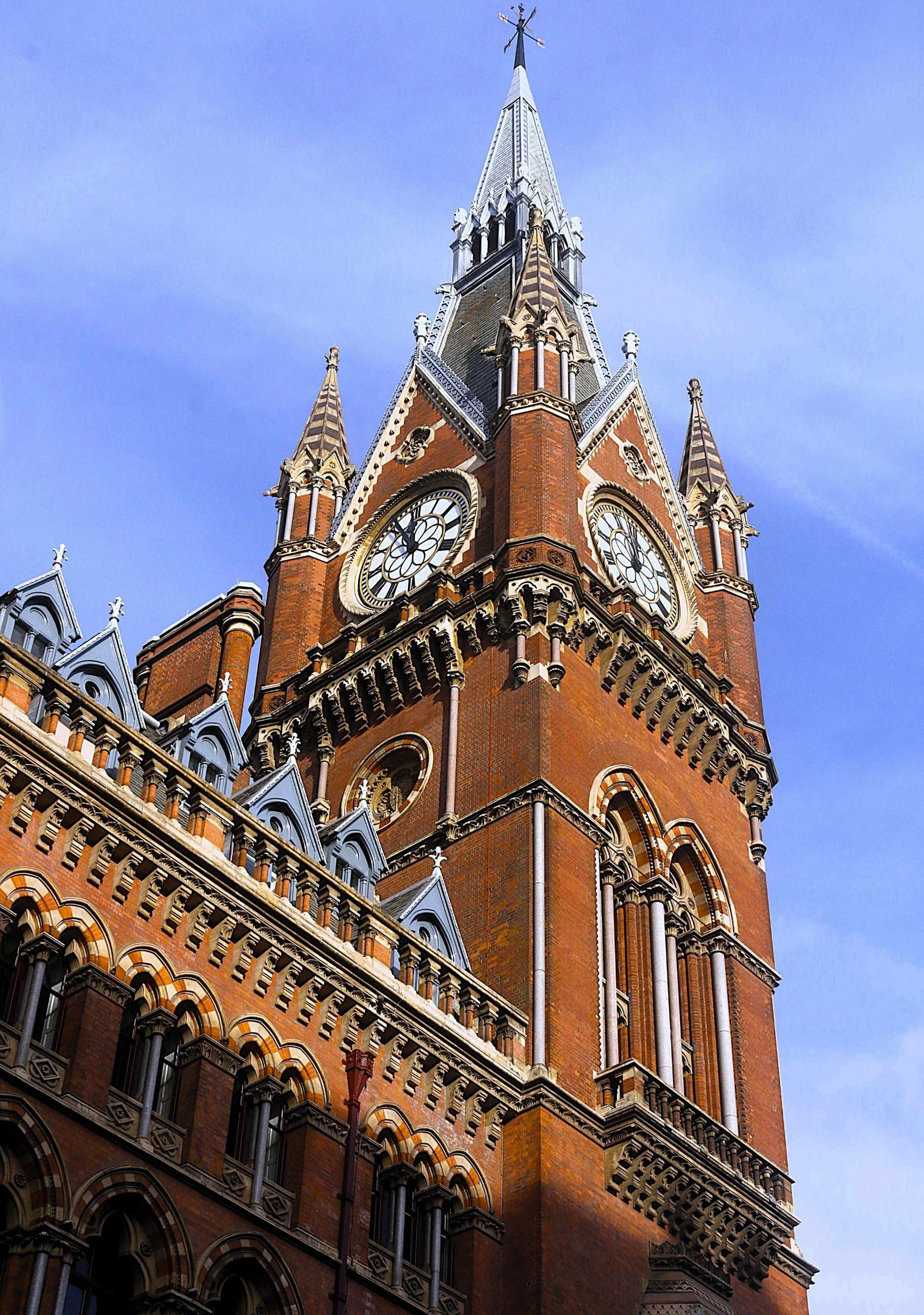
St Pancras Clock Tower
[© Stuart Hicks 2024]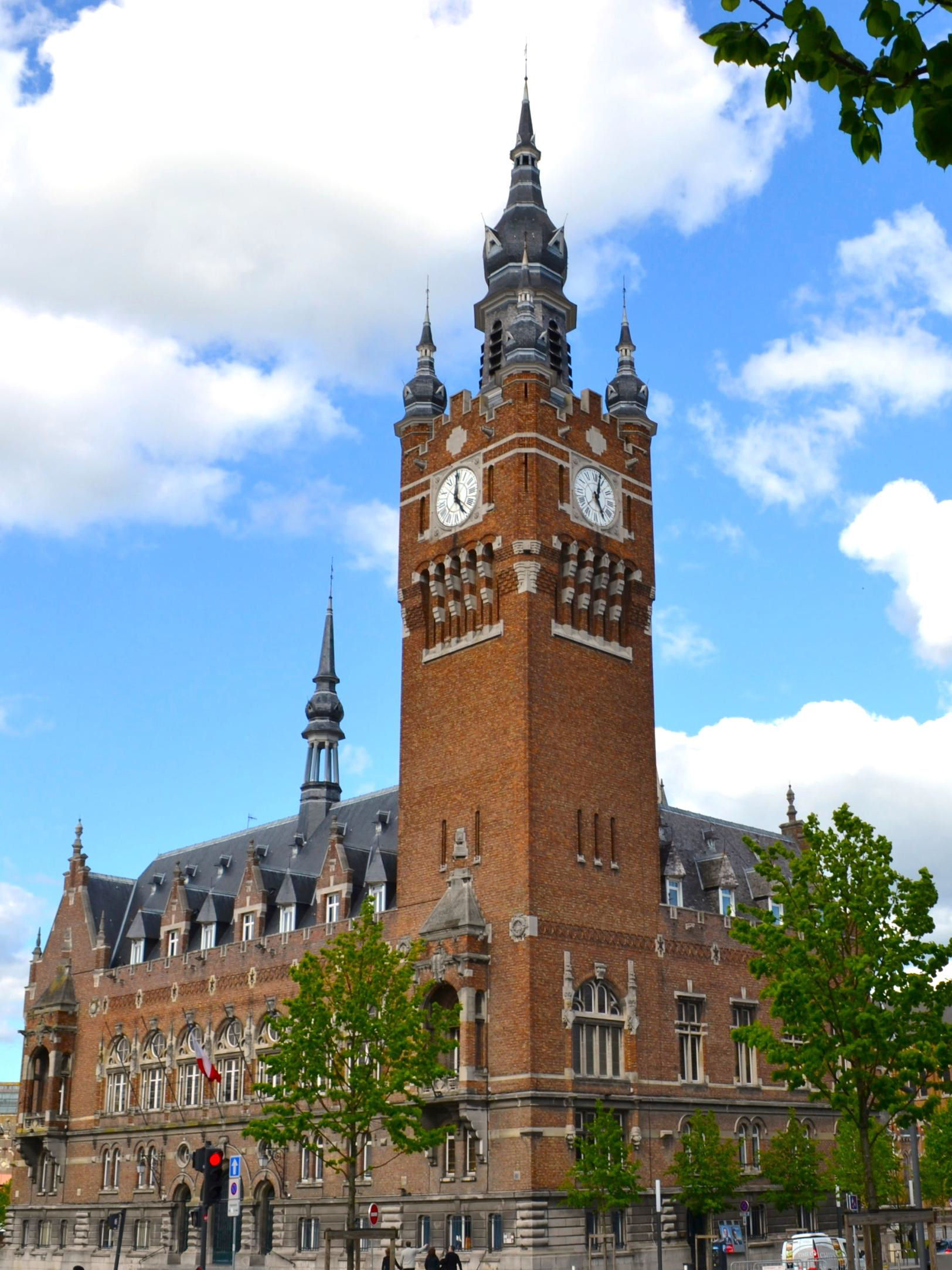
Armentières Town Hall was the basis for the design of the Midland Grand Hotel.Scott's plans were for six storeys but it only has five, because the Midland Railway (MR) was not doing well financially in the early 1880s and sought to save money. The option of taking off one wing, as the MR suggested, would not work because of the planned layout of the services. Nevertheless, the clock tower remained at the originally planned height. Total cost was £½m, roughly £500M today (the building is insured for £600M). Another small saving was not to fill 19 niches with statues above first-floor level - they are still unoccupied - but a statue of Britannia was installed high up, overlooking King's Cross.
The Midland Grand opened in May 1873 but its design and amenities rapidly went out of date; it was gas lit, without in-room bathrooms requiring chamber pots and open fires, hence the multitude of chimneys, all rapidly outmoded in a few years. It was never popular, closing in 1935, then was converted to railway offices (St Pancras Chambers), latterly British Transport Hotels HQ. The building was closed as unsafe after it failed fire regulations in the 1980s. The station and hotel were Grade I listed in 1967.
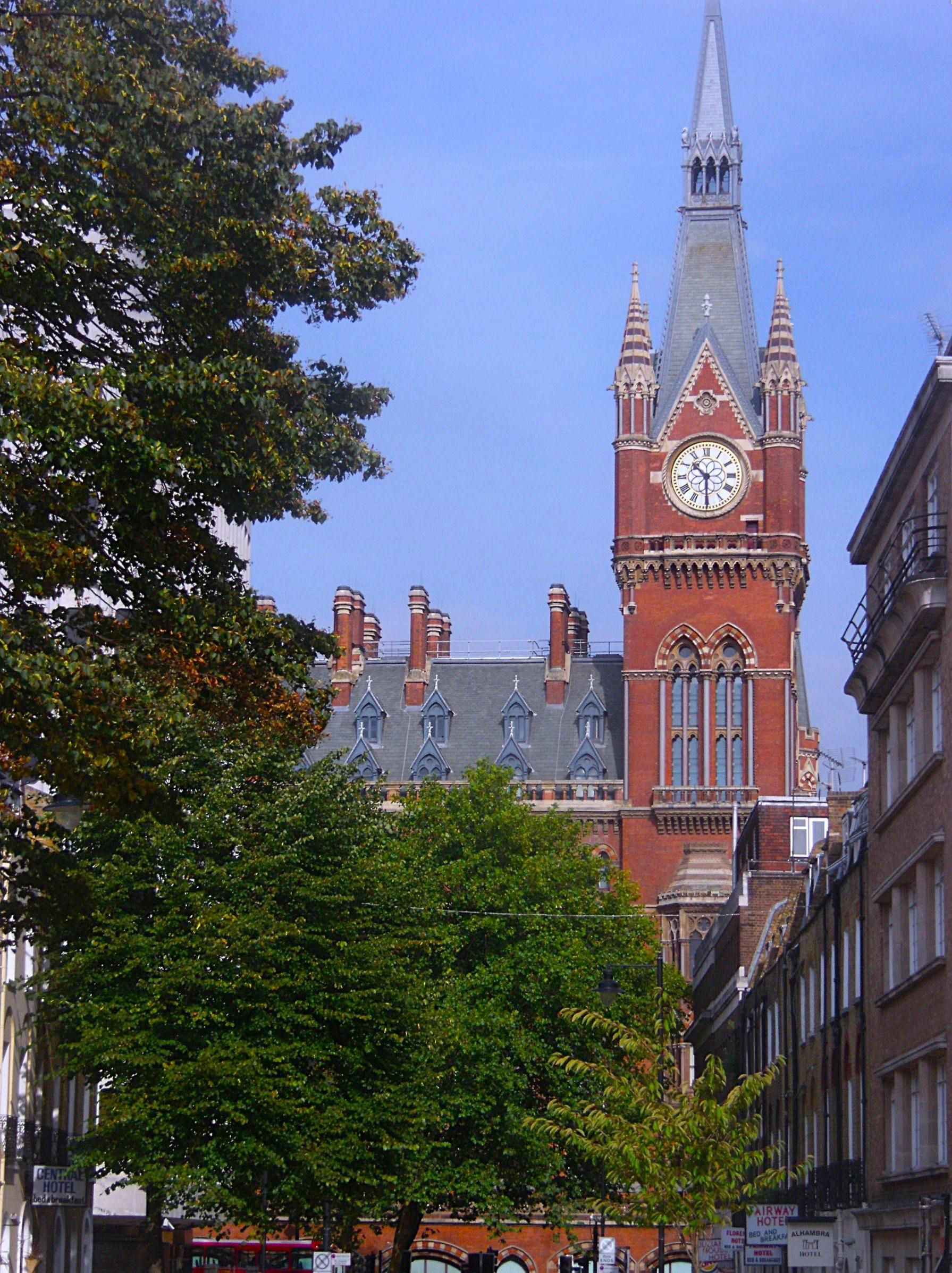
St Pancras, with many chimneys, from Argyle Street - 29 Nov 2011.
[© Angus McDougall 2011]Planning permission was granted in 2004 for the building to be redeveloped into a new hotel. The main public rooms of the old Midland Grand were restored, along with some of the bedrooms. The former driveway for taxis entering St Pancras station, passing under the main tower of the building, was converted into the hotel lobby. To cater for the more modern expectations of guests, a brand new bedroom wing with around 200 bedrooms was constructed on the western side of the Barlow train shed.
As redeveloped, the St Pancras Renaissance Hotel has 244 bedrooms (it is possible to stay in an original room), two restaurants, two bars, a health and leisure centre, a ballroom plus 20 meeting and function rooms.
https://www.manhattanloft.co.uk/projects/st-pancras-renaissance-hotel has interior photos. The Hotel opened to guests on 14 Mar 2011 with formal Grand Opening on 5 May - exactly 138 years after its original opening in 1873. The upper floors (second to fifth) of the original building were redeveloped as 68 apartments, also by the Manhattan Loft Corporation, between 2005 and 2011.
The Hotel, station building and Barlow train shed, is in red and white stone sourced from Leicestershire, bricks from Nottinghamshire and steelwork from Butterley Engineering in Ripley, Derbyshire, all well in Midland Railway territory. Only the granite came from elsewhere - Stonehaven in Scotland.
We moved on to the old taxi exit arch, noting the variety of column heads (each different) and the many different wyverns (mythical dragons, often with legs and sometimes a pointed tail) devouring prey.
https://tinyurl.com/yyhpm8ay has 63 photos. The front wall of the hotel has many carved wyverns, too, all different. Above the hotel lobby entrance, once the inward taxi road, is the Midland Railway crest, surmounted by a wyvern. The wyvern symbol appeared on everything from station buildings and bridges down to china, cutlery and chamber pots in its hotels and was worn as a silver badge by all uniformed employees. The pinnacles and gargoyles include two depicting the principal architect and surveyor.
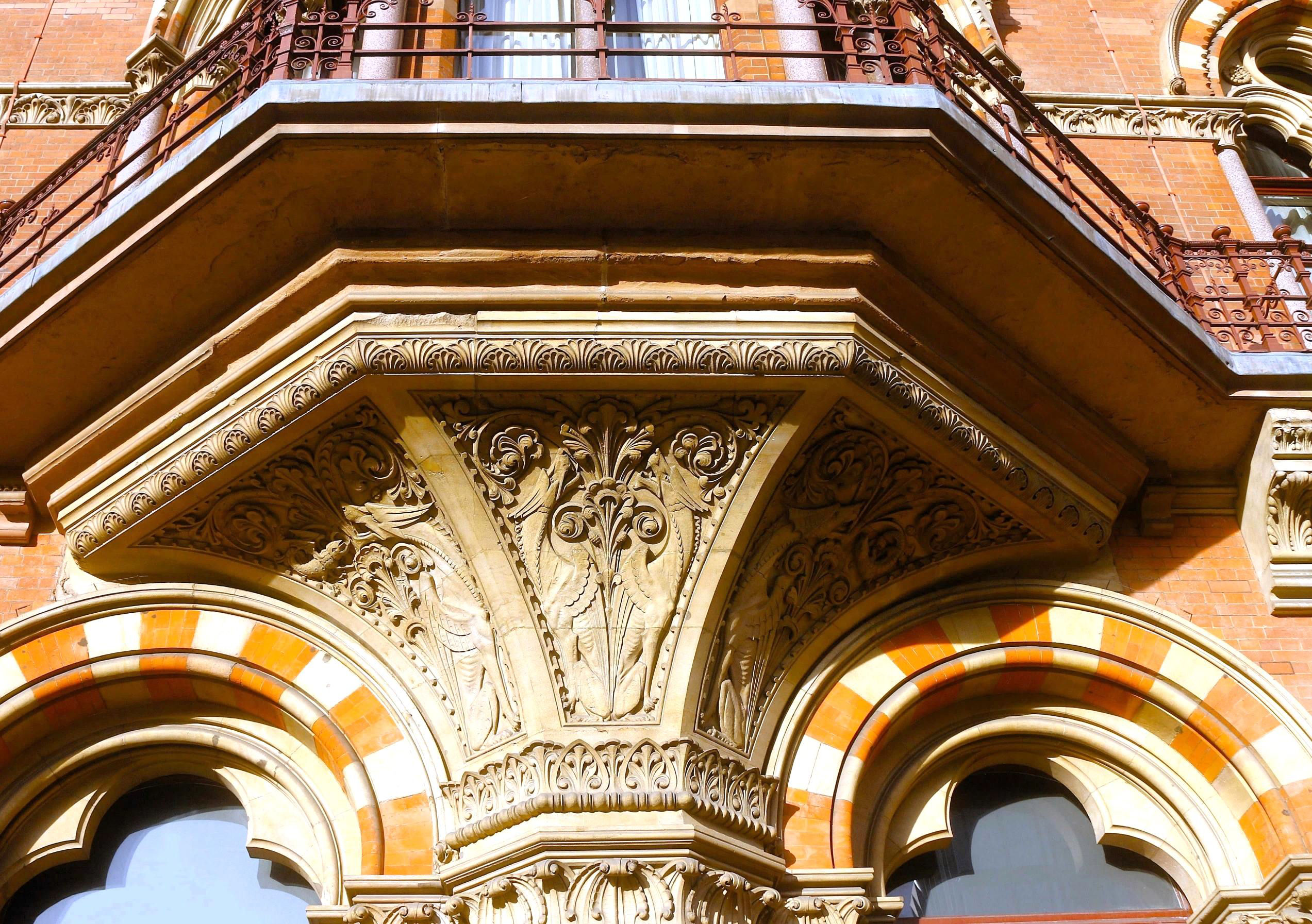
4 Wyverns (mythical dragons),
[© Stuart Hicks 2024]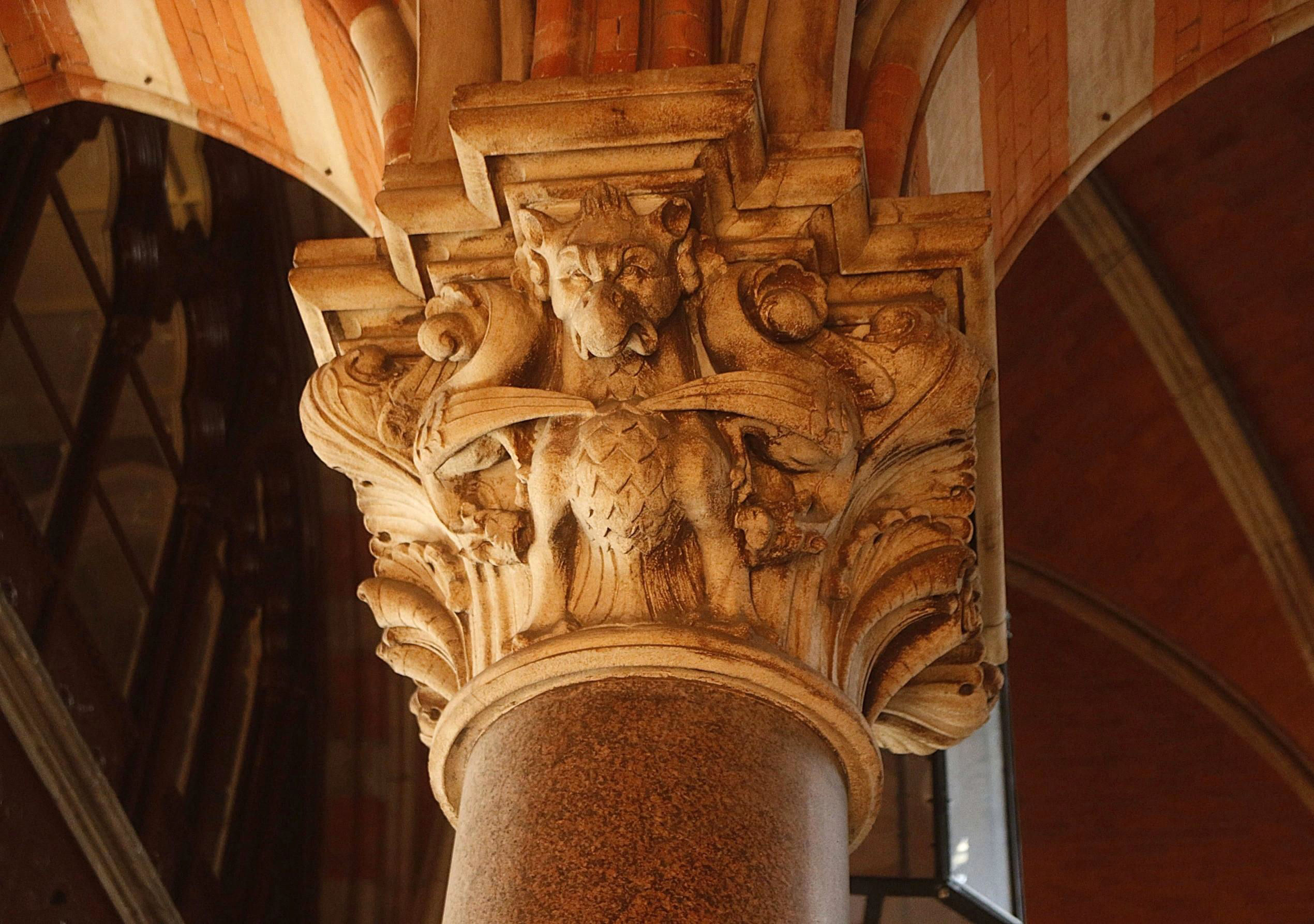
Another wyvern.
[© Stuart Hicks 2024]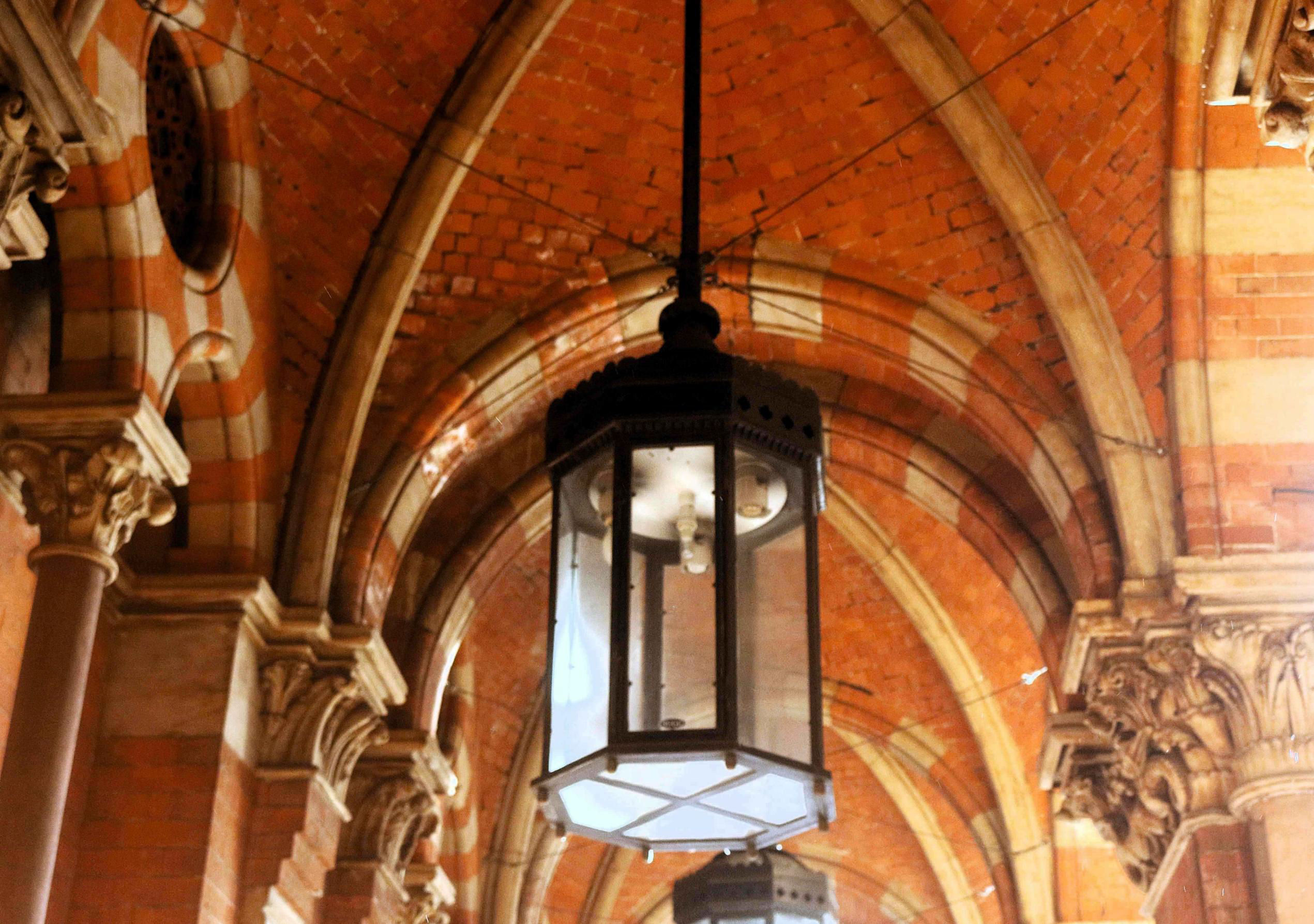
A variety of column heads adjacent to the old taxi exit arch.
[© Stuart Hicks 2024]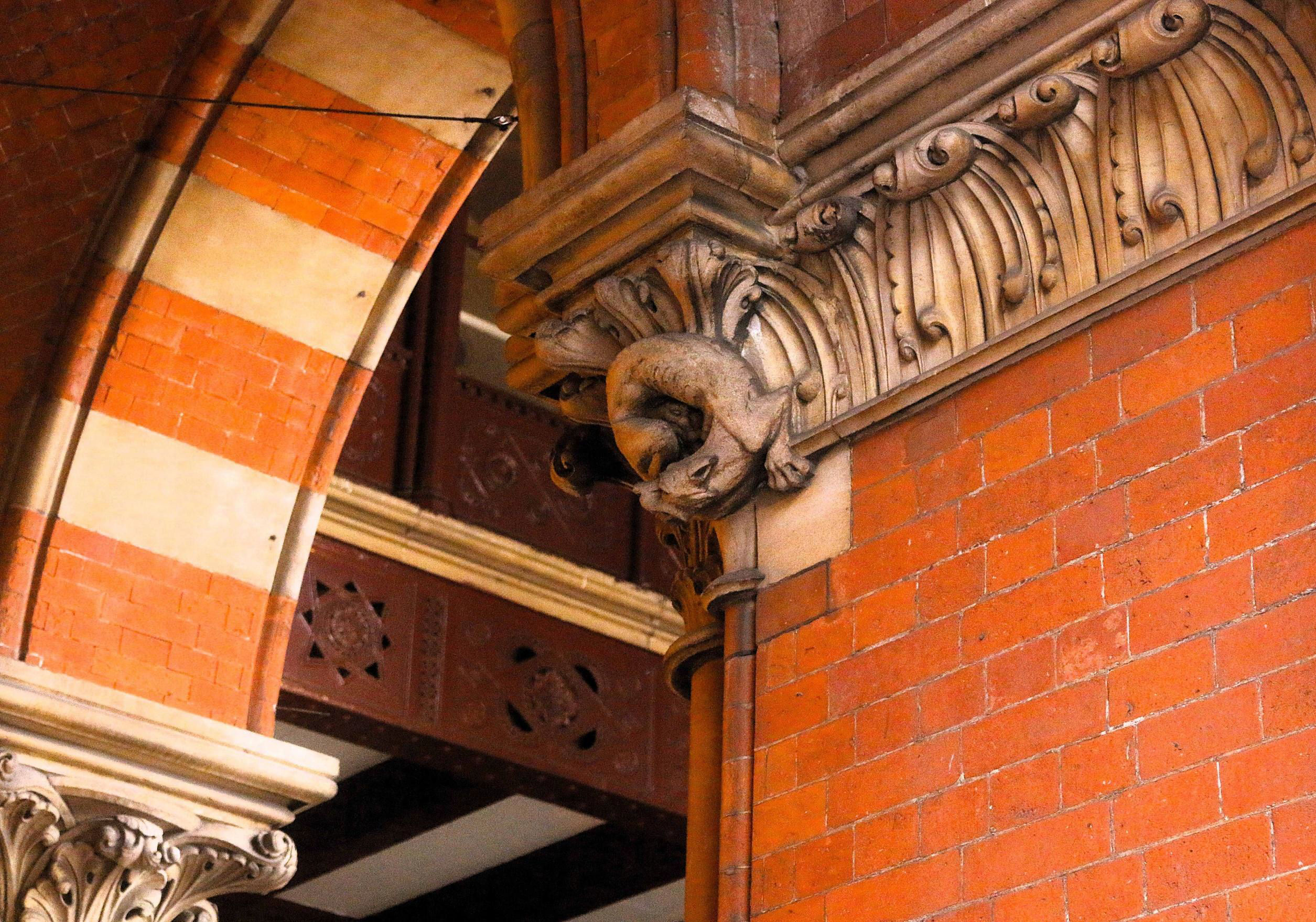
Another wyvern adjacent to the old taxi exit arch.
[© Stuart Hicks 2024]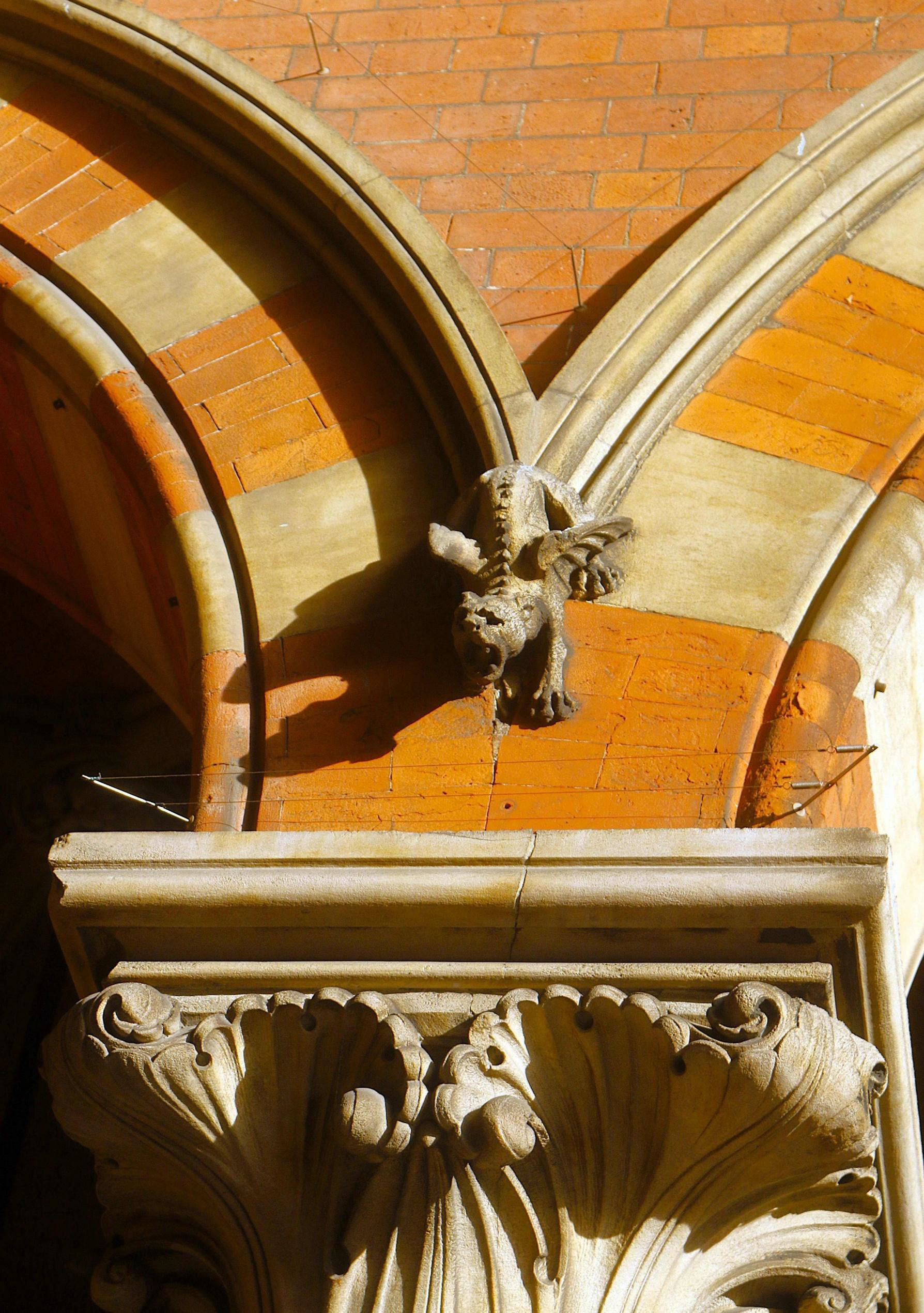
Another wyvern in the old taxi exit arch.
[© Stuart Hicks 2024]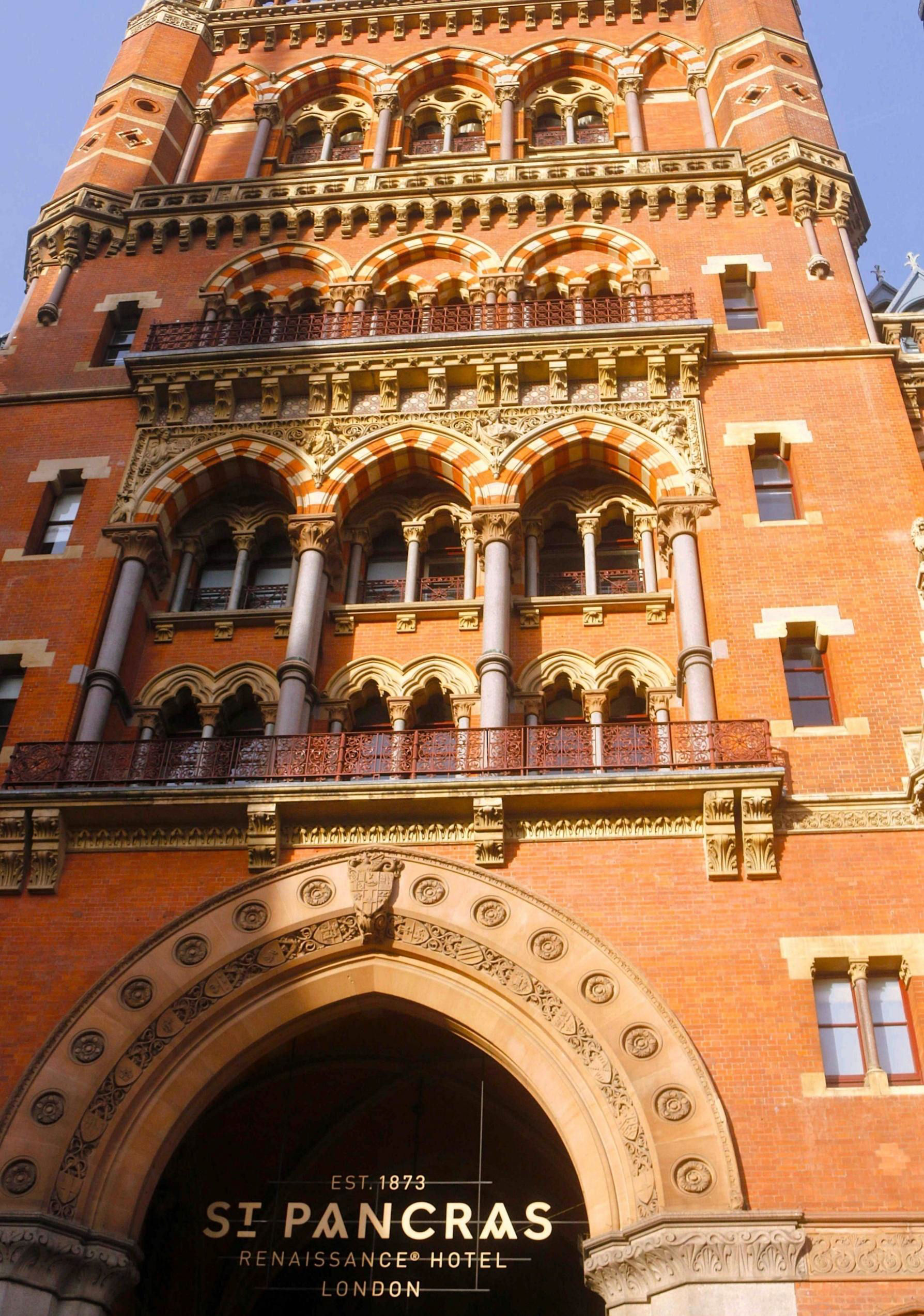
The Midland Railway crest, surmounted by a wyvern, above the hotel lobby entrance, once the inward taxi road.
[© Stuart Hicks 2024]Next, we went in the Hotel entrance and were led past reception and the 'Booking Office 1869' bar and restaurant (which was busy, so not available for us to visit), located off the old station booking office which had wooden panels. We turned left to see the Grand Staircase, which rises the full height of the building and once was the only public (guest) access to the upper floors. The tiling is Minton (Stoke), the ironwork is original by Skidmore of Birmingham and the stonework has been meticulously restored. The 83 steps are marble and the staircase is often used for filming, see
https://tinyurl.com/jner67u8 (which also has some incredible images, far better than I could take). Along one of the corridors leading away from the staircase on the ground floor, some of the original decoration has been carefully restored.
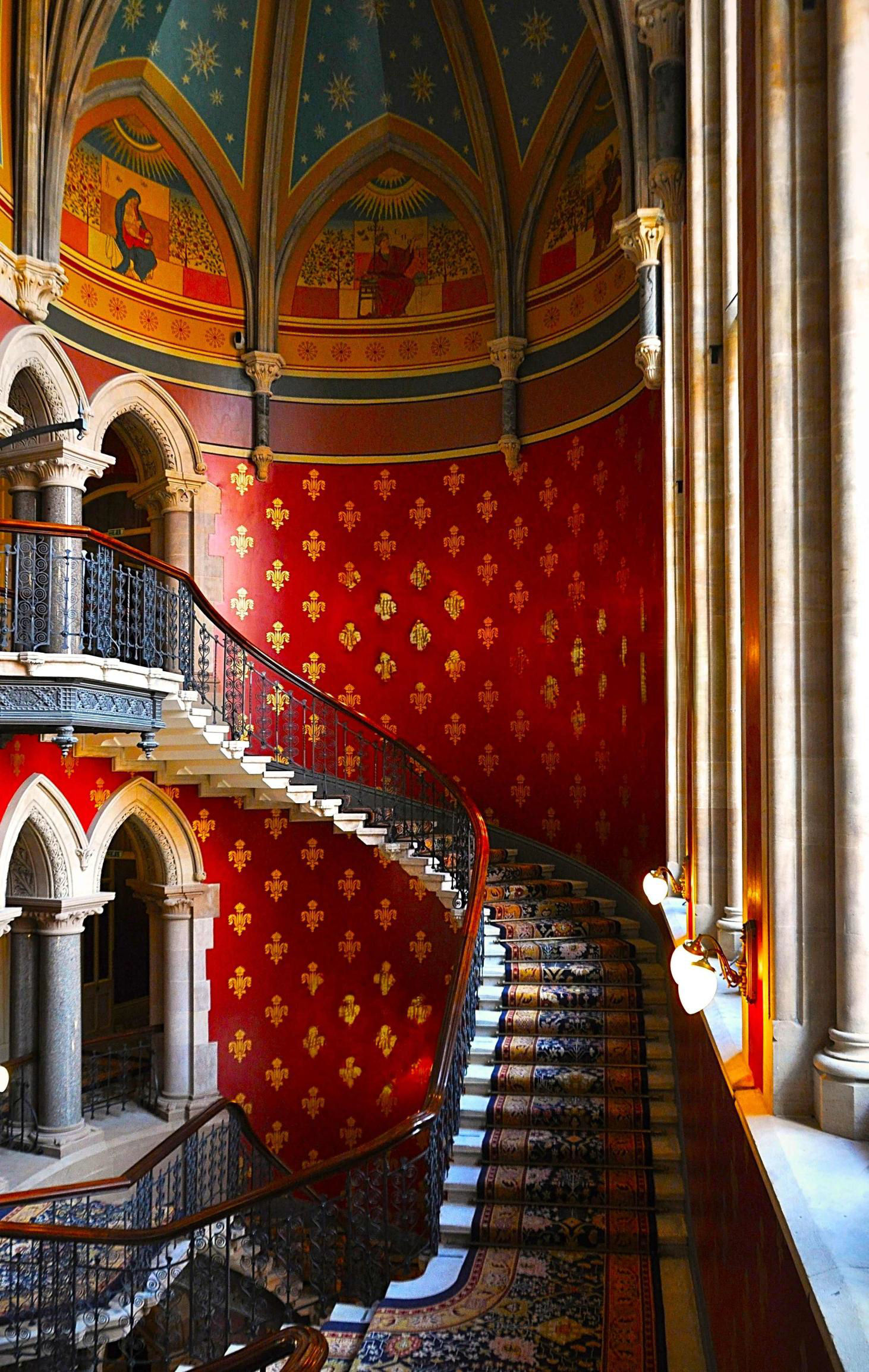
The grand staircase in the hotel.
[© Helen Simonsson 2024]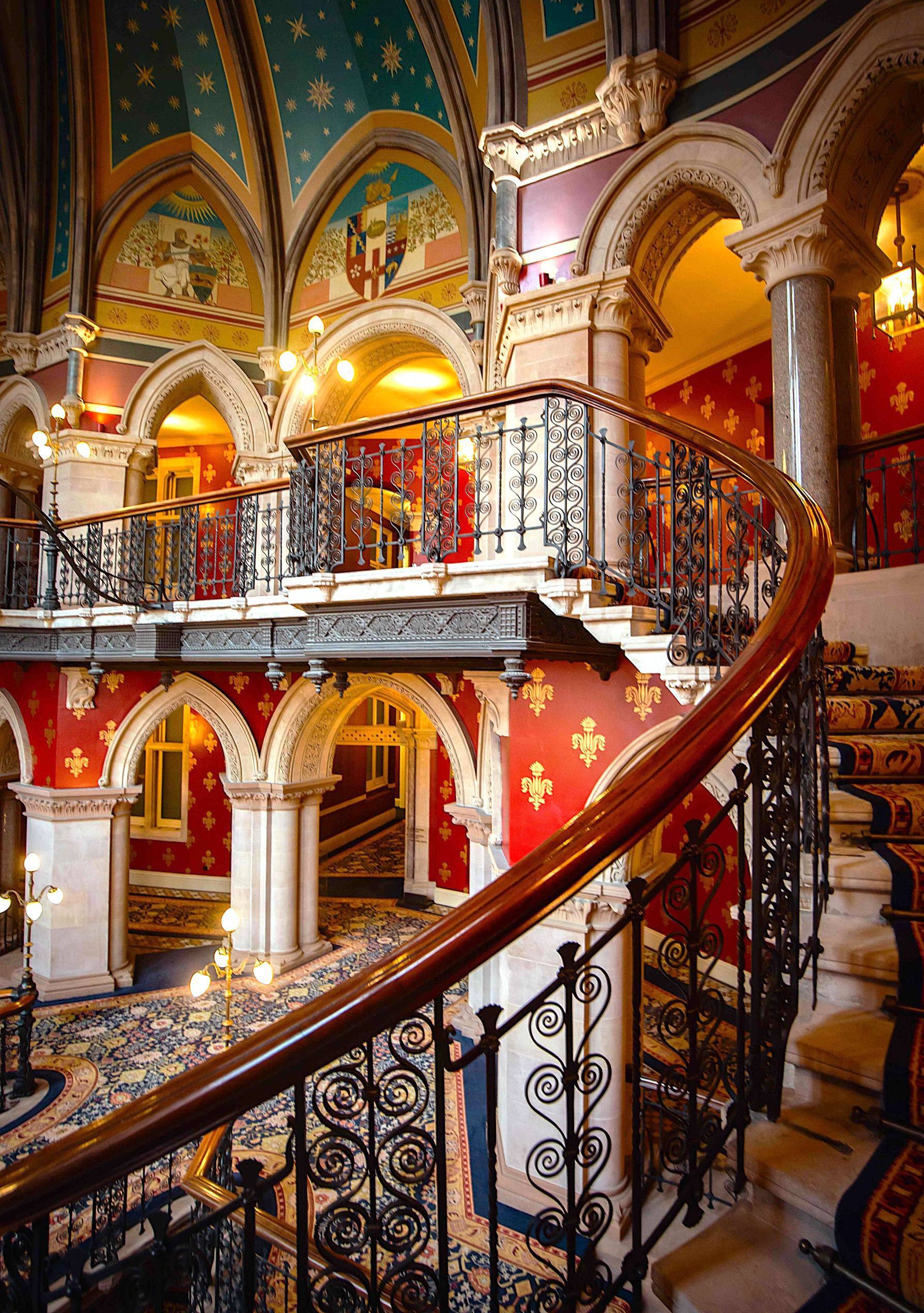
The top floor.
[© Bs0u10e01 2024]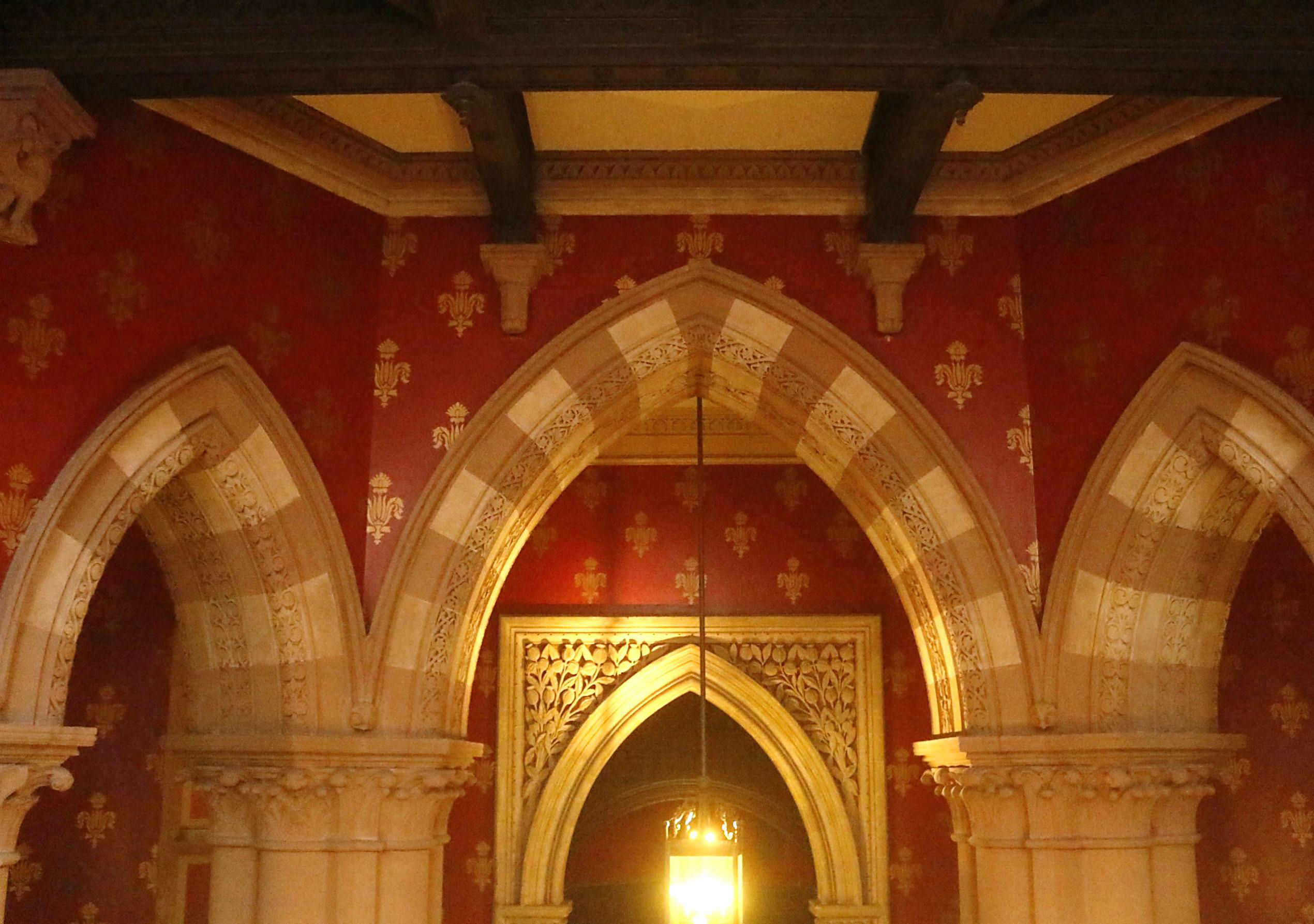
The carefully restored original decoration along one of the corridors leading away from the staircase on the ground floor.
[© Stuart Hicks 2024]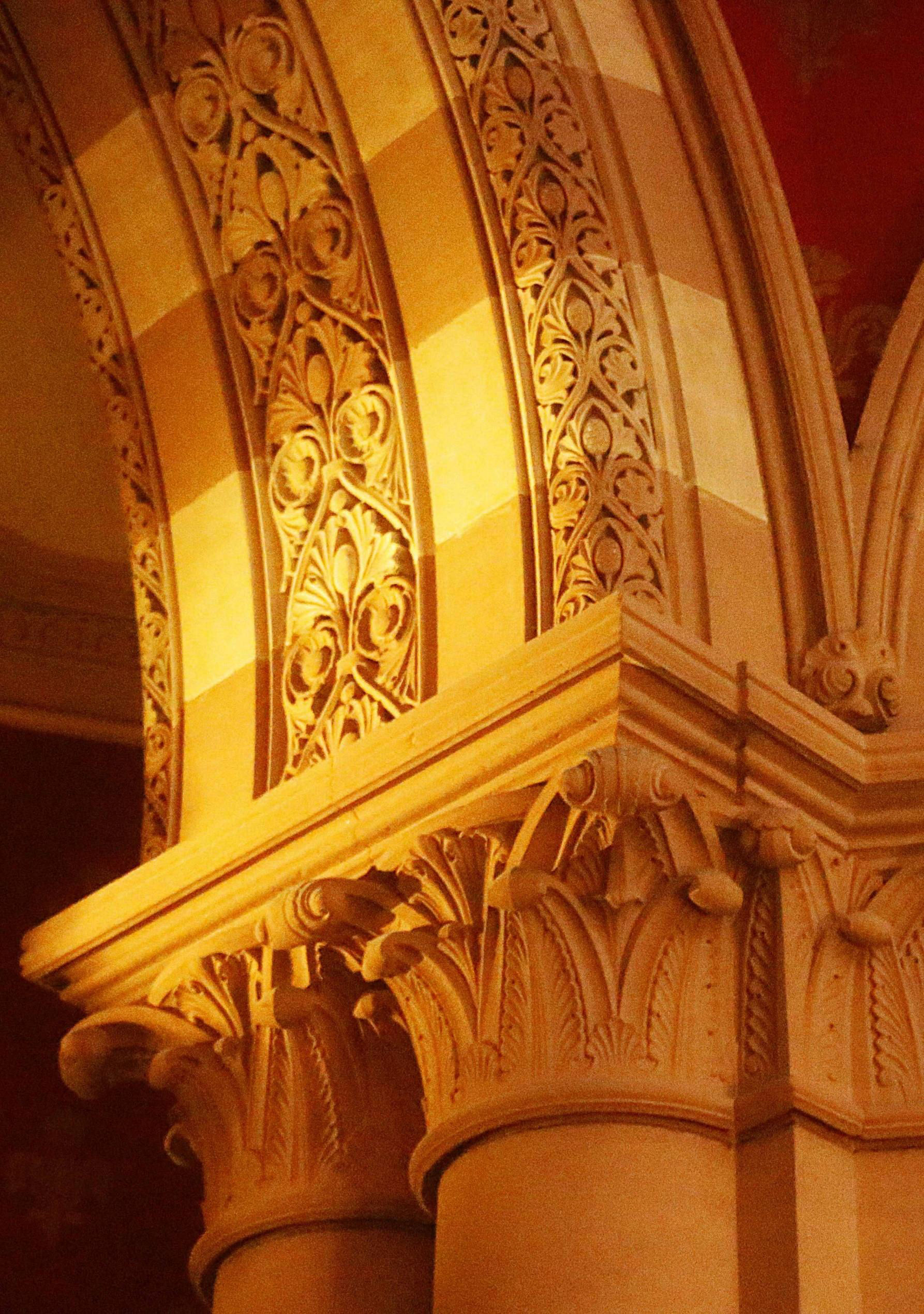
A close up of the carefully restored original decoration.
[© Stuart Hicks 2024]After more photos, our group returned outside and walked eastwards to enter the apartments past the concierge and climbed up the back staircase to the second floor corridor, which runs along the full extent of the building. The broad width of the corridor was designed to allow two ladies to pass while wearing lace-hooped dresses. Peter told us that while some of the doors had apartment numbers, as Manhattan had combined two or three hotel rooms together to form each apartment, some of the (unnumbered) doors are now dummies. The corridor lighting is modern electric but designed to look like the old gas lamps. The floor tiling is Minton. We briefly went part way down the next staircase to admire the back of the station clock and view the Barlow train shed and international station from above. At the eastern end of the second floor corridor was a Midland Railway Boardroom (an apartment we were unable to visit), used when the Directors met in London. We could see its approach with two decorated arches along the corridor (the decorations on the four sides of which are all different).
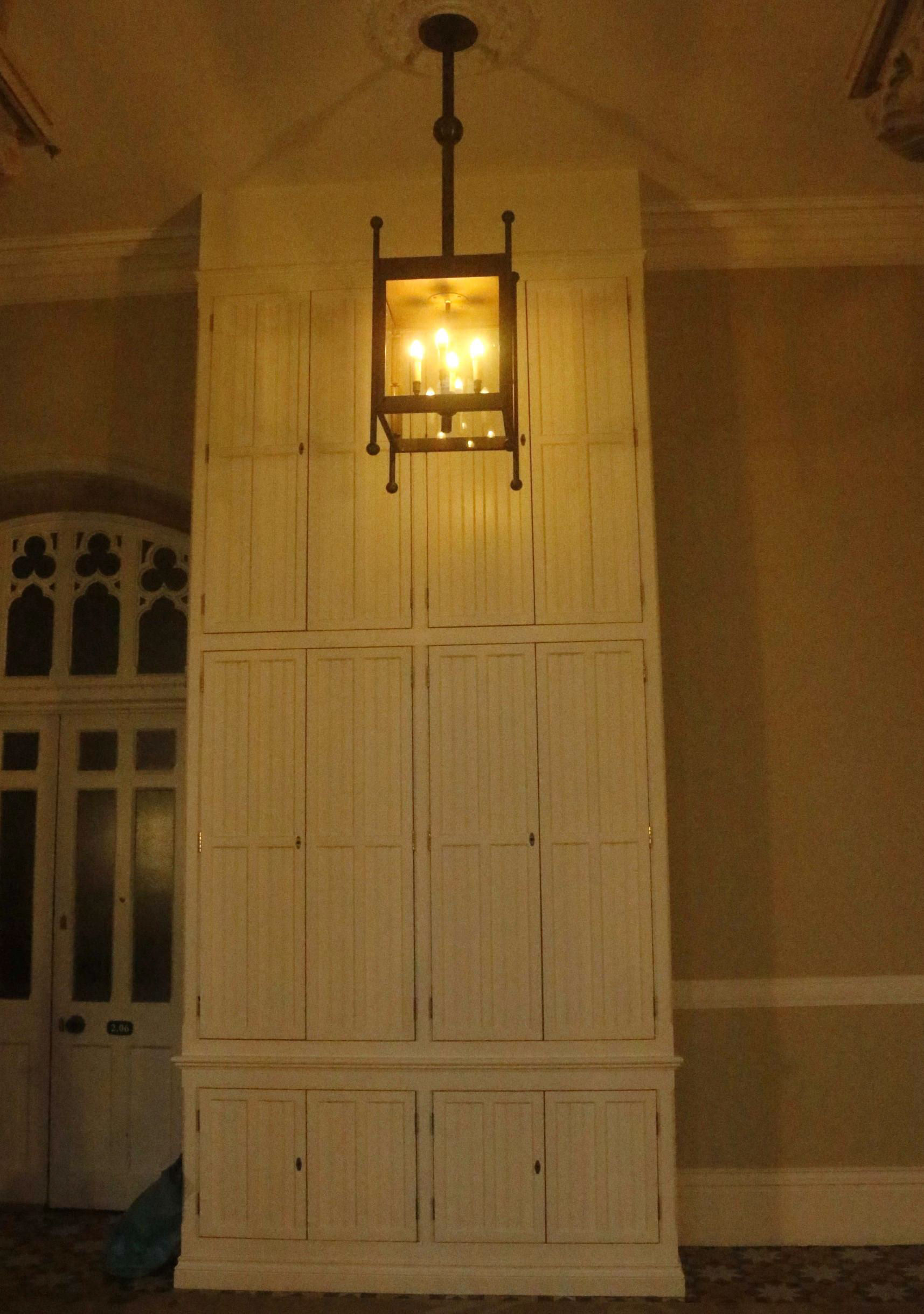
The corridor electric light fittings replicate the original gas lighting…
[© Stuart Hicks 2024]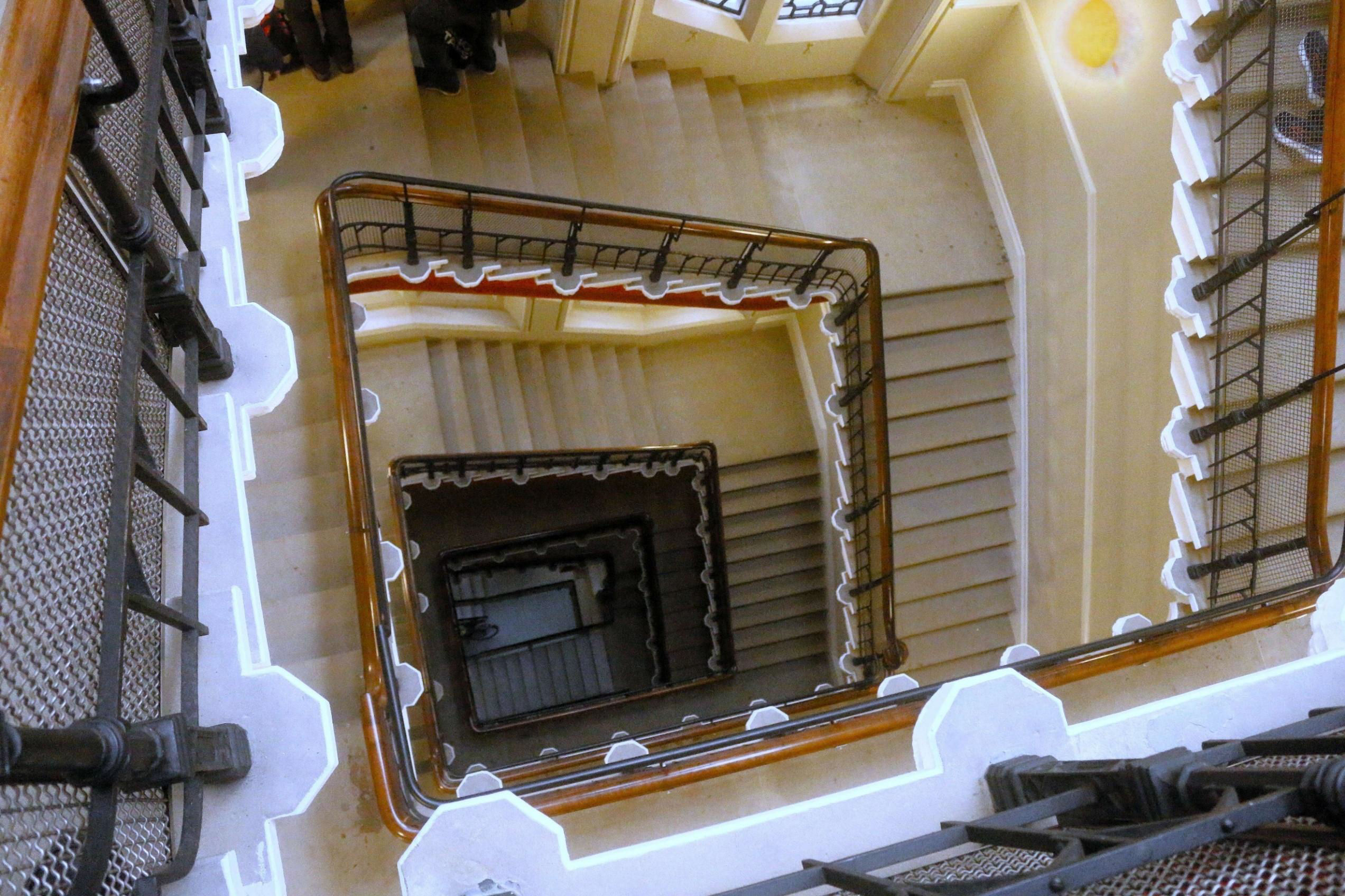
One of the St Pancras Chambers apartment staircases. The window, just seen at the top, gives an excellent view of the Eurostar platforms.
[© Stuart Hicks 2024]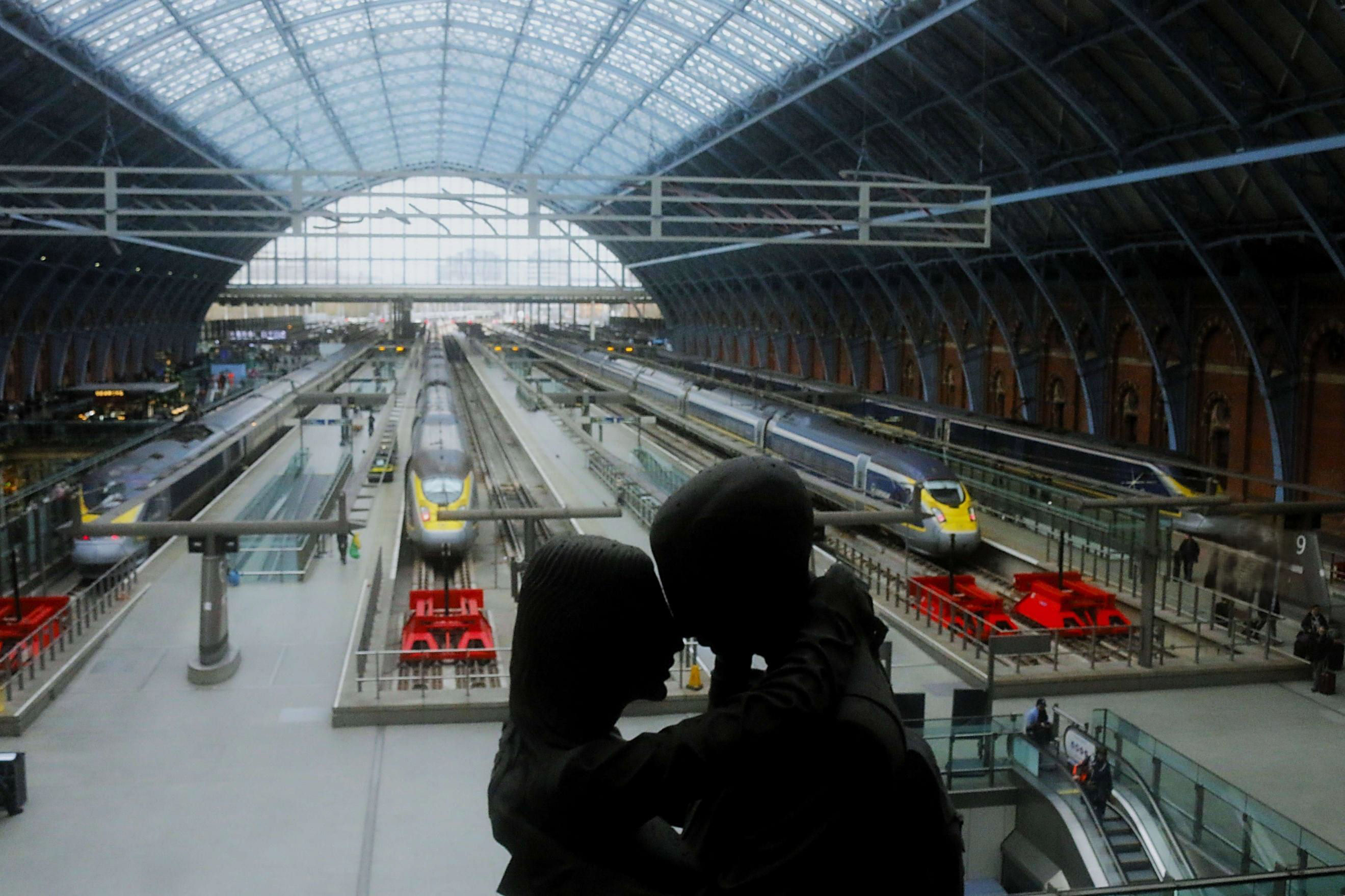
St Pancras International, the Eurostar platforms from that staircase window, difficult to clean on the other side. That foreground statue is 9m tall.
[© Stuart Hicks 2024]These days, the most desirable apartments are those on the upper floors but, in the past when stairs had to be used (pre-lifts), they were less attractive, so the furnishings were cheaper. For example, the clocks on the mantlepieces were 12" diameter on the second floor but only 10", 8" & 6" respectively on the third, fourth & fifth floors. Likewise, the corridor on the second floor is furnished in oak but pine was used on the fifth floor. Peter also pointed out the smaller rooms used for servants, not the hotel staff but the servants accompanying their family into London. We climbed further up the staircase to the fifth floor, pausing briefly to view the infilled former skylights at intervals along the sides of the corridor, originally allowing light down to the fourth floor corridor. Our party saw the high level doorways, which access the attic alcoves. The stairs and ladders to reach them were removed during the redevelopment.
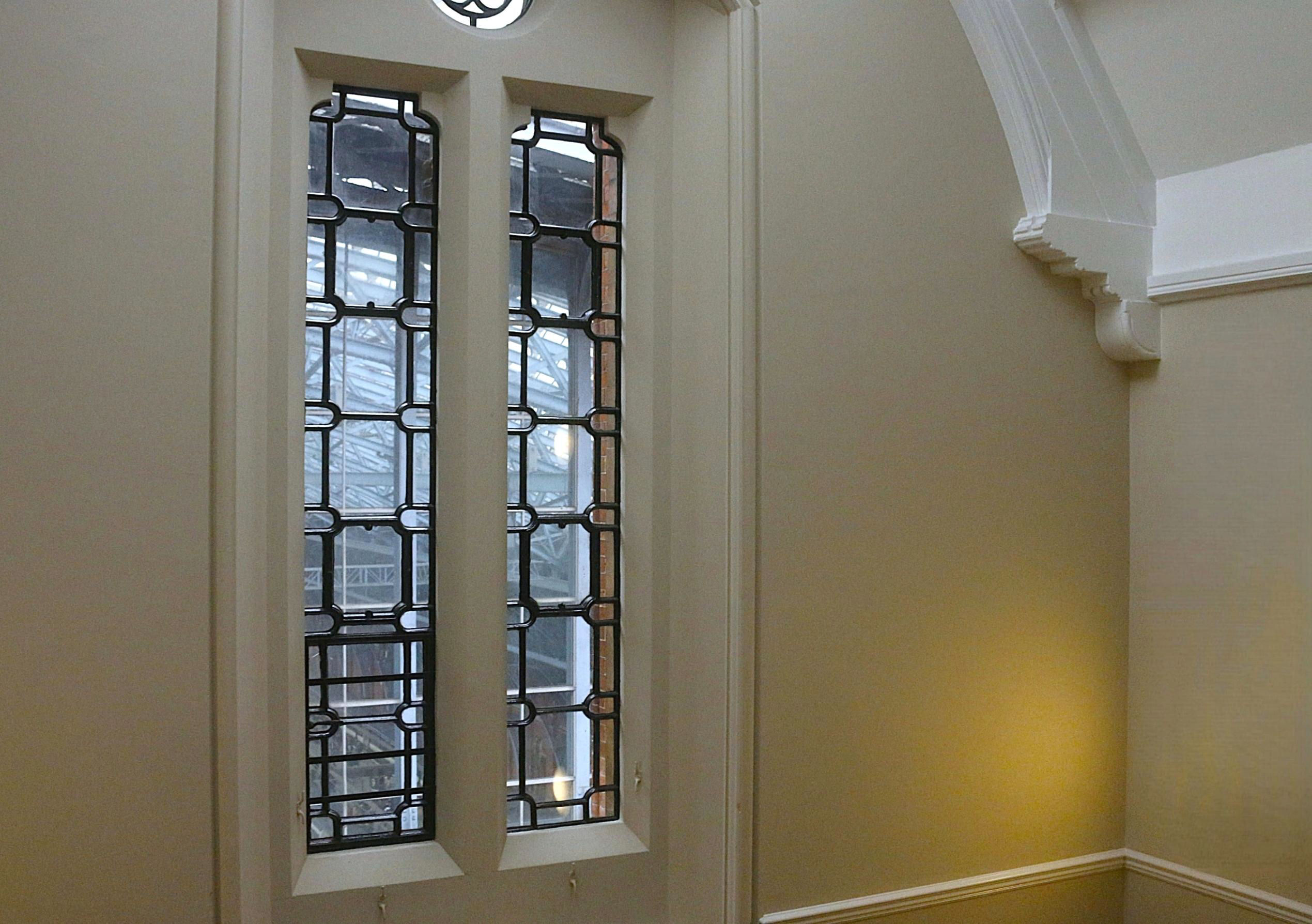
A window within St Pancras Chambers overlooking the Eurostar platforms.
[© Stuart Hicks 2024]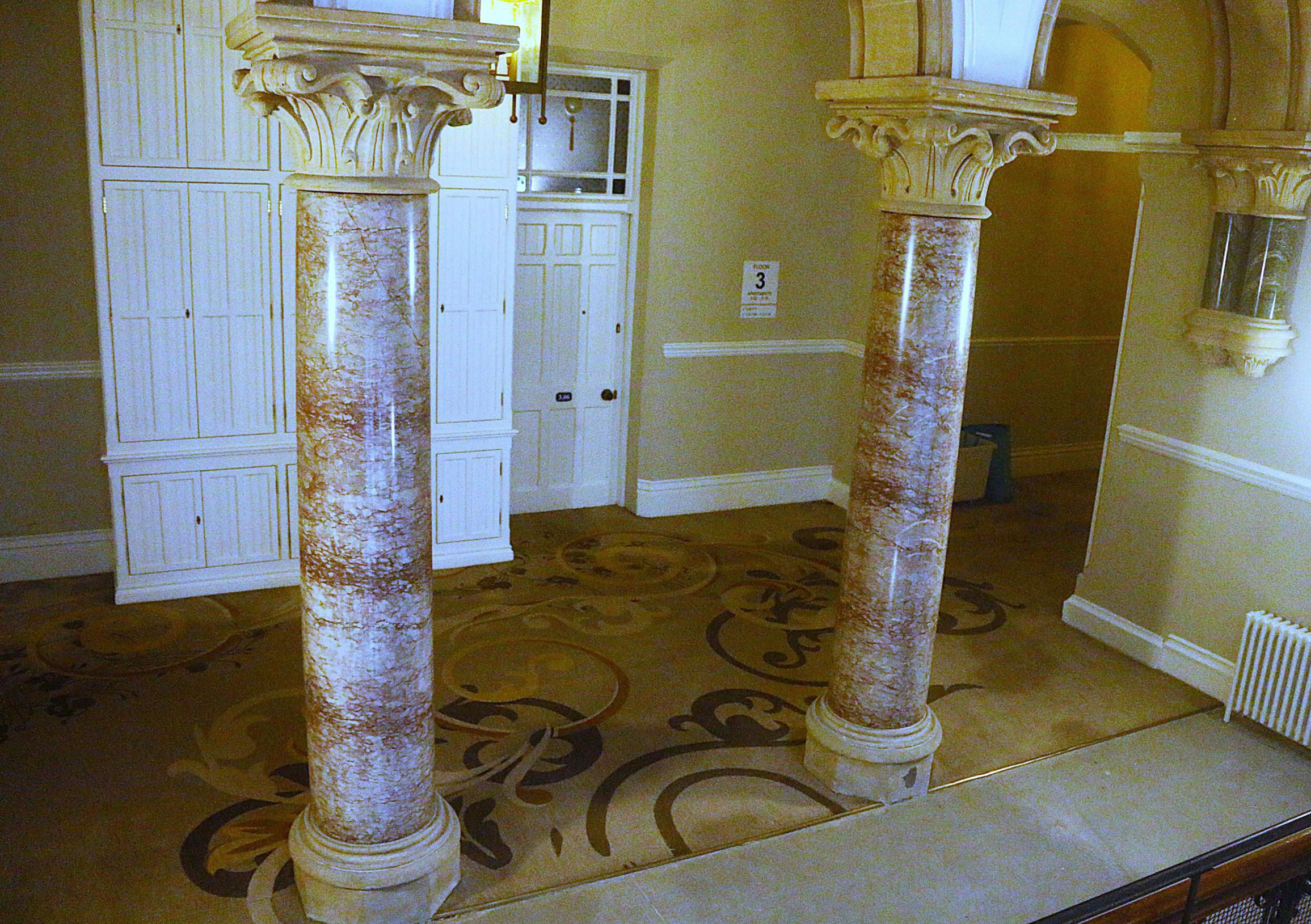
Marble pillars on the third floor of St Pancras Chambers.
[© Stuart Hicks 2024]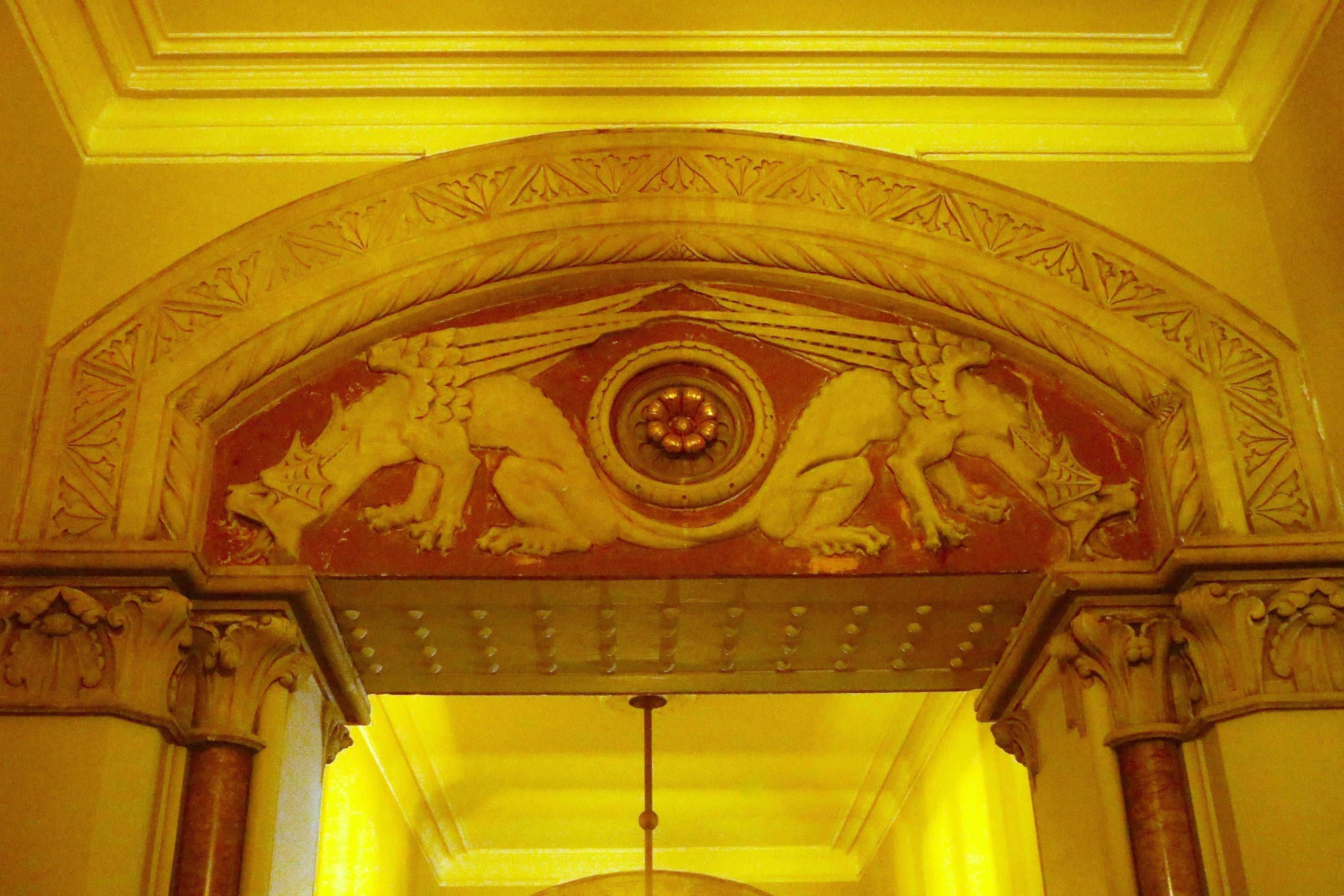
Bespoke arch decorations, the inevitable wyverns again, everyone different.
[© Stuart Hicks 2024]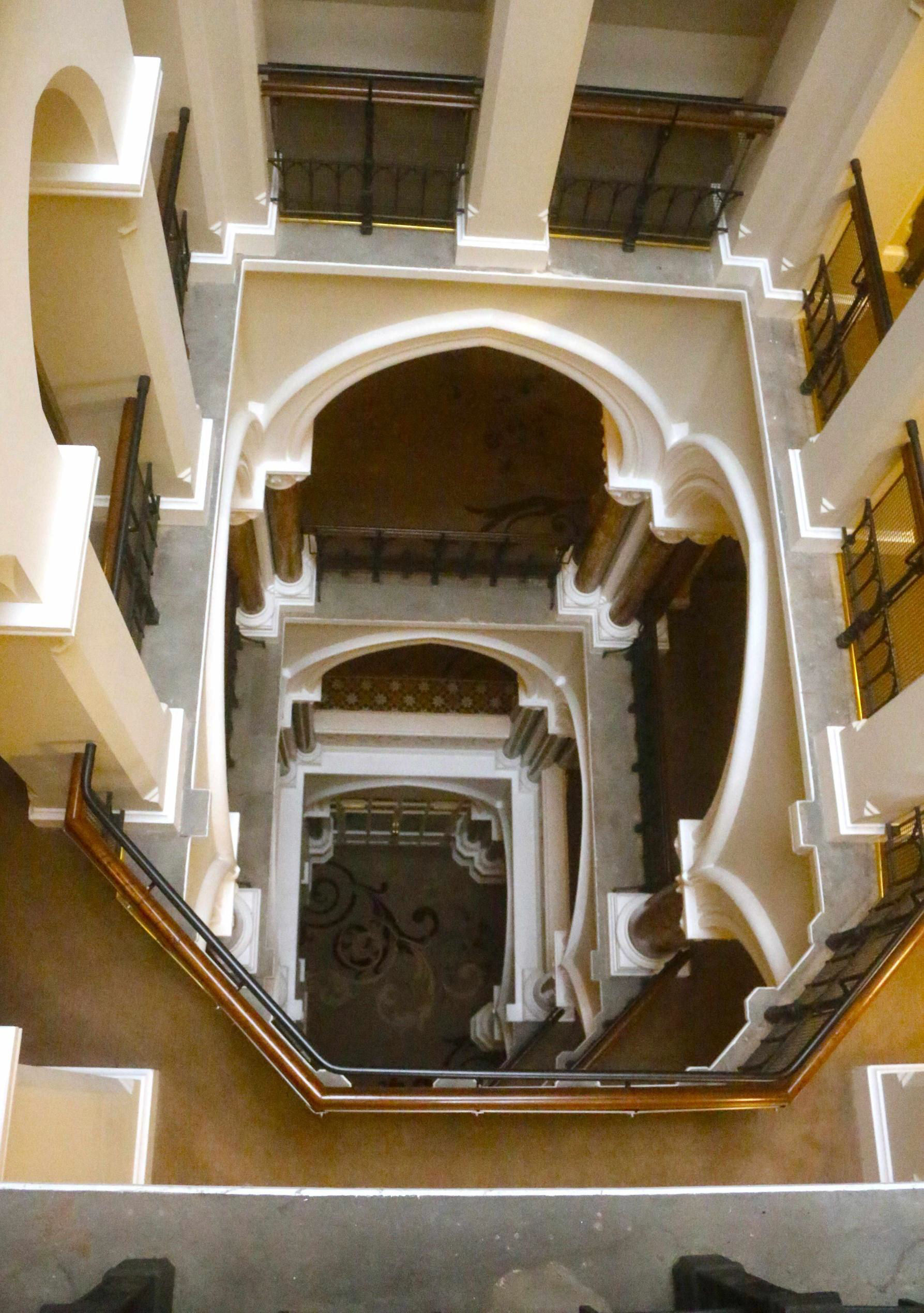
The view from the fifth (top) floor landing.
[© Stuart Hicks 2024]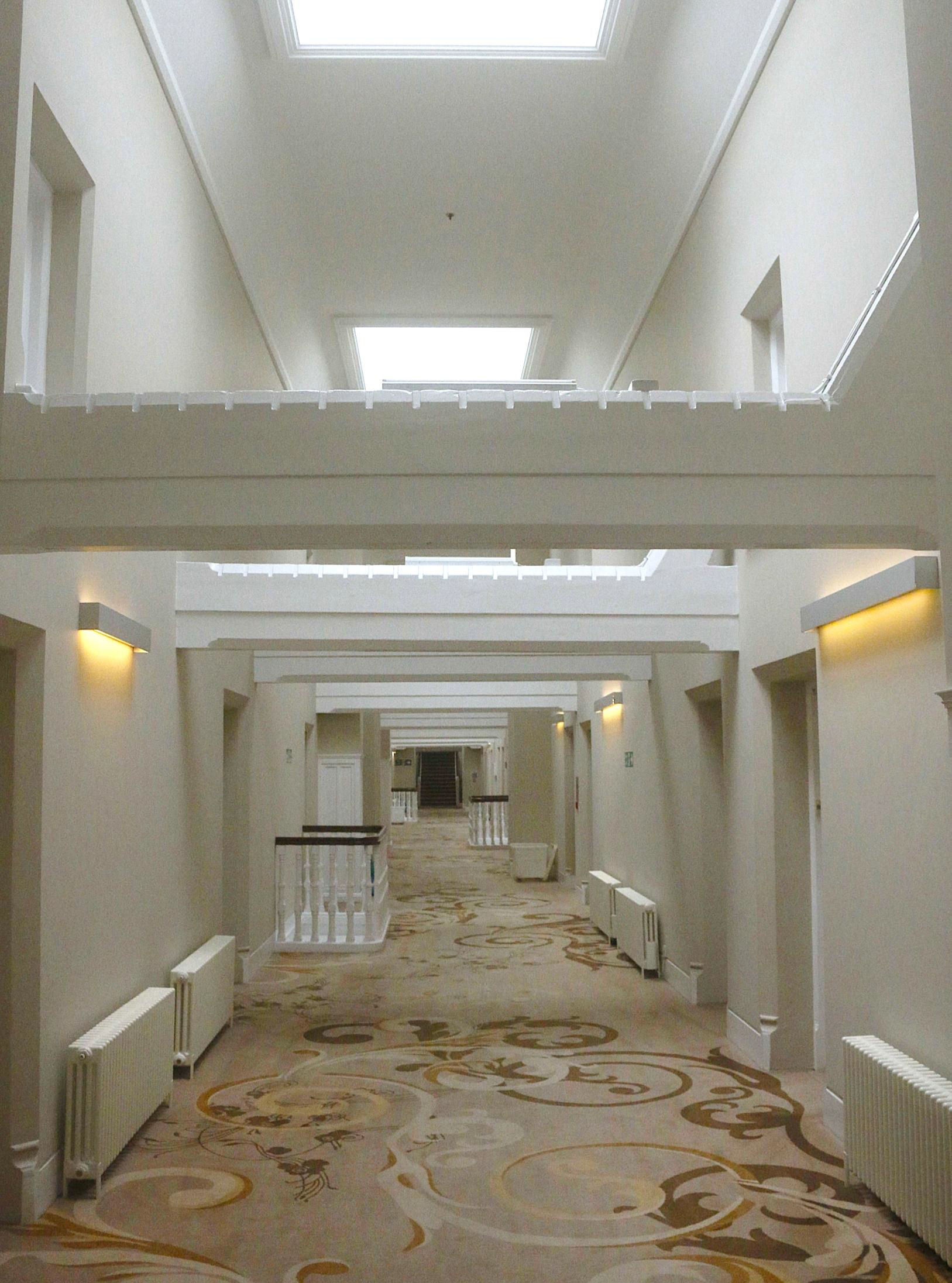
The fifth floor corridor with the high level doorways to the attic alcoves (steps and
ladders removed). The balustrading is around the former 'skylights' for the fourth floor corridor.
[© Stuart Hicks 2024]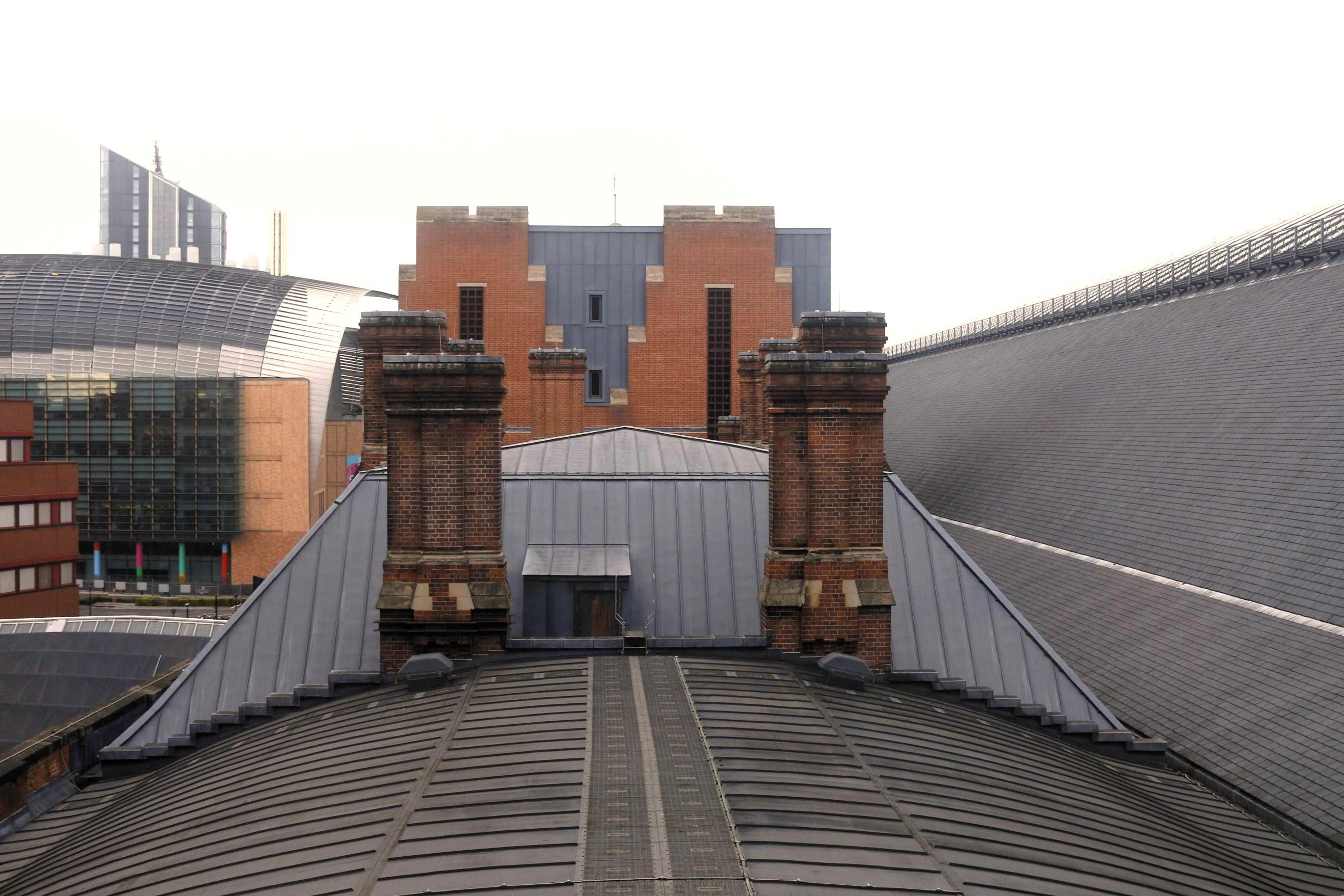
The roof of the west side of St Pancras looking north, the main train shed roof is right.
[© Stuart Hicks 2024]At the eastern end is the clock tower apartment. It is 138 steps up from the taxi rank level to the flat entrance and, in total, 181 to the lounge. The Clock Tower contains a 12m tall false bell chamber (being a station rather than a church clock, it only needed the hands to tell the approaching whether they were in time for their train, not to call them to worship)! The original clock winder's room has a floor-to-ceiling weight box. The clock is now electric and occasionally has to be visited by a horologist. The tower room contains a grand piano for music events (seating up to 40) and can take 16 for dinner. There is more of the flat to see, including the master bedroom and elevated bath, as shown in Peter's guided tour on his Facebook page. The windows used to have slats but now have glass, with obscured sections designed to look like slats from below. If you ever want to know the time in the kitchen, you simply have to look up to the northwest clock face, visible above through a special window which Peter arranged to be installed, otherwise they could not see the clock.
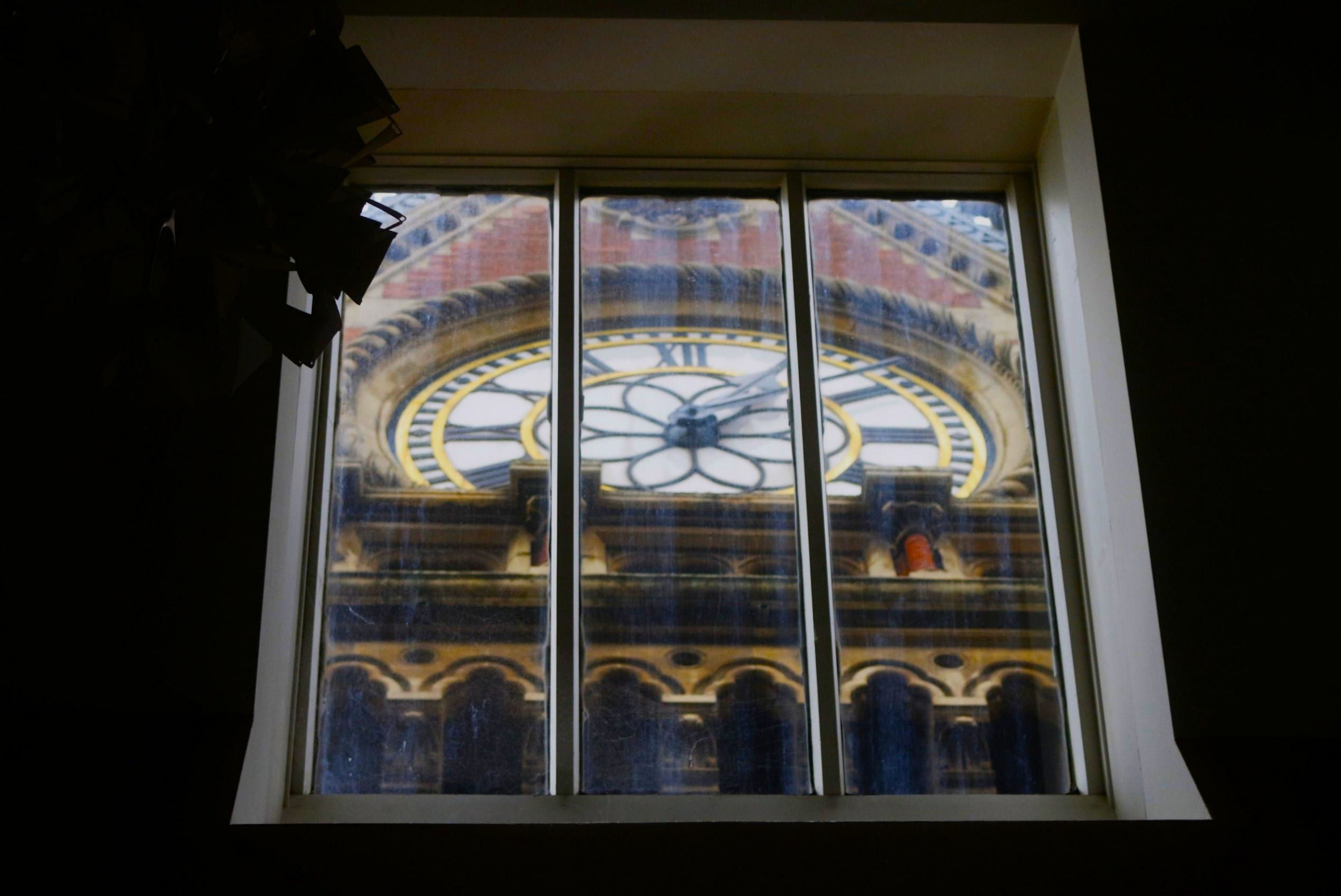
The kitchen clock - St Pancras NW clockface through the specially installed kitchen window in the clock tower apartment. Is the window cleaner due?
[© Stuart Hicks 2024]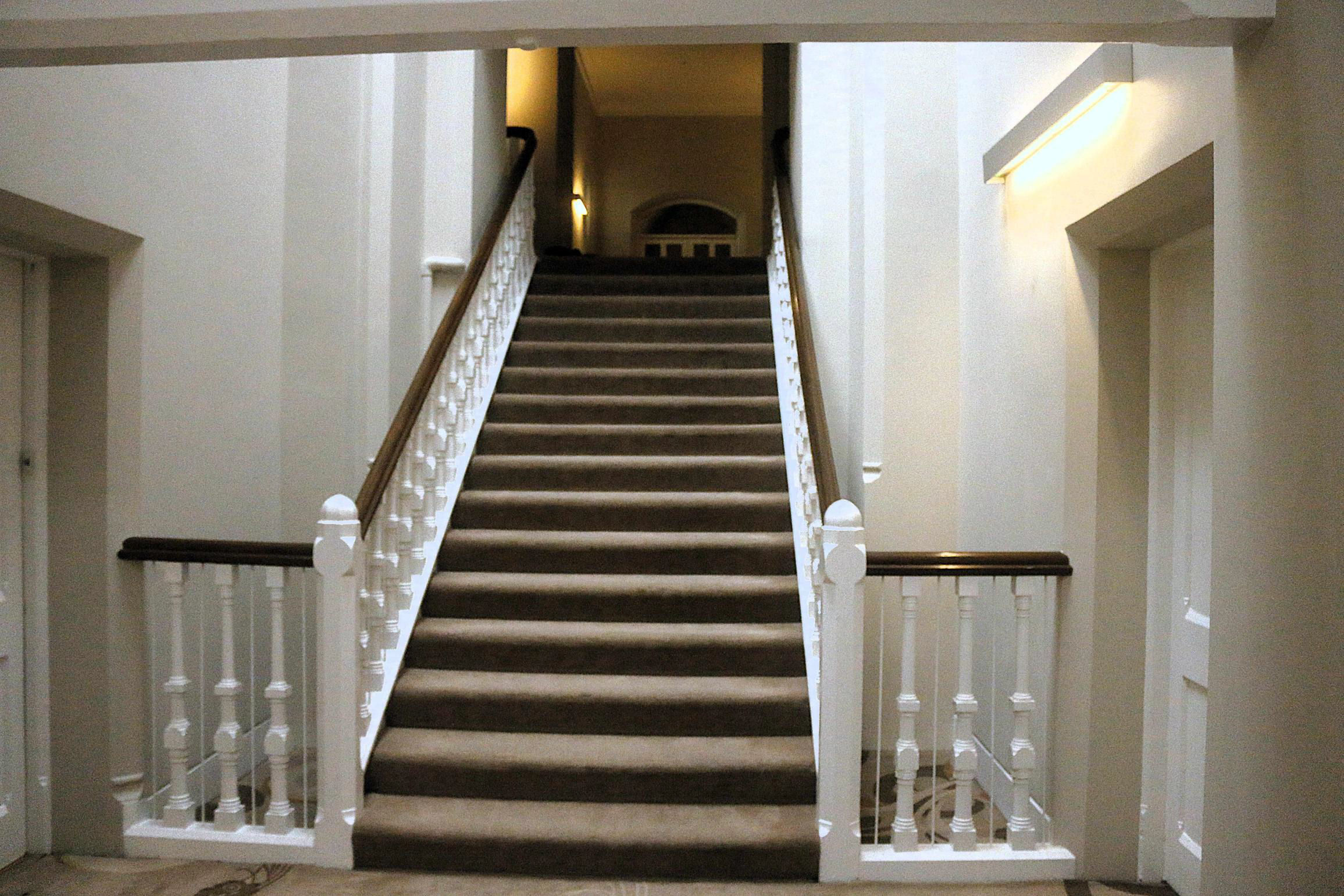
Stairs within the clock tower apartment.
[© Stuart Hicks 2024] has more details and pictures of the apartment.
Soon after 1pm, our host returned the party to the entrance down a different, slightly grander servants' staircase (with some interesting metal risers) and bade us goodbye. Thanks to Peter, his partner and the hotel for this fascinating tour and for allowing us into their flat, also to Adam and the Society for all the arrangements. For those who missed it, a repeat may be possible; public tours are sometimes available during London Open House in September. It is also possible to stay in an original room at St Pancras Renaissance Hotel. It may be possible to stay in the Clock Tower guest apartment (email via website).