On a rather chilly Monday morning, twelve very privileged members gathered on the concourse of Liverpool Lime Street station, including our party leader Adam Turner. We were soon split into two groups. Mine did 'upstairs' first. We had a wander along P10 (the south side of the station), to look at the decommissioned signal box. Unfortunately, the presence of asbestos precluded a look inside but the group would see more later.
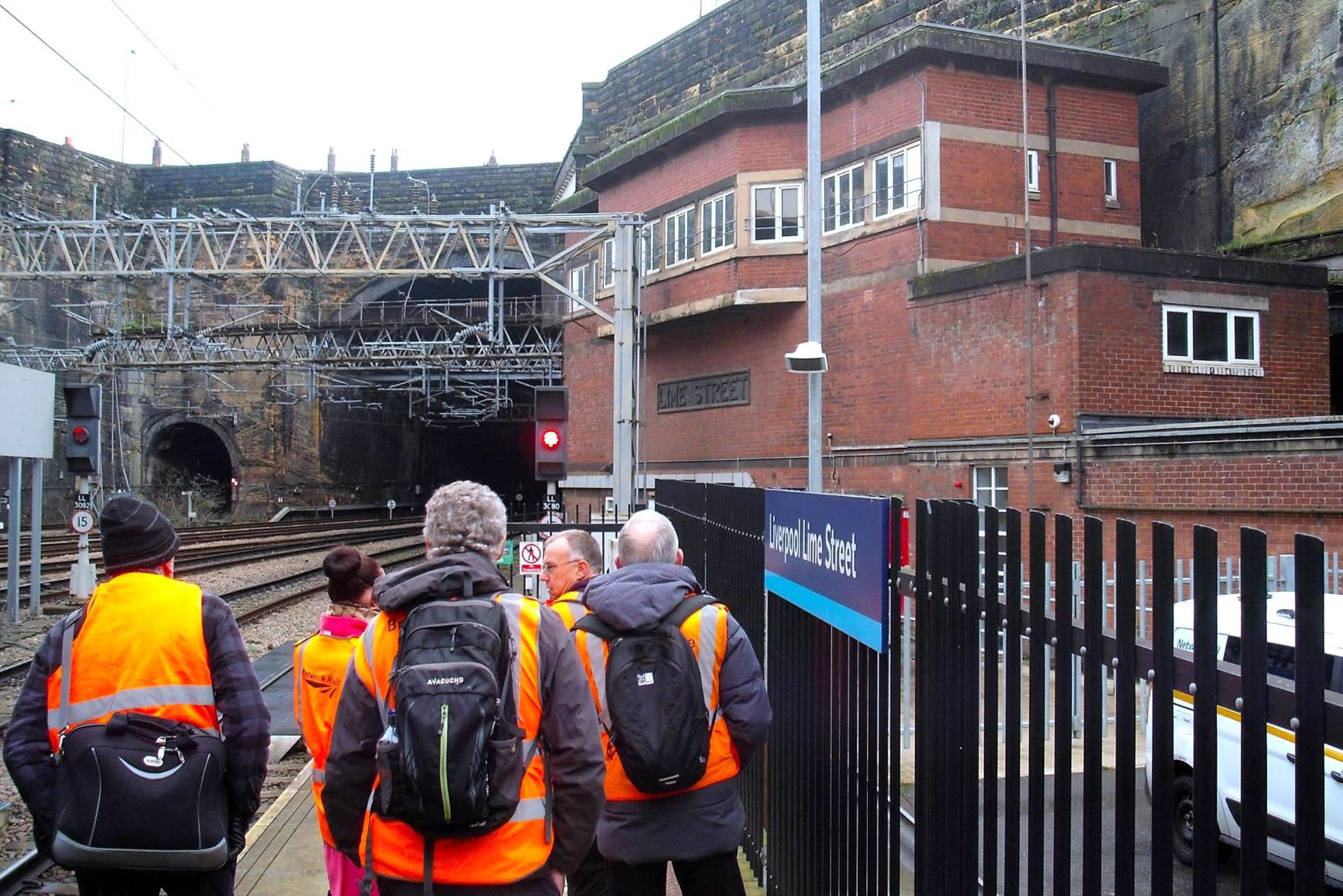
Some of our tour group on the end of Liverpool Lime Street P10 with the decommissioned Lime Street Signal Box right.
[© Phil Wieland 2024]We observed a new Class 807 'Evero' (Where do they get these stupid names?*) on a London service; they were only introduced a week before on Mon 11 Nov, as well as between Birmingham and Euston.
[*According to the manufacturers, Alstom, 'Evero' is so named to indicate its environmental qualities.]
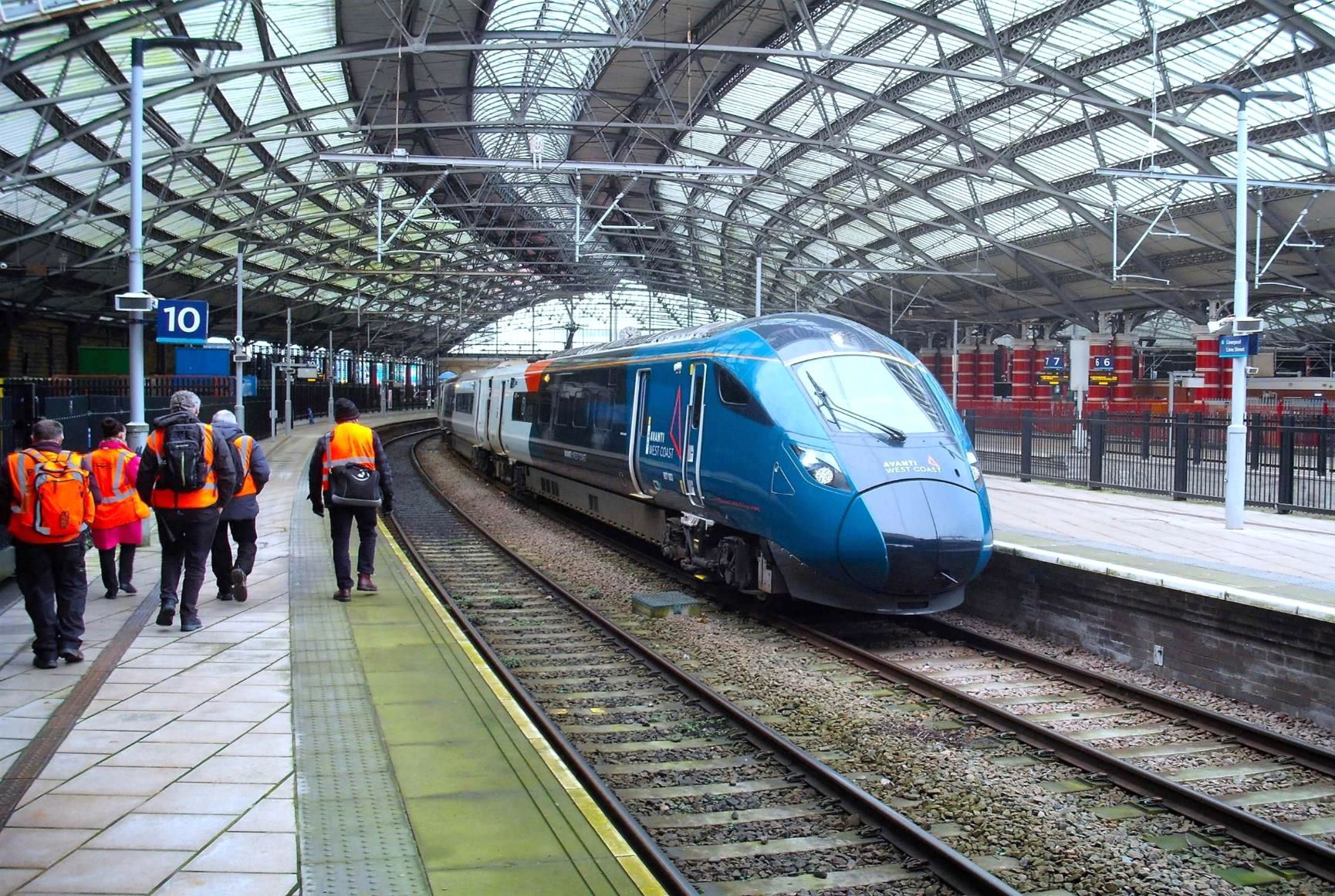
Walking back along P10 towards the concourse, there is a Class 807 'Evero' in P9 (they only entered passenger service here seven days before).
[© Phil Wieland 2024]Back on the main concourse, we examined the statues of Ken Dodd and the rather less well-known Bessie Braddock. (Labour MP for Liverpool Exchange for over 24 years, most famous for campaigning for the Lion stamp on eggs.) Over 200bn British Lion eggs have been sold since its launch in 1998; for an eggscellent explanation of the lion and data on eggs see:
https://www.egginfo.co.uk/british-lion-eggs
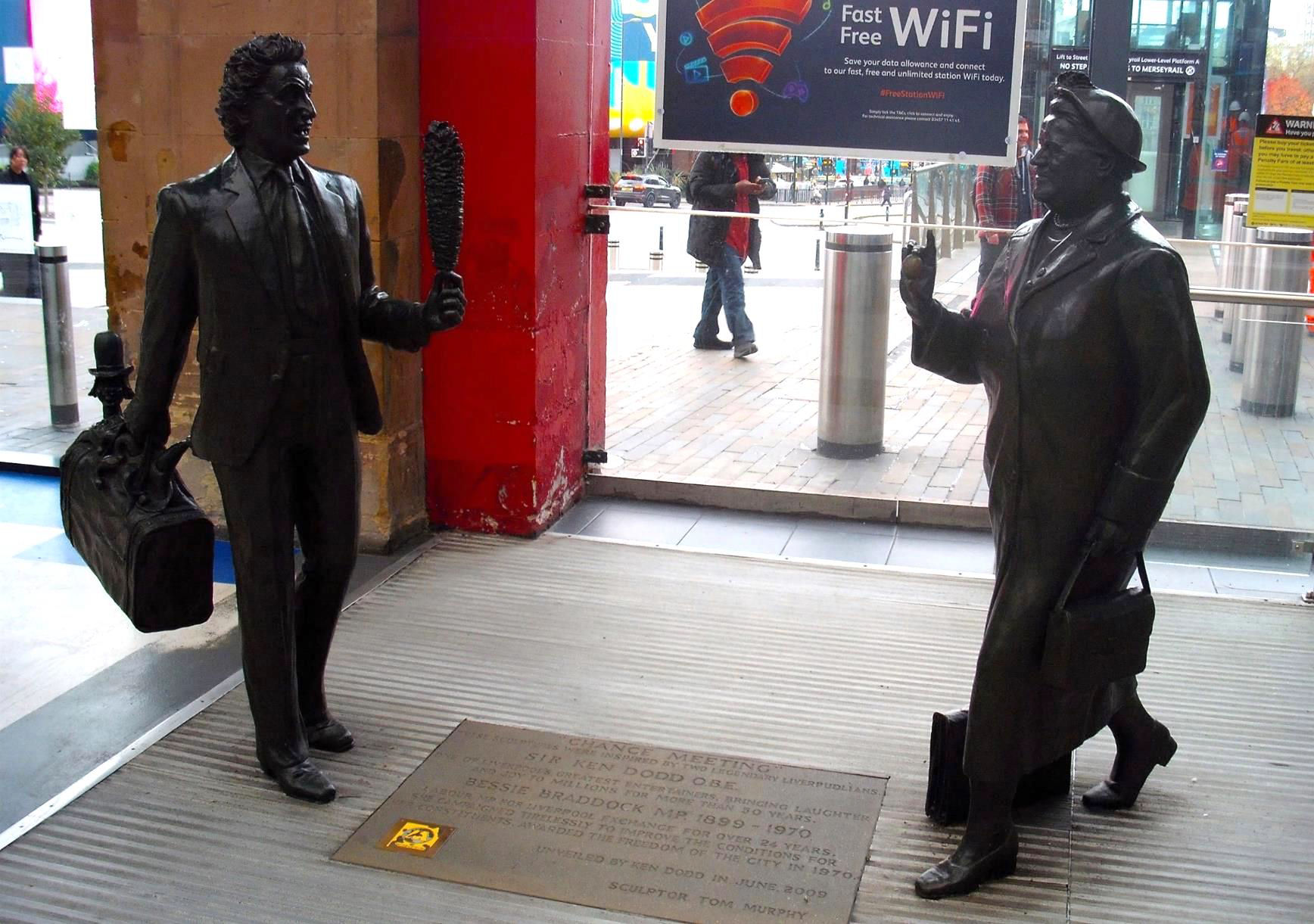
Bessie Braddock (who went to work on an egg) and Ken Dodd, with his tattyfilarious tickling stick.
[© Phil Wieland 2024]Also in the main concourse are two bronze friezes commemorating the Liverpool Pals. The 17th, 18th, 19th & 20th battalions, as well as the 21st & 22nd reserve battalions, of the King's Liverpool Regiment during WWI were commonly known as the Liverpool Pals. The friezes were sculpted by Liverpool artist Tom Murphy and unveiled in 2014. Next, our guide took us upstairs to a First Class Lounge (formerly a pub called the White Star, renamed Coopers in 1999 and closed in 2017). There is also a Standard Class waiting area where we were startled to find the diagram and part of the frame from the signal box in a little museum area. Opened on 18 Jan 2019, it was reported in BLN 1322.297. I last saw these on our 22 Sep 2017 Society visit to the box shortly before it closed (
view report).
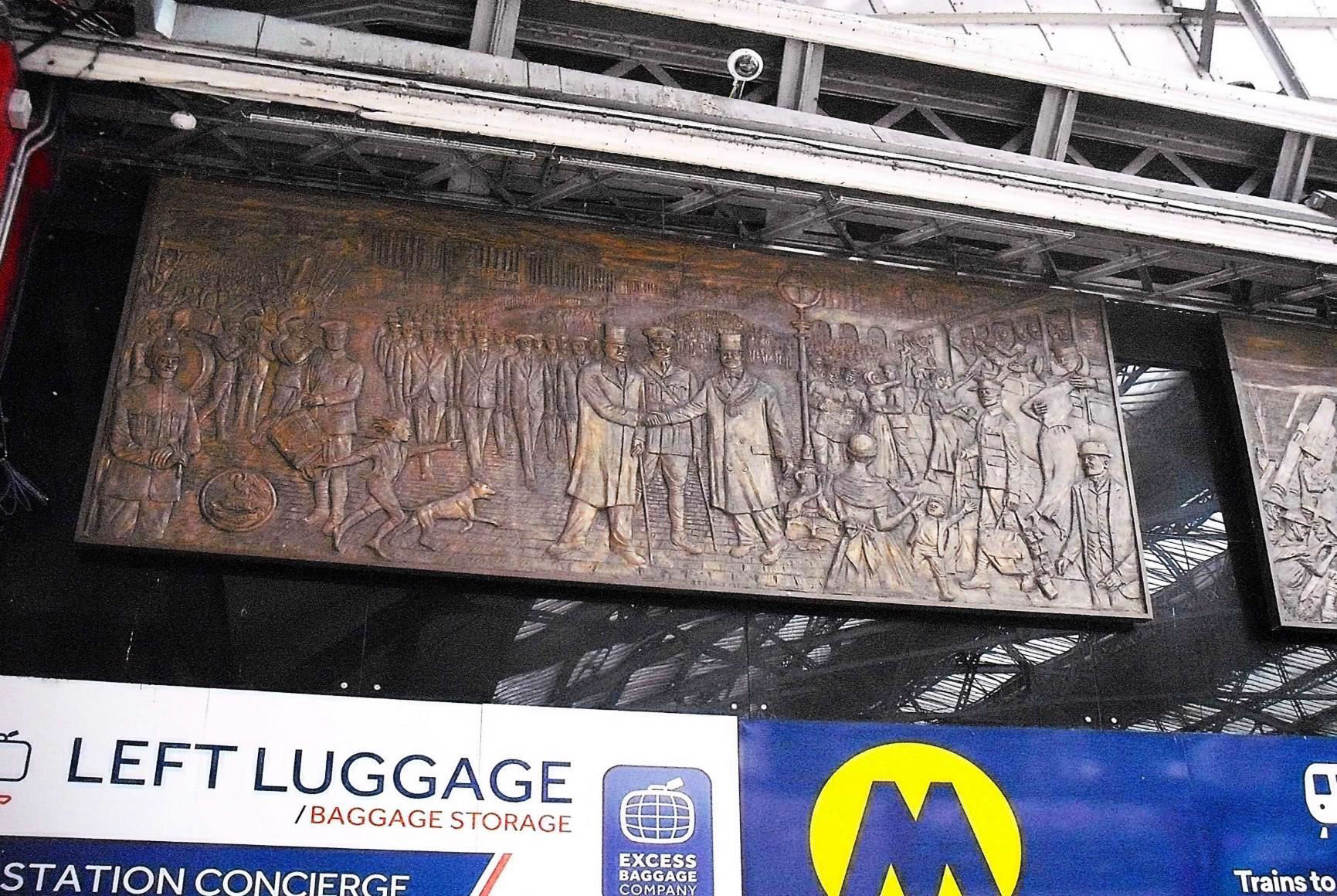
The Liverpool Pals Freize.
[© Phil Wieland 2024]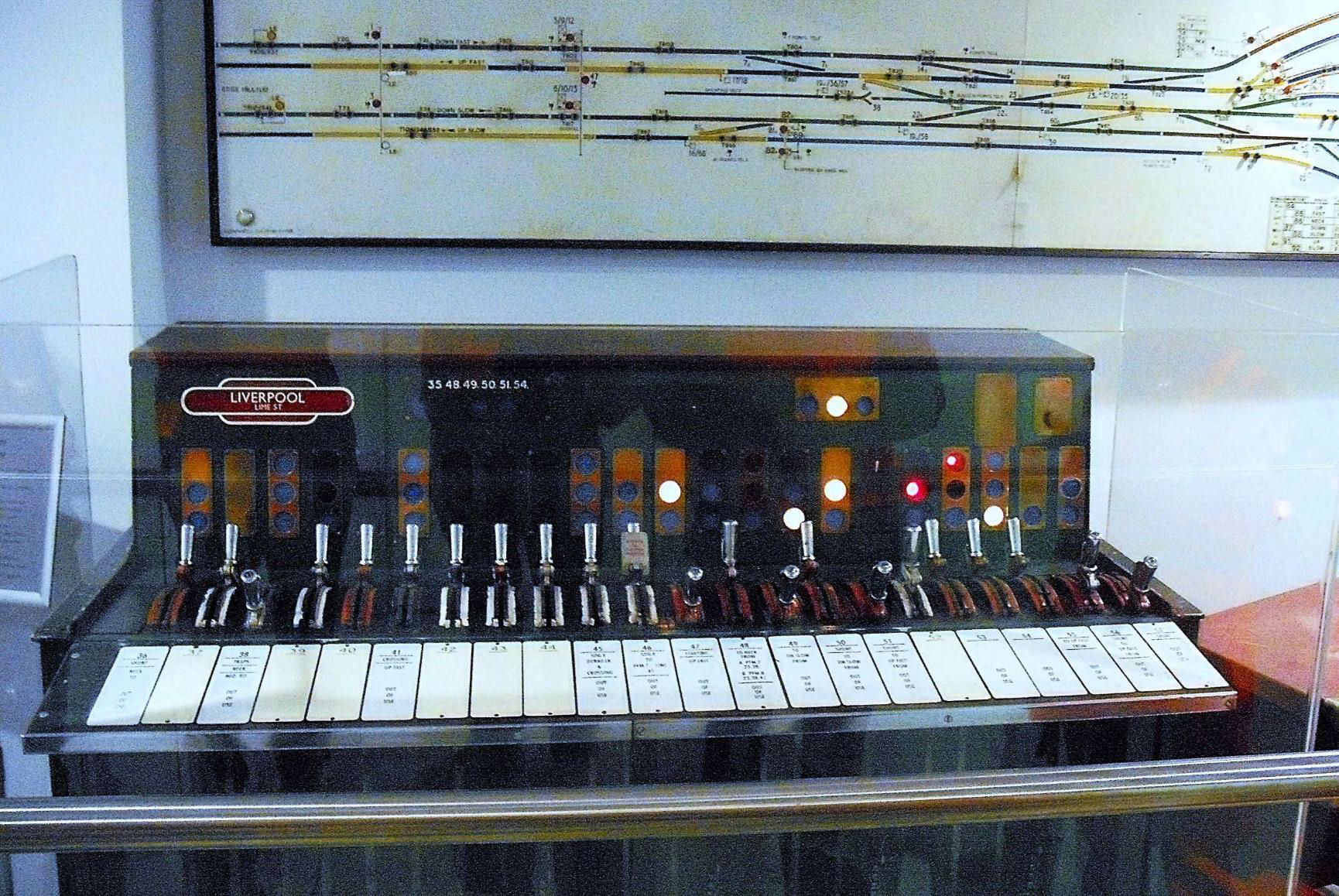
(Through glass) A small section of the former piano-like lever frame from Liverpool Limes Street box in the upstairs Standard Class Waiting Room.
[© Phil Wieland 2024]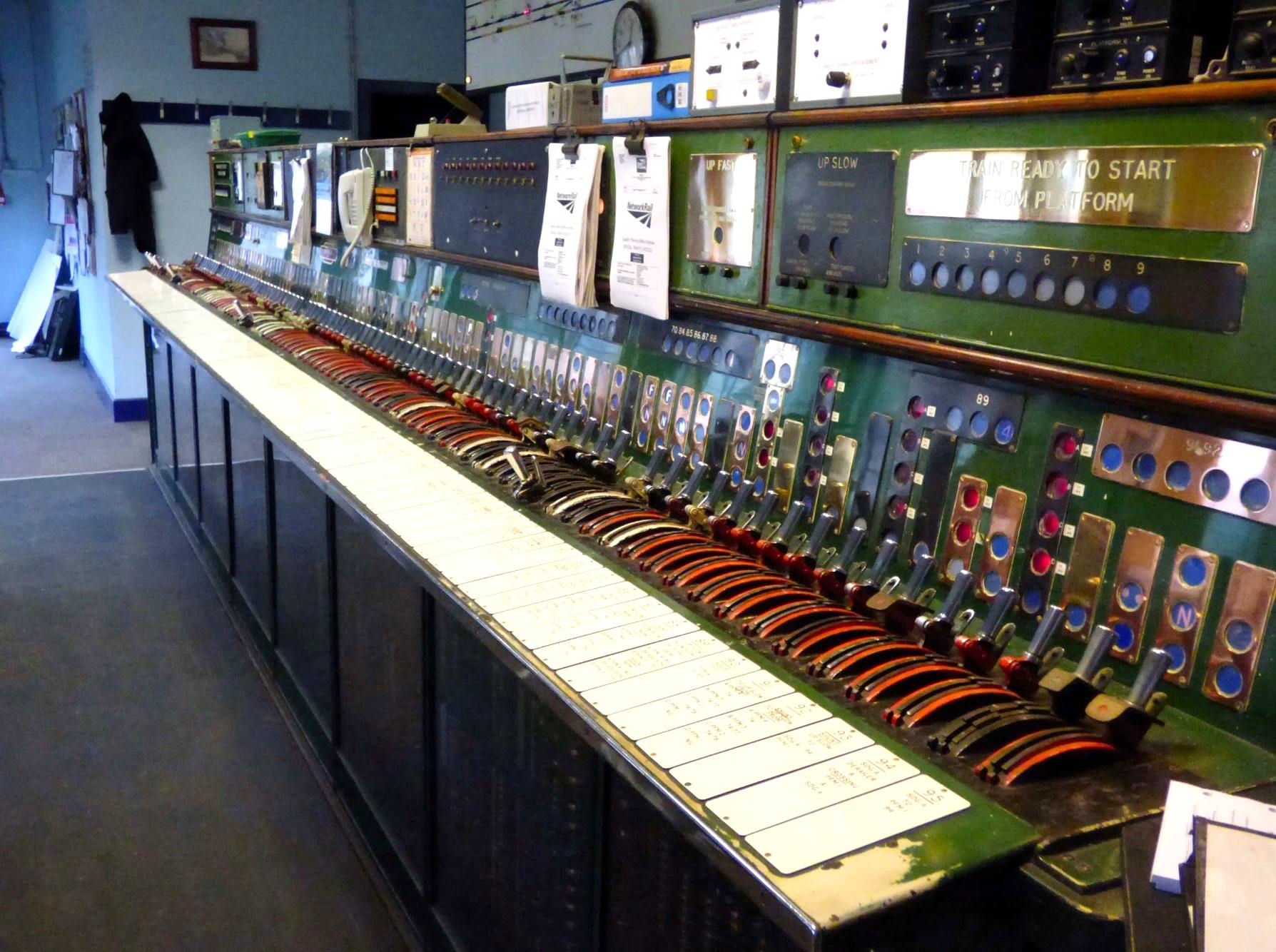
The whole Lime Street lever frame during a 22 Sep 2017 Society visit before decommissioning.
[© Angus McDougall. 2017]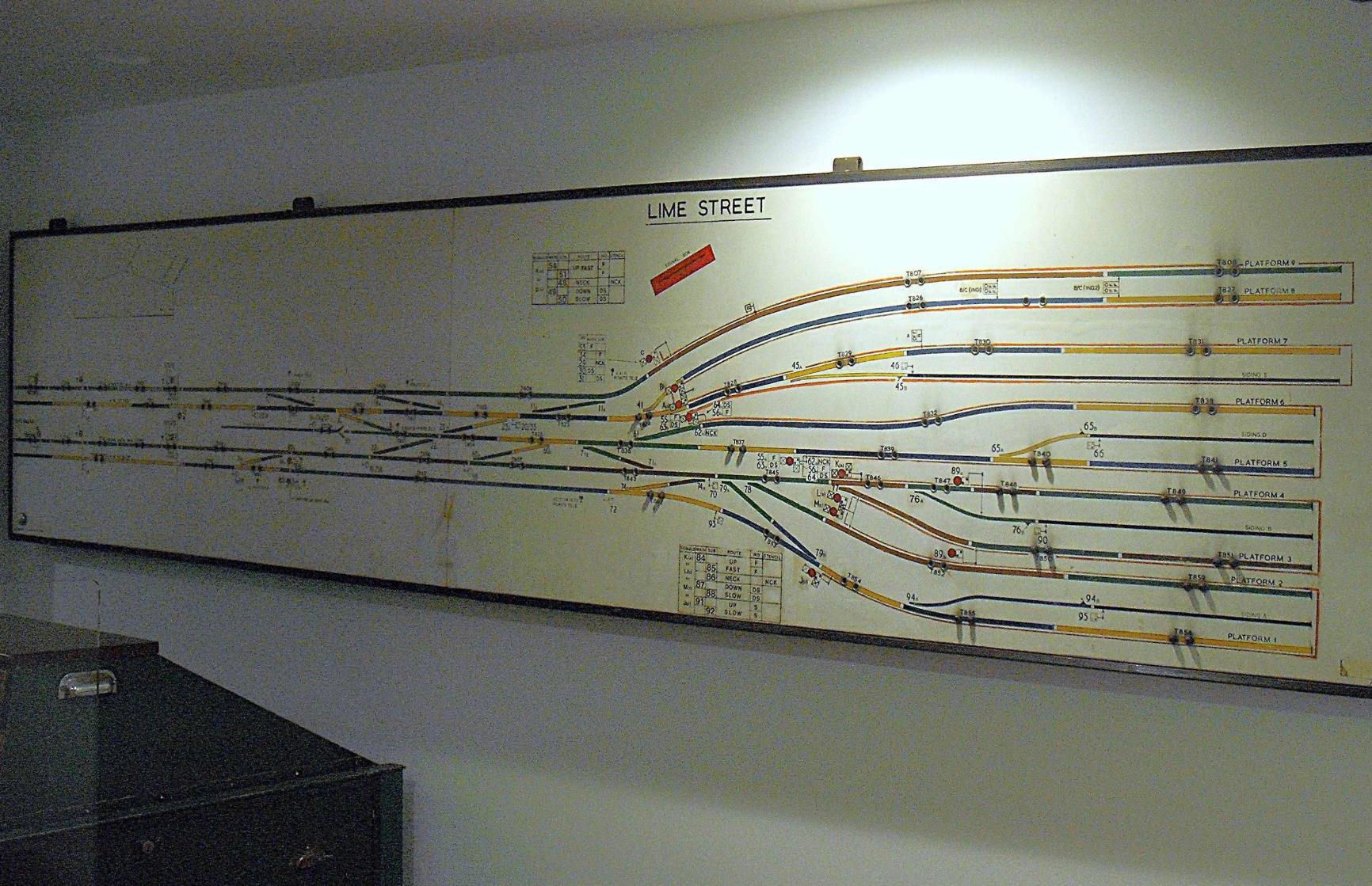
At the upstairs Standard Class waiting area 'mini-Museum' - taken through glass - the former Lime Street signal box diagram on public display.
[© Phil Wieland 2024]Back at ground level, we headed to what is now described as 'Platform Zero' (now trackless, it was P1 before renumbering from 30 Jul 2018), to admire the architecture at the entrance of the former Rail House. In the floor is an original paving stone from the mid-19th Century. An inscription reports that it was covered over in 1955 during platform refurbishment. There are similar stones on other platforms. We saw a memorial plaque for Driver J Ball and Fireman A Higgins, who died on duty, severely burned by a blowback in Primrose Hill Tunnel near Euston. It was displayed in Edge Hill Depot until that closed.
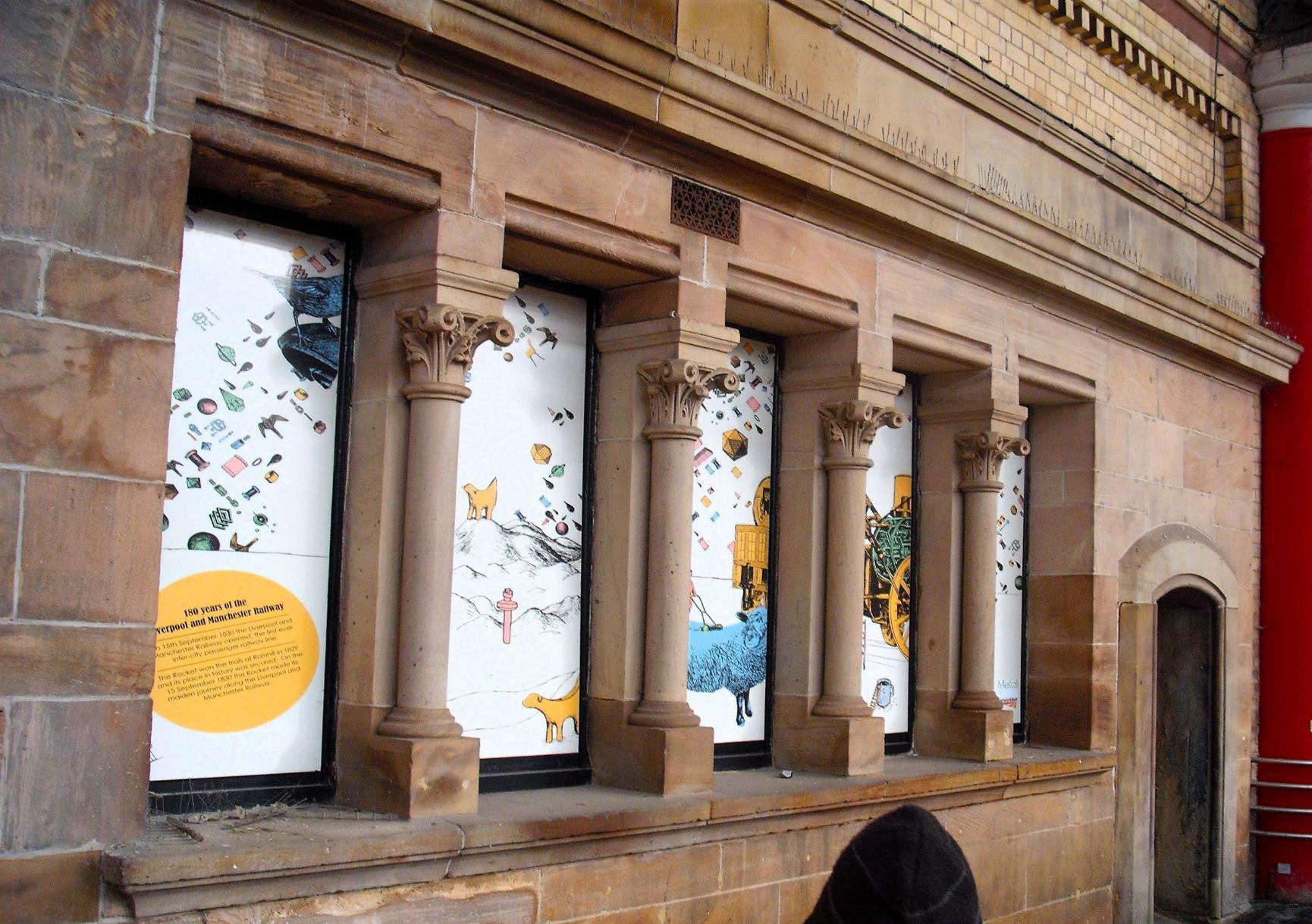
The architecture at the entrance to Rail House (complete with the top of an unexpected bonus black Beanie Hat).
[© Phil Wieland 2024]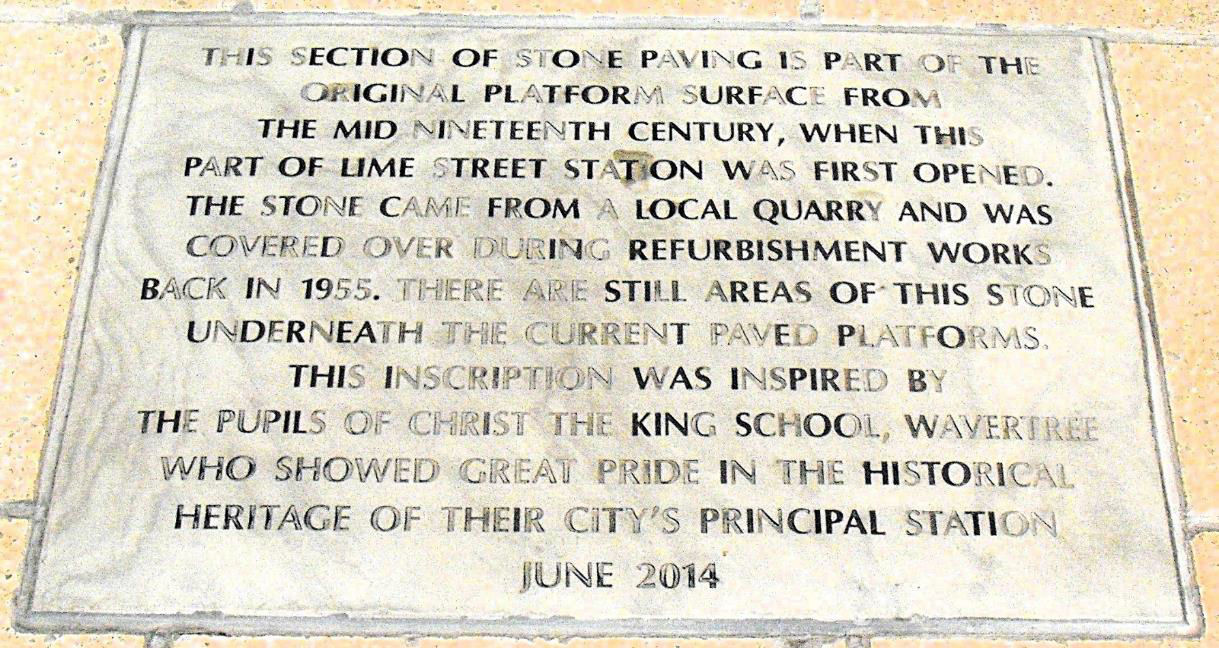
The inscription on an original paving stone from the mid-19th Century that was covered over in 1955 during platform refurbishment.
[© Phil Wieland 2024]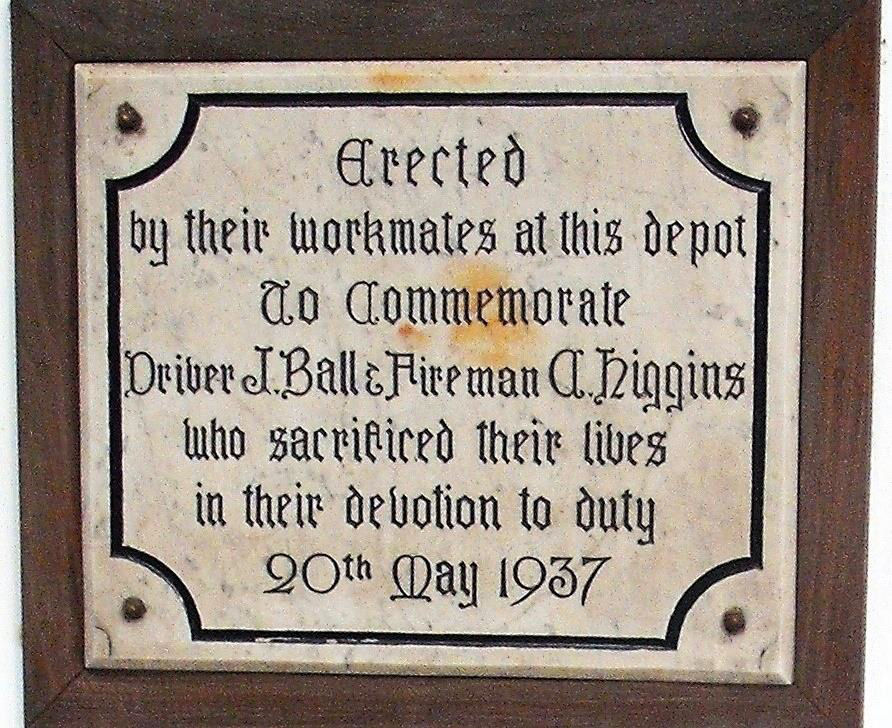
The Ball & Higgins memorial that was at Edge Hill Depot and is now at Lime Street.
[© Phil Wieland 2024]As someone who has used the station at least a couple of times a week since I moved to Liverpool over 27 years ago, I was pleased to see things I haven't really noticed before.
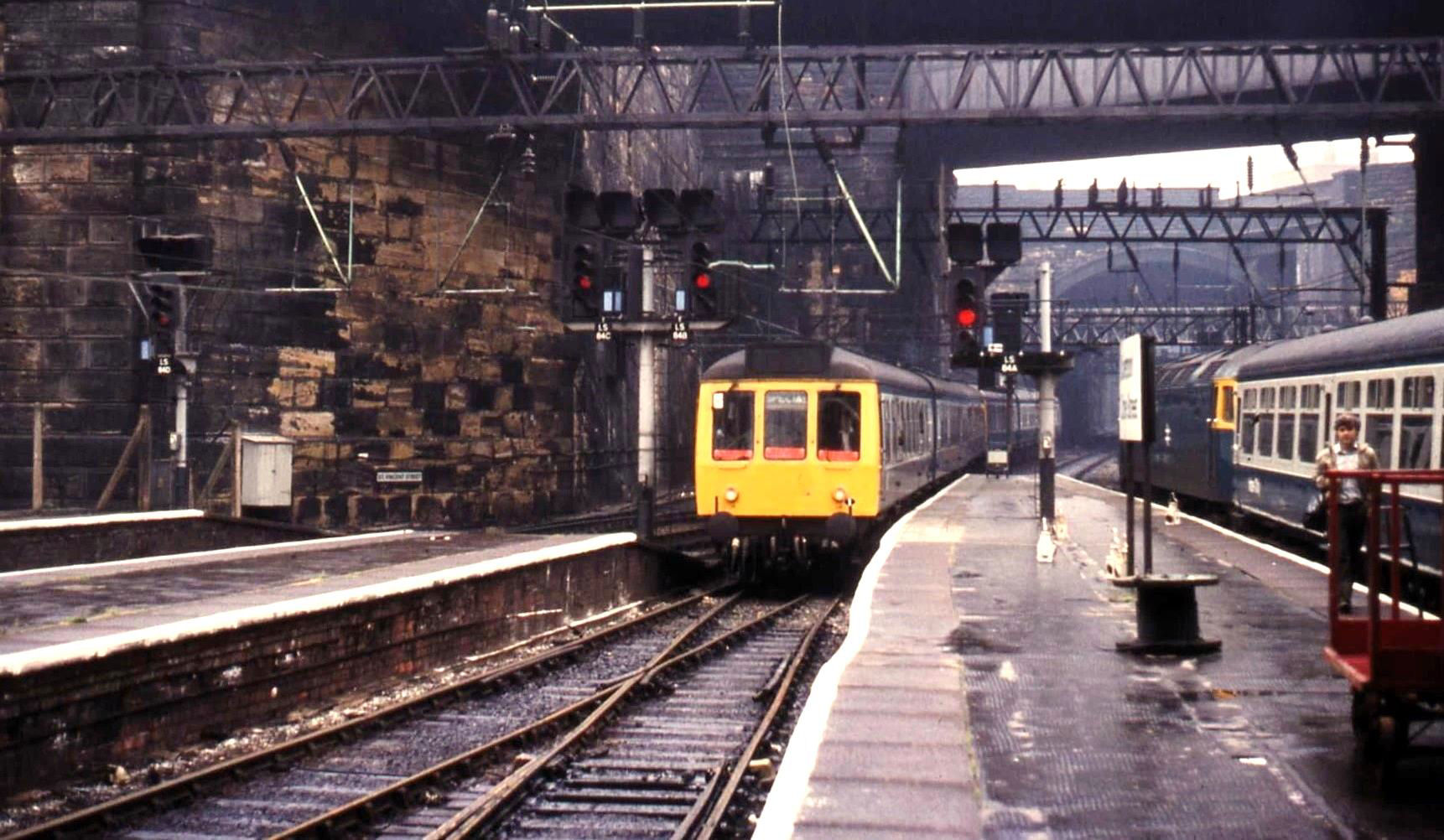
DMU approaching Liverpool Lime Street on 23 Jul 1983.
[© Angus McDougall. 1983]Next, the two groups swapped and we entered a normally locked doorway for a look down below, starting by descending two floors' worth of stairs. We viewed modern power systems and then explored the disused undercroft of the station concourse. There were many intriguing rooms, two storeys high with arched ceilings, presumably to support the weight of the station above. Parts of the space are sealed off and now belong to the hotel above and to Wetherspoon's. We had the chance to peer through into an upper level where we could see original tile work and some urinals in a former 'Gents'.
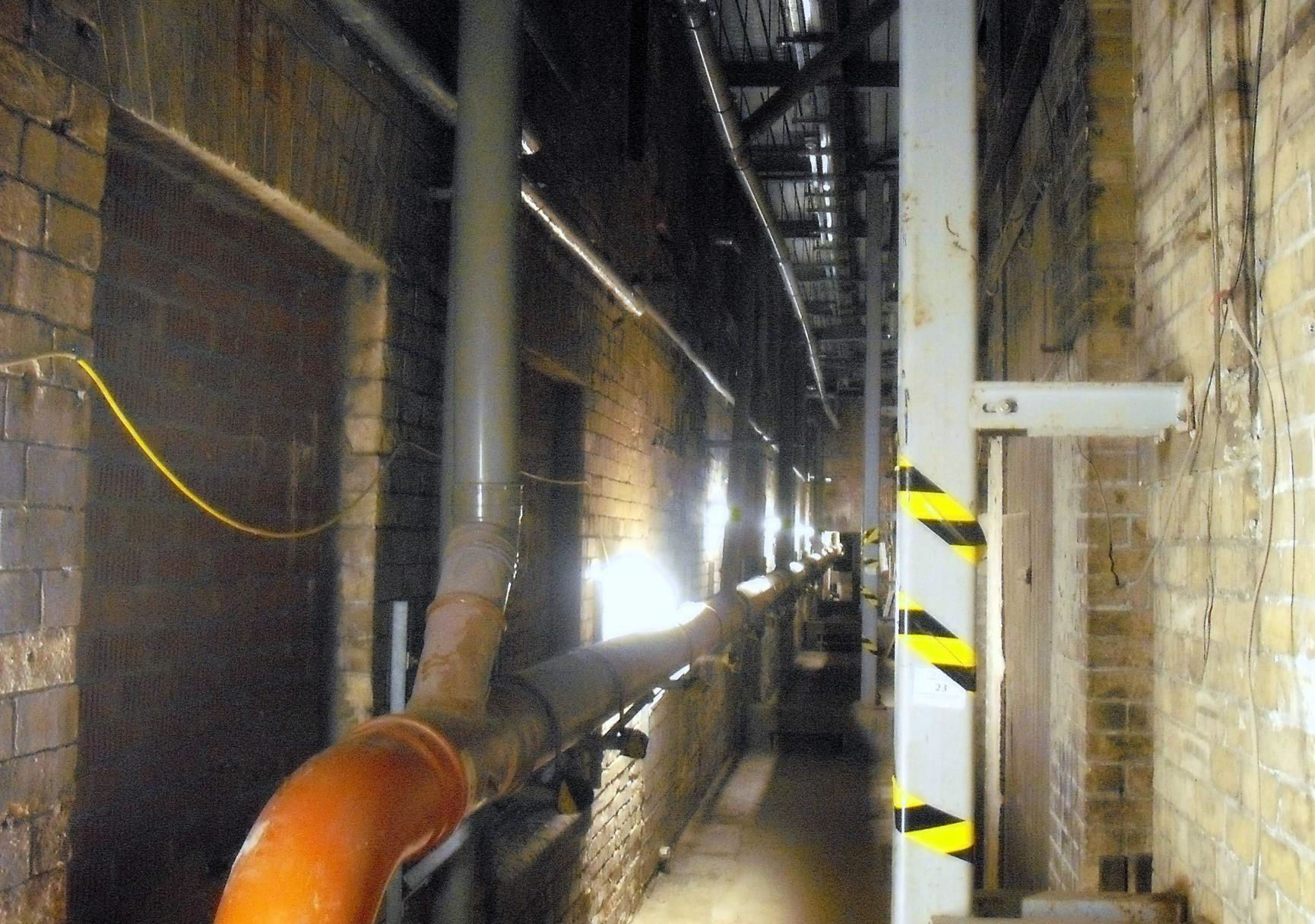
Liverpool Lime Street Undercroft.
[© Phil Wieland 2024]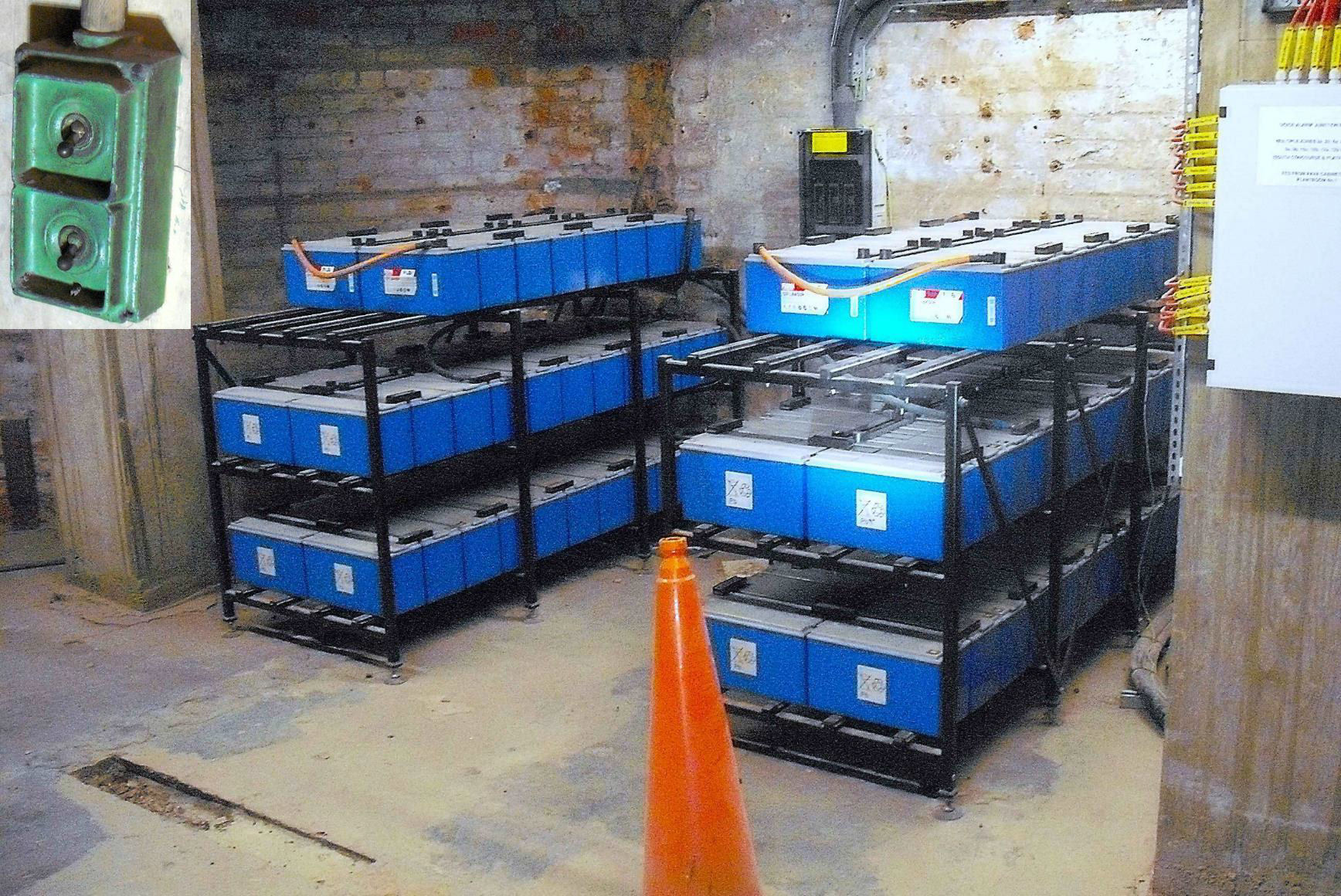
Some standby emergency batteries. INSET Old light switches.
[© Phil Wieland 2024]Our guide was full of interesting tales of earlier times when he could explore the whole space before the hotel and pub were split off. We could see where modern supports have been added to the historic brickwork, presumably to carry developments above. Too soon it was time to return to the public realm, and we met up with the other group, before thanking our guides who had done a great job.
The fixture wasn't over yet, though, and we next paid a brief visit to the Radisson Red Hotel, formerly the North Western Hotel, for a look at the impressive entrance hall and staircase (BLN 1440.185 and e-BLN 1436.2637 photos). Finally, a short walk down Queens Square brought us to the Grade II Listed Midland Railway Goods Warehouse. Built in 1874, this impressive building was never rail connected, acting as a delivery and collection point. Reportedly, it closed in 1954 and is now the Conservation Centre where restoration work is done for Liverpool Museums. Public access is not possible, I'm afraid.
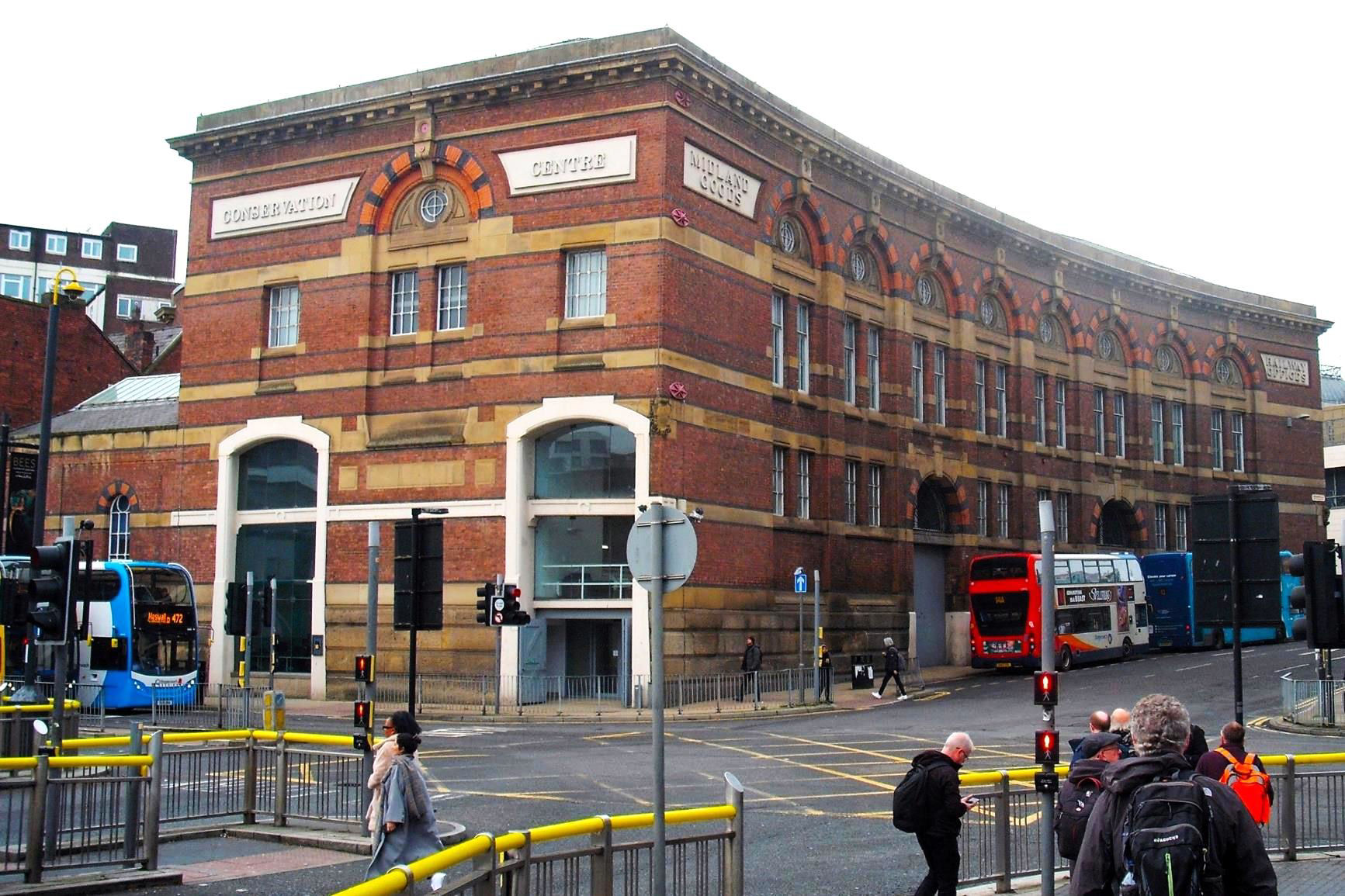
The former Midland Railway Warehouse which, was never directly rail served, and is Grade II Listed.
[© Phil Wieland 2024]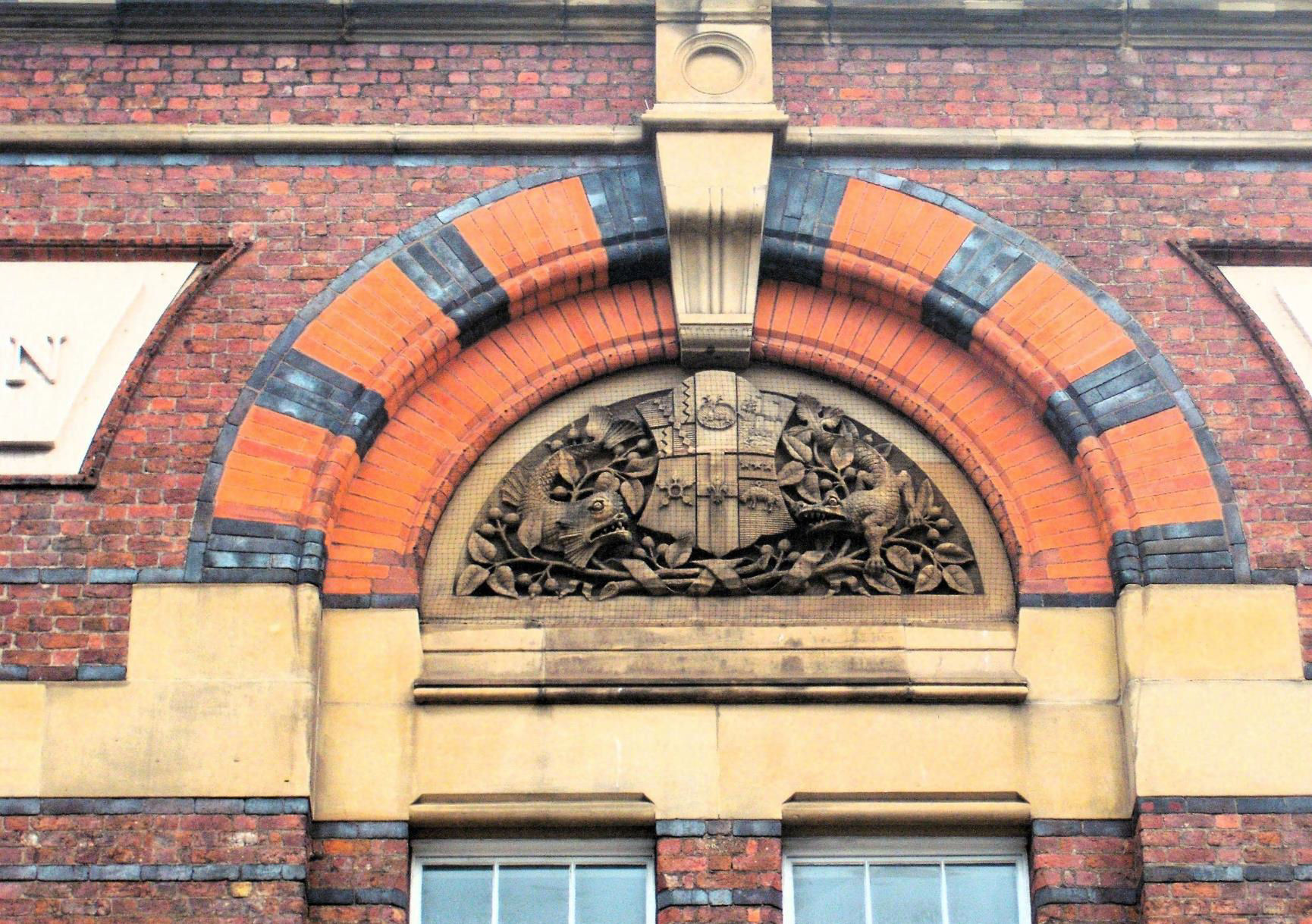
A stone carving on the former Midland Railway Warehouse.
[© Phil Wieland 2024]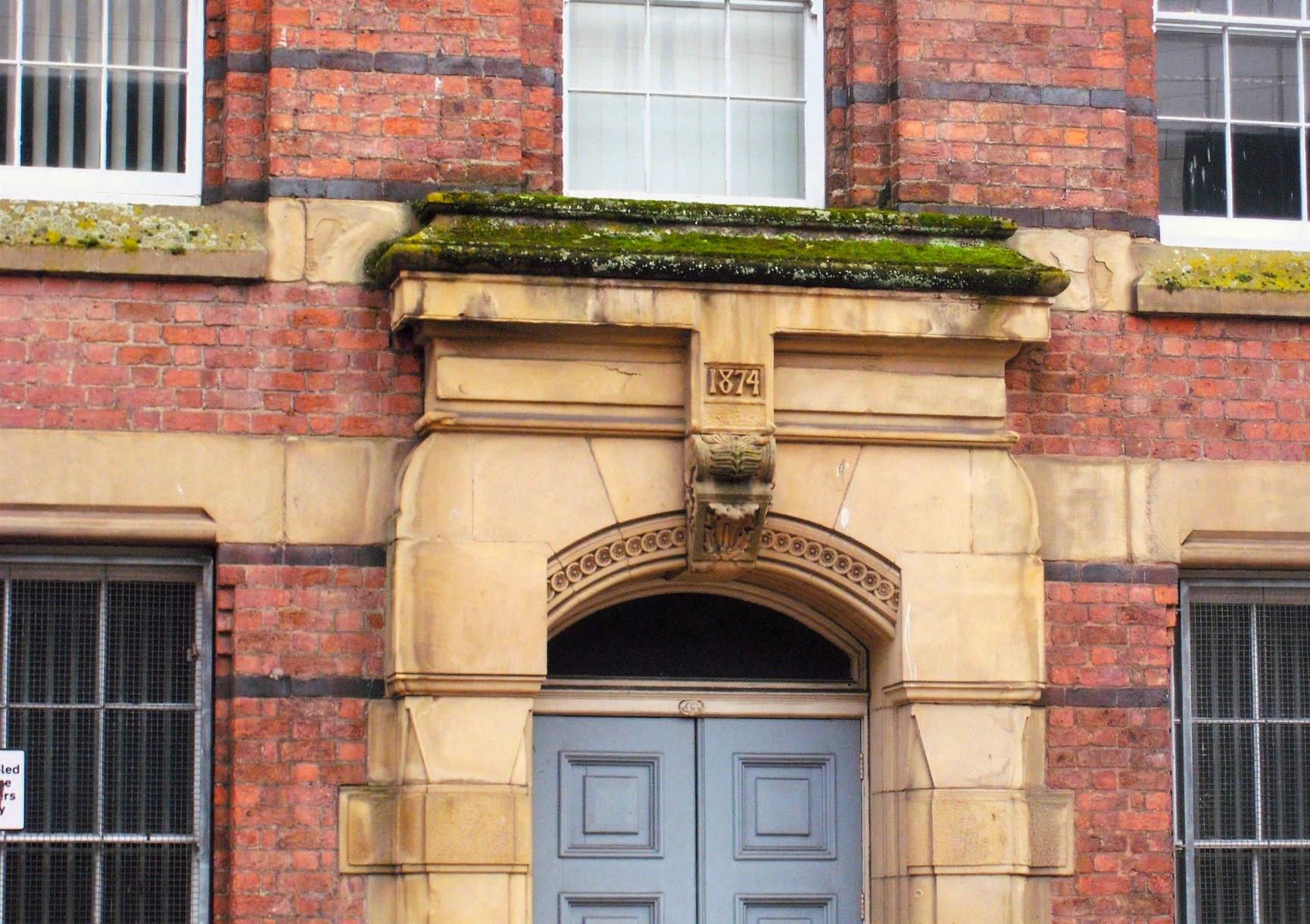
An entrance to the former Midland Railway Warehouse.
[© Phil Wieland 2024]Fixture over, some participants headed to the site of Liverpool Central (High Level) station for a middle of the day exploration there. I had done that on our previous 20 Oct 2023 visit (
view report) so took a lunch break before the third fixture of the day, at Shore Road Pumping Station, Birkenhead.
12 members, as this morning a full party, gathered outside this anonymous Grade II listed building, constructed in the 1880s to house pumps for the River Mersey Railway Tunnel. Before entering the building, we quickly walked down the hill and through the former gate to Birkenhead Docks (dated 1868) in Shore Road to see the restored red brick Cheshire Lines Committee Goods Station (1889) and the dock worker's subway entrance to Hamilton Square station which is now only an emergency exit.
Returning to Shore Road Pumping Station, it originally contained two large 'grasshopper' steam pumping engines which were phased out in favour of electric pumps in the 1950s. Up to 9,000 gallons of water per minute is pumped out of the railway tunnel, which also has the claim to fame of a 1 in 27 gradient at one place. Fortunately, one of the engines was saved for preservation in a 1990s plan to operate the place as a museum. A new access staircase was added to the building but before long the museum closed and opportunities to visit are now rare. There are plans to eventually reopen it as a museum.
Inside, we climbed the new staircase and we were then able to wander around, examining the engine from all sides. The grasshopper configuration is rather unusual, I don't think I've ever seen one before. The beam's fulcrum is at one end, with high-pressure and low-pressure pistons and the pump rod at the other end. Someone more knowledgeable than me might be able to explain the advantages of this.
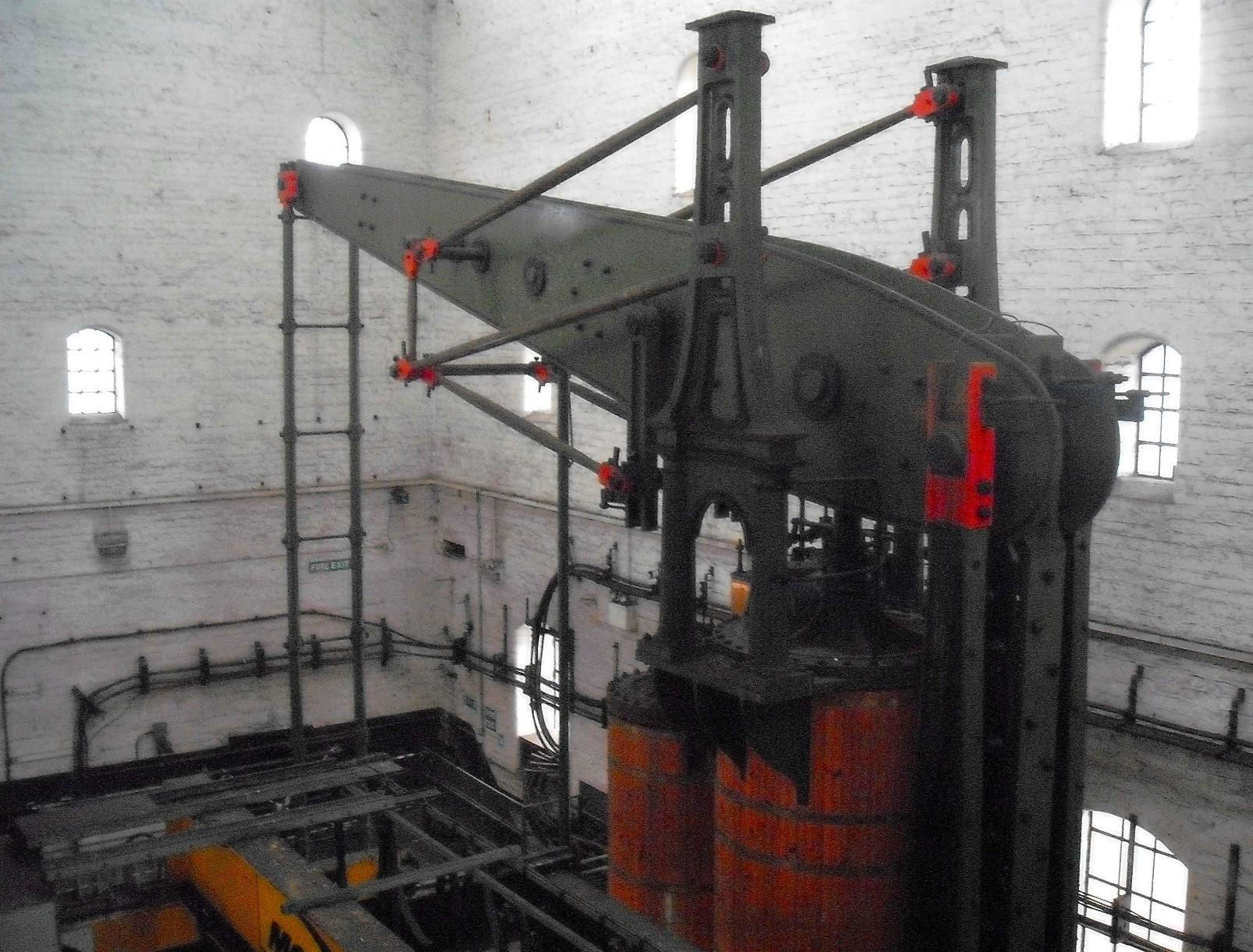
The saved grasshopper' steam pumping engine at Shore Road pumping station.
[© Phil Wieland 2024]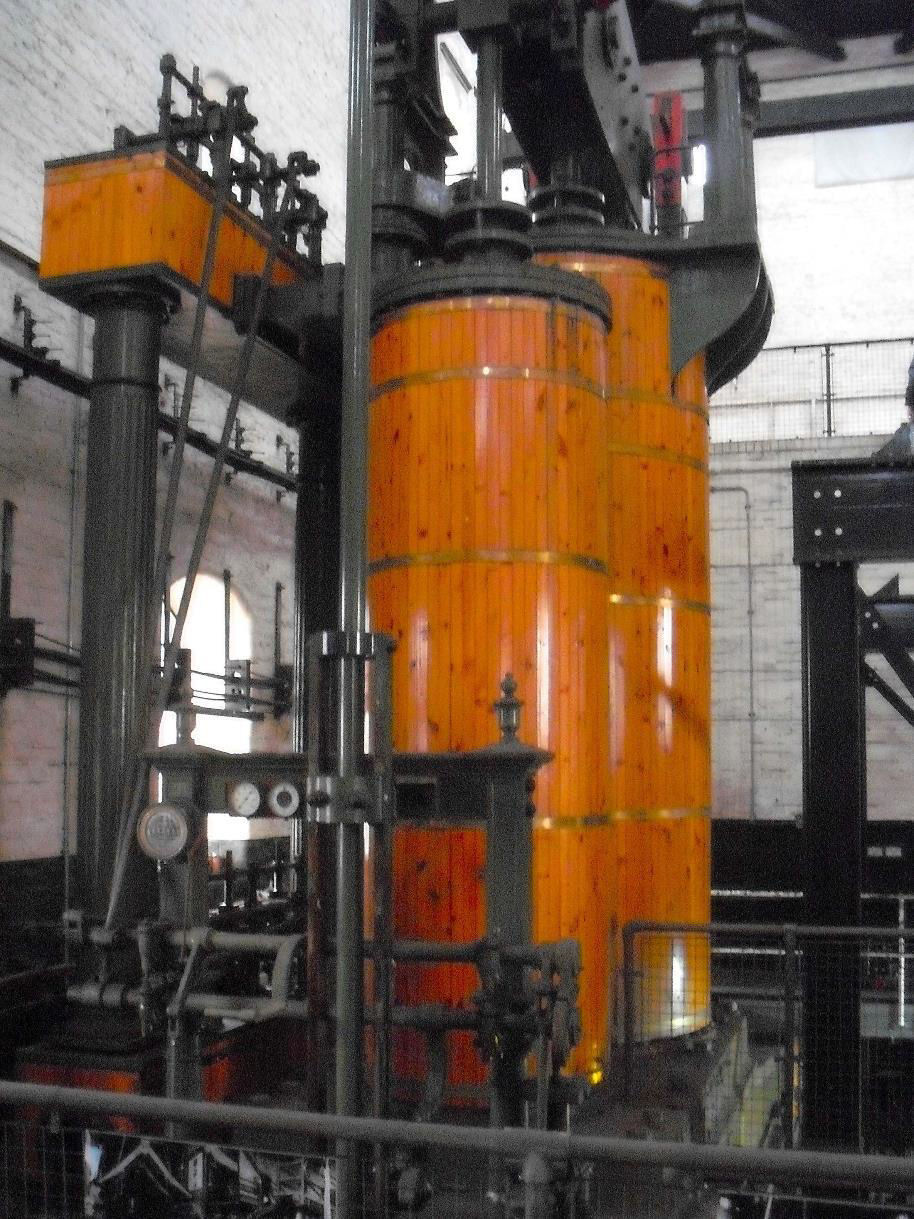
The 'grasshopper' steam pumping engine high-pressure and low-pressure pistons and the pump rod.
[© Phil Wieland 2024]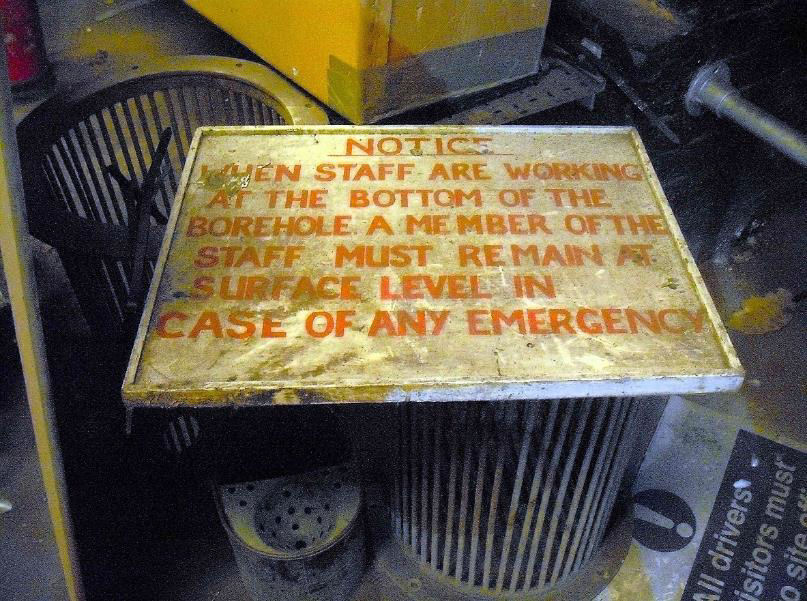
A safety notice.
[© Phil Wieland 2024]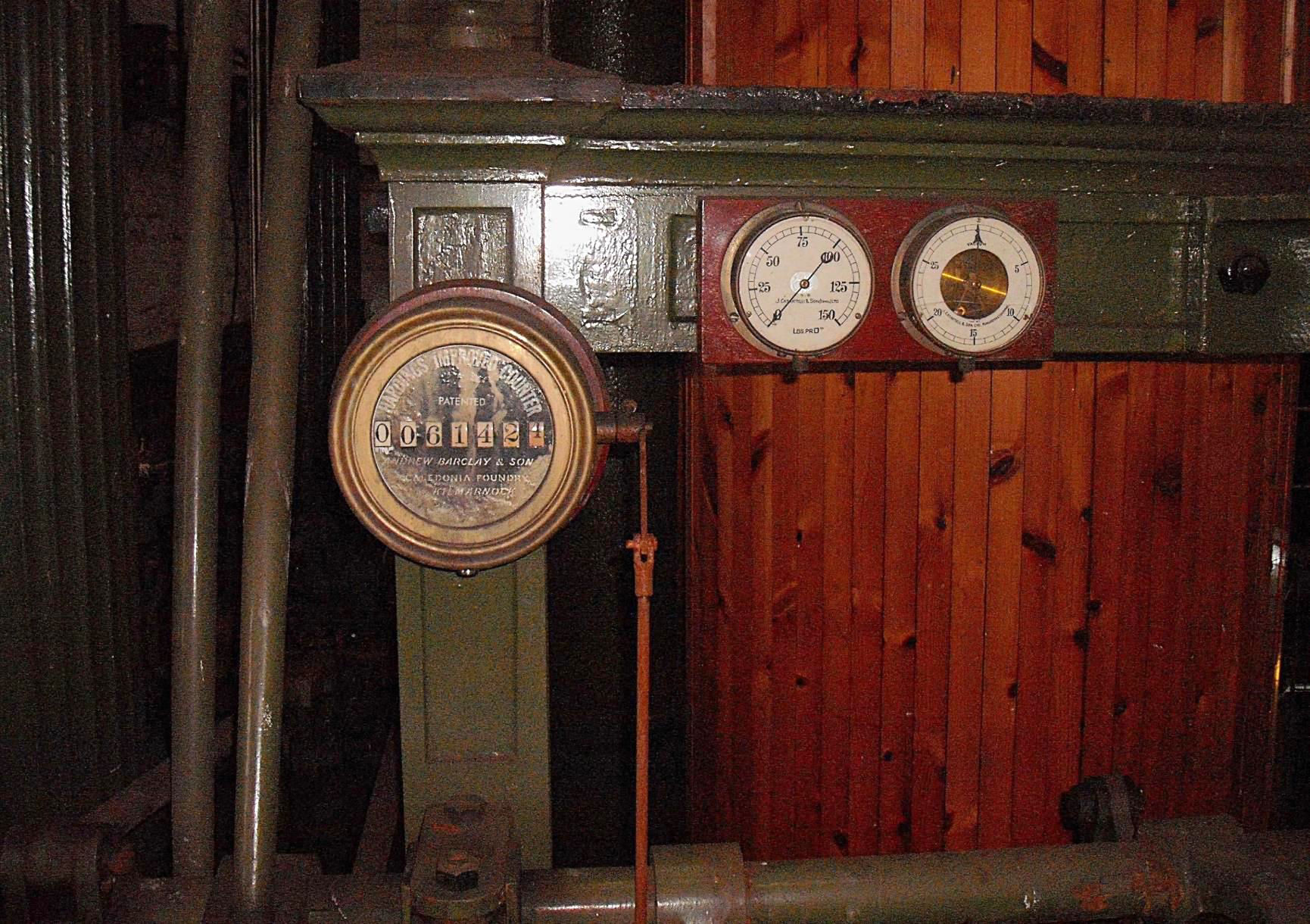
The gauges on the 'grasshopper' steam pumping engine.
[© Phil Wieland 2024]When we had thoroughly explored the engine, we returned outside the building and moved round the other side to a ground level entrance. Once inside, we could see the upper parts of the three modern pumps and, outside, the outlets where the water leaves on its way back to the River Mersey. The building also houses a traction substation for Merseyrail but we were not allowed in there, of course.
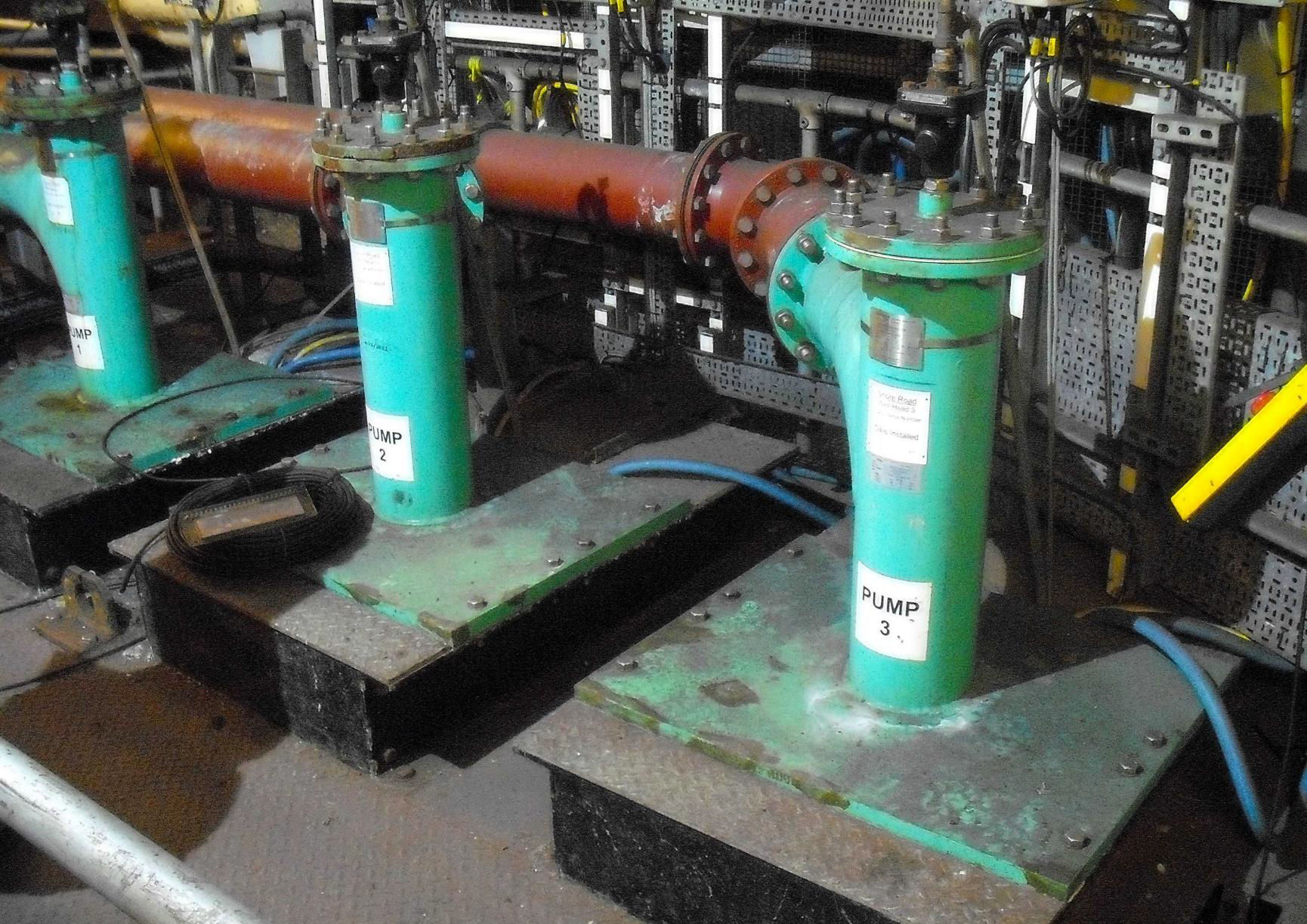
The modern working pump heads.
[© Phil Wieland 2024]So, in summary, two fascinating visits giving wonderful opportunities to see places and things normally hidden. My thanks to Adam, our organiser, and our three Network Rail guides, Rachel, Robbie and Allan. The whole day raised £750.85 for 'Centre 56', a Liverpool domestic abuse support children's nursery.