This was beyond our expectations. Two identical tours were available this day and we opted for the 11.30, meeting on the station concourse of Manchester Victoria near the ticket offices.
After the usual introductions, the group received a short safety briefing from our NR (Network Rail) guides about what to expect upstairs. A NR heritage consultant also joined the tour to answer questions. We donned our high-vis, boots and hard hats (ours have head torches that came in very useful later on).
The building, which is Grade II listed, was constructed in 1909 by the Lancashire & Yorkshire Railway as offices but has been derelict in recent years. NR has started a multi-million pound refurbishment to provide accommodation for staff who will be displaced from 'Square One' near Manchester Piccadilly (to save on rental). At the time of our visit, most of the modern changes had been stripped out to reveal the historic features which were to be conserved as required by the listed status, the ideal time to visit. The underground areas are not included in the refurbishment and will be left untouched for now.
The group walked towards the Shudehill end of the station, turned off right through an exit arch and queued up to gain access through a wooden door in the wall. We proceeded up the stairs to the first floor and convened in the first room off the stairs on the right. This room overlooks Todd Street and Corporation Street outside, in the direction of Shudehill Metrolink stop. Once all had gathered inside, participants received another short safety briefing about what to expect on the floors ahead, what to be careful of and to watch out for. Apart from that, we were free to explore and ask questions at our leisure. The staircase we used to reach each floor featured some fantastic period tiles on its walls.
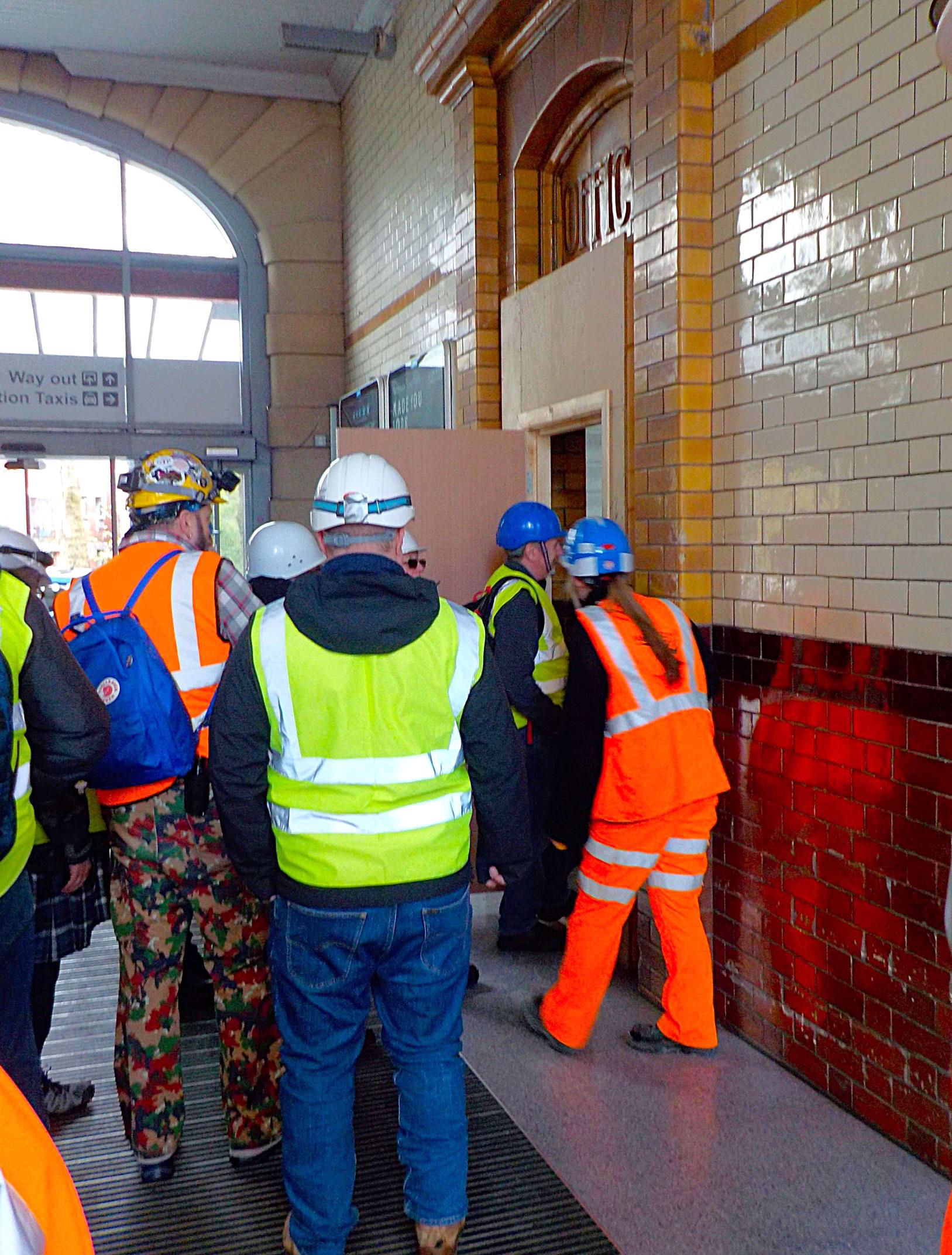
Participants queue up to gain entrance to the 'OFFICES' - see sign high above the entrance door, leading to the three floors and roof above the ticket office.
[© Liz Moralee & Tim Hall-Smith 2024]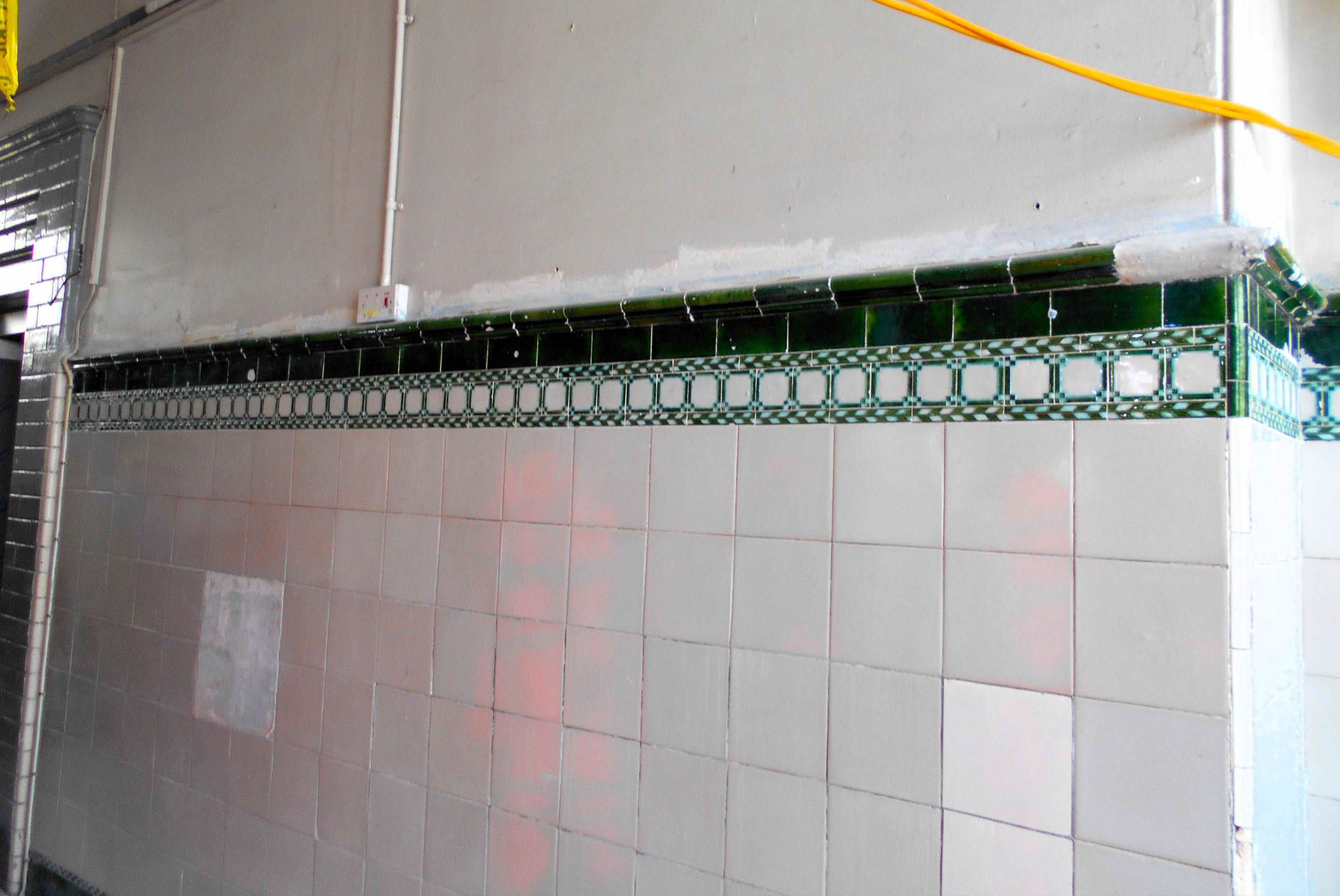
Original tiles by the stairs (as on each floor level), mostly painted over, they are to be restored.
[© Liz Moralee & Tim Hall-Smith 2024] At the curved Shudehill end of the building, there wasn't much to see - just a giant open space since the modern office partitions had been removed but, as we walked along the corridor heading towards P3-6, we came across various small rooms. Off to the left of the corridor, toilets still had urinals and wash basins in place, albeit some were a bit smashed in parts and toilet cubicles had doors eerily still ajar with mirrors on the wall. Next, we went into a big room that, much to our surprise, featured at one end against the wall, two historic safes. Both stood on a wooden frame that ran the length of the back wall. One safe had double doors with an ornate design. A NR guide told us that they intend to retain the safes within the building and will hopefully incorporate them into the refurbishment to make them a feature. We remarked to the guide that we didn't blame him as it would be a nightmare trying to remove the safes, with the weight and the problems moving them down the stairs! As we proceeded down the corridor, we were both 'amazed' by the maze of rooms off as we headed closer to the P3 area. Many of the rooms had strange electrical boxes that could have been for telecoms with the doors missing and the interiors on show with cut wires hanging everywhere; great photogenic opportunities.
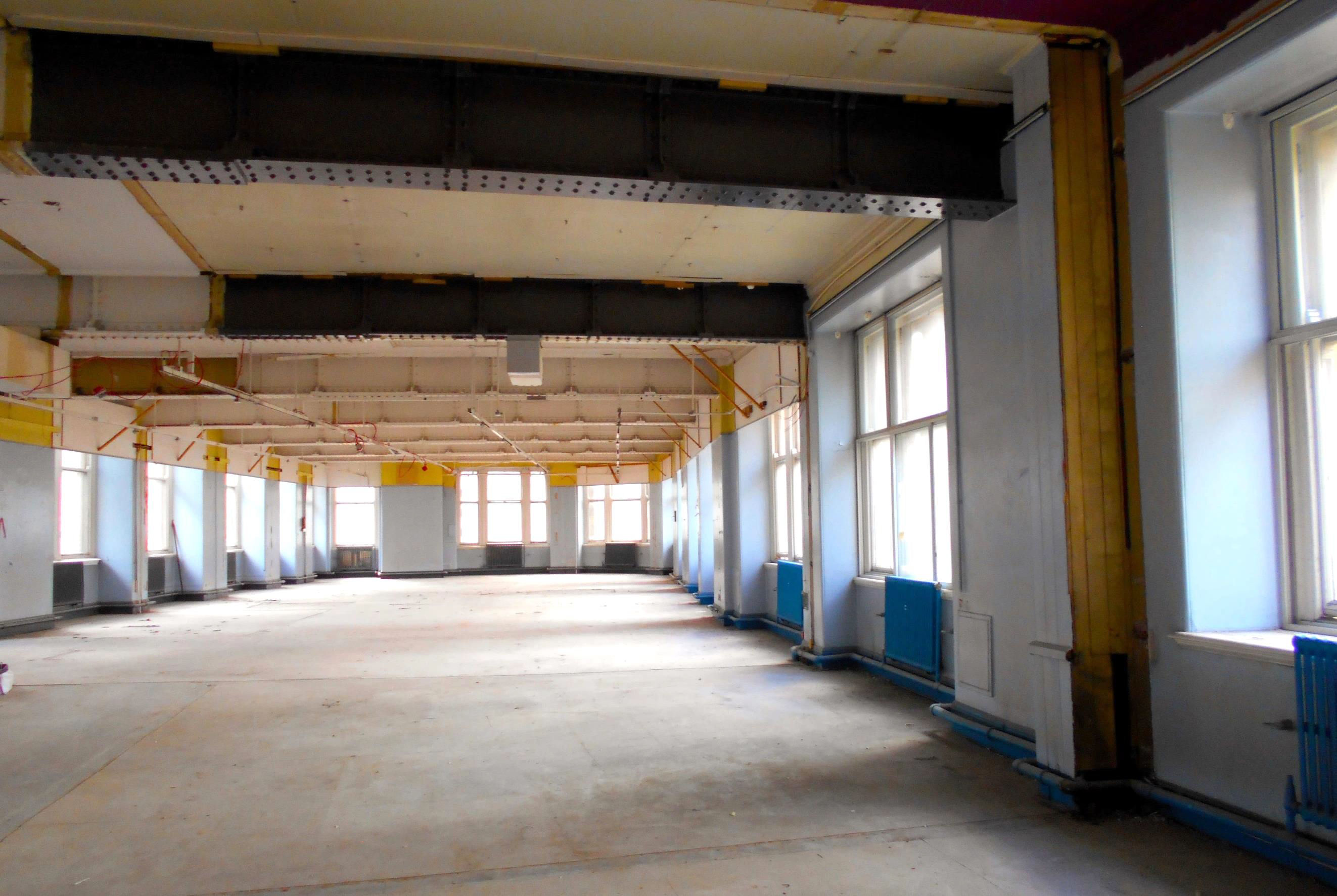
First floor, the large room at the Shudehill tram stop end, note the building curves slightly as does the end wall, (there were several large rooms).
[© Liz Moralee & Tim Hall-Smith 2024]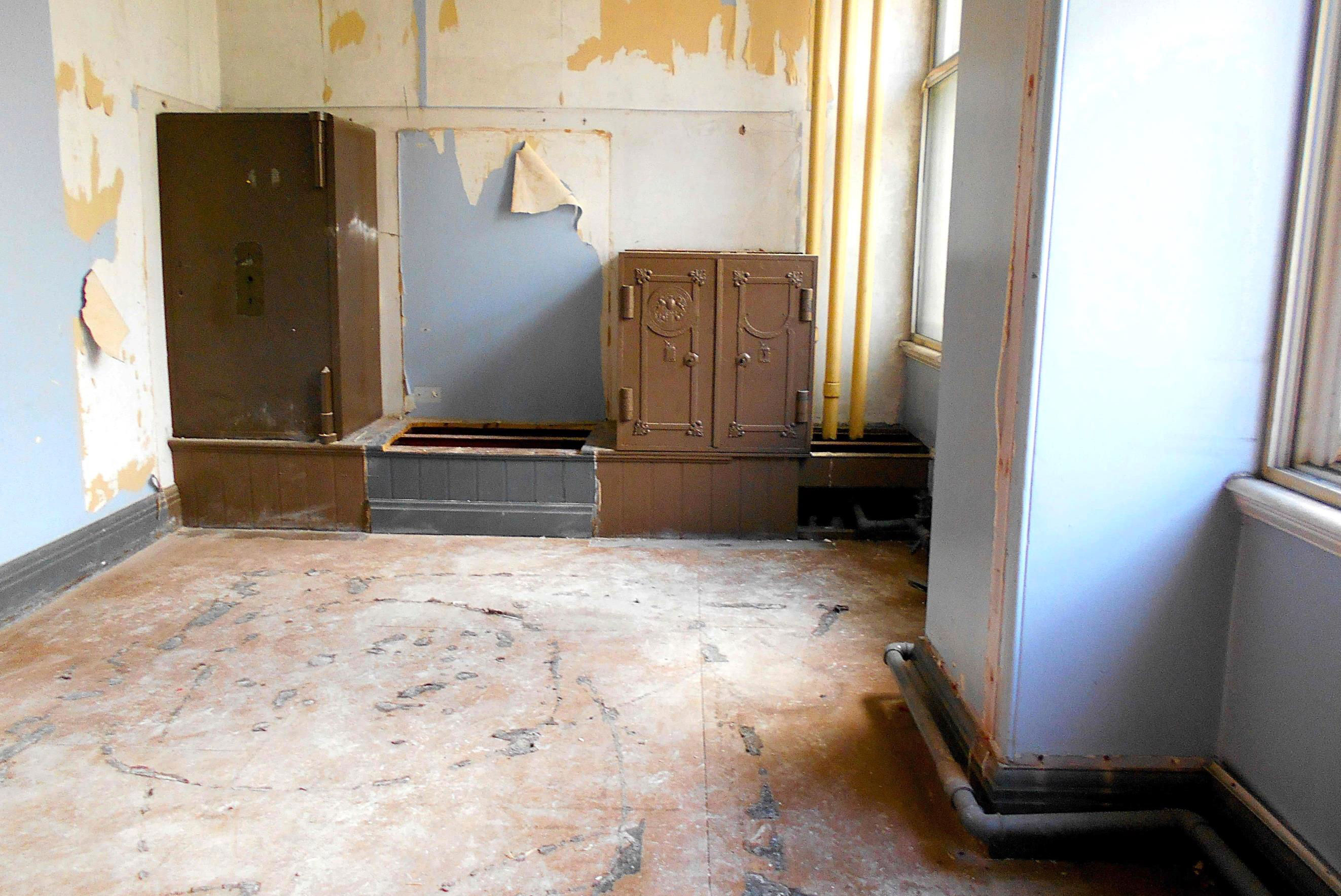
The pair of safes on the first floor.
[© Liz Moralee & Tim Hall-Smith 2024]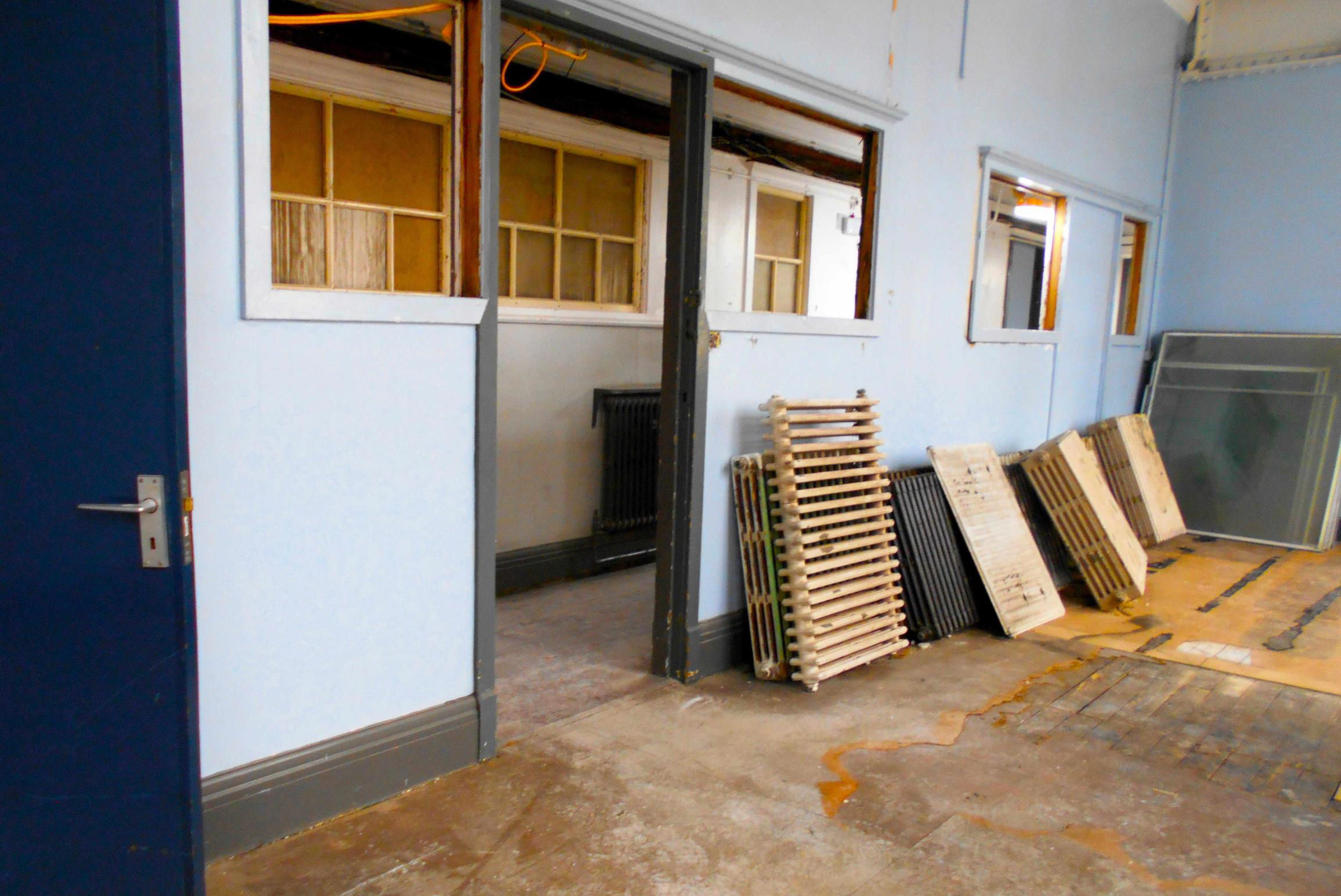
A side room off the main corridor on the first floor.
[© Liz Moralee & Tim Hall-Smith 2024]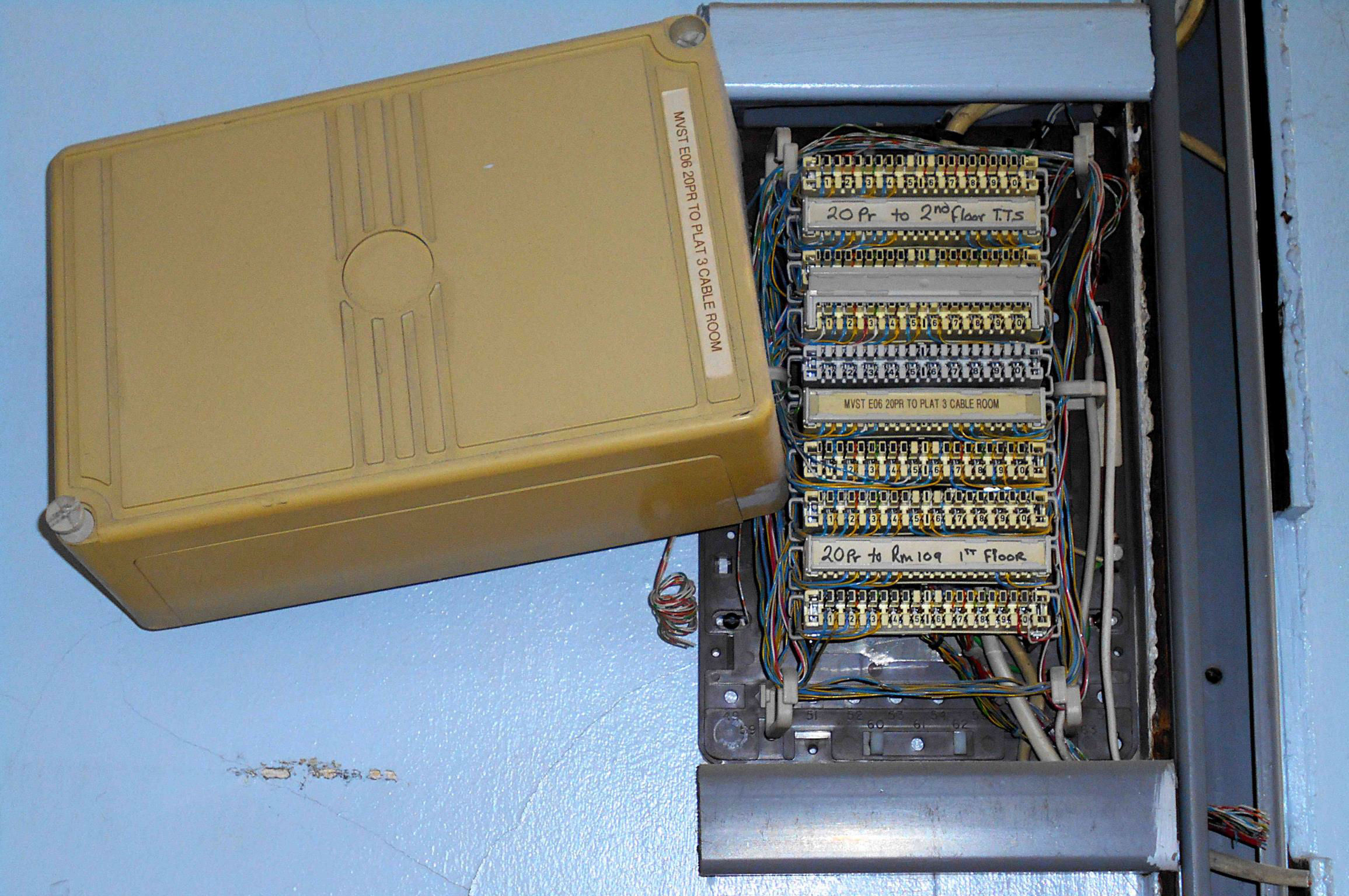
A telecoms box with the wires cut.
[© Liz Moralee & Tim Hall-Smith 2024] Again, the first main room we entered was off to the right of the stairs at the Shudehill end. As on the floor below, it was just one massive open room except for, on the station concourse side of the building, a fire exit door part way up the wall although the steps up to it had been removed. The emergency staircase was still in place outside. We learnt that the building had been known as 'The Battleship' by those who worked here, on account of the massive exposed riveted steel joists.
Like the first floor, there was a long corridor with many different rooms off to the left along including toilets in various states of decay, some with basins and cubicles still in place but, again, some were smashed. A few even had extractor fans in the wall with the fan spinning away merrily in the breeze. We found more photogenic electrical conduits and boxes with cut wires on the walls in different rooms. There were some great views of the concourse and ticket gate area from this corridor. Halfway along it, we came across a fantastic old cage lift housing within the central staircase, which is to be retained. NR's heritage consultant explained that the tiles surrounding the staircase here had all been painted over and are expected to be restored to their original condition.
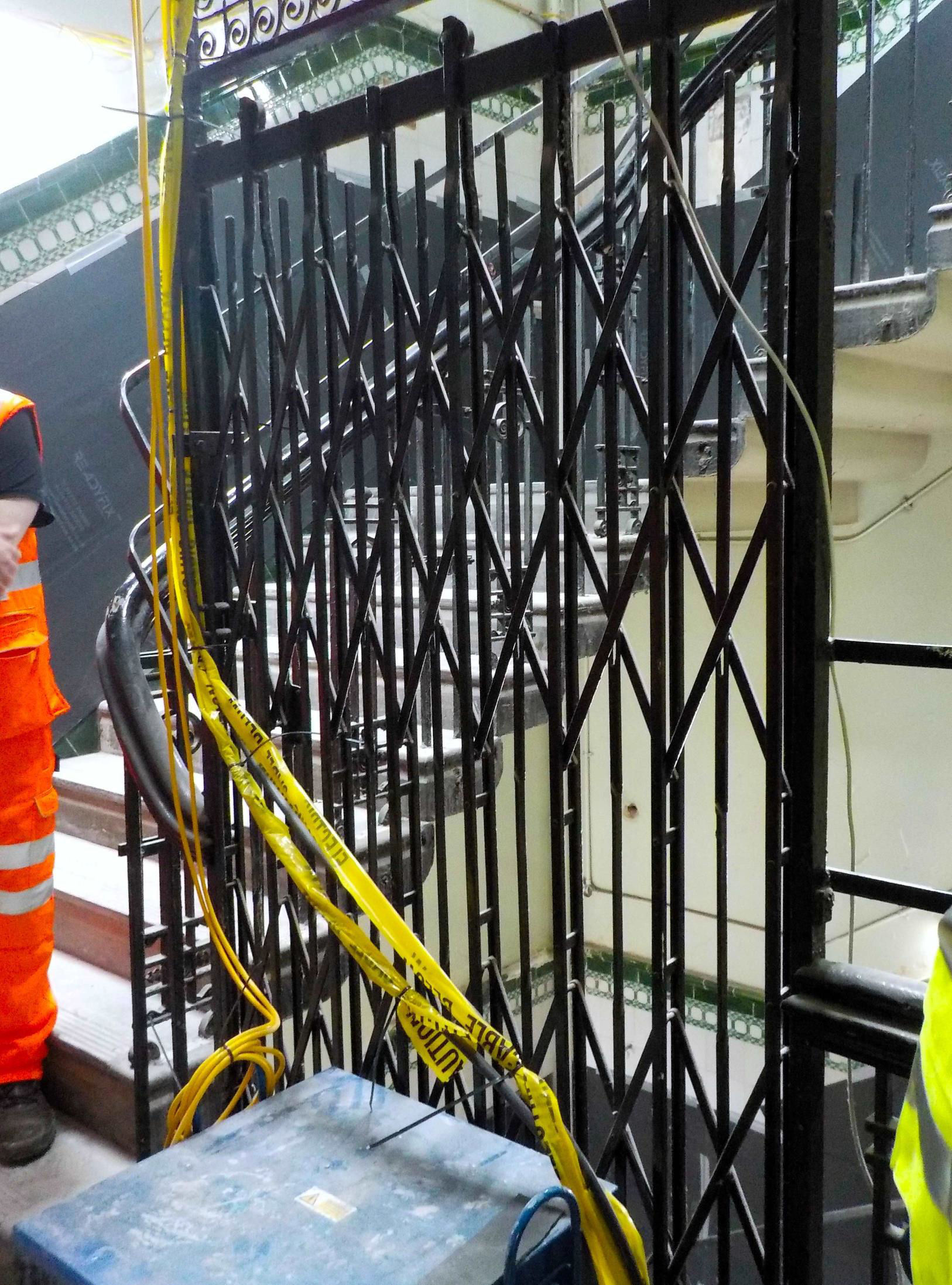
The lift housing on the second floor, note the original tiles in the background, some now protected.
[© Liz Moralee & Tim Hall-Smith 2024]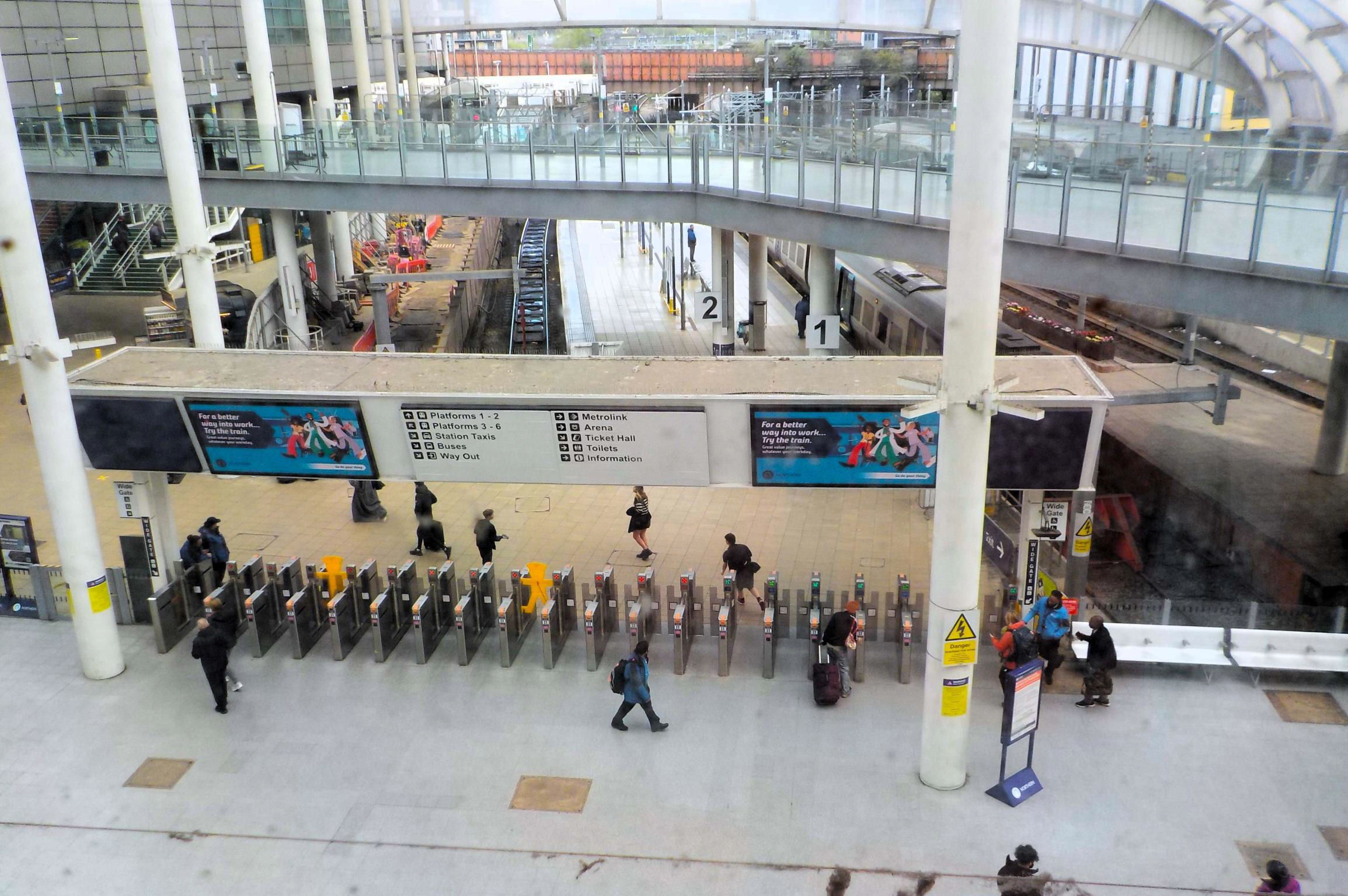
Manchester Victoria gateline and two remaining bay platforms (once there were 11) from the second floor, looking northeast towards Miles Platting.
[© Liz Moralee & Tim Hall-Smith 2024] At the top of the stairs, on the wall were old NR signs pointing to various department office suites with names like Facilities Management, Safety Training Suite, Continuous Improvement Team etc. Like the previous floors, the first room off to the right of the stairs didn't contain very much, apart from a few skylights from the roof. Due to their condition, they had been deconstructed and lay on the floor to be restored and reinstalled. A guide said they were like a giant Meccano kit of bits. There were several more rooms off to the left as we went down the corridor heading towards P3, some still had job titles on the doors. One such was the Corporate Office. Some of the rooms at the far end still had historic wallpaper hidden until the suspended ceilings had been removed recently, Liz was told that this part of the building was once used as staff accommodation. Unlike the other floors, on this level some of the rooms still had safety posters hanging on the walls. The Lancashire & Yorkshire Railway Signalling School model railway was in one of the larger rooms for over 80 years, being used by generations of signalling trainees until its removal to the NRM in 1995. Groups of enthusiasts were allowed visits at times.
https://www.youtube.com/watch?v=iv4HxQNC_NA is a video (1¾ mins) of the model railway operating.
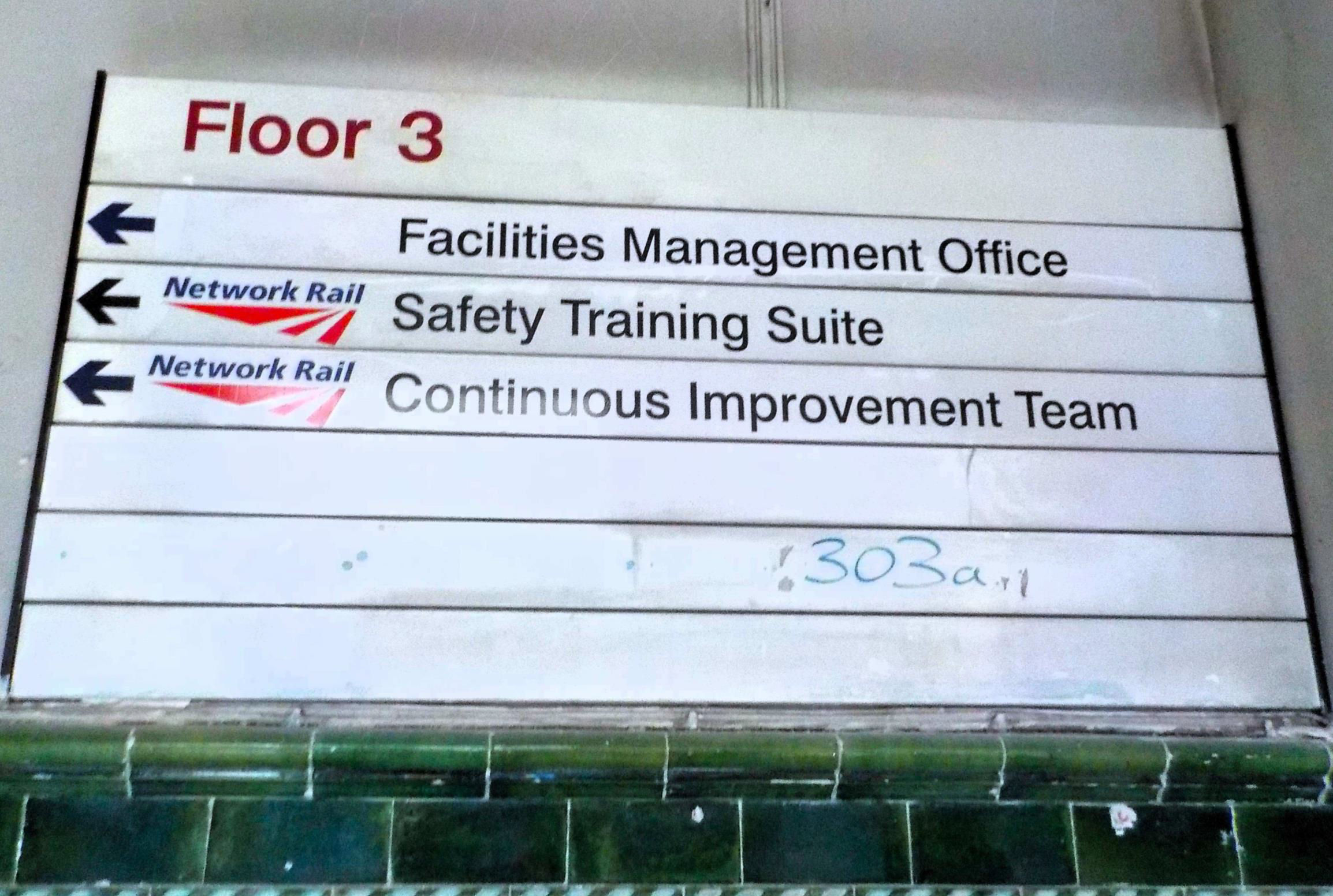
Sign at the top of the stairs on the third floor.
[© Liz Moralee & Tim Hall-Smith 2024]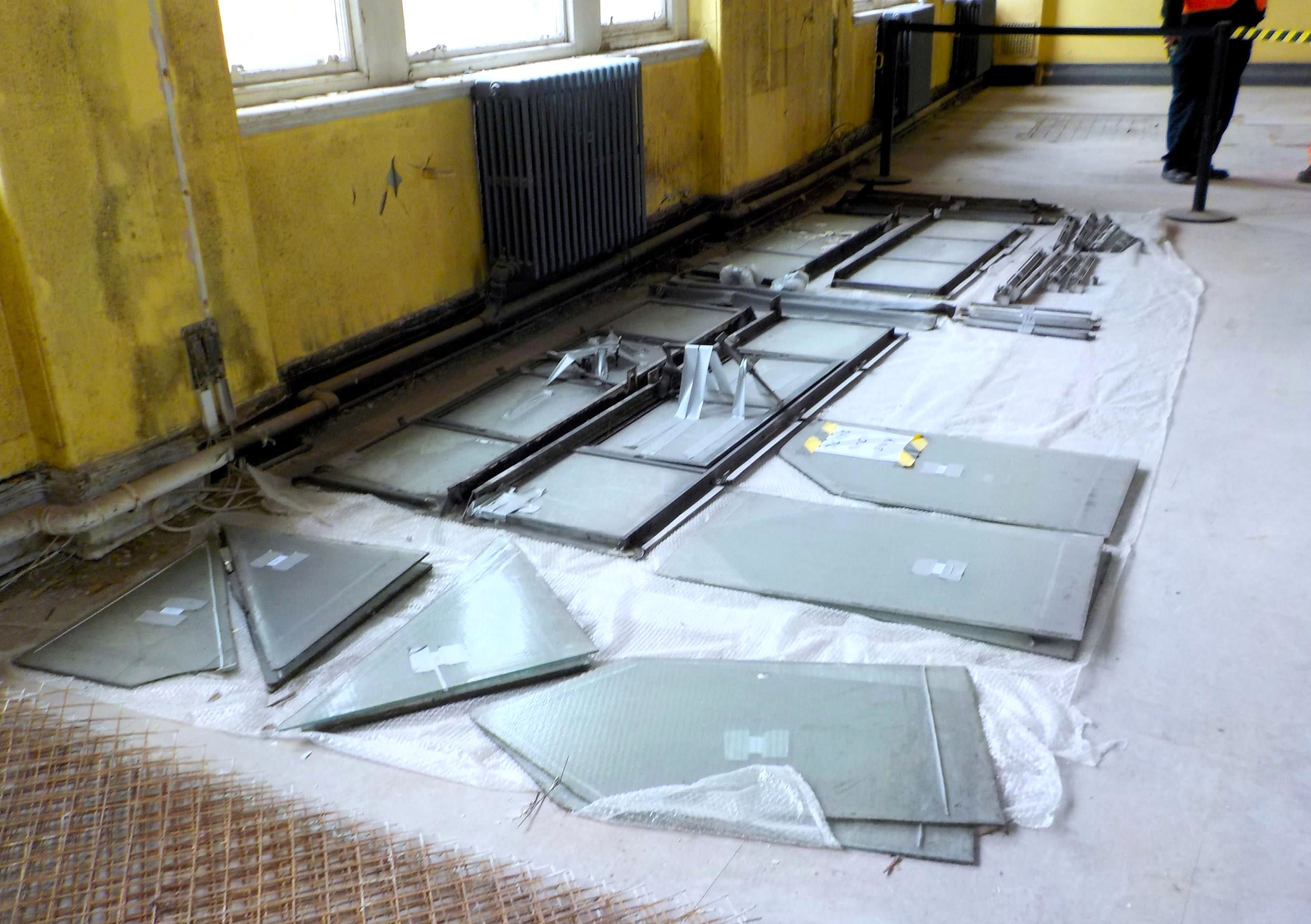
Dismantled skylight parts at the Shudehill end of the third floor.
[© Liz Moralee & Tim Hall-Smith 2024]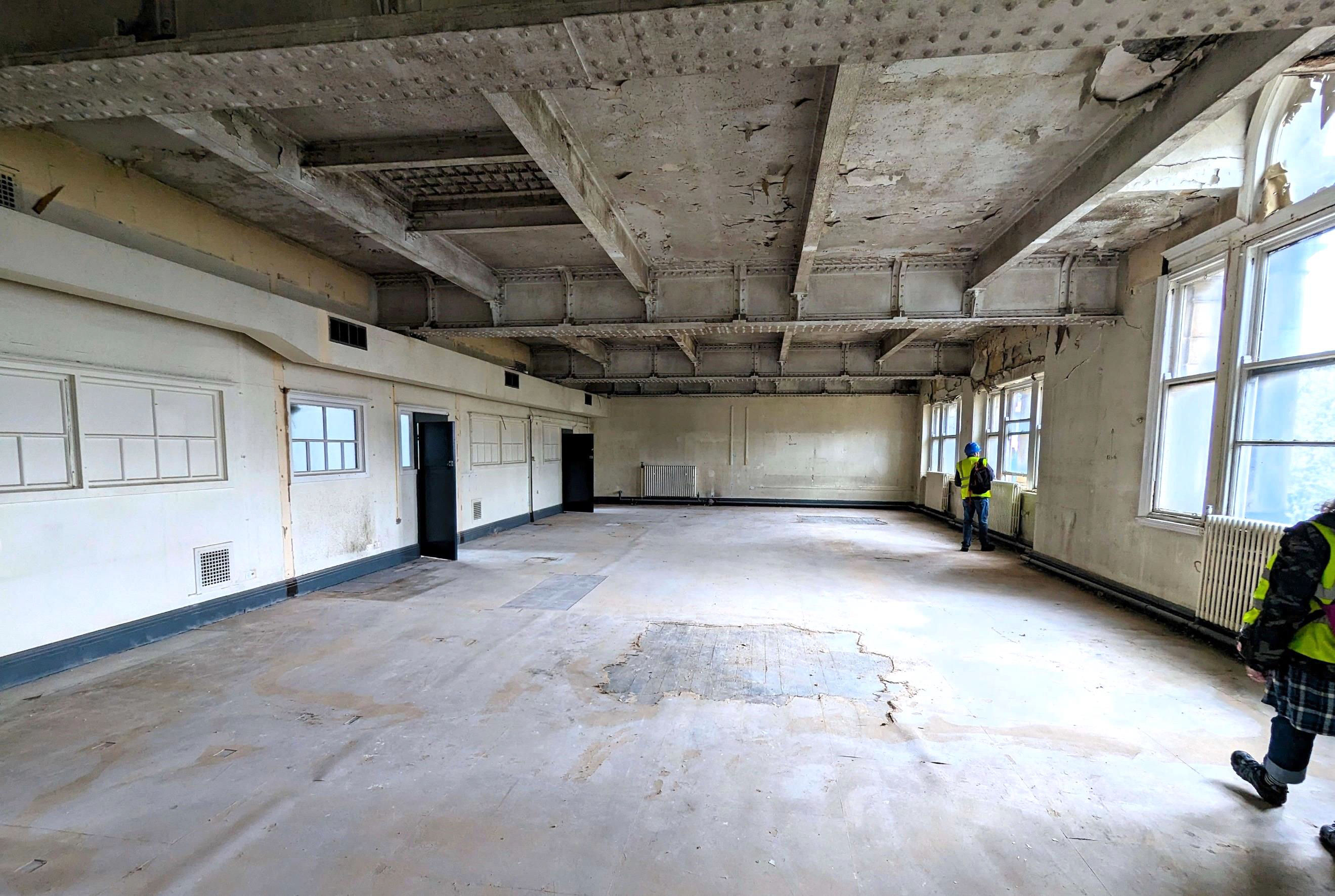
The third floor room where the signalling school model railway was https://www.youtube.com/watch?v=iv4HxQNC_NA is a video (1¾ minutes). Note the exposed riveted 'battleship' like metal roof support beams.
[© John Hampson, 2024]
Third Floor plan thanks to Adam Turner.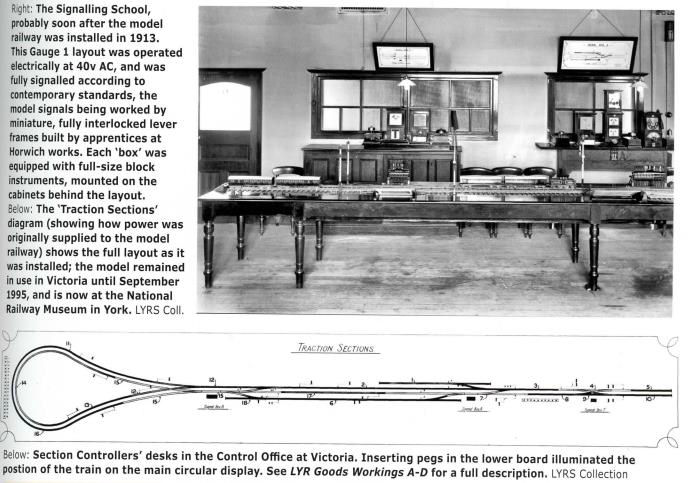
the Signalling School. Next, on the third floor, the group was given another briefing about what to expect on the roof and where we could or couldn't go, so we ascended the final flight of stairs up to the roof. We had to stay on the left-hand side as we exited the door. Up there a guide opened the back of the clock to expose its workings which were well worth seeing and we had the chance to see the old-style skylights close up that NR has been painstakingly restoring. They seemed to take up a great proportion of the roof area.
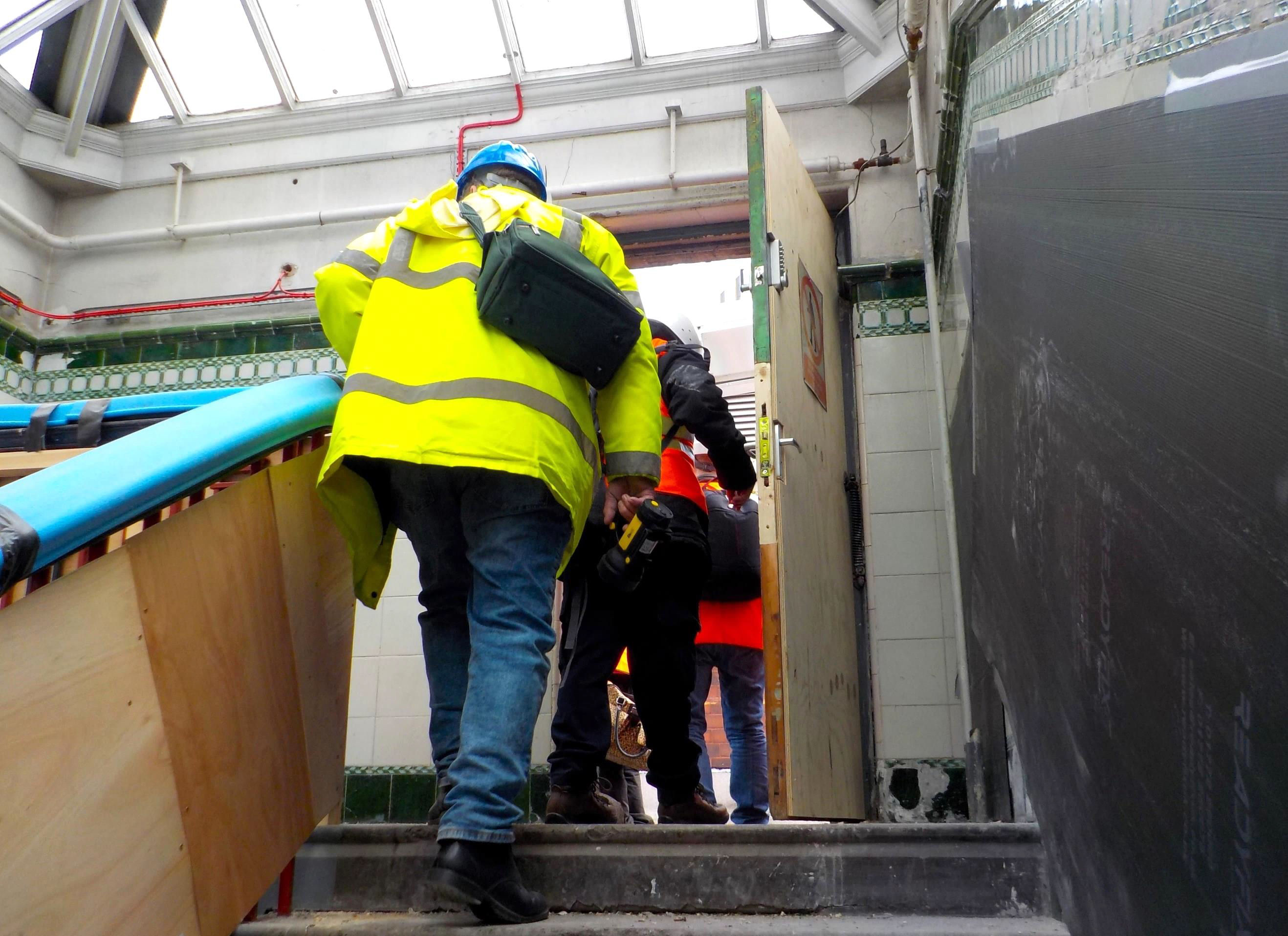
The final flight of steps up to the roof.
[© Liz Moralee & Tim Hall-Smith 2024]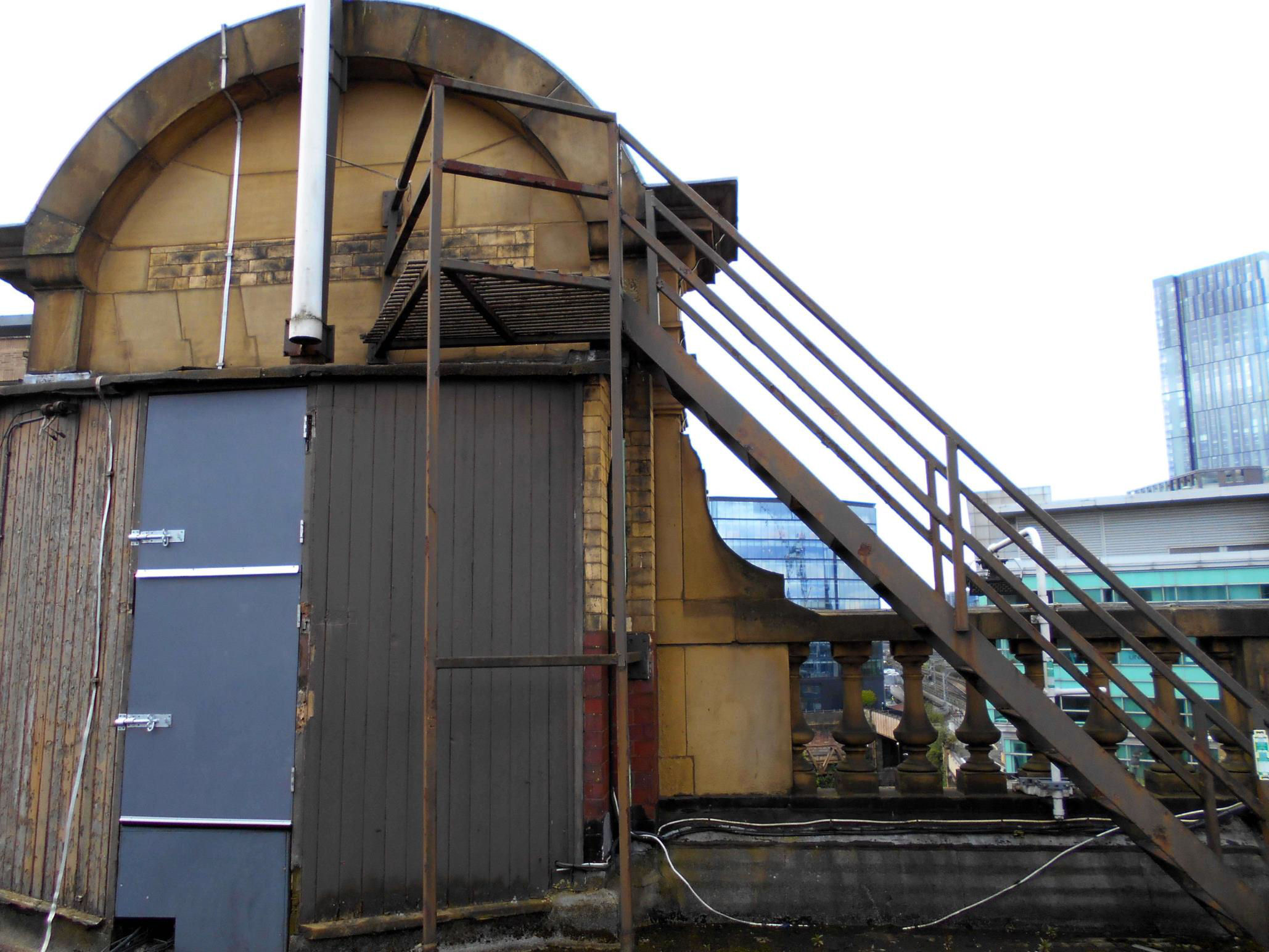
The rear of Manchester Victoria clock with flagpole.
[© Liz Moralee & Tim Hall-Smith 2024]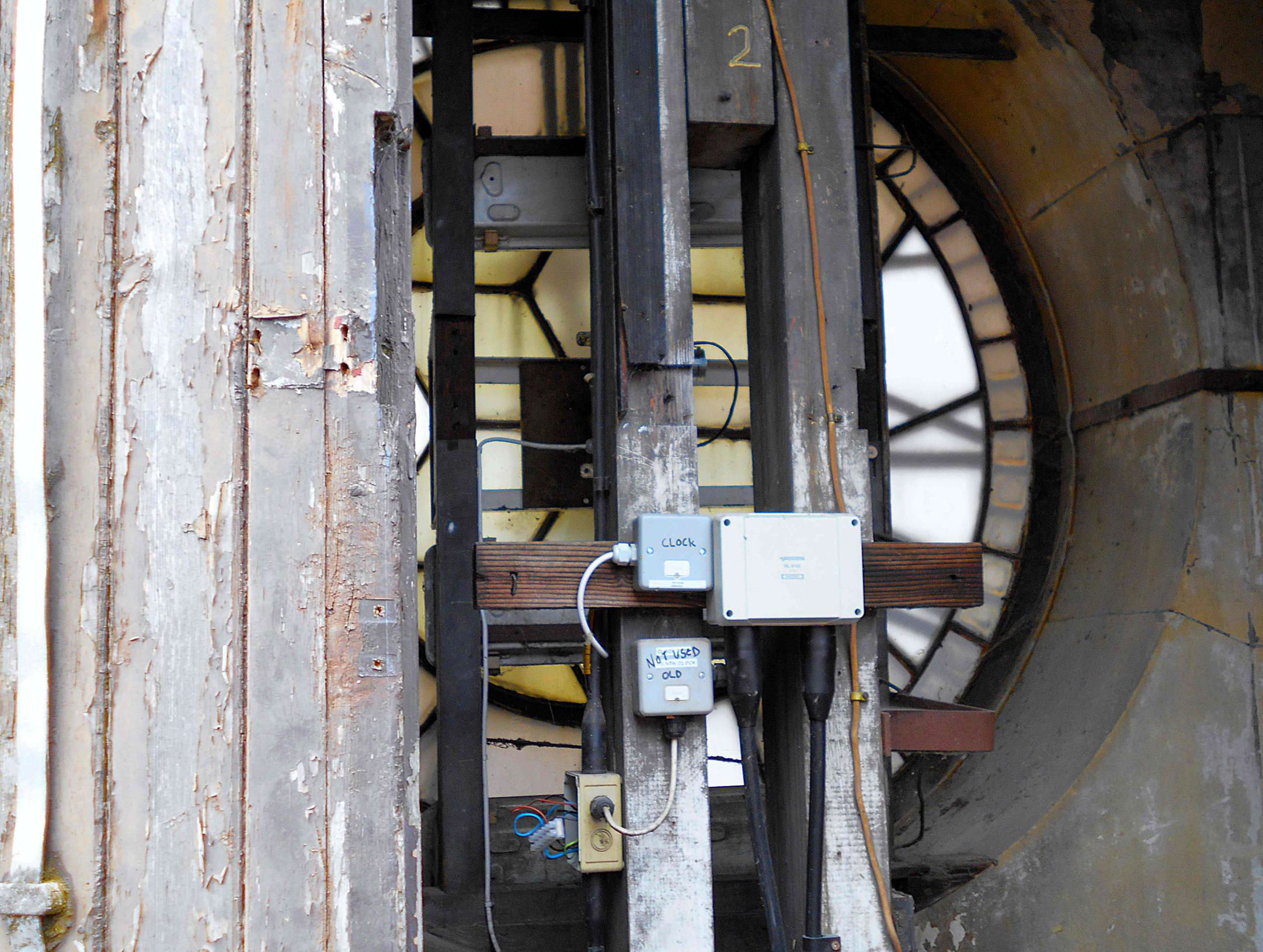
The clock mechanism.
[© Liz Moralee & Tim Hall-Smith 2024]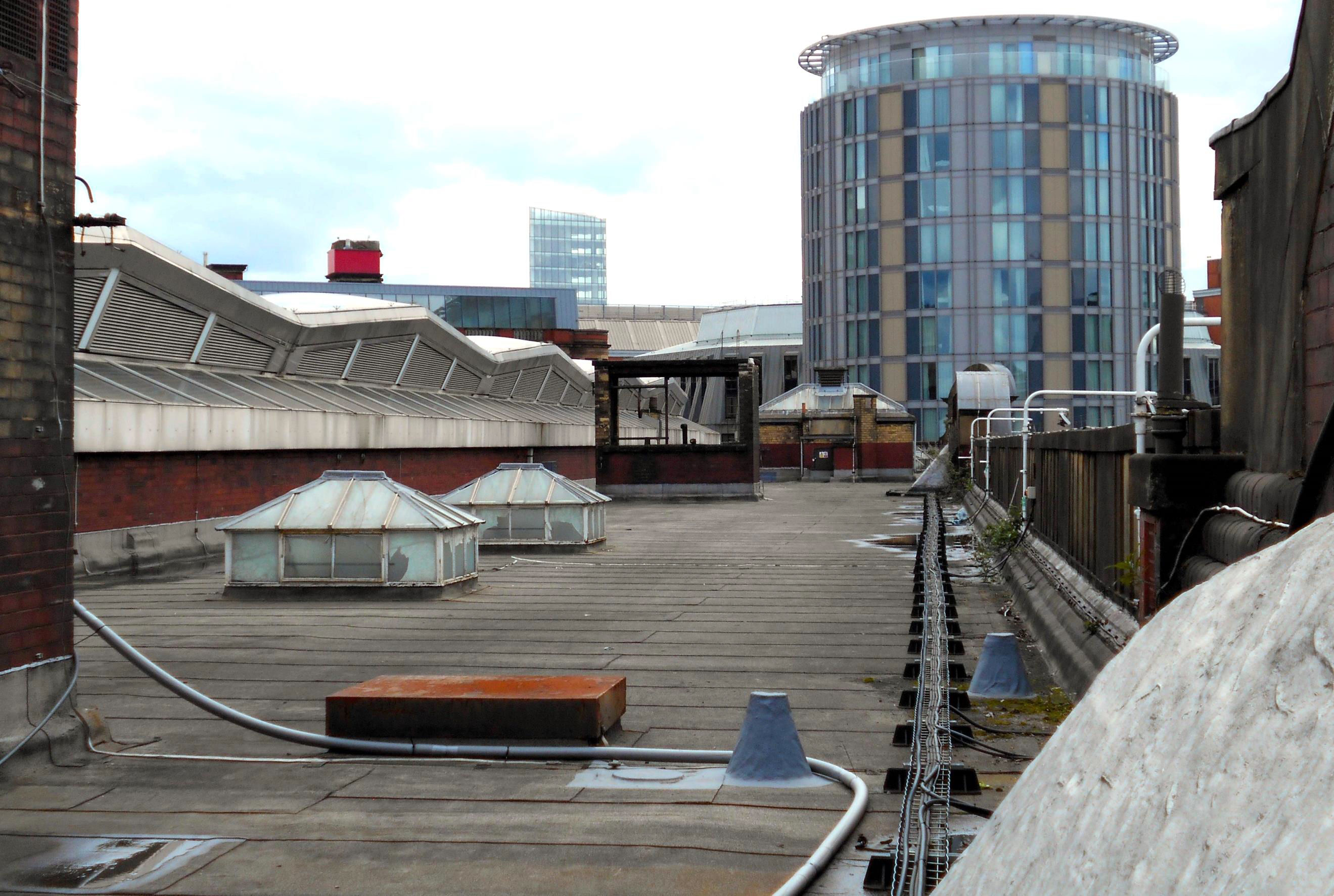
The roof, looking towards the Shudehill tram stop end.
[© Liz Moralee & Tim Hall-Smith 2024]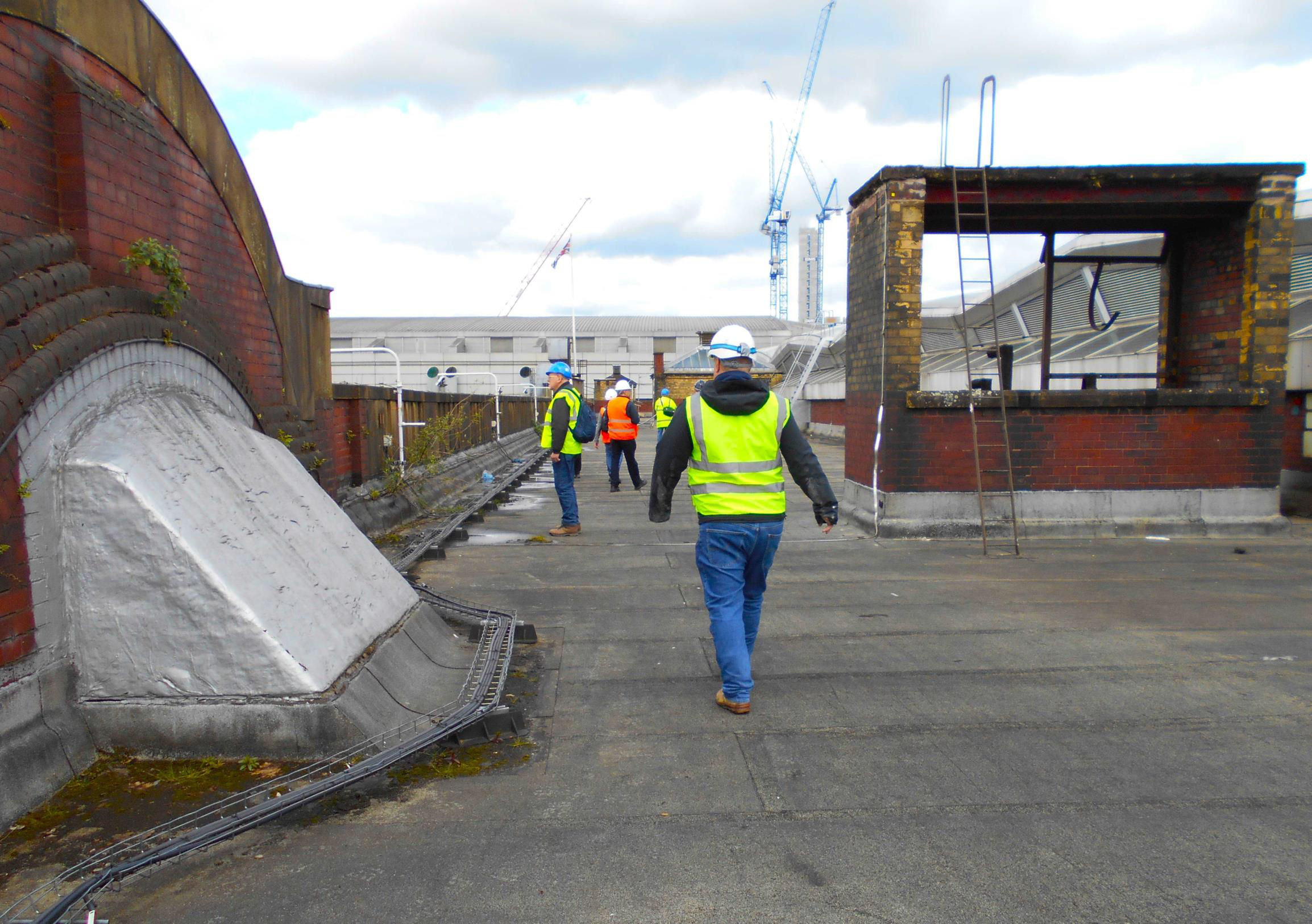
In the other direction towards P3-6, participants could explore this section.
[© Liz Moralee & Tim Hall-Smith 2024] We received yet another briefing before leaving the roof about our next destination. We were warned that it was going to be very dark (our guide wasn't kidding, now we knew why we had to bring torches or wear head torches). We could not go behind the bar due to asbestos containment but, apart from that, we could explore the old club rooms.
Tim had been looking forward to checking this location out having seen it on urban explorer sites for a good few years and it was his tour highlight. The roof was the start of what seemed like a long trek down multiple levels to the basement. Below ground level at 'Level 1', we had to turn our head torches on as there was no fixed lighting. We walked along a small corridor and, about halfway down on the right, saw the remains of a dumb waiter lift with 'up' still painted on the wall and the lift all still in place, frozen in time, covered in cobwebs and dust. Next, over a very ornate tiled floor at the entrance to the club, the first impression was that it was very small as we had expected it to be much larger. We were both taken aback as to how dark it was down there. There was a big open area with a parquet floor which once had bench seating around the walls. The wallpaper was peeling off in places; even some speakers remained on the walls and a DJ booth at the far end of the room. The bar area was to the right hidden behind a screened-off area with mirror-type reflective panels and a thick layer of dust on the bar top! Behind where we stood at the bar was a raised seating area and a small locked grey safe all covered in grime.
Known colloquially as 'Vic Bars', the old BRSA Club was a time capsule of the 1970s and 80s, accessible via Victoria Station. Prior to closing in 1992, the club was a vibrant place filling both of its rooms every weekend with live concerts and cabaret acts for its hundreds of regulars. Descending further steps to the sub-basement we walked along a small corridor with other very dark rooms off to our left and into a giant storeroom with some superb photogenic pipework against the walls. [The things that interest our members...] Some of these arches were beneath Victoria Station Approach, which is in fact a viaduct.
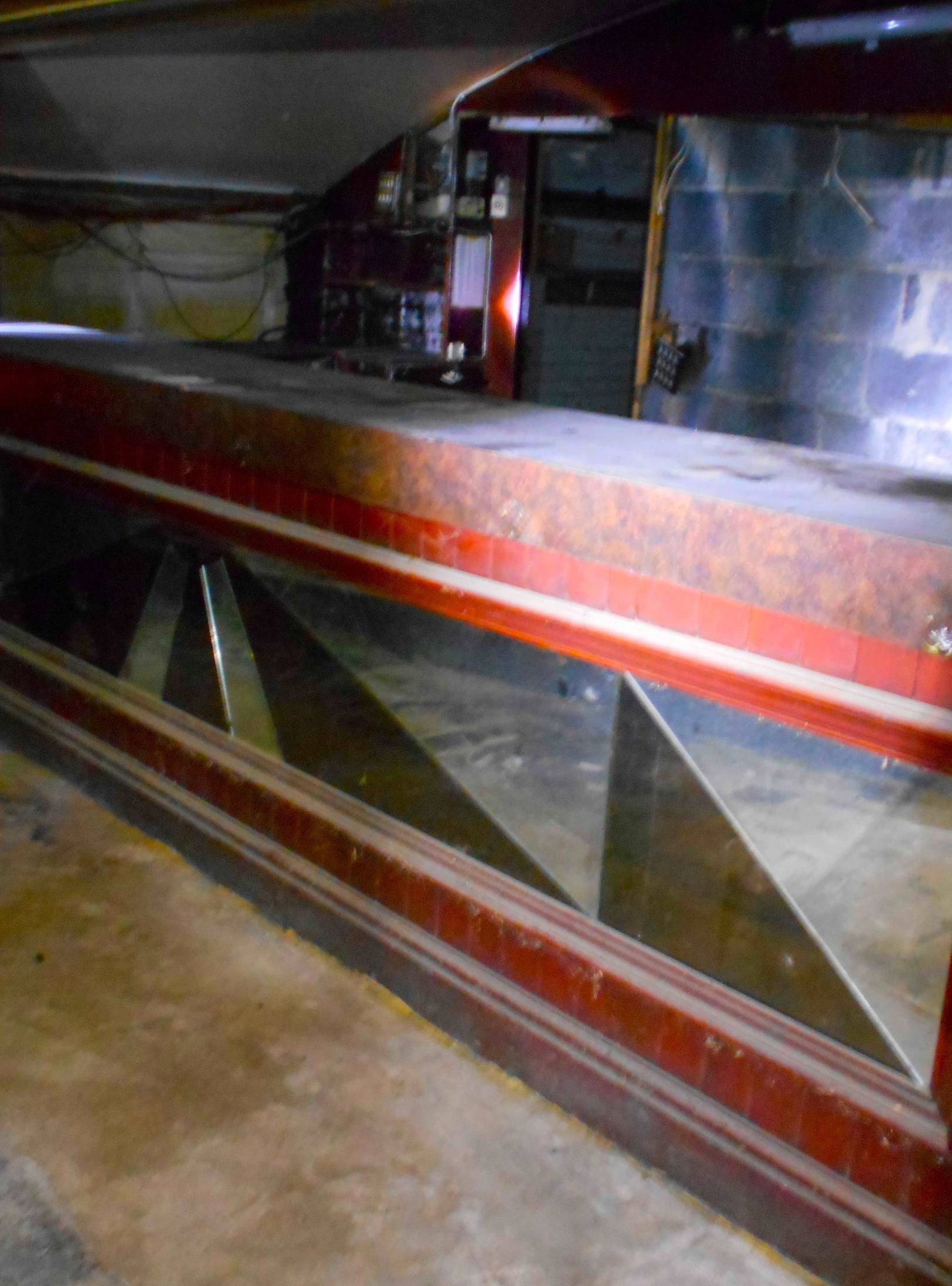
The British Railways Staff Association Bar (in very poor lighting conditions), which closed in 1992.
[© Liz Moralee & Tim Hall-Smith 2024]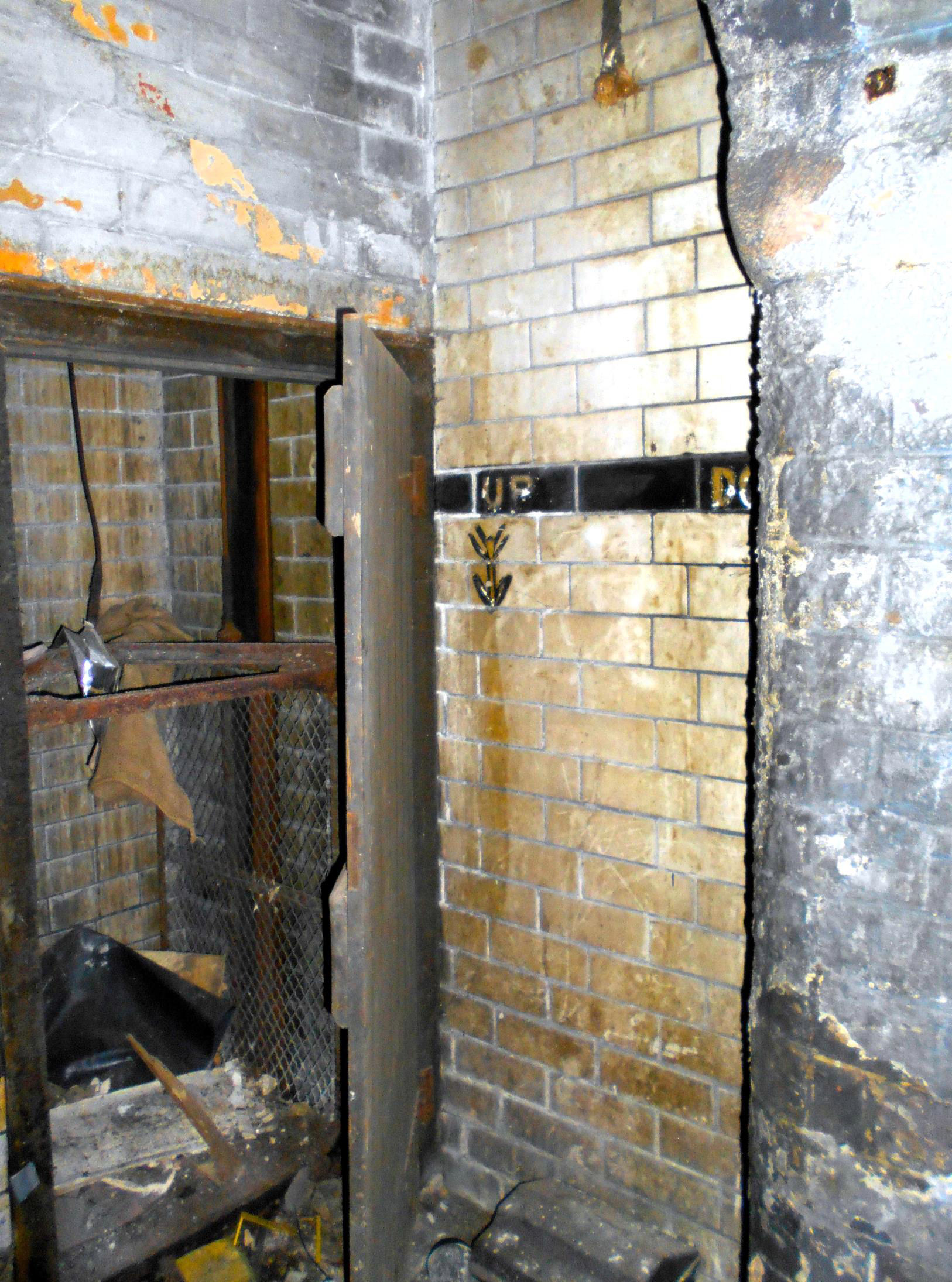
The dumb waiter.
[© Liz Moralee & Tim Hall-Smith 2024]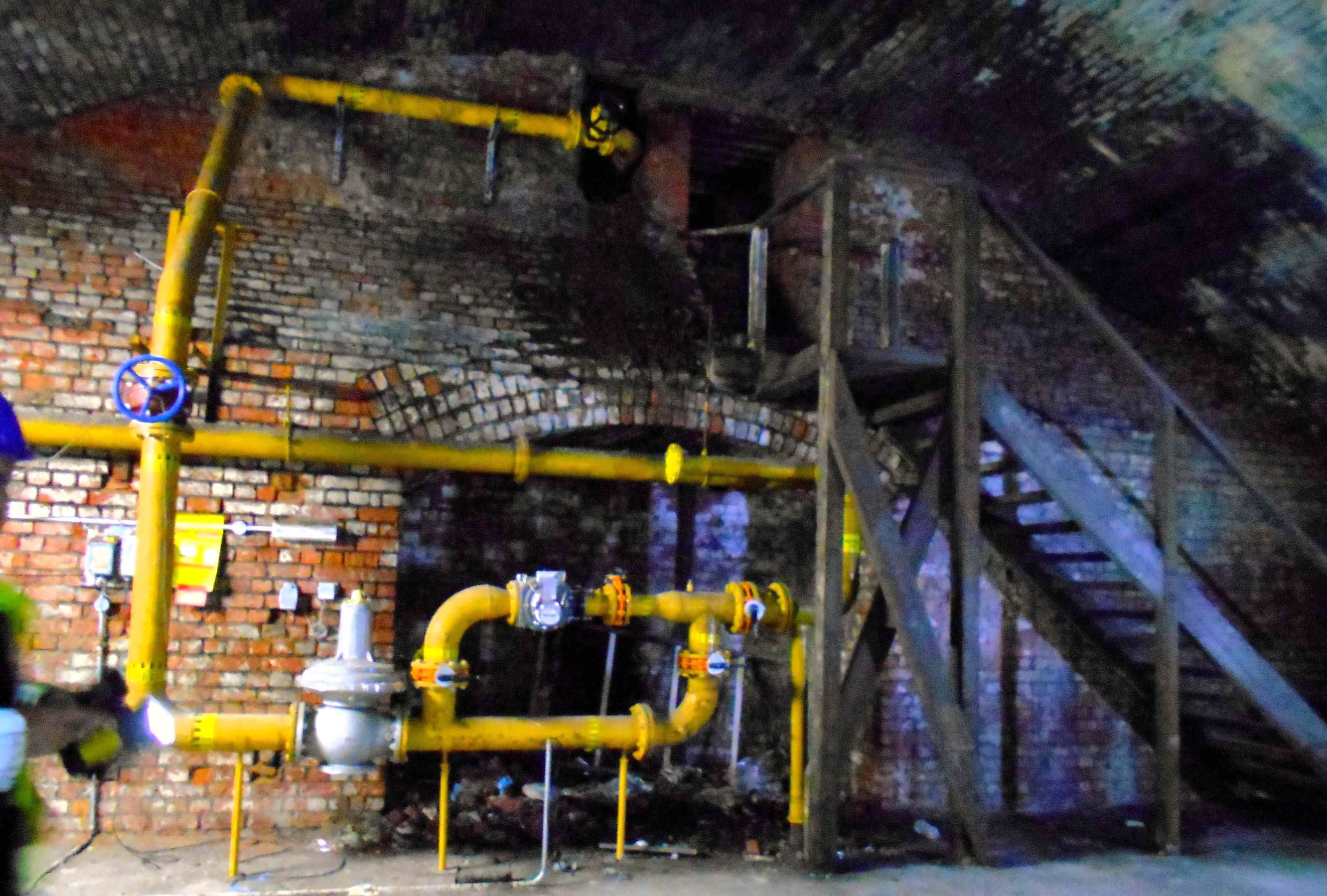
''Photogenic'' pipework in the BRSA storeroom.
[© Liz Moralee & Tim Hall-Smith 2024] Then, it was along to the Walkers Croft area, passing a number of what appeared to be former livestock pens. Part way down a passage, one of the NR guides stopped us to open a small trap door on the left and we took it in turns to view and hear the River Irk deep below. There was ornate lettering above the arch at the end of this bridge although it was partly hidden and we couldn't make out the full names. At the end, the corridor opened up into a larger tunnel, Walkers Croft, which was an original street alongside the River Irk before the station was built. Here many years ago, the front end of Pacer 142059 used to lean against a wall. A tour participant remembered this and kindly showed us where the cab used to be, now sadly long gone. There were various rooms here off the main tunnel.
Turning left along Walkers Croft, we emerged into daylight to be counted out through the gate into the street before climbing the steps back up to Victoria Station Approach and reality again.
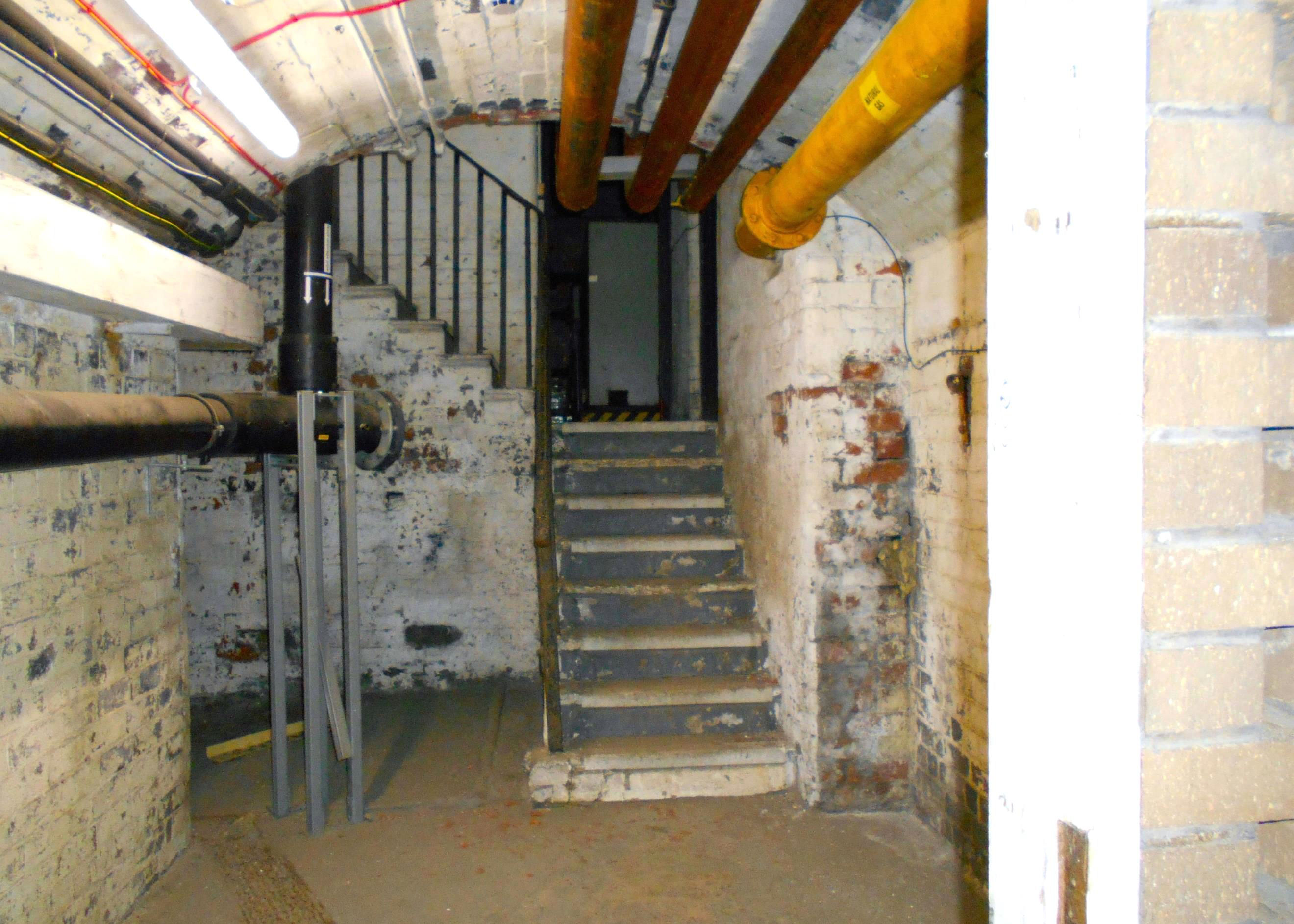
A side room (with a light!) off Walkers Undercroft area and more pipes!
[© Liz Moralee & Tim Hall-Smith 2024]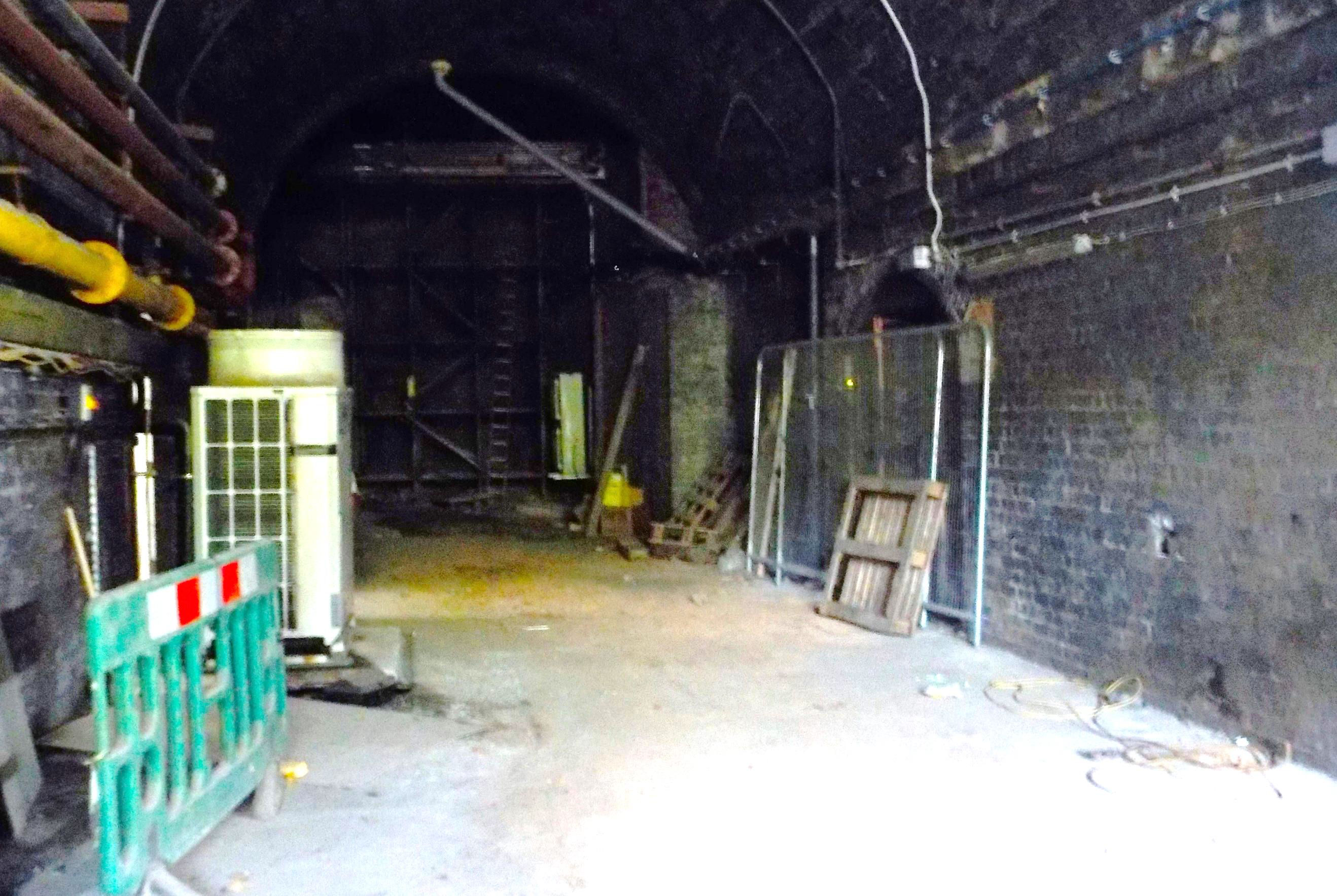
Looking down the tunnel in the opposite direction, the cab of Pacer142059 used to lean against the wall on the right.
[© Liz Moralee & Tim Hall-Smith 2024]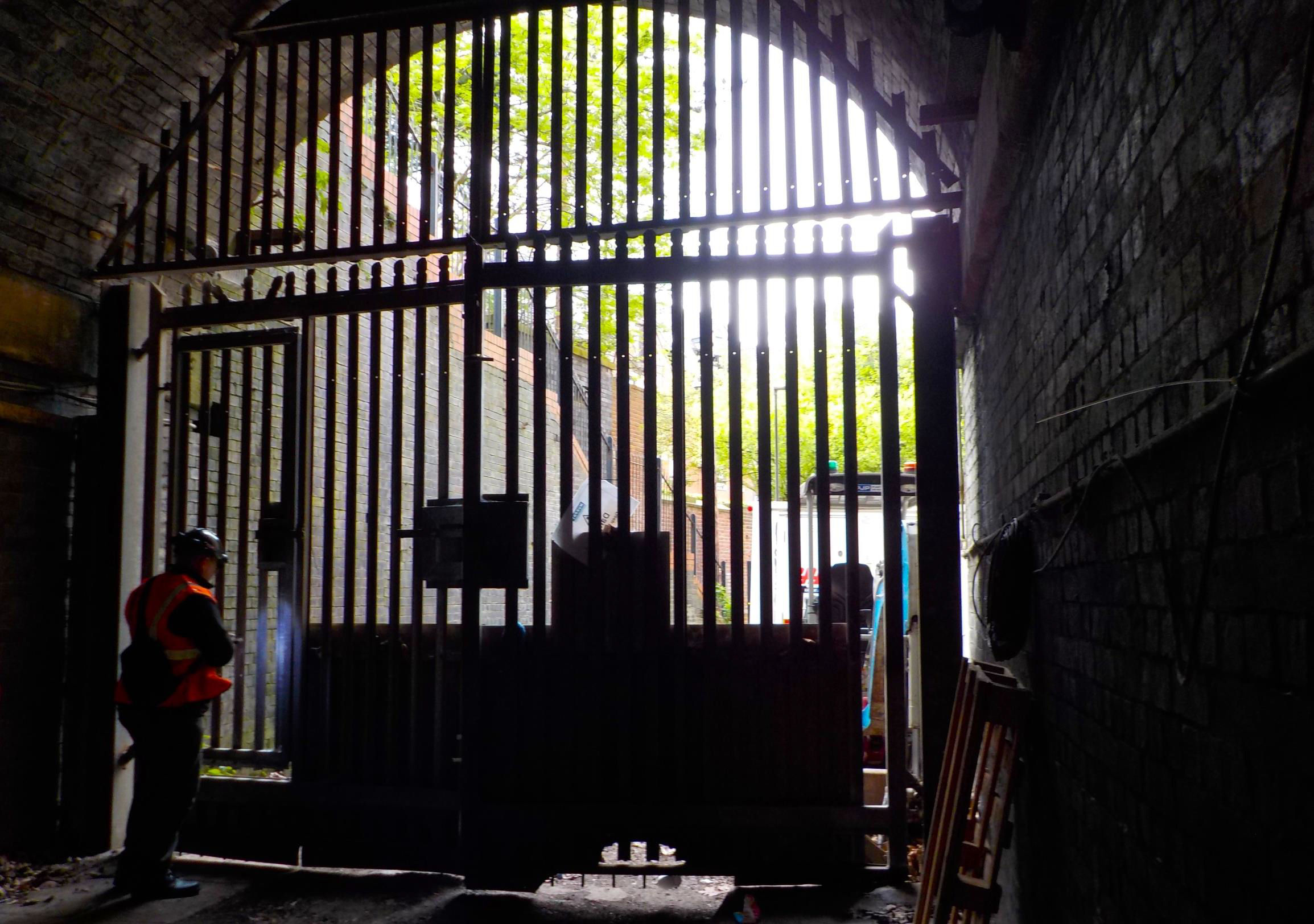
The end...
[© Liz Moralee & Tim Hall-Smith 2024]There was plenty to see on all the office floors despite the rooms having been mostly stripped. The roof was perfect to enjoy some great views of Manchester. The former BRSA club was a very eerie, spooky place and pitch black dark but all well worthwhile.
https://tinyurl.com/2w7f6kkb has numerous photos.
To sum up, this was another superb Society historical tour with great thanks to organiser John Hampson and everyone at NR (in particular Chris, Allan, Oliver, Brogan, Laura and our inimitable Adam Turner who made the tour possible) also Bernadette (NR heritage consultant). Pleasingly, the two identical tours this day, for a total of 38 members, raised £1,054 for 'Mustard Tree' which is a local charity for the homeless.