Our 15 members were greeted in the main station concourse by the Brighton-based historian Jackie Marsh-Hobbs, as well as Robert Whitehead, Govia Thameslink Railway (GTR) Community Engagement Manager.
We first learnt about the history of the station and the different lines leading into it, starting with how a wide shelf, a mile from the sea, was excavated out of the hillside overlooking the town. The station expanded westwards as, due to the geography, expansion east would have been enormously expensive. As demand for rail travel grew so did the pace with which the station buildings developed, starting with the building perpendicular to the tracks, continuing with the side buildings and the train shed.
Jackie explained how David Mocatta, the London & Brighton Railway's architect, designed a handsome and substantial Palladian Italianate style frontage building perpendicular to the tracks. The station had a three-storey building which included the railway company's head office. Later, an elaborate iron port cochère was erected over the forecourt, masking quite a large part of Mocatta's façade.
We had a glimpse inside this building to see the decorative staircase leading to offices above. Back on the concourse, Jackie and Rob took us down to the old passenger toilets in the basement of the Mocatta building. Even further in the past, it provided a connection to Trafalgar Street which runs underneath the taxi rank of the station. Jackie explained that to expand the forecourt, Trafalgar Street, which slopes down steeply immediately in front of the station was roofed over with curved cast-iron beams.
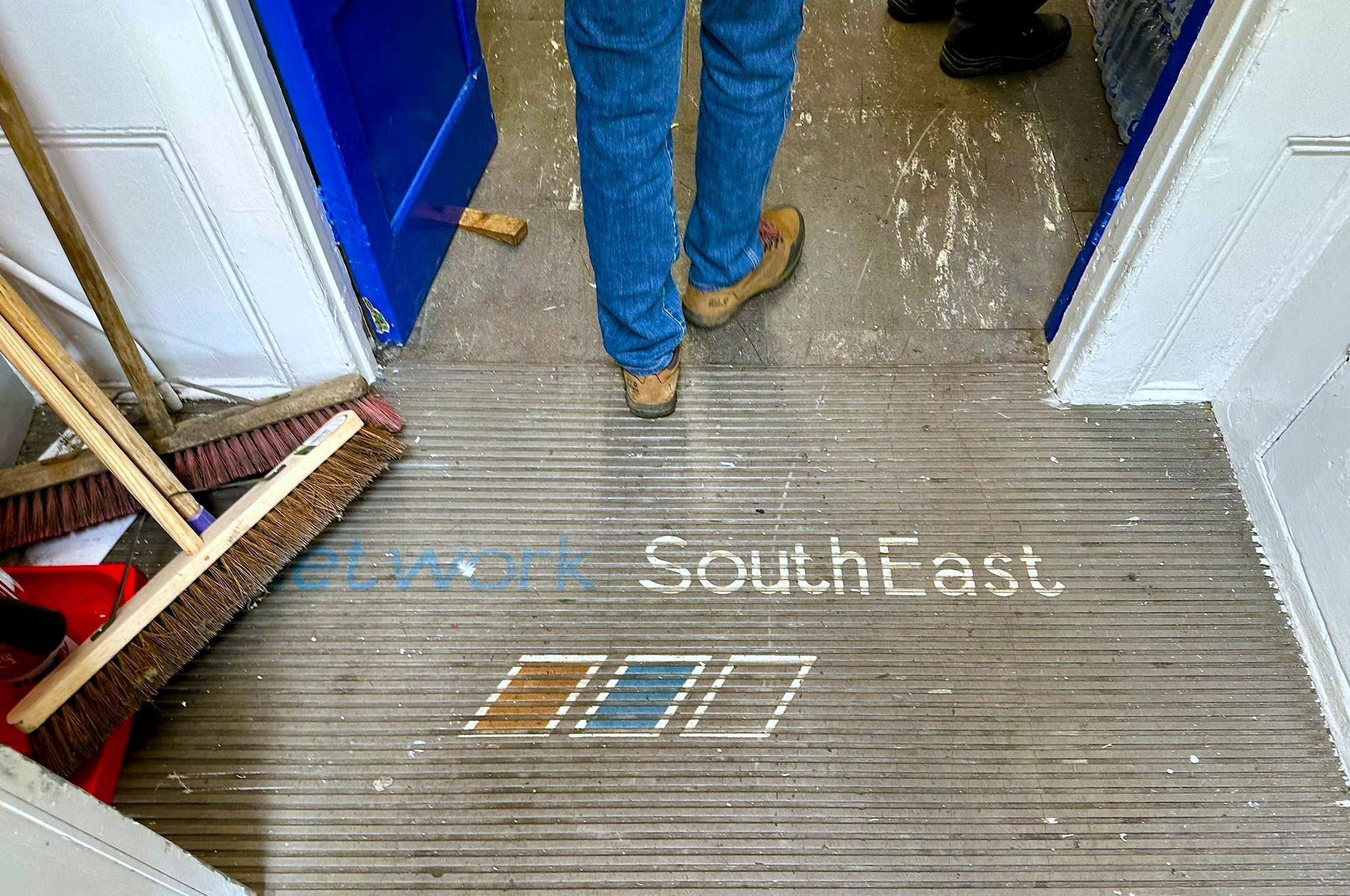
A reminder of previous times in the station building..
[© Mae Bruckbauer 2024]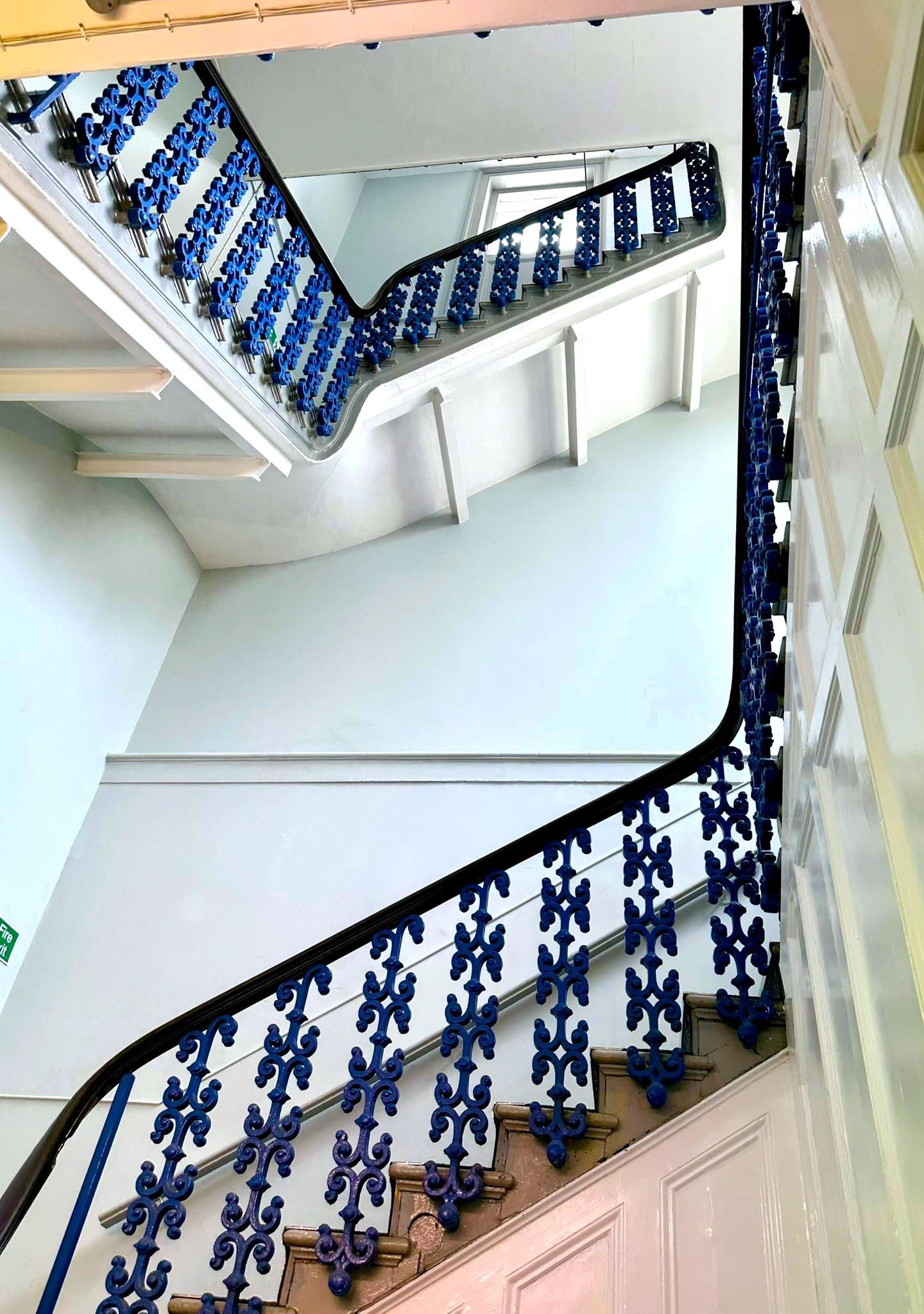
The decorative staircase leading to offices above,
[© Mae Bruckbauer 2024]The former basement toilets, a large space downstairs, still have their original quite colourful floor mosaics, as well as tiled ceilings. Our group then walked through a set of doors to the subway leading to the former Trafalgar Street exit, now used as storage for the retailers above. The street exit is fenced off, with wooden barricades in the way as well. We also saw the other set of stairs down from concourse level; there are two staircases down from the concourse, one for the gents and one for the ladies.
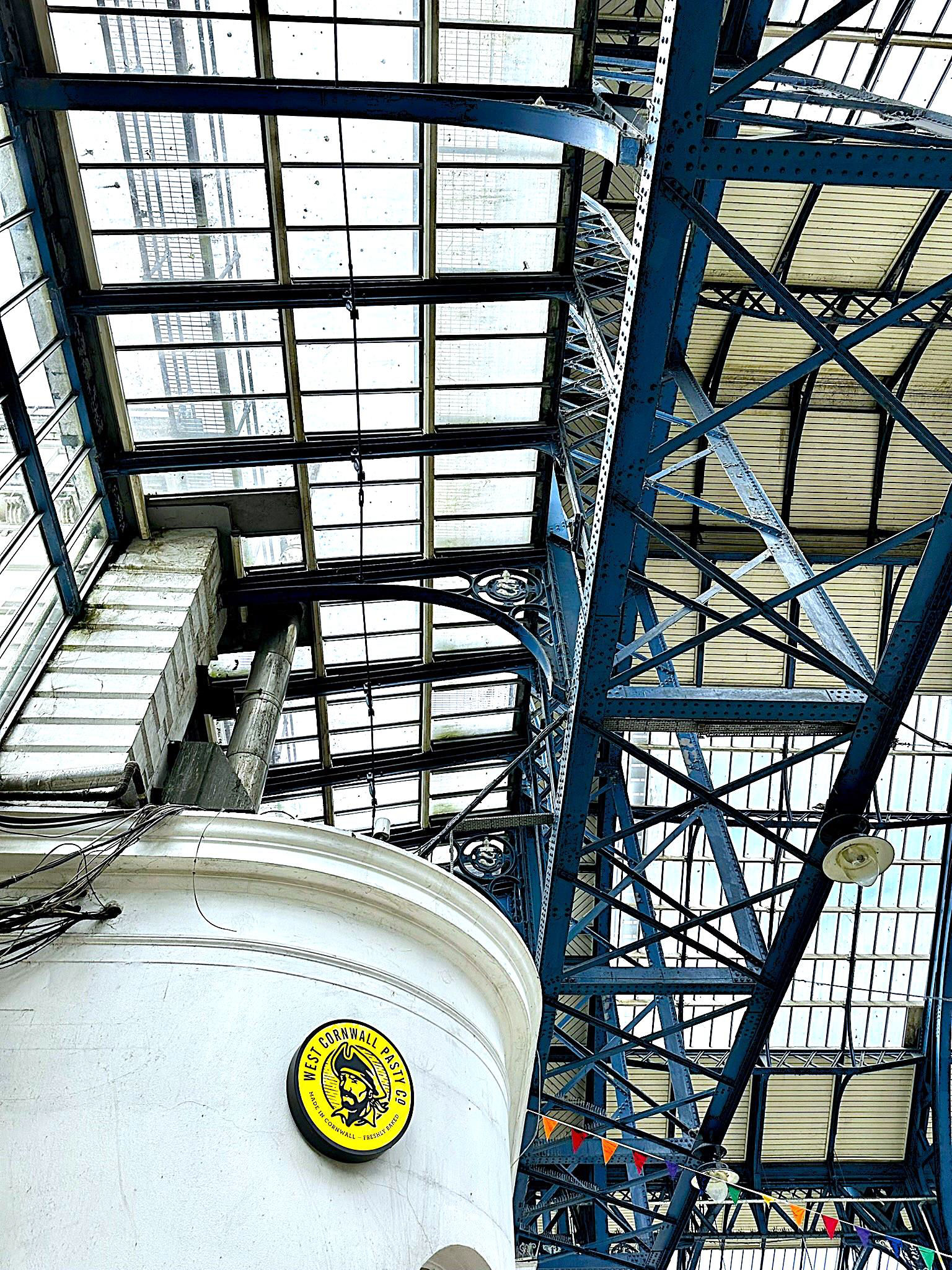
A view upwards from the station concourse.
[© Mae Bruckbauer 2024]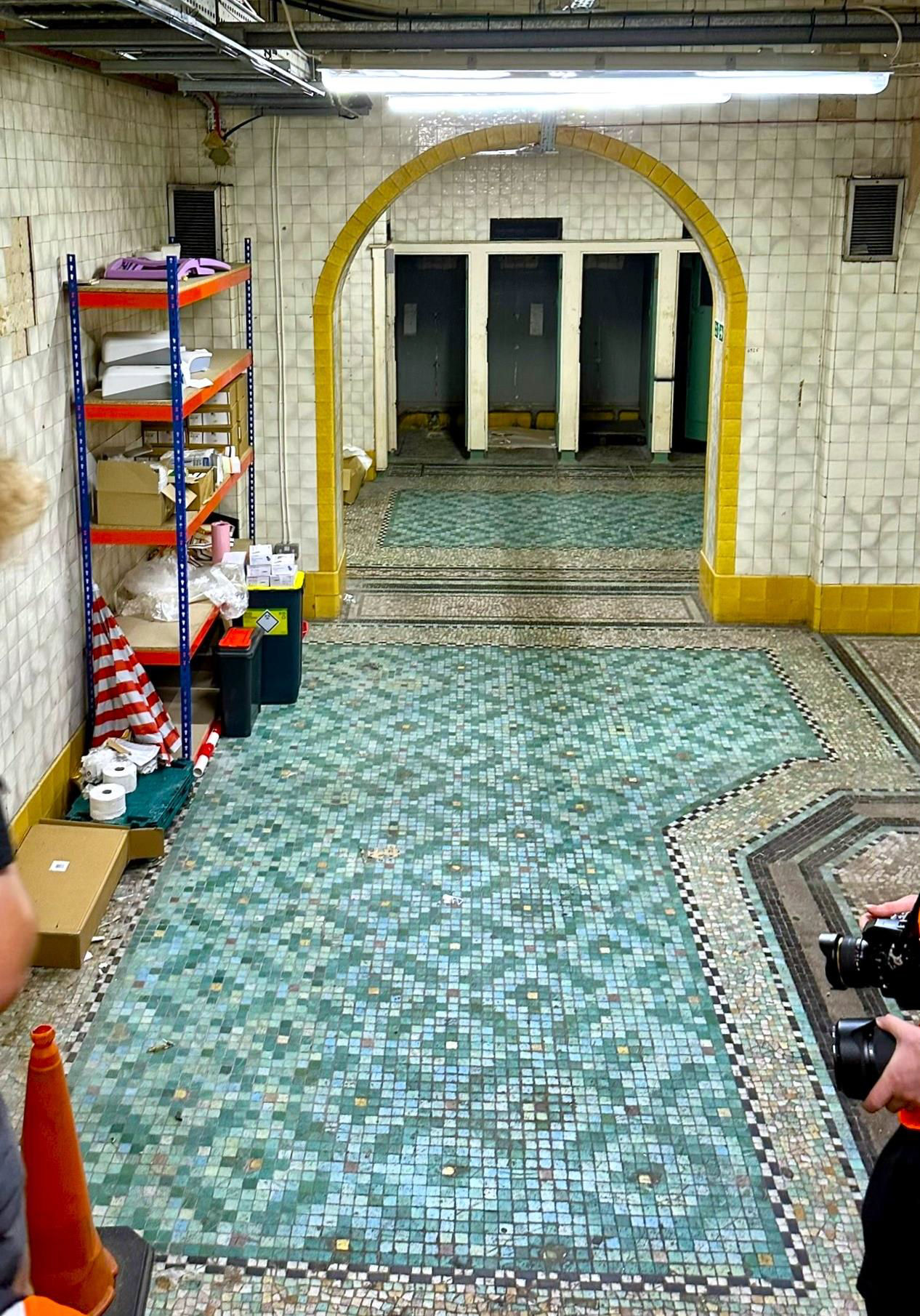
The old passenger toilets in the basement of the Mocatta building.
[© Mae Bruckbauer 2024]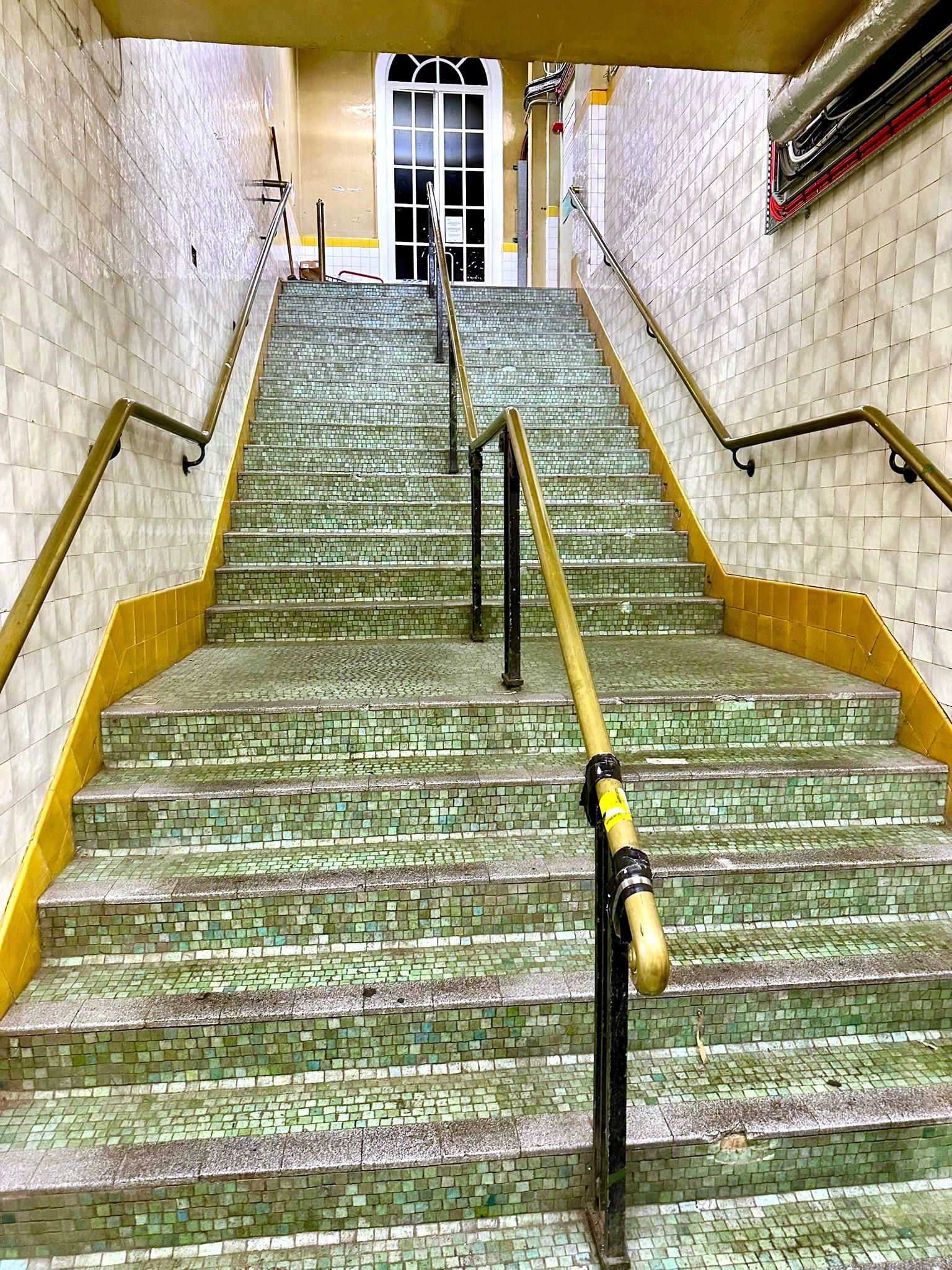
Subway leading to the former Trafalgar Street exit.
[© Mae Bruckbauer 2024]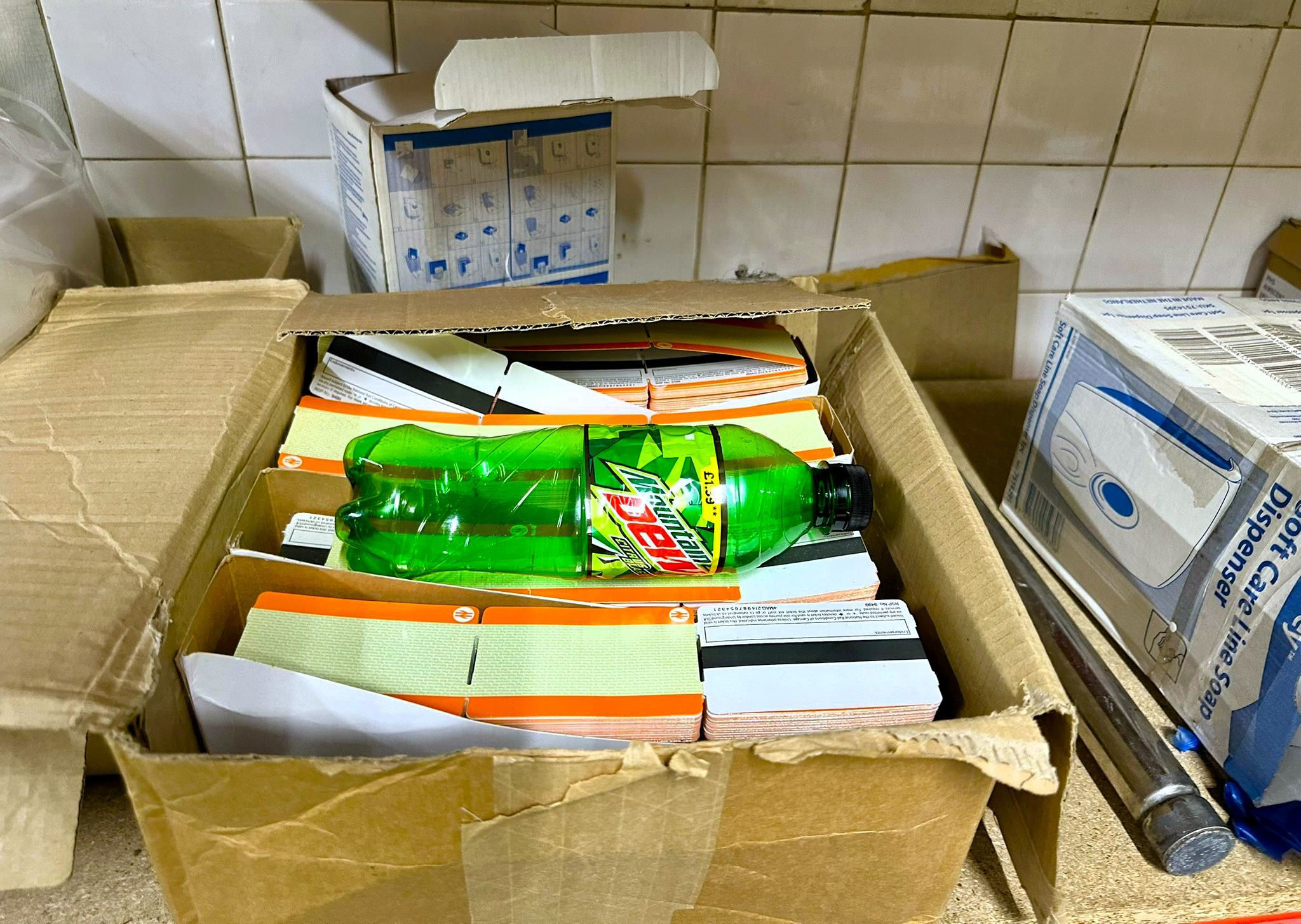
The area is now used as storage for the retailers above.
[© Mae Bruckbauer 2024]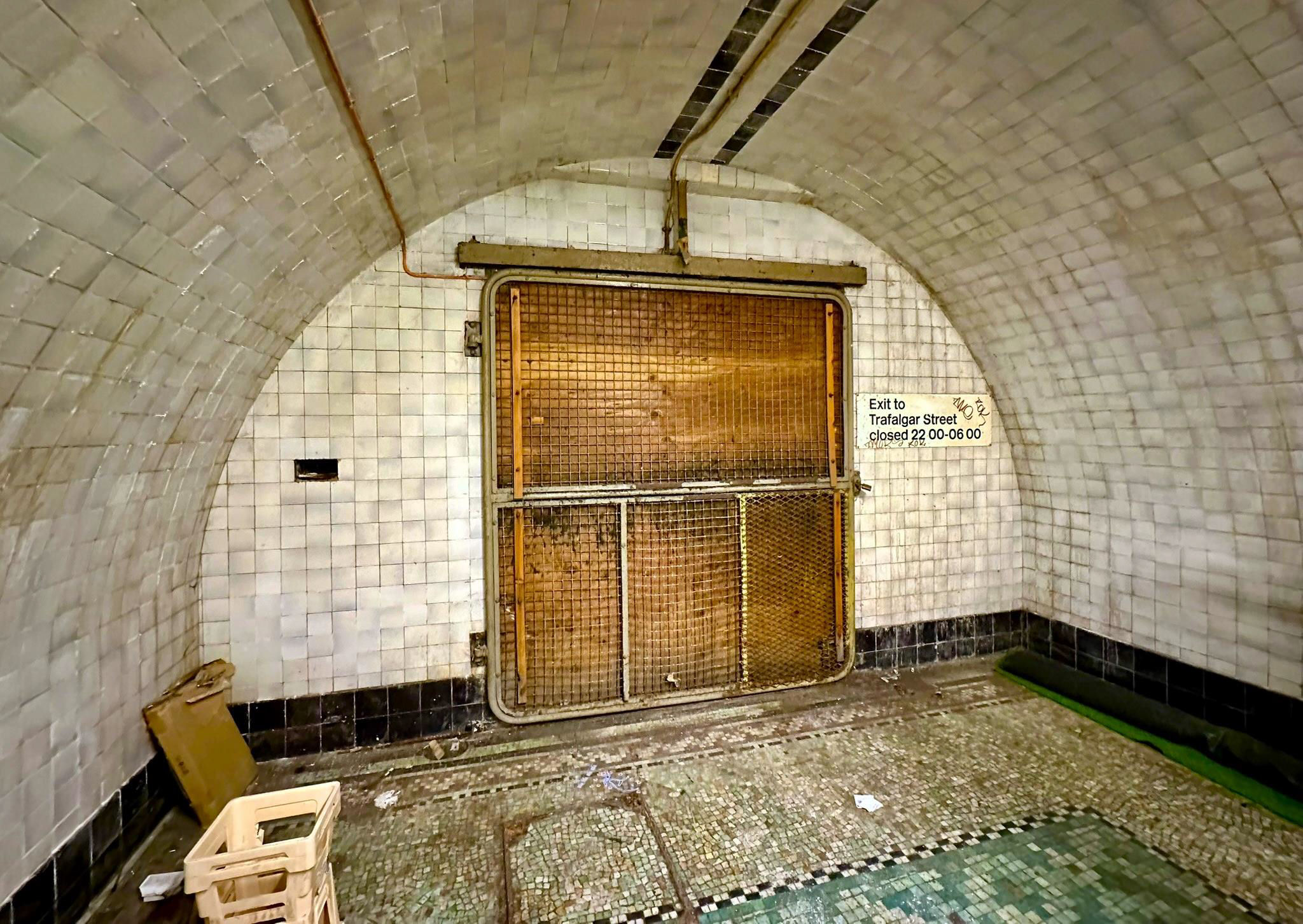
The former Trafalgar Street exit.
[© Mae Bruckbauer 2024]Returning to concourse level, we were guided to a nondescript door with a staircase leading down and through some Thameslink offices at the southeastern end of the station into the old taxi carriage ramp from Trafalgar Street to platform level, which has been disused for quite a while. It is now just a storage space for station equipment. The ramp is located underneath the wooden slats beneath the tracks of P8 and trains above are visible from the underpass; indeed, a train pulled out while we were underneath and the bright sunlight trickled in. This used to be much grimier in the days before trains had retention toilets, as waste could fall through the slats into the tunnel! The ramp leads up in a slight incline to a point where it turns 180° southwards. Here our guides pointed out some scratch marks on the tunnel walls, where horse-drawn taxi cab drivers would use the walls of the tunnel to brake for the curve ahead. This space was only dimly lit, with some of the arches to the side of the tunnel used for storage in the past as well. The connection to platform level is now blocked off.
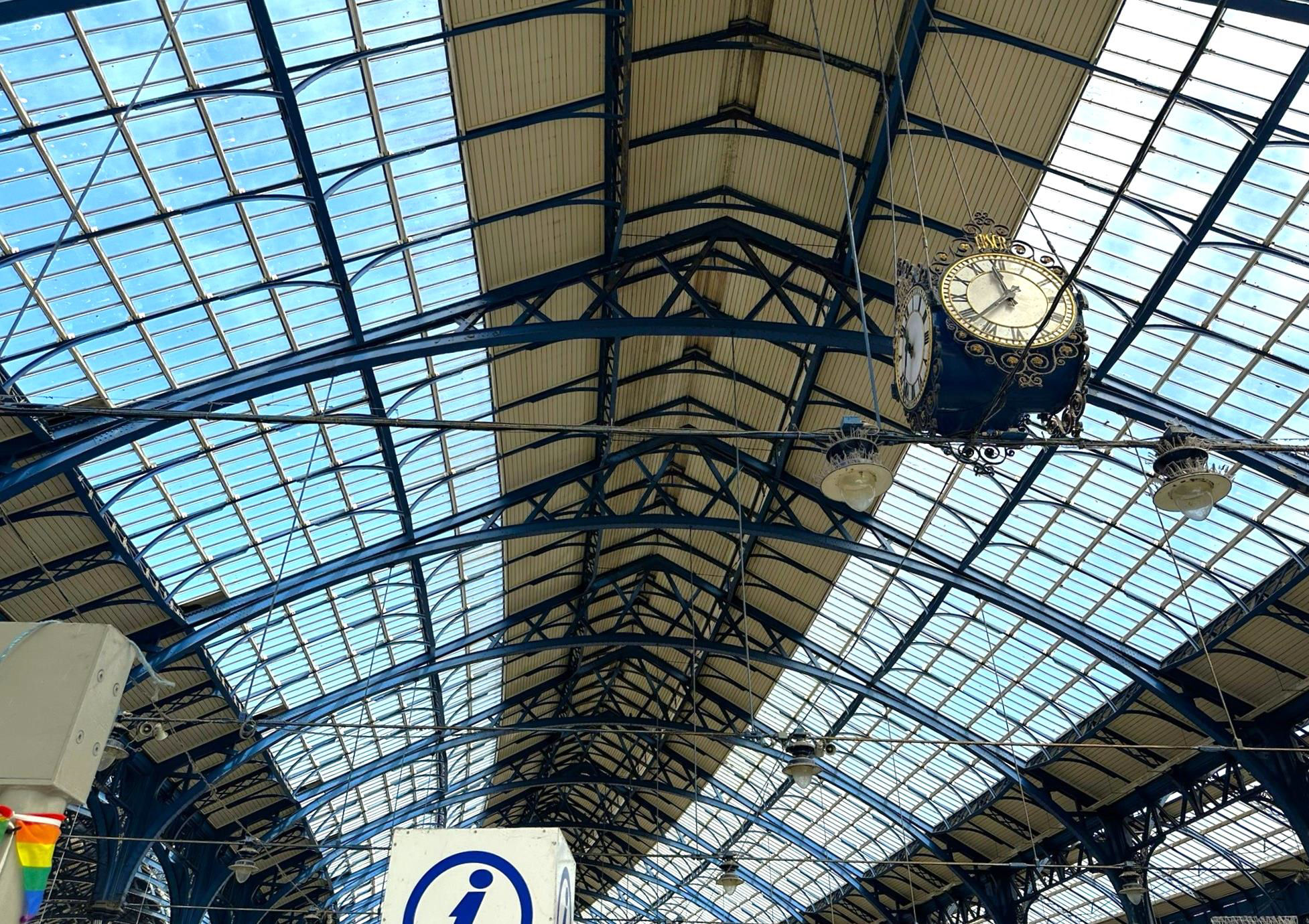
A view of the impressive roof from the concourse.
[© Mae Bruckbauer 2024]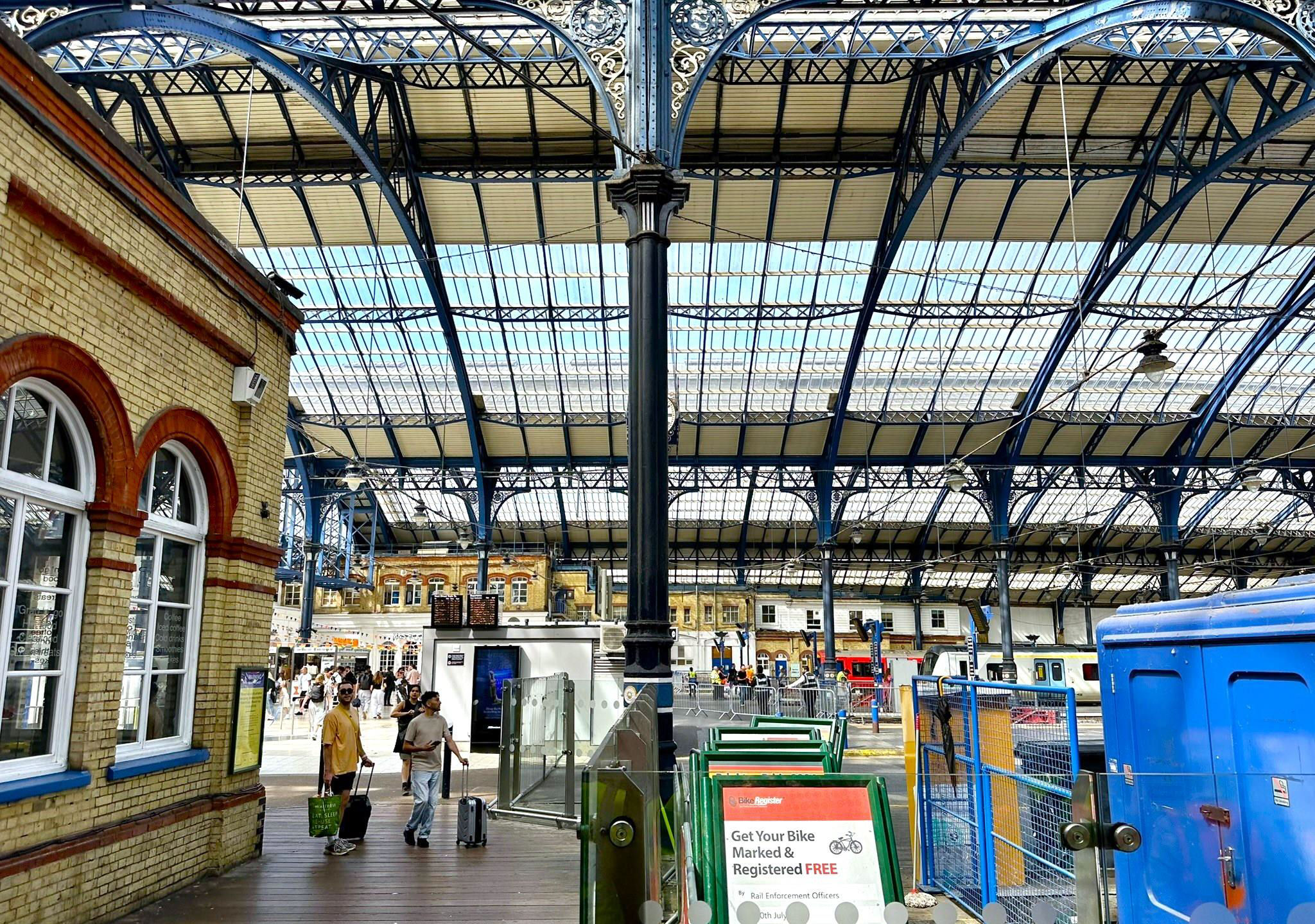
A view of the station concourse from the entrance to platform 8,.
[© Mae Bruckbauer 2024]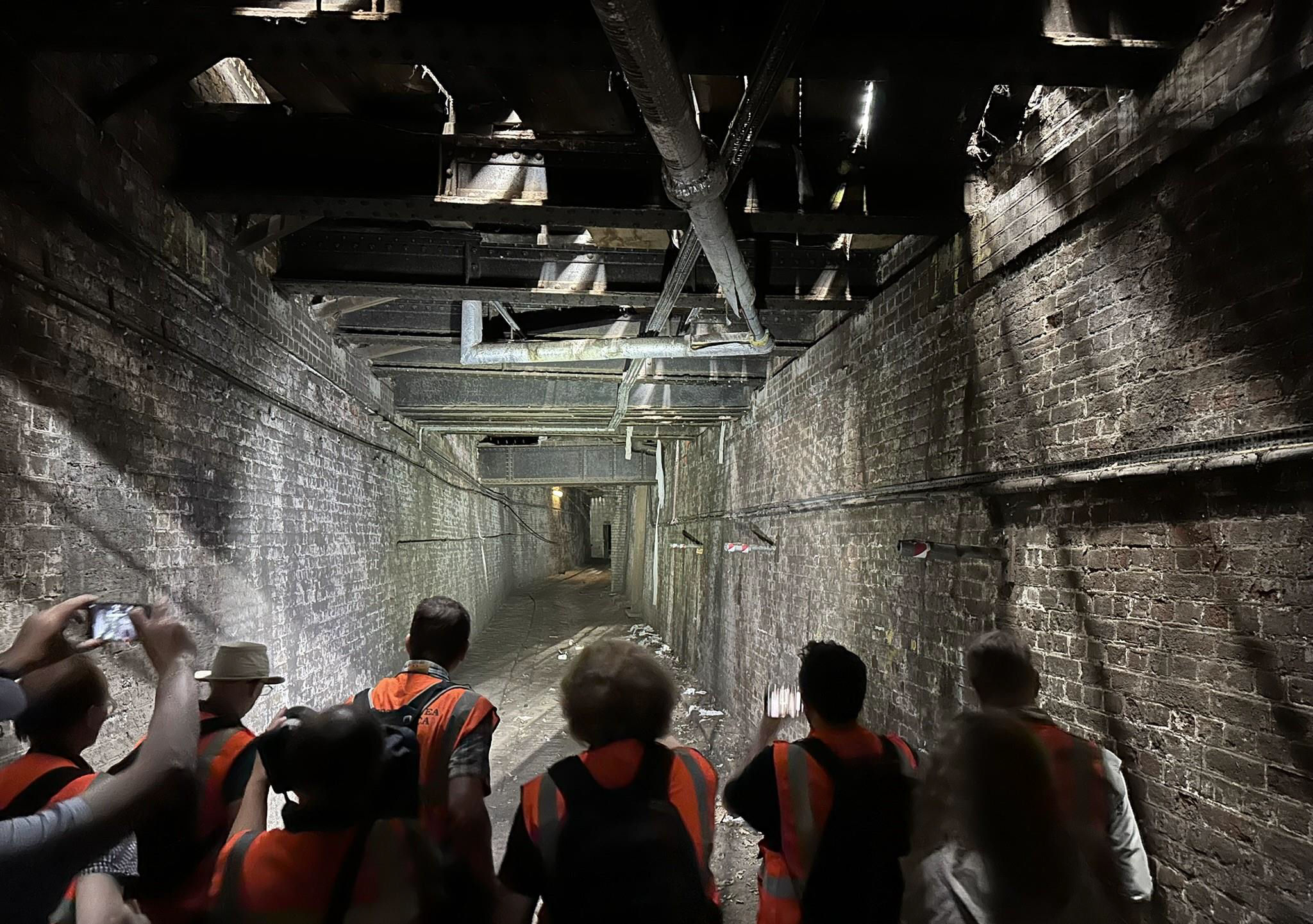
The old taxi carriage ramp located underneath the wooden slats beneath the tracks of P8.
[© Mae Bruckbauer 2024]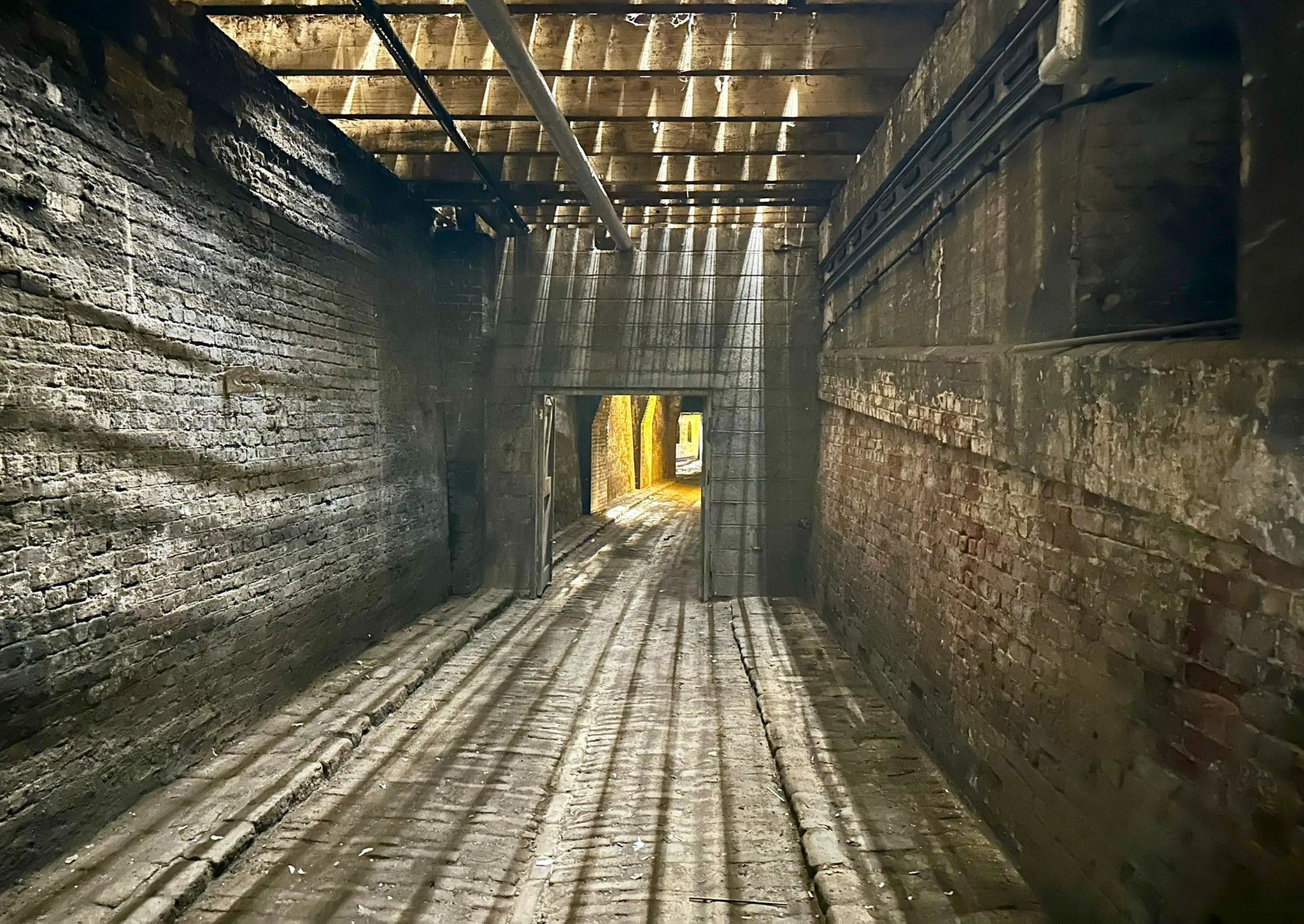
After a train pulled the bright sunlight trickled in.
[© Mae Bruckbauer 2024]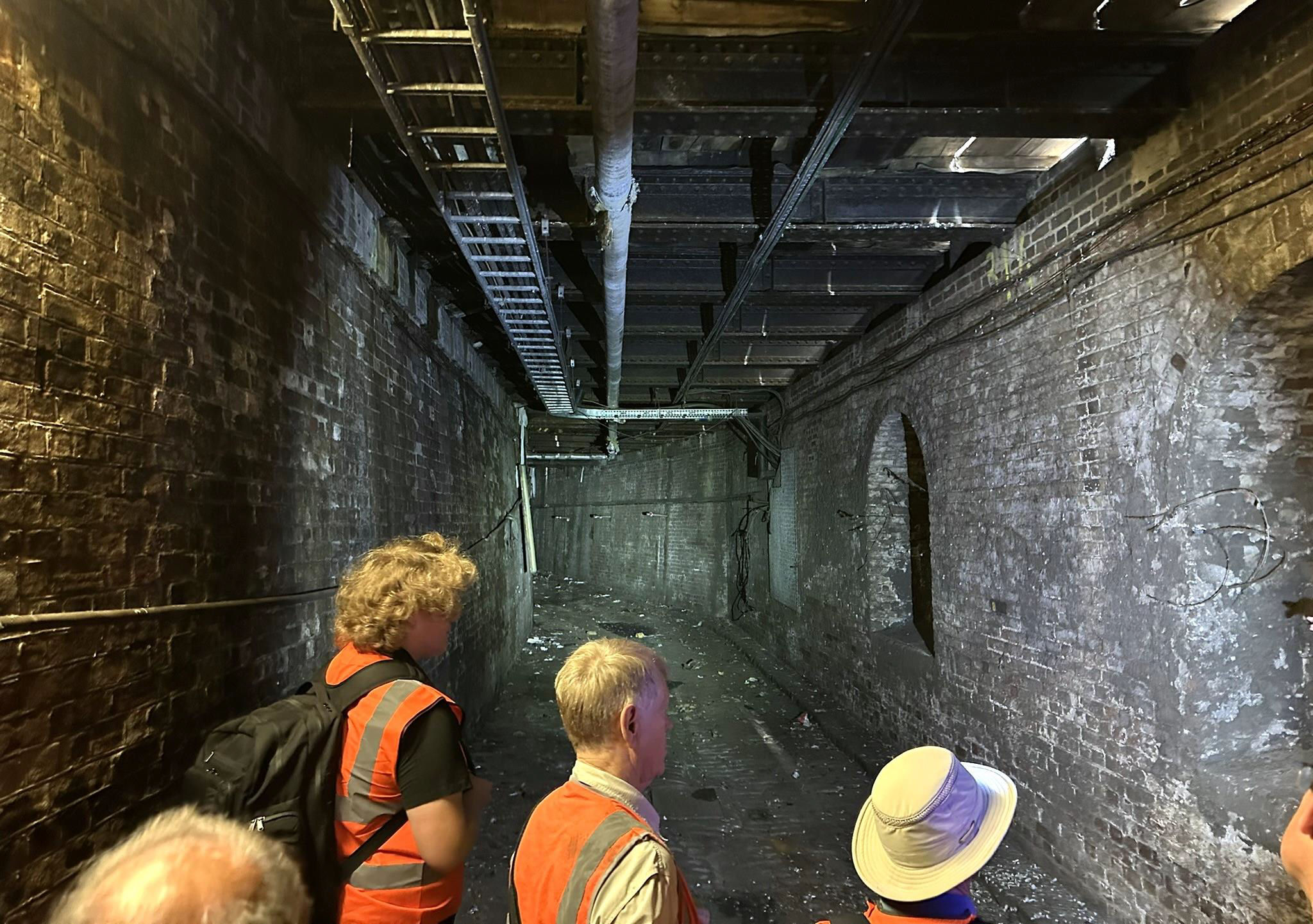
Scratch marks on the tunnel walls, where horse-drawn taxi cab drivers would use the walls of the tunnel to brake for the curve ahead,
[© Mae Bruckbauer 2024]
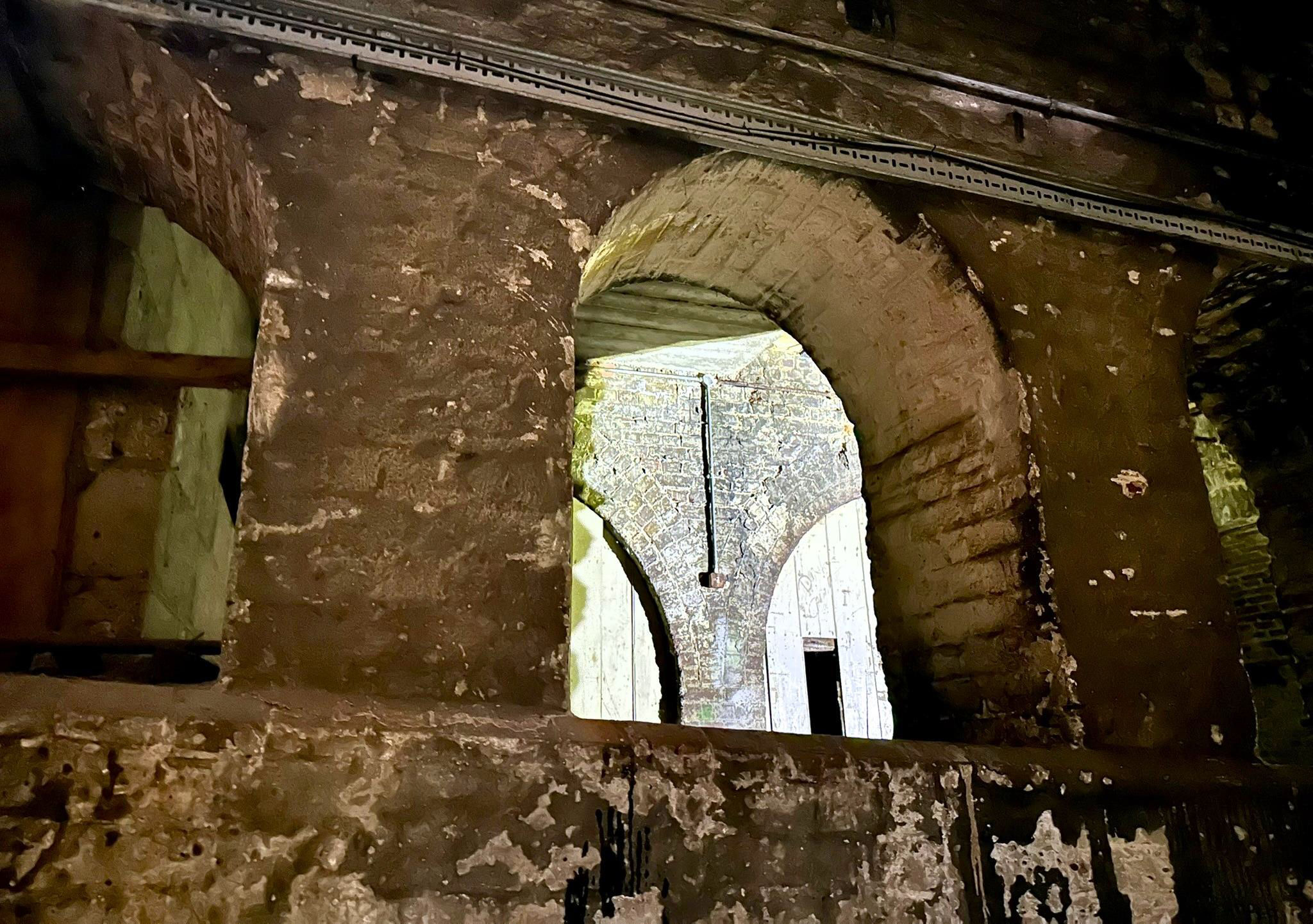
Some of the arches to the side of the tunnel.
[© Mae Bruckbauer 2024]Participants then went to the arches on the eastern side of the station, where we entered a long tunnel with side rooms. Rob told us about how they had been used in WWII as a command centre and then, further along we were taken into the pièce de résistance of the whole tour, a rifle range, with bright lighting and a chill in the air. We saw the whole shooting match; directly accessible from platform level.
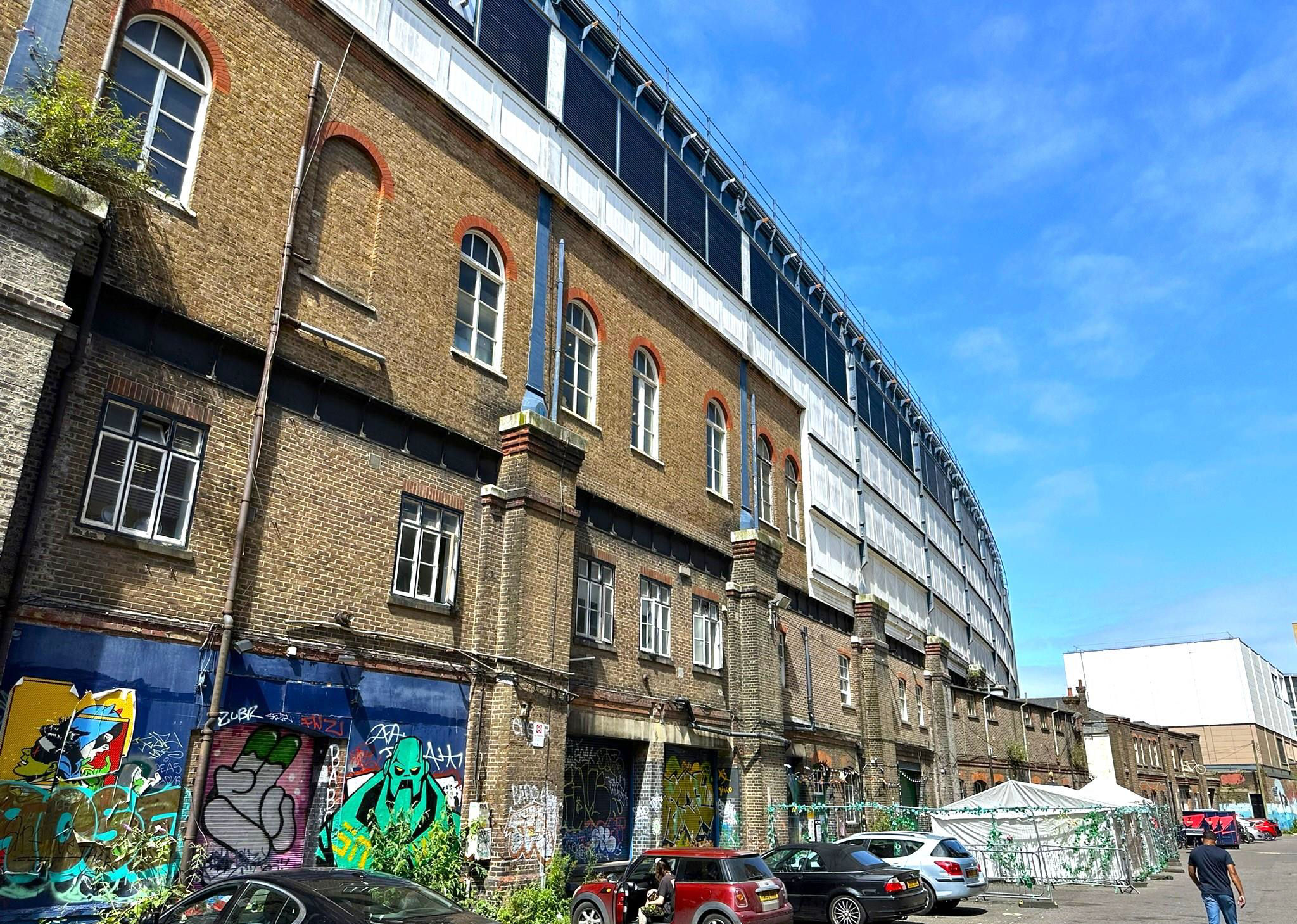
Eastern side of the station.
[© Mae Bruckbauer 2024]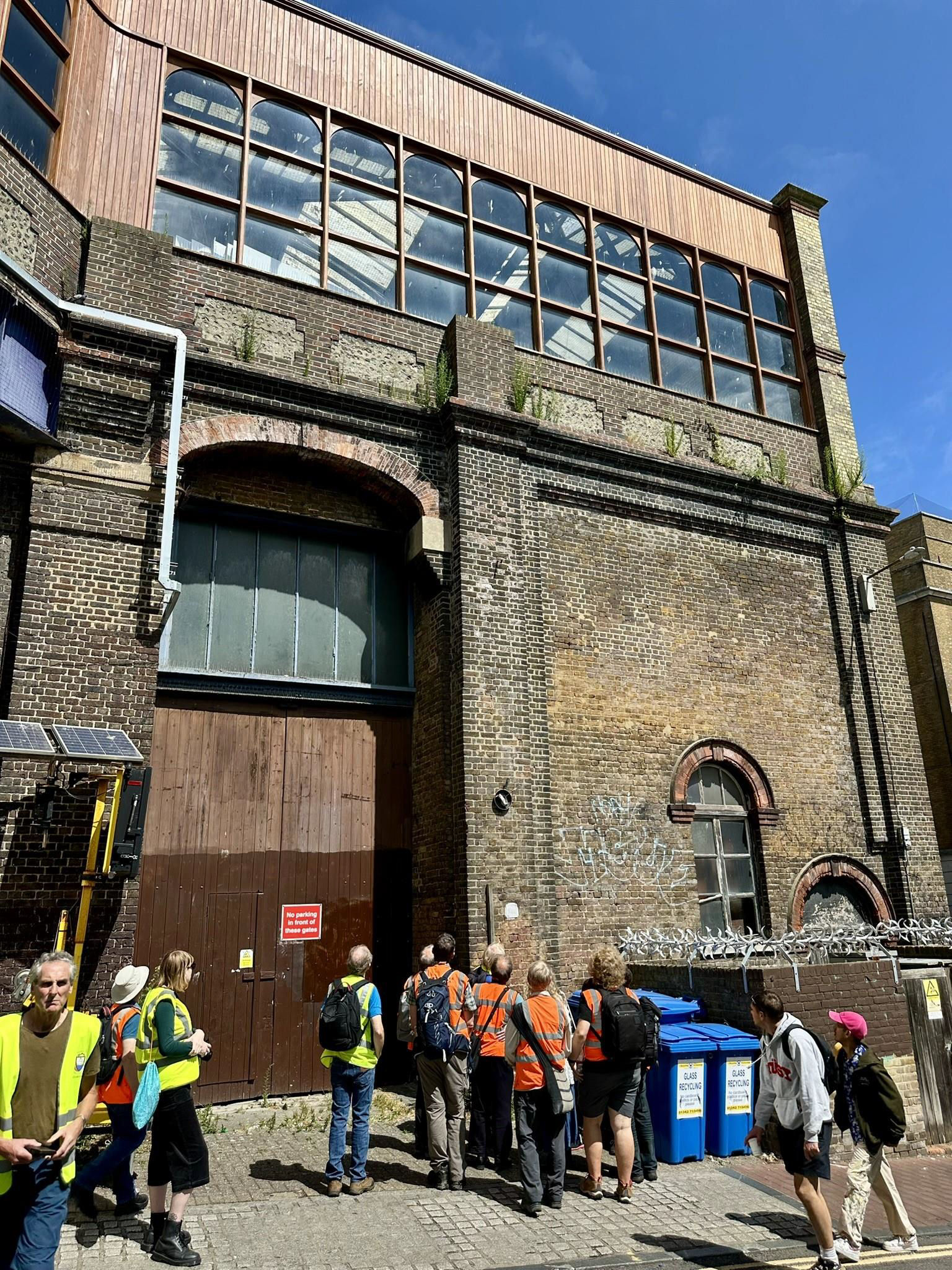
Those two passing 'Normals' are clearly wondering what on Earth our members are looking at...
[© Mae Bruckbauer 2024]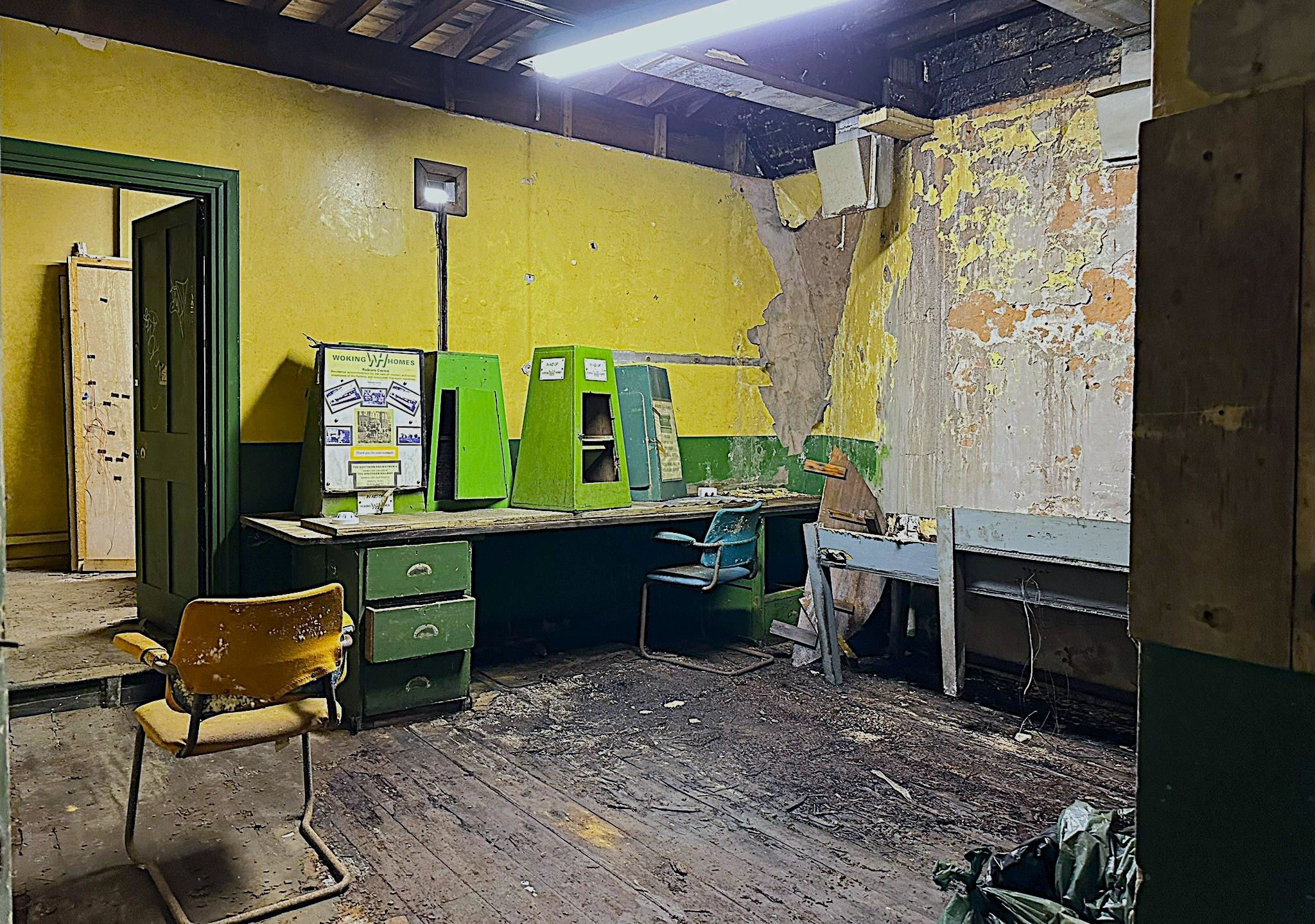
One of the rooms used in WWII as a command centre.
[© Mae Bruckbauer 2024]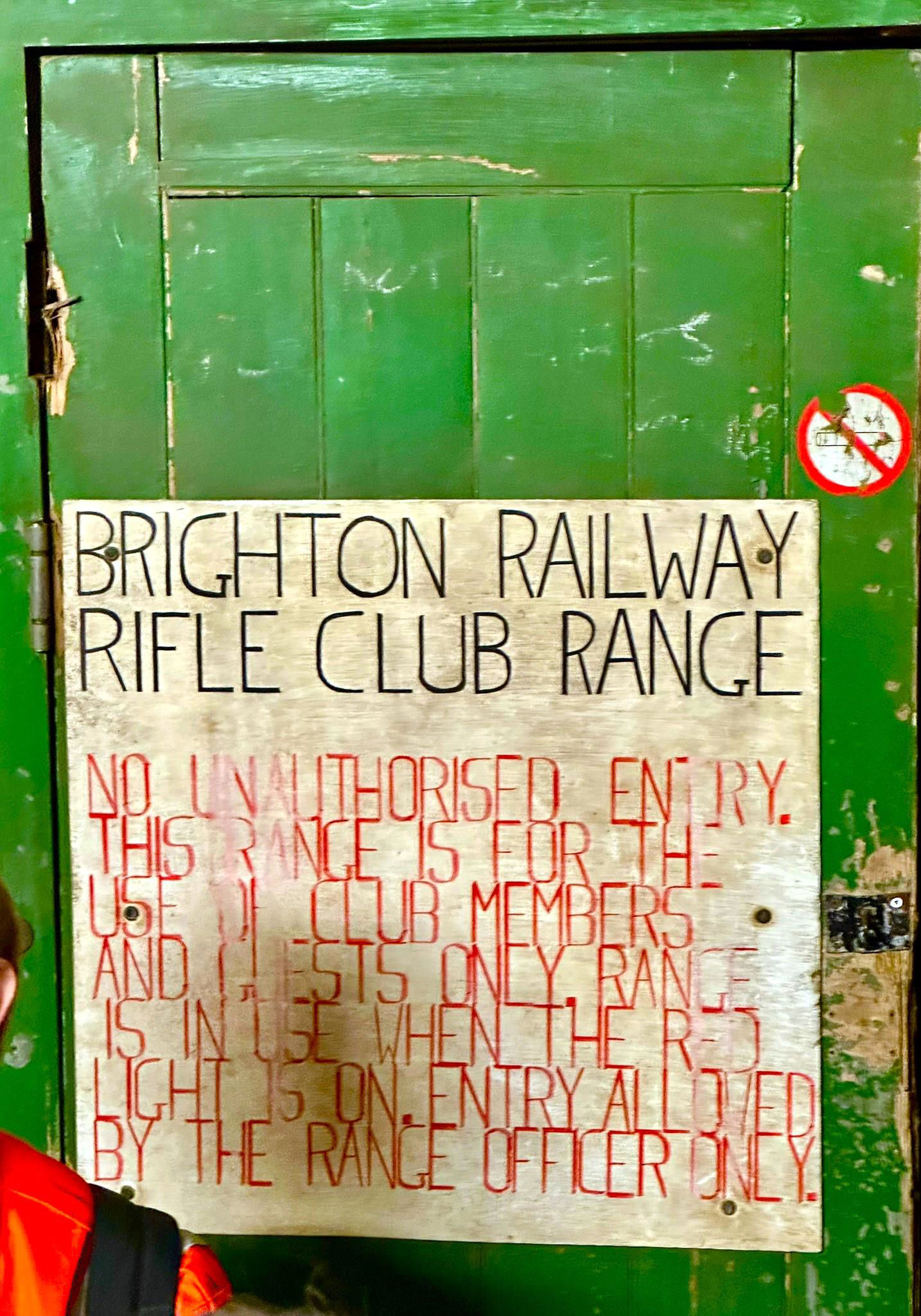
The door to Brighton Railway Rifle Club Range.
[© Mae Bruckbauer 2024]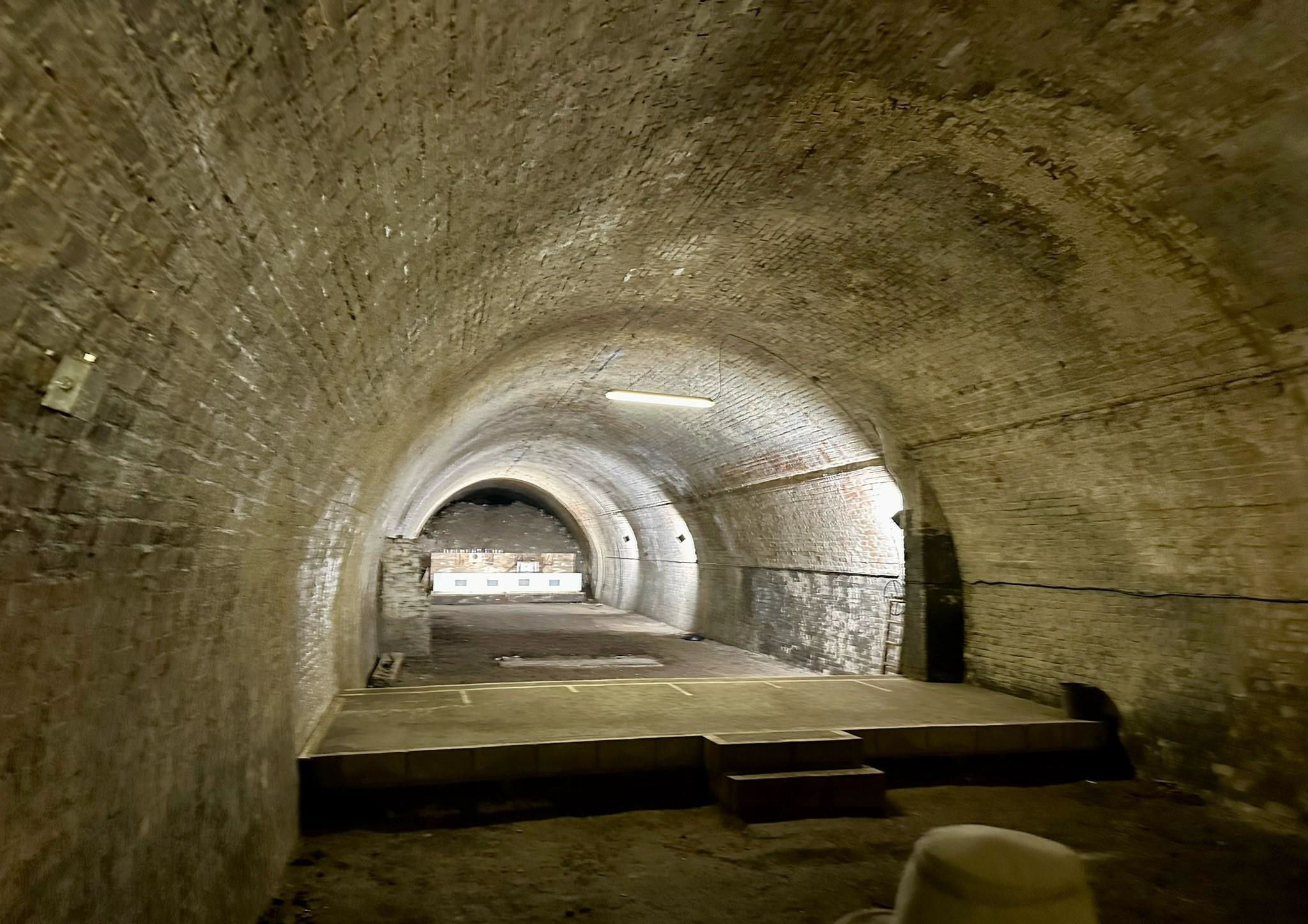
The rifle range.
[© Mae Bruckbauer 2024]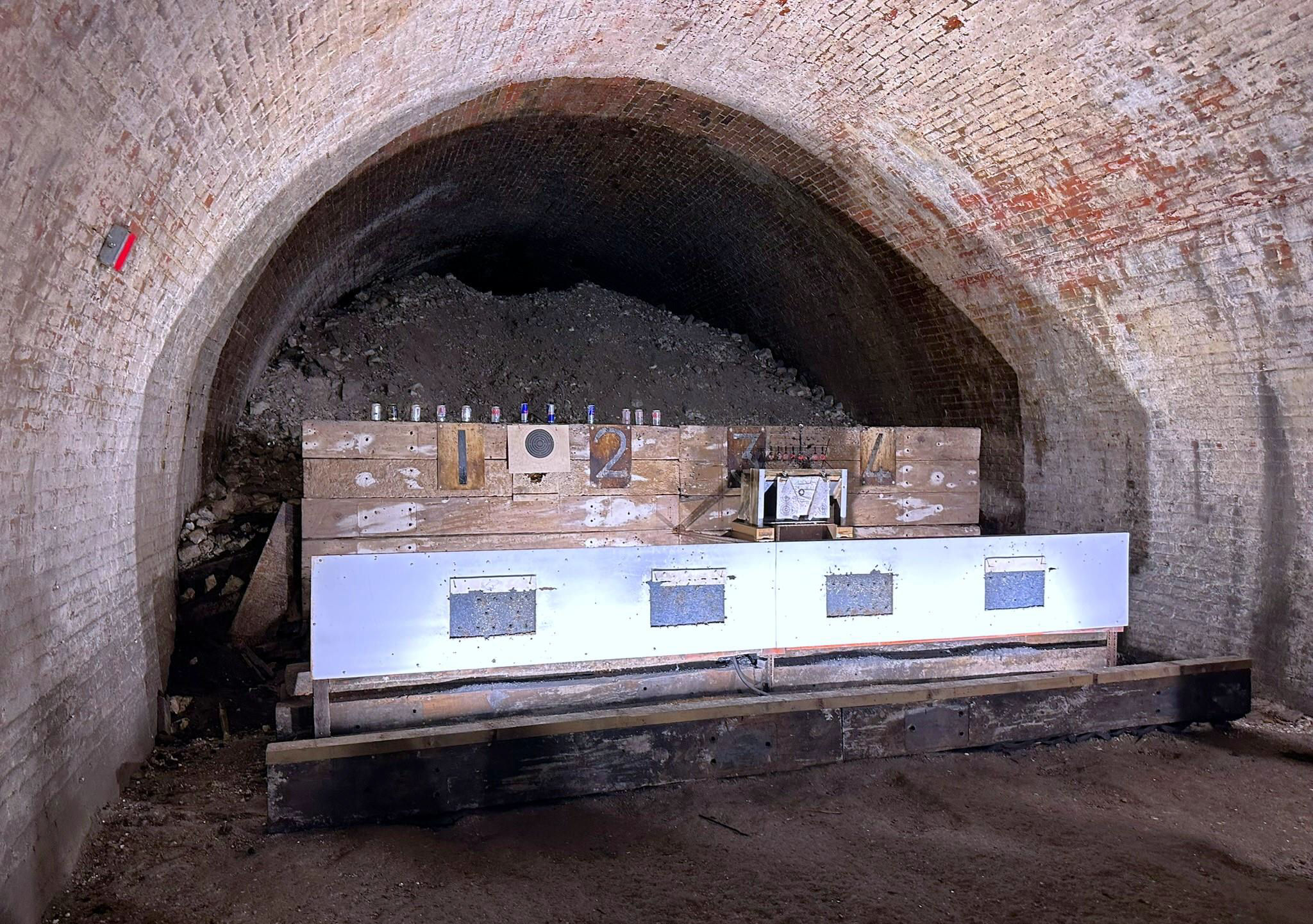
Targets.
[© Mae Bruckbauer 2024]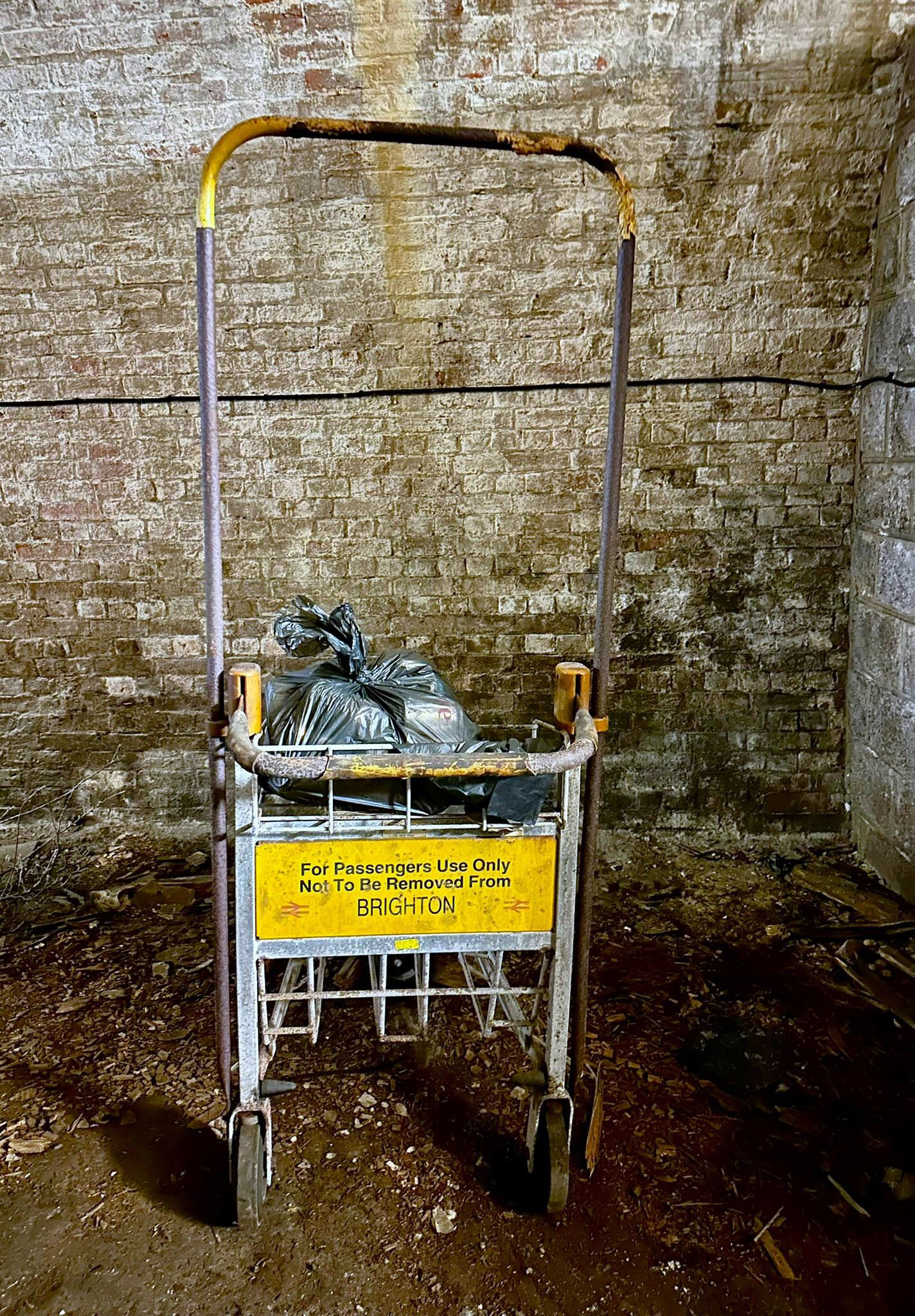
It's been a while since any passengers used this...
[© Mae Bruckbauer 2024]Some then joined a guided short walk from the station to see the plaque on a nearby Sainsbury's marking the site of the Brighton Locomotive Works, latterly used to manufacture Isetta microcars. Popular in the 1950s, these diminutive 'bubble cars' of Italian origin had three wheels, a single front opening door which doubled at the windscreen and a two-stroke engine. The canvas sunroof was the 'emergency exit'.
Then we walked along Brighton Greenway, to find the pillars that originally supported part of the eastern edge of Brighton Locomotive Works. Before dropping down to street level, we passed the Ghost Train sculpture on the bridge that used to serve the low level Brighton Goods Yard; latterly a parcels depot, it closed to rail traffic from 29 Apr 1985. At street level we visited the listed Montpelier Bridge with grand pedestrian arches before finishing around the corner, to see from ground level, the dominating London Road Viaduct that takes the line from Brighton to Lewes across the valley rising up from the sea.
Thanks to our members Adam Turner for, yet again, managing to reach parts others don't reach. This interesting tour gave a completely different perspective on this very busy station with 14M passengers in 2022-23 and approaching 1M interchanges. £480 was donated to 'Mind' GTR's nominated charity.