Organised by the indefatigable Adam Turner, 17 members met up with Glasgow Central Network Rail tour guide Jackie Ogilvie for an exclusive, behind the scenes, look at the station, opened 1 Aug 1879 with just eight high level platforms (the low level platforms opened 10 Aug 1896).
We began with Jackie giving the group a rundown of the station history including details of the huge, glazed roof. We then looked in what is today known as the 'Football Subway', which connects some of the high level platforms and is used to keep football supporters apart on match days. Walking past a set of hydraulic buffer stops, members inspected the former Carriage Road [was it hansom?], latterly used as a pickup and drop off point, with stone coat of arms of the Caledonian Railway high above.
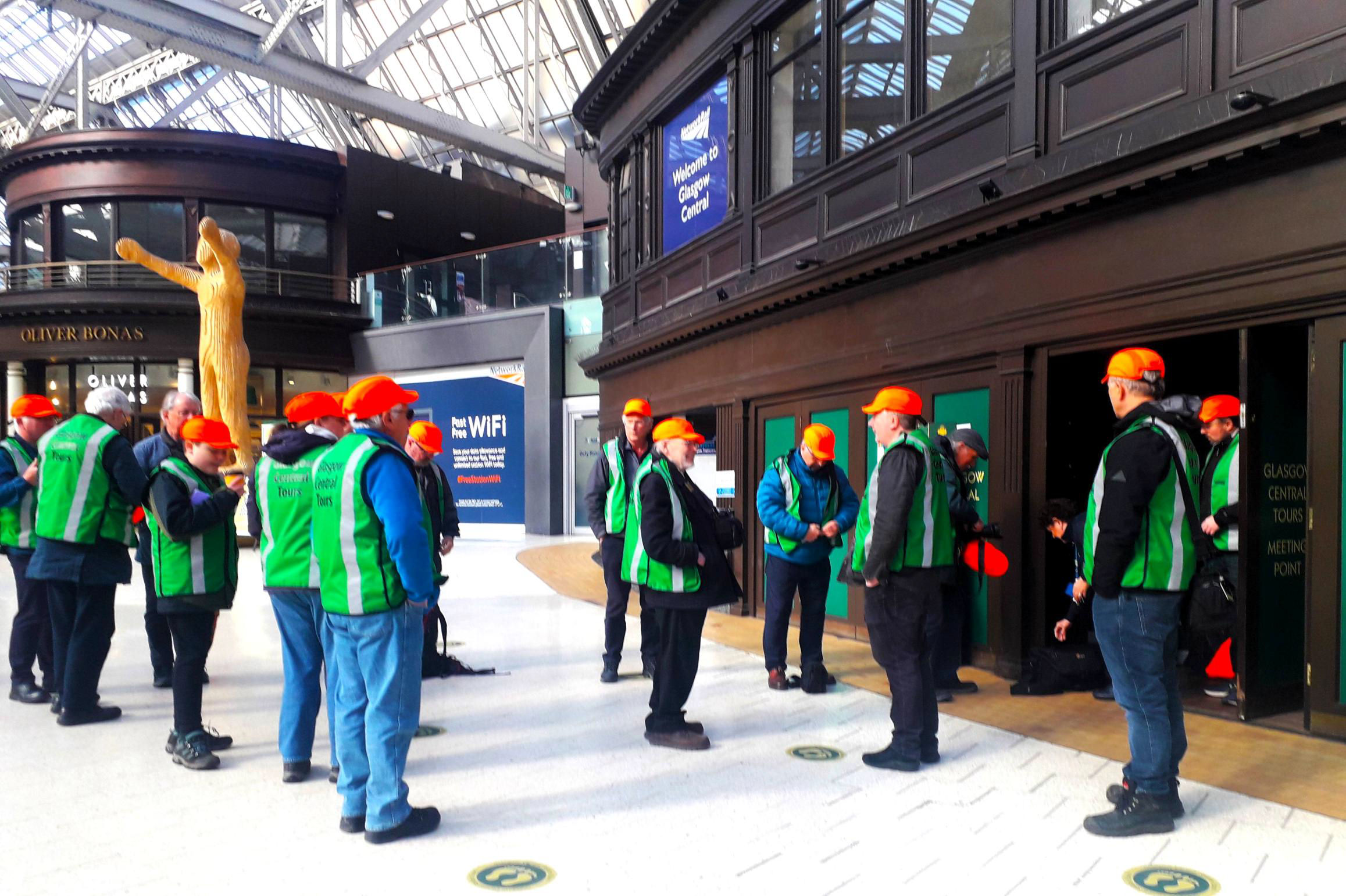
The group assembles for our behind the scenes look at the station,
[© Adam Turner/Graeme Jolley 2024]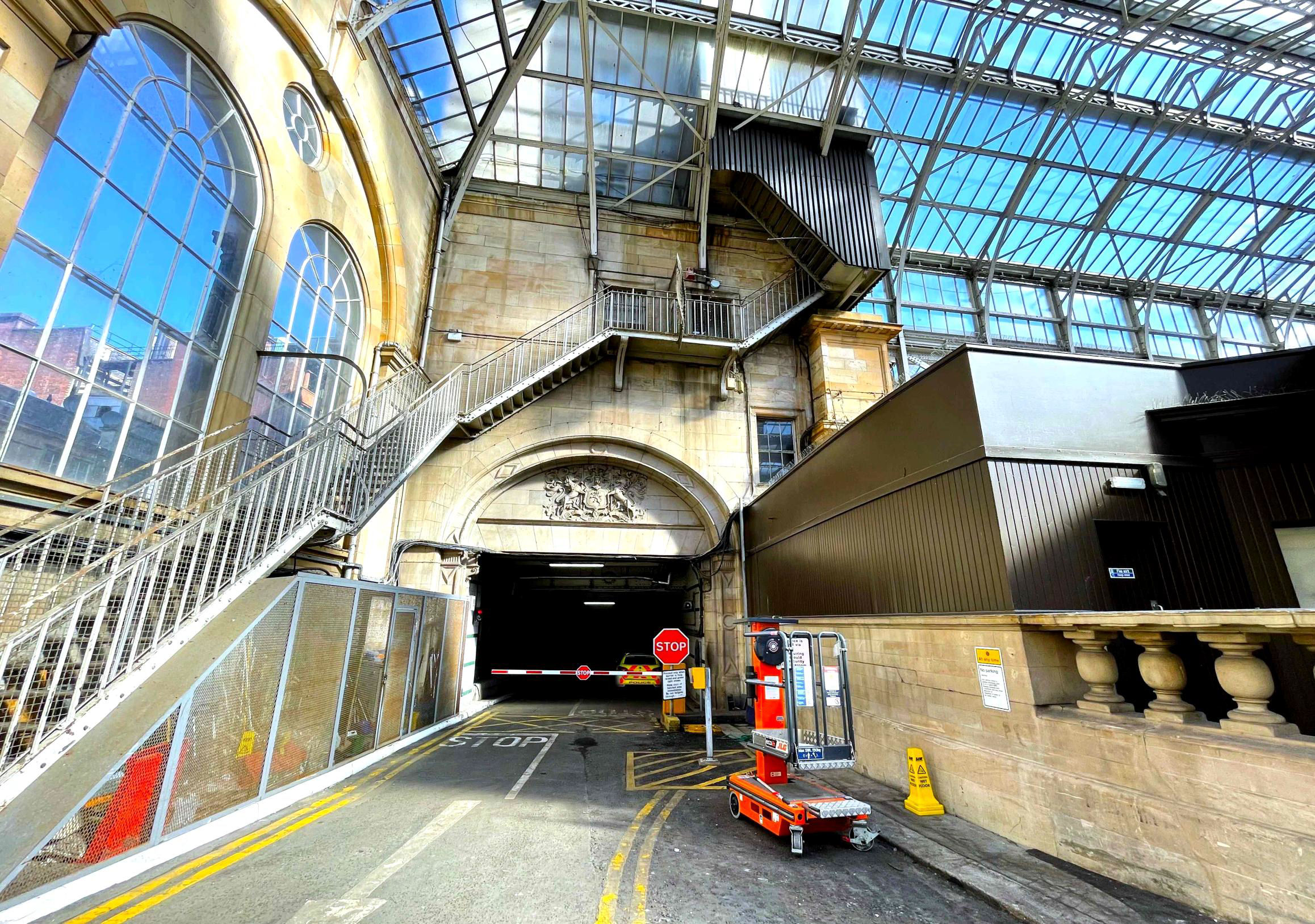
A view of part of the the huge glazed roof.
[© Adam Turner/Graeme Jolley 2024]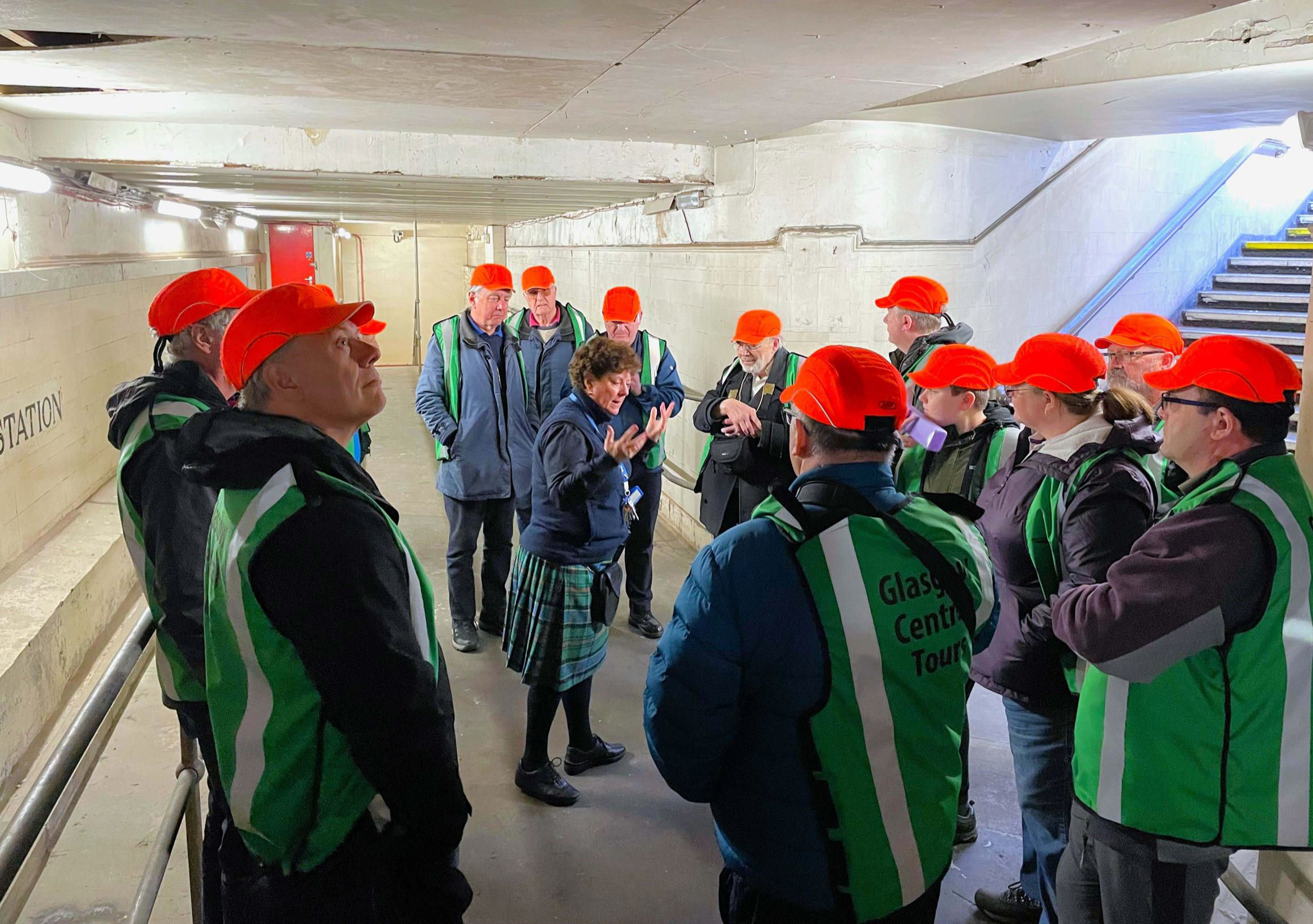
The 'Football Subway'.
[© Adam Turner/Graeme Jolley 2024]Jackie then took us down from platform level to the vaults below where wagons were unloaded and goods transferred onto horse drawn carts for distribution around the City - Glasgow became a city in the late 1170s! Further down still into the station depths, our group was shown areas where, during WWI, wounded soldiers were brought directly from platform level via subterranean passageways to be treated for their injuries. The injured men were kept away from public areas to ensure those signing up for duty in the war would not see reality! A small display of WWI artifacts is kept here.
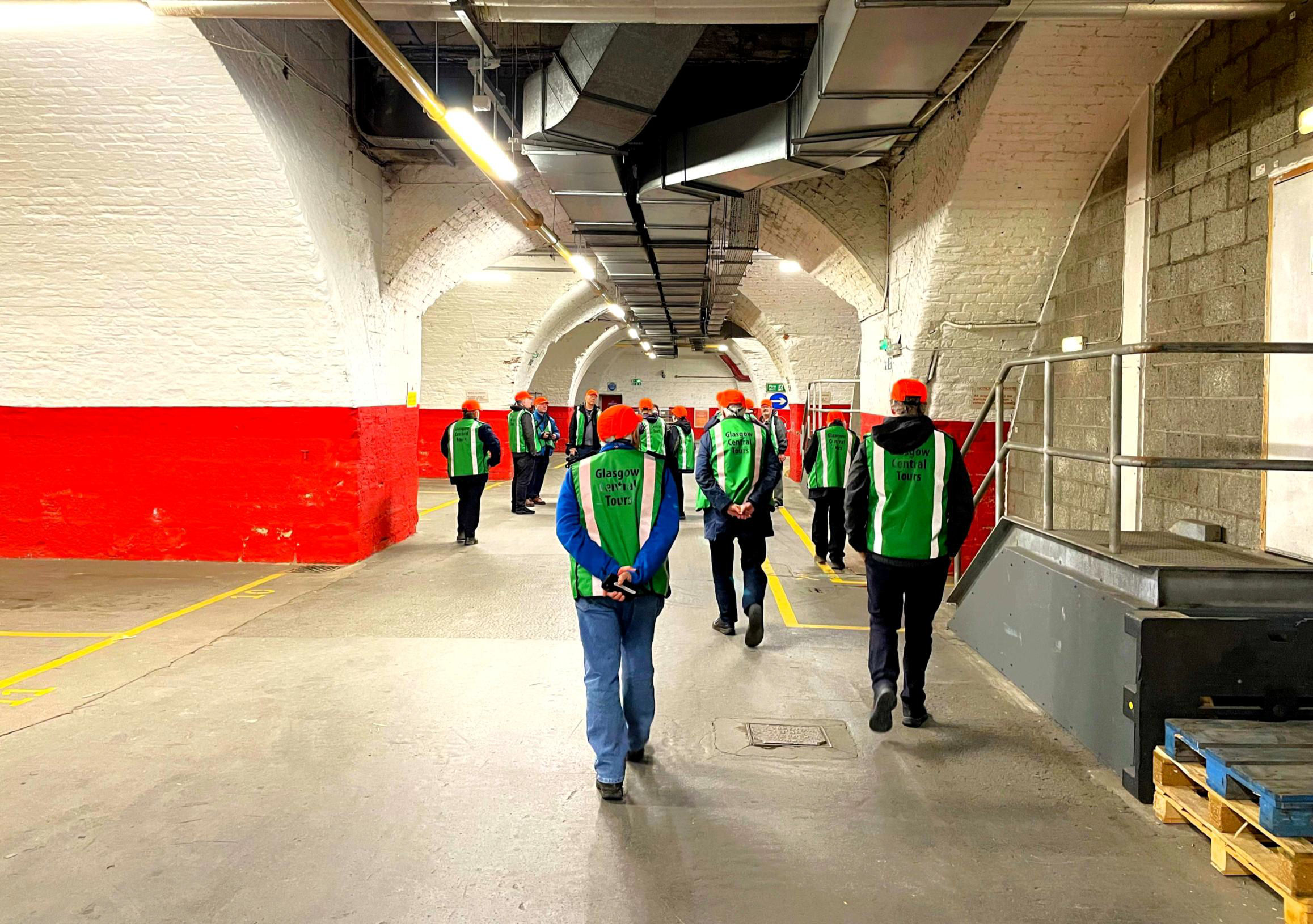
The subterranean passageways below platform level.
[© Adam Turner/Graeme Jolley 2024]Moving on, we then entered the station basement museum, housing several railway related artifacts including some from Central station. This fascinating museum, put together by Jackie and her colleagues, is constantly expanding as items are acquired. Our tour finished at the lowest level, accessed via the passageway leading from the low level booking office to the low level platforms.
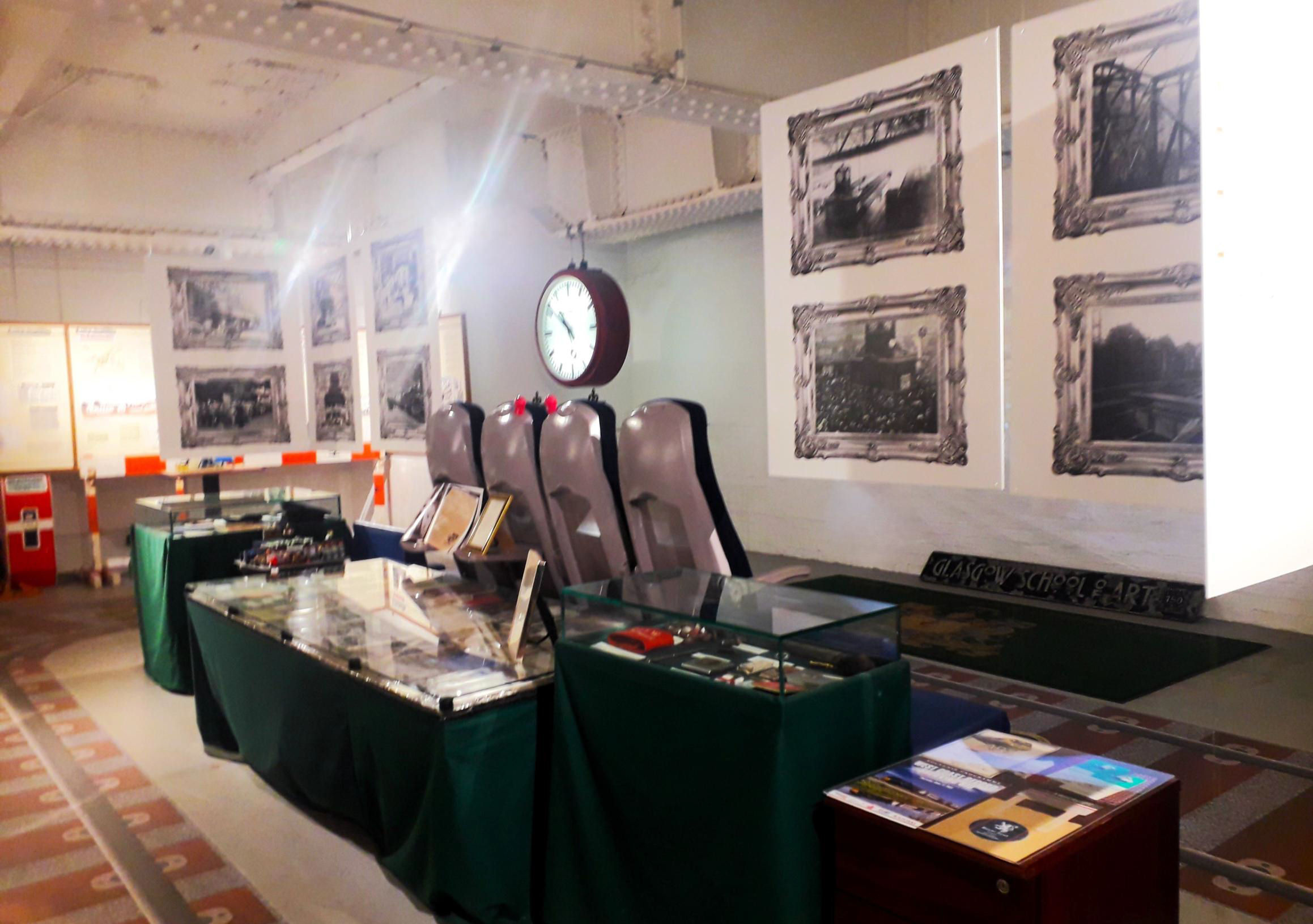
The station basement museum, housing several railway related artifacts.
[© Adam Turner/Graeme Jolley2024]Keeping to one side in the corridor to ensure we did not impede the progress of 'normal' passengers, our group was then directed through a nondescript door leading onto a set of metal steps taking us down onto an old island platform. It was used until initial closure of the low level line on 5 Oct 1964. When the low level (Argyle) line reopened from 5 Nov 1979, only one island platform was reactivated but the other remains! It is possible to descend from that platform and see trains on the low level line passing by behind secure hoardings. There are also the remains of sidings. Jackie advised that the museum has plans which may even include track being reinstated alongside this old island platform. The income from the NR public tours is used to support the museum and its development.
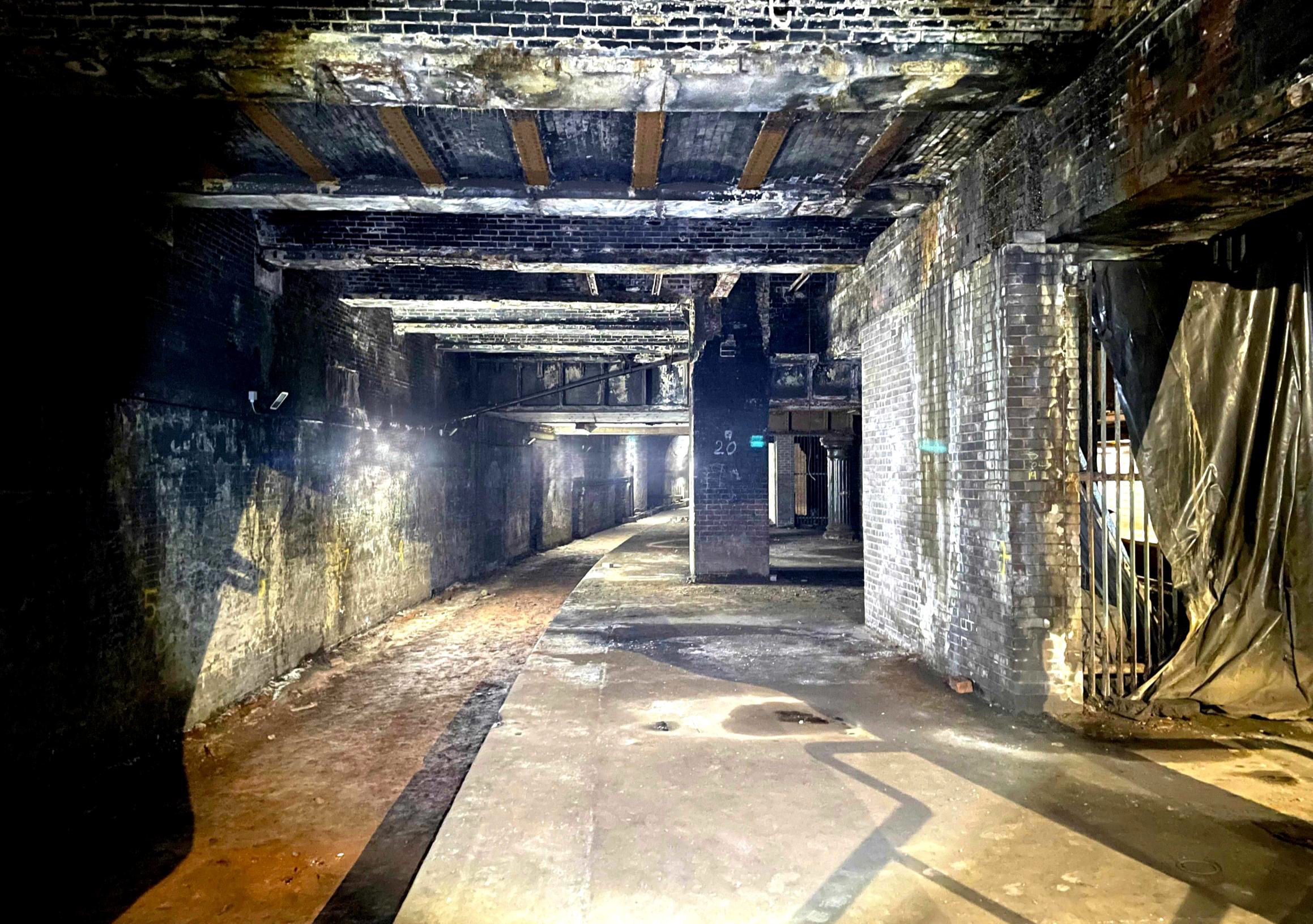
The old island platform used until initial closure of the low level line on 5 Oct 1964.
[© Adam Turner/Graeme Jolley 2024]Having completed our tour and bid farewell to Jackie, a slightly smaller group then walked to St Enoch (subway) station to take the 'Clockwork Orange' (will it still have that nickname after the new trains are fully in service?) to Kelvinbridge. At St Enoch we stopped to see the remaining previous subway station building dating from 1896. Adam showed the group some old photos of the former imposing St Enoch 1876 mainline terminal. Closed to regular passengers from 27 Jun 1966, its huge roof and the station hotel were demolished in 1974 to make way for the large St Enoch Shopping Centre of today.
At Kelvinbridge we stopped at various places for a look at remains of the original subway station entrance and the Glasgow Central Railway (BLN 1417.397), along with its Kelvin Bridge (sic) station (BLN 1409.2312). OP 10 Aug 1896, CP 1 Jan 1917, it ROP 2 Jun 1919 and CP 4 Aug 1952. Member Adam Turner, our very knowledgeable guide and able tour manager, then took us to see items in the locale. They included a surviving Caledonian Railway stone monogram, tunnel entrances, the site of the platforms and remains of the booking hall / station buildings. It was a thoroughly entertaining and interesting few hours for which Adam and Jackie must be given heartfelt thanks. Our tour supported the Scottish Railway Preservation Society, the nominated good cause, by £345. NR public tours of Glasgow Central take place regularly (but do not reach all the parts in the depths that were included in this special BLS tour). See:
https://www.glasgowcentraltours.co.uk/ for full details and to book.
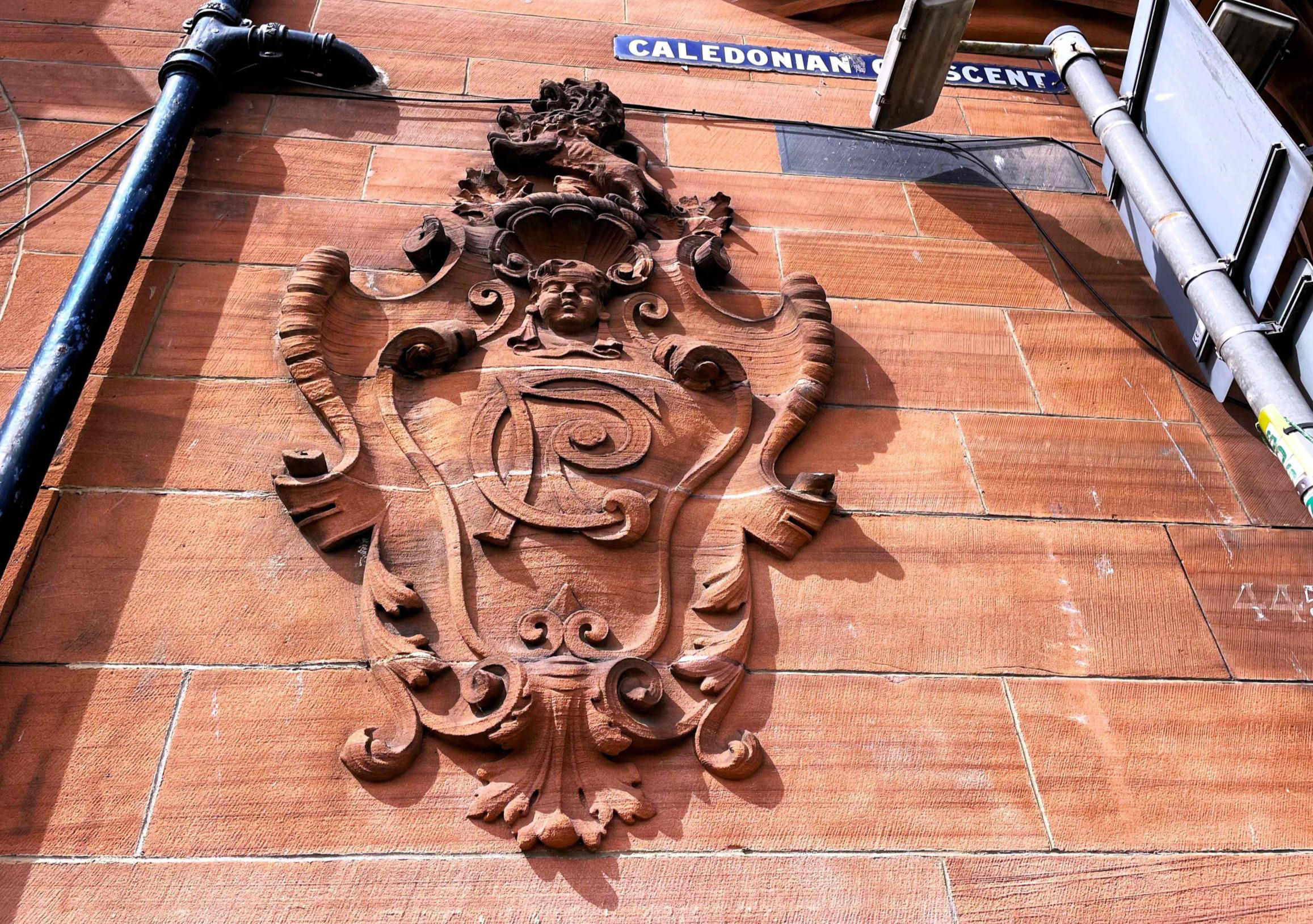
Caledonian Railway stone monogram at Kelvinbridge.
[© Adam Turner/Graeme Jolley 2024]