As one who doesn't drive, this fixture, despite being relatively local, needed an overnight stay with a friend in Northampton. An early start involved the 05.10 bus from Northampton Bus Station to Leicester via Market Harborough which took 1hr 20mins. This left time in the City for breakfast in a local Greggs before catching a second bus from St Margarets Bus Station to Mountsorrel. I was there for the 08.04 departure but time came and went and no bus arrived. Not to panic though, as there is a 15 min frequency on this route and my schedule allowed wriggle room. I alighted on Loughborough Road, the main one through Mountsorrel, at 08.49 for a 20 min walk to the Heritage Centre. The sun was out and this set the tone for most of the day. In the car park, we were met by Alan Sheppard, who made sure everyone had an orange hi viz vest (lending them out if needed) and gave everyone stickers allowing admission (included in the fare). We were delighted to even welcome Member 13 from Pevensey, so it must have been interesting!
A crowd gathered down at Quarry Bottom station on the 2ft gauge Quarry Bottom Railway. Our host for the day and lynch pin of the extensive planning for the visit, Steve Cramp, bid us welcome. It has to be said from the very first exploratory email right through to execution that his team's efforts were timely and exemplary; they even staged a full dress rehearsal! We were warned not to miss anything, as sections could not be repeated with the stock moves. They originally said bring as many as you want but it had to be capped at 60 when they sat down and did the planning. 59 had booked, with no one turned away! Unusually, the first moves were not the normal public run but the rather longer branch which converges (one of two sets of trailing points on the public run) just before the station.
This branch runs round the back and side of the main museum/shed. In groups, everyone did it riding a single guard's coach with 4w DM No1 'MALCOLM' in yellow livery. This 'little' Ruston (hence the Ruston Diamond tour epithet) 85049 LBT series of 1956 was delivered to the British Transport Commission at Chesterton Junction PW Depot. It is a 3-cylinder example, making it the smallest loco built by Ruston & Hornsby. For a short section this NG line is close to standard gauge Road 5. At one place narrow and standard gauge trains cannot pass due to clearance. The NG branch then splits into two.
The 'Greenhouse Siding' curves round left to end behind the Mountsorrel end of Nunckley Hill station platform (on the standard gauge Mountsorrel branch). We weren't at all surprised to see a greenhouse alongside the end of the siding! Apart from the rehearsal, it was only the second movement on this line in five years and the first with passengers. On a 2023 visit, your Editor noted that this greenhouse was located OVER the running line here! The Railway has certainly gone to a great deal of trouble to dig out, fettle and test every possible inch of track for us - some parts we had thought impossible to do.
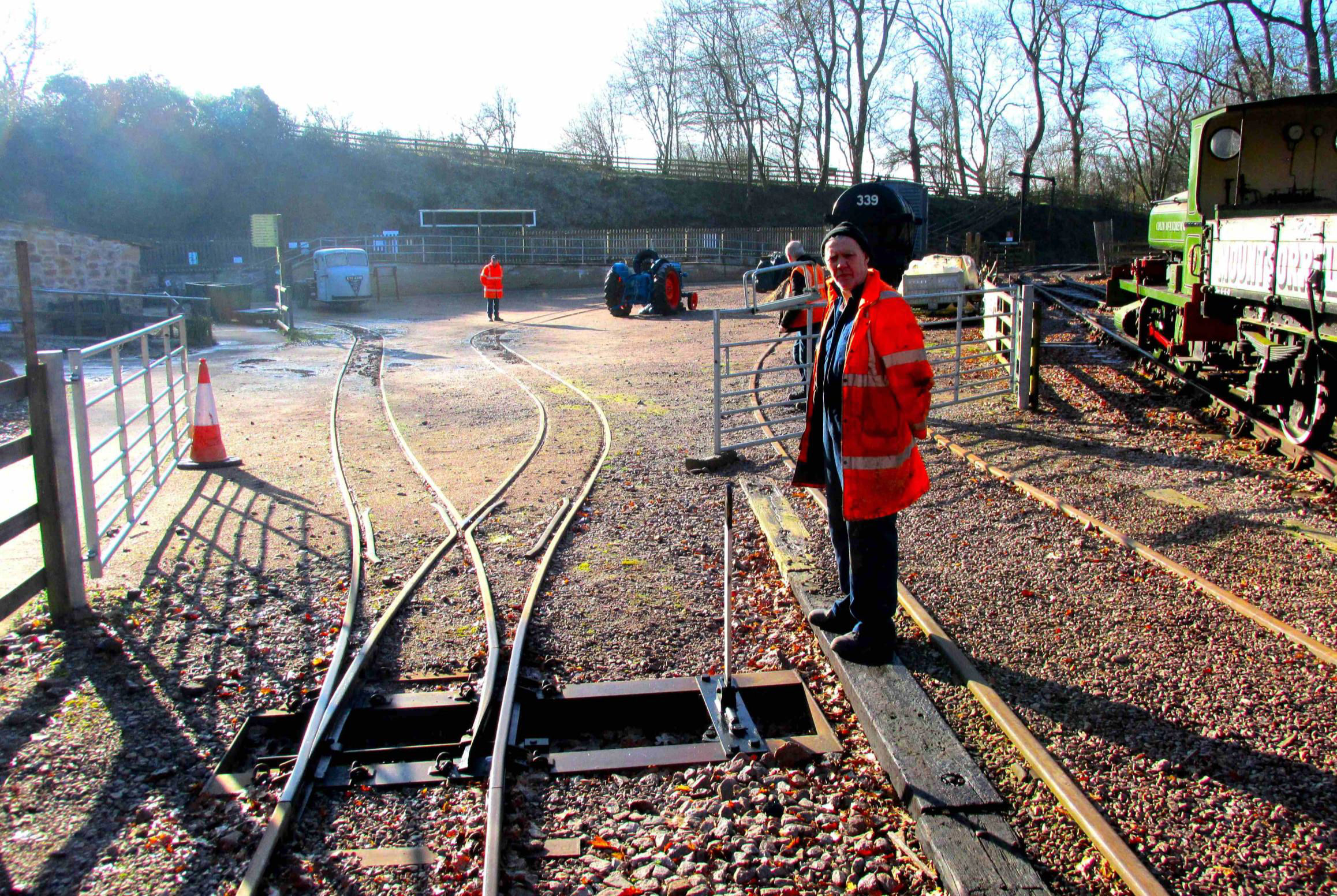
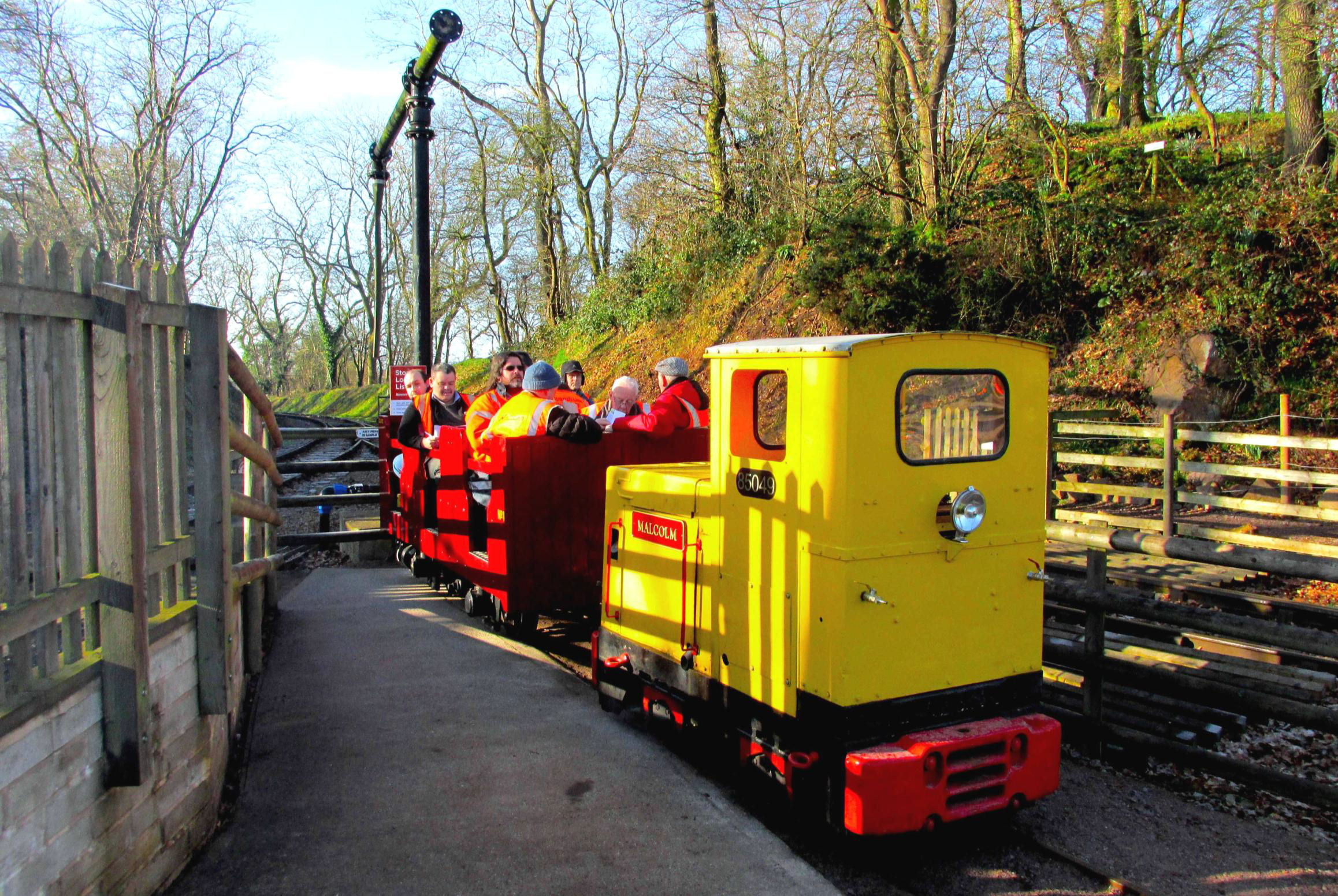
Greenhouse Siding is left and Water Crane Siding right, ahead is Nunckley Hill platform.
[© Simon Mortimer 2024]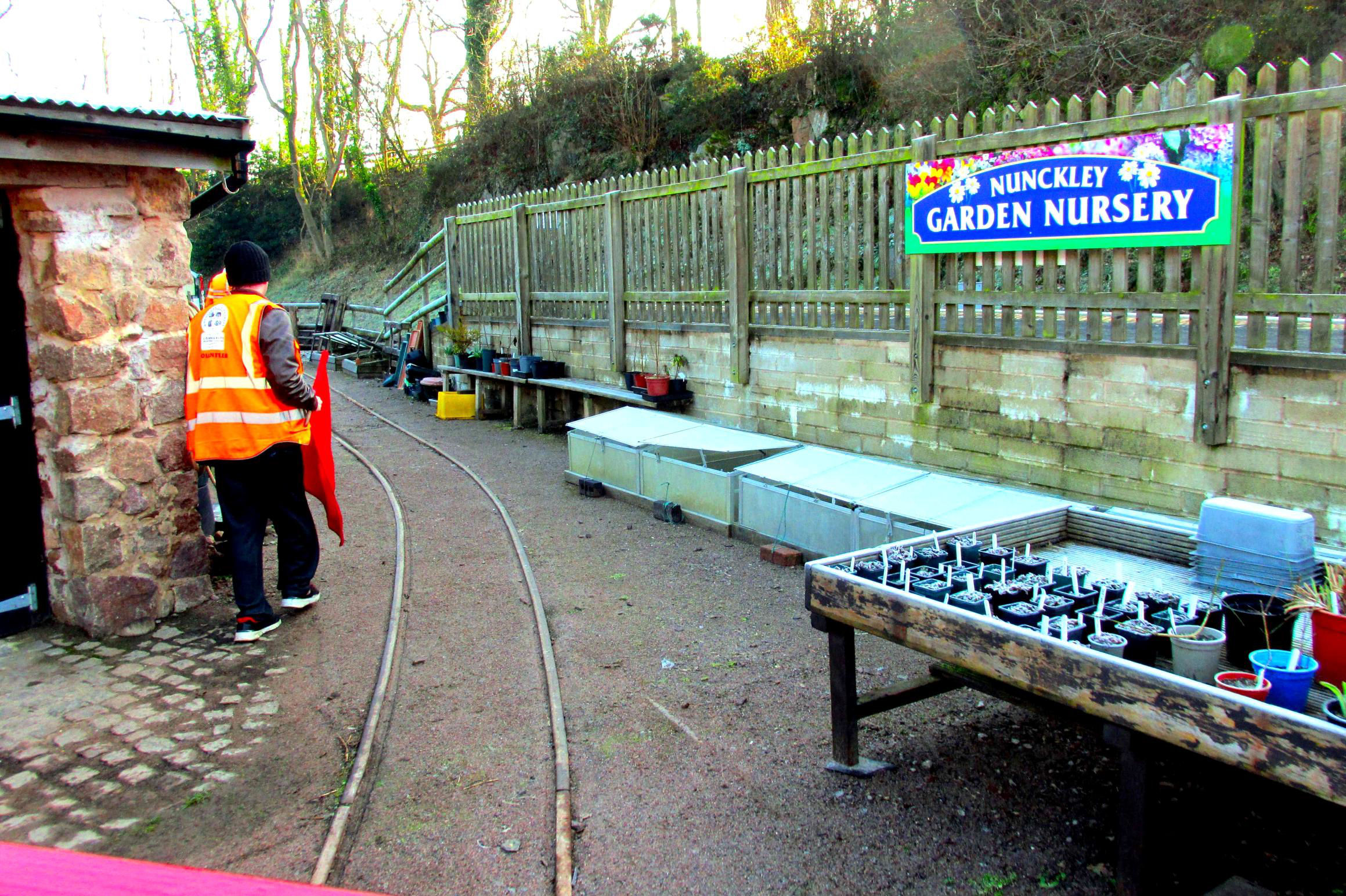
Curving round on Greenhouse Siding, its first ever passenger train. The back of Nunckley Hill platform, on the Mountsorrel branch, is right
[© Simon Mortimer 2024]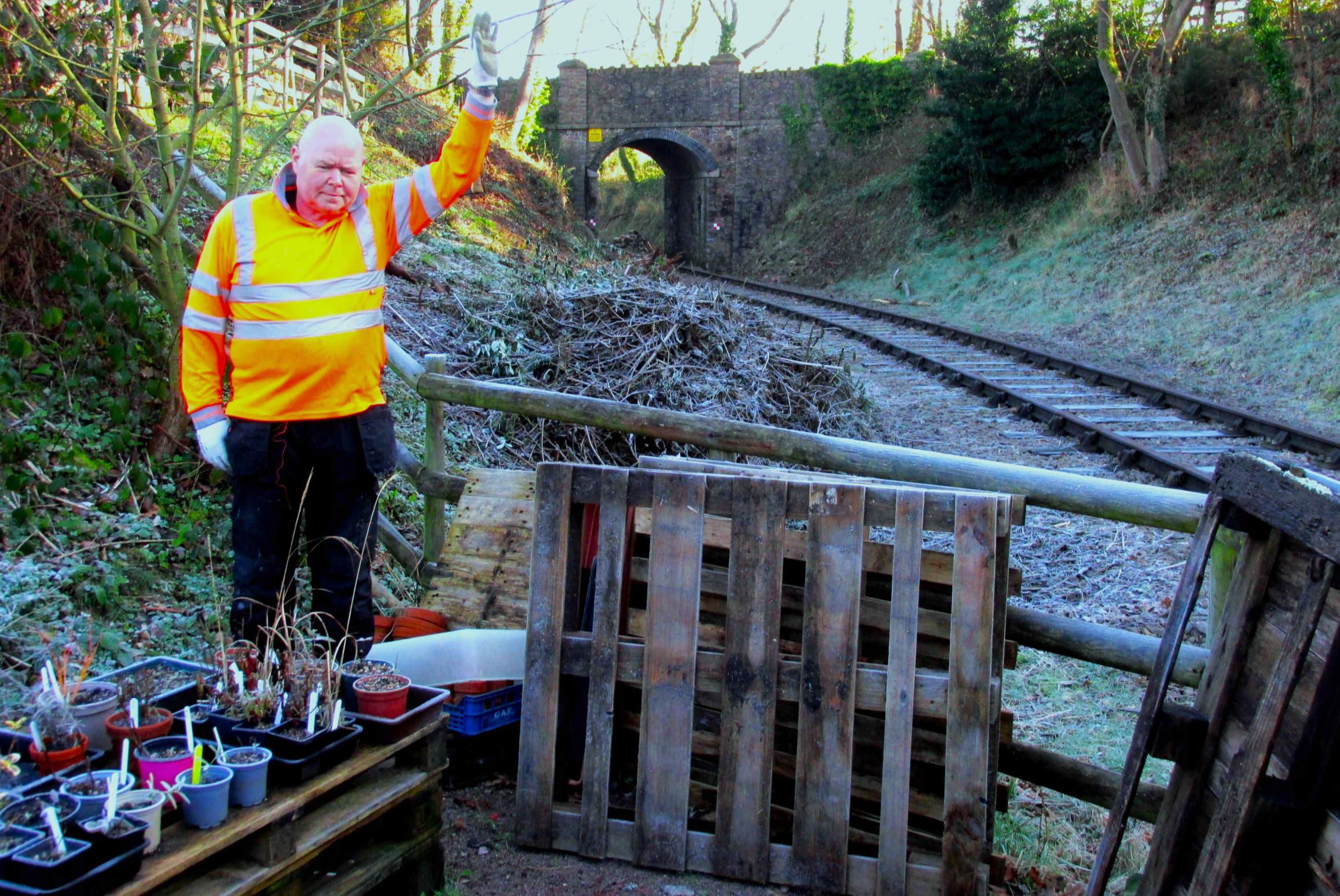
You are not going any further! Greenhouse Siding; Mountsorrel is through the bridge, Steve Cramp is left.
[© Simon Mortimer 2024]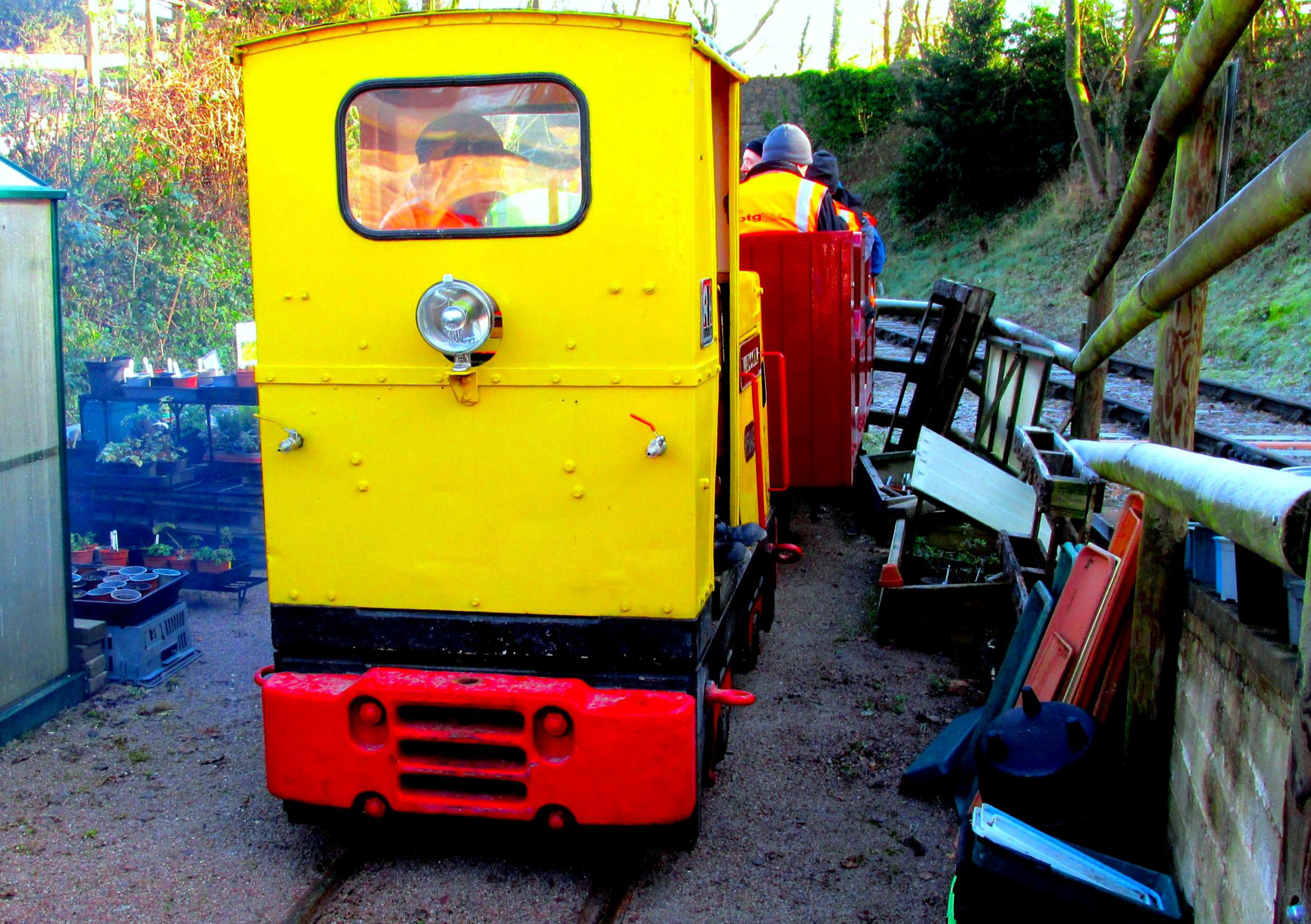
Greenhouse Siding; Mountsorrel is through the bridge, with greenhouse far left
[© Simon Mortimer 2024]Next was the 'Water Crane Siding' (guess how this was named‽, running behind almost the full length of Nunckley Hill platform, at a lower level. Participants could see isolated semi-buried remnants of an abandoned and mostly lifted NG line from Greenhouse Siding towards the end of Water Crane Siding. On some plans it gave the impression of forming a large triangle but was never connected to Water Crane Siding. On the return run, there was haulage into the end of the single road Carriage Shed, which involved crossing the path round the outside of the former quarry bottom on the level. Cleverly, this section was done before the public was admitted to the site. Returning to the NG station, after a quick turnaround, it was 'rinse and repeat' - four trips in total were needed to accommodate everyone. With practice, it became a slick operation by the enthusiastic Mountsorrel volunteers (a minimum of 10 were required). The 'Full Dress Rehearsal' of the moves the day before (ECS), in the pouring rain, had perfected and timed everything, such was their dedication to making sure we achieved everything.
The end of Water Crane Siding, left is Nunckley Hill platform, ahead is the Mountsorrel branch looking towards Swithland Sidings.
[© Simon Mortimer 2024]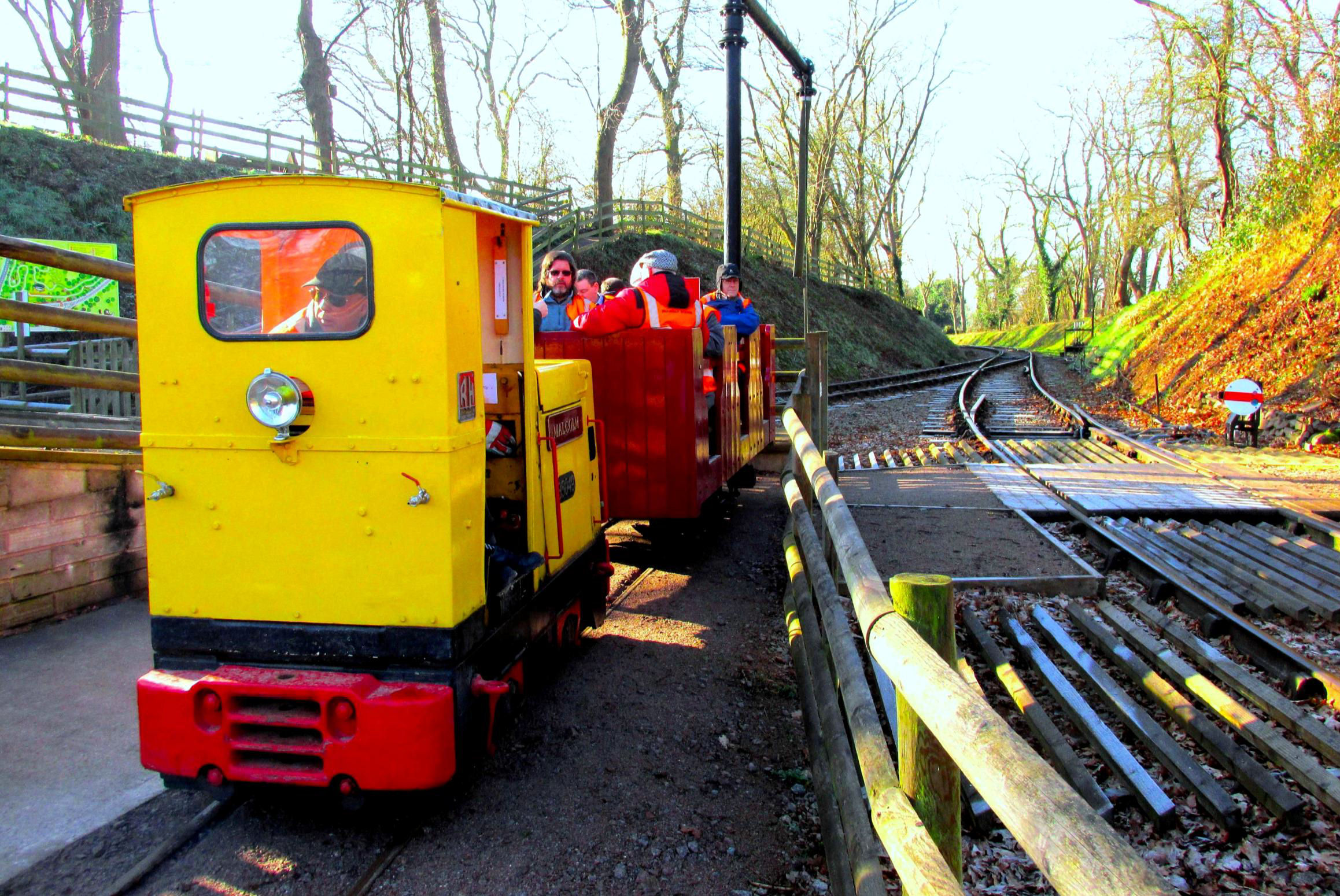
The same location showing the standard gauge connection between the yard and the Mountsorrel branch (with protecting catch points!).
[© Simon Mortimer 2024]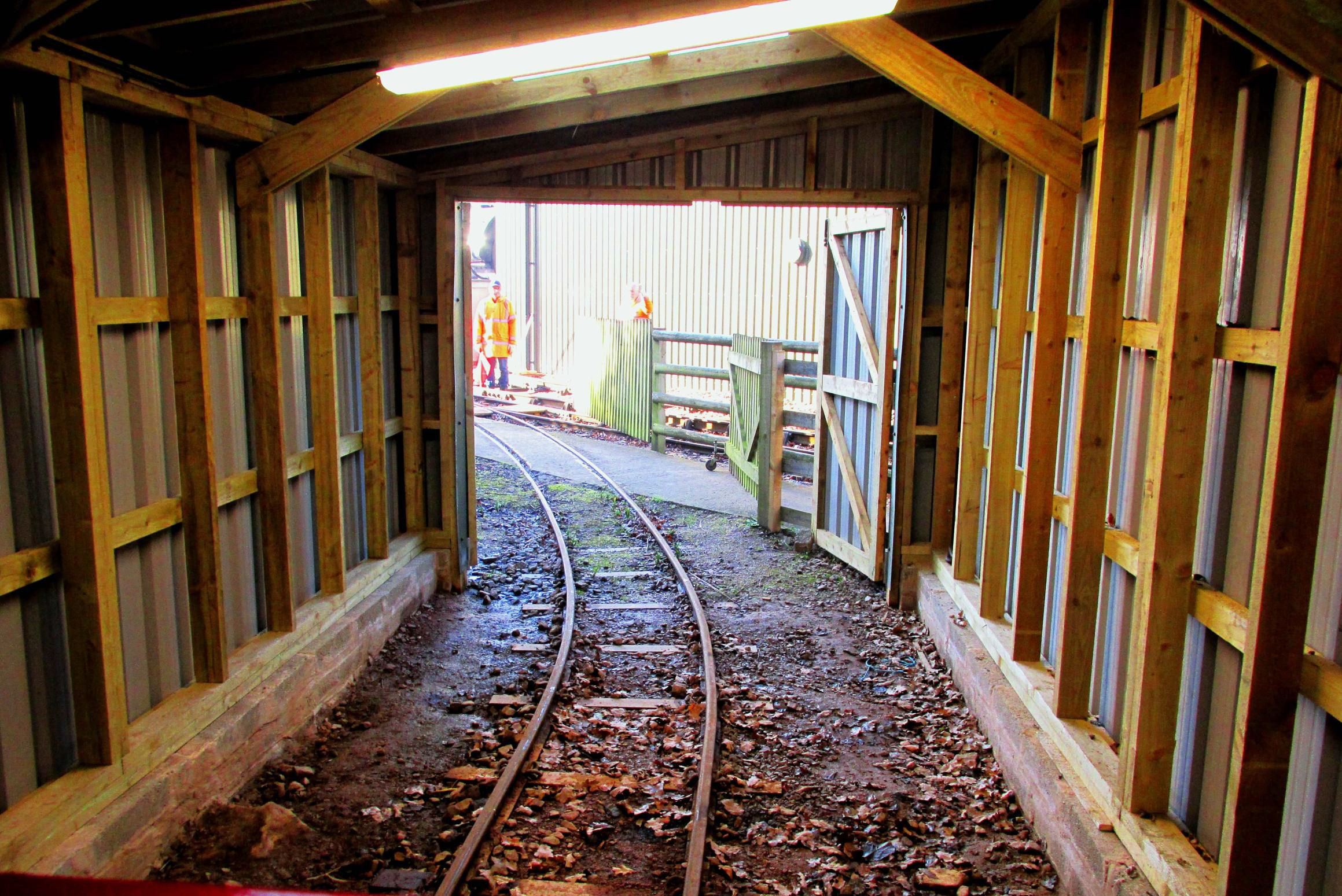
The return to Quarry Bottom station was via the Carriage Shed, seen here.
[© Simon Mortimer 2024]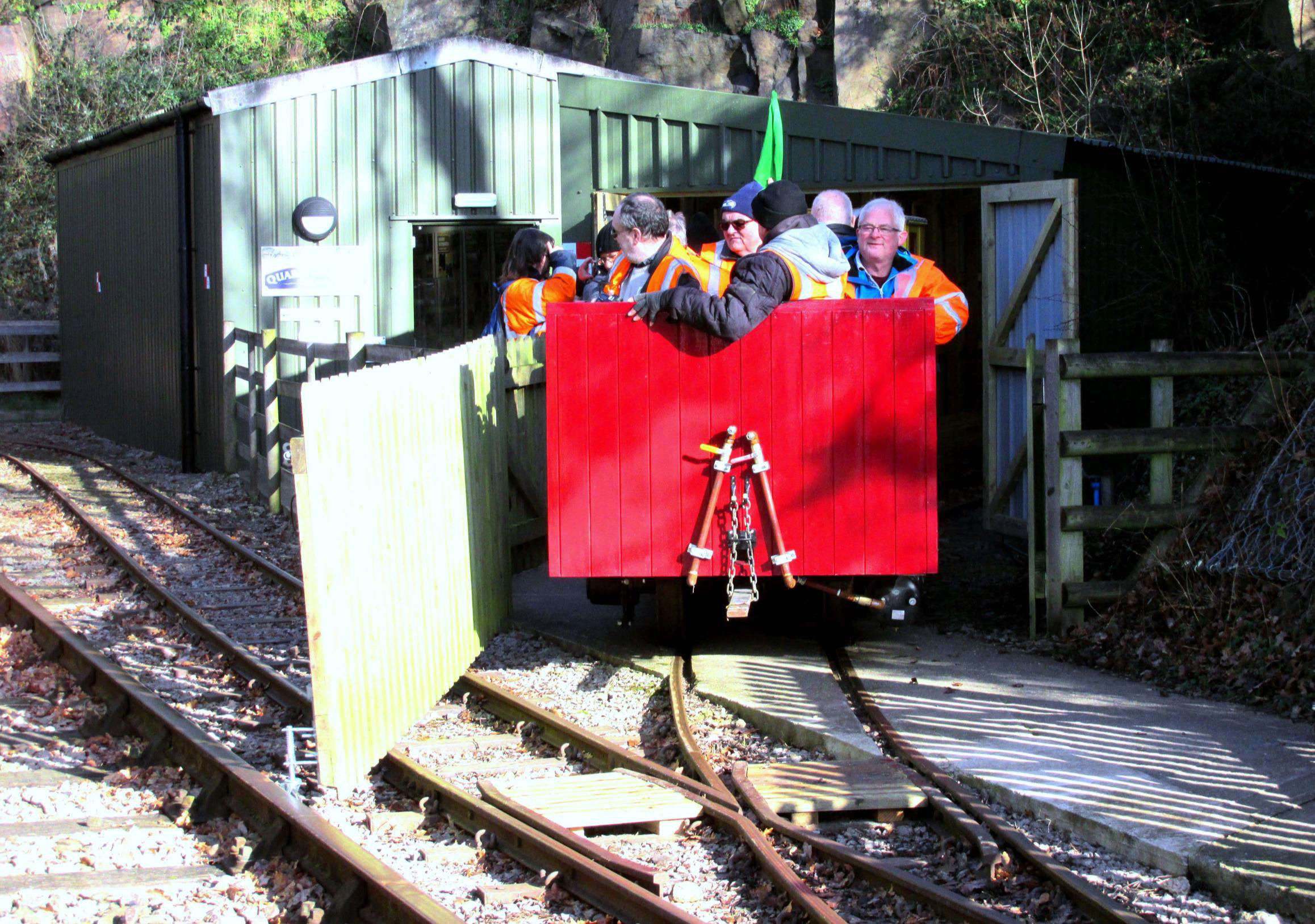
Propelling out of the Carriage Shed, the fence opens to allow that, note how close the standard and narrow gauge lines are here, bottom left.
[© Simon Mortimer 2024].
Next was the standard gauge. This was the highlight for many as there are no passenger trains, only occasional shunting demonstrations on selected days with short footplate rides. Green Wickham Trolley DE320498 was used (hence the name 'Wickham Wanderer' tour ... see what we did there ... OK, moving on...). It was built in Ware in 1957 and allocated, with 63 others, to British Rail North Eastern Region. This one lived at Castleton Moor on the Whitby branch and had an upgraded JAP 1323cc twin cylinder engine. By 1994, as DB965080, it was pensioned off engineless from Darlington CE Plant Depot and entered preservation on the Wear Valley Railway, where it acquired a Perkins Engine (for Perkins engine enthusiasts!). It came to Mountsorrel in 2012 for construction of the various railways here.
We started from Road 2 inside the main shed (alongside NG Road 1), running out towards where Stephenson's Lift Bridge (railway over canal) of 1834 is being reconstructed - very impressive it is too. Then it was towards the connection with the Mountsorrel branch. This is protected by trap (not catch!) points, released by a locked ground frame which requires the branch staff to operate it. Although relaid with much community financial and volunteer support, the Mountsorrel branch is operated by the Great Central Railway (GCR). After progressing as far as we could, we returned to the shed.
Interestingly we learnt from the volunteers that, before the Mountsorrel branch was joined to the GCR at Swithland Sidings, they could merrily run back and forth over their connection to it at Nunckley Hill station, with no restriction except one train running but there were no such runs carrying the public. The move was done ten times in groups of six. The many 'normals' now on site (who did not have any access to the railways this day - it is fenced off) were much amused by all these unprecedented events.
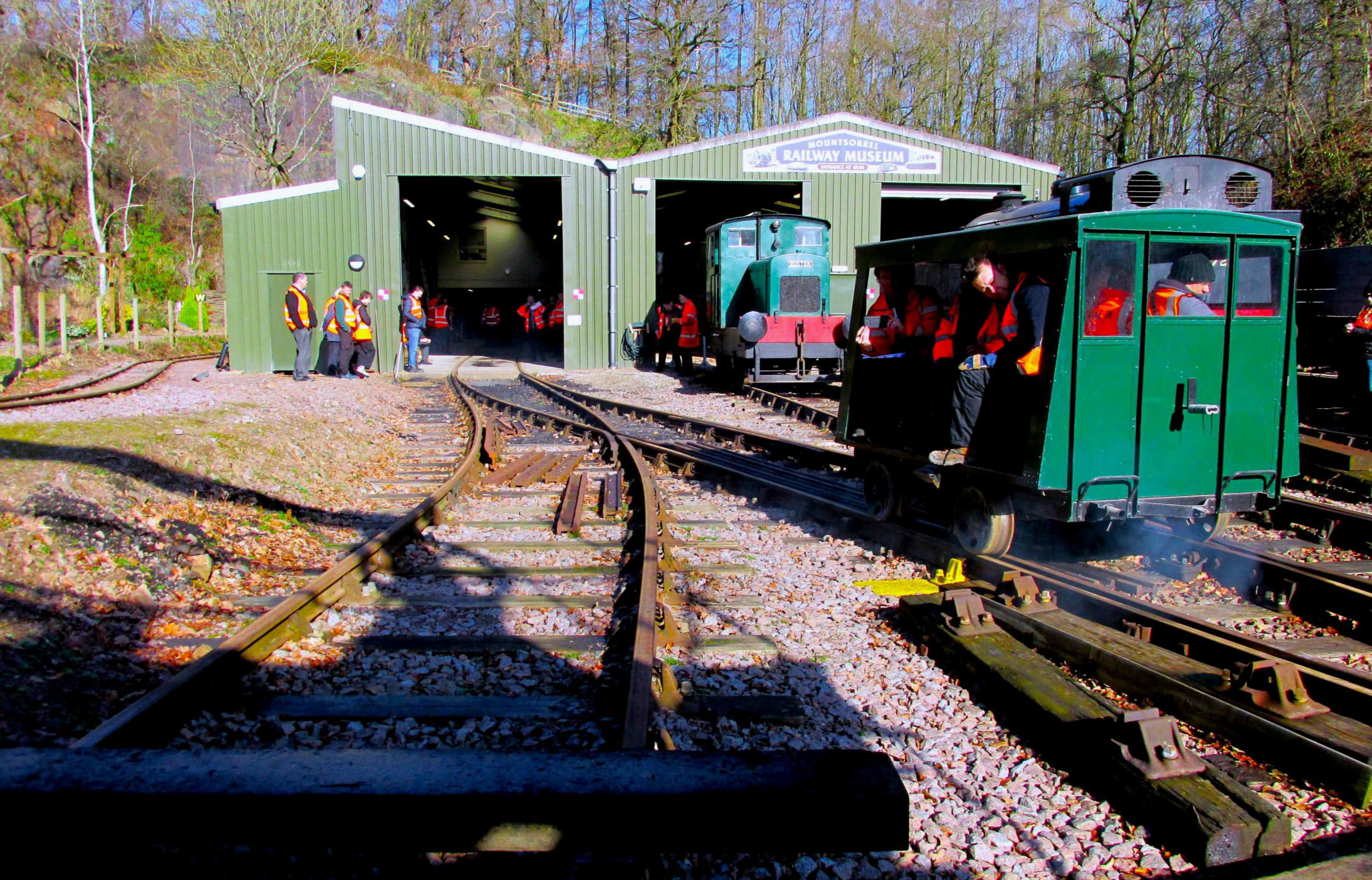
The Wickham on the standard gauge, far left is the narrow gauge public run; the lean-to shed ahead left has a NG track (to be extended this way)
[© Simon Mortimer 2024]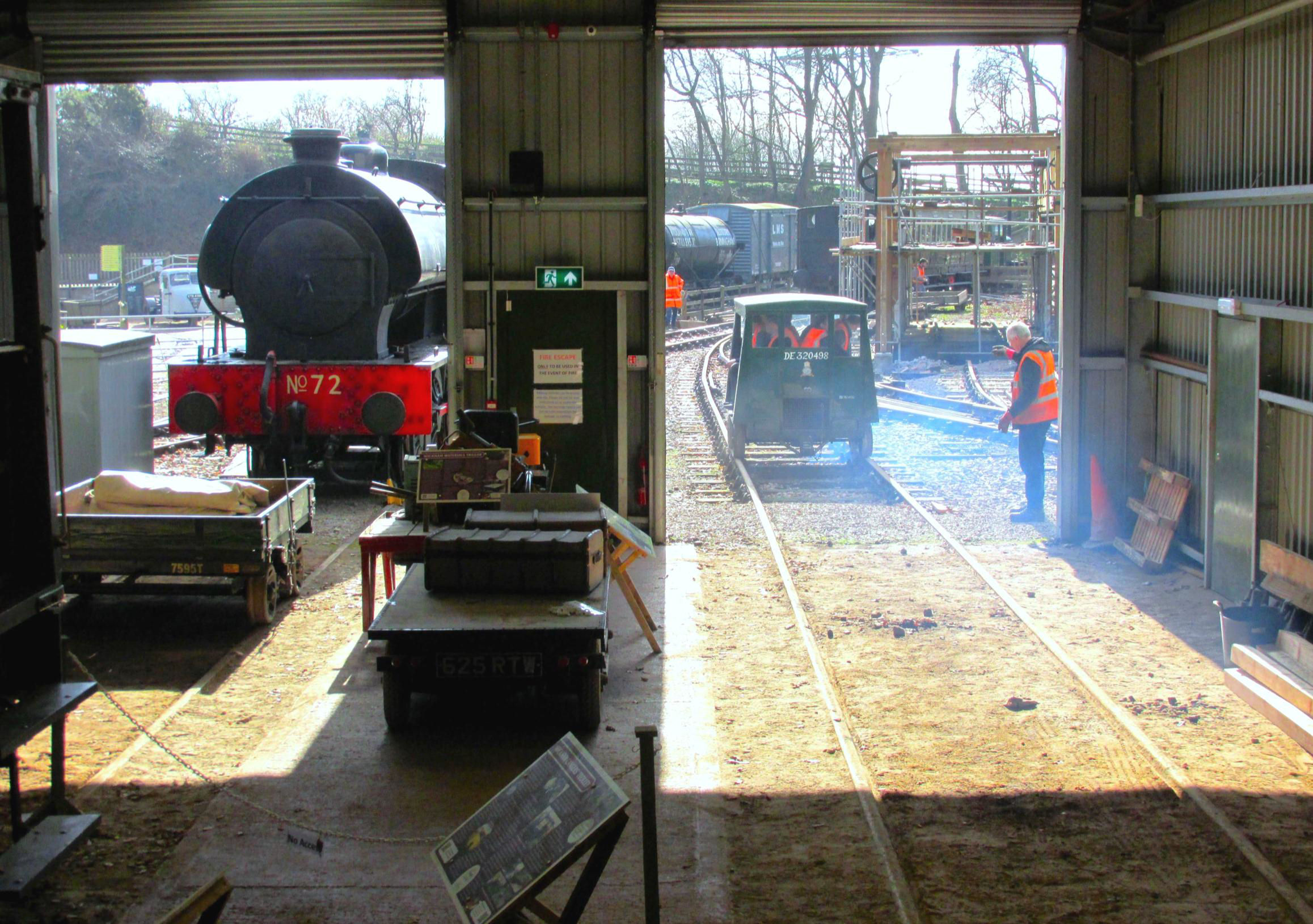
Looking out of the Railway Museum with road 3 on the right; far right the canal bridge lift is under reconstruction
[© Simon Mortimer 2024]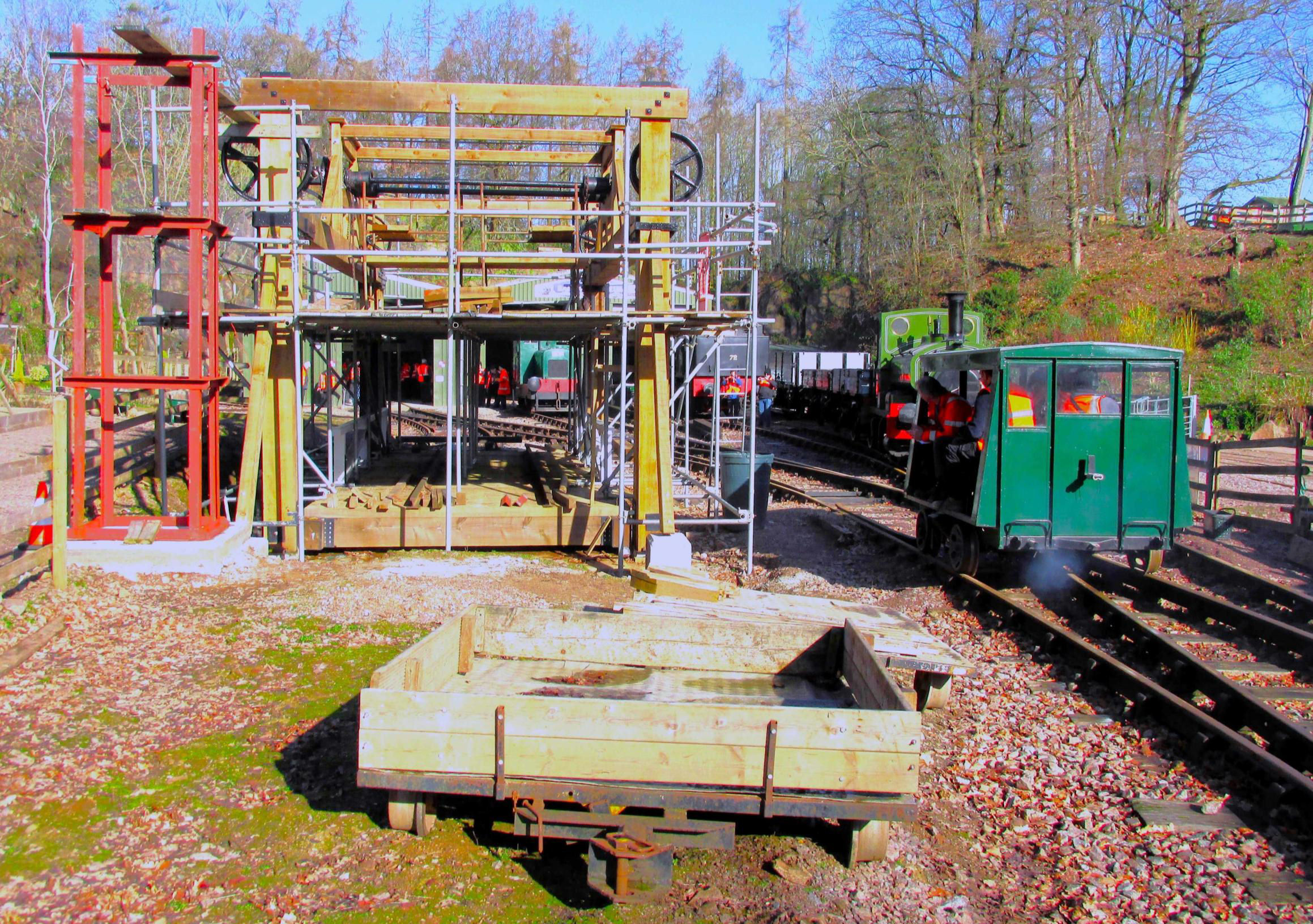
Passing the canal bridge lift under reconstruction
[© Simon Mortimer 2024]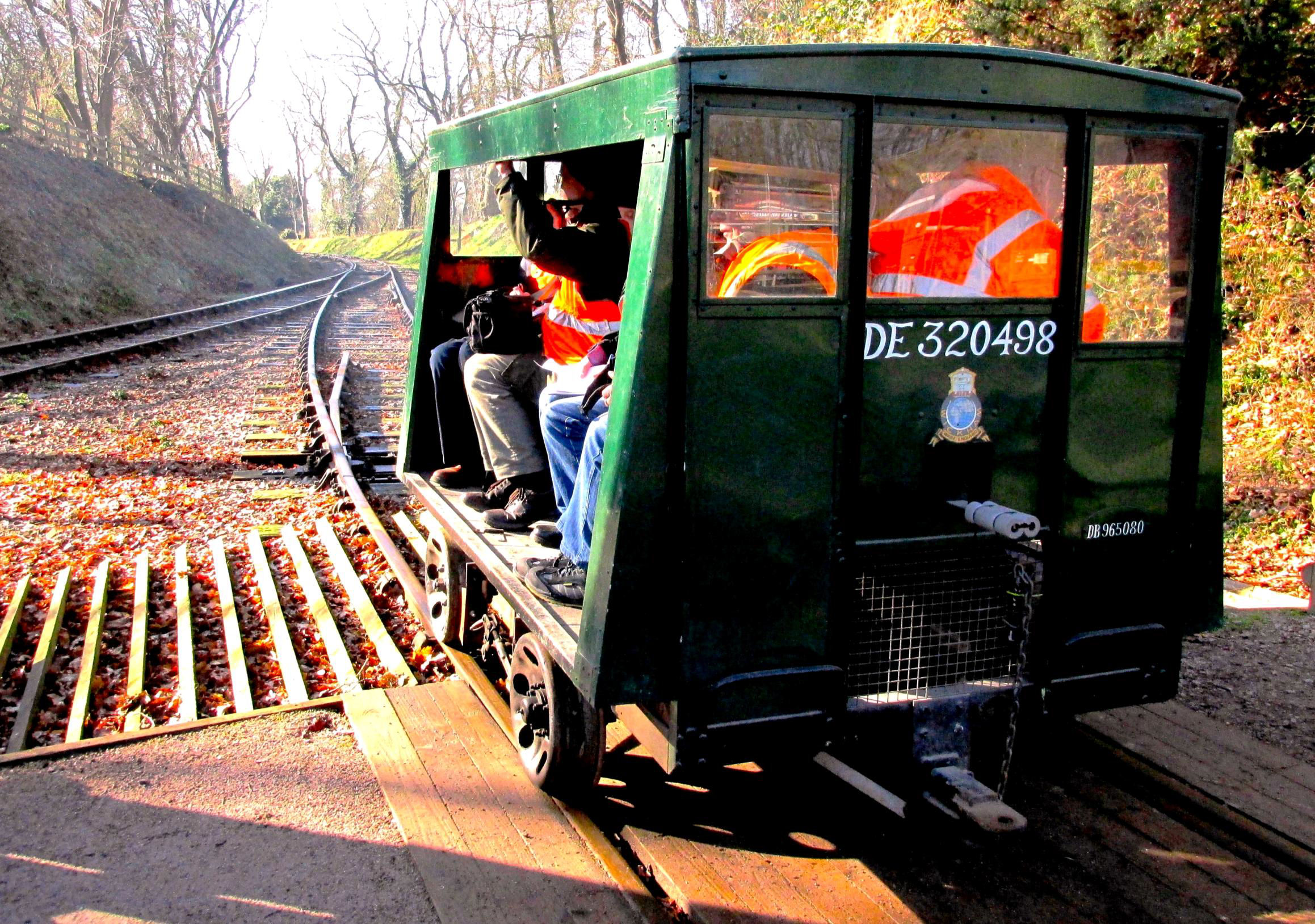
At the trap points protecting the Mountsorrel branch, looking along that branch towards Swithland Sidings.
[© Simon Mortimer 2024]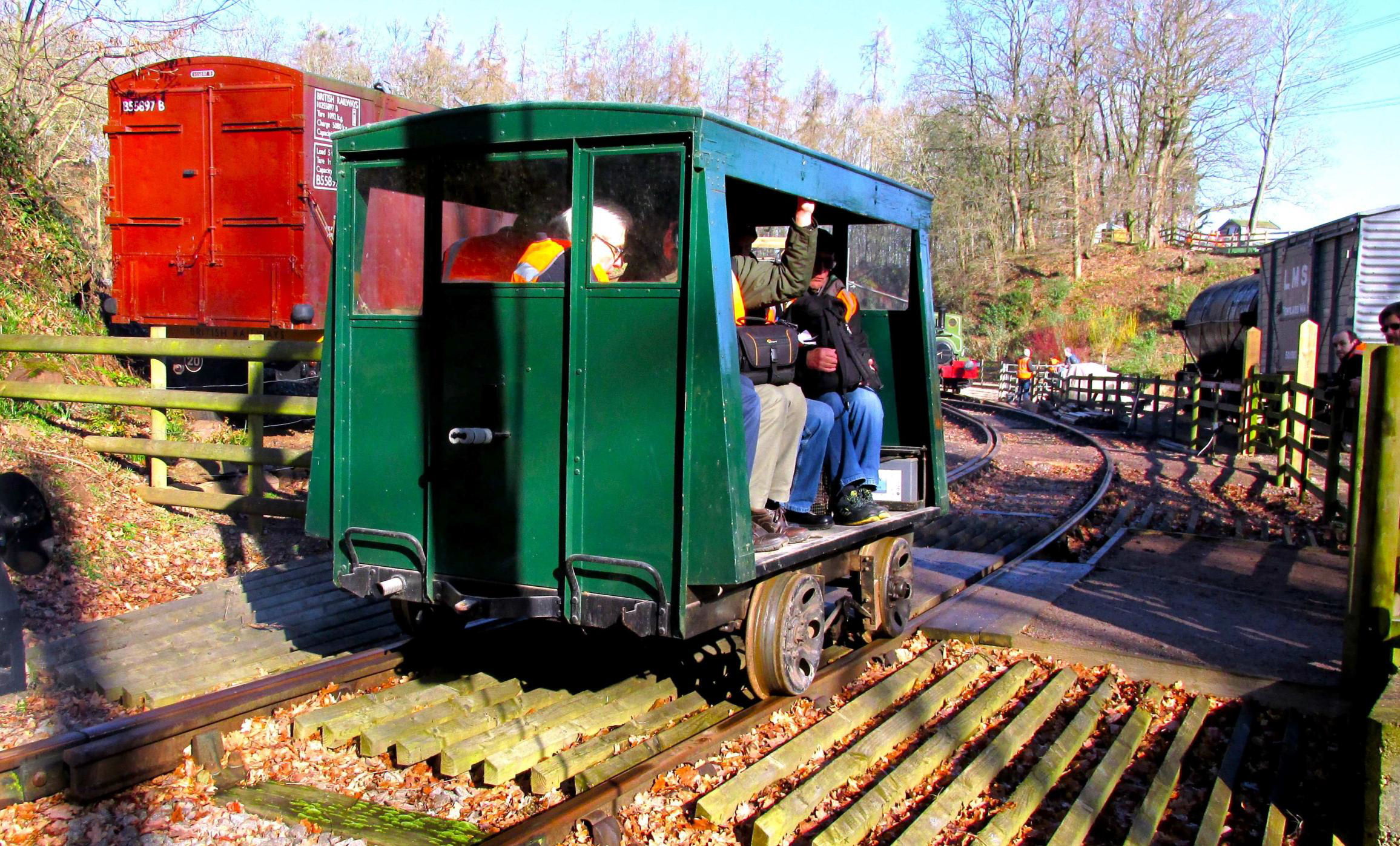
The same location looking in the other direction towards the yard at Nunckley Hill.
[© Simon Mortimer 2024]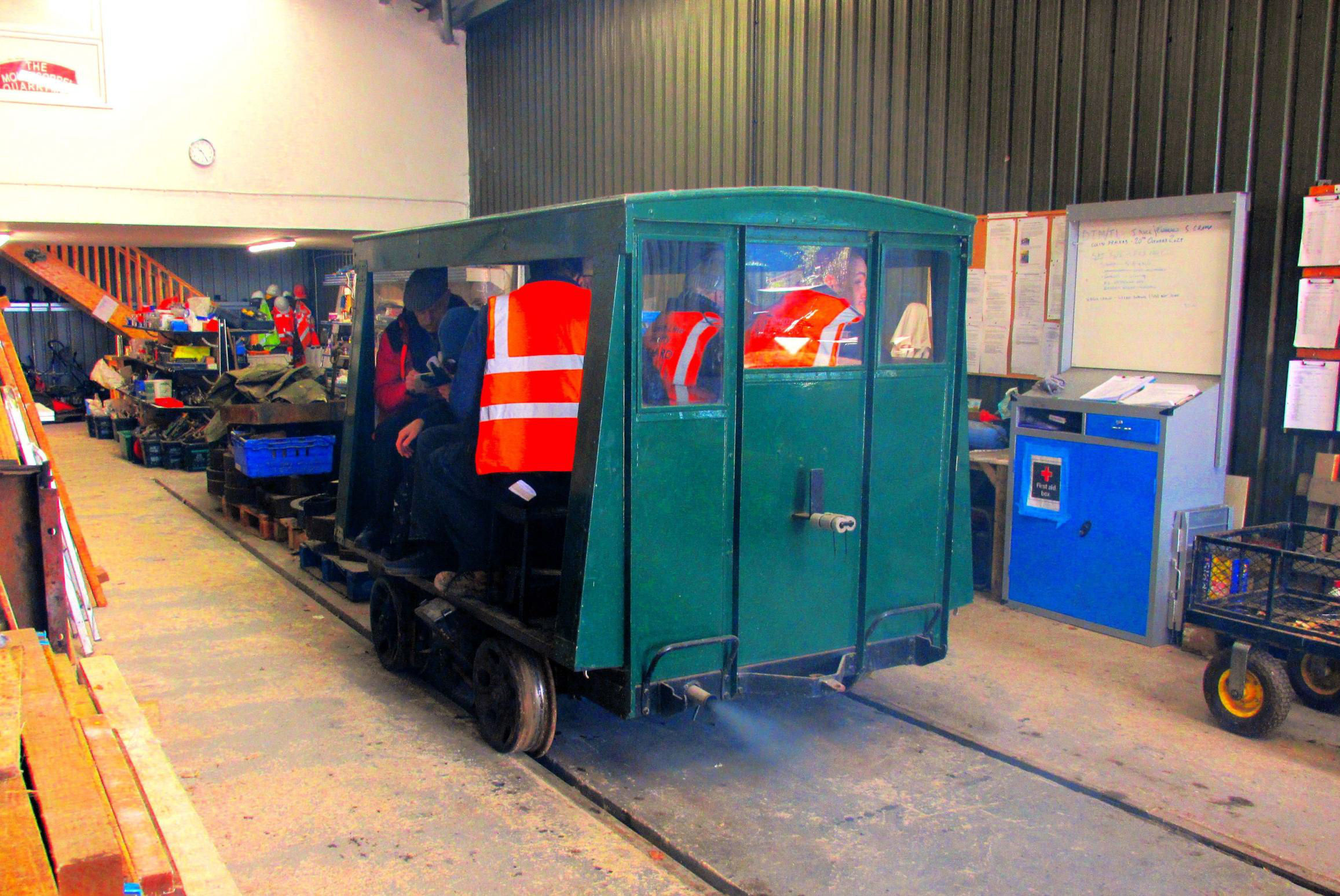
Limit reached on the Shed Road - Road 2 - (this building is joined to, but separated from, the Railway Museum which is to the right.
[© Simon Mortimer 2024]There was then a short break for shunt moves to clear all of the museum items from Road 3, using 'big' Ruston, 48DE 393304; like its little brother, also built in 1956 and delivered to Bardon Hill Quarry. The Wickham then reached the very end of the line here. On Road 4 a brakevan blocked access to the end but we did what we could as well as Road 5 to the end along the outside of the shed, adjacent to the NG branch done first thing. We also ran back along the Loading Siding to a static immovable oil tanker and 20 tons of aggregates piled on the line for the Stephenson lifting bridge reconstruction. It was realised (and forensically analysed by some!) that overlap hadn't quite been achieved due to the stock positioning on the connecting line to clear the Museum. This was rectified after the lunch break...
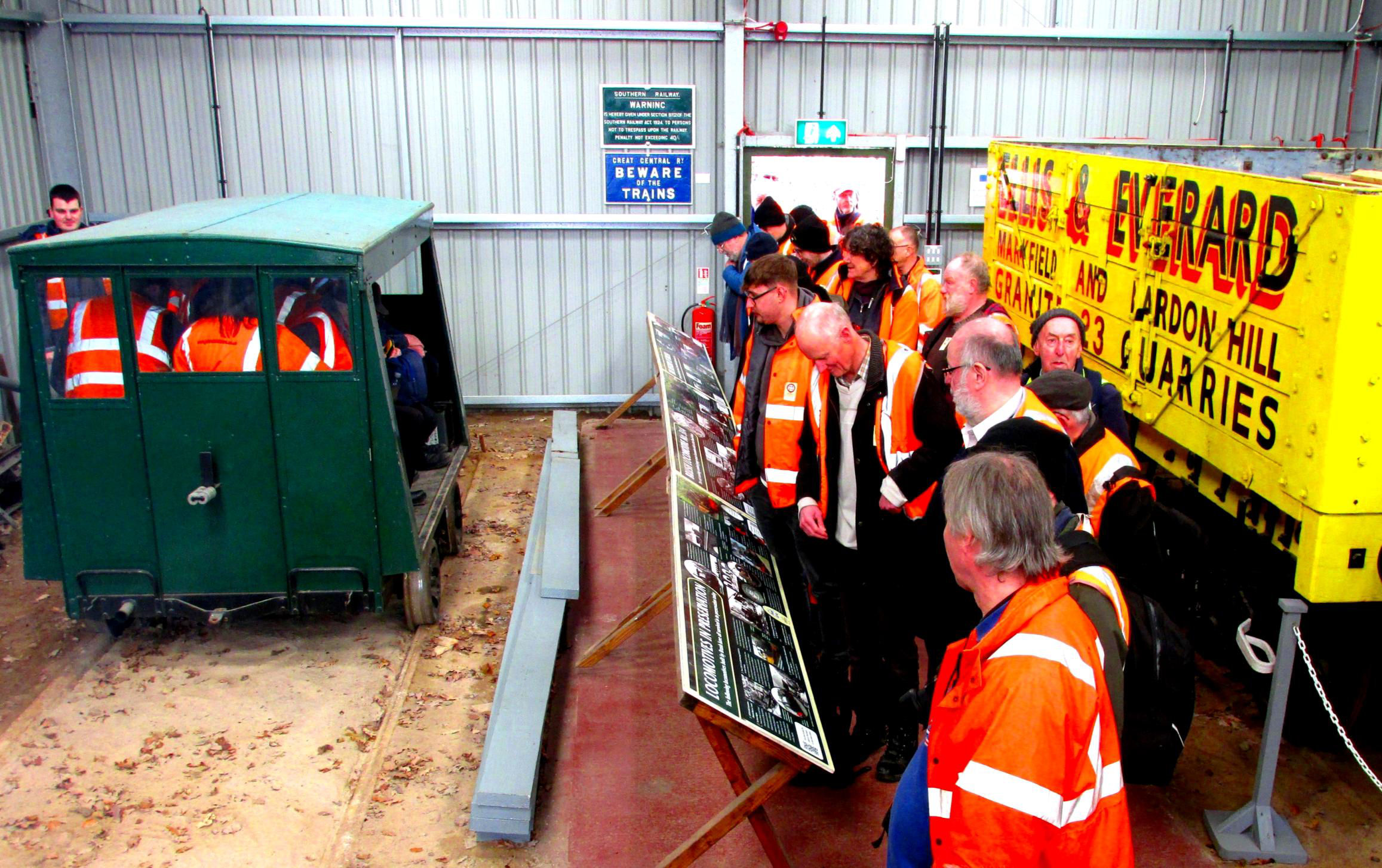
The end of one of the two Railway Museum roads (Road 3 of 5) was reached in the Wickham after the exhibits had been (very) temporarily relocated. Visiting the Museum before, some thought this would never have been achievable. Participants literally queue up out of the door for their turn.
[© Simon Mortimer 2024]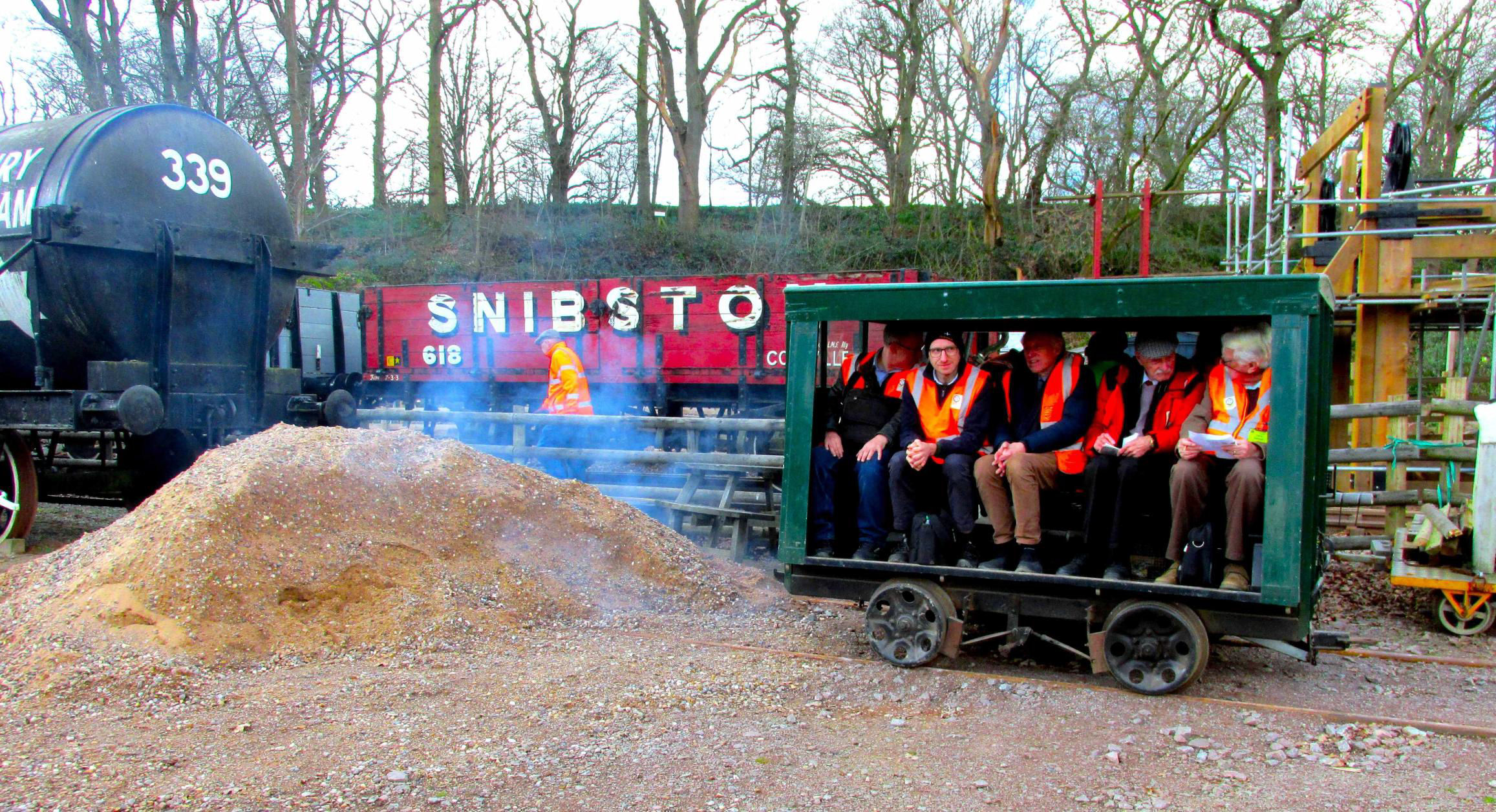
On the Loading Line, crunching the ballast for maximum coverage - did anyone bring a shovel with them, or a JCB? Member No 13 is far right...
[© Simon Mortimer 2024]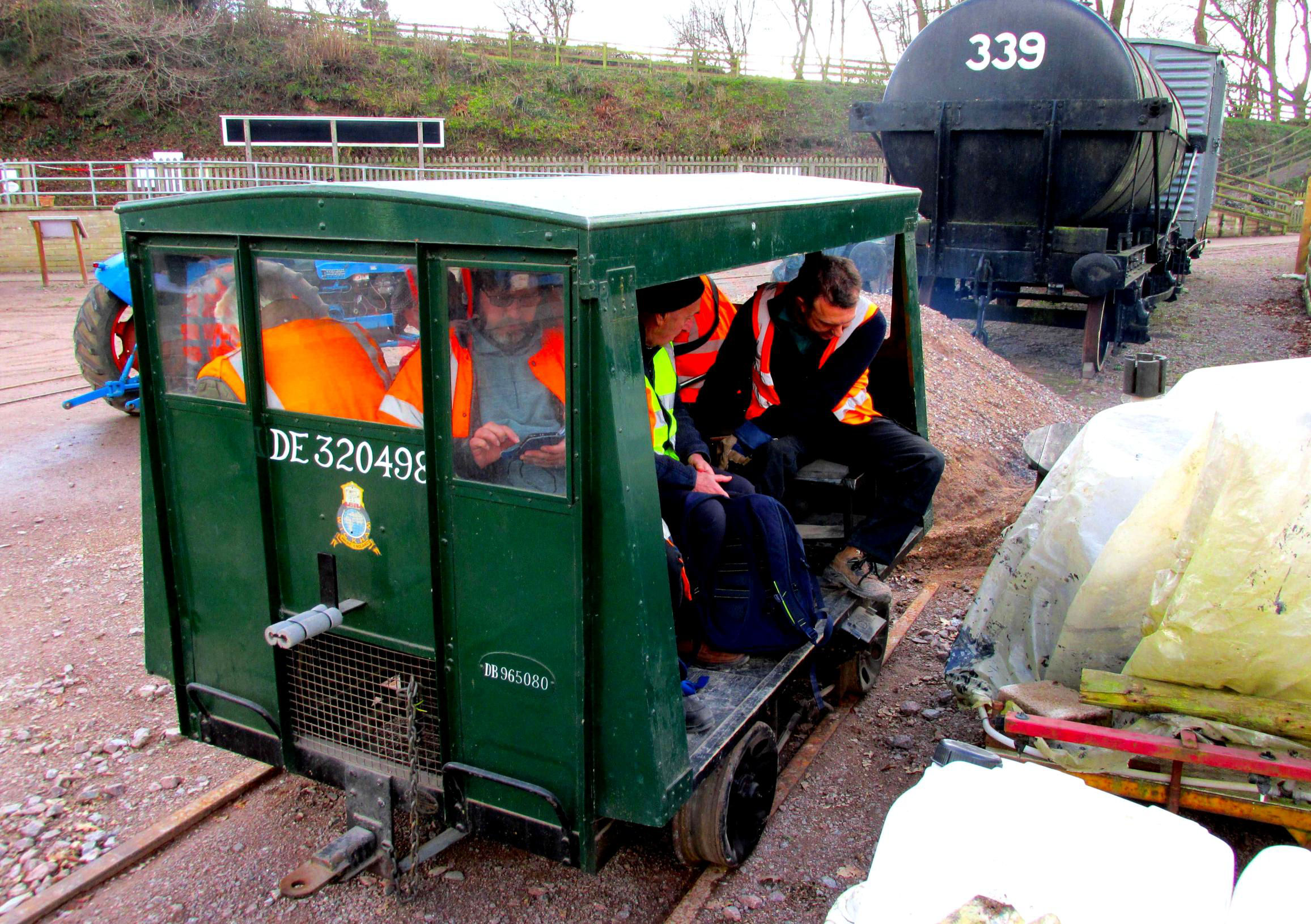
The same location from the other side of the Wickham Trolley.
[© Simon Mortimer 2024]A 45 min break or so was scheduled for this. We were encouraged to use the fantastic Granite's Coffee Shop (a gross misnomer as it has a wide selection of food, snacks, ice creams, exceptional homemade cakes, drinks, etc) at the Heritage Centre. It is by far the main source of Income for Mountsorrel & Rothley Community Heritage Centre, a Community Interest Company. They also need to make a small charge for site admission (the Coffee Shop can be accessed free) and also for the public NG rides. There is a local history museum with sections on Mountsorrel Quarry and its two railways (one to the Midland, the other to the Great Central). An historic photo was of a long line of stone wagons packed with children on one of the branches with a Sunday School outing! The separate Railway Museum, joined to the main shed, is impressive too, as are the woodland walks, gardens and other facilities.
Reconvening at 14.00 at Quarry Bottom Station, it was time for the main public NG run, a 140yd circuit around the pond and King's Coronation Garden. King Charles has always been a keen fan of the whole project (which has a Queen's Award for Volunteering), giving permission for the garden to be so named. He has visited several times over the years but apparently not for the track! The public run is three circuits to give a decent ride and overlap, so this is what everyone was treated to, with the full length 3-coach set. Standard gauge cab rides were also then on offer, using the 'big' Ruston to cover that vital little piece of overlap that matters so much, and reaching the very end of Road 5 alongside the shed.
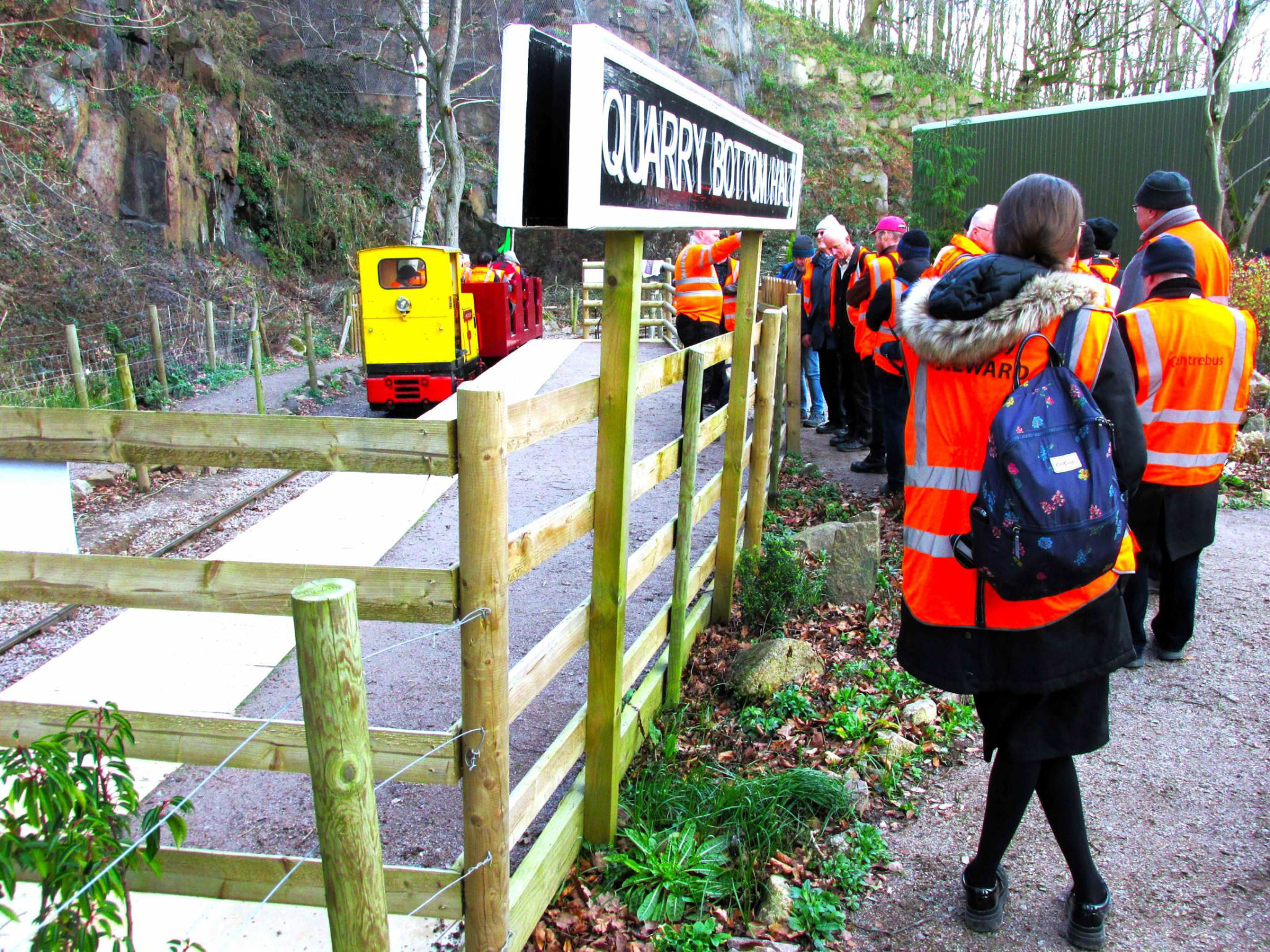
Members queue for the normal narrow gauge public run - three laps of the circuit - rides were not available to the general public this day.
[© Simon Mortimer 2024].
There was just one line left to cover, Road 1 (NG) into the Main Shed, used to store the locos. In fact, it is an attached lower roofed lean-to type shed at on the garden side of it with no internal wall between the two. Again, a single guard's coach was used, propelled in to give maximum track coverage without a loco in the way. Of note, there is a plan to install a door at the end of this line to extend it (outdoors) to accommodate the coaches recently acquired from the now closed Statfold Garden Railway.
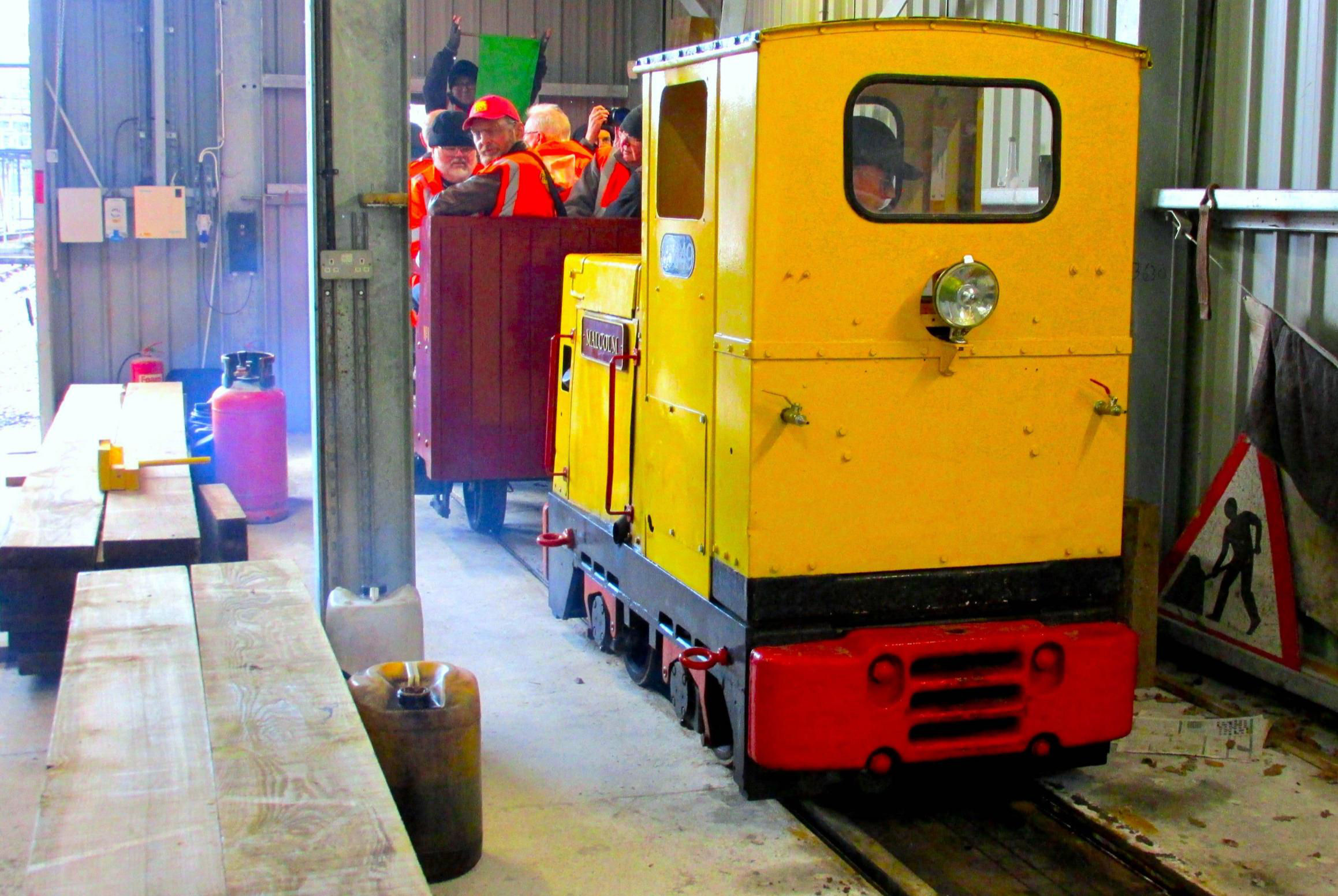
A NG coach was propelled to the end of Road 1 (the other four are standard).
[© Simon Mortimer 2024]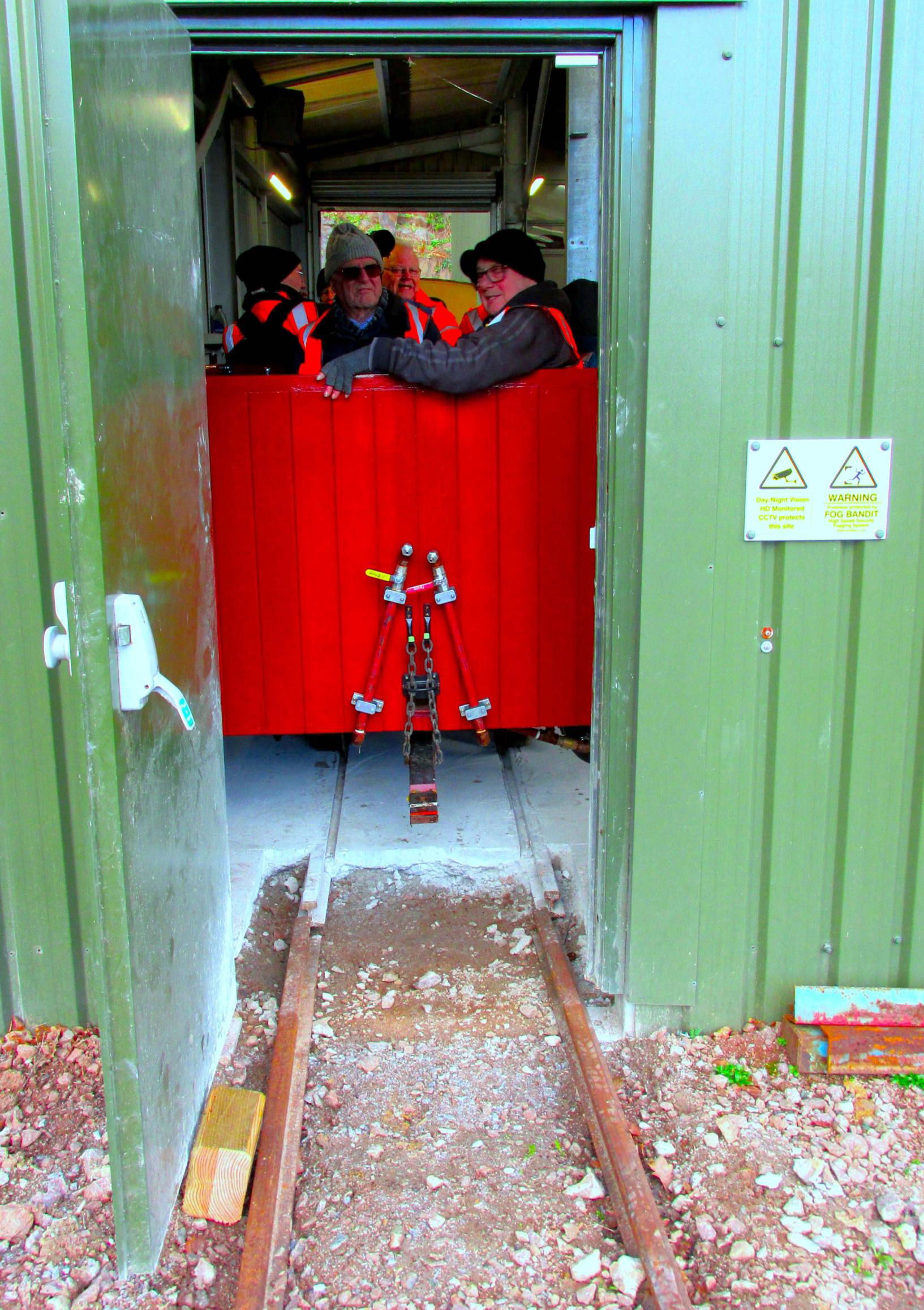
The same from the outside with the door open...
[© Simon Mortimer 2024]All available track done by everyone, the fixture finished about 15.00 - an hour earlier than planned. This was perfect for your reporter and allowed him to make the 30 minute walk to Rothley station on the GCR in time for the last 'Up' train of the day. A two train service was running, a 2-Car DMU with the other train steam hauled by 9F Class 92214 on its last weekend of running, before expiration of its ten year 'Boiler Ticket' and withdrawal for overhaul. A single to Leicester North was £6; the reasonably well loaded steam service was boarded at 16.11. The DMU, seen heading north, had few passengers. At the former Belgrave & Birstall station, he made a reasonable connection into a First Leicester No26 bus, an electric vehicle into the City Centre, for tea in the local Golden Arches Restaurant (McDonalds!) before heading home on the 18.15 X7 bus to Northampton and connecting 20.17 D2 bus to Daventry.
It was a superb fixture - thanks to our organiser, Simon Mortimer, for the meticulous planning. Every inch of available track was covered, mostly in sunshine, (Simon had been concerned about the winter weather in February). Thanks also to the enthusiastic and untiring friendly volunteers, who worked so hard for us - nothing was too much trouble and they certainly went the extra mile inch. It was great to be able to contribute £2,100 to this excellent and commendable project - do visit if you have not been.