17 members assembled in Fairfield Street next to Piccadilly station under P13 & 14, including Adam Turner, our organiser for the day. We were joined by the station manager, Kyla Thomas and her assistant. Unlocking the enormous wooden doors on Fairfield Street under the bridge that carries the through platforms, she led us into the brick arch area beneath the station.
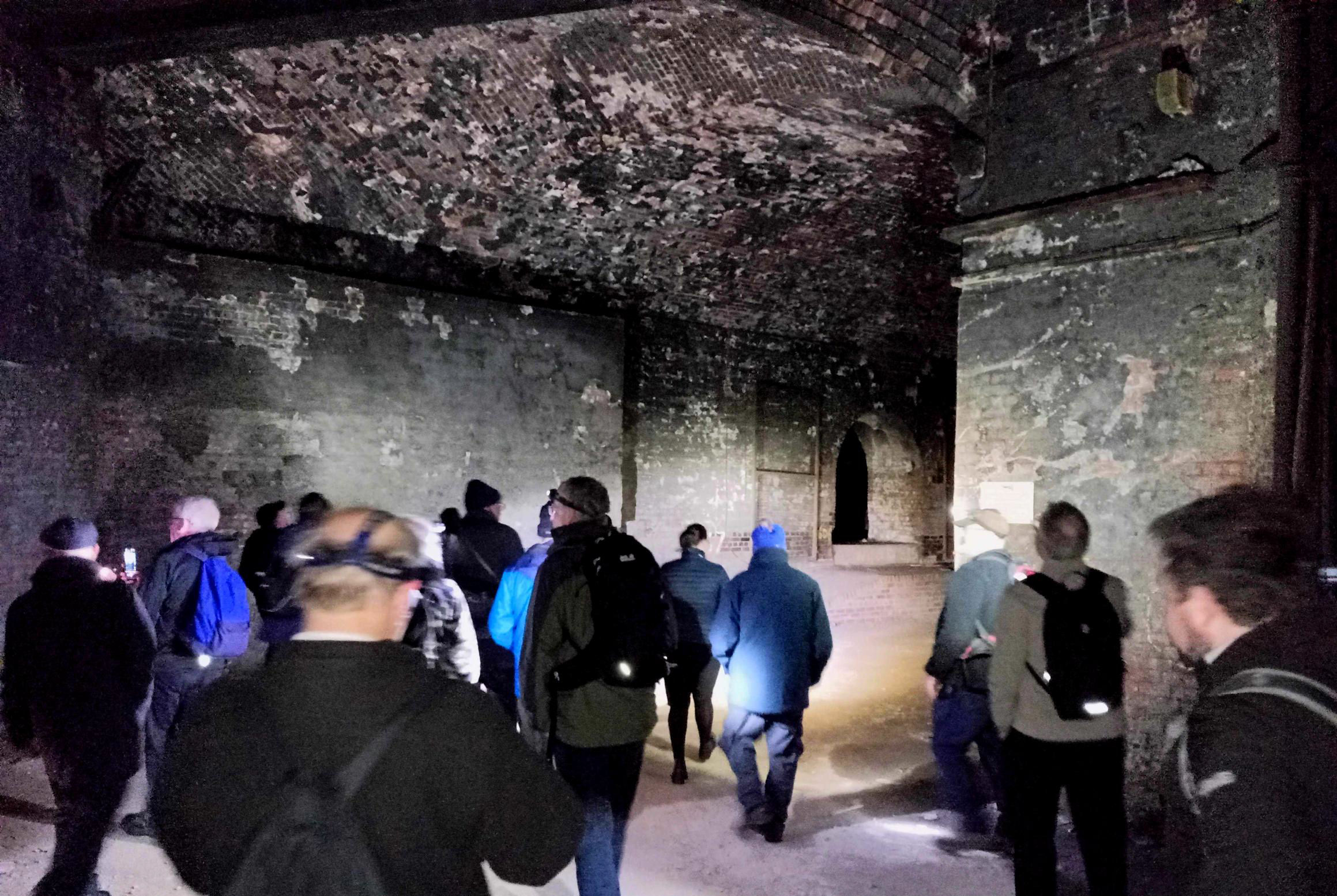
We had been told to bring torches and we certainly needed them! There was no lighting at all and the ground was rough. The massive area that we could explore was bounded by the Metrolink alignment to the northwest and Travis Street to the southeast (photos E-BLN 1440.264). We were told that there may have been a realignment of the Metrolink route through some of this area if the HS2 terminus development here had progressed. Many of the arches were quite damp. There are inspections at least every 6 months to check the supporting arches of the whole station; otherwise, no one enters the area.
Opened in 1842, the station was expanded over the years and rebuilt for electrification in the late 1950s; its name changed from London Road to Piccadilly on 12 Sep 1960. This area, the undercroft, had been used as a goods warehouse since the 19th Century. In 1992, part of the vaults was opened up for the Metrolink stop. We could see the trams through a fence in one area. After a fire several years ago, all the materials and rubbish were removed. Kyla, who also manages Liverpool Lime Street, gave us some fascinating facts about the station. Through P13 and P14 are by far the most difficult to manage. This island platform handles as many passengers as all of Nottingham station (6.74M in 2022-23).
Piccadilly undercroft;
[© Chris Lewis 2024]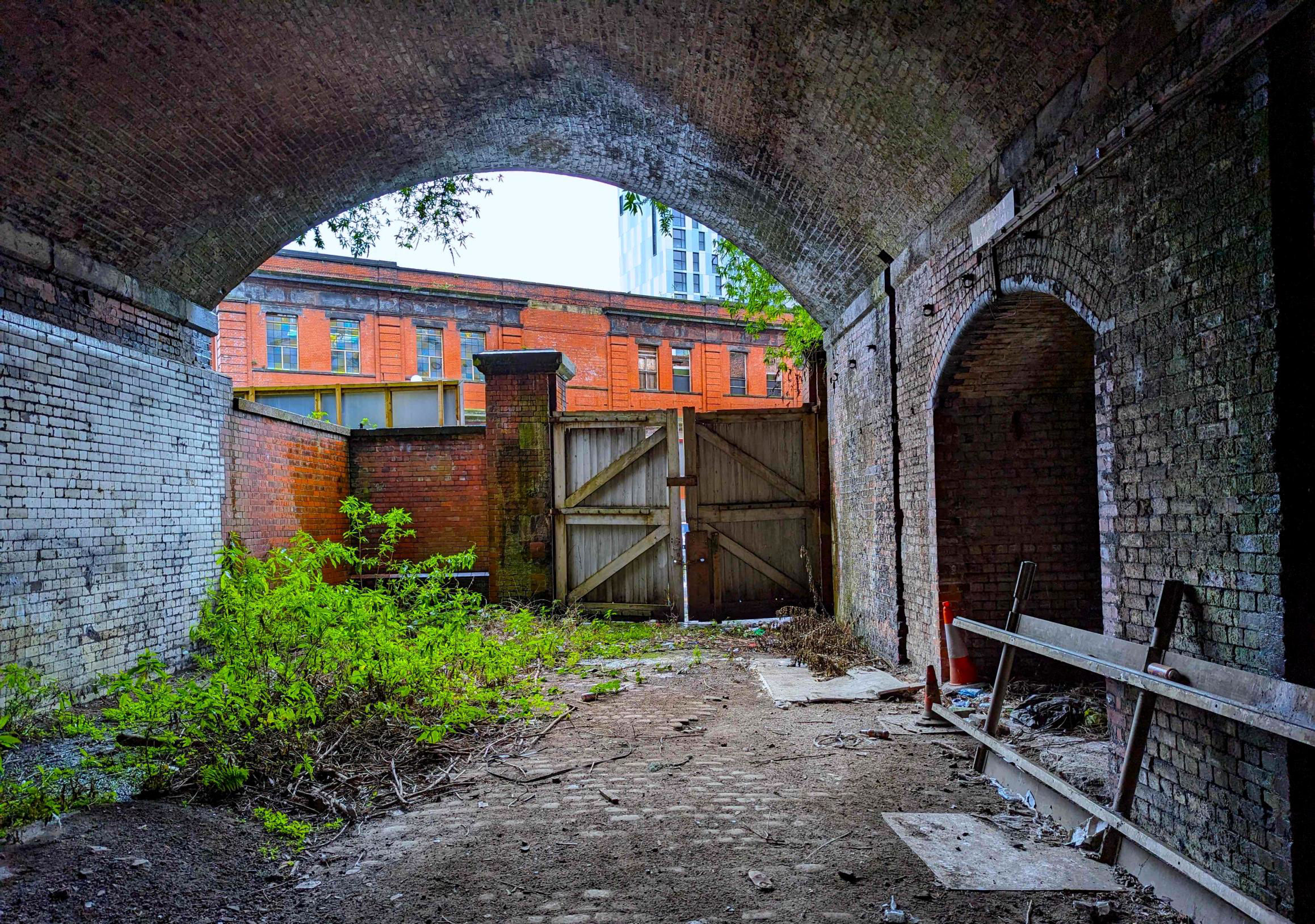
Looking across to Mayfield.
[© John Hampson 2024]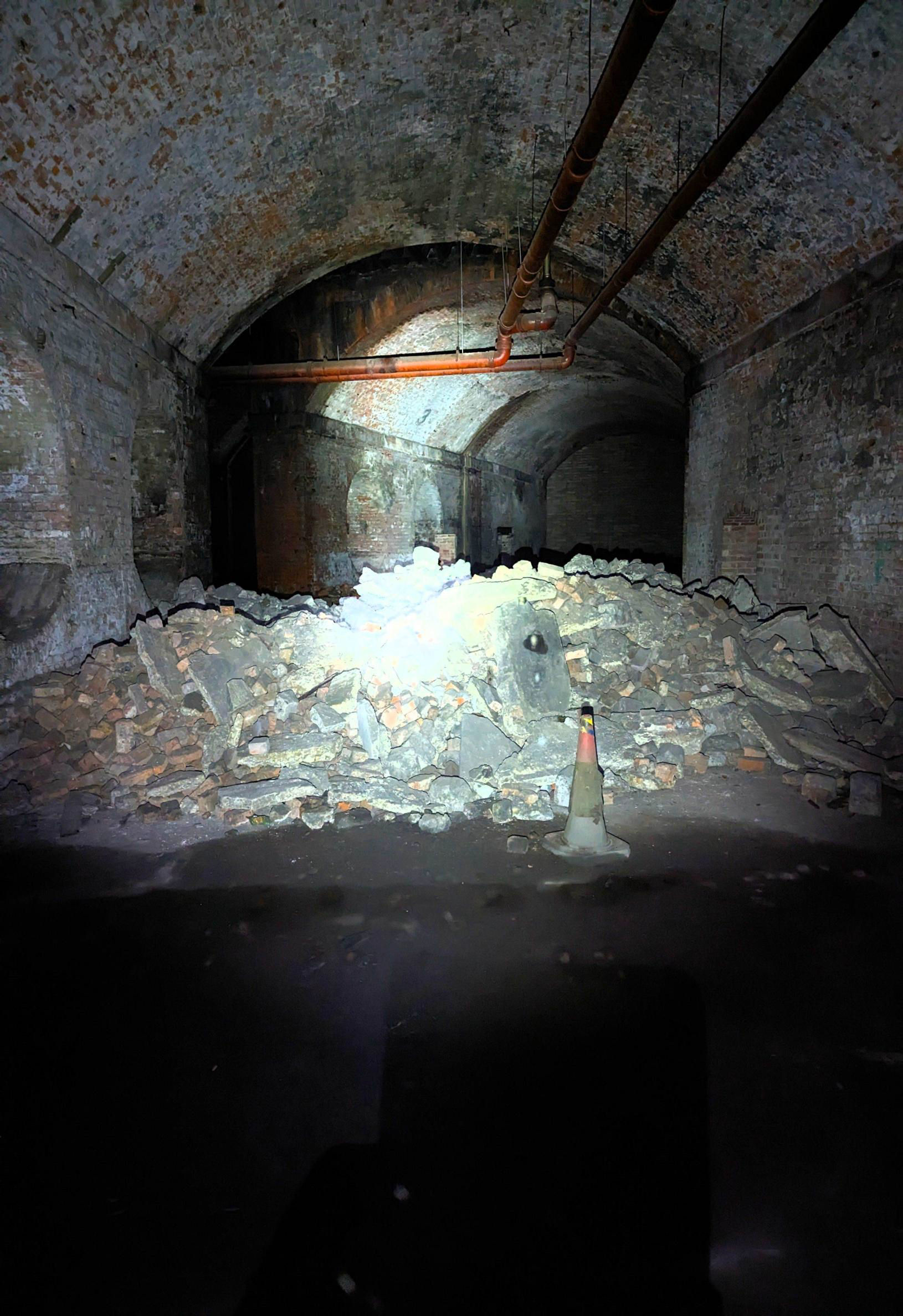
Piccadilly undercroft the need for torches is evident.
[© John Hampson 2024]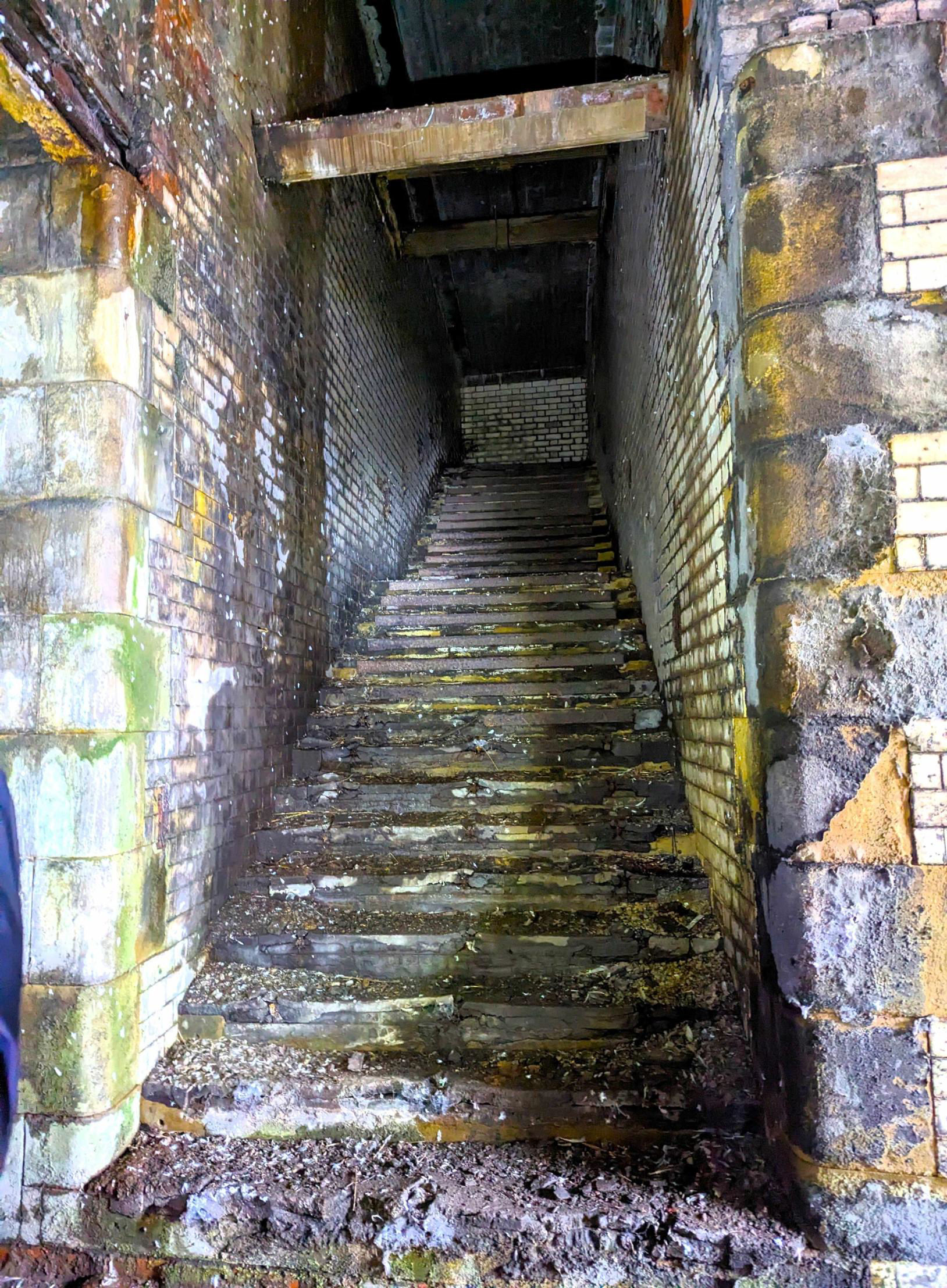
Passengers once used these steps to reach the platforms above.
[© John Hampson 2024]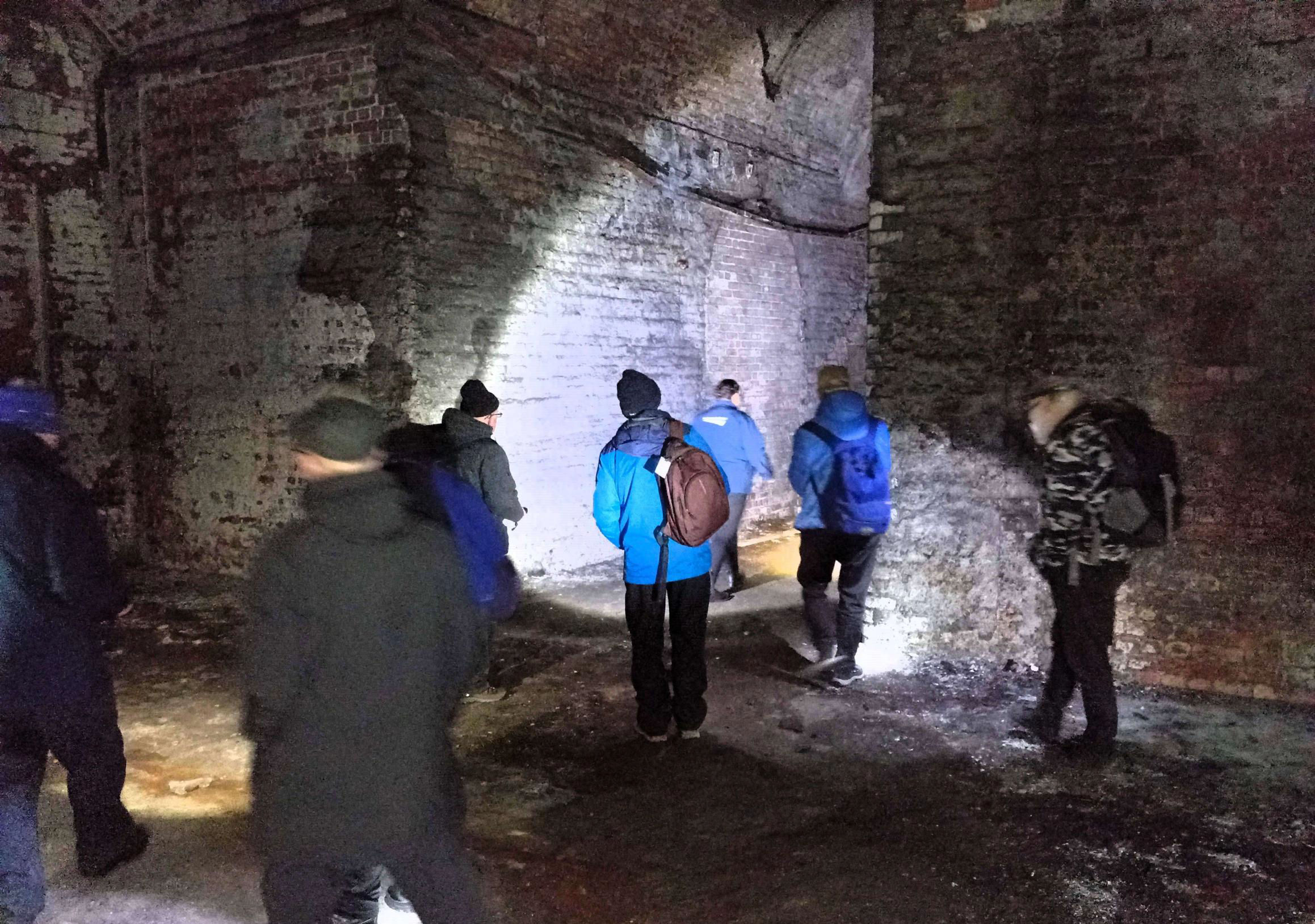
Exploring Piccadilly undercroft;
[© Chris Lewis 2024]We then saw the elaborate Italianate ashlar façade of the ex-London & North Western Railway Grade II listed Goods Offices on London Road. Ashlar masonry uses uniformly cut blocks of stone laid over the top of one another, often breaking up the vertical gaps between bricks for structural integrity.
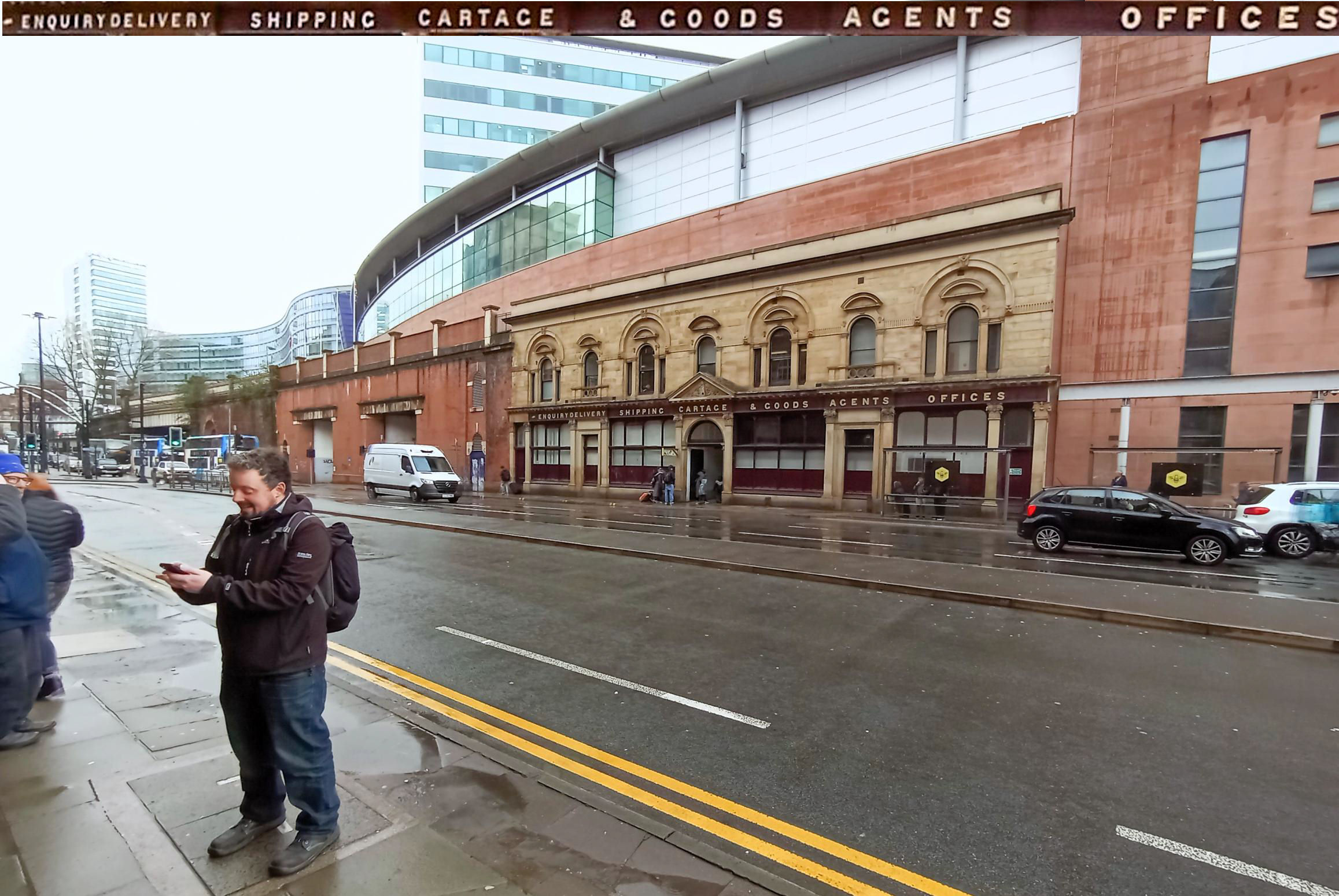
The elaborate Italianate ashlar façade of the ex-London & North Western Railway Grade II
listed Goods Offices on London Road.
[© Chris Lewis 2024]Next, our party ascended to concourse level to catch a Class 331 Airport to Blackpool North EMU from P14 to Oxford Road, a two minute, 48ch, £3 Single, journey. We paused to look at the 1958-60 built Oxford Road station, also Grade II listed, (4.648M passengers in 2022-23), noting the curved platform canopies that match the roof made up of three laminated timber conoids or 'shells'. Improvements to passenger flows here are constrained by being listed but the ticket office will shortly be relocated to the front of the building and, in the longer term, platform lengthening and rationalisation is planned.
We then walked up Oxford St (as it is here) to Manchester Central station. Members were greeted with tea, coffee and wonderful cakes and then were given free rein to explore inside and outside the Grade II* listed train shed taking care to avoid the teams setting up the Lego 'Bricktastic' exhibition due to open the following day. The site of the external platforms to the southeast of the train shed is now an access road and has been shorn of its canopies. I [Chris Lewis] remember arriving here behind a 'Peak' Diesel from St Pancras in the early 1960s and, a few years later, leaving behind a Black 5 on a stopping train to Sheffield Midland via Stockport Tiviot Dale and the Hope Valley. Return was from Sheffield Victoria to Manchester Piccadilly on an electric hauled train through the Woodhead Tunnel.
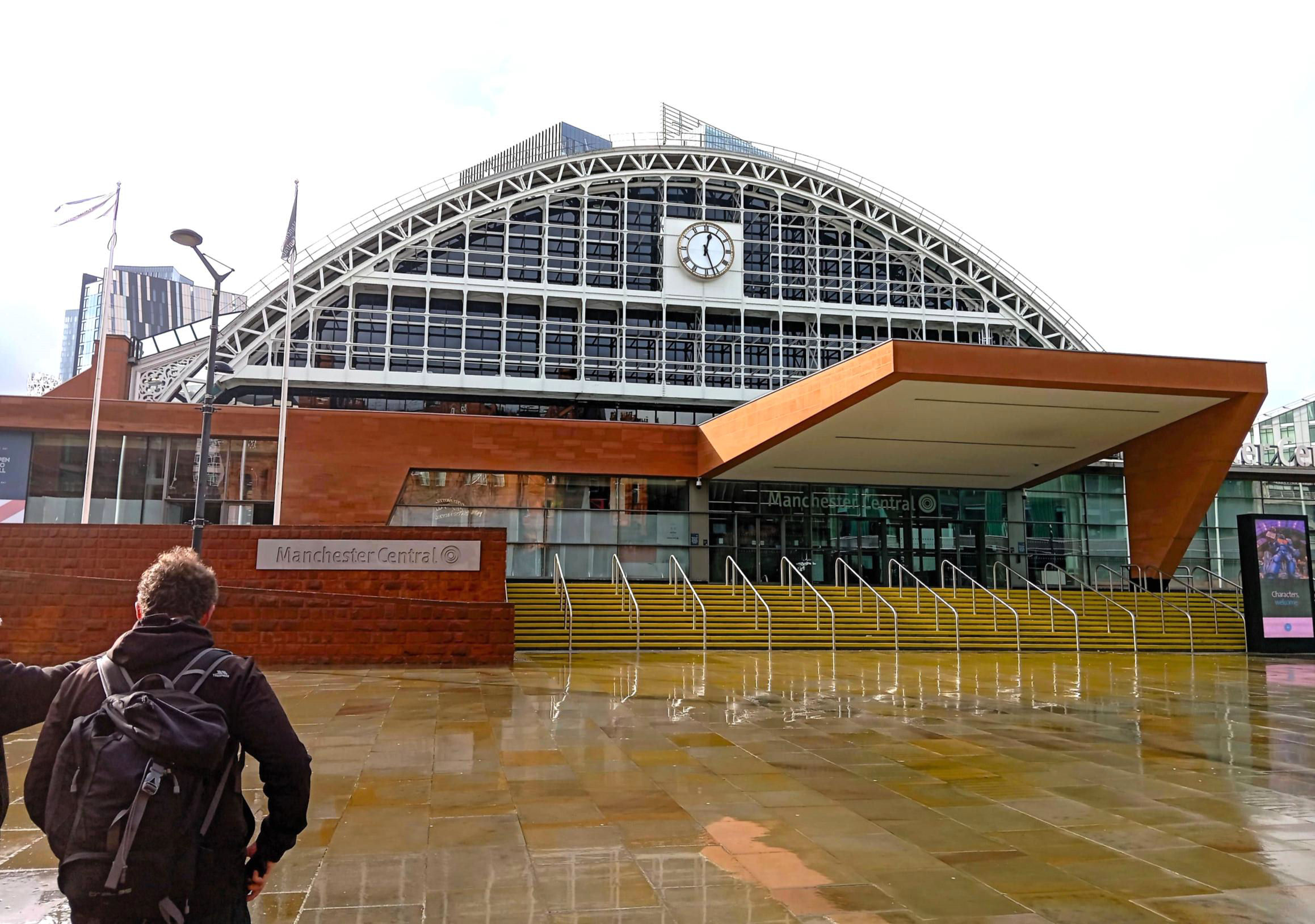
Manchester Central station.
[© Chris Lewis 2024]Manchester Central was one of the City's four main railway stations. It was opened in 1880 by the Cheshire Lines Committee, a joint railway company owned by the Midland, the Great Northern and the Manchester, Sheffield & Lincolnshire Railways (the latter became the Great Central). The Midland used this station for its trains, including from St Pancras, to avoid London Road. It closed from 5 May 1969.
The station was later converted into an exhibition and conference centre opening in 1986, originally as 'G-MEX' but now owned by Manchester City Council as 'Manchester Central Convention Complex'. The rooms in the side walls are still in their original condition, so it was easy to imagine trains still using it. Like St Pancras but smaller, the roof is a single span wrought iron structure, 550ft long with a 210ft span and is 90ft high. Adam had brought along a comprehensive collection of historic images of the station in its previous life and it was fascinating to compare these with what has been preserved.
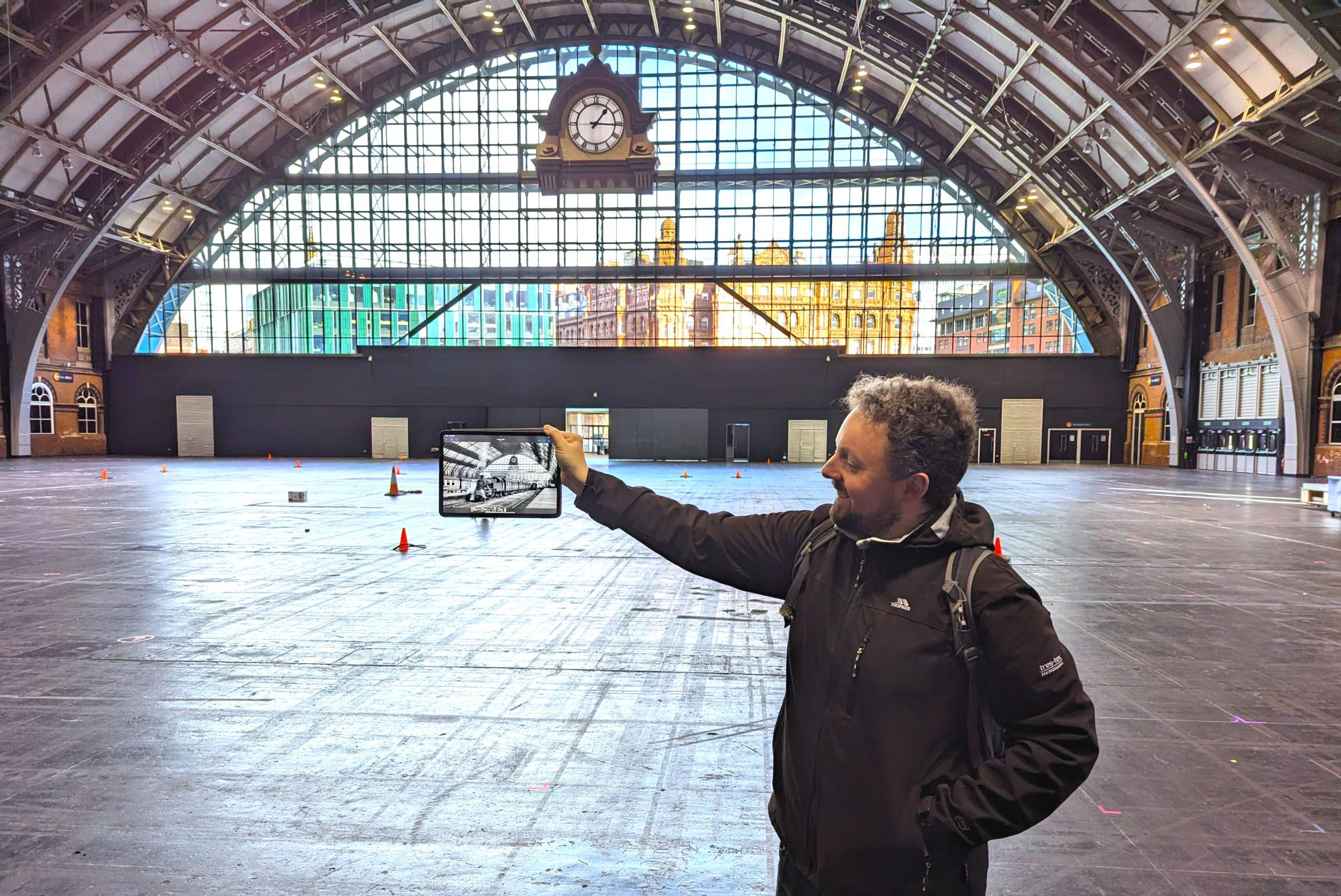
The former buffer stops end of Central station; the clock seems to be the same one shown in the image Adam is holding.
[© John Hampson 2024]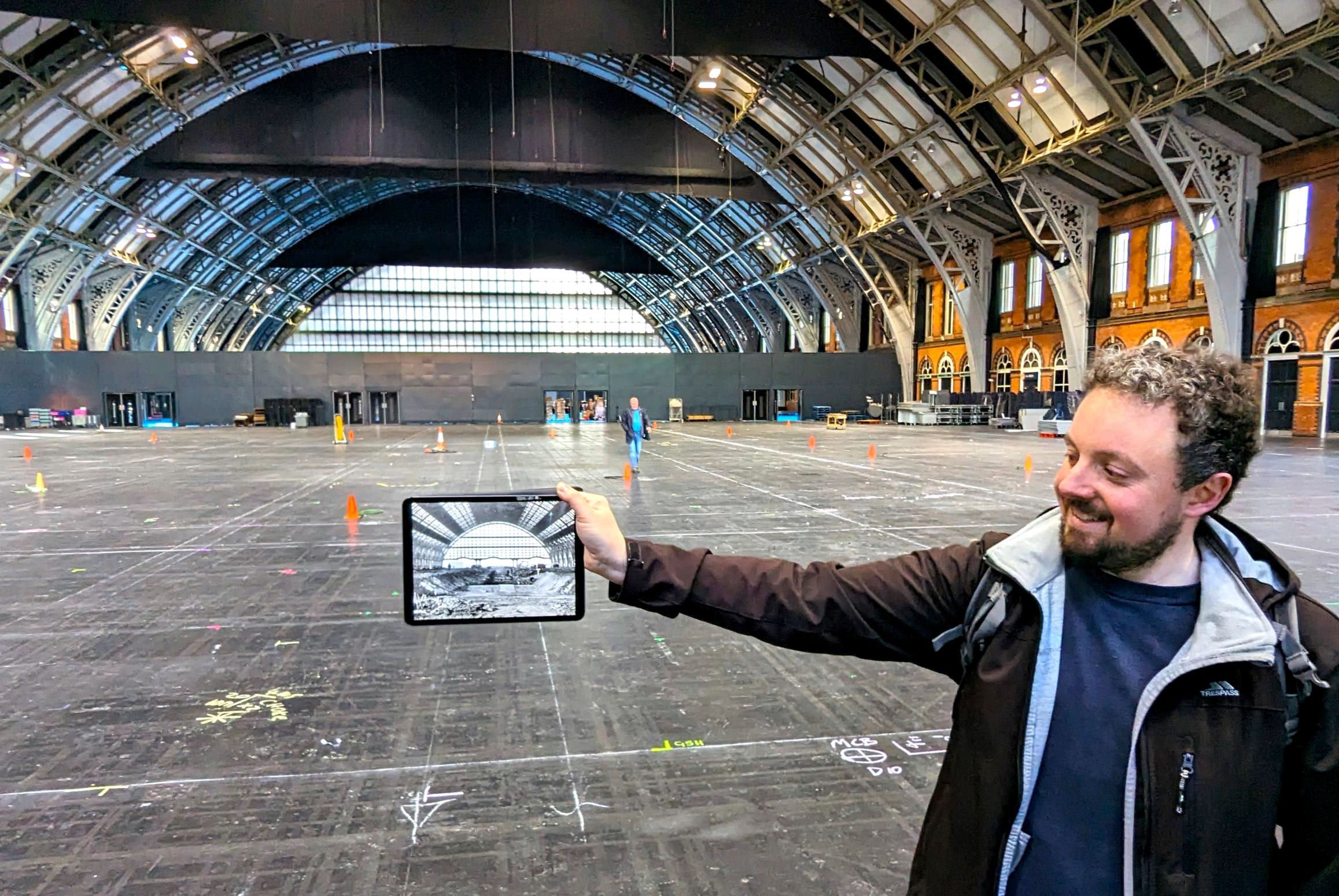
The London end of the former train shed; the tablet photo shows work in progress to convert the station into an events centre.
[© John Hampson 2024]As we had a few minutes in hand, we were able to explore the undercroft at Central, originally used for handling goods. In contrast to the situation at Piccadilly, it is clean, lit and fully accessible, having been restored as a car park, with the installation of a mezzanine concrete parking level. Unlike St Pancras where the platform level is carried on iron girders, Central sits on very neat Gothic brick vaulting.
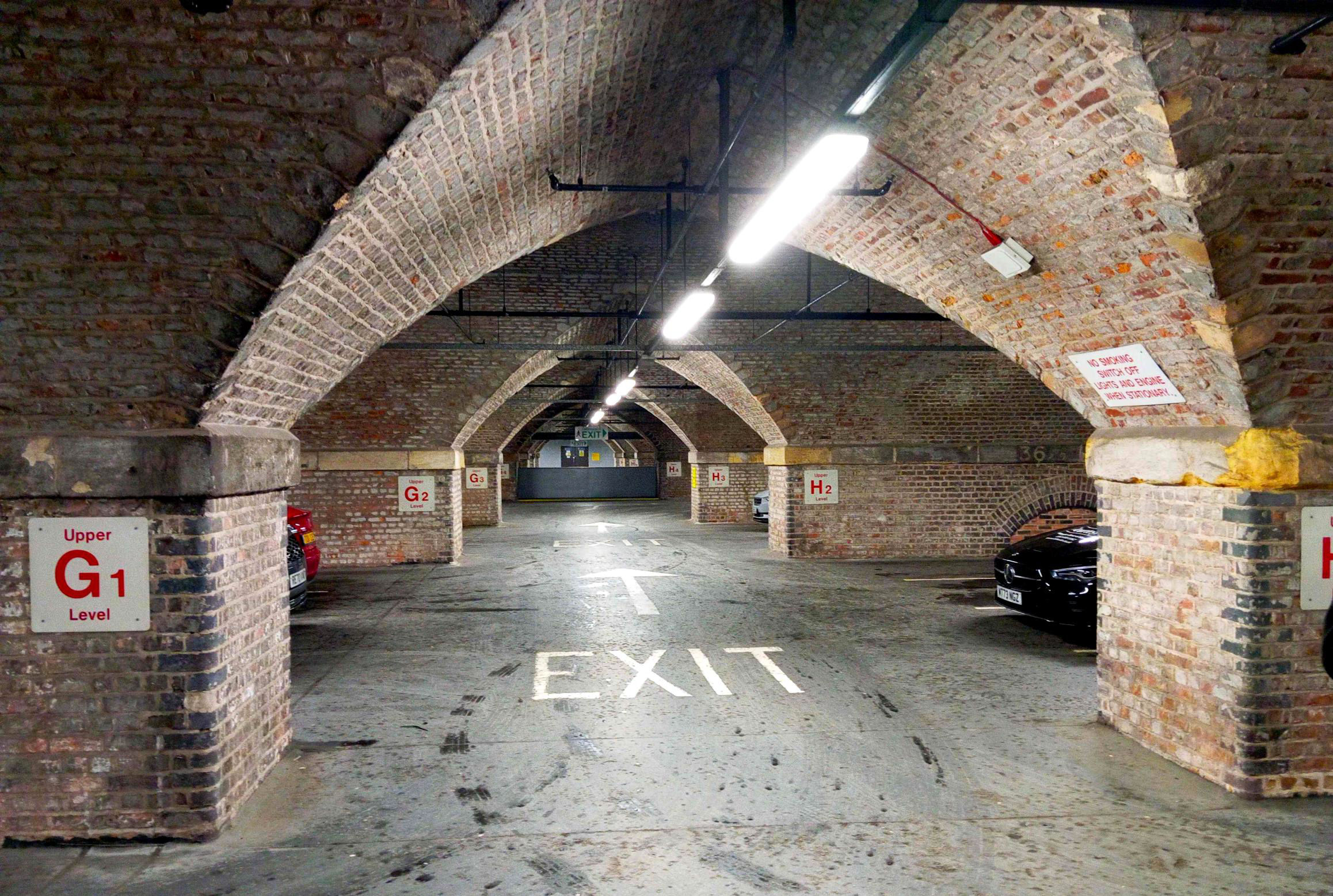
Manchester Central undercroft is markedly different from that at Piccadilly and put to good use...
[© Chris Lewis 2024]When built it was to have included a hotel at the front of the station but this was never constructed. The Midland Railway opened one in 1903 on an adjacent site, with a glass covered walkway from the station. It was, and is, the Midland Hotel, now Grade II* listed, which takes its heritage very seriously. Built in red brick with much orange/brown terracotta decoration, including pepper pot corner turrets, it has always been recognised as a luxury hotel and a Manchester landmark. This was our last location to visit of the day. The question is, has our resident railway hotel expert, Rhys Ab Elis, visited this one?
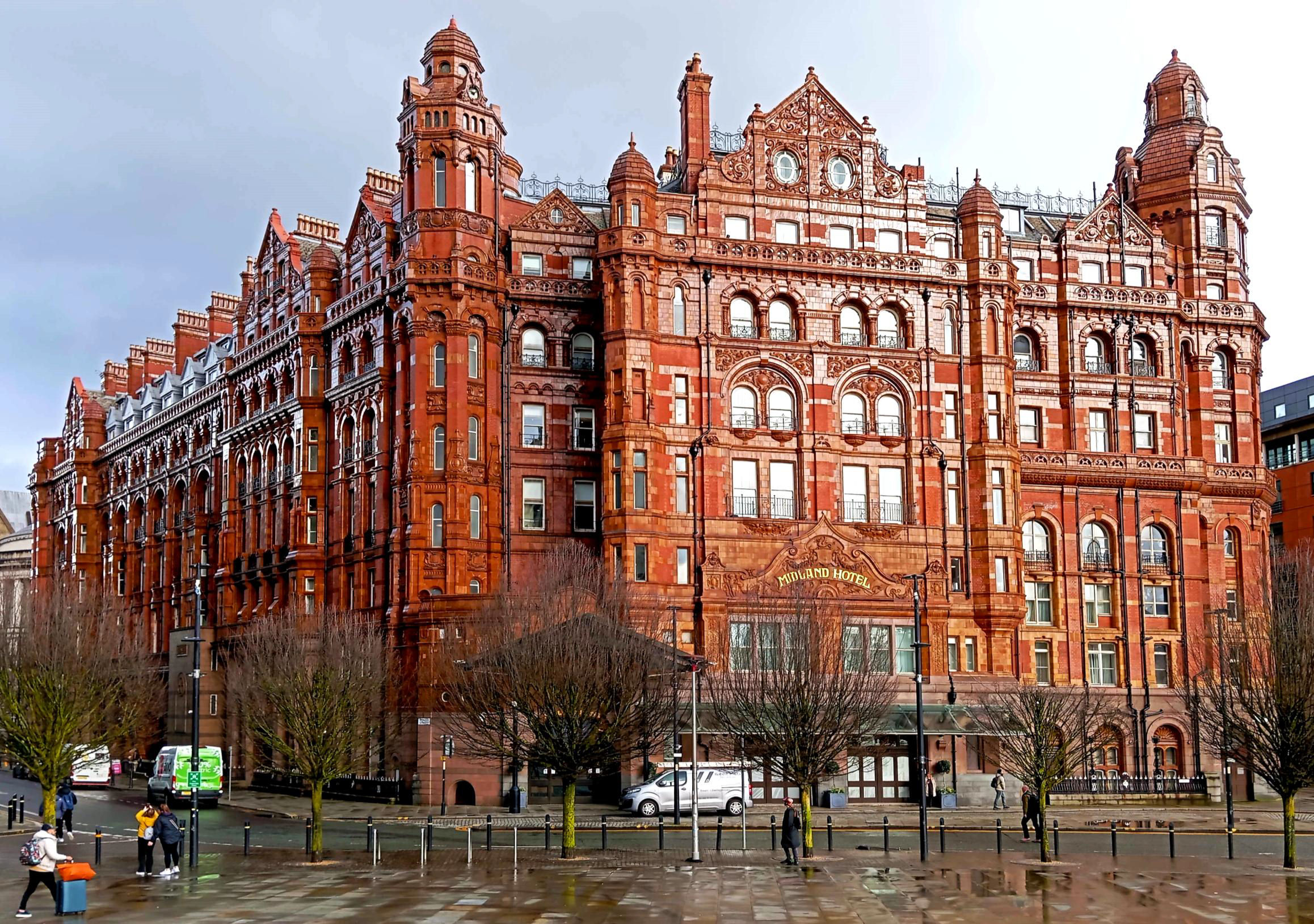
Midland Hotel Manchester.
[© Chris Lewis 2024]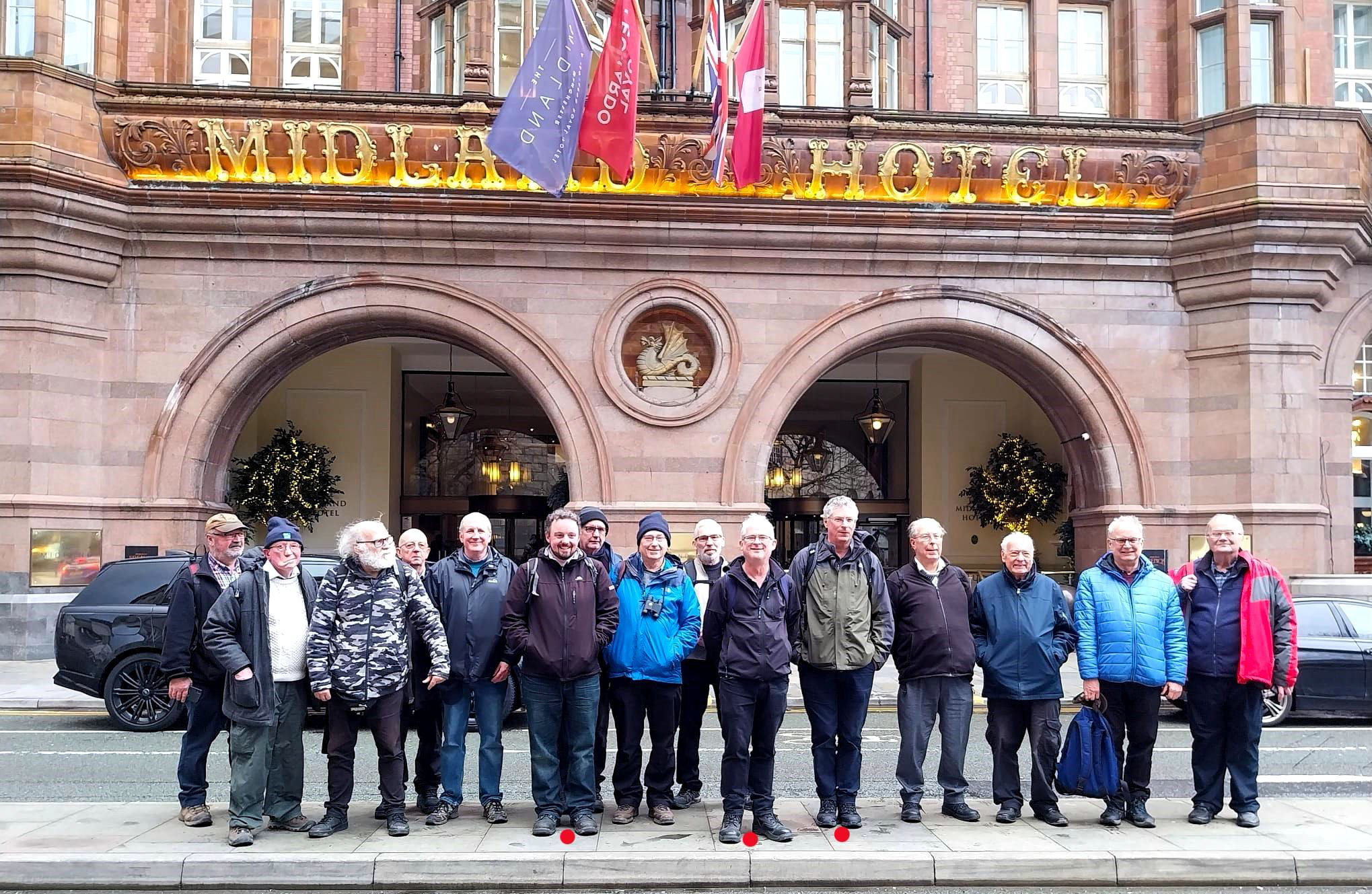
An identity parade outside the Midland Hotel twin arches (see text for relevance), Manchester. 'Spotted' left to right are Adam Turner (guide), John Cameron (NW BLN Editor & Committee Member) & John Hampson (Committee Member).
[© Laura Mackie 2024]We were greeted in the Breakfast Room, adorned by former Midland Railway and London, Midland & Scottish Railway posters, by David, the Hotel Director of Sales and Laura, the Hotel Sales Manager. They told us about the hotel, then showed us round. Before they were famous, The Beatles were refused entry to the hotel's French Restaurant because they were too scruffy! The hotel was also the historic first meeting place of Hon Charles Stewart Rolls MA and Fredrick Henry Royce in May 1904. There is a restored 1934 Rolls Royce 20/25 Barker Limousine in the entrance lobby to commemorate the founding of Rolls Royce Ltd. Two archways in the main entrance are 'in' and 'out' for horse drawn carriages. Once ladies were not allowed to use one of them, as it was reserved for men! I had stayed there before but we were shown places I hadn't seen. Midway through the tour, our party was given tea, coffee and cookies. The hotel underwent a multi-million pound refit while it was closed during the pandemic and certainly lives up to its reputation as perhaps the premier hotel in Manchester.
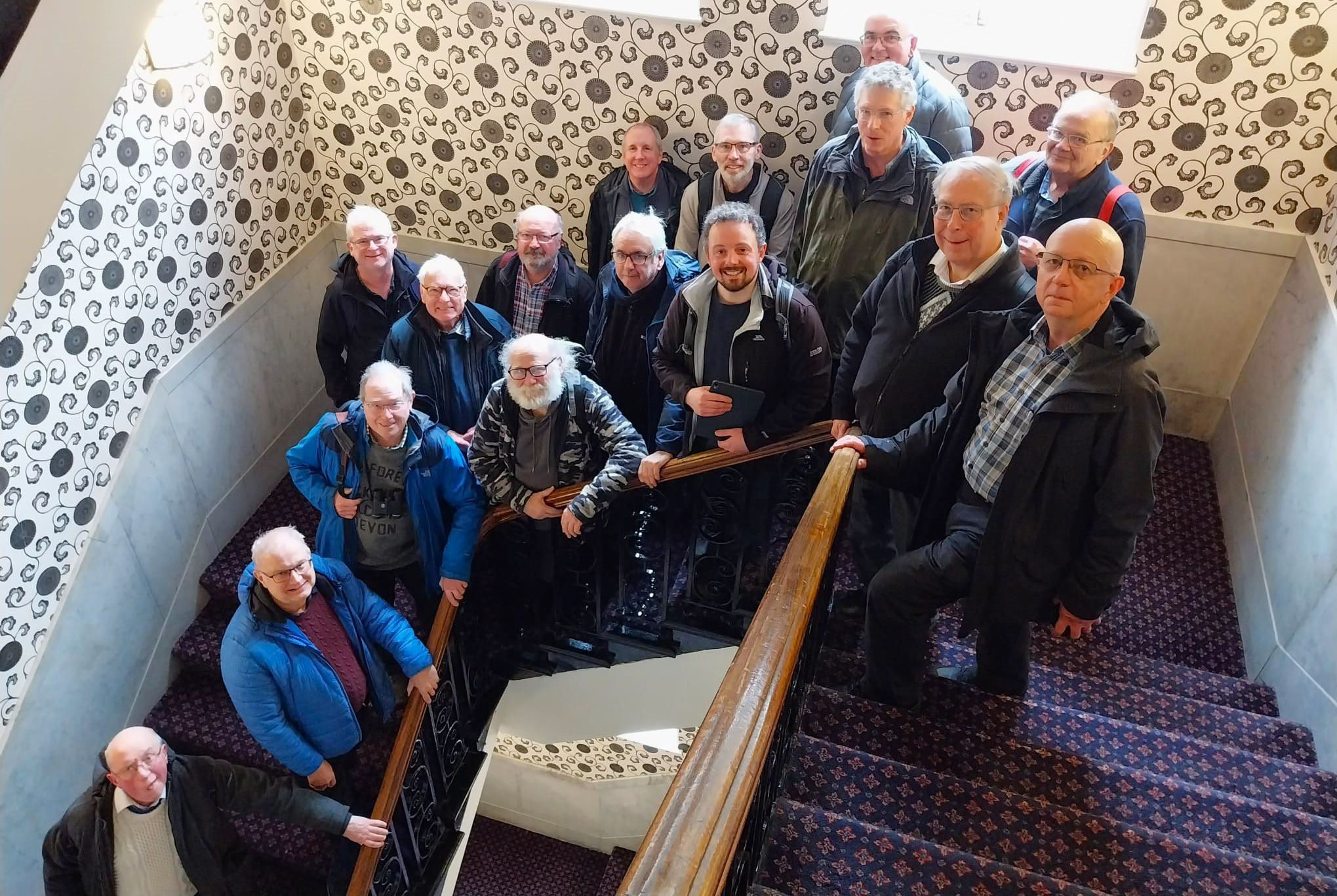
Our members took steps to explore the interior of the Midland Hotel... They all look happy enough (it must have been the free refreshments).
[© Laura Mackie 2024]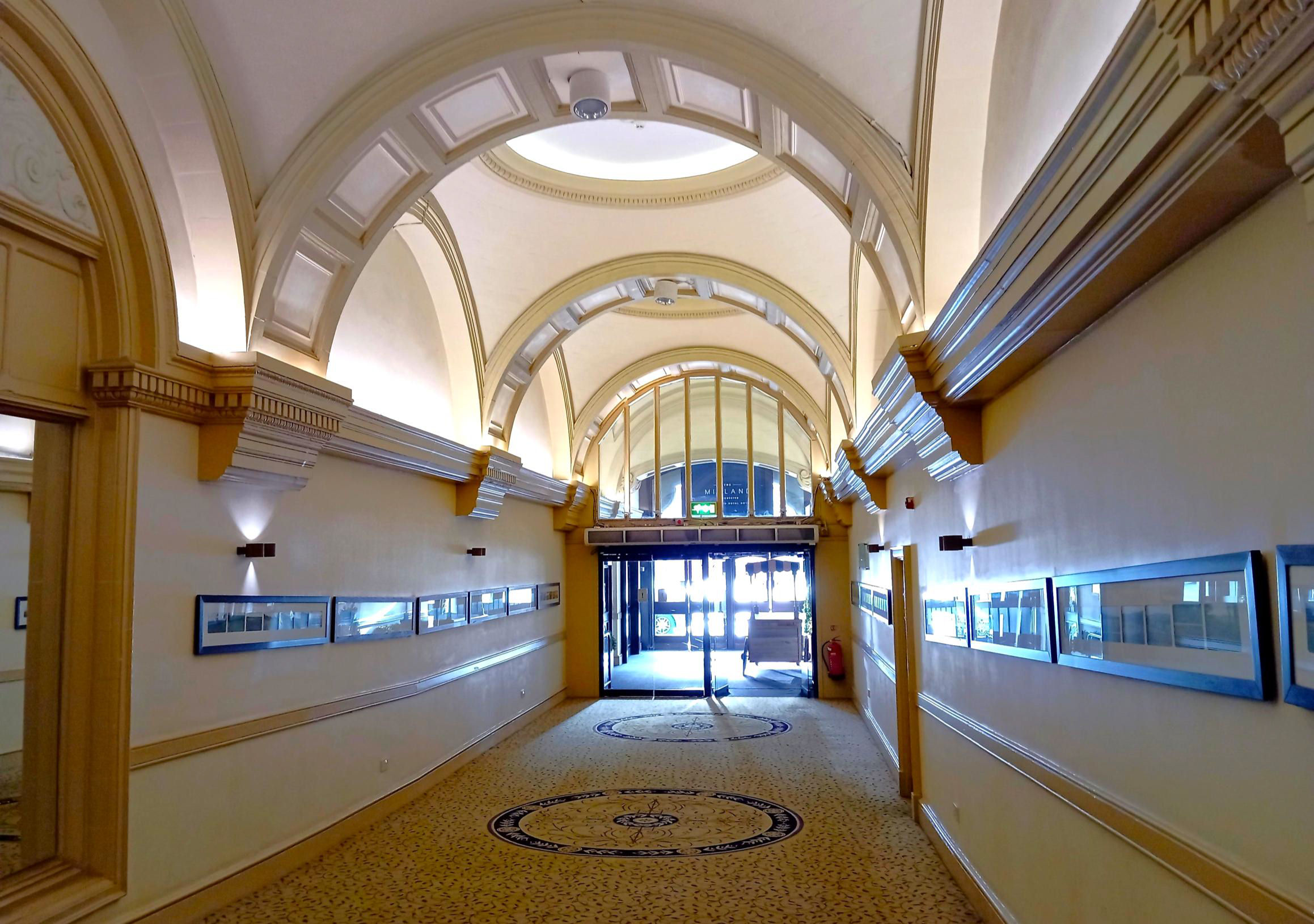
Looking towards the entrance lobby.
[© Chris Lewis 2024]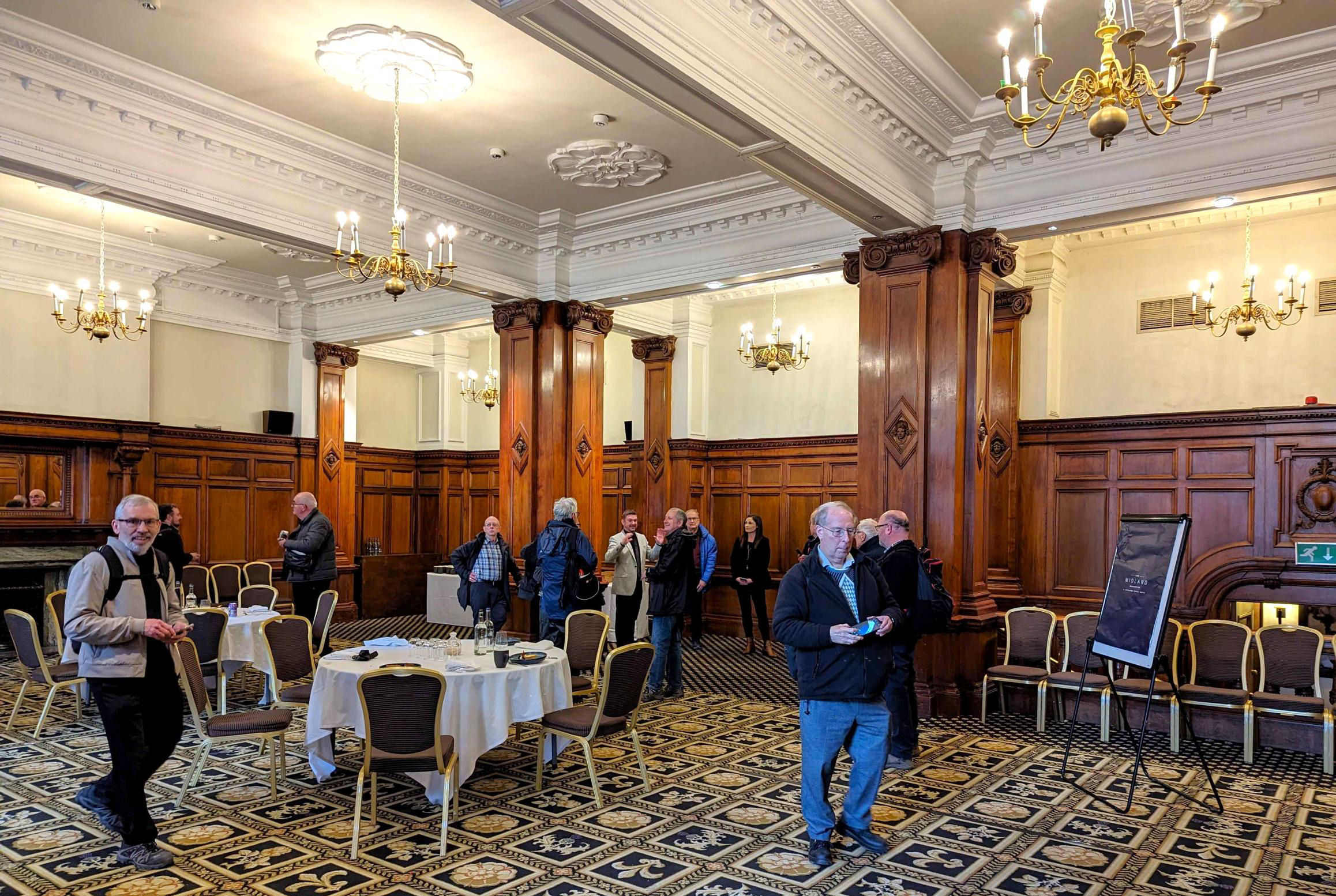
Participants inspect what would be a very suitable venue, with a railway connection, for a Society AGM in Manchester.
[© John Hampson 2024]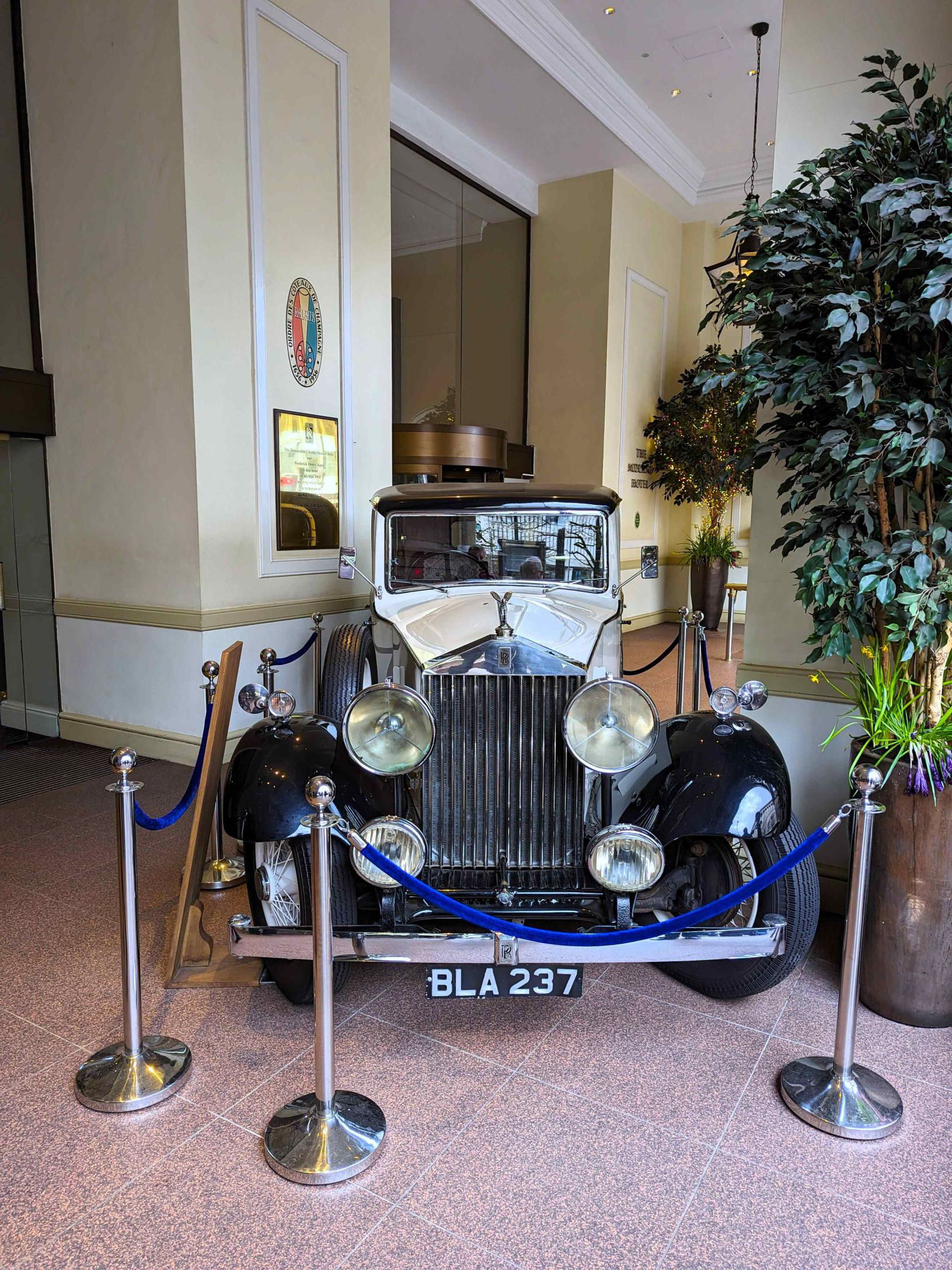
''Parker, get the Rolls.'' ... ''Yes, M'Lady, would you like brown or white.''
[© John Hampson 2024]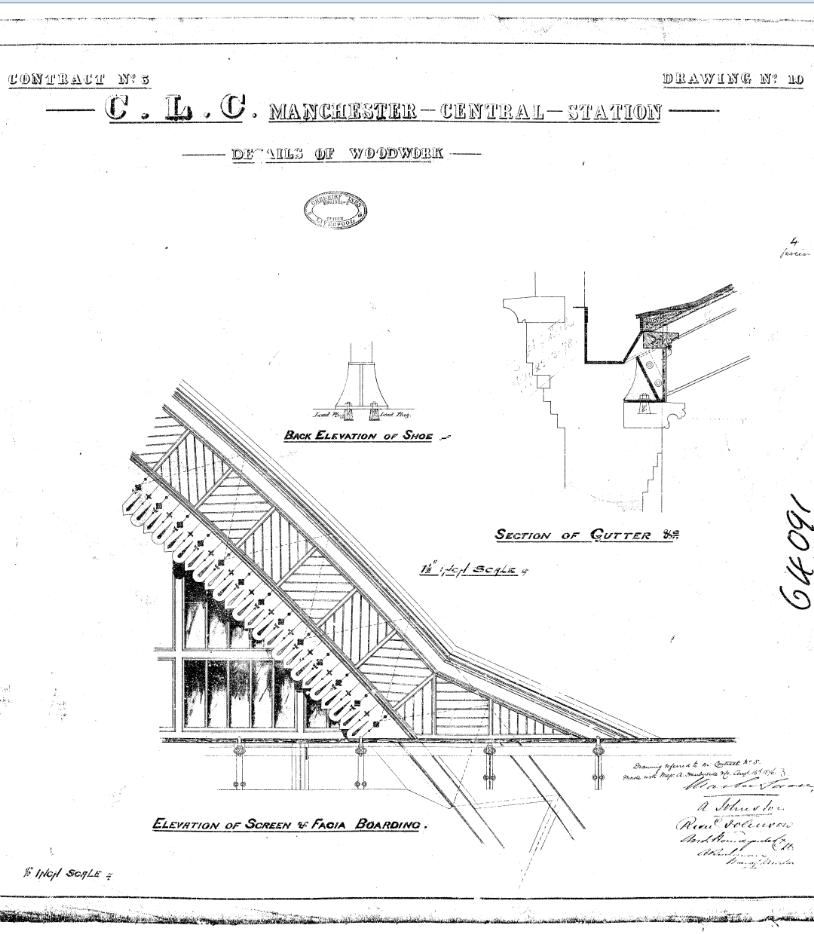
From the Network Rail archives, our group gave Manchester Central a framed copy of this architectural drawing of the train-shed roof valance)
[© Adam Turner 2024]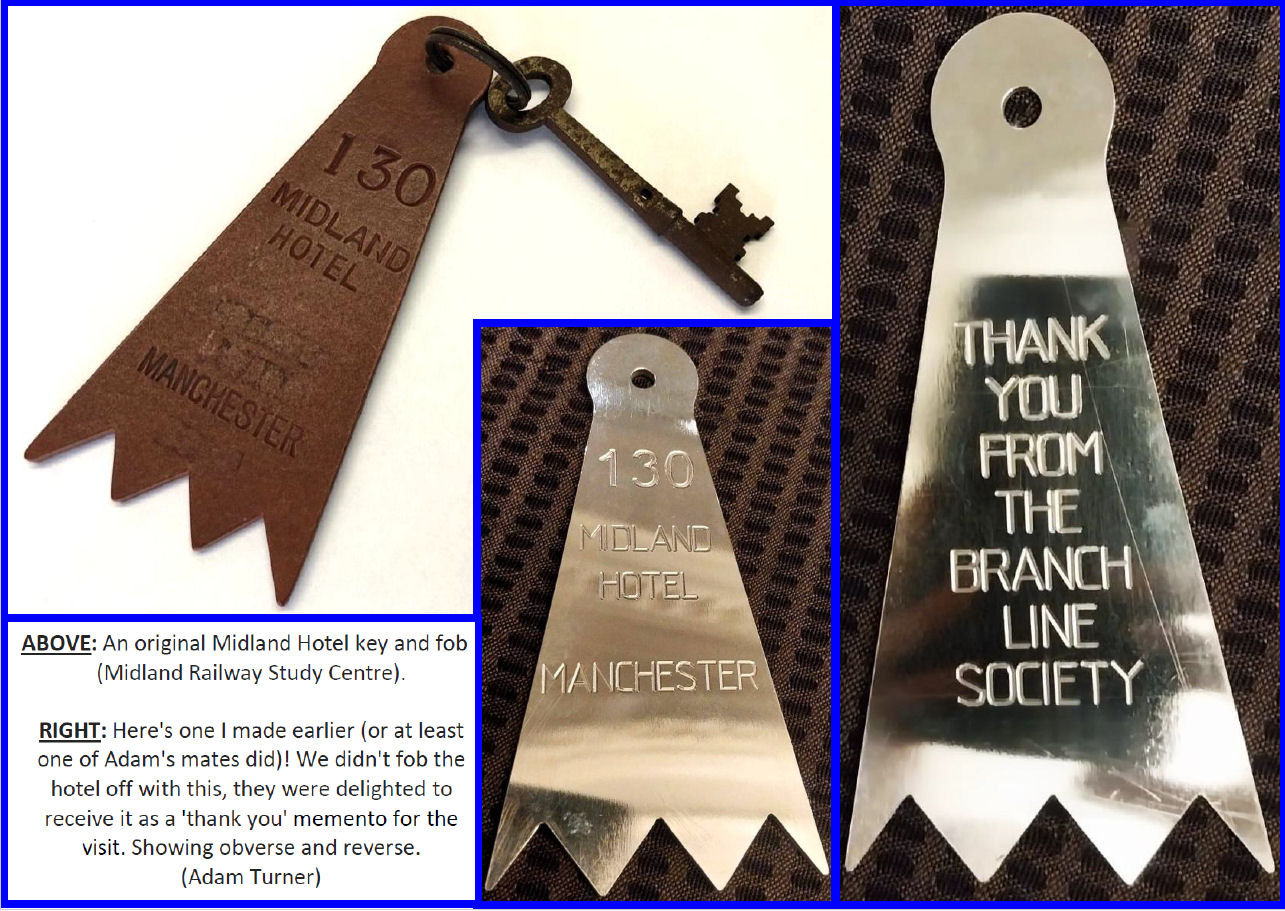
Key Fobs
[© Adam Turner 2024]The excellent teams that met us at each of the three sites were welcoming, knowledgeable and enthusiastic, a credit to their organisations. The level of attention given to our group surpassed all our expectations and all thanks to NR, Manchester Central and the Midland Hotel for making this day possible. It was a bargain for the £33 we paid; as a result, £250 was donated both to St Ann's Hospice, Manchester and to Shelter. I think this is why we had such a warm welcome at the establishments we visited. They are all listed buildings, so their future should be safe. Many thanks to our member and knowledgeable guide, Adam Turner from NR, for the arrangements - another wonderful tour.