❶Chapel-en-le-Frith: A full party of nine members met for our first box of the day on the Buxton branch, often just referred to as 'Chapel'. It is notable mainly for the absence of the original box due to an incident on 9 Feb 1957. The brakes on an 8F failed and it ran away towards the former London & North Western Railway (L&NWR) box, colliding with the rear of another freight train, destroying the box in the process. The driver of the 8F was posthumously awarded the George Cross for his bravery, staying in the cab trying to prevent the accident, and there is a plaque on the former station building wall in his honour.
The current 1957 box is a British Railways (BR) London Midland Region Type 15 design with a 20-lever frame. With no pointwork, just five working levers remain; the Up line complement is only a single home signal and a mechanical semaphore distant, which we were assured was quite a pull! The Down line has a more conventional setup, with a short section of station limits and a colour light distant.
The box works Absolute Block to both Furness Vale and to Buxton. It is somewhat of a rarity south of the Scottish border on a passenger line because it regularly switches out overnight, creating a longer 10¼ mile Absolute Block section between Furness Vale and Buxton. The signal box diagram is also very traditional (and small!), with track circuit indications displayed on the block shelf.
The town of Chapel-en-le-Frith lies on the former Midland Railway (MR) from Manchester to Derby and London St Pancras, perhaps most famous for being the route that the striking Midland (Blue) Pullman plied in the 1960s. The Midland station was suffixed 'Central' in 1924 (it was central too) but closed to passengers in 1967. The L&NWR station was suffixed 'South' in 1924 and de-suffixed in 1968 ('Well South' would have been more appropriate). An hourly off-peak Manchester to Buxton service (half-hourly peak) is the current passenger offering. Due to the heavy quarrying in the area (a theme throughout the day!), the ex-MR line is retained as a freight only line between Buxton, Blackwell Mill and Chinley North Jn/Chinley East Jn, a triangular junction where it joins the Hope Valley Line. Chinley East Jn - Chinley South Jn CA 21 Sep 1964 and removed but was relaid and reopened 21 Dec 1980.
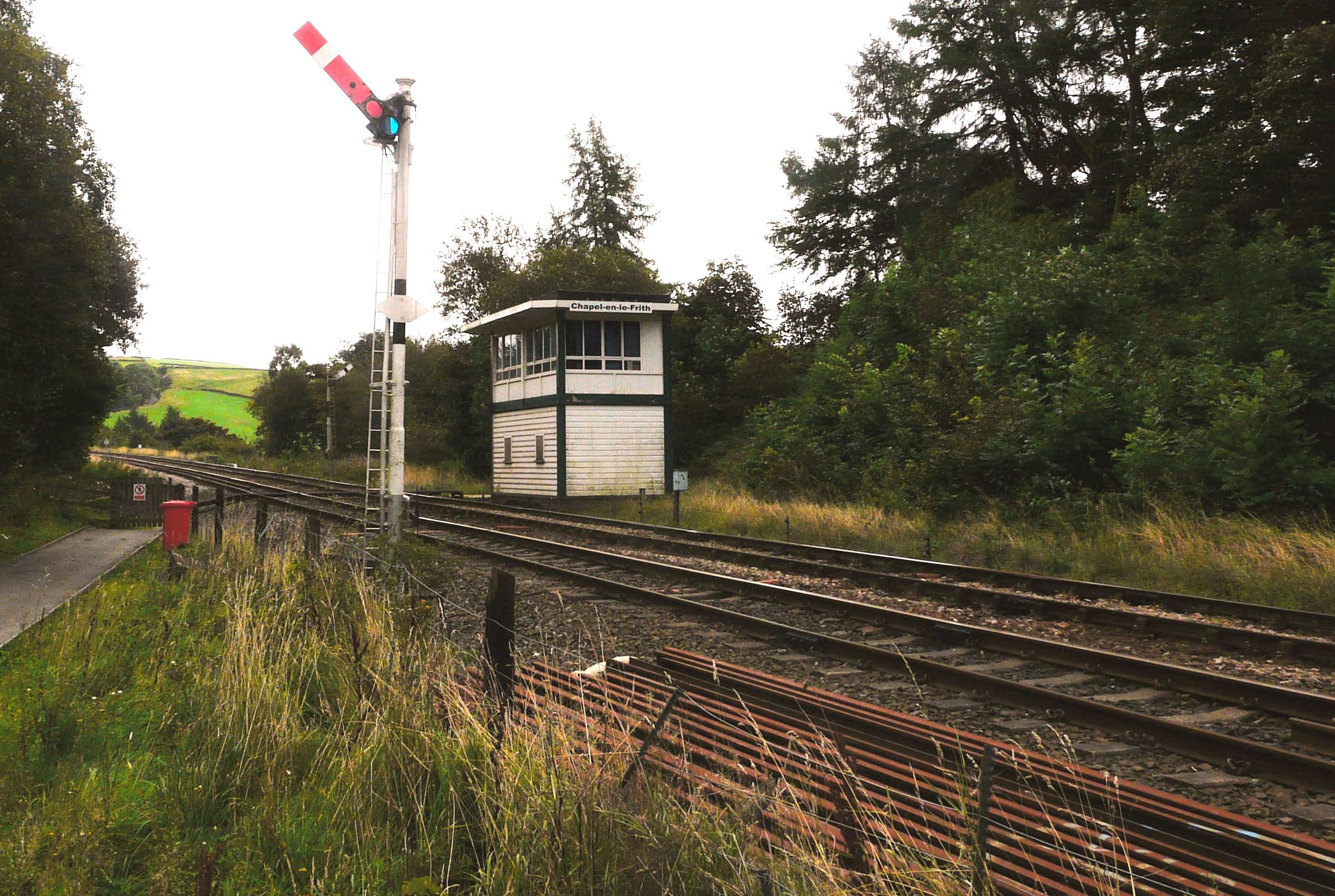
Chapel-en-le-Frith box (station off right) looks rather isolated here; Buxton is off left, Stockport right (5 Sep 2009).
[© Angus McDougall 2009]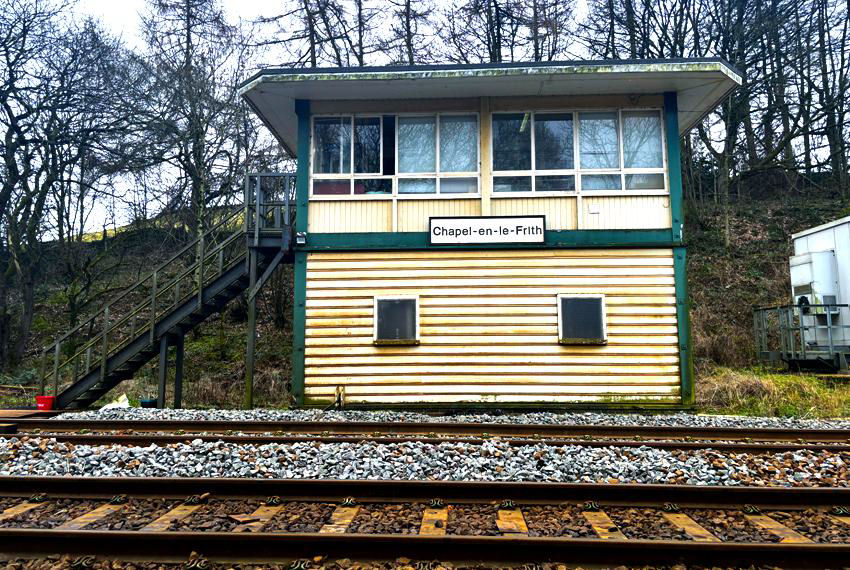
Chapel-en-le-Frith signal box.
[© James Taylor 2024]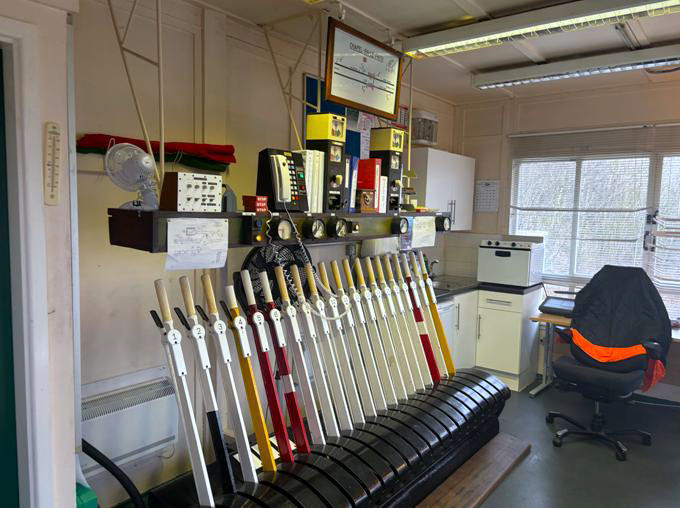
Chapel-en-le-Frith signal box.
[© James Taylor 2024] Situated on the aforementioned MR freight line between Buxton and Chinley, this box has recently been externally refurbished. It works Absolute Block in both directions to Chinley and Great Rocks Junction, including access to some DBC owned quarry sidings. There are also storage sidings, where we saw a DB Class 60 arrive from Tunstead Sidings (by our next location), reverse and stable in the Up Sidings. Peak Forest South also marks the end of the 1m 56ch long Dove Holes Tunnel running almost all of the distance between Chapel and Peak Forest. There were two boxes controlling the area (hence 'South') but Peak Forest North closed and the layout was simplified after passenger closure in 1967 with the end of the line through Millers Dale and Bakewell to Matlock (for Derby etc).
The box is almost entirely mechanical with just the Up distant semaphore signal that is motor worked. Peak Forest South controls the Down Sidings Ground Frame (163m 27ch), at the end of the Buxton end of the Down Sidings (TRACKmaps 4 p43E 2022). Trains are worked by telephone agreement between Peak Forest and Great Rocks signal boxes. The diagram is not illuminated and, as at Chapel, track circuit indications are shown on the block shelf. Slightly strange is a retro-reflective fixed distant board on a through 'main line' track, as these are normally reserved for branch lines and termini. Another point of interest is No18 points, which have to be reversed for a train to traverse the Up Main. This is to add an element of protection against anything running away down the gradient from Chinley.
The array of mechanical point rodding and signal wire, despite being limited in comparison to the likes of Severn Bridge Junction, was nevertheless impressive, spreading out from the box. This box can also be switched out (Christmas Day for example). Peak Forest* station building (CP 6 Mar 1967) is a train crew depot for DB Cargo (other FOCs are available). [*Peak Forest for Peak Dale until 14 Jun 1965.]
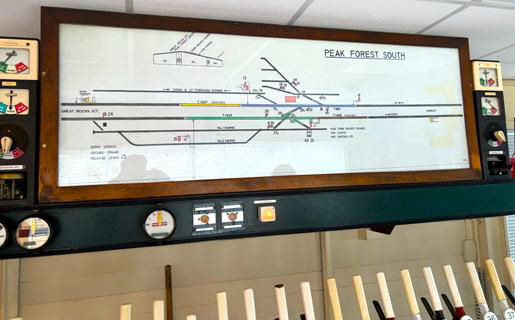
Peak Forest South signal box diagram.
[© James Taylor 2024]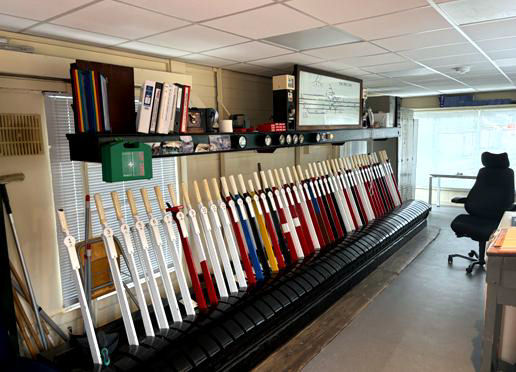
Peak Forest South signal box.
[© James Taylor 2024]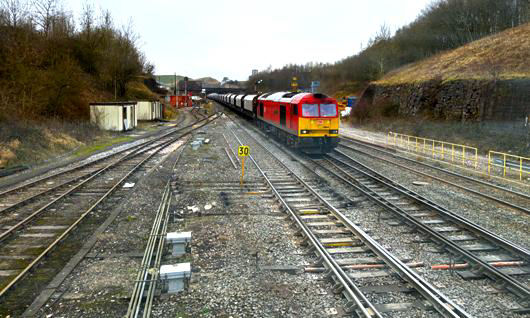
From Peak Forest South box towards the former station (left of the track ahead) and Chinley
[© James Taylor 2024]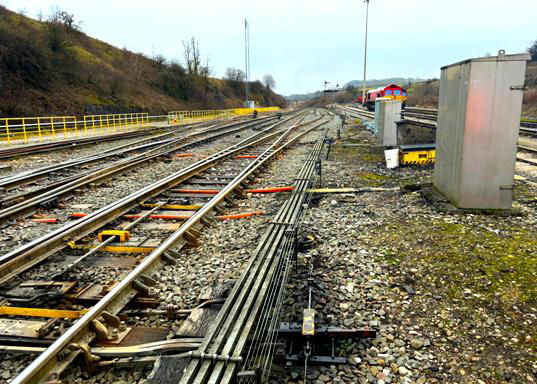
In the other direction, looking south towards Great Rocks Jn and Buxton.
[© James Taylor 2024]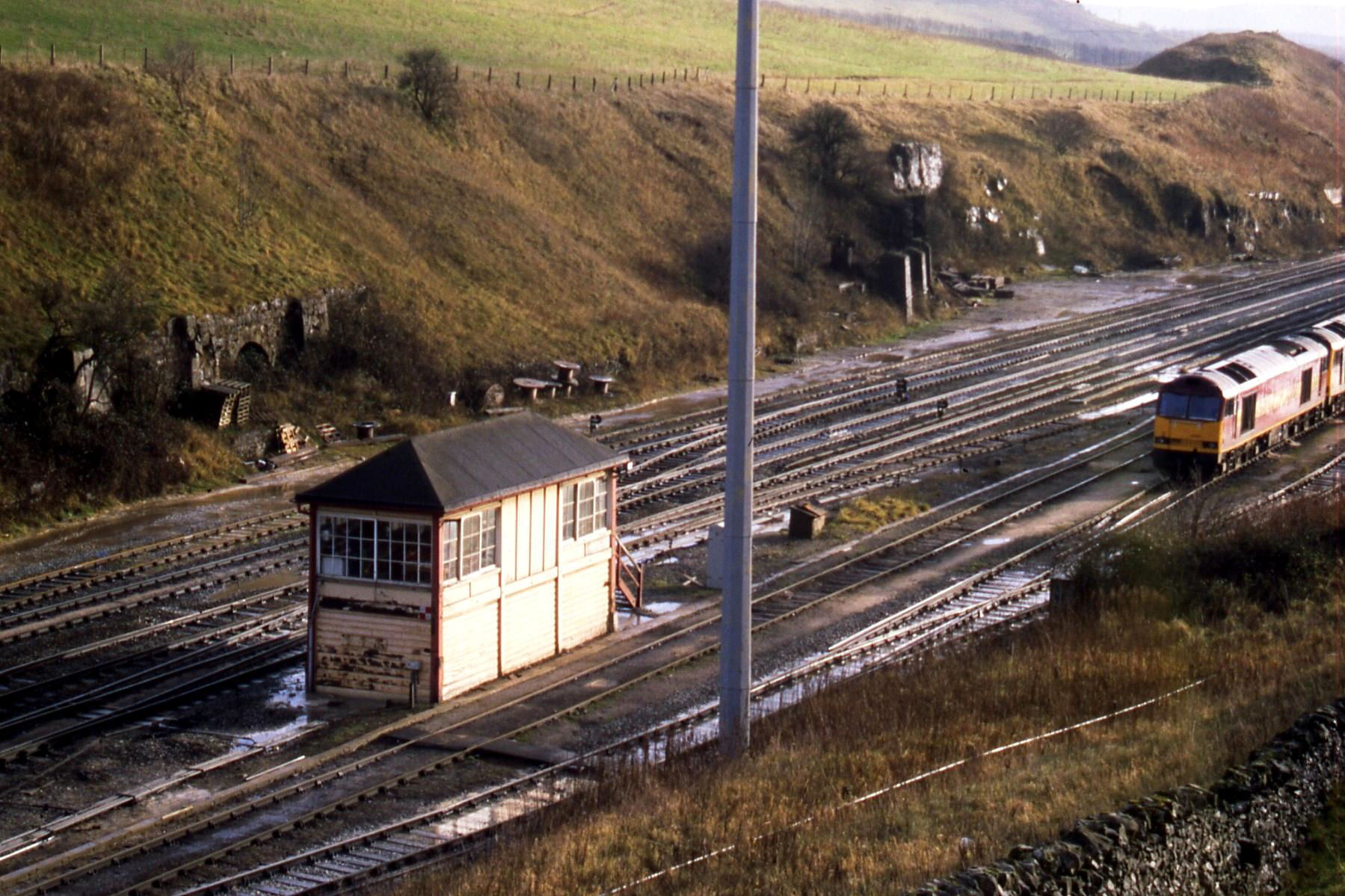
Peak Forest South with Great Rocks Jn and Buxton off right (28 Nov 1998).
[© Angus McDougall 1998]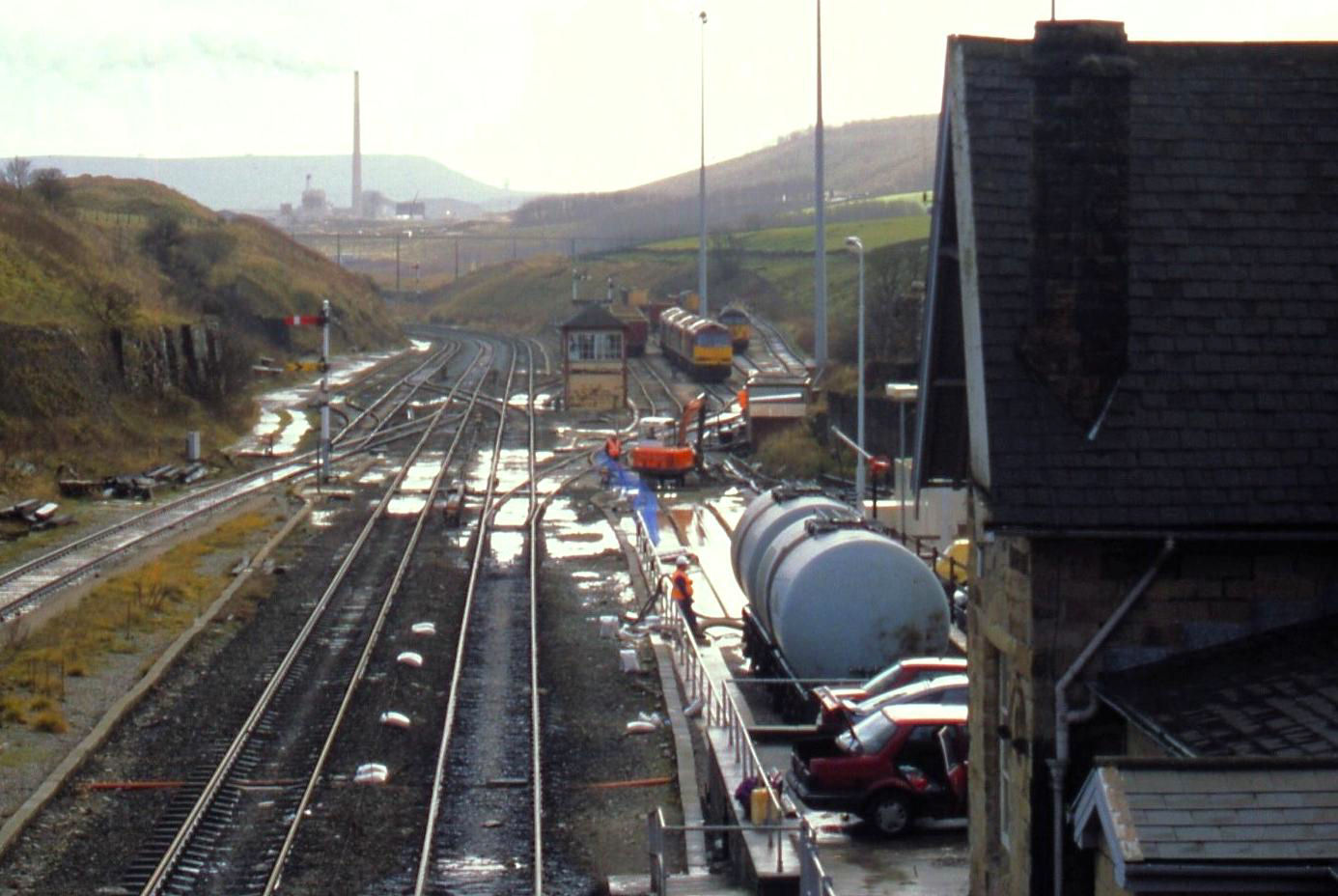
The same day, the former Peak Forest station building is right, looking south towards Buxton.
[© Angus McDougall 1998]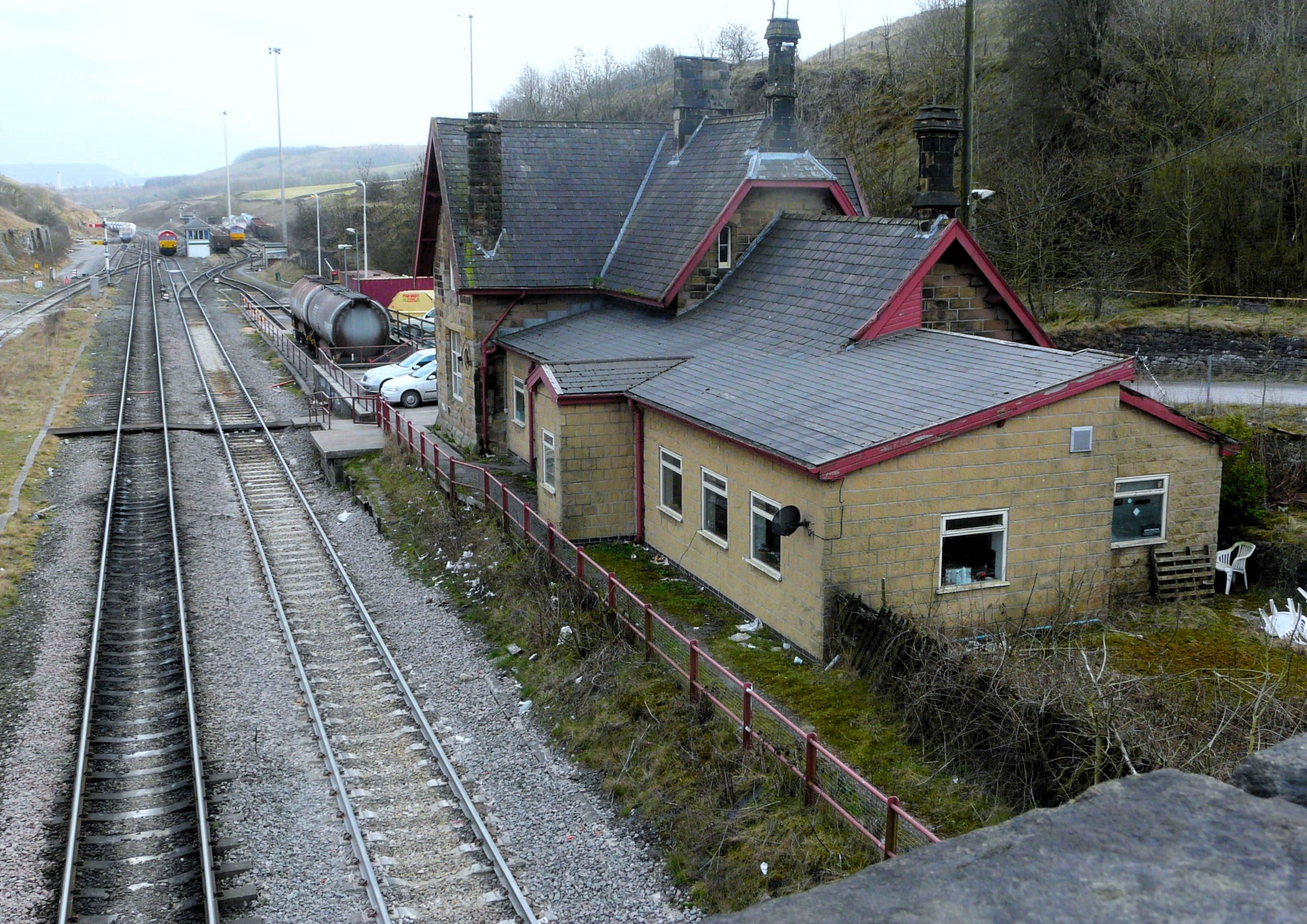
Peak Forest station building with a remaining section of Down platform looking south (22 Mar 2009).
[© Angus McDougall 2009]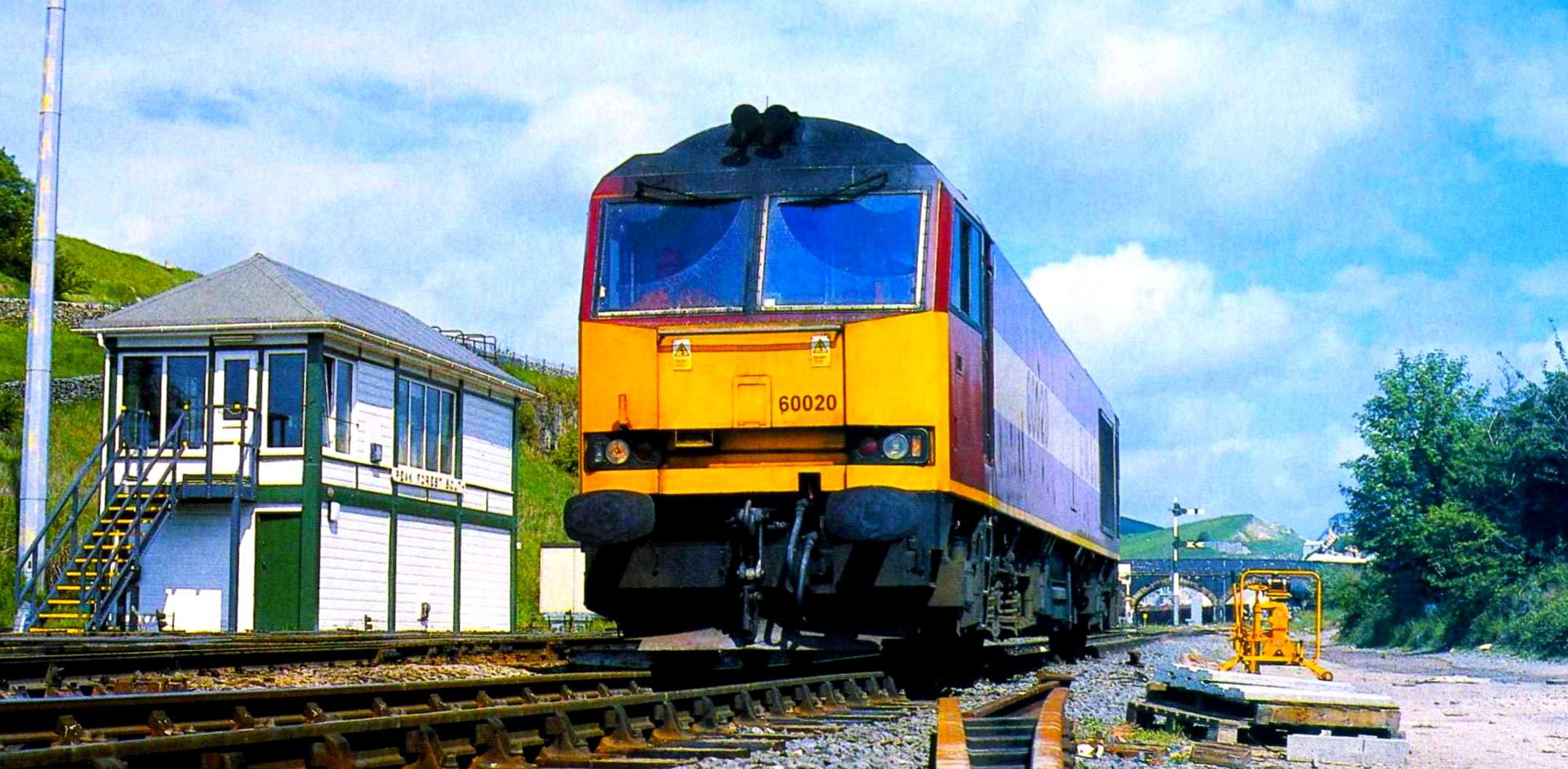
Looking north towards Chinley, on 30 May 2001.
[© David Allen 2001]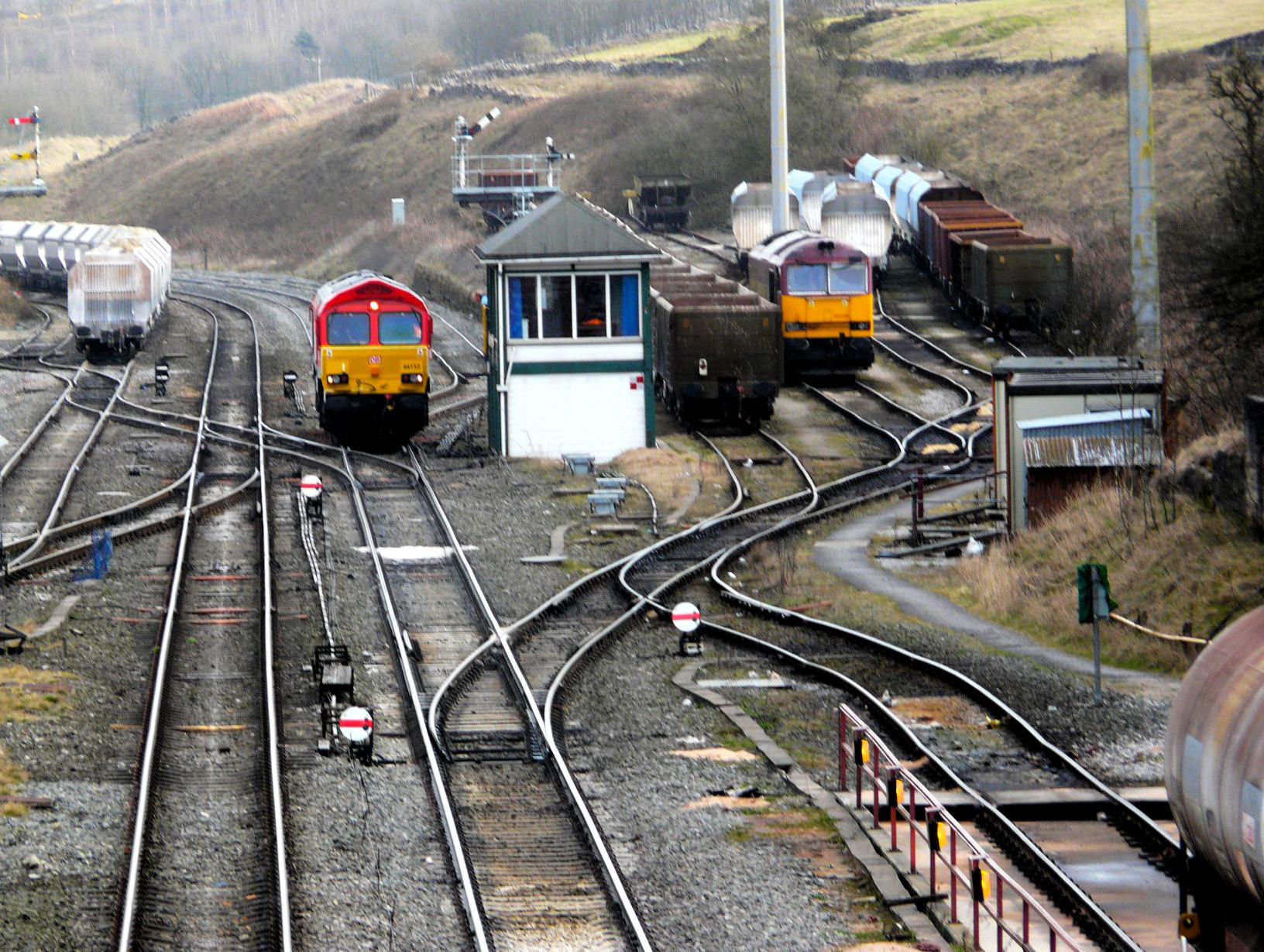
In the other direction, from the overbridge in the distance on the previous photo (22 Mar 2009).
[© Angus McDougall 2009]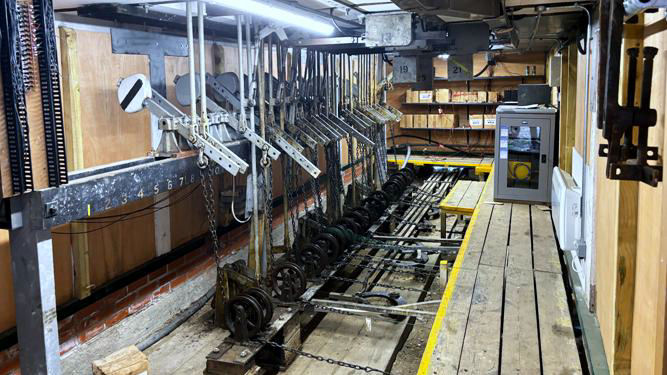
Peak Forest South Locking Room below the frame - it is indeed normally locked.
[© James Taylor 2024]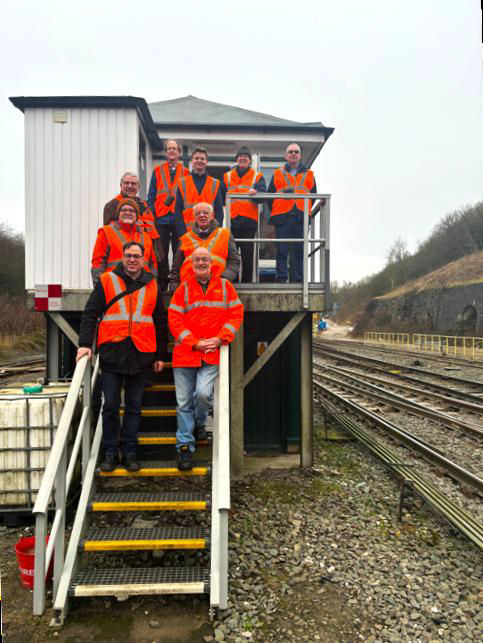
Group photo of our members on these visits at Peak Forest South signal box, looking north.
[© James Taylor 2024] One can't help feeling that Great Rocks should have an exclamation mark after it! Our next location, just 55ch 'down' (literally) the line, is sandwiched between the road bridge, railway and Tarmac facility. This signal box, opened in 1923, became flat roofed accidently when the stove chimney (still present) set fire to the previous roof and a new flat one was installed instead.
The box, which was refurbished in 2004, is also entirely mechanical except for No26 Signal, now motor operated but, unusually, retains its long lever (they are normally cut down for motorised signals and points). The method of working is Absolute Block to Peak Forest South and Electric Token Block to Buxton over the single line section. The box also works into the busy Tunstead Sidings with a strange colour light 'Signal C', beyond the NR boundary (163m 76ch) but slotted with Great Rocks Signal 26.
Again, Great Rocks lacks an illuminated diagram but has a fine array of signal repeaters and track circuits on the block shelf, mainly because the bridge obscures most of the view towards Peak Forest. A rather interesting local Rule between Great Rocks and Buxton is of restricted acceptance. While this is still in the Rule Book for engineering possessions, it is not usually allowed during normal working. However, our group experienced it in Buxton; a train was accepted under 'restricted acceptance' by Great Rocks. This means that Great Rocks can foul its clearing point, even though a train has been accepted under Electric Token Block regulations. The driver must be told that the line is only clear to the home signal (GR13). There was a former quarry in the Electric Token Block Section at Topley Pike (161m 64ch) but, since its closure, the line is just a simple section between Great Rocks and Buxton.
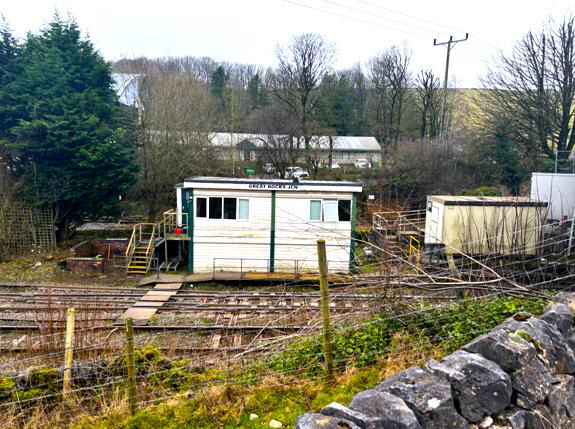
Great Rocks Jcn (sic) with its flat roof following a fire, the uPVC cladding dates from 2004.
[© James Taylor 2024]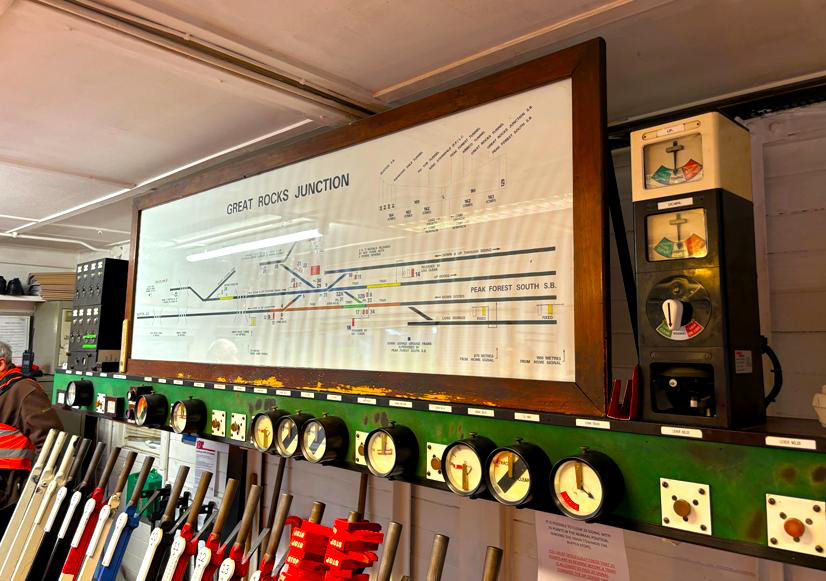
Great Rocks Junction signal box.
[© James Taylor 2024]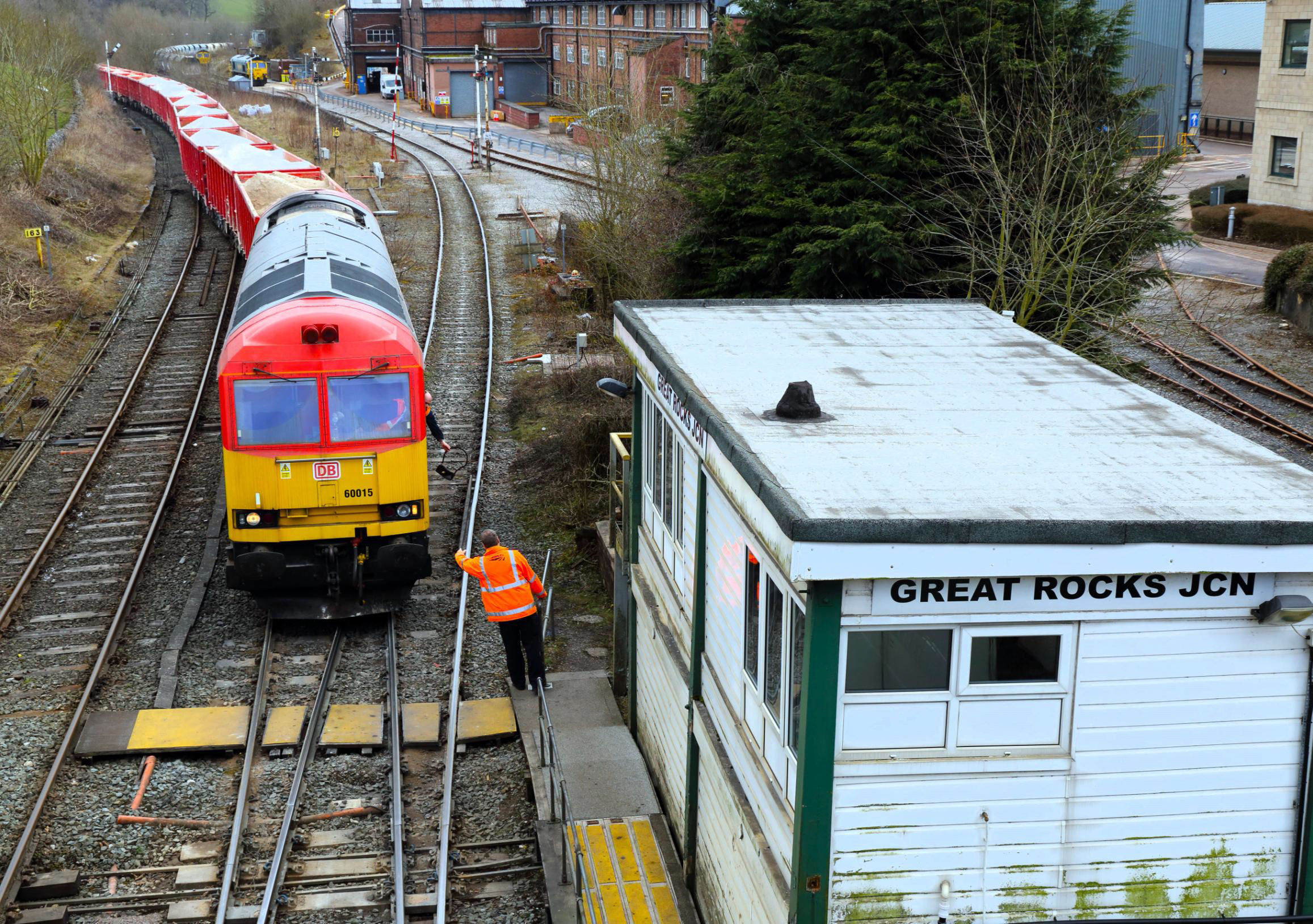
A token of my esteem signalman! (22 Mar 2018) - Looking south, 60015 eases up to Great Rocks Junction signal box as Peak Forest driver Mick Erwin gets ready to drop the token off for the single line from Buxton. The train is 6H52 the 13.02 Dowlow Quarry to Ashburys Stone Terminal in Manchester. The empty southbound trains stop to pick up a token here but the northbound workings like this one slow to walking pace. The train weights on the 1:90 gradient means a standing start here could be time consuming or worse a stall situation given poor track conditions. This section of line was once part of the Midland Railway main Manchester Central to St Pancras line which continued through the beautiful Monsall Dale, Bakewell and Matlock.
Great Rocks Junction signal box dates from 1923 but over the past 100 years has seen a fair bit of change. It has a 34-lever Midland Railway frame and its hipped roof was replaced with a flat one after fire damage. UPVc cladding was added in 2004 over the timber boards as well as double glazing. Externally it's pretty well just the four wooden corner posts that are original. MP 163 is upper left.
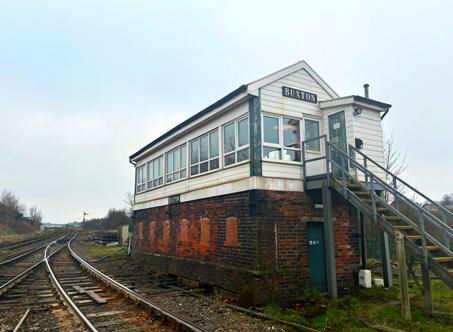
[© Adrian Nicholls, 2018] This was our final box of the day (cleverly arranged to start and end at passenger stations), an 1894 L&NWR design. Once Buxton No1 (of three boxes here, No2 was at the end of line), it had its lever frame replaced when the other two closed. The box is entirely mechanical and has a pleasantly limited number of white (spare) levers, just four of the 48 lever frame. However, it used to have 60 levers (as the below floor lever frame confirms) and, above floor, Levers 1-4 are missing. The signaller thinks that the four were for future expansion, with a set of points coming from the Up & Down Great Rocks line through the Up Main to the Down Main being mooted at one time but this seems to have fizzled out. This may have been short sighted anyway, as the gradient to the north of the box towards Chapel is noticeably uphill and perhaps not suitable for a fully laden aggregate train!
Buxton works Absolute Block to Chapel, Electric Token Block to Great Rocks Jn and No Signaller Token Block to Briggs Ground Frame (and the recently reinstated intermediate Hillhead Ground Frame).
Strangely, there are 'fixed' home signals approaching the box from the Hindlow and Great Rocks lines. They do not seem to have much purpose and have no corresponding lever in the frame - shunting discs control the movements from these locations. (Sighting difficulty for these discs may be the reason.)
Buxton box has become significantly busier in recent years due to an upsurge in aggregate traffic from the quarries on the Hindlow branch. The number of trains is not high but dealing with each one can take over an hour due to the restrictive layout. Anything to/from the Hindlow branch must run round via either the extended Single Line Access Road or Engine Run Round Road (previously 'XYZ Sidings', even though there were only two latterly!). At busy times, a train can be running round while two more are held at BN37 and BN27 signals. There can be long delays as trains at Briggs Ground Frame have to retain the token to split their wagons into the two Hindlow Sidings, locking the whole line.
Fortunately, Buxton passenger services use the separate Up and Down Mains! However, recently Northern has started doing a large amount of (seemingly unnecessary) ECS shunting between the two platforms, with a move completed after each off-peak arrival. The former Buxton diesel depot line, prominently displayed on the diagram, is nothing more than weeds and rust. This leads to the amusing situation when the S&T technicians test Track Circuit T10, which is still on their maintenance roster!
Buxton Signal Box.
[© James Taylor 2024]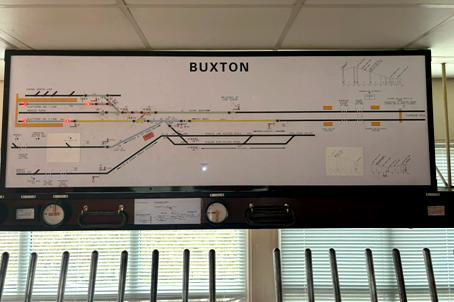
Buxton Signal Box diagram.
[© James Taylor 2024]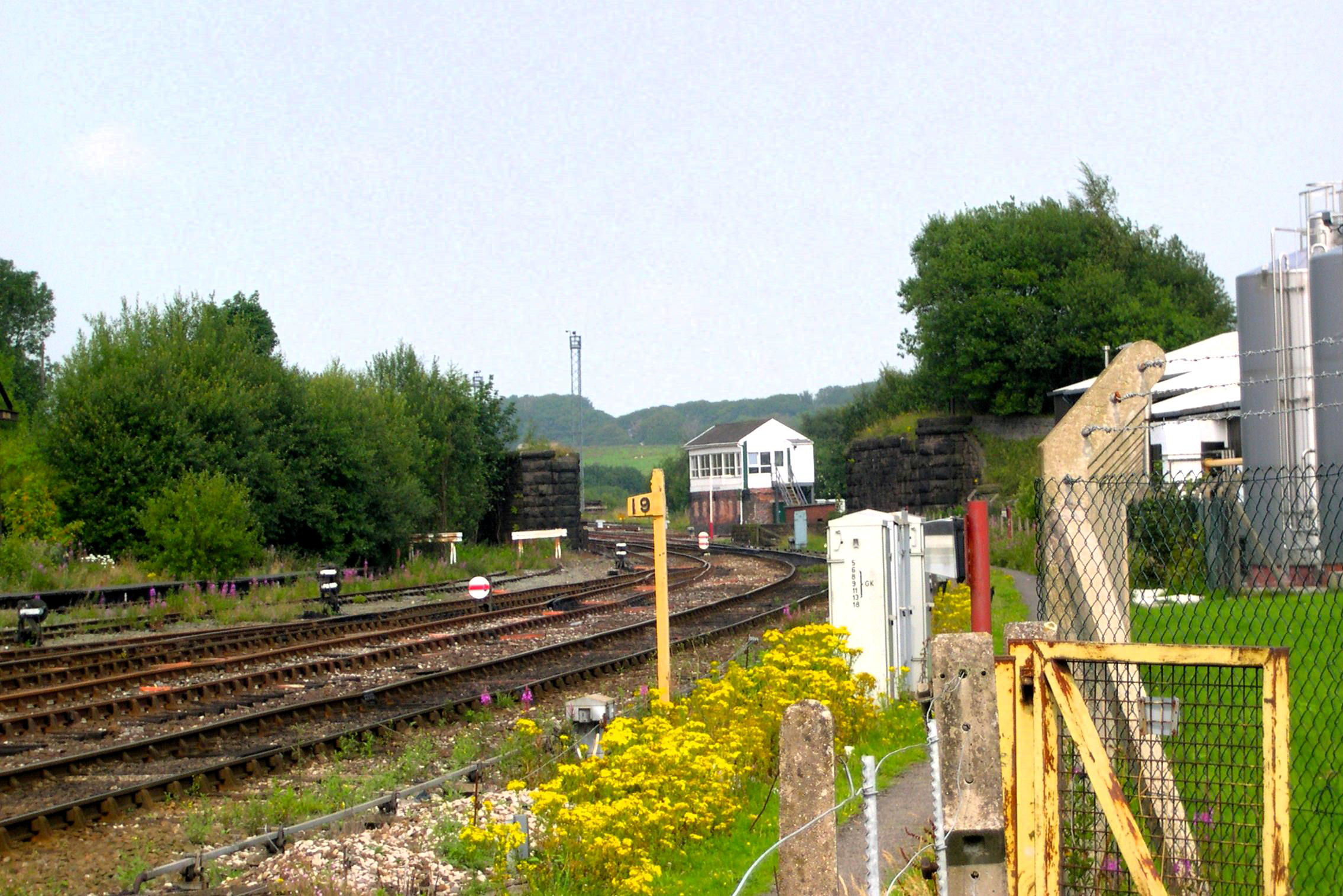
Buxton No1 from P2 of the station. The abutments were for a flyover from Hindlow/Ashbourne towards Stockport (5 Aug 2004).
[© Angus McDougall 2004]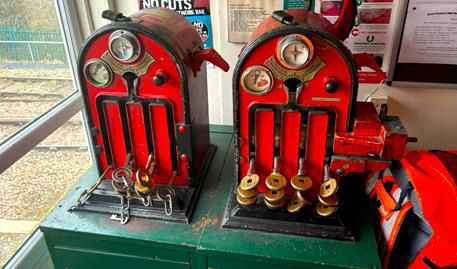
Buxton token machines.
[© James Taylor 2024]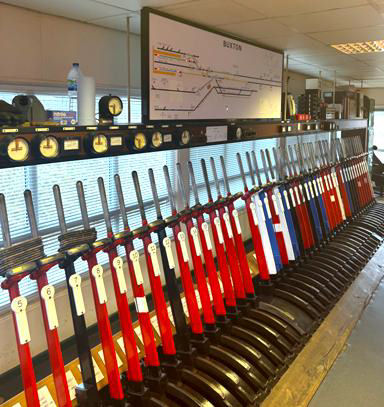
Buxton Signal Box.
[© James Taylor 2024]Thanks to Rebecca Longden (LOM) for facilitating the visits and the signallers for answering our many questions about these locations. We raised £400 for the Samaritans, a fantastic charity closely linked with the railway. [Thanks to member James Taylor for the arrangements to 'peek' inside these boxes.]