Immingham Area Signal Box Visits - Part 2
Wednesday 22nd March 2023
Report by Nick Jones
The Branch Line Society (Test)
Guest

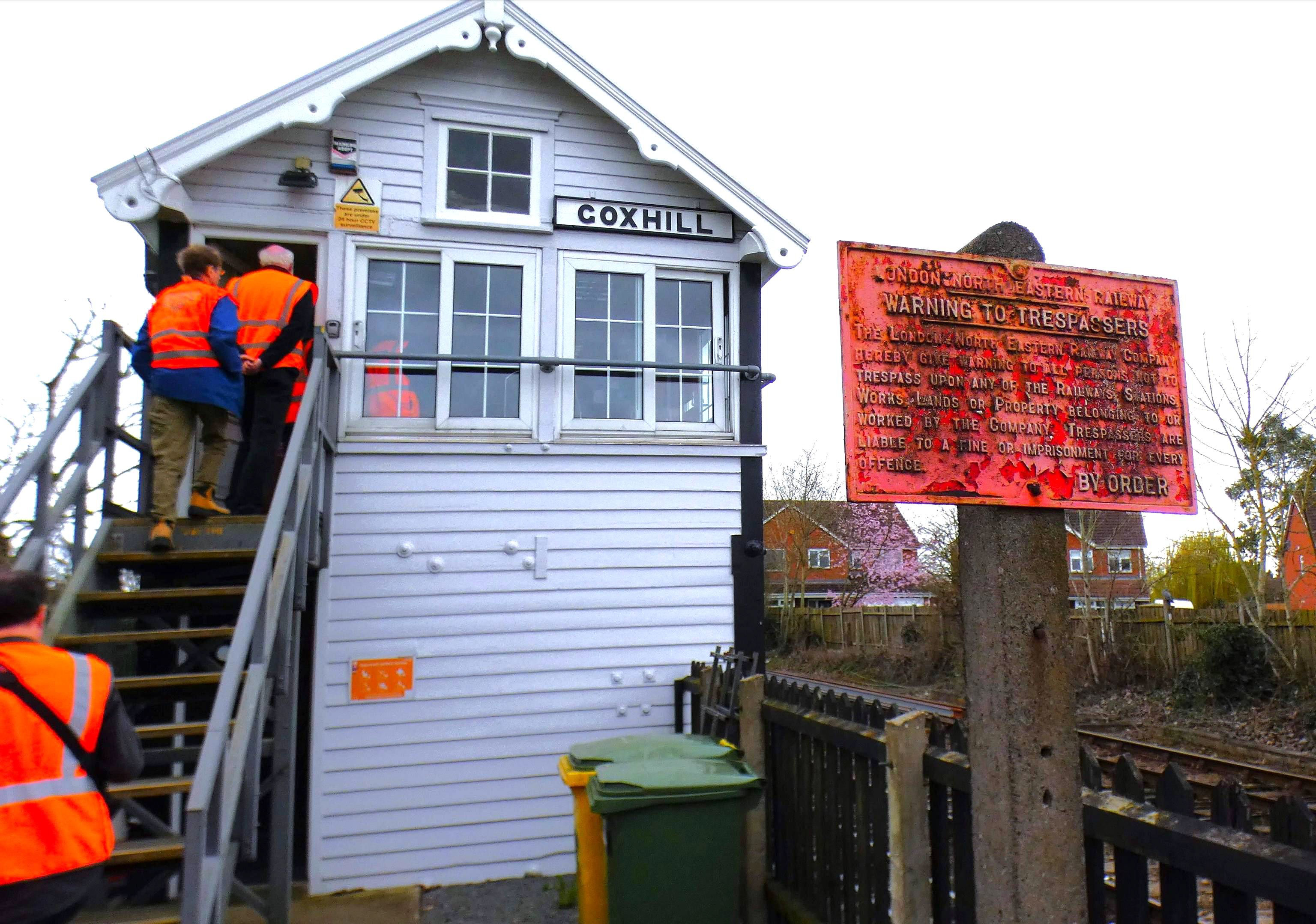
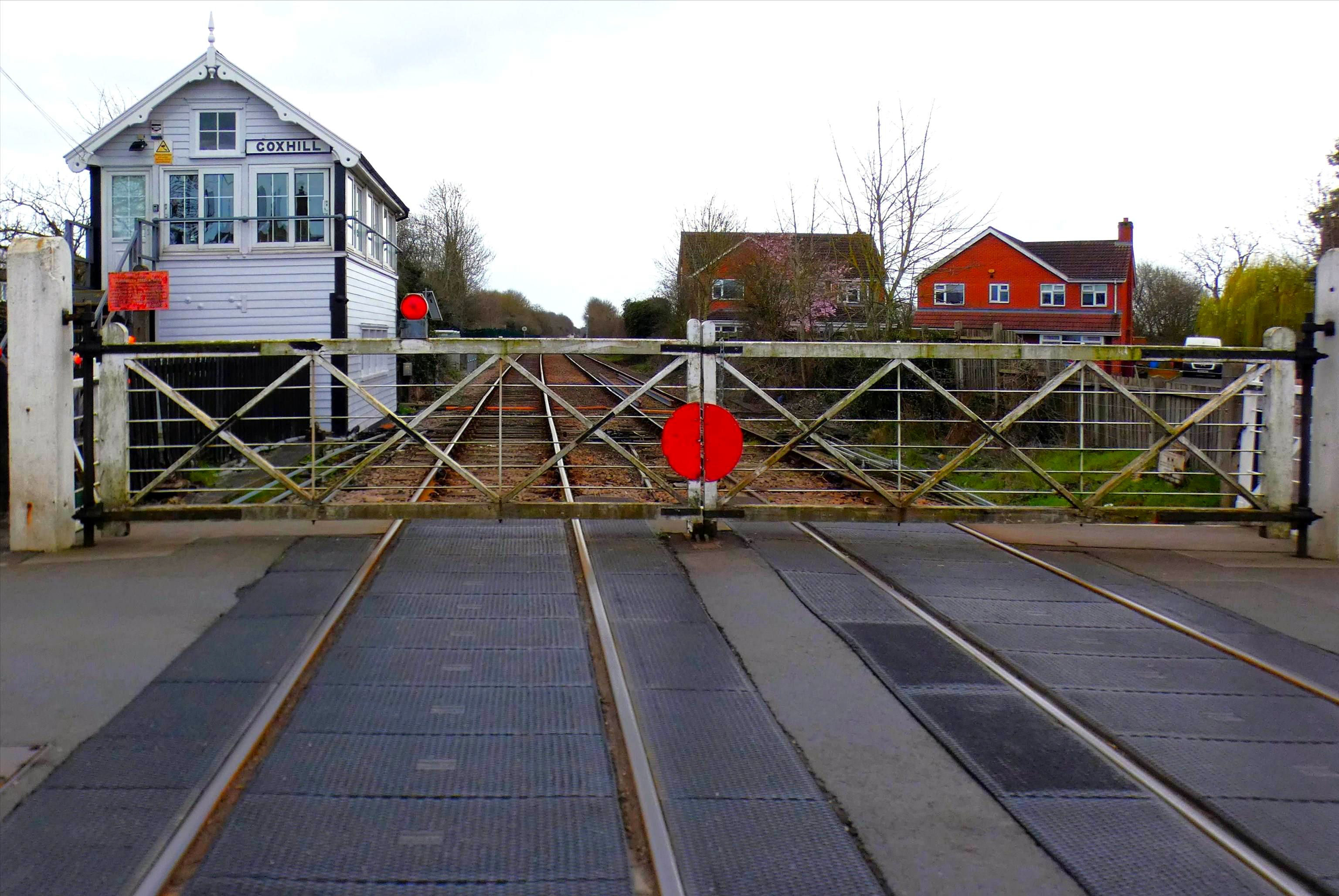
⑤Goxhill: (104m 51ch) This box was opened by the GCR around 1910 to control the junction where the new Barton & Immingham Light Railway from Immingham (via Killingholme) line joined the Barton-on-Humber branch. The box is a GCR Type 4 (with a few differences from the standard type). Before entering, we had to pass a stern cast iron LNER 'NO TRESPASSING' sign! The GCR design frame originally had 36 levers, see: http://www.lymmobservatory.net/railways/sbdiagrams/goxhill.jpg
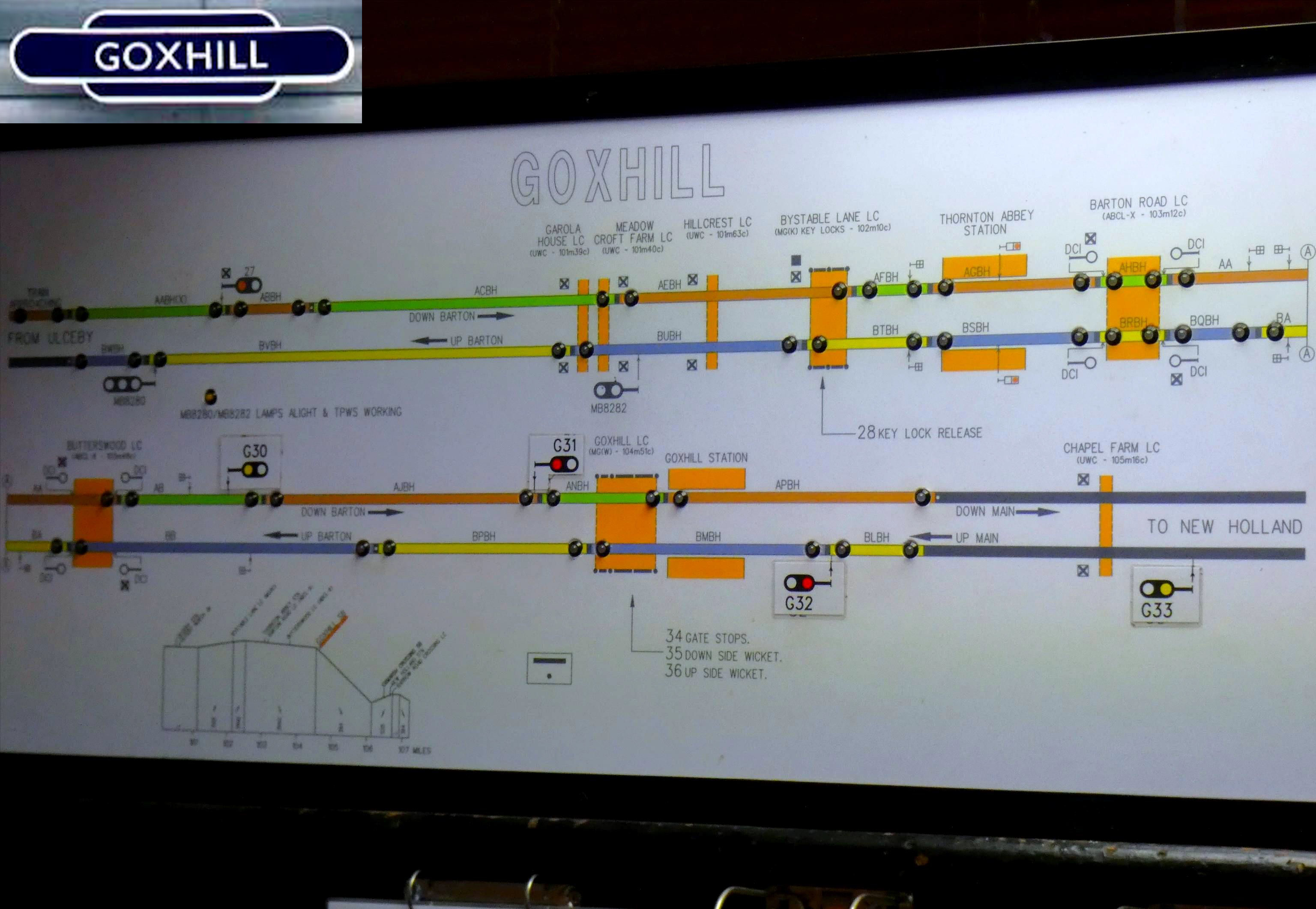
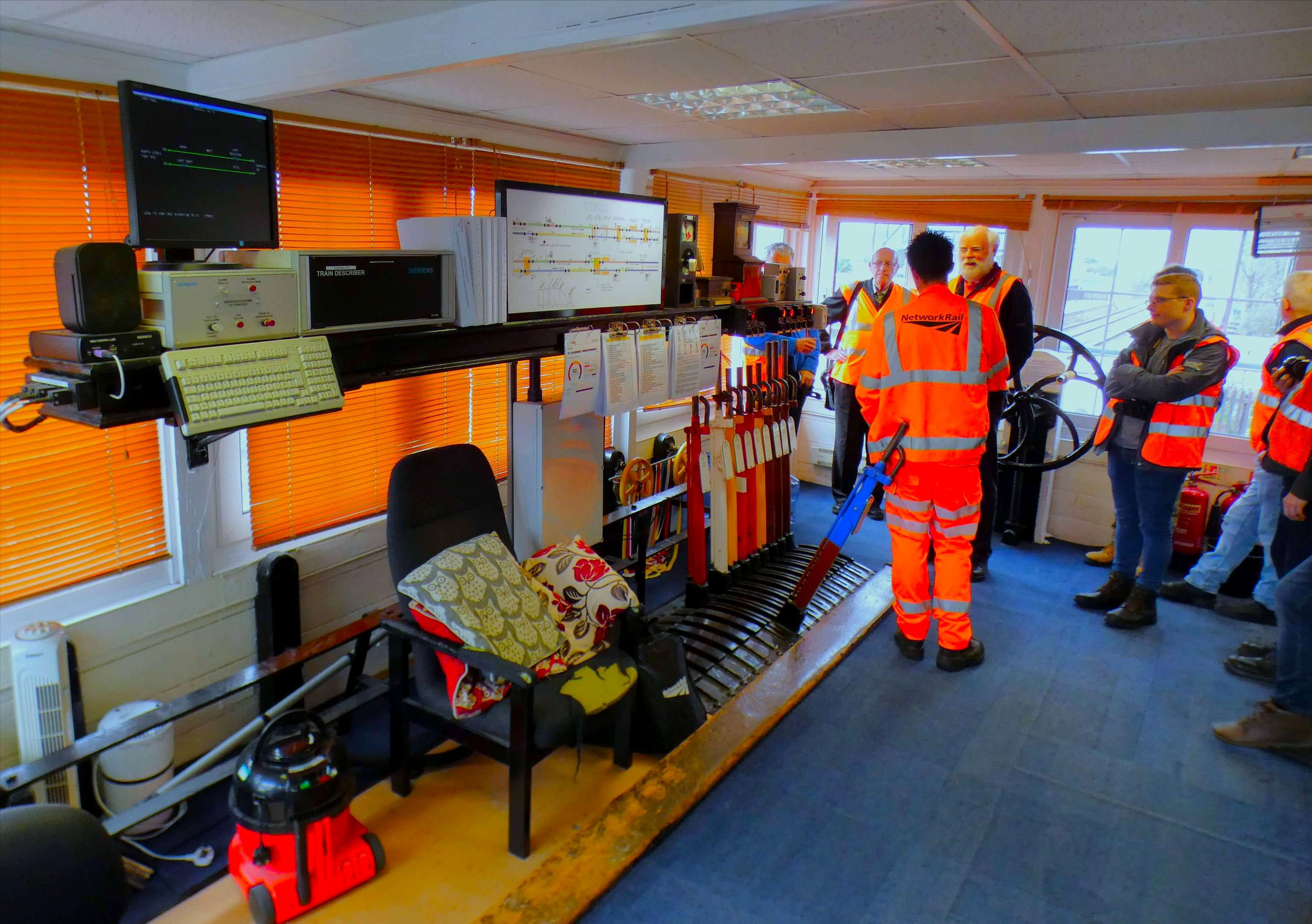
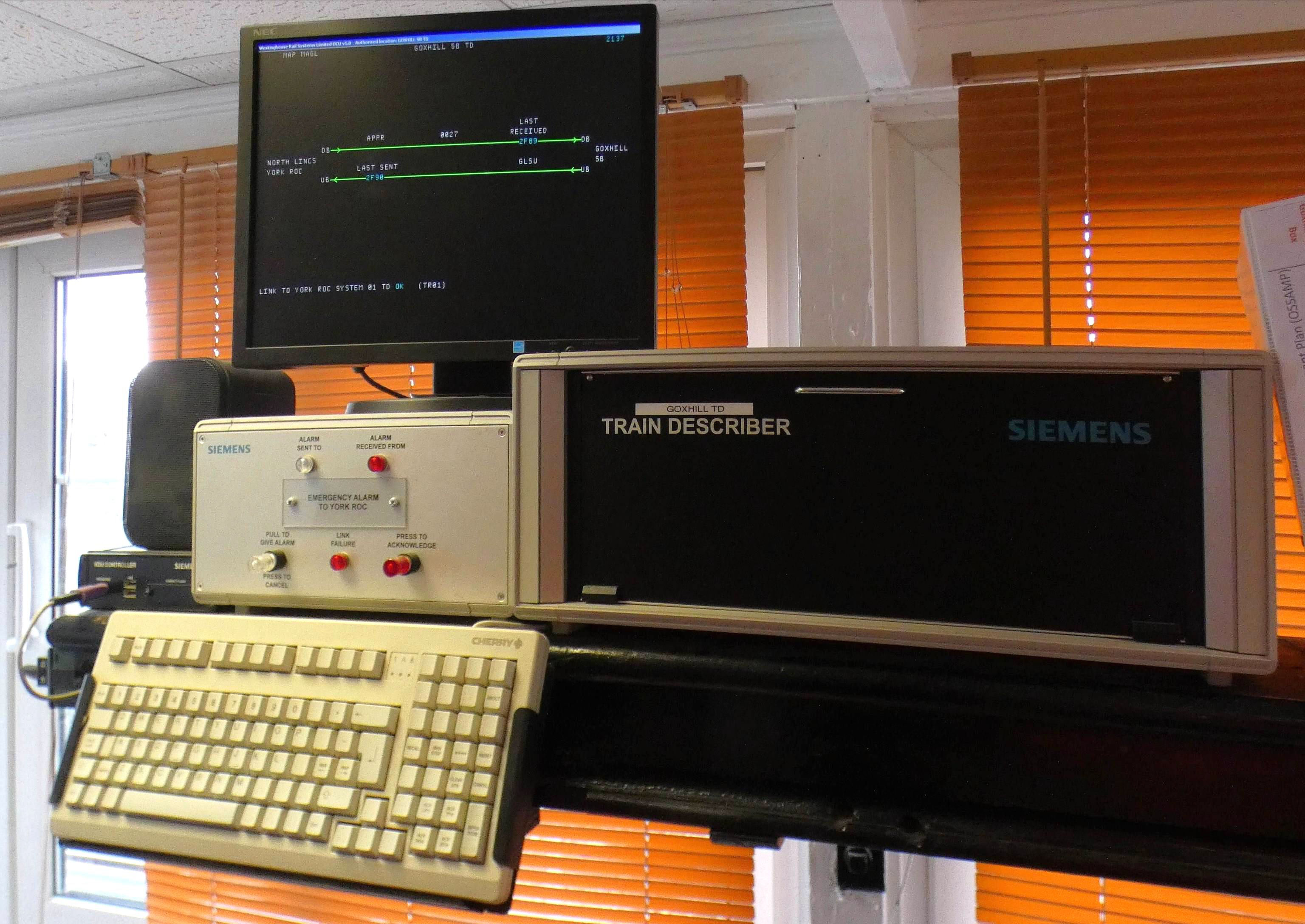
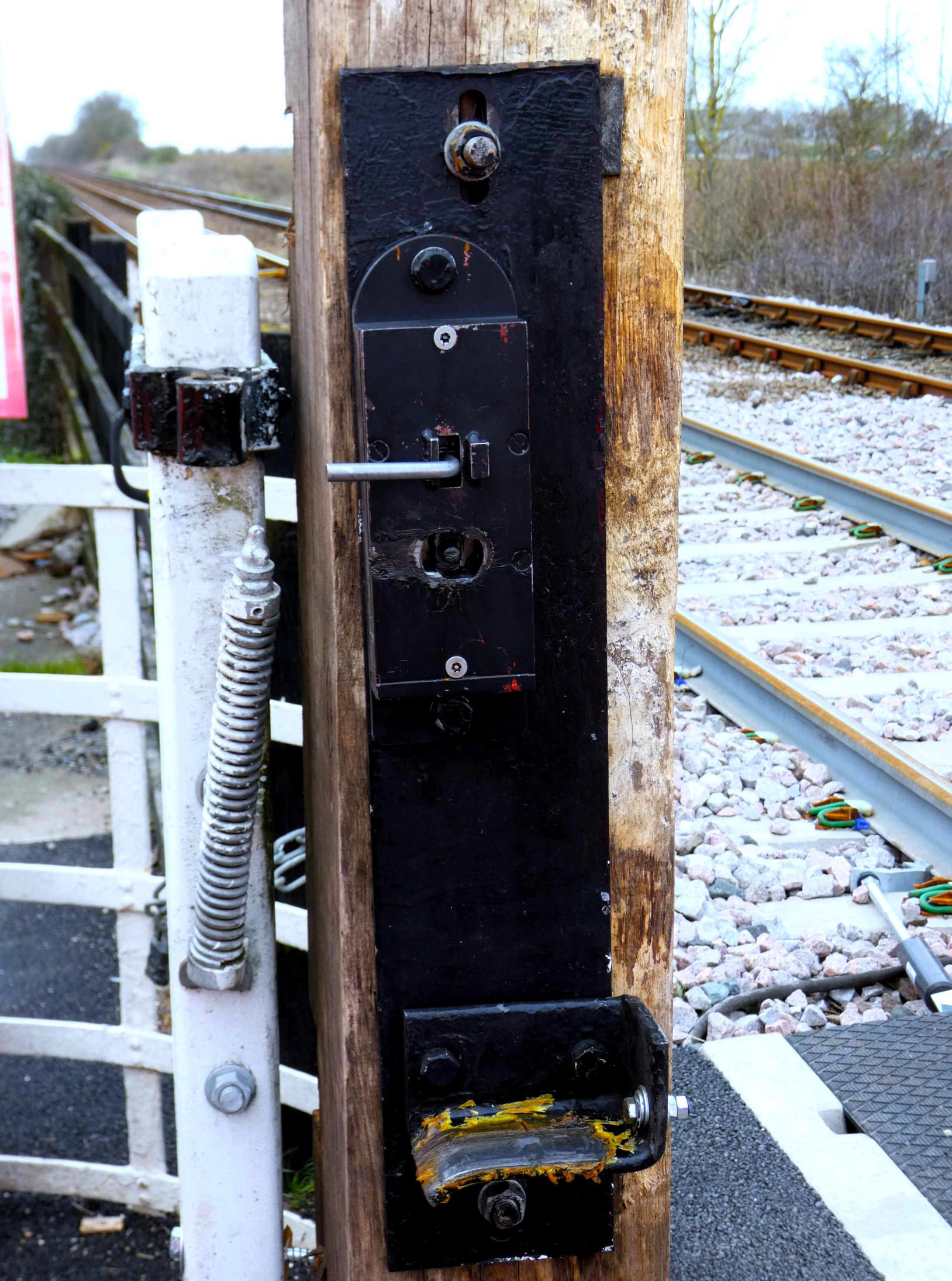
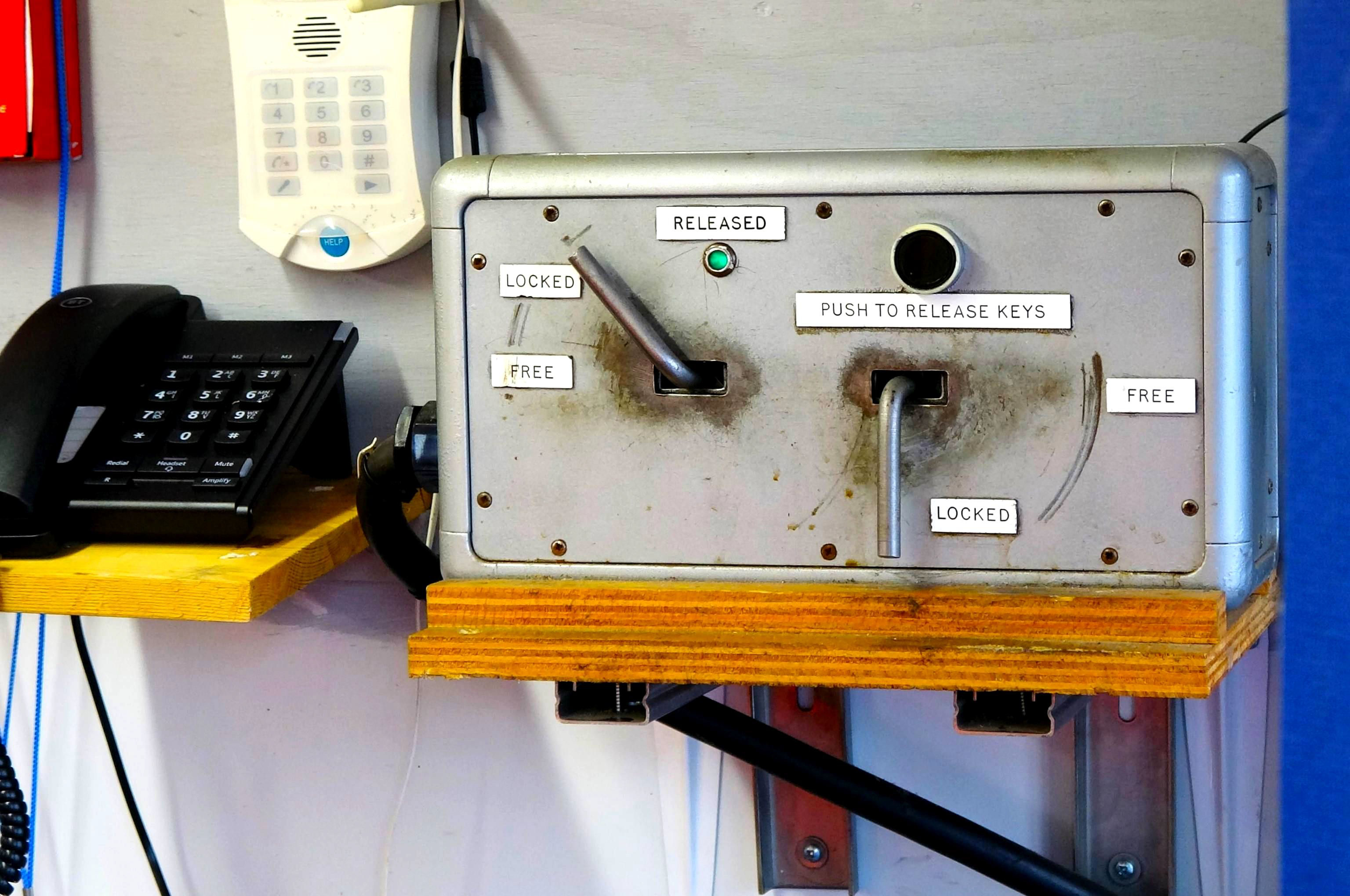
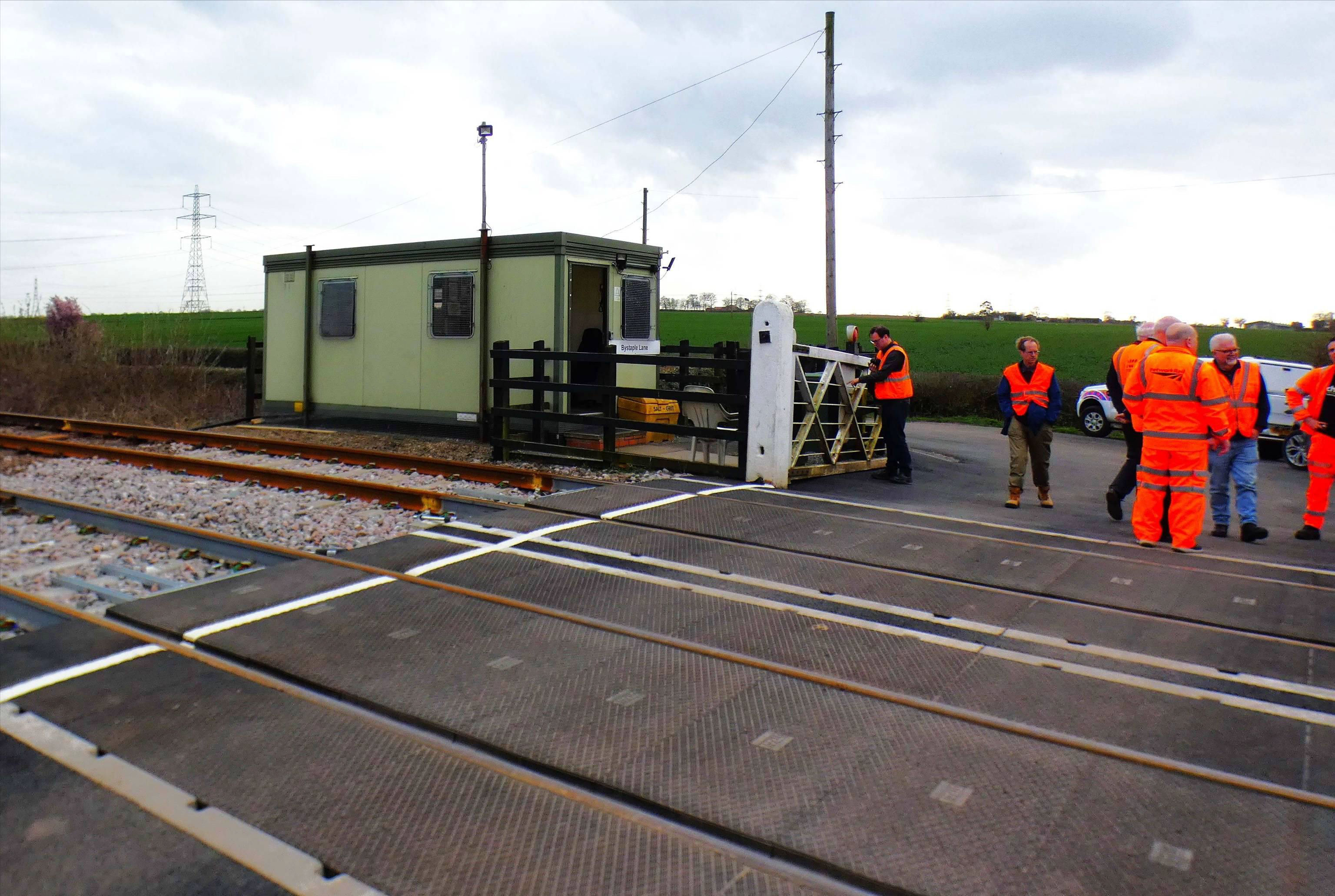
However, since the Immingham line closed from 17 June 1963, the layout is much simpler with levers 1 to 26 removed. Goxhill box survived the North Lincolnshire resignalling scheme of winter 2015-16, which was originally planned to include its demise. That scheme did not result in many substantive changes to the operation of the Goxhill station area signalling, which initially remained as semaphores, including mechanical distants in both directions. However, it did result in significant changes to the working of the line to the south and Goxhill is now a fringe to York ROC (working Track Circuit Block with a train describer). The release of a new key-lock instrument for Bystaple Lane Level Crossing was part of this scheme; previously the gates were not interlocked with the signals. The replacement of semaphores with colour lights at Goxhill has been much more recent, only in the last couple of years.
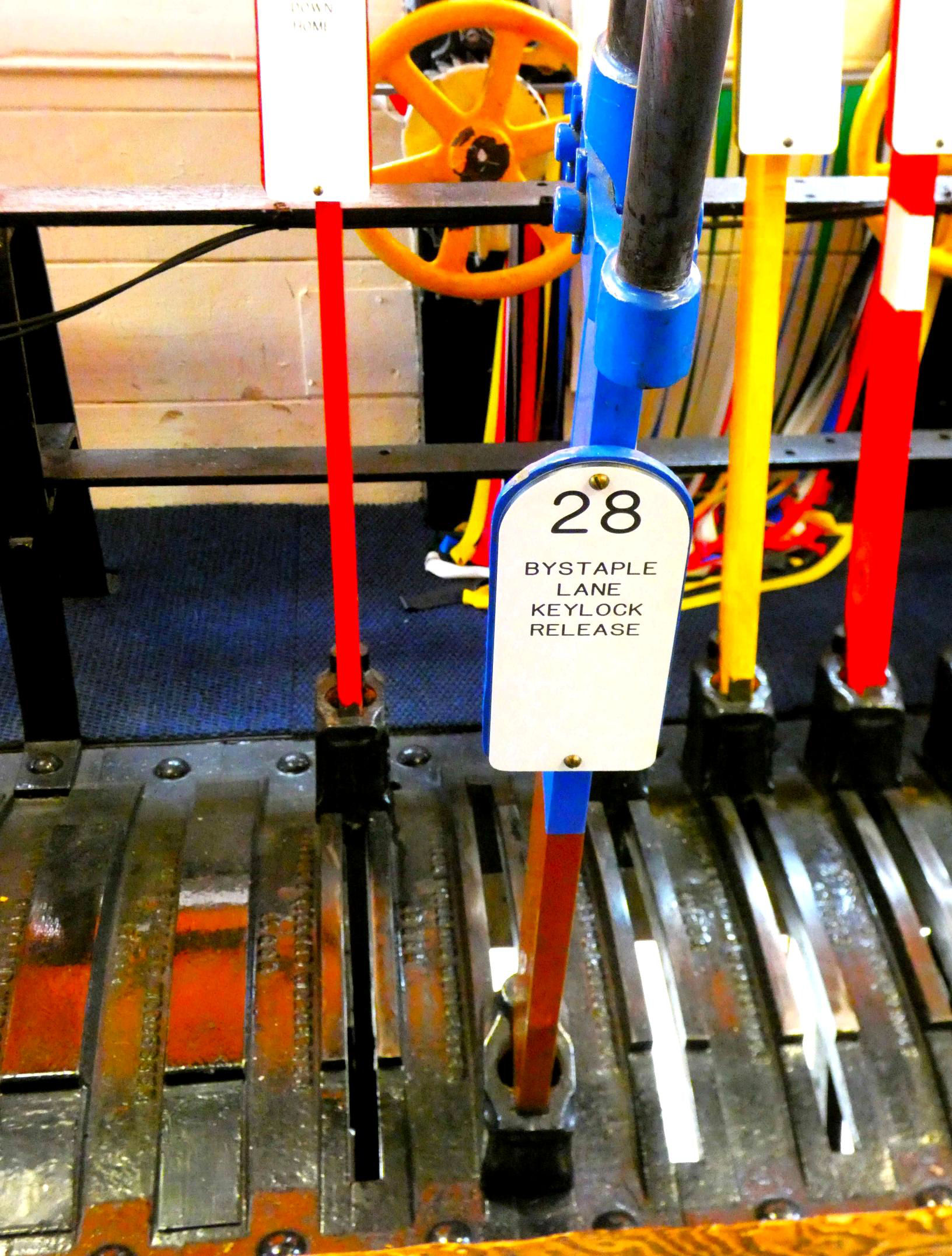
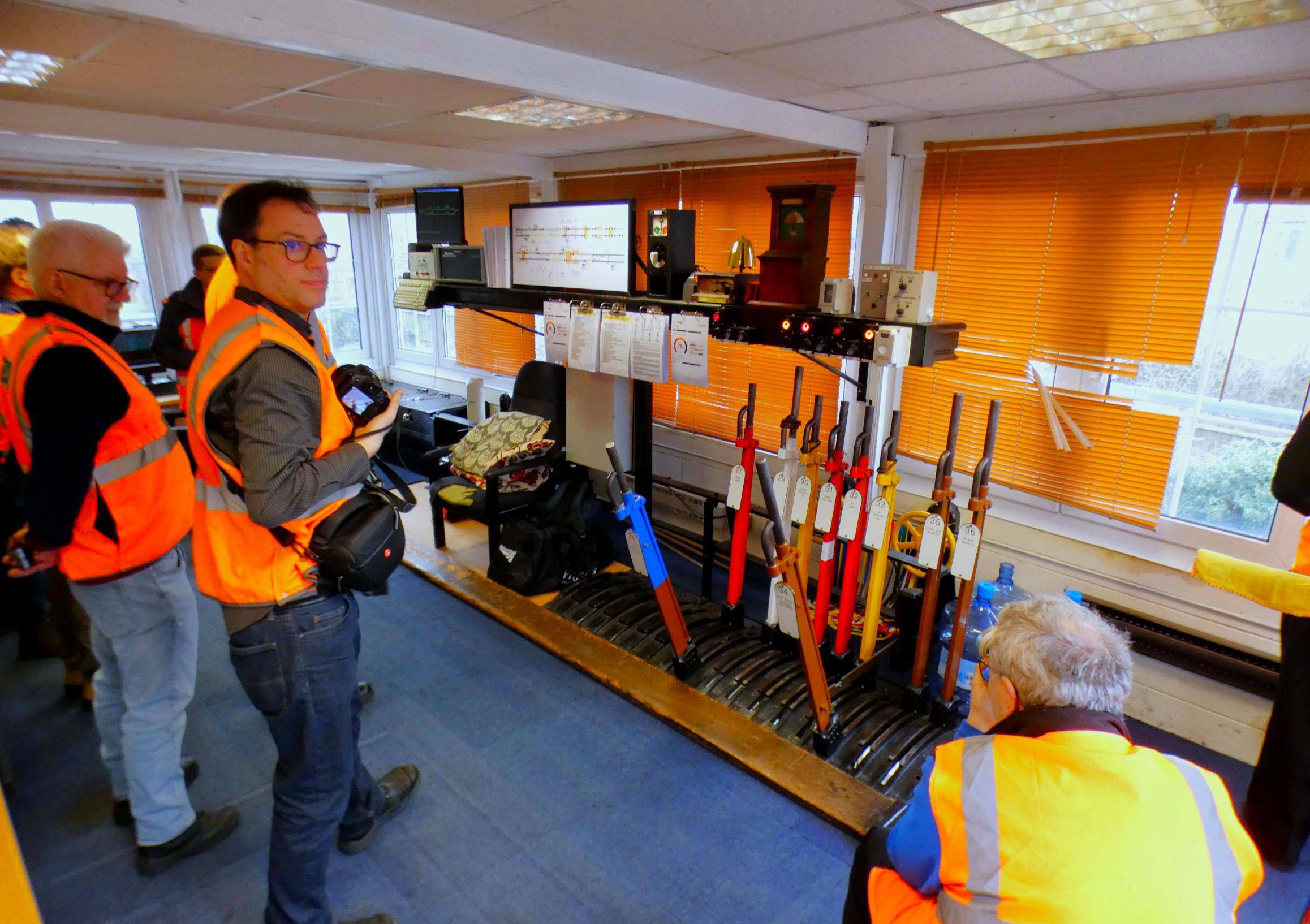
Goxhill works Absolute Block to Oxmarsh Crossing, using an unusual combination of instruments. The 'pegging' instrument (for Up trains from Oxmarsh) is a British Rail 'Domino' style instrument but the down line retains a traditional GCR non-pegging instrument! The frame now has only nine operational levers. Five are for signals and three for the level crossing and associated wicket gates. Lever 28 - coloured Blue and Brown - releases Bystaple Lane Level Crossing.
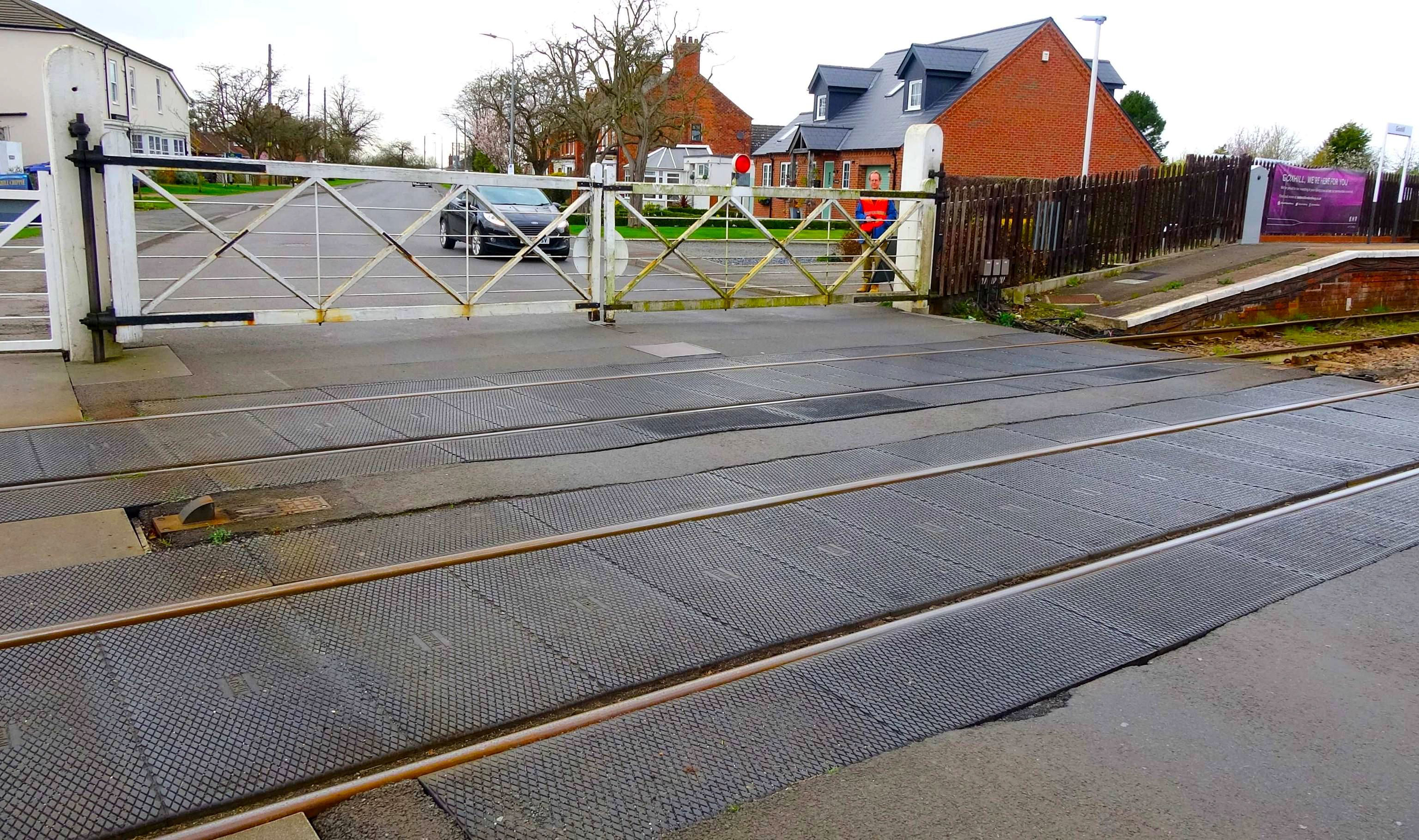
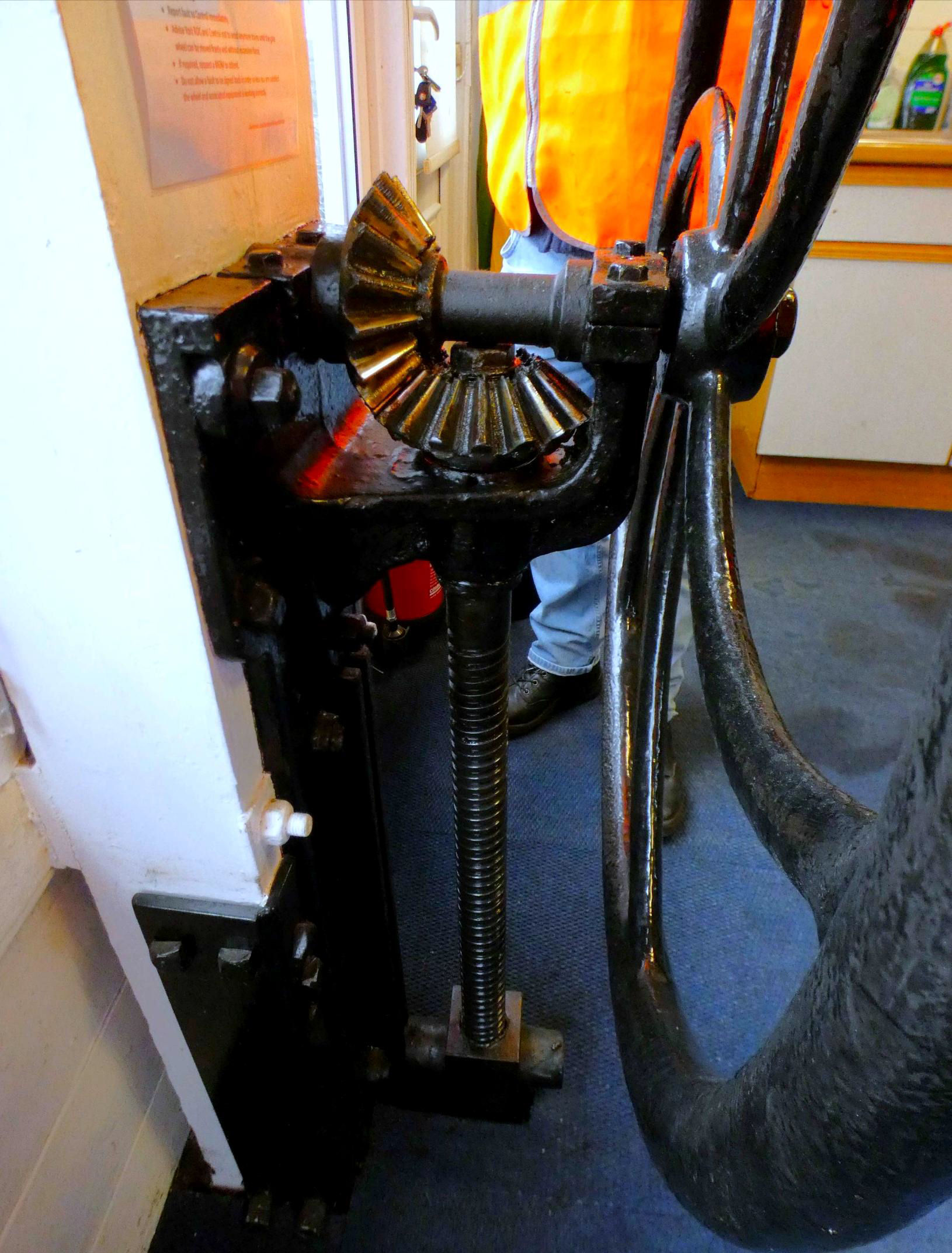
On the opposite side of Howe Lane from the box is Goxhill station (7,728 passengers 2021-22), served by the roughly two hourly trains between Cleethorpes and Barton-on-Humber. The intervening level crossing, like Oxmarsh, has four gates worked by a traditional gate wheel. Again, the crossing only has a single brown Gate Stops lever (No34) but, unlike at Oxmarsh, it only has two positions - normal and reverse. The gate wheel at first glance looks similar to Oxmarsh, driving a short vertical shaft which rotates. However, this is an illusion as it has a very different an particularly complex mechanical arrangement beneath the operating floor, with a totally different arrangement of the auto-raising gear for the road gate stops in the six-foot in front of the box. The signallers believe the gate wheel to be original, dating back to the 1848 opening of the line; it is thought to have been transferred from an earlier box here. The wickets are operated by two separate levers, No35 (Down side) and No36 (Up).
A mirror is strategically placed on the station side of the road, giving the signaller a better view of vehicles approaching from behind the box. Goxhill also supervises two Automatic Barrier Crossings Locally Monitored (ABCL) and several user-worked crossings.
| Branch Line Society. A Company Limited by Guarantee - Company No 16743754. Registered in England and Wales. Registered address: 6th Floor, Derwent House, 150 Arundel Gate, SHEFFIELD S1 2FN |