Leadhills & Wanlockhead Railway: (TRACKmaps 1 p25E 2021)
Having left Ratho in what might best be described as rain of biblical proportions, driving through several unplanned lakes on the way, I was not massively optimistic of good conditions for photography (or anything else) at Leadhills. I was pleasantly surprised to find dry, if cold, conditions on arrival. Yes, as a 'local' (only 44 miles), I was last to arrive... An honourable mention must be made of our member who caught the Caledonian Sleeper to Carstairs then travelled by bus (there aren't many) to Leadhills.
Some of our fully booked group of 36 seemed reluctant to board with 'non preferred' traction Hunslet No10 Mennock (1994) for the first run of 1,200yd up - literally - to Glengonnar, but were encouraged away from their cameras to join. The absence of glazing in the door windows created what even a hardy soul might describe as a fresh atmosphere as we climbed through a barren post-industrial landscape to the current highest altitude (1,498 feet) on an adhesion railway in the UK. The train had drawn up short of the stop board, so after the photos had been taken and an initial elimination round for the Silly Hat award had taken place, we drew up to the buffers and then set off back downhill.
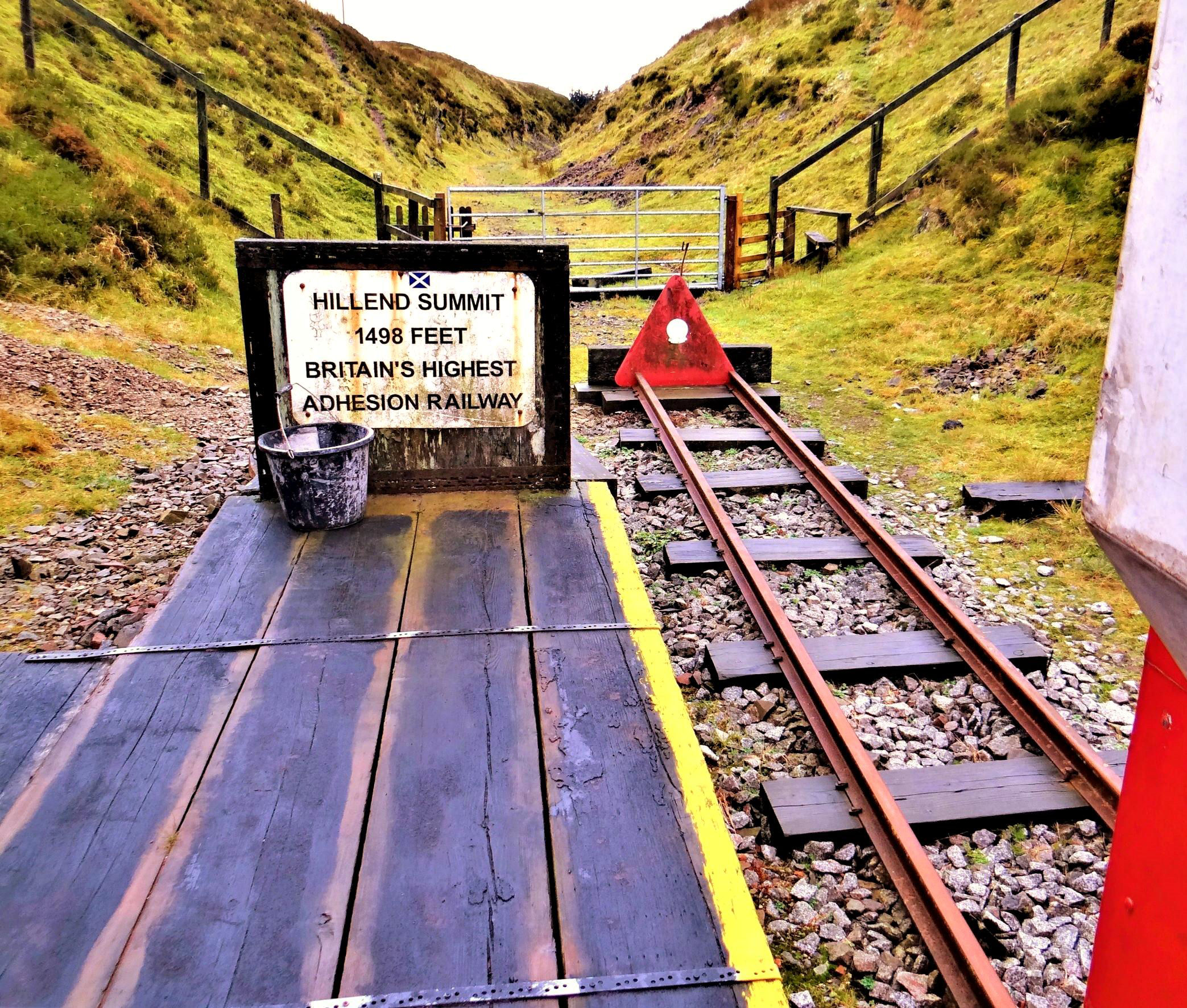
Glengonnar Halt, the present end of line (needless to say our tour did reach that triangle on departure.) Looking towards Wanlockhead where it is hoped to extend. The end of our tour train is far right (the loco propels up and leads down the hill). Perhaps that sign should say 'Britain's current highest adhesion railway'? Keen BLN readers will know that the adhesion worked standard gauge Rattlebrook Tramway (or Bridestowe Peat Railway) on Dartmoor reached 1,800ft - see BLN 1221.1683 of 22 Nov 2014.
[© Jenny Williamson 2022]The station loop, previously occupied by various freight wagons, had been cleared by No6 Clyde (1975) looking very bonny and we passed through the loop reaching Canter Path Level Crossing, way past the end of the public run. We returned to the platform via the two external sidings, one with a dumper truck carefully placed as a stop block. The loco change took place here, No6 Clyde taking charge for the shed area. We reached the shed doors on the left hand road with No10 Mennock stabled just inside, but made it to the end of the right hand road. The siding on the right of the main shed held various wagons which may not have been easily moved. We travelled east to Horner's Brae, our path blocked by a traffic cone at this point due to the poor track beyond, preventing access to the short siding.
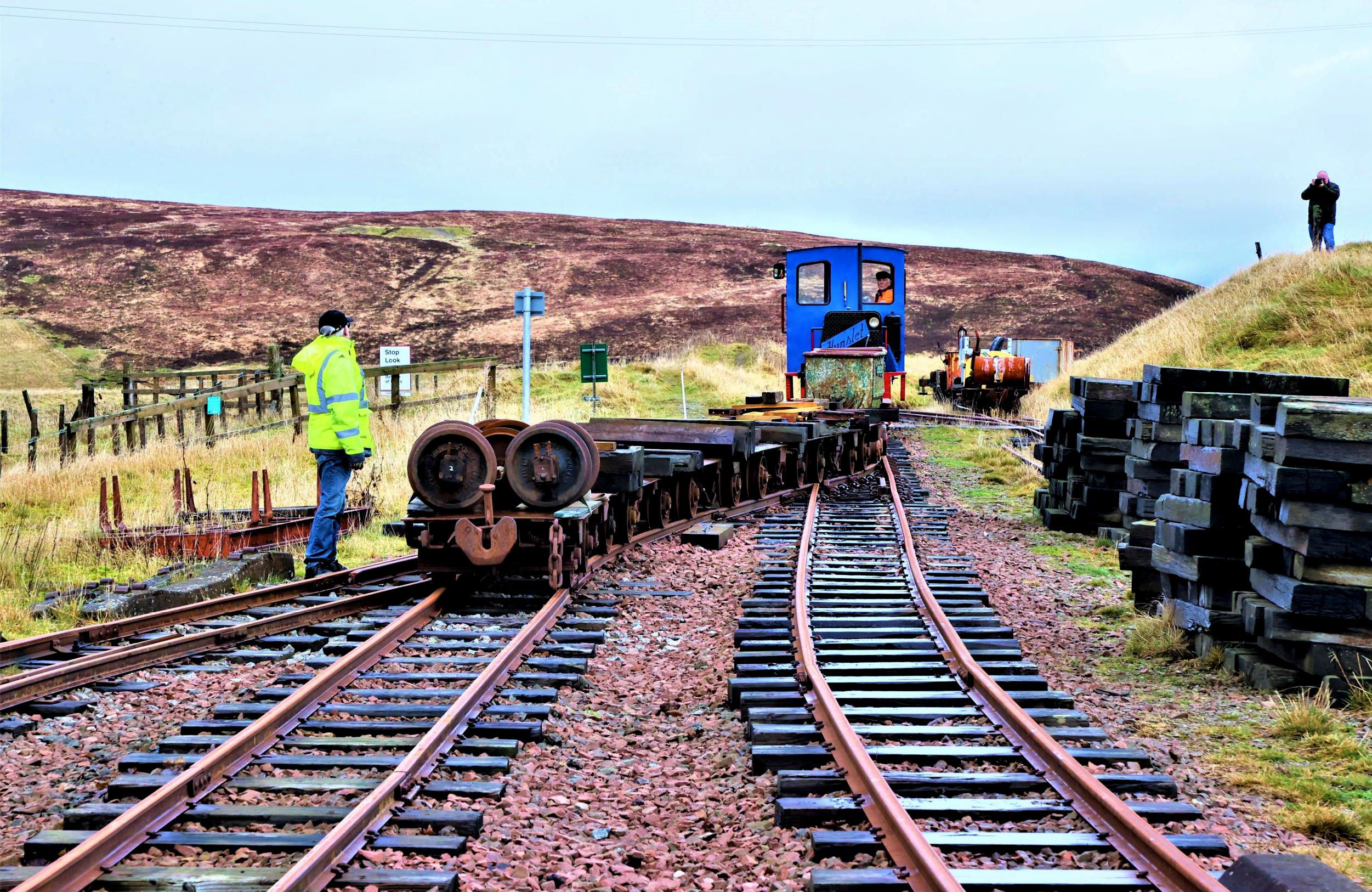
Leadhills & Wanlockhead Railway; arranging the stock at Leadhills. This is the section east of the station towards Elvanfoot, not used by passenger services, but was partly covered by out AGM railtour.
[© Donald Stirling 2022]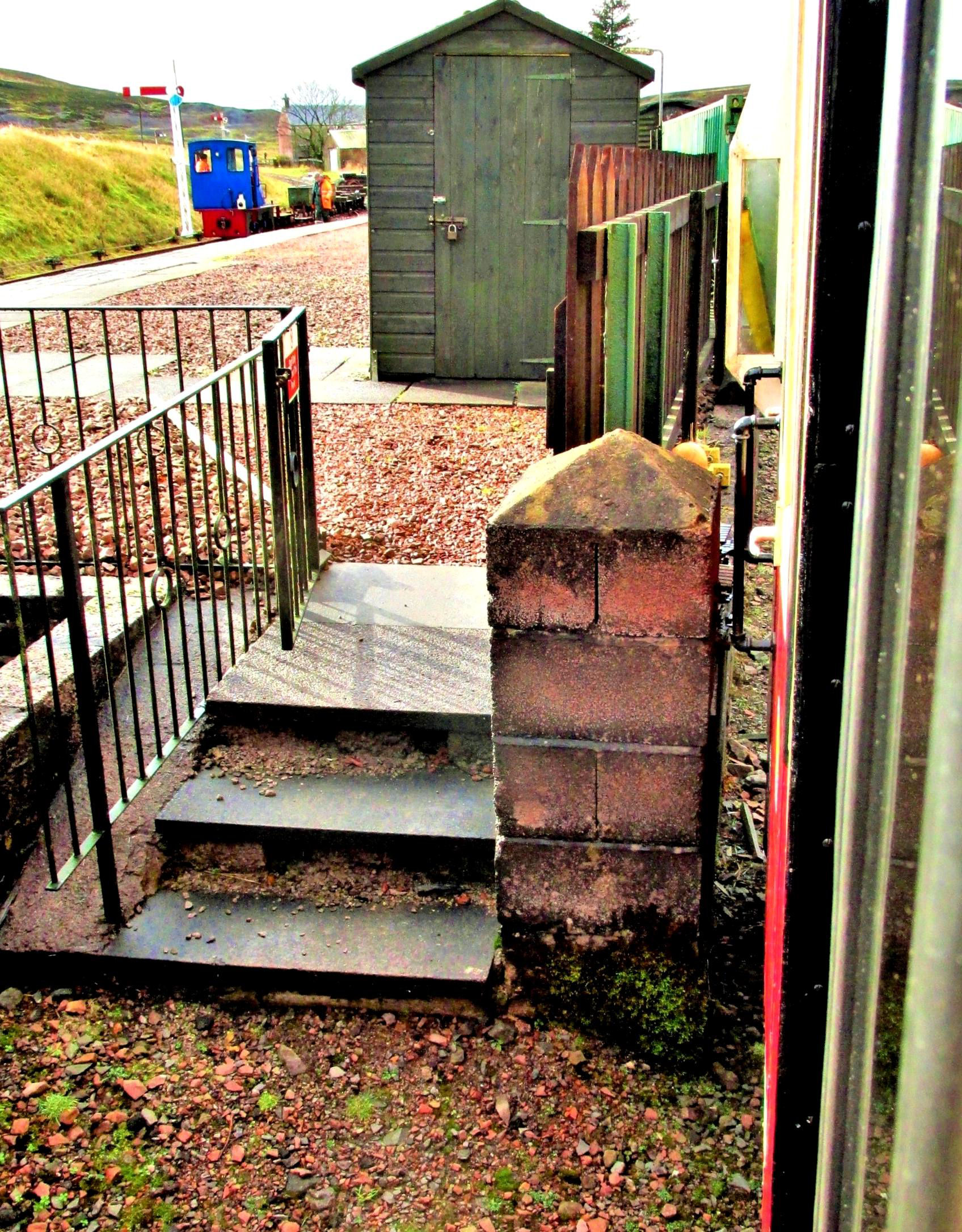
Leadhills platform is left, that loco is in the run round loop, looking towards Glengonnar. The coach on our railtour (right) just squeezed past that brick pillar into the siding ahead.
[© Simon Mortimer 2022]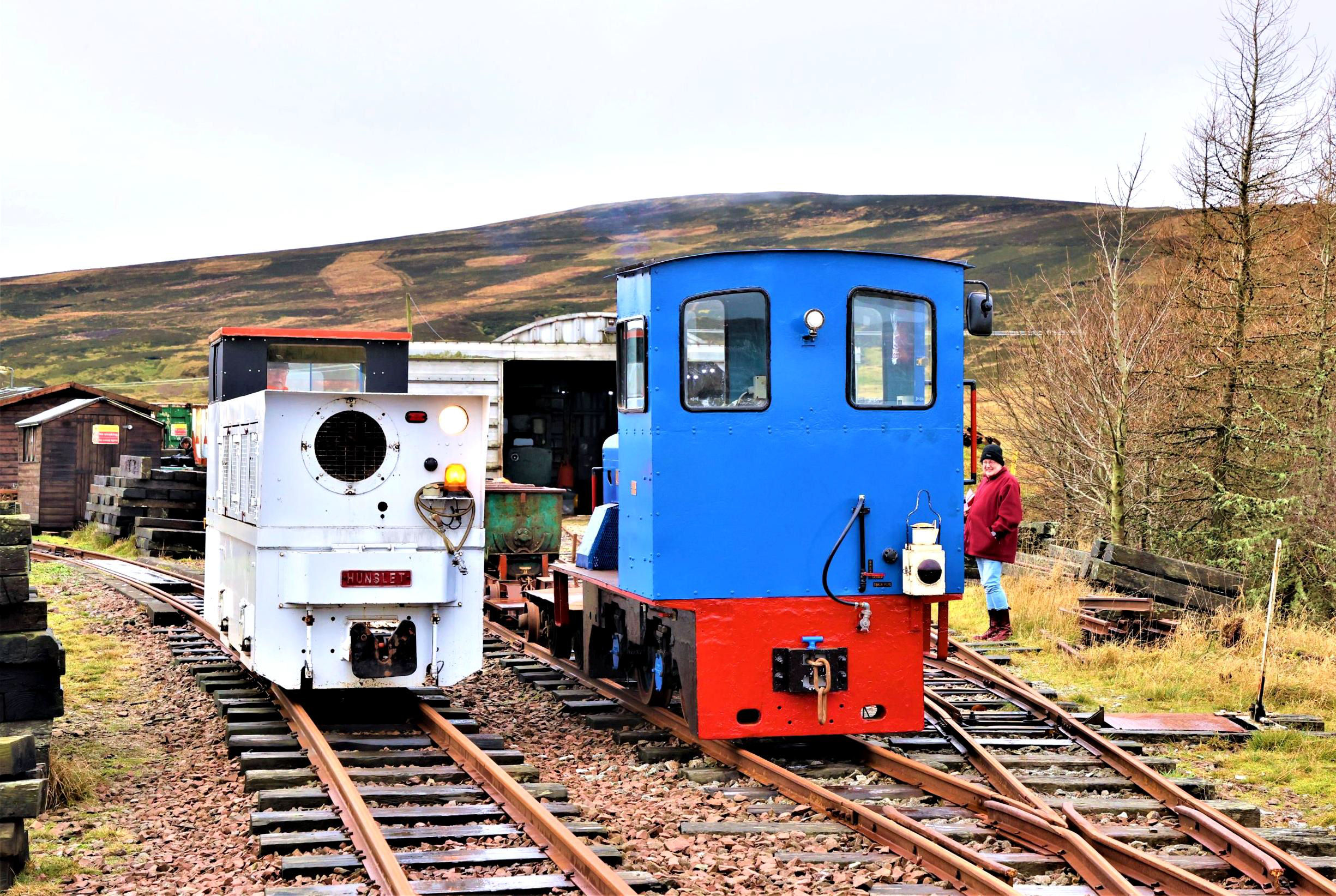
Leadhills sidings, looking towards the loco shed, with a smiling Mike McCabe far right for scale (see TRACKmaps 2 p25E 2021).
[© Donald Stirling 2022]A return to the passenger platform saw passengers disembark but the visit was not over as timings allowed a further run to Glengonnar with No6. I'm afraid I declined this chance as I had experienced the loco to Glengonnar on my previous visit and decided a warm up in the car was more appealing! Others decided to enjoy an additional complimentary hot drink, or head off to photograph 'Nith' which was stored in one of the containers. Thanks to the Leadhills & Wanlockhead Railway for such a warm welcome to their delightful 2ft gauge line and to John Cameron for all the arrangements.
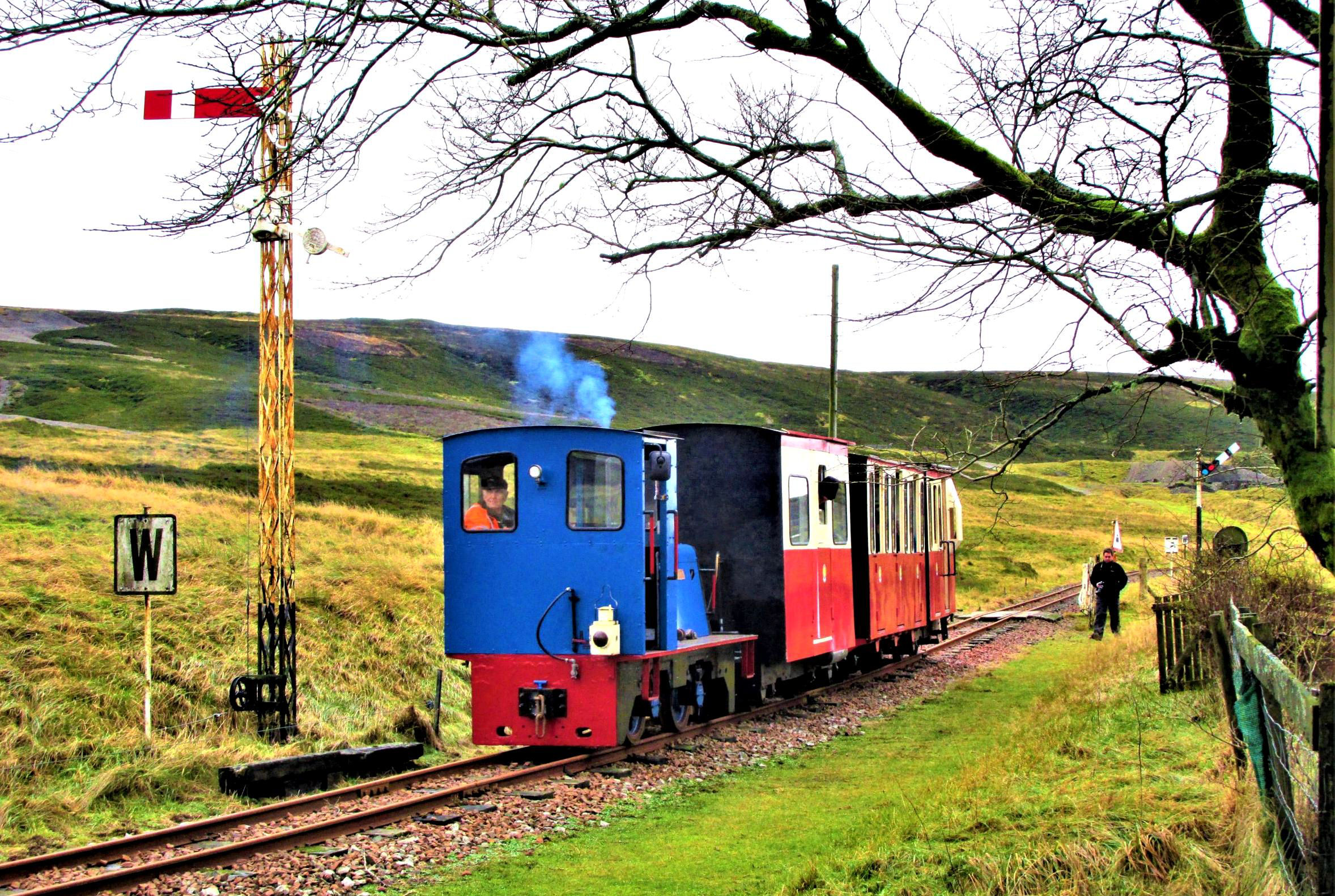
'Clyde' (ex-NCB Eppleton Colliery, closed in 1959, Co Durham) approaches Leadhills from Glengonnar Halt (1,498ft elevation).
[© Simon Mortimer 2022]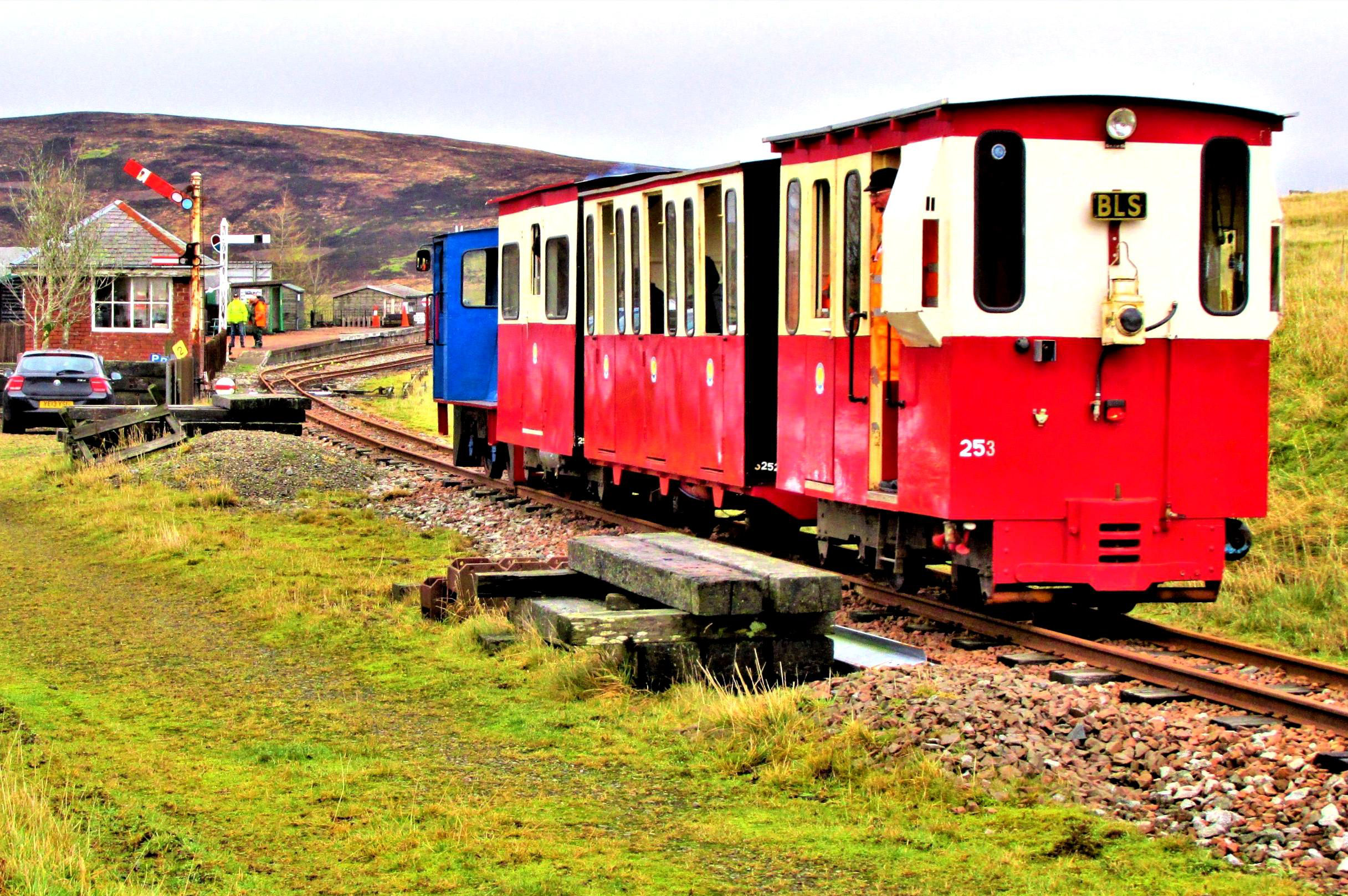
From the same spot in the other direction, approaching Leadhills. Note the miniature BLS headboard on the rear.
[© Simon Mortimer 2022]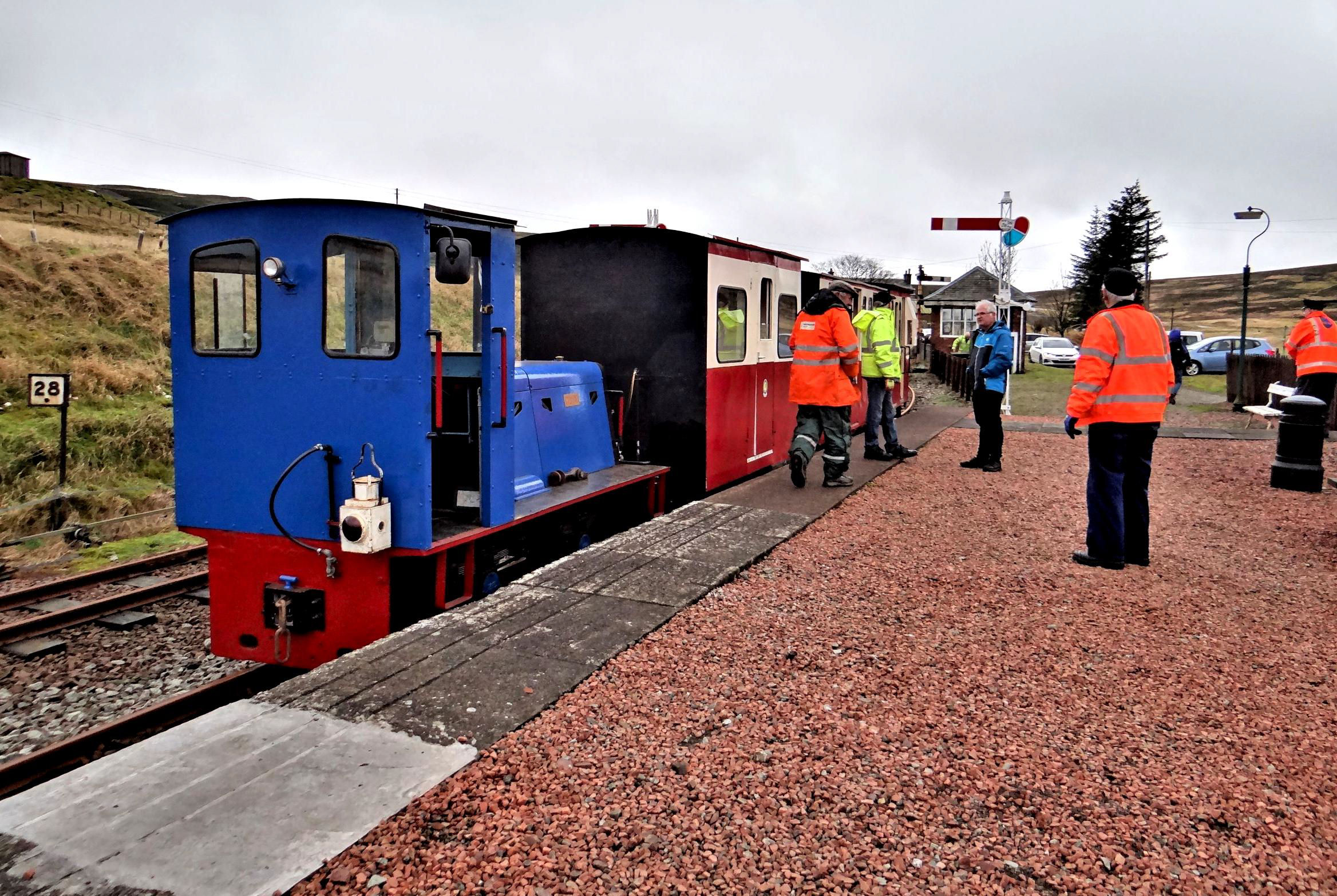
Leadhills, looking towards Glengonnar Halt; organiser of this visit, your BLN NW Editor John Cameron, is the gent in blue.
[© Jenny Williamson 2022]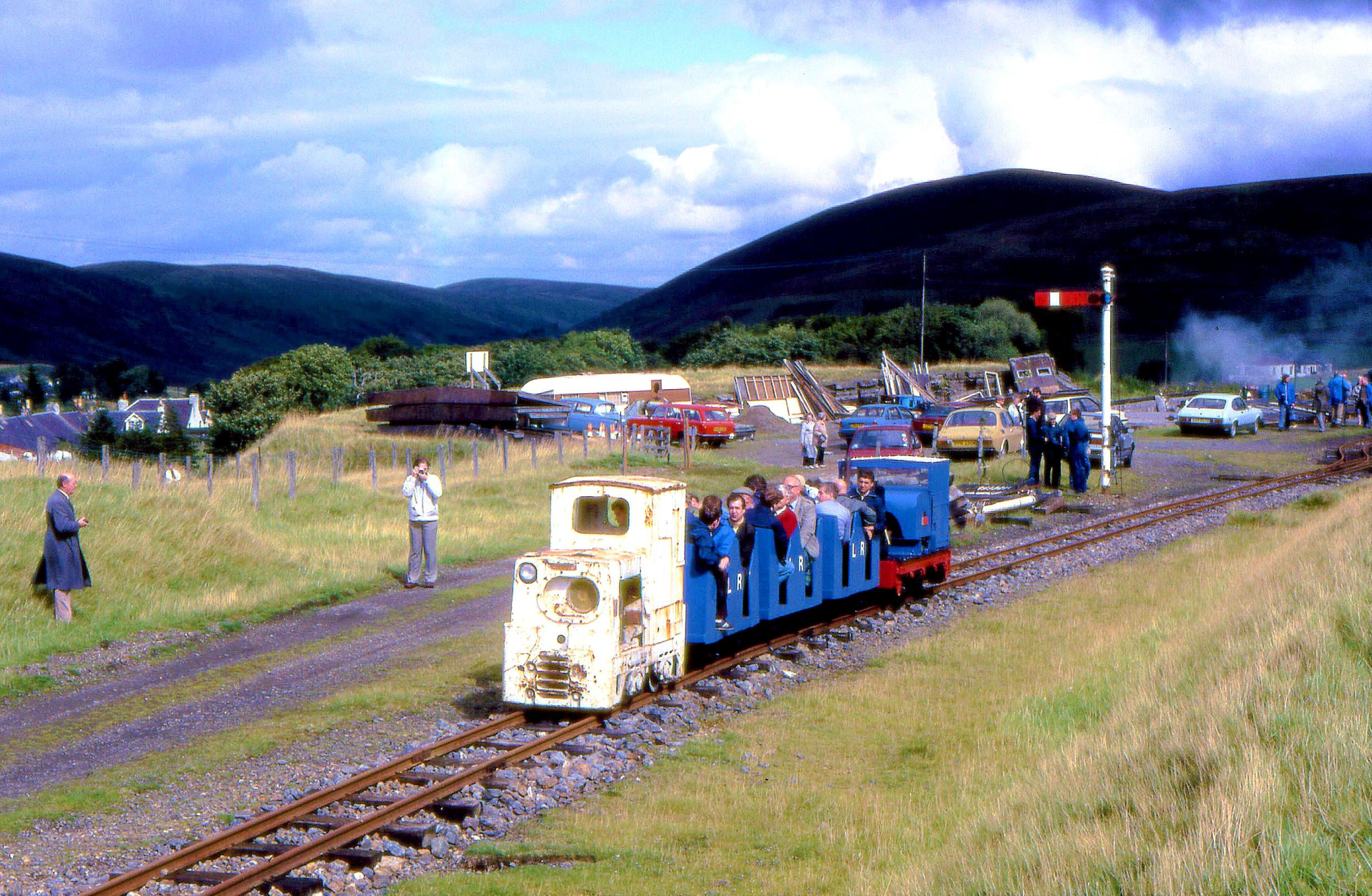
Rewind 34+ years, our Sun 28 Aug 1988 visit to Leadhills ('station' off the right). In those days known as the Lowthers Railway (still its legal title), it only went to an old quarry; the loco shed was a simple wooden affair at the end of line. Some may recognise a few faces!
[© Ian Mortimer 1988]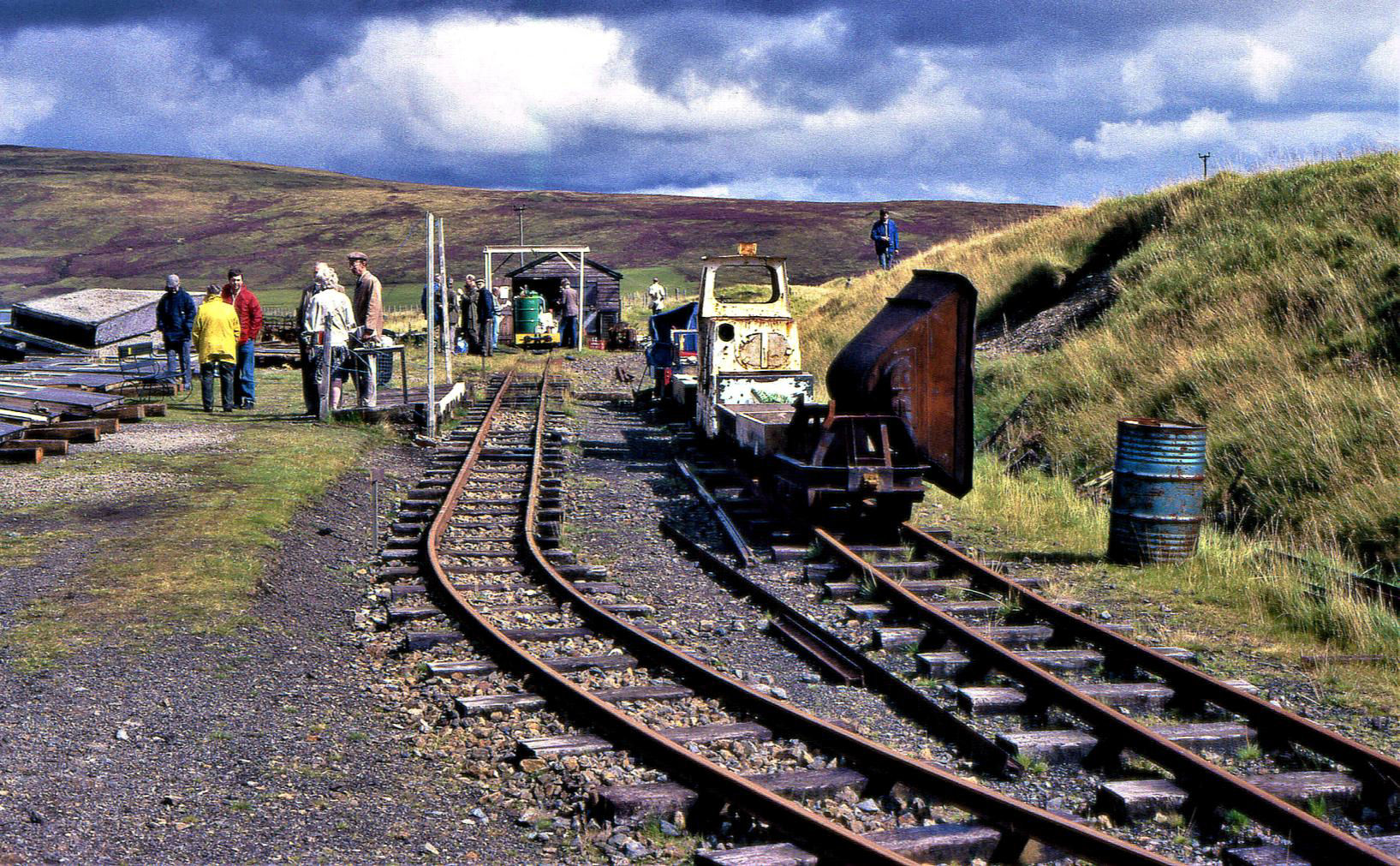
Leadhills station was very basic in 1988, by the short wooden platform is Kevin Driscoll (with cap)
talking to the late Blanche (back to camera) and Doug (mostly hidden) Eacock. The engine shed is ahead.
[© Ian Mortimer 1988]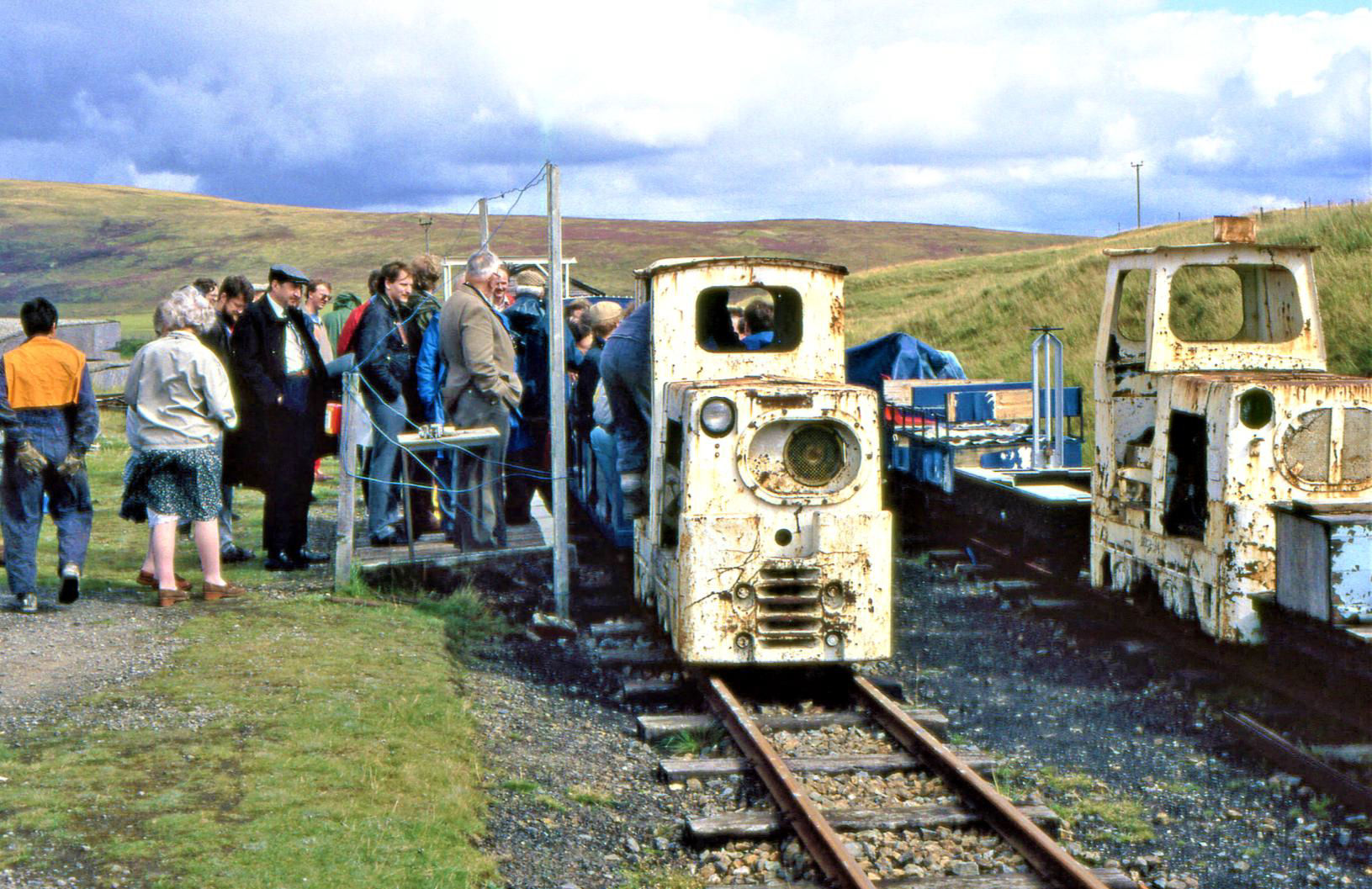
In the other direction: Don't all rush at once, there will be another one along shortly. Terry Velvick is left with a flat cap on and his head; 58 members took part, most travelled on our coach tour from Glasgow
[© Ian Mortimer 1988]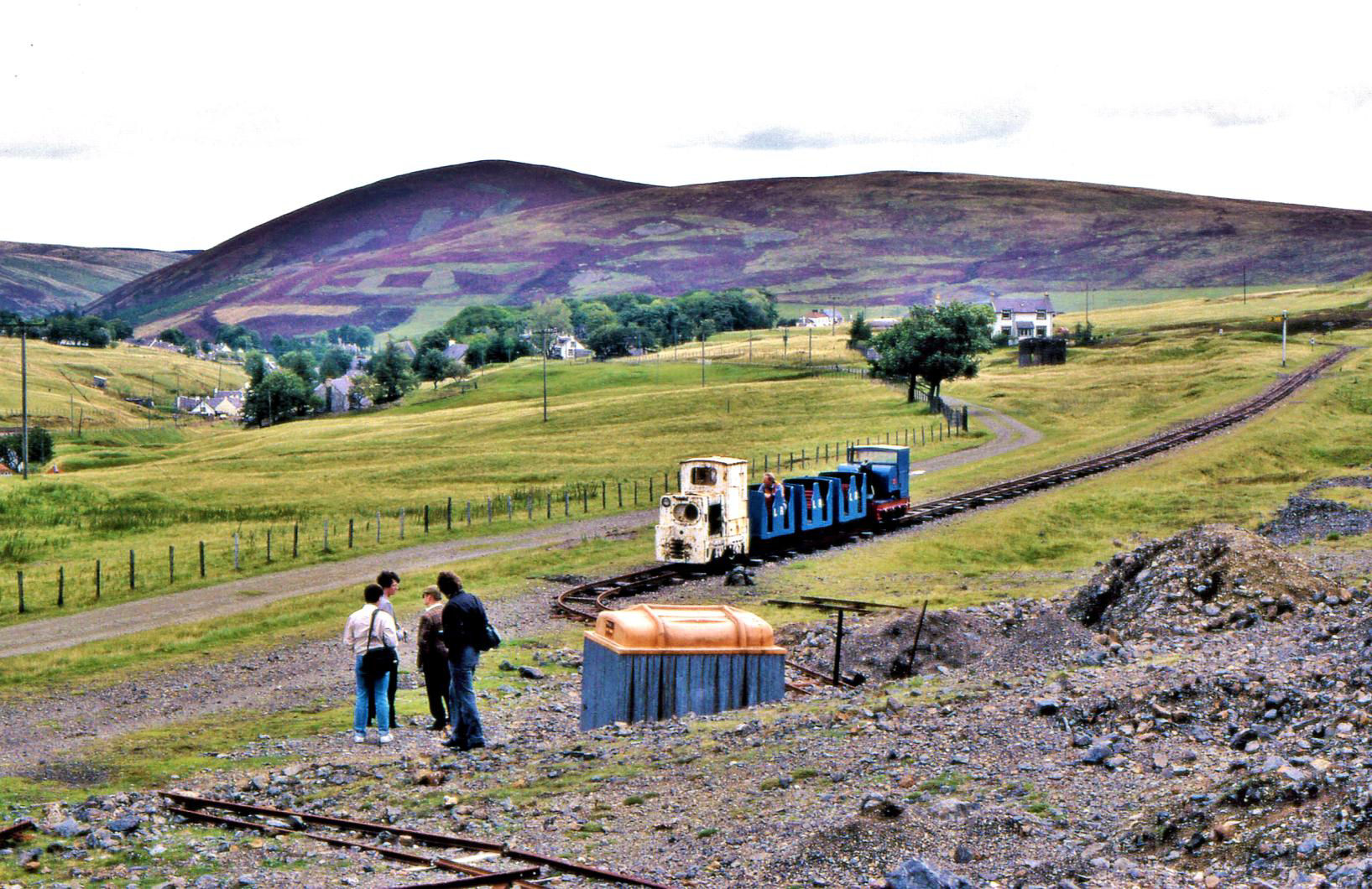
The 1988 end of line; the standard gauge trackbed to Wanlockhead is off left. Right is the distant
signal for Leadhills which is the village ahead. Brain Ratheram (capped) is the shortest person in the group.
[© Ian Mortimer 1988]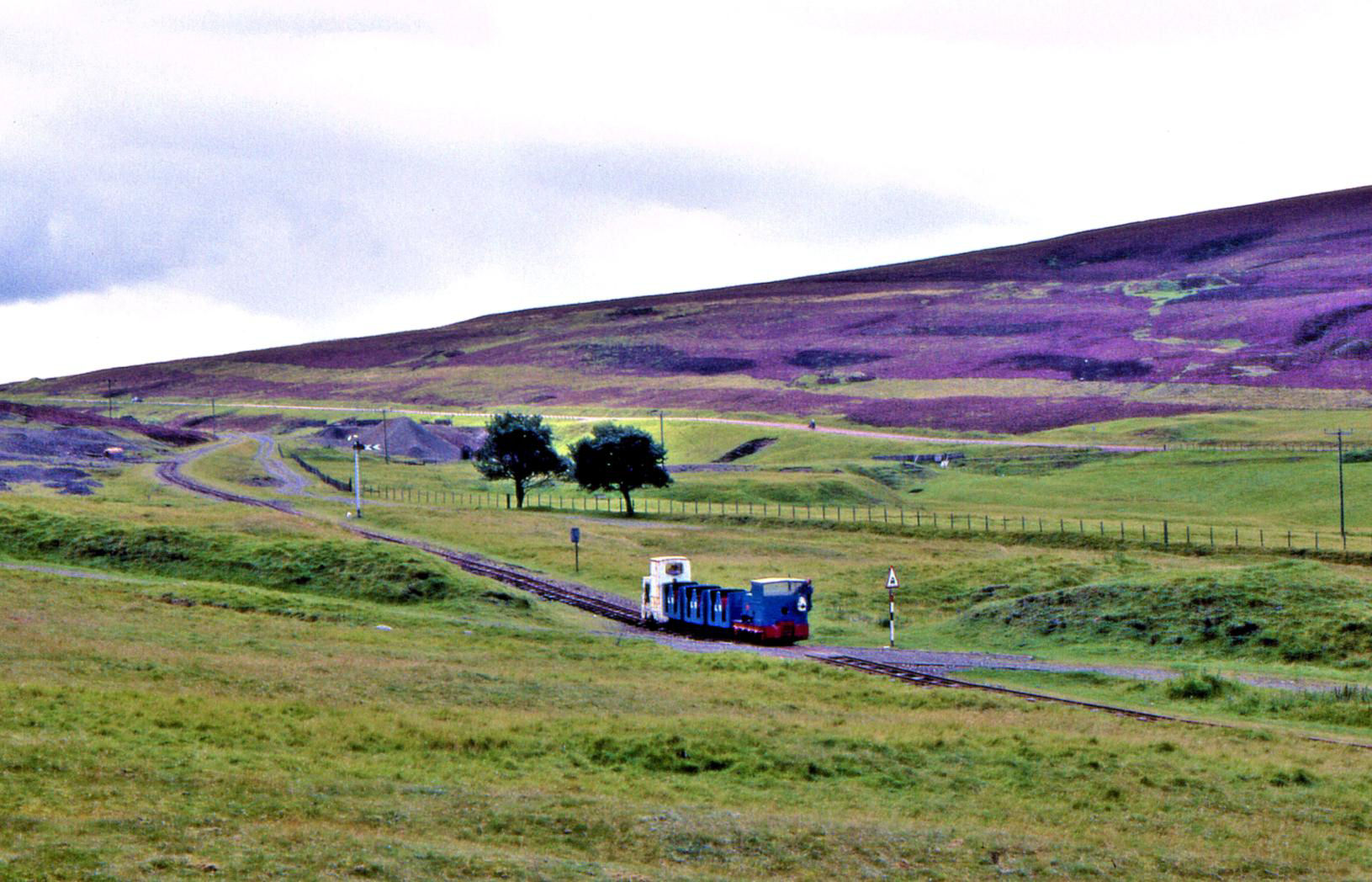
A photo stop at the level crossing on the other side of the distant signal seen in the previous photo.
[© Ian Mortimer 1988]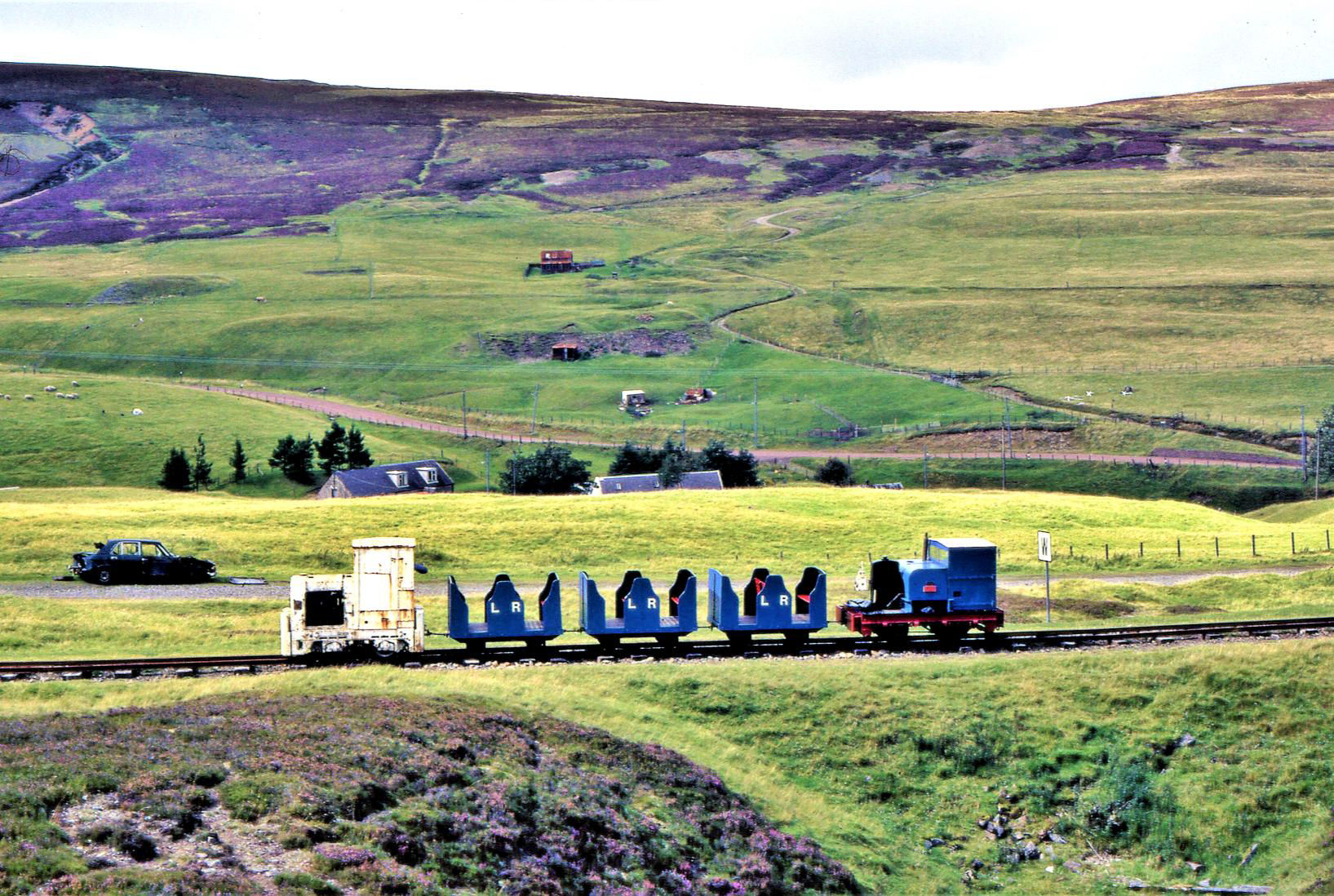
Another photo stop, fortunately, it was a dry day with the open coaches!
[© Ian Mortimer 1988]I wasn't quite 'Dunaskin' how to find the railway but I will admit to using my phone as a guide, having been less than convinced about taking the B741 from New Cumnock westwards. The RAC timings from Leadhills to the site were (politely) 'optimistic', but I made it for the 13.45 start. Also, from the Dalmellington direction, it wasn't clear where the entrance was exactly.
Our party had grown to 37, with a few who had not attended Leadhills taking part and vice versa. I was a late booker on this visit, having missed out on the initial availability. In the event the party size had been increased to accommodate all who wanted to go. My only previous visit to the line was on the Pathfinder 'Galloway Galloper' railtour of 12 Feb 2011 from Glasgow Central, which made it to Chalmerston Loading Pad. This was the final tour on the 10½ mile branch (last coal train 10 Jul 2012).
We were split into two groups, one to travel while the other visited the Museum and Loco Shed on this massive site. Worryingly, all the Committee seemed to hold back for the second run - did they know something we didn't? No, they were just being polite! I was delighted to find 1941 Barclay Powfoot No1 waiting in Dunaskin platform (52m 65ch) and the LMS Saloon 45020 still with EWS logo on the side. We set off towards Laight Level Crossing in damp conditions, reaching the extent of the current line (53m 63ch) (TRACKmaps 1 p2C Dec 2021). There are 'medium term' plans to bring the ex-National Coal Board track beyond the crossing to Minnivey (55m 00ch) back into use.
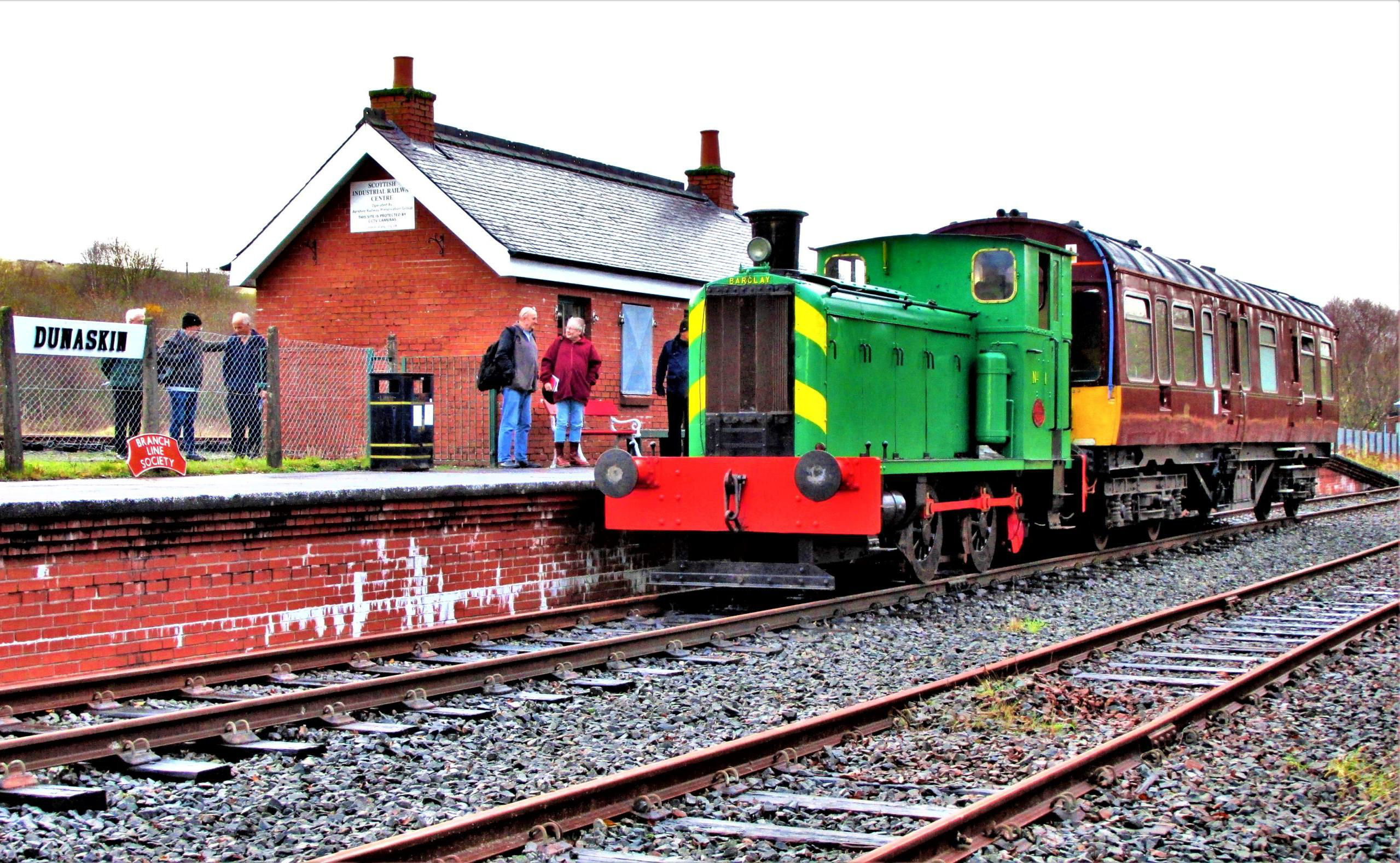
Doon Valley Railway (Waterside); standard gauge Andrew Barclay 347 built in 1941 from Powfoot Munitions Factory, Annan, is on our observation saloon special at Dunaskin. On the platform Geoff Treby (left) converses with Mike McCabe.
[© Simon Mortimer 2022]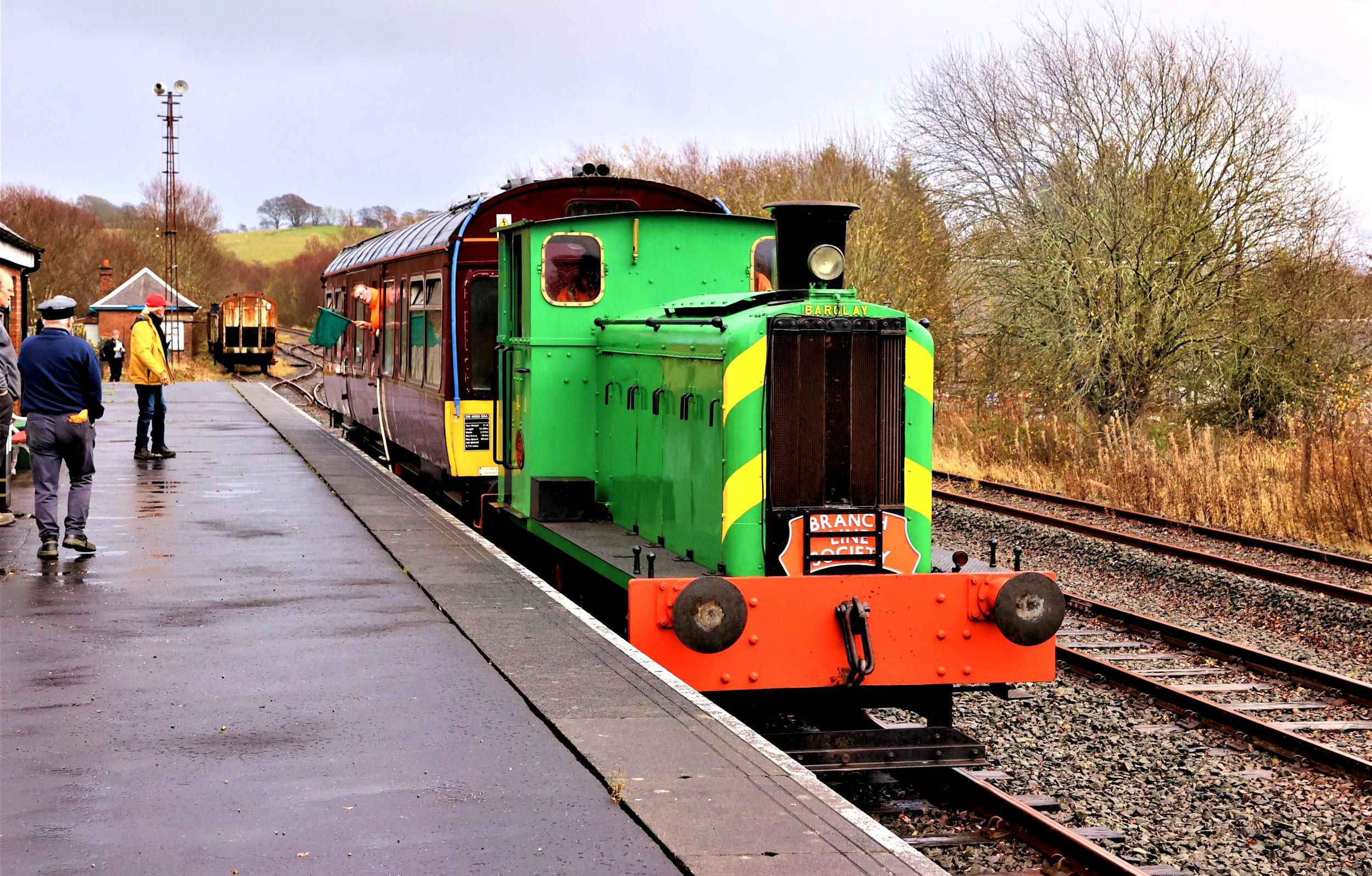
Looking towards Chalmerston Loading Pad (disused) for opencast coal and Minnivey which was once a National Coal Board railway to the colliery of the same name and on to Pennyvenie Colliery (see e-BLN 1396.X.77). Far right is the NR Waterside Branch (to Dalrymple Jn south of Ayr) the NR boundary is just before the second crossover (immediately below the guards green flag). The middle line is Dunaskin platform run round loop.
[© Donald Stirling 2022]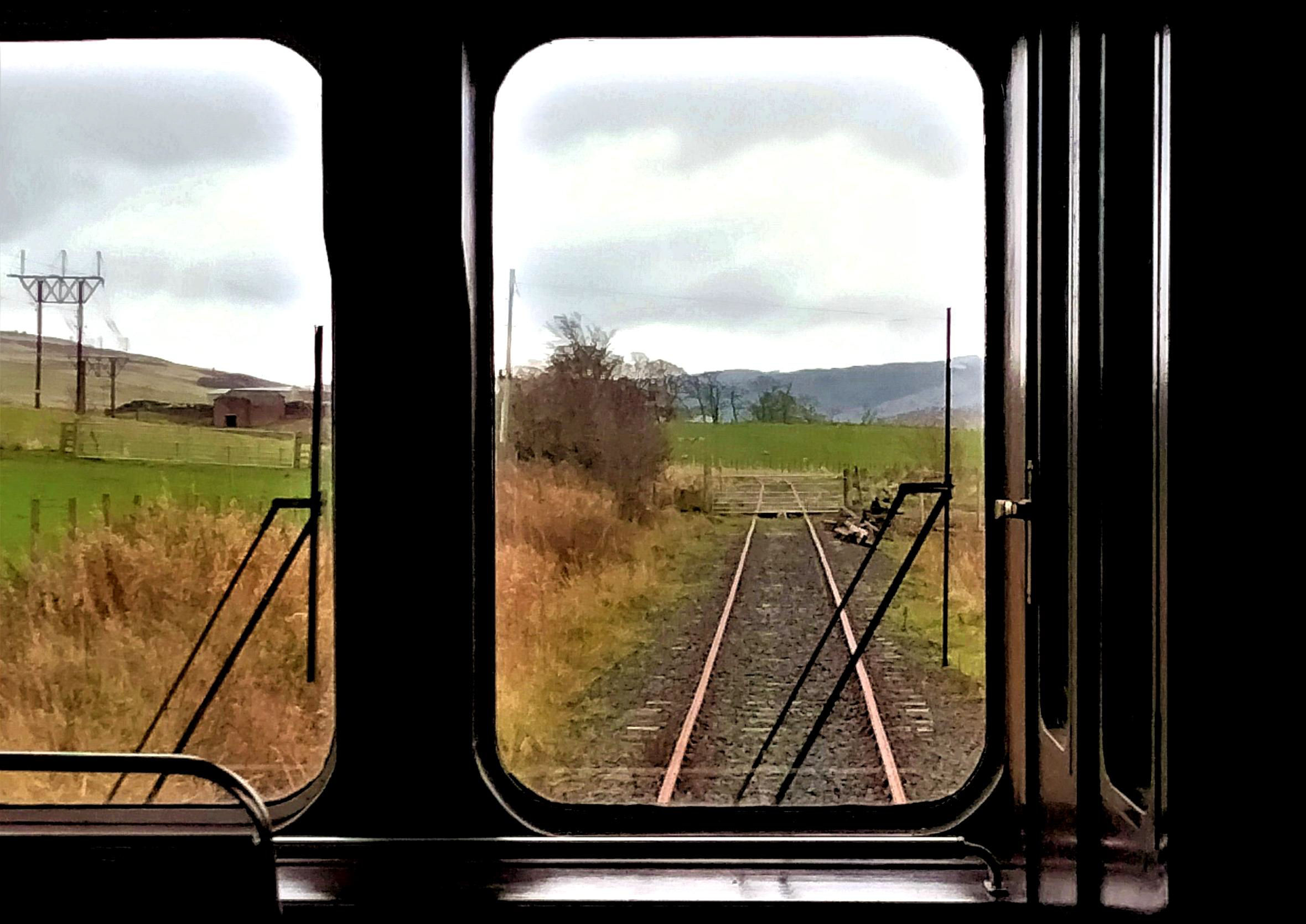
A wonderful view of the line from the observation saloon - approaching Laight Level Crossing (53m 63ch) - the train is propelled in this direction.
[© John Cameron 2022]We returned via the station loop and towards the headshunt, reversed, then ran forward to the end of the long siding (53m 08ch). Having disembarked at the platform, it turned out that we had not quite reached the headshunt end, so group one was back on board for a very brief move to the stop blocks.
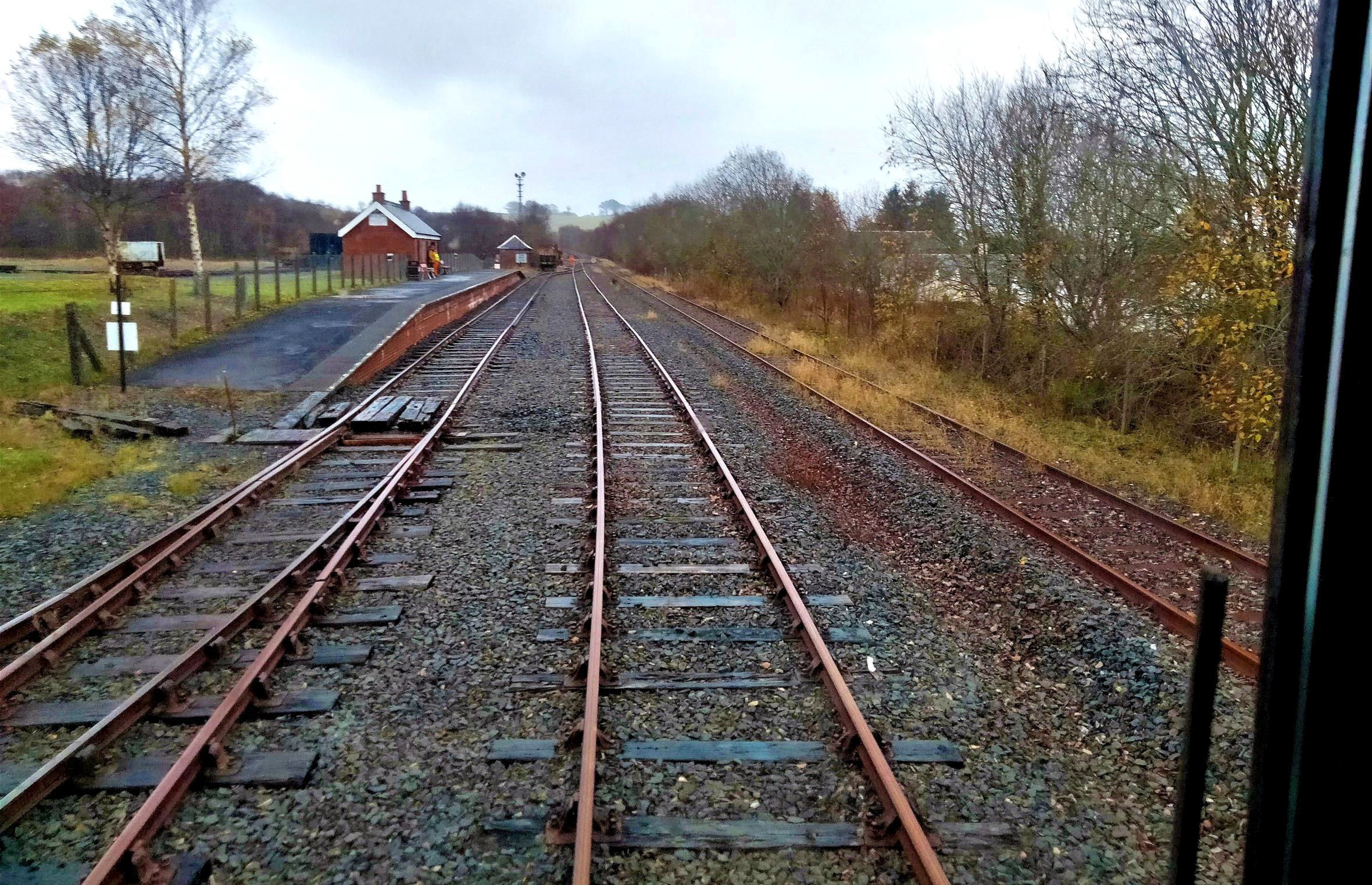
On the run round loop, the disused Waterside Branch is right (boundary before the trailing points ahead)
[© John Cameron 2022]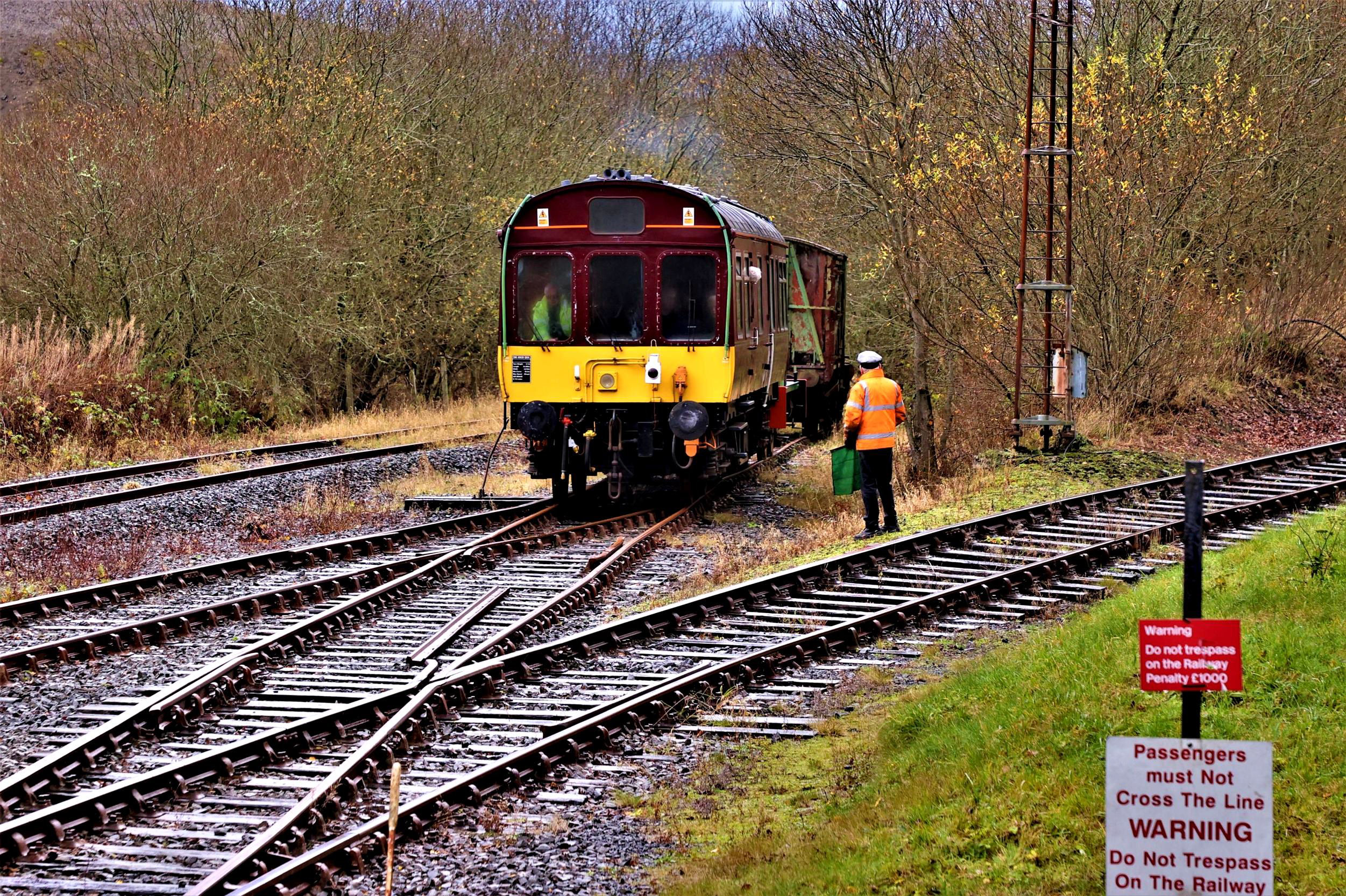
In the opposite direction,the platform loco run round headshunt; far right is to the Loco Shed and Museum, behind the train is to Ayr
[© Donald Stirling 2022]Group two set off and headed straight into the headshunt then repeated all the track. Group one was then escorted to the Loco Shed, where a number of locos were in various stages of repair. I was particularly pleased to see BP Grangemouth No1, having been a long time resident of the Falkirk area.
The Tees Storage Co North British built loco also caught my eye but it wasn't well placed for photos.
A second brief visit to the excellent Museum was followed by a cup of tea before I set course for home via the A70, a regular haunt of mine while working on the University of West of Scotland Ayr Campus. Thanks to John Cameron for arranging all this and to the Ayrshire Railway Preservation Group, Doon Valley Railway volunteers for turning out especially on a Friday afternoon at a time of year when they don't normally run. This included staffing the Museum café which was open for us.
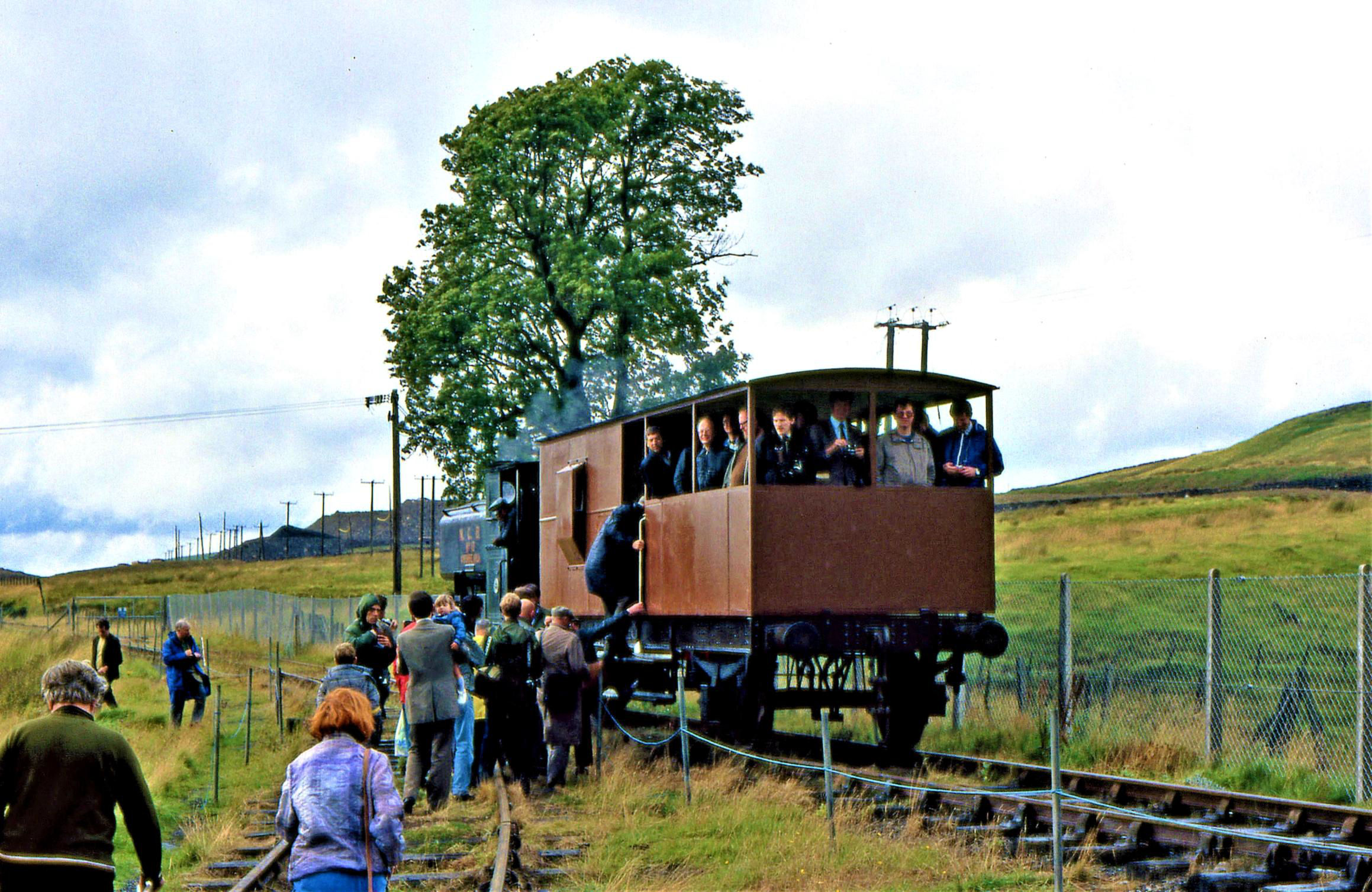
Going back over 34 years again to our 25 Aug 1988 coach tour, Minnivey (TRACKmaps 1 p2C 2021). The brakevan is on the former line to Pennyvenie Colliery off to the right, the track joining is from the former Minnivey Colliery. Left is to Waterside/Dunaskin and Ayr - see next photo.
[© Ian Mortimer 1988]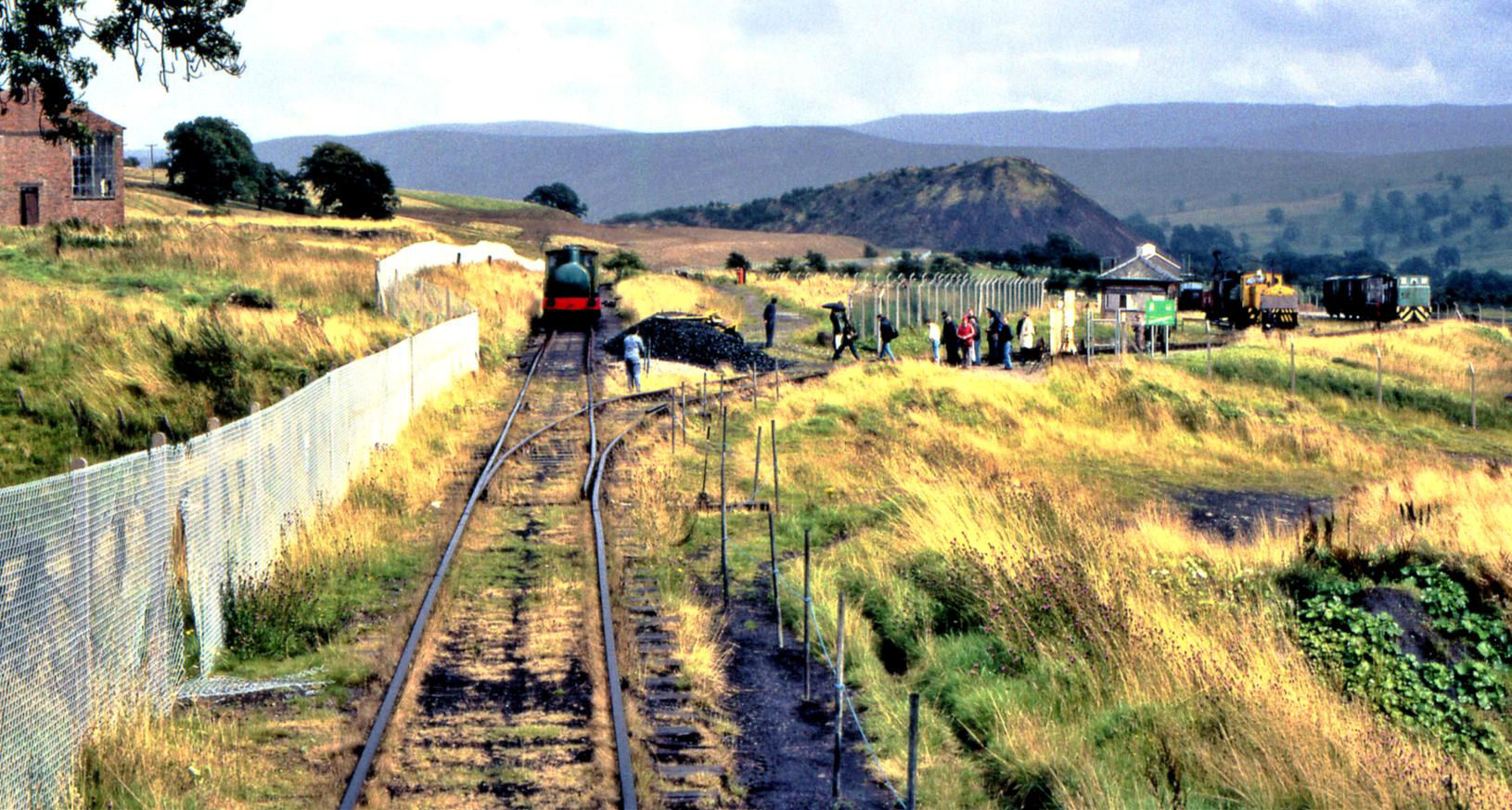
Looking east; this was then known as the Scottish Industrial Railway Centre. Right is Minnivey
Colliery site, the pit only opened in 1955 and closed in Nov 1975; straight on after another mile or so (track lifted) was Pennyvennie Colliery (closed in Jul 1978). Your Editor managed to arrange a short notice trip on 7 Jun 1978 riding in rather dirty open coal wagons with NCB steam (e-BLN 1396.X.77).
[© Ian Mortimer 1988]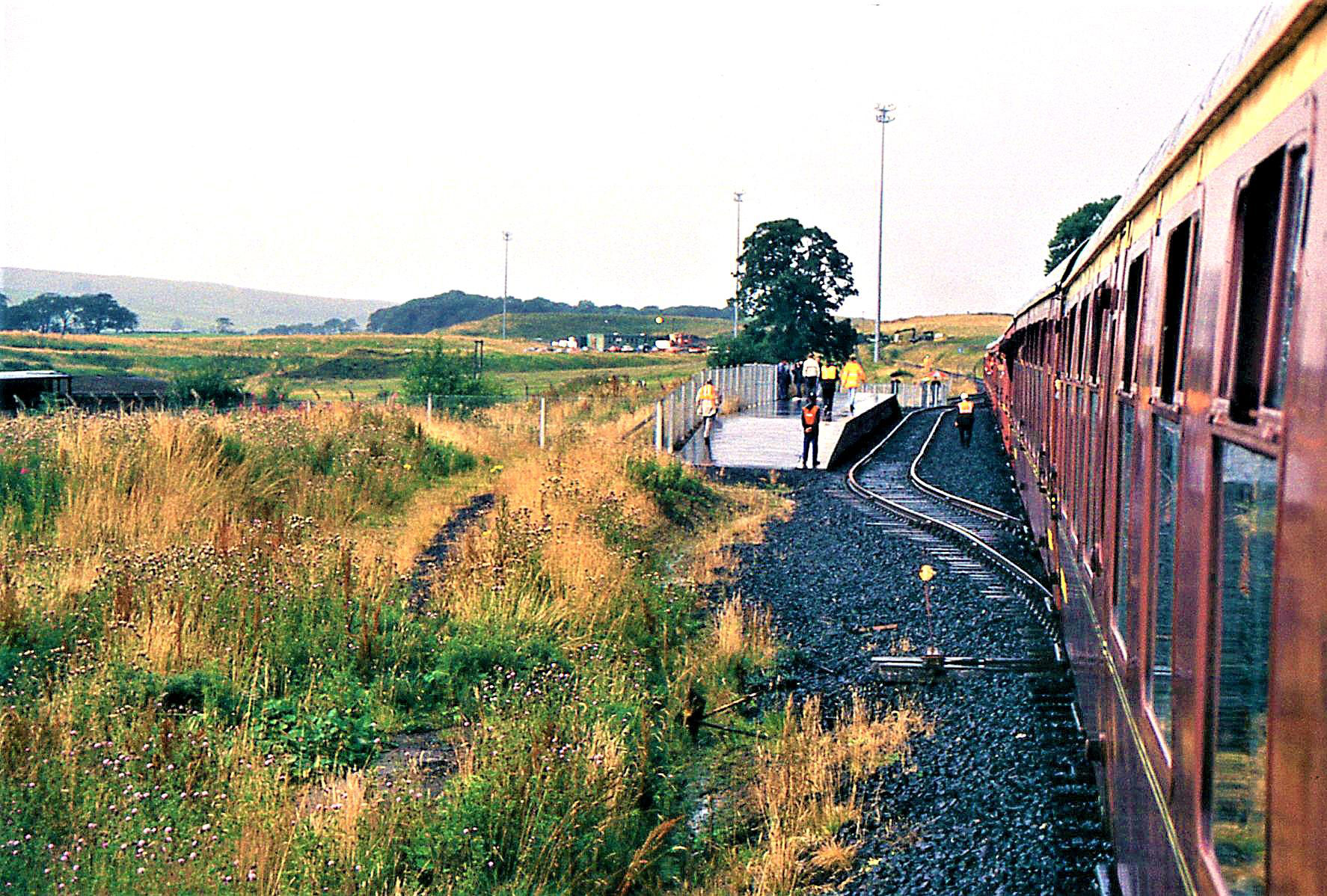
Our 24 Aug 1996 Bo'ness Traveller railtour, organised by Ian Mortimer, from Bo'ness to
Minnivey (then Ayrshire Railway Preservation Group) passes Minnivey platform via the loop.
[© Ian Mortimer 1996]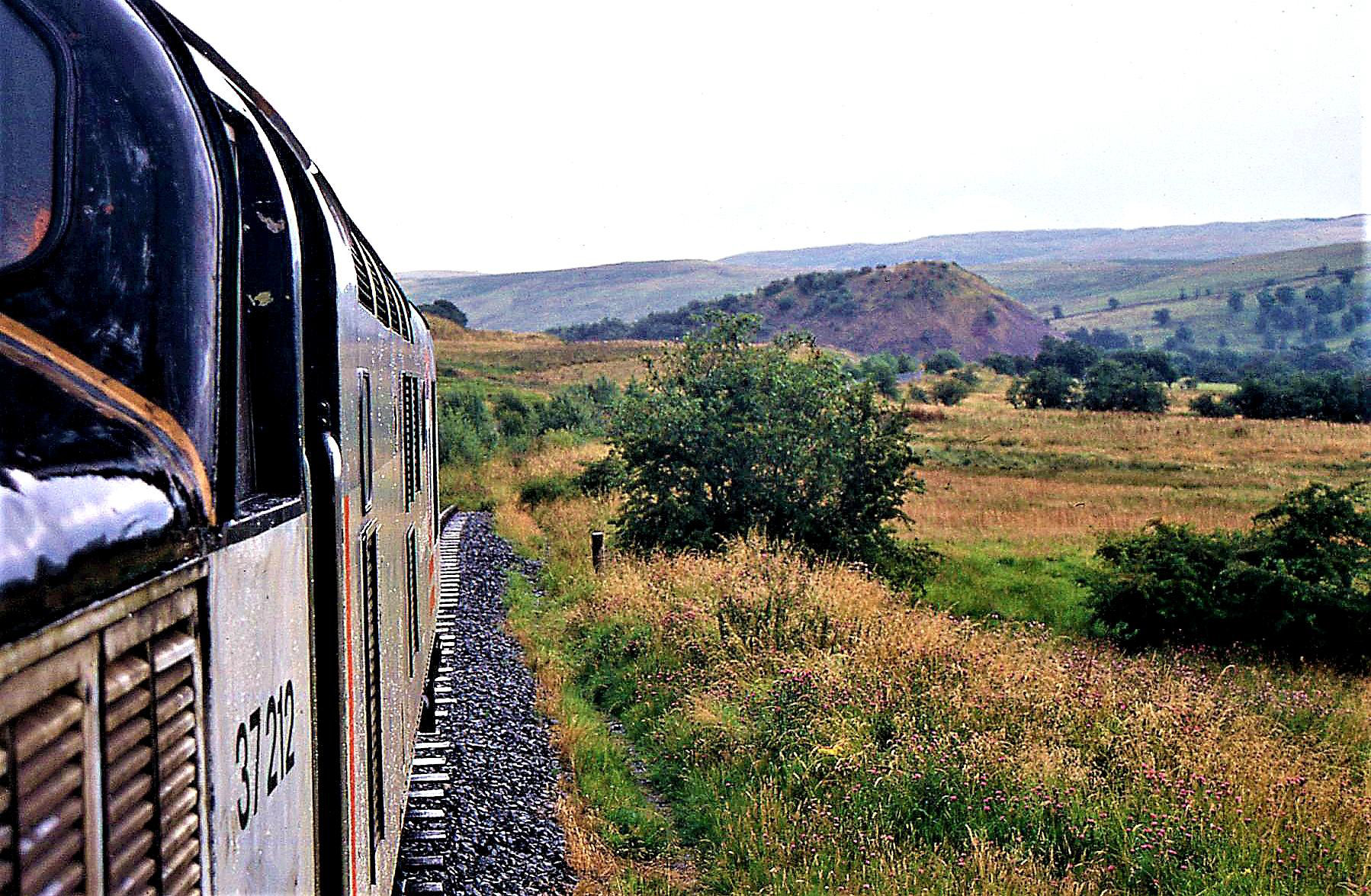
Minnivey end of line, looking east on 24 Aug 1996; our 'Bo'ness Traveller' railtour with 37212.
[© Ian Mortimer 1996]