La'al Ratty, Once in a Lifetime Experience - Part 1
Friday 11th November 2022
Report by Philip Cartwright (and thanks to Graeme Easton)
The Branch Line Society (Test)
Guest

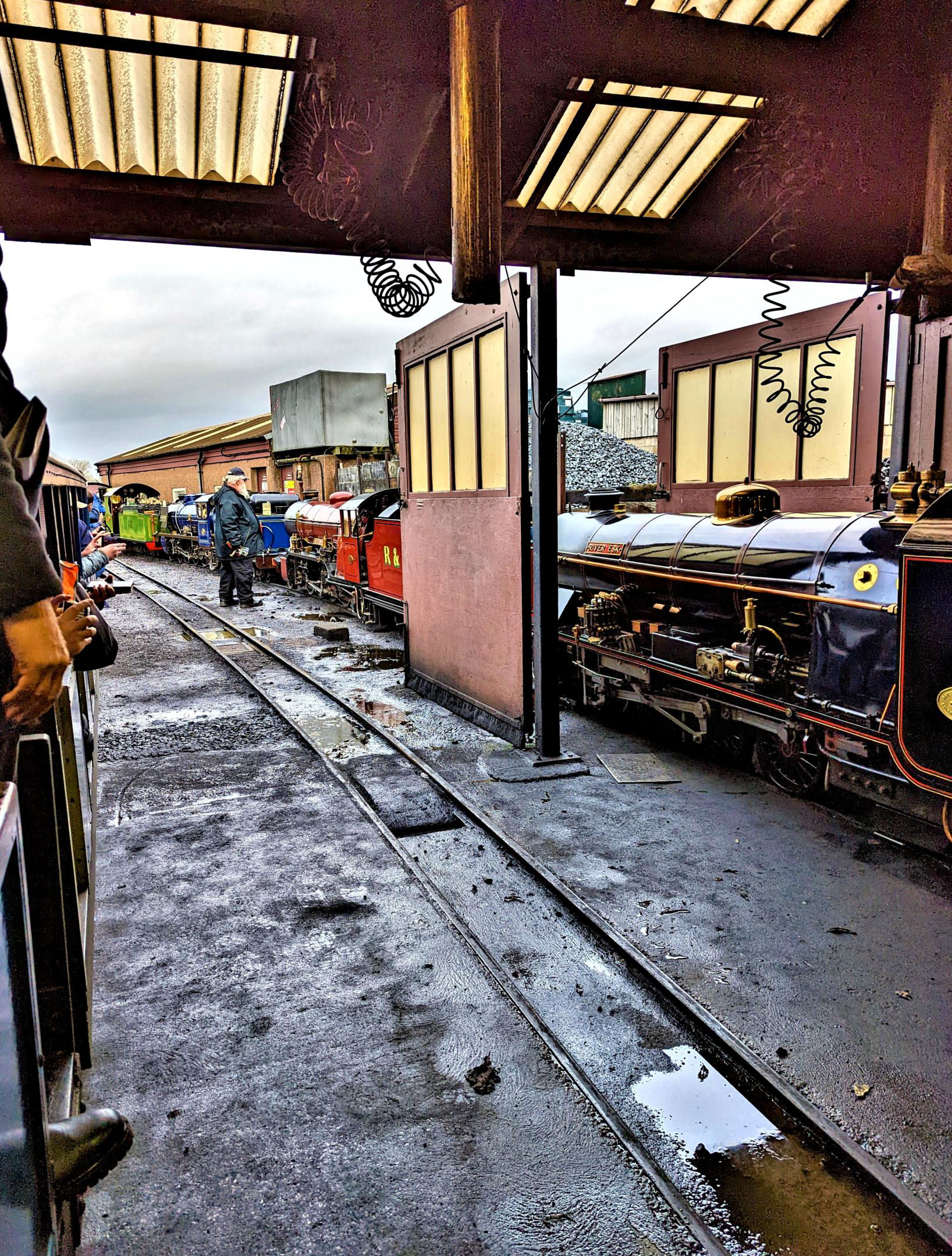
The original line became known as 'Rat Trod' ('Rat Track' in ye olde Cumbrian dialect). On reopening in 1915 it became Little Rat Track or La'al Ratty or before anyone asks. Notice of this weekday fixture had been in BLN as long ago as 5 Mar and when bookings opened I quickly booked online. [Everyone who applied was accomodated - 62 were booked of whom 60 actually turned up.] Promoted as a very special, once in a lifetime 'all available track' experience, it satisfied several of my interests. I had never once travelled on this line, despite having visited several times since May 1973 and it promised access to the loco sheds which is increasingly difficult to achieve in the UK in 2022.
A brief summary of the railway's complex history (E&OE): The original 3ft gauge line opened at the instigation of Whitehaven Iron Mines Ltd from Ravenglass to Boot in 1875 to carry iron ore. It opened to passenger traffic the following year on a one engine in steam basis. Starting in 1880 from a junction near Dalegarth Cottages a line was laid through the site of the present terminus to Gill Force (or Ghyll Foss) (NY 1788 0010) to a drift mine. Date of closure is uncertain but the line was lifted about 1904.
After a chequered history it was reopened as a 15'' gauge railway (with an extra quarter inch on curves until 1970) primarily for passenger traffic, by Narrow Gauge Railways Ltd who were model engineers. Gauge widening on curves however is really a principle rather than a single precise measure. Using the original rail and sleepers it reopened to Muncaster Mill in Aug 1915 and reached the station at Boot in Apr 1917. The final steep stretch to Boot proved difficult for the 15'' stock so the line was soon cut back to a new station situated below Dalegarth Cottages, just on the start of the former Gill Force mineral branch. The trackbed of the original line to Boot station (NY 1742 0110), which had left at NY 1710 0075 remains walkable between the fells and the farmland. The line was extended over the Whillan beck to its present terminus of Dalegarth (formerly Eskdale) in 1926. It has been 'Dalegarth for Boot' at times, to boot. Originally with three tracks, this was changed, for operating reasons, to its present layout with a long stock siding before the station (right on arrival) during the winter 1932-33. This is so long that it gives the impression of double track and is/has been used to stable a spare set.
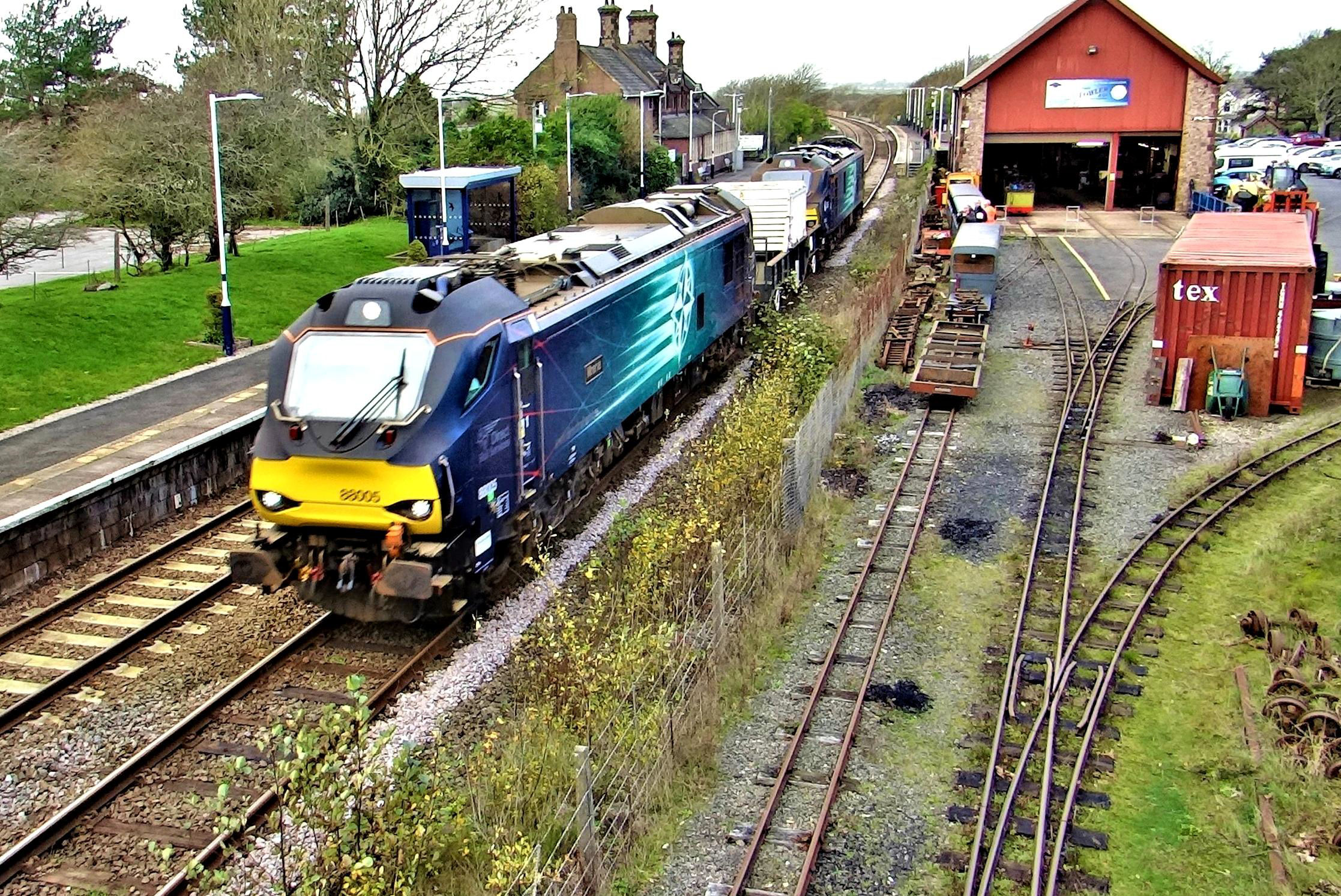
Matters declined again and new management in 1925 saw potential for increased mineral traffic so, in 1929, laid a 2½ mile standard gauge line from the mainline at Ravenglass (SD 0859 6410) to a rock crushing plant at Murthwaite. It was on a separate alignment, going through the present car park and Carriage Sheds running parallel with the 15'' gauge to the 'Big Points' (SD 0855 9685), north of Raven Villa from which point the narrow gauge rails ran within the standard gauge ones until Murthwaite.
The 'much sought after' R&ER south end headshunt is partially on the trackbed of a former LMS siding. The bridge abutments over the road at Ravenglass survives; the actual bridge was moved and is now used by the present line together with an access path to the sheds. Beckfoot Quarry, which served the crushing plant, closed in Jul 1953 and the standard gauge rails were lifted almost immediately.
After purchase by the preservation society on 7 Sep 1960 the Ravenglass and Eskdale Railway Co Ltd was formed on 30 Mar 1961 to operate the line. [Several people made large financial contributions to save the Railway which nearly closed, including a GP colleague of your Editor in Kidderminster.] After the death of one of the joint owners in 1968 it subsequently passed to the Lake District Estates Group.
Since 1960 the line has been much improved with the sharper curves replaced by new alignments particularly in Gilbert's Cutting. There have been numerous improvements at Ravenglass including a new carriage shed, diesel shed, workshop and museum and more recently at Dalegarth. The present Radio Control Train Order signalling system was introduced in 1977 which included an extension of the passing loop at Irton Road with new ones at Miteside and Fisherground (TRACKmaps 4 p33B 2018).
While it promised 'all available track' I accepted that my very strict criteria was unlikely to be achieved. A loco or item of rolling stock may well reach the buffers but as far as I'm concerned, unless I am physically on that loco or item of stock, I am someway short of the objective and my track plan is marked accordingly. As usual, a detailed souvenir map was kindly provided with thanks to Peter Scott and Martyn Brailsford; these are invaluable on tours of this nature. Participants were advised that the lines in the Ravenglass station area would be done in the morning and the remainder in the afternoon.
Instructions were to meet at Ravenglass at 09.00 for a hot drink, roll (included in the fare) and safety briefing. I arrived 08.40; many members who had also boosted the Cumbrian hotel economy were already present. 13 participants were significantly delayed by a serious accident blocking the A595 (with a lengthy scenic tour diversion), others arrived on time at 08.54 on the 07.10 train from Carlisle.
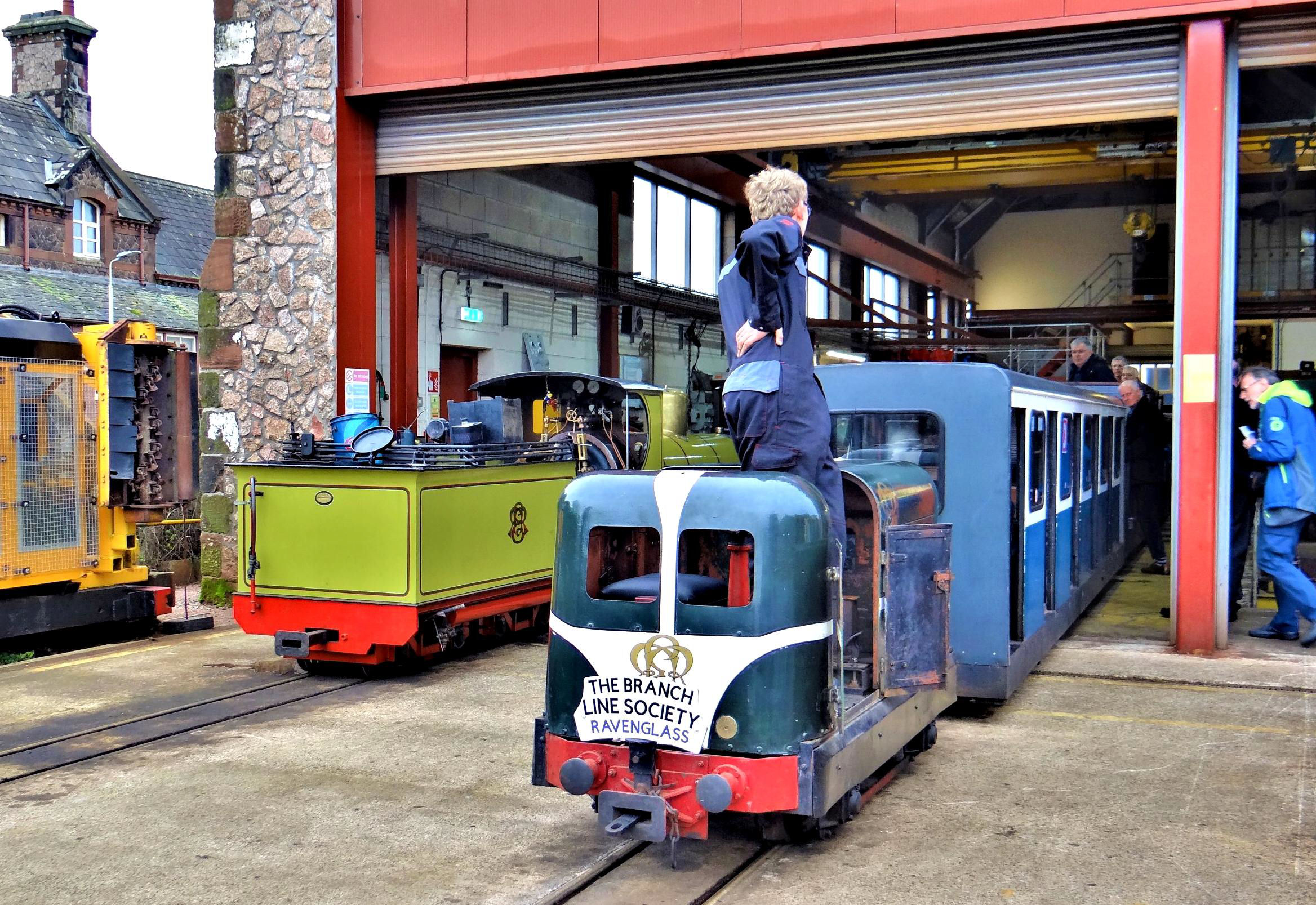
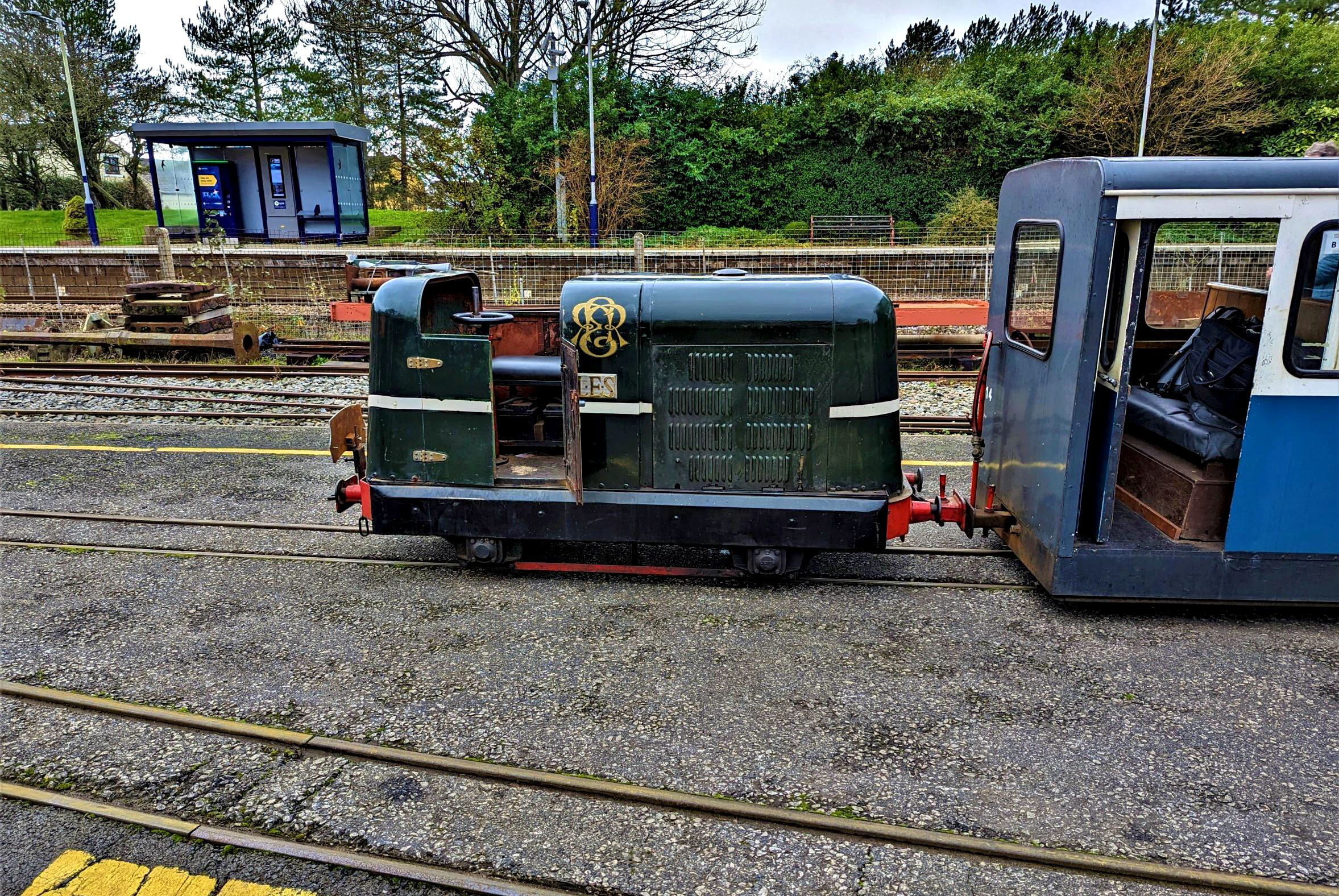
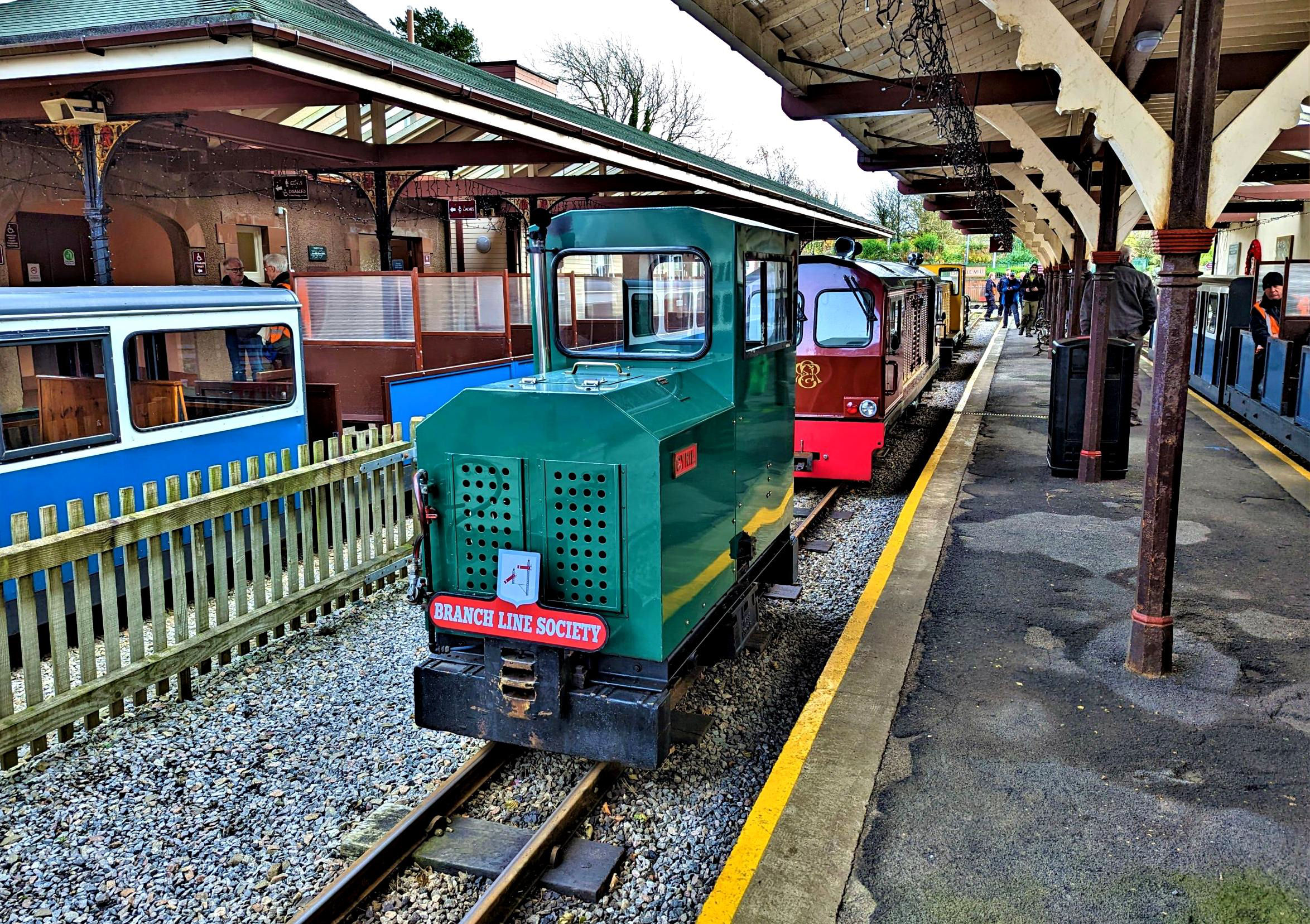
On my arrival 'Perkins' the 1933 Ravenglass rebuild of Muir Hill NG 39A/1929 was removing stock from the large Carriage Shed for the tour to gain entry. This was an early example of the extraordinary logistical effort put in by the railway to accommodate the esoteric interests of our members.
It was announced that the Museum was open and, to assist those delayed, our train would depart at 10.00. I went to the museum, opened in 1978, it is now run by The Ravenglass Railway Museum Trust. With Gary Lonsdale's excellent stocklist to hand I photographed the main exhibits as best as I could.
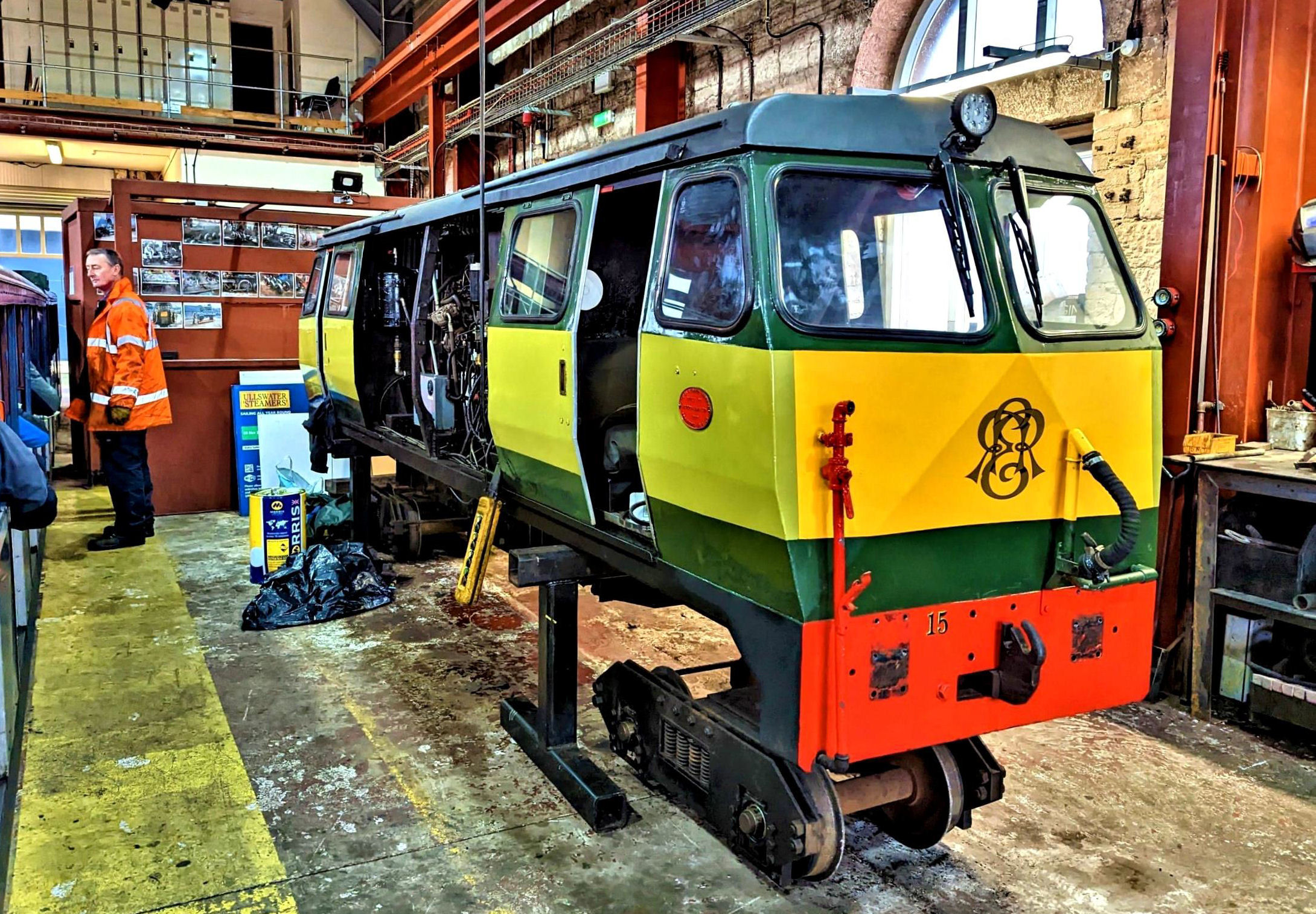
These were:●Little Giant Bassett Lowke 10/1905; ●Synolda Bassett Lowke 30/1912; ●Typhoon Davey Paxman 22073/1926 and ●ICL 1Bunny Ravenglass/1925. Inspecting the rusty side frames of Ella/1881 I decided not to show my photo of them to my eldest granddaughter who shares the same name least it caused offence. 'Scooter' the Ravenglass 1971 built railcar was subsequently discovered by other participants to be dismantled in the Paint Shop and not seen by me on this occasion.
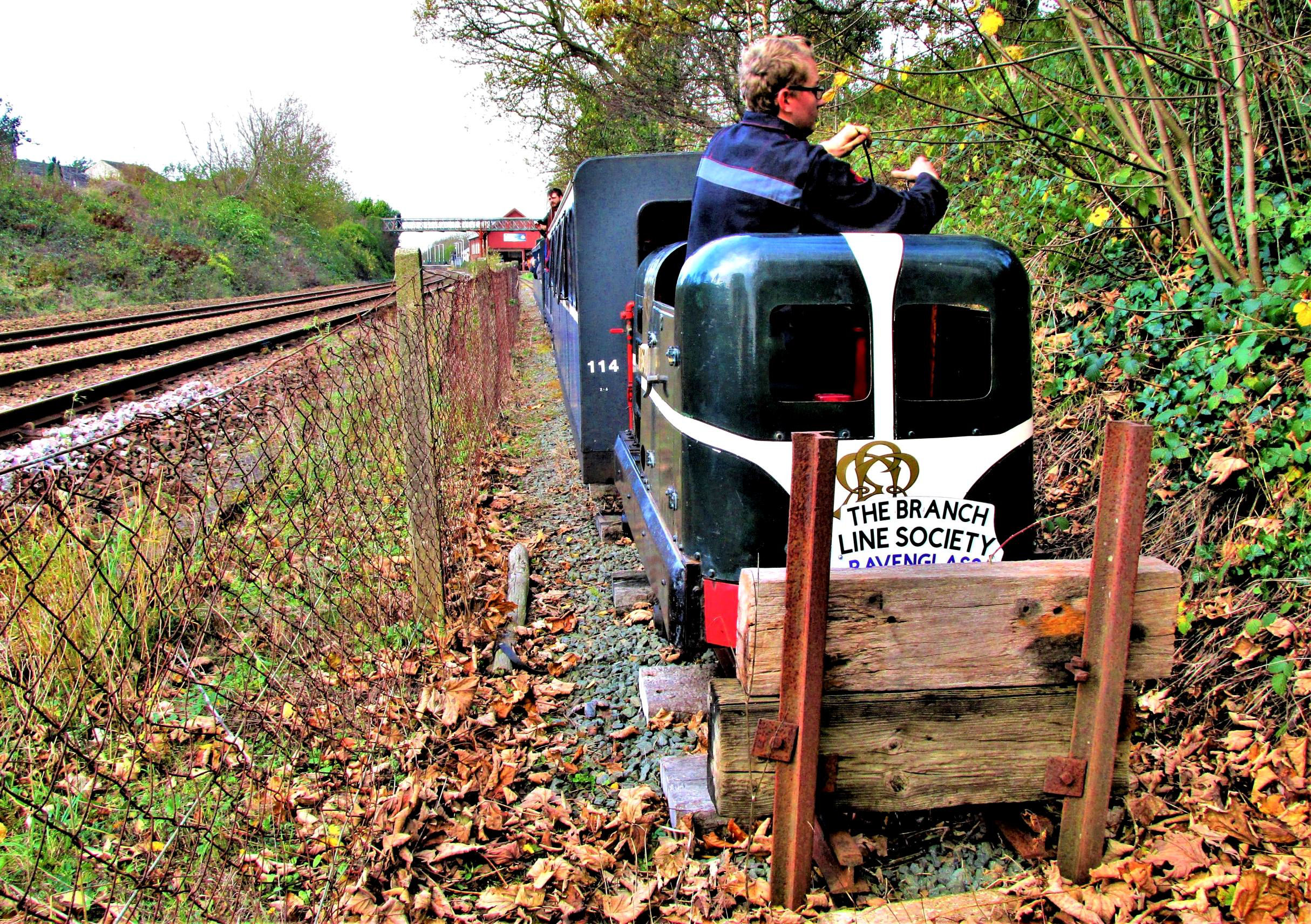
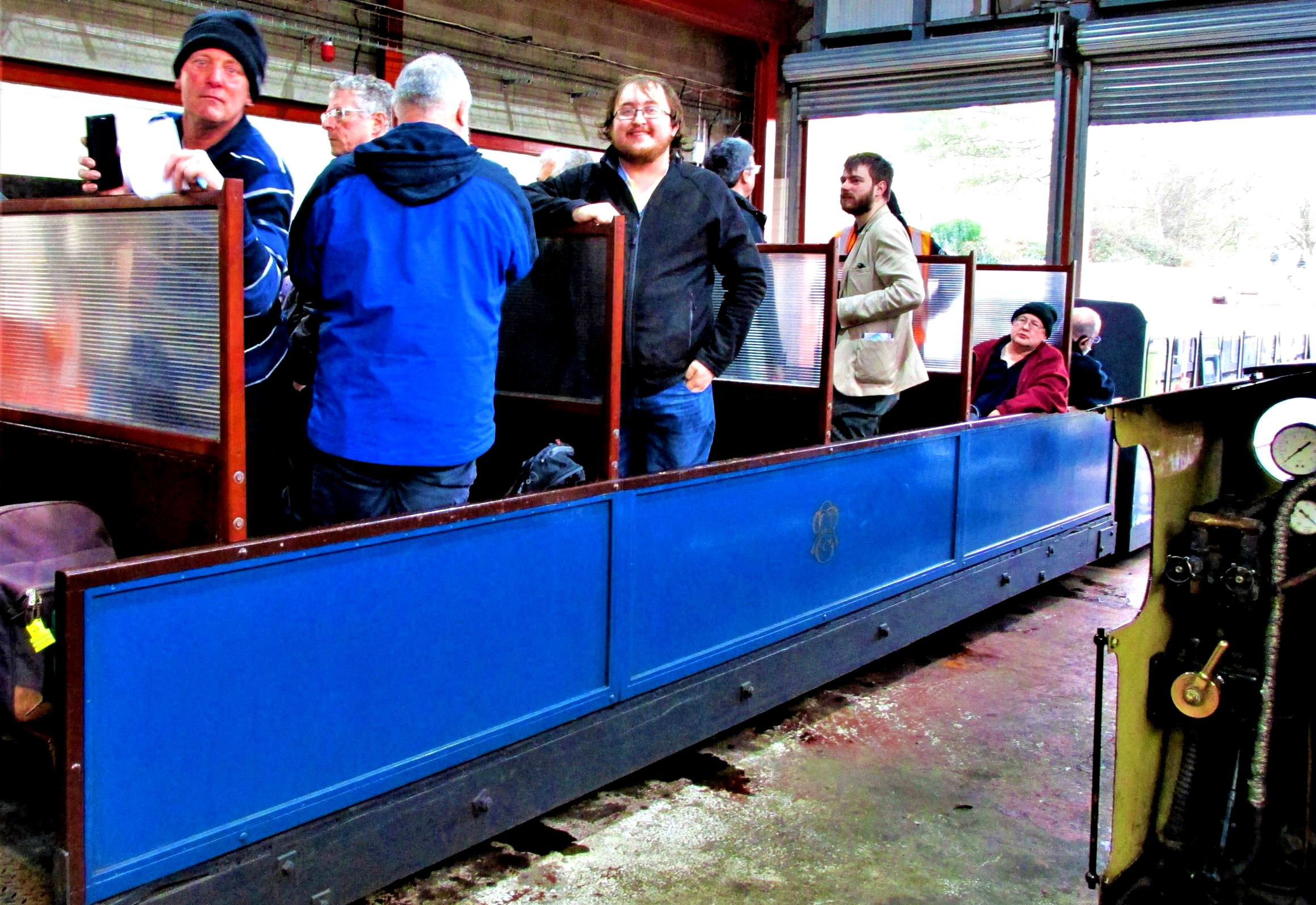
Our tour started from P3; 'Perkins' propelled 114 coach D 2-71 'Coach C' (open coach] 116 'Coach B' and 109 'Coach A' both semi-open with a nominal 78 person capacity [which would have been a big squash], in theory there was scope for some of the keener members to gain additional track coverage.
A complimentary copy of the Ravenglass & Eskdale Railway 'A Journey Through Historic Postcards' was handed to each participant, a book that I subsequently read with great interest. It is often overlooked that one of the aims of the BLS is to encourage and facilitate the study of branch and other lines.
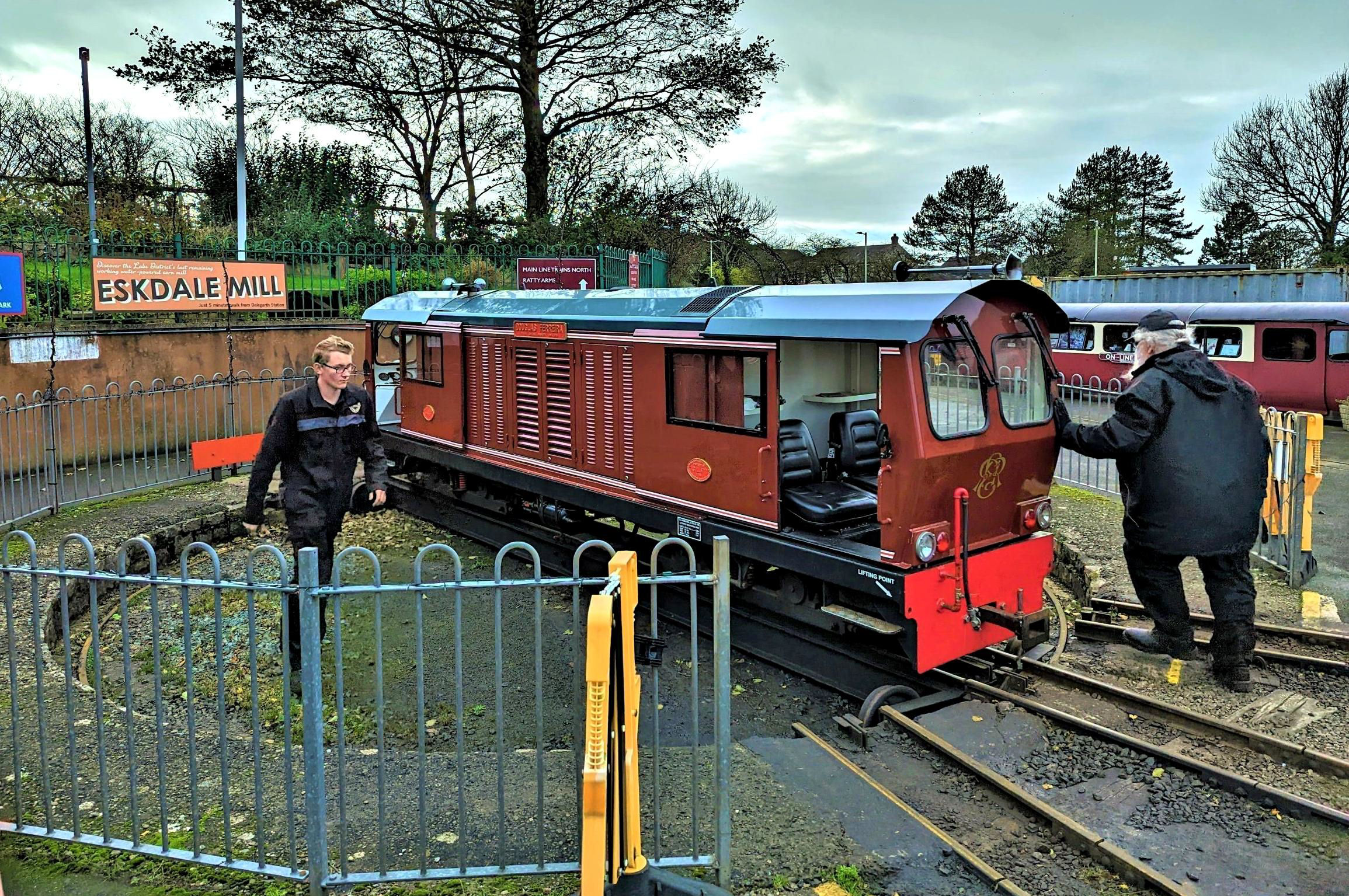
The first objective was the Carriage Shed; Coach A duly reached the end of each of the four lines [not quite on Line 2]. Returning, 'Perkins' ran on to the turntable via each platform road 'in turn' (!). On the final reversal it actually reached the '0' mileage post on the far side of the turntable with the half of Coach D in which I was not seated. The next aim was the Joiner's Shop and the door was reached.
There was a traction change and 'Douglas Ferriera' TMA Automation 28800/2005 was attached. Next was a trip up the headshunt stop blocks that runs parallel with the main R&ER line to not far from the site of 'The Big Points' where the former standard gauge connection from the London, Midland & Scottish Railway joined to form the dual gauge line to Murthwaite. Coach A reached the buffers. We returned to Ravenglass, disembarked and gathered on P1 as it was 11 Nov, Remembrance Day. After an introduction by Kev, our Port Erin member, Deacon Graeme Easton, gave a poignant and meaningful address before the two minutes silence was impeccably observed by all present at 11.00.
| Branch Line Society. A Company Limited by Guarantee - Company No 16743754. Registered in England and Wales. Registered address: 6th Floor, Derwent House, 150 Arundel Gate, SHEFFIELD S1 2FN |