Day 4 Mon 27 Jun:
The sunshine blazing through the large window of my room around 04.30 woke me up well before the alarm; attempts to sleep any longer proved futile so I was out by 06.00. A trip to the western end of Tram Line 23 afforded a chance to traverse the complete turnback loop as it only has a single set down and pick up platform. [Should be compulsory!] Line 23 is due to be extended with much of the new rail already in situ which will render the loop redundant. This was going to be the hottest day before the weather broke and it was already over 20oC at dawn so, a moderate walk and a few trams later saw this track in the bag and it was back to McDonalds at Wrocław Główny.
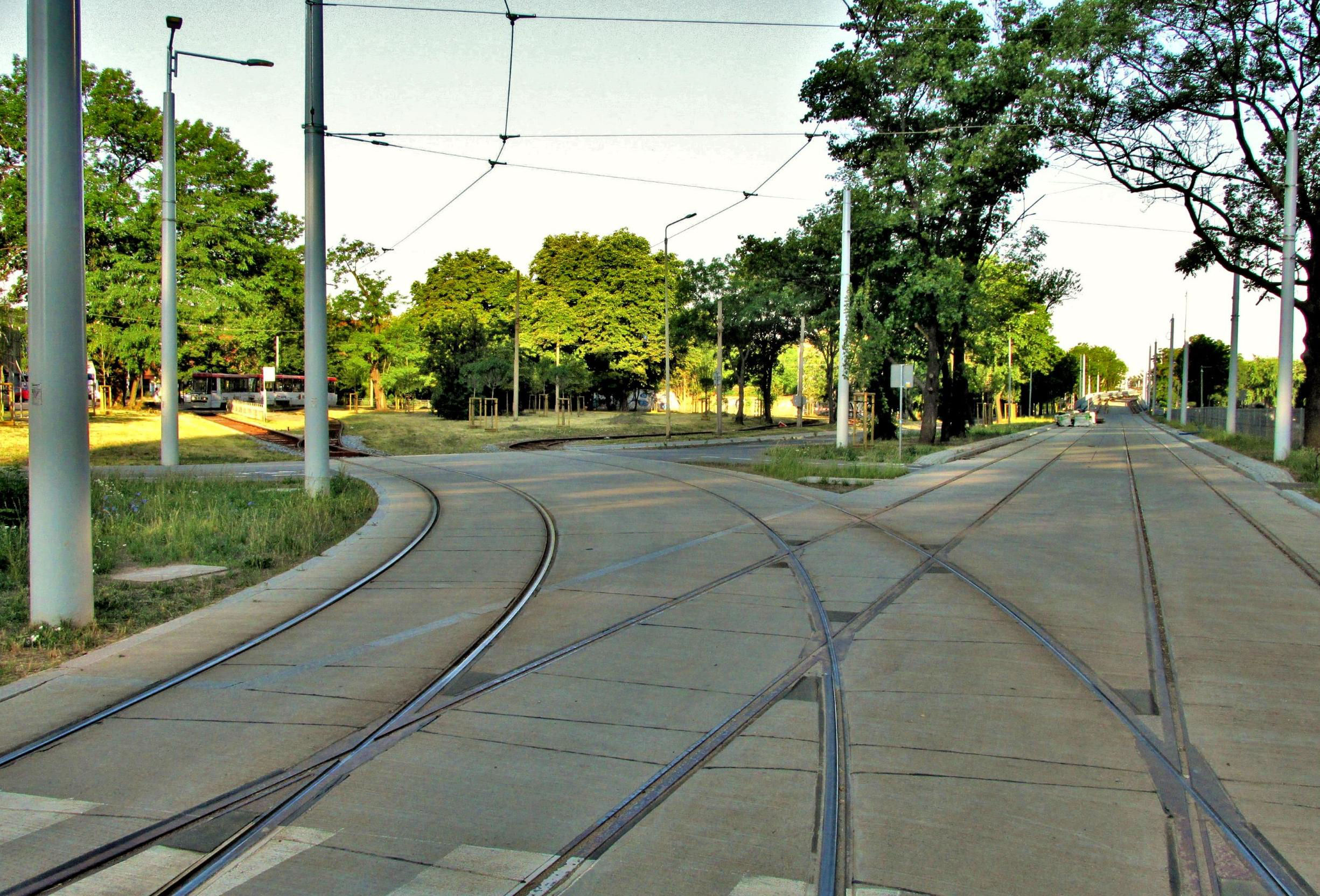
Start the day right with an early morning turning circle - left - (Wrocław Tram Line 23), all done in service and closing when the line ahead opens.
[© Iain Scotchman 2022]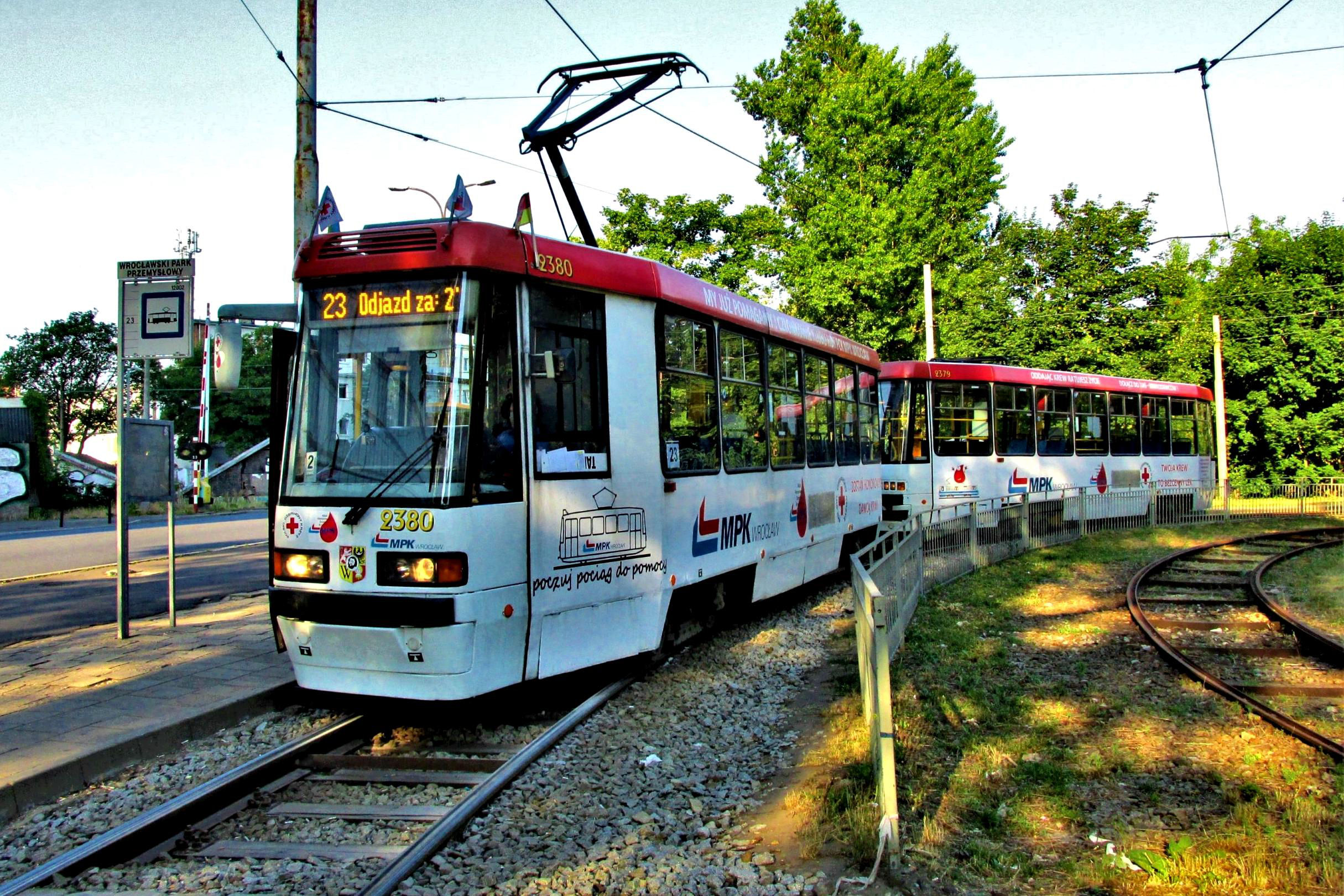
Wrocław Park Przemysłowy loop, the single arrival/departure platform (should be enshrined in law) which will close.
[© Simon Mortimer 2022]We were due off at 08.24 and made it by 08.18, again behind SM42 2320, this time on a pretty simple trajectory due north past Żmigród and Rawicz to Leszno. Then we veered left to swing right on a typically extravagant flyover above the main line and onto the passenger line towards Krotoszyn. Then things became really interesting, passing through Kąkolewo and onto the remainder of Line 323 towards Jarocin to another sugar beet processing plant at Gostyń, now a 22Km freight line.
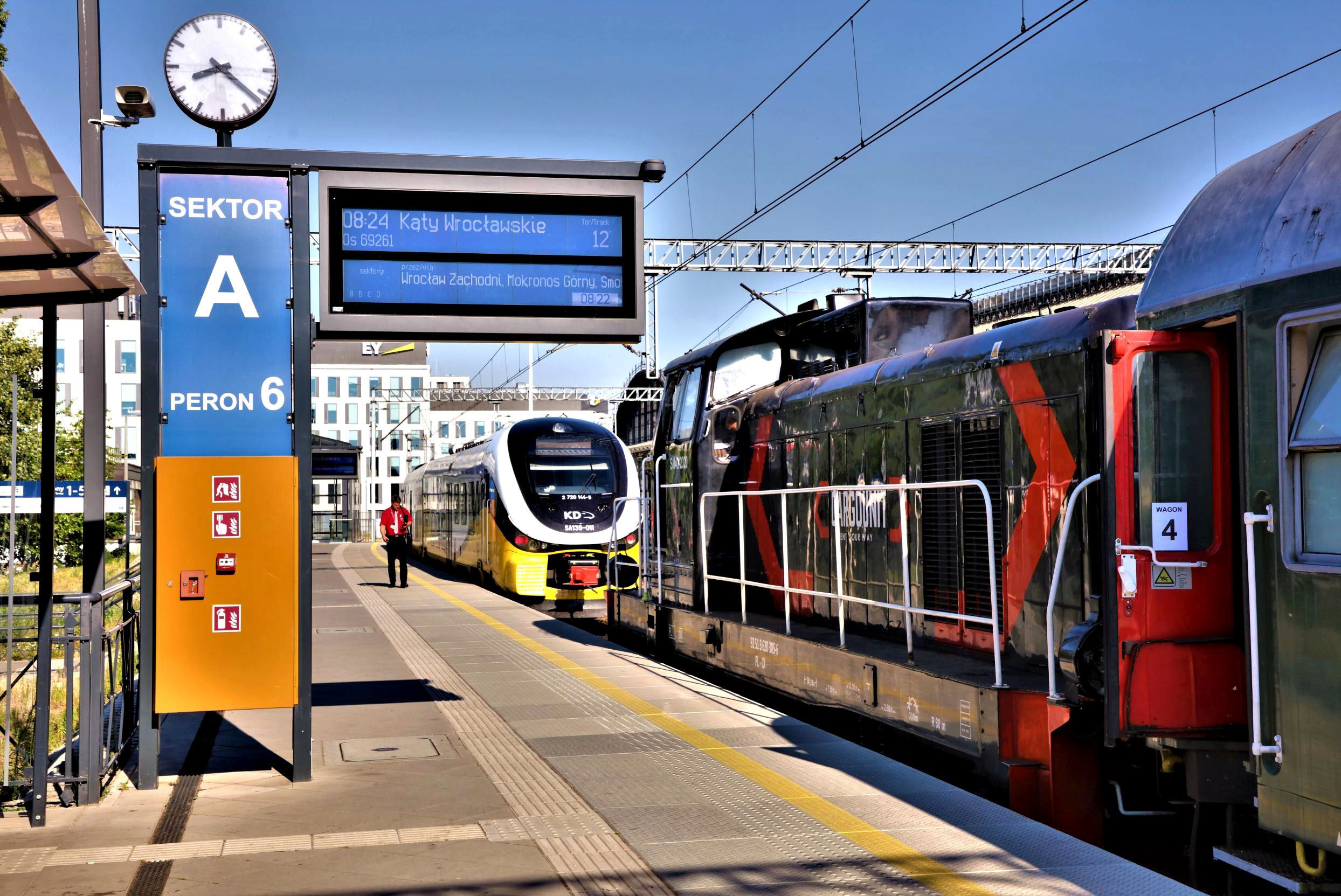
Another day, another departure from Wrocław Główny P6, this time shared with a local train.
[© Iain Scotchman 2022]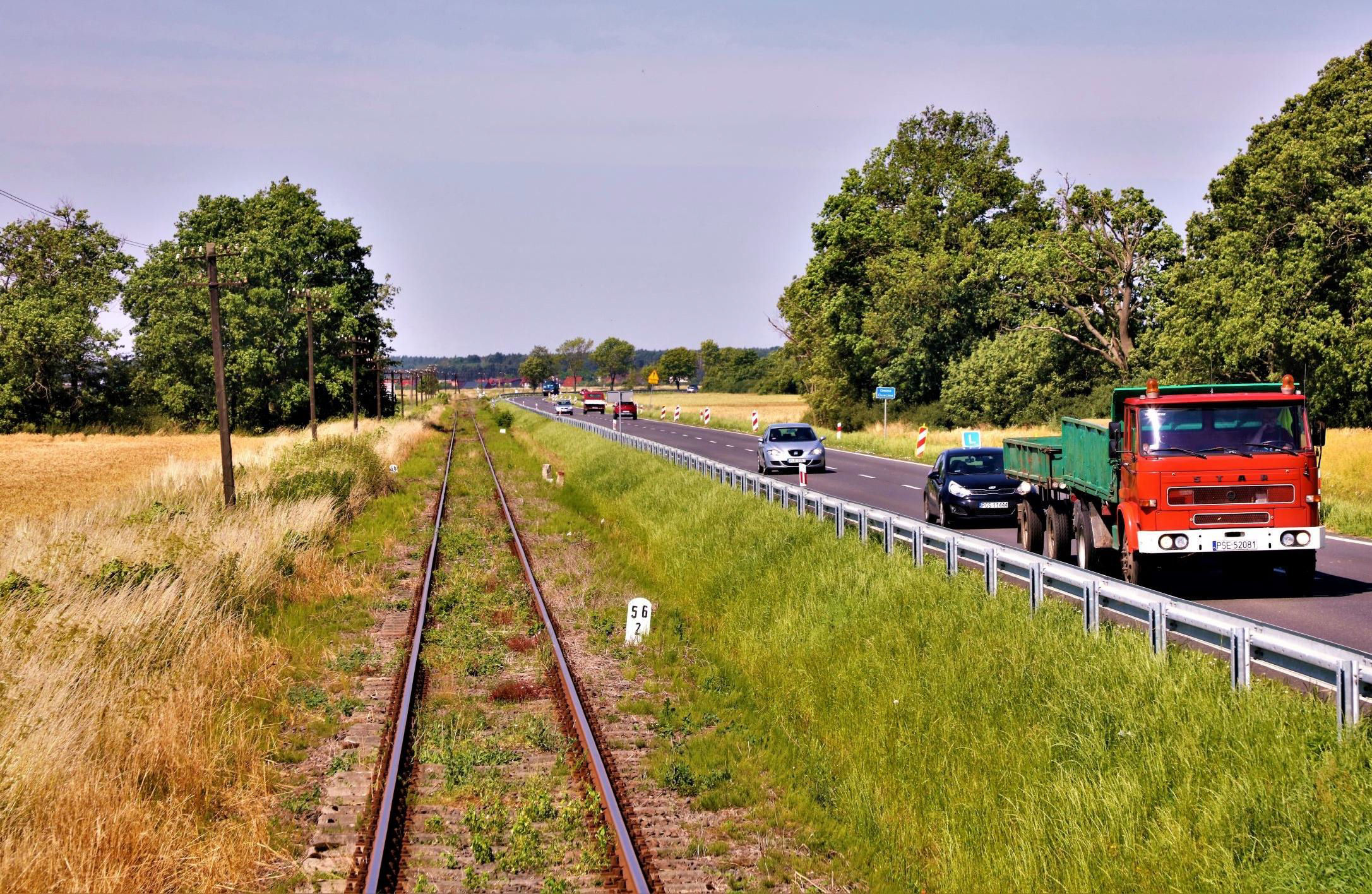
En route to Gostyń, note the telegraph poles and wires (left) and the lack of railway lineside fencing which is quite normal.
[© Iain Scotchman 2022]The track was well fettled and clearly has plenty of traffic. At Gostyń (closed to passengers) we slipped into P2 to the surprise of the local drinking club assembled for their morning tipple in the no doubt generally convivial quiet of the station steps. Ahead the line stretched onto Jarocin and is apparently intact; a portion of the line east of Jarocin between Brzostów Wlkp [Wlkp = Wielkopolski, a common suffix for towns in this area of Poland, meaning 'Greater Poland'] and Góra is used by a local draisine operation. A draisine is a light 'people powered' rail vehicle, generally with pedals like a bicycle, with three, (usually four) or more wheels. Gostyń station is controlled by a large, clearly refurbished, signal box which also oversees the wide level crossing just beyond. Past that, a bit far to jog and take photos of the station as well, (some did walk there and back) were several sidings with at least two private owner shunters. The station is completely extant but well vegetated and classic 'German pattern' semaphores abound - as on the masthead on BLNI. It really feels like it could be revived almost overnight and proposals are already progressing at least for the section we traversed this day to be reopened to passengers. Returning, we paused for photos at Kosowo Wlkp, looking pretty intact but a wilderness in a wilderness. We all thought, after these few days, that Poland should have developed their own version of the great British euphemism of the suffix 'Road' after station names to say in code that this station isn't actually anywhere near this place - Gatehouse of Fleet (not Road) excepted!
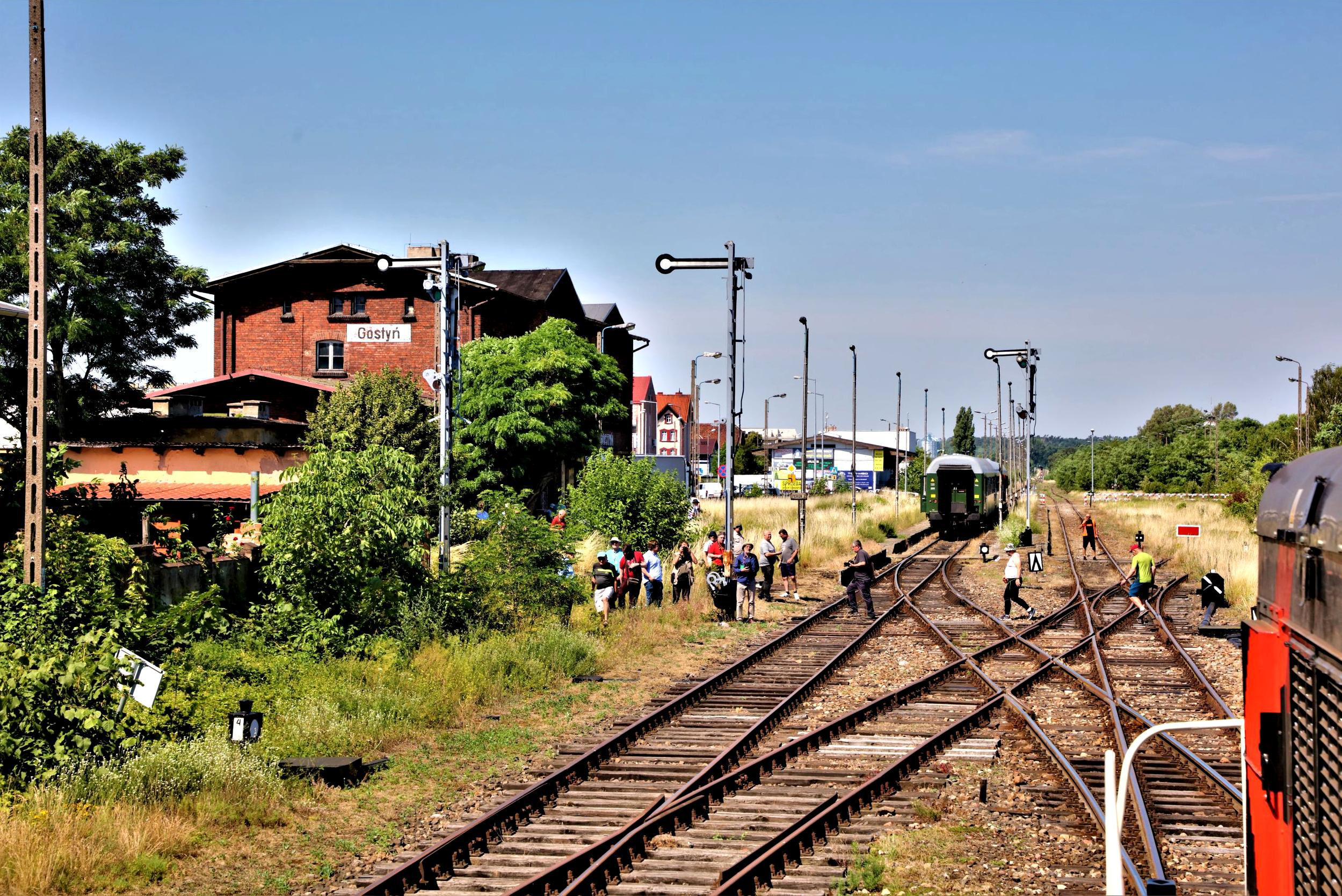
From the loco, the Gostyń run round with German style semaphores - now a busy 22km freight branch to a sugar beet factory, part of Line 323.
[© Iain Scotchman 2022]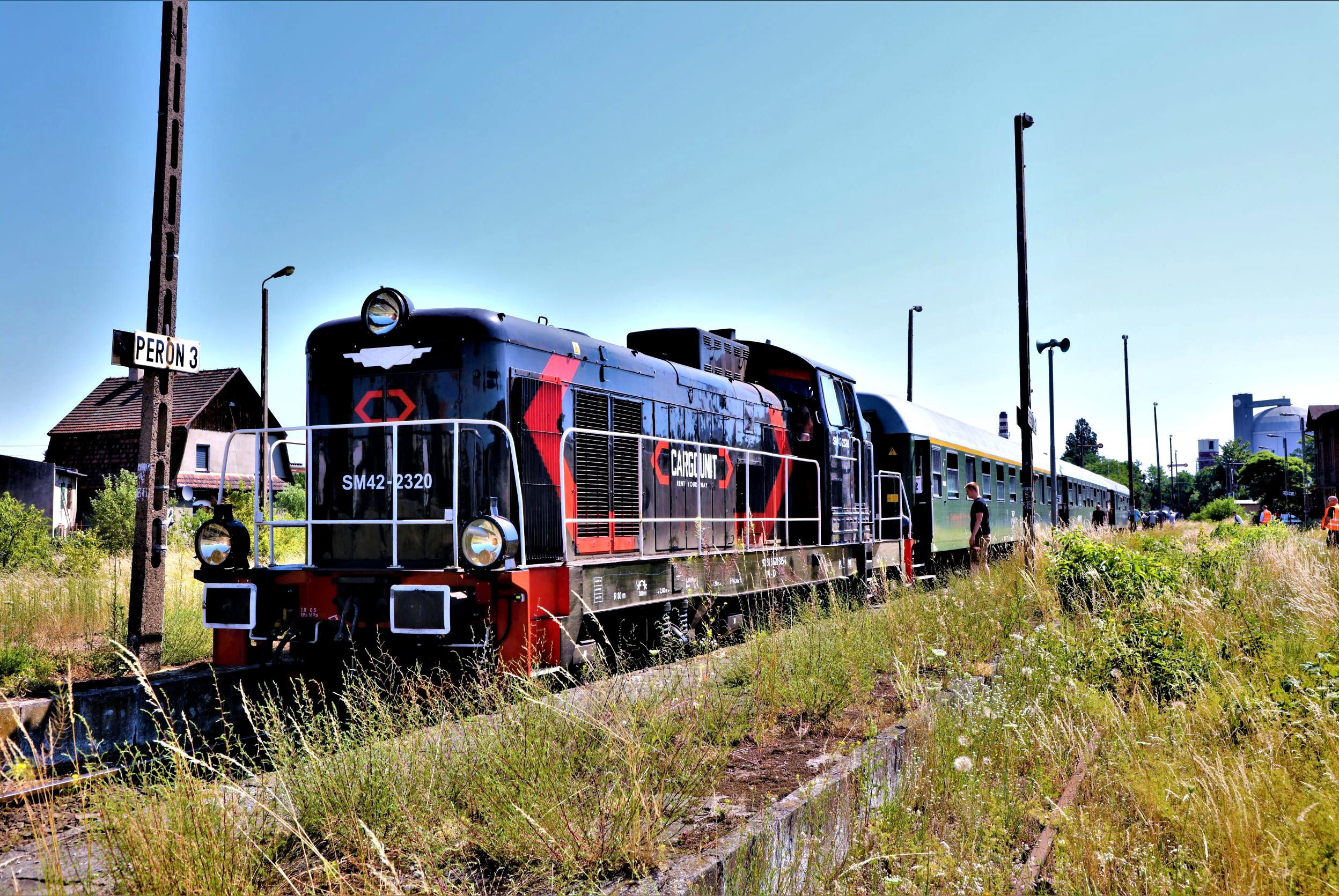
Gostyń station after the run round, the large sugar beet factory served by the branch is middle far right (Peron = Platform).
[© Iain Scotchman 2022]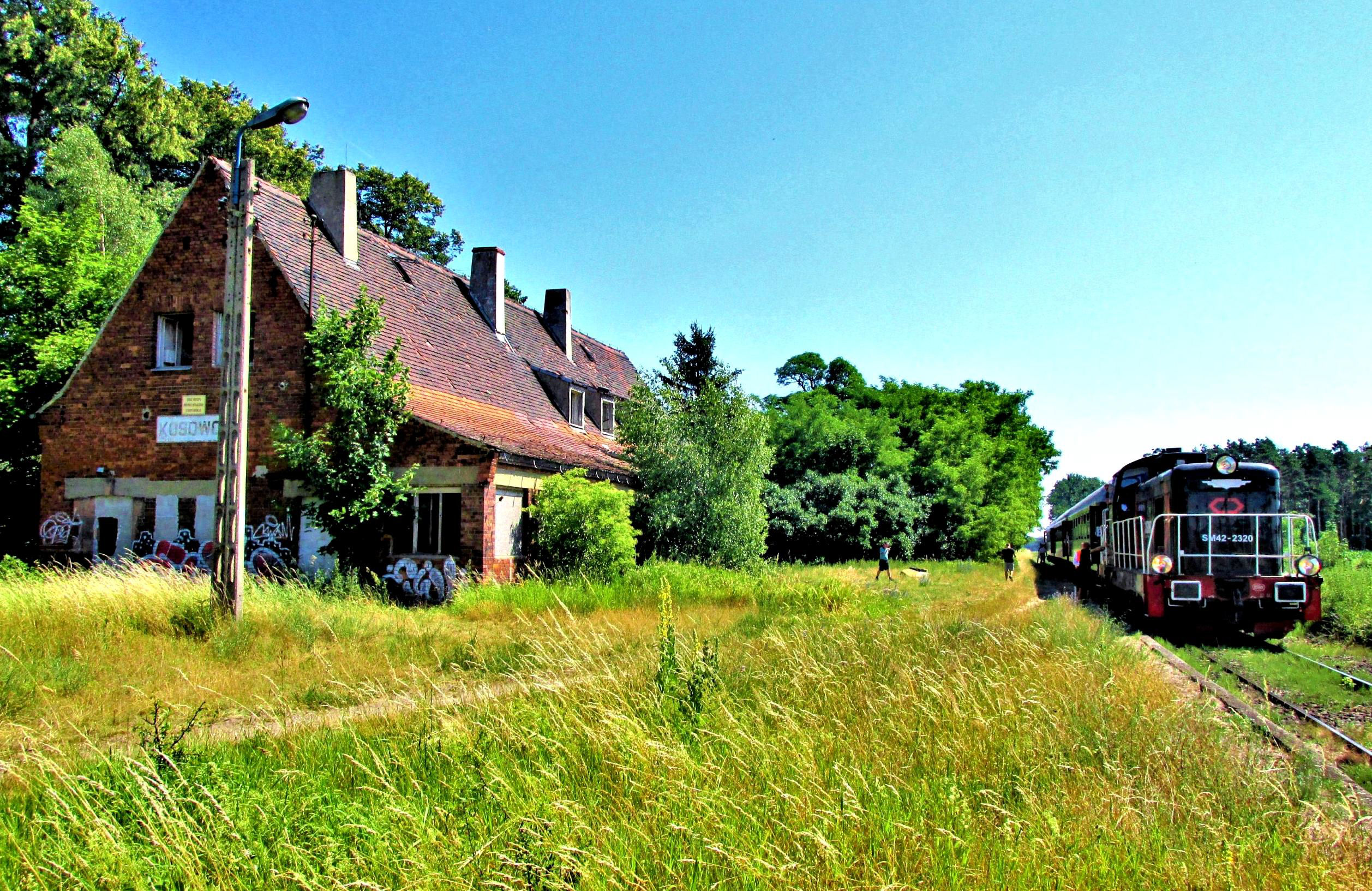
Kosowo Wkp; our Silesian Explorer railtour stands at this remote former station (see report for details) in the middle of a wilderness. Kosowo Wlkp has a population of 490 ... none of whom appear to live anywhere near the station ... how on Earth did it close‽
[© Simon Mortimer 2022]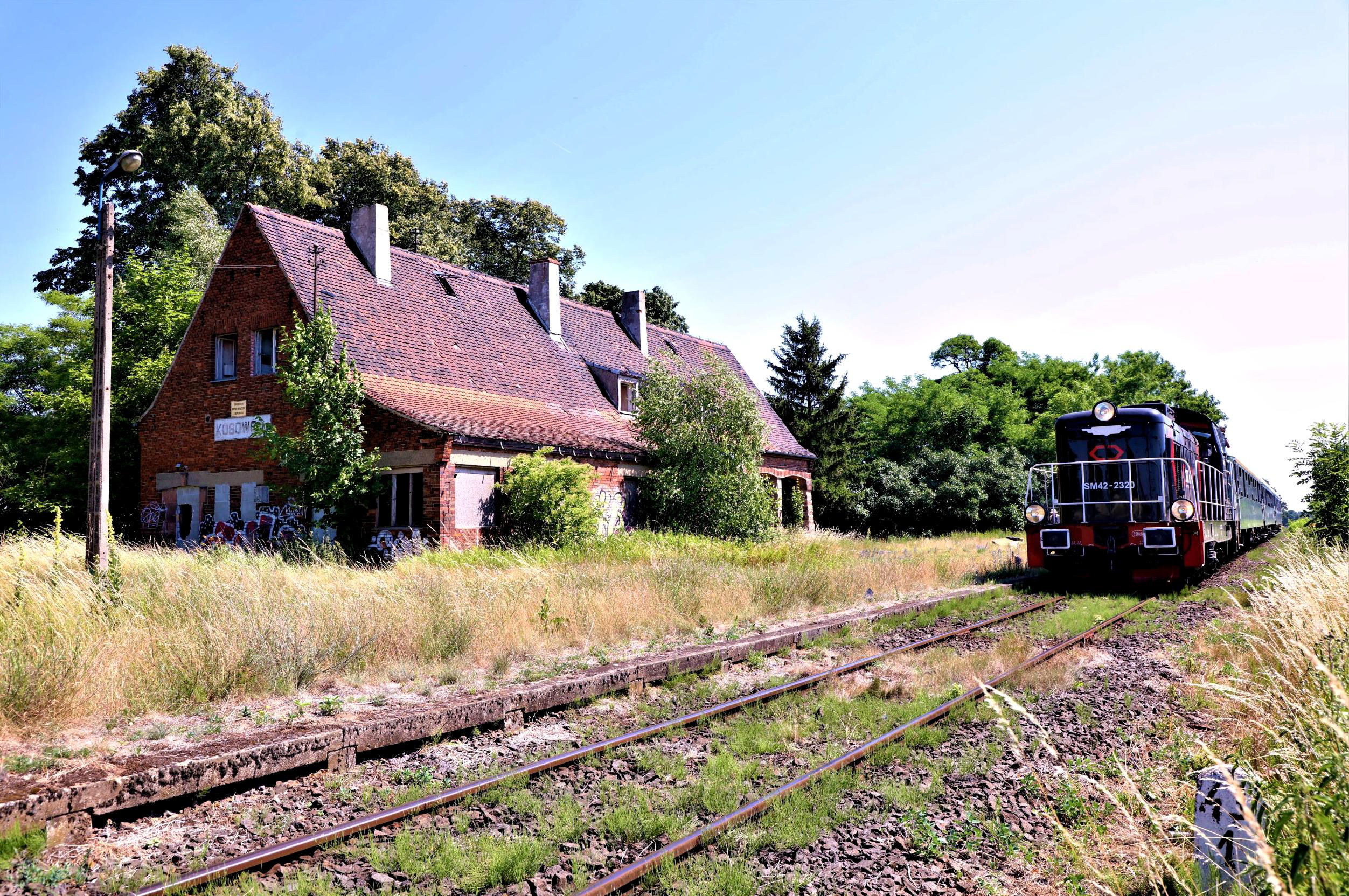
Iain's picture of Kosowo Wkp station shows the wooden platform edge well... The DfT and ORR would have apoplexy.
[© Iain Scotchman 2022]Swinging back towards Leszno, we saw the severed (but still tracked) east to north curve going away on a high embankment that used to link this to the line towards WoÅ‚sztyn. At Leszno itself we veered right onto what was, pre-2019, a freight line until the link towardsGłogów was restored to passenger traffic through Wschowa. At Głogów, north of the station, we took the non-electrified freight lines that looked very rusty in the opposite direction. Then it was on to Żagań over a line devoid of passenger trains since 2002 except for a brief (presumably unsuccessful) reintroduction for four years at the Żagań end to Niegosławice in 2006. We rolled on in the sunshine over a fairly undulating route in typically open, slightly wild, agricultural countryside, passing often fully extant stations like the semi-derelict Gaworzyce. At Niegosławice where again the station stands, apparently disused, we had a photo stop. Some of the structures seem so divorced from anywhere or anyone else it's wondered if anyone would be bothered if they just quietly collapsed‽ Then it was that time of day again to make a judicious menu selection and have a first beer. After the chicken breadcrumbs, chicken set and chicken nuggets in various permutations of potato, sauerkraut and gherkin we realised that the menu options were becoming limited, in fact exhausted, so it was that chicken in a set again, always a firm favourite!
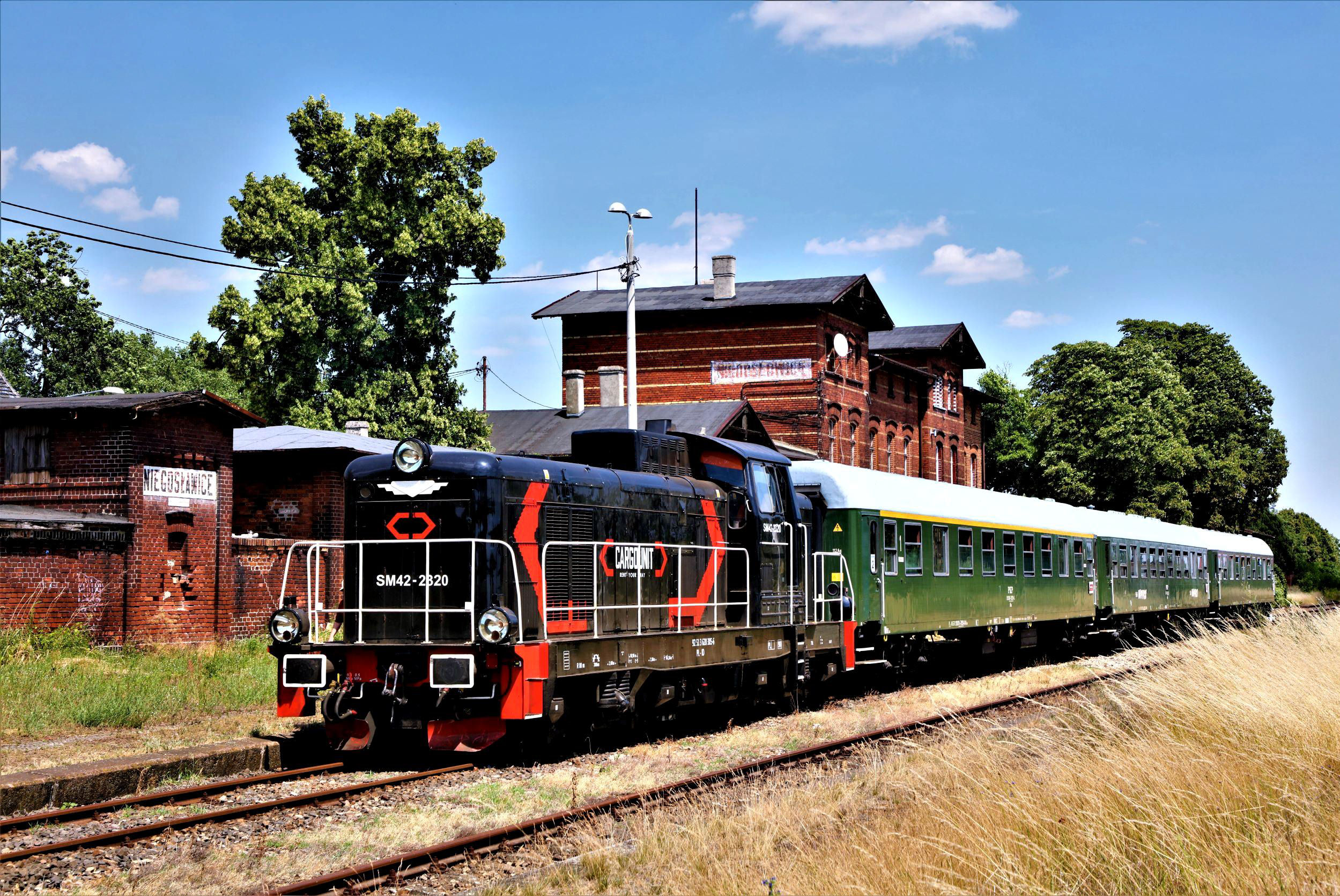
A photo stop at Niegosławice which had passenger trains until 2002 (and later just from Żagań from 2006 until 2010).
[© Iain Scotchman 2022]We passed onto Szprotawa and Bukowina Bobrzańska still well signposted, possibly a legacy of their brief renaissance over 10 years ago, and, on approaching Żagań, we passed over the former Berlin to Breslau (the former German name for Wrocław) main line just as a DMU proceeded towards Legnica.
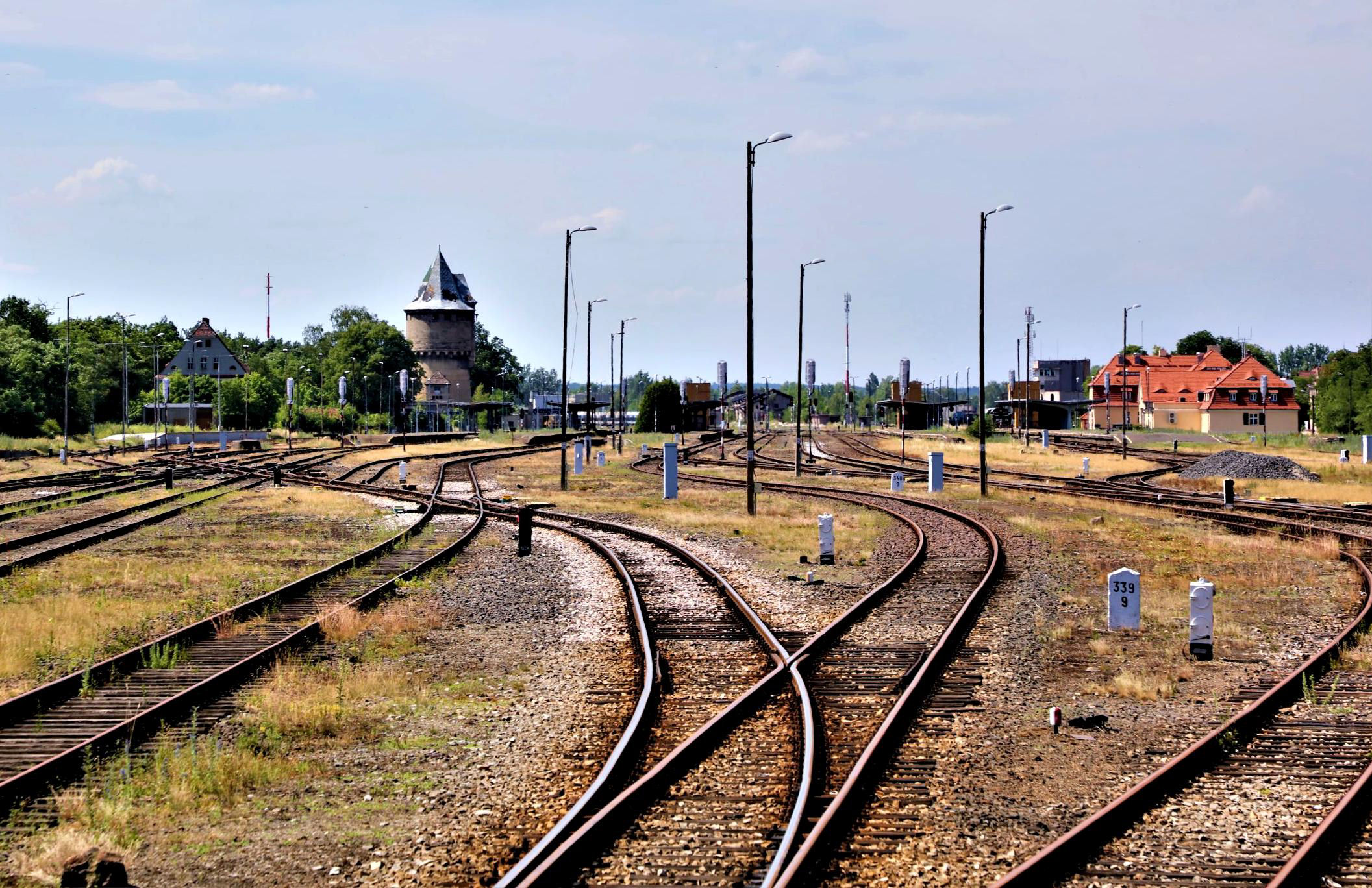
Approaching the vast sprawling Żagań„ station its with many platforms, said to be the largest in Poland that is not electrified (yet).
[© Iain Scotchman 2022]Żagań is a vast sprawling station with, it appears, a different platform for every service of the day. It is also, according to Turkol Manager Andrew, the largest non-electrified station in Poland! Just looking at its geography it was also noted as the local station of choice if you happened to escape from Stalag Luft III, a very brisk walk away. It can only be imagined as part of the escape preparations prisoners practised the phrase: Ausserhalb der verkerzeiten einzelfahrkarte nach Schweiz bitte in fluent German day and night‽ [Translation: An off peak single to Switzerland please.]
At the foot of the stairs to the vast subway was faded but still legible, the words 'Treppe 2' (treppe is German for stairs), an incredible survivor seven decades after that language left town! We were given the opportunity of looking around the railway museum at the station filled with a selection of railway memorabilia, tickets, uniforms, signals and much the usual kit but still fascinating. One photo showed Russian prisoners from WWI working here in what was then Sagan in German (Żagań in Polish). We had 45 min here, leaving at 15.40, but the museum visit could easily have been much longer.
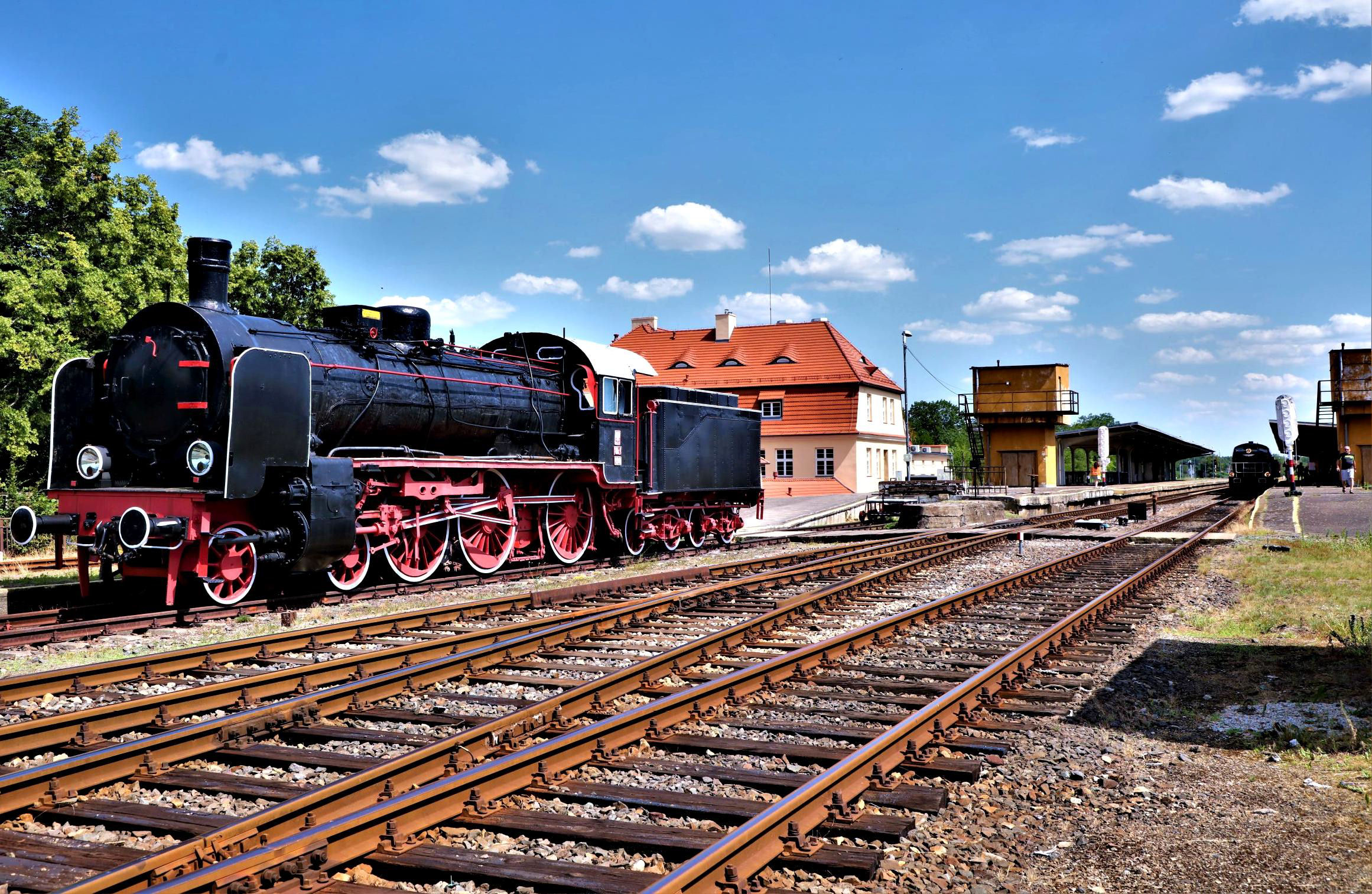
Żagań station and railway museum (extreme right in previous photo), our tour is in P2 - Track 2 - middle far right.
[© Iain Scotchman 2022]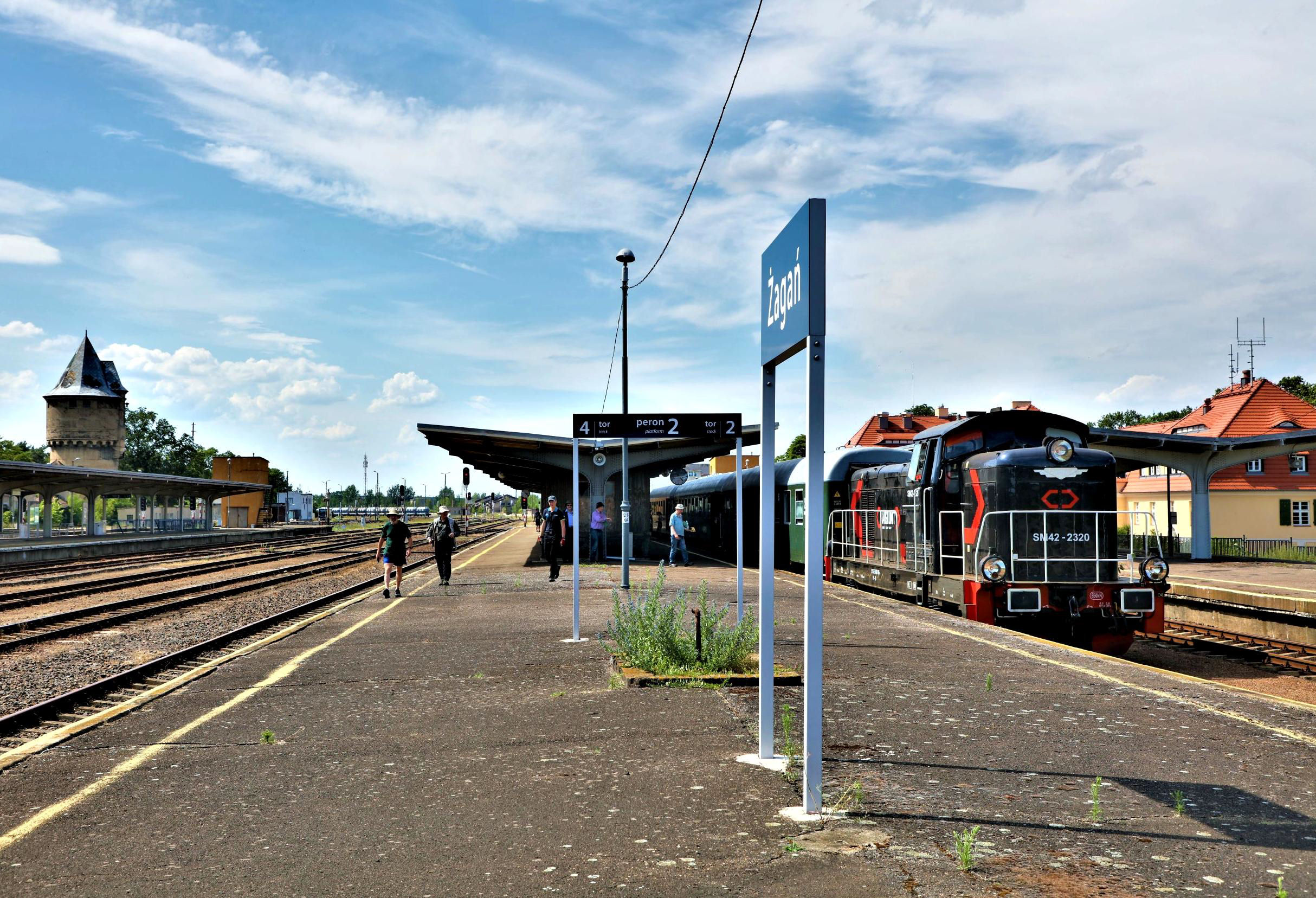
Żagań station after running round.
[© Iain Scotchman 2022]Our tour headed back towards Legnica which, for a large station, was impressively decrepit last time your correspondent passed this way. Now it is undergoing a very comprehensive rebuild (but is still 'work in progress') including the superb overall roof. It has to be said that on several occasions in Poland recently the standard of quite intricate restorations including statues, mouldings and brickwork is evidently to the highest standards. In fact the quality of materials and workmanship in some places might well exceed the original! Reversal here allowed a quick ice cream purchase from the shop in the subway as the day was again sweltering. The formalities over, we set off down the 24km freight line to Jerzmanice Zdrój (Zdrój = Spa) which remains open for sand traffic. It closed as a through route in 1995 and apart from a flicker in 2008-2009 hasn't seen passenger trains since 1996. That experiment failed as the line is, despite being electrified (!), very slow and can't even compete with local buses.
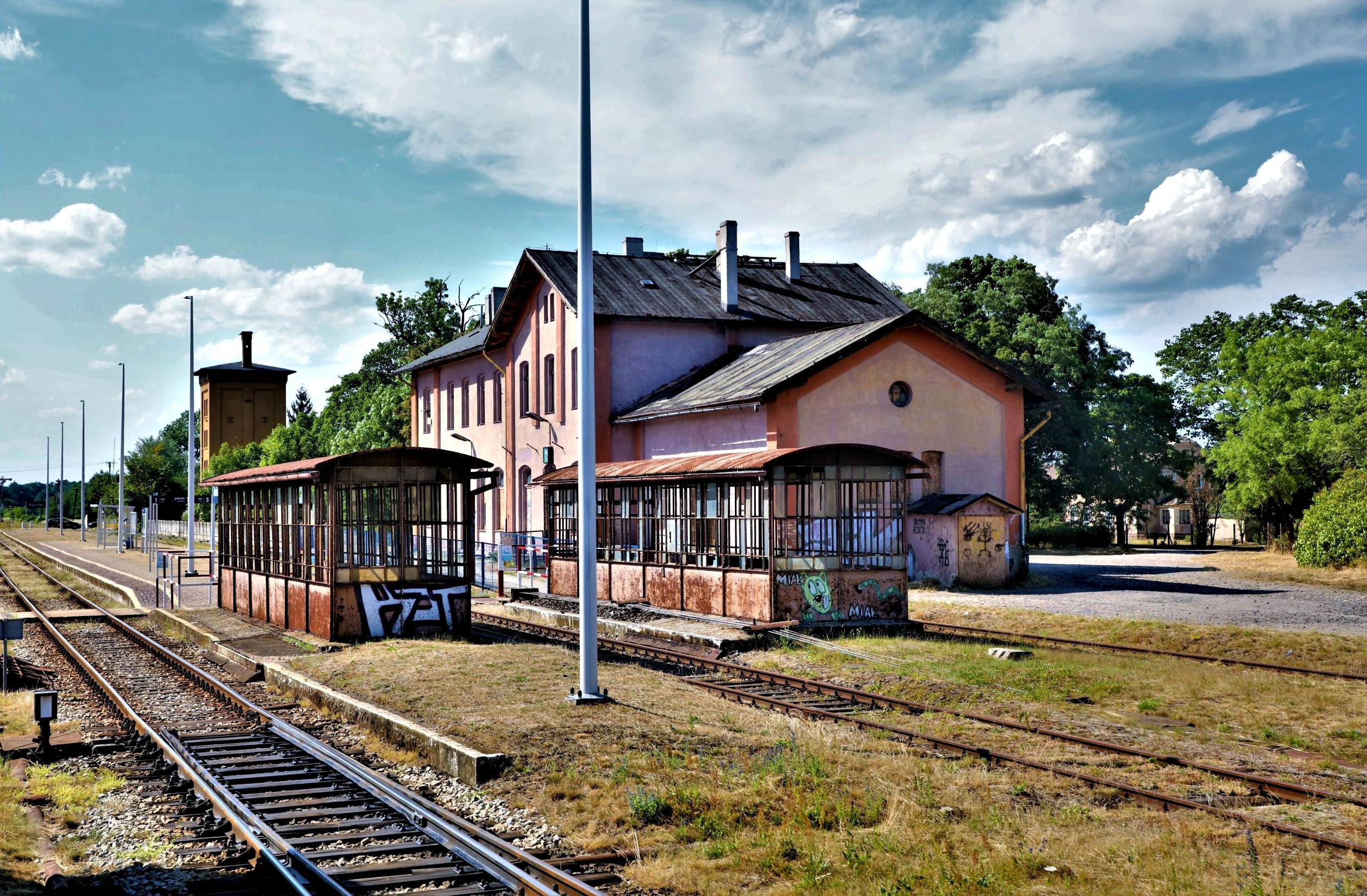
Passing Rokitki station which serves a village with a population of 1,010 but is due to become a junction again in December.
[© Iain Scotchman 2022]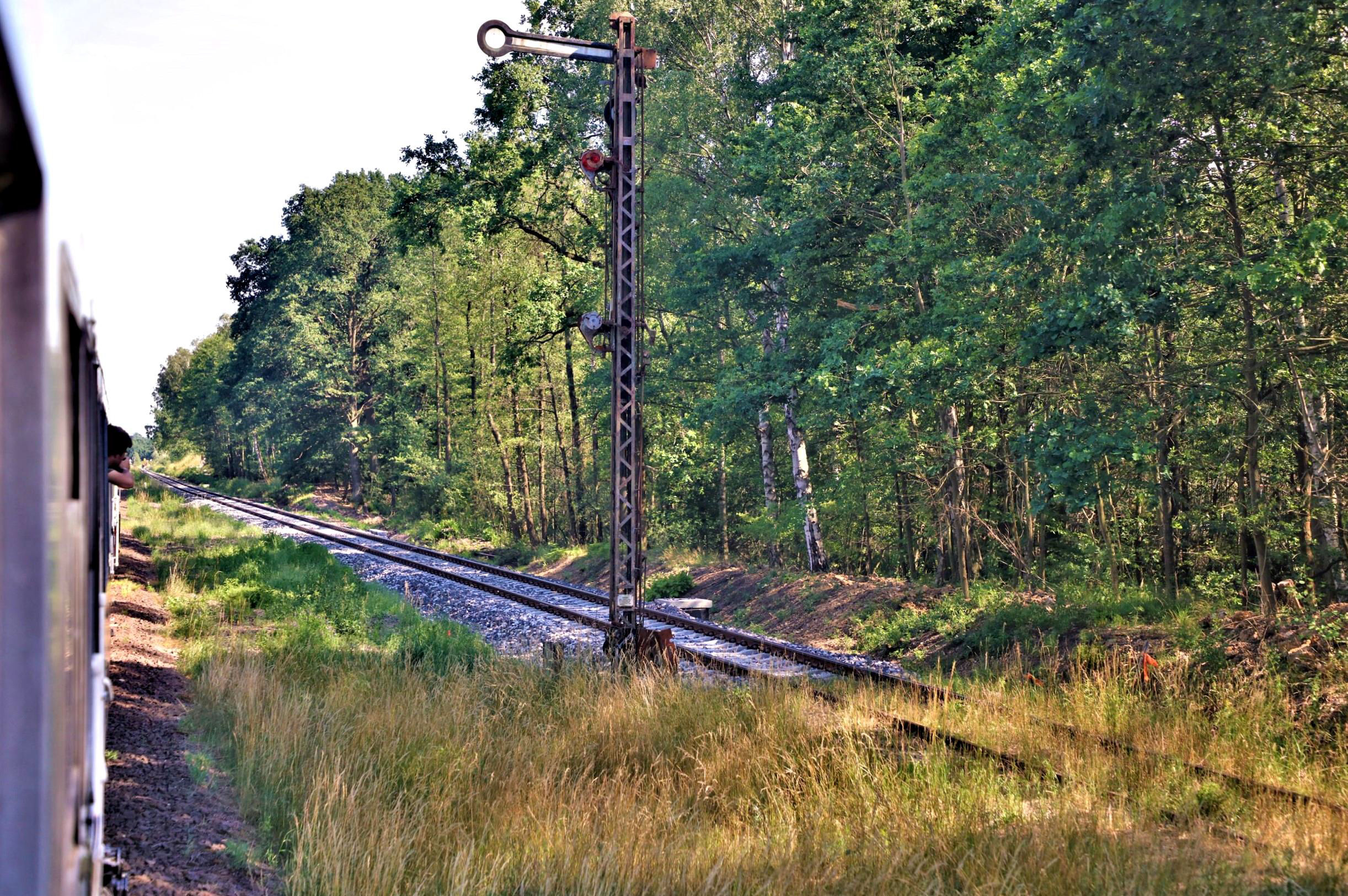
Renovated Line 316 which is due to reopen in Dec from Rokitki to Chojnów, it (right) initially runs alongside the main line.
[© Iain Scotchman 2022]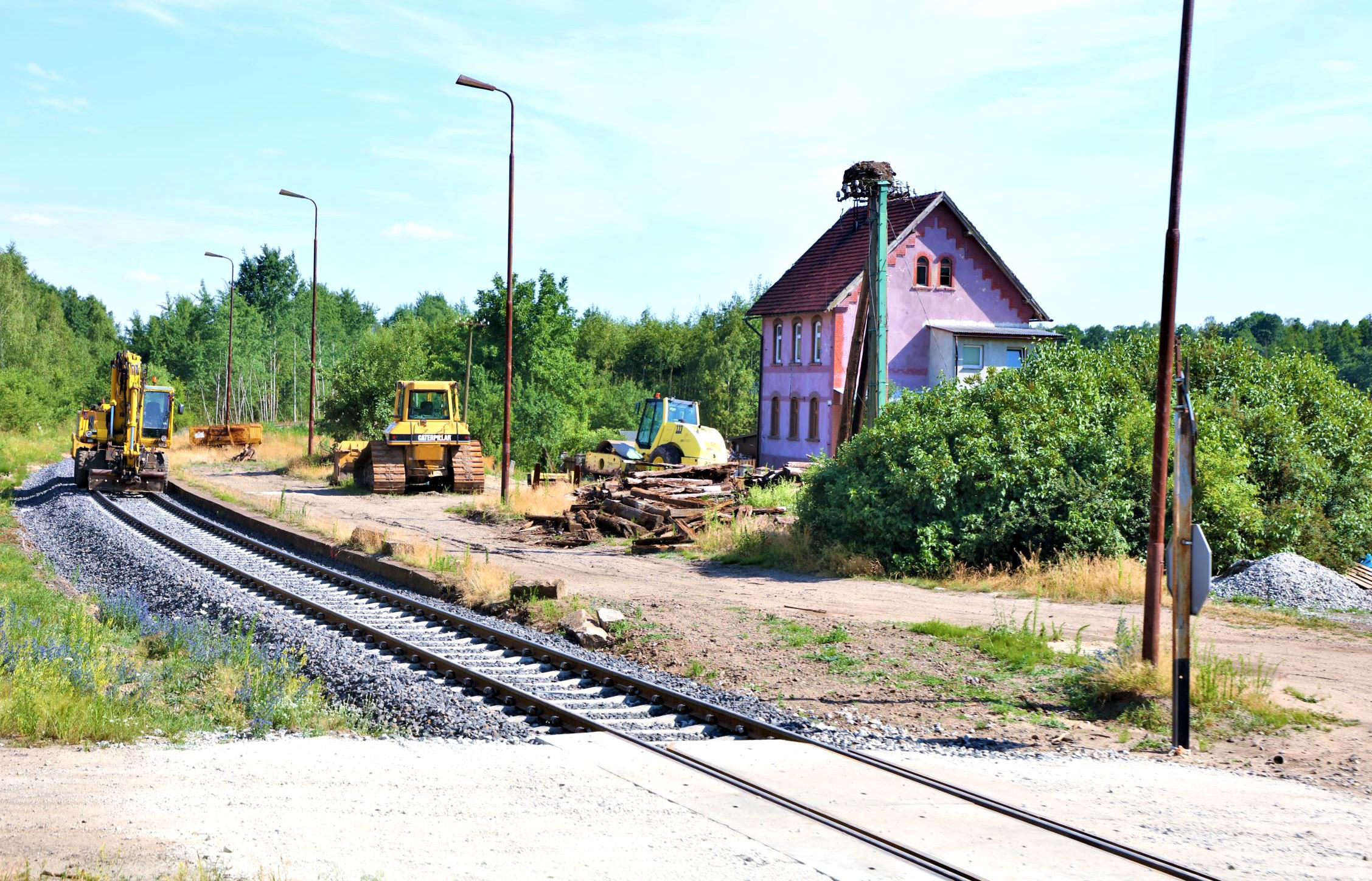
Zamienice station where Line 316 (reopening in Dec from Rokitki) stops being parallel to the main and diverges off to Chojnów (population 7,000).
[© Iain Scotchman 2022]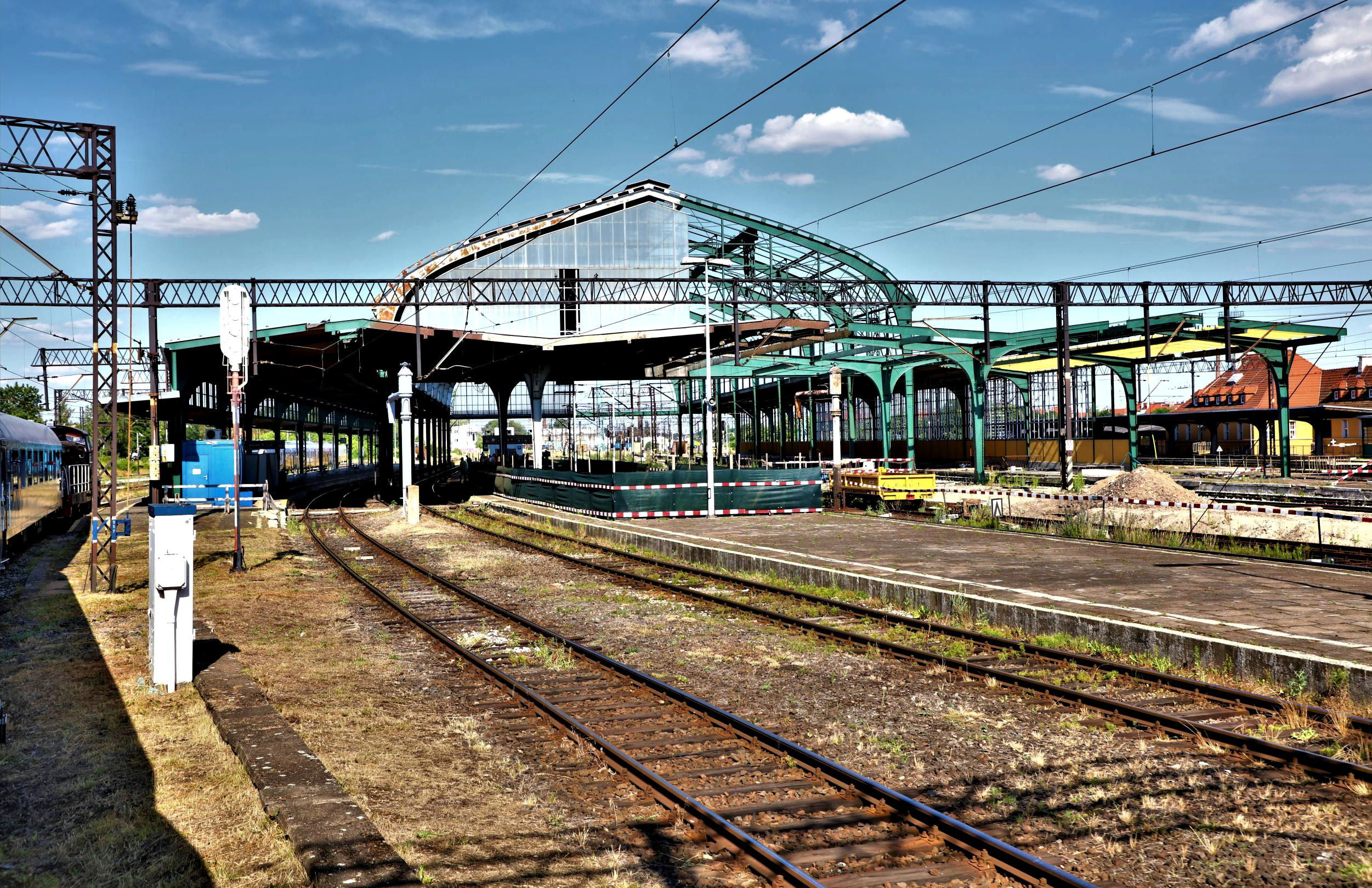
The tour (far left) arrives at Legnica station where major refurbishment project is in progress as is evident.
[© Iain Scotchman 2022]After a few km we paused at the unprepossessing passing place of Pawłowice Małe for a photo stop and to cross an approaching sand train. Slightly oddly we were required to rejoin our train before the sand train arrived despite then standing much longer than it would have taken to entrain after that train had passed. We then progressed, for a change threading real valleys, looking upwards at hills rather than across low rolling countryside almost ubiquitous elsewhere. Our tour paused at Złotoryja and I waded through vegetation to take an angled photo of the train standing in this closed station.
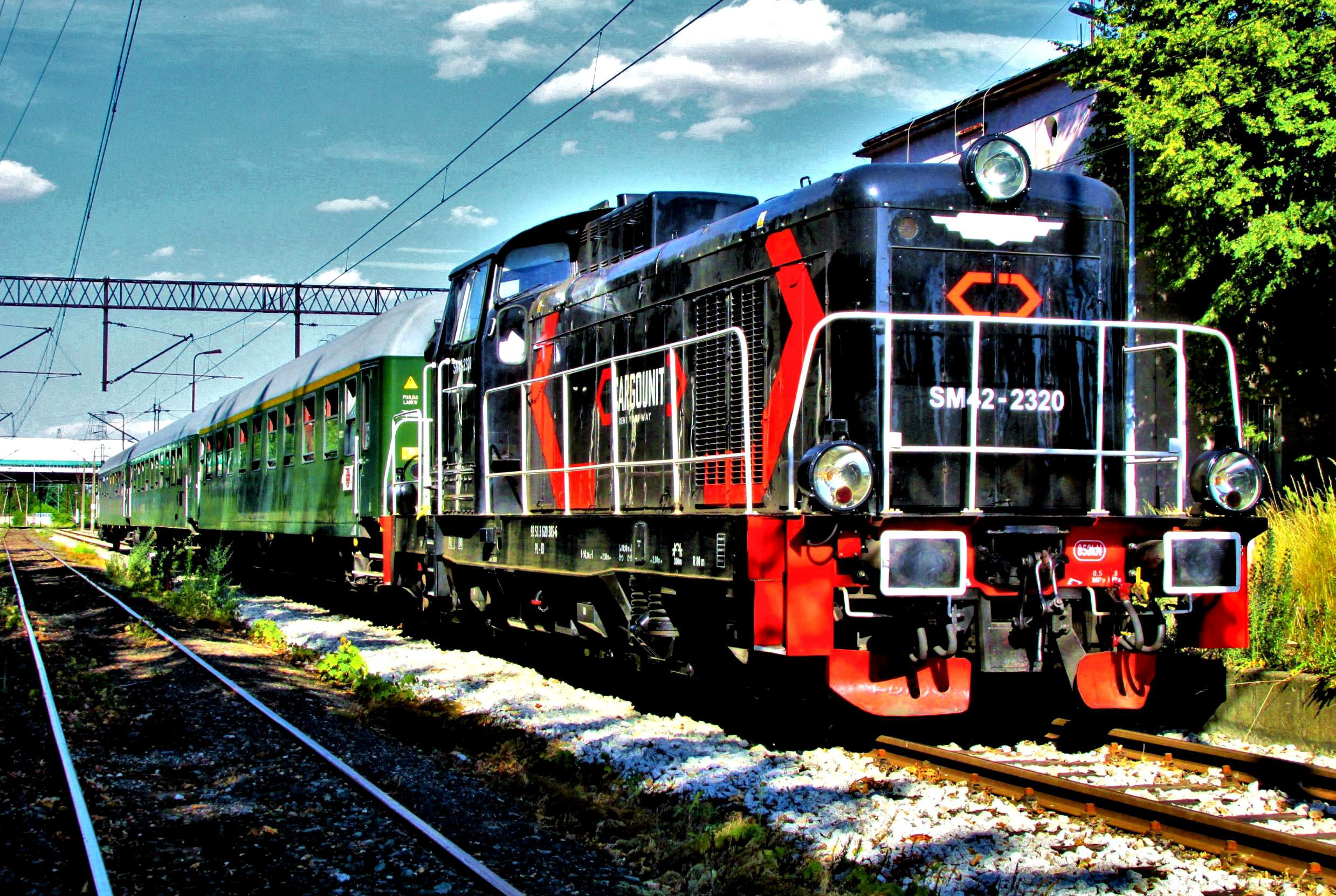
Pawłowice Małe where our tour crossed a sand train on the electrified single track line to Jerzmanice Zdrój (Zdrój = Spa).
[© Simon Mortimer 2022]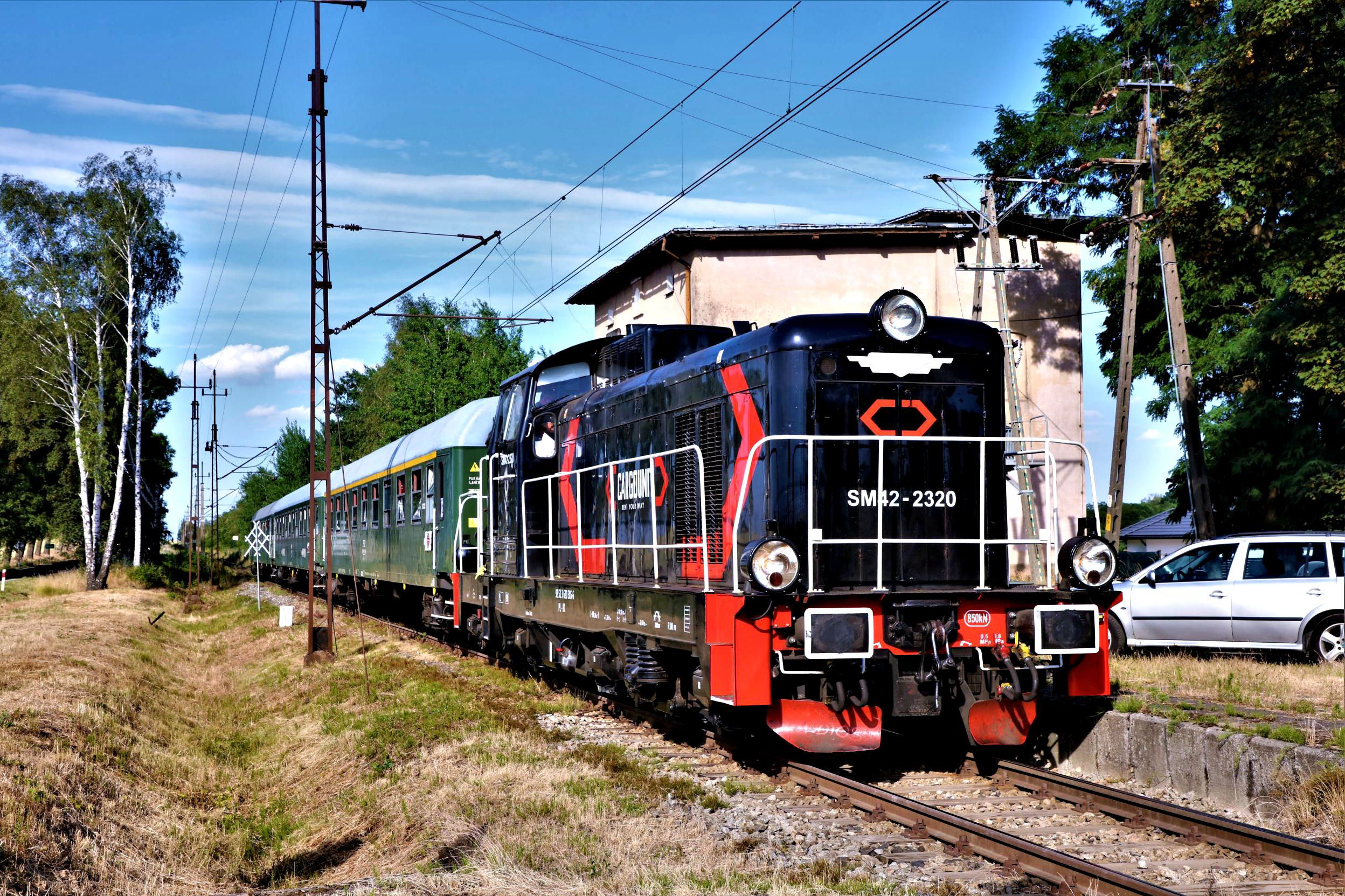
Pawłowice Małe again.
[© Iain Scotchman 2022]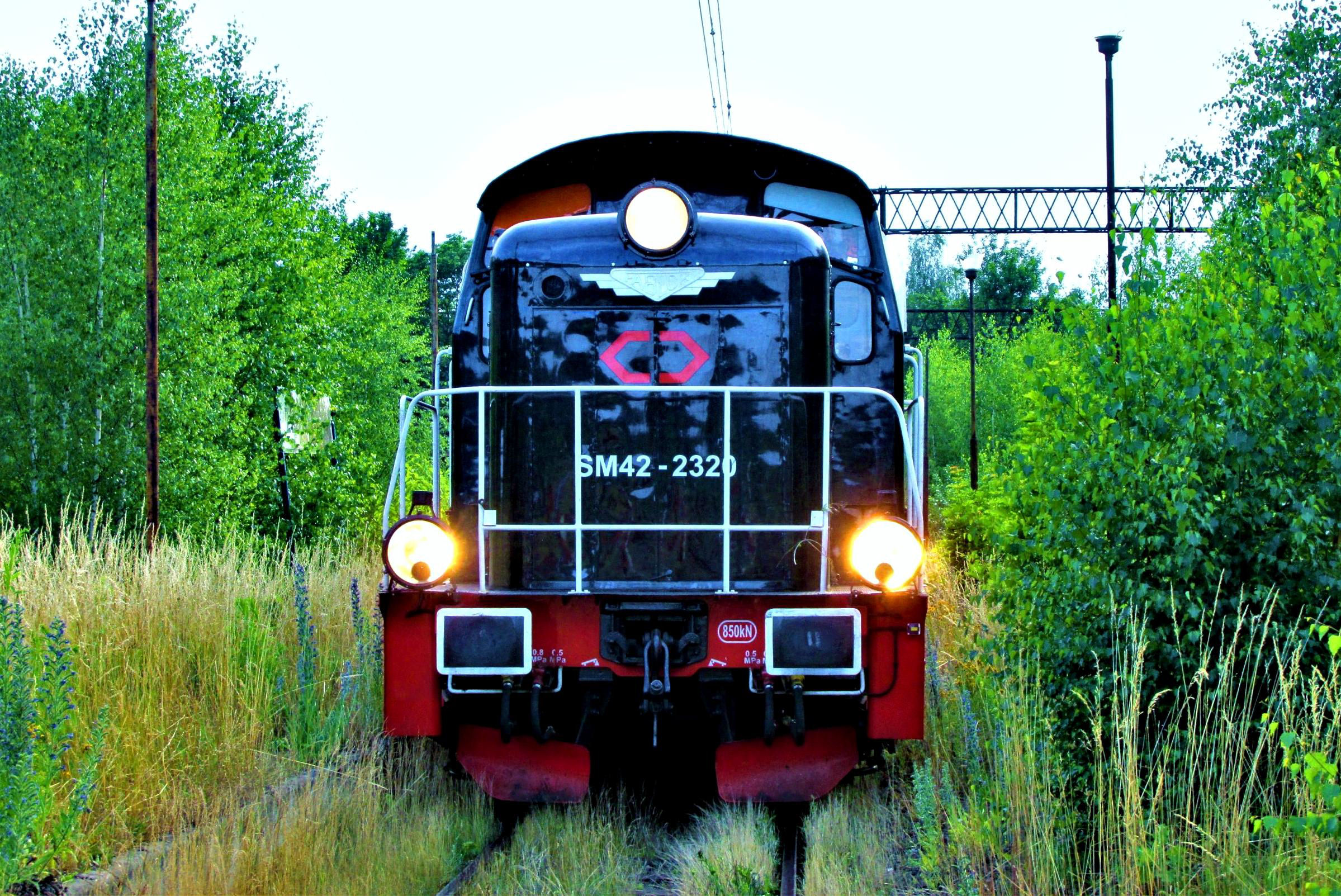
Złotoryja - there really is, or was, a station there - our loco, SM42 2320, stands facing northwards on return towards Legnica.
[© Simon Mortimer 2022]We pushed on further, to deeper valleys, sometimes on a ledge looking down and up. The vegetated tracks then fanned out and we arrived in what was once the attractive station of Jerzmanice-Zdrój behind which a line to the quarry on the old line towards Wilków Złotoryjski rose steeply. Looking at this wilderness it is easy to see why a passenger service succumbed but amazingly it has had some success, obtaining approval recently in the Kolej+ reopening scheme, so who knows? Little remained now but to rewind back to Wrocław, with a beer, returning through Wrocław Nowy Dwór and the short inner curve at Wrocław Muchobór arriving Wrocław Główny at 20.10 (three min early).
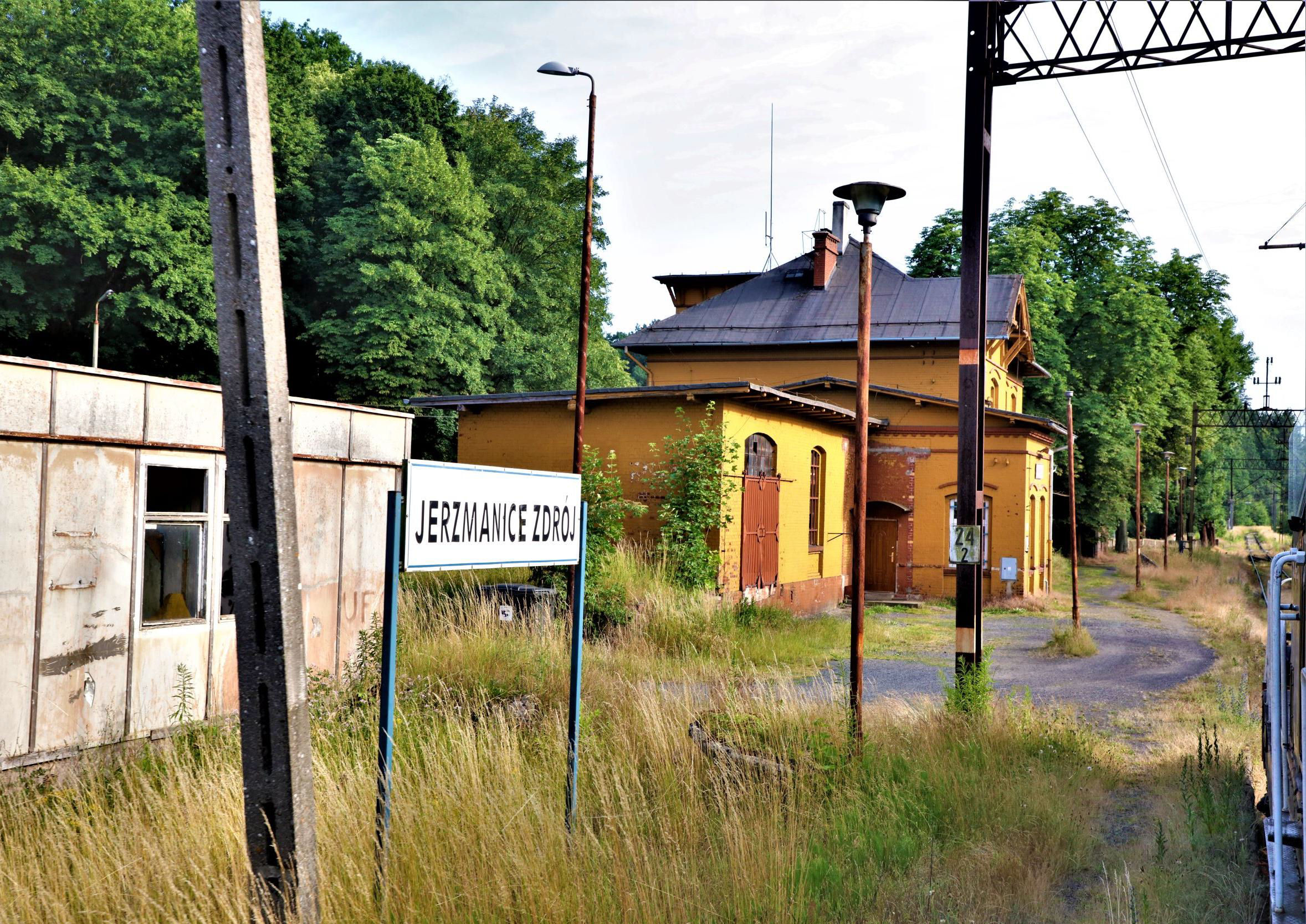
The former Jerzmanice Zdrój passenger station.
[© Iain Scotchman 2022]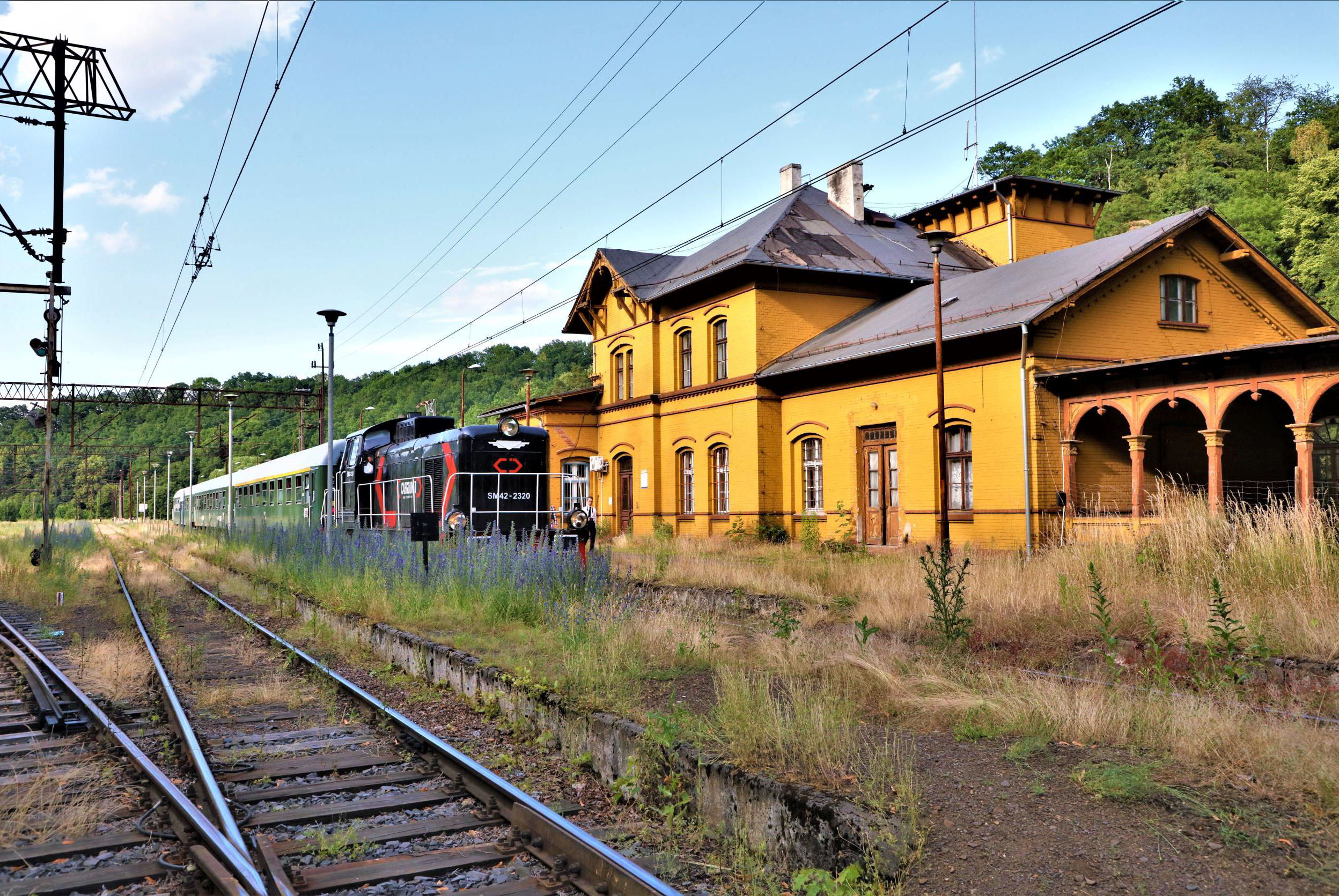
Another view of the former Jerzmanice Zdrój passenger station.
[© Iain Scotchman 2022]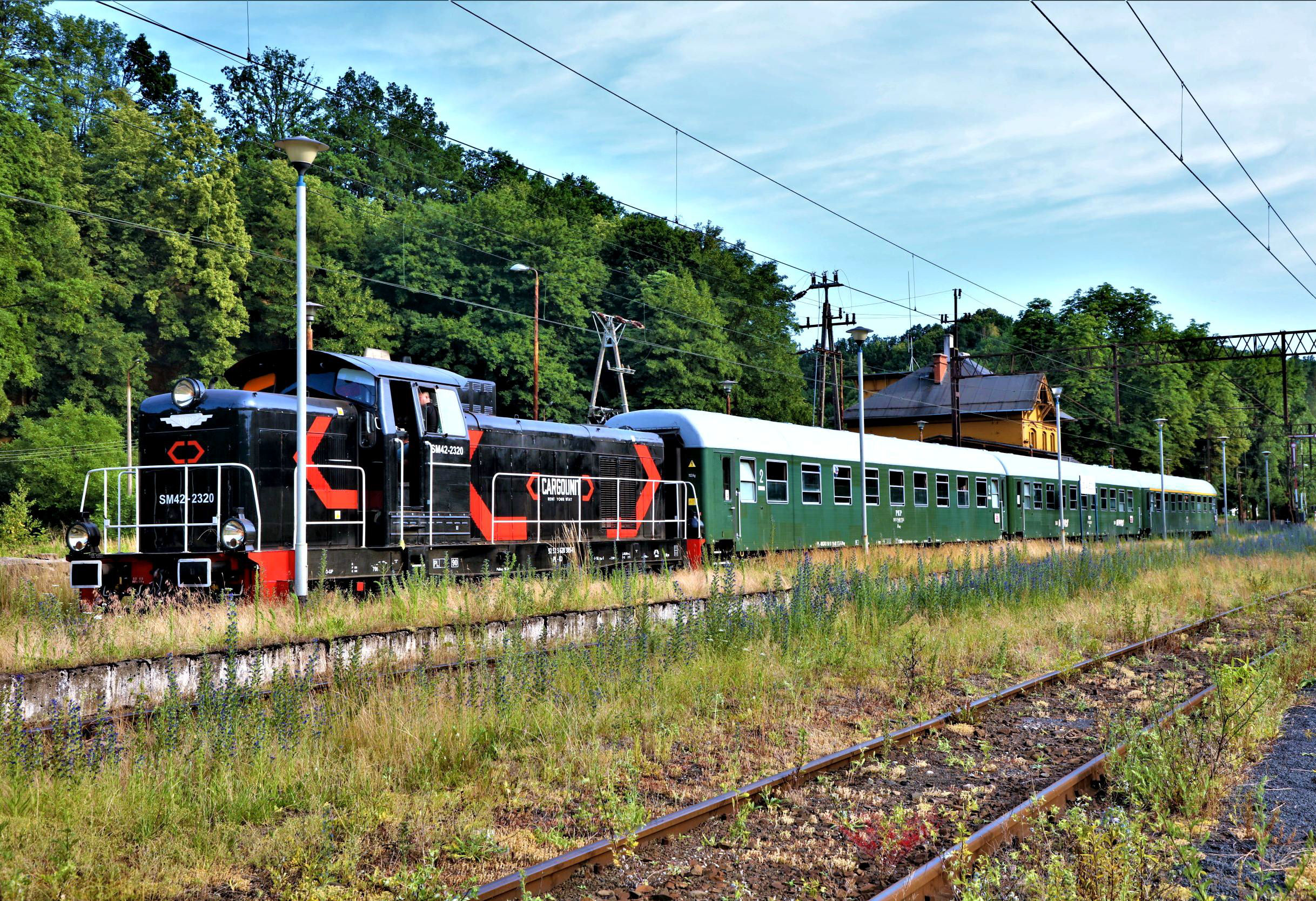
Another view of the former Jerzmanice Zdrój passenger station.
[© Iain Scotchman 2022]So that left two hours for more trams including Klecina. The temperature was finally breaking now; after four days over 34oC, peaking at 37oC one afternoon, our last day was 'only' forecast for 28oC or so.
Continued in Part 5