Apedale Explorer lll
Sunday 27th March 2022
Report by Neil Greenwood.
The Branch Line Society (Test)
Guest

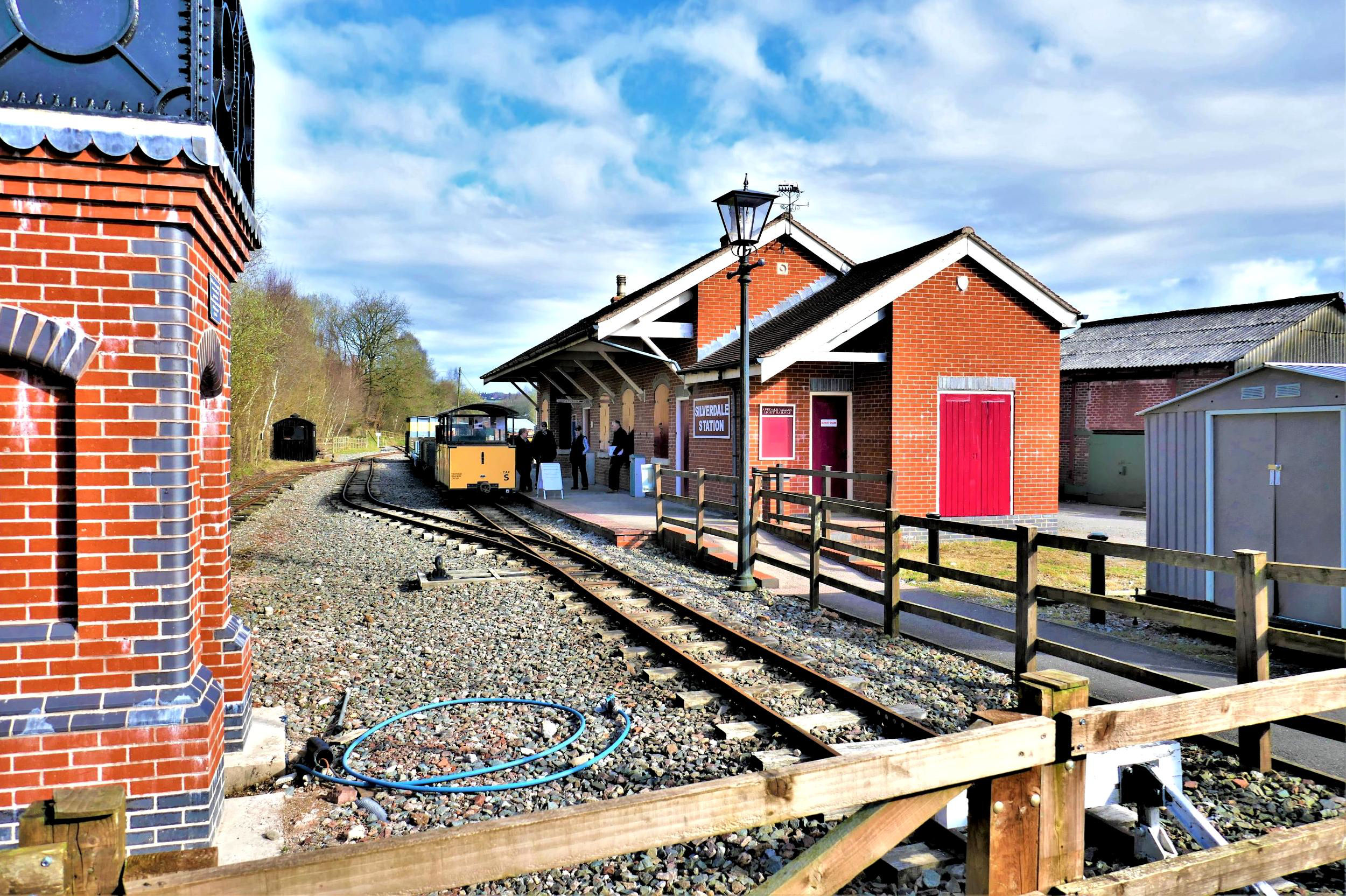
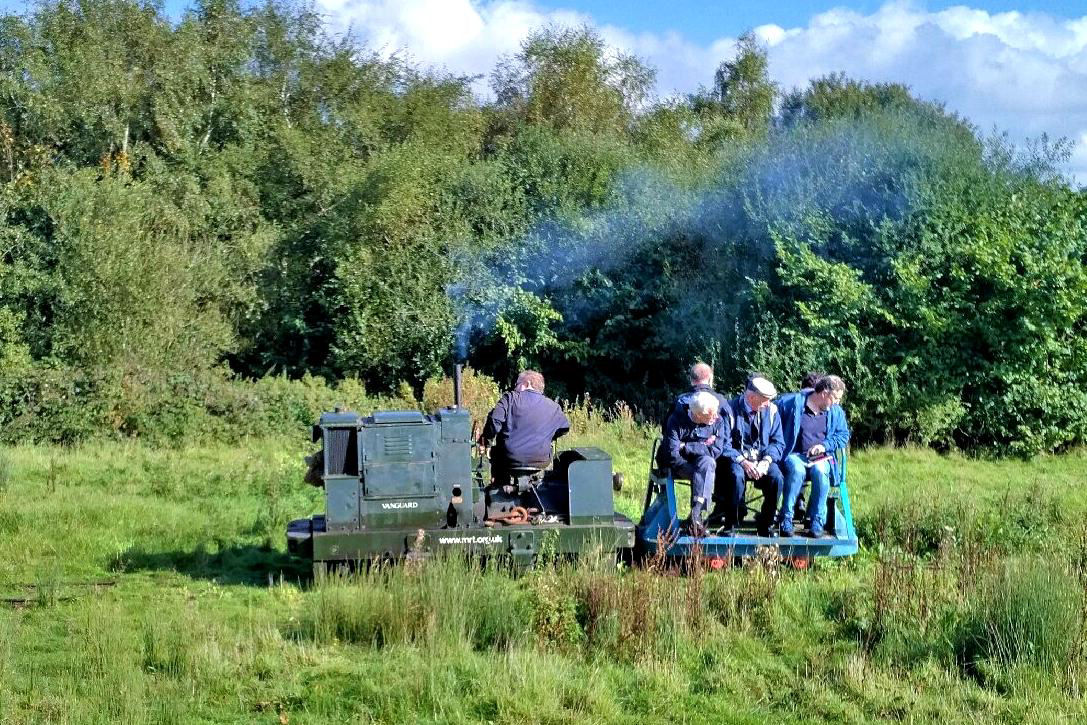
This was the third visit by the Society to this 2ft narrow gauge railway. The first was in 2011 and the second in 2016. As before capacity was limited by the (necessary) use of the 18 seat Hayfield & Whaley Bridge Light Railway coach, so there was a run in the morning and again in the afternoon to maximise attendance. Most visited Amerton Railway after or before (BLN 1402.1462). The normal passenger run (Silverdale station to Apedale Road) is only 500yd long but that belies the fact that there is an extensive network of lines covering other parts of the site not normally used to accommodating passenger trains.
The location shares a site with the Apedale Heritage Centre which showcases the industrial heritage of the area, the site of a former coalmine and ironworks. Although the Apedale Valley Light Railway has origins going back only to 2008, it nevertheless represents the common use of narrow gauge railways within heavy industry, such as coal, steel, brickworks, slate and military uses. There is a large collection of fascinating narrow gauge industrial locomotives on site. The station building used to be located at Silverdale (CP 2 Mar 1964) on the North Staffordshire Railway Stoke-on-Trent to Market Drayton line.
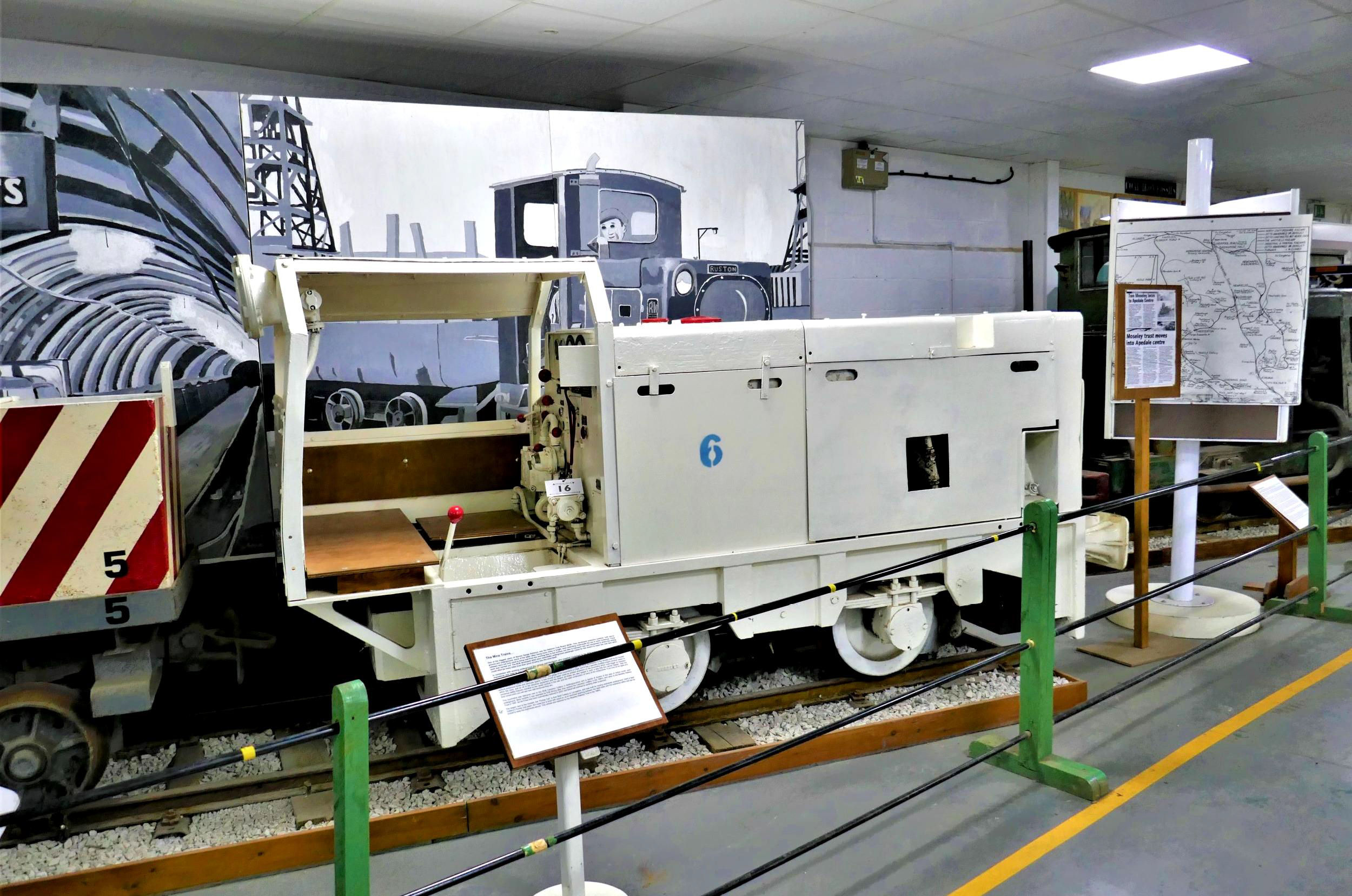
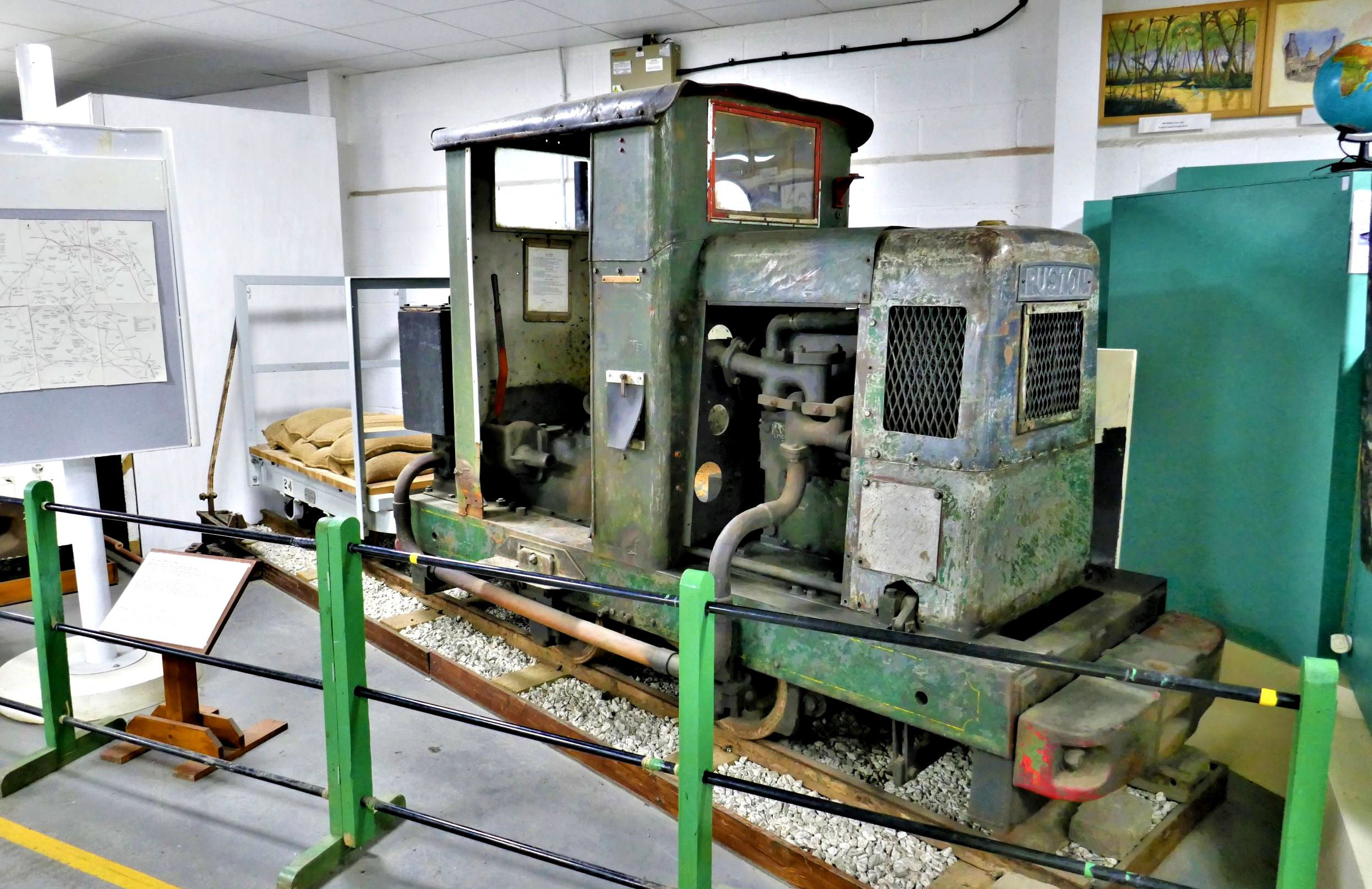
A Hunslet 28Hp diesel hydraulic here was first used by the National Coal Board in 1982 at Calverton Colliery, Nottinghamshire. The exhaust system was designed to remove toxic fumes and eliminate sparks along with the electrical equipment - rather necessary when underground and surrounded by huge amounts of coal! The wagon next to the loco was designed for moving explosives underground. It is internally lined with wood to reduce sparking between the steel sides and the explosives within. A Ruston and Hornsby 20DL loco on site used to work at ICI Nobel's Explosives Gathurst/Shevington factory (manufacturing Roburite) in Wigan. It has a specially fitted 'exhaust quencher' at the rear of the loco. This was used to ensure no sparks were expelled; something to be avoided at all costs in an explosives factory! It works by passing exhaust gasses through various water filled chambers and fire suppressing filters. On a similarly explosive theme a flat wagon also from ICI Wigan and was used to carry manufactured explosives around the site. All original woodwork has now been replaced on the wagon as it was considered potentially dangerous as it was impregnated with trinitrotoluene (TNT)!
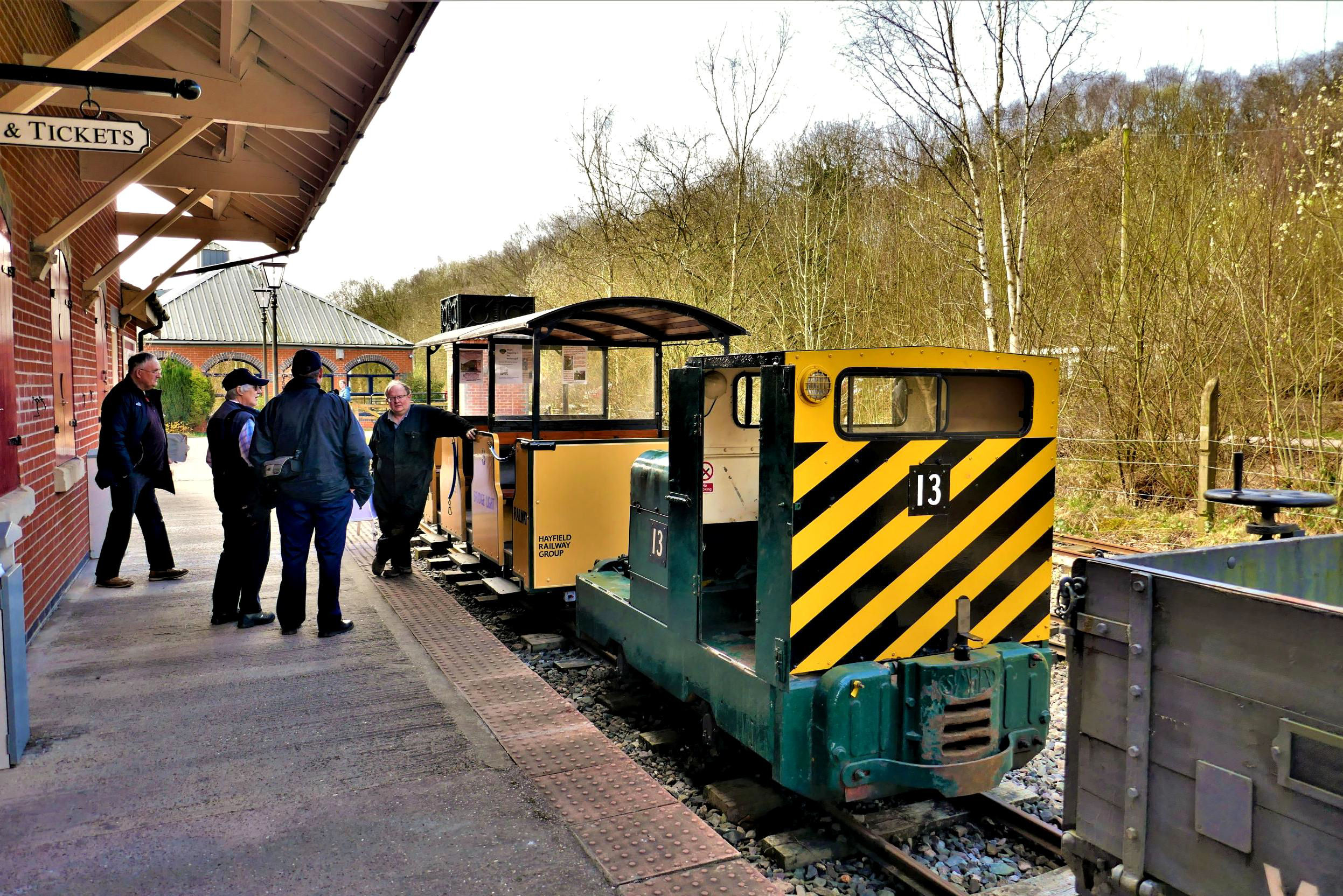
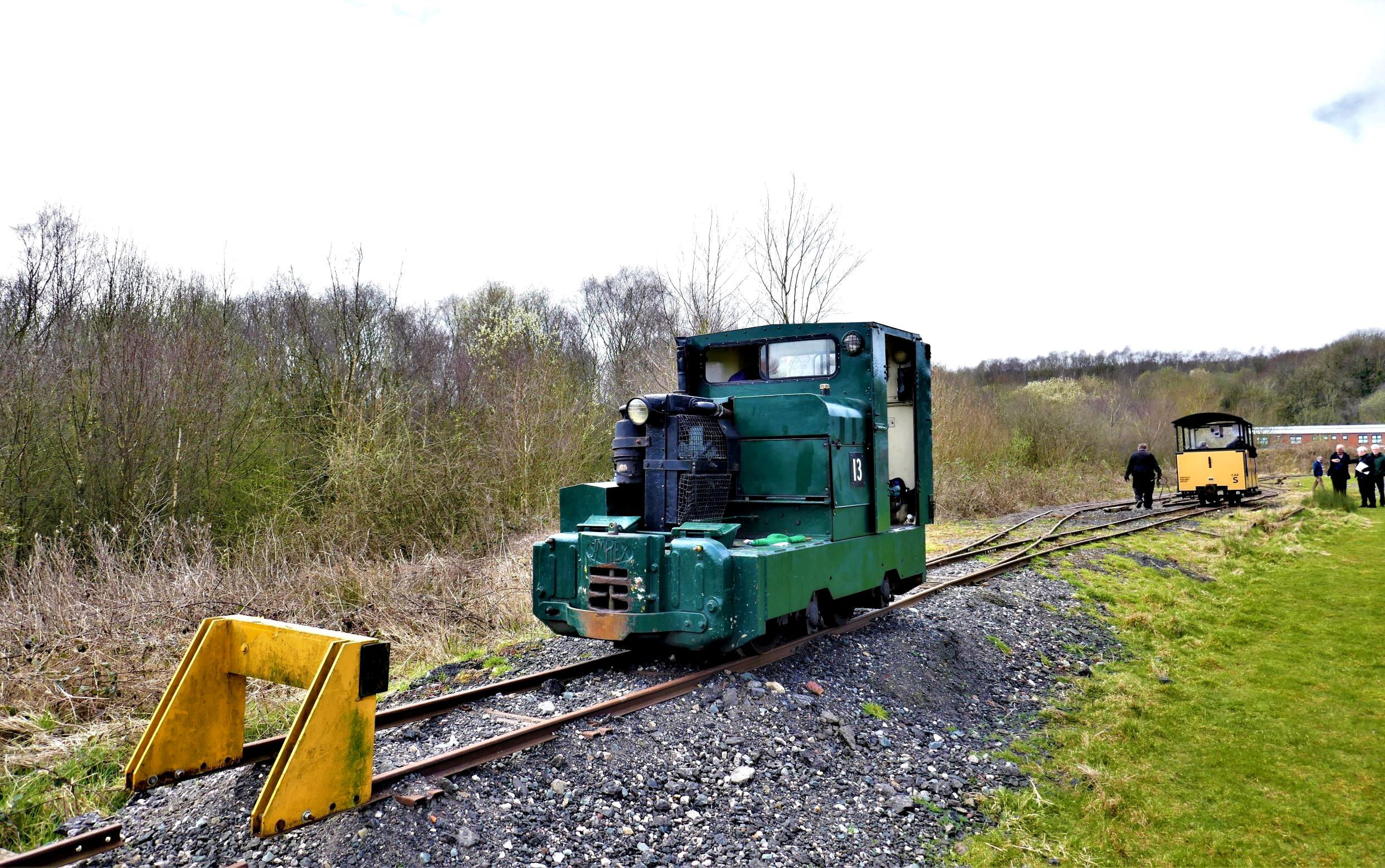
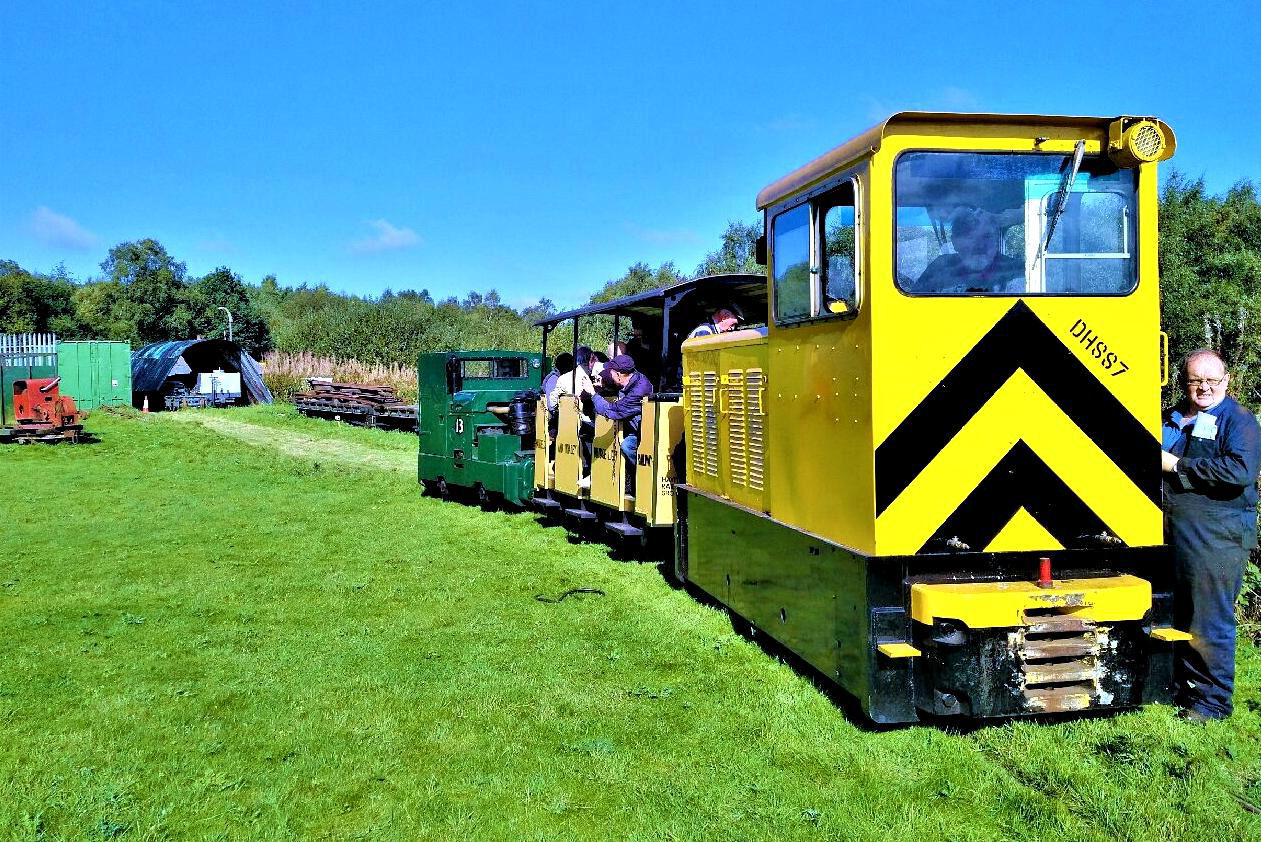
The museum contains various locomotives reflecting the different industrial uses around the country. Our departure from Silverdale was behind No13 'Pilk' Motor Rail 11142 diesel loco built 1960. It once operated for Pilkington Glass and was used to transport sand which is a major constituent of glass.
The initial part of the tour covered those lines close to, or actually part of the route used by service trains on operating days embracing run round loops and the station West Siding. Once completed it was off to the parts other beers cannot reach. Runs were made to both sheds lying next to the main running line and to the loading bay, locally known as 'Brian', apparently after a member of the railway.
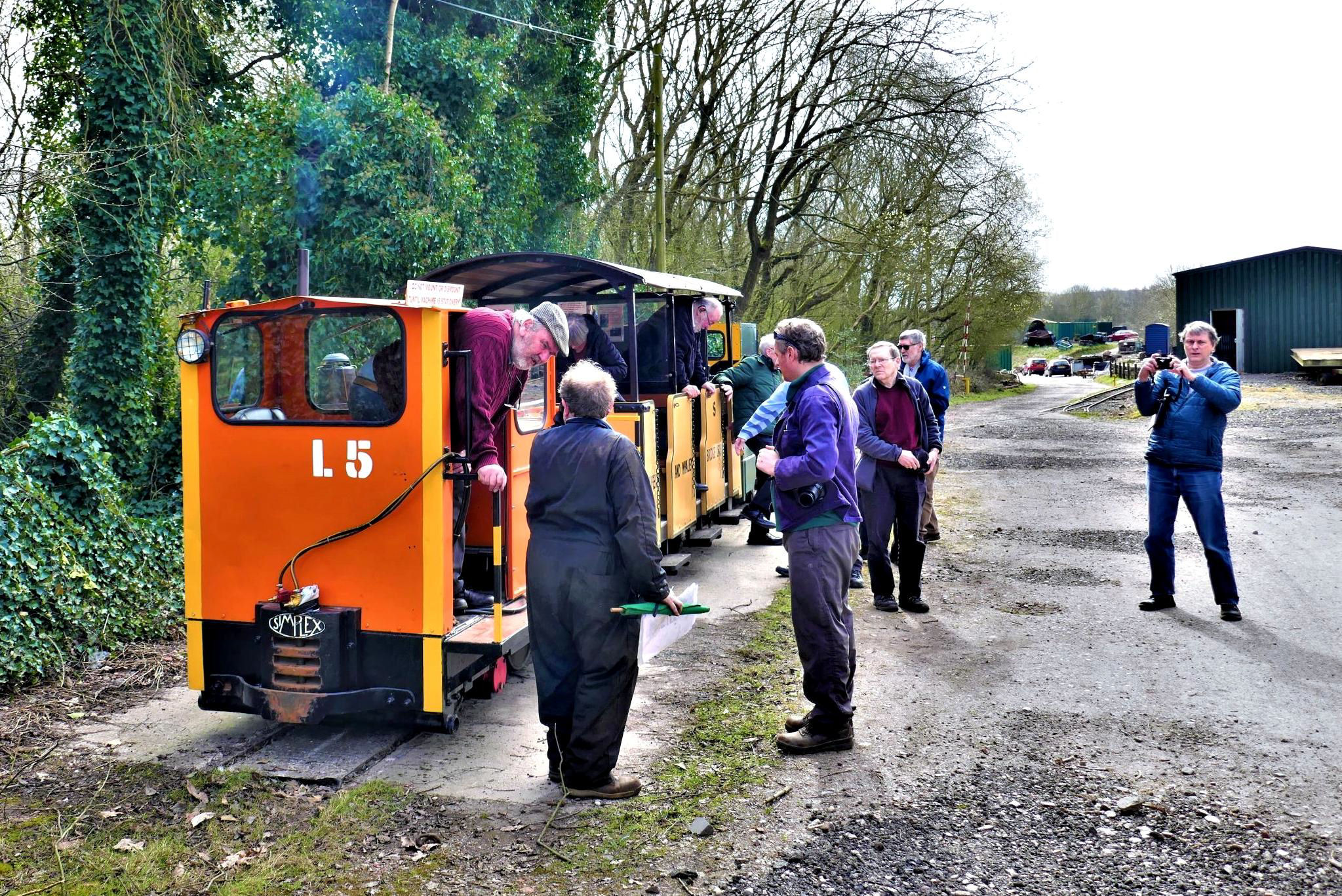
The charter paused at 'Brian' for a photo stop after attaching L5 in 'Top & Tail' mode with 'Pilk' at the far end. L5 was built in 1955 and first saw service at the Great Wakering Brick Company site. It was transferred during its working life to several other brickworks. On reaching Apedale in 2017 it began a full restoration to return it to the superb condition and working order that we see it in today.
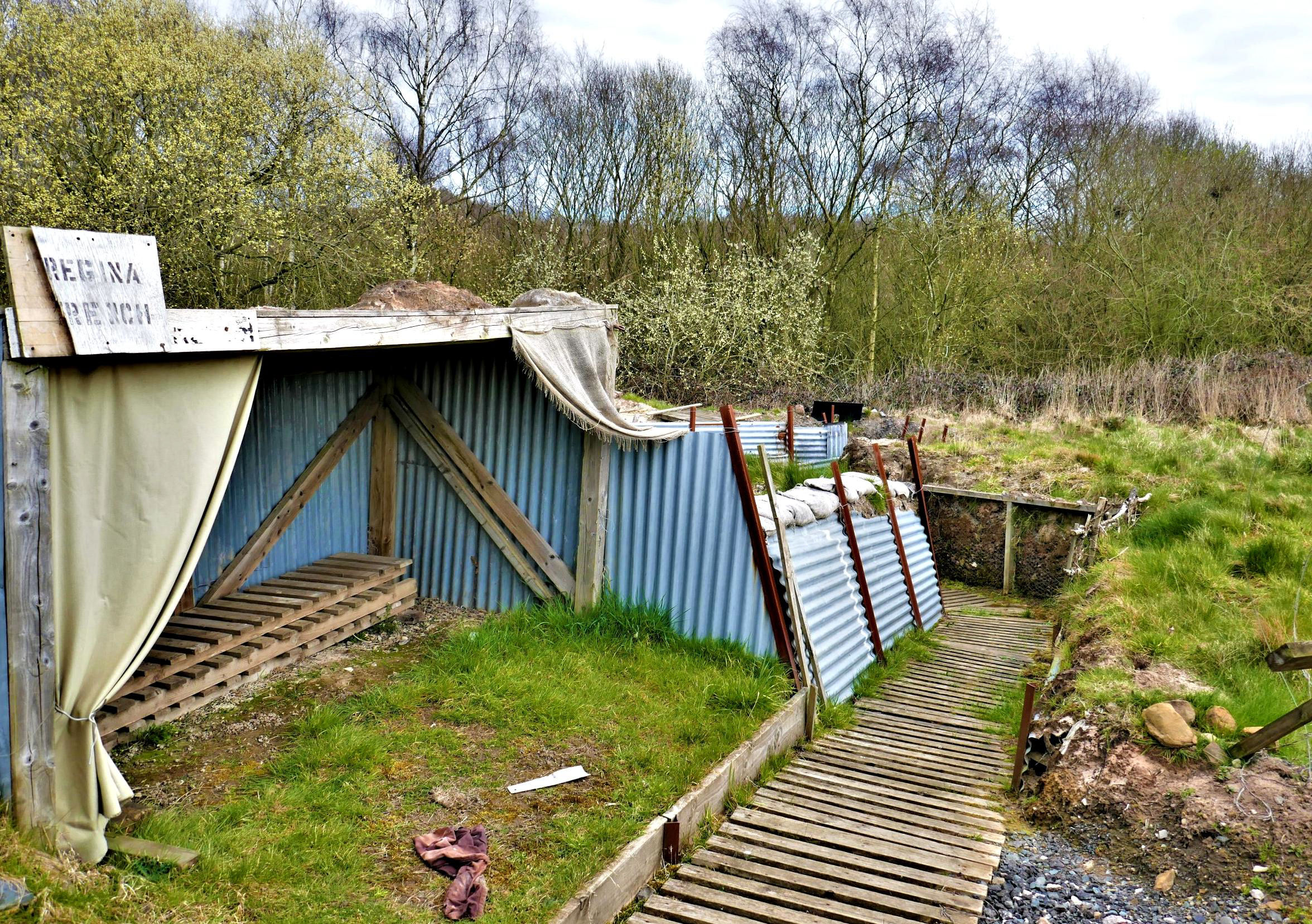
As the charter progressed to the Field Railway there was a distinct WWI theme with a re-enactment of a WW1 trench next to the Trench Tramway. The train ran very close to 'Regina Trench'. One of the first uses of petrol powered narrow gauge railways came about in WWI as a means of supplying personnel and materials to the front line. Hundreds were used in France and Germany aided by the relative ease in which the track could be laid. After WWI much of the military railway infrastructure abroad became surplus to requirement and provided a source of cheap railway infrastructure which found its way to many brickworks, peat works, water works and suchlike around the country.
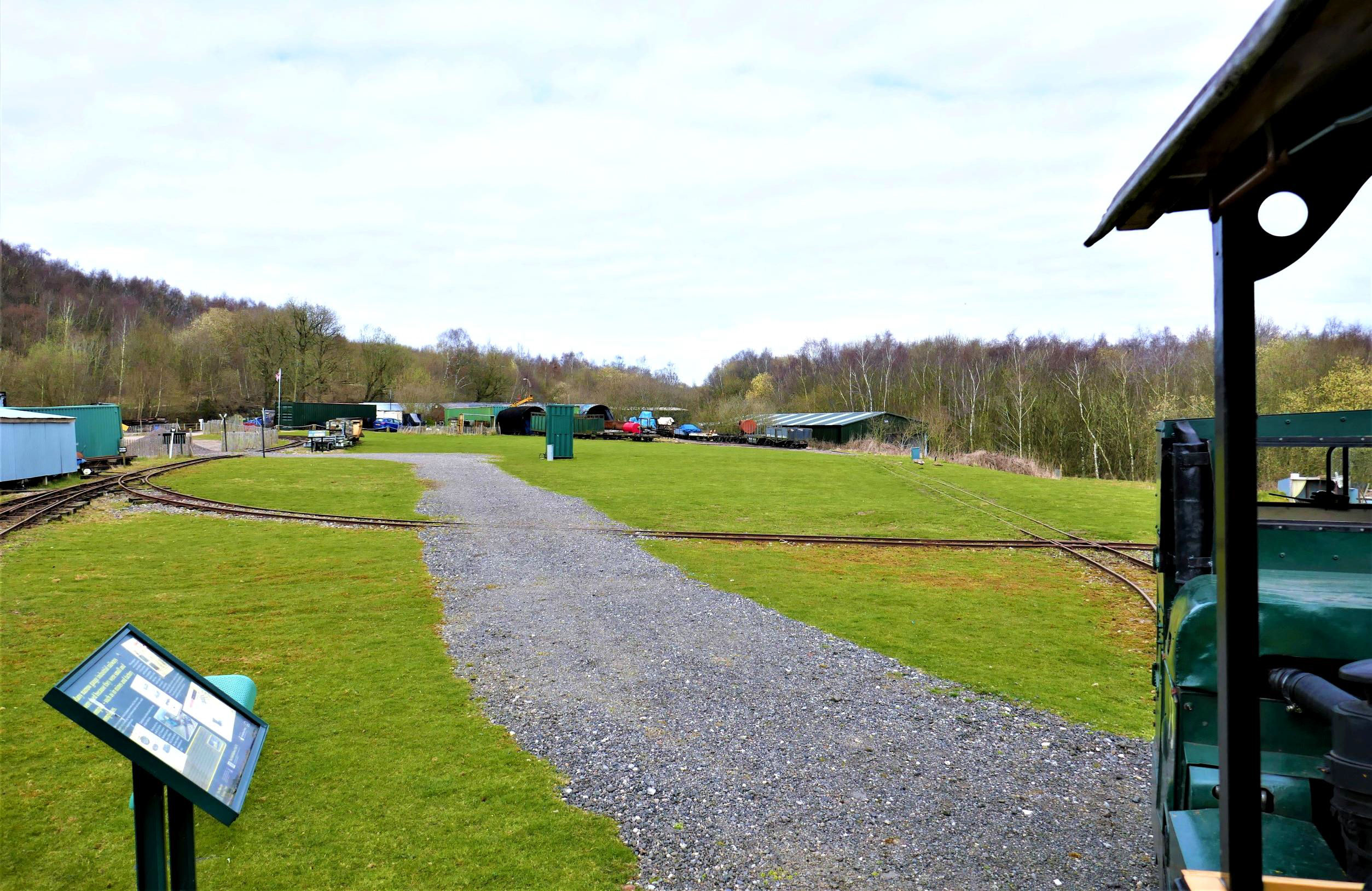
At Loos Loop - one of the railway extremities extended since our 2016 visit - the loco ran round. It is intended to continue this line on to complete a circuit with the adjacent branch and the cleared future trackbed was evident (a fourth visit will be needed!). Returning from Loos Loop our train approached the Waterhouses Triangle noting the flat crossing with the track ahead to Brian's Barn which we later covered. Our tour also covered the line round the back of Aurora South Storage Shed reached via the Trench Tramway and the now re-profiled 'Ski Jump' (previously a 1:13 gradient and a bit of a struggle to ascend on our previous visit). Some of the shed lines were also covered as far as stored stock.
The tour concluded after a very extensive coverage of the lines at the Apedale Valley Light Railway. In combination with the Apedale Heritage Centre museum and the opportunity to visit the former coal mine. The railway provides for a really interesting day out and future plans will see the railway (now used by trains from Silverdale to Apedale Road) further extended to Miry Wood a passenger run of 1m 14ch. Of particular interest might be the Diesel Gala on 25 & 26 Jun. Thanks to our organiser John Cameron and the Apedale Valley Light Railway whose combined efforts made the visit a success and so enjoyable. Also thanks to Peter Scott and Martyn Brailsford for the track plan, making the route complexities easier to follow. The developments (and new track) since our 2016 visit were impressive.
| Branch Line Society. A Company Limited by Guarantee - Company No 16743754. Registered in England and Wales. Registered address: 6th Floor, Derwent House, 150 Arundel Gate, SHEFFIELD S1 2FN |