Back in the heady days of post-Lockdown summer 2020 with foreign travel consigned to the 'too uncertain' category, we made plans to visit various places that are difficult to access without private transport. One of these was the Tanat Valley Light Railway, tucked away in a remote valley off the A495 near Oswestry; however, it was not open then so we had to be content with peering through the gate.
[The original Tanat Valley Light Railway ran 14¾ miles west from Porthywaen, appropriately along the Tanat Valley, to Llangynog. The present TVLR was originally an extremity of the Potteries, Shrewsbury & North Wales Railway, later part of the Cambrian Railways then the Great Western Railway - Ed.]
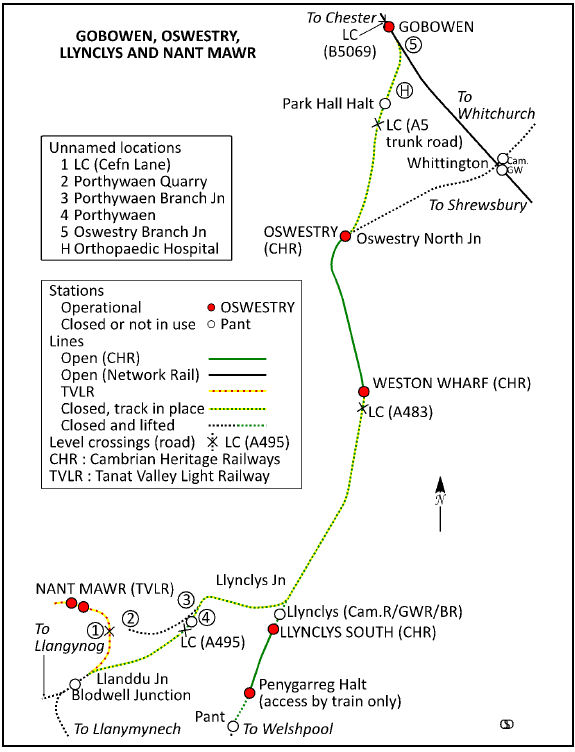
Map showing the relationship of the three heritage railways here. Gobowen station (Chester to Shrewsbury line) is top right. On the TVLR, bottom left, the permanent platform is nearer the stops, left side of the line facing them; the other is the wooden one (right side).
[© Dave Cromarty 2022]Fast forward 18 months and a Society day out on the railway was advertised in BLN; as we were free that weekend it was an ideal opportunity to sate our curiosity - booking promptly made. On the appointed day we drove the car for the short trip from our hotel near Oswestry, joined the queue to be directed to a parking spot and to sort out the formalities of our TVLR membership. This was an insurance requirement for the event, as the railway is not able to operate public services currently.
We parked our car next to the Monorail (more of which later) and walked back down the road to the 3-car Class 309 'Clacton' EMU (a refugee from the Electric Railway Museum in Coventry closed 2017).
Here each new member could partake of a complementary tea or coffee along with a bacon or sausage bap, the latter dispensed from a grill under a gazebo next to the railway line. The obscure, remote, Nantmawr former freight branch, in Shropshire (although west of Offa's Dyke) was an odd place to find an EMU next to the Lime Kilns! The lady volunteer serving 'commutes' from Coventry, refreshments were on sale during our visit at TVLR members' prices - the Whisky Cake was to die for.
Once some 70 participants had been fed and watered and the number collectors returned from the furthest reaches of the Nant Mawr (two words as used by the modern TVLR) site, it was time to start the track bashing. A couple of keener participants had already begun on the very short stretch (around 10yd - every little helps) of 2ft gauge track using a rail trike. Our motive power for the first section was 'Pacer' DMU 143601, one of two based at the site (the other is 143616). We boarded at a 'temporary' very short wooden platform (as used on our previous visit in 2012!) next to the 'bacon roll gazebo' and, once everyone was on board, set off down the gradient towards an occupation crossing some 375m southeast, the furthest point that the Pacer was allowed to go. There is a smallholding here complete with a donkey (Elvis) in a field, which started braying a greeting as we arrived. As the driver changed ends, he commented that the fun starts here as the Pacer had to perform a standing start on a 1:70 gradient with a curve and weed-strewn track that was little used. We did glance across to Elvis, wondering if it would be of any use if our 'nodding donkey' 143601 couldn't get going but it managed, albeit with a bit of wheel slip and much scraping of vegetation along the side of the unit.
The return run went past the wooden platform, over the final level crossing and into the run round loop where there was a short full-width Nant Mawr (sic) platform, long enough to accommodate the front door of the Pacer. There was a pause here (and a queue to alight) with some taking photos and more having a ride on the 2ft gauge line behind the Lister loco which had been fired up. A longer run (marginally, but considerable in % terms) was now possible as the rail trike had been removed.
A further trip was had with 143601 to the occupation crossing and back, then it was time to explore the site and queue up for the chance to do more of the standard gauge track beyond the occupation crossing. This was by means of a 4-seater 'Lesmac' lightweight aluminium peripatetic trolley powered by a petrol engine. With four plastic bucket seats (only three passengers per trip plus a TVLR driver) and the requirement to turn it round each end by lifting and rotating, it would take some time...
The queue for this was already quite long so we took a stroll down to the far end of the standard gauge line to view the stock there which included the Class 107 DMU which had featured on our previous Society visit, almost exactly 10 years ago to the day. [Not coincidental, 1 Apr 2012 was a very monumental date in the Society's history.] Next up was the monorail, part of the Richard Morris collection which had been amassed by said gentleman, now sadly no longer with us, at Blaenau Ffestiniog before being moved to Nantmawr (as the village and quarry is named) in 2016/17.
A circuit of track had been laid out, accessed via a wooden 'ticket office' (part of the collection) and passengers were conveyed in an '007' carriage that had been used in more than one James Bond film. It wasn't the easiest vehicle to board for people long past the prime of youth but, once on, we set off on a roughly oval undulating circuit weaving through the trees; an interesting and unusual experience.
The volunteers in charge were very knowledgeable and happy to explain its history, how it worked and past (industrial) uses - agriculture, tile works, clay, sandpits etc. It was certainly flexible and could be configured to suit almost any site. This is the largest collection of industrial monorail equipment in the UK with over 70 engines, mostly lined up in rows which we were welcome to peruse; each carries the name of where it originally operated. The star was 'MONOLOCO', believed to be the only true operating monorail steam engine in the world, safely ensconced in a container minus its boiler which had been removed for restoration. In fact, a newsletter received after our visit reported that the boiler had been retubed, tested and returned to the railway, so steam haulage might be on offer soon.
The Richard Morris Collection, a truly eccentric collection by a truly eccentric man also includes numerous trucks, a rail taxi, a BMW Isetta bubble car on narrow gauge railway wheels and bogie, a rail bike, vertical boiler tram, narrow gauge Wickham inspection vehicle and numerous other artefacts.
Time to sample the final ride on offer, to the limit of operable line on the 'Lesmac'. The queue had not shortened since we last looked (but the people were different!) so we just had to join the line and wait our turn, aided by further refreshment from the Clacton buffet. Each round trip took 10-15 minutes with the vehicle having to be turned at each end. This was accomplished by a 4' 8½'' gauge bar with a central spigot, carried on top of the 'Lesmac', being inserted across the track under the centre while two people lifted one end up. A small turntable underneath engaged onto the spigot as it was lowered, enabling the whole thing to be turned round as it doesn't have a reverse gear. This is quite simple and not too strenuous, although ideally requiring three people to carry out the manoeuvre.
The ride itself was exhilarating and appeared to be quite fast though this was probably down to being seated inches above rail level in an open vehicle. This journey went over the previously mentioned occupation crossing, ably guarded by a Society steward, and over a gated level crossing across Cefn Lane - where two of our Committee members were assisting with the gates. The ride ended just past the A495 underbridge, about 1km from the start by our reckoning, where it was everybody off to assist in turning the 'Lesmac' around for the trip back up the hill. Once all our members had ridden (including Mr PSUL himself, who it was good to see), the TVLR volunteers queued up to then do it.
All in all, it had been a most interesting day, something a little different and very worthwhile. Many thanks to Graeme Jolley for the arrangements and to the very friendly and dedicated band of TVLR volunteers. They went to a great deal of trouble to make the day on their three railways so enjoyable and varied. It concluded with a BLS Committee meeting held in the Clacton unit, concluding at 20.00.
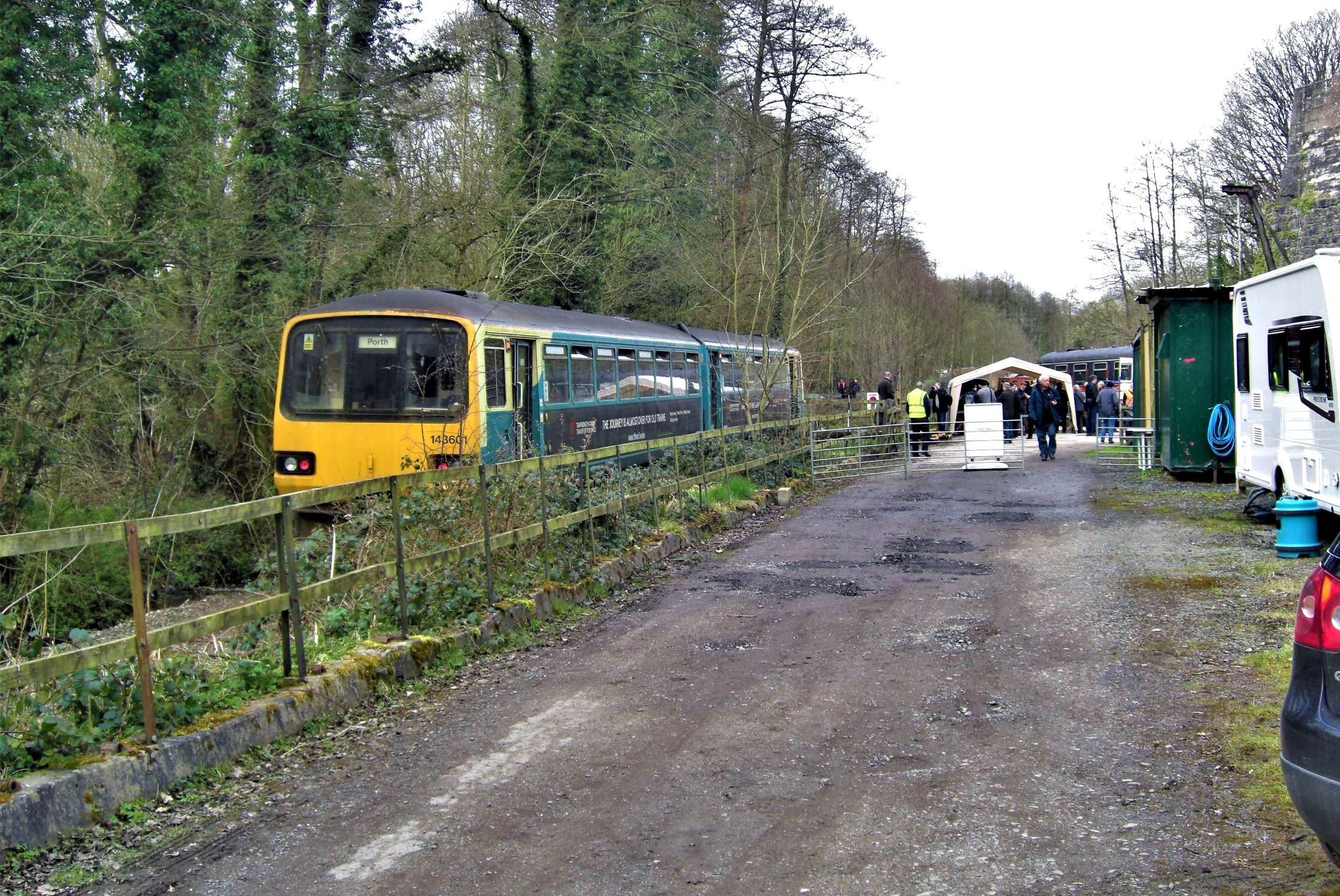
The Tanat Valley Light Railway - looking towards the end of line - a through train to Porth would be good!
[© Richard Maund 2022]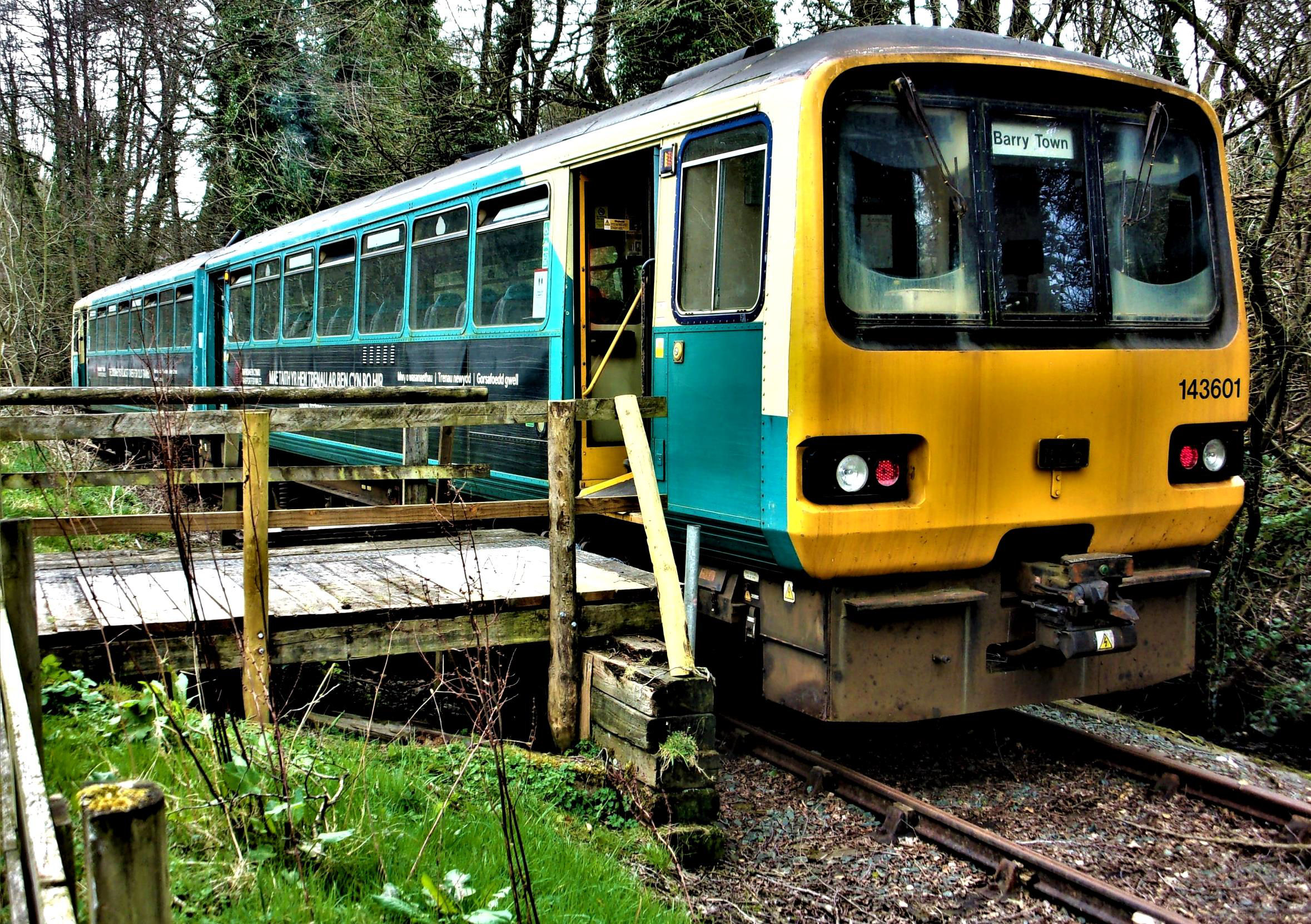
The diminutive wooden boarding platform.
[© Chris Parker 2022]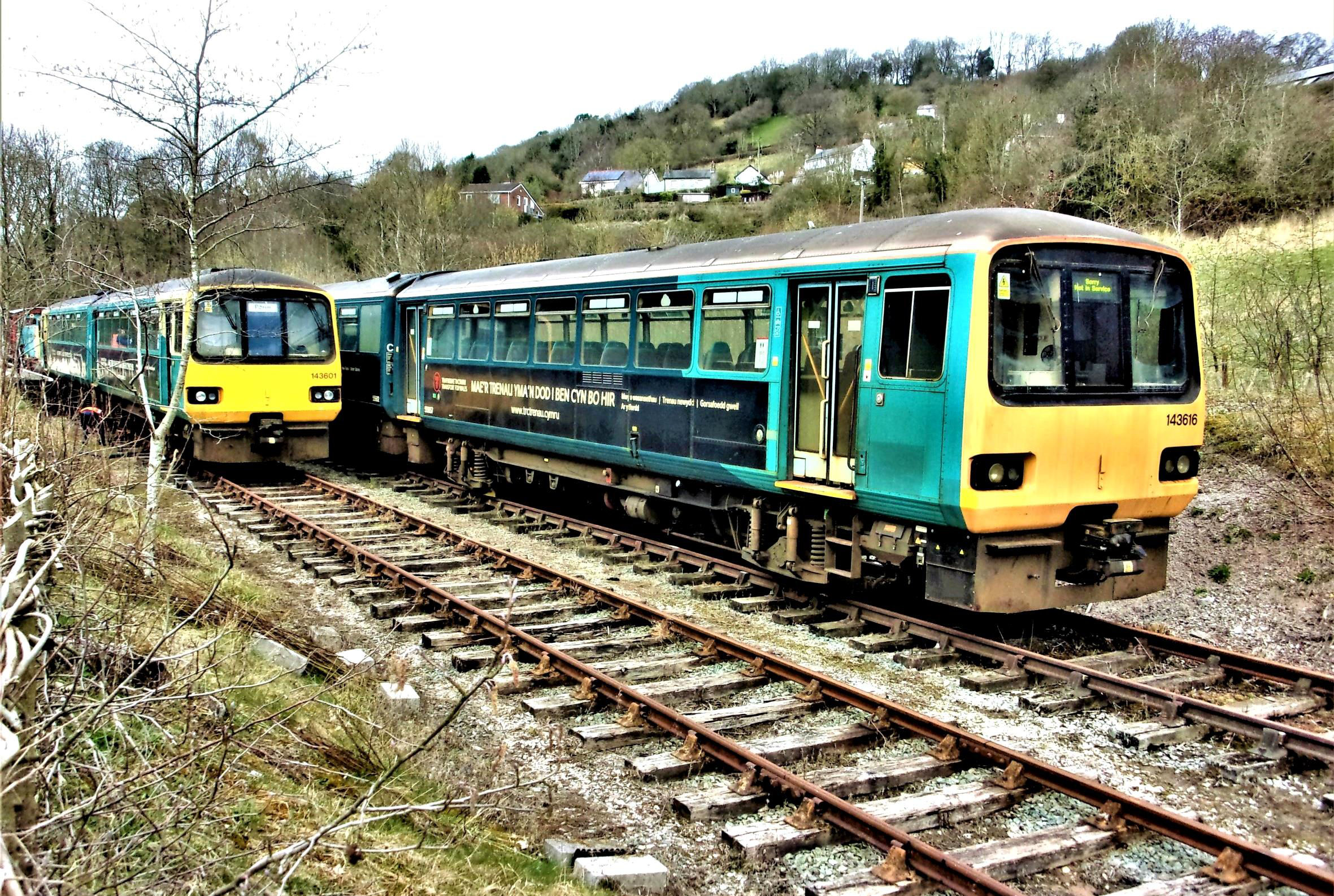
The pair of Pacers, middle far left is the other Nant Mawr (sic) platform.
[© Chris Parker 2022]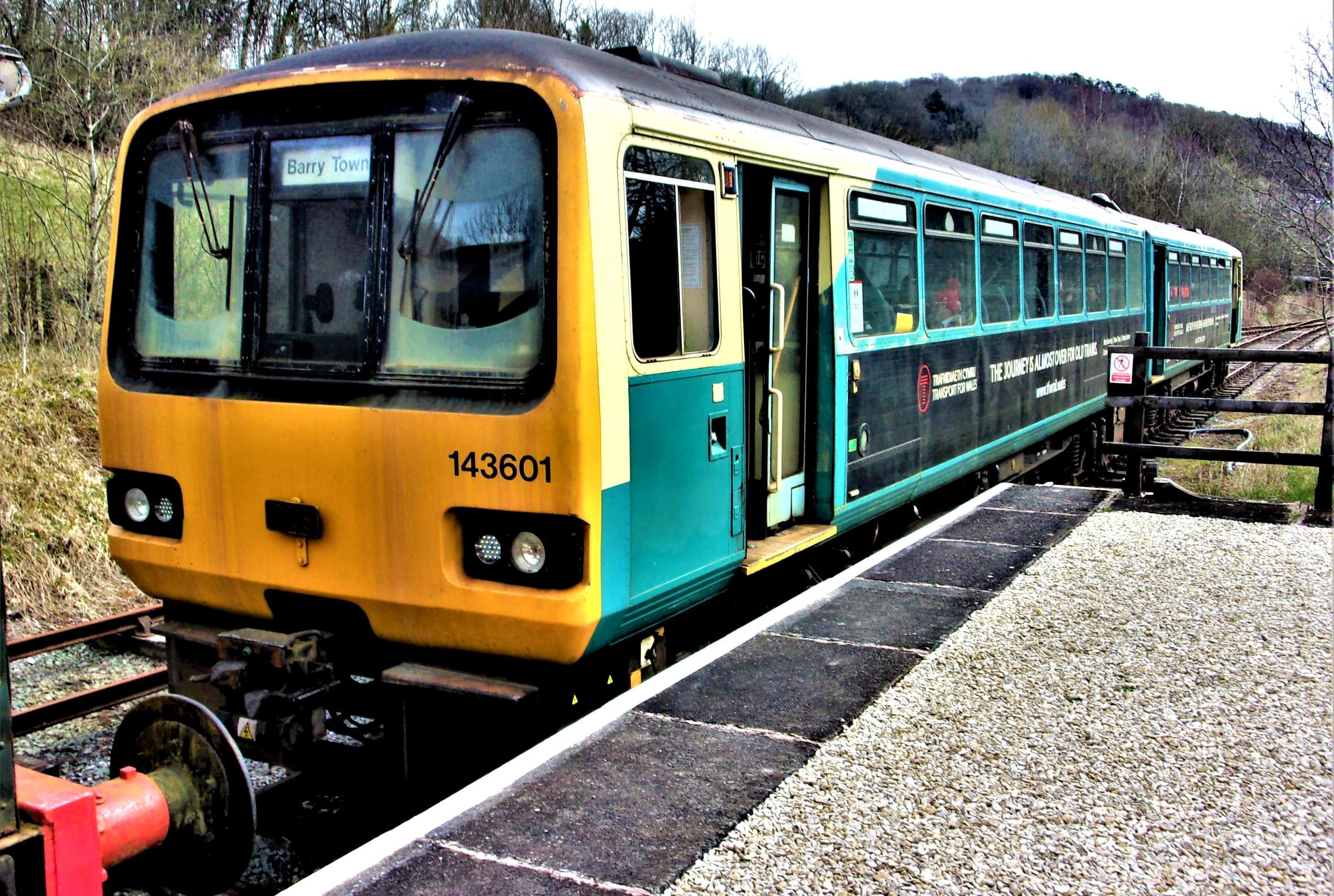
Photo stop at the permanent Nant Mawr platform which is nearer to the end of line and has a run round loop.
[© Chris Parker 2022]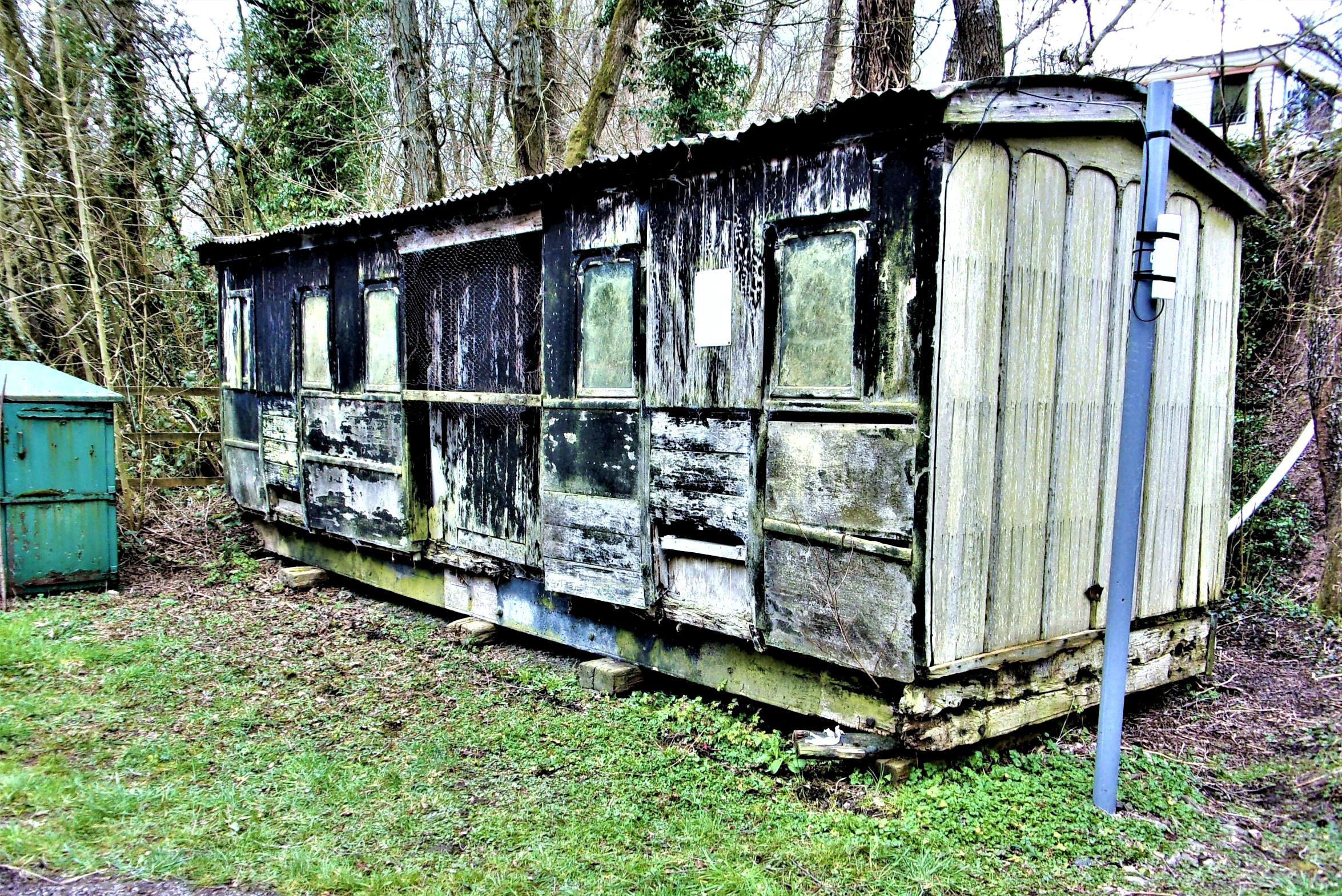
The body of a Cambrian Railways original 4-wheel coach (No74 of 1883) at Nant Mawr.
[© Chris Parker 2022]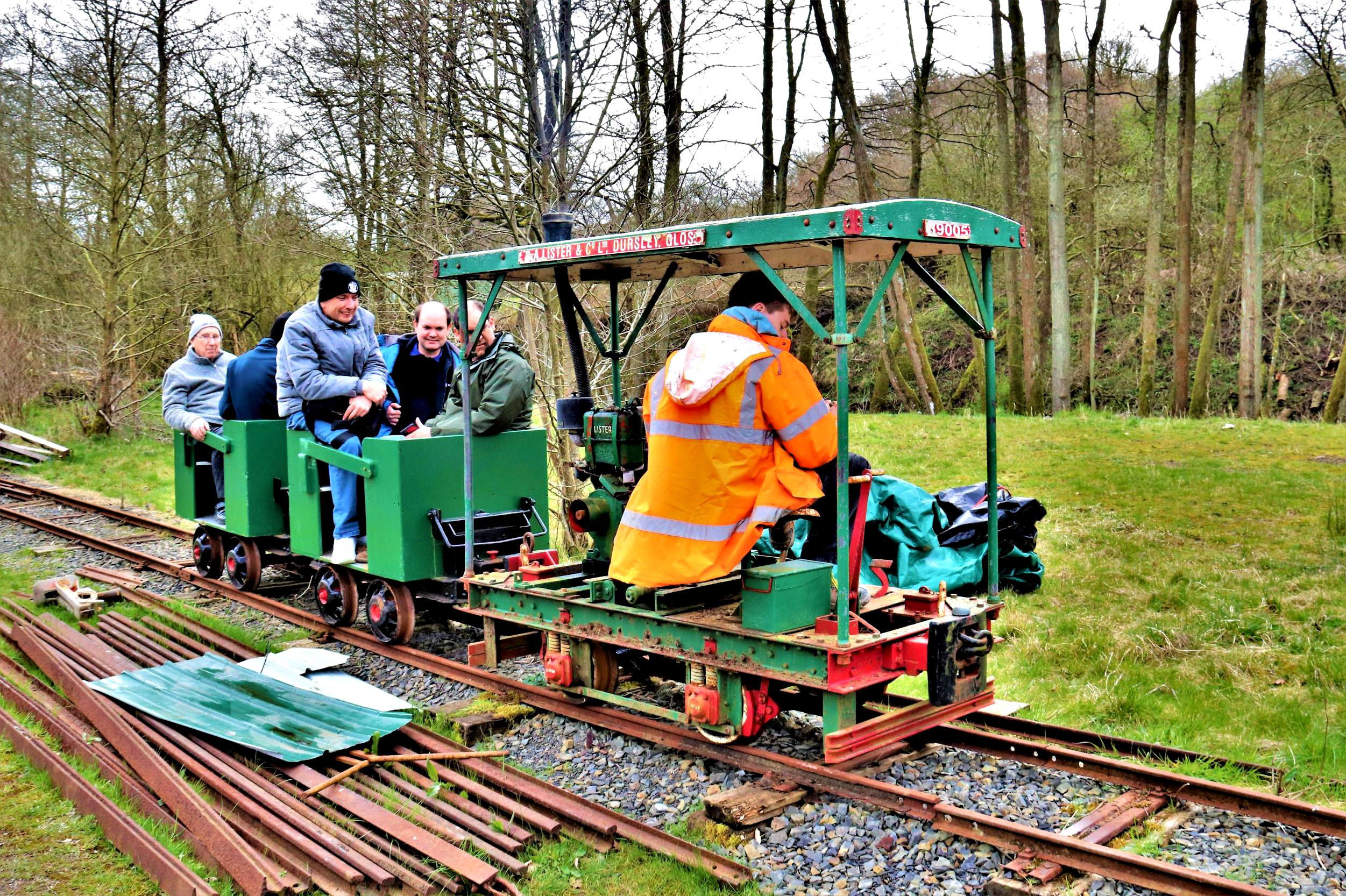
The 2ft gauge line at Nant Mawr in operation.
[© Andrew Murray 2022]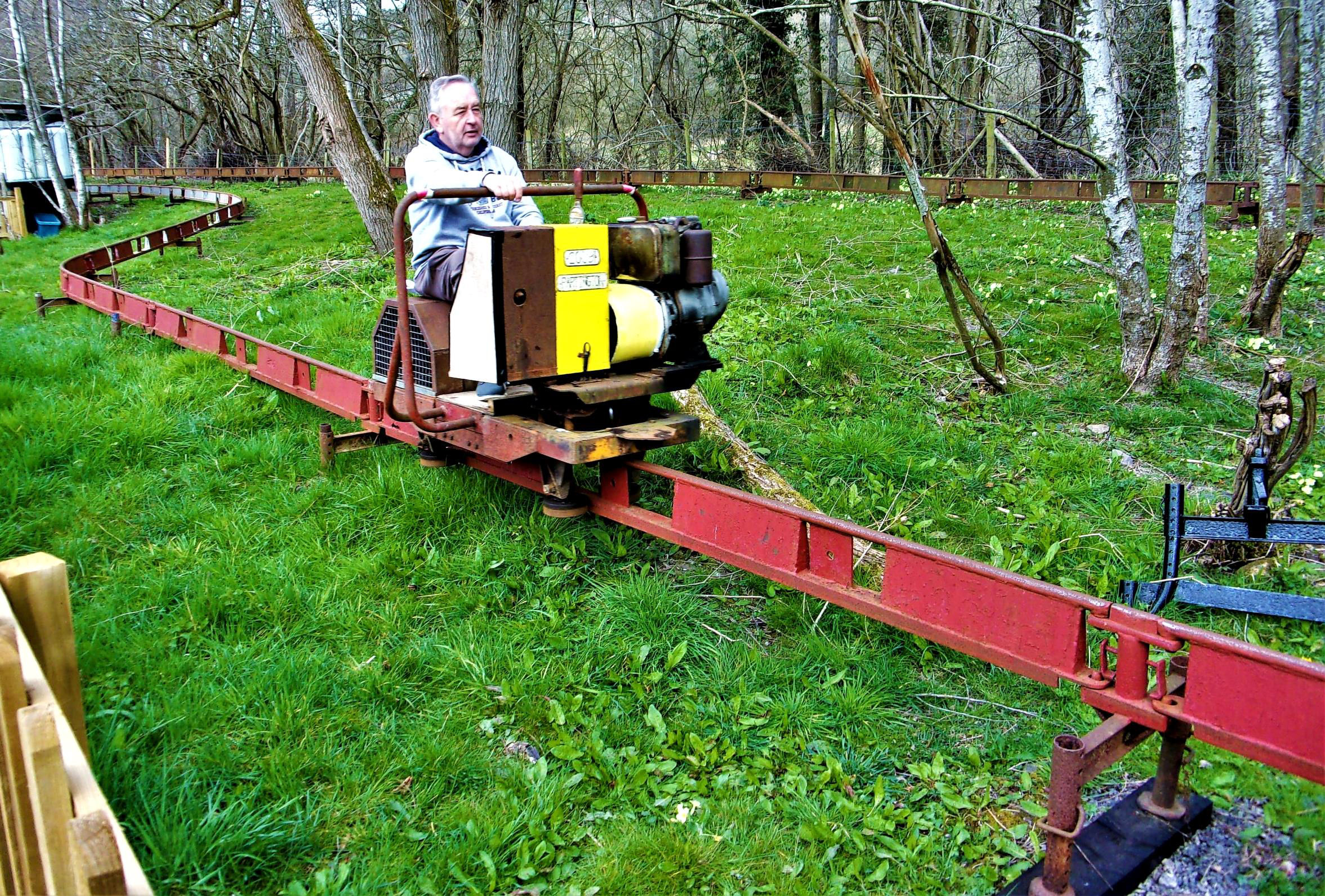
Our member Phillip Smith samples the monorail driver experience (it was not a crash course, you will be relieved to hear).
[© Chris Parker 2022]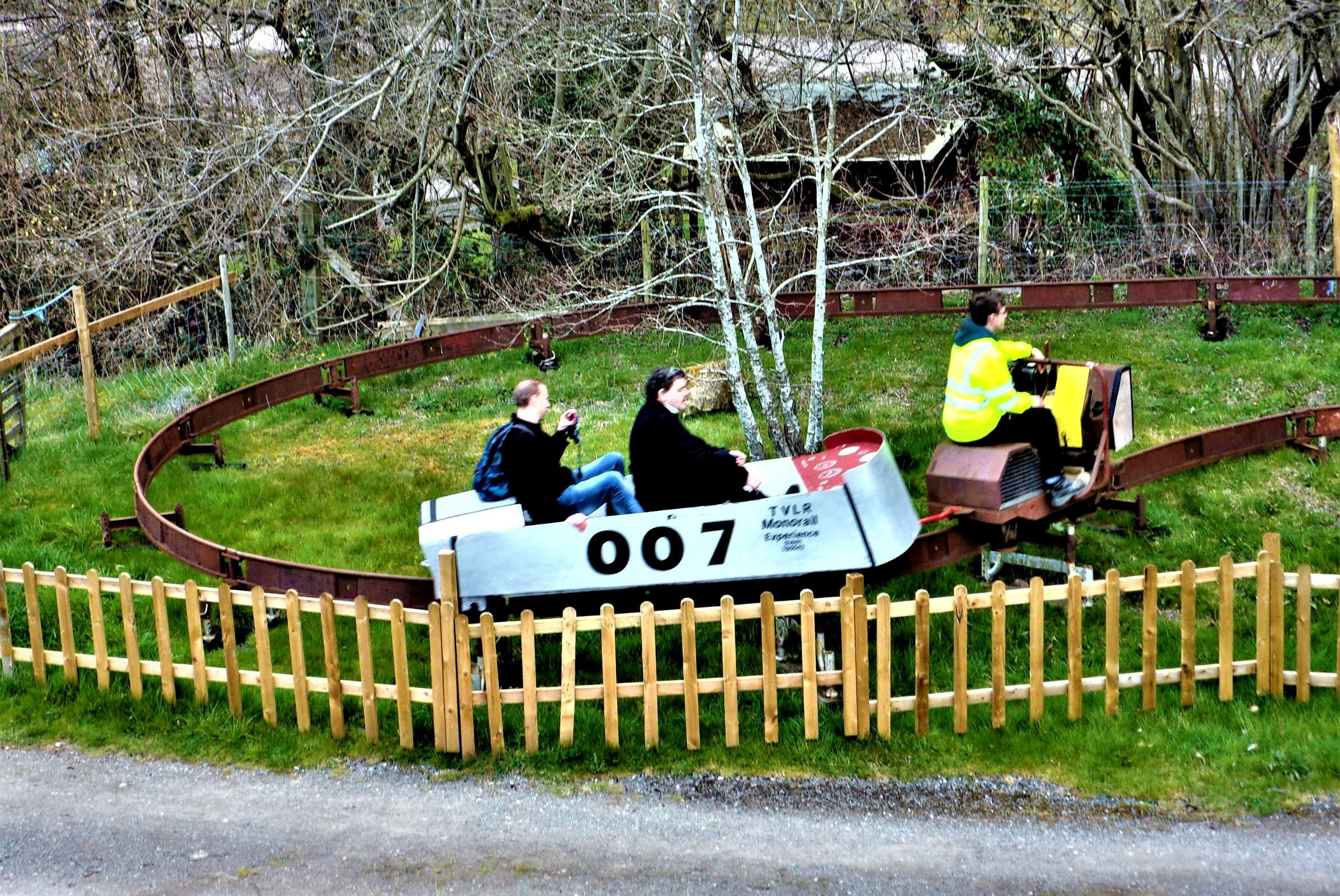
The James Bond monorail riding vehicle is demonstrated by our secret agents Alex Stewart (left) and Paul Green.
[© Chris Parker 2022]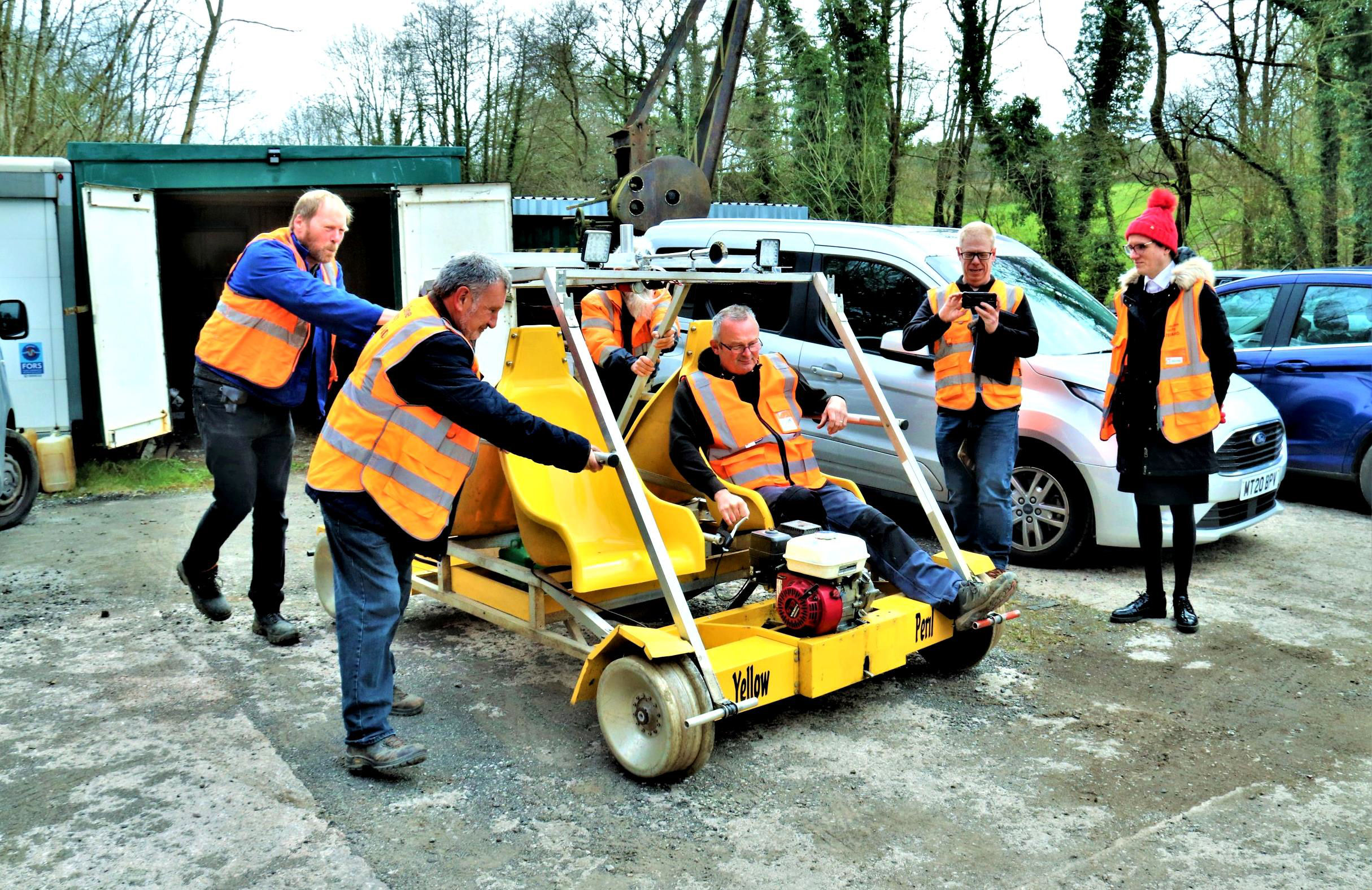
The 'Lesmac' is wheeled out to play. Nearest the camera is our Sales Officer and IOM & East Midlands BLN regional Editor, Graeme Jolley, who organised this day. Far right is our On Line Communications Officer and Assistant Bookings Officer, Mark Haggas next to Kev Adlam.
[© Andrew Murray 2022]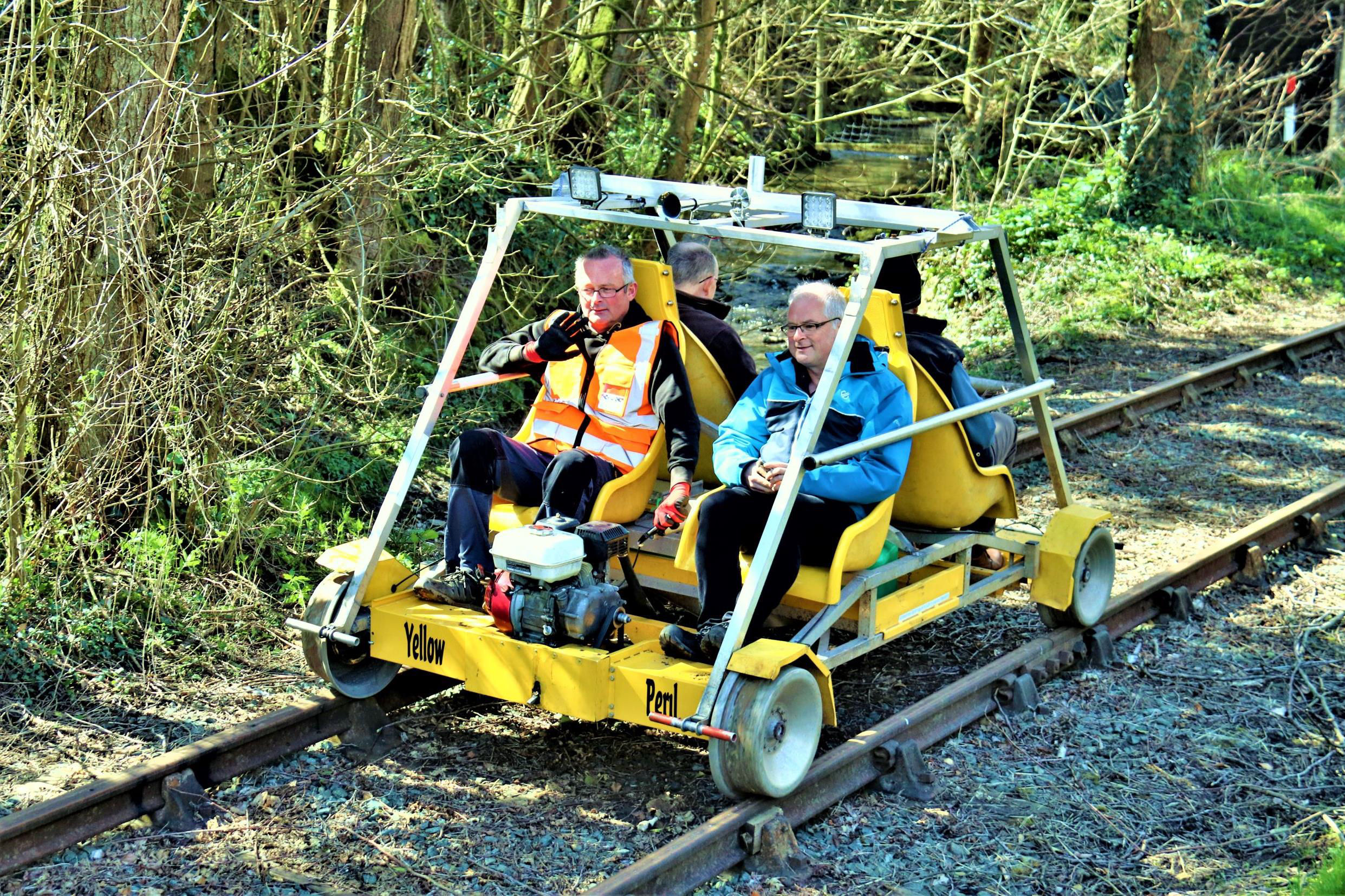
Committee Member and BLN North West Regional Editor, John Cameron, (in blue) on the 'Lesmac'. Nant Mawr is to the right.
[© Andrew Murray 2022]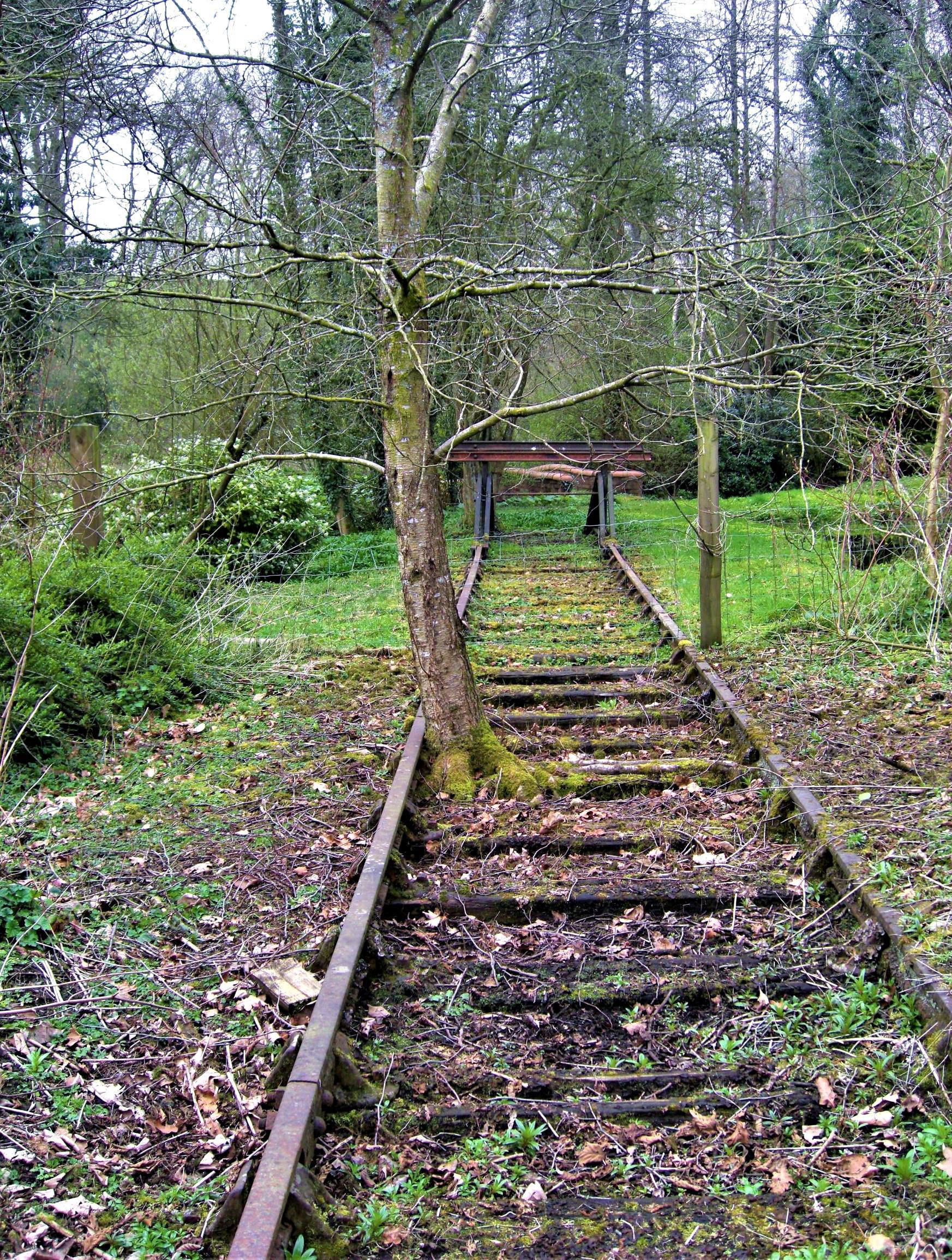
Nantmawr/Nant Mawr end of line. It once went a bit further.
[© Richard Maund 2022]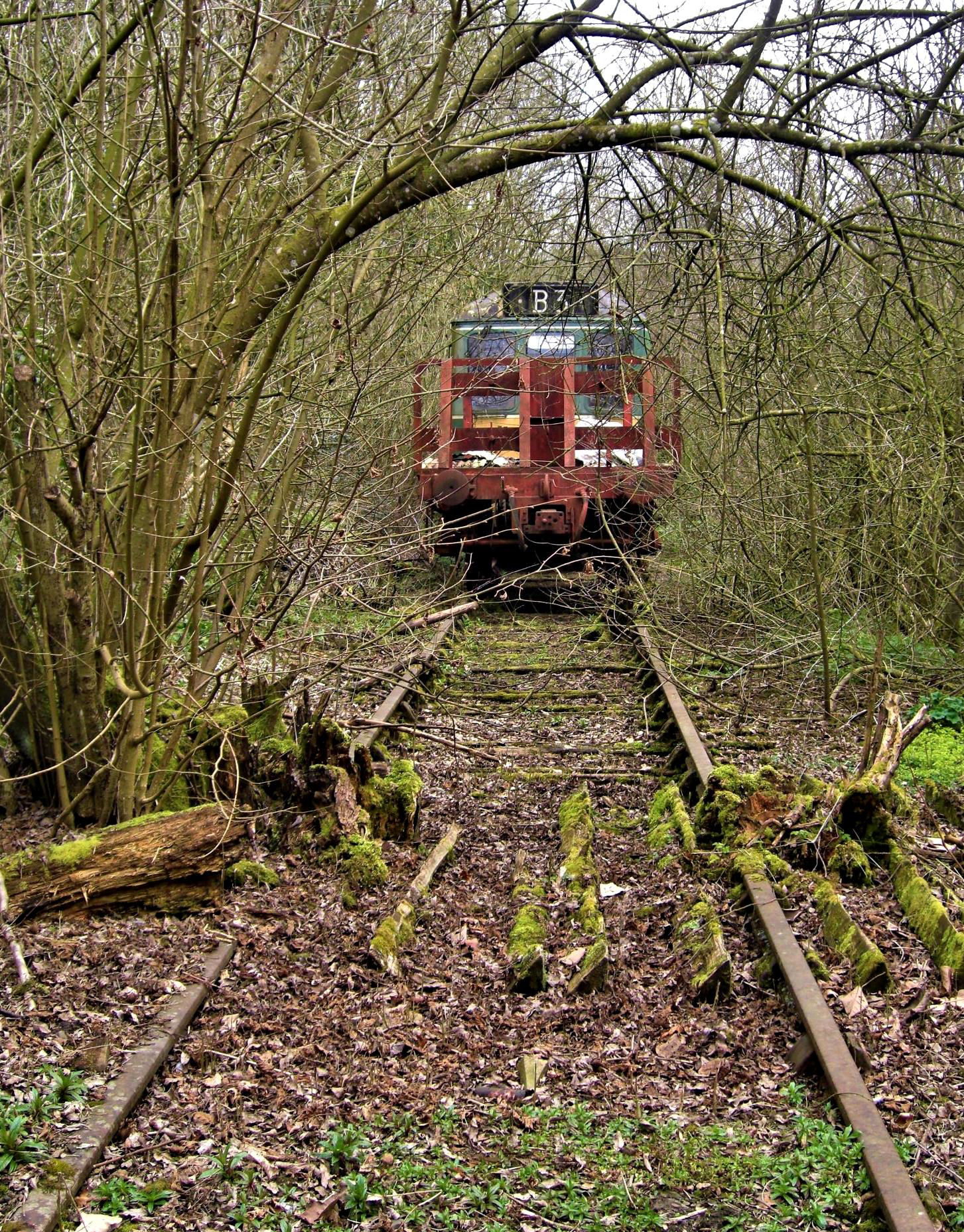
In the other direction, walking back from the end of line along the branch.
[© Richard Maund 2022]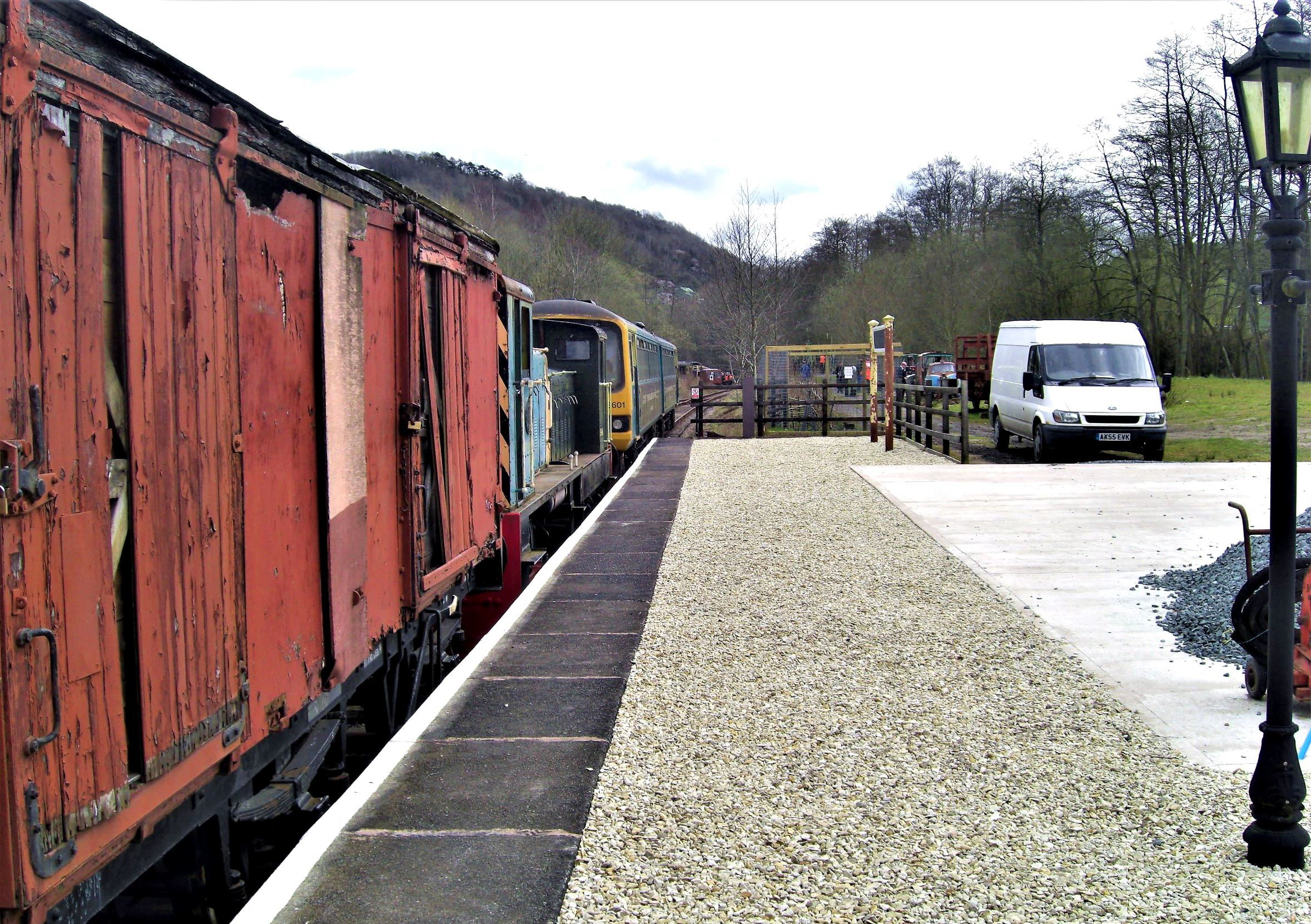
Further on is the new Nant Mawr (per nameboard) platform with a base for a future station building. The 2ft gauge line is behind the sign; the wooden platform is just past the orange jacketed group ahead.
[© Richard Maund 2022]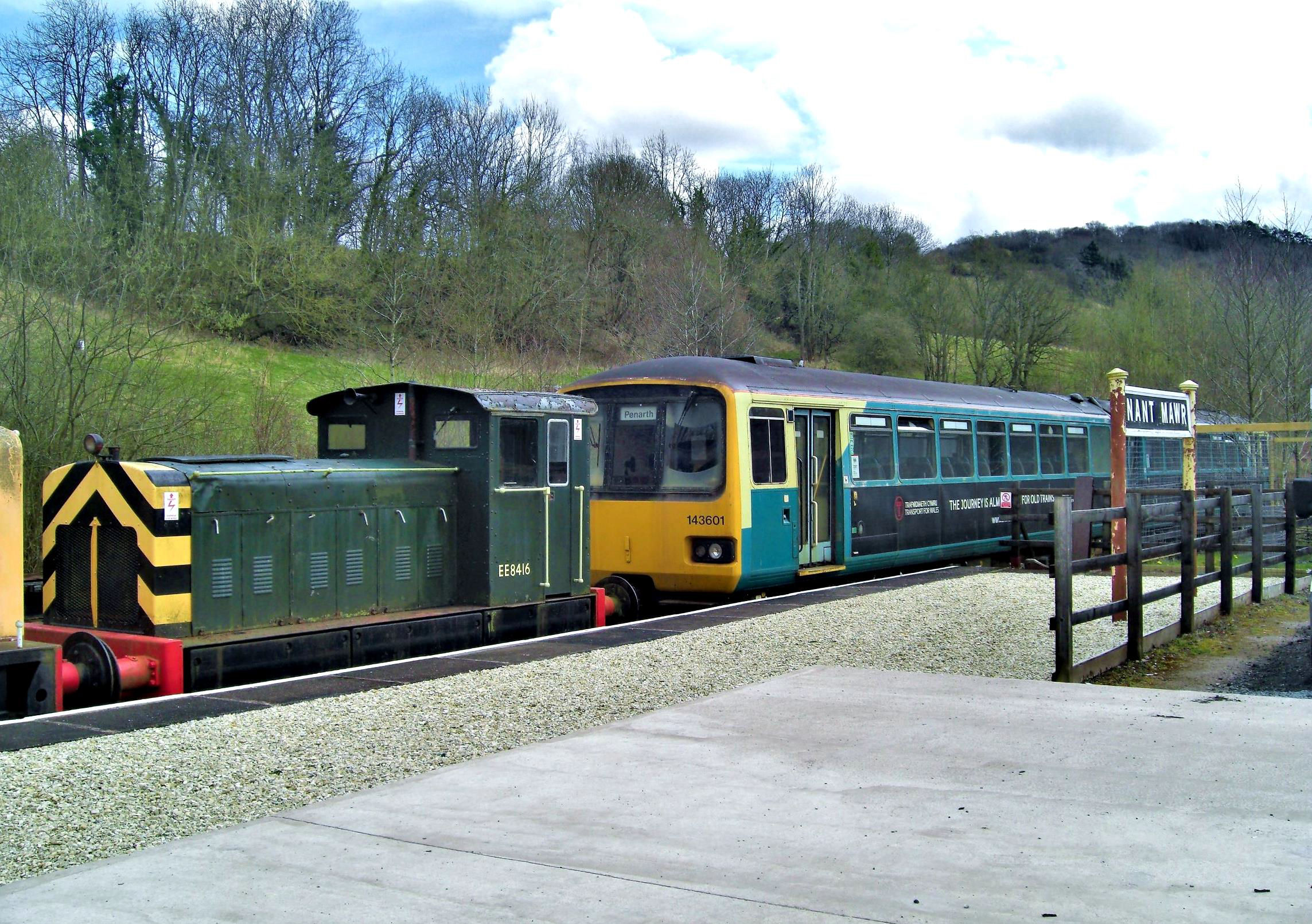
Another view of the new Nant Mawr (per nameboard) platform with a base for a future station building.
[© Richard Maund 2022]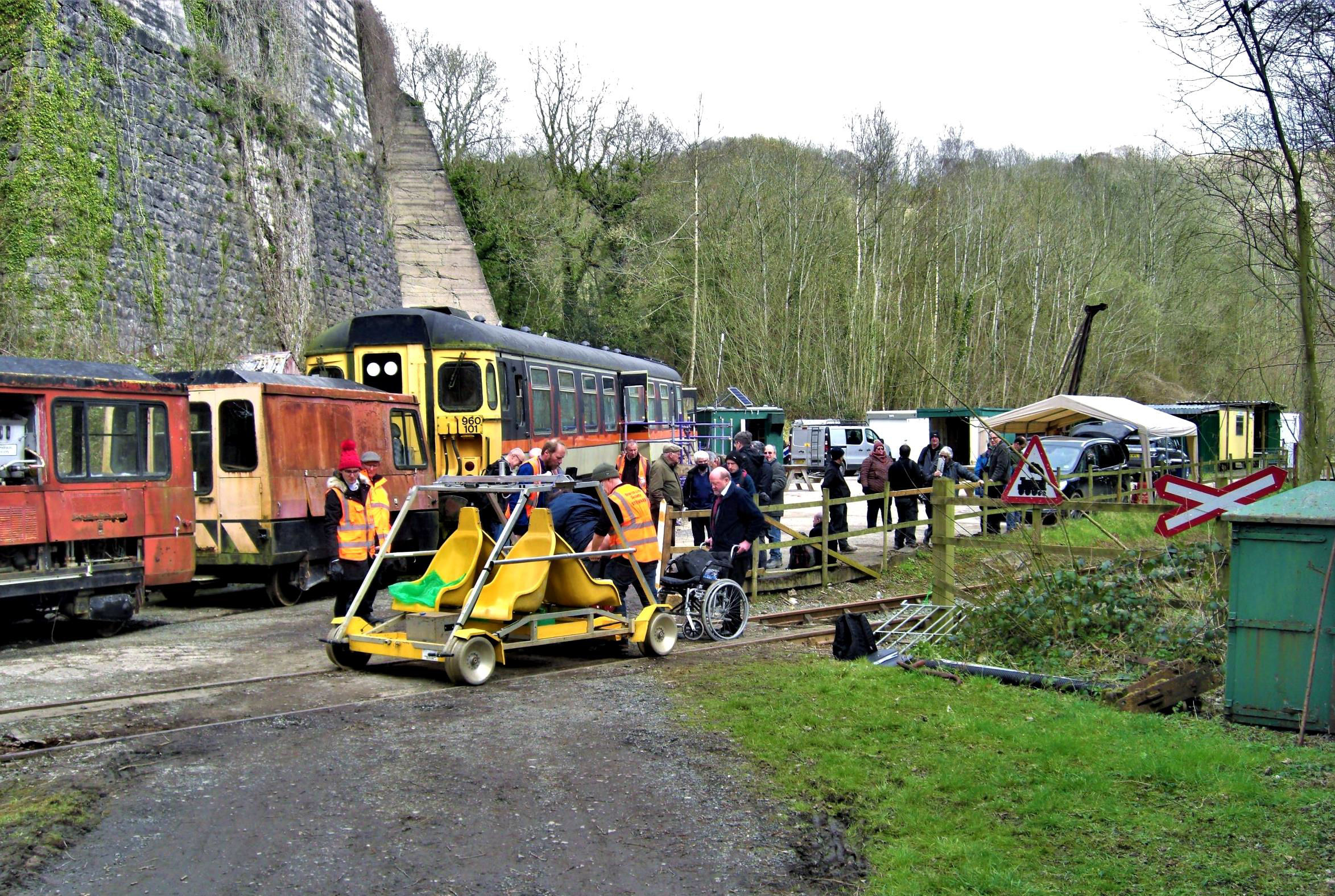
A remote, obscure Shropshire valley is just the place you would expect to find a 'Clacton' EMU alongside some old lime kilns!
[© Richard Maund 2022]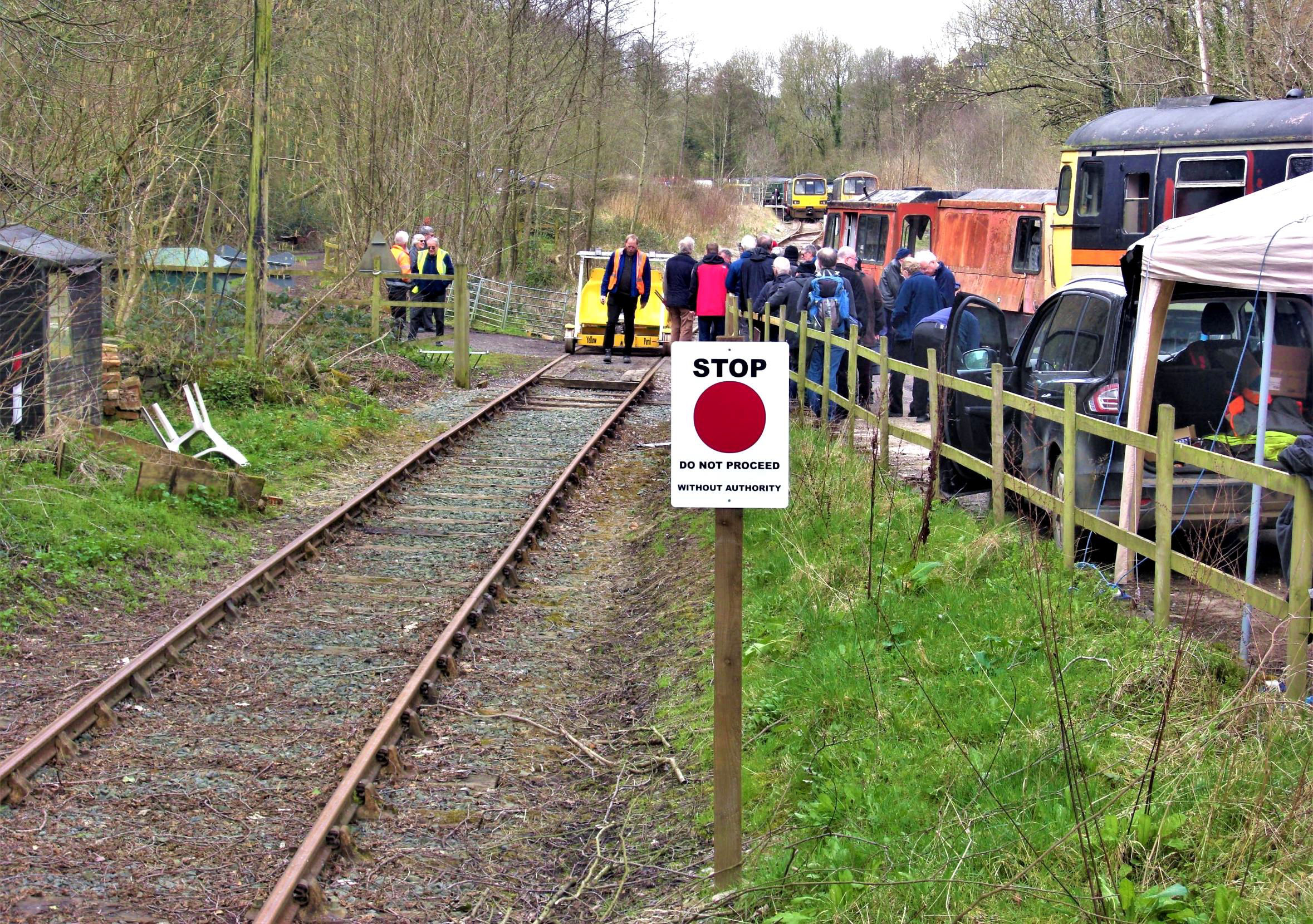
The 'Lesmac'.with an eager queue and the new Nant Mawr platform in the distance.
[© Richard Maund 2022]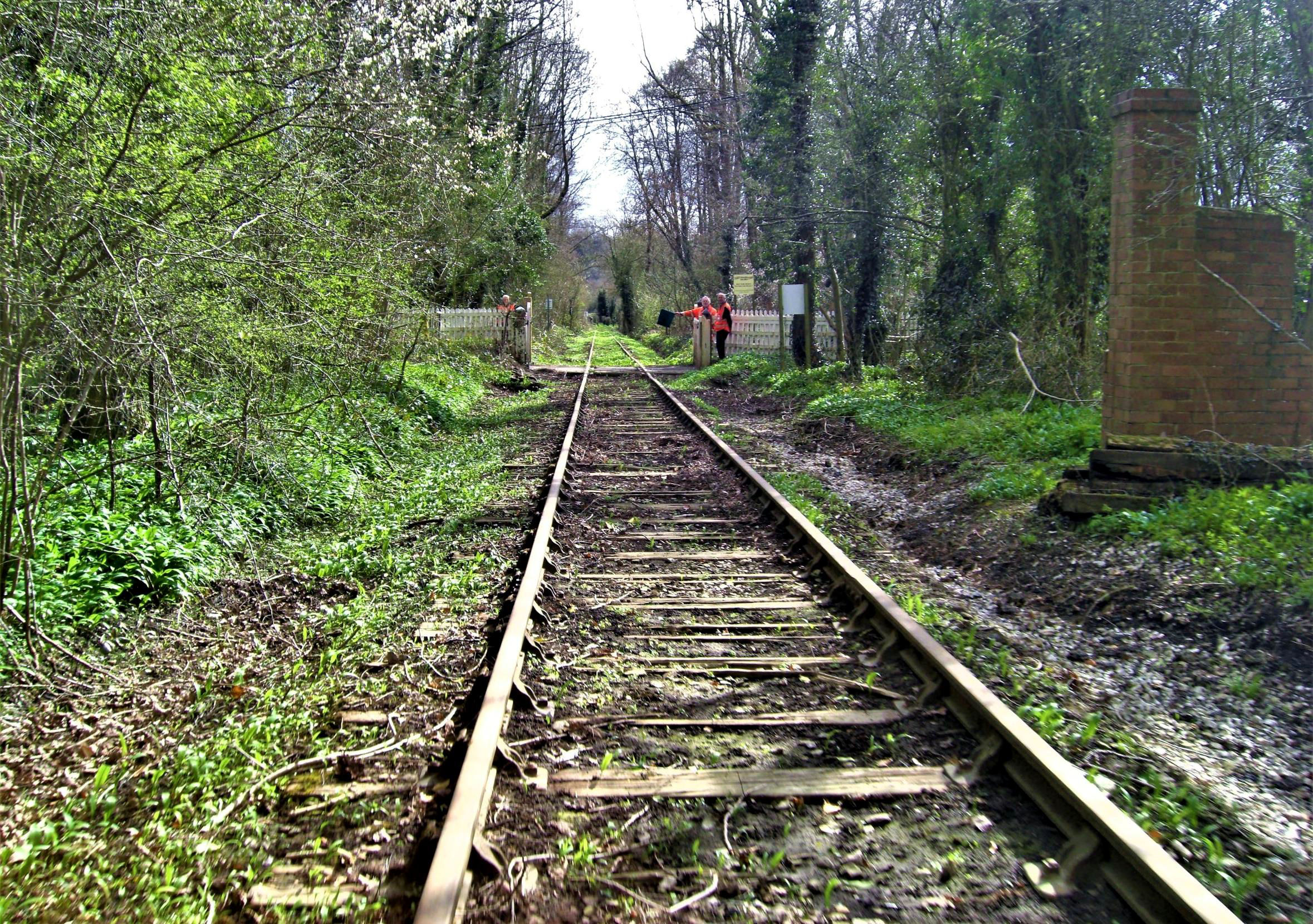
On board the 'Lesmac' approaching the gated level crossing across Cefn Lane - where two of our Committee members were assisting with the gates.
[© Richard Maund 2022]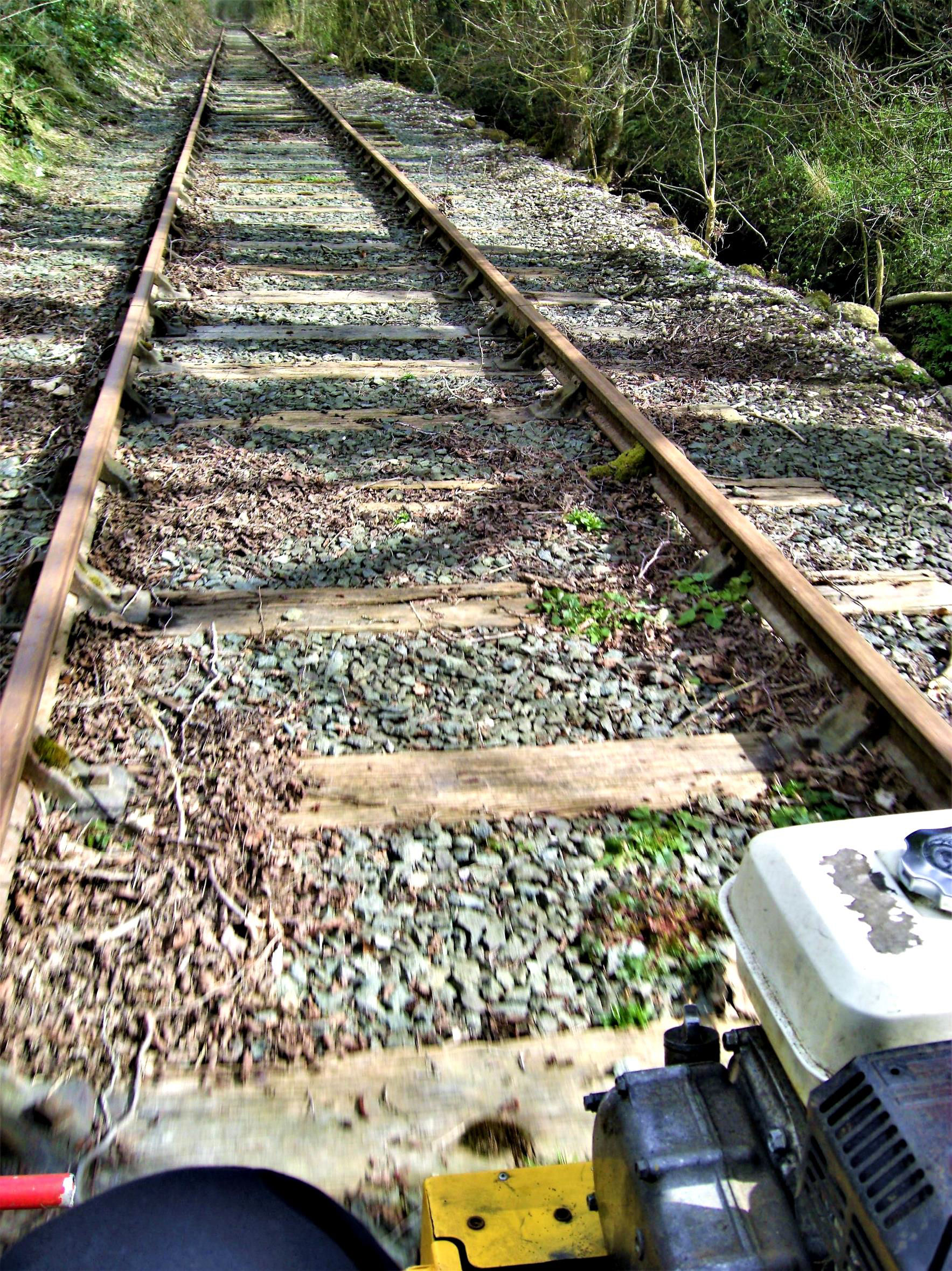
On board the 'Lesmac' heading for the first A495 overbridge.
[© Richard Maund 2022]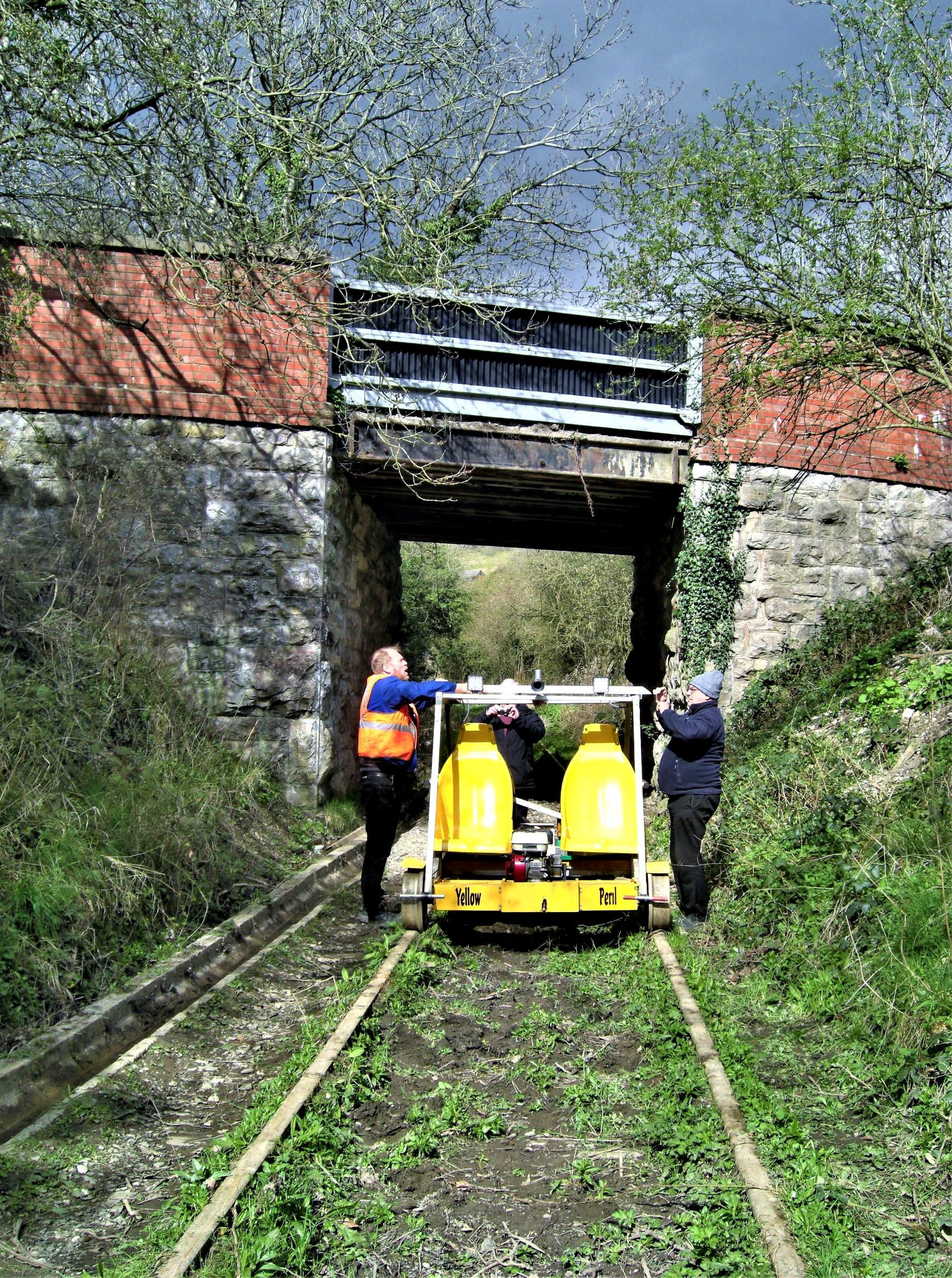
Our trips literally 'turned round' to return just after the first A495 overbridge - seen here.`
[© Richard Maund 2022]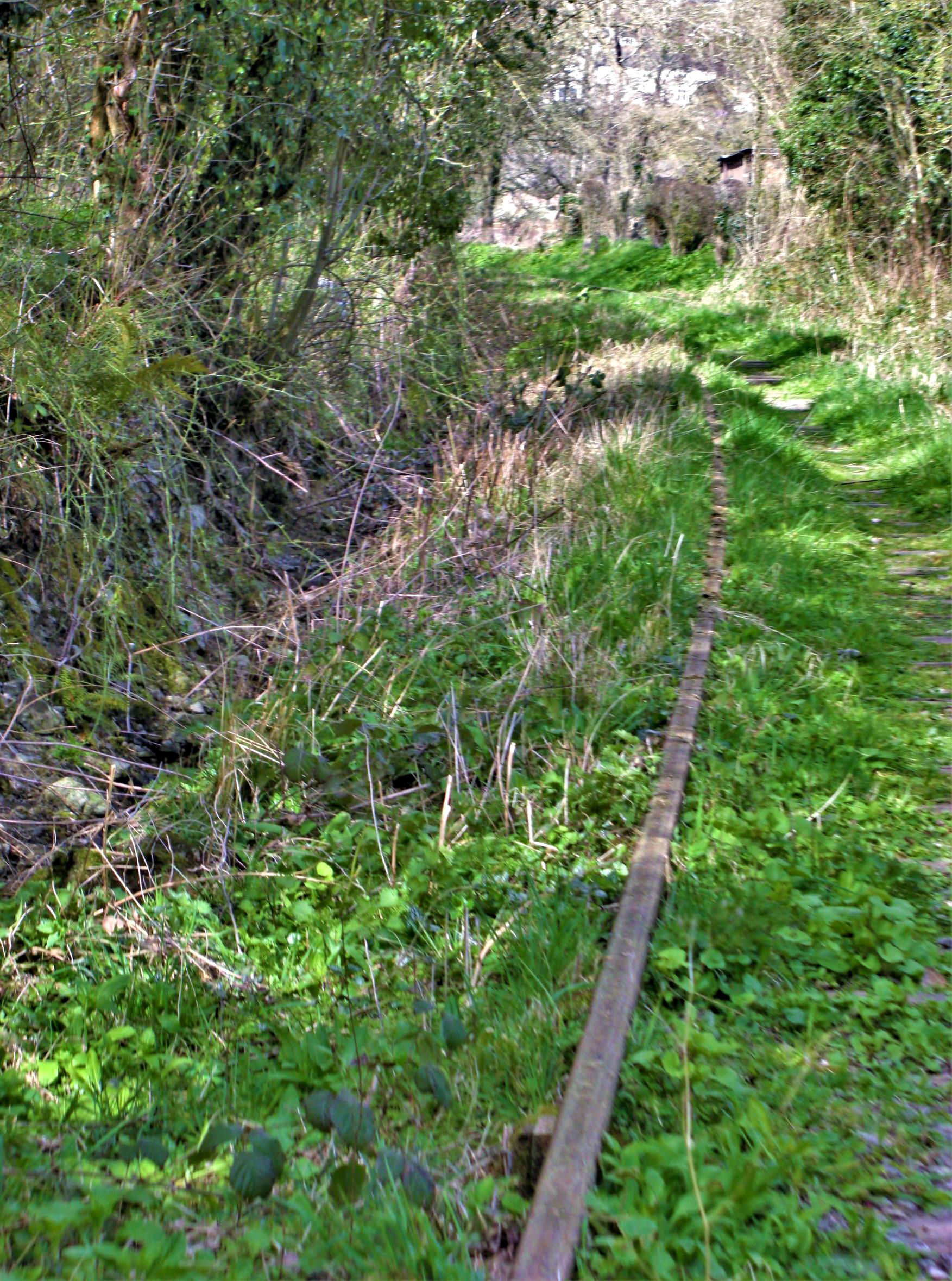
The track onwards from here towards Llanddu Jn (see map earlier).
[© Richard Maund 2022]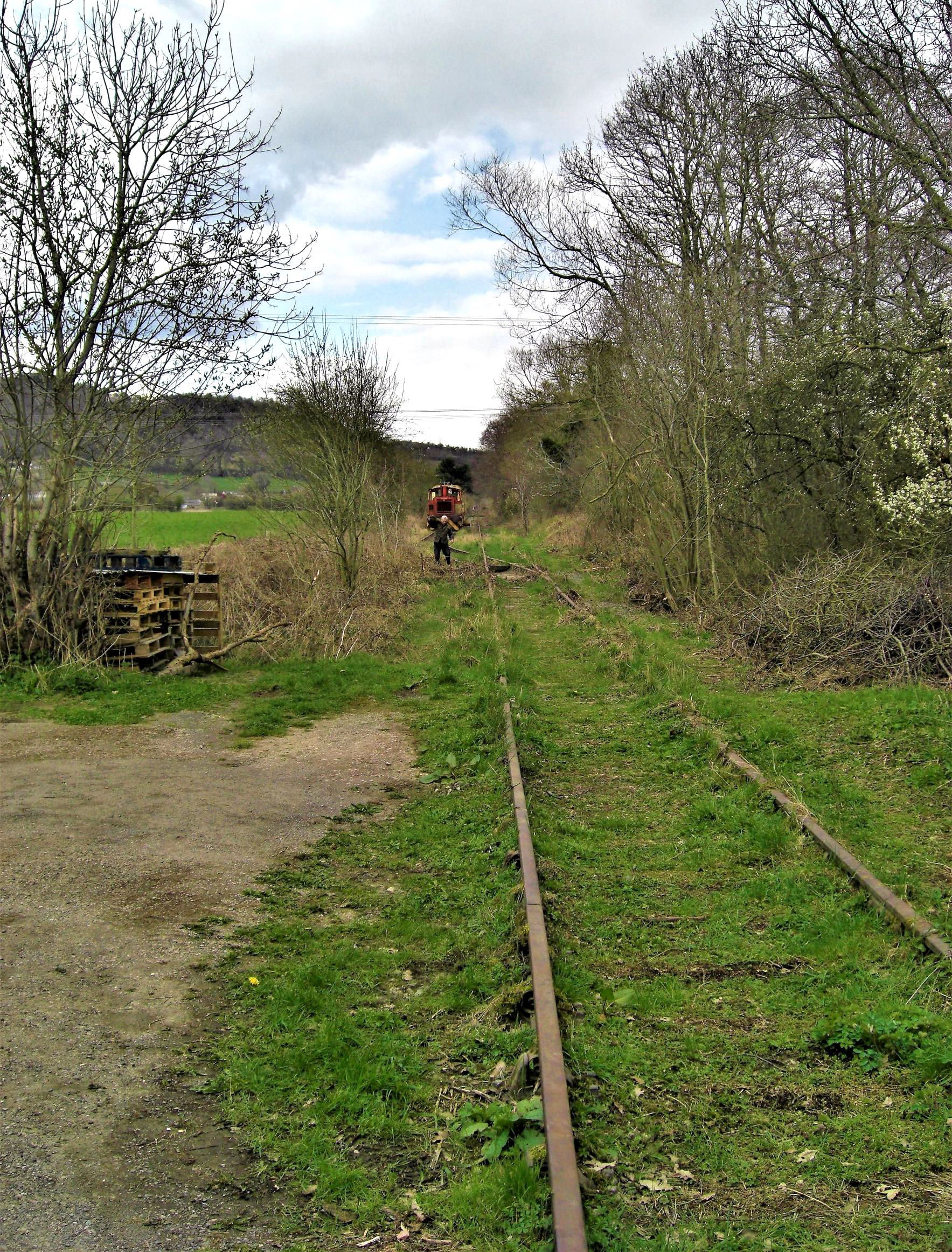
On the original Tanat Valley Light Railway which ran from Porthywaen to Llangynog; looking east towards Porthywaen and Lllynclys. This rounding loop is shown on TRACKmaps 3 p31B 2018.
[© Richard Maund 2022]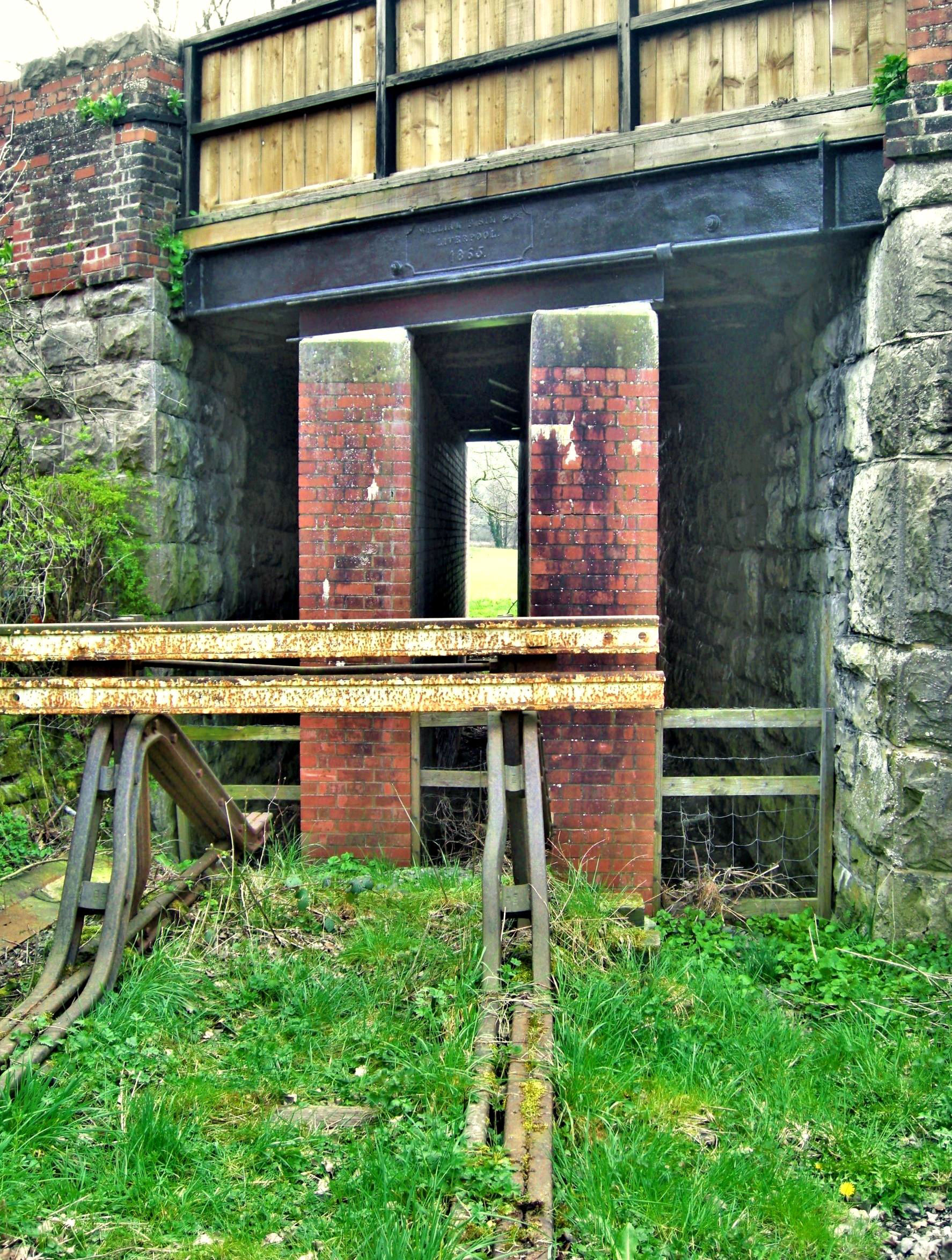
Blodwell; another A495 bridge, the end of the headshunt for the rounding loop where
your Editor's first ever brakevan trip reached on 27 Sep 1976. Looking west towards Llangynog.
[© Richard Maund 2022]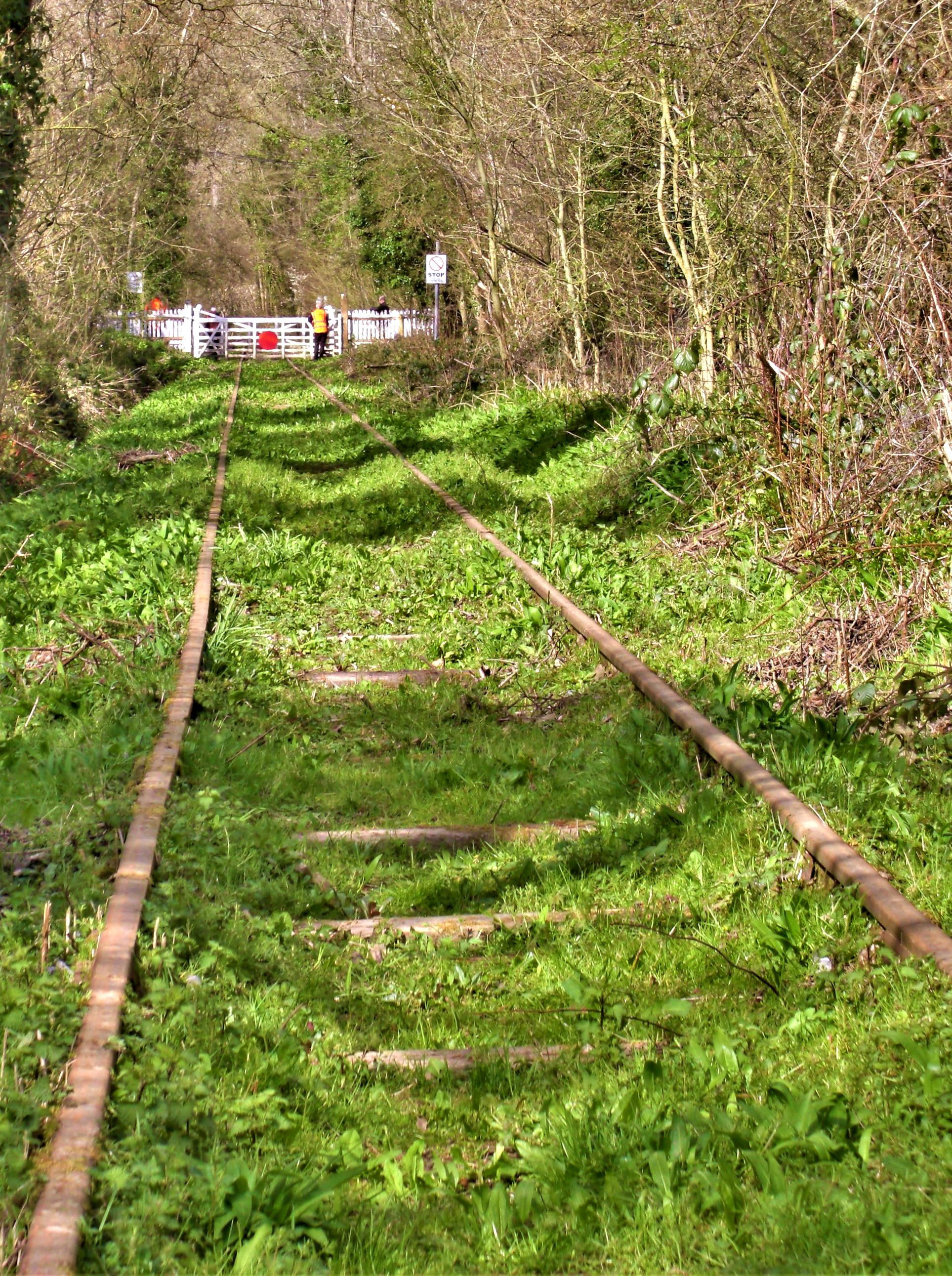
Approaching Cefn Lane gated crossing (gates recently replaced) on the return trip.
[© Richard Maund 2022]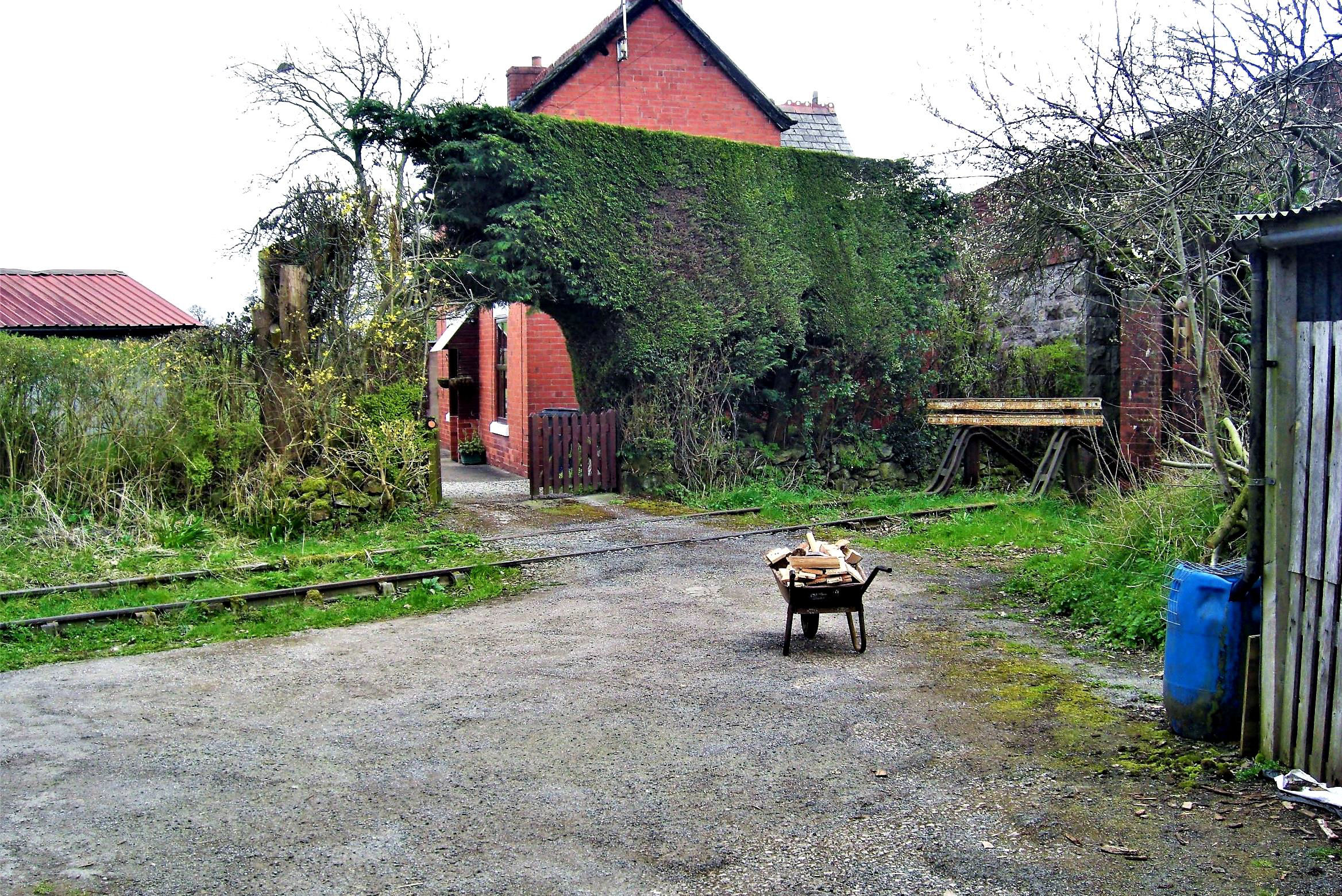
Blodwell A495 bridge, end of line, again. Left is to Gobowen via Llanddu Jn, Porthywaen, Llynclys Jn (site), Weston Wharf and Oswesty.
[© Richard Maund 2022]