This 2ft gauge industrial railway was constructed as a direct result of WWI. Cheap sand imports from Belgium ceased and the very pure sand from around Leighton Buzzard was in high demand, but transporting it caused extensive and expensive damage to local roads. During the War the Government paid for repairs, but afterwards an alternative method of moving the valuable cargo was needed. At the end of the War in 1918, large amounts of surplus narrow gauge track, rolling stock and locos were for sale.
Some 4½ miles of track were laid from Billington Road to Double Arches Sand Quarry and, along with other quarry branch lines, opened for traffic on 1 Dec 1919. High quality sand from local quarries was transported to screening and washing plants at the narrow gauge Billington Road Sidings before being loaded into standard gauge wagons at what British Rail called Grovebury Sand Siding, alongside the north side of the Leighton Buzzard to Dunstable line. It was near, and southwest of, Page's Park (now) terminus - a spot on the map, purple in e-BLN. The last sand working to Billington Road was in 1969.
https://bit.ly/30Xzctw has 10 photos (scroll right) - including a particularly fine shot of the actual transhipment sidings from narrow to standard gauge. The standard gauge line, by then a branch west from Leighton Buzzard, closed 8 Dec 1969 but rail traffic may have finished earlier that year. The last commercial traffic east of Grovebury Sand Siding was 7 Jan 1966 but a weedkiller train ran in Jun 1967. This section (east of Billington Level Crossing on Billington Road, by the narrow gauge railway crossing of the 'B' road bottom right on map) of that was taken out of use from Mon 12 Jun 1967 (WON).
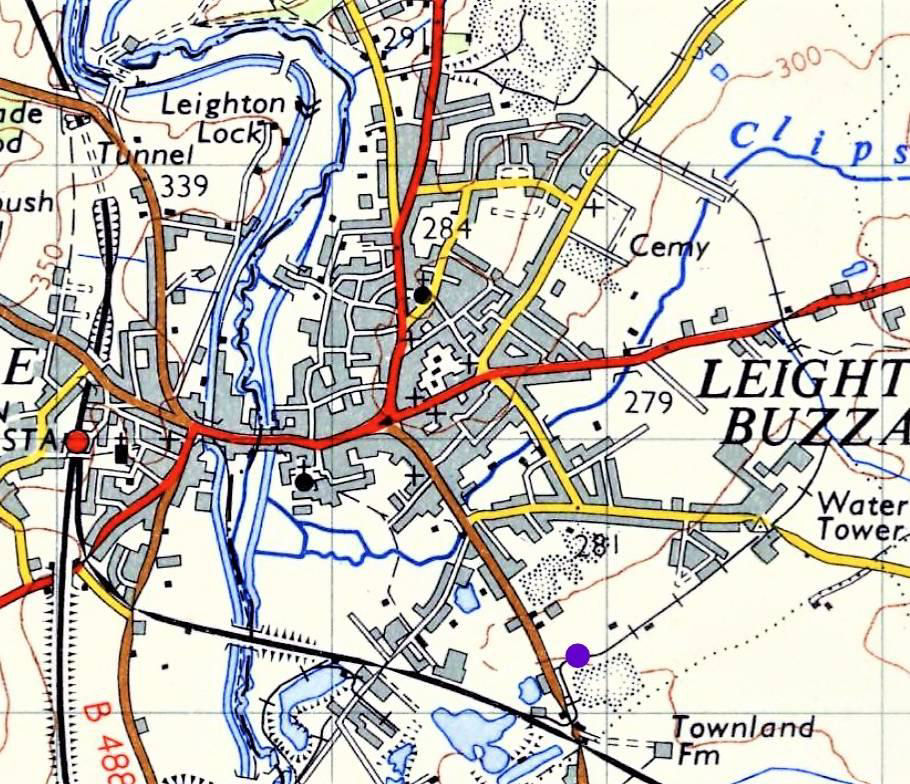
1957 map, the West Coast Main Line, south to London, runs down the left side, with Leighton Buzzard station middle left. Dunstable and Luton are off bottom right. The now Leighton Buzzard Railway winds around the east side of the town to Double Arches Sand Quarry (off top right where the line runs alongside Vandyke Road, after turning through a right angle and crossing it on the level).As narrow gauge lines go, I feel that this is one of the finest in England. I visited the line in 2012 and enjoyed a ride on the public service, but when this fixture was advertised in BLN proposing to cover some extra bits of track, I soon made a booking. With thanks to our local member Bill Davis for making the arrangements, 29 members participated in our Society the private charter.
I was the first to arrive at Page's Park and was impressed by the new station building opened in 2017. A LBR volunteer was keen to invite us in to browse the vast collection of second hand books for sale (and all of the new ones about the railway), gifts and other memorabilia. Browsing over for now, I watched Simplex locos '43' & '44' manoeuvring around the stock for our train. Making plenty of smoke they positioned themselves at the north end of the train, with battery-electric NG23 coupled inside.
Our tour manager, the ever very affable Kev Adlam, arrived and we formed an orderly queue outside the Buzzrail Café. Hot drinks and breakfast rolls were served (very tasty) and Kev did his own roll call to check us in. [Did he arrive in a Rolls too?] 'All aboard', the five coaches (4, 3, F38, 9 & 5) gave us room to spread out and soon we were on our way departing from P2 at 10.10. In the nearby actual Page's Park, croquet was being played - you have to go through many hoops to become a good player.
The line has some open level crossings, three are over busy roads. As we approached them two of the LBR volunteers moved into position and showed red flags to warn the traffic and allow us to proceed. Leedon Loop inbound side was covered in the opposite direction to the normal left hand running.
Near Vandyke Road a new tunnel for the railway realignment (BLN 1386.MR184) was almost complete to allow construction of an access road to a major housing development. A new level crossing is not permitted, some ballast and track was already laid on the new route ... another visit will be needed. The final public train over the old route was the 15.30 from Page's Park, and return on Sun 31 Oct.
At Stonehenge Works we had a short break to explore the site. Locos 43 & 44 ran round and attached at the south end. Rain set in and hastened our rejoining. NG23 drew the train on to the line towards Munday's Hill (rare move), but only to the facing crossover where the works sidings merge with the double track. The passenger line is being extended here northeast ,,, another visit will be needed.
A reversal saw 43 & 44 hauling us south on the loop avoiding Stonehenge Works platform (rare track). At Leedon the opposite side of the loop to the outbound journey was used, firstly running through wrong line then, in true BLS style, reversing to using the same track and finally the same track again!
At Page's Park our special arrived in to P2 and ran to the end of line headshunt. NG23 hauled us out of the station, then 43 & 44 took us via P1, again to the end of line. The tour finished just on 12.00. Some visited the shed, but by now persistent rain meant heading for cover was wise. A few photos were taken, another visit to the (dry) shop seemed like a good idea. I bought a copy of 'Narrow Gauge Tracks in the Sand' (Oakwood Press), which provides an excellent accompaniment to visiting the Railway - other books are available. Our Society Committee members who attended made for Crewe (via the Apedale Valley light Railway, of course, as you do) for a Committee meeting later in the day.
We are very grateful to the volunteers who turned out especially at LBR on a non-running day for us and opened all of the facilities at this very friendly railway. It is intended to organise an 'all available lines' Society railtour next year to include additional rare track, the new extension and deviation.
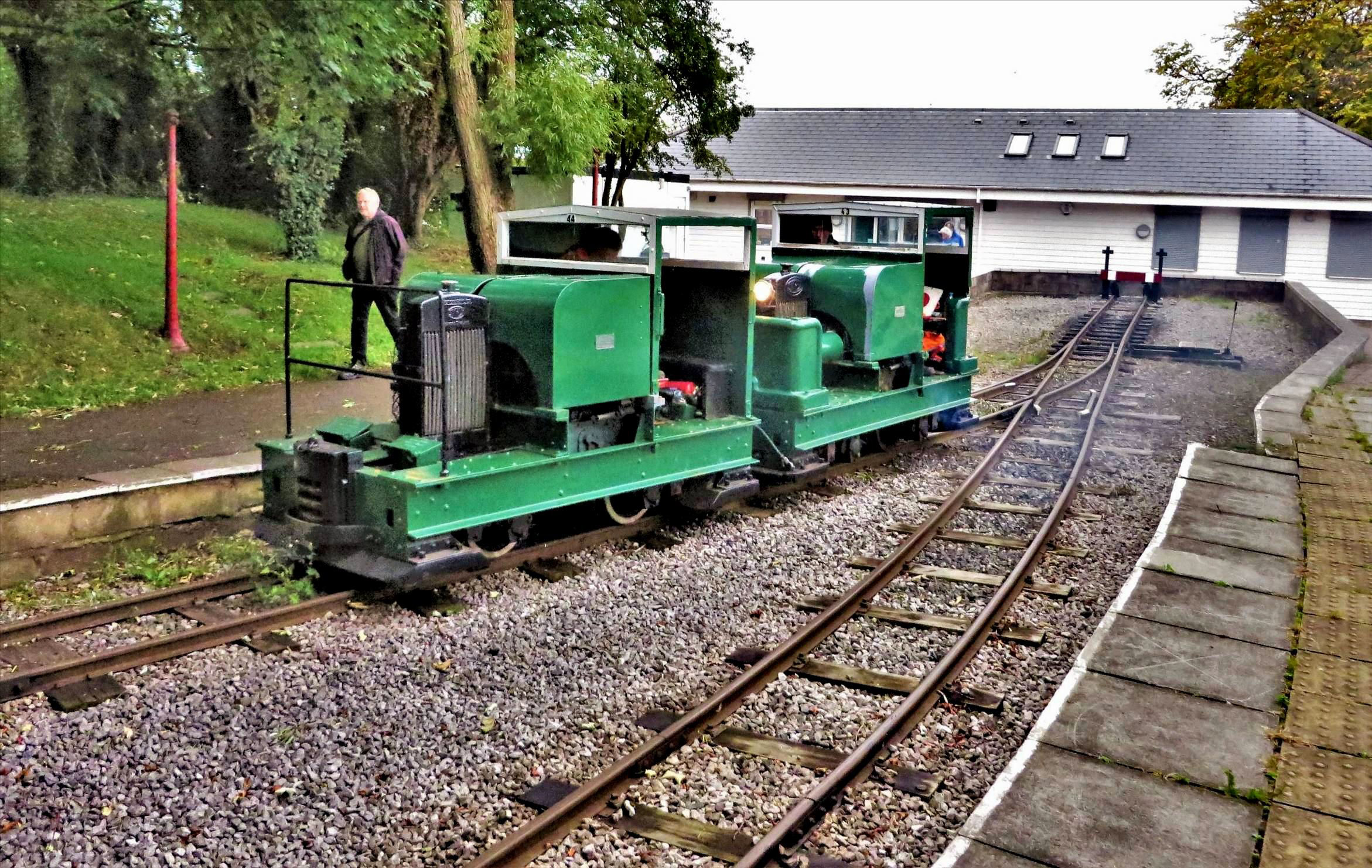
Page's Park P1 right, P2 left.
[© Rob Moorcroft 2021]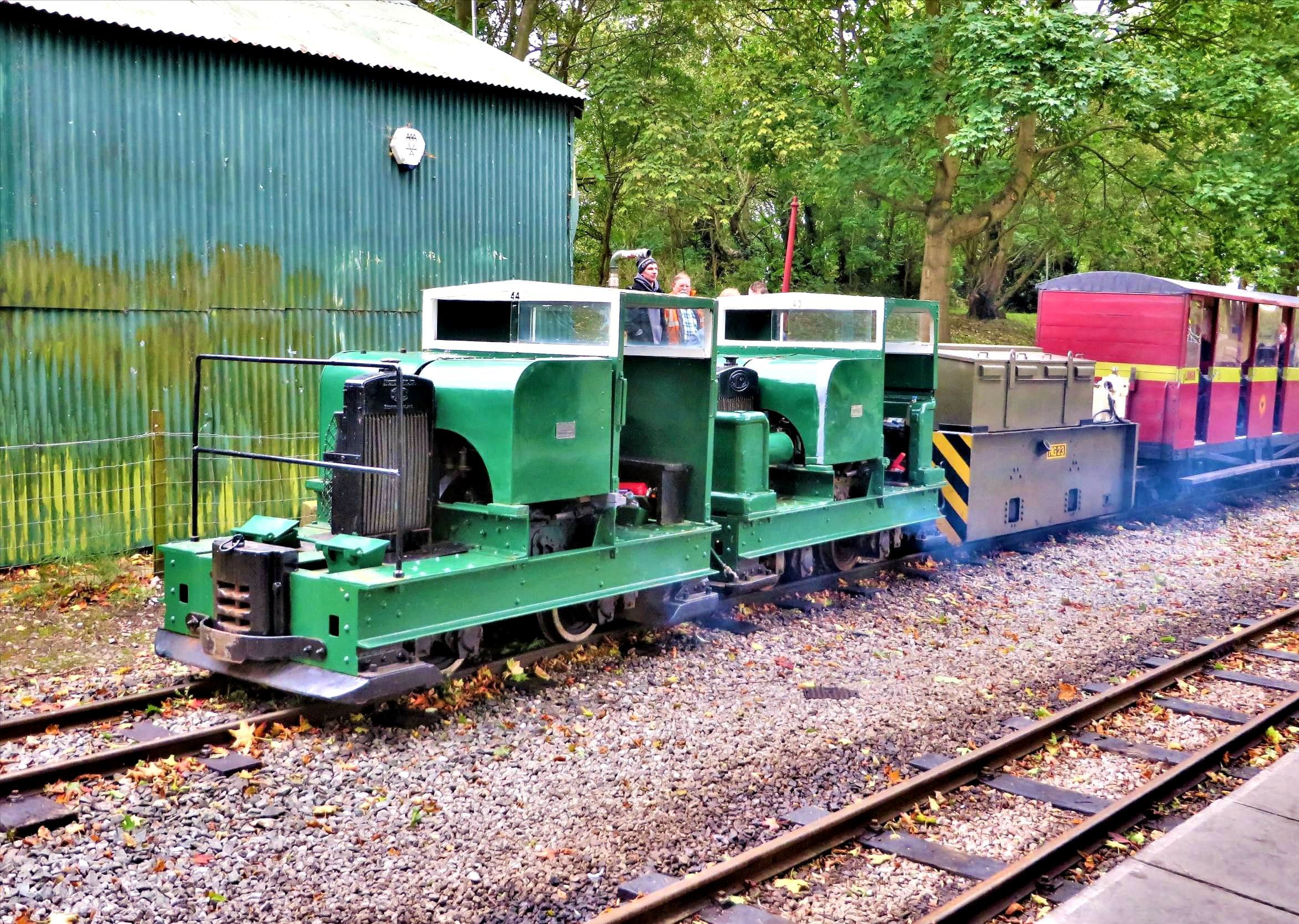
Simplex locos '43' & '44' on the stock for our train with battery-electric NG23 coupled inside.
[© Rob Moorcroft 2021]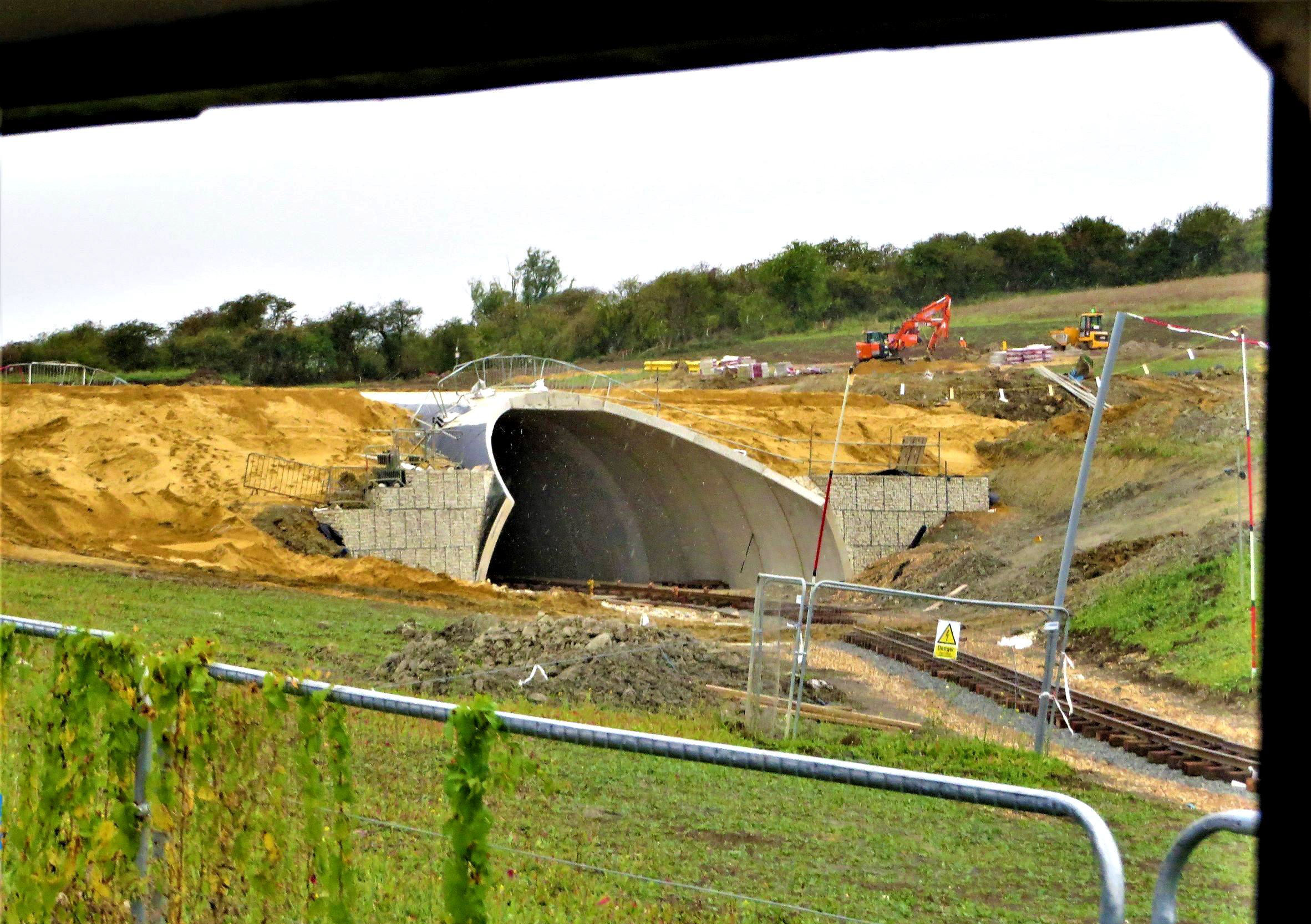
Near Vandyke Road the new tunnel for the railway realignment was almost complete. This is to allow construction of an access road to a major housing development.
[© Rob Moorcroft 2021]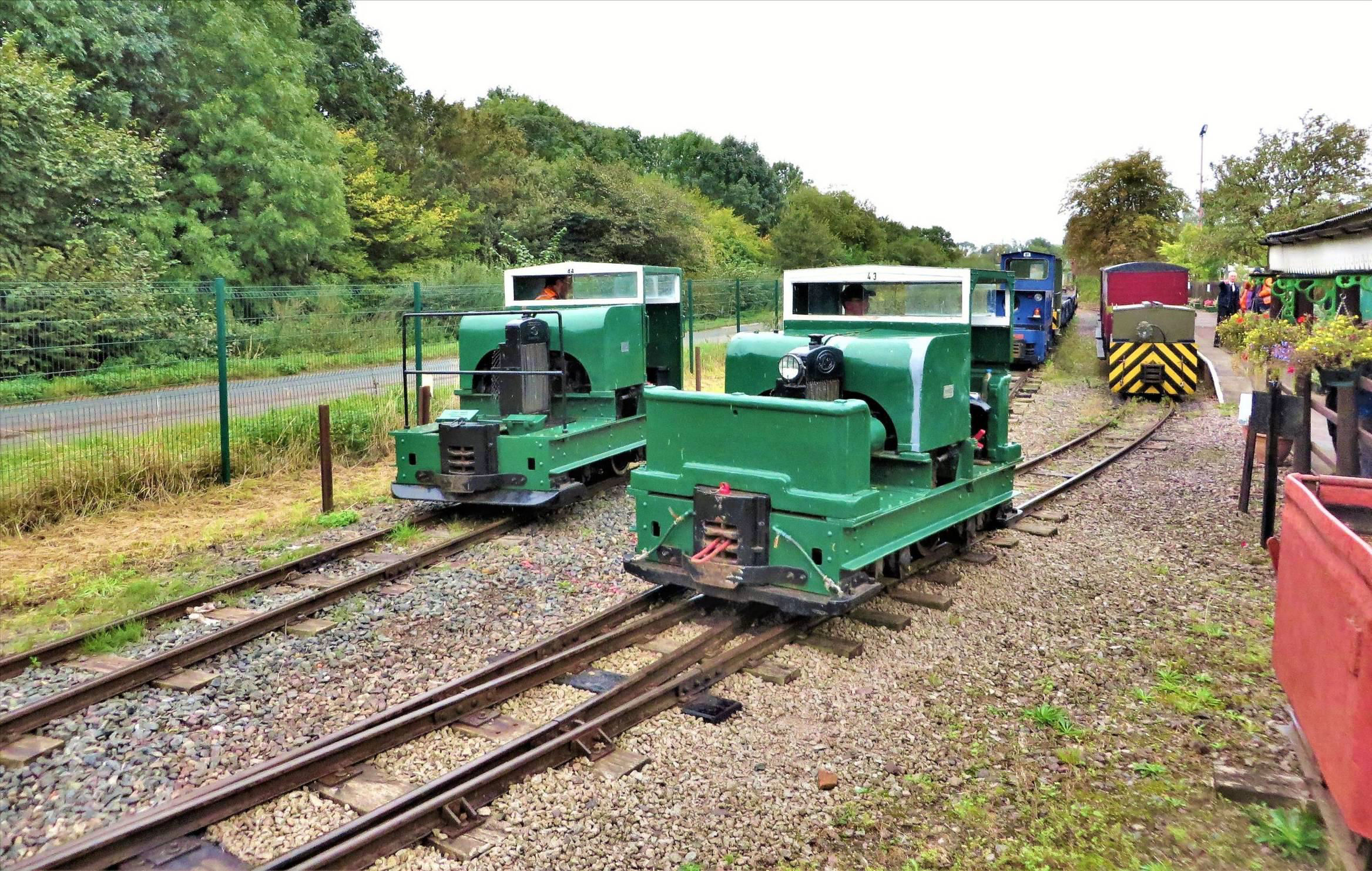
Stonehenge Works station which has a run round loop and a centre dead end siding, looking southwest towards Page's Park.
[© Rob Moorcroft 2021]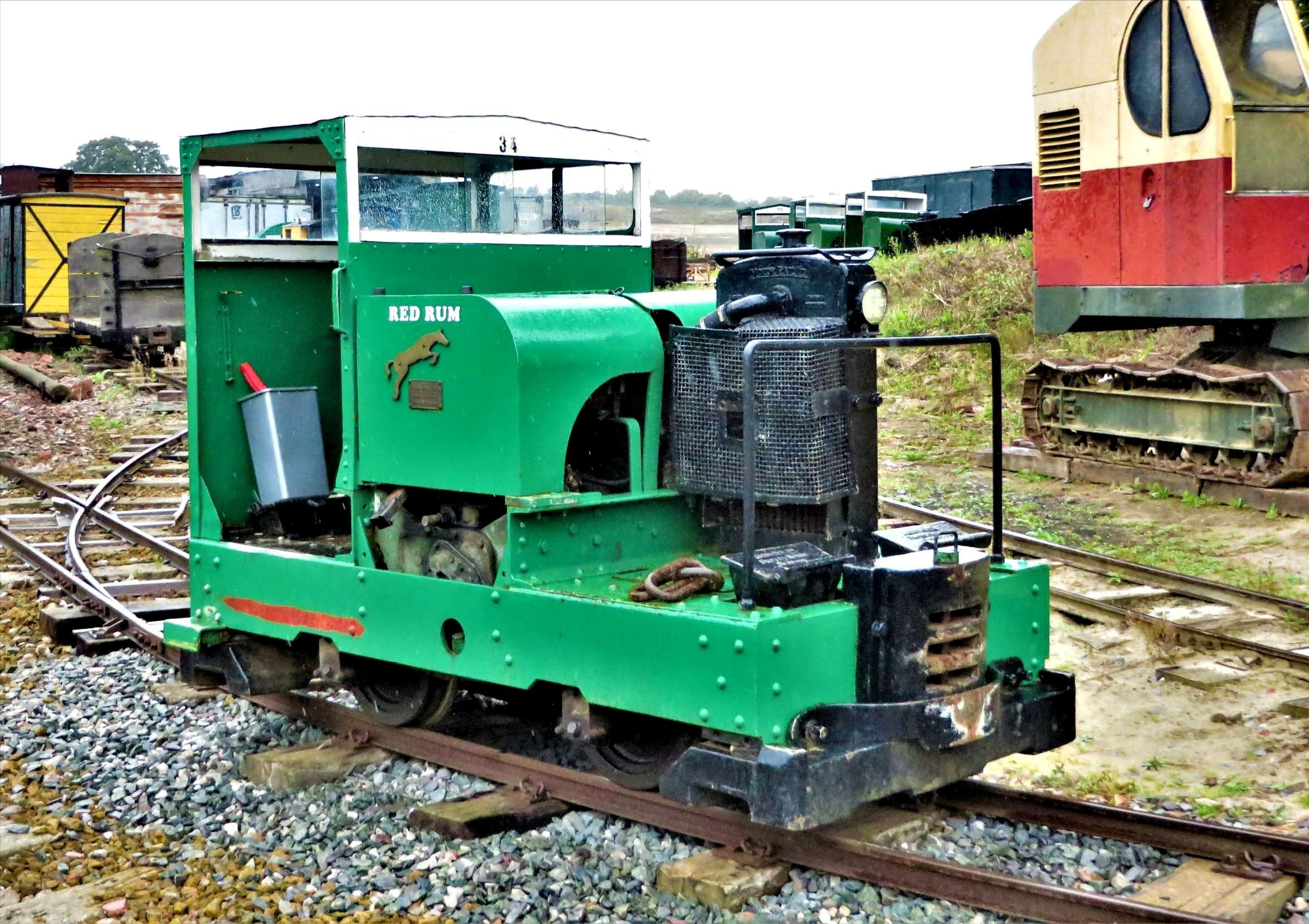
Simplex loco '31' Red Rum in Stonehenge Works yard.
[© Rob Moorcroft 2021]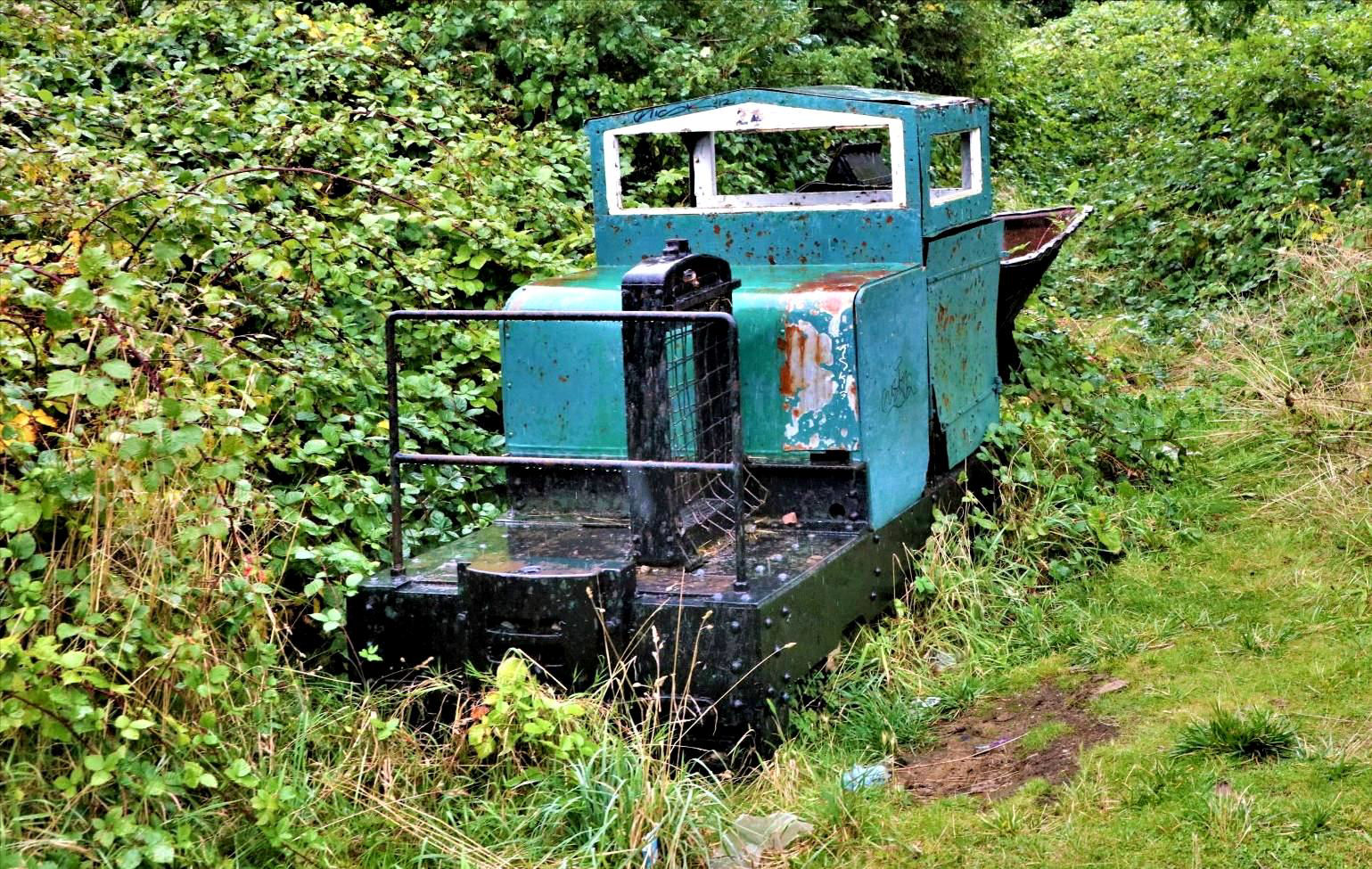
Remains of 4wDM No24 with a tipper wagon on a remnant of the disconnected Chamberlain Barn's sand quarry branch.
[© Iain Scotchman 2021]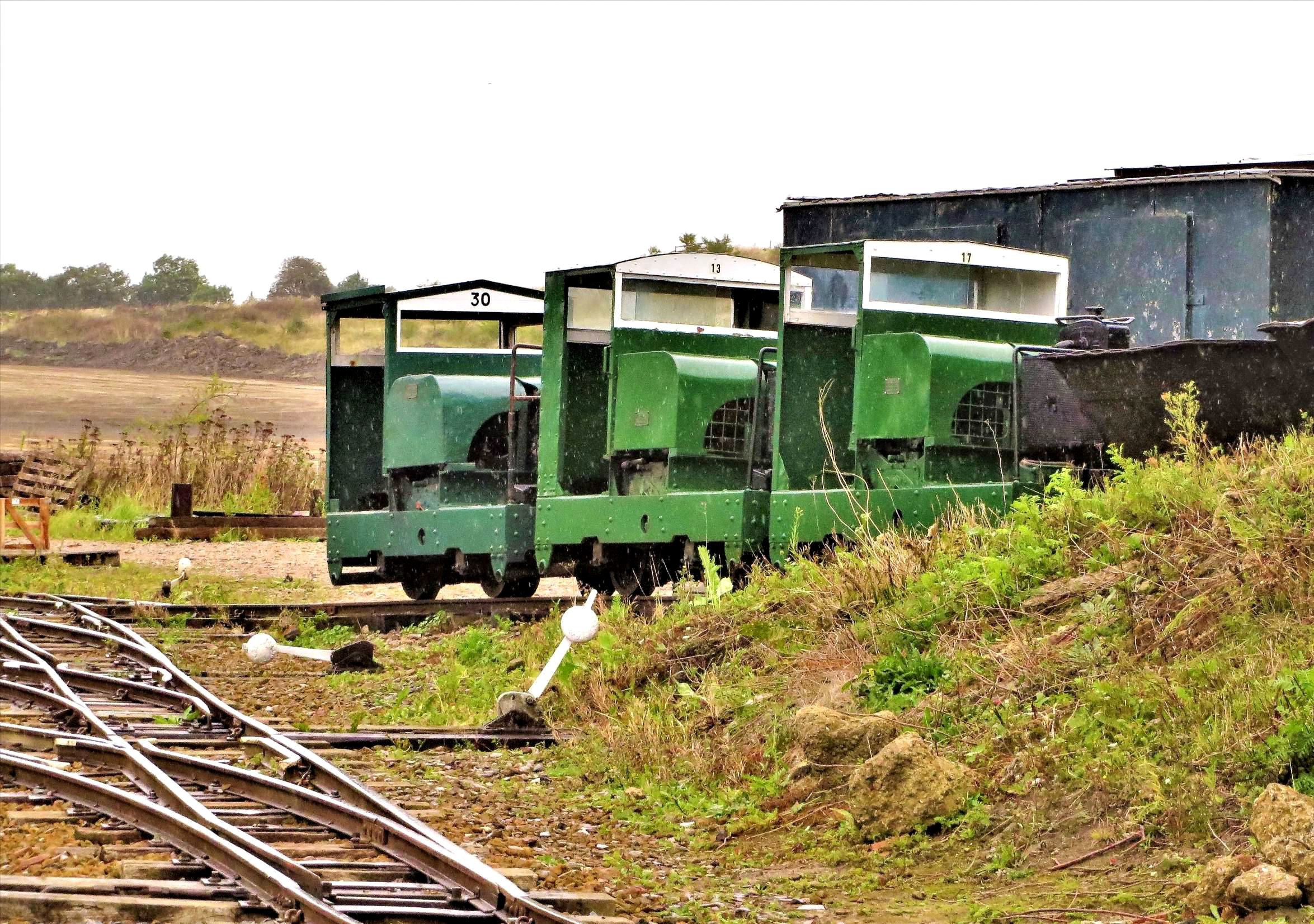
Simplex locos 30, 13 & 17 in Stonehenge Works yard.
[© Rob Moorcroft 2021]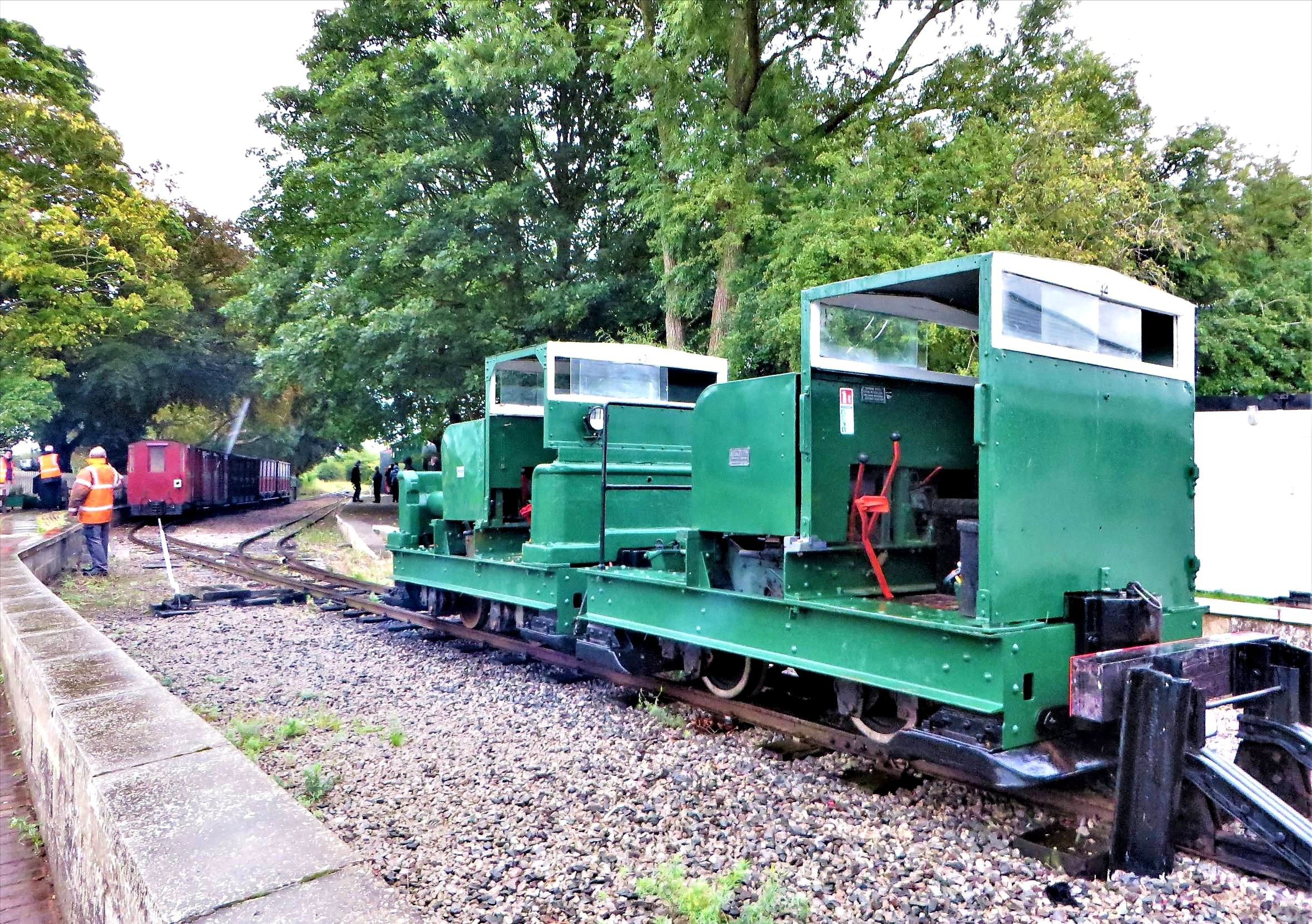
Simplex locos '43' & '44' at the end of line headshunt at Page's Park.
[© Iain Scotchman 2021]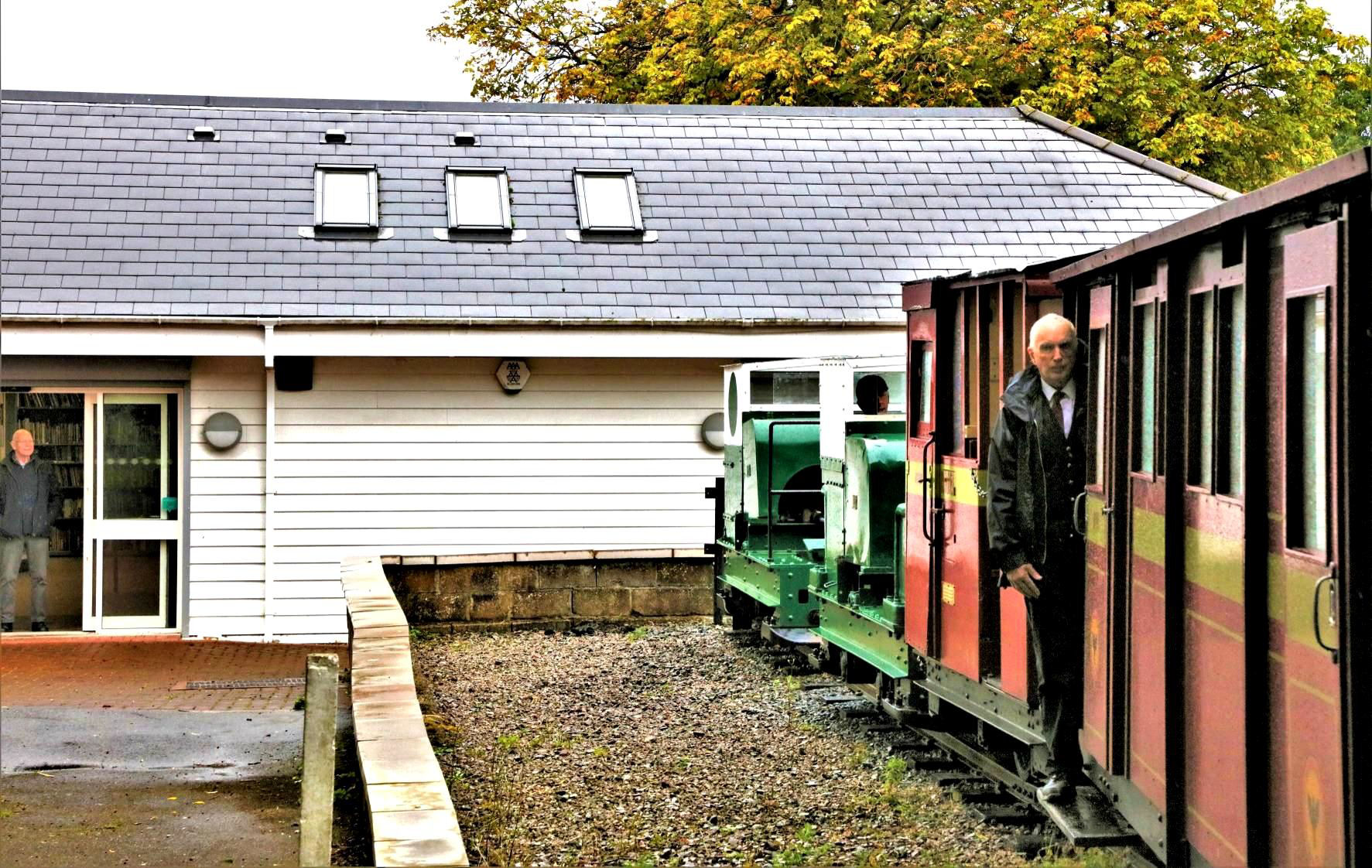
The end of line and the end of the tour at Page's Park.
[© Iain Scotchman 2021]