Scunthorpe Steel Works
Sunday 29th August 2021
Report by Nick Porter
The Branch Line Society (Test)
Guest

Having missed last summer's visit, I eagerly booked on the Jan 2021 fixture. Due to Covid it was delayed and became our Scunthorpe Summer Steeler No22. I always do as many of these trips as I can, there are no other industrial sites in this country of this size (over 100 miles of standard gauge track set in 2,800 acres - the works produces 2.8M tonnes of liquid steel per year), no others where we have access, and we can never quite be sure what the future holds. Fortunately, with rising demand the plant was rather busier than 12 months earlier and their steel stocks much reduced.
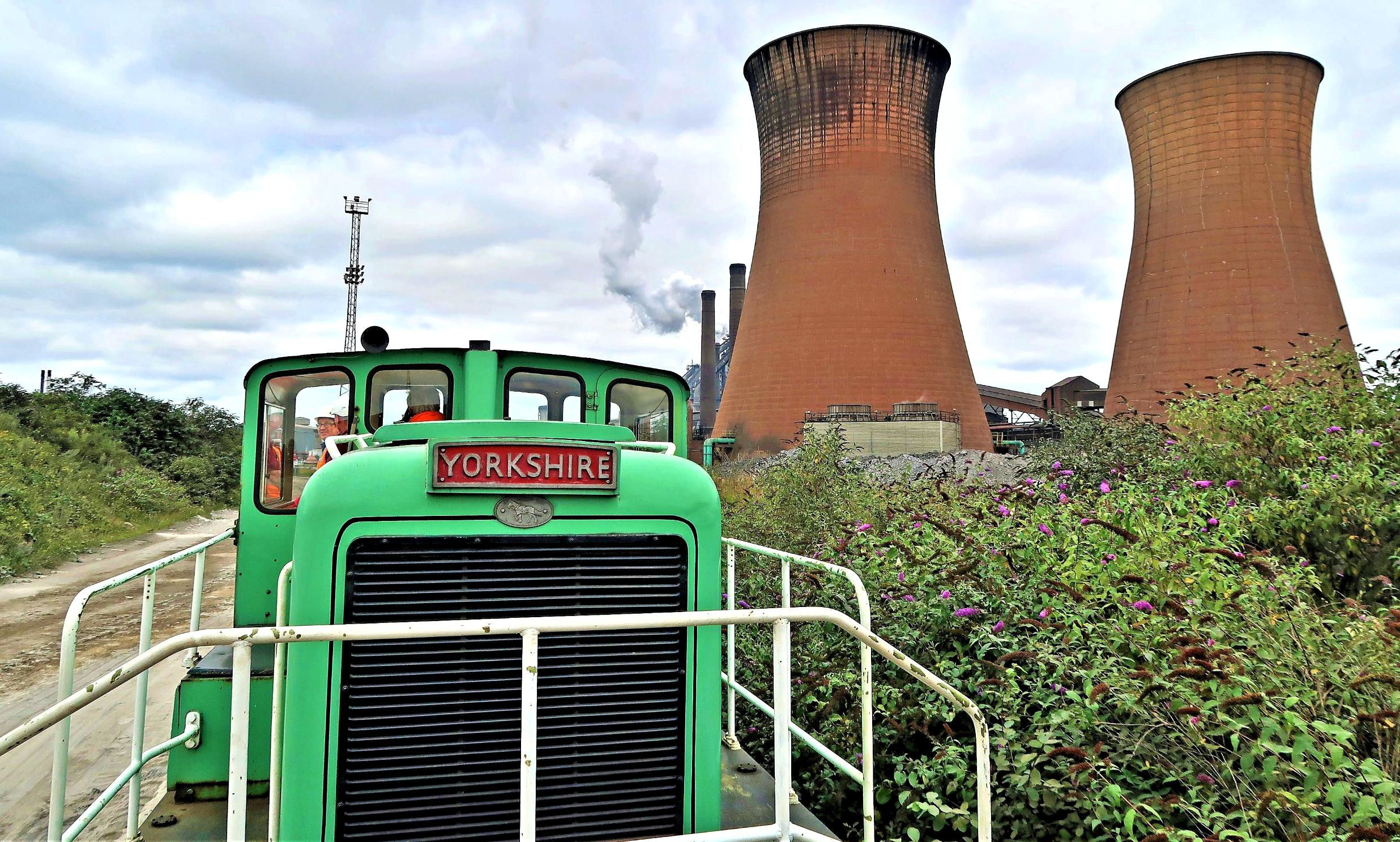
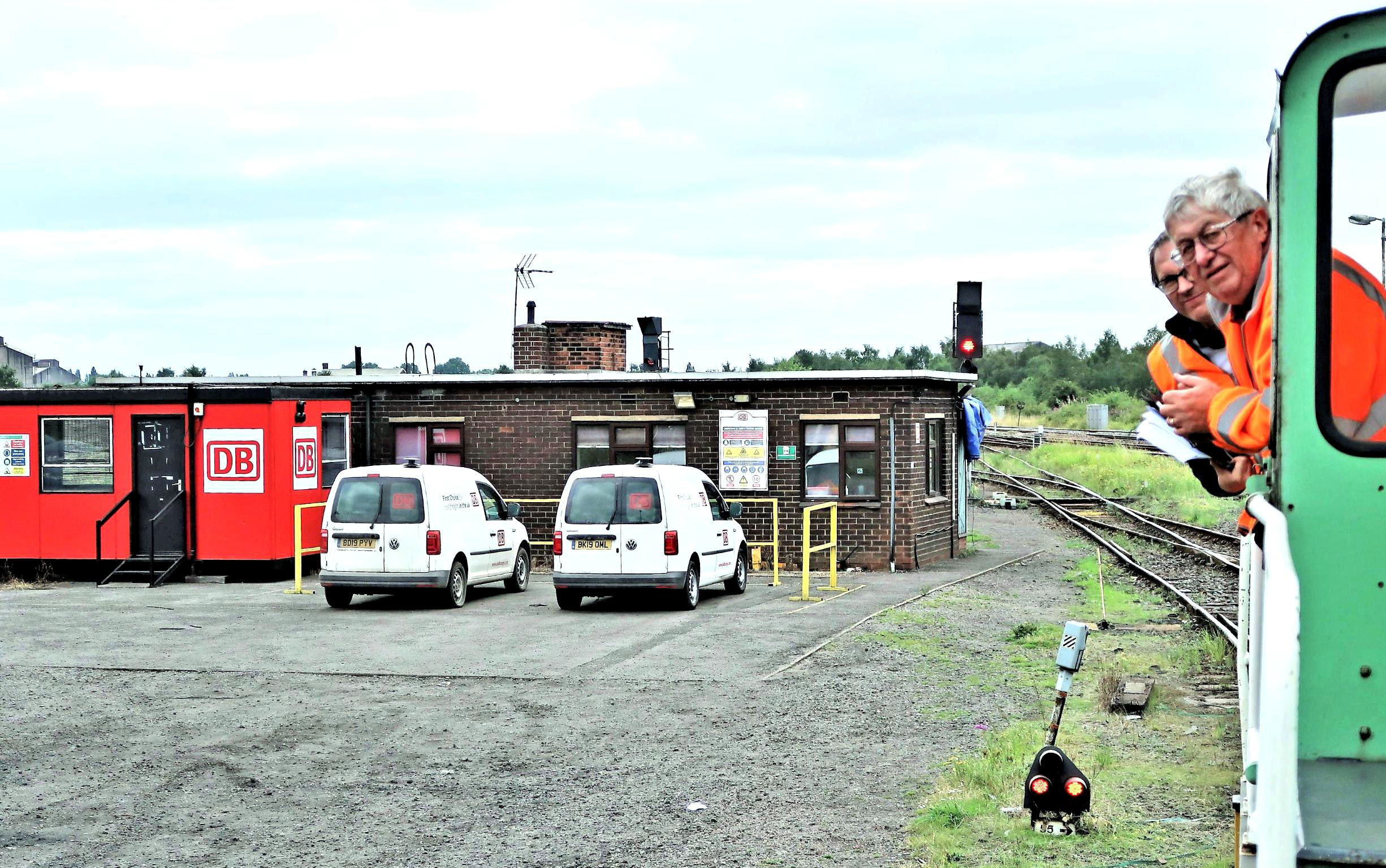
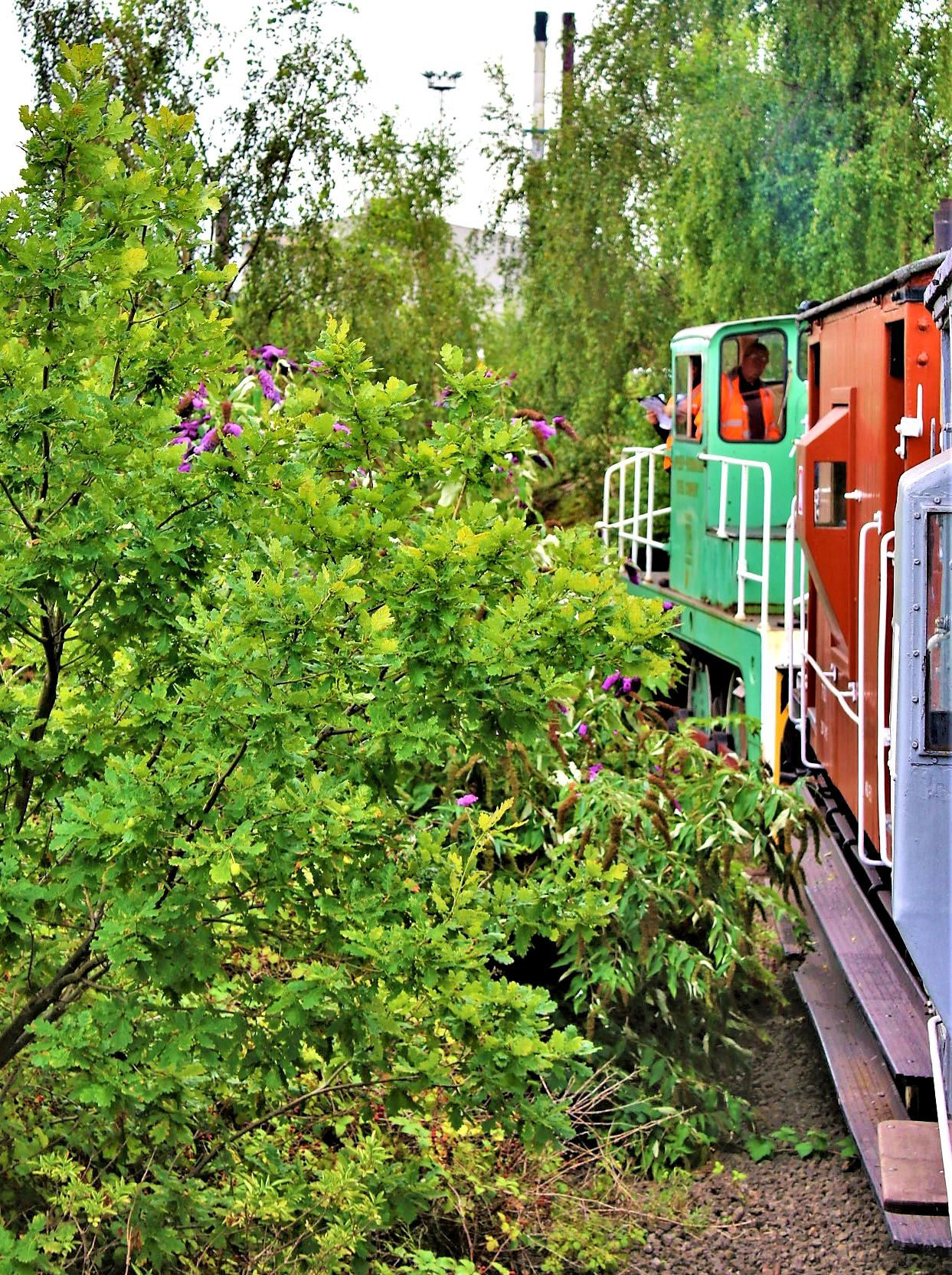
Parking in works car park Entrance 'E', I was one of the last to arrive and was met by Kev giving out shots of hand gel and also received a much appreciated A3 colour works and track map from Mark Haggas who kindly prints them. Our train was worked by the usual Loco 1 (YE2877/1963) with four brakevans. Spaces were allocated to avoid crowding and I was on the rear balcony of Van 'C' (middle of the train). Armed with map and notebook in hand to record sightings including wagons we set off.
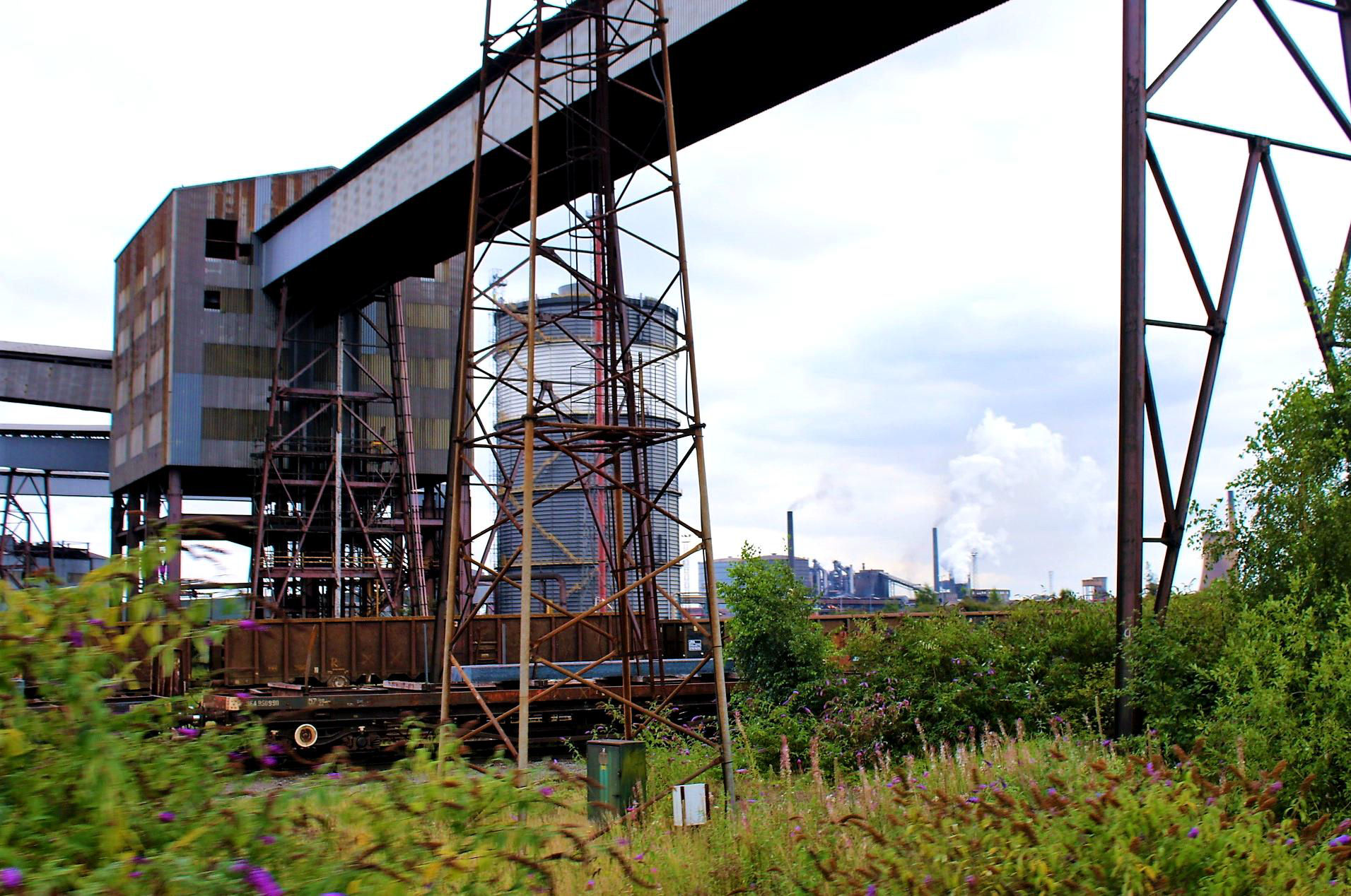
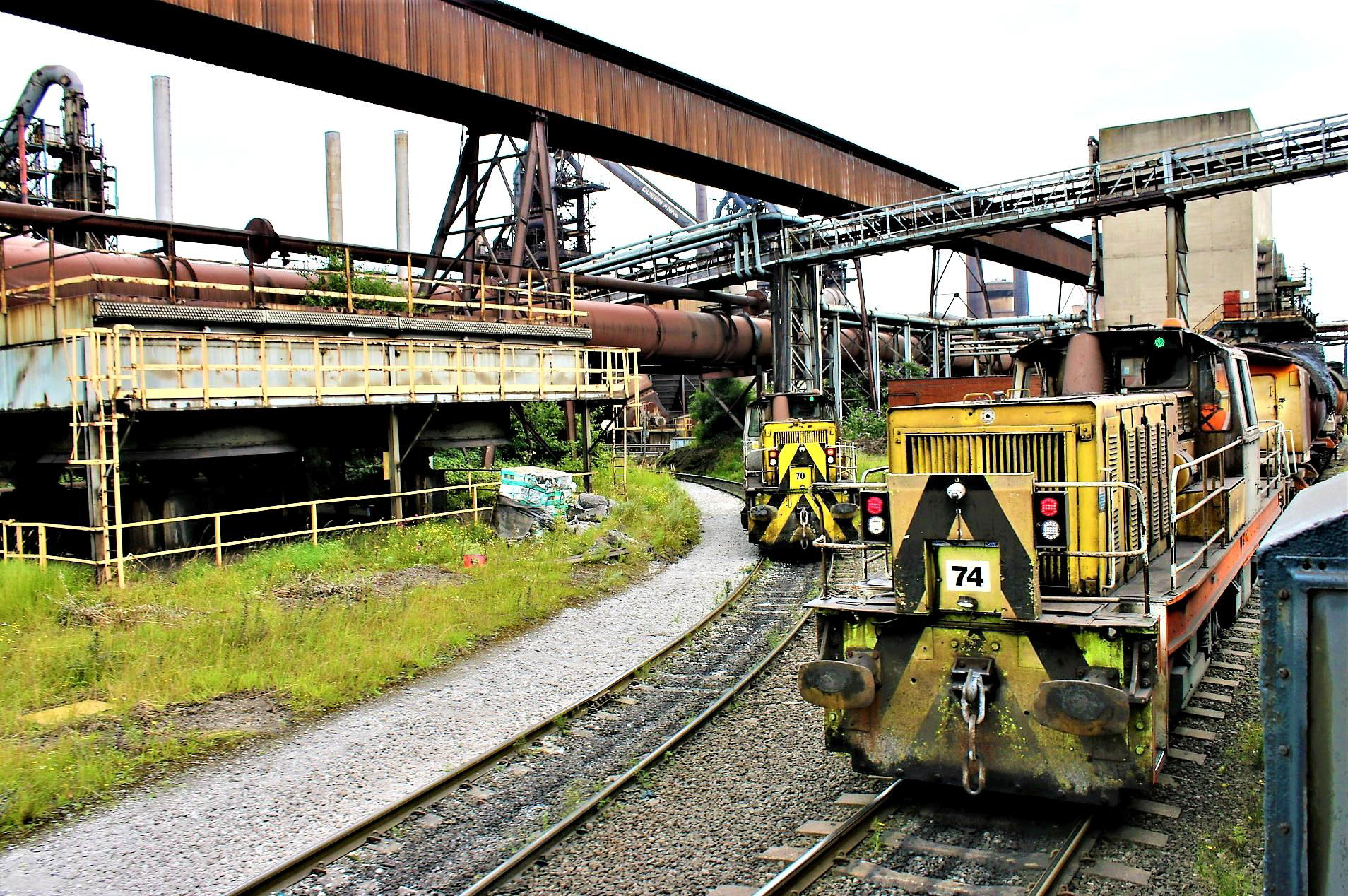
Departing on time at 10.30 we went into the works. Despite its vast size, which dominates eastern Scunthorpe, very little can be seen from outside and on curving around from Frodingham Platform the works come into view. Various routes can be taken but we went straight on past the AFRPS (Appleby Frodingham Railway Preservation Society) site via 227 Loop to Points 529 where many lines meet.
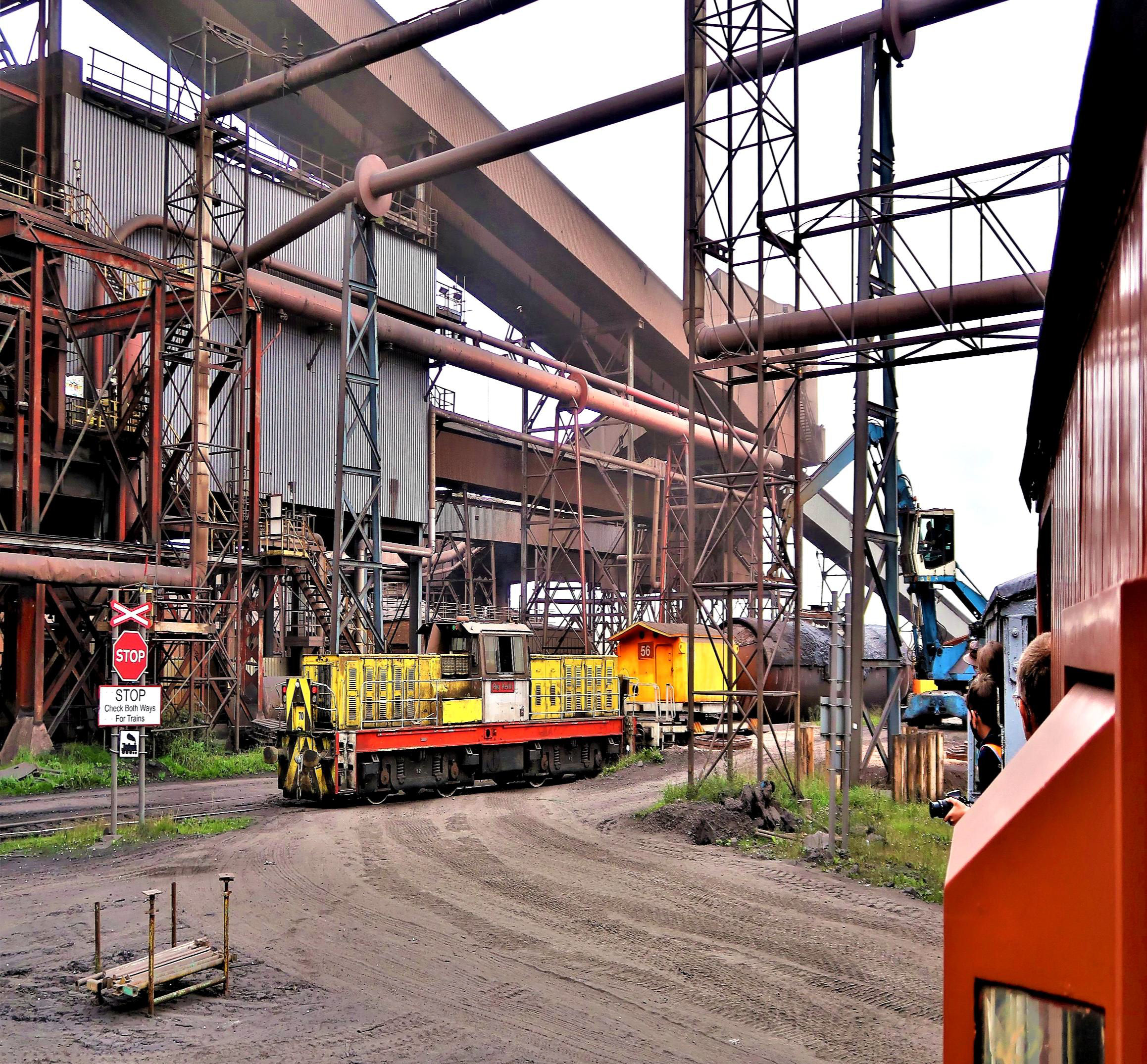
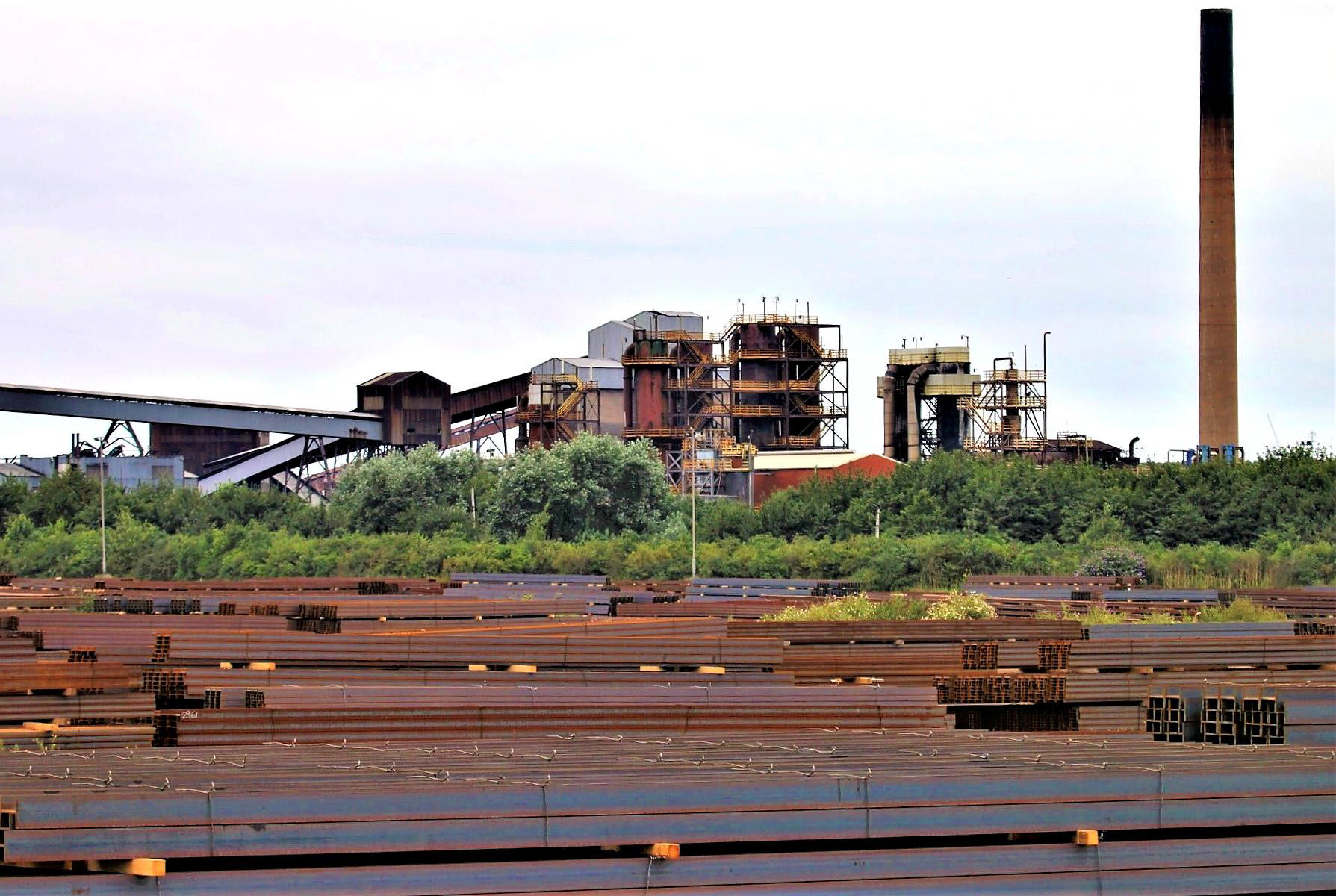
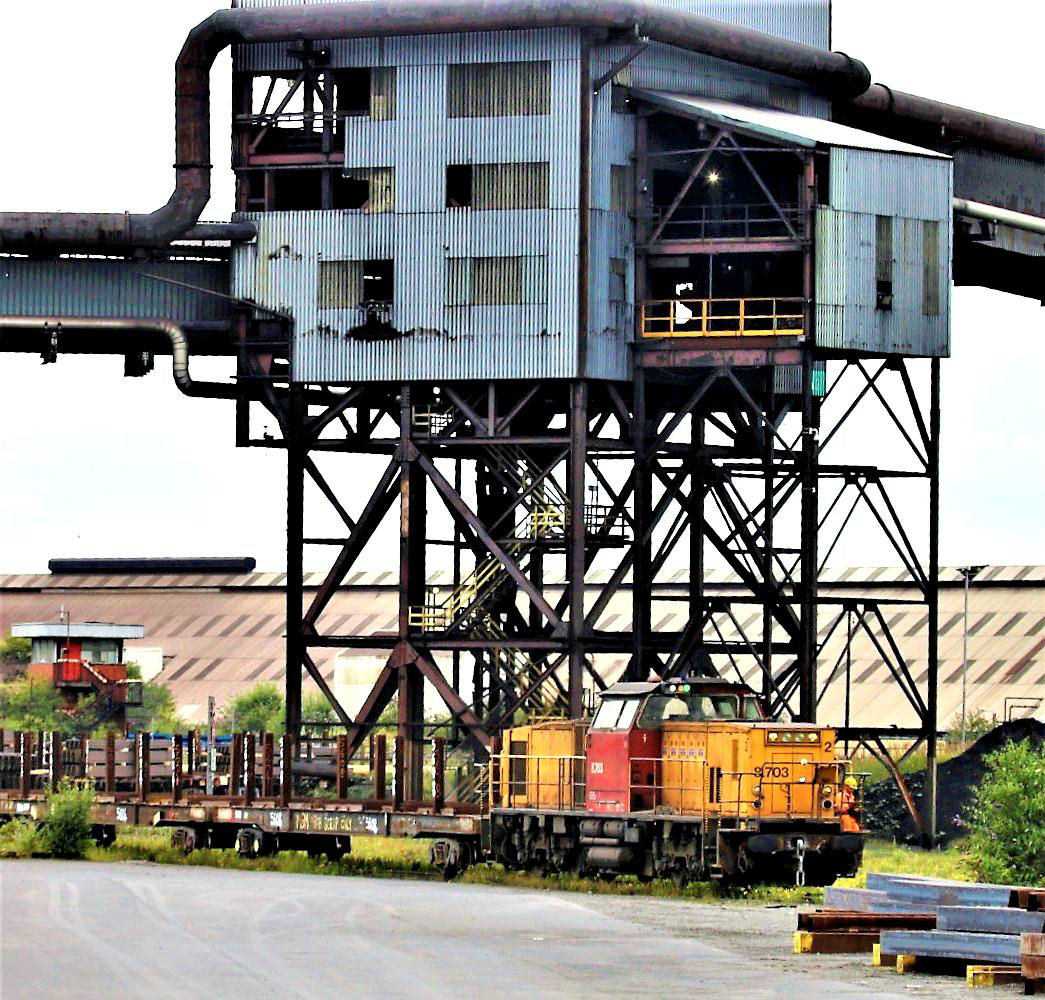
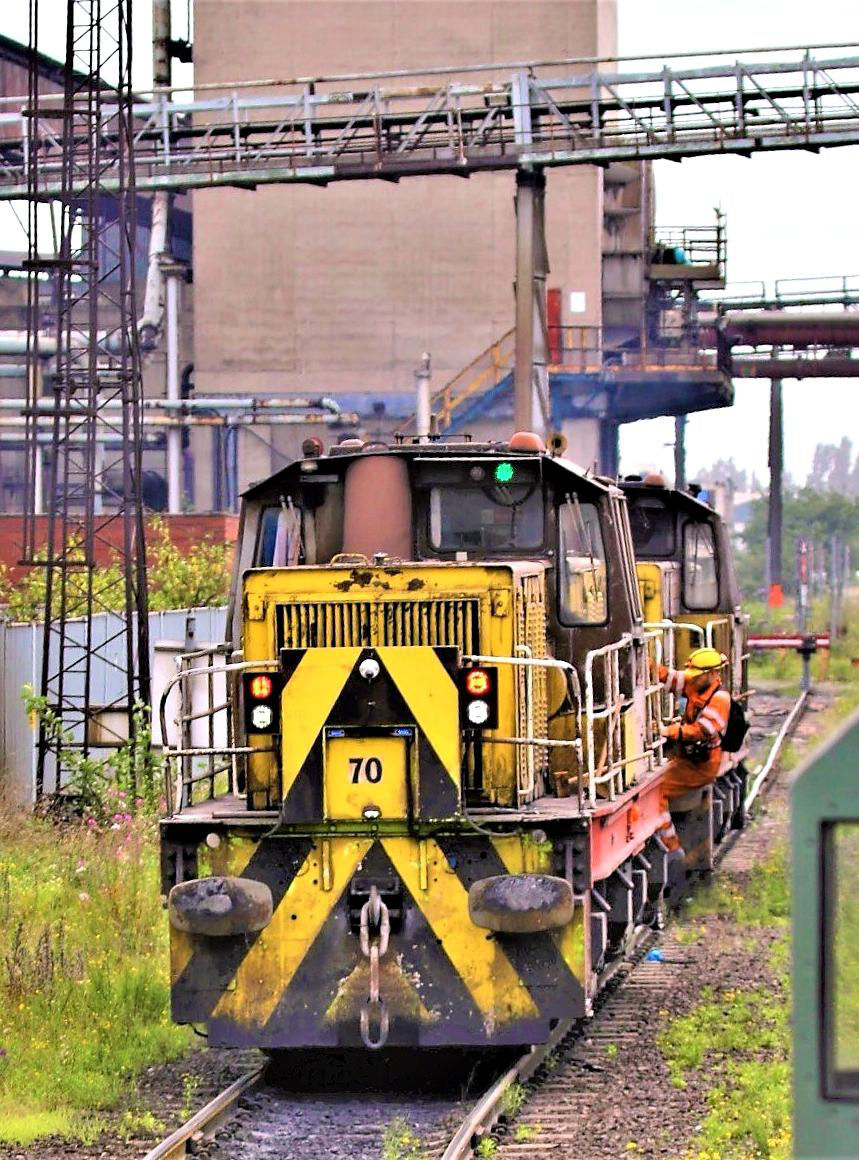
The tour then made for the Redbourn Semi-finished Steel Stockyard. Probably not my favourite part of the site, it covers a large area with three sets of sidings but at least it emphasises the size of the works. It was a bit breezy and can be chilly in Scunthorpe as you've no doubt heard, so always wrap up well even in summer! In standard Society working practice we covered all three tracks of Line 'C' to the end. In the adjacent Line 'B' sidings a pair of the big ex-Norwegian diesels, which now seem to work most trains, busied themselves - even though it was a Sunday, work continues 24 hours a day, seven days a week. Siding 'B2' had been extended but I'll have to wait for another day to visit.
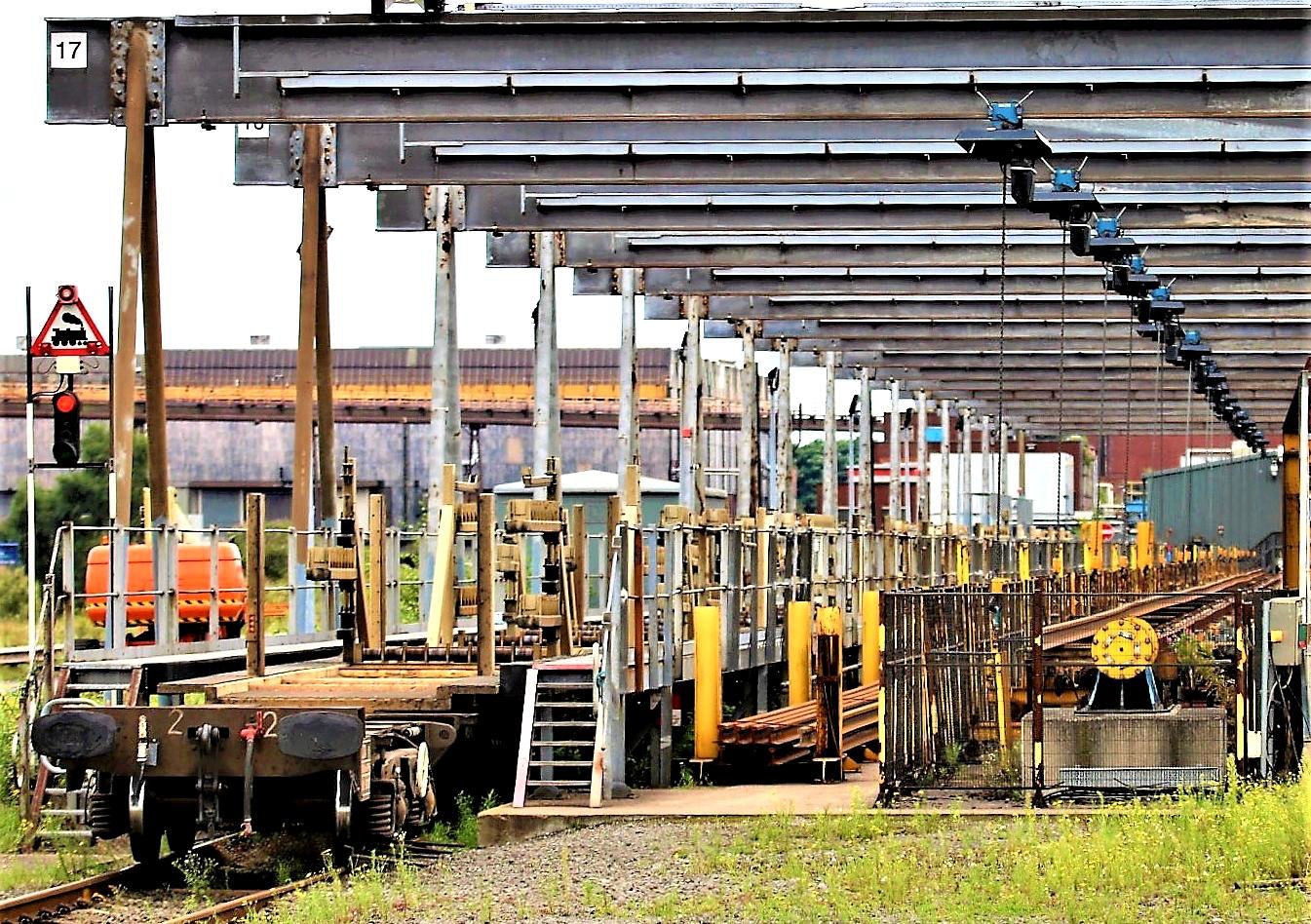
We then headed up to the Rail Service Centre where rail is made. Despite Bank Holiday Engineering on NR, the sidings were full of wagons, so exploration was limited. The odd wagon can be moved but I don't think they'd let us empty a whole yard. We visited firstly 2 Bay East line then ran to the very end of the line from Points 619 and finally just into the building itself at 5 Bay. With lots of alarms, sirens and flashing lights, it's always very interesting to see inside such buildings. Finally it was into 3 Bay.
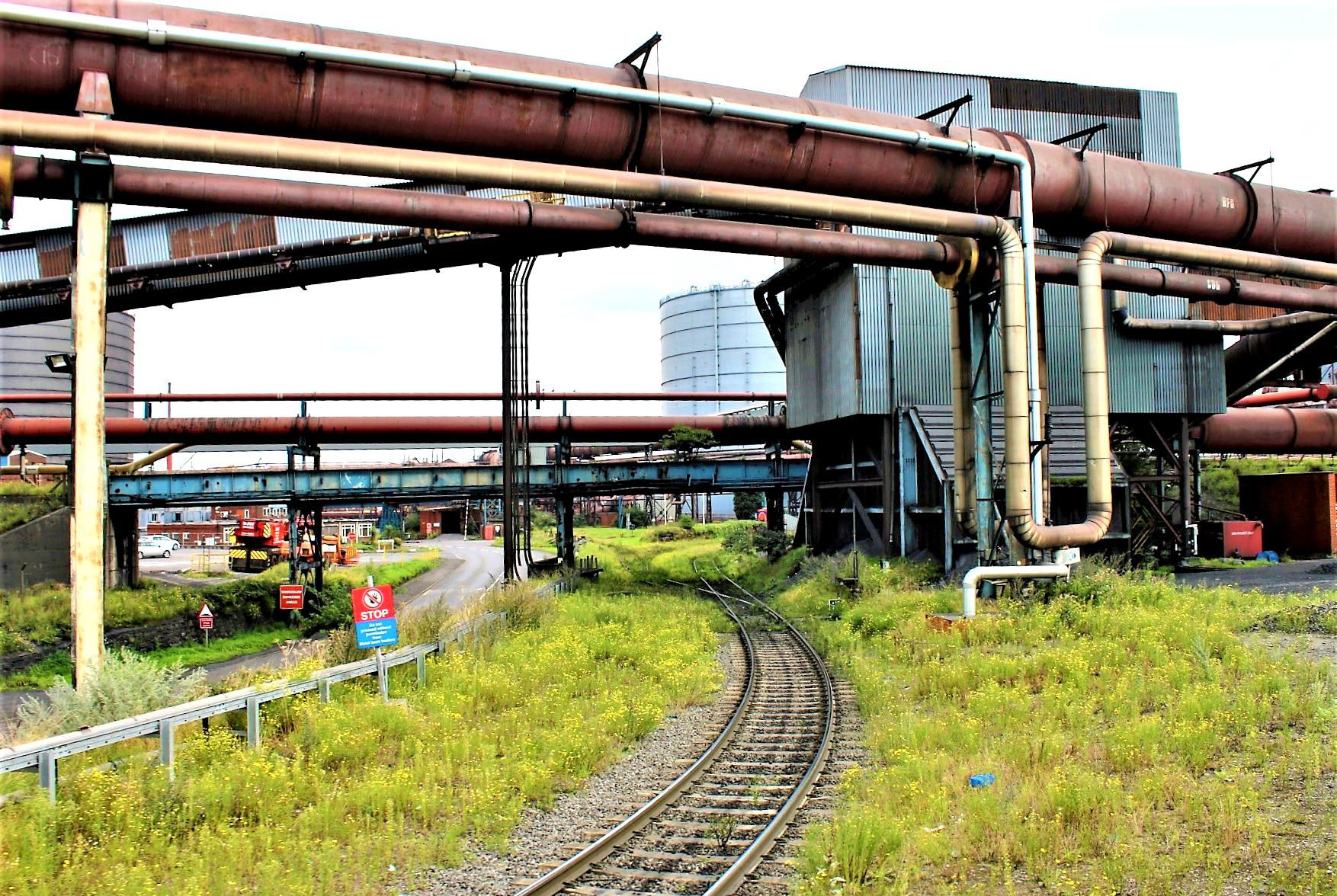
We then set off on what I would call the 'main line' around to the eastern side of the site. The track runs in an oval with most of the heavy industry in the southern and western parts. There are lots of empty spaces on the eastern side where disused buildings have been demolished over the years. Indeed since our last visit most of Dawes Lane Coke Ovens had been demolished; just a small part and the chimney remained to be dealt with. (Closed 8 Mar 2016, the last train was our 29 Mar 2016 tour.)
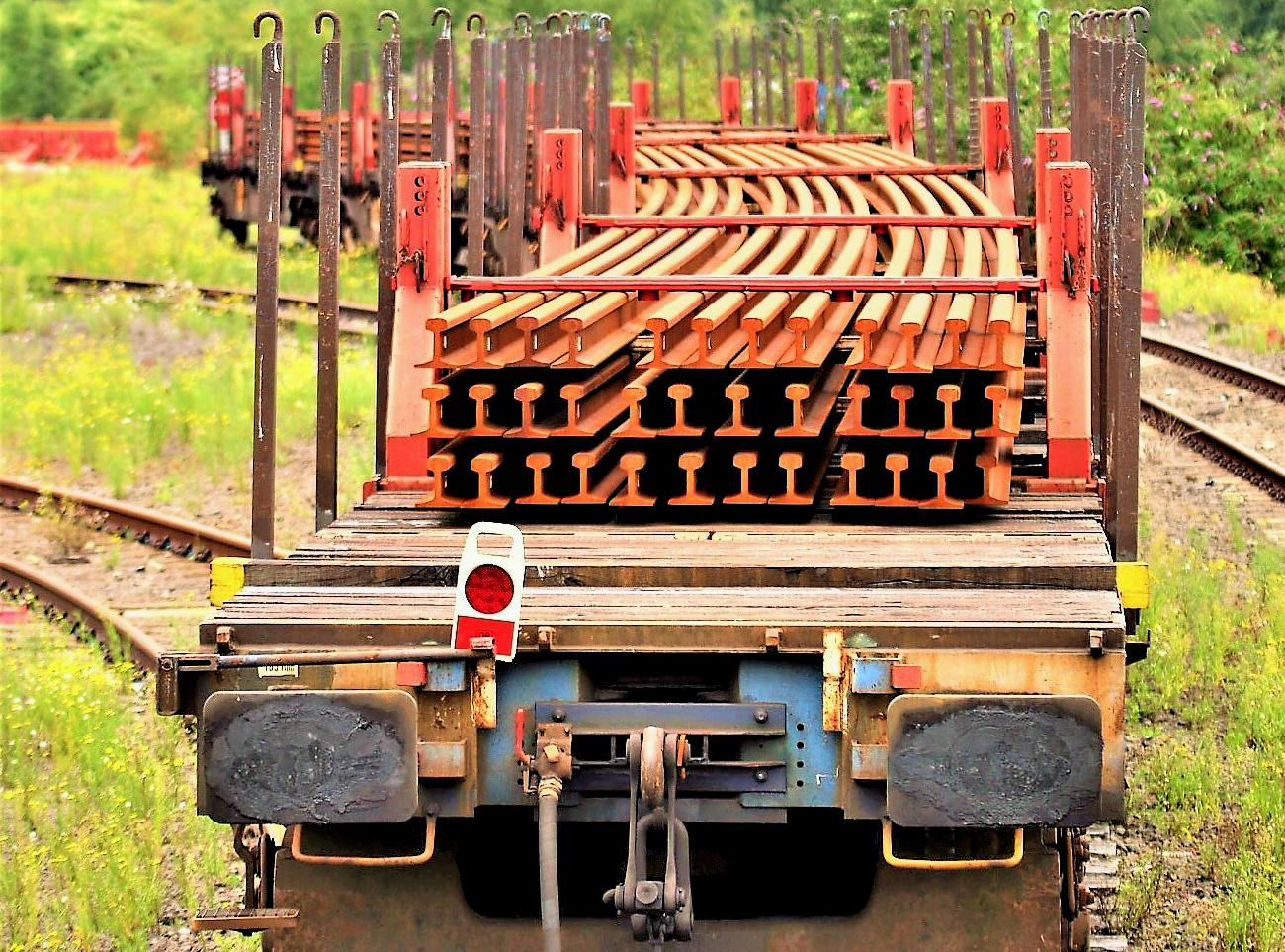
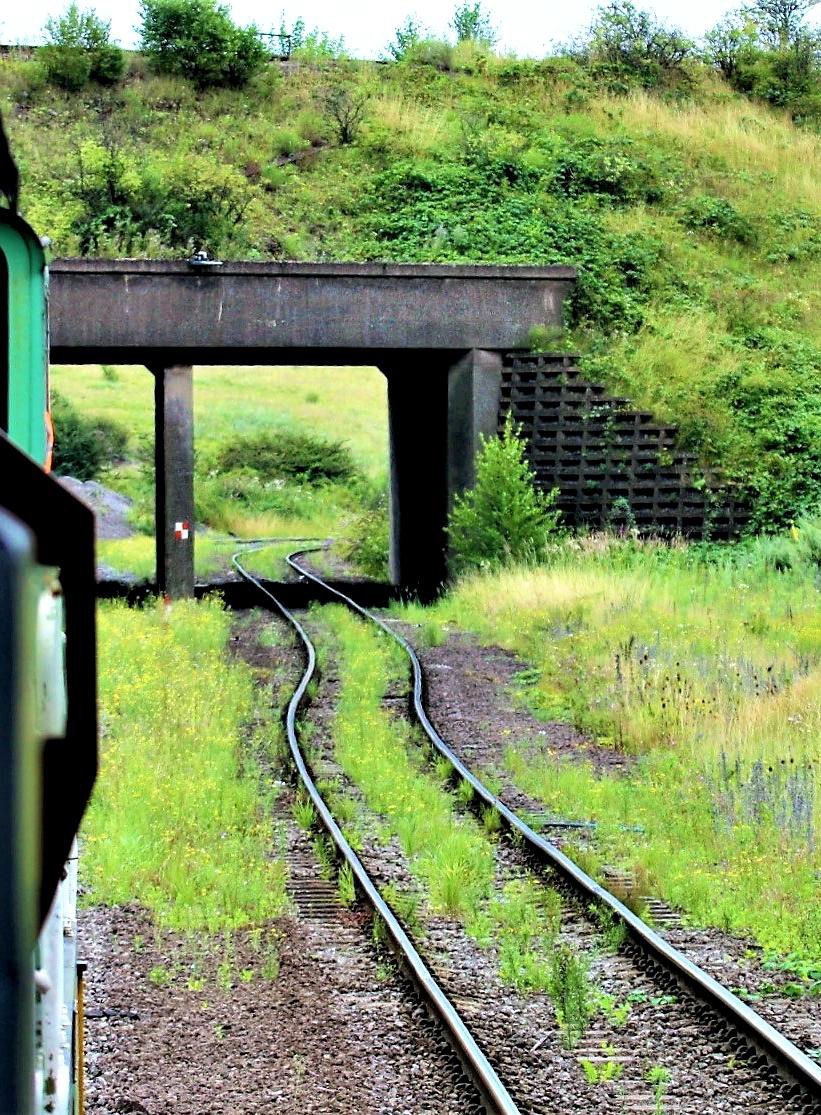
We passed under the Foreign Ore Branch, visited by a few railtours over the years; it receives 50,000 tonnes of Iron Ore from Immingham a week by rail and was operating this Sunday. Arriving at Mills Exchange Sidings there was a mixture of main line and internal wagons but we did four through roads and two of the long sidings. We also headed into the headshunt beyond Points 482. I didn't bring my track map with me but was sure this was new to me (it was) and I was encouraged by excited chatter from the Scunthorpe regulars opposite me. The line was pleasingly done up to some bushes. It used to be a through line next to the Billet Mill Approach Road to Points 329 (now the P'way Yard headshunt).
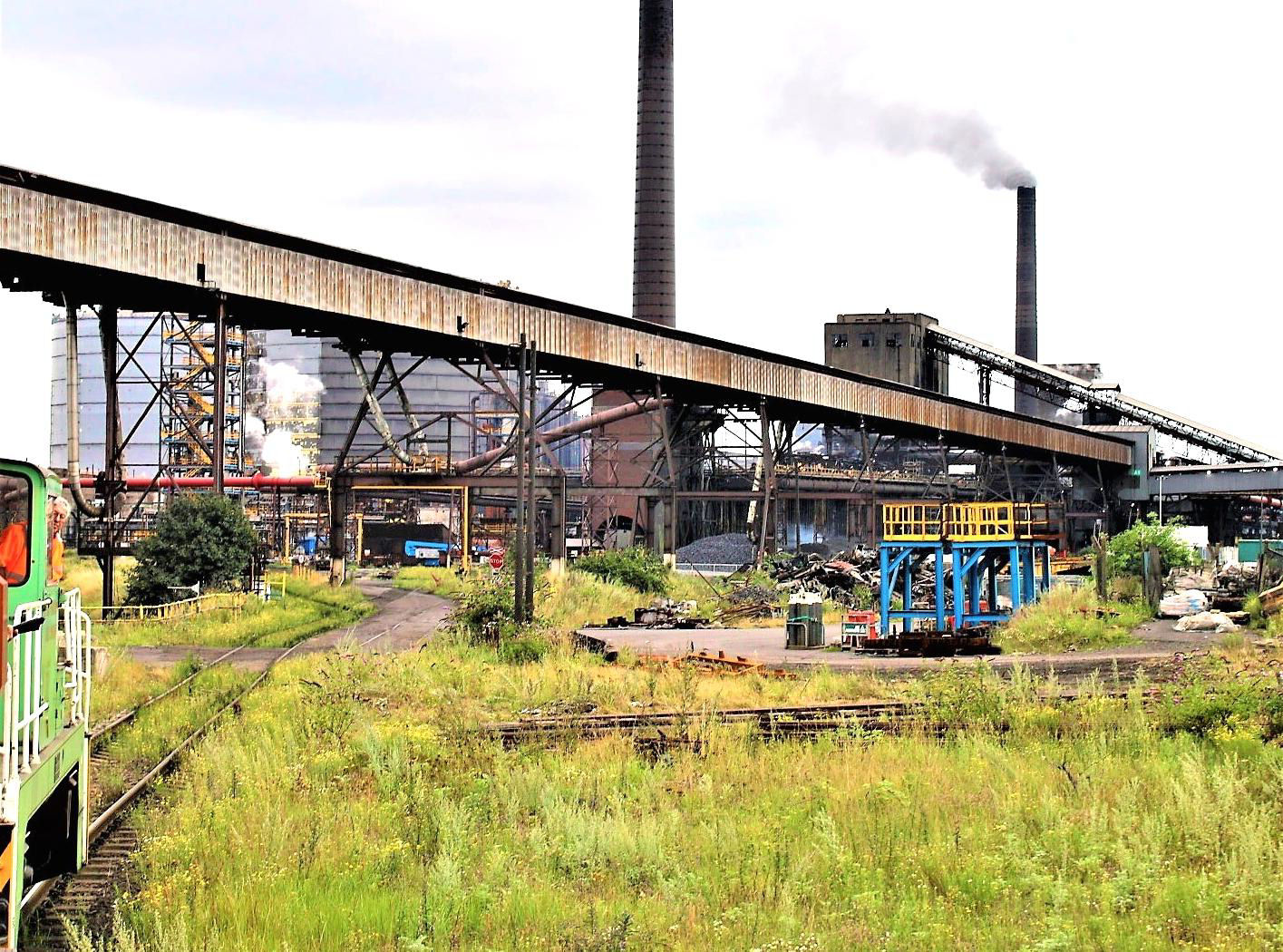
We then visited both lines beyond Points 407 to the Medium Section Mill before continuing south, passing a lovely selection of functional 1970s style buildings also popular at ex-National Coal Board establishments. Next we reversed in the Welfare Loop both ways (one of the many requests actioned) - I must submit mine next time! A quick run was made up the siding from Points 312 before heading past the massive BOS (Basic Oxygen Steelmaking) Plant through to the South Melting Shop running road. A couple of reversals followed to arrive at the AFRPS (depot) Appleby platform just after 13.30.
A Class 144 and some Mk3 coaches were new. I was first off the train by chance and had a nice lunch of a beef and onion sandwich, lemon cake and a cup of tea in the Mk1 coach used as a buffet. You are always given a hot drink at Scunthorpe! By coincidence I and many others on this tour also had a lunch break in Appleby on Pathfinders' Cumbrian Freighter the following day, but there the similarity ends!
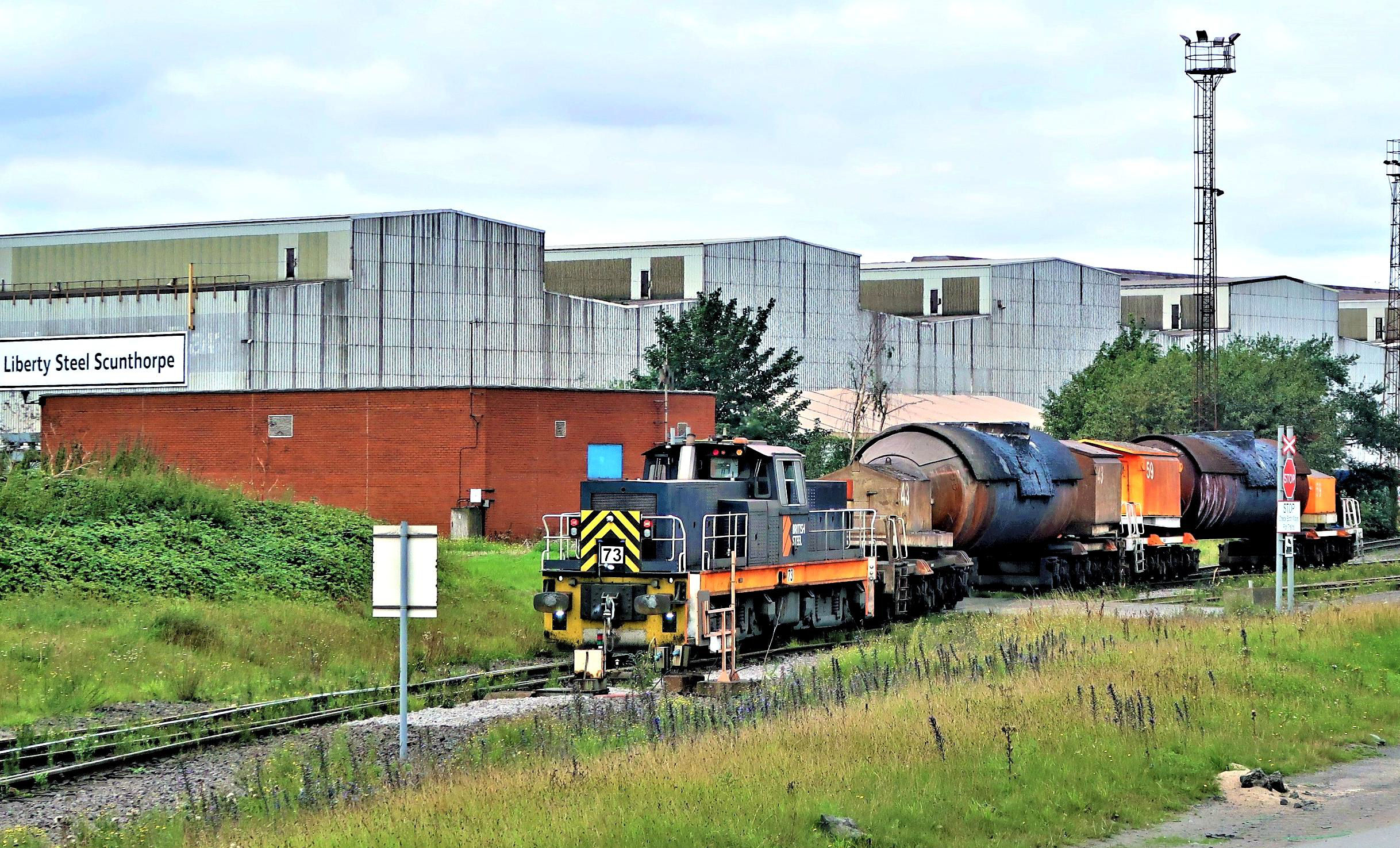
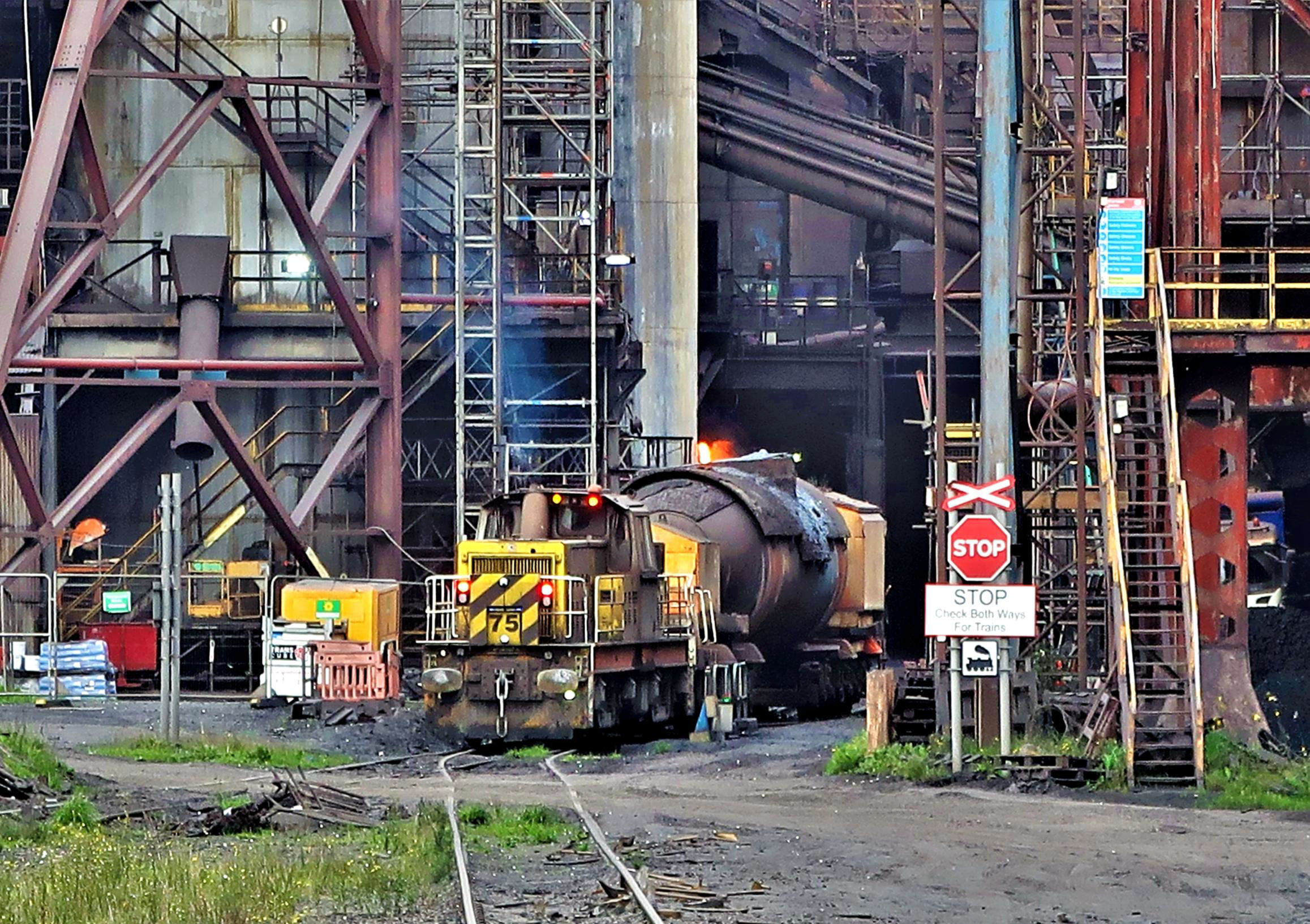
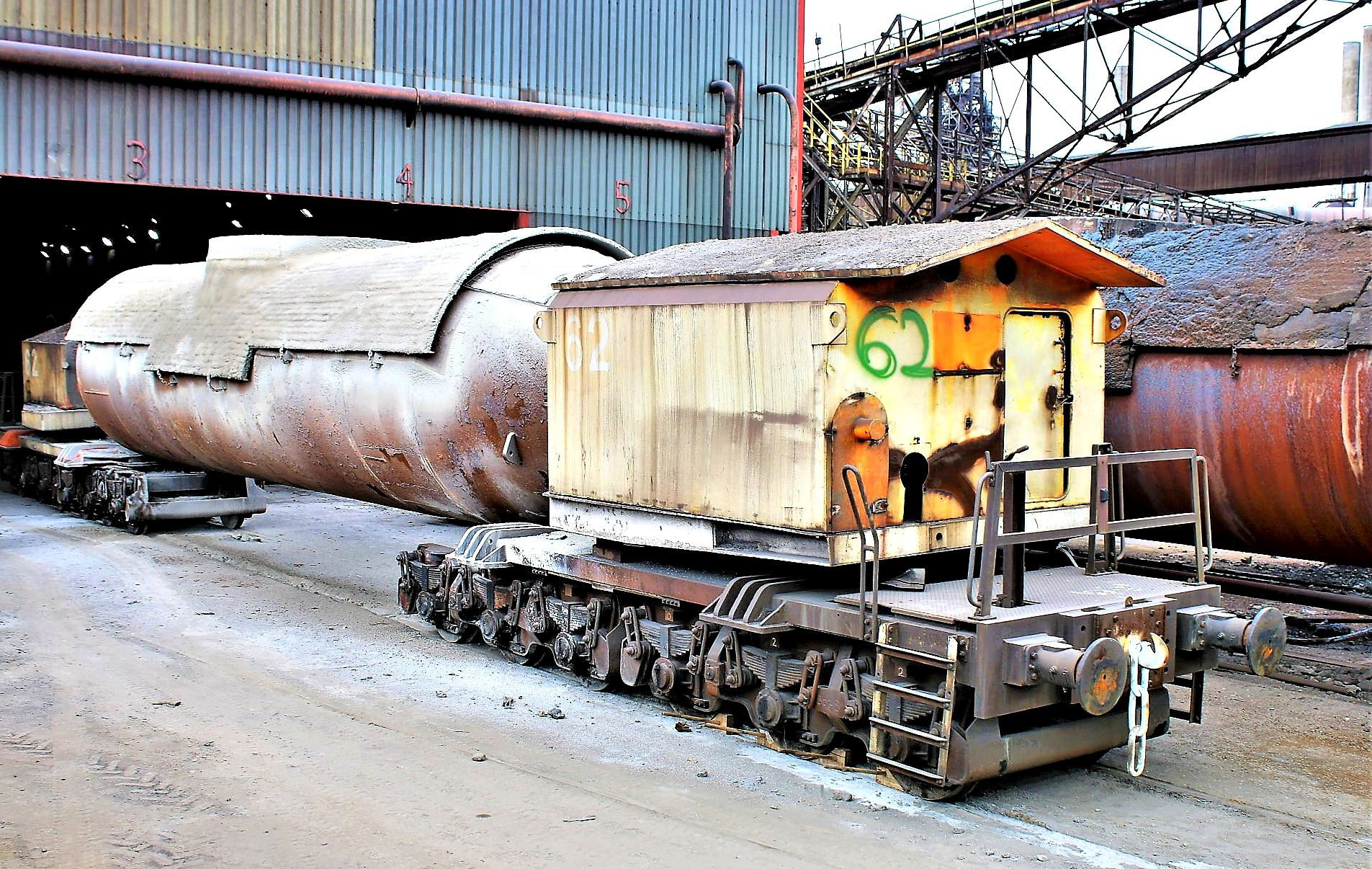
Refreshed from our 'PNB', the 50 participants set off promptly for Part 2 at 14.30. First on the agenda was the Torpedo Repair Bay. These massive hot metal carrying wagons have their own maintenance area. We passed some during the afternoon and the warmth can be felt from a distance, welcome in winter. In the area, we visited Line 1 to the building entrance and all of the siding beyond Points 106.
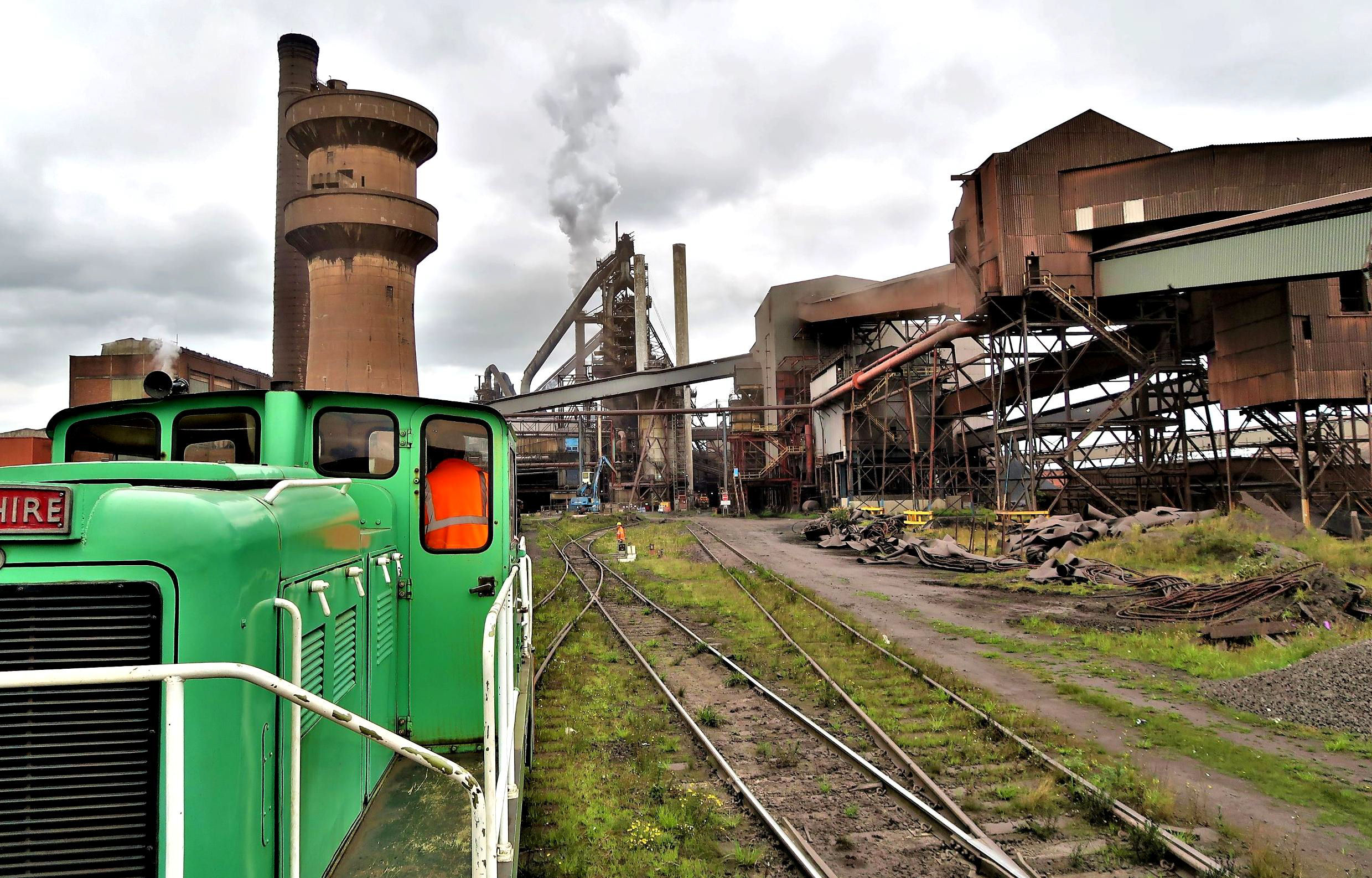
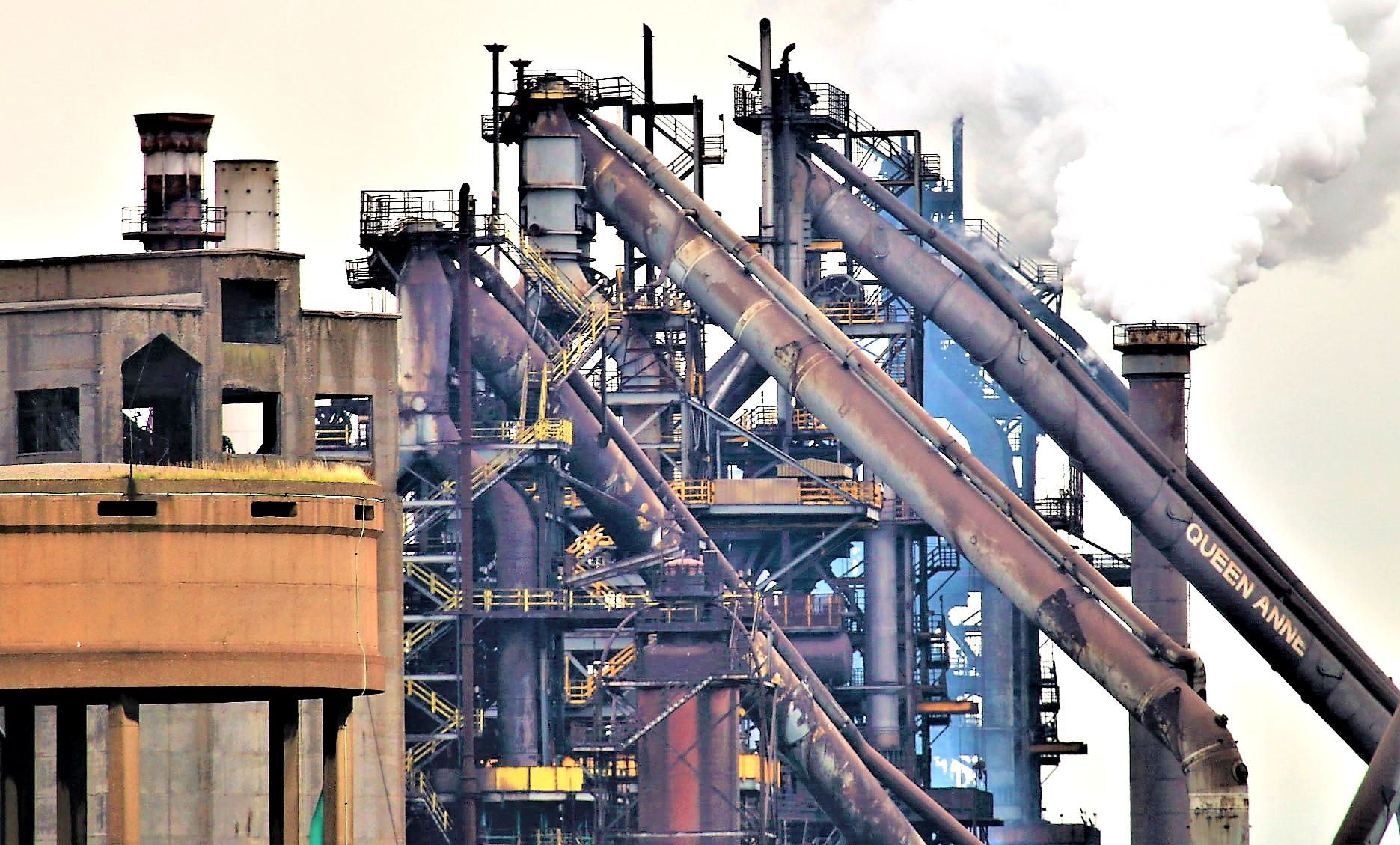
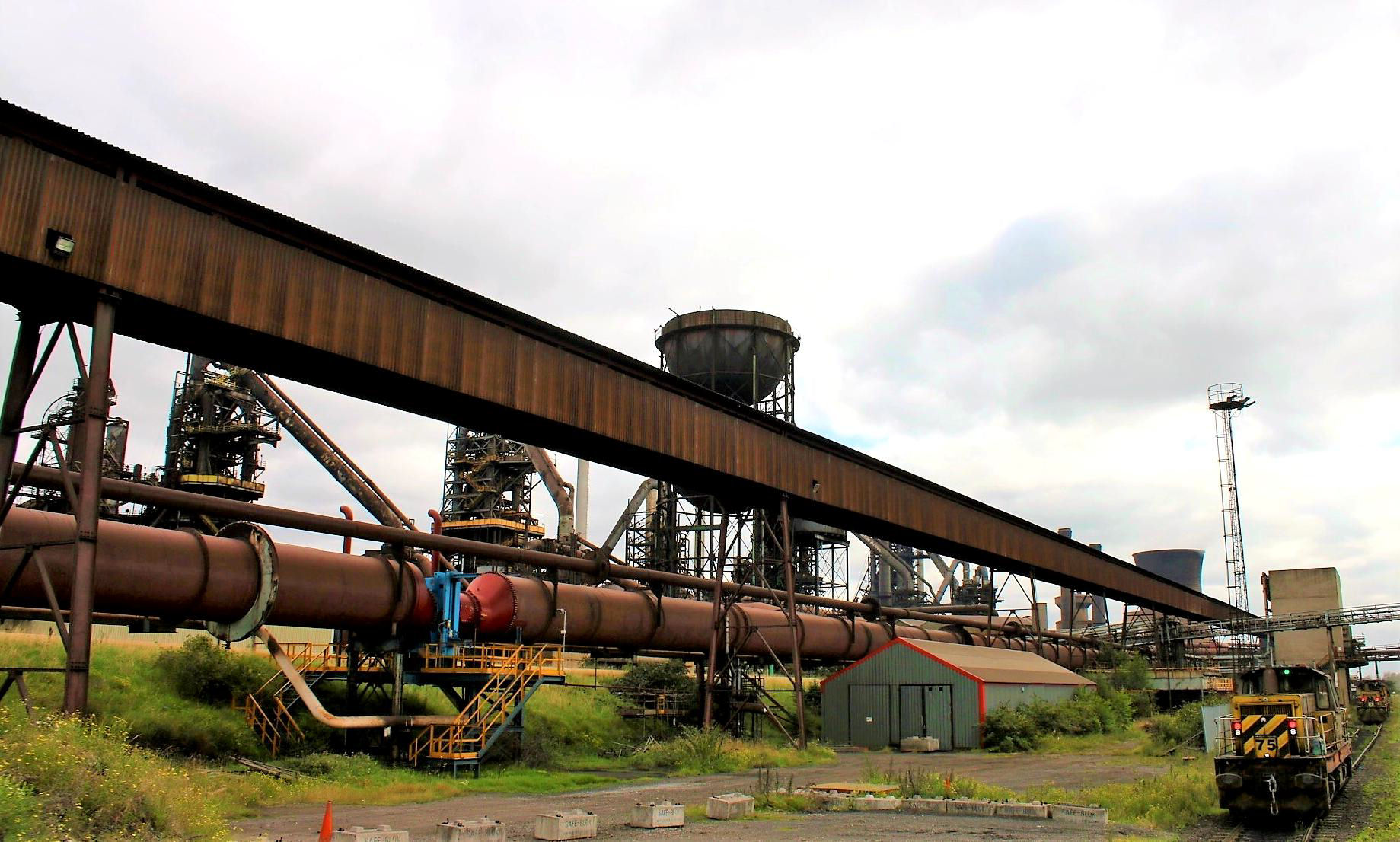
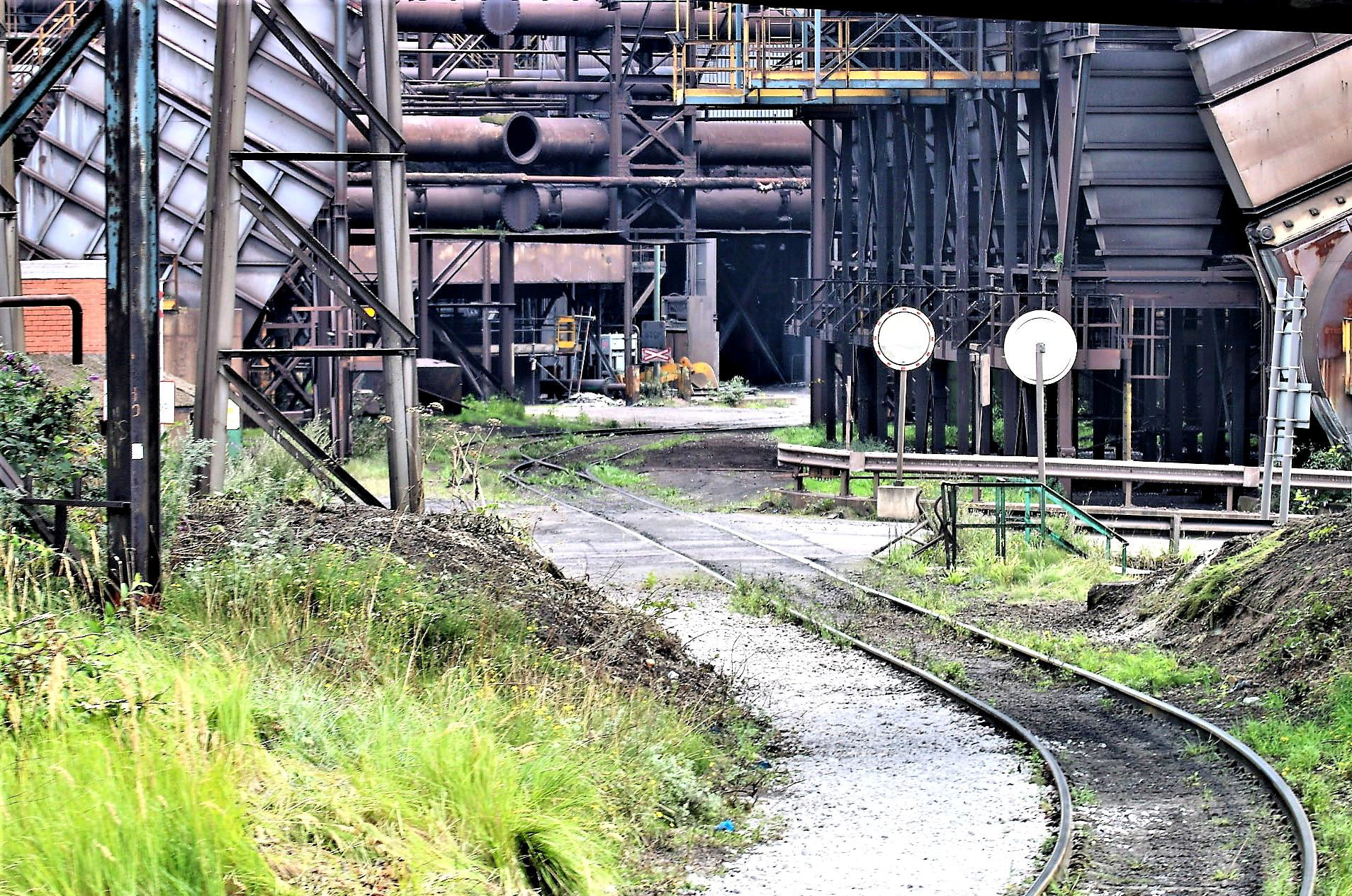
Heading to, and reversing from, the quadruple track junction before Bridge 44 where lines converge, our tour went off into the blast furnace area where the Four Queens of Ironmaking (so the notice board proudly acclaims) can be found. (From this south end north they are Victoria, Anne, Bess and Mary.) In Aug 2020 only one queen was operating at half power but this time there was much more activity. I don't pretend to understand the steel making process, but it's always impressive to get so close to such areas. We did all the track, including some I (and everyone else) needed, in the Queen Victoria West Road area, a very thorough visit leaving via the Bottom Loop. We even shunted a wagon out the way for further coverage. Beyond this, under Queen Victoria's bottom, lies track that will never trouble my red pen as you have to wear a hot metal suit and other gear to go near it... During a wait here there was an interesting demonstration of the crane operator's skill in hooking up, lifting and positioning the large heavy lids on the torpedoes after they had been filled with hot metal.
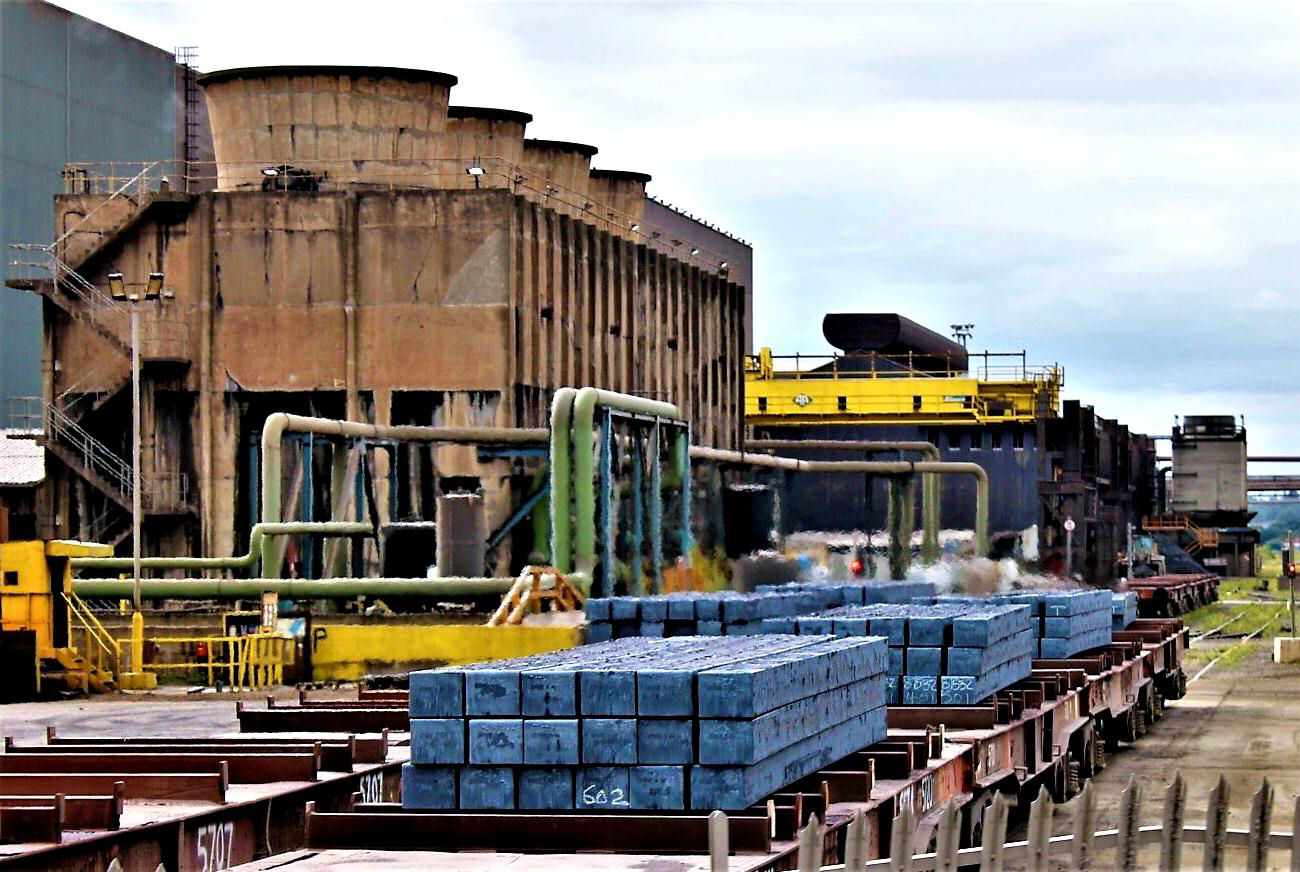
As it was a windy day it was also dusty and while this enhanced the atmosphere it was a relief to then make our way to the other side of the site where we visited the Concast building area. Progressing as far along Caster 5 Loop as we could, via a couple of reversals, we then took Siding 1 from Points 357 almost to the end. Piles of still shimmering hot steel billets awaited collection in this area as we visited several more lines before reversing again at Points 343 and then ran north as far as possible.
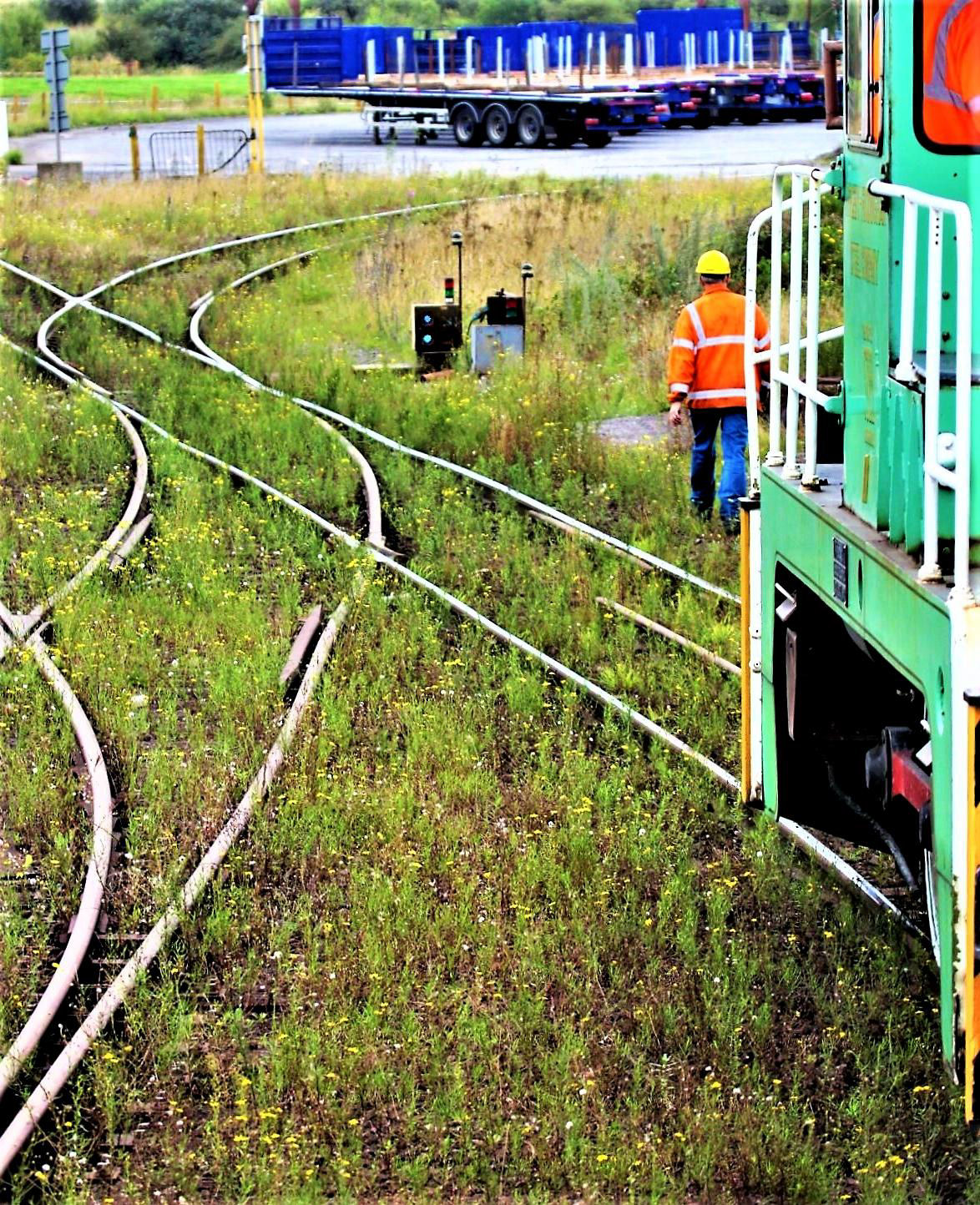
This headshunt was once a through line to the earlier visited Mills Exchange Sidings headshunt (from Points 482). It gave our tour access to the P'Way Yard. Only one track remained in situ and a new line was under construction directly to the Former Soakers building (black dashed line on the latest track plan). This seems be to allow removal of the line from Points 326 to 329 and 333 with the headshunt giving more space for stocking and to run longer trains. The P'way Depot will presumably be resited? One to do in Jan hopefully. Martyn was carefully noting the new alignments - it is surprising what changes. On leaving the area we were sure to run via Points 327 and 345, confirmed by a participant with his GPS technology for route recording. (All the point numbers are on the plan with e-BLN.)
Our gutsy engine had a good run up Plate Pit Hill past Northants Bridge via Coke Oven Weighbridge Loop to Anchor Exchange Sidings, which we couldn't visit in the morning as a main line train was in the area. We visited Lines 5, 14 and 15 to the NR boundary and Line 2 to Points 468.
Anchor Exchange Sidings feels very much a main line yard area but a warning sign beyond reminds BSC engines not to pass. If they did an alarm would sound on the screen at Scunthorpe power Box.
Finally, we took the line the line past the Heavy Repair Bay through Barclay's Loop and then reversed up the steep Basic Hill to the end of the line. This gave a good view over the engine shed yard with various shunters, some in better shape than others. We then reversed down the slope and into the yard area turning right, doing the Wash Road to the end and covering the two adjacent sidings almost to the ends. Despite visiting Scunthorpe many times, I always end up somewhere I am not familiar with and this was all new track for me. The other track connoisseurs seemed happy as well, agreeing that perhaps the best had been saved until the end. Depot Tracks 2 and 4 were also visited, the latter to the shed doors. The doors remained closed; I wonder what delights lie within?
That was it; sadly, the eight hours had gone really quickly but we had had covered many areas very efficiently, so we made our way back to Frodingham platform arriving on time at 18.30. Many thanks to the AFRPS for such a good day, they know what we want, and of course our member Alan Sheppard who has a foot in each camp (as an AFRPS member too) and coordinates our tour route. A donation of £2,505.90 was pleasingly given for them to carry on their good work. Roll on next January - I must get my wants list sent off. [You can book now, Nick, see item 2423.] Thanks to the increased party size of 50 we were able to take some 'Scunthorpe Virgins' on their first ever visit to a steel works - despite them only scoring one piece of new track all day in total (!), they were impressed and amazed by it all.
| Branch Line Society. A Company Limited by Guarantee - Company No 16743754. Registered in England and Wales. Registered address: 6th Floor, Derwent House, 150 Arundel Gate, SHEFFIELD S1 2FN |