Boaty McBoatFace II,
Sunday 18th July 2021
Report by Murray Colpman
The Branch Line Society (Test)
Guest

Henry Kennedy and I were too late to book on the Society's first (Sat 25 Jan 2020) Boaty McBoatFace railtour, and had been on the waiting list for some time while Covid impacted the various attempts to rerun it. As a testament to the effectiveness of the Society's waiting list process, we were able to book on the second trip and, eventually, sample this great 2ft gauge working industrial railway.
We were originally booked for a tight dash from Leamington Spa off the Pathfinder/Ian Loveday Cumbrian Freighter tour; when this was further re-re-re-re- (etc etc) dated due to postponement of the removal of Covid restrictions, it was a much more relaxed trip north. We met up in London on the Saturday morning, Henry having spent the early morning bashing required Southeastern Networkers.
Our plan was to catch the 11.48 Hull Trains King's Cross to Hull, unusually a pair of 802s as the Up working was expected to bring crowds to the rugby league Challenge Cup final at Wembley. After scratching our first two 802/3s, we proceeded to make our way across the Pennines on a South Pennines Day Ranger, with Henry able to indulge his hobby of shack bashing/photographing, and us near Leeds both ticking off Cottingley station - closure consultation in progress (BLN 1380.1803).
We spoke to two passengers who lived locally and they were not happy about the closure/resiting!
As it was an incredibly hot day, we were grateful for the air conditioned TPE Class 185s that now serve most of the local stations. However, one of the worst ideas I've ever had was to take the scenic route to Chester via the mid-Cheshire line, since the official connection had us making the same Merseyrail train. It was the least draughty 150 ever built, unfortunately, and so incredibly hot and unpleasant. To add insult to injury, the TfW service we could have caught (a 175/1 where the air con was probably working!) had arrived early into Chester, so we could have made an earlier Merseyrail service on it. The only upside was the official connection was onto a required Class 507, so we were both able to scratch one of our last few required Merseyrail units before they're withdrawn (perhaps eventually...).
After an overnight stay at my mum's house near Bache, we caught the 10.11 from Bache to Chester for the 10.38 TfW to Manchester Piccadilly (175007+175008). Northern's hourly Sunday Hadfield service got us to Guide Bridge, where five Members took the scenic route along the Ashton Canal, (cooler than the roads) under the closed line once linking Guide Bridge with the line to Victoria and Ashton-under-Lyne (a triangular junction each end even) to reach Ashton Packet Boat Company's site.
The boatyard is on the site of Ashton Moss Colliery, also known as Snipe Pit, which had an internal standard gauge railway to take coal from the pit to the Colliery's own canal barges. This railway was believed to have been dismantled when the mine closed. However, when the boatyard (building, overhauling and providing moorings for canal boats) was set up a 2ft gauge industrial railway was built.
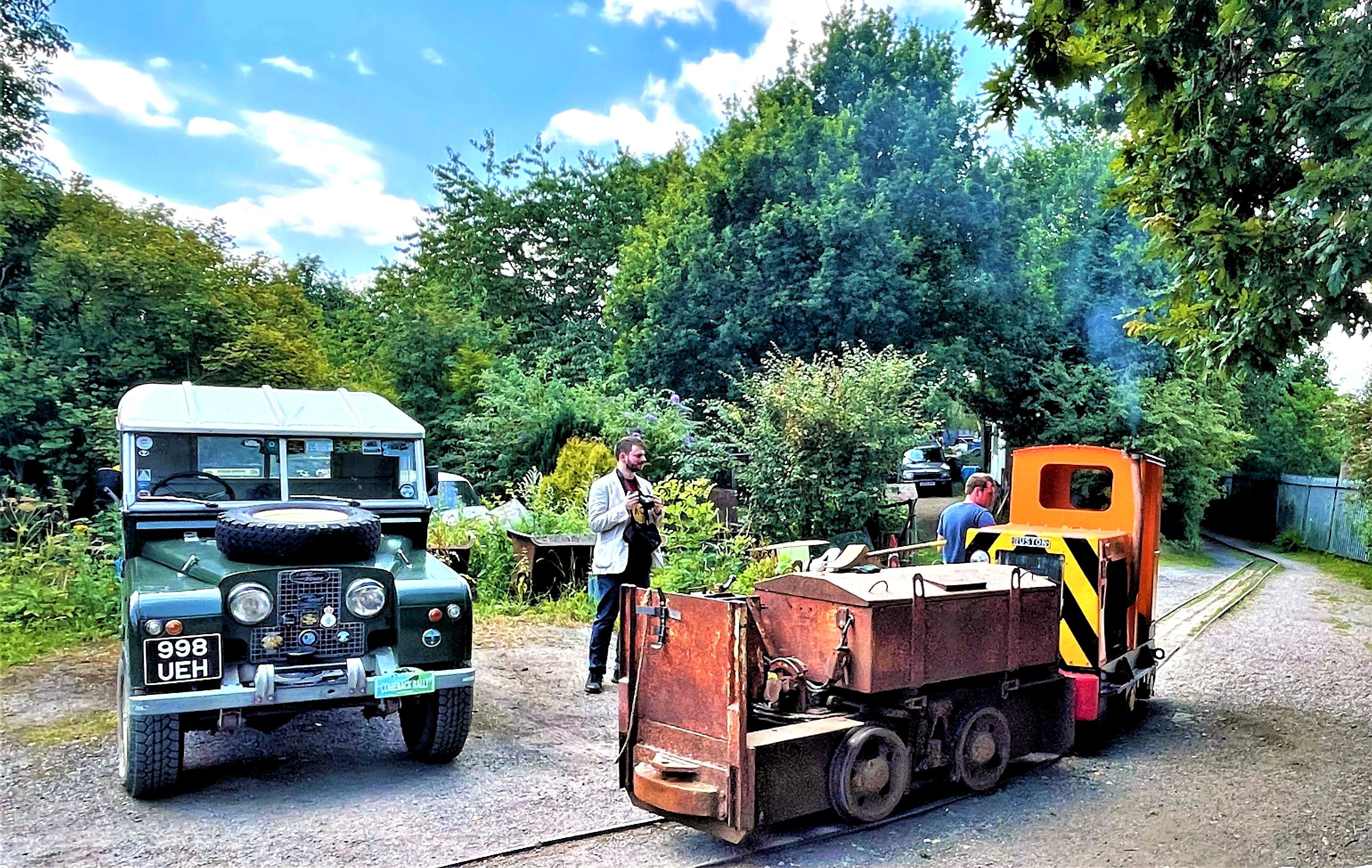
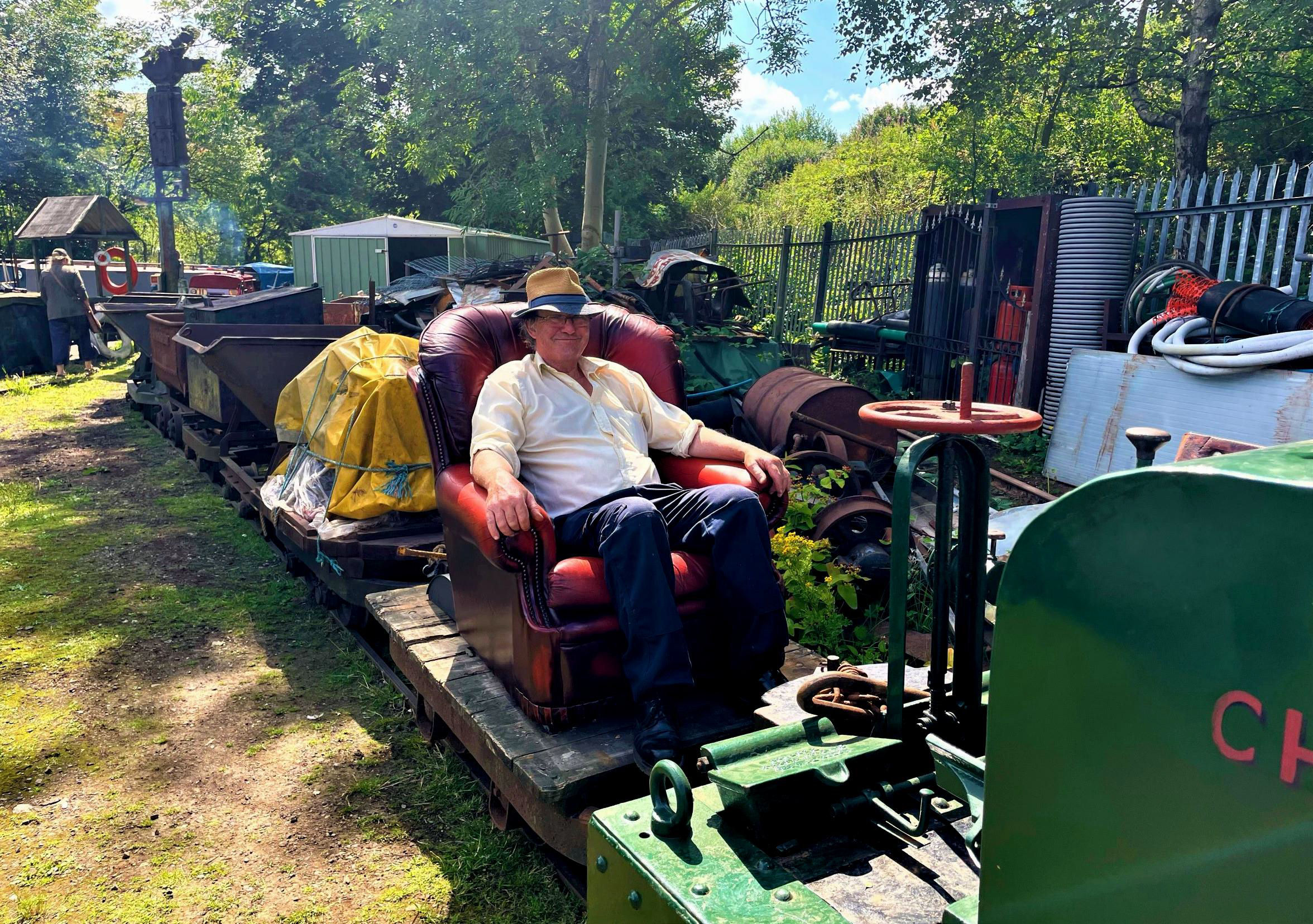
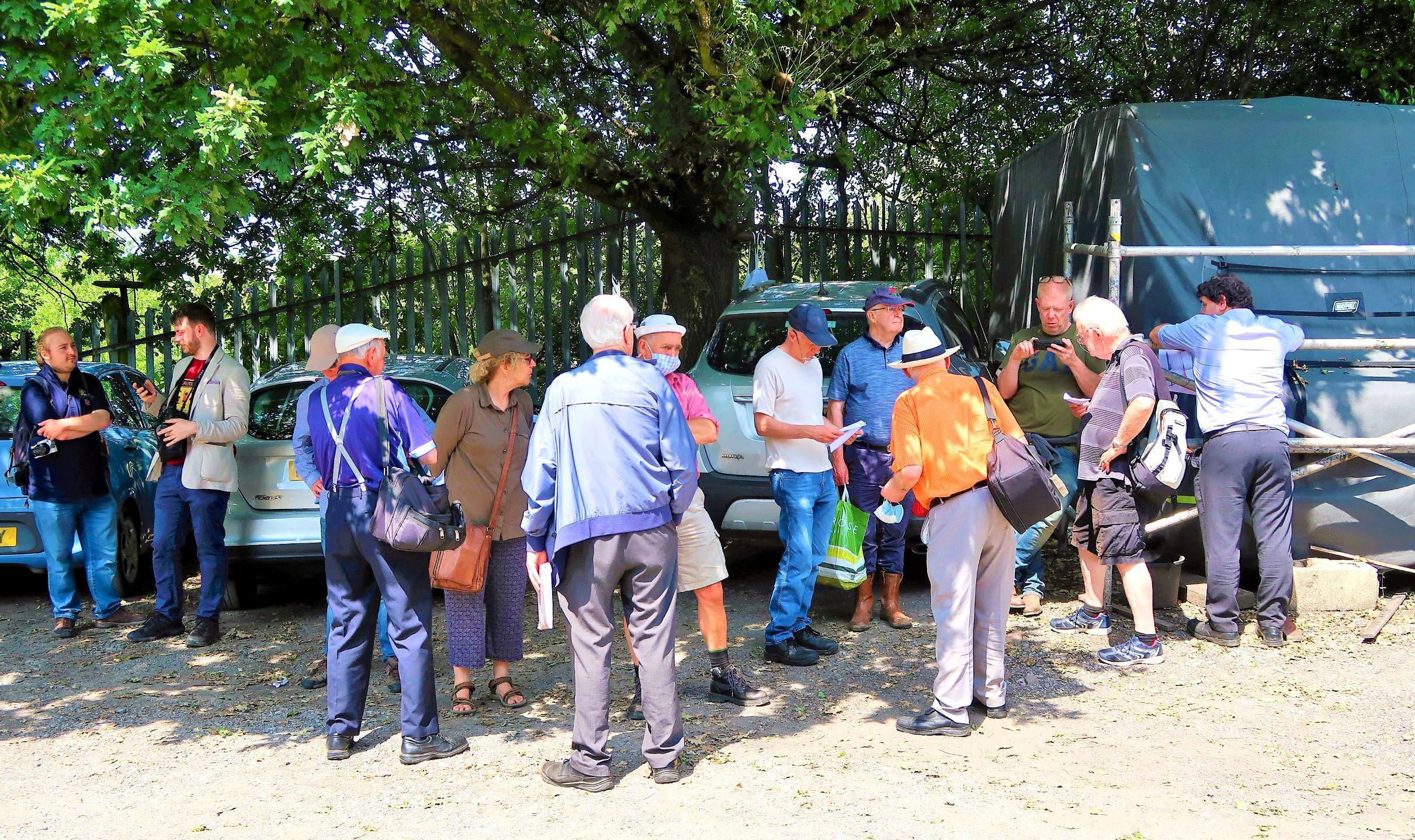
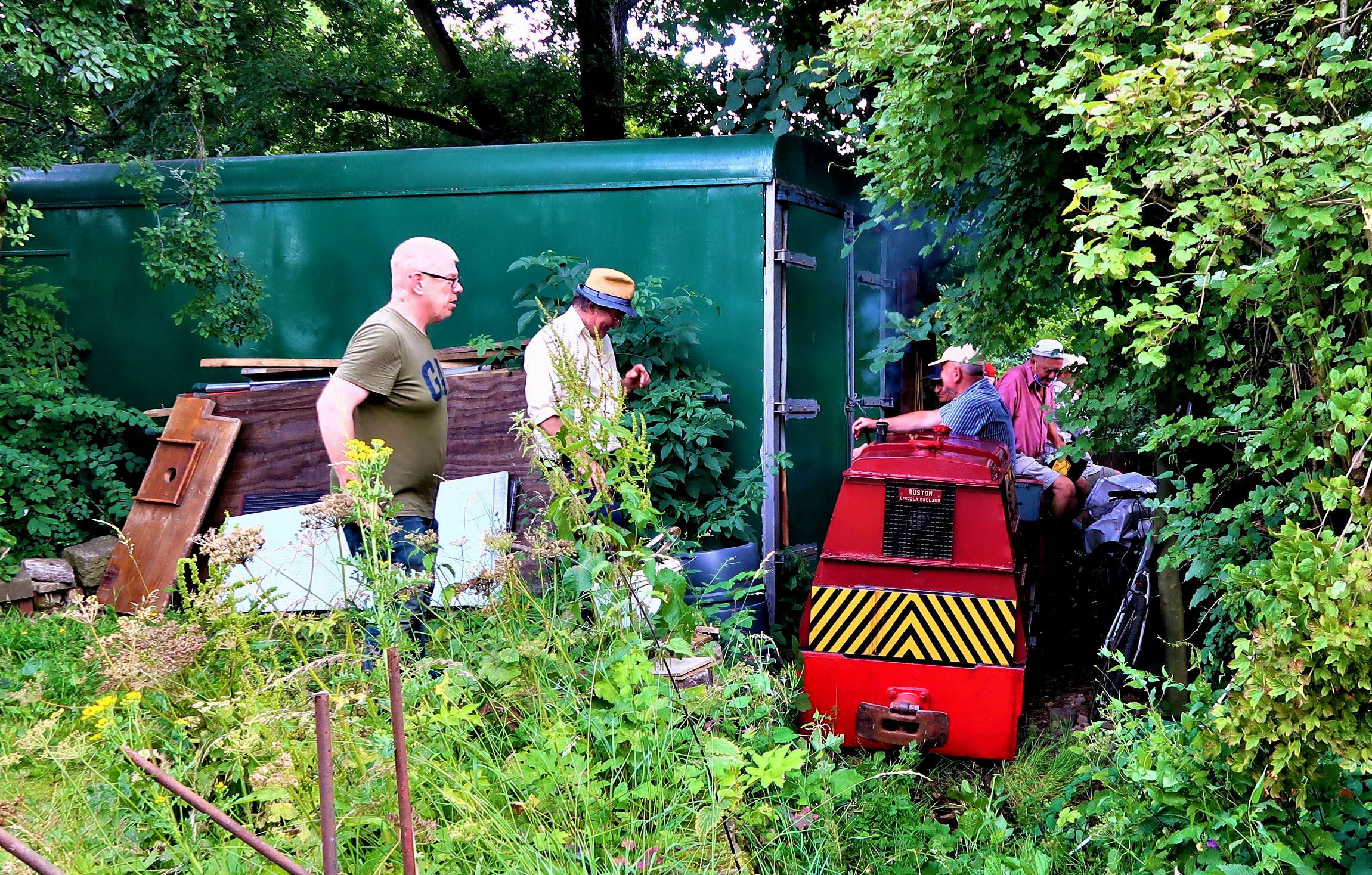
It remains in almost daily use to move boat components up and down the 1:13 incline between the canal and the narrow road access. An eclectic mix of mainly diesel mechanical locos is on site, most in working order, along with many miscellaneous wagons. The hourly Sunday service had caused us to arrive over half an hour early; as we waited for our numbers to reach 20 while those not arriving by rail slowly turned up, a convoy of four locomotives showed up along with a wagon carrying an armchair, with a staff member ensconced. One loco, 'Charlotte', caused much consternation as it did not seem to match the description of any in the stock list. It was MR8905 which had arrived just the previous day!
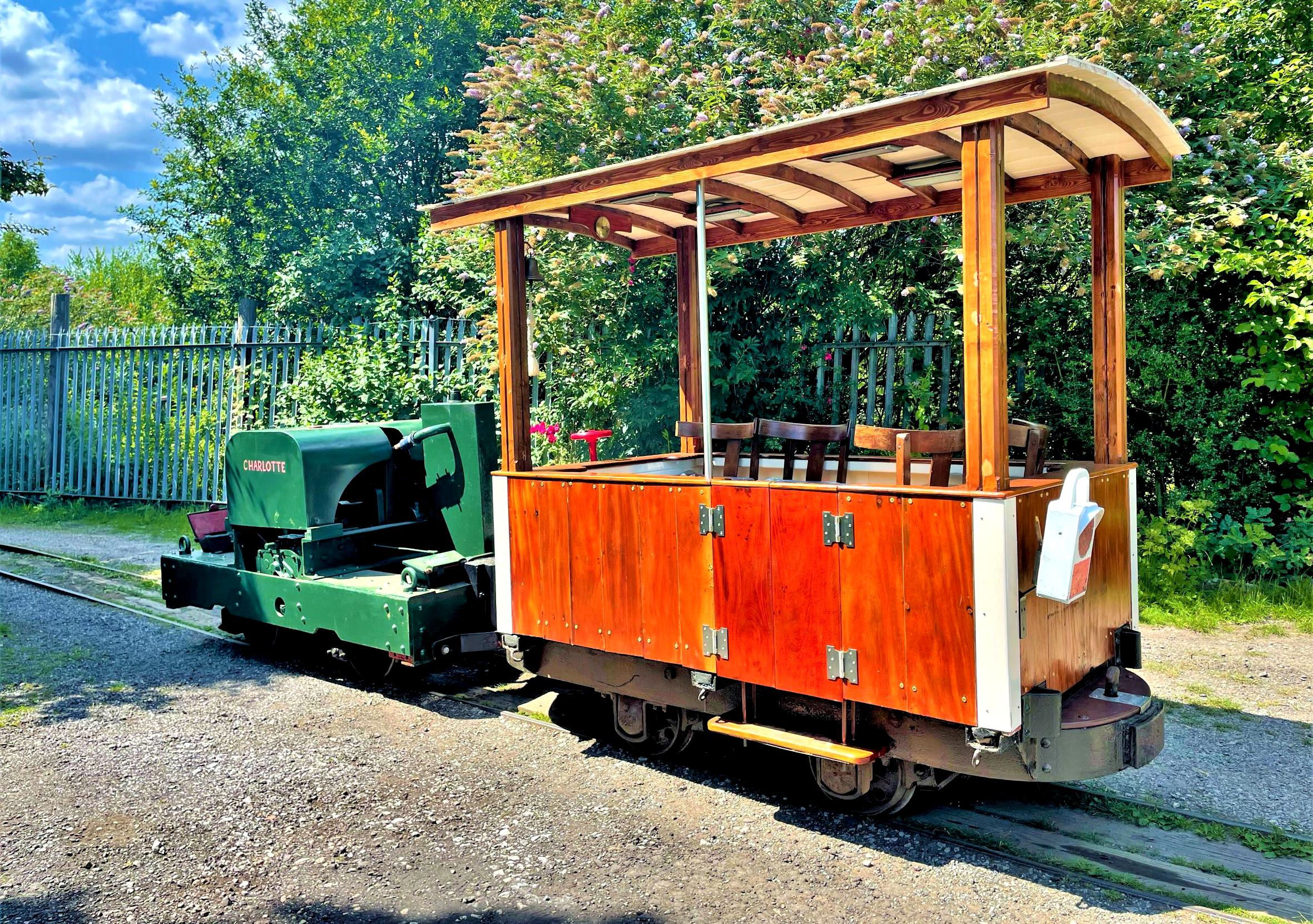
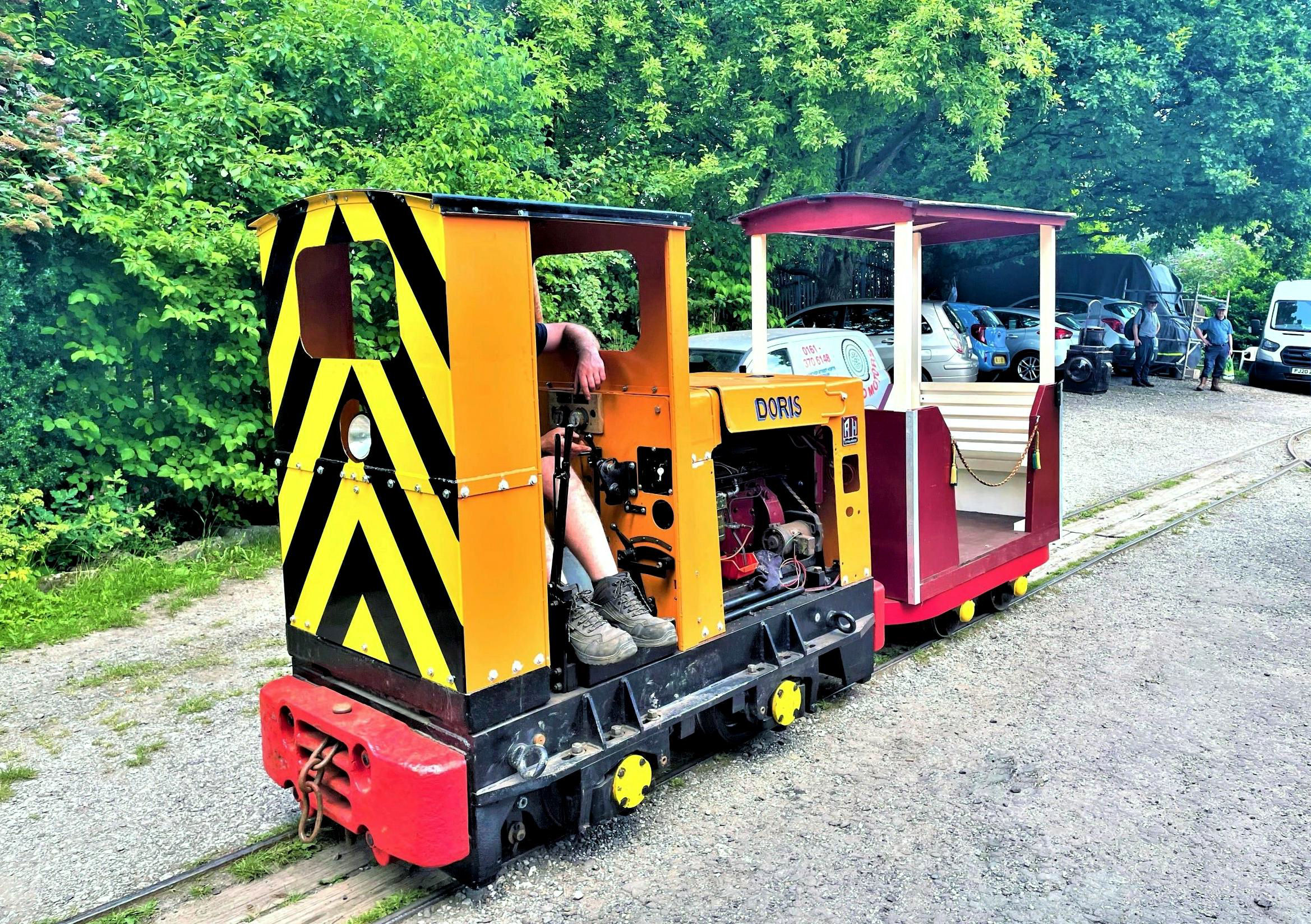
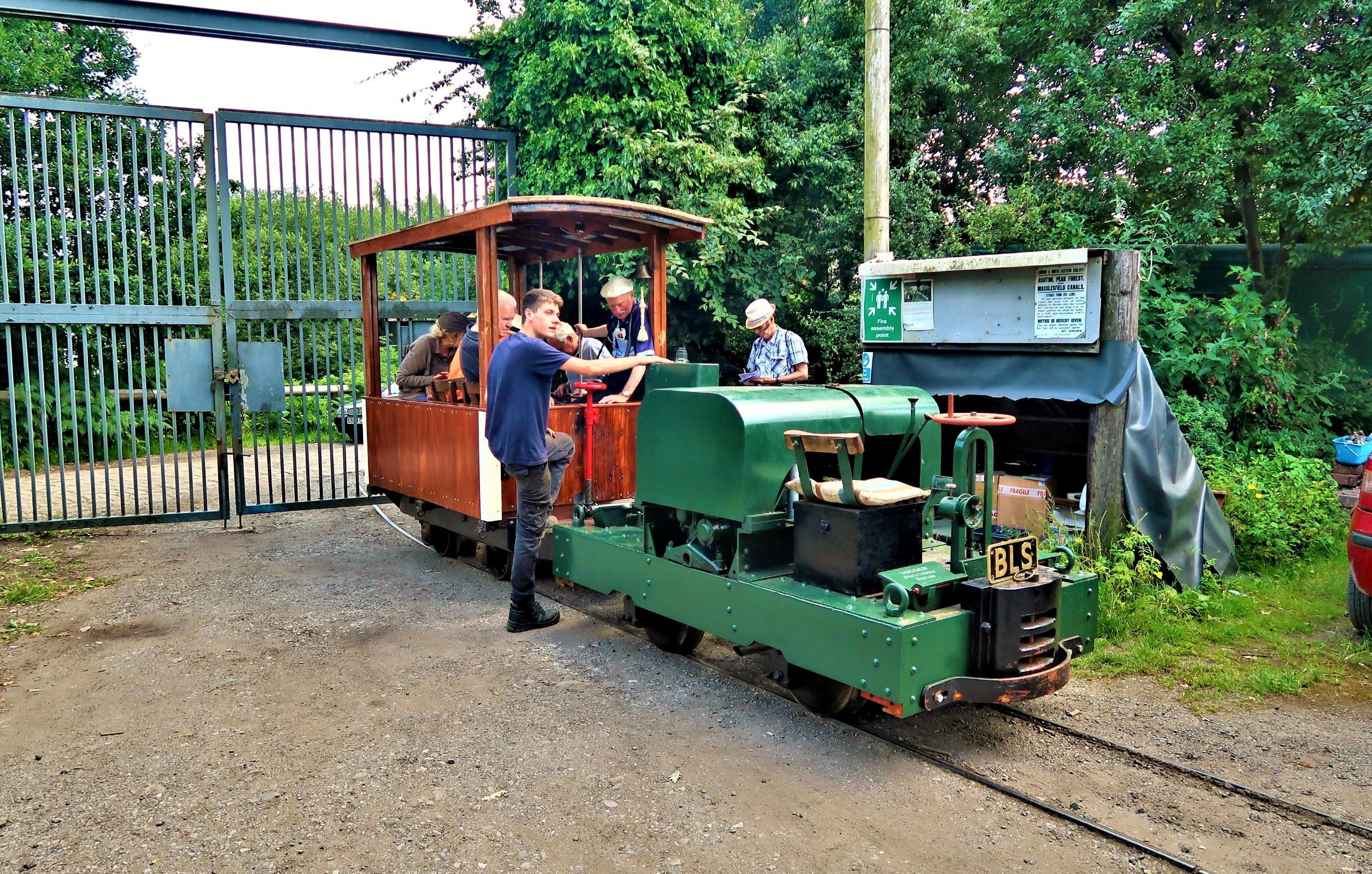
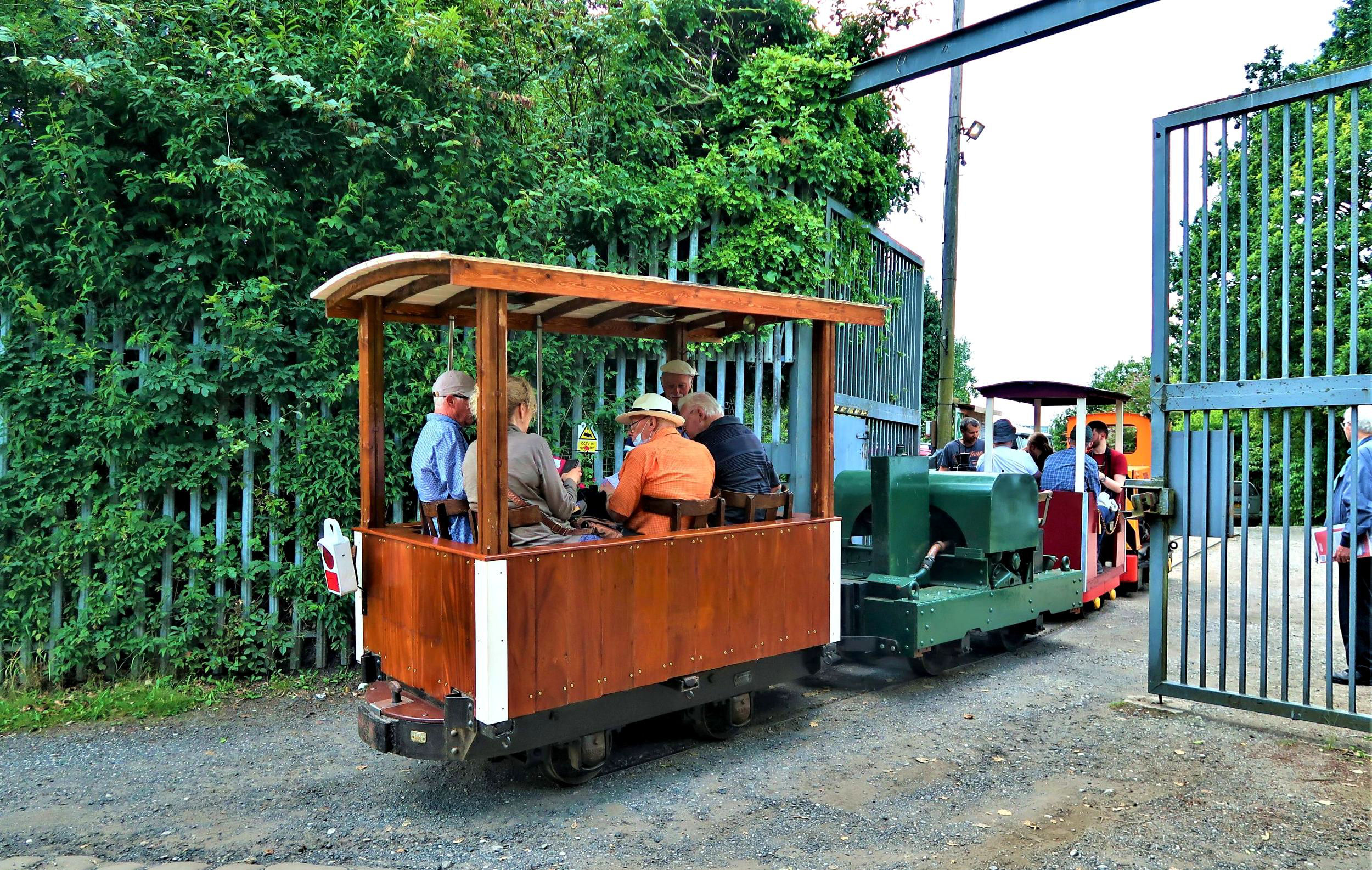
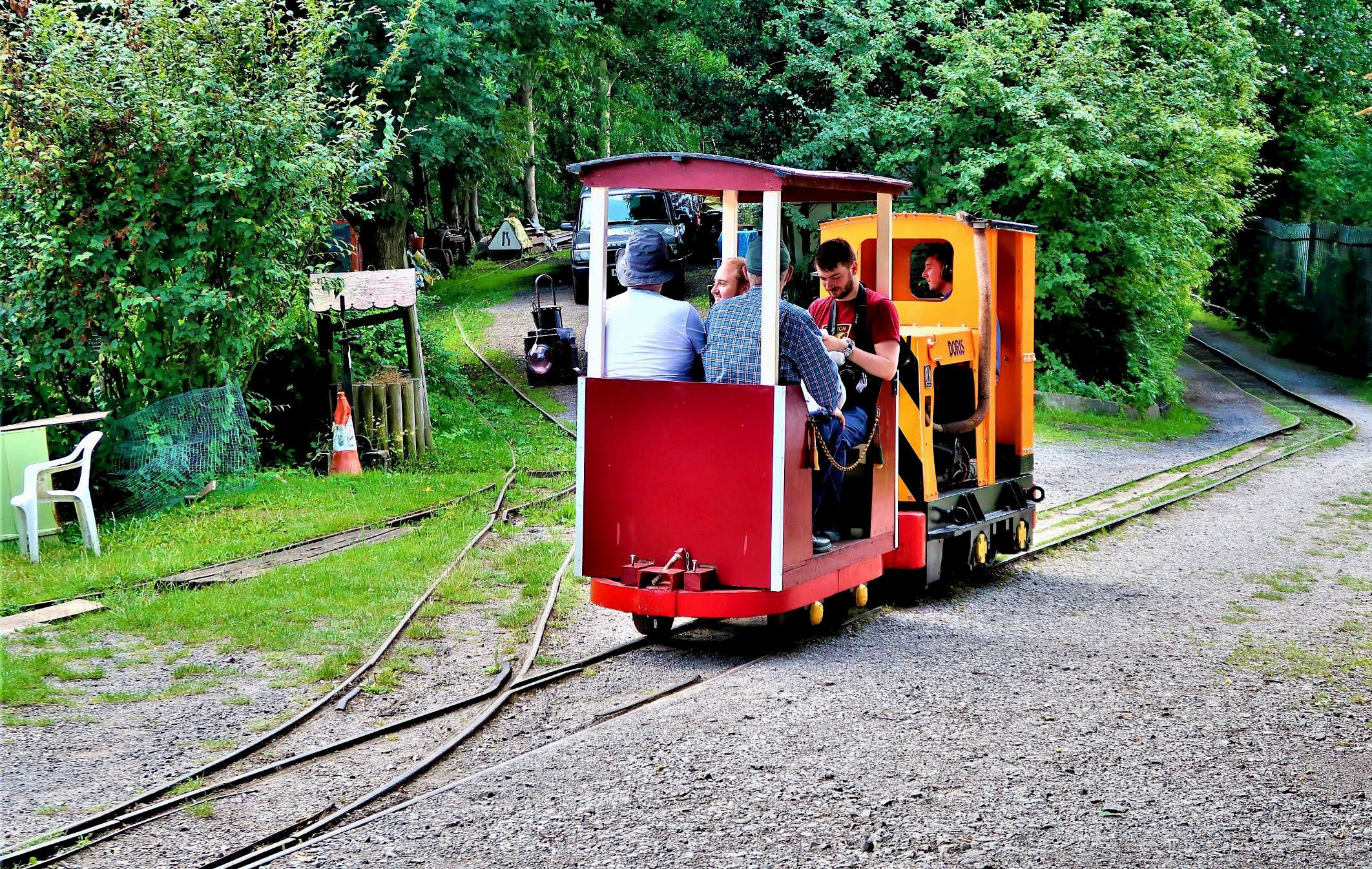
The locos all disappeared back down hill to fetch the coaches. After a safety briefing, back up the hill arrived: MR8905 'Charlotte', a green 4-wheeled diesel mechanical hauling a large covered coach with four loose kitchen seats, a (working!) clock, and a bell which rang when the coach went over a bump. RH200761, a maroon 4-wheeled diesel mechanical brought an open carriage with a pair of back to back longitudinal benches seating four and RH418776 'Doris', an orange 4-wheeled diesel mechanical, was on a covered coach with two small transverse benches; each could just about seat two people.
Each train then worked different portions of the line, participants rotating between them. From the entrance road 'Doris' headed down the gradient at an impressive speed to the far end via the southern (canal side) line, while 'Charlotte' followed after starting from the end of the line at the top of the hill, actually slightly beyond the entrance gate (it was opened to allow the absolute end of the rails outside to be reached on many occasions!). Both locos sounded great thrashing back up the steep gradient, again at a reasonable speed presumably to give a good run up and prevent possibly stalling. The lower section runs alongside NR's Denton Jn - Ashton Moss North Jn line (mutually visible after the leaf fall).
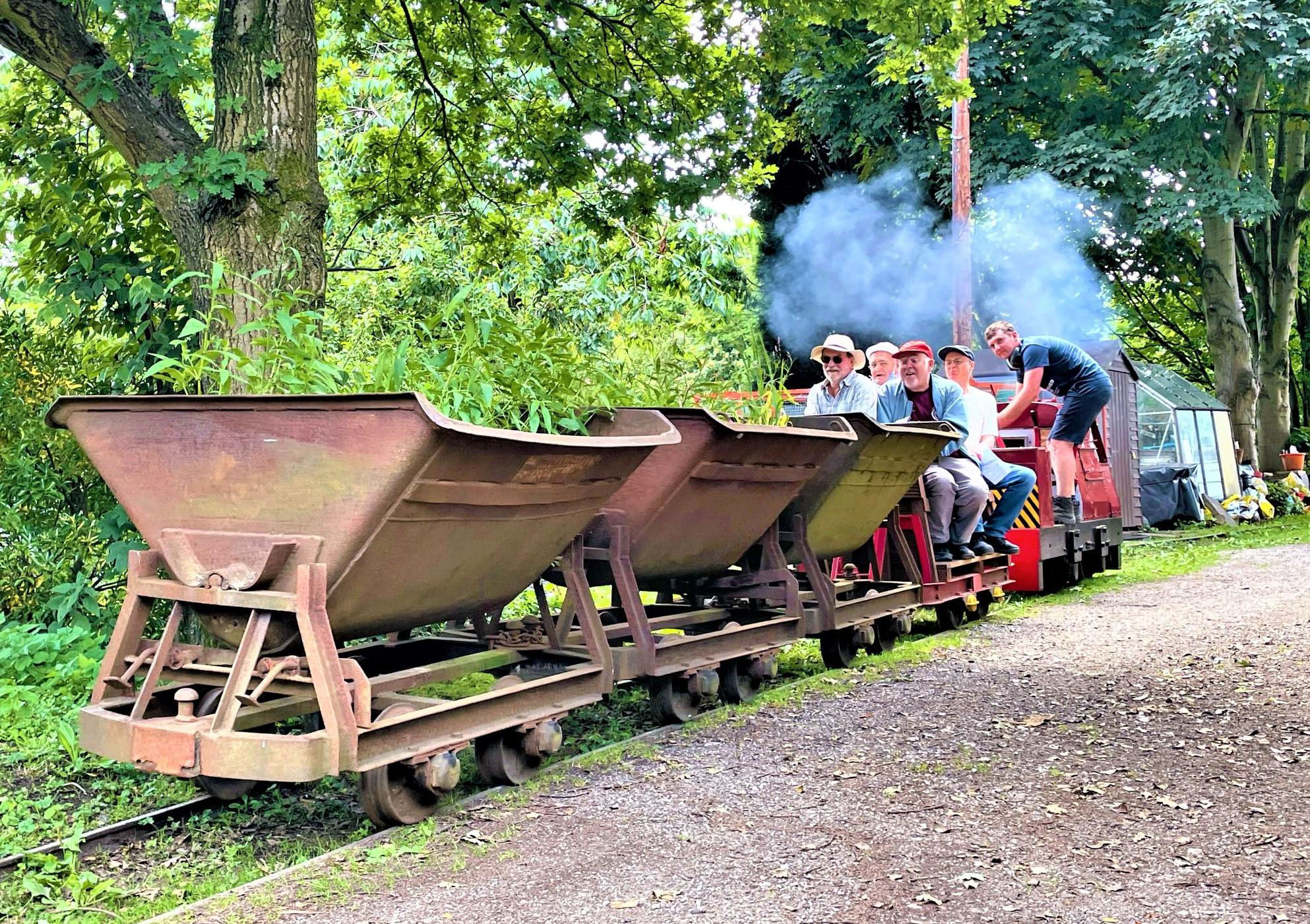
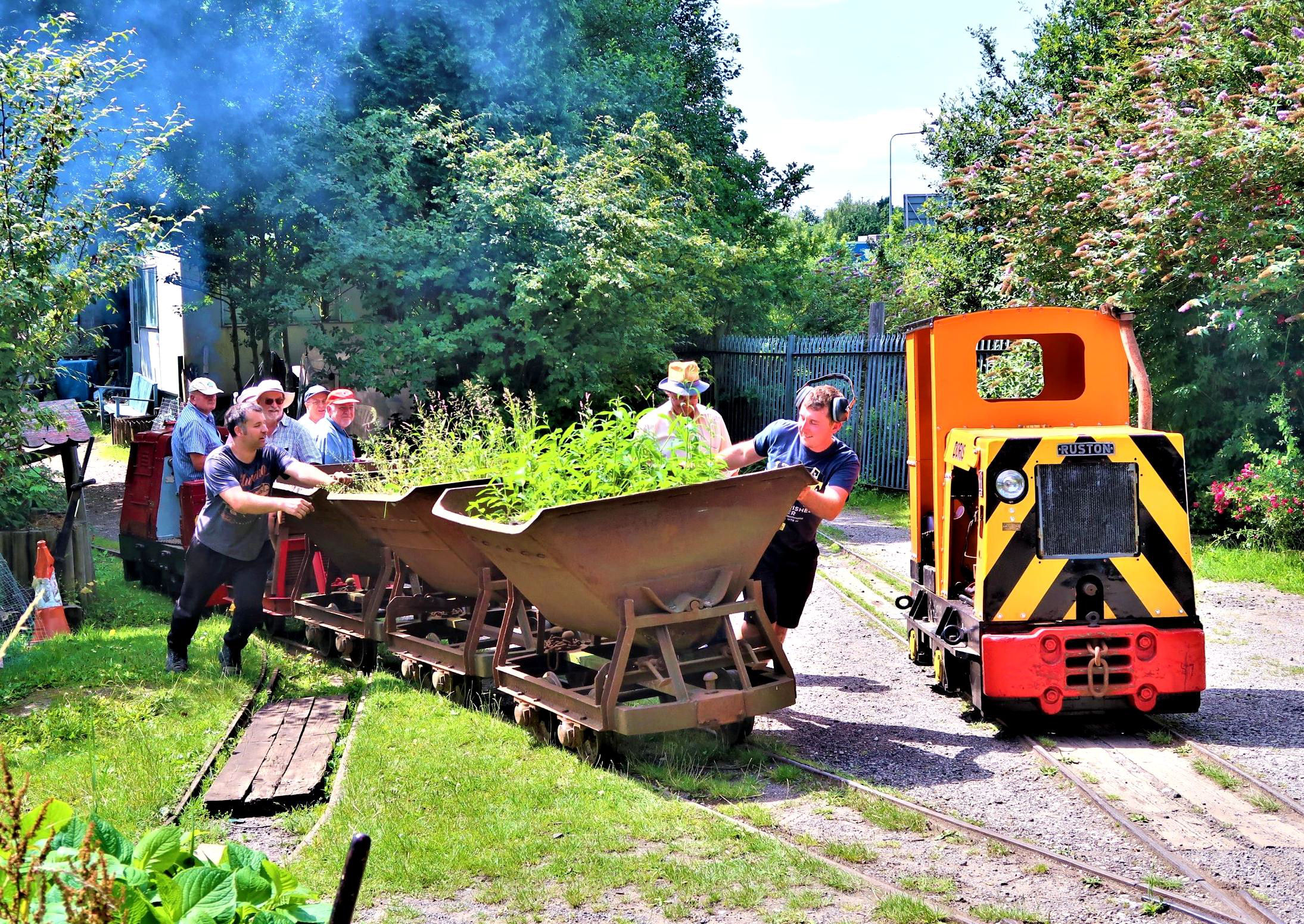
On its second trip, 'Doris' took some hoppers full of soil and plants, (horticultural not industrial) left in the large shed, to clear one of the sidings. Meanwhile, the maroon loco ran between a siding quickly dubbed by those present as 'the nettle siding' (quite unfortunate for those in shorts or a miniskirt!), and the siding next to the top shed, also running over the connection onto the 'main' line for vital overlap. Knees had to be tucked right in, as the clearances were very tight! Everyone was able to quite efficiently do all the track at the top end have a good run down to the bottom of the line and back.
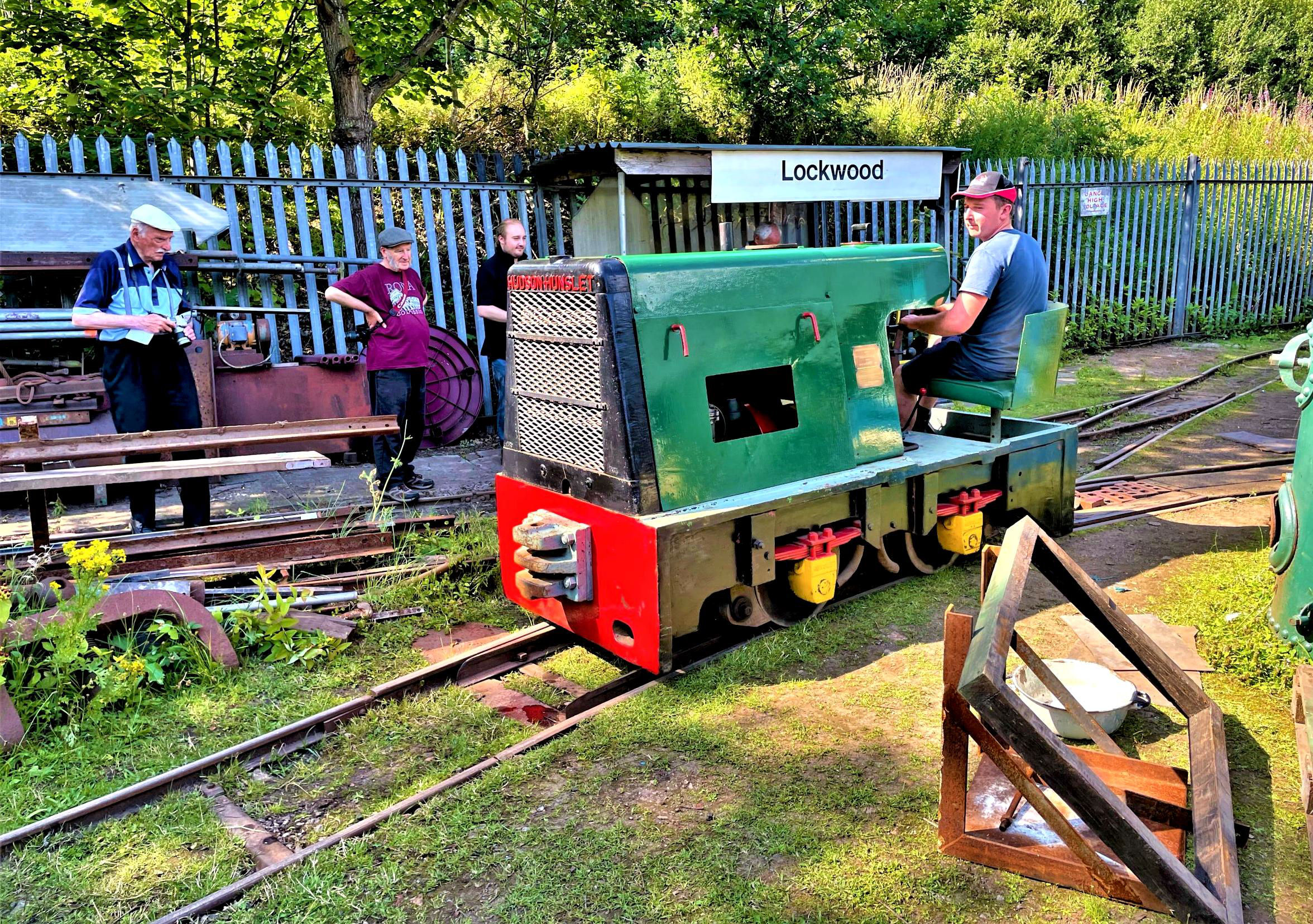
At the bottom end, interesting items included many ex-British Rail signs; a small 'station' with a stone platform, car stop board, and 'Lockwood' station sign; a mainline signal with several route indicator 'feathers' and much more. A large shed here housed two further diesel mechanical locos. The 'missing' battery electric loco from the earlier convoy was stabled outside a brand new small shed. Many wagons were on the northern loop, some looked as if they hadn't been moved for a long time.
Inside the engine shed were more station signs, including an original looking British Rail Southall totem. There were three boat lifting cranes, various moored canal boats presumably 'inhabited', the wagon with an armchair on it and a newly built fully enclosed coach, a bit like an American caboose.
Tea, coffee, juice, cakes and biscuits were available, generously provided by the folks on site, for which we were very grateful. Naturally there wasn't much of a break for those running the event, as they now cleared the bottom end of the line for us. Surprisingly, all the wagons could be shunted towards the top end clearing the northern loop. Then, from the aforementioned Lockwood station, 'Charlotte' hauled a train around the large shed area to the end of line (overlapping with earlier) and back.
Meanwhile 'Doris' shunted wagons away from another long siding adjacent to the canal. Once complete, participants were taken from that siding to the small siding at the bottom end of the line and back. In the small siding we didn't quite manage the end of line, as a significant tree was fouling it! By now it was nearly 4pm so a few of our number left for their booked connections off the 16.23 from Guide Bridge. Those who stayed joined the coach and were shunted almost halfway into the south road of the large shed. The green 4-wheeled diesel mechanical loco RH264252 had cleared out of the north shed road, so coupled onto the coach and ran last trips of the day, into the shed north road.
In total we had four locos for haulage, traversed all of the 'main' line, all the sidings to some extent, and two roads in the largest shed. A great day out to a very quirky site. It brought back memories of the Cavan & Leitrim. £200 was raised for Francis House Hospice and all involved had a great time. It's not every day that you can travel along a railway in active industrial use these days, so participants were very grateful to Kev, the Ashton Packet Boat Company, the staff present and everyone involved.
We caught the 17.12 back to Piccadilly, the same Class 323 EMU as earlier, managing a three minute connection onto the 17.27 CrossCountry train to Bournemouth, a double unit, as usual now - reduced in frequency to hourly. After negotiating our complex ticketing requirements with the conductor, we parted ways at Reading; Henry connected for Newbury and I continued to Basingstoke and home.
| Branch Line Society. A Company Limited by Guarantee - Company No 16743754. Registered in England and Wales. Registered address: 6th Floor, Derwent House, 150 Arundel Gate, SHEFFIELD S1 2FN |