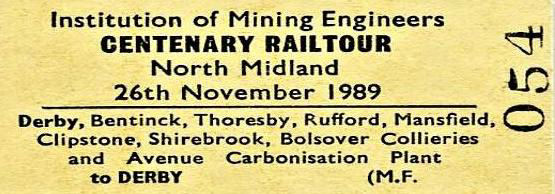
Institution of Mining Engineers - North Midland Tour
Sunday 26th November 1989
Report by Ian Mortimer
After the original programme of five tours ended, two additional trips were organised. One was the second part of the South Midland tour reported in BLN 1358. The second (but earlier chronologically) was a result of Chris Boyle's determination to reach the end of the line at Bentinck, plus a couple of other lines where we hadn't got as far as we might; but was much more than just this as it was another full day railtour. See https://bit.ly/3fLjh34e
This one, from Derby with the usual 7-car DMU, included collieries and other installations either not covered at all on the previous tour in the area, or not covered as well as Chris would have liked. It was therefore with a sense of déjà-vu that we set off at 08.41 on a Sunday morning but south to reverse at Stenson Jn and via Castle Donington. At Bentinck Colliery, to ensure that the same fate as last time didn't befall this tour, Chris had arranged for a pair of Class 20s (20163 & 20010) to pilot the train up the branch from Pinxton, this time to the end of line! From here (without the locos) the tour ran north through Mansfield, at that time the largest town in England without its own station. It would have to wait a further six years to lose that title (Alfreton & Mansfield Parkway station - now just Alfreton - is eight miles from Mansfield as the crow flies; 10½ miles by road). Then it was on to Shirebrook where the tour ran along the MGR line through the colliery, which closed in 1993, and beneath the bunker to just short of the line end. The colliery underwent a £21M modernisation programme in the early 1980s, worth £91M now, including being linked underground with Pleasley Colliery. As a result 1,850 men produced 1.5M tonnes of coal per year and 400,000 tonnes was also raised here from Pleasley (700 men). Much of Shirebrook Colliery site is now occupied by a huge Sports Direct warehouse.
It was then on to Thoresby Colliery, one of the largest in the country producing over 1.5M tonnes of coal a year. It was visited on an earlier tour but only to the signal controlling the site entrance. This time we made it to the end of line. On 10 Jul 2015 Thoresby became the penultimate deep mine to close. In 1952 over 1,330 deep mines plus 92 open cast surface sites produced 228M tonnes of coal.
Returning to the Clipstone triangle and taking the East Jn to South Jn curve, the third and final revisited colliery was Rufford, where the previous tour had stopped short of the loading pad. Again, we reached the line end, which was of great significance to the writer as it passed the site of Rufford Colliery Sidings box overlapping with a previous freight trip from the Midland empty sidings to Mansfield South Jn. The colliery - incongruously surrounded by Sherwood Forest - closed in 1993 but the Coal Preparation Plant and a stocking ground remained so the loading pad was in use until 2002.
After improving on previous tours it was onto pastures new, starting at Mansfield Colliery, after a reversal at Rufford Jn (GCR). Mansfield Colliery had closed in 1988 but the washery stayed open and had an unusual layout with separate branches to the empty (west end) and loaded (east end) sidings.
The empty sidings (at the west end) were accessed by a line which bypassed the colliery site to the north (it was the ex-GCR line to Mansfield - see map) forming a headshunt. Because the pit had closed on 25 Mar 1988 that line had already gone, but we were able to run into the line that branched off southwest to the east end loaded sidings, which had served the washery. However, the final incoming train of hewn coal for washing had been during week commencing 25 Apr 1988. There was subsequent outward prepared coal but this 25 Nov 1989 tour was the final train and the line from Rufford Jn (GCR) was clipped OOU 18 Jul 1990. The tour stopped 200m short of the colliery just before the weighbridge.
A short run back brought us to Rufford Jn (GCR), where a reversal enabled us to access the Clipstone Colliery branch headshunt. After a further reversal, we ran through the loading pad and on to the end of line. Clipstone, sunk in 1920/22 and closed in 2003, was one of the deepest mines in the country at 3,020ft and had the tallest (213ft) headstocks in Europe when built. Rising out of Sherwood Forest the iconic Grade II listed structures survive. Leaving the area known as The Dukeries (because of the number of stately homes) for the last time, the tour made for Elmton & Creswell and Seymour Jn.
Here we reversed and ran past Markham Colliery, visited earlier in the year, to Bolsover Colliery, (closed in 1993) where the end of the MGR run round loop just before the stop blocks was reached. In doing so, we passed the site of the Midland Railway's Bolsover (Castle) station platform, which closed to regular timetabled services from 14 Sep 1931 but was used for occasional excursions until 1981. The tour reached 100m beyond - a branch that had been cut back from Glapwell Colliery on 18 Mar 1979. Bolsover also had a Coking Plant which, when on opening in 1937, was the largest in the world and survived until 2004. Coalite (Homefire) smokeless fuel was manufactured here, invented by Thomas Parker in 1904. In 1936 the Smoke Abatement Society awarded him a posthumous gold medal!
The DMU headed to Tapton Jn and took the goods lines past Chesterfield (no P3 then) to the ground frame at Avenue Crossing Jn before running into Avenue Exchange Sidings. Following a reversal, the tour ran on the non-BR ex-National Coal Board internal railway line to Avenue Carbonisation Plant. It was a massive gas, chemical, coking (some would say choking) and smokeless odourless fuel works - but smokeless it certainly wasn't here! 1,400 tonnes of coke and 765,000m3 gas were produced a day.
The branch crossed over the four main running lines on a substantial bridge north of Clay Cross Jn, then ran parallel to them, at a higher level (map). Here we reached the far end of the exchange sidings, to beyond the ground frames at the scissors crossover. The massive plant closed in 1992 with the loss of 500 jobs, and the 242 acres site on which it was located was said to be the most polluted in Europe, taking 25 years and a vast amount of money to clean up. There was an extensive internal railway that worked 24 hours a day seven days a week. After a final reversal and a run back to Avenue Sidings, we left via the south Clay Cross Jn end connection and arrived back at Derby 12 mins down at 15.52.
Postscript: As a 'thank you' the Society presented our member Chris Boyle with an album of photos (compiled by Don Kennedy) which included nearly every branch covered by the tours. This took place at Sheffield station, following our Humber Navigator tour on 22 Apr 1990. However, this wasn't the end of the IMinE story, as Chris ran four further tours for them. There were three in 1991, the first in April to the East Midlands, one in September to the North West and another the following month to the North East. The final tour ran in Mar 1993 to the North West.
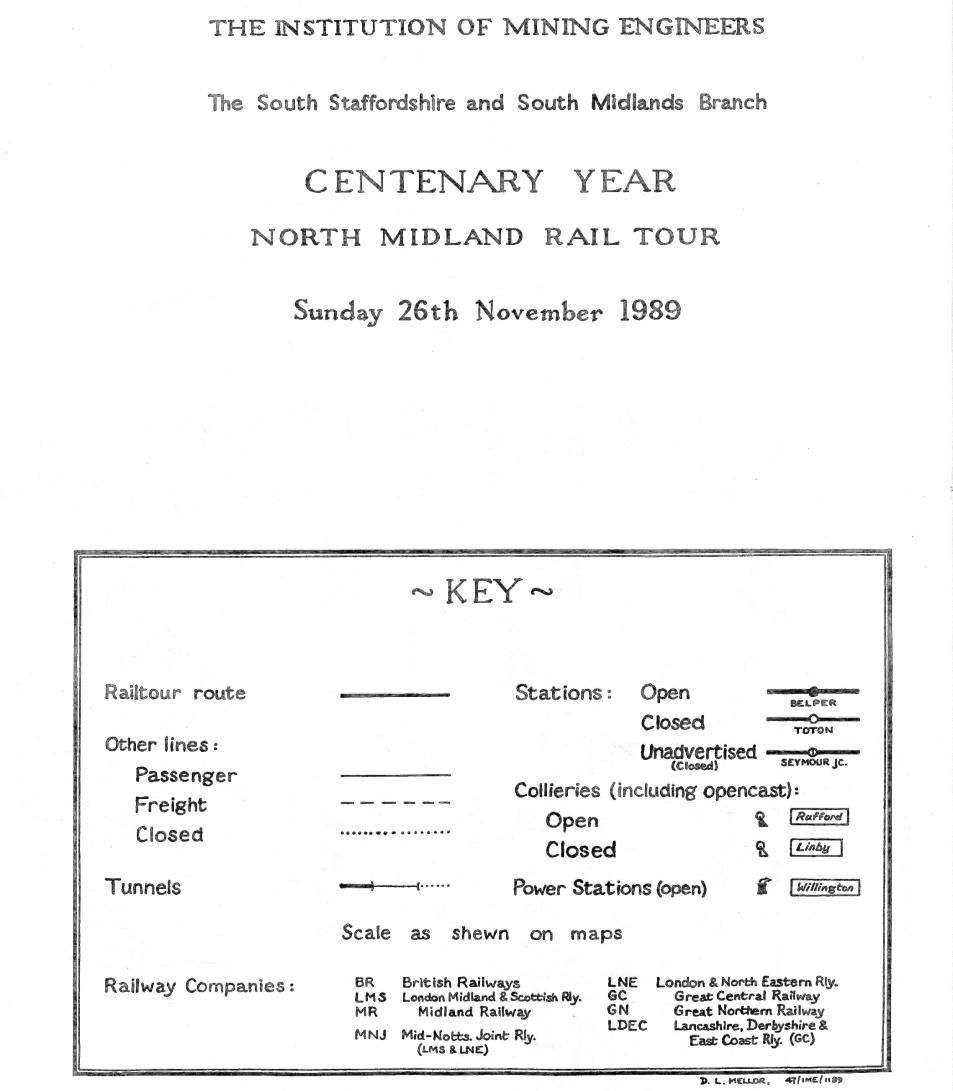
Introduction and key to the railtour maps
[© Dave Mellor 1989]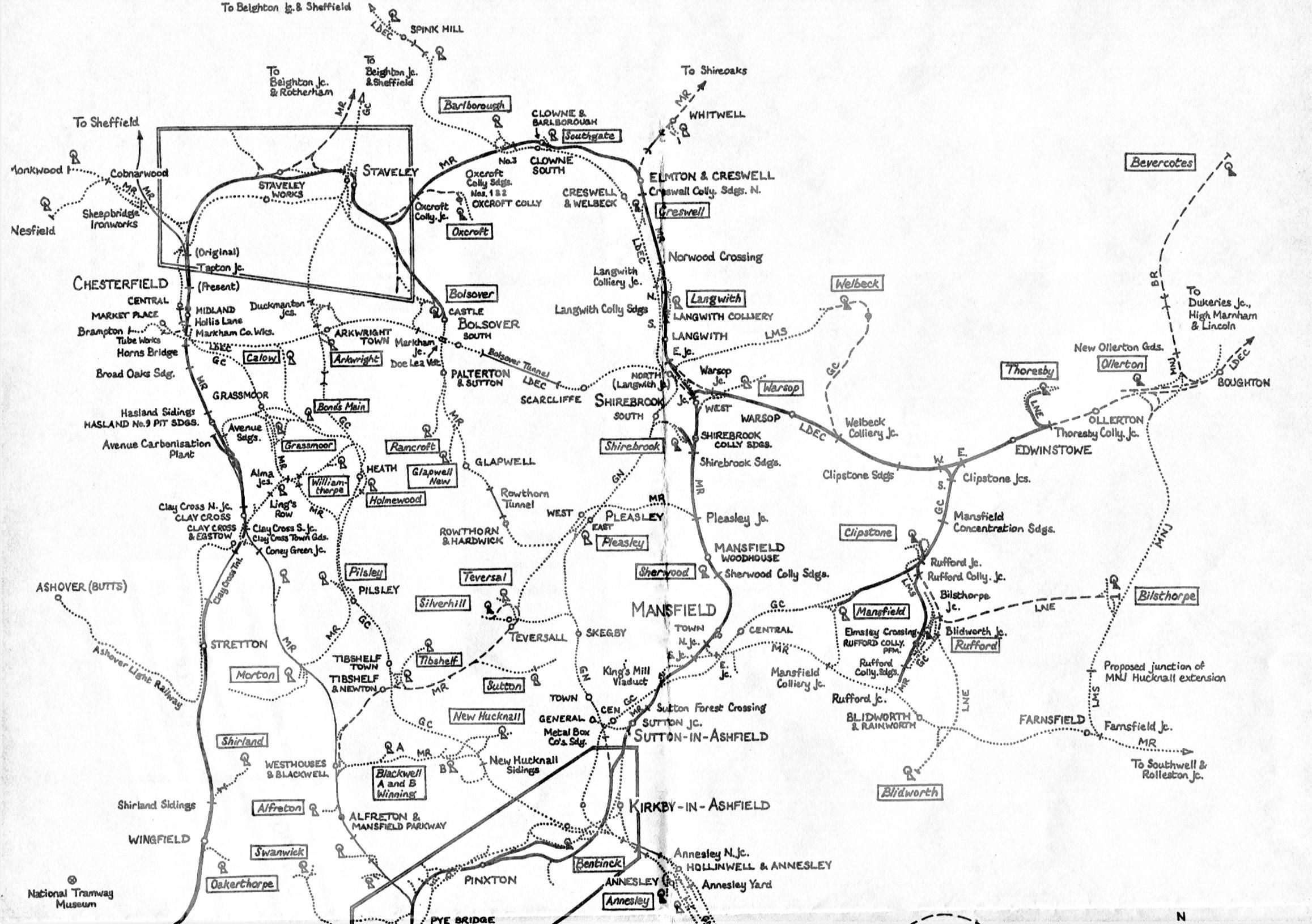
Railtour map drawn by our member Dave Mellor.
[© Dave Mellor 1989]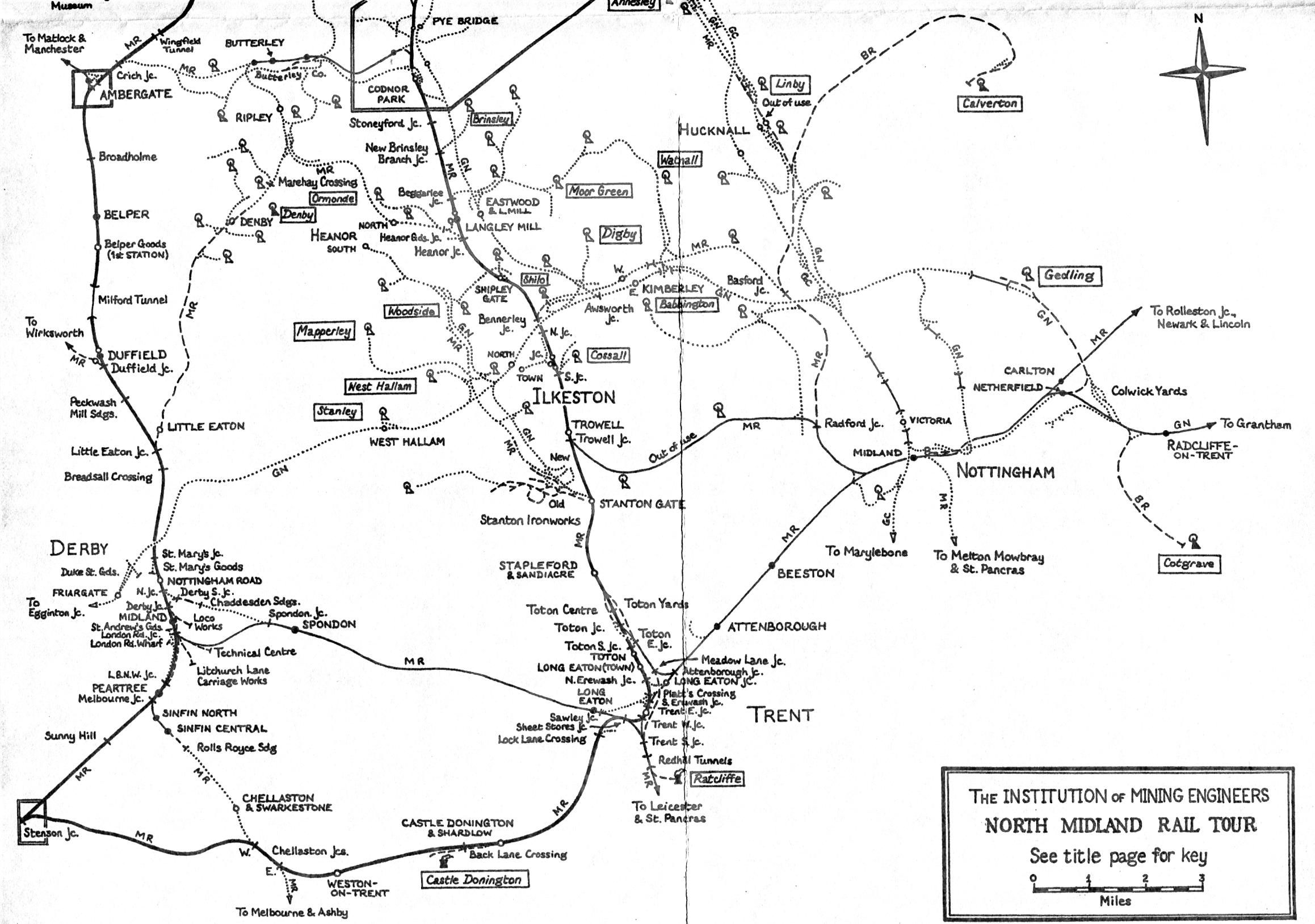
Railtour map drawn by our member Dave Mellor.
[© Dave Mellor 1989]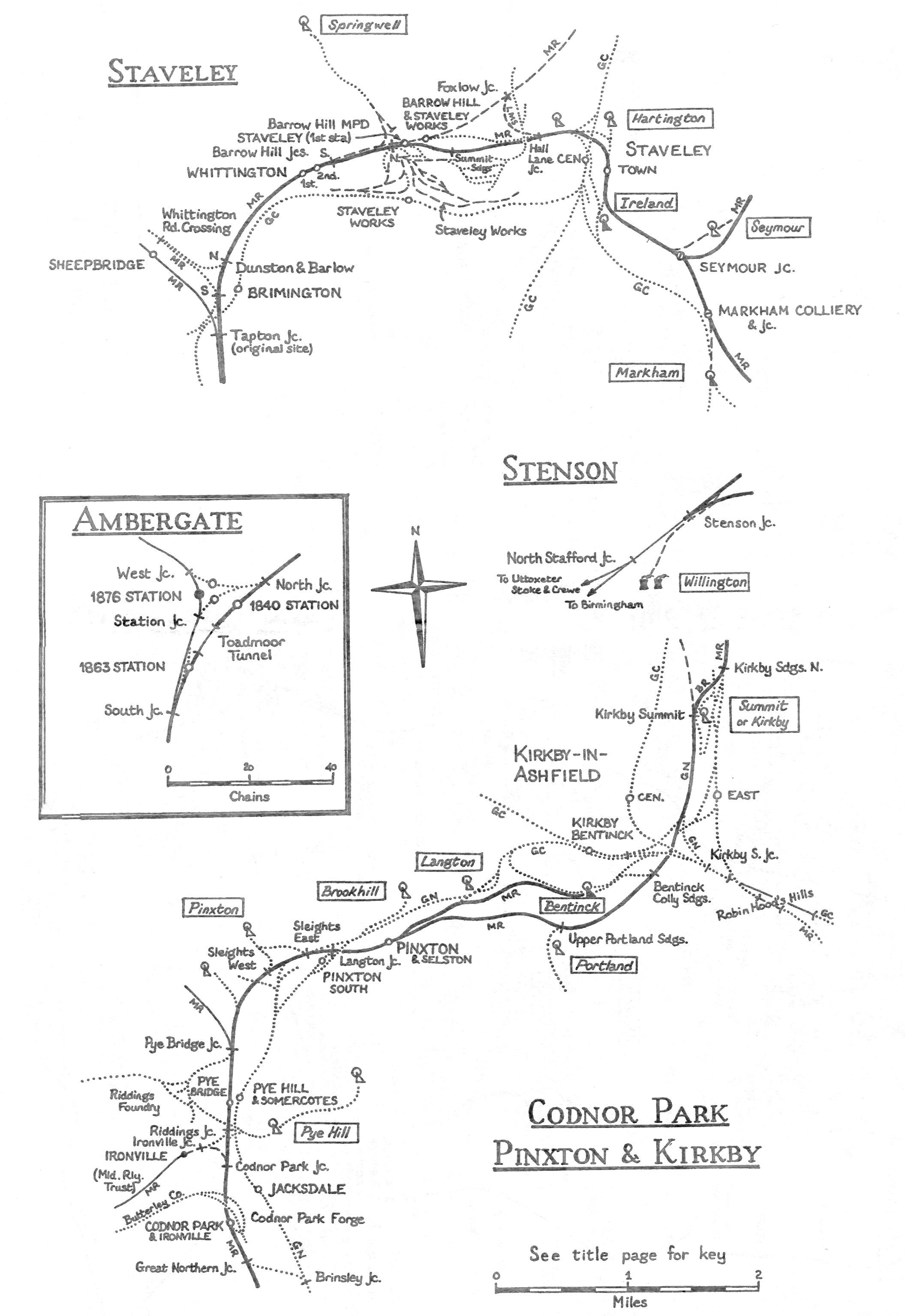
Railtour map drawn by our member Dave Mellor.
[© Dave Mellor 1989]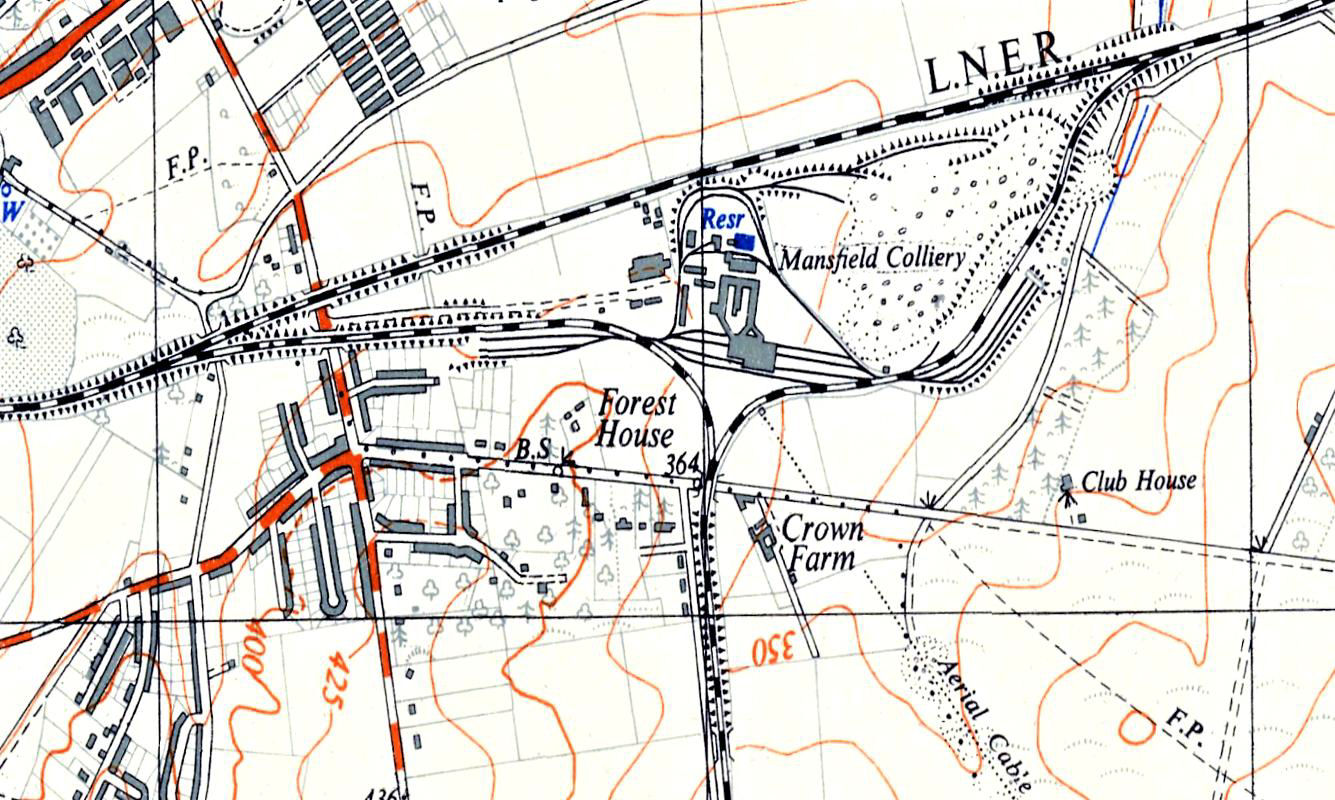
1:25,000 map 1950; like most collieries in this area, Mansfield was served by two railways. The ex-Midland/LMS/BR London Midland line south to Mansfield Colliery Jn (Midland) CG 17 Jul 1967 with its two curves shown south of the colliery. Running middle left to top right is the Great Central (GCR)/L&NER/BR Eastern Region line; Mansfield (Central) is off middle left and the Clipstone triangle top right. It CA 2 Oct 1967 west of the junction (top right) for the loaded wagon sidings (east end) but later reopened past the colliery to form a headshunt (bottom left) to access the empty wagon sidings at the west end. Mansfield Colliery was served from Rufford Jn (GCR) top right (CA 18 Jul 1990) at the end. For a while in BR days empty wagons arrived via the GCR access and loaded left via the Midland.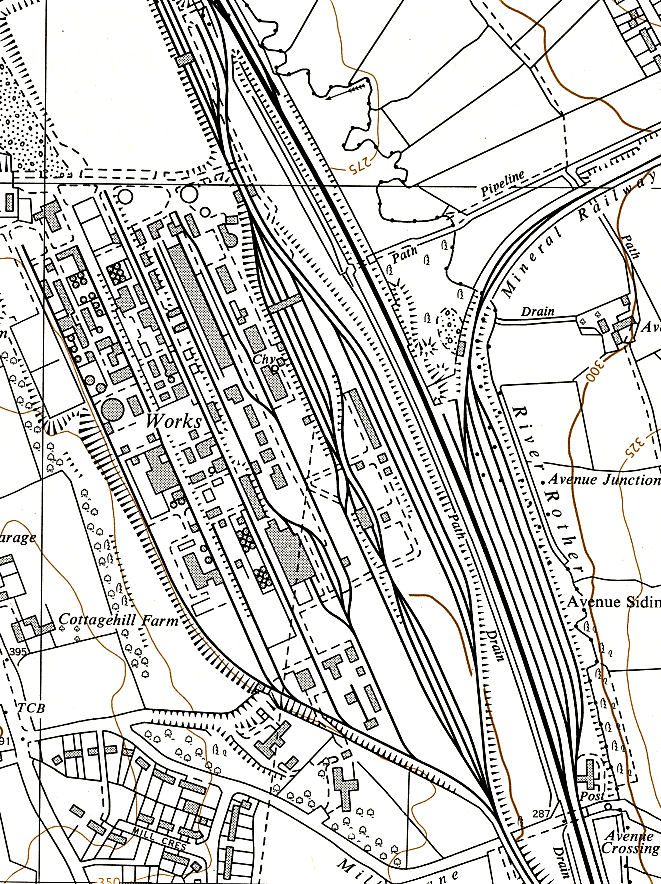
1:10,560 scale 1964 map. The main Avenue Works site west of the Erewash Valley line, with Avenue Sidings on the east side, south of Chesterfield.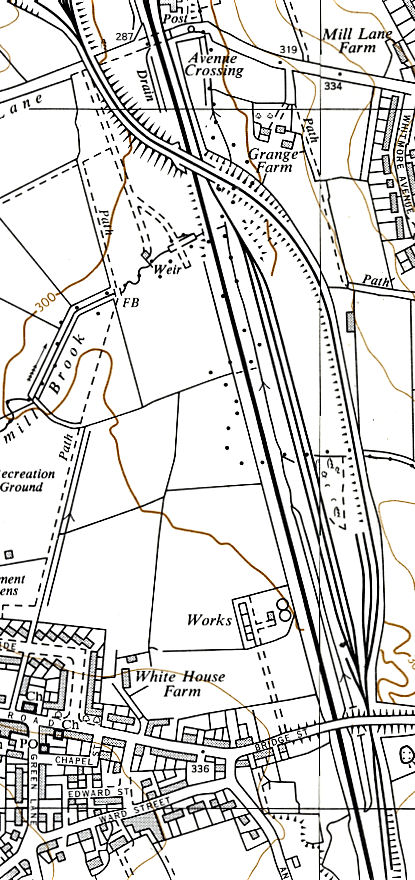
1:10,560 scale 1964 map. To the south was the headshunt, access, sidings and bridge over the main line north of Clay Cross Jn. Both maps have overlap areas. Cottagehill Farm (lower left , left hand map) probably wasn't the healthiest place to live.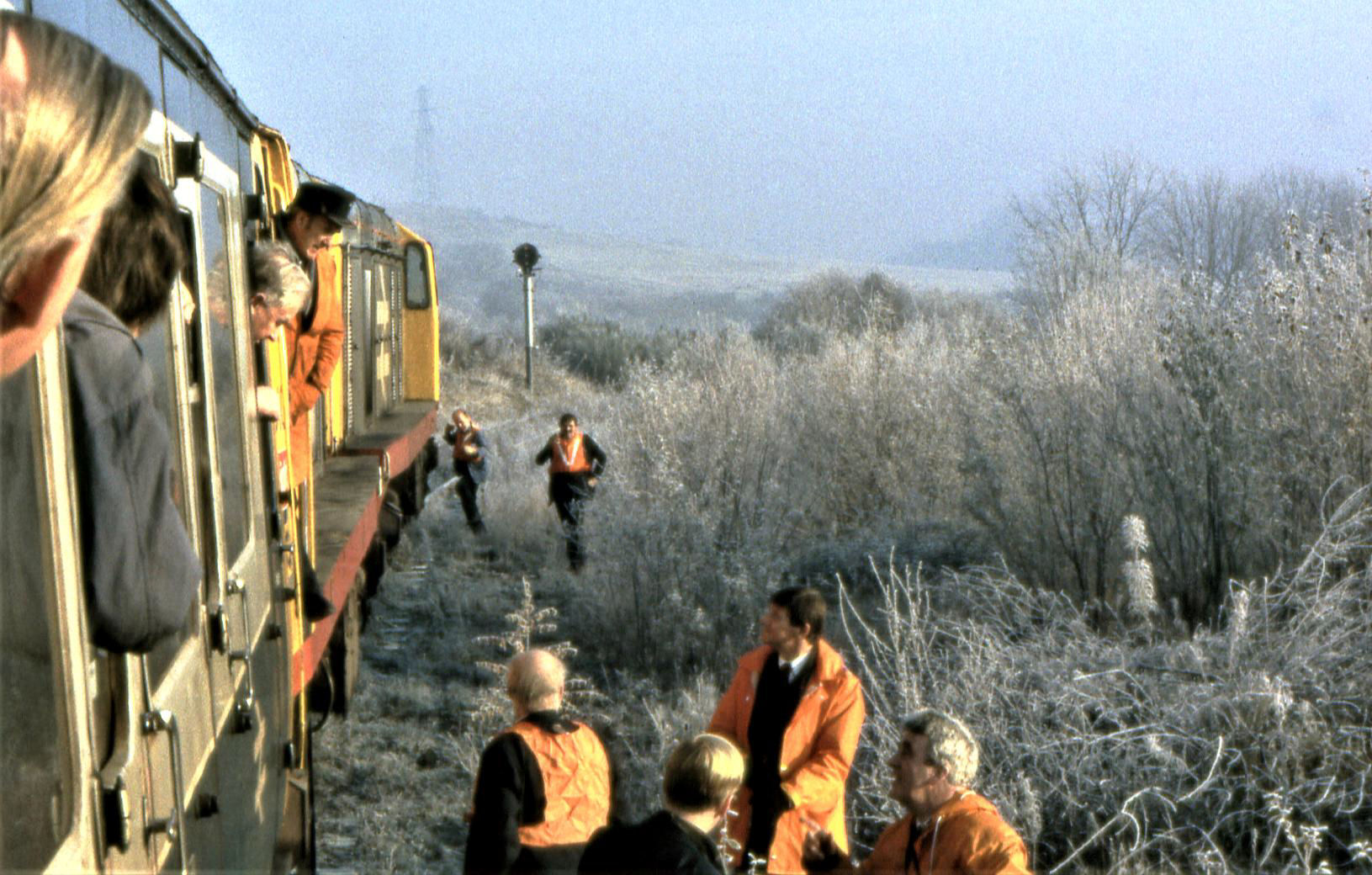
On a clear and frosty Sunday morning (quite a contrast from the previous attempt to cover this line) a pair of Class 20s have been attached for the Bentinck Colliery branch. The organiser of the tour, Chris Boyle, can be seen leaning out of the front droplight window, presumably making sure that the staff on the ground know what is required!.
[© Ian Mortimer 1989]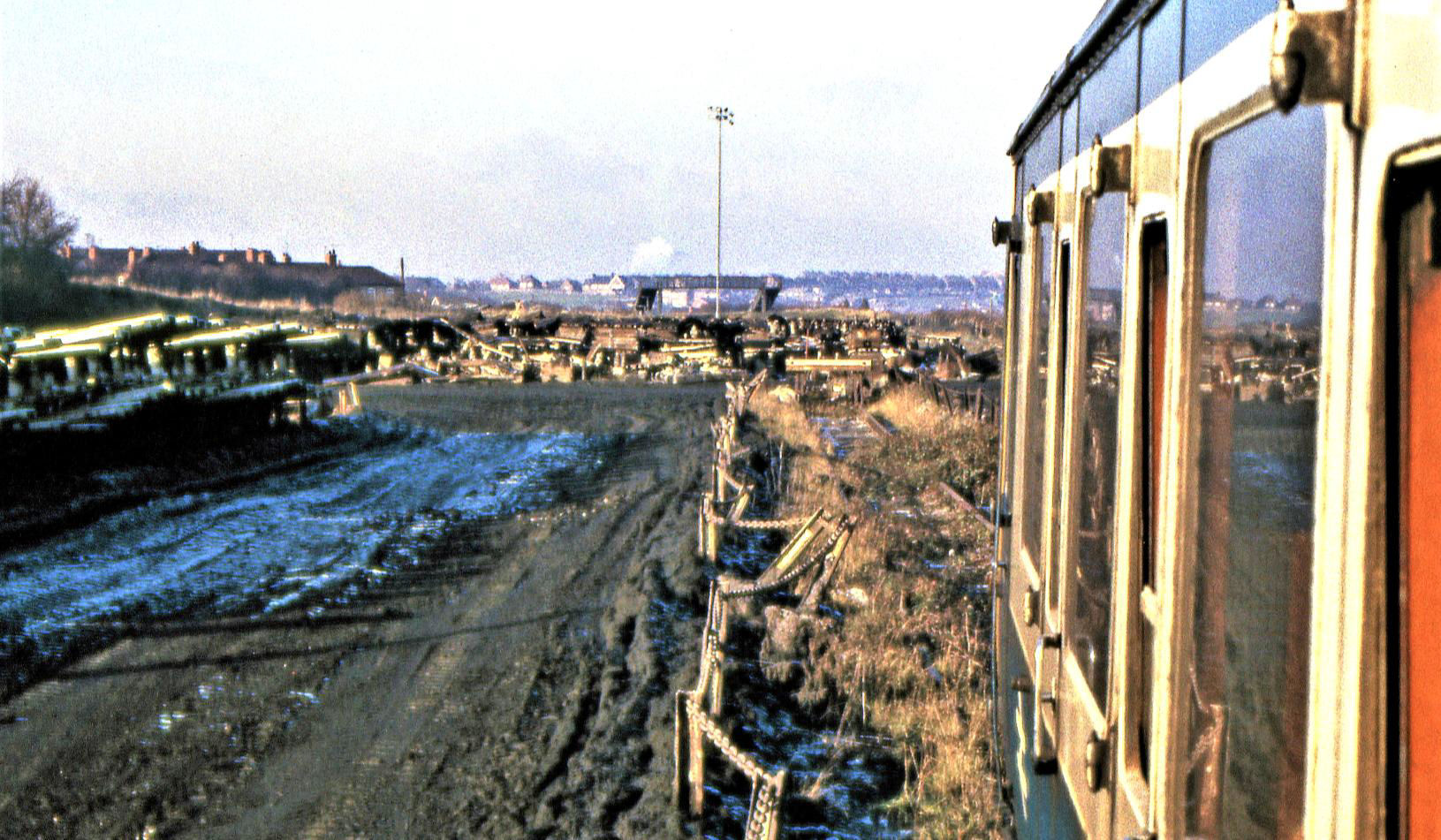
It couldn't have gone much further at Shirebrook Colliery; on the ex-Great Northern Railway branch, accessing the colliery from the west and once continuing under that distant footbridge.
[© Ian Mortimer 1989]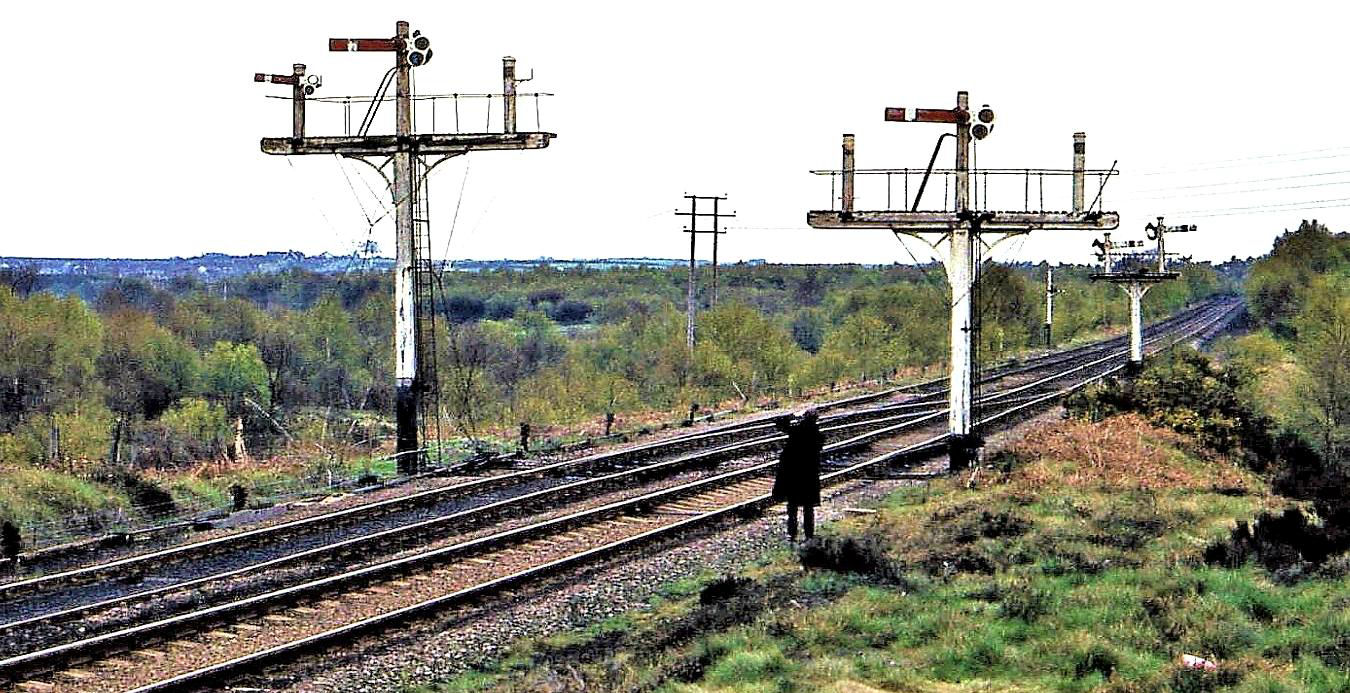
Ancient signals in Apr 1981, from the same location at Rufford Colliery Sidings as the picture in BLN 1355.1927, but looking in the other direction. Again, the lower quadrant Midland Railway signals are much in evidence. The right hand of the two was the single track Midland route to Mansfield South Jn, and the other was the headshunt for Rufford Colliery loaded and empty sidings branches. The 26 Nov 1989 tour would have used one of these lines to reverse.
[© Ian Mortimer 1981]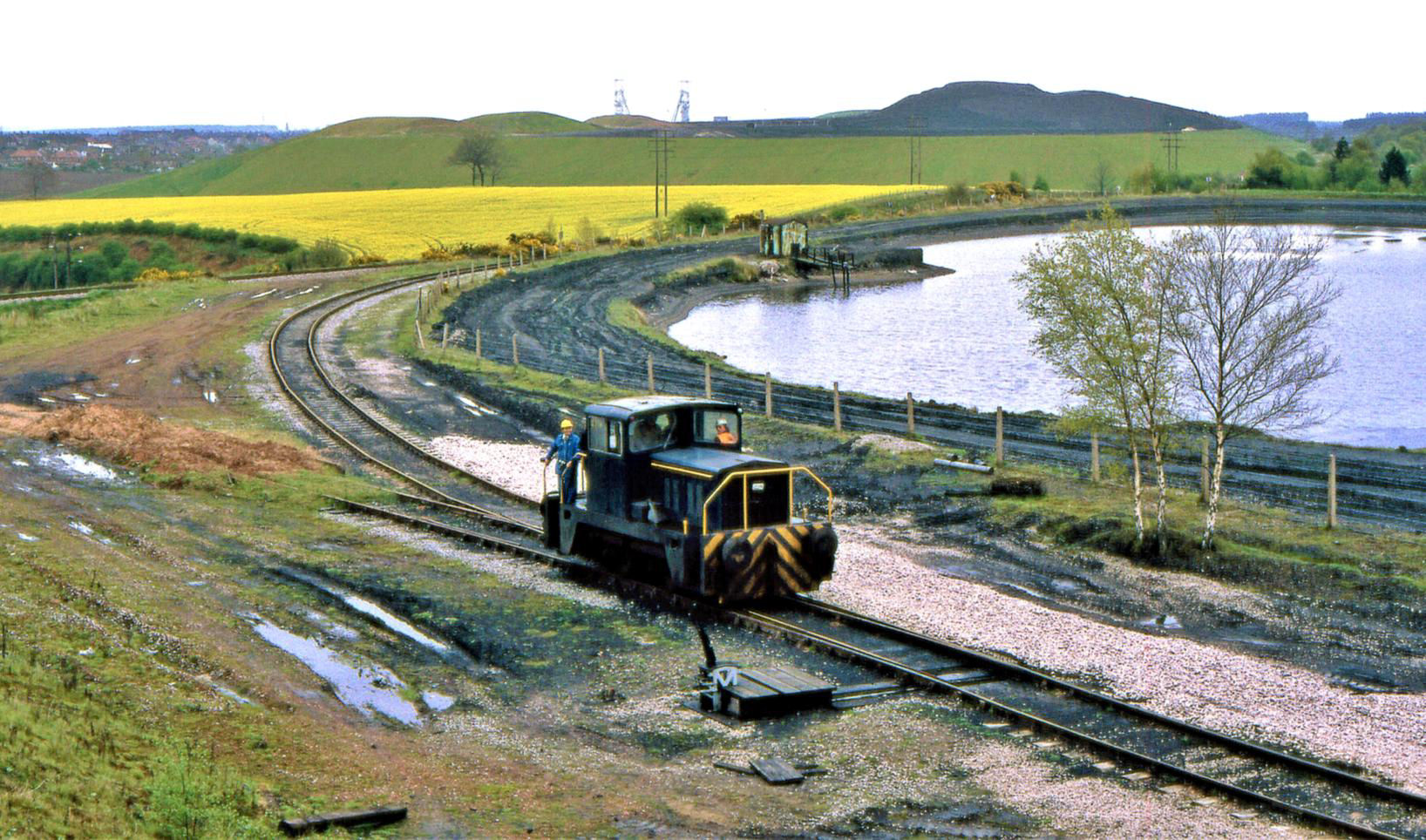
Apr 1988, just before Mansfield Colliery ceased production, during a Society railtour. An internal loco at its limit of working on the loaded wagon sidings branch. The line beyond curves round to join the empty wagon sidings branch, (heading off to the left). Clipstone Colliery headstocks are background top centre.
[© Ian Mortimer 1988]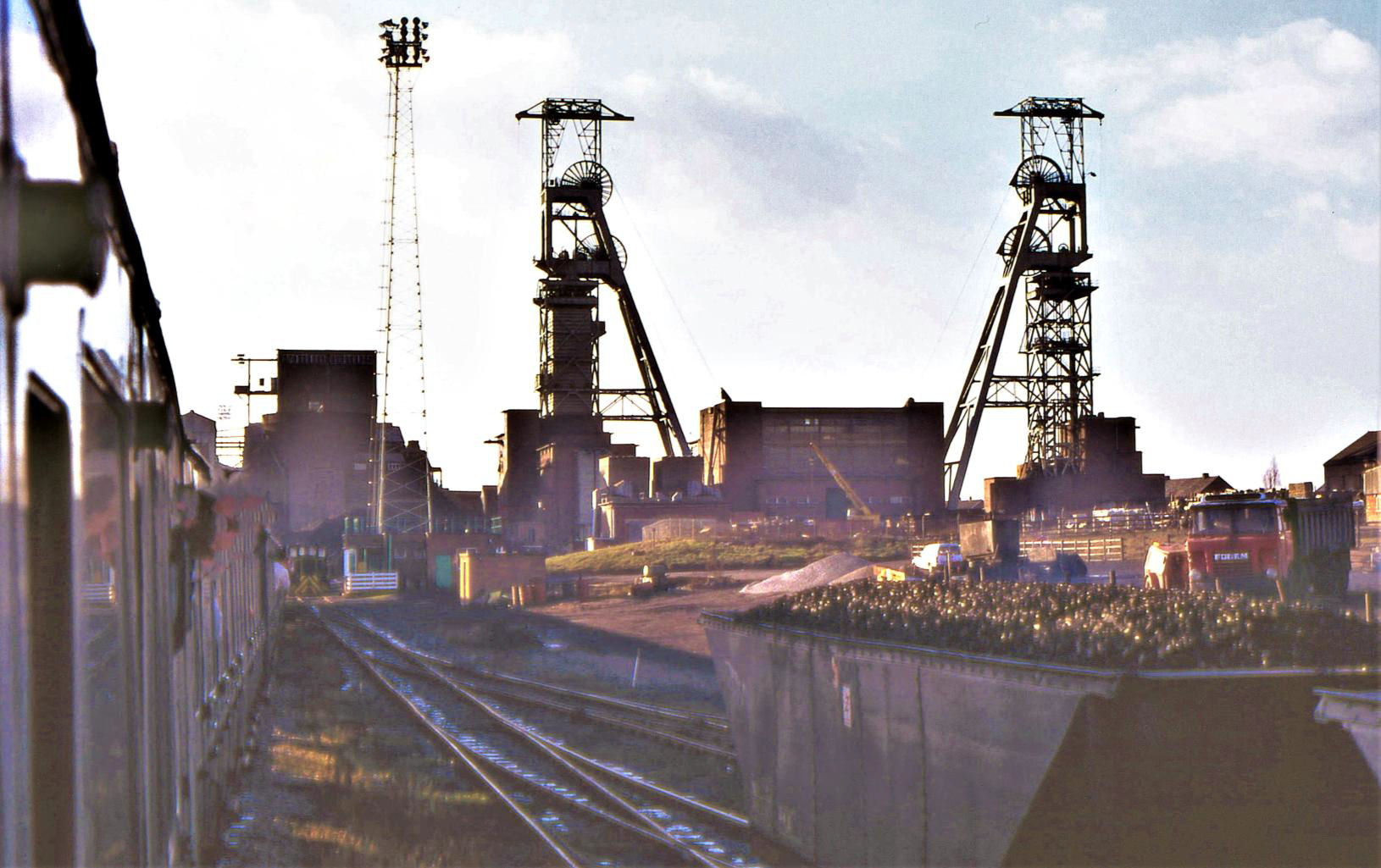
The massive Clipstone Colliery headstocks from the tour near the end of line. Note the adjacent loaded merry-go-round coal wagon bottom right and internal colliery loco in the distance.
[© Ian Mortimer 1989]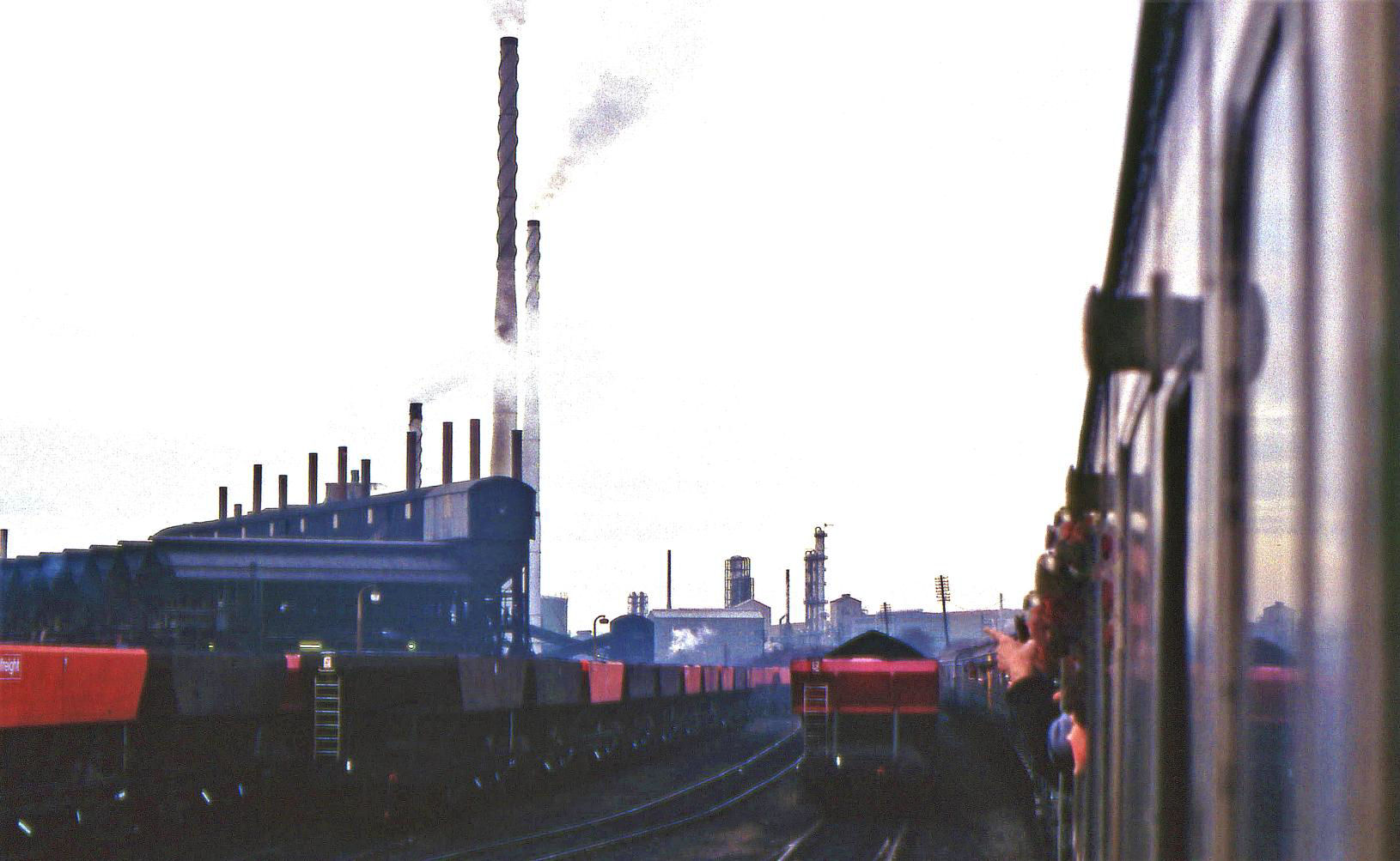
The tour passes the Coalite plant on the Bolsover branch in fading light. This gained some notoriety in the 1960s as it produced chemicals used in Agent Orange during the Vietnam War. There is no such thing as 'smokeless fuel' really; you just get the smoke here rather than at people's homes!
[© Ian Mortimer 1989]