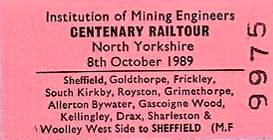
Institution of Mining Engineers - North Yorkshire Tour
Sunday 8th October 1989
Report by Ian Mortimer
https://bit.ly/2YDtrxm Six months later the programme of tours restarted in earnest with three in three weeks. The first two covered North and South Yorkshire respectively, they both starting from Sheffield.
The North Yorkshire tour departed 08.56 through Swinton to Hickleton Main Colliery Sidings, where it reversed to access the branch to Goldthorpe Colliery, which closed in 1994. The tour took the connection installed by British Rail in 1978 to allow closure of the former access to the colliery, via the Dearne Valley line from Dearne Valley North Jn, which saved the cost of replacing a bridge. The tour reached a wagon length short of the end of line at Goldthorpe.
Continuing up the Swinton & Knottingley (S&K) Joint line, a further reversal at Moorthorpe preceded a run along the S&K branch to the west side of Frickley Colliery, where the end of line was reached. This colliery, probably best known for its football team (now called Frickley Athletic), closed in 1993. Until 1976 Frickley was also served by a West Riding & Grimsby/Hull & Barnsley Railway branch from the east; its two branches were connected via colliery internal lines. On returning to Moorthorpe the curve towards South Kirkby Jn was taken, then the direct connection off that curve onto the branch to South Kirkby Colliery. It had closed in 1988, but the washery continued to be used for coal from Gascoigne Wood (Selby coalfield). This had also ceased by the date of the tour, so we were fortunate to cover the branch to the buffer stops especially as that the end of the line was usually rope worked.
On returning down the branch the tour used the other connection from South Kirkby to the Doncaster to Leeds main line, where it reversed. A run via Hare Park Jn and a reversal at Oakenshaw Jn took us to Royston Jn drifting along the branch to Royston Drift, a short lived mine which had only opened in 1975 and had shut the month before our Oct 1989 visit. Here the DMU didn't quite reach line end as the internal diesel shunter had been parked just short of the buffer stops. Having said that, we did well to go as far as we did, since it was noted that again the end of the line was usually rope worked.
Next was Grimethorpe Colliery and Coking Plant, reached via Dearne Valley North Jn, and a remarkable 180 degree curve, opened by British Rail in 1966. There also used to be a sharp curve in the opposite direction, southeast to Goldthorpe Colliery - part of the 1978 closure mentioned above when Goldthorpe was connected to the S&K at Hickleton Main. The 1966 connections were put in to allow closure of most of the rest of the Dearne Valley line. At Grimethorpe the tour ran past the various installations and reached a point just short of the junction with the coke inlet line, where there was an overbridge carrying a minor road, the location of Grimethorpe Halt (CP 1951), three miles from Dearne Valley North Jn. Grimethorpe was one of the deepest and largest pits in the area and, following mergers with various other collieries, had produced 3.3M tonnes of coal in 1980/1. At the time of the pit closure in 1993 the coal-based businesses in Grimethorpe, including the coking plant, coal preparation plant, research facilities and the NCB area headquarters, employed around 6,000 people, but all of this had closed by 1995. Unsurprisingly Grimethorpe was, at the time, declared the most deprived village in Britain. The colliery was, and still is, famous for its brass band.
Returning to Oakenshaw Jn the tour continued on through Normanton and Castleford to Castleford East Jn, before taking the branch towards Allerton Bywater Colliery. As 'Luck' would have it, the train stopped just short of Ledston station, where the colliery loading pad was. The colliery itself closed in 1992, but the branch was reopened for a time when the pad was used for loading opencast coal. After returning to and reversing at Castlefield West Jn, it was on to Gascoigne Wood Jn and through the loading sidings for Selby Mine. This was a complex of five satellite pits connected underground to the Gascoigne Wood drift site where the coal was brought to the surface. The mine had only opened in 1984, was privatised in 1995, but had geological difficulties. The final mine, Riccall, closed in Oct 2004.
Rejoining the main line at Hagg Lane, at the eastern end of the sidings, the train reversed and returned to Milford Jn, passing through Knottingley before running into Sudforth Lane Sidings. A further reversal here allowed access to the bunker line at Kellingley Colliery, where the end of the loop line was reached by running through the loading bunker and then returning on the bunker avoiding line. Kellingley had the distinction of being the last deep mine in the UK, closing on 18 Dec 2015. Leaving the east end of Sudforth Lane Sidings it was on to a location that is familiar to current members, but which was a highlight in 1989, the branch to Drax Power Station, including a run round the loop, running through the bunker on line 'A'. This was 6m 23ch of new track for many on board this fully booked tour, of which 4½ miles was former Hull & Barnsley Railway - not much of that has survived.
Retracing our steps to Knottingley, the penultimate target of the day was the Sharlston Colliery (closed in 1993) branch, where the bunker line was taken to the buffer stops. We reversed at Pontefract Monkhill; then the tour ran through Wakefield Kirkgate and on to the final destination, Woolley West Side coal preparation site, which was a central washery for eight local mines. These were Caphouse (now the home of the National Coal Mining Museum), Denby Grange, Bullcliffe Wood, Park Mill (at Clayton West, previously served by that branch), North Gawber (which used to have a lengthy National Coal Board branch), Dodworth (on the Barnsley to Penistone line), Newmillerdam and, of course, Woolley itself, all linked underground. Caphouse, near Wakefield, was 12½ miles from Dodworth even as the crow flies! In 1953 a certain Mr A Scargill began work at Woolley Colliery at the age of 15. The Woolley complex had closed in 1987 and the washery followed in 1993. This was one of the very few locations during the entire programme of tours where things didn't quite go to plan, as only the reception sidings were visited and not the West Side bunker branch. From here it was a straight run through Barnsley back to Sheffield, which was reached at 18.08 around 30 minutes late.
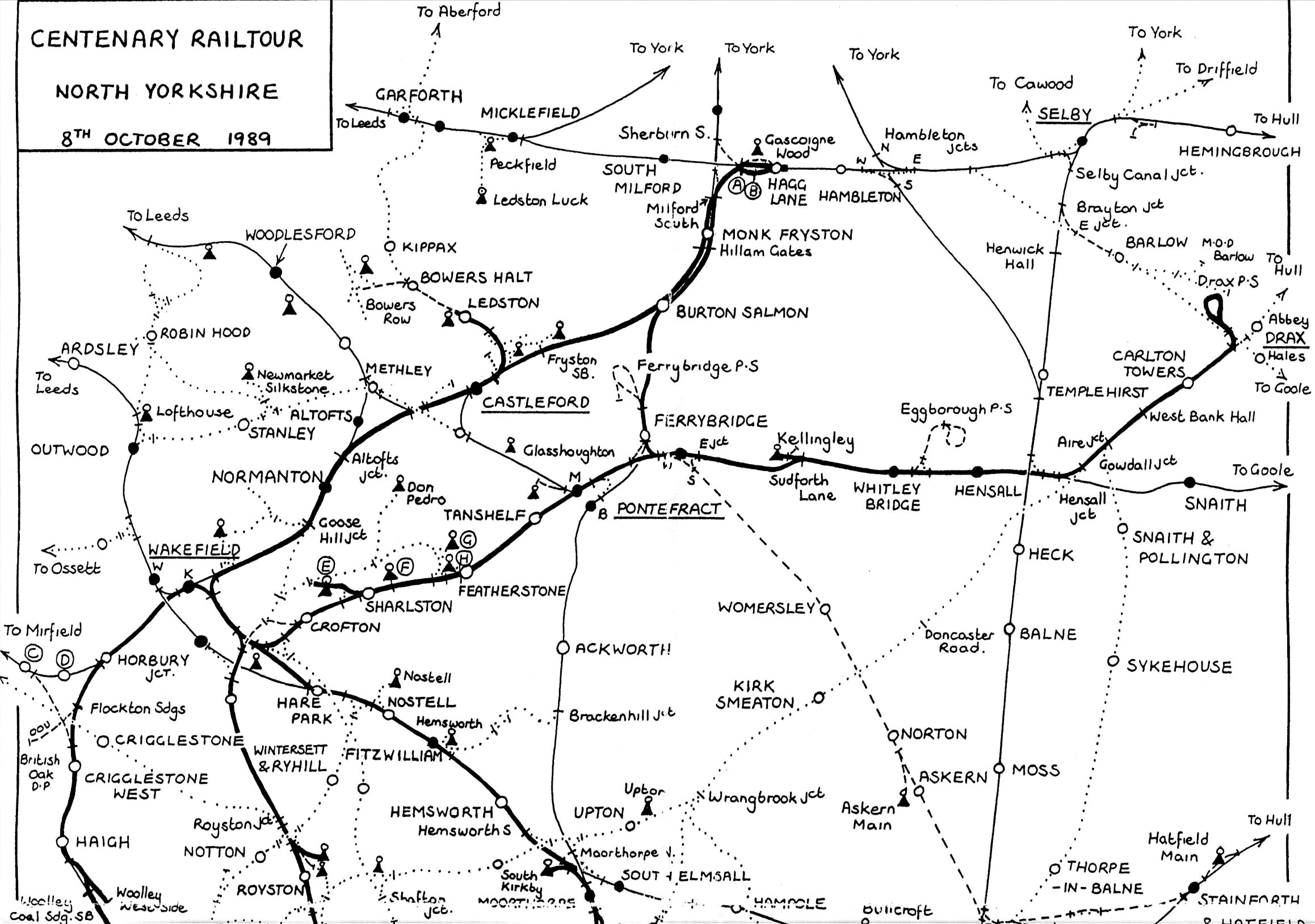
Railtour map drawn by our member Rodger Wilkinson.
[© Rodger Wilkinson 1989]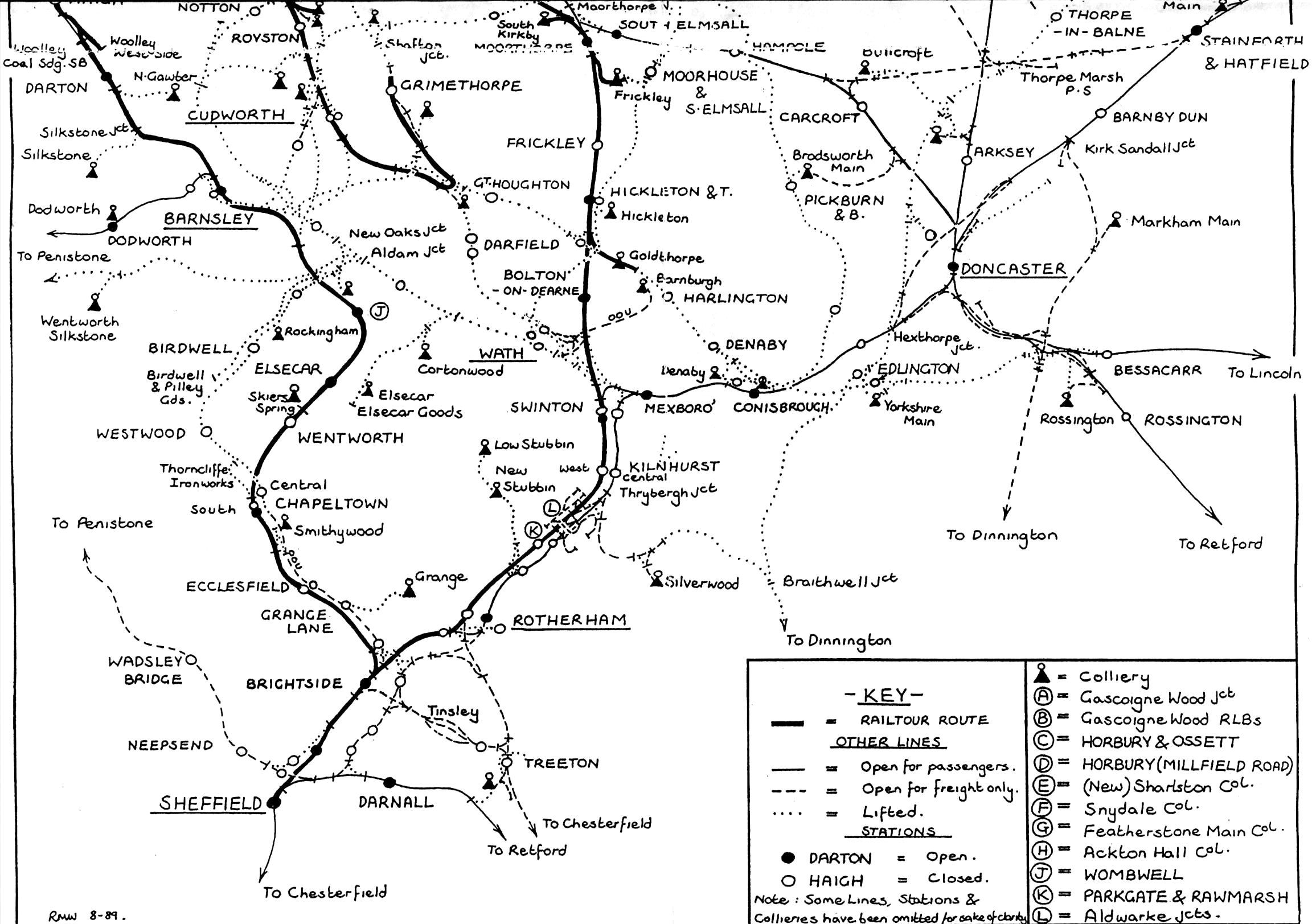
Railtour map drawn by our member Rodger Wilkinson.
[© Rodger Wilkinson 1989]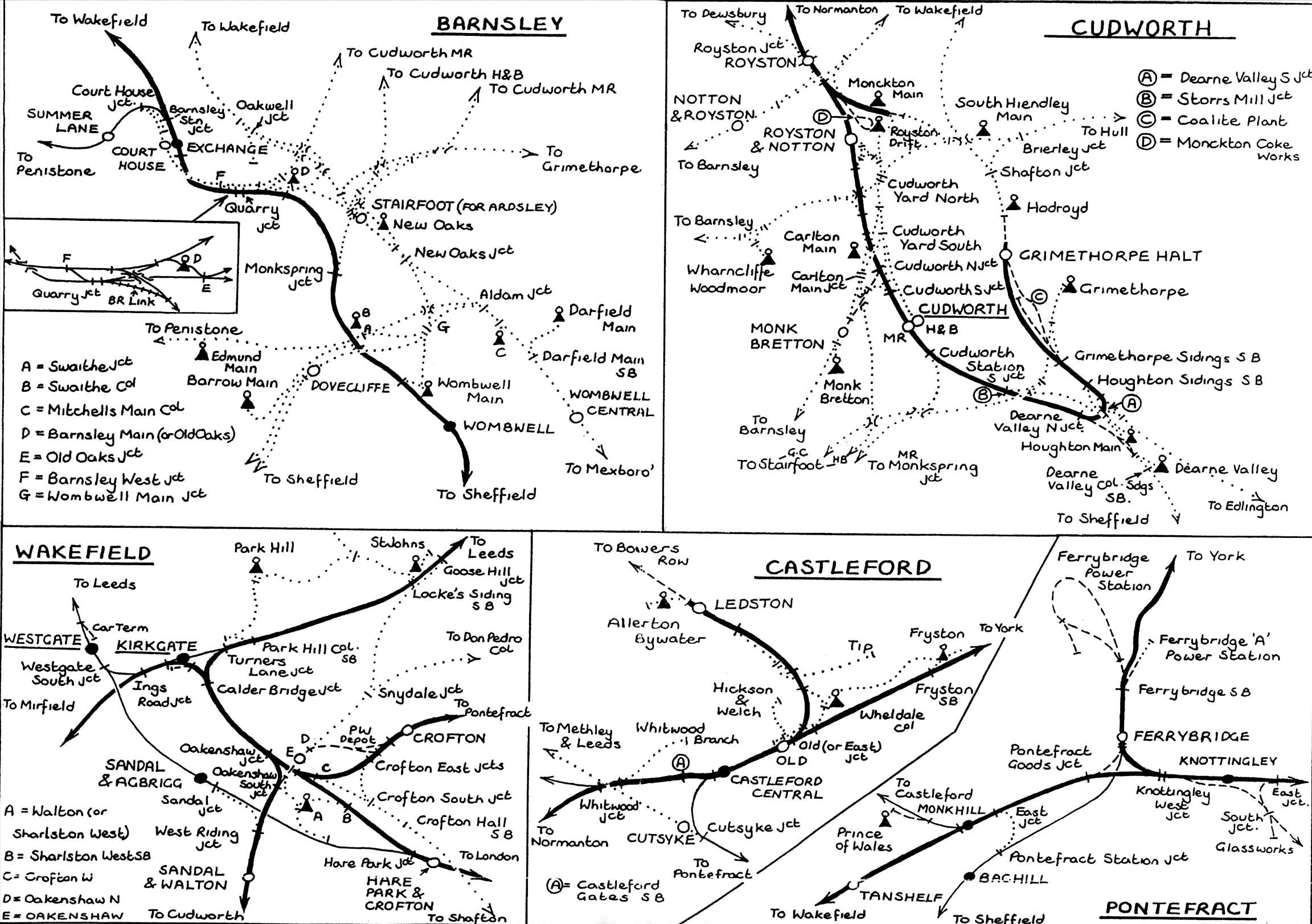
Railtour map drawn by our member Rodger Wilkinson.
[© Rodger Wilkinson 1989]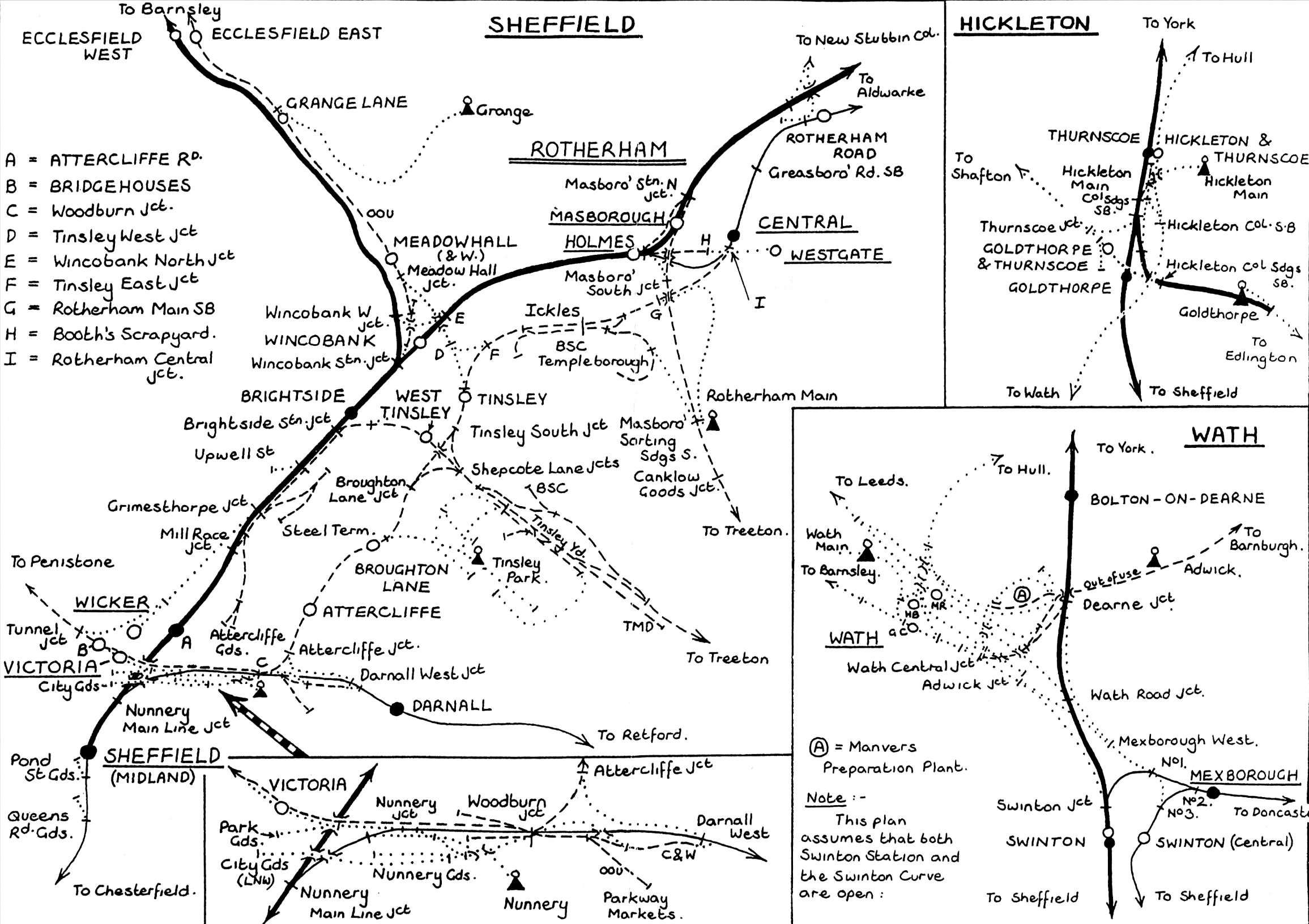
Railtour map drawn by our member Rodger Wilkinson.
[© Rodger Wilkinson 1989]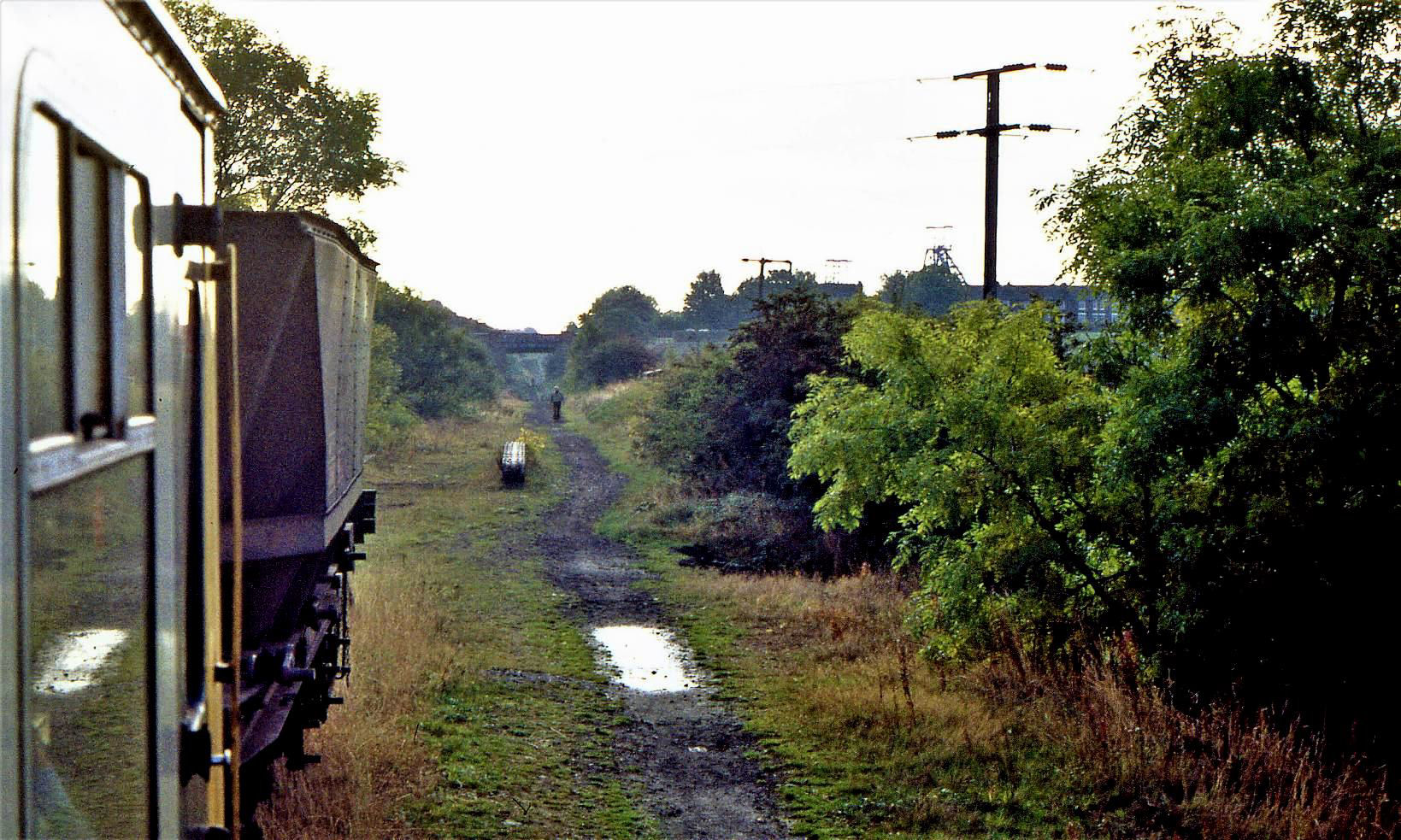
View from the tour at the end of the Goldthorpe Colliery branch, looking southeast along the once double track Dearne Valley Railway towards Conisbrough and then running south of Doncaster. The structure in the middle of the trackbed immediately beyond the line end is believed to be Barnburgh Lane underbridge, and the overbridge in the distance carries Green Lane. The headstock off to the right in the distance is Barnburgh Main Colliery, which had closed in June 1989 and had been served by an internal line to Manvers Main Colliery.
[© Ian Mortimer 1989]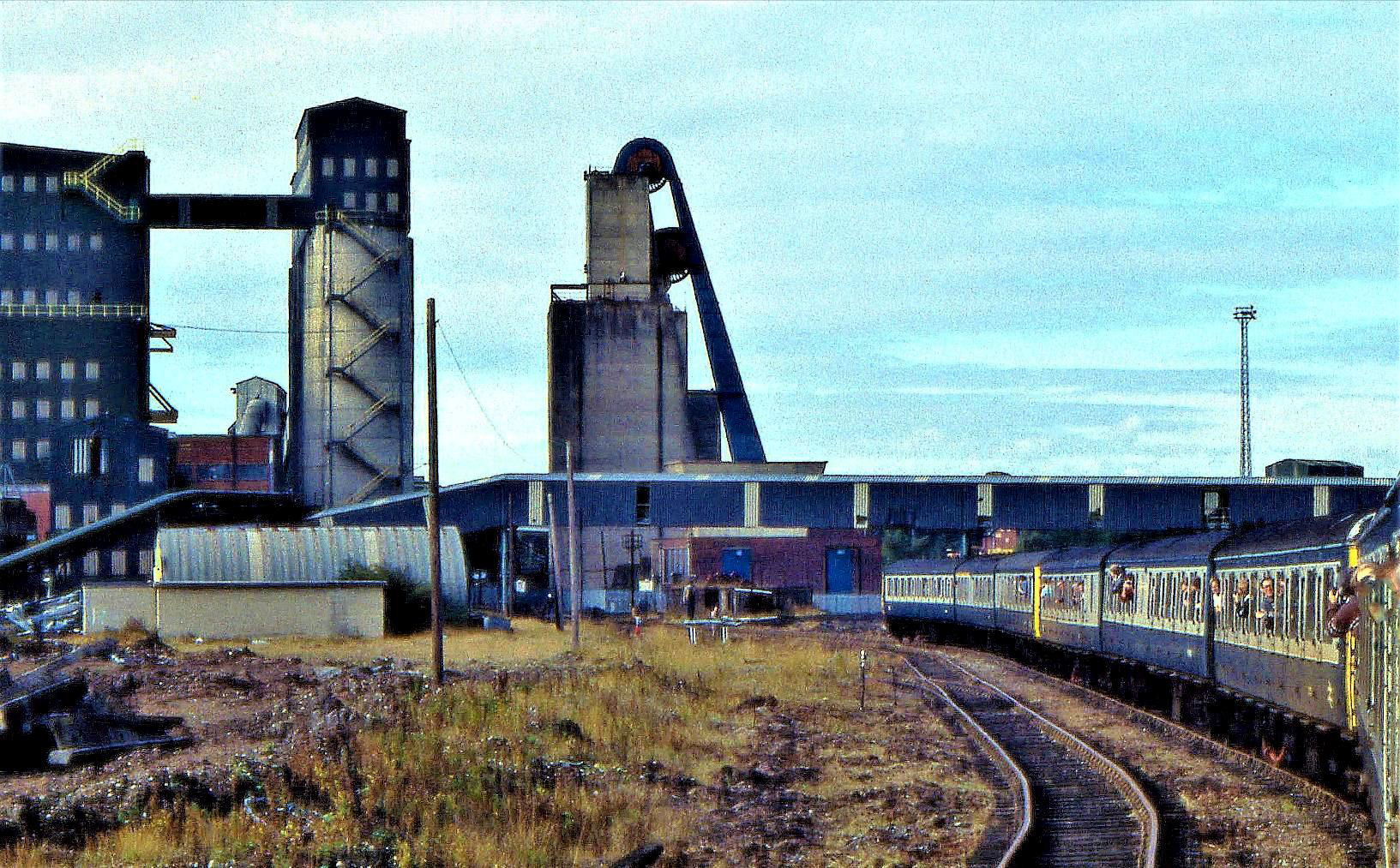
The 8 Oct 1989 tour at South Kirkby with its impressive headstocks.
[© Ian Mortimer 1989]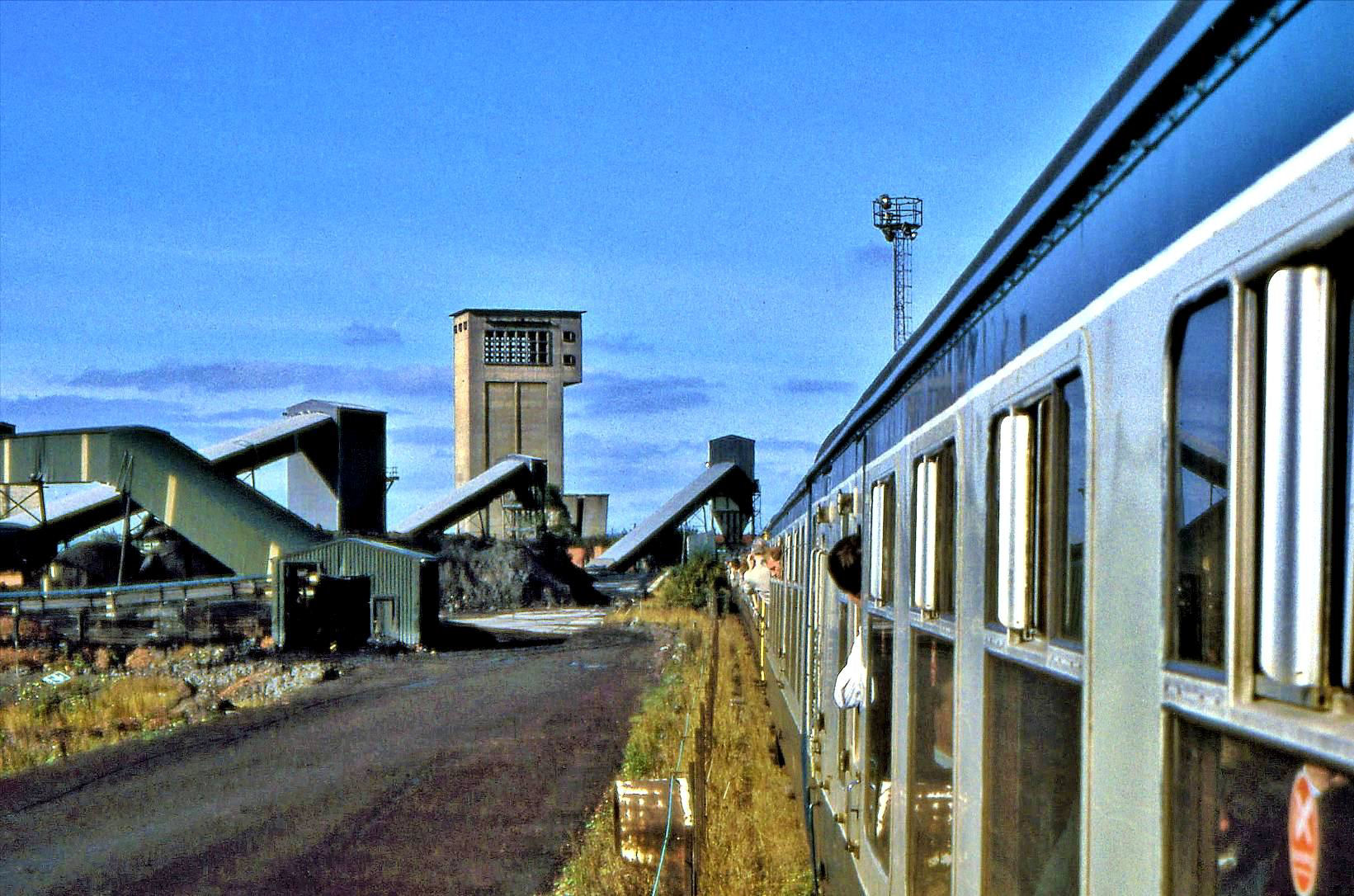
Looking back towards Royston Drift bunker from the line end.
[© Ian Mortimer 1989]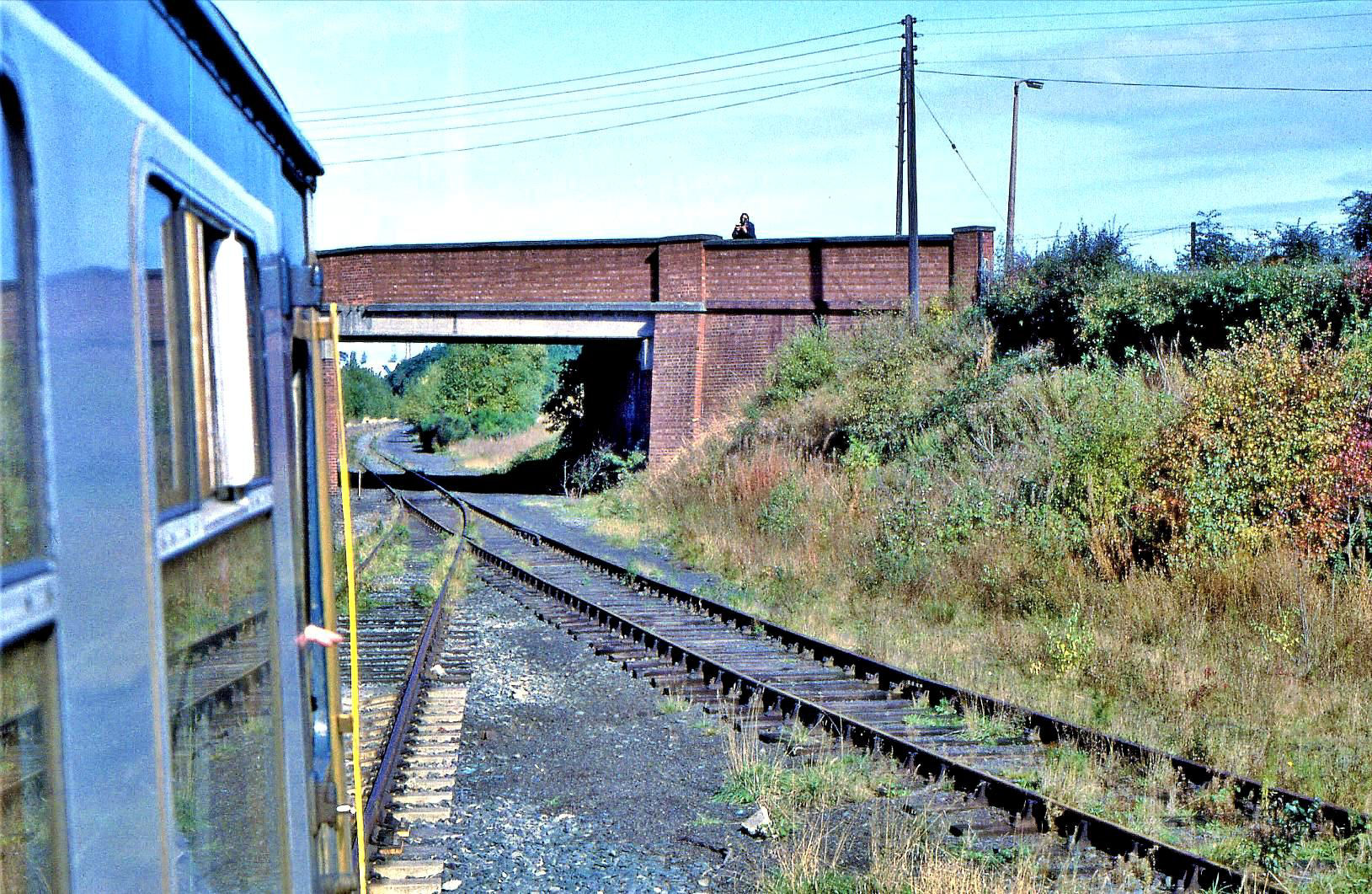
The 'point' reached at Grimethorpe, three miles from Dearne Valley North Jn and the site of Grimethorpe Halt (CP 1951) on the former double track Dearne Valley Railway looking north. The line to the right is the north access to the leads to the Coalite (a smokeless fuel) and coke plant, which is behind the photographer, and the one ahead is the headshunt for this line and also the end of line.
[© Ian Mortimer 1989]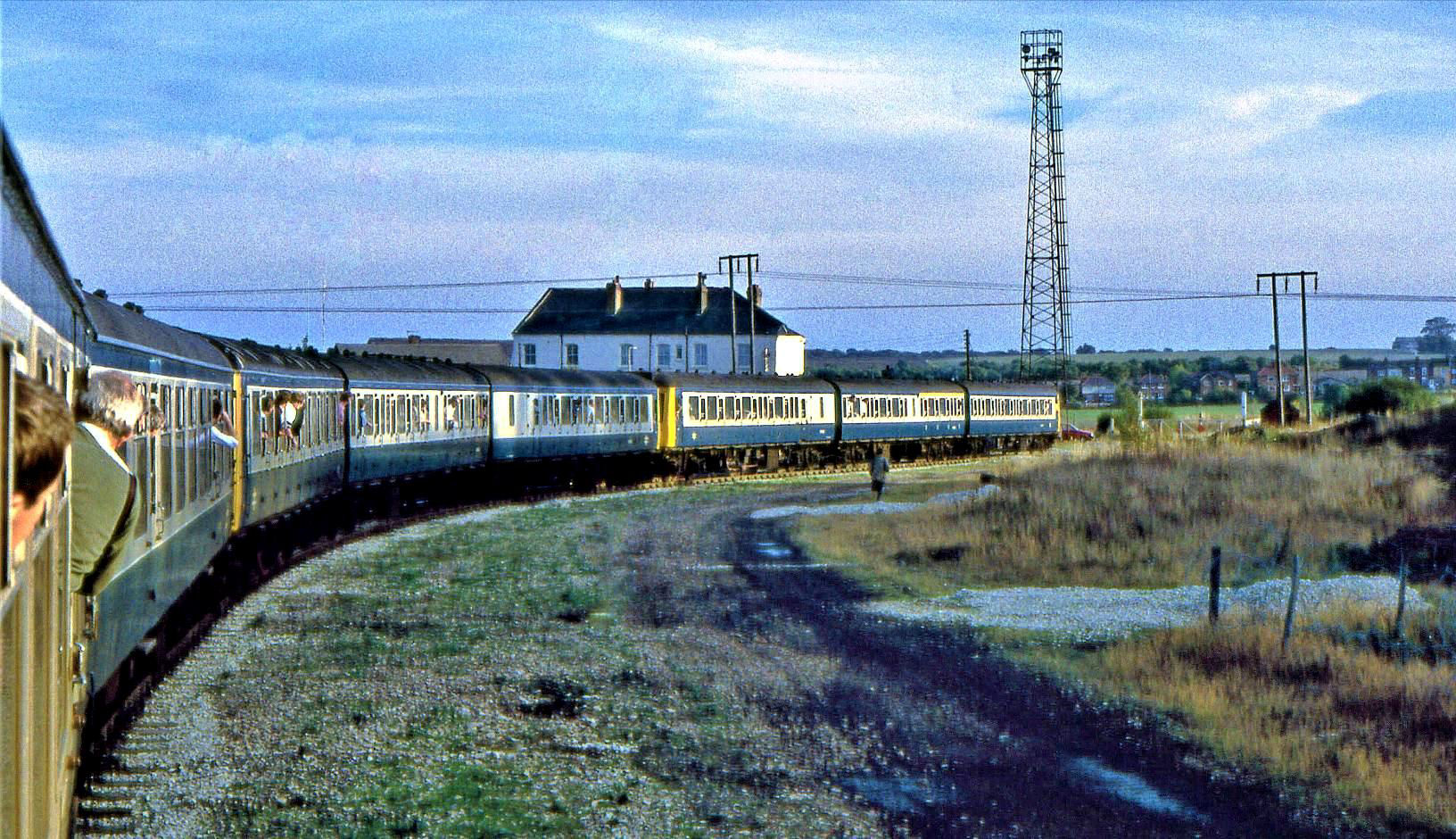
The tour returns from Sharlston Colliery and is waiting for the crossing gates (middle right) to
be opened. Beyond the gates was a triangular junction; west facing curve was closed in about 1980.
[© Ian Mortimer 1989]