Living quite close I had travelled on the London & South Western Railway (L&SWR) 4½ mile Seaton Junction to Seaton branch in the late 1950s; the train was usually a two coach push-pull set with a M7 tank engine. Later the branch was DMU operated. There was an interesting Ministry of Agriculture Fisheries & Food research station by Colyford station which caught salmon going up the river to spawn and then fish which had matured going to the sea for the first time. They were tagged so, if they were caught, the data could be fed back. We had school trips there by train from Chard Junction station. Sadly the line closed 7 Mar 1966.
Seaton Tramway opened 28 Aug 1970, with an unusual 2' 9" gauge and was built on part of the branch. Our first visit was 27 Mar 1988, - the first fixture I had organised for the Society - part of a series of visits to minor railways in the area. Back in 1988 the tramway terminated in a siding in Harbour Road car park near the current terminus. Our now General secretary even had hair then...
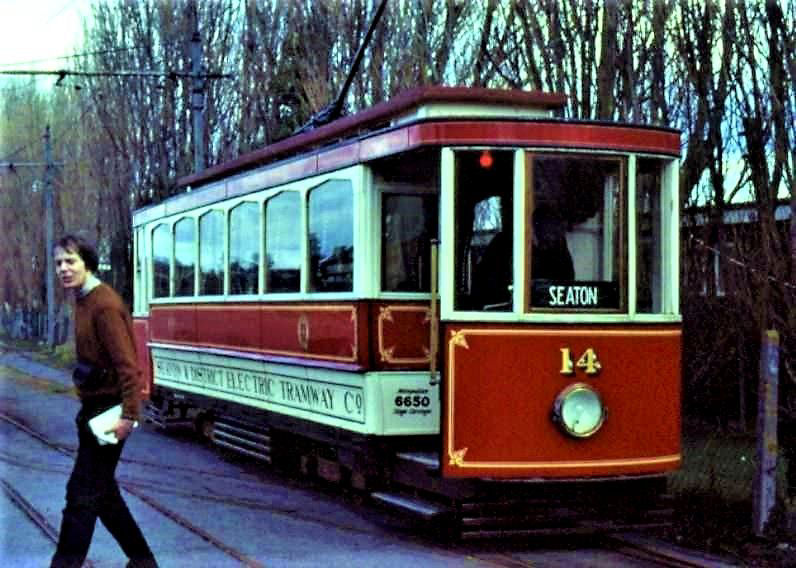
1988 tour at Colyton, with our GS (and hair) - the crossover has also gone
[© Trevor Cockram 1988]The new terminus building is an impressive £2M structure. It opened 28 Jun 2018 after the line from the Depot had been temporarily closed since 18 Sep 2017 for its construction with some tramway realignment (including vertically) and remodelling. The building includes a ticket office and café where participants each had a bacon roll and hot drink, included in the fare, and I had a nice cheese salad.
Our tour was rostered for double deck Trams 2 & 12. Tram 2 was built for the previous incarnation of this tramway at Eastbourne. The design is based on a Metropolitan Electric Tramways Type 'A'. Tram 12 was built as an enclosed single deck saloon in 1966 also for Eastbourne. It was rebuilt as an open top double decker in 1980 and again in 1999 to a design loosely based on a London Feltham-type tram.
Tram 2 was in Road 1 (in front of Tram 14) with Tram 12 on Road 4 stops. Each tram worked alternately to Windy Corner where the line takes a 90-degree turn alongside the Tesco site, returning to an empty road. This way all the new track was covered on all four terminal lines except for Road 1 to the stops, completed at the end of the tour. Normally at least one, if not two of the lines are occupied by trams on exhibit so this was a big success to start off with. Our two trams then headed past the supermarket, once a Warner's Holiday Camp, to another 90-degree turn to join the Seaton & Beer Railway (later L&SWR) where the depot and workshops are located. This section of the line is worked by a token due to the sharp bends with limited visibility. The remainder of the line is operated by normal tramway permissive working.
There is now a stop at Riverside Depot, the temporary terminus while Seaton was rebuilt - a road coach shuttle then ran from the car park to the depot. The centre of the loop, generally used for boarding and alighting, is filled in with very smart block paving, a ground level platform and each side is also made up and levelled; a smart wooden fence funs the full length both sides. The stop is still used during special events. The line parallels the River Axe estuary with the Seaton Wetlands reserve and bird hides either side of Riverside loop, a stop for winter wildlife tram charters. Bird watching specials run. Some tried out this bird spotting idea and within minutes in the glorious evening sunshine had identified at least a dozen species including Swans, Seagulls, Ducks and a Blackbird... and concluded this bird spotting 'lark' is a doddle compared with the technical rigours of track bashing! [Be careful the birds don't do some people spotting!]
Our next stop, Colyford was the original L&SWR station site, although no trace is left. There is now a Victorian toilet on the tram platform but not in use. The driver has to operate the lights across the A3052 open level crossing installed in 1975. On the left, just after the station, is a concrete line man's hut typical of the Southern Railway, now with a 120 volt DC substation for the overhead.
Running through Tye Lane and Cowhayne loops we reached the northern terminus of the line at Colyton and ran into the headshunt where passengers normally disembark. Of course this was a tram full of BLS members so no one was looking to disembark as there was still some track ahead!
This was the only time the staff were a little wary of probing the extremities of the system, there was a fence across in front, the flange ways were full of stones and there was a suspicion the tram would not actually clear the adjacent wheelchair loading dock! The fence was simply picked up and disposed clear of the line by the organiser and after inching forward it was established the tram would clear the concrete...just... so that left the flange ways. In the time honoured manner a 'pointy stick' was found and the flange ways relieved of years of gravel deposits until they became so compacted as to be immovable, but the tram took many of as close to Seaton Junction as we are ever likely to reach by rail (1¾ miles), from this direction. In the village of Shute it CP 7 Mar 1966 along with the Seaton branch. The buildings there now house commercial units.
We reversed down the siding into the car park as far as possible. Upstairs passengers had to travel downstairs back from the headshunt as there is a most interesting automatic pole direction changer. It reverses the pole carrying power from the overhead wire. This involves a section ('branch') of overhead off at a right angle from the running line that the pole follows taking two curves rather than going straight on - a bit like going round two sides of a triangle to reverse an engine. It is before the platform, as trams return from the headshunt so is normally done without passengers. It actually has two wire routes, one for the shorter double deck tram poles, the other for the longer single deckers.
The siding here is a relatively new feature so that even those who had done one of these 'all line' trips before needed this bit and sitting practically on the buffers the wheels of No1 disappeared in the verdant summer foliage - success!
Returning to Colyton we passed another lineman's hut substation feeding power from the mains supply, taking the other sides of the loops down the hill before reaching Colyford. The siding off the Down line is not wired so the driver had to adjust the pole to take power from the adjacent normal running line. Having completed all the available lines here we continued via the loops at Swan's Nest (where a new station is proposed) crossing Bobsworth bridge and the loops at Axmouth and Riverside.
Here passengers changed to Tram 14 to do the four depot roads. This meant a spacious two tram load became a cosy crush load, with all the seats taken, the aisle full and the verandas also occupied, but for such short shunt movements no-one seemed to mind! Some left the tour here as they had cars parked to make train connections. Our tour then returned to the terminus and completed the end of Road 1. Time was against some catching their last train from Axminster but the organiser ran to the seafront to fetch his car and offered a few a brisk run back so they made it. [A 'brisk' run would be interesting with the organiser; a 'normal' run is like a Grand Prix!] Thanks to Seaton Tramway and their staff for their hospitality and to Simon Mortimer who organised and led the excellent trip, he also made sure that we did as much track as possible.
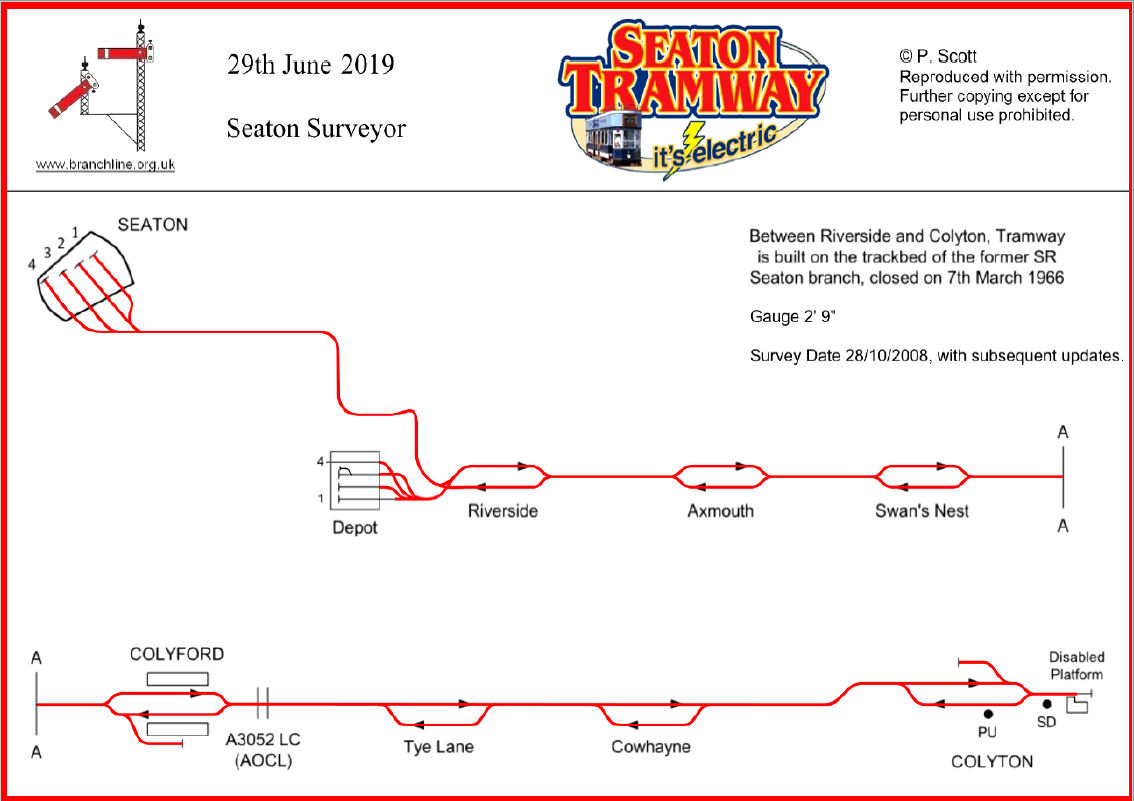
Seaton Tramway marked up plan reproduced with permission, ©P Scott; further copying, except for personal use is prohibited. Thanks also to Peter & Martyn Brailsford. Note the new Seaton layout (OP Thur 28 Jun 2018).
[© P Scott 2019]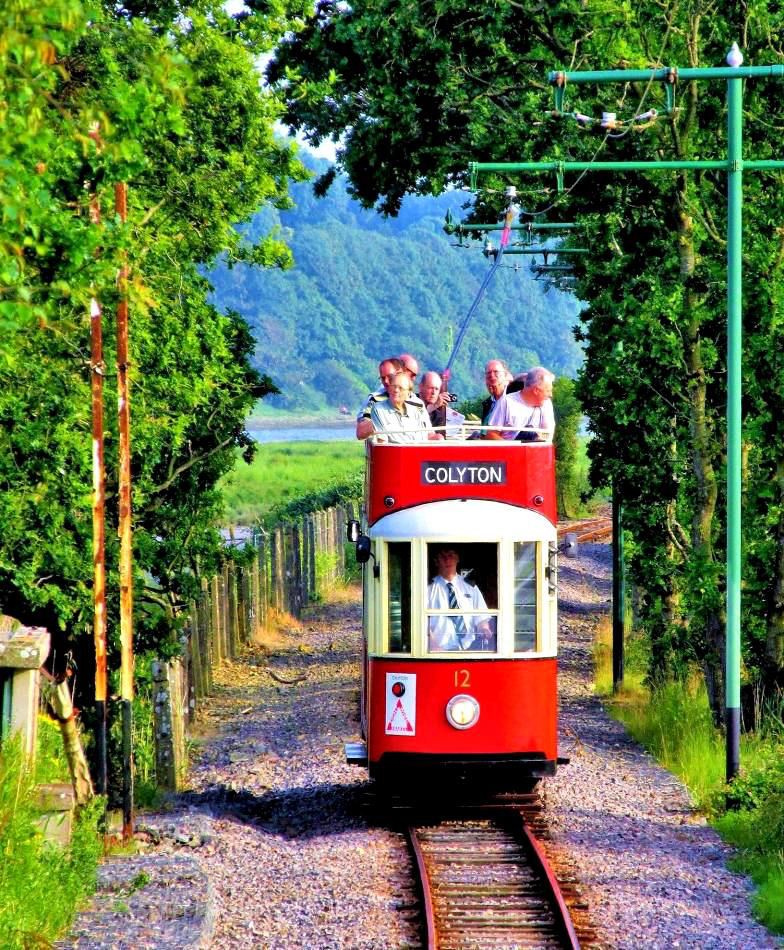
Tram 12 proceeds north of Axmouth Loop passing a row of old British Railways Southern Region concrete fence posts on the left and a platelayers hut bottom left corner (no doubt all from Exmouth Junction Concrete Works). There is also an original metal signal post on the left. It is a lovely warm summer evening and most participants were in shirt sleeves.
[© Simon Mortimer 2019]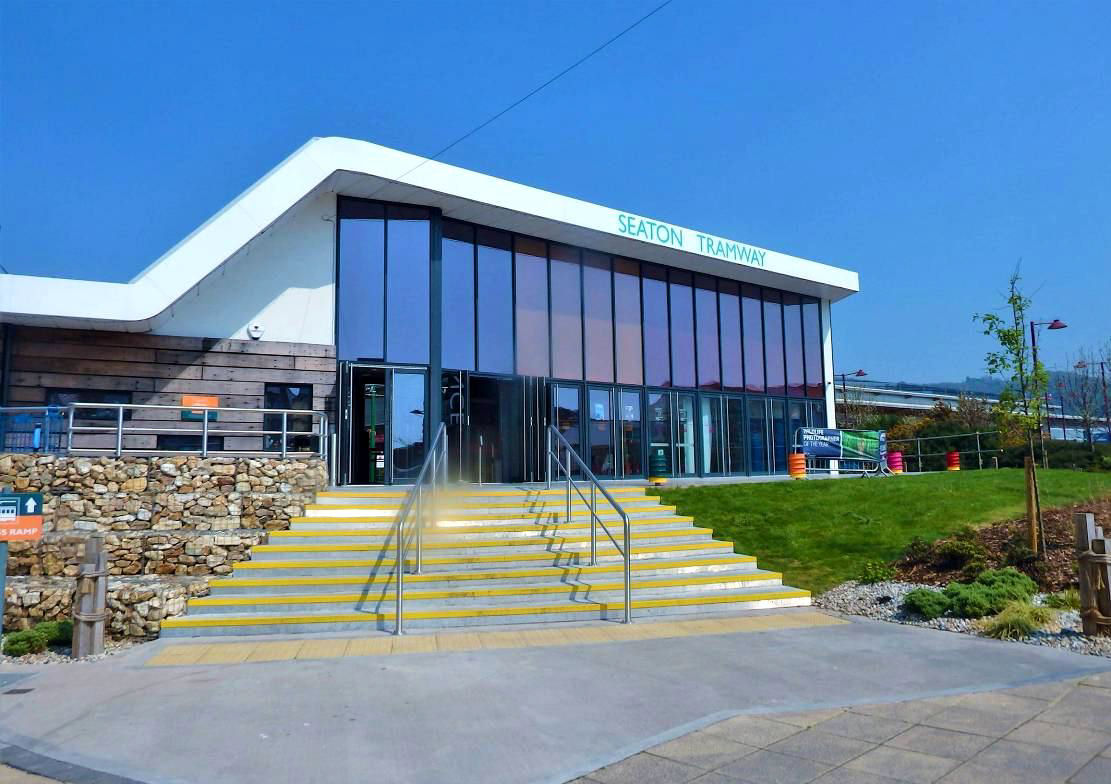
The excellent new building that now greets visitors to the tramway.
[© Trevor Cockram 2019]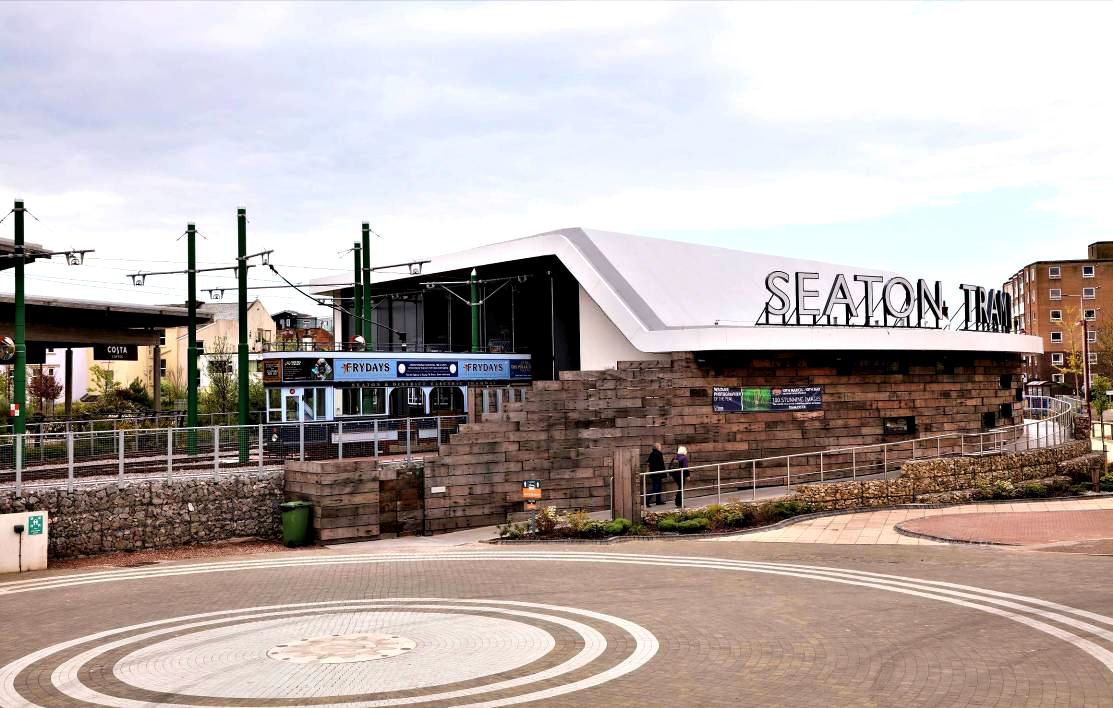
Rear exterior view of the new Seaton tram terminus on 5 May 2019.
[© Iain Scotchman 2019]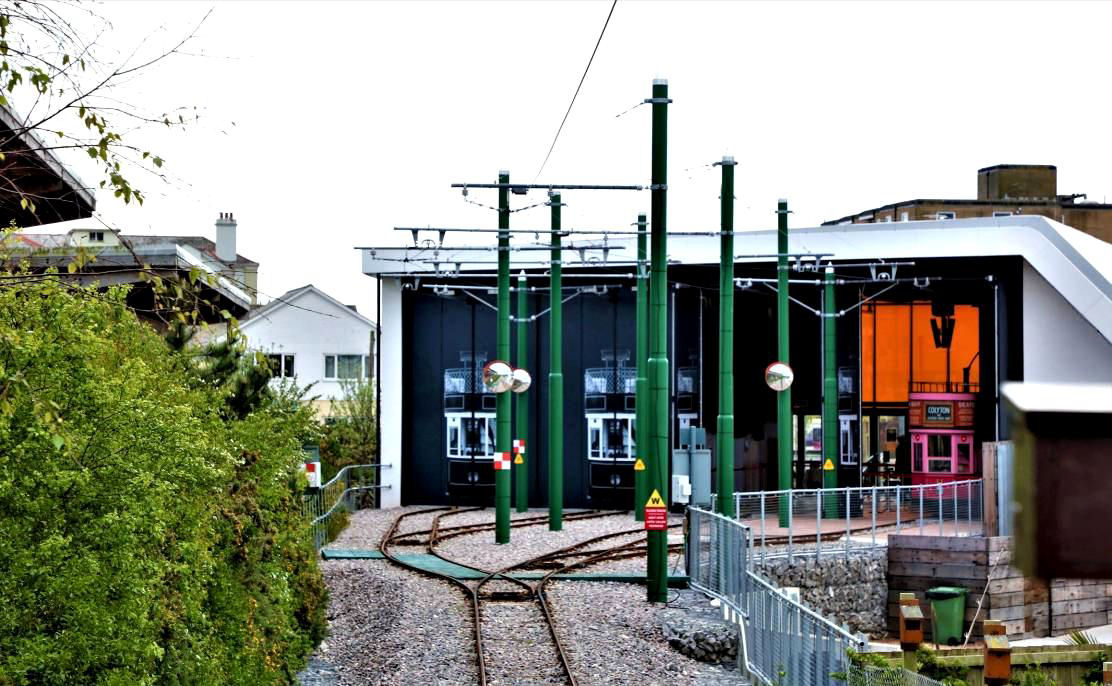
Seaton terminus as it is on a normal public running day; two of the four sets of doors are shut and those lines are occupied by stock on display.
[© Iain Scotchman 2019]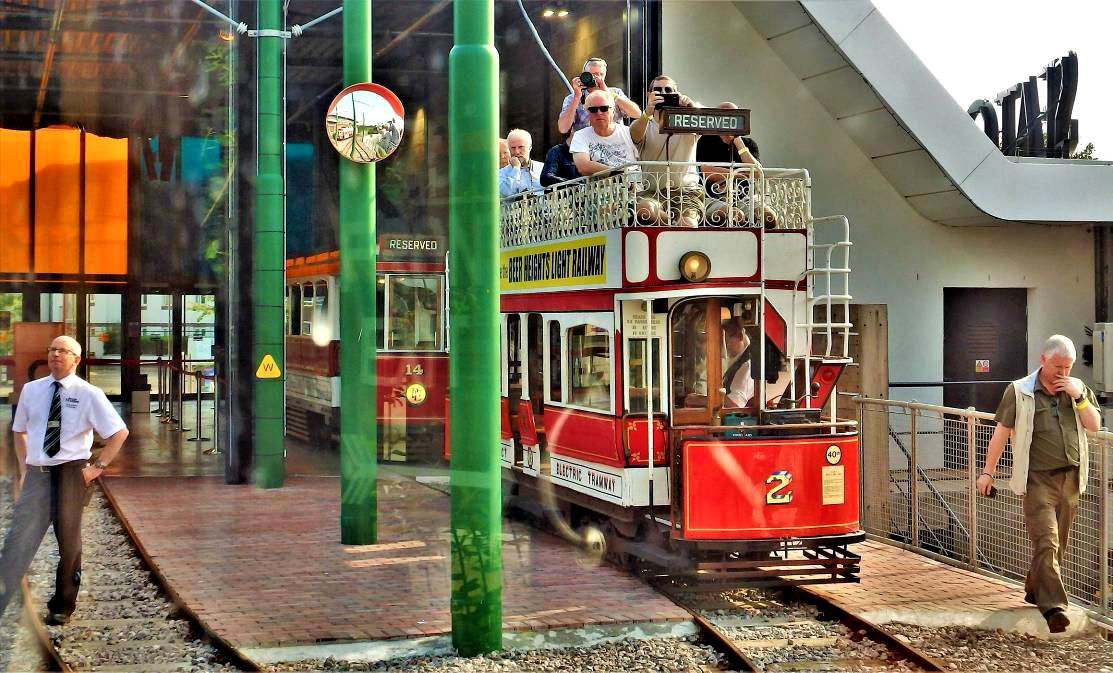
Taken through a tram window, at the start of the tour Tram 2 is on Road 1 with Tram 14 behind on the stop blocks at the new Seaton terminus. Far right is our illustrious organiser, Simon Mortimer, is deep in thought.
[© Trevor Cockram 2019]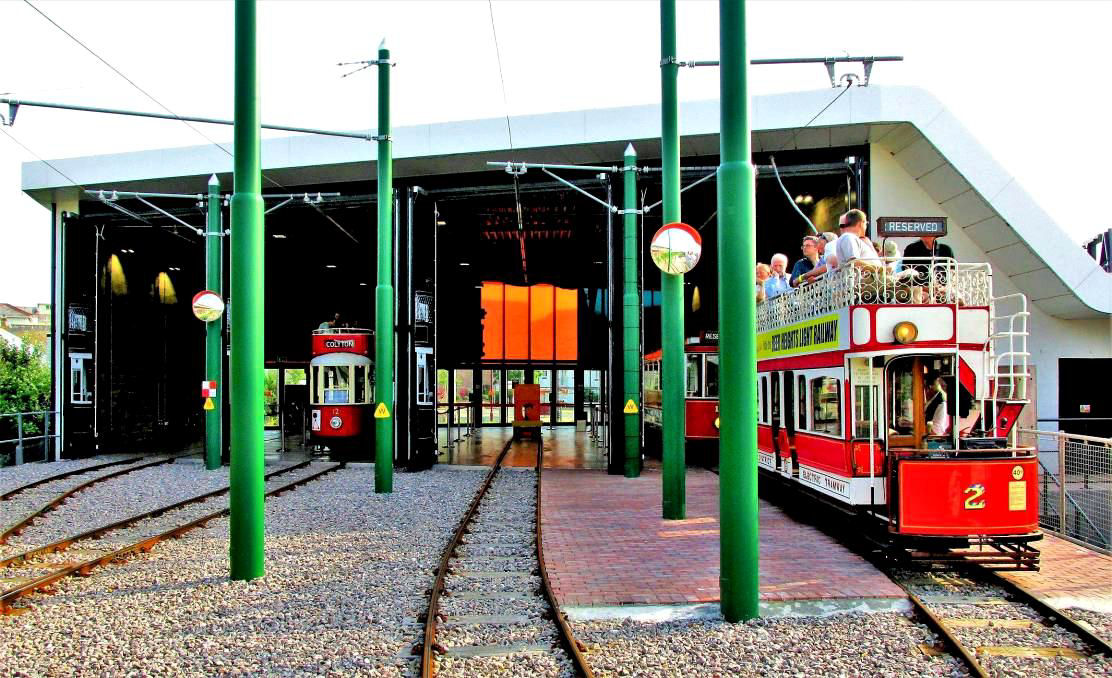
This shows the outdoor platform extension for Road 1 (far right) and Road 2, so each can unload/load two trams. The other half of our party is on Tram 12 on Road 3 (left) which accommodates one tram.
[© Simon Mortimer 2019]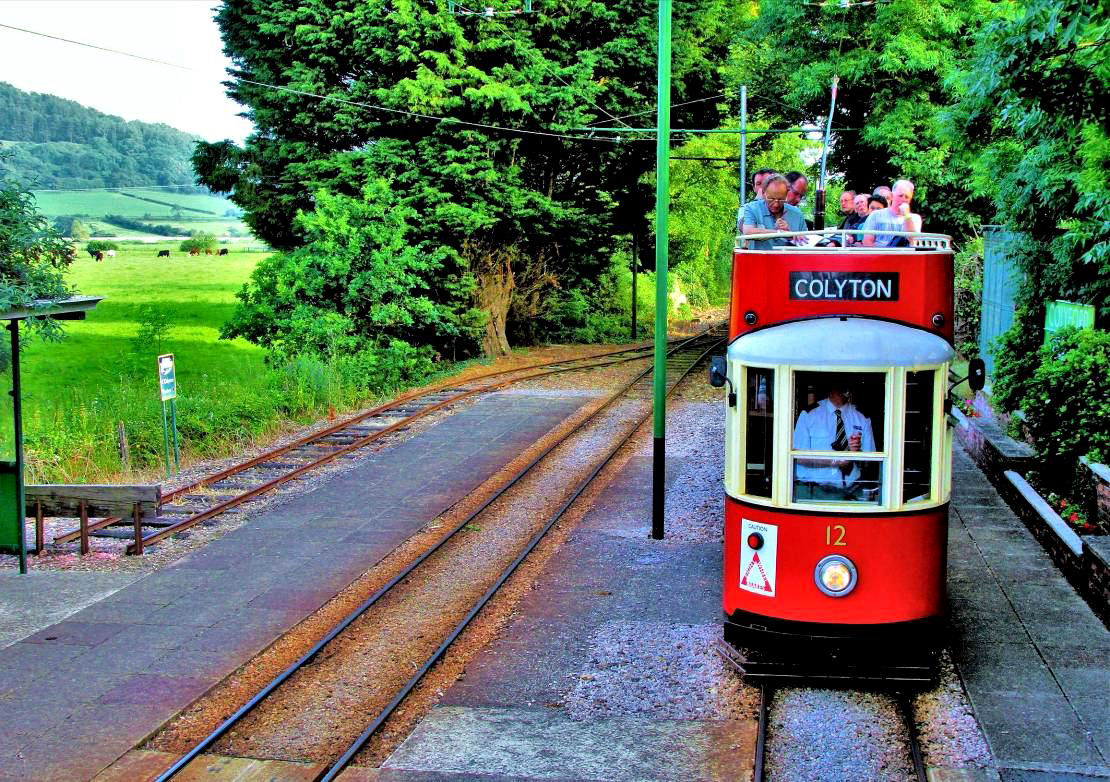
Colyford heading north. The bay platform siding was visited on the return; it was last used regularly before the tramway extended in 1980.
[© Simon Mortimer 2019]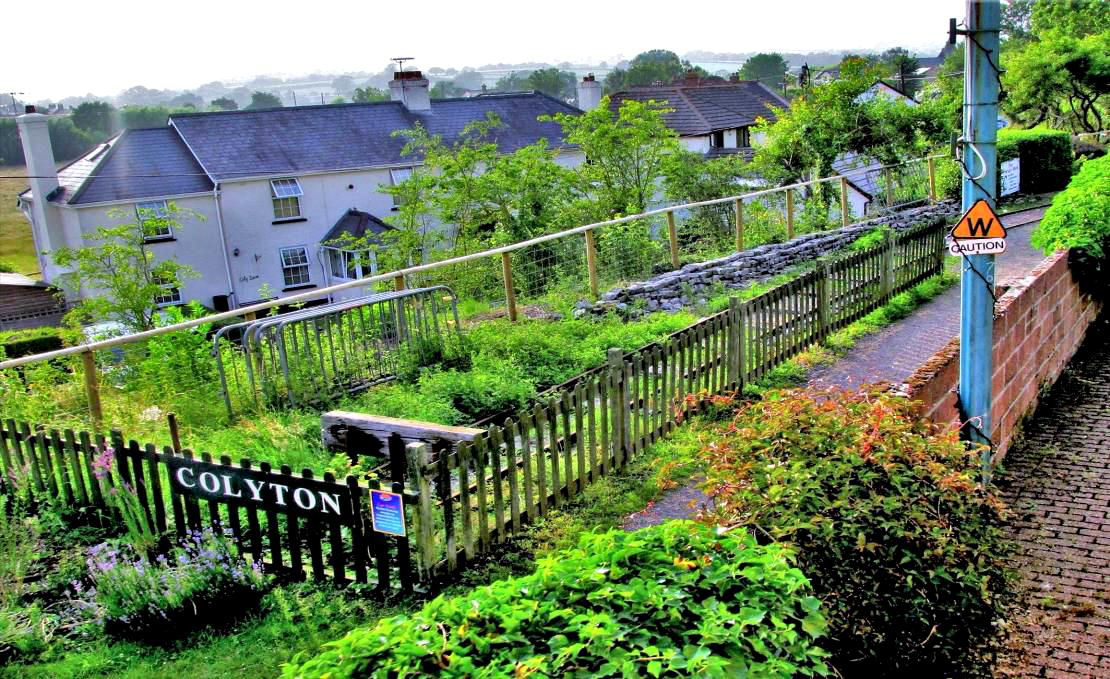
Colyton terminus looking at the rather weedy recess Wall Siding, accessed from north of the stop.
[© Simon Mortimer 2019]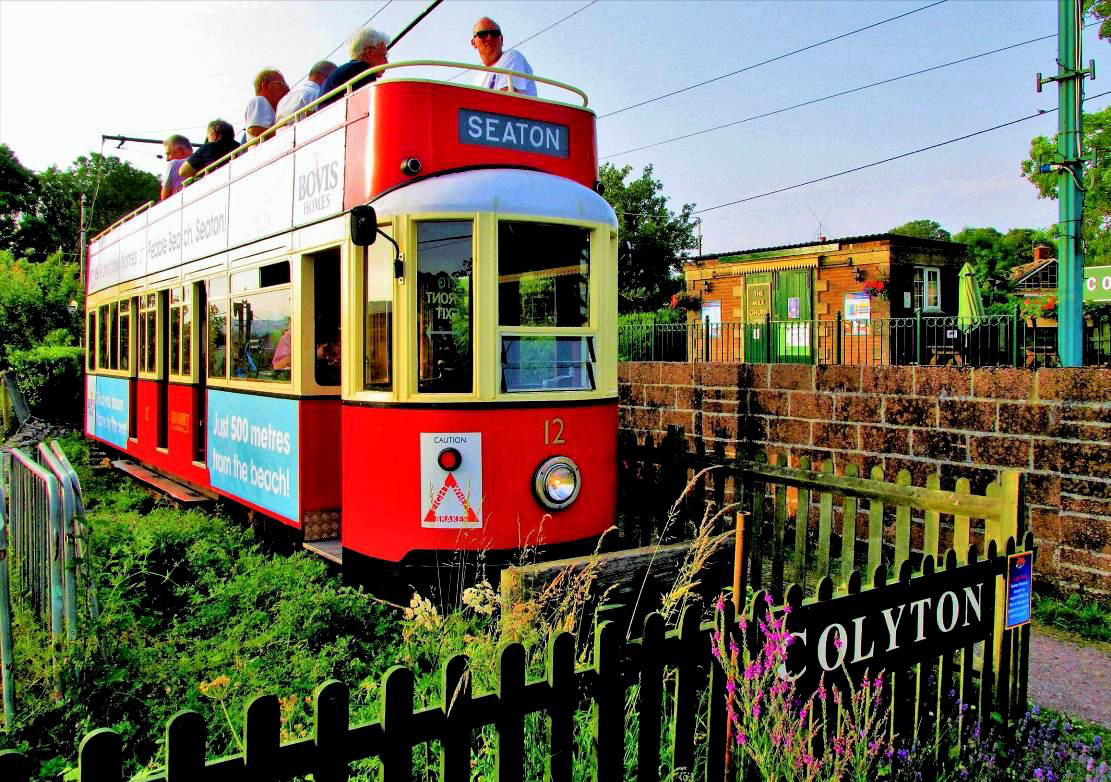
...but we still reached the end of line...
[© Simon Mortimer 2019]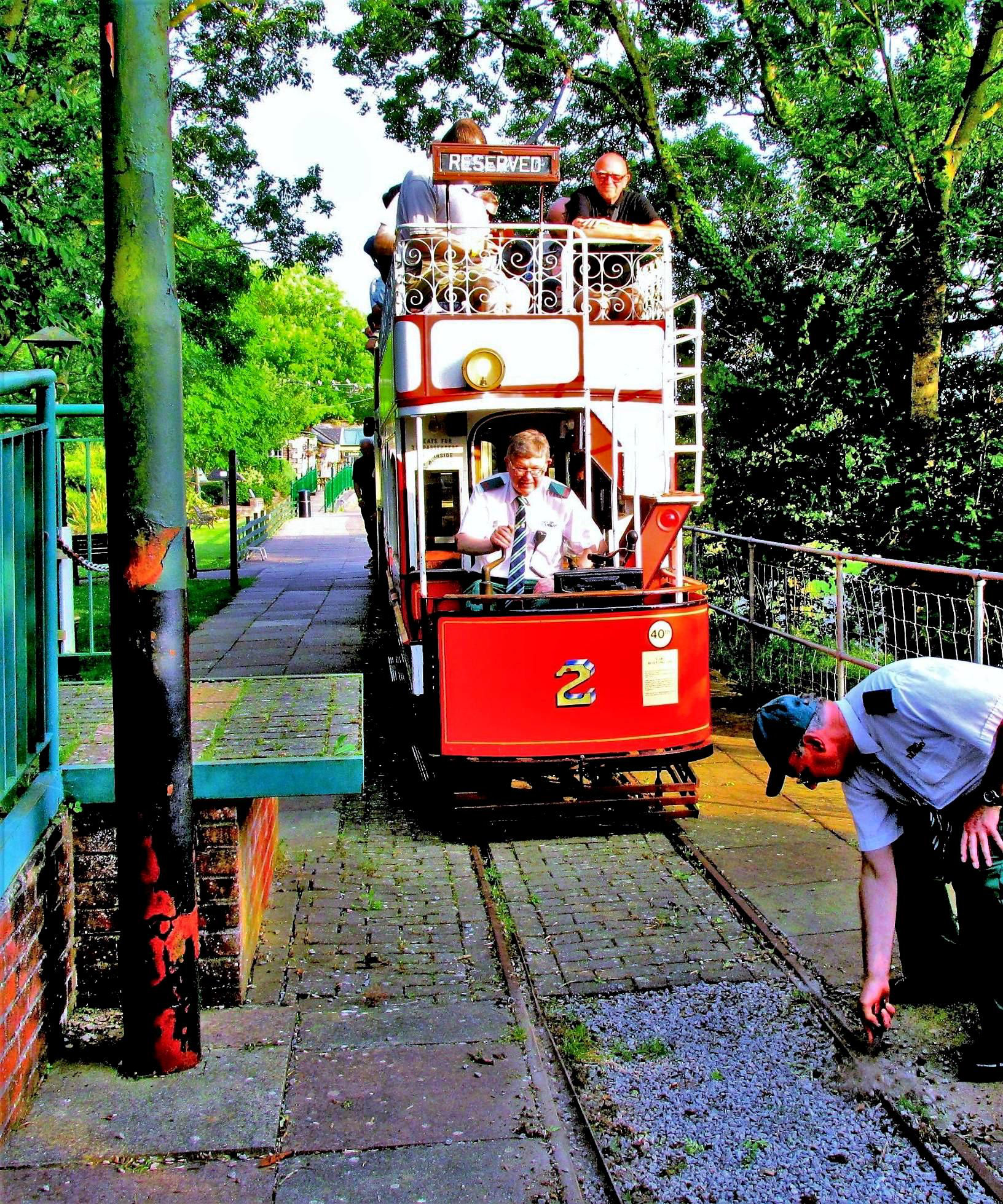
The very rare track north of Colyton not usef for a while - tram staff clear out the flangeways so that the tour could run to the end of line beyond the disabled access platform to the left.
The trams just managed to squeeze past this.
[© Simon Mortimer 2019]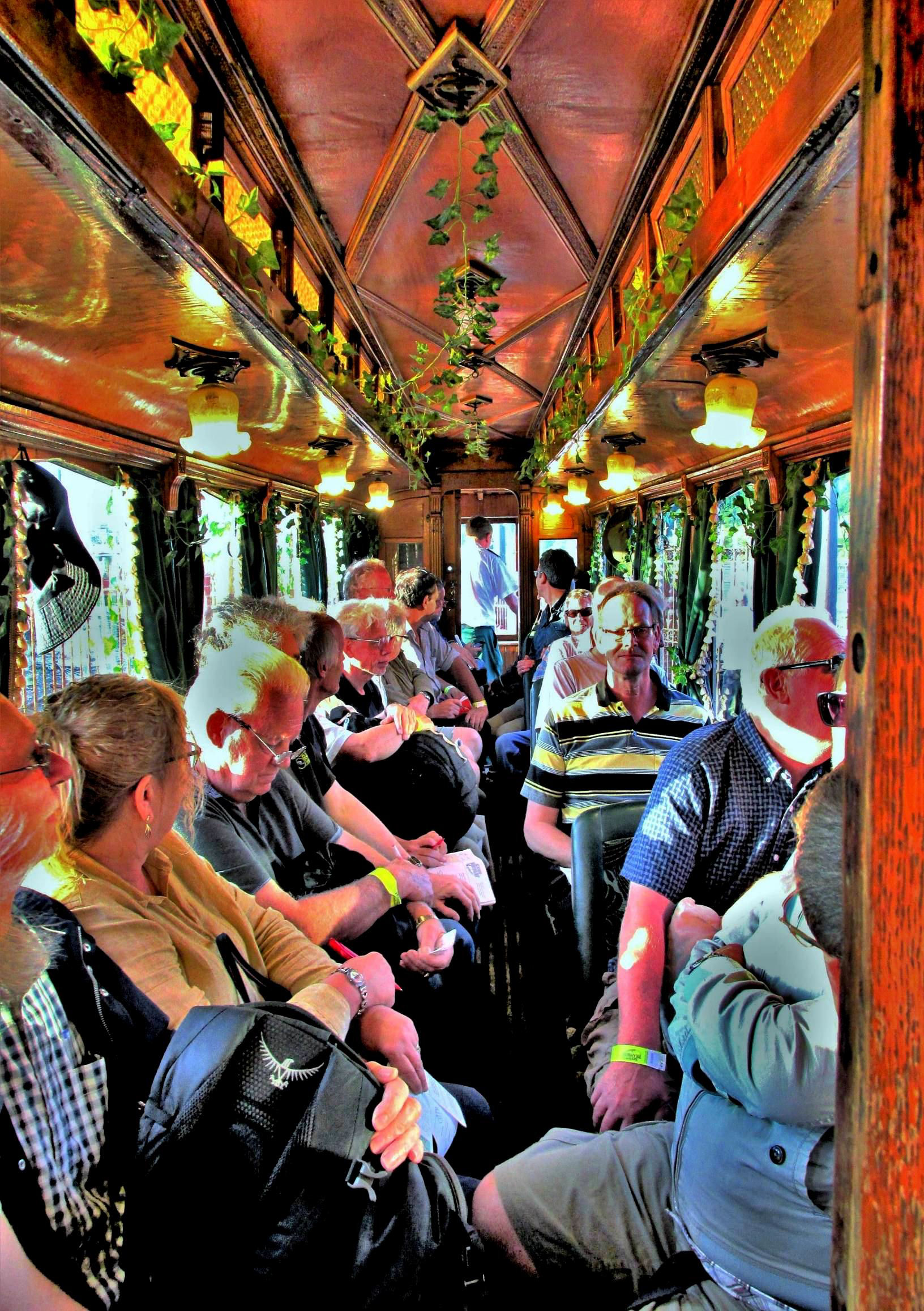
Talking of squeezing, 35 Members fitted onto single deck Tram 14 (which has seats for 27) later in the tour on the return to Seaton for the Depot Roads. The interior is sumptuous.
[© Simon Mortimer 2019]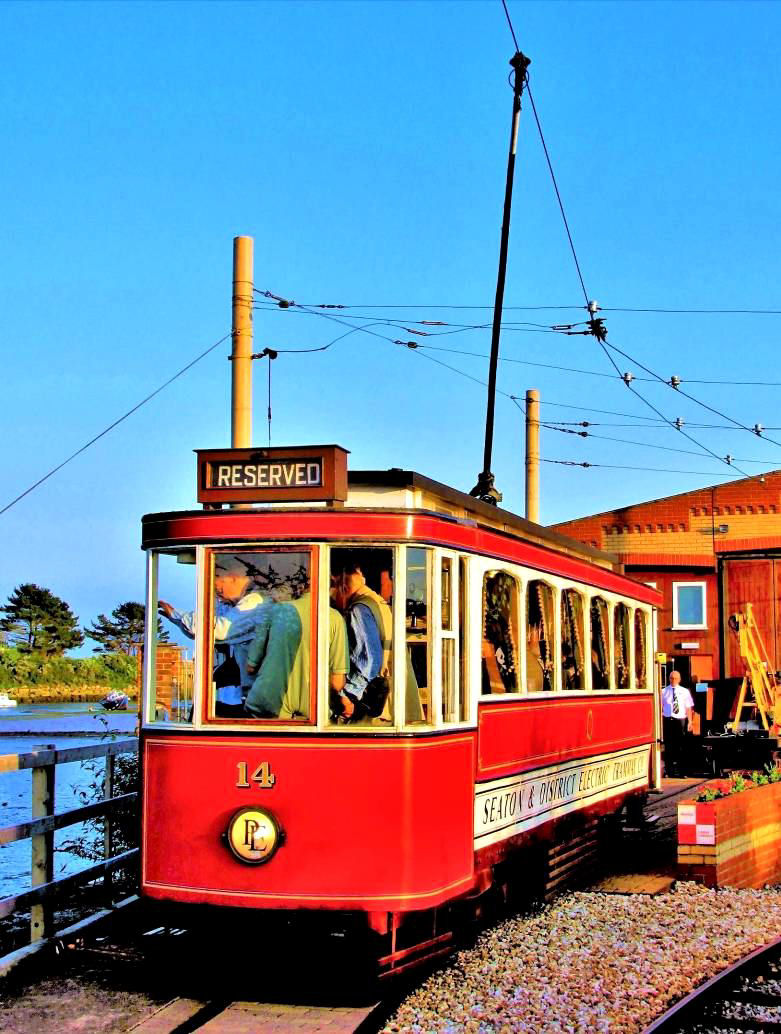
A slightly full London Feltham-type Tram 14 on Depot Road 1; left is the River Axe Estuary.
[© Simon Mortimer 2019]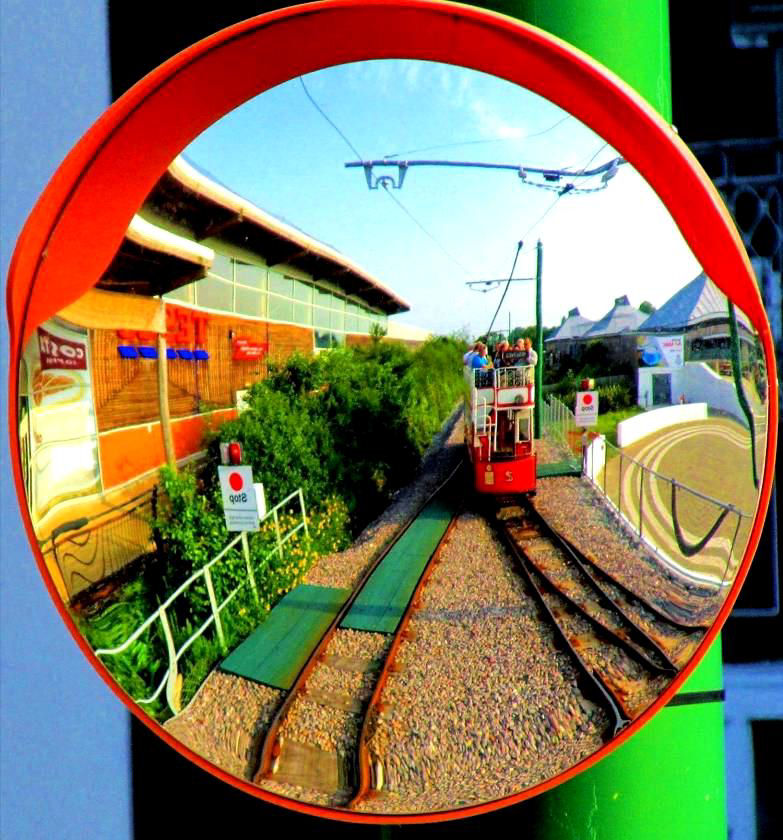
Tram 2 is caught in the extra large convex mirror, reversing outside Seaton terminus
to cover the different lines there.
[© Simon Mortimer 2019]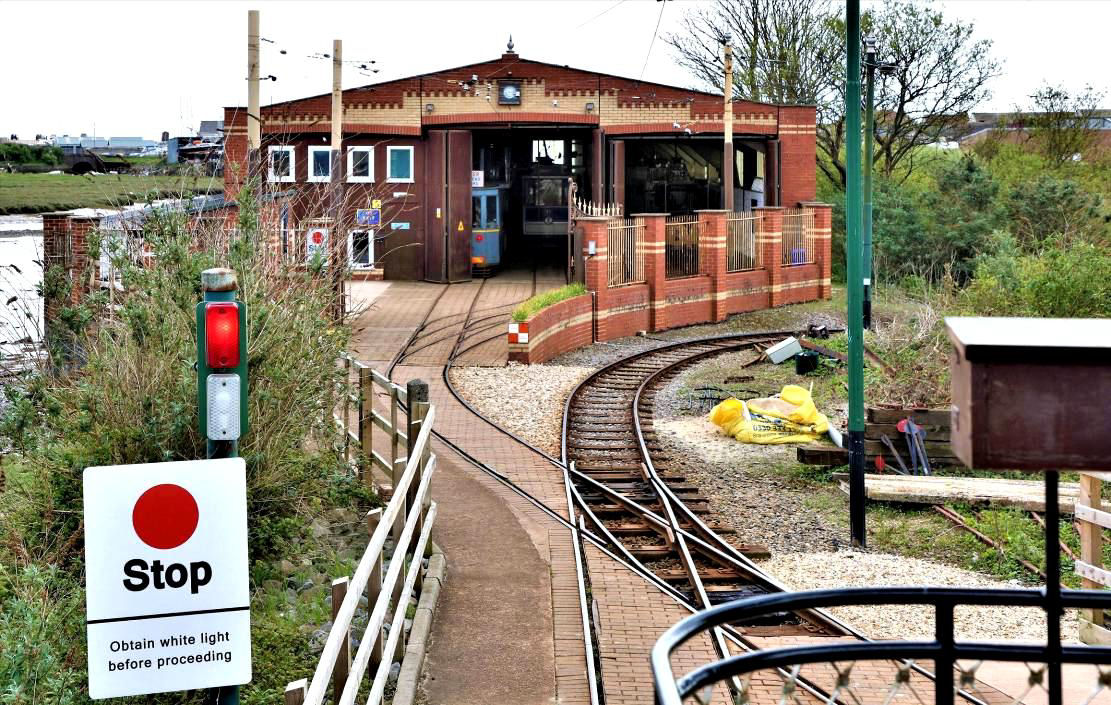
Looking south at the depot and trackwork from Riverside Loop - the line to Seaton goes round to the right.
[© Iain Scotchman 2019]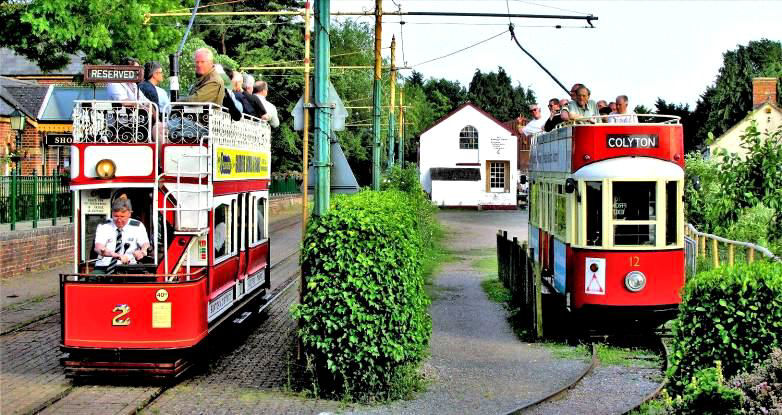
Our 29 Jun 2019 tram tour at Colyton (original station building left)
[© Simon Mortimer 2019]