Institution of Mining Engineers - North East Area
Sunday 2nd April 1989
Report by Ian Mortimer
The Branch Line Society (Test)
Guest

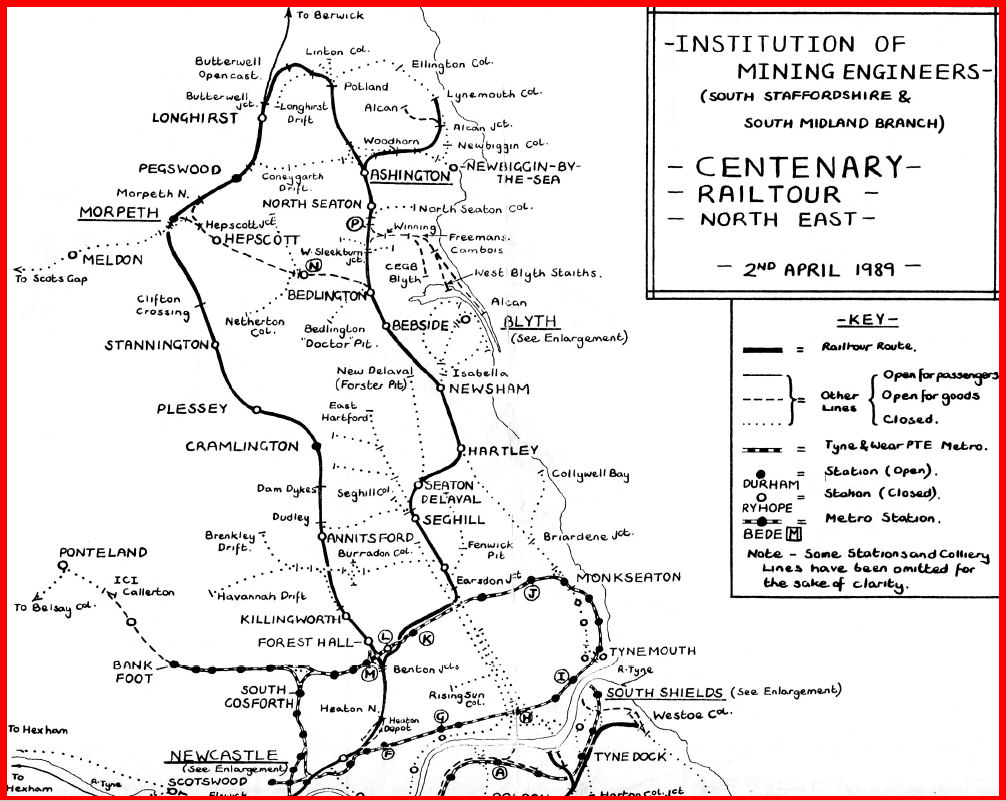
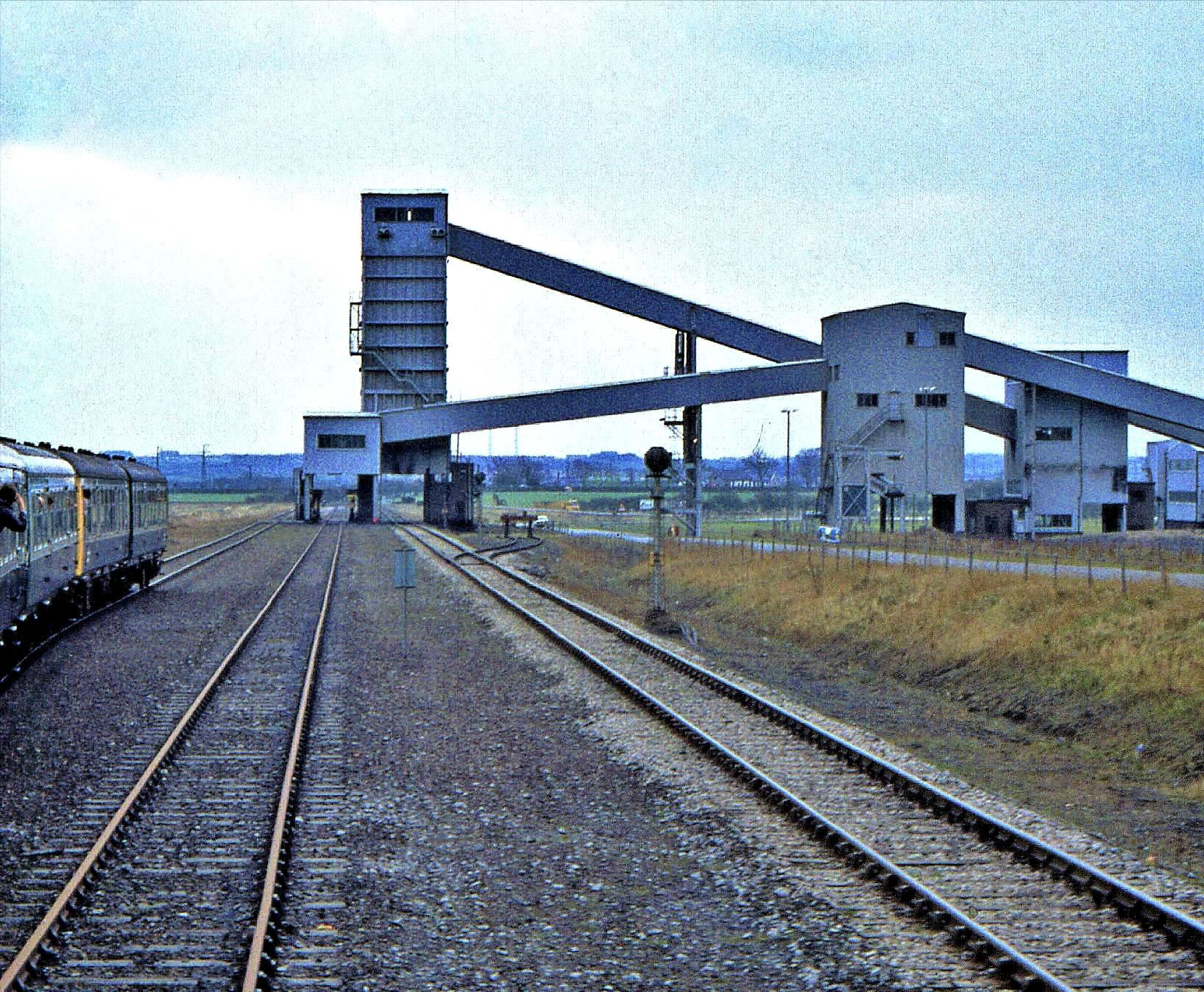
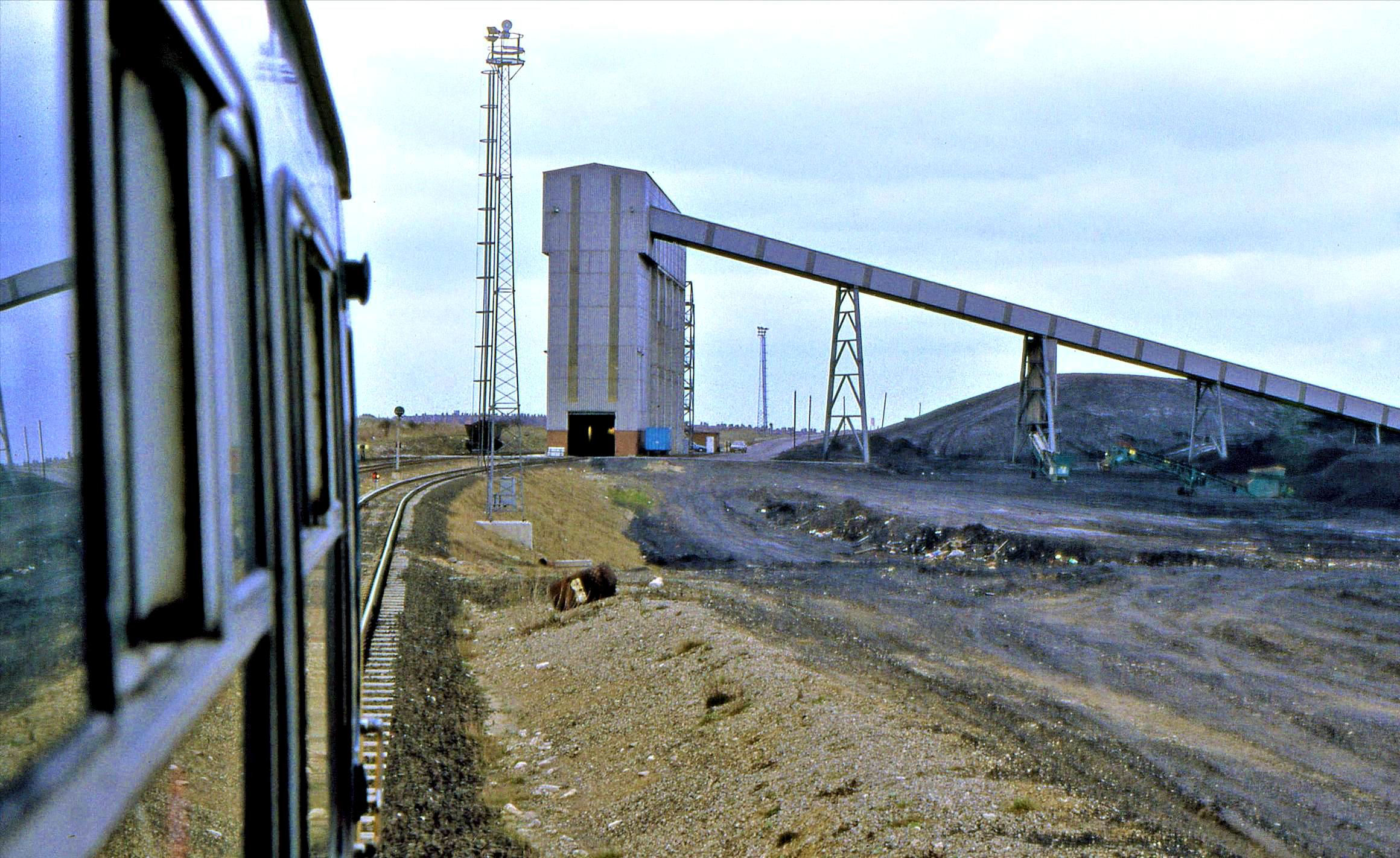
A packed 6-coach train, three 2-car DMUs, left Newcastle promptly at 09.00, first running north through Morpeth to Butterwell Jn. Here it turned right past the British Rail boundary onto the run-round loop bypassing Butterwell bunker, opened in 1977. It was the loading point for a nearby opencast site, then the largest man-made hole in Europe.
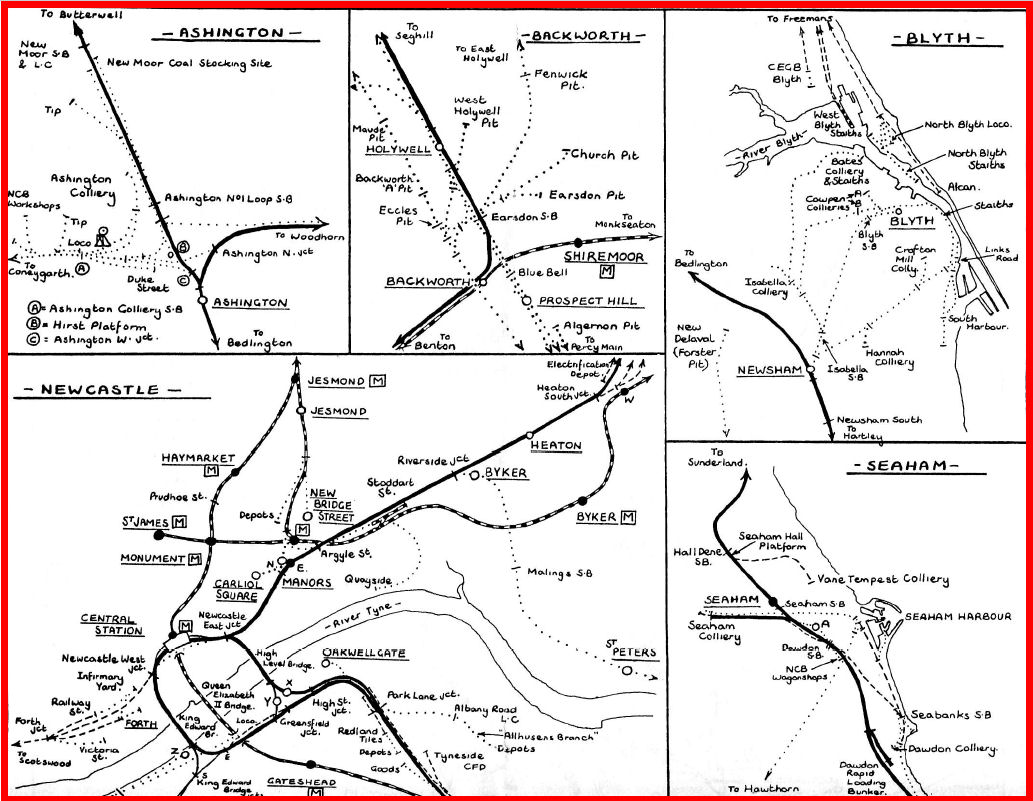
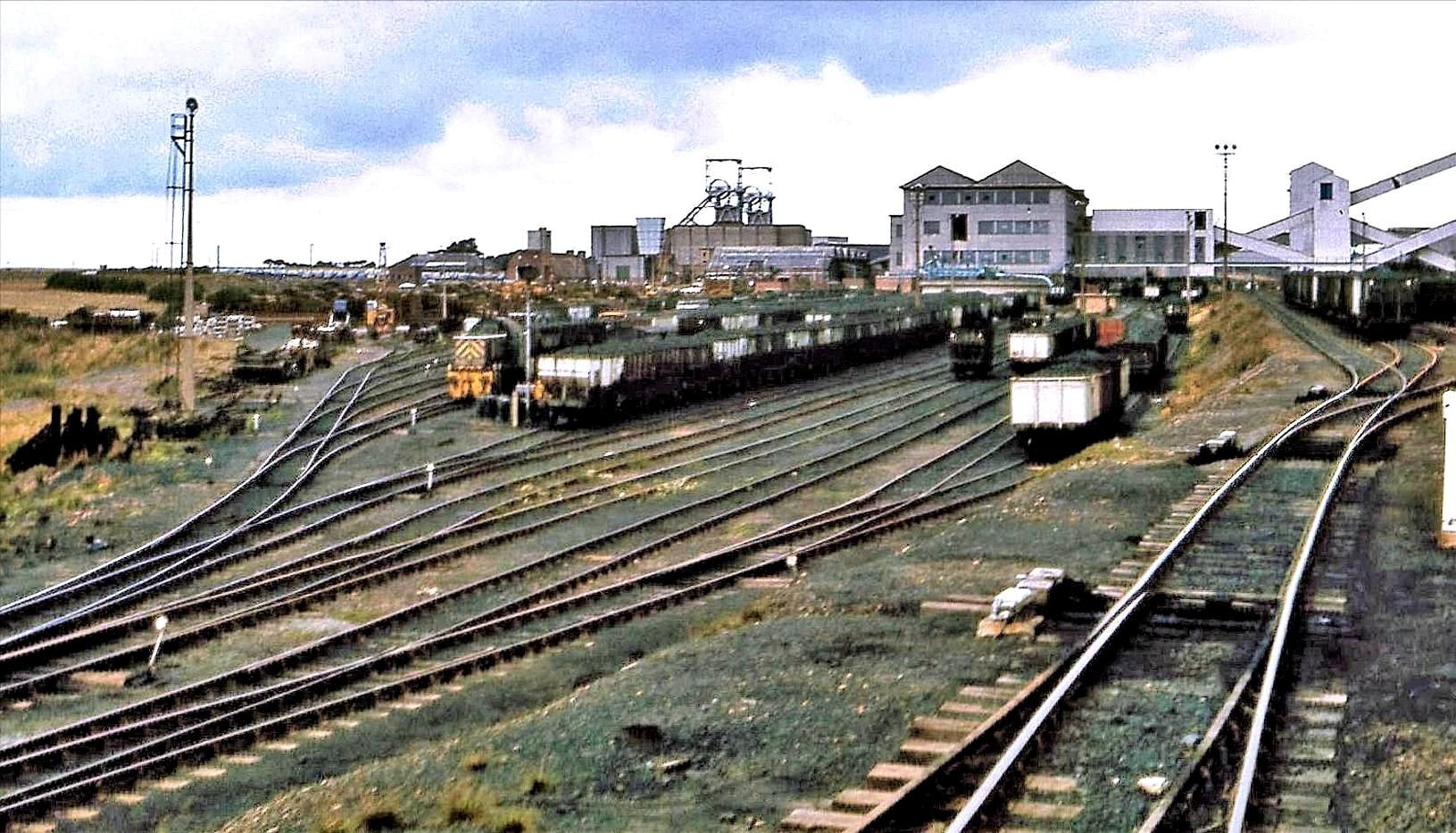
Open casting ceased here in 1991, and the line was later closed (due to repeated vandalism) between New Moor Level Crossing (LC) (4m 17ch) and Ashington Jn (3m 03ch). After many years of disuse, what remained of the line came back into use from 2010 as a branch from Butterwell Jn for coal traffic from Potland Burn Opencast Site, loaded by New Moor LC. In Apr 2015 Butterwell bunker came back into use, but only for a short time, as the line finally became defunct in early 2016. The 1989 tour was the first (of many such firsts!) to proceed along British Coal's single track Butterwell Light Railway (worked past Butterwell in this direction only) to Ashington, where the colliery had closed the year before. Ashington Colliery was notable for its use of ex-Western Region Class 14 locos. After reversal, the train ran to Lynemouth Colliery (end of the bunker line). It was linked underground with Ellington, closed by British Coal in 1994, but reopened by RJB mining (later UK coal). Mining finally ceased in 2005 due to flooding. Most output was supplied by conveyor belt to the adjacent Lynemouth Power Station (opened 1972 by Alcan to supply their nearby aluminium smelter), although some went out by rail. The power station was (and is) rail served, now converted to burning biomass rather than coal.
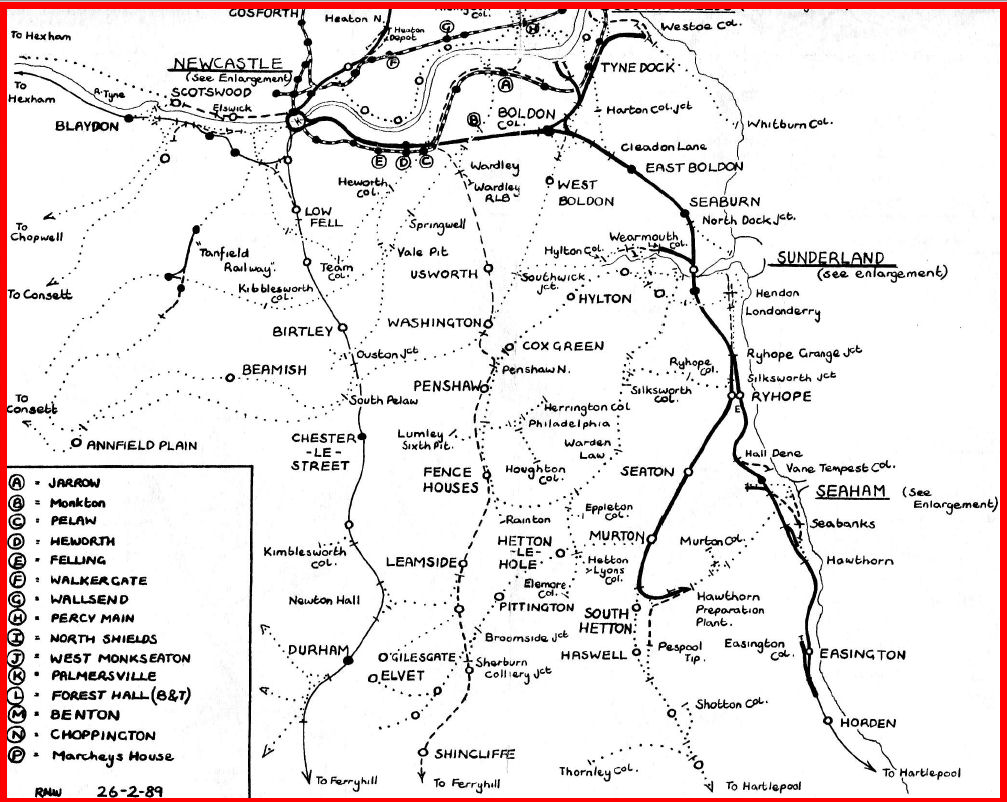
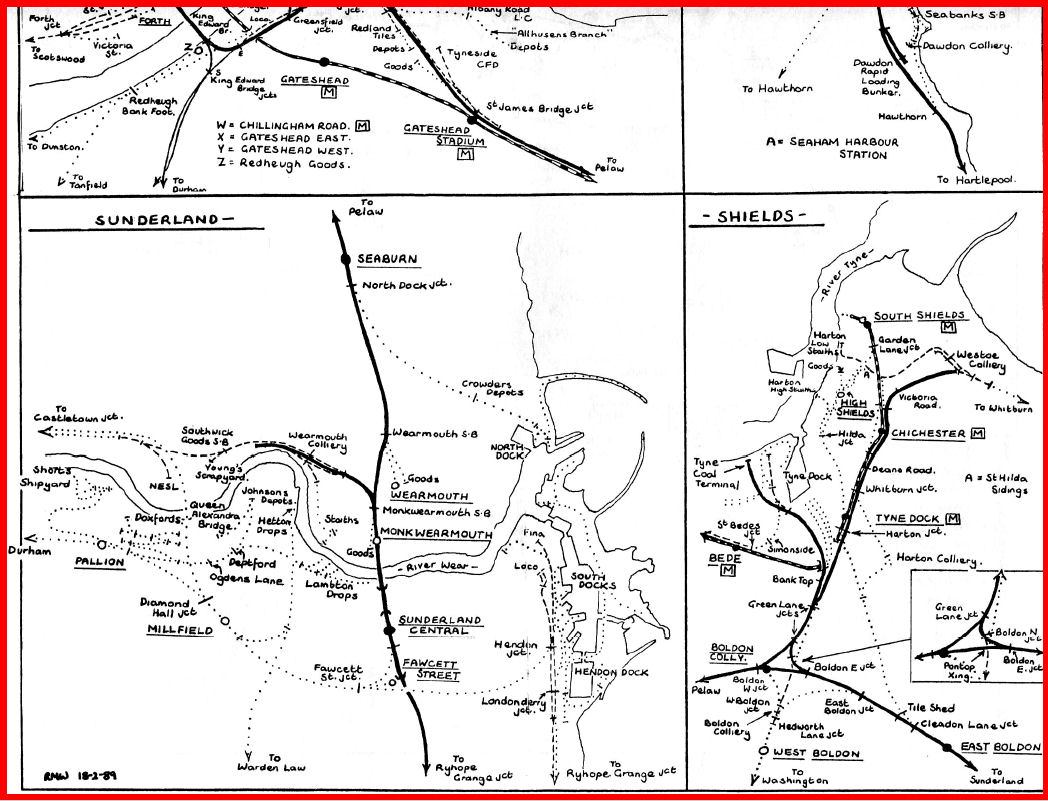
Returning to Newcastle via the Blyth & Tyne and crossing the River Tyne, the next destination was Tyne Coal Terminal. To reach it the tour ran via Boldon West Jn and Green Lane Jn. Tyne Dock was previously accessed by a branch off the South Shields line (itself taken over by the T&W Metro) but, when the new coal terminal opened, the line from Green Lane Jn reopened on 26 Nov 1984 to serve it.
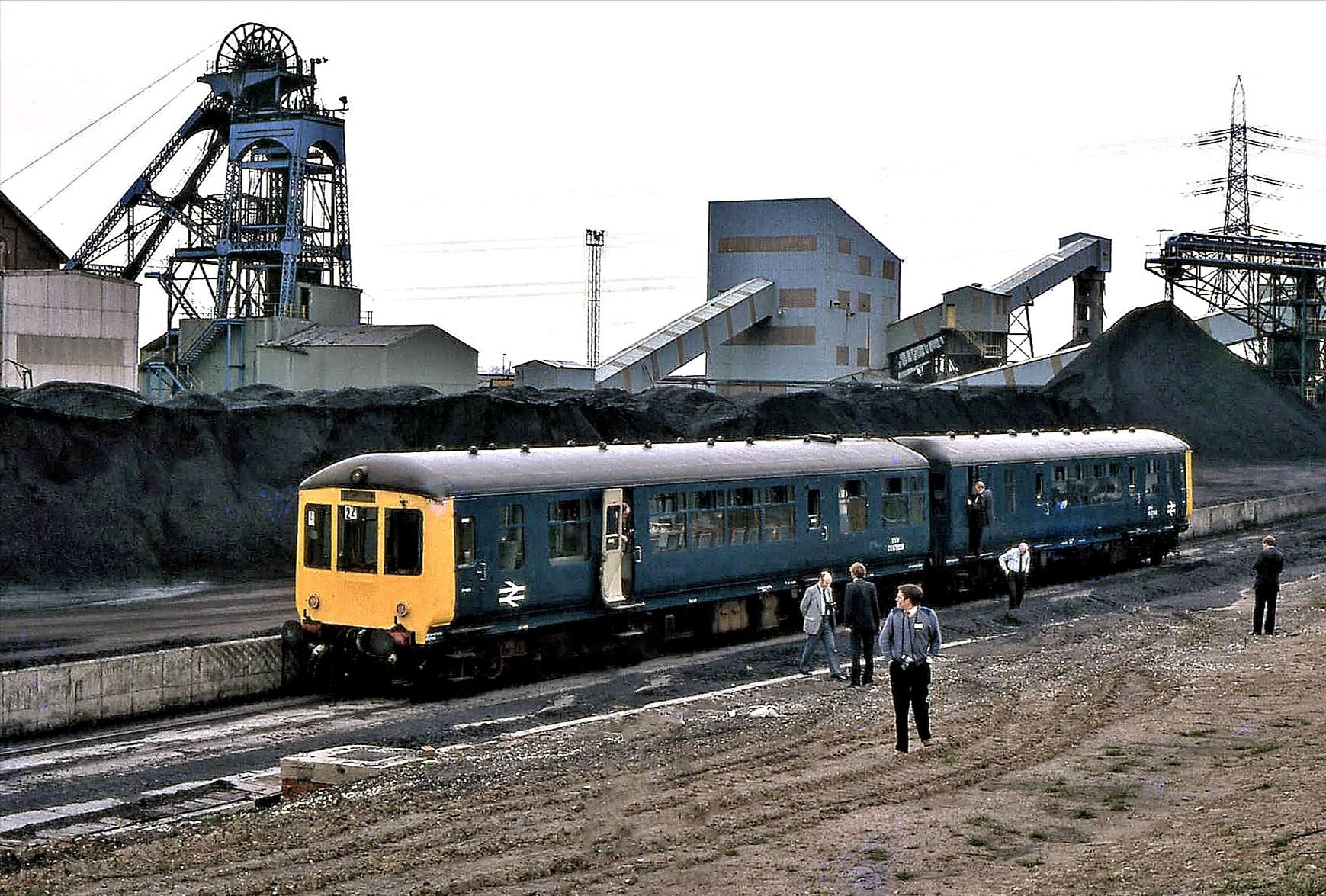
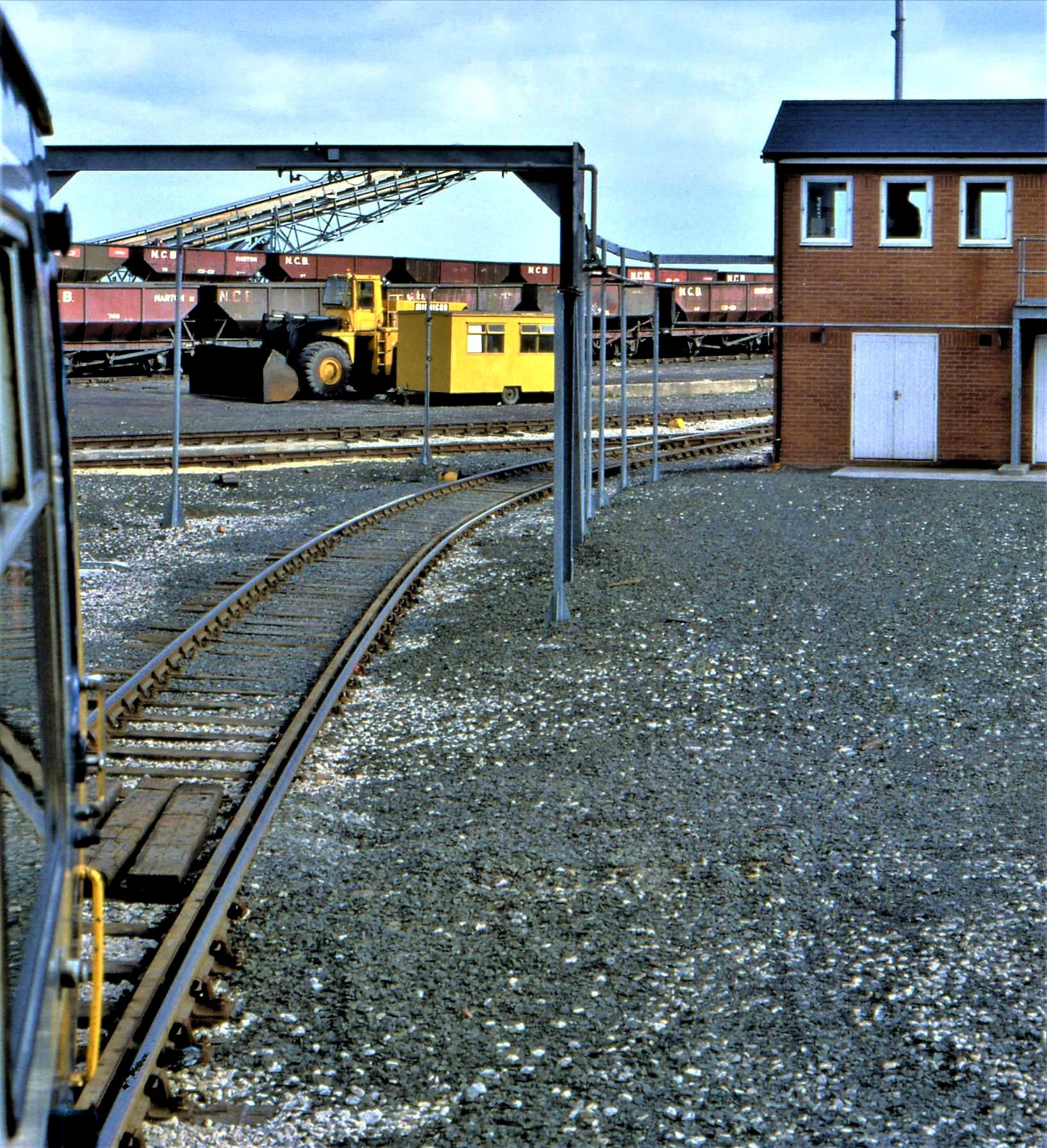
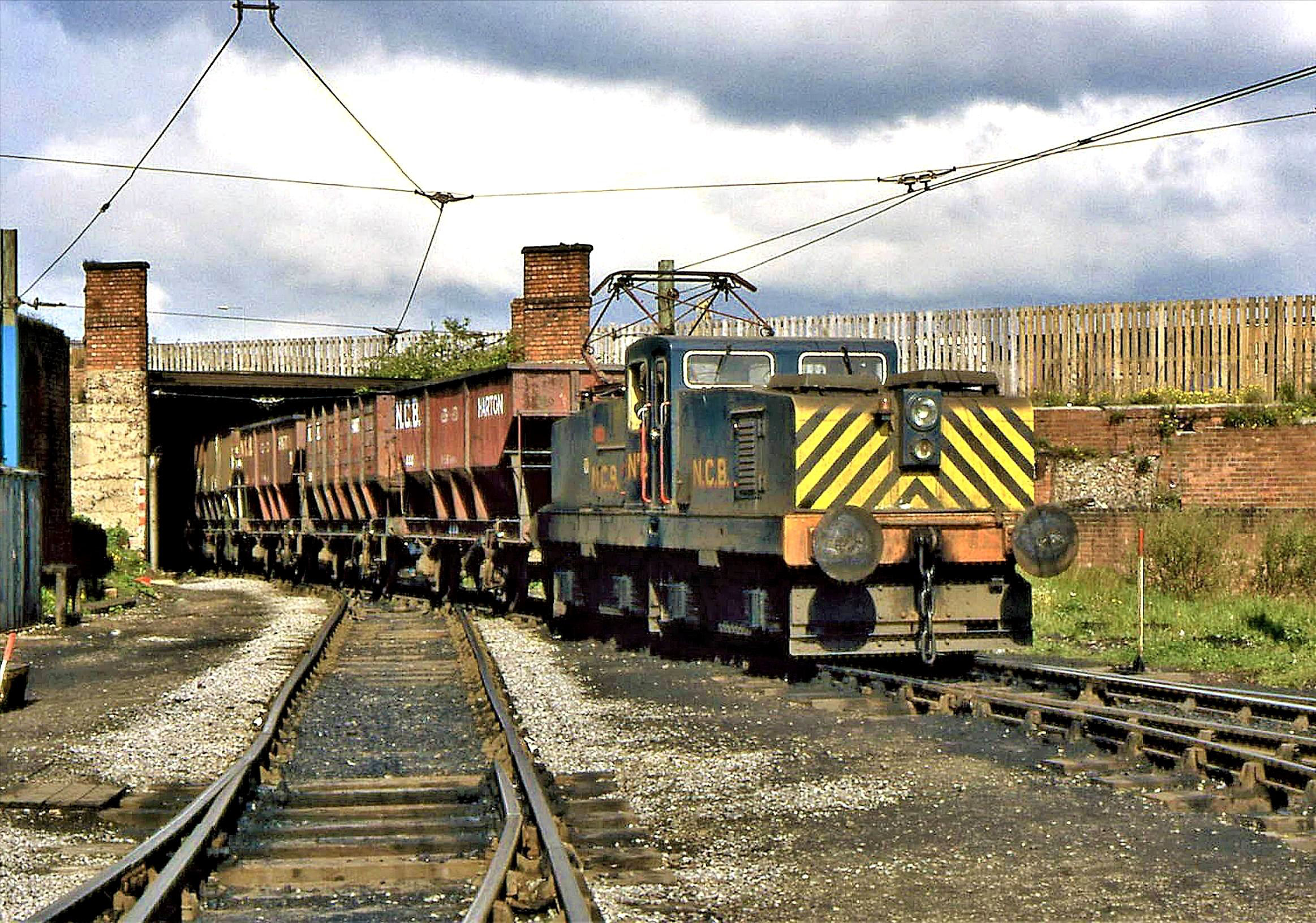
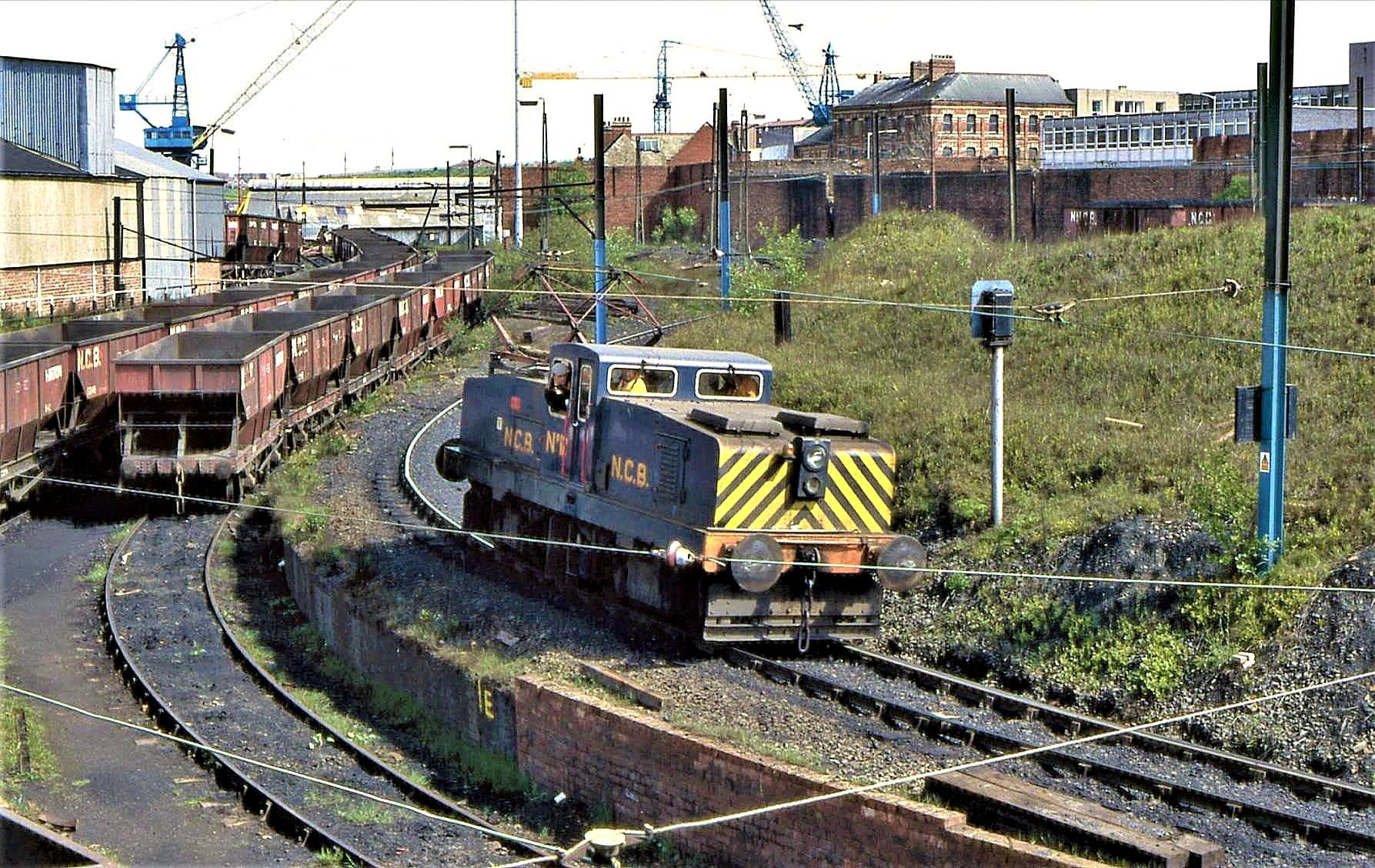
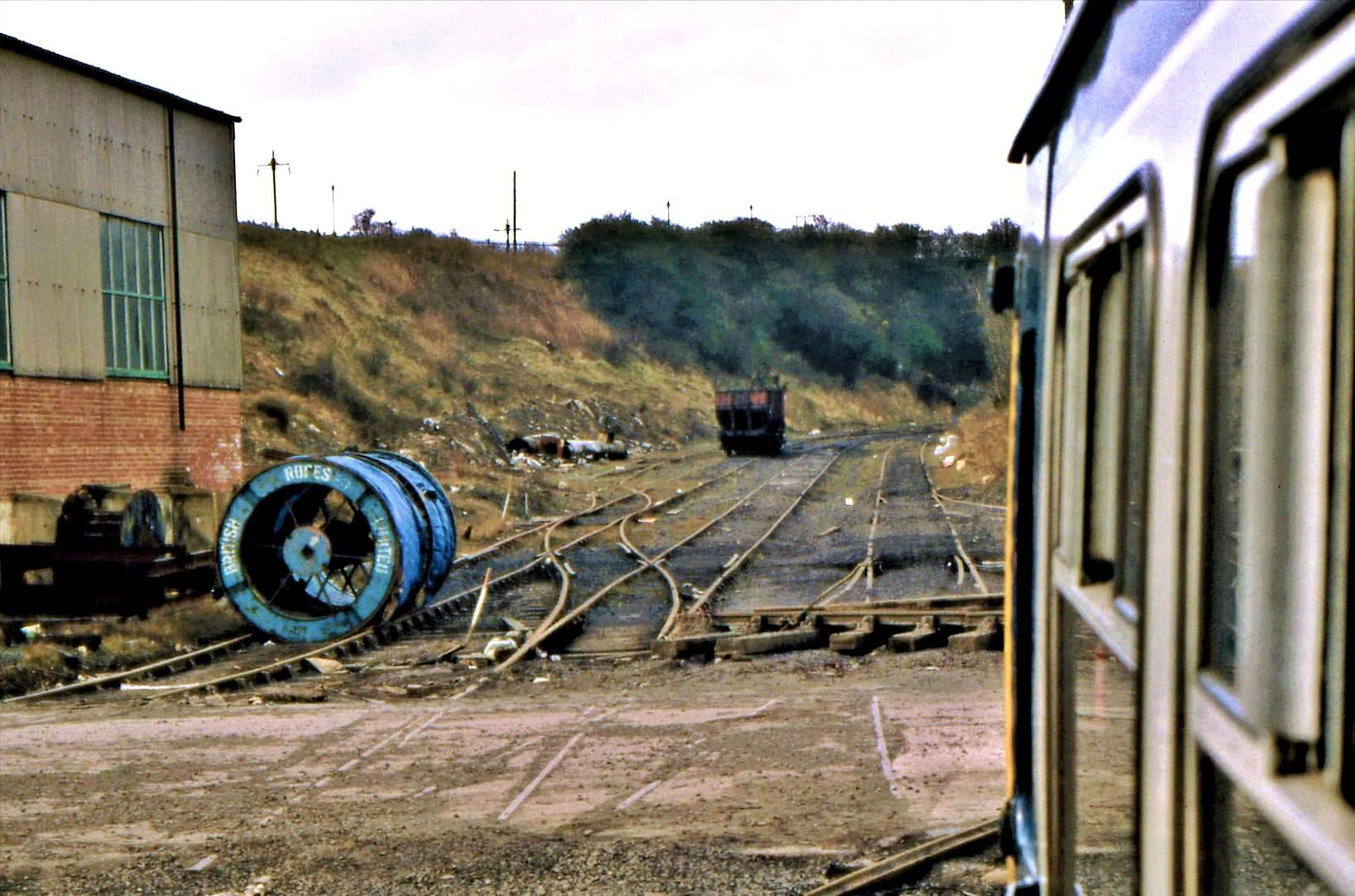
The tour reached the points at the end of the run-round loop, which terminated just before the south bank of the River Tyne. After returning to, and reversing at, Green Lane Jn, Westoe Colliery was next, where the loco stabling point was reached. The tour was originally due to run to the loading pad after reversing beyond where it actually reached, but timings did not permit this. Westoe was notable for its overhead electric system, operated by German built locos with cut down cabs due to some low bridges. By the time of the tour, electric working was just on the Hilda Sidings to Harton Low Staiths section, which could not be seen from the train. Coal shipments from the staiths had ceased, but mine waste was still being sent that way. Final closure of the staiths branch came on 19 Jul 1989; it was replaced by a conveyor belt during the colliery holidays, and the colliery itself later closed in 1993.
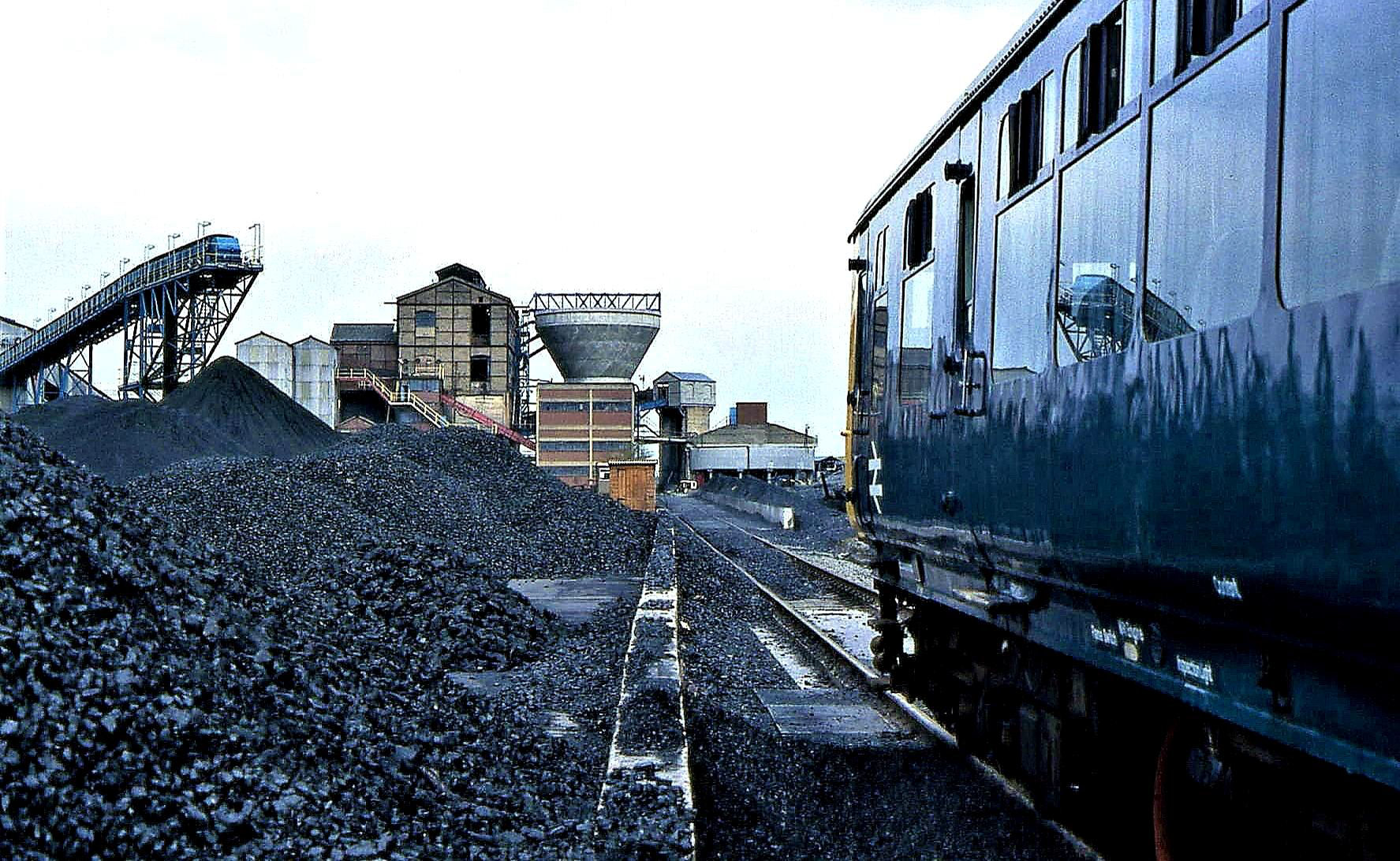
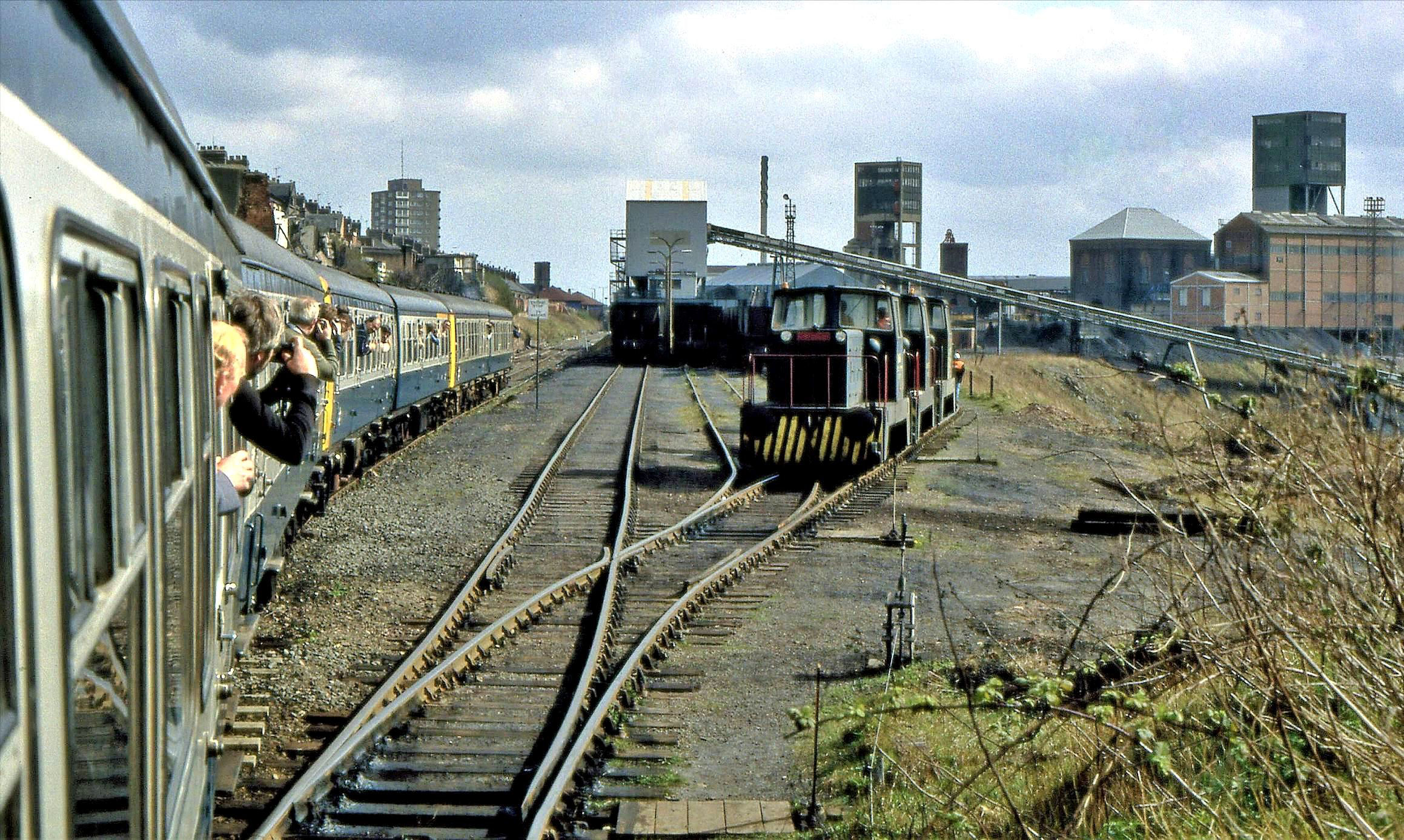
Returning from Westoe to Green Lane Jn, the then new curve, opened 19 May 1985, was taken to Boldon East Jn, forming a triangle here. The DMU ran to Monkwearmouth before reversing and taking the short branch to Wearmouth Colliery (closed in 1994), where a point just short of the first overbridge beyond the colliery was reached. Running through Sunderland to Ryhope Grange Jn, the much longer branch to Hawthorn Preparation Plant was taken to just short of the loading bunker. Coal continued to be wound here from Murton Colliery until it closed two years later in 1991.
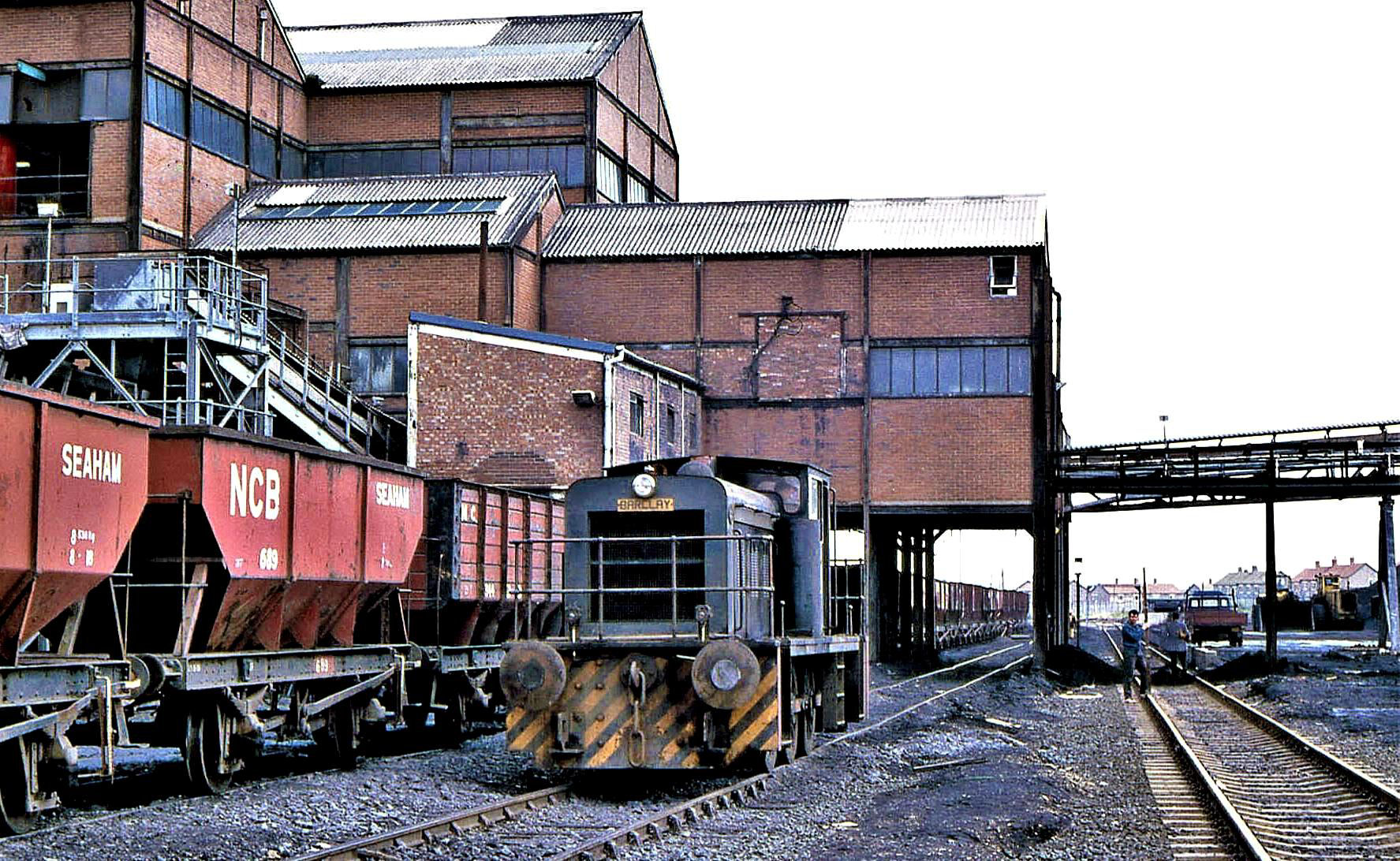
After returning to Ryhope Grange Jn and reversing, a run down the coast line took us to Dawdon Colliery bunker, where we reached the line end. Situated on a short branch alongside the main line, the bunker here opened in 1986 replacing a longer branch to the colliery, which had been accessed via the Seabanks Branch - once a double track through loop line alongside the coast. Dawdon Colliery closed in 1991. Proceeding further south, Easington Colliery, which closed in 1993, was accessed by a reversal at Easington Jn. Here, the bunker line was taken to the buffer stops, although this was short of the original branch end as the empty sidings were out of use by this time. Returning north, the final destination of the day was Seaham Colliery, which was situated on a short but steeply graded branch from Seabanks Jn. The colliery merged underground with nearby Vane Tempest (which lost its branch as a result) in 1988 and closed in 1993. Here we reached a point just short of the final curve at the line end, then returned to Newcastle, arriving 10 mins late after a remarkable railtour.
| Branch Line Society. A Company Limited by Guarantee - Company No 16743754. Registered in England and Wales. Registered address: 6th Floor, Derwent House, 150 Arundel Gate, SHEFFIELD S1 2FN |