The first 'port' of call for our 10-strong party was the 1963 Port Talbot Power Signal Box (PSB); we were briefed by Local Operations Manager Craig Edmunds, then visited the Panel Room in two groups.
In its heyday Port Talbot PSB controlled the South Wales Main Line between Llanharan and Pembrey, including the Swansea District Line and access to the once extensive freight facilities at Margam. It is now being decommissioned in stages; in Mar 2019 the Swansea area control passed to Wales ROC at Cardiff. The residual facilities are in three sections and normally worked by three signallers.
The surviving Main Panel covers most of the Swansea District Line, including the complex triangular junction at Jersey Marine, along with the Burrows Branch and the fringe to Neath & Brecon Junction (more of which later). It also signals the triangular junction at Hendy/Morlais. It is a traditional British Rail Western Region 'Turn-Push' NX (Entrance Exit) panel. To set a route the signaller turns an entrance switch and presses the appropriate exit button. This design was once common throughout the Western Region but only a handful now survive. Happily however, the decommissioned Swindon Panel is preserved in working order at Didcot Railway Centre. The smaller Port Talbot West Panel is of the same design and covers Llanelli, Llandeilo Jn and the access to Trostre Steel Works.
The final area is the eastern part of the main line between Llanharan and Baglan including, of course, the lines outside the PSB. This area was re-controlled from the original turn-push panel to a Westcad VDU workstation in 2007 but - perhaps surprisingly - is still operated by a Port Talbot signaller (as opposed to Wales ROC). This signaller controls access to Margam Knuckle Yard which still sees a dozen or so freight movements per day, as well as Margam Yard Jn to Port Talbot Docks branch, OOU since 28 Feb 2011 (imported iron ore traffic ceased in 2001) and the Ogmore Vale Extension line to Tondu.
Immediately outside the box was the once busy Oakwood Road level crossing, with barriers controlled from a pedestal at the west end of the box. The crossing closed after a new station footbridge opened in 2016 (road traffic had already been diverted via a flyover at the other end of the station). However, the barrier pedestal remains in place, incongruously presiding over the non-crossing!
At this 'juncture' we visited the 1892 mechanical box at Neath & Brecon Junction (N&B). This Great Western Railway Type 5 box once held a 38 lever frame but there are now just 14 levers. Ironically N&B Jn is, unusually, one of the few mechanical boxes in the country to have no white (spare) levers!
Access is via the surviving Neath Riverside station platform (CP 15 Oct 1962 except school trains which were withdrawn from 15 Jun 1964). http://bit.ly/2xsEgHx is a superb colour picture of the station in passenger days (but not 2010!). The box once controlled a very complex layout but it is now a simple junction between two single line branches. The Onllwyn branch still has occasional coal trains, mainly to Immingham Briquetting Works and Scunthorpe steelworks. The Cwmgwrach branch (ex-Vale of Neath main line to Merthyr via Hirwaun, originally broad gauge) serves the mothballed Unity Drift
mine. The last revenue earning train was the UK Railtour 10 Mar 2018 'Valley of the Witch' (which is English for 'Cwmgwrach') tour. However, the line remains available for traffic and an occasional track recorder still visits. The mine is still staffed by a caretaker who carries out basic site maintenance in the hope that it may one day reopen. Various schemes have been put forward over the years but, with a Welsh Government moratorium on coal mining for energy generation, hopes now hang on proposals to produce calcined anthracite (heated to 1,200OC) for some industrial processes such as steel making.
Both branches are operated by One-Train-Working with the staffs kept at Neath & Brecon box. 'Cwmgwrach' is misspelt on its staff (BELOW) - can't get the staff! An acceptance lever controls the Jersey Marine single line (signalled from Port Talbot PSB) with a traditional block bell for describing trains. With such steeply graded branches, sand drags are provided north of the junction on both lines. N&B box itself is well preserved in the GWR style, but the modern plastic door is a little incongruous!
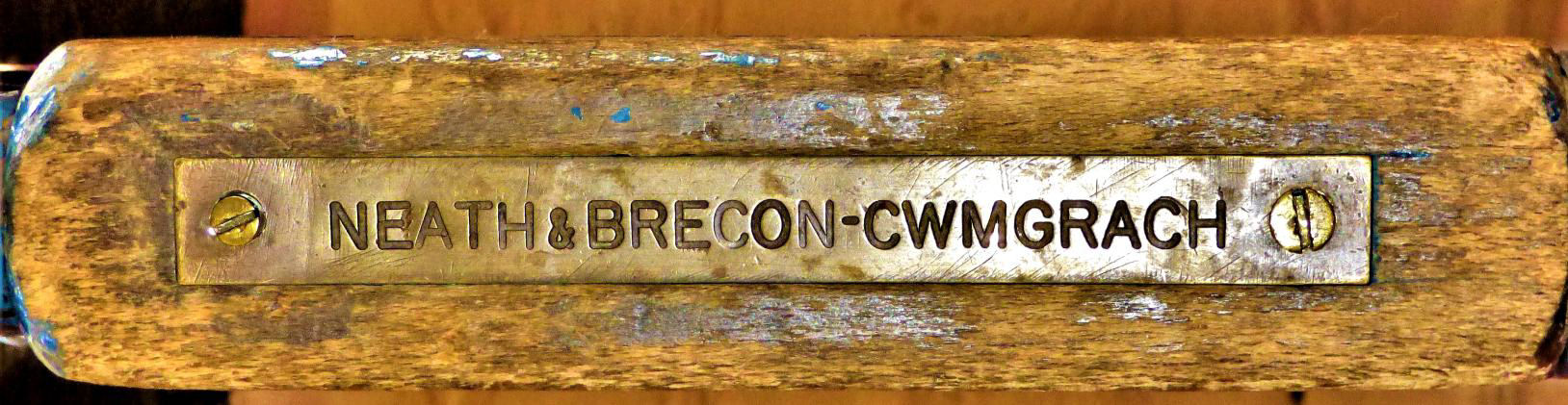
One-Train-Working staffs for Neath & Brecon to Cwmgwrachf
[© Nick Jones 2019] is one of very few surviving locations with a separately staffed signal box and level crossing. [Brundall recently ceased to be an example, leaving Whittlesea, and (depending on the definition) Egginton Junction/Hilton]. Conveniently, our group split into two parties to view these facilities separately before swapping over. My group started with the crossing keeper based in the Grade II Listed station building; its 2017 refurbishment won NR a Railway Heritage Trust Conservation Award. The building is well appointed with a kitchen and 'creature comforts' for the keeper during the long gaps between trains. The outside has a nice 'VR' Post Box set into the wall, sadly long out of use.
The only signalling equipment (apart from telephone) is a pair of electric release Annett's key locks. When a train approaches, the keeper receives a call from the signaller and closes the (hand worked) metal gates. Each gate post holds an Annett's key which can only be removed when the gate is safely locked across the road. The keeper returns the keys to the station building and secures them into the electric locks. This releases the signal box barrier lever which allows the protecting signal to be cleared.
Originally Pantyffynnon South, the box is another 1892 GWR Type 5 (as at N&B Jn), but with a more traditional wooden door! The GWR lever frame is divided into two parts (levers 1-23 and 37-48) and still controls a good number of semaphores at Pantyffynnon itself. Lever Number 1 is the Acceptance Lever for trains over the single line to Hendy Jn (signalled by Port Talbot PSB). In theory these trains are described using a block bell and tapper, but in practice the telephone was in use because of a fault.
The box contains a single Key Token instrument for the Llandeilo single line section. At Pantyffynnon tokens are handed to/collected from the driver by the signaller directly. At the other passing loops along the line to Craven Arms (exclusive), drivers themselves obtain and remove tablets from the instruments, under supervision of the signaller. Unlike on the Treherbert line, visited the previous day, drivers only need the signaller's verbal permission and there is no electromechanical 'release'.
The centre of the frame is taken up with the impressive telephone concentrator and a representation of the line to Craven Arms. In addition to driver communications during the token exchanges, the concentrator supports the large number of user-worked level crossings along the line.
Last, but not least of the signaller's duties, is working of the Gwaun-Cae-Gurwen (known locally as 'GCG') branch. This operates under One Train Working arrangements and the staff is kept in the box and issued direct to drivers. GCG opencast mine has closed and traffic is just occasional workings to Onllwyn for washing, removing stockpiled coal. Ironically, there had been a train the previous day!
The day's final visit was the 1884 GWR
Tondu box formerly 'Tondu Middle' illustrating the complexity and importance of the junction in its heyday. In theory the box still controls a complex layout, a 4-way junction with loops on three of the four lines. However, in practice none of the loops had been used for over a year, and the Ogmore Vale Extension to Margam is under a semi-permanent T3 possession.
The Bridgend single line is worked by Track Circuit Block with acceptance lever, while at the northern end of the box is the Electric Key Token (EKT) instrument for the Maesteg branch. The instrument itself looks very modern although it was speculated that it might only be the outer covering that is new. The Margam line EKT looks more traditional. These tokens are coloured green (with red for Maesteg). The different colours give an extra level of protection against drivers leaving with the wrong token. At the Margam end of the 'green' section, the EKT instrument is in a lineside cabinet. With the line under possession most of the time, one token is in the custody of the Person in Charge of Possession.
The box retains the 'Tondu - Blaengarw' single-line staff although the Garw Loops are officially worked as sidings (as opposed to a staff section). The staff is needed by drivers using these loops to run round, because the key on the end of the staff releases the ground frame at the eastern end of the loops.
Looking ahead, it is desirable to keep the Margam - Bridgend diversionary route for freight (once used by HSTs!) when the main line is shut but the complex Tondu infrastructure is expensive to maintain.
A suggestion under consideration is removing Garw and Llynfi loops, but provide an advanced starting signal for the Maesteg branch, north of the existing Starter 57. This would allow (top & tailed) freight to reverse on the (Llynfi) Main Line while a passenger train occupies the Maesteg token section.
A huge thank you to Barney Clark for organising the two days of fascinating visits. Participants donated £200 to TÅ· Hafan Children's Hospice, Sully and £300 to the Railway Mission as a 'thank you' to NR staff.
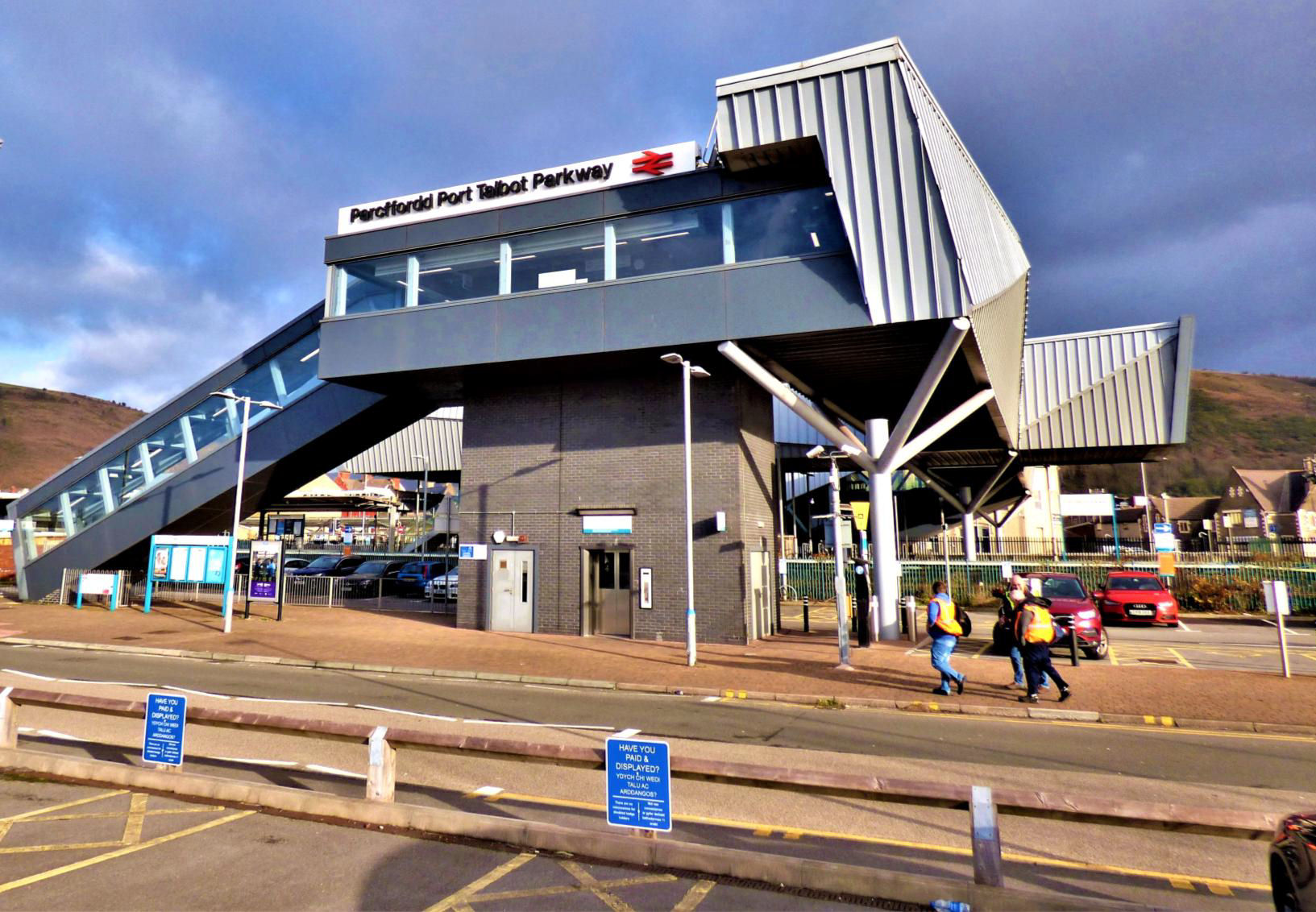
The new Port Talbot Parkway London end mega-footbridge.
[© Nick Jones 2019]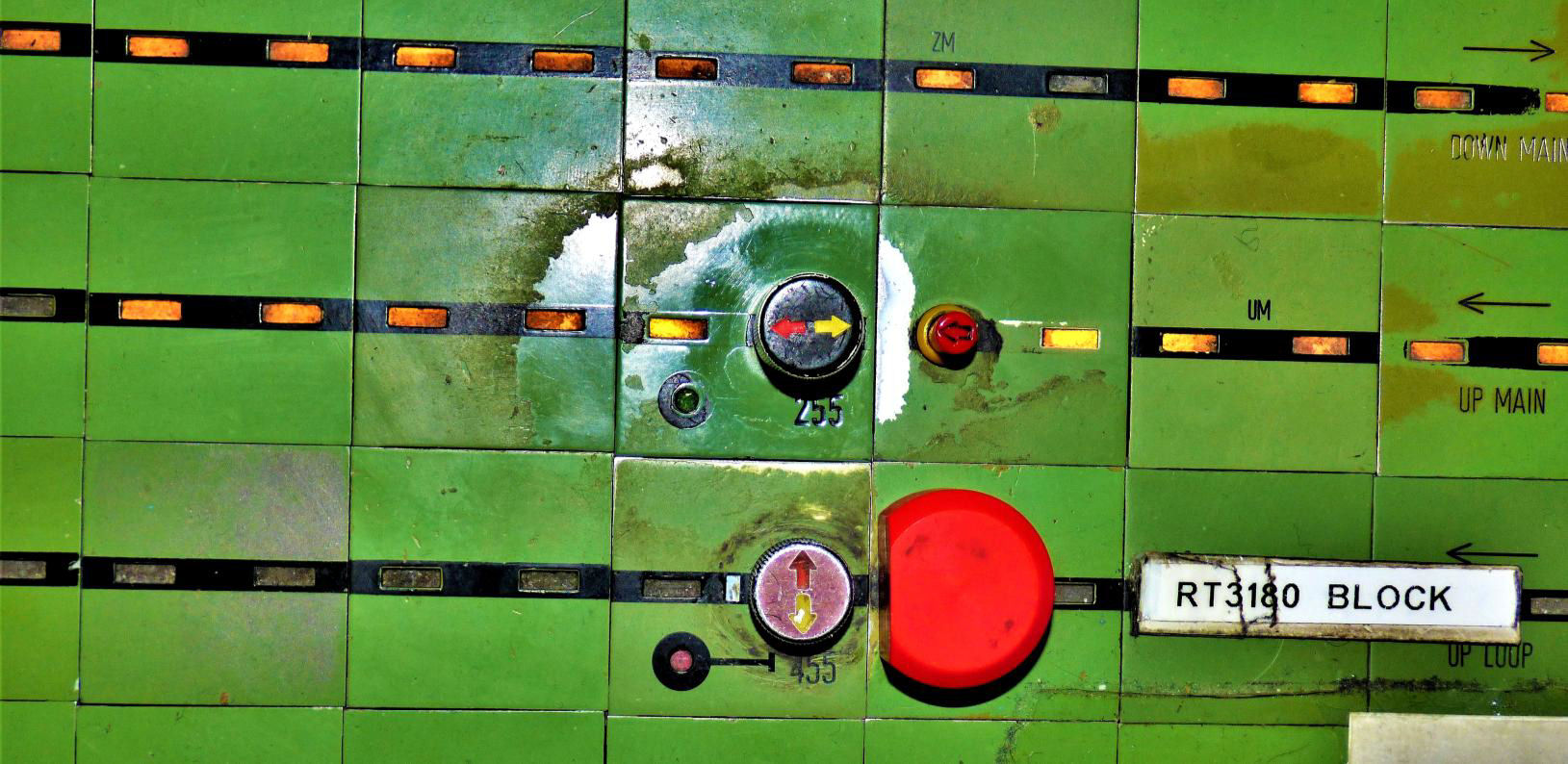
Turn-Push controls on Port Talbot panel are showing their age.
[© Nick Jones 2019]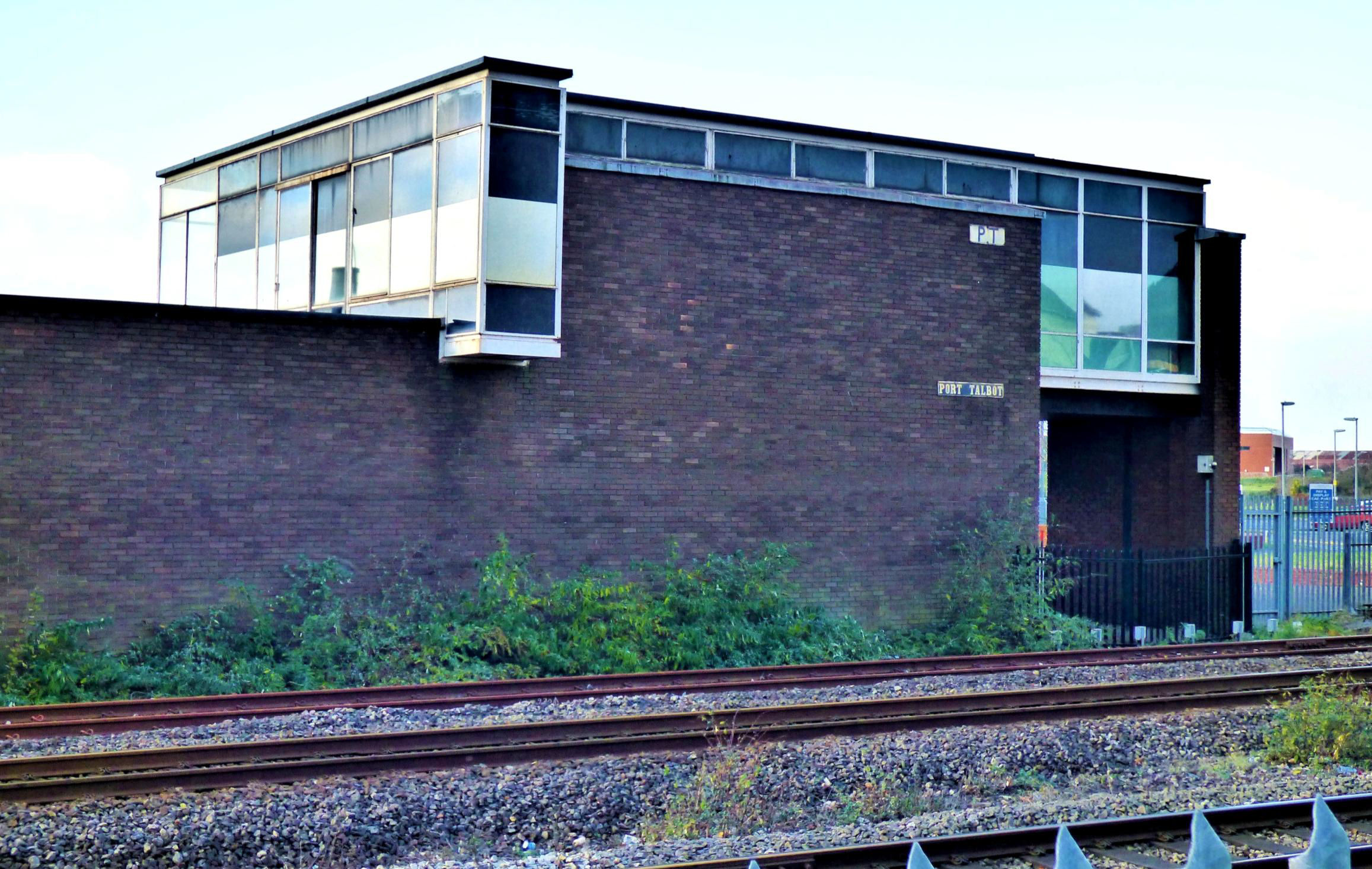
Port Talbot Signal Box is on the Down side of the South Wales Main Line - here viewed from the Up side.
[© Nick Jones 2019]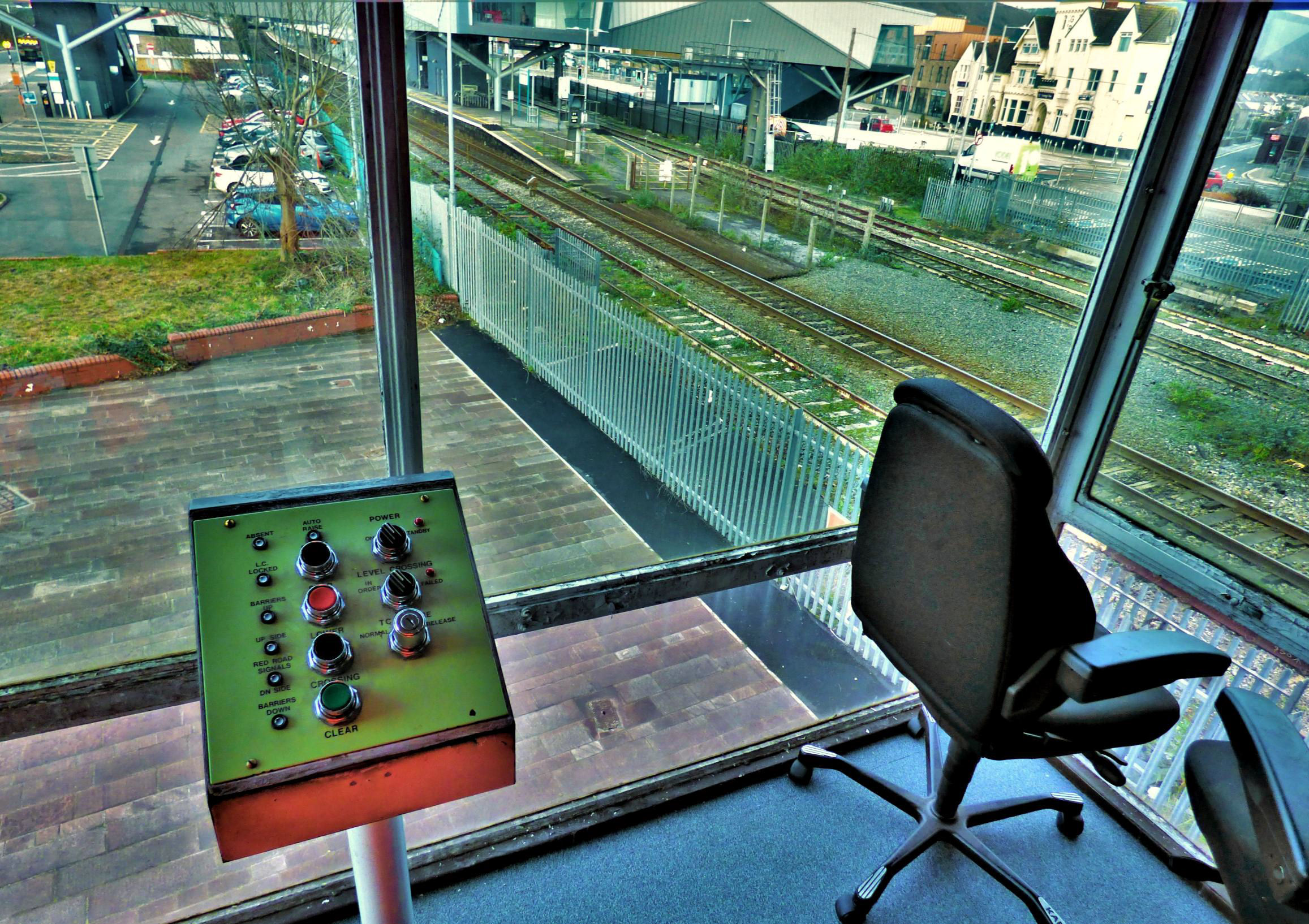
The non-crossing controls with a nice view of Port Talbot Parkway station, the Down Relief is left and Up relief far right.
[© Nick Jones 2019]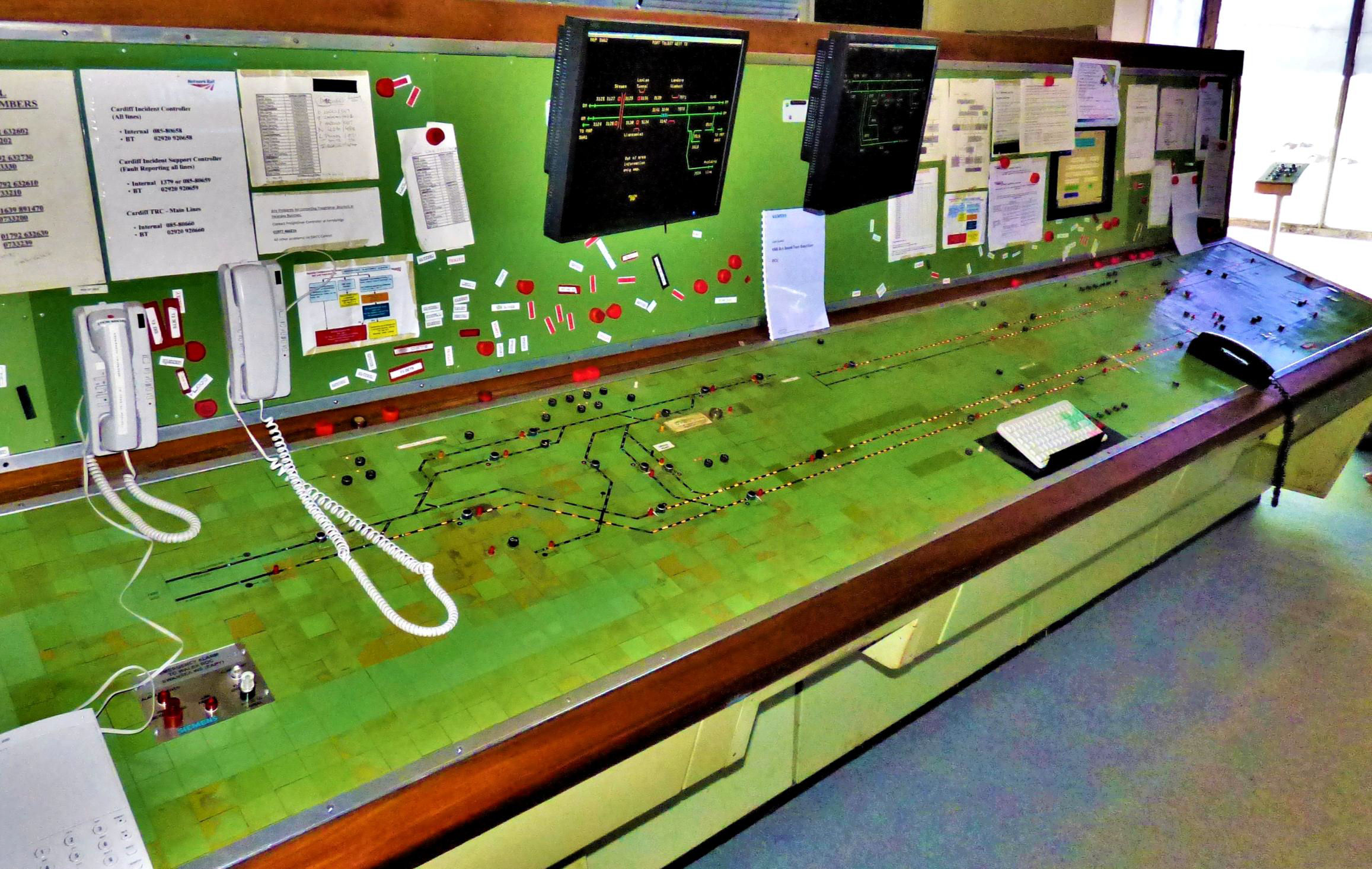
Port Talbot Parkway main panel.
[© Nick Jones 2019]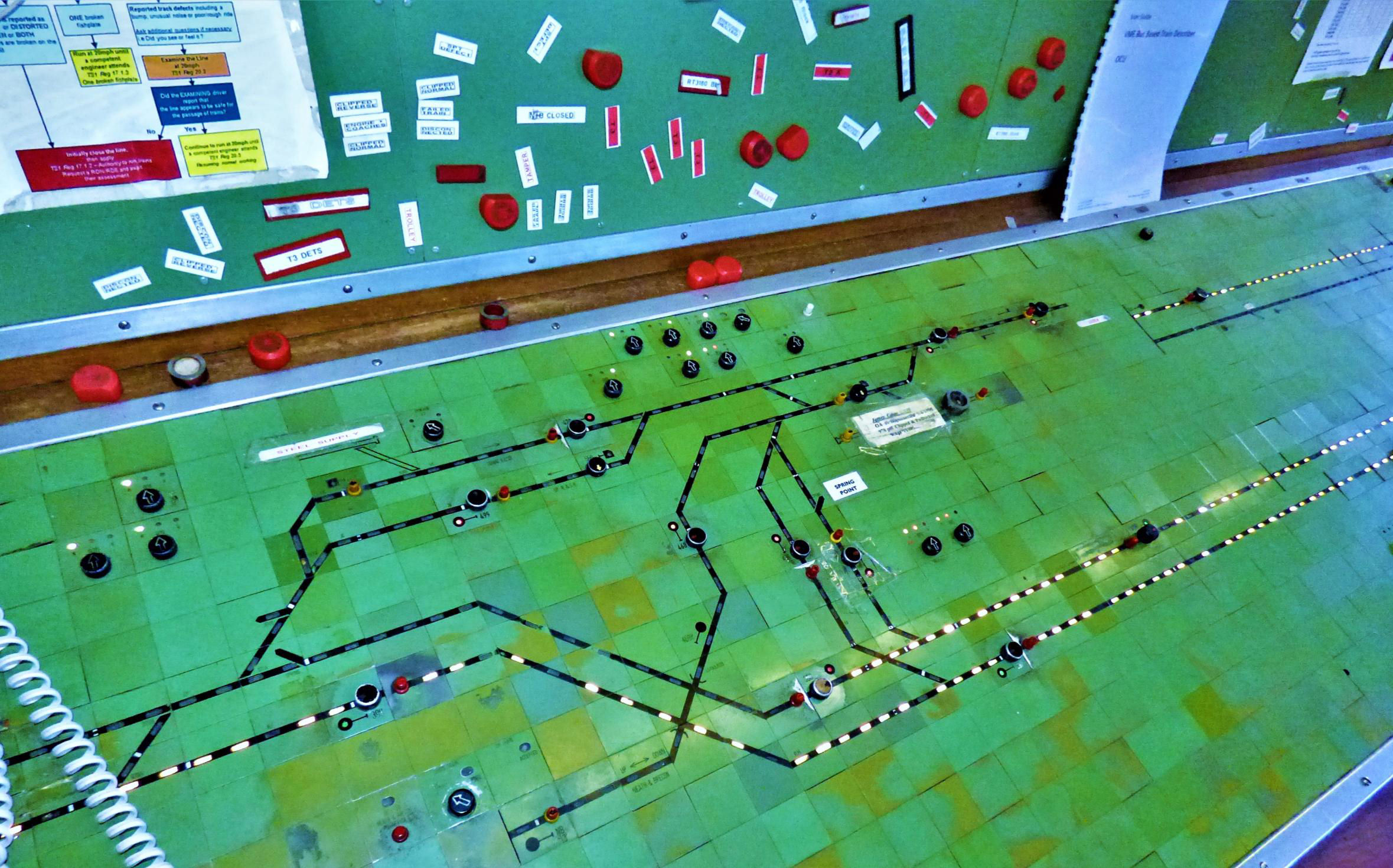
The Jersey Marine triangle section of the main panel, the Neath & Brecon single track line is bottom left of centre.
[© Nick Jones 2019]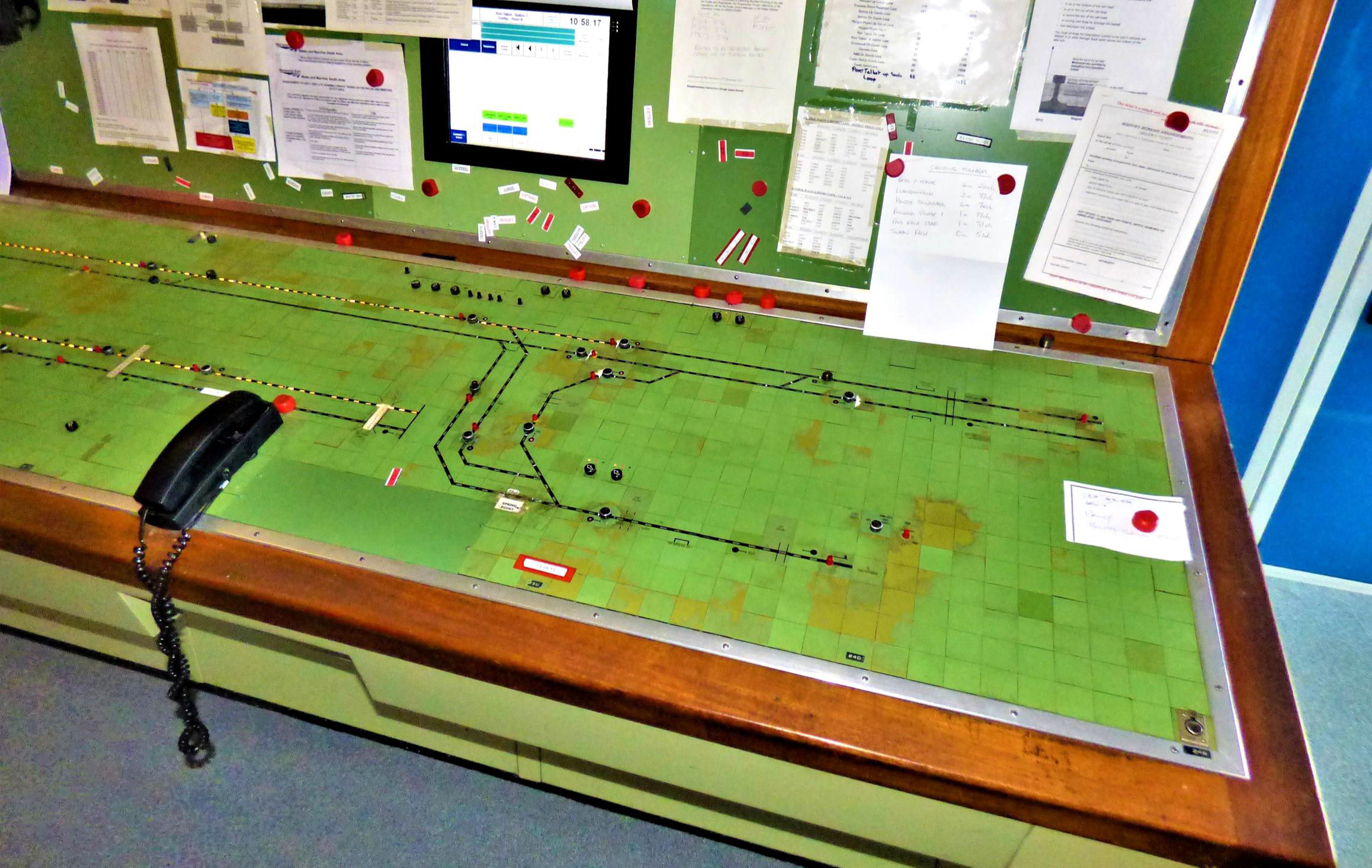
The Hendy triangle end of Port Talbot main panel, the single track bottom right is the Central Wales Line.
[© Nick Jones 2019]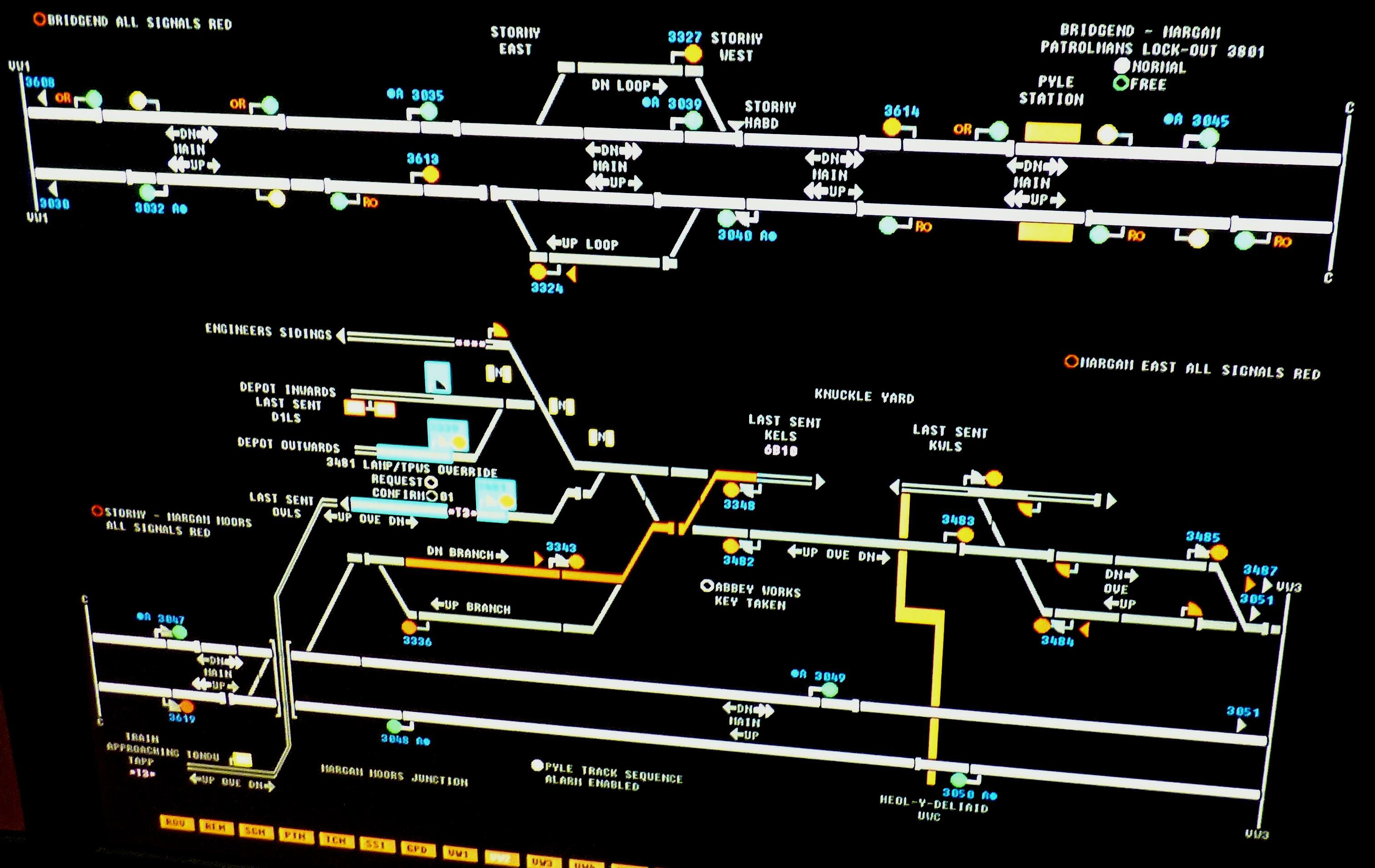
Margam Knuckle Yard - the Ogmore Vale Extension Goods line to Tondu is bottom left and under aT3 possession.
[© Nick Jones 2019]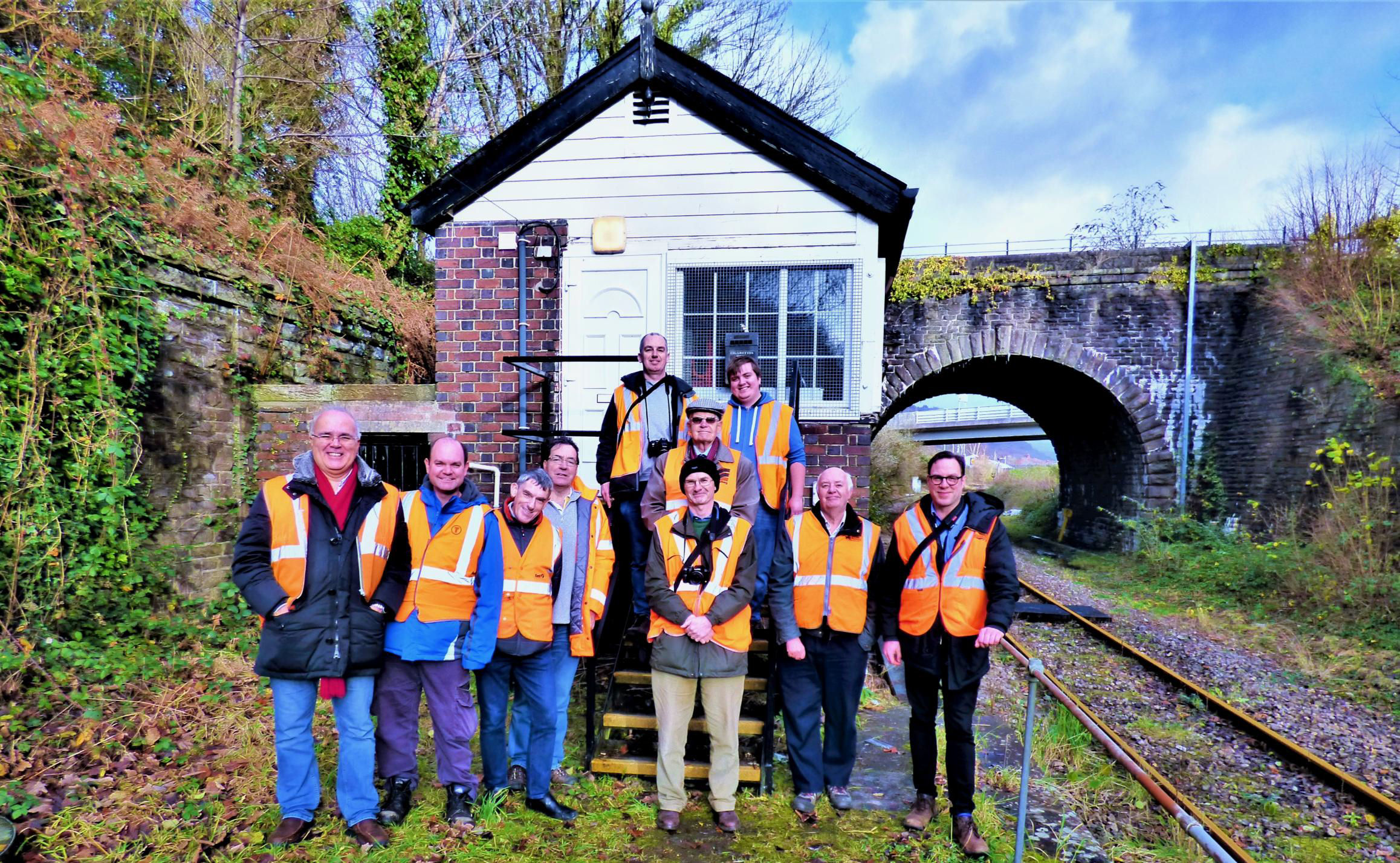
What time is the next train to Brecon, chaps? Looking at the track there hasn't been a train recently. A 'boxful' (collective noun) of signalling aficionados on Neath Riverside station platform with Neath & Brecon Junction signal box. The South Wales Main line is on the overbridge behind.
[© Nick Jones 2019]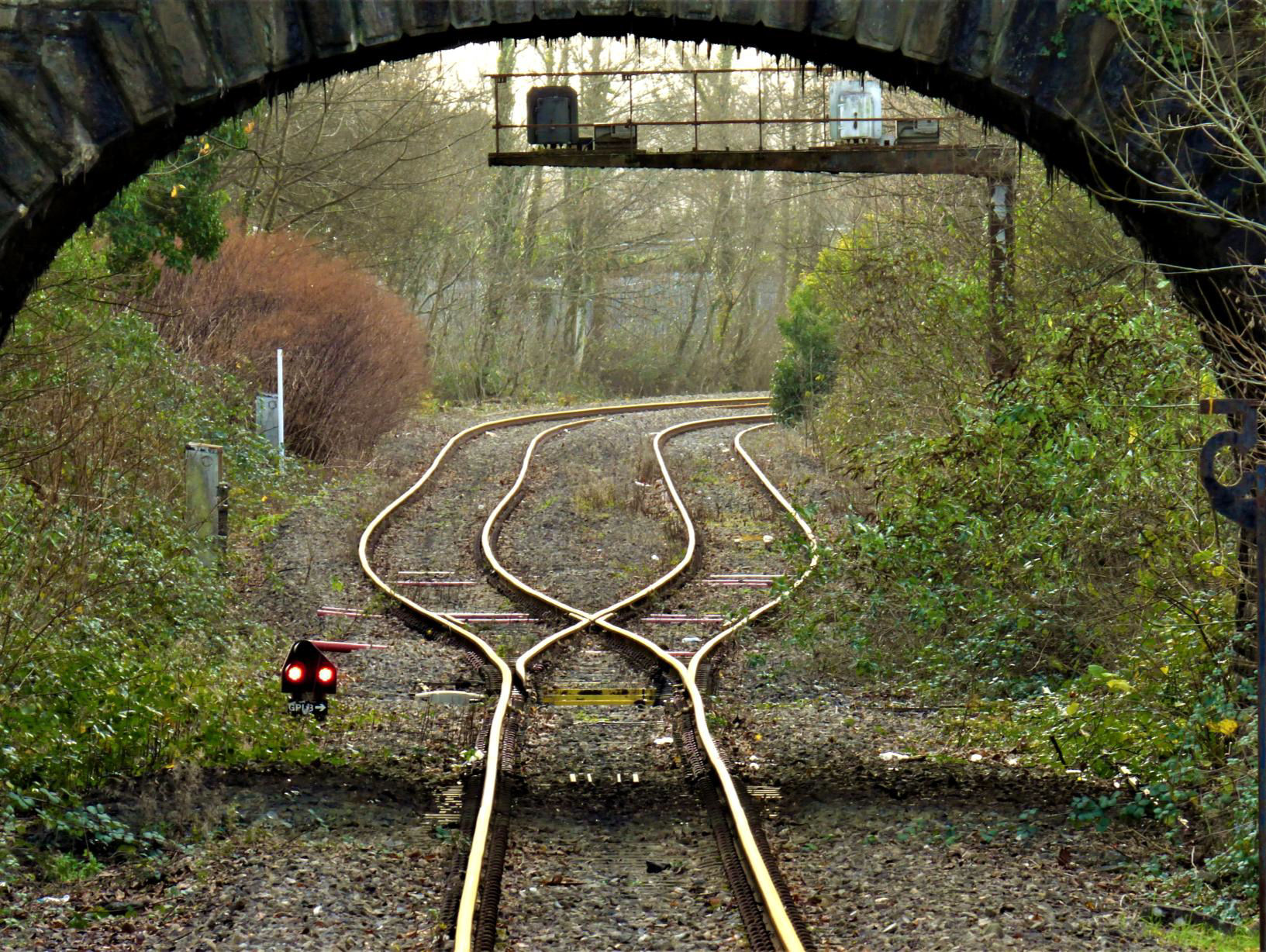
The loop taken from Neath Riverside platform, looking southwest (it was once double track)
[© Nick Jones 2019]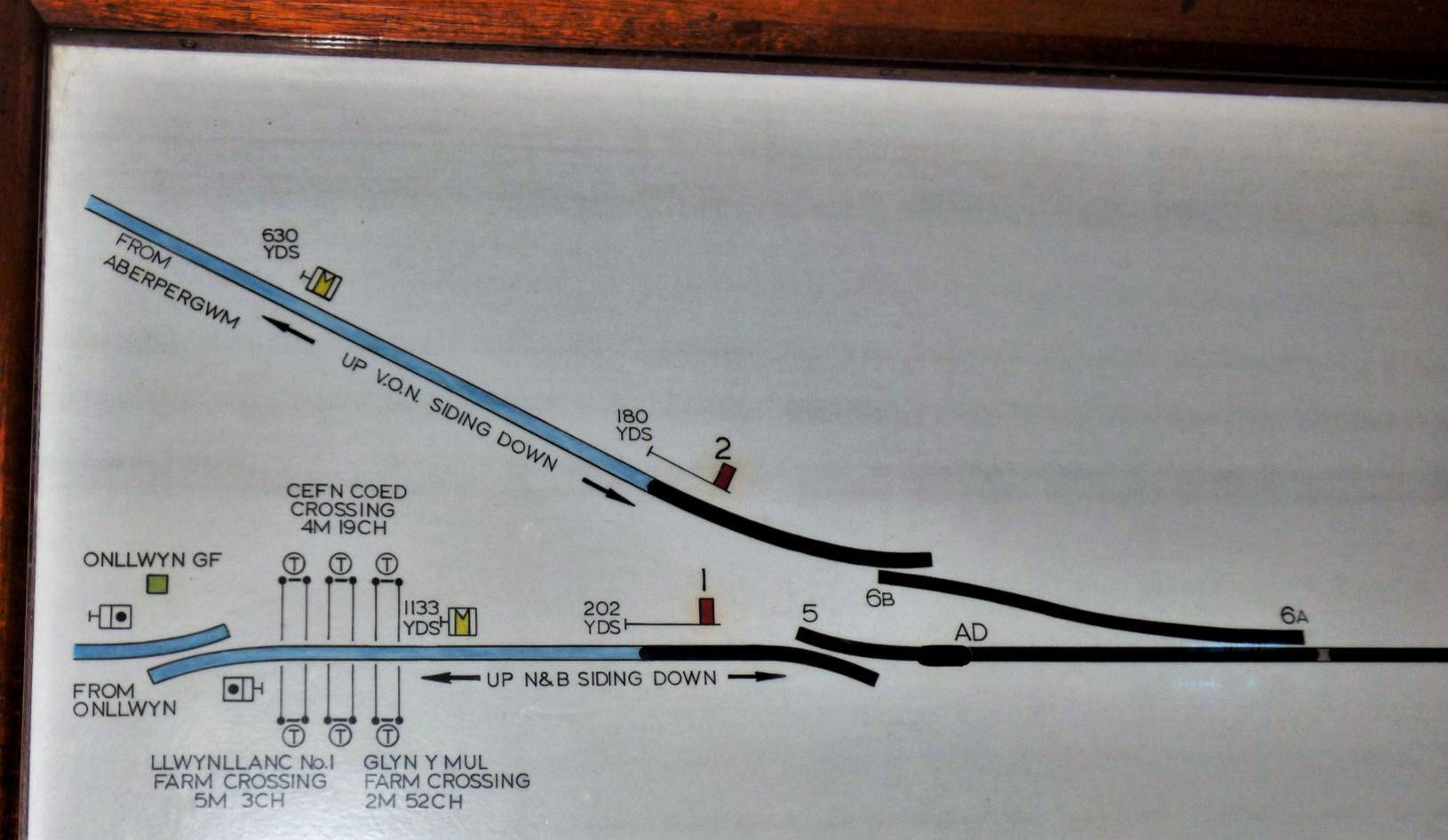
Some detail from Neath & Brecon Junction Signal Box diagram.
[© Nick Jones 2019]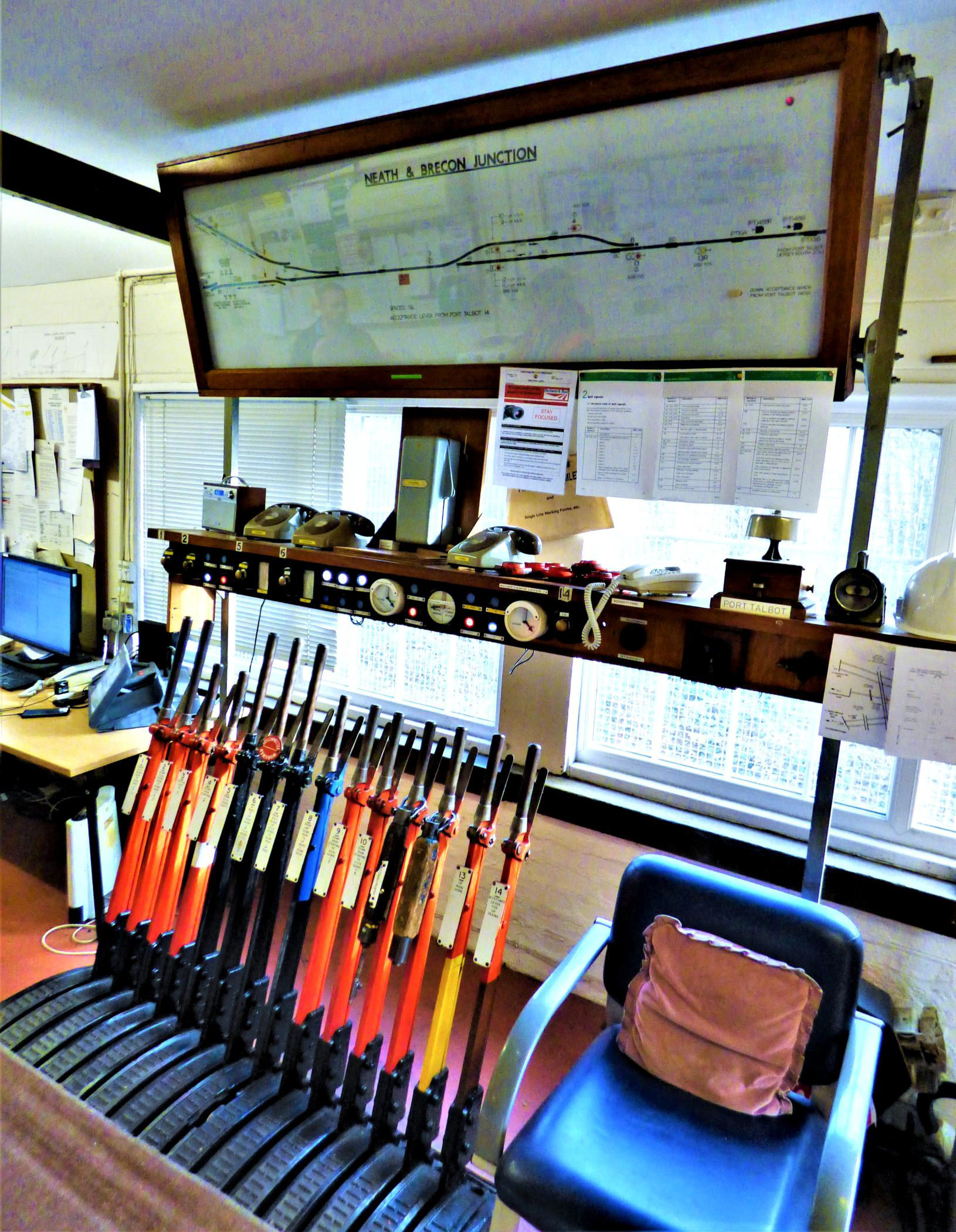
Most unusually there is not a white lever (spare) in sight here.
[© Nick Jones 2019]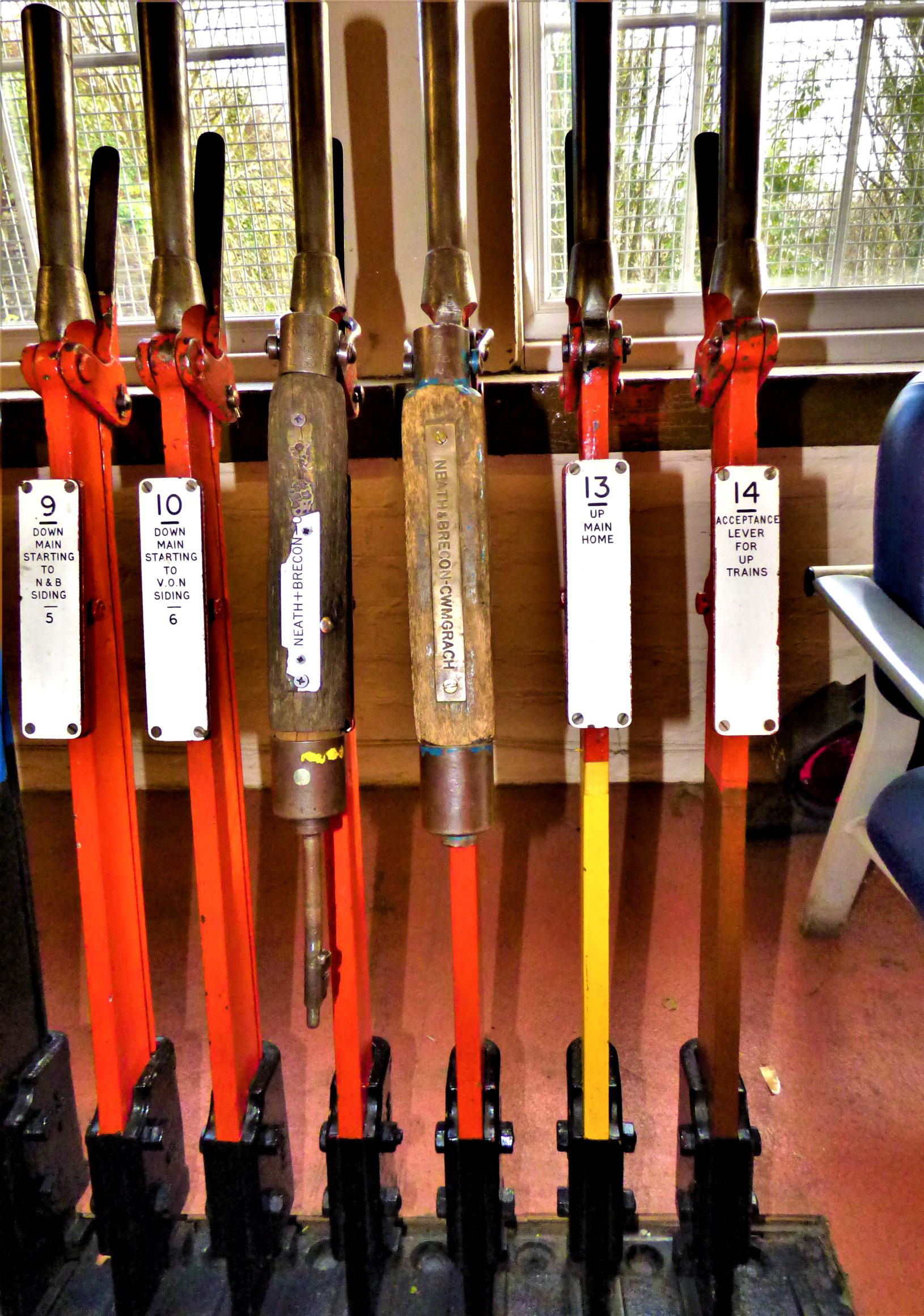
The single line staffs for the two branches.
[© Nick Jones 2019]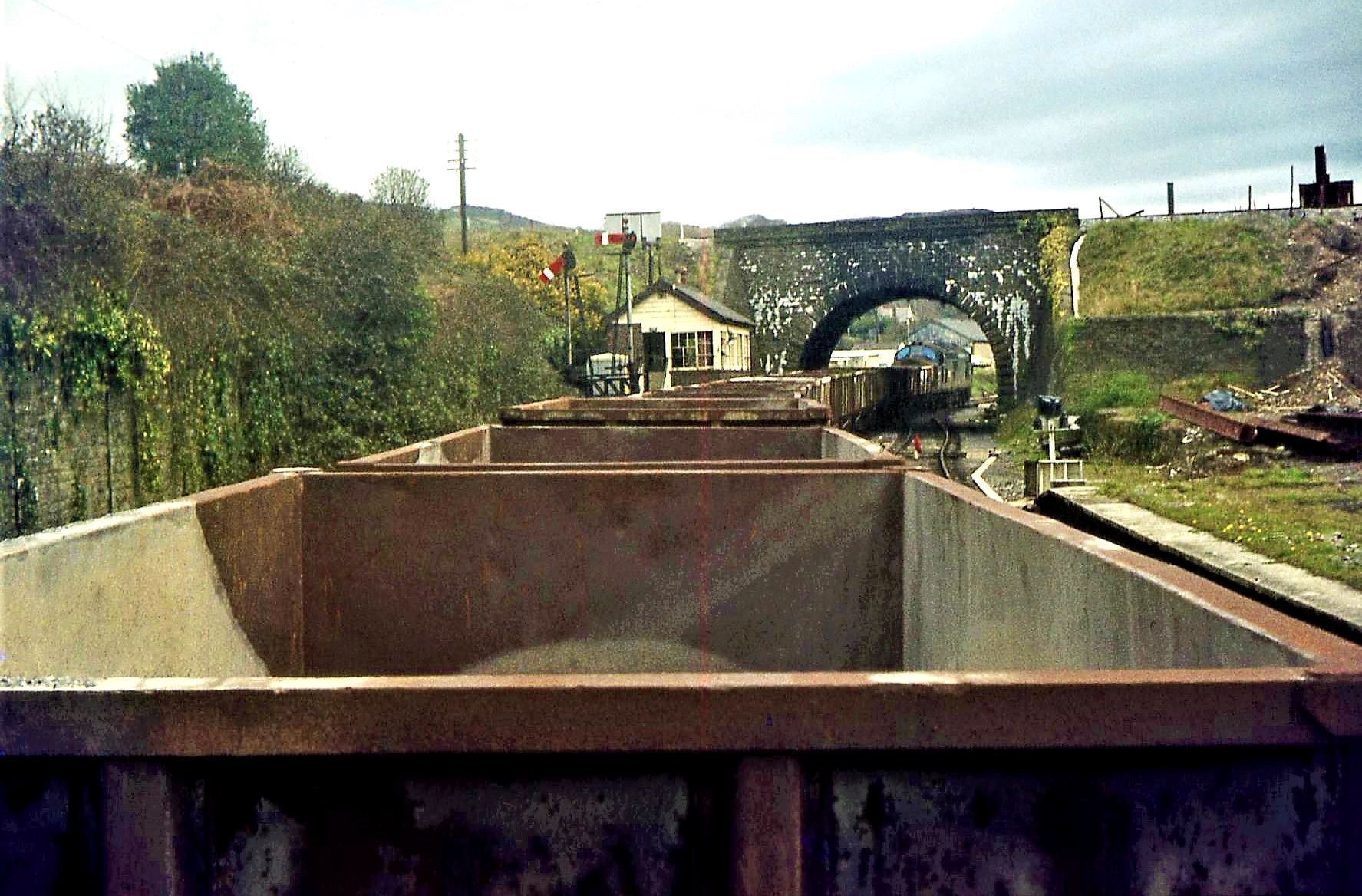
Neath & Brecon Jn - taken from the brake van of a Jersey Marine to Craig-y-nos quarry freight on 12 Apr 1973. The other Neath Riverside platform is right.
[© Ian Mortimer 1973]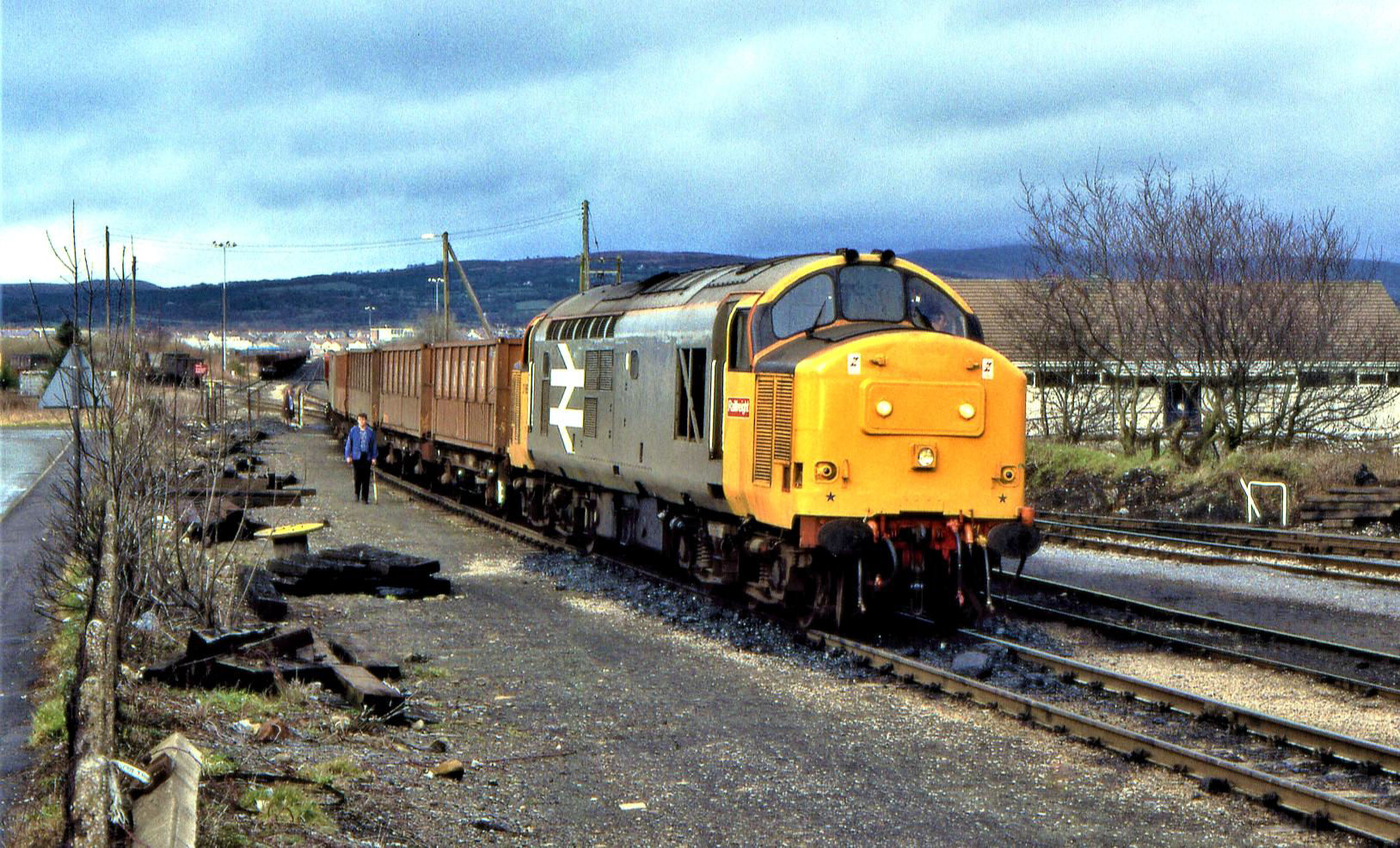
Pantyffynnon with more sidings; a coal train from Betws drift mine - off the GCG branch. The mine opened in Feb 1978, finally closing in Jul 2003 - BLN is a mine of information. (7 Mar 1988.)
[© Ian Mortimer 1988]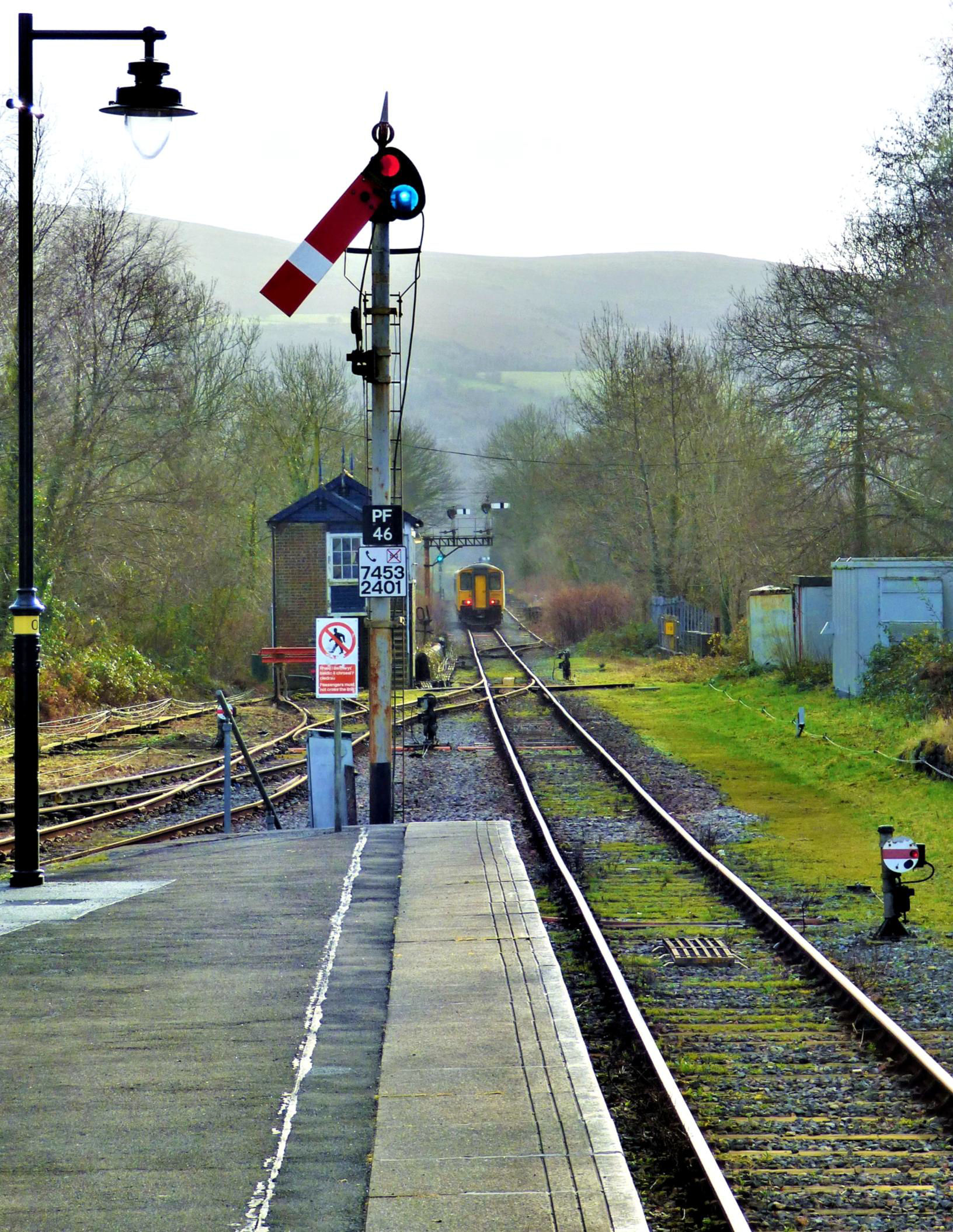
From Pantyffynnon station looking south, the train has just left for Swansea. The GCG branch trails in from the left and the facing connection beyond is the Up (Wernos) Washery Siding.
[© Nick Jones 2019]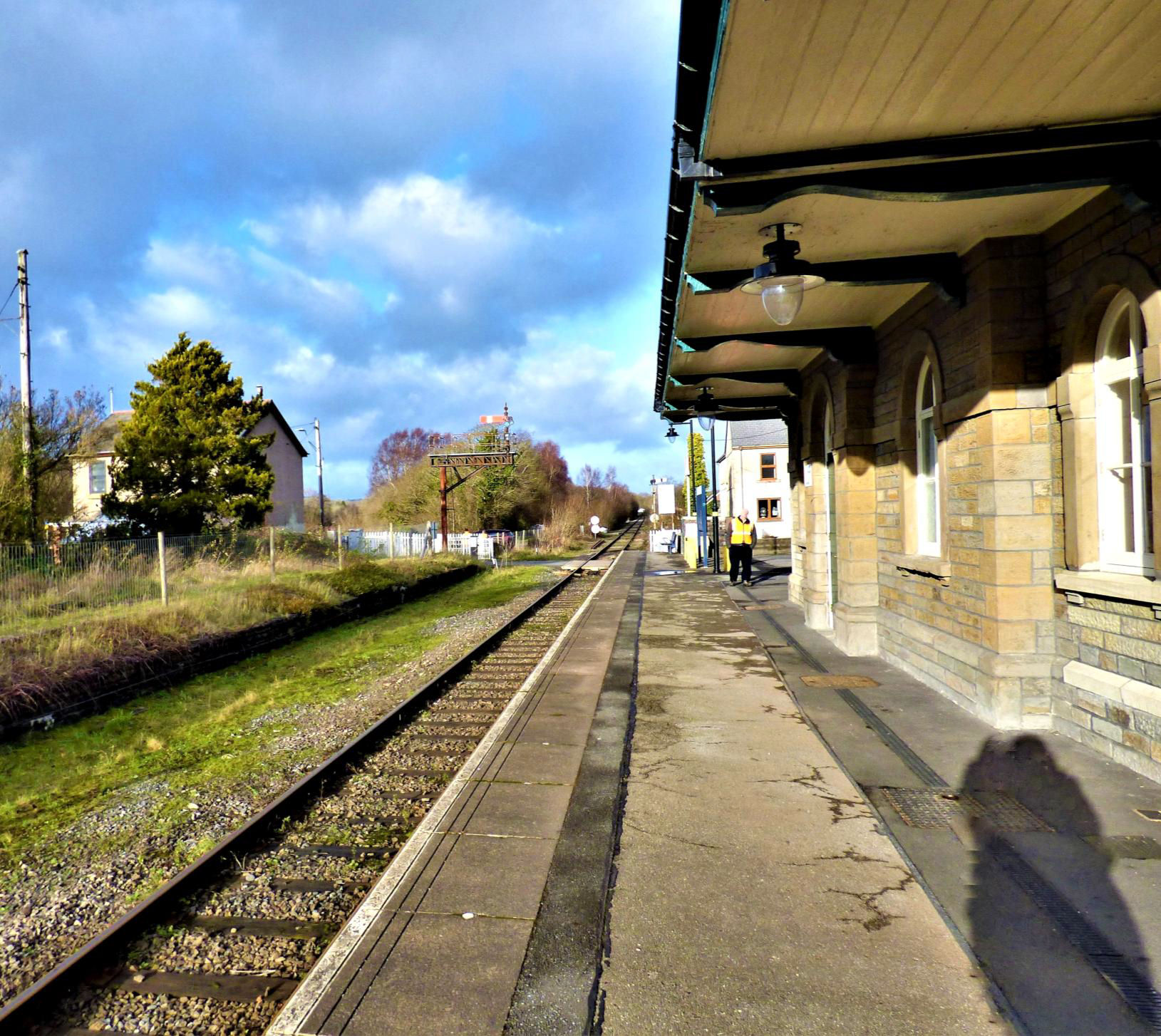
Pantyffynnon looking north towards Llandeilo with the manual gates beyond. Note the remains of the other platform; it was once double track from Swansea Victoria.
[© Nick Jones 2019]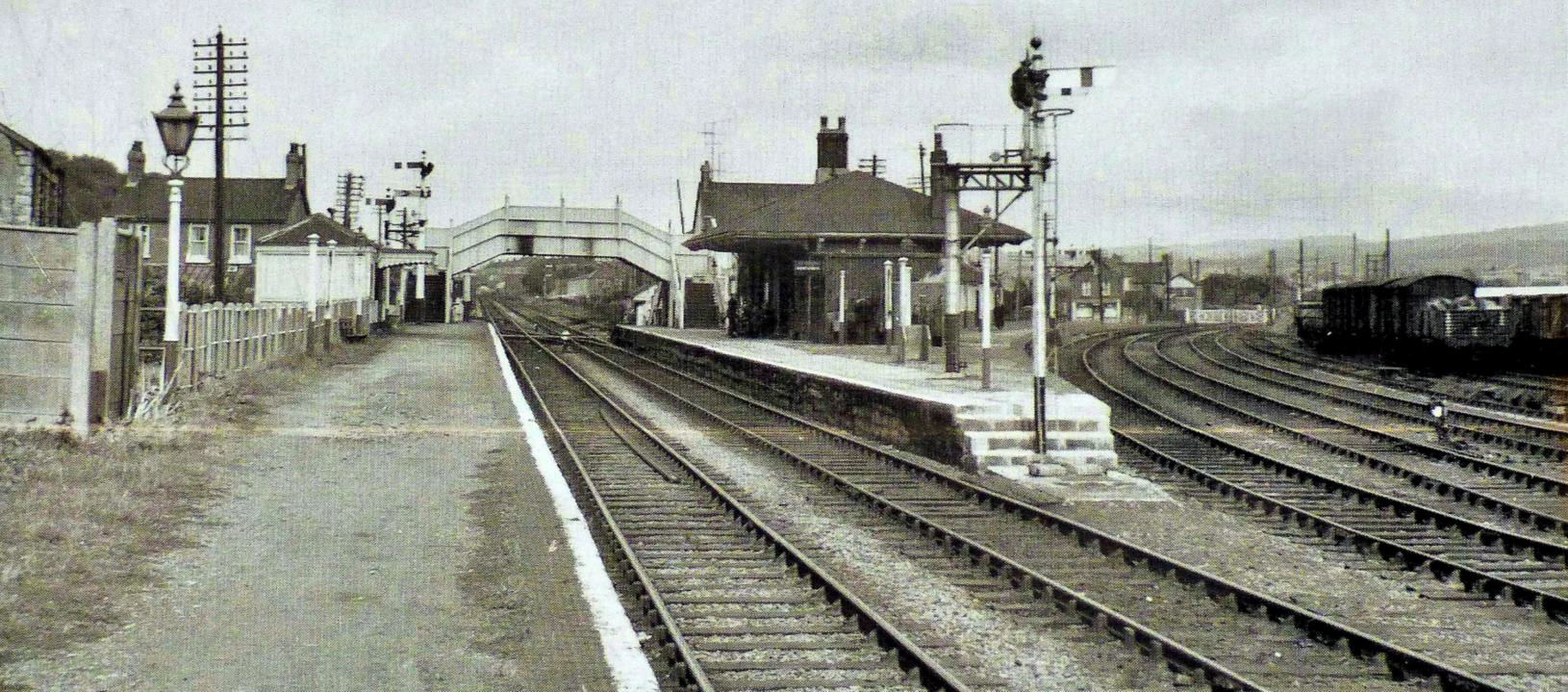
Pantyffynnon looking north towards Llandeilo when it was double track from Swansea Victoria.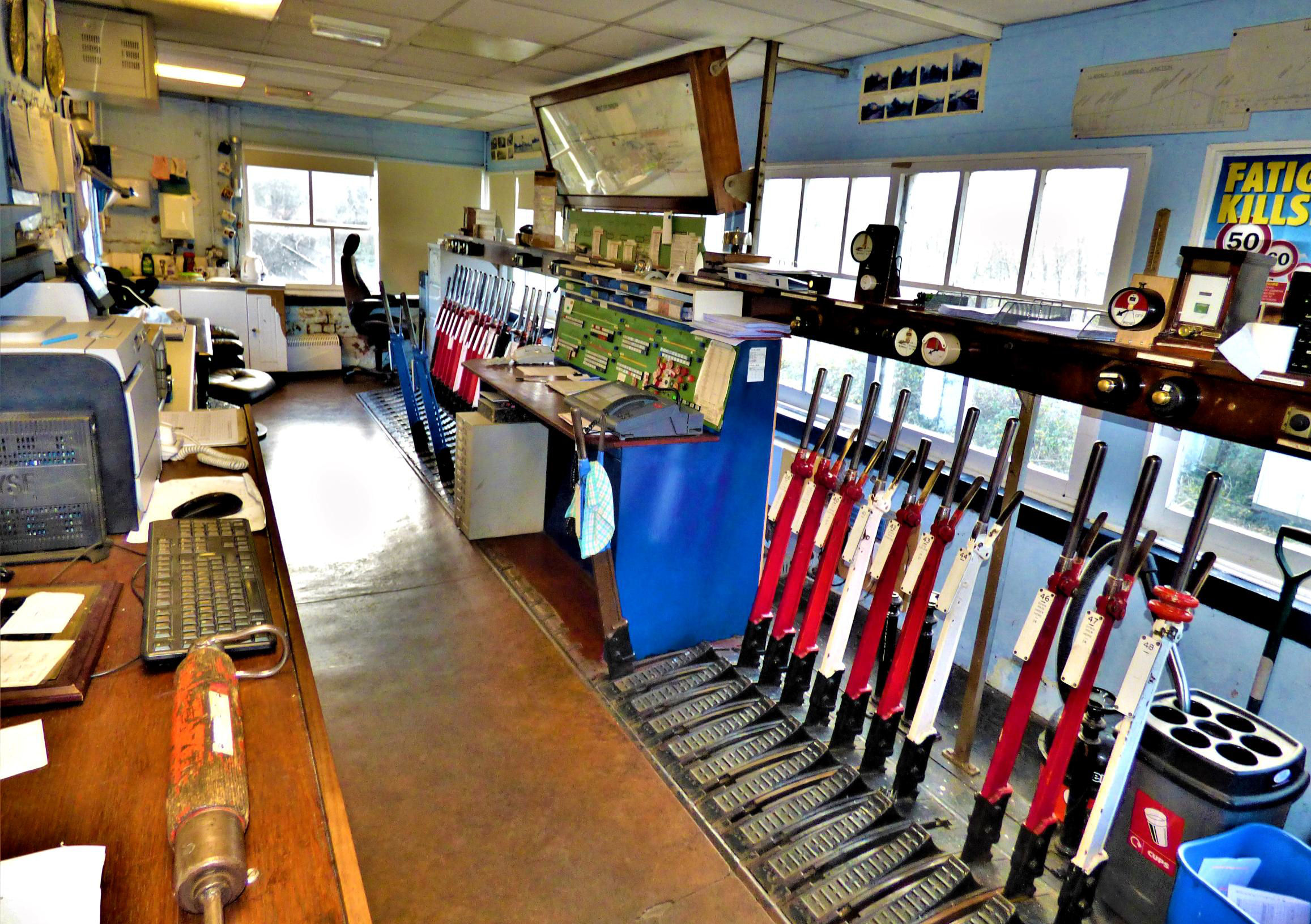
The two sections of the frame in use with the Central Wales line desk between them. The GCG branch staff is bottom left.
[© Nick Jones 2019]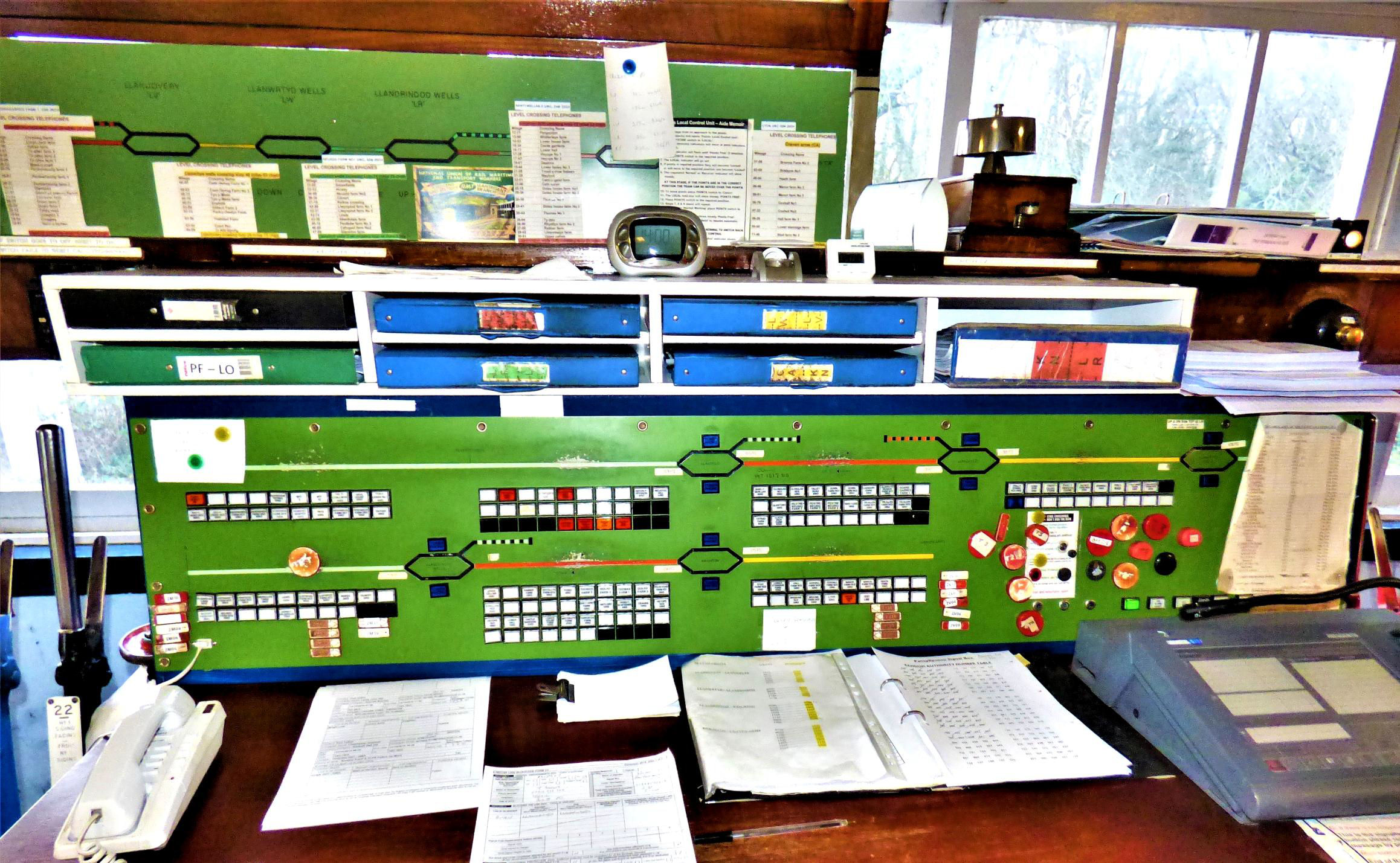
The impressive Central Wales Line telephone concentrator desk; middle top is Llandeilo loop, bottom right is Knighton.
[© Nick Jones 2019]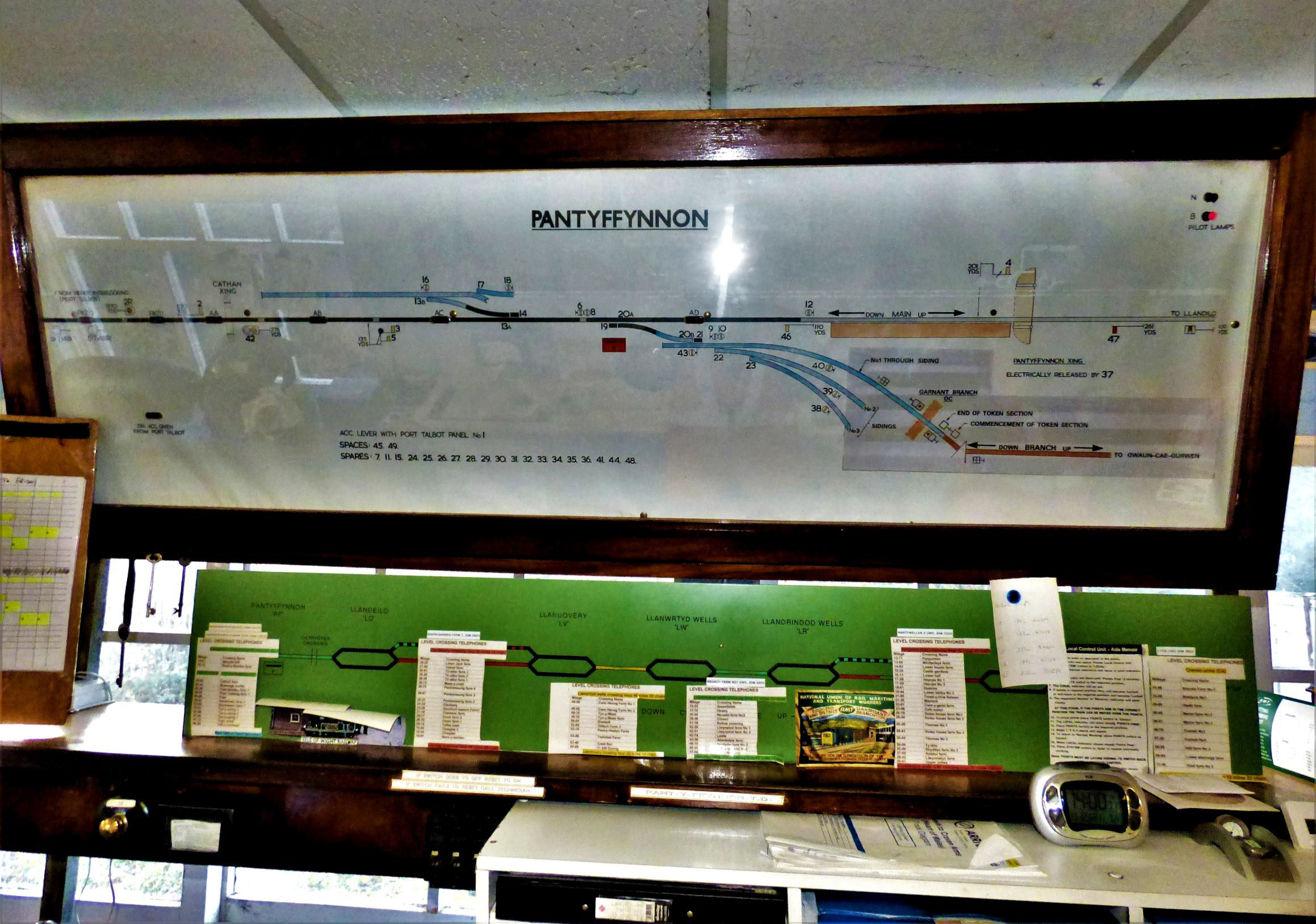
The signalling diagram at Pantyffynnon..
[© Nick Jones 2019]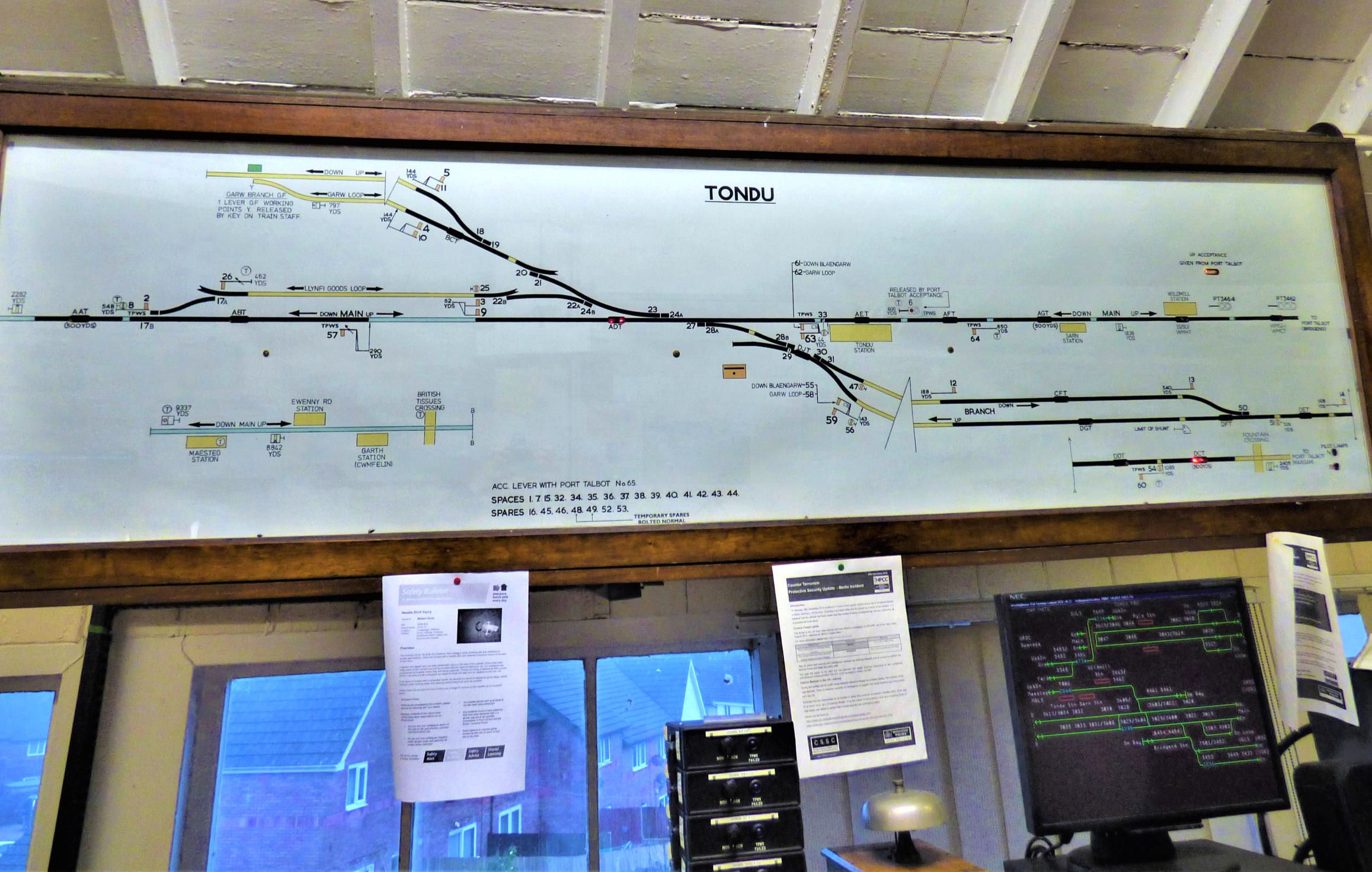
Tondu the red light, bottom right, is a ghost train - the Margam line is actually under a T3 possession.
[© Nick Jones 2019]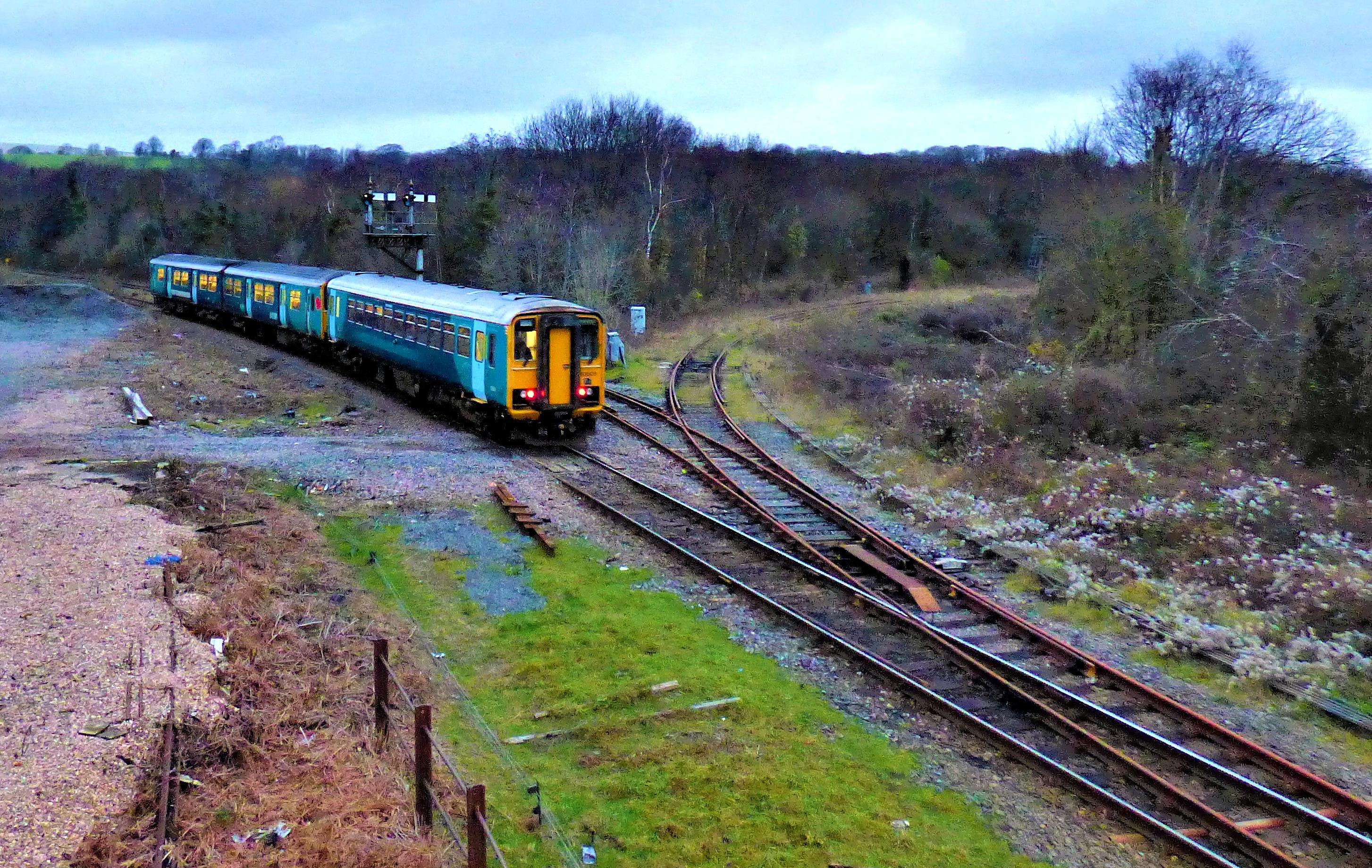
A train to Maesteg, with Llynfi Goods Loop alongside and Garw Loops round to the right; Tondu station and Bridgend are off bottom right.
[© Nick Jones 2019]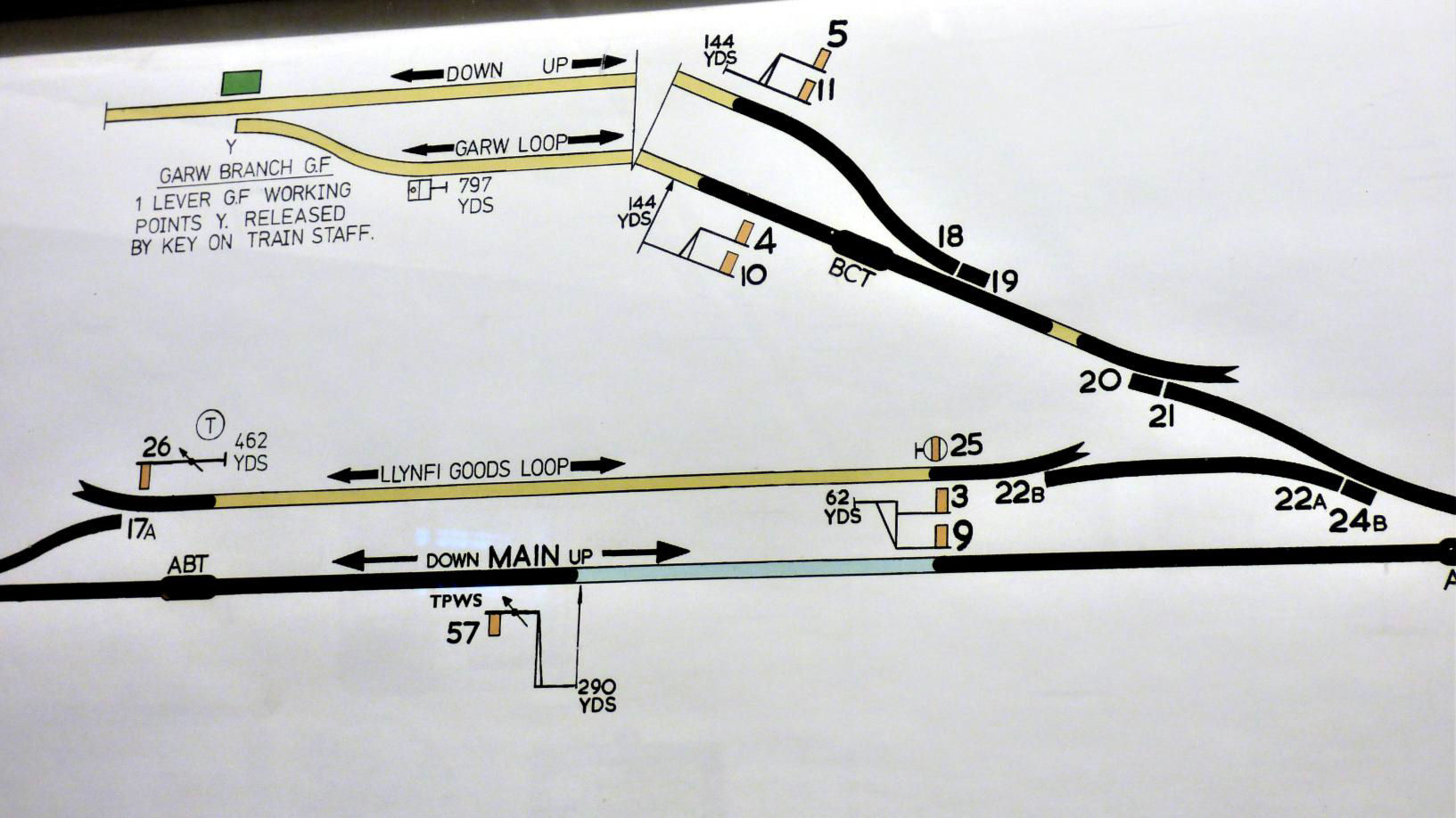
Detail from the signalling diagram at Tondu.
[© Nick Jones 2019]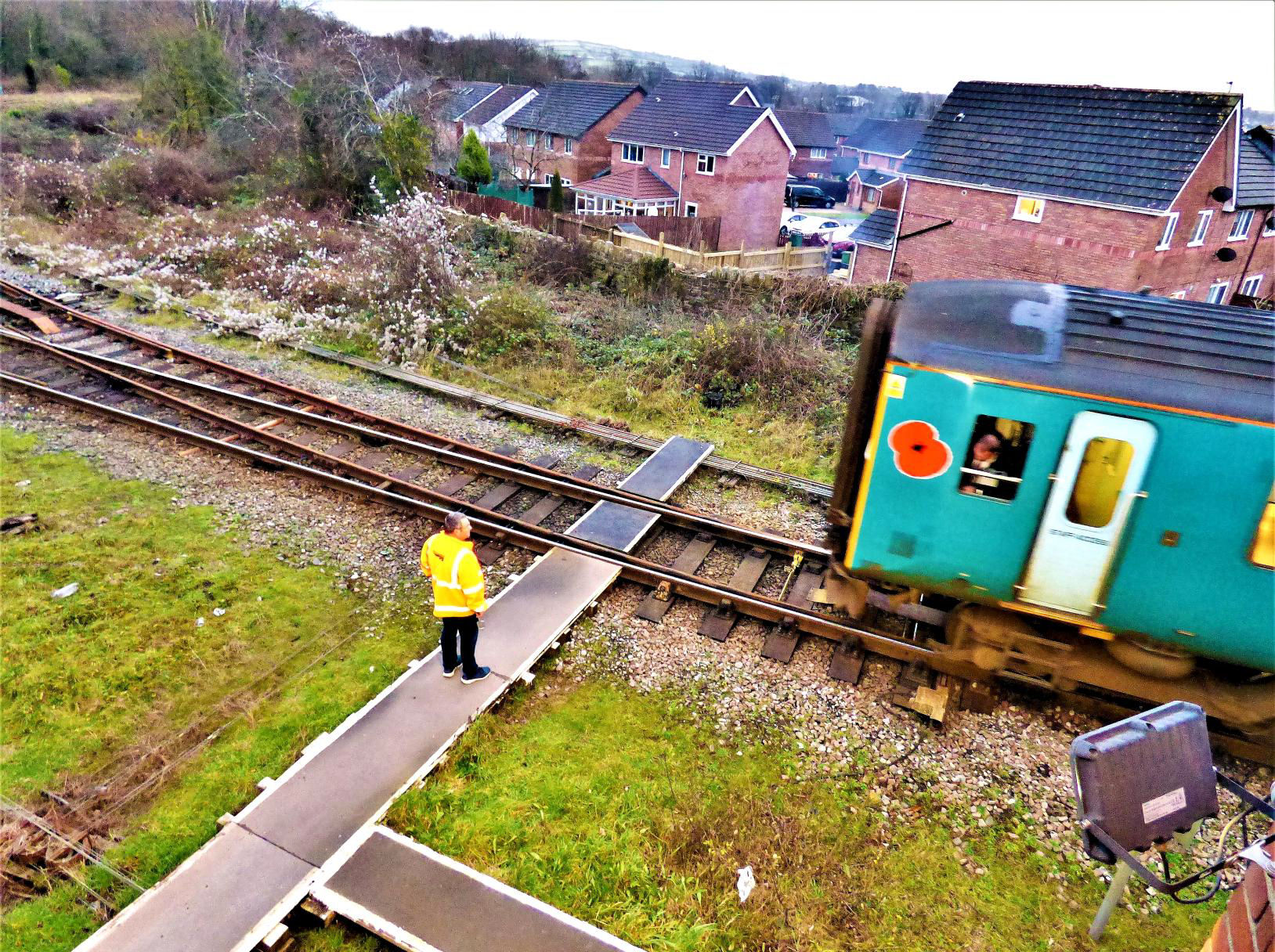
A train to Maesteg, the driver is about to collect the single line token.
[© Nick Jones 2019]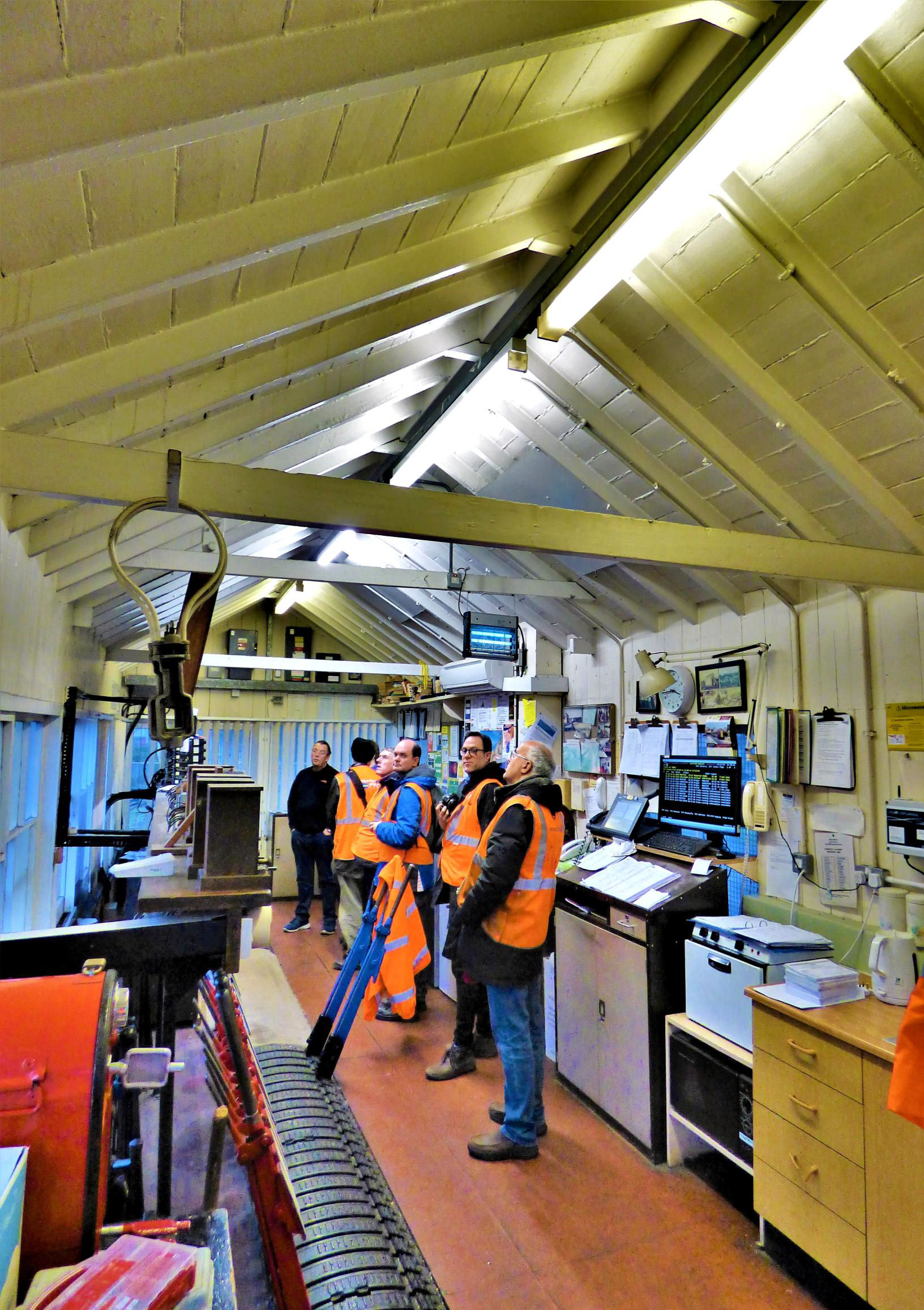
Inside the lofty Tondu signal box.
[© Nick Jones 2019]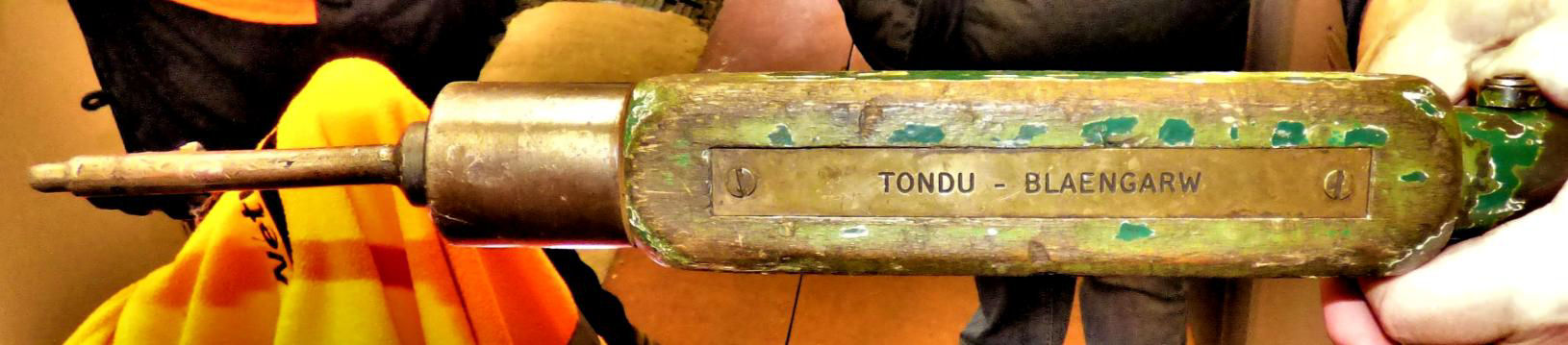
If only!
[© Nick Jones 2019]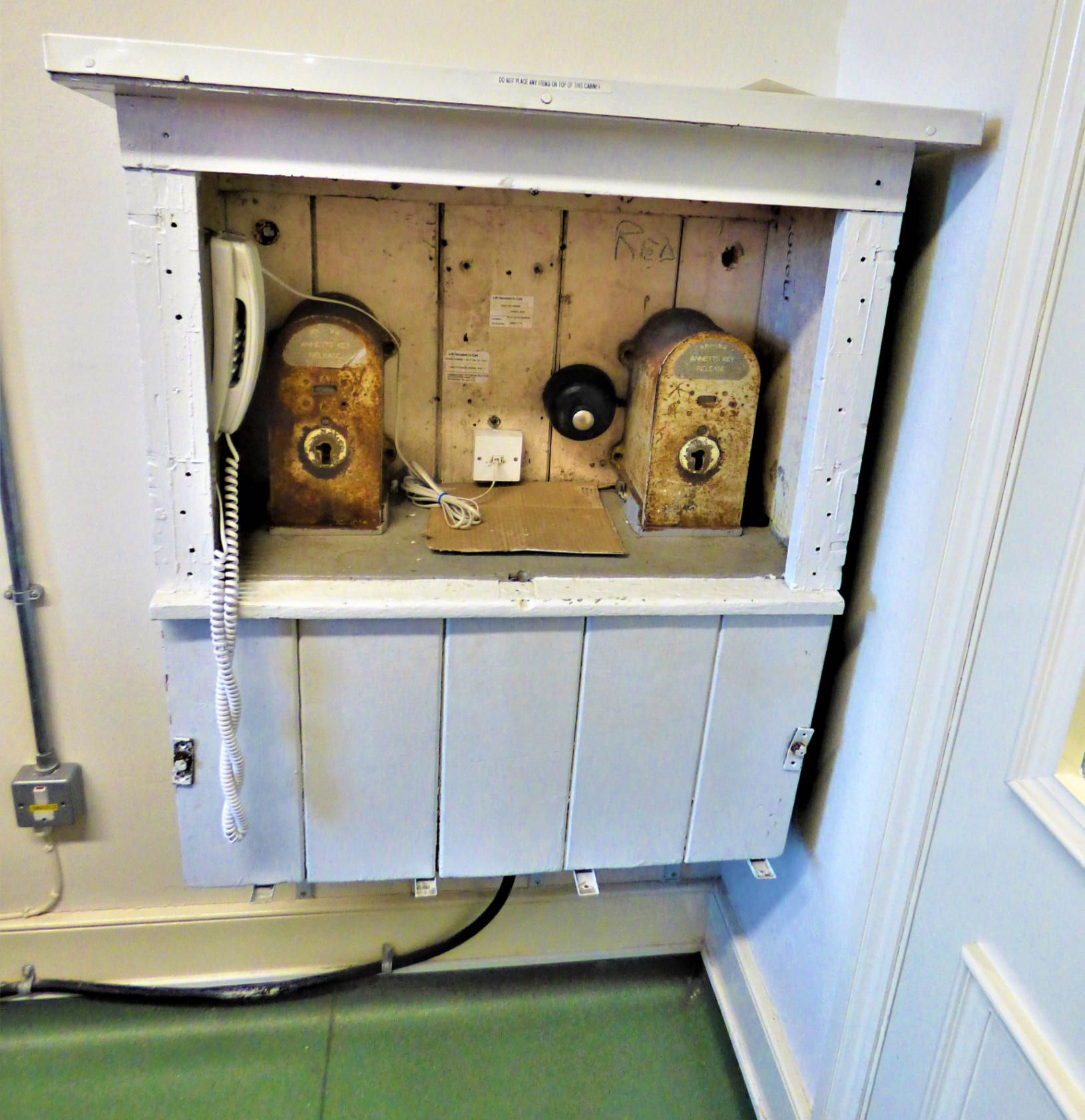
Back at Pantyffynnon Level Crossing: Annett's Key release (one for each gate) in the station building. When the level crossing gates are closed to road and open to rail both Keys have to be inserted here and are electrically locked in, to release the signals to be cleared for a train. The only way the crossing keeper can extract both keys from the two gate locks is by securing both gates to road traffic - this is portable interlocking, simple but effective and no risk of software failures!
[© Nick Jones 2019]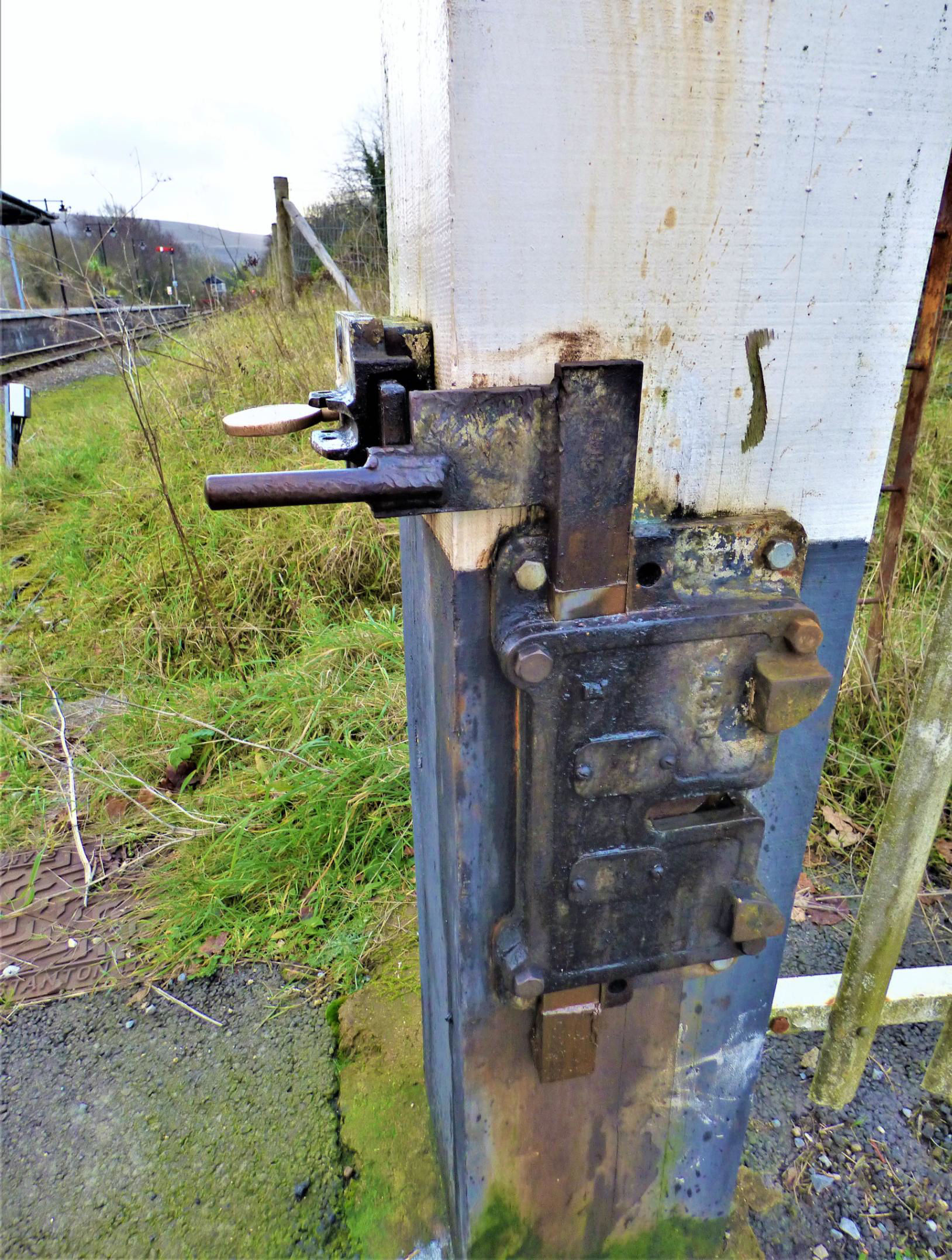
One of the two Annett's Key (the horizontal brass disc is the head) in a gate lock.
[© Nick Jones 2019]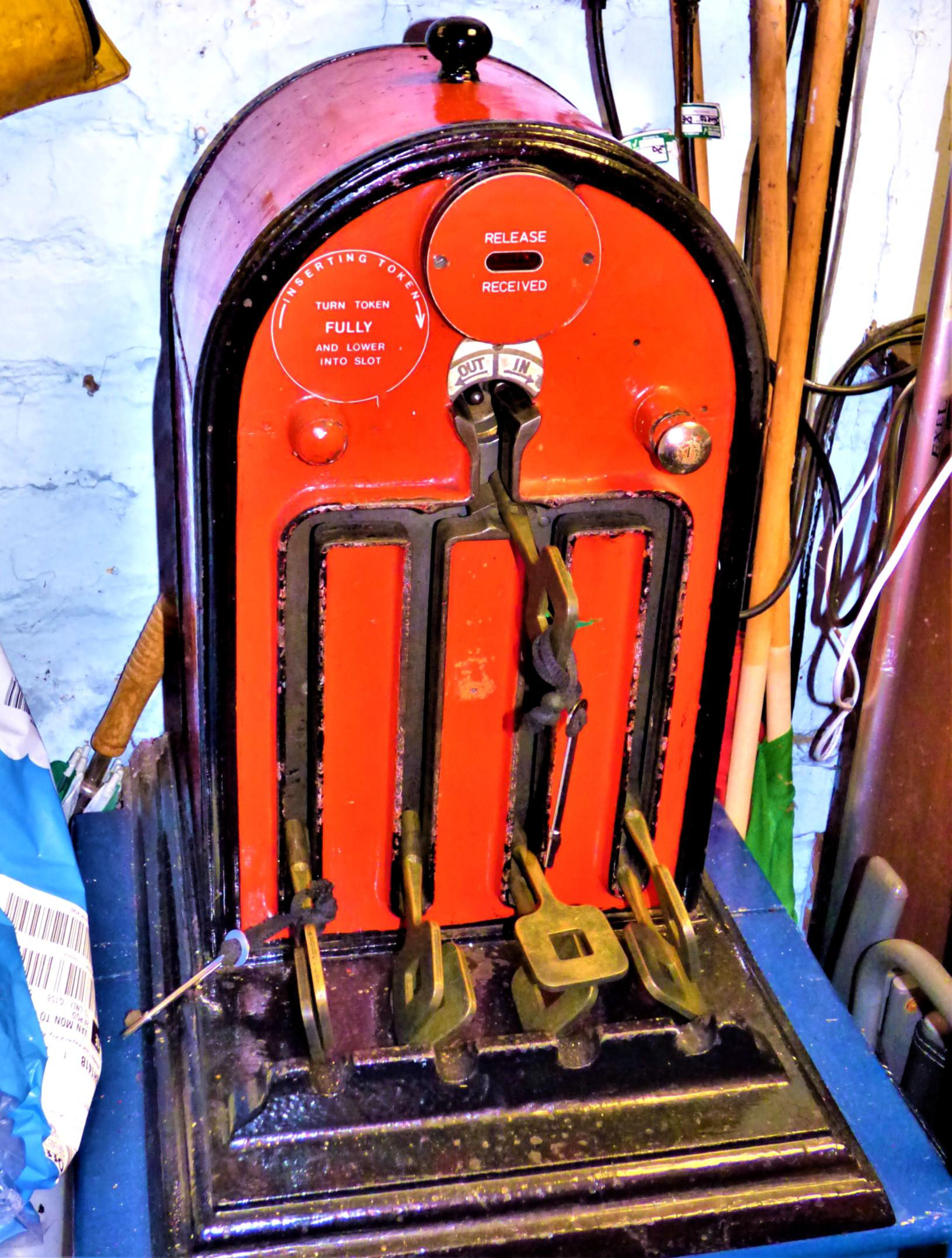
The Llandeilo section Key Token Instrument at Pantyffynnon Signal Box.
[© Nick Jones 2019]