The single track Chippenham Jn to Dullingham line has tokenless block. There is track circuit block signalling on the double track lines. All trains in the area are described on flat screen monitors; reporting numbers of approaching trains appear at the appropriate place on the track diagram screens. The only bell code heard was 16 continuous beats on the Bury St Edmunds (BSE) emergency bell as it was the time of day for testing it. Chippenham Junction and BSE have modern diagrams as normally found in power boxes.
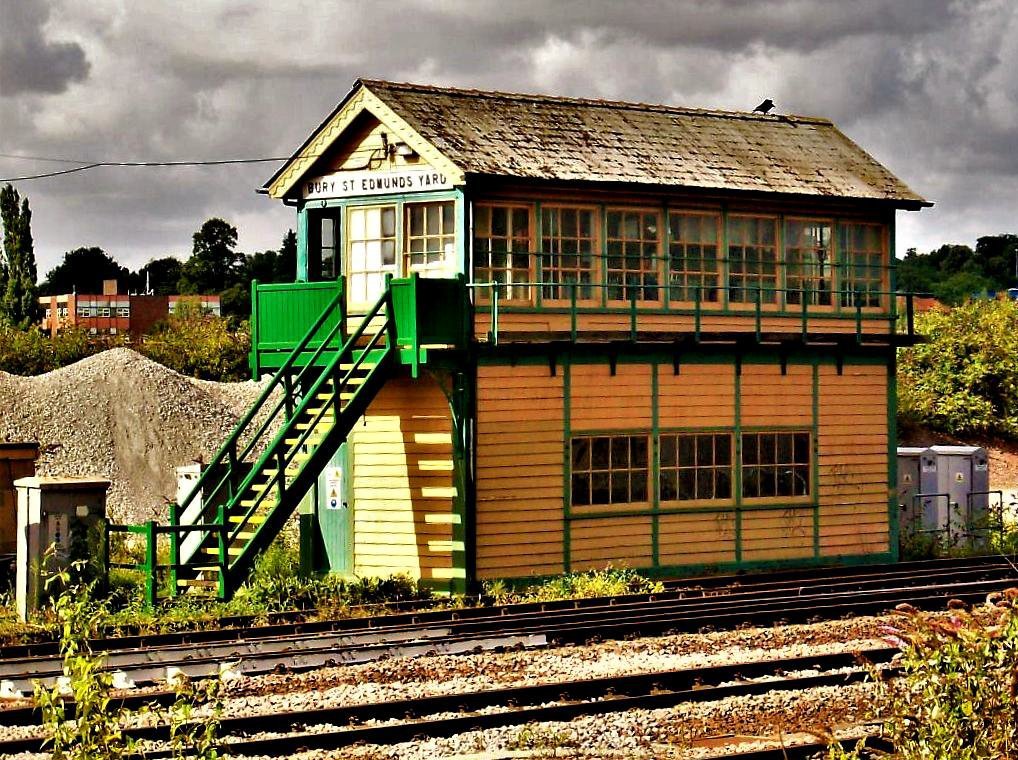
BSE signal box retains a 'Bury St Edmunds Yard' name board (although renamed, officially losing the 'Yard' suffix when Elmswell box closed 11 Aug 1985) distinguishing it from Bury St Edmunds Junction. The latter was abolished over the weekend of 7/8 Sep 1983 and originally controlled the junctions for Thetford (CA 27 Jun 1960), Lavenham (CA 19 Apr 1965) and presumably latterly BSE Sugar Factory.
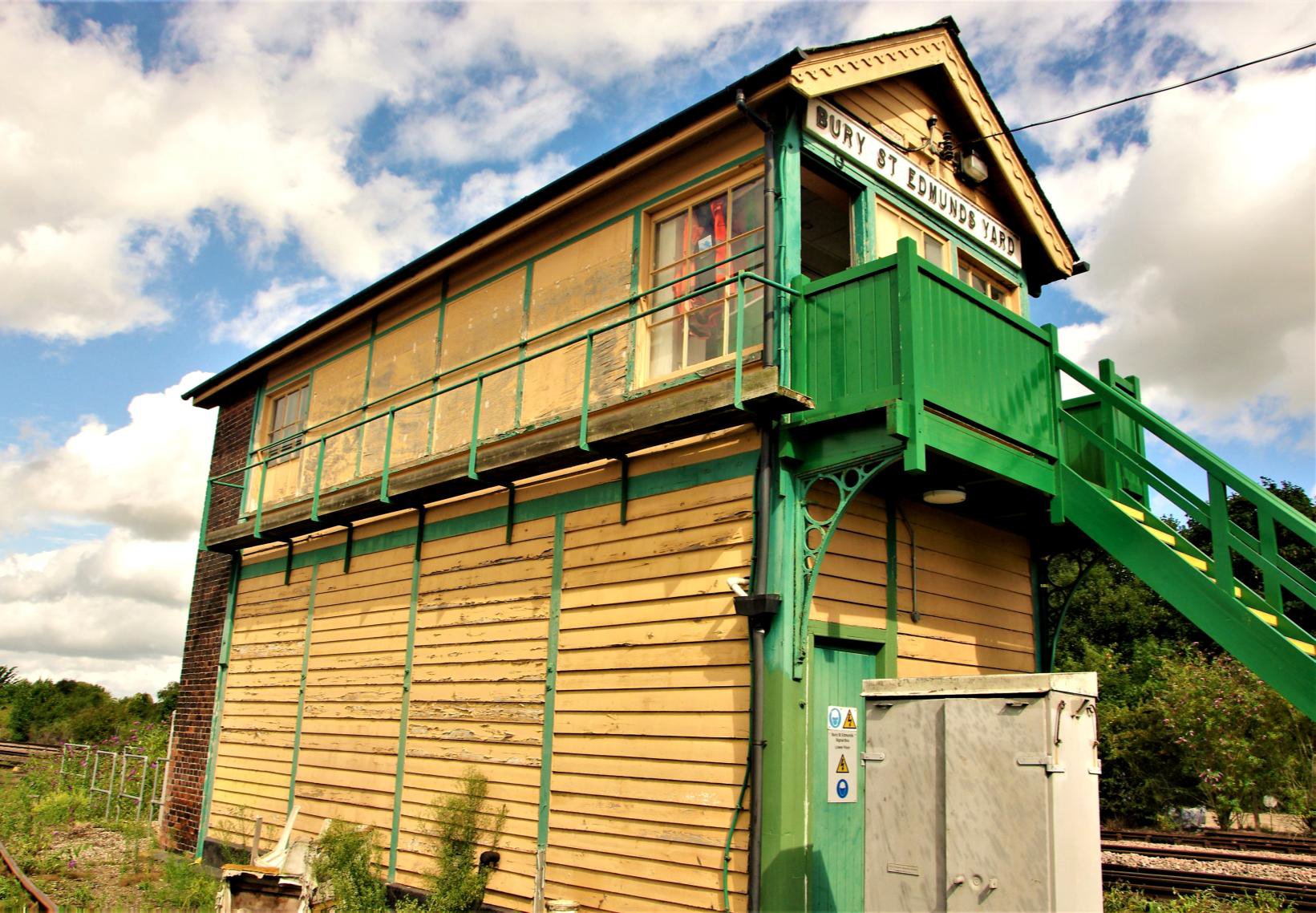
The back of Bury St Edmunds (Yard) signal box, showing (some) rear windows with others blocked in, the mid-Suffolk line runs in front.
[© Nick Garnham 2017]The Great Eastern Railway (GER) BSE box opened in 1888 and retains its McKenzie & Holland lever frame now with the levers numbered 100, 101 and 1 to 51! All signals are colour light and the points motorised so the only full size levers are among the 31 white painted spares. The box controls from Colchester PSB's boundary west of Thurston to Kennett where Chippenham Junction takes over. A box on the block shelf has the switches to release Kennett Redland (stone) Siding ground frame. The former Kennett 1880 GER signal box was abolished 11 Nov 2011 and later moved by road to the Colne Valley Railway. The signaller explained in detail the moves involved with the use of the ground frame, the access of freight trains to the yard behind the signal box and the reversal of two daily ECS workings that form passenger services starting from BSE. He also spoke about the disruption caused when a rail grinder had worked with its equipment out of gauge and cut through the signalling cables! The barrow crossing on the signal box diagram is no longer used. BSE box was Grade II listed in 2013 and unusually (as built) has glazing on all sides to allow a view over the yard at the rear of the box.
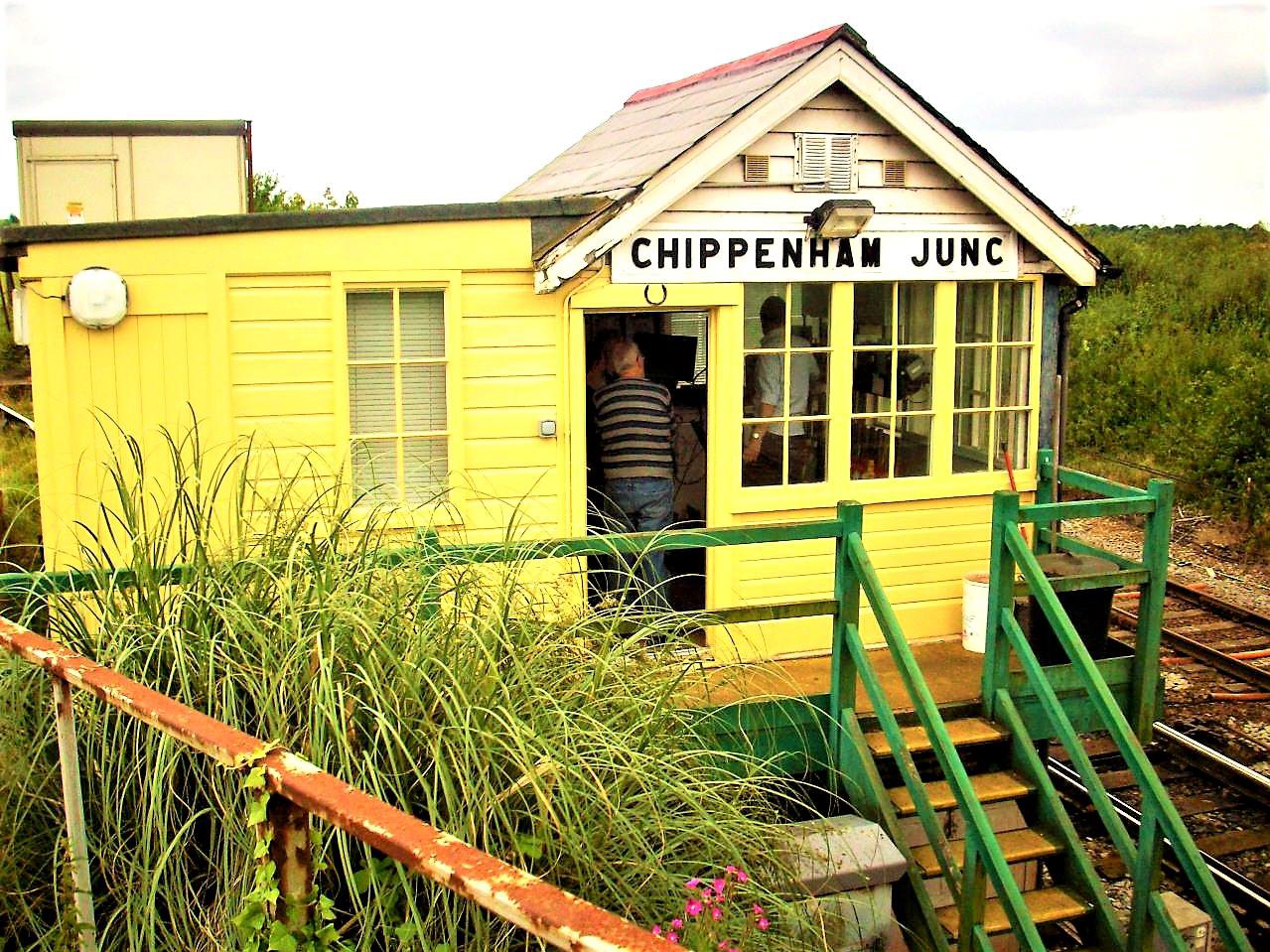
Chippenham Junction.Access to Chippenham Junction signal box (ABOVE) was unusual in that we were asked to leave off our high vis vests to avoid frightening the horses! Our cars joined some (horse) trainers' vehicles in a wooded area, before two horses galloped by and we were able to pass through the gap in the railings protecting their tracks, to find where the grass in the field had been flattened by signallers going on and off duty at the box. The small GER signal box, thought to have been constructed in 1921, had its area doubled in the 1980s by a flat roofed extension to its rear to accommodate modern signallers' welfare facilities. The McKenzie & Holland frame has 16 levers two of which are spare. Signals are colour lights but here the points and facing point locks are still mechanical. Like the other two boxes visited it is open continuously and the train register showed that several Class 4 freights had passed during the night. During our visit the 10.34 intermodal, Felixstowe to Hams Hall, passed 3 mins early.
Waiting outside the final box of the day at Dullingham brought to mind the Society's Port of Boston Railtour on Sat 20 May 2000. The Hastings DMU from Bromley South halted here for 20 minutes while a former fixtures secretary was in dispute with control over an alleged missed special stop order that had left 50 members stranded at Cambridge. The signal box is an 1883 Great Eastern Railway structure with an individual function switch panel installed in 1978. It still retains its manually operated wooden level crossing gates! Is there anywhere else on NR where the signaller (not a crossing keeper) needs to go outside to open level crossing gates with a key released by a switch on the signal box (not a gate box) panel? Signal No2, the one that controls the single line to Cambridge, is released by a 'slot' from Cambridge panel. The term 'slot' comes from the mechanical method used when it is necessary for two signallers to act together before a signal will clear. Bidirectional P2 is used by nearly all trains at Dullingham, (and is closer to the village). P1 and the 1m 02ch unidirectional Down Loop are only used (SSuX) by the 07.44 Cambridge to Ipswich when it crosses the 06.54 (SSuX) in the other direction.
Bury St Edmunds.
[© Peter Humphries 2017]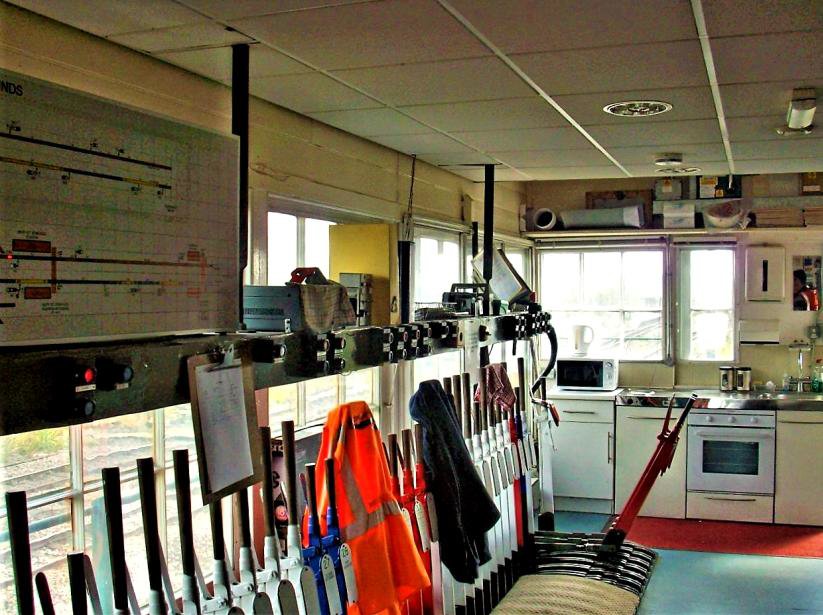
Bury St Edmunds.
[© Peter Humphries 2017]BSE and Chippenham Junction boxes are both grade 3 but Dullingham is a grade 2 post. Our thanks to NR's Marston Stratton, who escorted the party of 13 to the three signal boxes and answered many questions as well as the local operations manager, Heather Williams. Particular thanks also to our member Nick Garnham for arranging and administering the excellent visits. It is pleasing to report that £300 was donated to the Wood Green animal charity as a result of the fixtures.
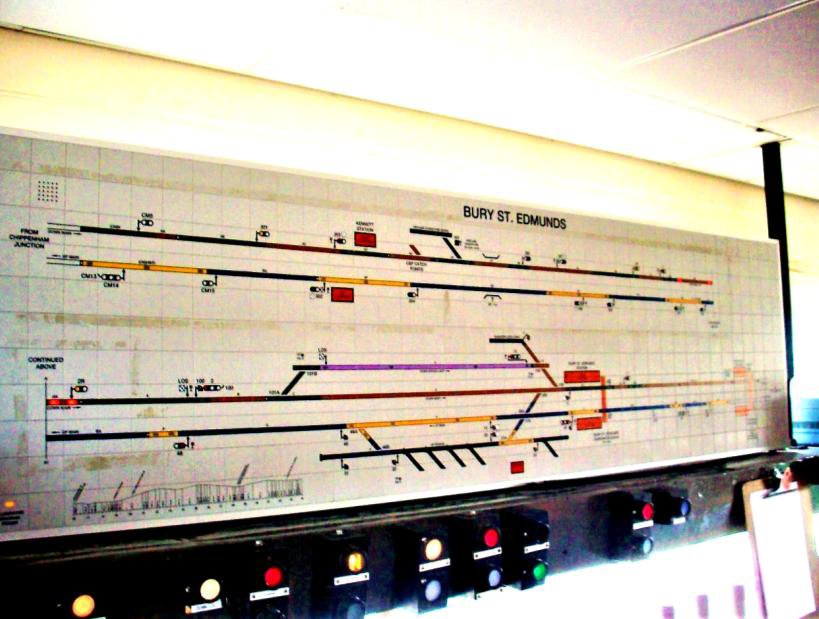
Bury St Edmunds.
[© Peter Humphries 2017]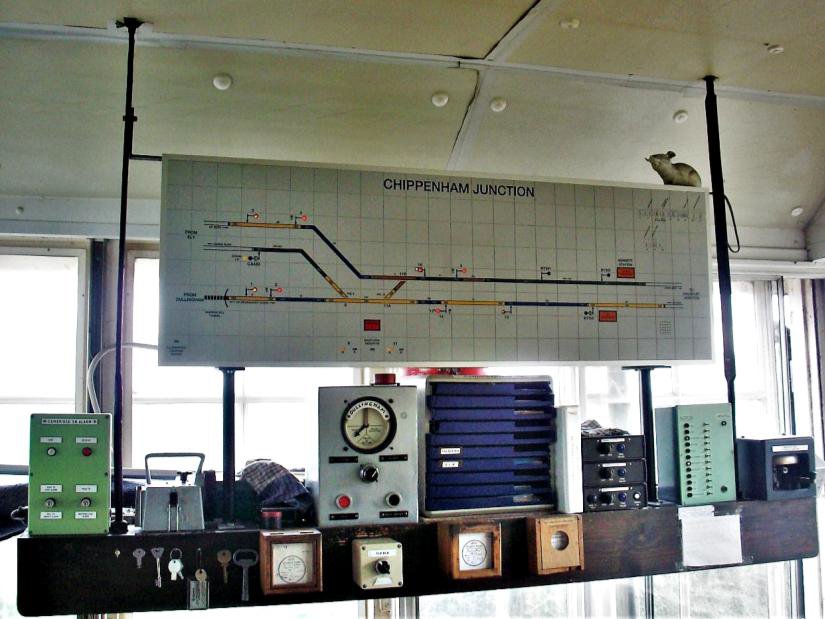
Chippenham Junction.
[© Peter Humphries 2017]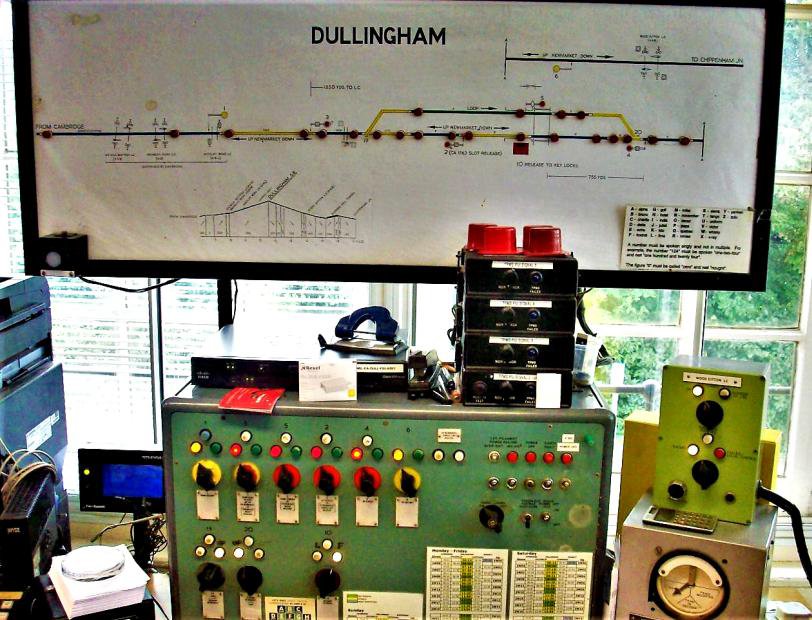
Dullingham.
[© Peter Humphries 2017]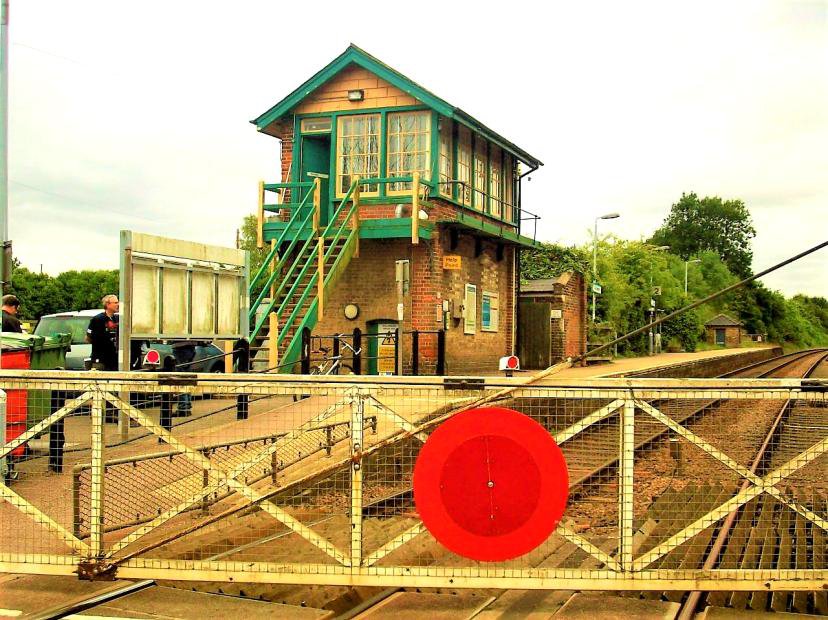
Dullingham.
[© Peter Humphries 2017]